25.4 C
Lagos
Friday, February 27, 2026
Home Blog Page 3

Experts advocate phased approach to govt proposed ban on imported solar panels

0

Experts have urged the government to rethink its decision to completely ban the importation of solar panels into the country. This reconsideration is essential for Nigeria to reduce its reliance on foreign technology in tackling its energy crisis and disrupting the already fragile foundation that the nation’s energy system relies on.

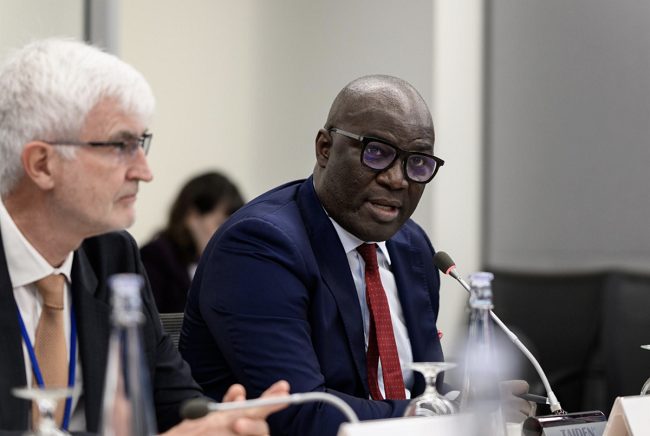
They made the demand at a national stakeholders engagement hosted by the Global Initiative for Food Security and Ecosystem Preservation (GIFSEP) on Tuesday, February 24, 2026, in Abuja, arguing that if the decision is not carefully reconsidered, it will result in an increase in the cost of this equipment, depriving many Nigerians of access to energy.

GIFSEP
Participants during the national stakeholders engagement on solar power in Nigeria hosted by GIFSEP in Abuja

Banning solar imports now, according to Dr. David Terungwa, GIFSEP’s Executive Director, would be like removing lifelines in a crisis.

He continued by explaining that Nigeria is not yet prepared for a complete ban on solar panel imports and that such a policy, if implemented, would probably aggravate energy poverty, hinder the adoption of renewable energy, and harm homes and businesses.

So, the GIFSEP boss suggested that what Nigeria needs now is a clean energy policy that offers incentives for local solar production and promotes local assembly and manufacturing, as well as affordable financing for clean energy systems.

“Slow the Ban, let’s get some basic things right before a blanket ban,” he appealed.

Dr. Terengwa urged state governors to take advantage of the Electricity Act 2023, which aims to restructure the electricity sector by promoting decentralised generation, incentivising renewable energy investment, and giving state governments more regulatory authority over electricity supply.

From a legislative and policy perspective, Nigeria’s path forward should be deliberate and phased, according to Terseer Ugbor, the Deputy Chairman of the House Committee on Environment.

This path, he noted, should include a structured localisation roadmap that gradually increases capacity, ranging from assembly to component production and eventually to complete manufacture, allowing the industry to grow sustainably while providing uninterrupted access.

The lawmaker said that maintaining policy coherence across the energy, trade, industrial, and climate sectors will continue to be crucial, necessitating ongoing cooperation between development partners, the private sector, government institutions, and civil society.

“Nigeria must position itself not only as a consumer of renewable technologies but as a producer and innovator within Africa’s clean energy future,” Hon. Ugbor stated, urging that this proposed transition to clean energy must be guided by evidence, inclusiveness, and long-term thinking to ensure that industrial growth and energy access advance together and not in conflict.

According to Joseph Ibrahim, Campaign Director of the Secure Energy Project, any immediate ban on solar panel imports will be perceived as a “protectionist shock” that will most likely result in a 15% – 25% price increase and a rise in counterfeit or “rebadged” panels.

While he agrees that a tariff based policy will offer competitive preference, he also cautioned that it may not provide enough stability for long-term growth.

Consequently, he recommended a phased restriction as the most viable pathway for the country.

“Achieving a self-sustaining solar hub requires a strategic policy framework focused on incubation rather than exclusion,” Ibrahim asserts.

The event, themed “Accelerating Nigeria’s Clean Energy Transition”, was attended by industry participants such as government officials, civil society groups, journalists, and development partners. The launch of a report titled “Readiness of Nigeria for a Ban on Importation of Solar Panels” was the programme’s high point.

By Etta Michael Bisong, Abuja

IUCN, CGIAR sign MoU to transform global food systems

0

The International Union for Conservation of Nature (IUCN) and CGIAR have signed a Memorandum of Understanding (MoU) to deepen cooperation on transforming global food and agricultural systems, as climate change and biodiversity loss intensify pressure on livelihoods worldwide.

The agreement commits the two organisations to collaborate on nature-positive production landscapes, ecosystem restoration and the transformation of food systems that sustain both people and biodiversity.

An estimated 1 billion people globally depend directly on nature for their livelihoods through farming, fishing and forestry. Food security and rural economies, the organisations said, are closely tied to healthy ecosystems, making the partnership a strategic step toward integrating conservation and agricultural productivity.

Grethel Aguilar
Dr Grethel Aguilar, IUCN Director General

Under the MoU, IUCN and CGIAR will scale up work on multifunctional landscapes, land restoration, sustainable farming and livestock systems, climate resilience and water resource management.

The partnership also includes joint policy advocacy, biodiversity-friendly value chains, knowledge generation and support for implementation of the Rio Conventions on climate change, biodiversity and desertification.

“Nature is the foundation of our food systems and of human well-being itself,” said Grethel Aguilar, director general of IUCN. She described the partnership as critical to advancing “nature-positive agriculture – where production works with nature, not against it.”

Ismahane Elouafi, executive managing director of CGIAR, said the agreement underscores the need for cooperation to address “complex and increasingly interlinked global challenges,” adding that combining scientific innovation with conservation expertise would accelerate sustainable agriculture and biodiversity protection.

The partnership builds on complementary strengths. CGIAR, established in 1971, is the world’s largest agricultural innovation network, providing scientific research and tools to improve food, land and water systems.

IUCN brings policy reach, convening power and technical expertise through its global commissions and membership.

At the 2025 IUCN World Conservation Congress, IUCN members approved a 20-year strategic vision that includes a mandate to support the transformation of food and agricultural systems.

Members also adopted 17 resolutions on the topic, including Resolution 002, which calls for accelerating action toward nature-positive, sustainable agriculture and food systems.

Together, the organisations say, the new agreement aims to bridge science, policy and practice – moving beyond isolated projects toward coordinated, scalable solutions capable of addressing the intertwined crises of climate change, biodiversity loss and food insecurity.

Dangote Refinery to supply 65m litres of petrol daily

0

In what looks like a landmark shift for Nigeria’s downstream petroleum sector, Dangote Petroleum Refinery & Petrochemicals will supply between 60 and 65 million litres of Premium Motor Spirit (PMS) daily to meet national demand, effectively positioning the country for sustained fuel self-sufficiency while exporting up to 20 million litres in surplus.

President of Dangote Group, Aliko Dangote, disclosed the development in Lagos, confirming that a structured offtake agreement has been concluded with selected marketers to ensure nationwide distribution and eliminate supply instability.

“We have agreed an offtake framework to supply up to 65 million litres daily for the domestic market,” Dangote said. “Any surplus, estimated at between 15 and 20 million litres, will be exported.”

Aliko Dangote
Aliko Dangote

Nigeria’s average daily petrol consumption stands at between 50 and 60 million litres. The refinery’s output therefore exceeds current domestic requirements, marking a decisive break from decades of fuel import dependence and recurrent scarcity.

Under a revised distribution framework endorsed by the Nigerian Midstream and Downstream Petroleum Regulatory Authority, the refinery will channel nationwide supply through major marketing companies, including MRS Oil Nigeria Plc, Nigerian National Petroleum Company Limited Retail (NNPC), 11 plc (Mobil Producing Nigeria), TotalEnergies Marketing Nigeria Plc, Rainoil Limited, Northwest Petroleum & Gas Company Limited, Ardova Plc, Bovas & Company Limited, AA Rano Nigeria Limited, AYM Shafa Limited, Conoil and Masters Energy.

The structured model is designed to eliminate supply bottlenecks and curb speculative practices that have historically triggered disruptions.

The development signals what industry analysts describe as a significant structural reform in Nigeria’s fuel supply chain. For decades, Africa’s largest crude oil producer relied heavily on imported refined products, exposing the economy to foreign exchange volatility, logistics disruptions and periodic shortages.

With local refining now exceeding national demand, the country stands to conserve billions of dollars annually in foreign exchange previously spent on petrol imports. Analysts say this would ease pressure on the naira, strengthen external reserves, and improve trade balance stability.

The Group Chief Executive Officer of NNPC Limited, Bayo Bashir Ojulari, had during a recent visit to the facility described the refinery as a transformative national asset capable of redefining Nigeria’s energy security architecture and accelerating industrial growth.

He described the refinery as a source of national pride and an example of Nigeria’s ability to leapfrog legacy industrial constraints through the adoption of best-in-class global technology.

Commending its operational performance, Ojulari said the plant had exceeded expectations.

“This plant was designed for 650,000 barrels per day. None of us thought it would even touch 550,000. What we saw live today was 661,000. These are live parameters, not reports or photographs,” he stated.

Geoinformation society seeks govt support to boost women’s participation in geospatial technology

0

The Geoinformation Society of Nigeria (GEOSON), Oyo State Chapter, has urged governments at all levels to provide targeted support to increase women’s participation in geoinformation science.

The chapter’s Chairman, Mr. David Afolayan, said this on Tuesday, February 24, 2026, in Ibadan during a “Women in Geospatial Leadership Programme”, organised to commemorate the International Day of Women and Girls in Science.

Afolayan identified the need for deliberate policies, grants and curriculum reforms to encourage more girls and women to pursue careers in geospatial-related disciplines.

Women
Women

“There is a need for the government to make grants available specifically for women interested in geoinformation sciences.

“There is also the need to update curricula at the secondary and tertiary levels to align with global developments in geospatial technology,” he said.

He added that recruitment processes in the public sector should intentionally create opportunities for qualified women with a background in geoinformation science.

According to him, geospatial technology cuts across sectors, including agriculture, engineering, urban planning, public health and security, making it critical to national development.

The former Vice-Chancellor of the Covenant University, Prof. Bola Ayeni, said increasing women’s access to science education would strengthen Nigeria’s technological advancement.

Ayeni noted that while women often faced societal and family-related responsibilities that might slow their career progression, they have consistently demonstrated strong academic performance when given equal opportunities.

He stressed the importance of creating enabling environments, especially in regions where girls’ education still faced challenges.

A Machine Learning Engineer at Data Science Nigeria, Mrs. Serah Peter-Adeoye, highlighted the rapid transformation of the geospatial industry through Artificial Intelligence (AI), cloud computing and access to satellite data.

Peter-Adeoye said advancements in technology had simplified geospatial processes, moving from manual mapping and field surveys to predictive analytics and automated systems.

She encouraged students and young professionals to build skills in spatial data science, remote sensing, AI analytics and software development to remain competitive in the evolving industry.

Also, the Head of Department of Geography, University of Ibadan, Prof. Olutoyin Fashae, described geoinformation science as a bridge between research and policy.

According to Fashae, the discipline plays key roles in disaster risk reduction, climate change management and supporting vulnerable communities through data-driven decision-making.

The programme also featured the launch of a mentorship and students’ outreach initiative, aimed at nurturing young talents in geospatial science.

A 10th-grade student from American Christian Academy, IteOluwakiisi Akinyamoju, said the programme broadened her perspective about career choices and life planning.

She noted that beyond surveying and geospatial analysis, the discussions also addressed personal development and the realities faced by women and girls in science.

Tthe event brought together professionals from academia, industry, and the public sector, as well as students from secondary and tertiary institutions.

By Ibukun Emiola

Europe set to break LNG import record in February as gas stocks dwindle

0

Europe is on course to shatter its previous record for monthly liquefied natural gas (LNG) imports in February as the continent races to replenish rapidly depleting gas inventories, according to data analytics firm Kpler.

Kpler forecasts total LNG arrivals of 14.20 million metric tons for February, surpassing the 13.67 million tons recorded in January. The projected figure also represents a 22 per cent year-on-year increase, highlighting Europe’s growing reliance on seaborne gas supplies amid winter demand pressures.

LNG plant
LNG plant

More than half of February’s imports – about 57 per cent – originated from the United States, with volumes reaching 8.05 million tons. Despite efforts to diversify supply, Europe continued to receive Russian LNG, with imports estimated at 1.6 million tons for the month, slightly below January’s 1.68 million tons.

Market analysts attribute the surge in European purchases partly to weaker demand from China, which has eased pressure on global spot LNG prices. Kpler data indicate that China’s LNG imports are expected to fall to 3.38 million tons in February – the lowest level since April 2018 and significantly down from 4.47 million tons in February 2025.

The softer Asian demand has made LNG cargoes more accessible to European buyers at competitive prices, supporting record inflows.

Looking ahead, Kpler projects that European imports of U.S. LNG could climb further to 11.19 million tons next month as the European Union accelerates efforts to refill gas storage facilities. Storage levels have dropped to 30 per cent, well below the five-year average of 49 per cent for this period.

Meanwhile, energy trade tensions are simmering. U.S. Energy Secretary Chris Wright has urged the European Union to reconsider its methane emissions regulation, arguing that the rules would increase costs for American LNG exporters. In December, Wright called on the EU to exempt U.S. energy shipments from the methane directive until 2035.

Under current plans, emissions tracking, reporting and verification requirements are scheduled to take effect from 2027, alongside additional sustainability-focused directives that Washington warns could negatively impact transatlantic energy trade.

Study links South Australia’s rainfall plunge to climate change, land use

0

A new study has found a sharp decline in rainfall across key agricultural regions of South Australia over the past seven decades.

This has linked the drop to the combined effects of climate change and land-use practices amid rising temperatures.

The research, published in the journal Environmetrics, examined annual rainfall and temperature data collected between 1950 and 2023 from 26 stations operated by the Bureau of Meteorology.

Rainfall
Rainfall

The stations are located in the Murray Mallee and Upper Eyre Peninsula regions.

According to a statement released on Tuesday, February 24, 2026, by University of Adelaide, researchers applied multiple statistical methods to assess long-term climate trends.

They concluded that the observed decline in rainfall was unlikely to be explained by natural variability alone.

The team identified several significant “change points” years in which rainfall or temperature patterns shifted abruptly, that may be associated with industrial expansion, urbanisation, land-use changes and broader climate change influences.

Temperature data from selected monitoring stations in both regions showed consistent warming trends over the study period, reinforcing concerns about mounting climate pressures on agriculture and water resources.

The authors warned that the combination of declining rainfall and rising temperatures is likely to increase evaporation rates, reduce soil moisture and heighten drought risks.

These impacts pose significant challenges for cropping and livestock production systems that rely heavily on seasonal rainfall.

LOTUS Bank, REA partner on N100bn renewable energy financing push

0

LOTUS Bank, one of Nigeria’s leading ethical, non-interest banking service providers, has partnered with the Rural Electrification Agency to expand renewable energy access in underserved communities, promoting sustainable development and inclusivity.

The Managing Director/CEO of LOTUS Bank, Dr Isiaka Ajani-Lawal, said this in a statement on Tuesday, February 24, 2026, in Abuja.

According to him, LOTUS Bank signed a Memorandum of Understanding with REA, under which it will provide accessible funding of up to N100 billion to empower certified Renewable Energy Service Companies.

Dr Isiaka Ajani-Lawal
Managing Director/CEO of LOTUS Bank, Dr Isiaka Ajani-Lawal

The managing director reaffirmed the bank’s commitment to inclusive, sustainable development of the country.

He described the collaboration as a clear reflection of the Bank’s mission to harness ethical finance in addressing critical, important and national development needs.

“LOTUS Bank was established to redefine the impact that financial institutions can have on the society, we serve – not simply through financing, but through partnership, empowerment, and shared prosperity.

“Our involvement with REA and the DARES programme underscores our commitment to supporting sustainable development goals, while driving financial inclusion across Nigeria.

“We believe non-interest finance must go beyond innovation – it must deliver tangible socio-economic value to all segments of society,” Ajani-Lawal assured.

In his remarks, Managing Director of the REA, Abba Aliyu, emphasised the importance of addressing financing barriers for off-grid energy developers.

“While Nigeria has made strides in expanding energy access, financing remains a key constraint for RESCOs. Collaborations like this are essential in unlocking private sector investment and delivering sustainable energy solutions at scale.”

“The partnership of the agency and the bank is expected to accelerate clean energy project delivery, reduce financing bottlenecks, and stimulate private sector participation

“A development that supports Nigeria’s National Electrification Strategy and Implementation Plan (NESIP) and contributes to Sustainable Development Goal 7 (SDG7) for affordable, reliable, and clean energy for all.”

LOTUS Bank’s expansion into renewable energy financing aligns with its broader strategy to deepen ethical and inclusive finance by supporting initiatives that have measurable social, environmental, and economic impact.

Since its inception in 2021, the Bank has positioned itself as a “Bank for all” with a focus on financial inclusion through innovative non-interest products designed for individuals, women, youth, and MSMEs.

The bank has also focused on community empowerment and CSR initiatives; expansion of digital accessibility and making ethical banking more accessible to people in urban and underserved locations nationwide

It has also engaged in financial literacy campaigns and stakeholder engagement to deepen  understanding and adoption of non-interest banking principles.

In recognition of its role in deepening financial inclusion and ethical finance, LOTUS Bank has been several times honoured in the banking sector.

The bank was recently named the “Best Ethical and Financial Inclusion Bank of the Year” at the 2025 BusinessDay Banks and Other Financial Institutions (BAFI) Awards, highlighting the institution’s leadership in inclusive financial innovation.

By Kadiri Abdulrahman

Nigeria not ready for blanket ban on solar panel importation – Experts

0

Nigeria is not prepared for a blanket ban on solar panel imports, experts in the environment and energy sector said in Abuja on Tuesday, February 24, 2026.

They said this at the National Stakeholders Engagement Workshop on accelerating Nigeria’s Clean Energy Transition.

Dr Michael David, the Executive-Director, Global Initiative for Food Security and Ecosystem Preservation (GIFSEP), said that solar is the beacon of hope – the lifeline, adding that a pathway out of energy poverty in Nigeria is through solar.

Solar panels installation

According to him, Nigeria faces a paradox of energy wealth and energy poverty, so Nigeria is not yet ready for a blanket ban on solar panel imports.

“Nigeria is faced with widespread energy poverty, severe electricity access deficit, chronic power shortages, persistent energy inequality, limited access to reliable electricity, access to electricity remains unreliable, unaffordable, and unequal.

“Energy poverty continues to undermine economic growth and human development. It is correct to say that energy poverty is communities in poverty.

David said that solar energy offers Nigeria a real chance to close its energy gap to clean, affordable, and accessible power for millions left behind by the grid.

“Banning solar imports now would be like removing lifelines in a crisis.

“Such a policy, if implemented now, would likely worsen energy poverty, slow renewable energy adoption, and hurt households and businesses.

“What we need now is a clean energy policy that offers incentives for local solar production, promotes local assembly and manufacturing, and offers affordable financing for clean energy systems. Let’s get some basic things right before a blanket ban.

“Nigeria has one of the largest electricity access deficits in the world. Despite being one of Africa’s largest economies, Nigeria’s national electricity grid is one of the least reliable on the continent, with electricity demand consistently outstripping supply,” he said.

David stated that a study by Nigeria’s World Data in 2026 shows that billions of people have access to far less electricity per day than is required to run an air conditioner (AC) for just one hour.

“The study revealed that while people in richer parts of the world can switch on their ACs, for billions in energy-poor countries, there is little electricity available to power a fan or an air conditioner.

“We can see this by comparing how much electricity people use at home on a typical day with how much power an air conditioner requires. Let’s consider a typical single-room air conditioner that uses around 1,000 watt-hours of electricity in an hour.

“The study finds that, in at least 45 countries, the average residential electricity use per person for an entire day is less than the electricity that is required to power an air conditioner for one hour.

“The number of people without access to electricity in Nigeria is put at 86.8 million, the highest world-wide, says a World Bank 2025 report.”

He stated that on the role of state governors, the enactment of the Electricity Act 2023 represents a significant policy shift.

“The act seeks to restructure the electricity sector by promoting decentralised generation, incentivising investment in renewable energy, and granting state governments greater regulatory authority over electricity supply.”

Rep. Terseer Ugbor, the Deputy Chairman, House Committee on Environment, in a keynote address, said that solar energy is becoming a necessity in Nigeria due to the level of power failure experienced in almost every part of the country.

“I imagine a Nigeria where every home has electric power where no child studies in the dark, where businesses thrive with constant power supply without the use of generators.

“Solar energy is central to economic diversification, job creation, climate responsibilities, rural transformation and national development.

“Solar energy is a tool for survival and growth in our country, an abstruct restriction of solar panels imports without sufficient global capacity will unintentionally affect rural and upgrade community businesses, institutions and healthcare facilities,” Ugbor worried.

Also, Mr. Joseph Ibrahim, Nigeria Campaign Director Secure Energy Project, frowned at the proposed ban on importation of solar panels, advising that renewable energy be made affordable to everyone.

By Abigael Joshua

PENGASSAN seeks legislative process on Executive Order 9

0

The Petroleum and Natural Gas Senior Staff Association of Nigeria (PENGASSAN) has urged that amendments under Executive Order 9 be subjected to legislative process to safeguard stability in the oil and gas sector.

Mr. Festus Osifo, President of PENGASSAN, said this on Tuesday, February 24, 2026, in Abuja while addressing newsmen at the opening of the association’s National Executive Council (NEC) meeting.

President Bola Tinubu had, on Feb. 13, issued Executive Order 9 to reform oil and gas revenue management and enhance transparency in government earnings.

Festus Osifo
Mr. Festus Osifo, PENGASSAN’s President

The order directs that all petroleum revenues, including royalties, taxes and profit oil, be paid directly into the Federation Account to curb leakages and enforce constitutional provisions.

Osifo said the provisions of the order could undermine existing laws guiding the petroleum industry, particularly the Petroleum Industry Act (PIA).

According to him, any attempt to amend industry laws through executive orders rather than legislative processes threatens transparency and sectoral confidence.

“The provisions of Executive Order 9, as presently constituted, amount to a direct threat to the stability we currently enjoy in the oil and gas sector.

“Amending critical industry laws through executive orders, instead of legislative processes, undermines transparency, stakeholder confidence and long-term sectoral sustainability.

“Such actions, if unchecked, could negatively affect investments, operations and the welfare of workers across the petroleum industry,” he said.

The PENGASSAN president urged the Federal Government to channel all proposed legal amendments through the National Assembly for proper debate and stakeholder engagement.

He said policy uncertainty could discourage investment and disrupt ongoing reforms in the oil and gas industry.

Osifo added that the order could negatively affect workers’ jobs, welfare and operational funding structures within key industry institutions.

He noted that there were potential implications for salary payments and management fees tied to profit oil arrangements in joint venture operations.

He also said instability in the sector could reduce foreign exchange earnings and further weaken the national economy.

According to him, declining confidence in the sector could worsen inflationary pressures already burdening Nigerian workers.

Osifo, however, said PENGASSAN had held multiple engagements with government officials and would meet with the Presidential Implementation Committee to further address concerns over Executive Order 9.

He added that the discussions had been fruitful, expressing hope that both sides would bridge differences through dialogue.

By Joan Nwagwu

Climate Data Hub unlocks access to climate information to boost data-driven action

0

Global climate transparency entered a new phase with the launch of the Climate Data Hub, a centralised platform that – for the first time – consolidates climate data from more than 190 countries in one place, offering critical insight into progress, gaps, investment flows and support needs – insight essential to turning climate ambition into real-world outcomes in this new era of implementation.

Developed by UN Climate Change in partnership with Microsoft, EY and NEDAMCO Africa, the Climate Data Hub provides reliable, official climate data that is easier to access, analyse and use, for all stakeholders – from government leaders and policy-makers, to investors and other real economy implementors, to academia and civil society groups.

Climate Data Hub
Climate Data Hub

“Climate data and transparency enable countries to identify needs, set priorities, and assess progress,” said Xuehong Wang, Director of Transparency at UN Climate Change. “Through this new Hub, climate data becomes more than numbers. It becomes knowledge and insights, collaboration and opportunities to drive implementation and real-world results with vast benefits for peoples, governments and economies.”

The Hub is now operational in its first phase, providing public access to financial, technical and capacity-building support data submitted under the Paris Agreement’s Enhanced Transparency Framework (ETF). Future updates will expand the platform’s functionality and integrate additional data sources as global needs evolve.

Climate data submitted under the UNFCCC and the ETF has long been abundant but difficult to compare, as countries reported in different formats. This complexity made it harder for policymakers, researchers, civil society and other climate stakeholders to track progress, analyse trends, and draw meaningful insights.

The Climate Data Hub is designed to address this limitation by applying advance analytics, artificial intelligence, and user-friendly design to make it easier to transform information submitted under the UNFCCC and the ETF into clear insights and visualisations. It is built in line with strict UN data governance standards to ensure security and integrity.

New opportunities for all stakeholders

The Climate Data Hub unlocks new potential for policymakers, business leaders, investors, researchers, development agencies, civil society, and the public. Its interface enables users to explore official data through simple queries, improving their ability to integrate evidence-based climate insights into planning, research and action.

For policymakers, the platform offers a clearer picture of national and sectoral progress over time, enabling governments to assess policy pathways and identify the most effective strategies – all grounded in official data.

For researchers, the Hub provides immediate access to harmonised datasets that can strengthen climate studies, modelling efforts and long-term assessments.

The Hub will also help investors, business leaders, support providers, development agencies, civil society organisations, and others working to advance climate action.

“The UNFCCC Climate Data Hub tackles a core challenge: climate data is often fragmented, difficult to compare, and manually processed,” said Melanie Nakagawa, Chief Sustainability Officer at Microsoft. “Together with partners, we have built an AI-enabled, centralised platform that streamlines data management and strengthens transparent tracking of climate action. This is the kind of technology that helps turn data into action, and we’re excited to see how governments, civil society, industry, and investors use it to accelerate progress.”

Transparency beyond reporting

Transparency equips governments and real-economy implementers with the data to strengthen climate policy-making over time, identify investment needs and opportunities helping to mobilisse more finance, and deliver faster and wider progress with more benefits for people, businesses and economies.

“Centralising and enhancing our climate data systems is not just a technical upgrade – it’s a strategic move to empower governments and all other implementers to boost data-driven climate actions and deliver real-economy outcomes, in this new era of implementation,” said Wang.

×