Sterling Bank says it is partnering with Sterling One Foundation and other stakeholders for a nationwide environmental campaign aimed at tackling plastic pollution and improving sanitation across Nigeria.
The initiative, tagged “The Great Nigeria Cleanup,” is being driven by Sterling Bank and will begin on April 25, 2026, according to a statement issued on Friday, April 24, in Lagos.
The campaign will span the six geopolitical zones, mobilising citizens and communities to address plastic waste through coordinated, community-led clean-up efforts.
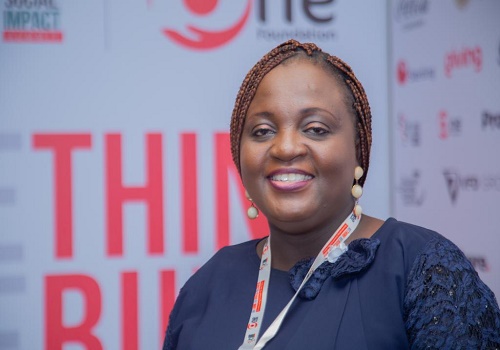
Olapeju Ibekwe, Chief Executive Officer (CEO), Sterling One Foundation
Participating states include Lagos, Abuja, Ogun, Osun, Cross River, Delta, Bayelsa, Ebonyi, Abia, Enugu, Imo, Sokoto, Kano, Benue, Plateau, Kogi and Katsina.
The organisers said the initiative aligns with global sustainability efforts under the United Nations Decade of Action, while promoting collective responsibility in addressing environmental challenges nationwide.
The Chief Operating Officer of Sterling Bank, Mr. Temitayo Adegoke, said the campaign reflected the bank’s commitment to environmental sustainability and collaborative impact.
He noted that the initiative was designed to encourage citizens to take responsibility for their immediate environment and foster a culture of environmental stewardship.
Also, the Chief Executive Officer of Sterling One Foundation, Mrs. Olapeju Ibekwe, said the campaign goes beyond sanitation to promote shared responsibility, public health and community wellbeing.
She said the initiative would empower citizens to take ownership of their environment while contributing to broader sustainable development goals.
The organisers added that the campaign is in response to growing concerns over waste management and urban pollution, noting that it would bring together government agencies, private sector organisations and communities to drive long-term environmental change.
They urged Nigerians to actively participate in the exercise to support efforts toward a cleaner and healthier environment.
Sterling Bank operates as a national commercial bank under Sterling Financial Holdings Group, while Sterling One Foundation focuses on social impact programmes across health, education, climate action and food security.
Petroleum Technology Association of Nigeria (PETAN) has urged indigenous oil and gas companies to leverage the forthcoming 2026 Offshore Technology Conference (OTC) in U.S. to deepen global engagement and attract investment.
PETAN said its participation at the global event would be driven by a deliberate strategy to position Nigerian firms as competitive players within the international energy value chain.
This was made known in a statement issued on Friday, April 24, 2026, in Lagos by the association’s Publicity Secretary, Dr Joan Faluyi.
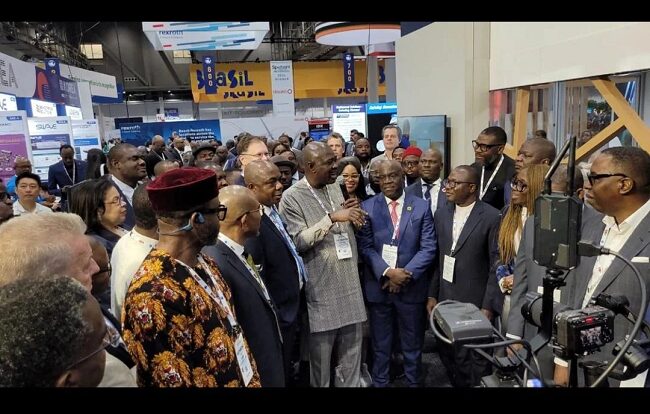
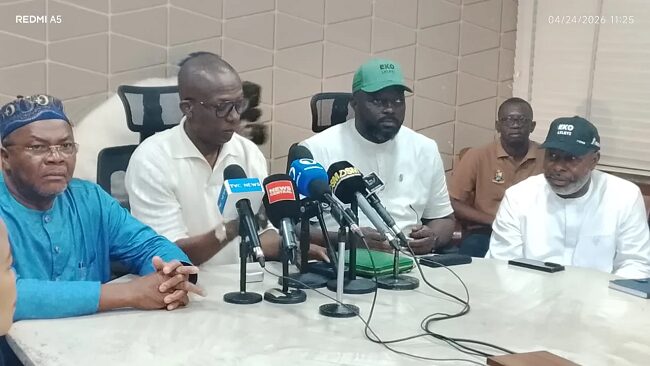
PETAN members and officials at an engagement
Faluyi said PETAN would anchor its activities at the Nigerian Pavilion, with the theme: “Africa’s Energy Transformation: Scaling Investment, Technology, and Local Capacity for Sustainable Growth”.
She noted that the conference, scheduled for May 4 to May 7 in Houston, Texas, remained a leading platform for offshore energy dialogue, partnerships and innovation.
According to her, PETAN’s participation goes beyond routine attendance and reflects a focused effort to strengthen Nigeria’s visibility and influence in global energy discussions.
“At OTC 2026, PETAN is returning with stronger alignment and a clearer objective, to ensure Nigerian companies are not just present, but actively engaged and recognised as credible global partners,” she said.
Faluyi explained that the association had consistently showcased the capabilities of indigenous oil and gas service providers at previous editions of the conference, reinforcing their capacity to compete internationally.
She added that the Nigerian Pavilion would serve as a strategic hub for investment discussions, technical exhibitions and direct engagement with global stakeholders.
The association is also scheduled to participate in key engagements, including the African Energy Forum, the NCDMB–OEM Investment Forum and the PETAN Golf Tournament slated for May 7 at Quail Valley Golf Course, Texas.
Faluyi described OTC as a critical gateway for Nigerian companies seeking international opportunities, noting that visibility and engagement at the event often translate into commercial partnerships.
“In an increasingly competitive energy landscape, securing a seat at the global table is essential. Through sustained participation, PETAN continues to assert Nigeria’s place in that conversation,” she said.
Also speaking, PETAN Chairman, Mr. Wole Ogunsanya, said the association’s focus was to ensure that indigenous capacity is fully integrated into global energy decision-making processes.
“We have seen firsthand how global energy decisions are shaped at OTC. This year, we are returning to ensure indigenous Nigerian capacity is not just present but recognised, engaged and heard.
“We are taking our businesses to the table where real partnerships are formed,” he said.
Faluyi added that under Ogunsanya’s leadership, PETAN was prioritising strategic positioning to ensure Nigerian companies are not only visible but considered credible partners in major international energy projects.
The Civil Society Advocacy Centre (CISLAC) has decried Nigeria’s newly approved 2026 tobacco tax policy warning that the measure favours industry profits at the expense of citizens’ well-being.
The Executive Director, CISLAC, Auwal Rafsanjani, disclosed the organisation’s position on the policy in a statement on Friday, April 24, 2026, in Abuja.
Under the Federal Government’s 2026 Fiscal Policy Measures and Tariff Amendments, which took effect on April 1, a three-year excise duty regime for tobacco products will run until 2028.
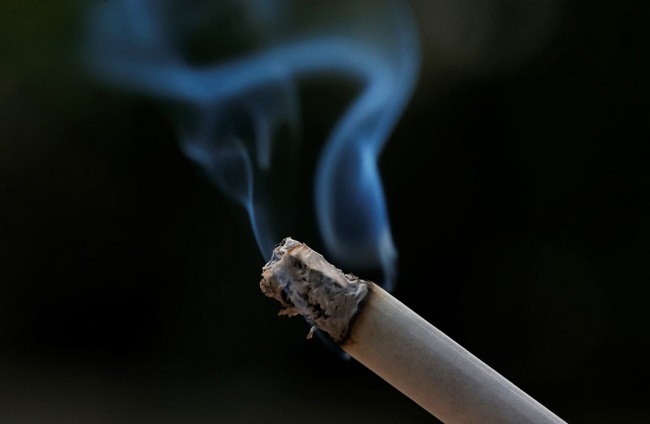
Tobacco smoking
While the policy retains a 30 per cent ad-valorem tax introduced in the previous cycle, it offers only marginal increases of N1 annually on the specific excise component.
CISLAC described the policy as a setback for public health, arguing that it fails to reduce tobacco consumption or align with Nigeria’s obligations under the World Health Organisation Framework Convention on Tobacco Control (WHO FCTC).
Rafsanjani said at the heart of the concern is the widening gap between tax increases and inflation.
“In 2024, a cigarette stick was taxed at N5.20. By 2026, the increment rises by just N0.80, about 13 percent, while inflation has climbed above 15 per cent.
“This effectively makes tobacco products more affordable not less, undermining the core purpose of health taxes.
“Comparisons with regional standards further highlight the shortfall. The ECOWAS benchmark recommends a specific excise tax equivalent to about N538 per pack of cigarettes.
“Nigeria’s projected rates, even at their peak in 2028, would only reach around N160 per pack – less than 30 percent of the regional target,” Rafsanjani said.
He argued that the policy disproportionately benefits tobacco companies by preserving high profit margins while limiting government revenue and exposing more Nigerians – particularly young people – to the risks of addiction.
He further said that for low-income households, the continued affordability of tobacco could deepen cycles of poverty and worsen health outcomes.
The CISLAC boss said this policy was in contrast to the government’s broader fiscal stance, noting a contradiction between aggressive reforms in other sectors – such as fuel subsidy removal.
He said it is a departure from the current administration’s campaign promises to deploy health taxes as a tool for funding universal healthcare and discouraging harmful behaviours.
Rafsanjani therefore urged the government to overhaul the tax regime, align it with ECOWAS directives, and adopt a stronger, inflation-adjusted excise system that significantly raises tobacco prices over time.
He also called for greater transparency and insulation of public health policies from industry influence.
The Nigerian National Petroleum Company Limited (NNPC Ltd.) has described as false and misleading reports suggesting it is selling scrap materials, equipment, or components from its refineries to individuals and private companies.
Mr. Andy Odeh, Chief Corporate Communications Officer, NNPC Ltd., in a statement on Friday, April 24, 2026, said it had not issued any request for bids, tenders, expressions of interest or approvals for the sale of scrap materials and refinery components.
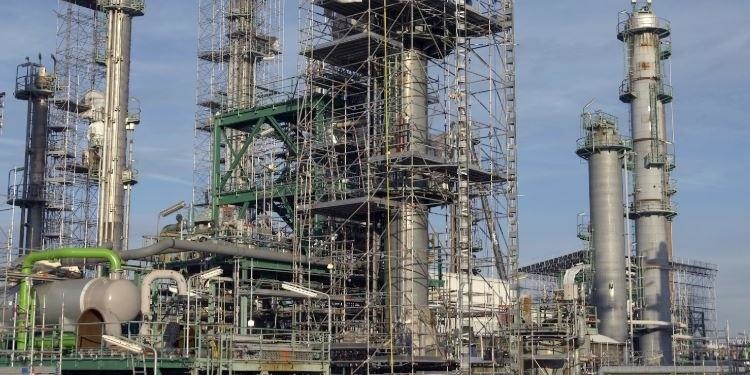
Port Harcourt Refinery
“The Company wishes to categorically state that this information is untrue.
“NNPC Limited has not issued any request for bids, tenders, expressions of interest, or approvals for the sale of scrap materials, refinery components, or any items from the warehouses or inventories of any of its refineries.
“NNPC Limited has also received reports that certain individuals are falsely presenting themselves as representatives or agents of the company, claiming to facilitate the sale of so-called ‘scrap metals’ or refinery equipment.
“These individuals are not authorised by NNPC Limited and are attempting to mislead members of the public,” he said.
Odeh, therefore, advised the public, corporate organisations, and industry stakeholders to disregard any such claims or solicitations and to exercise caution in dealing with anyone making such representations.
He said for the avoidance of doubt, NNPC Limited was not conducting, nor had it authorised, any sale of scrap metals, equipment, or refinery components from any of its facilities.
The NNPC imagemaker said any legitimate disposal of assets by the company would only be conducted through established and transparent processes, publicly communicated through its official channels and in accordance with applicable regulations.
“Members of the public who encounter individuals or entities making such claims are encouraged to report them to the appropriate law enforcement authorities.
“NNPC Limited remains committed to transparency, accountability, and the responsible management of national energy assets,” he said.
Lagos State Government on Friday, April 24, 2026, advised the residents to disregard misinformation surrounding its reintroduction of monthly environmental sanitation scheduled to begin on Saturday.
The state Commissioner for the Environment and Water Resources, Mr. Tokunbo Wahab, said that certain quarters had argued that the sanitation issue was still in court, thereby questioning the state government’s rights to go ahead with the exercise.
Wahab disclosed at a news conference on Friday in Lagos that the law was on the side of government to proceed with the exercise, and that residents should show commitment to the exercise to improve cleanliness and promote health.
Commissioner for the Environment and Water Resources, Mr. Tokunbo Wahab, addressing a news conference in Lagos
He said the exercise would hold monthly between 6.30 a.m. and 8.30 a.m. during which residents would be expected to clean their surroundings.
Wahab said the initiative was aimed at restoring the culture of environmental cleanliness and responsibility that declined over the years.
“Government cannot do it alone. Residents must take ownership of their environment,” he said.
Wahab noted that key stakeholders, including transport unions, community development associations, market leaders and local government officials, were fully aligned with the programme.
The commissioner emphasised that awareness about the exercise would be continuous, describing it as critical to achieving the desired result.
According to him, environmental sanitation should be seen as a civic responsibility.
“We must prioritise public health and environmental safety,” he said.
Wahab cited global responses to crises such as the COVID-19 pandemic to underscore the importance of collective discipline and action.
He said that exemptions would be granted for essential service providers and emergency responders during the exercise.
The commissioner urged Lagos residents to devote the two-hour period to cleaning their environments.
Mrs. Temitope Dosumu, Head of Geocycle Nigeria at Lafarge Africa Plc., said the firm would support the initiative through waste collection and processing.
Dosumu said that the firm would focus on sorting and managing waste for industrial reuse in line with the company’s zero-waste goal.
Heads of agencies under Lagos State Ministry of the Environment attended the conference along with other critical stakeholders.
Meanwhile, the Chairman, Alimosho Local Government, Mr. Johnson Akinpelu, has urged residents to prepare and actively participate in the reintroduced monthly environmental sanitation exercise.
Akinpelu said in a statement on Friday that it was incumbent on all the residents to understand that a cleaner environment was the foundation for healthy living.
“We must cultivate the habit of keeping our surroundings clean. Littering the streets is a bad practice, and a dirty environment is harmful to our health.
“The reintroduction of the monthly environmental sanitation by the Lagos State Government is a welcome development that we must all support and appreciate,” he said.
According to him, the council will continue to do everything within its power to ensure a cleaner Alimosho.
The chairman called on all residents, community leaders, traders, and stakeholders to take ownership of the initiative and contribute meaningfully to maintaining a safe, hygienic, and sustainable environment for all.
Also, Mrs. Opeyemi Akindele, the Chairman, Mosan Okunola Local Council Development Area (LCDA), said in a statement on Friday that the reintroduction of the exercise would promote a cleaner, safer and healthier environment for all residents.
“We are aligning fully to this initiative to promote a cleaner, safer, and healthier environment for all residents.
“This exercise is not just a routine, it is a civic responsibility. A clean environment reduces health risks, prevents flooding caused by blocked drainage, and enhances the overall wellbeing of our communities.
“Residents of Mosan Okunola are therefore urged to actively participate,” the chairman said.
According to her, the exercise will allow them to clean their homes and immediate surroundings, desilt gutters and drainage channels and dispose waste responsibly through approved channels.
The chairman added that supporting community sanitation efforts would help sustain the vision of a cleaner Lagos and a healthier Mosan Okunola LCDA.
“Let us all come out, take responsibility, and keep our environment safe,” she said.
By Fabian Ekeruche, Olaitan Adekeye and Kazeem Akande
The Human and Environmental Development Agenda (HEDA Resource Centre) has issued an advisory on the 2026 flood outlook, warning farmers and stakeholders of widespread risks across Nigeria.
The Executive Secretary, HEDA Resource Centre, Mr. Sulaimon Arigbabu, disclosed this in an interview on Thursday, April 23, 2026, in Lagos.
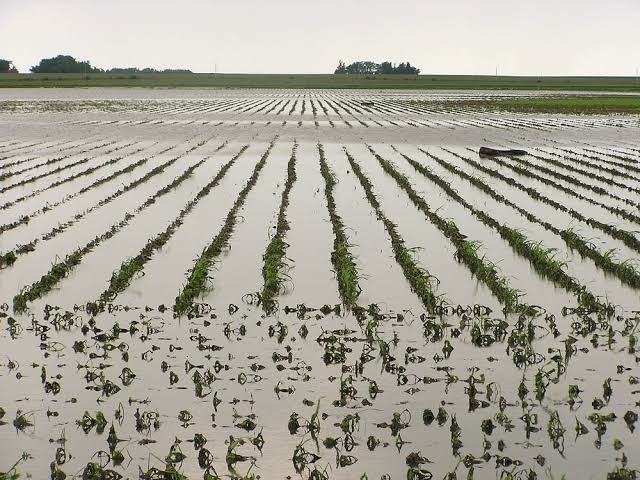
The forecast by the Nigeria Hydrological Services Agency shows 4.2 million hectares of cropland at risk during the flood season.
Flooded farmland
It said 14,158 communities in 34 states and the FCT face high risk during July–September, while 11,575 communities in 31 states risk flooding in October–November.
Arigbabu identified Kogi, Niger, Delta, Anambra, Benue, Kebbi, Rivers, Bayelsa, Adamawa and Cross River states as most vulnerable to sustained flooding.
He said HEDA advisory explained three flood windows: April–June with low to medium risk, July–September peak flooding, and October–November “Black Flood” driven by dam releases.
He warned rice farmers in floodplain states to harvest before October, noting that late-season crops face total loss during peak flooding.
“Maize farmers were urged to plant early to avoid damage during grain-filling, especially in northern and central states.
“Cassava and yam farmers in southern states are cautioned against waterlogging, which could cause root rot and reduced yields.
“Groundnut and cowpea farmers are advised to harvest before late September to avoid flood damage and contamination.
“Fadama farmers are warned to complete vegetable harvests before October to prevent total crop loss in flood-prone areas,” Arigbabu said.
He said livestock farmers face flooding and disease risks, alongside dry-season water shortages in northern regions.
He advised poultry farmers to stockpile feed and strengthen biosecurity to mitigate flood-related disruptions.
Arigbabu urged fish farmers to reinforce ponds, while small ruminant farmers should relocate shelters and store feed early.
The expert called on governments to activate extension services, support farmers, and intensify community sensitisation.
Arigbabu stressed that early preparation and use of the forecast could help reduce losses and protect livelihoods.
Society for Family Health (SFH), a non-govermental organisation, has enhanced Water, Sanitation and Hygiene (WASH) access in rural communities with the inauguration of two solar-powered boreholes in Toto Local Government Area (LGA) of Nasarawa State.
The project, valued at N10 million, forms part of SFH’s WASH intervention under its WASH for Healthy Lives (W4HL) project in the state.
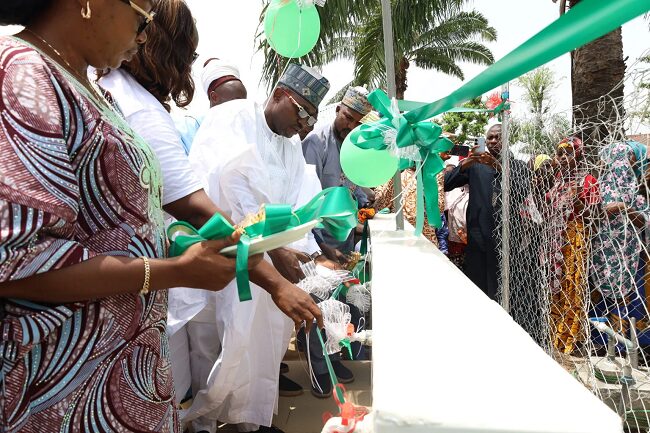
Chairman of Toto LGA, Mr. Ahmed Baba-Yahaya, who inaugurated the boreholes on Thursday, April 23, 2026, in Toto, appreciated the NGO for the initiative, describing it as a demonstration of SFH’s commitment to addressing water shortages in rural communities in the state.
Chairman of Toto LGA, Mr. Ahmed Baba-Yahaya, who inaugurated the boreholes on Thursday, April 23, 2026, in Toto
He assured that officials of the council would visit the communities regularly to ensure proper use and maintenance of the boreholes.
“Out of the 13 LGAs in Nasarawa State, you considered Toto. My joy knows no bounds.
“We will continue to support the community, that’s for sure. Some of us may just see it as a mere borehole, but the impact it will have on the lives of the people here is massive,” he said.
Baba-Yahaya also pledged that the council would work closely with SFH to promote healthy behavioural change in more communities and support other interventions by the organisation.
The Group Managing Director of SFH, Dr Omokhudu Idogho, represented by the Project Director, Ms. Jane Adizue, commended staff, contractors and residents of the benefiting communities for their contributions to the success of the project.
He explained that the project was conceived in 2021, when SFH sought funding from its donor, Procter and Gamble, to implement WASH interventions.
“We looked at the country to see where we can make interventions and have great impact and Nasarawa State happens to be one of the states chosen. So we are implementing in Nasarawa State and also in Edo State.
“At the beginning, with funding from our donor, what we were just doing was behaviour change communication and it had great impact in the lives of Nasarawa residents.
“So we went back to our donor for more funding to put in place infrastructure that will make practising the healthy habits that we have taught the residents easier and our request was granted,” he said.
Idogho added that SFH would continue to advocate WASH practices among residents of Nasarawa and Nigerians at large to entrench healthy living.
“We have community members going from house to house to tell people to practise adequate hygiene, treat their water before drinking and also maintain sanitation in their environments,” he said.
The intervention selected Buga Sabo and Chiji villages in Toto LGA as beneficiary communities, while Karu, Nasarawa and Obi councils have benefited from one intervention or another by the organisation.
The Lagos State Environmental Protection Agency has stepped up efforts to address the growing challenge of electronic waste (e-waste), particularly from off-grid renewable energy systems.
The General Manager, LASEPA, Dr Tunde Ajayi, said this during a strategic meeting with the E-waste Producers Responsibility Organisation of Nigeria (EPRON) and the ministry’s Sustainability Unit.
Ajayi posted it on his verified X handle on Thursday, April 23, 2026, in Lagos.
General Manager, LASEPA, Dr Tunde Ajayi (right)
He said the engagement focused on strengthening data systems, enforcement mechanisms, and capacity building across the e-waste value chain.
According to him, stakeholders agreed that consistent data gathering and sharing are critical to driving investment and informed decision-making in the sector.
He added that monitoring and enforcement must be deliberate and firm, while training for collectors and recyclers should be continuous rather than one-off interventions.
He outlined key resolutions from the meeting, noting that e-waste management would now be integrated into organisational audit reports.
He said such reports must include volumes generated and evidence of disposal through vendors accredited by the LASEPA, backed by certificates of safe disposal.
He disclosed that quarterly volume reports from e-waste collectors would become mandatory for permit renewal.
“Any collector that fails to submit reports will not have permits renewed,” he said.
He added that annual staff training by e-waste collectors had also been made a condition for permit renewal.
Ajayi said EPRON would provide a comprehensive database of electrical and electronic equipment importers, producers, and manufacturers operating in Lagos, including volumes brought into the state.
He further revealed that the state would organise biannual training for e-waste collectors, with the first session scheduled before June and the second in October, possibly to coincide with International E-Waste Day.
According to him, recyclers are also required to submit quarterly reports detailing volumes processed.
He said the government, in collaboration with EPRON, would develop a joint compliance and monitoring checklist to assess collector and recycler performance quarterly.
Ajayi noted that a list of defaulting and non-compliant collectors was being compiled and would form the basis for enforcement actions.
Where I come from – Hawai’i – the reef isn’t just something you look at. It’s part of us. It feeds our families, protects our shores, and lives at the centre of our culture. In our stories, coral is one of our oldest ancestors. It’s a reminder that everything in the ocean, and all of us, are connected.
Right now, that integral connection is under threat.
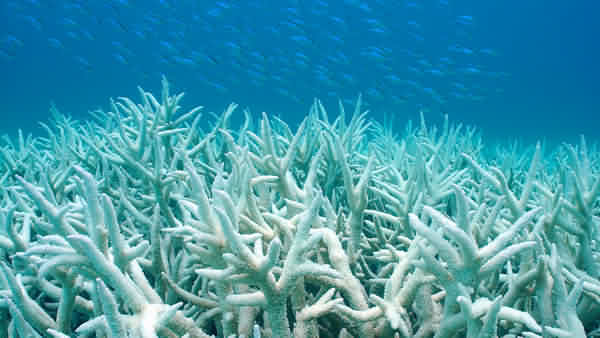
Bleached coral reefs
Our coral reefs are under severe stress. The planet has just experienced the most widespread coral bleaching event ever recorded, lasting 33 months into 2025. Scientists warn that at 1.5C of global warming, up to 90% of coral reefs could be lost. Ninety per cent. And 1.5C is not lingering in the distance – it’s extremely close.
Even if the world somehow hits its climate targets, reefs are still getting pummeled by plastic pollution, coastal development, agricultural runoff and overfishing. They’re so fragile. And when reefs weaken, coastlines get hit harder by storms and rising seas. Homes and jobs become exposed. Cultures and sacred places are put at risk. And the incredible range of underwater life found only in reefs – once it’s gone, it’s gone for good.
But I refuse to let coral reefs be a lost cause.
Read the full op-ed by actor, filmmaker and UNEP Advocate for Life Below Water, Jason Momoa. The op-ed was published in The Guardian on April 17, 2026.
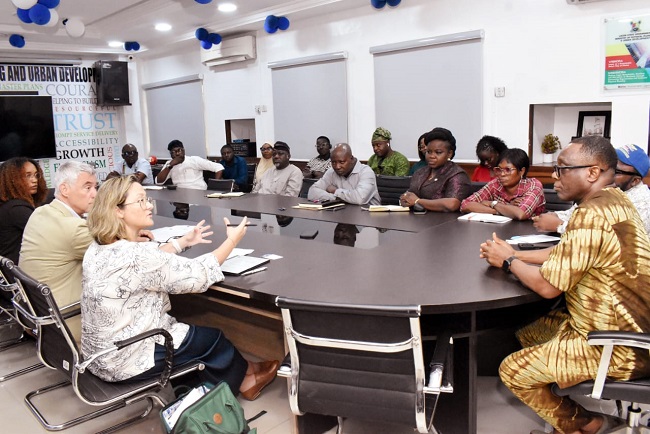
The Lagos State Government, through the Ministry of Physical Planning and Urban Development, on Wednesday, April 22, 2026, received the European Union Delegation on a strategic visit aimed at reinforcing collaboration on sustainable urban growth, land use efficiency, and integrated mobility systems within the state.
The meeting, held at the Alausa Secretariat, centred on Transport Corridor Development, Urban Mobility, and strategies for delivering resilient infrastructure to enhance connectivity. The engagement also emphasised the need for innovative planning frameworks to address rapid urbanisation while ensuring sustainability and economic inclusion.
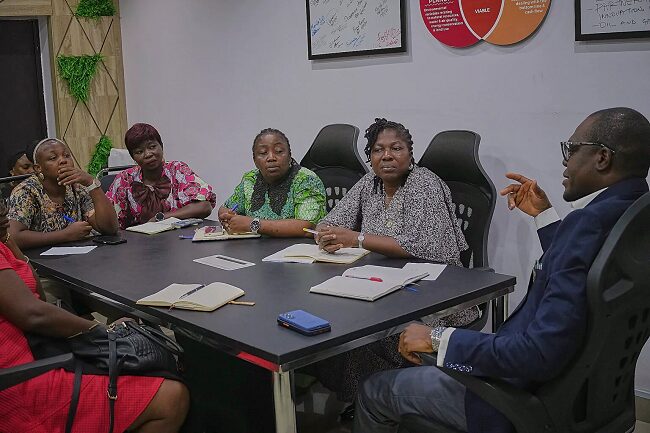
Deliberation at the meeting involving Lagos State Government officials and the European Union Delegation
The Commissioner, Ministry of Physical Planning and Urban Development, Dr. Oluyinka Olumide, called for enhanced technical cooperation, knowledge exchange, and investment-driven initiatives aimed at improving urban resilience and mobility infrastructure.
“You will agree with me that Lagos is a key economic hub in West Africa, and we are confident in our strategic direction towards sustainable physical planning transformation,” he stated.
The Permanent Secretary, Office of Physical Planning, Oluwole Sotire, commended the European Union for its sustained commitment to supporting developmental initiatives across the region. He noted that Lagos, as a rapidly expanding megacity, requires forward-thinking partnerships that will enhance its capacity to deliver efficient land use systems and modern transportation networks.
Sotire emphasised that the State Government remains focused on implementing policies and master plans that promote orderly development, reduce congestion, and improve the overall quality of life for residents. He further stressed that collaboration with international partners such as the EU is critical to achieving globally aligned physical planning standards.
In her remarks, the Team Lead, Celihe Lhoste, stated that the visit underscores the EU’s commitment to fostering sustainable cities through strategic partnerships.
“Lagos represents a dynamic model of urban growth in Africa. Our engagement today reflects the European Union’s readiness to support initiatives that promote efficient land use, climate-resilient infrastructure, and inclusive mobility systems,” she said.
She further noted that the EU is particularly interested in strengthening technical cooperation with Lagos State in areas such as smart physical planning, sustainable transport systems, and institutional capacity development.
Another member of the delegation, Jacques Remy, highlighted the importance of integrated planning in addressing urban challenges, noting: “The future of cities like Lagos depends on coordinated approaches that bring together land use planning, transportation, and environmental considerations. The European Union is committed to supporting frameworks that deliver long-term impact and resilience.”
Also speaking, the Director, Regional and Masterplan Department, Adeshina Shobowale, stated that while Lagos has several strategic development plans in place, there is a need for a unified planning framework.
He called for the adoption of a comprehensive, layered document that integrates all planning components and effectively addresses the State’s evolving urban needs.
The meeting was followed by visits to key landmark project sites, including the Marina Train Station, the Lagos-Calabar Coastal Road, Lekki Free Trade Zone, and the Àlaro City, amongst other strategic locations.
The engagement provided an opportunity for both parties to explore potential areas of partnership, including smart city development, data-driven urban planning, climate-resilient infrastructure, and capacity building for relevant agencies within the State.
Other officials present at the meeting included Kikelomo Asogbon, Director of Town Planning; Hakeem Animashaun, Director, Development Matters; and Mrs. Titilayo Oshodi-Eko, Director, Public Affairs, among others.
The meeting marks another significant step in strengthening international cooperation towards building inclusive, efficient, and future-ready cities, with Lagos State positioned at the forefront of physical planning innovation in Africa.