Nigeria can harness her gas resources for industrialisation if it achieves stable regulatory enforcement, fair pricing and infrastructure ownership models in the sector, Managing Director Shell Nigeria Gas (SNG), Ralph Gbobo, said in Lagos recently.
Speaking at the Energy Week of the Lagos Section of the Society of Petroleum Engineers (SPE), Gbobo said investors need “a stable, fast and transparent implementation” of rules while a fair pricing regime could be achieved with “the right incentives to grow pipeline gas” which would also attract more investments.
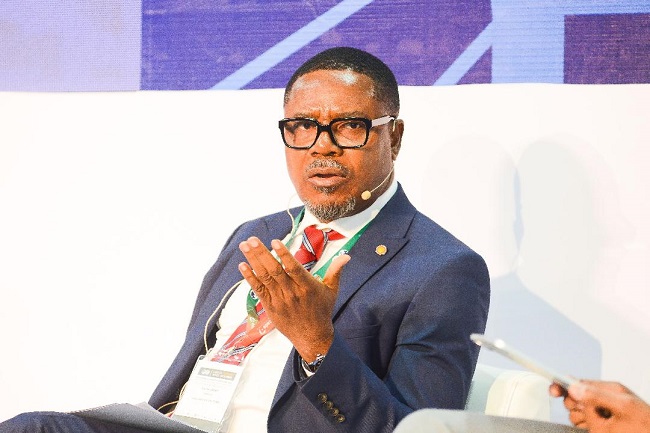
Managing Director, Shell Nigeria Gas (SNG), Ralph Gbobo, during the panel section
On infrastructure ownership models, he called for the completion of ongoing projects and ensuring the reliability of the Escravos-Lagos Pipeline System through “clear service standards.”
He said government could also encourage investments in gas distribution through “demand aggregation.”
“We need to create a friendly business environment and a clear plan (e.g., industrial parks or designated zones) so demand is clustered. That makes it easier for a distributor to get a license, invest, and build shared infrastructure that serves many industries – not just one or two.”
Gbobo added: “Public–private partnership is crucial. Government backing helps planning and delivery. This model can also support industrial parks and other ways to aggregate demand.”
President Bola Tinubu on Tuesday, March 3, 2026, in Abuja inaugurated the Renewed Hope Climate Change Awareness Tour (REHCCAT), a national initiative aimed at promoting climate resilience and sustainable development across Nigeria.
Speaking at the State House Conference Centre, Tinubu urged governors, organised private sector actors, and other stakeholders to lead Nigeria’s climate transition, transforming awareness into practical action at all levels.
Represented by the Minister of Environment, Balarabe Lawal, the President said climate change was not only a risk but also an opportunity for innovation, growth, and national development.
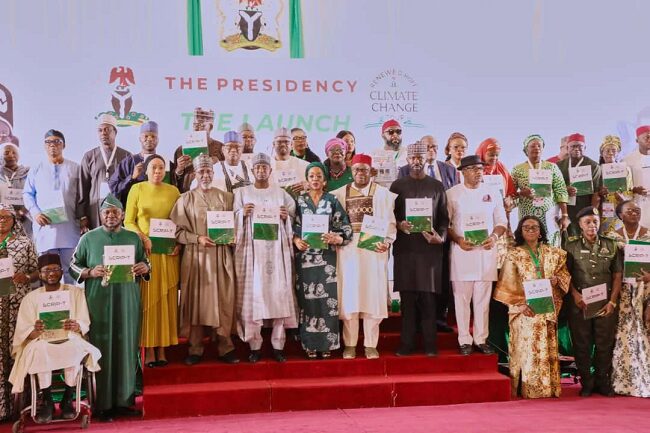
Dignitaries at the launch of the Renewed Hope Climate Change Awareness Tour (REHCCAT)
“Today we inaugurate a movement, the Renewed Hope Climate Change Awareness Tour.
“It is a national call to action, a call to innovation, opportunity, and sustainable development for all Nigerians,” Tinubu said.
He highlighted the impacts of climate change across the country: droughts affecting northern farmers, coastal erosion and flooding in the south, business disruptions, energy supply challenges, and the future of Nigerian youth.
Tinubu stressed that Nigeria stood at a defining moment as the global transition to low-carbon development accelerated.
“Capital is shifting, markets are evolving, and technology is transforming industries. Nigeria intends to lead tomorrow,” he said.
He explained that the tour would take climate awareness beyond conference halls into communities, engaging governors, traditional rulers, students, innovators, entrepreneurs, farmers, and financial institutions nationwide.
“Through this tour, we will identify bankable projects, unlock local solutions, strengthen climate finance capacity, and mobilise partnerships between the public and private sectors,” he added.
The President emphasised that nationally determined contributions were commitments to reduce emissions, enhance resilience, and safeguard communities.
“Commitments must be matched with action, supported by investment, and this tour bridges that gap,” he said.
He urged young Nigerians to take ownership of the climate transition, stressing that their ideas, technology, and entrepreneurship would shape the nation’s future while aligning with the Renewed Hope Agenda.
“Climate resilience is national security. Leadership is not a budget; it is a result we must accept with confidence. Nigeria chooses leadership over hesitation,” Tinubu said.
Also, Lawal, represented by the Director of Forestry, Halima Bawa, highlighted the urgency of confronting climate change, noting its effects, including desert encroachment, flooding, coastal erosion, and erratic rainfall affecting farmers.
Lawal lauded the Climate Change Act 2021 for establishing a legal framework for coordinated climate governance, carbon budgeting, and a pathway to net-zero emissions by 2060, institutionalising climate action across sectors.
He stressed the need for climate governance to extend beyond federal initiatives, urging implementation at subnational and grassroots levels to ensure meaningful impact in communities.
Special Assistant to the President on Climate Change Matters, Yussuf Kelani, said the tour represented a national movement grounded in leadership, collaboration, and commitment to Nigeria’s environmental and economic security.
Kelani, Chairman of the REHCCAT Committee, said the initiative sought to democratise climate knowledge, aligned federal and state-level action with Nigeria’s NDCs, and mobilise partnerships, green jobs, and climate finance.
“REHCCAT will proceed across Nigeria’s six geopolitical zones, beginning with two strategic states per zone, and convene high-level policy dialogues with governors, commissioners, state legislatures, youth, women, farmers, artisans, and community leaders.”
Guest Speaker, Prof. Babajide Alo, emphasised that climate resilience required locally led adaptation, community empowerment, and capacity-building to actively manage climate risks and implement sustainable solutions.
“Securing Nigeria’s climate future requires revisiting priorities and lifestyles, embracing responsible consumption, reducing carbon footprints, and embedding sustainable development in every sector,” Alo said, calling for action at all levels.
Chairman of the Society of Petroleum Engineers Nigeria Council, Mr. Francis Nwaochei, has called for resilience, strategic coordination and disciplined execution to reposition Nigeria as a dominant force in the global oil market.
Nwaochei made the call ahead of the 2026 Oloibiri Lecture Series and Energy Forum (OLEF), scheduled to hold on April 9 at the Petroleum Technology Development Fund (PTDF) Tower in Abuja.
The 2026 edition has the theme “Beyond the Three Million Barrels Target: Harmonising Digitalisation, Capital and Policy Frameworks for Intelligent Operations and Asset Optimisation”.
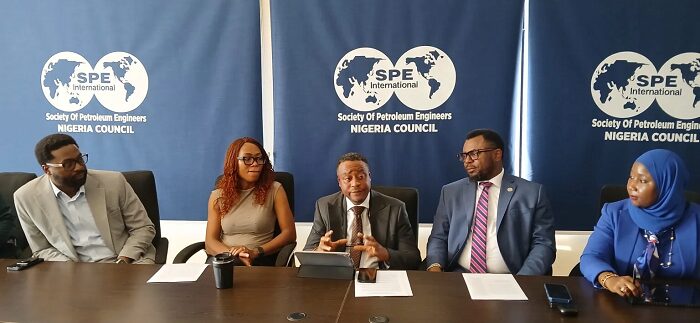
L-R: Chima Okorie, Communication & Protocol Chair; Hassannah Salami, SPE Lagos Secretary; Effa Agbor, Vice Council Chair; Francis Nwaochei, Council Chair; and Priscilla Enwere, OLEF Chairperson
It will focus on moving Nigeria’s production drive from aspiration to implementation.
He said geopolitical tensions and supply chain disruptions had exposed vulnerabilities in global energy systems while creating leadership opportunities for resource-rich nations like Nigeria.
“Global instability underscores the importance of disciplined planning in our petroleum industry. But it also presents Nigeria with a unique opportunity to lead,” he said.
According to him, Nigeria’s ambition to exceed three million barrels per day is achievable, but only through innovation, disciplined capital deployment and smarter institutional coordination.
“Easy production is no longer an option. Only intelligent operations will deliver sustainable growth,” he added.
Nwaochei noted that crude oil output directly affects public revenue, foreign exchange stability, infrastructure financing and overall economic confidence, stressing that production levels ultimately influence the cost of living.
He said surpassing the three-million-barrel threshold was fundamental to strengthening fiscal stability, supporting domestic refining, unlocking gas resources for power and industry, and reinforcing Nigeria’s credibility as a dependable global supplier.
However, he cautioned that ambition without structural alignment would falter.
“When approval processes are slow or mandates overlap, investment momentum weakens. Unclear fiscal terms deter capital.
“Real progress depends on aligning digital innovation and funding with efficient and transparent policies,” he said.
Nwaochei explained that OLEF 2026 would centre on three pillars: financing, policy alignment and asset optimisation – with discussions expected to address implementation of Nigeria’s petroleum industry framework, fiscal stability and investor confidence.
He added that the forum would also examine ways to strengthen indigenous operators through improved access to financing and technology partnerships, as well as unlock value from idle wellbores.
The chairman highlighted the transformation underway in the downstream segment, driven by the emergence of the Dangote Refinery and a growing network of modular refineries.
He said expanded domestic refining capacity could reshape fuel supply dynamics, employment levels, pricing structures and foreign exchange management, but stressed that investments in pipelines, storage and gas-to-liquids projects remained critical.
Nwaochei reaffirmed the council’s commitment to facilitating technical dialogue and providing data-driven insights to support informed decision-making.
“Unlike ceremonial conferences, OLEF 2026 is structured as a working forum designed to produce concrete recommendations capable of shaping regulatory reviews, investment strategies and national planning.
“Nigeria’s energy future must be competitive, resilient and sustainable. We must balance innovation with strong regulation, investment with stability, and ambition with disciplined execution,” Nwaochei said.
The Director-General, National Agency for Food and Drug Administration and Control (NAFDAC), Prof. Mojisola Adeyeye, says the ban on alcohol in small pack sizes remains the best solution to tackle the menace of underage drinking.
Adeyeye said this at a news conference in Abuja on Tuesday, March 3, 2026, to mark the commencement of enforcement of the ban on sachet alcoholic drinks nationwide.
The enforcement would be carried out by the NAFDAC, National Orientation Agency (NOA) and the Federal Competition and Consumer Protection Commission (FCCPC).
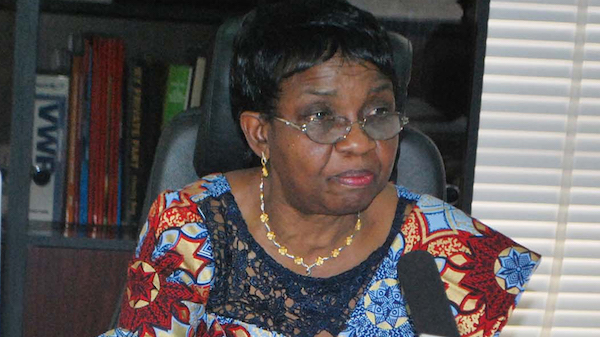
Prof. Mojisola Adeyeye, Director-General, National Agency for Food and Drug Administration and Control (NAFDAC)
The NAFDAC boss said restricting access to sachets and small volume bottles, which could be easily concealed, would limit children’s access to alcohol.
According to her, alcohol is one of the most widely used substances of abuse among youths.
Adeyeye said several studies showed a rapid increase in alcohol availability, production, importation and consumption across age groups in recent decades.
She added that the availability and easy access to alcohol had been identified as a contributory factor to the increasing alcohol consumption among minors.
Adeyeye recalled that, in 2018, the Association of Food and Beverage and Tobacco Employers (AFBTE) and the Distillers and Blenders Association of Nigeria (DBAN), which are part of NAFDAC council, reported NAFDAC management to the Ministry of Health and Social Welfare.
“In 2018, AFBTE and DBAN took NAFDAC to the Ministry of Health and Social Welfare that we were trying to reduce the concentration of alcohol in sachets. By that time, it was like 50 per cent in the sachet.
“DBAN and AFBTE said that their businesses would be destroyed. That was 2018. The then Prof. Pate, the Minister of Health, gave these trade groups five years to reorganise their business.
“On Feb.1, 2024, five years after, we started enforcement because our mandate is to regulate and control the manufacture, importation, exportation, distribution, advertisement, sale and use. Of seven regulated products, alcohol is part of food.
“They resisted us and they took us to the Committee on NAFDAC at the National Assembly, who told us to suspend what we were doing in 2024. It went back and forth throughout 2024. We couldn’t do what we were supposed to do.
“In December 2024, the then Minister, Prof. Pate, said we should give an extra one year and we gave it,” she said.
The NAFDAC director-general said after the agency started enforcement following the order by the Senate, the trade groups also sought for another extension.
“However, in 2018, when this moratorium was given, we were also told to do a survey to even see the impact on our children. We did our survey in NAFDAC.
“The results were not pleasing to the disciplinary group. They said they want an independent survey. So, we had an independent survey. It was conducted in 2021 during the pandemic,” she said.
Adeyeye said the overall objective of the research was to undertake a national survey of consumers and retailers of alcohol, beverages and wines to determine the extent of alcohol abuse among the underage.
She said about 2,000 respondents were sampled across the six geopolitical zones, adding that the result was damning to the country.
Adeyeye said findings showed that 54.3 per cent of minors and underage obtained alcohol by themselves from various sources, while 49.9 per cent patronised retailers selling sachets and pet bottles.
The NAFDAC boss, who said 50 per cent of children drink alcohol, said findings further suggest that minors and underage also access alcoholic drinks from friends and relatives, as well as from social guardians.
“Of those who procure drinks for themselves, 47.2 per cent of minors and 48.8 per cent of underage procure drinks in sachets because it is easy to conceal.
“Whether you are a good parent or a bad parent, it doesn’t really matter. These sachets are easy to conceal and that is what NAFDAC has banned.
“The survey data revealed that 63.2 per cent of minors and 54 per cent of underage drink alcohol occasionally, while 44.3 per cent and 38.3 per cent of adults drink alcohol occasionally and daily respectively.
“So, they even drink it more than adults because it is easy to conceal. Additionally, 9.3 per cent of minors and 25.2 per cent of underage children consume alcoholic beverages.
“And 11.3 per cent of minors and 9.4 per cent of underage consume alcohol at least once a week. As young as nine years old in this survey consume alcohol,” she said.
According to her, most minors and underage buy alcohol for themselves. It’s about N50 to buy a sachet of alcohol. Some people have been made rich, but some children are losing their livelihoods and future.
“Some children are potential patients for liver cirrhosis, kidney failure, mental instability.
On the pattern of alcohol consumption and abuse by minors and underage, the survey findings revealed that about 11.7 per cent of underage children are ever engaged in binge drinking.
“This is mostly reported in Gombe. In terms of the most use of alcohol, it is Lagos and Rivers states.”
Adeyeye said NAFDAC expressed concern following its mandate aimed to ensure protection of public health, including children.
Speaking on its impact on health and brain development, she said alcohol could damage the hippocampus, memory centre in the brain and prefrontal cortex leading to permanent issues with learning, memory and impulse control.
According to her, underage drinking is linked to liver and kidney damage.Hypertension, disrupted hormone growth and increased cancer risk later in life.
This, she said, also increases risk of depression, anxiety and low self-esteem.
“Youth who begins drinking before age 15, the minors and underage in our study are 41 per cent more likely to become dependent on alcohol. And this study also shows that they graduate to start taking cocaine and other narcotics.
“It also has behavioural consequences as violence remains a major factor in youth suicides, homicides and motor vehicle crashes or accidents.
“Risky behaviour is strongly linked to unprotected sexual activity, unwanted pregnancies and sexually transmitted diseases,” she said.
According to her, it also contributes to academic problem because drinking often leads to lower grades, missed classes and impaired cognitive function.
“In our country, it is responsible for banditry. It is responsible for kidnapping. You cannot be in your right mind and point a gun at somebody. It starts from alcohol and then goes on to hard drugs.
“Because of all these, the Senate made its resolutions on Nov. 6, 2025, and were communicated to the Secretary to the Government of the Federation (SGF) on December 1, 2025.
“The resolutions urge NAFDAC not to grant further extension to the moratorium and to ensure immediate strict enforcement of the ban on such alcohol and alcohol in small bottles.
“It urges the Federal Ministry of Health and Social Welfare to support NAFDAC on the ban on such alcohol and alcohol in smaller volumes.
“It urges the Federal Ministry of Health and Social Welfare to release its national alcohol policy that includes prohibition of alcohol in sachets and small volume less than 200 mls.
“It urges the National Orientation Agency and NAFDAC to collaborate and intensify nationwide sensitisation of dangers of alcohol in sachets and small volume bottles,” she said.
Earlier, the Director, Corporate Affairs, FCCPC, Mr. Ondaje Ijagwu, said the commission would subject offenders in the food and drug sector to the offences and penalties based on the extant laws.
“So, by tomorrow, when we begin full enforcement, and which we must, we will not be asked questions as to why we are subjecting offenders to a certain kind of penalties and sanctions. Our sanctions are quite severe.
“By the time we begin implementation, and which we are commencing immediately, Nigerians would know,” Ijagwu said.
The Director-General of NOA, Malam Lanre Onilu, said the Federal Government, through NAFDAC, had banned the production and sale of alcohol in sachets and in PET or glass bottles below 200 millilitres, effective from Jan. 1, 2026.
According to Onilu, this decision is a deliberate public health intervention aimed at reducing underage access to cheap, high-concentration alcohol and curbing the alarming pattern of harmful consumption across our communities.
“This is why this collaboration is important. NAFDAC safeguards public health through regulation. FCCPC protects consumer rights and ensures responsible market practices.
“The National Orientation Agency mobilises citizens for behavioural change and national consciousness. Together, we are aligning regulation, consumer protection and public enlightenment to ensure that this policy achieves its intended impact,” he said.
The Publisher of online news platform, August24news.com, Mr. Ajagbe Adeyemi Teslim, popularly known as “Omoatitebi”, has formally entered the political arena, declaring his intention to contest for the Lagos State House of Assembly seat representing Lagos Island Constituency II under the ruling All Progressives Congress (APC) ahead of the 2027 general elections.
Ajagbe made his aspiration public during a press conference held in Lagos on Thursday, March 26, 2026, attended by selected journalists, signalling his transition from the press gallery to the legislative chamber.
Ajagbe Adeyemi Teslim (right)
From the Newsroom to the Assembly Floor
A seasoned media entrepreneur with decades of political reporting experience in Lagos, Ajagbe cuts a distinctive figure among the emerging crop of aspirants. His declaration is fuelled, he says, by repeated calls from constituents – particularly the youths – who have experienced his grassroots leadership style firsthand.
“My humble self and my media platform have been reporting Lagos politics effectively, particularly the Lagos State House of Assembly, for decades,” Ajagbe told journalists at the event. “I am versatile about the Lagos State House of Assembly doctrine, politics and lawmaking. I have learnt the ropes of legislation in Lagos State, and I shall deliver perfectly without any lacuna.”
The journalist-turned-politician framed his legislative ambition as a civic duty – a way of “paying back to his community” – drawing on what he described as a wealth of experience in media, communications, and public exposure.
A Political Résumé Rooted in Grassroots Mobilisation
Ajagbe is no stranger to Lagos Island’s political landscape. He previously contested a Councillorship seat in Ward E3, Lagos Island East LCDA, and later served as the Special Adviser on Media and Digital Communications to the Executive Chairman of Lagos Island East LCDA, Muibi Alade Folawiyo – a role that deepened his immersion in local governance and party administration.
Beyond advisory roles, Ajagbe has left visible imprints on APC political culture in Lagos. He is credited as the architect of the 2011 Lagos Island APC Almanac, a landmark publication that profiled APC leaders, LGA executives, and ward chairmen across all 10 wards – a document widely used as a strategic guide during federal, state, and local government primaries.
He also conceived the celebrated Governance Advisory Council (GAC) Golden Frame, branded the Lagos GAC Frame, a curated political portrait of APC leaders from across the three Lagos senatorial districts. The frame was officially presented to Speaker of the Lagos State House of Assembly, Dr. Mudashiru Ajayi Obasa.
In a further demonstration of his advocacy for women in governance, Ajagbe also produced the 80 Distinguished Female Political Office Holders Frame in Lagos State, covering the period from 1999 to date – a project unveiled by Lagos First Lady, Dr. (Mrs.) Ibijoke Sanwo-Olu.
Another unique political achievement of Ajagbe is the Worldwide known Political Platform known as The Great Islanders, a loop that has all the world famous and powerful political gladiators in Lagos where Lagos and Nigeria Politics has been discussed where Ajagbe remains the sole administrator of the Loop.
Party Leaders Back His Candidacy
The declaration has attracted swift endorsements from within the APC fold in Lagos Island Constituency II. Both the Chairman of the APC Leadership Forum, Jide Damasio, and the newly elected APC Party Chairman for Lagos Island Constituency II, Ibrahim Ganiu, expressed strong support for the aspiring lawmaker.
“Ajagbe is no doubt a core party man – dedicated and loyal,” both officials said in a joint statement. “His aspiration is a welcome development in our party and in Lagos Island. It signifies that Islanders are well comfortable with the leadership style of the ruling APC, and that youths are motivated to work for the development and progress of our dear party.”
They further noted that Ajagbe had consistently deployed his professional platform – his pen and media channels – to champion the party’s message and advance Nigeria’s development.
A Race to Watch in 2027
As the 2027 electoral cycle begins to take shape, Ajagbe’s entry into the Lagos Island Constituency II race adds a compelling dimension to what is shaping up to be a highly competitive legislative contest. His background in journalism, coupled with his proximity to APC power structures in Lagos, positions him as a formidable presence in the emerging field of aspirants.
With the APC primary process yet to commence, political watchers in Lagos Island will be monitoring closely whether the pen-wielding publisher can convert media influence and grassroots goodwill into a winning legislative ticket.
The Nigeria Governors’ Forum (NGF) has expressed its support for the recent federal reforms mandating that all Oil and Gas revenue entitlements be remitted directly into the Federation Account.
The forum’s Chairman, Gov AbdulRahman AbdulRazaq of Kwara State, expressed the support in a statement by Yunusa Abdullahi, Director of Media and Strategic Communications for the NGF, in Abuja on Monday, March 2, 2026.
AbdulRazaq described the move as a vital step towards strengthening fiscal transparency, predictability, and constitutional alignment across the three tiers of government.
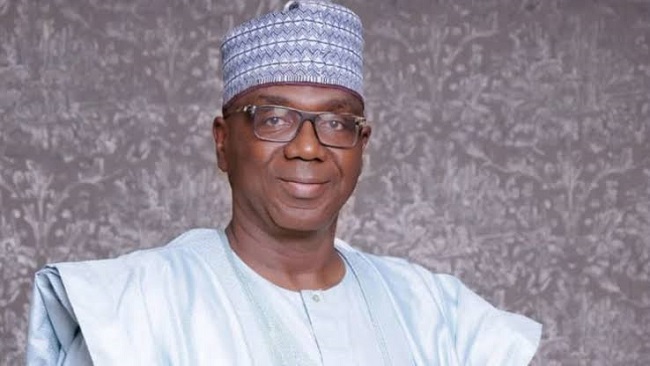
Gov. AbdulRahman AbdulRazaq of Kwara State
AbdulRazaq lauded Executive Order 9, signed by President Bola Ahmed Tinubu on Feb. 13, 2026.
The order directed the realignment of oil and gas revenue flows – including royalty oil, tax oil, profit oil, and profit gas – to ensure they conform to constitutional provisions.
According to AbdulRazaq, these reforms are essential for clarifying regulatory mandates within the petroleum sector and ensuring that the Federation Account remains the “backbone of Nigeria’s intergovernmental fiscal system.”
“As a non-partisan body representing the 36 State Governors of the Federation, the NGF underscores that the integrity and predictability of Federation Account inflows are foundational to Nigeria’s fiscal federalism.
“Oil and gas revenues remain a central component of the distributable national income.
“The clarity, transparency, and predictability of those inflows directly affect capital planning, debt sustainability, infrastructure delivery, and public service provision at the federal, state, and local government levels,” he said.
AbdulRazaq stated that recent Federation Account Allocation Committee (FAAC) communiqués had consistently demonstrated a gap between gross revenue collections and final distributable sums.
He said that for the subnational governments, it was the latter that determines fiscal capacity.
“When remittance pathways are layered, complex, or difficult to reconcile, fiscal predictability weakens, and that directly affects capital planning cycles across the Federation at federal, state, and local government levels.
“Nigeria’s population now exceeds 220 million and continues to grow rapidly. States sit at the frontline of delivering education, primary healthcare, infrastructure, security architecture, and economic opportunity to this expanding population.
“Predictable revenue flows strengthen the ability of states to meet these obligations responsibly,” he said.
Commenting on the development, AbdulRazaq emphasised the link between revenue clarity and public service delivery.
“Structural clarity in the remittance of nationally owned resources strengthens fiscal stability across all tiers of government.
“The Governors’ Forum supports reforms that enhance transparency and strengthen the collective capacity of governments to meet the needs of our growing population,” AbdulRazaq said.
With Nigeria’s population now exceeding 220 million, he said that states are at the frontline of providing essential services such as primary healthcare, education, and security.
He added that predictable revenue flows were necessary for states to meet these obligations responsibly.
AbdulRazaq also said that sustainable economic growth requires strong institutions, disciplined revenue management, and alignment between policy intent and operational execution.
He reaffirmed the governors’ commitment to collaborating with the Federal Government to ensure fiscal reforms result in tangible development outcomes for all Nigerians.
The Office of Climate Change and Circular Economy (OCCE) has once again advanced Lagos State’s sustainability agenda with the 7th edition of its flagship programme, EcoCirculate, held in Ojokoro LCDA over the weekend.
Having now reached over 11 communities across Lagos State, EcoCirculate continues to scale grassroots-driven circular economy solutions, reinforcing OCCE’s commitment to responsible waste practices and inclusive environmental action. The Ojokoro edition convened over 500 residents, demonstrating the growing community ownership of sustainable waste management practices.
The 7th edition was implemented in collaboration with the leadership of Ojokoro Local Council Development Area, bringing together traditional leaders, partners, educators, waste value chain actors, and residents to promote improved waste sorting, resource recovery, and environmental awareness at the grassroots level.
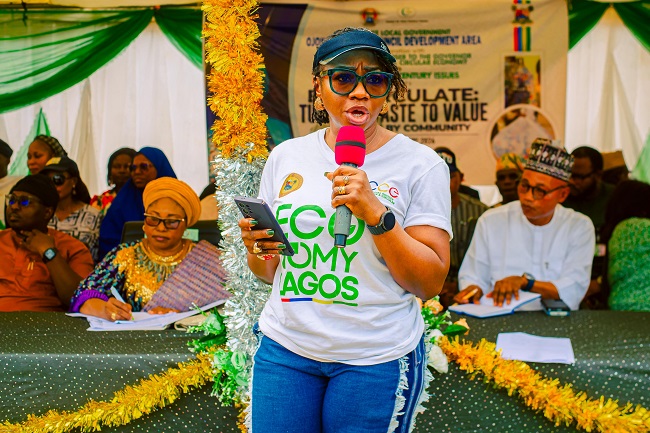
Mrs. Titilayo Oshodi, Special Adviser to the Governor on Climate Change & Circular Economy (OCCE), gives opening speech at EcoCirculate Ojokoro
Representing the Lagos State Government, the Special Adviser on Climate Change and Circular Economy, Mrs. Titilayo Oshodi, emphasised that effective waste management extends beyond infrastructure and policy. While investments in collection systems, processing facilities, and regulatory frameworks remain critical, she noted that real progress is shaped by everyday household decisions.
“EcoCirculate continues to demonstrate the value of coordinated community action that strengthens local waste systems while creating meaningful opportunities around recycling and resource recovery,” she stated.
Royal Presence and Private Sector Leadership
The event reflected the collaborative spirit that defines OCCE’s programming. Traditional rulers, including Oba Adeshoga Williams Adeyoola, the Oba of Orile Alagbado, alongside Barr. Oluyemisi Rosiji, Executive Chairlady of Ojokoro LCDA; Olalekan Oyekunle, Vice Chairman; and Mrs. Titilayo Oshodi, Special Adviser to the Governor on Climate Change and Circular Economy, were joined by private-sector partners such as Refab Africa, DecarbonIQ, C21st Century, Gas247, FABE International Foundation, PAKAM, and TrashUsers.
Their collective participation underscored the strength of multi-stakeholder collaboration in advancing circular economy objectives and delivering measurable environmental impact across communities in Lagos State.
Educating the Next Generation
A major highlight of the Ojokoro edition was the active participation of primary school students and their teachers. In collaboration with FABE International Foundation, students engaged in hands-on learning sessions designed to deepen their understanding of circular economy principles. Live demonstrations showcased how discarded materials, such as used tyres, can be repurposed into functional furniture. Practical waste-sorting exercises reinforced the importance of separating recyclables from general waste, empowering young participants to become environmental ambassadors within their schools and households.
Speaking on the programme’s impact, Adefarakin Ifeoluwa, Project Lead of EcoCirculate Ojokoro, noted: “Through Eco-Circulate, we educate communities on how to sort waste, reduce pollution, and practice recycling in simple, everyday ways. We also work with waste pickers and recyclers, supporting their livelihoods while keeping our environment clean.”
Building on Measurable Progress
Since its inception in 2024, EcoCirculate has expanded steadily across multiple local government areas in Lagos State. To date, the programme has facilitated the collation of nearly 39 thousand tonnes of recoverable waste – including plastics, textiles, and cartons – across participating communities, with contributions from the Ojokoro edition further strengthening these outcomes.
Beyond the data, EcoCirculate represents a shift in perception: waste is no longer viewed merely as a disposal challenge, but as a resource capable of supporting green enterprise, economic opportunity, and improved neighbourhood conditions when properly managed. The initiative continues to strengthen collaboration between residents, recyclers, aggregators, and local authorities – translating awareness into tangible environmental and socio-economic benefits.
Strengthening Partnerships for Scaled Impact
OCCE reaffirmed its commitment to deepening partnerships across the public and private sectors to scale circular economy interventions that deliver long-term environmental and socio-economic value. Sustained collaboration, the Office noted, remains essential to building resilient waste systems capable of meeting the demands of a rapidly growing urban population.
With Ojokoro now part of the expanding EcoCirculate network, the focus shifts to sustaining momentum and broadening reach across Lagos State. OCCE remains committed to ensuring that the knowledge, skills, and awareness gained translate into sustained community-led action.
By fostering continued collaboration between residents, schools, partners, and local authorities, EcoCirculate aims to embed responsible waste practices into daily life – transforming environmental awareness into measurable community impact.
When communities, government, and partners work together, sustainable change is not only possible – it is achievable.
Malawian communities are increasingly aware of climate change and their rights in the face of its impacts, but women remain largely excluded from meaningful decision-making despite being routinely included in climate discussions, according to a new study by the Civil Society Network on Climate Change.
The findings were presented at a stakeholder validation workshop for the network’s endline study on knowledge, attitudes and practices related to climate injustices in Malawi. The workshop sought to validate recommendations and assess progress since a 2024 baseline assessment conducted in Dowa District.
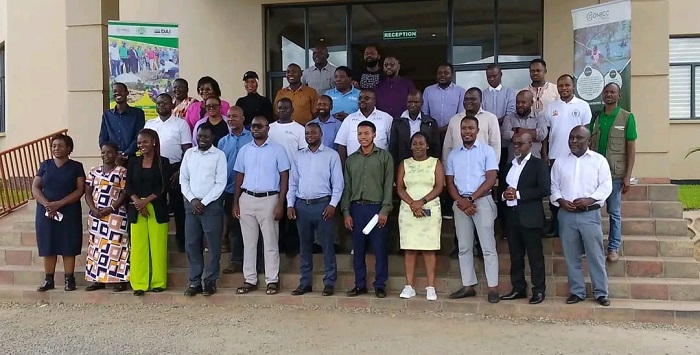
Some of the stakeholders during the validation workshop for the Endline Study on KAP
The research paints a picture of a country making strides in climate literacy while struggling to translate awareness into equitable participation – particularly for the women who bear a disproportionate burden of climate impacts.
Awareness up, equity lagging
The study was conducted under the Climate Justice Communities programme, a seven-district initiative launched in 2023 and implemented in Karonga, Salima, Machinga, Neno, Zomba, Phalombe and Chikwawa.
The programme, supported by the Scottish Government through DAI Global UK and Oxfam Malawi, is scheduled to conclude later this year.
While the research documented meaningful gains in community understanding of climate change issues and individual rights, it identified a persistent disconnect between women’s presence in climate discussions and their actual influence on outcomes.
Women are often invited to the table, the study found, but their perspectives are not adequately reflected in the policies and decisions that emerge from those conversations.
Time for government ownership
CISONECC National Coordinator, Julius Ng’oma, said the findings should compel the government to take a more active role in protecting citizens’ climate-related rights.
“It is time for the government to take ownership of the process of safeguarding communities in terms of human rights issues,” Ng’oma said.
He called for a more deliberate approach to translating the study’s recommendations into action, questioning at what level awareness efforts should be scaled.
“The Government of Malawi has a big role to play, since it represents the people. It must ensure that citizens’ rights are protected,” Ng’oma said.
Women demand a real seat at the table
Community representative, Anjiru Mlenga, from Liwonde in Machinga District stressed the importance of valuing women’s perspectives to achieve climate justice in Malawi.
This message resonated with the study’s central finding on the gap between inclusion and influence.
Fred Simwaka, deputy director in the Ministry of Gender, Community Development and Social Welfare, acknowledged the challenge and said the study is expected to improve the integration of women’s and marginalised groups’ voices in environmental decision-making.
Simwaka called for deliberate approaches, such as focus group discussion,s to ensure that both men’s and women’s perspectives are consolidated in shaping climate-related policies.
“It is crucial to ensure that women’s contributions are considered,” Simwaka said, signalling government awareness of the disparity even as advocates push for faster progress.
A closing window
With the Climate Justice Communities programme set to end later this year, the study’s findings carry added urgency.
The recommendations emerging from the validation workshop will help determine whether gains in climate awareness and rights literacy translate into lasting institutional change – or fade with the program’s conclusion.
For CISONECC and its partners, the message is clear: awareness without equity is an incomplete victory, and Malawi’s climate response will remain inadequate until the voices of its most vulnerable citizens carry real weight in the rooms where decisions are made.
The Federal Capital Territory Administration (FCTA) has approved N7.3 billion contracts for the provision of waste collection and management services in four delineated districts of the Federal Capital City.
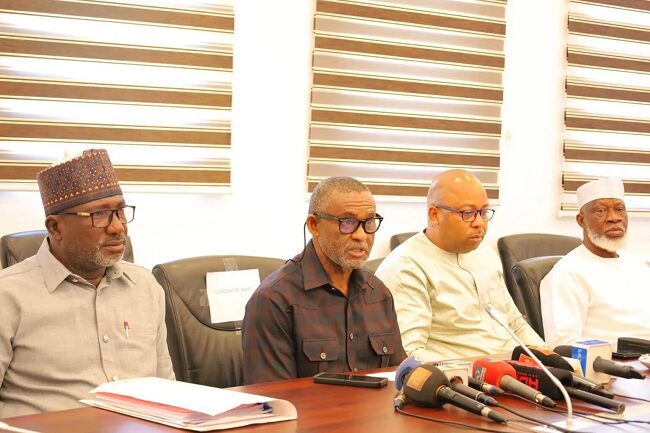
Chief Felix Obuah, Coordinator, Abuja Metropolitan Management Council, disclosed this while briefing journalists on the outcome of the FCT Executive Committee’s meeting presided by Minister Nyesom Wike in Abuja on Monday, March 2, 2026.
Obuah identified the districts as Durumi, Wuye, Mabushi and Jabi.
Chief Felix Obuah, Coordinator, Abuja Metropolitan Management Council, briefing journalists in Abuja
He added that the executive committee also approved the supply of diesel to Wupa Basic Waste Treatment Plant for the period of two years.
“The total figure for the award of these four contracts amounted to N7.3 billion,” Obuah said.
The coordinator also said that the committee equally approved a contract for the procurement of food and non-food items to support flood-affected persons in FCT.
President of Dangote Group, Aliko Dangote, has unveiled plans to expand into steel production, electricity generation and port development as part of a broader ambition to accelerate industrialisation across Africa.
Dangote, whose conglomerate spans cement, sugar, salt, fertiliser, and petrochemicals, said his long-term goal is to deepen Africa’s manufacturing base beyond oil refining and position the continent as a global industrial force.
His latest flagship project, the Dangote Petroleum Refinery & Petrochemicals, is now operational and producing about 650,000 barrels of refined products daily. He said output is expected to double within the next three years as expansion plans progress.
Aliko Dangote
However, Dangote in a recent interview with The New York Times, indicated that refining is only one phase of a larger vision.
“We have to industrialise Africa,” he said, noting that his next focus areas include the steel industry, expanding access to electricity and building additional port infrastructure to support large scale manufacturing and trade.
Industry analysts say entry into steel would position the group in a sector critical to infrastructure, housing and heavy industry, while investments in power and ports could address two of Nigeria’s most persistent constraints to economic growth.
Dangote cited India’s Tata Group as a model for diversified industrial expansion, describing the conglomerate’s multi sector footprint as an example of how large scale manufacturing can transform emerging economies.
Beyond expansion, Dangote said job creation remains central to his strategy. With Nigeria projected to require between 40 and 50 million new jobs by 2030, he argued that large scale industrial projects are essential to absorbing the country’s growing youth population.
The refinery alone currently employs about 30,000 workers, approximately 80 per cent of them Nigerians. Expansion across new sectors is expected to raise total employment within the group to about 65,000.
Dangote also announced plans to list shares in the refinery on the Nigerian stock market, a move that would broaden local participation in the asset.
Despite progress, he acknowledged that infrastructure gaps and crude supply challenges remain obstacles. He has previously raised concerns about logistics bottlenecks and inefficiencies in the oil value chain that complicate feedstock supply to the refinery.
Nevertheless, Dangote said the group would continue to invest aggressively in sectors that reduce import dependence and retain economic value within Africa.
“Nobody dared to do it, so we did it,” he said, reiterating his belief that large scale private investment is key to transforming Nigeria’s industrial landscape.
With cement plants operating across multiple African countries and a refinery that has reshaped Nigeria’s downstream outlook, Dangote’s next push into steel, electricity and port infrastructure signals a new phase in his ambition to industrialise the continent.