The Nigerian Midstream and Downstream Petroleum Regulatory Authority (NMDPRA) says the daily domestic supply of Premium Motor Spirit (PMS) rose to 74.2 million litres/day (ml/d) in December 2025.
This is relative to the 71.5 million litres/day supplied in November 2025.
The NMDPRA made this known in its Factsheet Report for December 2025 released on Thursday, January 15, 2026.
Fueling a car
The report contains key statistics on the midstream and downstream petroleum operations in Nigeria.
It revealed that consumption of PMS, also known as fuel, increased to 63.7 million litres/day in December 2025, from the 52.9 million litres/day recorded in November 2025.
According to the report, Dangote Refinery showed strong capacity utilisation for the month of December, reaching a maximum of 71 per cent utilisation.
It said that the Dangote Refinery’s PMS domestic supply increased from 19.47ml/d in November 2025 to an average supply of 32.012ml/d in December 2025, with an initial plan of 50ml/d for December.
It said that Automotive Gas Oil (Diesel) domestic supply decreased to 17.9ml/d in December 2025 from the 20.4ml/d recorded in November 2025, while daily consumption increased to 16.4ml/d in December 2025, from the 15.4ml/d recorded in November 2025.
The report revealed that Liquefied Petroleum Gas (LPG) domestic supply also increased to 5.2mt/d in December 2025 from the 5.0mt/day recorded in November 2025.
The NMDPRA factsheet however disclosed that the four national oil refineries recorded zero production within the period under review.
It said that there was no production activities in the Port Harcourt Refinery as the refinery remained on shut down mode.
“However, evacuation of prior AGO produced while the refinery was operational before May 24, 2025 averaged 0.247 million litres/day.”
Meanwhile, it said that the Warri and Kaduna Refineries remained on shut down.
On performance of Modular Refineries, the report said that the Waltersmith (Train 2) 5,000bpsd completed pre commissioning in December, and hydrocarbon would be introduced by Jan. 2026.
According to the report, the refinery’s average capacity utilisation is at 63.24 per cent, while Average AGO supply is 0.051 million litres/day.
“Edo Refinery’s average capacity utilisation is 85.43 per cent, and average AGO supply is 0.052ml/d.
“ARADEL’s average capacity utilisation was 53.89%l per cent and average AGO supply was 0.289ml/d,” it said.
The report revealed that total AGO supply from the three modular refineries averaged 0.392ml/d, adding that other products from the modular refineries were Naphtha, HHK, fuel oil and MDO.
The report showed Daily Consumption Benchmarks for 2025 as – PMS, 50ml/d; Diesel 14ml/d; Aviation Fuel (ATK) 3ml/d and Cooking Gas, 3,900mt/d.
It showed Daily Consumption (truck out) of key Petroleum Products as – PMS, 63.7ml/d; Diesel, 16.4ml/d; Aviation Fuel (ATK), 2.7ml/d and Cooking Gas, 4,380 mt/day.
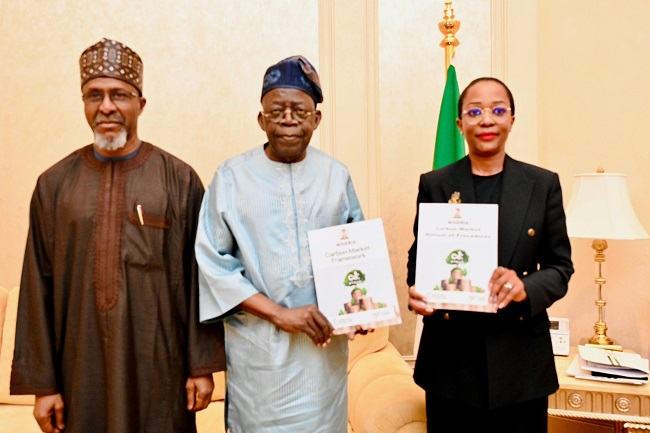
Nigeria has officially launched its Carbon Market Framework, marking a major step in the country’s climate action agenda and positioning it as a key player in the global green economy. The announcement was made during the Abu Dhabi Sustainability Week, a leading international platform for climate innovation and investment.
The National Council on Climate Change (NCCC), led by Director General, Mrs. Omotenioye Majekodunmi, said that the framework establishes a clear regulatory and institutional structure for carbon trading in Nigeria. This structure enables both local and international investors to fund and develop climate-smart projects, earning carbon credits while promoting sustainable development.
President Bola Tinubu (centre), with Minister of Environment, Balarabe Abbas Lawal (left) and National Council on Climate Change (NCCC) Director General, Mrs. Omotenioye Majekodunmi, at the launch of the Carbon Market Framework
Mrs. Majekodunmi hailed the development as a signal that Nigeria is now open for climate business, noting that the carbon market alone could attract over $3.8 billion in annual investment.
For the Minister of Environment, Balarabe Abbas Lawal, Nigeria’s active participation at Abu Dhabi Sustainability Week reflects the Federal Government’s commitment to deepening international partnerships, particularly with the UAE, while prioritising technology transfer, innovation, and local capacity building to strengthen clean energy, climate-smart agriculture, and resilient infrastructure nationwide.
With this framework, Nigeria is set to turn climate action into economic opportunity, creating jobs, attracting investment, and driving sustainable development across the country.
Meanwhile, the Carbon Market Association of Nigeria (CMAN) has lauded the official launch of Nigeria’s Carbon Market Framework, describing the development as a historic milestone that will position Nigeria as a credible, rules-based, and investable destination within the global carbon economy.
In a statement endorsed by Horsfall Tony, President, Carbon Market Association of Nigeria (CMAN), the organisation commended the National Council on Climate Change (NCCC), under the leadership of its Director General, Mrs. Tenioye Majekodunmi, and the Minister of Environment, Malam Balarabe Abbas Lawal, for advancing Nigeria’s climate leadership and international engagement.
To unlock the full potential of this landmark framework, it is important that government actively supports, showcases, and where possible, de-risks a pipeline of high-quality, viable and already advanced carbon projects that can serve as initial national flagship initiatives, stated CMAN.
The organisation added that early national flagship projects with robust MRV systems – that clearly align with national regulations, and strong community trust – will overall catalyse Nigeria’s participation in the international carbon markets, attract private capital at scale, and anchor confidence in Nigeria’s carbon market.
CMAN stated: “As implementation progresses, sustained sensitisation and coordination across ministries, departments, agencies, and sub-national governments will be critical. A supportive Carbon Market Office – the framework provides for – that issues timely project approvals, runs an operational registry, and carries out targeted capacity building for local developers and host communities will help ensure that Nigeria’s carbon market grows with integrity, inclusiveness, long-term credibility and catalyses global net zero attainment.
“With projected annual investment potential of about $3.8 billion and strong early investor interest, Nigeria’s carbon market offers significant opportunities for job creation, technology transfer, community development, and sustainable growth across sectors including clean energy, forestry, agriculture, clean cooking, and resilient infrastructure.
“As the industry association of all carbon market stakeholders in Nigeria, CMAN stands ready to work closely with the NCCC and all relevant institutions to support effective implementation, promote market integrity, strengthen investor confidence, and align carbon market growth with Nigeria’s national development, climate objectives and global net zero pathways. “Together, let’s continue to do more to reinforce Nigeria’s leadership in catalyzing climate action through carbon markets.”
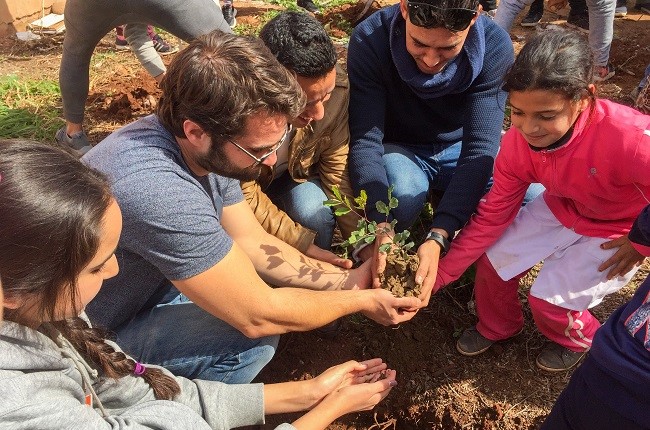
On Monday, January 19, 2026, the High Atlas Foundation (HAF) will celebrate its Thirteenth Annual Tree Planting Day, a collaborative initiative spanning eight regions throughout Morocco: Casablanca-Settat, Rabat-Sale-Kenitra, Beni Bellal-Khenifra, Marrakech-Safi, Oriental, Laayoune Sakia Hamra, Fes-Meknes, and Draa Tafilalet.
In the 2024/2025 tree-planting season, HAF planted 2,537,808 seeds of change in Morocco, symbols of resilience, opportunity, and the power of community. This year, HAF carries forward that same commitment with the 2026 planting season, inspiring hope and empowering communities nationwide to cultivate a greener, more sustainable future.
Tree planting in Morocco
The celebrations will gather diverse groups – farmers, educators, youth, families, and local organisations – who will cultivate seedlings at various locations secured through partnerships with government agencies, educational institutions, nonprofit groups, and farming collectives. This approach demonstrates HAF’s philosophy of building environmental stewardship through shared responsibility.
Having reached the milestone of one million planted seedlings in early 2014, HAF maintains its annual tradition of large-scale planting efforts. Participants will transplant multiple varieties sourced from HAF’s network of community-managed nurseries, featuring species such as olive, carob, almond, cherry, walnut, fig, pomegranate, and argan. These varieties are chosen by local agricultural families based on their adaptation to regional climates, promoting ecological diversity while strengthening natural habitats.
The daylong initiative will involve planting over 20,000 tree saplings at educational and community locations. Implementation will occur through collaboration with several supporting partners, including Yves Saint Laurent Beauty, Reforest, Planeterra, Cash Plus and more.
HAF is committed to promoting environmental sustainability through its tree planting programme, encouraging local participation in protecting Morocco’s natural resources. This initiative empowers communities by restoring the environment and individuals, schools, and local organisations to come together and create a positive impact. HAF invites individuals, schools, and organisations nationwide to join this effort, planting hope, one tree at a time.
The Guild of Corporate Online Publishers (GOCOP) has expressed its deepest condolences to the family, friends, and colleagues of Mr. Yakubu Mohammed, a renowned journalist and co-founder of Newswatch magazine, who passed away at the age of 75.
The GOCOP described Mohammed’s passing as a significant loss to the media community and the nation at large.
“Mohammed’s contributions to Nigerian journalism are immeasurable. As a pioneer of investigative journalism in Nigeria, he made an indelible mark on the country’s media landscape. His commitment to truth, integrity, and excellence in journalism is an inspiration to many young journalists. Through his writing, he demonstrated a remarkable ability to craft compelling stories that captured the essence of Nigeria’s complex socio-political landscape.
The late Yakubu Mohammed
“As a co-founder of Newswatch magazine, Mohammed played a pivotal role in shaping the narrative of Nigerian journalism. His writing was marked by depth, insight, and a commitment to fact-based reporting. He was a mentor, a role model, and a guiding light to many young journalists who sought to make a difference in the world through their craft,” GOCOP said in a statement by the president, Mr. Danlami Nmodu, mni and the general secretary, Mr. Sufuyan Ojeifo.
In the statement, they prayed that God grants the family and friends of the deceased the strength to bear the loss and that the soul of Mohammed rests in peace.
They celebrated his life, his work, and his legacy, and prayed that his contributions to Nigerian journalism will continue to inspire and guide future generations of journalists.
“As the media fraternity mourns the passing of Yakubu Mohammed, we also celebrate his life and legacy. His impact on Nigerian journalism will be felt for generations to come. May his soul rest in peace,” the statement read.
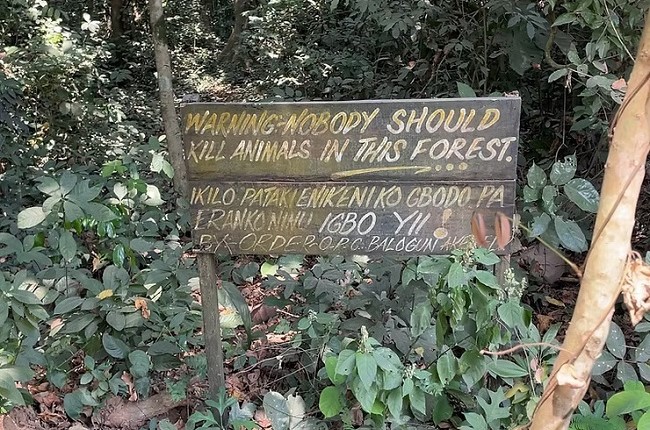
The Emerald Forest Reserve (EFR), located in Ikoyi-Osun, Osun State, Nigeria, has been officially designated a global Key Biodiversity Area (KBA), following years of rigorous, IITA Forest Centre–led scientific research and biodiversity monitoring contribution.
The designation, endorsed in 2024 by the global KBA Partnership, coordinated by the KBA Secretariat with BirdLife International as a core partner, recognises EFR’s exceptional ecological value and its critical role in conserving globally significant species.
The Emerald Forest Reserve is located within the Abayomi Farm Estates, owned and managed by the Abayomi family for over two decades. The Abayomi family is said to have demonstrated unwavering commitment to biodiversity conservation safeguarding a 120 hectares indigenous forest using pragmatic, community-based conservation approaches.
Emerald Forest Reserve
Working closely with local communities and conservation partners – including the IITA Forest Centre – the family helped halt logging, hunting, and poaching by transforming former loggers and hunters into custodians of the forest, supporting them with alternative livelihoods such as palm oil processing, beekeeping, agroforestry, furniture making, and tree seedling production.
Central to the KBA designation is the Emerald Forest Reserve’s importance for the conservation of the endemic and endangered Ibadan Malimbe (Malimbus Ibadanensis). Through long-term ornithological monitoring, the IITA Forest Centre documented repeated sightings, acoustic calls, nesting attempts, and breeding behaviour of the species within the reserve. These records represent some of the most comprehensive and scientifically validated evidence of the species’ persistence in the wild.
Bird monitoring surveys conducted quarterly over several years by the IITA Forest Centre scientists, in collaboration with the A. P. Leventis Ornithological Research Institute, produced peer-reviewed publications that formed the backbone of the KBA nomination. These studies confirmed that the Emerald Forest Reserve supports a unique assemblage of Guinea–Congo forest bird species, including breeding populations of rare and restricted-range birds.
The designation, drawing on long-term biodiversity research, peer-reviewed scientific outputs, and standardised KBA assessment protocols, followed a scientifically rigorous nomination led by IITA-CGIAR, with Dr Adewale Awoyemi, IITA Forest Centre Manager, serving as the Proposer. This was done alongside Ademola Ajayi, IITA Forest Centre Field Supervisor; Dr Stella Egbe, Nigerian Conservation Foundation (NCF) Senior Conservation Manager; and Professor Shiiwua Manu, Professor of Ornithology, Department of Zoology, University of Jos; as co-proposers.
Speaking on the designation in Ibadan, Dr Awoyemi said, “This recognition reflects the strength of IITA Forest Centre’s research efforts in identifying, documenting, and validating sites of global biodiversity importance. The Emerald Forest Reserve exemplifies how robust research, when combined with local stewardship, can deliver outcomes of international conservation relevance.”
“The scientific outputs generated by the IITA Forest Centre and funded by A. G. Leventis Foundation were instrumental in demonstrating that the Emerald Forest Reserve meets global KBA criteria. Beyond species discovery, the research highlighted the forest’s broader biodiversity value and its role as a refuge for migratory and resident wildlife,” he added.
The BirdLife International Partner in Nigeria, the Nigerian Conservation Foundation (NCF), facilitated national-level coordination and stakeholder engagement during the review process. Congratulating all parties, NCF Director General, Dr Joseph Onoja, described the designation as a milestone for Nigeria’s biodiversity conservation efforts and noted its relevance to national and international biodiversity commitments.
“It is indeed exciting to have EFR as the first newly assessed and nominated KBA in Nigeria. We at NCF are happy with the coordination we provided to make this a reality, and we hope more sites like this across Nigeria will follow suit,” Dr Onoja said.
According to Dr Modupe Ladipo, one of the Directors of the Emerald Forest Reserve, the discovery and documentation of the Ibadan Malimbe was a turning point for the forest’s global recognition. She noted that repeated surveys by IITA Forest Centre and its partners not only confirmed the species’ presence but also recorded nesting structures and the first-ever acoustic documentation of its call. These findings demonstrated that the Emerald Forest Reserve provides a viable and recovering habitat for a species once feared to be disappearing.
The Nigeria Convention on Biological Diversity commended the development, highlighting that, “The designation of Emerald Forest Reserve as a KBA is a laudable achievement as it holds a significant population of the threatened and endemic Ibadan Malimbe (Malimbus Ibadanensis). Nigeria as signatory to the Convention on Biological Diversity is delighted at the concerted efforts of all these stakeholders to map out additional sites as KBAs in the country.
“All these ensure that Nigeria achieve its goals and targets in the National Biodiversity Strategies and Action Plans (NBSAP) to support global efforts to protect biodiversity, halt species declines, prevent habitat loss and preserve the ecosystem services.”
The Emerald Forest Reserve is scheduled to formally celebrate its KBA designation on January 22, 2026, bringing together conservation stakeholders, community representatives, and partner institutions. The milestone underscores the importance of science-driven conservation and reaffirms IITA Forest Centre’s leadership in advancing biodiversity research and protection in Nigeria.
All scientific data, analyses, and publications underpinning the KBA nomination were generated through IITA-led research programs and remain the intellectual property of the International Institute of Tropical Agriculture. These outputs form part of IITA’s broader mandate to advance science-based conservation, landscape restoration, and biodiversity knowledge in Africa.
Thursday, January 15, 2026, marks five years since Heirs Energies assumed operatorship of OML 17, taking responsibility for one of Nigeria’s most complex brownfield assets and committing to steward it with discipline, resilience, and long-term intent.
According to the organisation, the milestone is not defined by the passage of time, but by what has been delivered.
“Heirs Energies was built on a clear conviction: that African capital, leadership, and expertise can responsibly operate strategic energy assets, deliver performance, and contribute meaningfully to national development. Over the past five years, that conviction has been tested-and proven-through execution,” submitted the organisation.
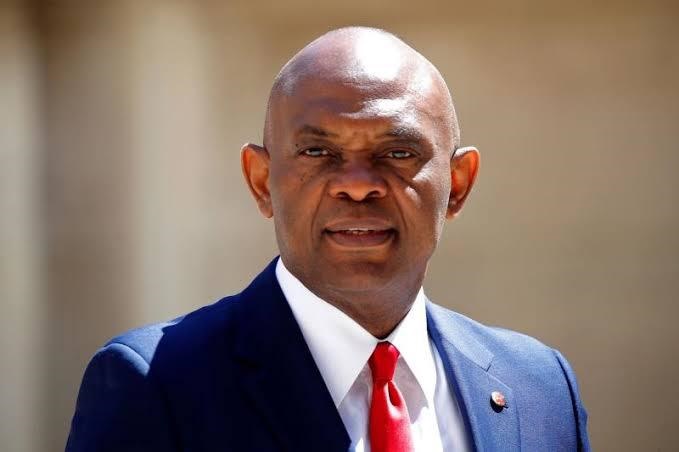
Chairman of Heirs Energies, Tony O. Elumelu
Below is a snapshot of some of the milestones that defined its first five years:
1. Acquisition & Operatorship – Acquired 45% of OML 17 on January 15, 2021, for $1 billion and assumed operatorship ahead of plan on July 1, 2021.
2. Safety Leadership – Operated safely since inception with zero fatalities and no Lost Time Injuries (LTI), underpinned by our proprietary safety culture, “Everyone is a Safety Officer.”
3. Oil Production Growth – Sustainably doubled oil production from less than 25 kbopd to over 50 kbopd, supporting Nigeria’s energy security.
4. Gas Growth & Power Impact – Doubled gas production from under 50 MMSCF/d to over 120 MMSCF/d, tripling gas supplied into the domestic market from 30MMSCF/d to over 100 MMSCF/d and enabling electricity generation to grow from less than100 MW to over 325 MW.
5. Brownfield Excellence – Achieved growth without drilling new wells or building new facilities, through rigorous restoration of legacy assets using our proprietary Brownfield Excellence methodology, including the reactivation of approximately 100 dormant wells and sustained operation of 65-year-old pumps at over 85% uptime.
6. Crude Theft Response – Catalysed a country-level response to crude oil theft, contributing to a dramatic recovery in terminal delivery from as low as 3% in December 2021 to over 95% since 2025.
7. Cost & Performance Leadership – Ranked among operators in Nigeria as delivering the highest oil production increase between 2020–2024, while remaining one of the top three lowest-cost operators.
8. Financial Discipline & Credibility – Established a strong track record with local, regional, and global lenders, fulfilling all lending obligations without fail, culminating in a US$750 million refinancing with Afreximbank.
9. Strategic Expansion – Acquired a 20% equity stake in Seplat Energy Limited at the end of 2025, becoming the company’s largest single shareholder.
10. People & Capability – Built a 100% Nigerian workforce with top-quartile capability and culture, combining experienced professionals with a new generation of talent delivering industry-leading outcomes.
These outcomes, according to Heirs Energies, were achieved through “disciplined execution, strong partnerships with government and regulators, the confidence and support of our financiers, deep engagement with host communities, and the unwavering commitment of our people”.
It added: “This journey reflects the long-term vision of our Chairman, Tony O. Elumelu, CFR, and stands as a practical demonstration of Africapitalism in action – where African enterprises deliver economic value, social impact, and national development in parallel.
‘We are grateful to our partners, regulators, host communities, lenders, and stakeholders who believed in the journey and stayed the course.
“As we mark Heirs Energies @ Five, we do so with pride and humility – but also with clarity of purpose. We are not looking back in celebration alone. We are focused on the future.”
As U.S. President Donald Trump met with the Venezuelan opposition leader and Nobel prize winner, María Corina Machado, on Thursday, January 15, 2026, in Washington DC, new analysis by 350.org and Zero Carbon Analytics finds that 68% of global oil production is impacted by U.S. aspirations to dominate the world’s oil and gas markets.
Machado’s visit comes as doubts persist over the U.S. administration’s appeal for companies to invest in Venezuela which holds 20% of the world’s crude oil reserves. Since its intervention in Venezuela the U.S. has made explicit threats of force against other resource-rich countries.
Donald Trump
The Trump administration’s latest National Security Strategy, which outlines U.S. intentions to expand its sphere of influence across politics, economics and the military, is being dubbed the “Donroe Doctrine,” a reference to the foreign policy approach that echoes the 1823 Monroe Doctrine by asserting U.S. pre-eminence across the Western Hemisphere. While the original Monroe Doctrine opposed European intervention in the region, it was historically used to justify extensive U.S. political and military interference throughout Latin America and the Caribbean.
Andreas Sieber, Head of Political Strategy, 350.org: “Dependence on oil has never made us more vulnerable and unsafe. More than two out of every three gallons of oil on the global market now come from countries where the Trump government either projects ruthless influence or threatens to do so. Fossil fuel dependence has become a security risk, exposing countries and consumers to sudden price spikes, supply disruptions, and conflict-driven instability. Every escalation, sanction, or threat of force ripples through global markets, hitting households with higher bills and governments with economic shocks they cannot control.
“High energy bills, economic shocks, and political instability aren’t accidents. They’re the predictable result of letting a few actors dominate a system everyone depends on. The real alternative is obvious: an energy system that no dictator or superpower can switch off – renewable, local, and controlled by people, not polluters. Just renewable energy systems do not require military protection, do not destabilise regions, and do not trigger geopolitical conflict.”
Data snapshot:
68% of global production oil is controlled by countries in the U.S. sphere of influence
81% of global oil reserves are controlled by countries in the U.S. sphere of influence
53% of global gas production comes from countries in the U.S. sphere of influence
52% of global proved gas reserves are controlled by countries in the U.S. sphere of influence
Under this strategy, the countries of North, Central, and South America are explicitly framed as falling within the United States’ sphere of influence. The stated aim is to reassert U.S. dominance across the hemisphere, reshaping political, economic, and security relationships in the process.
Fossil fuel influence
Taken together, 79% of global oil production is either within the U.S. sphere of influence or controlled by Russia, highlighting the structural volatility and insecurity baked into today’s oil markets. Over the past year, the U.S. administration has bombed or militarily intervened in Venezuela, Iran and Iraq, while issuing explicit threats of force against multiple other countries and territories, including Canada, Colombia, Greenland and Mexico.
Across the Americas, many of the countries that Trump has threatened may not be under direct U.S. control but are widely regarded as falling within Washington’s strategic sphere of influence – a reality that carries significant political and market risk.
Even oil producers not subject to direct U.S. threats are deeply embedded in U.S. military and financial systems, as illustrated by long-standing U.S.–Saudi security cooperation and the financial and defense integration of the United Arab Emirates. In practice, this reinforces U.S. leverage over global oil supply without the need for direct military action.
Bridget Woodman, Head of Politics and Finance, Zero Carbon Analytics, said: “This analysis exposes how control over fossil fuels is consolidating into increasingly rival blocs, which can only have negative implications for global security and costs of oil and gas supply. It is a clear alarm call for those countries that continue to prioritise volatile fossil fuels over stable, domestic renewable energy.”
According to the International Energy Agency, global renewable power capacity is expected to expand by nearly 4,600 gigawatts between 2025 and 2030, double the growth of the previous five years. Wind, solar, battery storage, and electrification are not only climate solutions; they are long-term security strategies. These trends underscore the urgent need to reduce dependence on fossil fuels and accelerate a just transition to renewable energy systems that are more resilient, democratic, and secure.
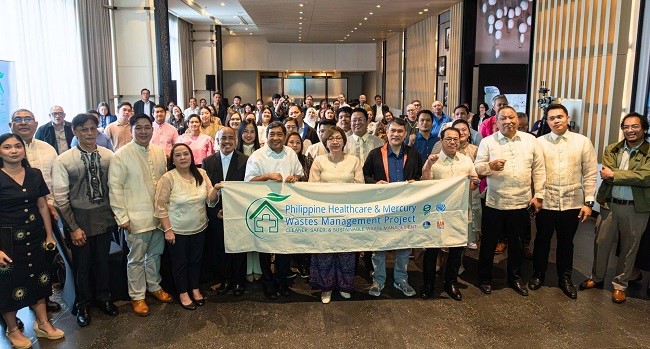
The Philippine Healthcare and Mercury Wastes Management (HCWM) Project concluded a three-day national workshop on Thursday, January 15, 2026, stepping up efforts for toxics-free, zero-waste hospitals.
Held from January 13–15, the workshop brought together over 100 participants, including representatives from partner hospitals, national and local government agencies, and civil society organisations.
Launched in December 2023, the HCWM Project aims to improve healthcare waste management in the Philippines. It focuses on reducing the release and emissions of unintentionally produced persistent organic pollutants (uPOPs), such as dioxins and furans, during the treatment of healthcare wastes, and will also ensure the safe handling and disposal of mercury stockpiles in healthcare facilities.
Participants at the Philippine Healthcare and Mercury Wastes Management (HCWM) Project
The five-year project is being implemented by the United Nations Industrial Development Organisation (UNIDO) and the Department of Environment and Natural Resources – Environmental Management Bureau (DENR-EMB), funded by the Global Environment Facility (GEF), and executed in partnership with civil society organisation, BAN Toxics.
Toxics-Free Hospitals
At a press conference during the workshop, the project launched its Toxics-Free Hospitals Campaign. It introduces key project interventions such as improved waste segregation, reduction of single-use plastics, promotion of reusable face masks and other PPE, adoption of low- or zero-emission waste treatment technologies, and capacity-building on environmentally sound management of infectious and other healthcare wastes.
The launch coincided with the celebration of International Zero Waste Month and the 25th anniversary of Republic Act No. 9003, or the Ecological Solid Waste Management Act, enacted on January 26, 2001, which provides the national framework for integrated solid waste management based on resource conservation and recovery. OIC Assistant Secretary for Environment and EMB Director, Jacqueline A. Caancan, highlighted the importance of building systems that prevent waste generation and embed circularity across sectors.
“Promoting toxics‐free and proper waste initiatives in healthcare facilities and beyond supports sustainable practices, encourages responsible production and consumption, and requires collaboration across government, industry, and communities to protect public health and the environment,” Caancan said.
A highlight of the press conference was the signing of a memorandum of agreement between the DENR-EMB, represented by Caancan, and the Department of Health–Health Facility Development Bureau (DOH-HFDB), represented by its Director, Dr. Melissa Sena. The agreement formalises inter-agency collaboration in the implementation of the project.
As part of the Toxics-Free Hospitals campaign, the project unveiled “Nurse Susie,” a character promoting environmental sustainability in healthcare. She encourages saying no to single-use plastics, adopting reusables, and raising awareness of toxic chemicals in healthcare waste. Nurse Susie serves as a friendly guide for promoting the campaign’s 4Cs framework – Change old habits, Cut plastics, Commit to reuse, and Champion sustainability.
According to Jam Lorenzo, BAN Toxics Deputy Executive Director and the HCWM Project’s manager, cutting plastic use, including single-use plastics, is one of the key interventions to reduce potential sources of toxic chemical emissions from healthcare waste.
“Plastic wastes contain a wide range of chemicals, which, if mismanaged, can leach into air, water, and soil. When burned, they may generate unintentional persistent organic pollutants (uPOPs), such as dioxins and furans, due to their chlorine content,” Lorenzo added.
The World Health Organisation notes that dioxins and furans are highly toxic, persistent pollutants that bioaccumulate in organisms and biomagnify up the food chain, posing long-term risks to human health and the environment. These uPOPs can be formed during the burning or improper treatment of chlorine-containing wastes, including chlorinated plastics and residues from chlorine-based disinfectants used in healthcare settings.
Reuse vs Single-Use
A waste audit report presented during the workshop showed that plastics accounted for over 70 percent of the total waste composition in three partner hospitals of the project. Conducted last year in partnership with Healthcare Without Harm (HCWH) SoutheastAsia, the audit covered Cagayan Valley Medical Center, Eastern Visayas Medical Center, and Quirino Memorial Medical Center as part of efforts to develop a healthcare waste generation calculation tool.
Specifically, plastics made up 77% of total waste at CVMC, 78% at EVMC, and 84% at QMMC. Most of this comes from patient-care and daily-use disposables. Sanitary products, infectious materials like cotton and gauze, and medical textiles such as aprons, masks, and gloves make up over half of total plastic waste. Non-medical items, including foodware and bottles, also add significantly, highlighting how hospital clients, visitors, and the general public contribute to overall plastic waste in healthcare facilities.
“There is a pressing need to explore alternative materials and reusable systems that maintain infection control standards while reducing waste volume. The introduction of reusable PPE, washable medical textiles, and durable patient linens could significantly minimise the dependency on single-use plastics in hospitals,” the HCWH report recommends.
Driving Change
In addition to the waste audit, the workshop presented two technical assessments. The first, led by policy expert Atty. Josiah David Quising, reviewed existing policies and regulations on healthcare waste management, identifying gaps and recommending a sustainable, rights-based regulatory framework.
The second, conducted by waste management expert, Gerardo Mogol, examined current waste handling, treatment, and disposal practices. This assessment provides a foundation for recommending environmentally sound technologies and non-burn treatment methods for healthcare waste, a key intervention of the project.
The workshop also welcomed three new partner hospitals from Mindanao – Caraga Regional Hospital, Northern Mindanao Medical Center, and Southern Philippines Medical Center = bringing the project’s total to six partner hospitals across six regions in the country.
“Moving forward, we are confident that with the previous year’s project outputs, we are well on our way to strengthening the country’s healthcare waste management systems, as intended by the project. It will be a clear demonstration of how efforts toward inclusive and sustainable industrial development can help value chains maximize the health-environment nexus and decouple environmental degradation from economic growth toward sustainable prosperity.” said UNIDO Country Representative, Teddy Monroy.
Monroy underscored that the project strongly contributes to UNIDO’s Country Programme in the Philippines and advances the Sustainable Development Goals, particularly SDG 3 on good health and well-being, SDG 6 on clean water and sanitation, SDG 12 on responsible consumption and production, and SDG 9 on industry, innovation, and infrastructure.
“Through the continuing collaboration of government, the health sector, civil society, and communities, we will drive change toward cleaner, safer, and sustainable healthcare waste management systems.”
Gov Monday Okpebholo of Edo has inaugurated 100 Edo State Environmental Compliance Corps (EECC) to boost environmental protection in the state.
Inaugurating the Corps on Wednesday, January 14, 2026, in Benin, the state capital, Okpbeholo urged them to serve with courage, integrity, and a deep sense of purpose.
The governor who was represented by his Commissioner for Finance, Mr. Emmanuel Okoebor, reaffirmed his administration’s commitment to environmental protection, public health, and responsible governance.
Gov. Monday Okpebholo of Edo State
The governor urged their actions to inspire compliance and to earn respect and commitment, in order to strengthen public trust.
The Governor called on the corps members to discharge their responsibilities with professionalism, discipline, and respect for the law while working closely with communities to promote environmental compliance and awareness.
“The inauguration of EECC today reaffirms this administration’s commitment to environmental protection, public health, and responsible governance.
“A clean environment is not only a social necessity but also an economic imperative that supports productivity, investments, and overall well-being.
“You are expected to carry out your duties with professionalism, discipline, and respect for the law while working closely with communities to promote environmental compliance and awareness,” he said.
On his part, the Commissioner for Environment and Sustainability, Mr. Nosa Adams, said that the 100 personnel were the first batch of EECC, who were selected through credible means.
He said that they have been engaged in intense four-day training, to enforce compliance with the Edo Environmental Waste Management and Pollution Law.
He noted that the law, which was recently signed by Gov Okpebholo, is holistic as it covers everything that has to do with the environment and ecosystem.
“It’s our conviction that if the law is fully implemented, we would have a healthier, cleaner, and greener environment,” he said.
The Commission Chief Executive, Nigerian Upstream Petroleum Regulatory Commission (NUPRC), Mrs. Oritsemeyiwa Eyesan, has unveiled her vision for the country’s upstream sector.
This transformative vision rests on three pillars: Production optimization and revenue expansion; regulatory predictability and speed; and safe, governed and sustainable operations.
She said this aligns with President Bola Ahmed Tinubu’s renewed hope agenda and his plan to hit a production target of 2mmbopd by 2027 and 3mmbopd by 2030.
The NUPRC boss unveiled her agenda on Wednesday, January 14, 2026, at a stakeholder meeting in Lagos.
The meeting was attended by members of the Oil Producers Trade Section (OPTS), the Independent Petroleum Producers Group (IPPG), emerging players and other major stakeholders in the oil and gas industry.
The NUPRC boss plans on increasing production and revenue expansion through the recovery of shut-in volumes with economic value, arresting decline, reducing losses, and accelerating time-to-first oil – without increasing burdens or transaction cost.
This, she said, had already begun by recently “turning on the light” in a long shut-in asset.
According to Mrs. Eyesan’s plan, regulatory predictability and speed can be achieved by running regulation like a service, enforcing rules transparently and making quick time-bound decisions.
The new NUPRC boss plans to strengthen governance, process safety, host community outcomes, and encourage decarbonisation through safe, governed and sustainable operations.
“Going forward, the Commission will be measured on the following key success metrics -Faster, predictable regulatory approvals, higher, more secure and sustainable production, credible licensing and disciplined acreage performance, world-class HSE (Health, Safety and Environment) and process safety outcomes, trusted measurement, transparency, governance and data integrity,” she said.
Mrs. Eyesan promised that under her leadership, the NUPRC will enhance regulatory efficiency and predictability by publishing Service Level Agreements (SLAs) for all major approvals.
The timeline to production will be reduced through proactive discussions regarding all necessary approvals, implementation of stage-gate processes, and mutual agreement on timelines with the commission, she stated.
“Stakeholders are encouraged to submit their projects for consideration. For matured opportunities, please submit your request latest end of Q1, 2026. This would provide a simplified and holistic framework that creates obligations for both operators and the Commission,” the CCE said.
The Commission will launch a digital workflow for permitting, reporting and data submissions, she stated, adding that the NUPRC will work with the industry to identify capacity gaps and develop tiered intervention in the most critical areas with immediate impact on regulatory efficiency “while we harmonise our own internal processes to eliminate conflicting regulatory actions and reduce friction.”
She revealed that the NUPRC’s internal transformation programme through a project Management office is in flight and “I will provide more details on this in the coming days.”
The NUPRC boss also convened a “CCE–Operators Leadership Forum for monthly engagement”.
The participants will include all operators (including NNPC), OPTS, IPPG, and emerging players.
The meeting, she said, will be focused on approval timelines, production restoration, infrastructure integrity, and gas monetisation and development.
This is expected to enable the NUPRC to identify systemic bottlenecks and provide greater predictability.
Mrs. Eyesan also stressed the need to improve hydrocarbon accounting and measurement by tracking every barrel produced and promptly addressing discrepancies or losses.
On host community, the NUPRC encouraged all operators to liaise with the commission “as we plan first engagement with host community leaders to reaffirm commitment to HCDT (Host Community Development Trust) implementation.
She also said one of her key goals is to ensure 100% to the Petroleum Industry Act within 12 months. This, she said, will be monitored with a dedicated team situated in her office.
“The commission going forward will issue quarterly progress reports. Let therefore bring all high impact shut in fields for approval.
“On the Commission’s part, a 90-day program to fast track approvals for near-ready FDPs, well interventions, rig mobilisation and other quick-win opportunities have commenced,” the CCE stated.