32.9 C
Lagos
Sunday, March 1, 2026
Home Blog Page 22

Govt advocates bankable projects to help Nigeria attract global climate finance

0

Nigeria’s Federal Government has called upon environmental stakeholders to devise innovative project ideas aimed at securing international climate funds, ultimately benefiting its citizens.

The Permanent Secretary (PS) of the country’s Federal Ministry of Environment, Mahmud Kambari, made the call on Thursday, February 5, 2026, during a stakeholders’ consultative workshop on the development of concept notes to the Green Climate Fund (GCF) held in Abuja.

Represented by Mrs. Victoria Gwang Pwol, a director at the ministry’s Department of Climate Change (DCC), he hinted that the government has advanced the country’s National Adaptation Plan (NAP) significantly over the past few years.
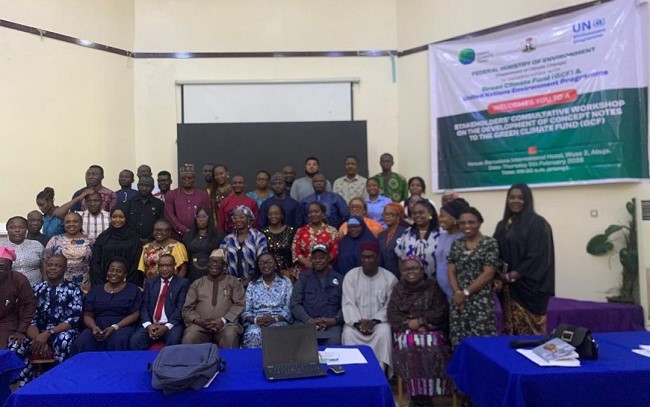
GCF
Participants at the consultative workshop for stakeholders in Abuja, focusing on the development of concept notes for the Green Climate Fund (GCF

According to him, with crucial support from GCF and the United Nations Environment Programme (UNEP), the government, through extensive technical work, has completed a climate risk assessment across all geopolitical and agro-ecological zones, developed an economic appraisal, an adaptation finance strategy, and a robust monitoring and evaluation framework.

“These foundational elements now guide us in identifying priority adaptation needs and investment opportunities,” he stated.  

The PS disclosed that, as a nation, Nigeria stands at a critical juncture where climate risks ranging from extreme weather events to environmental degradation continue to threaten its socio-economic stability, food systems, public health, infrastructure, and national development aspirations.

Consequently, the workshop’s strategic goals, he underscored, are to ensure that suggested interventions are in line with national priorities and the GCF’s investment criteria, refine project ideas into solid, evidence-based concept notes, and harmonise perspectives across important Ministries, Departments and Agencies (MDAs). Additionally, it puts Nigeria in a competitive position to get the resources needed to improve resilience across vulnerable sectors.

“The true measure of our commitment lies in our ability to translate these frameworks into bankable, transformative, and implementable projects capable of attracting global climate finance and delivering tangible benefits to the Nigerian people. This is why we are gathered here today,” Kambari said.

Dr. Iniobong Abiola-Awe, director and head of the DCC, views the workshop as a crucial step in Nigeria’s efforts to strengthen climate resilience, advance sustainable development, and mobilise climate finance to protect communities, ecosystems, and the economy from the effects of climate change.

Dr. Abiola-Awe, who was represented by Mr. Jonah Barde, deputy director, Vulnerability and Adaptation Division, revealed that Nigeria is almost at the end of the GCF-supported NAP formulation process with UNEP as the delivery partner.

She noted that the frameworks of the NAP process have already been developed to guide national decision-making and investment priorities. Most importantly, the interim NAP document has been validated.

Therefore, the focus of today’s engagement, she went on to explain, is to build on these achievements by collaboratively developing bankable, climate-resilient concept notes that align with national priorities and meet the GCF’s investment requirements.

“This cannot be achieved without your expertise, insights, and commitment,” the DCC boss stated, encouraging everyone to engage actively, share their perspectives openly, and collaborate closely as the nation moves toward developing robust concept notes capable of securing GCF support for a climate-resilient Nigeria.

She appreciated the GCF and UNEP for their continued support and the participants for their presence and continued dedication to Nigeria’s climate resilience agenda.

By Etta Michael Bisong, Abuja

Cross River moves to curb open defecation through proposed sanitation law

Efforts to tackle open defecation in Cross River State gained momentum as stakeholders in the water, sanitation and hygiene (WASH) sector backed a proposed law aimed at strengthening sanitation enforcement across the state.

The support was expressed during a public hearing on the Open Defecation Prohibition Bill held at the Cross River State House of Assembly in Calabar, the state capital.

Programme Manager of Self Help Africa, Ferdinand Anok, described open defecation as a persistent sanitation challenge in the state, warning that it continues to threaten public health and environmental safety.

Ferdinand Anok
Programme Manager, Self Help Africa, Ferdinand Anok

According to him, statistics indicate that 41 per cent of the state’s population still practices open defecation, while access to basic WASH services remains inadequate. He said only eight per cent of schools, 0.4 per cent of healthcare facilities and six per cent of public places have access to basic sanitation services.

Also contributing, the lawmaker representing Etung State Constituency, State House of Assembly, who is also Chairman, Committee on Water Resources and Hygiene, Kingsley Ntui, called for stricter enforcement measures to discourage the practice, particularly in ravines, uncompleted buildings and drainages.

He noted that the proposed legislation would provide legal backing to sanitation regulations and help reduce disease outbreaks linked to poor hygiene and contaminated water sources.

Ntui added that Nigeria’s target to end open defecation has recorded slow progress, making state-level legislation necessary to accelerate results.

Relevant stakeholders in the water sector also stressed the importance of public awareness, improved infrastructure and coordinated government action to address sanitation gaps.

They said the bill, when passed, would reinforce existing WASH policies, promote accountability and support Cross River State’s plan to eliminate open defecation by 2030.

Stakeholders expressed confidence that the proposed law would strengthen sanitation governance and improve hygiene conditions across communities in the state.

By Stina Ezin, Calabar 

Dangote Refinery produces Euro-standard fuels, refutes import allegations

0

Dangote Petroleum Refinery & Petrochemicals (DPRP) has dismissed reports suggesting that it imports finished petroleum products, describing the claims as false and rooted in a misunderstanding of standard refinery operations.

DPRP is a modern, large-scale merchant refinery with the capacity to refine crude oil as well as process intermediate feedstocks into high-quality finished petroleum products and petrochemicals.

Dangote Petroleum Refinery
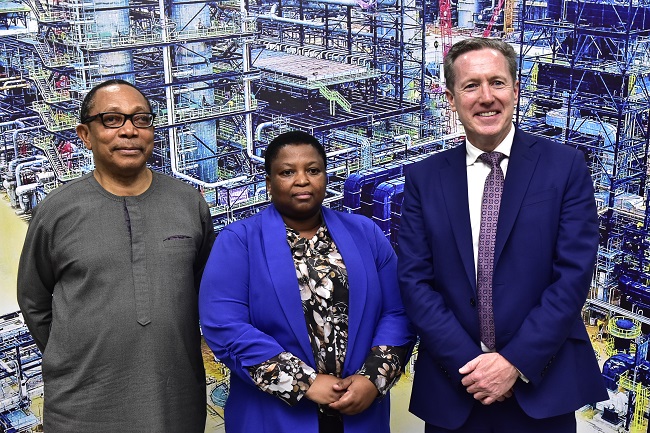
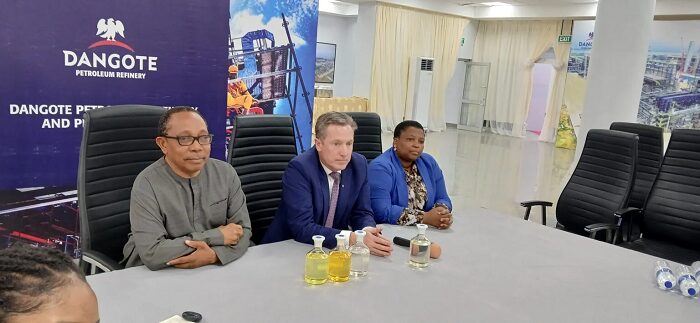
L-R: Group Chief Brand and Communications Officer, Dangote Industries Limited, Anthony Chiejina; Head, Economic Planning and Scheduling (EPS), DPRP, Lindelani Zondi and Managing Director and Chief Executive Officer, Dangote Petroleum Refinery & Petrochemicals (DPRP), David Bird, during a press conference at the Dangote Petroleum Refinery, Lekki, Lagos, on Wednesday, 4 February 2026

Speaking during a media briefing at the refinery, Chief Executive Officer and Managing Director of DPRP,  David Bird, explained that it is standard industry practice for refineries to process intermediate or semi-processed materials into finished fuels. He stressed that this does not amount to importing finished petroleum products.

He noted that unlike conventional Nigerian refineries, the Dangote Petroleum Refinery operates on a European and Asian merchant refinery model, featuring a state-of-the-art refining, blending, and trading configuration designed to meet modern quality standards.

“DPRP produces high-quality fuels aligned with international environmental and health standards. Our gasoline is lead-free and MMT-free, with 50 parts per million sulphur, while our diesel meets ultra-low sulphur standards. These specifications help reduce emissions, protect engines, and safeguard public health,” Bird said.

According to him, the Dangote Petroleum Refinery produces only fully refined, market-ready fuels. “Dangote Petroleum Refinery offers high-quality finished products. We will never supply semi-finished products to the market. Semi-finished products should not be used in vehicles,” Bird said, while displaying samples of intermediate feedstocks and finished products to journalists.

He noted that while Nigerians had historically been exposed to substandard fuel, the refinery was established to reverse that trend and deliver fuels that meet the highest international standards. Bird added that the refinery’s products are now supplied to markets across the world, reflecting their quality and competitiveness.

Intermediate products, he explained, are semi-processed materials derived from crude oil and used as feedstock for further refining into finished fuels such as petrol and diesel, as well as petrochemicals. These include naphtha, straight-run gas oils, vacuum gas oil (VGO), reformate, alkylate and isomerate.

Bird emphasised that the refinery has remained transparent in its operations and engagements with regulators and urged the media to help educate the public on the distinction between intermediate and finished products.

“It is regrettable that some individuals are deliberately spreading false narratives about a refinery that has transformed Nigeria and the wider West African region from a dumping ground for substandard fuel into a refining hub with access to high-quality products,” he said.

He further noted that the refinery’s design flexibility allows it to process a wide range of crude oils and intermediate feedstocks into premium finished products.

Assuring of product availability to meet domestic demand, Bird said the refinery has played a significant role in easing fuel scarcity, stabilising the naira, and reducing pressure on foreign exchange.

Group Chief Brand and Communications Officer, Dangote Industries Limited, Anthony Chiejina, also urged journalists to exercise caution in their choice of words, warning that inaccurate terminology could misinform the public and create unnecessary panic.

Renaissance honoured for landmark onshore deal

0

Renaissance Africa Energy Company was on Tuesday, February 3, 2026, named the winner of the Energy Deal of the Year for 2025 at the Awards Night of the Nigeria International Energy Summit (NIES) in Abuja.

The award was in recognition of the historic $2.4 billion acquisition of Shell’s onshore assets in March 2025, a transaction widely regarded as one of the most consequential in Nigeria’s energy evolution.

The NIES awards committee noted the leadership of Renaissance in advancing local participation in upstream operations and reinforcing Nigeria’s strategic energy autonomy.

Renaissance
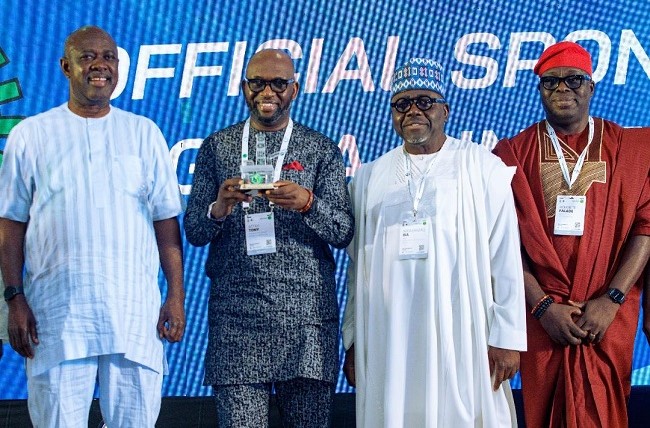
L-R: Minister of State for Petroleum Resources (Oil), Senator Heineken Lokpobiri; Managing Director/Chief Executive Officer, Renaissance Africa Energy Company Limited, Mr. Tony Attah; Renaissance Director and Chairman/CEO, Waltersmith Group, Alhaji Abdulrazaq Isa; and Renaissance Director and MD/CEO, Aradel Holdings, Mr. Adegbite Falade, receiving the award of Energy Deal of the Year presented to Renaissance at the ongoing Nigerian International Energy Summit in Abuja on Tuesday night

According to the award committee, for the first time in Nigeria’s oil and gas sector, ownership, operational control, and strategic direction shifted decisively into Nigerian hands, reinforcing indigenous leadership and strengthening Nigeria’s energy sovereignty.

“Some transactions change balance sheets. This one changed history,” the committee noted in Renaissance’s citation at the ceremony

Receiving the award, Managing Director and Chief Executive Officer of Renaissance, Mr. Tony Attah, said: “This recognition is deeply meaningful because it affirms a bold belief  that Nigerians can build, operate, and lead world‑class energy enterprises at scale. The onshore asset acquisition from an international oil company was more than a transaction; it was a turning point for indigenous participation in our industry.

“I dedicate this honour to our exceptional workforce, our partners, and the communities we work with. Together, we are proving that Nigeria is not just a host to global energy but can be the driver, the innovator, and the standard‑bearer for Africa’s energy future.”

Renaissance’s recognition at NIES 2026 adds to a series of high‑profile industry awards the company secured in 2025 including the Energy Excellence Award at the Nigeria Oil and Gas Energy Week in July 2025.

In the same year, the company was named the Nigerian Content International Upstream Operator of the Year, while Attah received the individual category award of Local Content Icon of the Year at the Nigeria Oil and Gas Opportunity Fair organized by the Nigerian Content Development and Monitoring Board.

Climate change: AGN Chair seeks Africa’s unity amidst declining global multilateralism

0

The Chair of the African Group of Negotiators on Climate Change (AGN), Dr. Nana Antwi-Boasiako Amoah, has called on African countries to strengthen unity and collective action as global multilateralism continues to weaken.

Addressing the first strategic meeting of the AGN under Ghana’s leadership, Dr. Amoah warned that Africa, as one of the region’s most vulnerable to the impacts of climate change, cannot afford the erosion of multilateral cooperation.

“With Africa’s well-documented vulnerabilities to climate change, the continent cannot afford to let multilateralism die,” he stated.

Dr. Nana Antwi-Boasiako Amoah
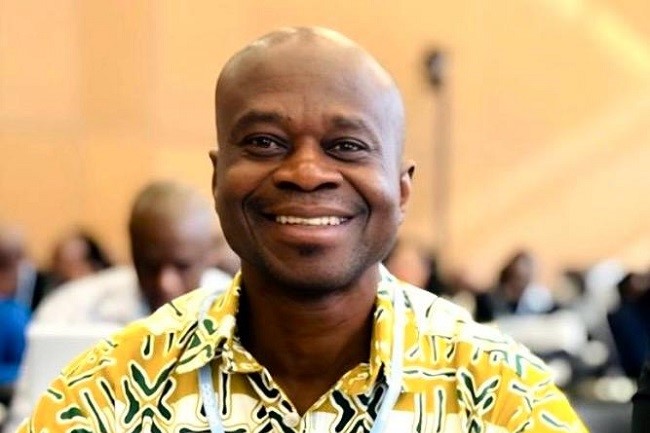
Chair of the African Group of Negotiators on Climate Change (AGN), Dr. Nana Antwi-Boasiako Amoah

Dr. Amoah reaffirmed his commitment to mobilising the broad expertise within the AGN to ensure Africa maintains a strong and coordinated presence in global climate negotiations, despite growing geopolitical and economic pressures.

“The strength and success of the AGN lie in our ability to work together, even under difficult circumstances,” he said. “My chairmanship will harness the collective expertise within the AGN family to project Africa’s interests at a time when the spirit of multilateralism is clearly under strain.”

The strategic meeting, held virtually, marks the first under Ghana’s chairmanship and focused on preparations for the upcoming African Union Summit scheduled to hold from February 11 to 15, 2026, in Addis Ababa, Ethiopia.

Ahead of in-person engagements leading up to the mid-year UN Climate Conference in June, the meeting was guided by the following objectives:

  1. Reviewing outcomes and priority issues from COP30 and their implications for continental policy processes;
  2. Consolidating AGN positions and negotiation priorities to inform strategic engagement during the African Union Summit; and
  3. Reviewing the AGN Chair’s priority agenda and aligning it with Lead Coordinators and country focal points perspectives.

The African Group of Negotiators on Climate Change (AGN) is a technical body of the three-tier African negotiating structure that engages in the technical negotiations during the UN Conferences of the Parties (COPs) and the inter-sessional negotiations on Climate Change. It was established in 1995 with the objective of representing the interests of Africa in the international climate change negotiations, with a common and unified voice.

By Kofi Adu Domfeh

World Cancer Day: Tackle cancer by fixing Nigeria’s food system, CAPPA urges govt

0

On World Cancer Day, themed “United by Unique”, Corporate Accountability and Public Participation Africa (CAPPA) has reaffirmed its solidarity with the global community to honour the millions affected by cancer. While advocating for personalised, patient-centred care, CAPPA called on Nigeria to also address the growing link between cancer and Nigeria’s broken food system.

In a statement to mark the day on Wednesday, February 4, 2026, the public interest organisation warned that cancer is no longer a distant threat in the country, but a growing epidemic with no fewer than 72,000 annual cancer-related deaths and over 120,000 new cases recorded annually, according to the National Institute for Cancer Research and Treatment.

Muhammad Ali Pate
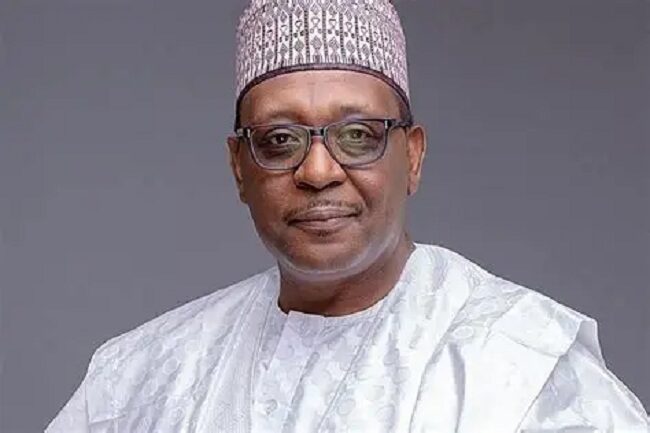
Coordinating Minister of Health and Social Welfare, Dr Muhammad Ali Pate

It noted that while genetic and environmental factors play a role, increasing evidence links the rise in colorectal, breast, and prostate cancers to the food Nigerians consume and how that food is produced.

Consequently, CAPPA called on the federal and state governments “to implement proactive measures to curb this public health crisis by fixing the cracks in our food system that are contributing to the rising burden of cancer and non-communicable diseases (NCDs) in Nigeria.”

These cracks, it added, include unrestricted marketing and consumption of ultra-processed foods, poor regulation of tobacco and emerging nicotine products marketing, and excessive consumption of sugar-sweetened beverages (SSBs) and salt, among other major cancer and NCD risk factors.

“We urge the government to place renewed focus on strengthening its healthy food policies. These include stricter regulation of tobacco and nicotine products, an upward review of the tobacco control budget, the development of a national guideline to reduce salt consumption including implementation of mandatory salt targets for processed and pre-packaged foods, a review of the SSB tax from the current N10 per litre to 50 per cent of the final retail price of sugary drinks, restrictions on the marketing of unhealthy foods to children, and clear nutrition standards for schools, hospitals and other public institutions,” CAPPA stated.

Recognising tobacco’s role as one of the biggest preventable cancer risks, the statement called for a full implementation of the National Tobacco Control Act, inclusion of new and emerging nicotine products in the ban on all forms of tobacco advertising, promotion and sponsorship, higher tobacco excise taxes adjusted for inflation, and strict enforcement against illicit tobacco and nicotine products trade.

The organisation also renewed its commendation of the federal government’s plan to earmark pro-health taxes for cancer prevention and care, noting that such measures would help reduce out-of-pocket healthcare spending.

The statement urged governments to make cancer control a development priority, saying the country’s health sector, with only 40,000 doctors for over 200 million people, according to media reports, is at a breaking point.

“Nigeria cannot treat its way out of the cancer crisis. Prevention-focused policies, especially those related to tobacco, food, and alcohol, offer perhaps the biggest and most cost-effective gains. When combined with early detection, health financing, and accountability, they can save thousands of lives each year,” CAPPA added.

We don’t import refined petroleum products – Dangote

0

Dangote Refinery says it does not import refined petroleum products into Nigeria, insisting that all petrol and other fuels sold from its operations are fully refined locally.

The clarification was made by the Chief Executive Officer of Dangote Refinery, Mr. David Bird, during a news conference on Wednesday, February 4, 2026, in Lagos, amid allegations over fuel importation and local refining capacity.

Bird explained that materials often mistaken for imported fuel were, in fact, intermediate feedstocks used to optimise refinery operations.

Dangote Refinery
Dangote Refinery officials at the news conference in Lagos

He said these include high catalytic sulphur gasoline and straight-run naphtha, unfinished components that undergo extensive processing at the Lekki-based facility before becoming market-ready products.

“We do not import refined fuel. Everything sold as petrol, diesel or aviation fuel is refined here in Lekki to Nigerian and international Euro-V standards,” Bird said.

According to him, the use of intermediate feedstocks is standard practice in complex and merchant refineries across major refining hubs such as the United States, the United Kingdom, Singapore and India.

Bird noted that the Dangote Refinery, unlike refineries located directly at the end of crude oil pipelines, operates as a merchant refinery, sourcing diverse crude and feedstock grades largely by sea.

He said this flexibility allows the refinery to maximise utilisation of its advanced conversion units and upgrade every molecule into high-value, clean fuels and petrochemicals.

Bird accused some oil marketers and regulatory actors of undermining the nation’s local refining drive by importing cheaper, sub-standard fuels while declining to patronise domestically refined products.

Such actions, he warned, threaten the country’s energy security and foreign-exchange stability.

Bird disclosed that the refinery currently supplies about 45 million litres of petrol daily to the domestic market and did not export petrol during the peak Christmas and New Year period.

He said exports only occur when there is excess supply or limited domestic uptake, particularly during the early operational phase.

Highlighting public health benefits, Bird said local refining had significantly reduced sulphur and metal content in fuels now consumed in Nigeria, making them comparable to products used in Europe and North America.

Bird described the Dangote Refinery as one of the most modern and automated facilities globally, producing high-value “white products” such as petrol, diesel, aviation fuel and polypropylene.

Reaffirming the company’s long-term vision, Bird said the refinery remained committed to meeting domestic demand first while positioning Nigeria as a hub for clean, world-class fuels in Africa.

“West Africa should no longer be a dumping ground for inferior products. Nigeria deserves and now produces the best,” he said.

By Yunus Yusuf

China’s solar energy set to overtake coal, new coal rush threatens ‘historic’ shift

Solar power is set to overtake coal in China for the first time in 2026, according to the China Electricity Council.

However, drawing on the latest analysis from Global Energy Monitor, environmental campaign group, 350.org, has warned that this historic turning point – which confirms renewables have decisively won on economic grounds – risks being undermined by China’s continued, record-level coal build-out.

“The Chinese coal expansion is unnecessary, increases the risk of stranded assets, and stands in stark contradiction to the country’s own clean-energy success,” criticises the group.

Xi Jinping
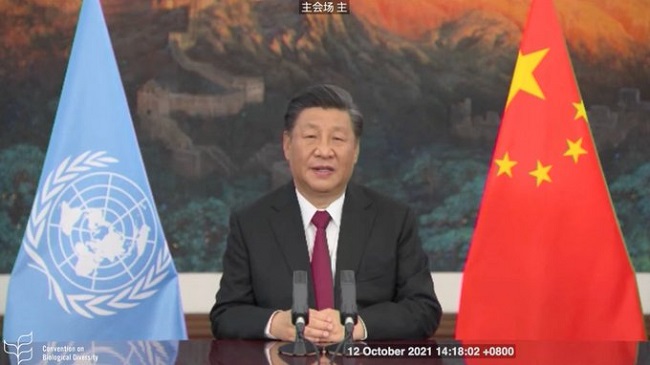
President Xi Jinping of China

China’s installed solar power capacity is projected to surpass coal for the first time this year, according to the China Electricity Council. By the end of 2026, non-fossil energy sources – primarily solar and wind – will make up 63% of China’s power capacity, while coal drops to just 31%.

Latest numbers by the Global Energy Monitor show that developers submitted proposals to build a total of 161 gigawatts (GW) of new coal-fired power plants in 2025 alone.

291 GW of coal power capacity remains in China’s pipeline, already permitted or under construction according to Global Energy Monitor.

Andreas Sieber, 350.org Head of Political Strategy, said: “This is a historic turning point: solar power is set to overtake coal in China for the first time in 2026. This is maybe the clearest demonstration yet that clean energy has won – on cost, scale, and air quality. However, China is responding to coal’s economic defeat by building more of it.

“With around 290 GW of new coal capacity already permitted or under construction, and another record year for approvals, the country is schizophrenically proving coal is obsolete while rushing to entrench it. This mostly serves a coal industry racing against time. The consequence is predictable: stranded assets, higher system costs, and a transition made harder.”

New varsity to tackle climate change, pollution in Niger Delta – Govt

0

The Federal Government has said that Nigeria will soon produce additional expertise needed to address climate change and environmental degradation, particularly in the Niger Delta region.

The Minister of Education, Dr Tunji Alausa, stated this on Wednesday, February 4, 2026, at the maiden matriculation ceremony of the newly established Federal University of Environment and Technology (FUET), Koroma/Saakpenwa, Tai area of Rivers State.

Represented by Mr Sunday Ajide, a director in the ministry, Alausa said climate change and environmental pollution had increasingly become serious global concerns.

FUET
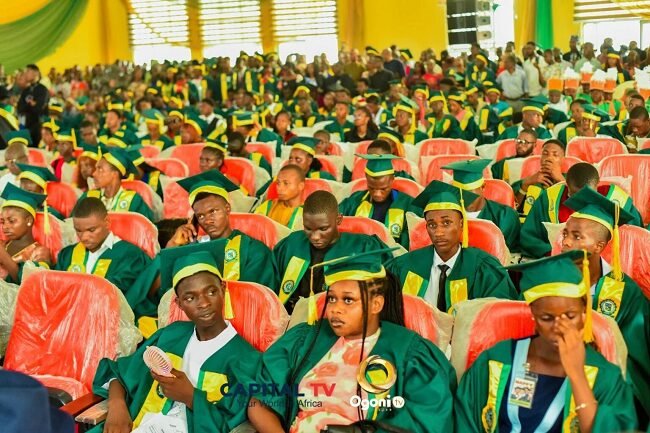
Newly inducted students at Federal University of Environment and Technology (FUET), Koroma/Saakpenwa, Tai Local Government Area of Rivers State

According to him, the establishment of FUET is a clear demonstration of the Federal Government’s unwavering commitment to expanding access to quality higher education and providing solutions to environmental challenges.

“FUET will promote environmental sustainability and address the unique ecological and developmental challenges of the Niger Delta region,” he said.

He added that the choice of environment and technology as the institution’s core mandate was both timely and strategic.

“In an era in which climate change, environmental degradation, renewable energy and sustainable development dominate global discourse, FUET is well positioned to become a centre of excellence in research, innovation and solutions-driven scholarship.

“The university will play a critical role in producing skilled professionals, researchers and leaders who will contribute meaningfully to national development and global environmental stewardship,” Alausa said.

The minister assured the institution of the full support of the Ministry of Education in the areas of policy guidance, infrastructural development, staff capacity building, programme accreditation and funding.

Alausa also urged industry stakeholders, research institutions and developmental partners to collaborate with the university to enhance its relevance, innovation and sustainability.

He commended the vice-chancellor, members of the governing council, management and staff for their efforts in bringing FUET into operations following its establishment on Feb. 3, 2025.

Speaking at the event, the pioneer Vice-Chancellor of FUET, Prof. Prince Mmom, said the university had admitted more than 1,000 students across six faculties, including Agriculture and Applied Health Sciences.

The other faculties are Engineering Technology, Environmental Sciences, Natural and Applied Sciences, and Management Technology.

According to him, within the next five years the institution would produce some of Nigeria’s best minds to drive environmental solutions across the Niger Delta and the country at large.

“This will be achieved through strict adherence to university rules and regulations and by exhibiting a high sense of personal responsibility in upholding and maintaining these standards at all times,” he said.

Mmom said that within its first year, the university had recorded notable milestones, including ongoing infrastructural development, commencement of academic activities and the admission of students.

He described FUET as a specialised institution designed to become a world-class centre of excellence in environmental restoration, sustainable development and technological innovation.

“The university will promote translational research with direct impact on communities, Ogoniland and the wider Niger Delta region.

“FUET will focus on ecosystem regeneration, environmental justice partnerships and the production of skilled graduates capable of addressing contemporary environmental challenges,” he added.

The vice chancellor said the institution would not tolerate cultism, examination malpractice, sexual harassment, drug abuse, the exchange of grades for money, or the sale of handouts and unapproved books or manuals.

He urged students to remain focused, uphold the highest ethical standards, and embrace the opportunities for learning, innovation and character development offered by the university.

Also speaking, the Pro-Chancellor and Chairman of FUET’s Governing Council, Prof. Don Baridam, said severe sanctions awaited lecturers and non-teaching staff who extort students, sell handouts or demand sexual gratification.

“In addition, lecturers must be visible on Google Scholar, ResearchGate, while local scholars who fail to publish indexed articles will not be tolerated at FUET,” he warned.

Baridam advised students to set high personal high academic standards, warning that the institution would rusticate those who fail to comply with its rules and regulations.

By Desmond Ejibas

Lagos sensitises MDAs on informal space documentation, management

The Lagos State Government, through the Ministry of Physical Planning and Urban Development, has commenced strategic collaboration with relevant Ministries, Departments and Agencies (MDAs) to ensure the proper documentation, planning and management of informal spaces across the state.

The Commissioner for Physical Planning and Urban Development, Dr. Oluyinka Olumide, disclosed this at a stakeholders’ sensitisation meeting held in Alausa, organised by the project consultant, Octragon Multi-Project Limited, led by its Chief Executive Officer, Gbolahan Awolesi.

Informal space
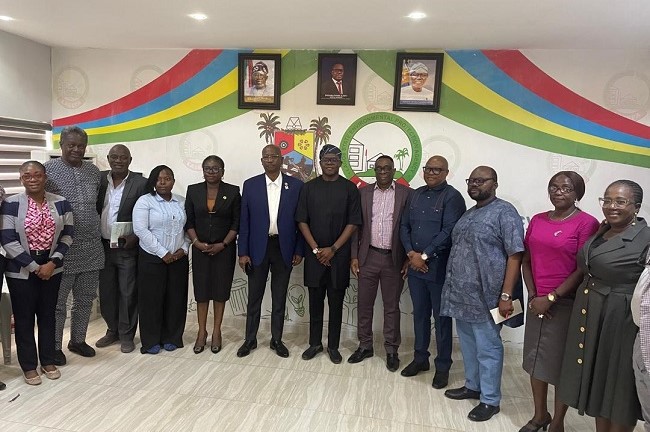
Participants at the stakeholders’ sensitisation meeting in Lagos

Dr. Olumide explained that the initiative was aimed at systematically documenting all informal spaces, including setbacks, open areas, and common spaces, with a view to clearly designating and optimally utilising them in line with planning standards. 

According to him, over the years, the government had cleared several setbacks and common areas that later remained idle or were re-encroached upon due to the absence of proper planning and documentation.

“Common areas are deliberately set aside to enhance environmental quality. This programme is designed to change the narrative by ensuring that informal spaces are properly identified, planned, managed, and put to appropriate use,” the Commissioner stated.

He further noted that Lagos State had an estimated 3,000 hectares of informal spaces, stressing the need for intentional planning to ensure sustainable use.

“We must take charge of informal spaces, be mindful of how they are utilised, and ensure that we operate within a planned and well-managed urban environment,” he added.

Earlier, the Permanent Secretary, Office of Physical Planning, Oluwole Sotire, said that the programme would significantly enhance the aesthetic quality of the environment by demonstrating how setbacks and informal spaces could be properly planned and productively utilised.

He emphasised that informal spaces were often wrongly perceived as belonging to no one, noting that such spaces were among the state’s most valuable and limited natural resources, which must be protected and efficiently managed.

Also speaking, the Permanent Secretary, Ministry of Commerce, Cooperatives, Trade and Investment, Mr. Babatunde Onigbanjo, expressed concern about ensuring that the initiative benefited residents without undermining their livelihoods whilst affirming his Ministry’s support for the programme and urging more advocacy.

Also speaking, the representative of the Director-General, Lagos State Sports Commission, Mr. Adedeji Aladegbemi, described the initiative as timely and appealed that any informal spaces designated for sports development be allocated to the Commission to help address space constraints and youth engagement challenges.

The General Manager, Lagos State Informal Space Management Authority, Daisi Oso, noted that improper use of setbacks had brought about limited opportunities for youth engagement while assuring proper planning and management of such spaces henceforth.

Similarly, the General Manager, Lagos State Environmental Protection Agency (LASEPA), Mr. Babatunde Ajayi, expressed readiness to collaborate on environmental regulation, particularly recycling initiatives. 

He revealed plans to establish recycling facilities and designated public toilet spaces within informal areas to curb open defecation, adding that a monitoring directory should be installed in all identified informal spaces.

The Consultant, Gbolahan Awolesi said that Octragon Multi-Project Limited had been mandated to comprehensively document informal spaces across Lagos State and ensure their optimal utilisation in accordance with international best practices.

×