Victory came the way of the Cross River forest, concerned communities and environmental activists on Wednesday, February 15 2017 as the state government announced the reversal of its order revoking ownership of land extending to 10km on either side of the proposed 260 km Superhighway.
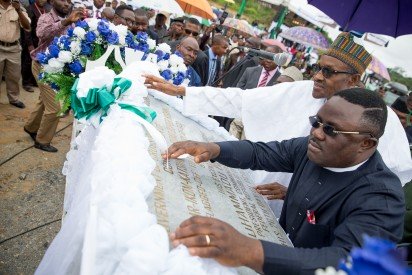
Flashback: President Muhammadu Buhari unveiling the plaque with Governor of Cross River, Prof. Ben Ayade, during the Ground Breaking Ceremony of the 260km Superhighway from Calabar to Northern Nigeria on 20th Oct 2015. Photo credit: vanguardngr.com
In a press call in a national newspaper, the hitherto defiant state governor, Ben Ayade, appear to have succumbed to local and international pressures over the hugely controversial and unpopular road project.
The call, signed by the state Commissioner for Lands and Urban Development, Dr. John Inyang, on behalf of the government, reads: “After due consultation with relevant bodies and stakeholders, the Cross River State Government through the Ministry of Lands and Urban Development hereby reverses the earlier revocation order published in the Punch Newspaper edition of Friday, January 15, 2016 and the Nigerian Chronicle edition of Friday 22nd January, 2016 specifying the revocation of 10km span of either side of the centre line of the proposed 260km Superhighway road project.
“Accordingly, acquisition of right-of-way for the proposed road project and payment of compensation shall be limited to the 70m span of the road corridor.”
While environmental activist, Nnimmo Bassey, described the reversal as a “significant victory for Cross River forest communities”, government officials say it is rather a demonstration of the fact that Senator Ayade is a listening governor and is intended on removing all obstacles and making sure that the superhighway project is completed.”
Rita Iyke-Uwaka, an environmentalist, stated: “This is a great milestone for forest advocacy and community rights in Nigeria. Indeed, our collective rights and fights for environmental justice was not in vain! God bless great minds who fought night and day particularly Nnimmo Bassey for the great support he gave and great role he played directly and indirectly to make this happen.”
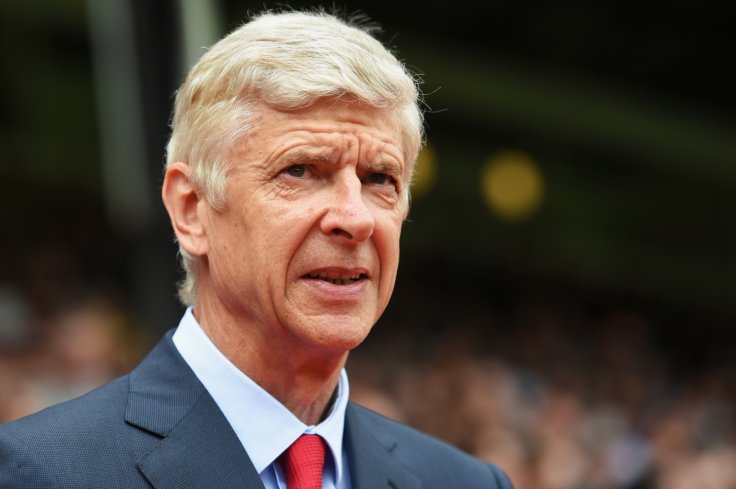
If the news making its round is anything to go by, then Arsenal manager, Arsene Wenger, may not be in charge of the club next season.
Arsenal manager, Arsene Wenger
Some club supporters have been mounting pressure on the Gunners boss, calling on him to step down.
Wenger has been in charge of the North London club for 21 years, but there is now a definite split among fans over whether he should remain or leave.
In other to meet up with demands of the fans, reports say the club management has penciled down four possible names to replace Wenger at the end of the season.
Top on the list is Newcastle manager, Rafael Benitez, who appears to be leading the Magpies charge back to the Premier League.
Borussia Dortmund’s Thomas Tuchel is next, while Luis Enrique at Barcelona is another and Monaco’ s Leonardo Jardim makes the fourth.
But the CEO of Borussia Dortmund, Hans-Joachim Watzke, said speculation linking head coach Tuchel to Arsenal is “completely fictional stuff”, while Tuchel said he is unaware of the interest from Arsenal, stressing that he was happy at the Bundesliga club.
Meanwhile, Wednesday’s UEFA Champions League game, which saw Bayern Munich destroying Arsenal 5-1, seems to have vindicated some Arsenal fans that they need a change of manager.
For Wenger and his team, who has severally crumbled in familiar fashion when it mattered most, a seventh successive exit from the competition in the round of 16 now appears all but inevitable.
The Federal Executive Council (FEC) has approved a new National Health Policy aimed at promoting the health of Nigerians while accelerating socio-economic development in the country.
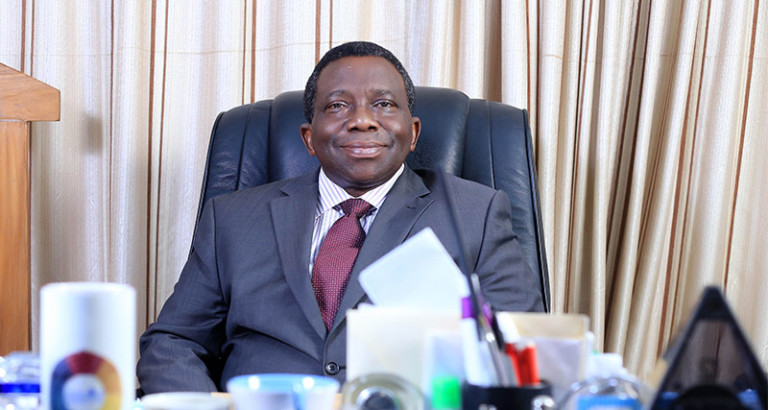
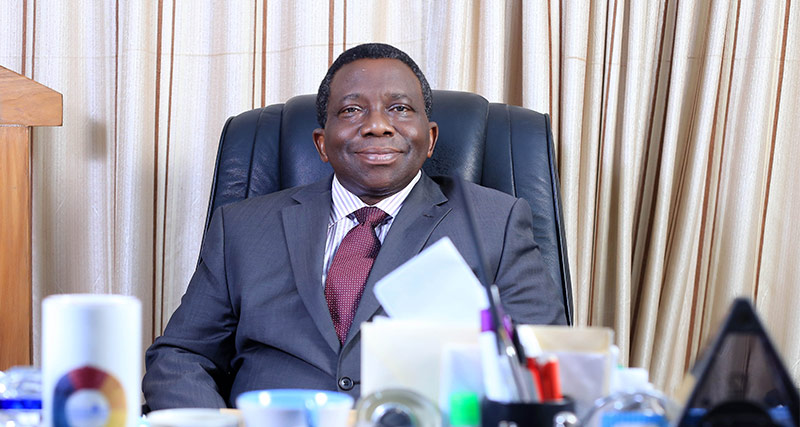
Minister of Health, Professor Isaac Adewole
Minister of Health, Prof. Isaac Adewole, made this known on Wednesday, February 15 2017 in Abuja when he briefed State House correspondents in Abuja on the outcome of the FEC meeting, which was chaired by the Acting President, Yemi Osinbajo.
Adewole said that the policy, which was initially approved by the National Council on Health, was extensively deliberated by the council before the final approval.
According to him, the policy is the third health policy in the history of Nigeria.
The first National Health Policy was in 1988, while the second policy was produced in 2004.
Adewole said: “This new policy will provide directions necessary to support the achievements of significant progress in terms of improving the performance of the national health system.
“It also lays emphasis on primary healthcare as the bedrock of our national health system in addition to the provision of financial risk protection to all Nigerians particularly the poor and most vulnerable group.
“This administration is reputed for being pro-poor and we are quiet committed to alleviating the problem of the poor Nigerians, the poor masses, the vulnerable the unemployed and the disadvantaged.”
The minister also explained that, before arriving at the new health policy, his ministry constituted a technical working committee, chaired by former Minister of Health, Prof. Eyitayo Lambo, “to look into the country’s context, the challenges, what went wrong in the past and how we can reposition the health sector”.
According to the minister, the policy captures the essentials of ensuring the reduction of maternal and child mortality, wider immunisation coverage and better control and prevention of public health emergencies.
He said that the new policy would make Nigerians proud of the nation’s health system.
Adewole announced that his ministry would be signing a Memorandum of Understanding (MoU) with the European Union (EU), who will be intervening in the nation’s health facilities in the 774 local government areas of the federation.
On the recent claim of discovery of medical cure for HIV/AIDS by a professor of veterinary medicine and clinical virology, Adewole said his ministry was awaiting the final report from the Director-General of the Nigerian Institute for Medical Research.
It will be recalled that Prof. Maduike Ezeibe of Veterinary Medicine and Clinical Virology Department, Michael Okpara University of Agriculture, Umuahia in Abia State, was reported to have developed a drug that eliminated the deadly virus in some patients.
Ezeibe claimed that the drug, which was produced with “Aluminium Magnesium Silicate”, had the clinical ability to “reach all cells’’ and make HIV “a conquered organism”.
He said the drug was successfully tested on 10 persons living with HIV.
Adewole said: “On the issue of the HIV, we are yet to get the final report from the Director-General of the Nigerian Institute for Medical Research.
“But what is clear is that those activities were carried out without a valid ethical approval. As you may be aware, nobody is entitled to conduct any experiment or research on human being without an ethical approval.”
The World Bank has urged Nigeria to put in place the right policy framework that will improve and enable the private sector drive the $140 billion investment required for climate change in the country.
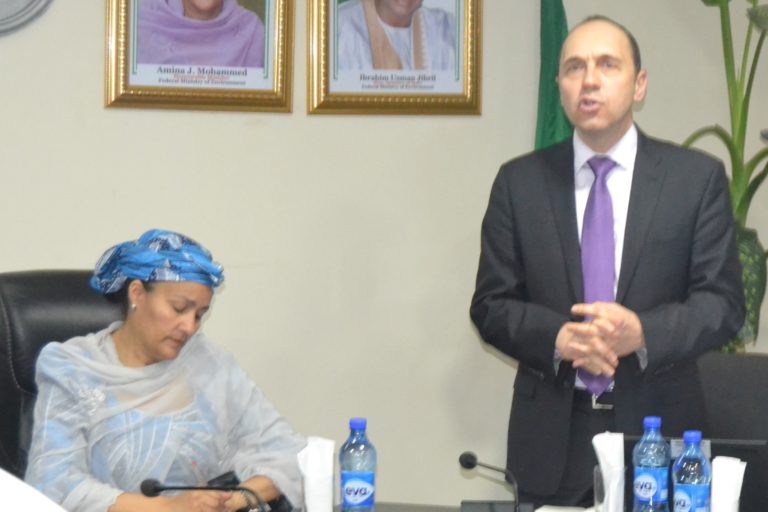
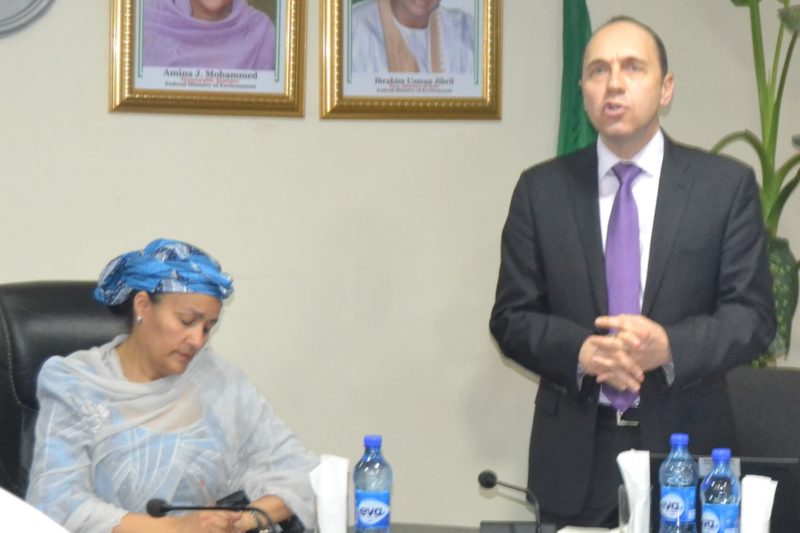
Benoit Bosquet, Practice Manager for Environment and Natural Resources at the World Bank, with Environment Minister, Amina Mohammed, during a previous engagement in Nigeria
This was disclosed by the World Bank executive, Benoit Bosquet, at the second leg of the Climate Change Knowledge Immersion workshop in Kaduna on Wednesday, February 15 2017. The Knowledge Immersion Workshop was organised by the Federal Ministry of Environment’s Department for Climate Change and the World Bank.
According to Mr Bosquet, the Nigerian private sector can harness the required funds for investment to address the impact of climate change in the country. “Nigeria needs $140 billion to achieve its climate change commitment and control its impact on the country through the Nationally Determined Contributions (NDCs) of Paris Agreement. These are investments that are driven by the private sector, therefore government must put in place policies that will support the investment,” he said.
Mr Bosquet, who is the Practice Manager for Environment and Natural Resources, disclosed that “globally the private sector is making more of the needed investments than the public sector” hence the need for policies that enhance the private sector to make such investments in Africa’s largest economy.
“In order to take effective climate action, which means both reducing greenhouse gas emissions and adapting to climate change, Nigeria needs about $140 billion by 2030. This is underpinned by Nigeria’s Nationally Determined Contribution and studies conducted by the World Bank in 2013. Action is technically feasible and economically beneficial but the sooner it is undertaken, the better.”
“The longer it will take to undertake climate action, the more expensive it will be,” he warned.
He also warned that Africa is very vulnerable to climate change and climate change will worsen Nigeria’s vulnerability if not addressed in time. “Nigeria needs to build resilience now for the harsher climate of the future. If not addressed in time, climate change can worsen Nigeria’s vulnerability to weather swings, and limit its ability to achieve and sustain the objectives of Vision 20:2020.”
The World Bank has projected that climate change could increase poverty headcount by 100 million in 2030. “Climate change and poverty are intimately related. The poor will be affected the most, in particular, women, children and elderly citizens,” he added.
To address climate change impact in Nigeria, Bosquet suggested “zero deforestation by 2020, best practices of agriculture, renovating of three to five percent buildings per year, good public transportation system and low carbon industrialisation.”
With the falling cost of investments in green technology, the World Bank expert affirmed that these investments will pay off due to its “negative cost benefit.” Examples of such very positive benefit of climate change investment is the falling price of solar photo voltaic panels which now cost about $1 per unit as against $4, some four to five years ago.
He also advised that the benefit of early action to deal with climate change outweighs the cost, saying “action today is tomorrow safe”.
The World Bank is already supporting some projects on addressing the impact of climate change across Nigeria with interventions such as climate smart agriculture, climate resilience for coastal area and the Nigeria Erosion and Watershed Management Project (NEWMAP).
The workshop, which had “Accelerating Climate Change resilience to carbon development in Nigeria” as its theme, had in attendance officials from state Ministries of Environment across northern Nigeria, major stakeholders and students.
“It is highly encouraging to see so many youth represented here at the workshop in Kaduna. They are the leaders of tomorrow and will ultimately shape the future of our climate within Nigeria and globally,” he concluded.
An increasing number of developing countries – Mexico, China, Turkey, India, Vietnam, Brazil, and South Africa – are emerging as leaders in sustainable energy, with robust policies to support energy access, renewables and energy efficiency, according to a new World Bank Report.
Riccardo Puliti, Senior Director and Head of Energy and Extractives at the World Bank
“RISE will be an invaluable tool for policymakers, helping them to identify and bolster policies and regulations that spur the kind of investments needed to extend access to modern, affordable and reliable energy for all,” said Riccardo Puliti, Senior Director and Head of Energy and Extractives at the World Bank.
The report was produced as a contribution toSustainable Energy for All. Rachel Kyte, CEO and Special Representative to the UN Secretary-General on Sustainable Energy for All, said: “The world is in a race to secure a clean energy transition – one that will deliver energy services for everyone, create jobs, ensure health care and education, and allow economies to grow. Increased use of renewable energy is a key element in that transition.”
She added: “RISE offers policymakers and investors the most detailed country-level insight yet into how we can level the playing field for renewable energy worldwide. Smart policy can accelerate this transition.”
While many of the countries surveyed in RISE have embraced the sustainable energy agenda, the report identifies important policy gaps across all regions, and highlights opportunities for rapid progress. Sub-Saharan Africa is the world’s least electrified continent, where 600 million people still live without electricity. As many as 40 percent of sub-Saharan African countries surveyed by RISE have barely taken any of the policy measures needed to accelerate energy access, compared to less than 10 percent of Asian countries. Exceptions include Kenya, Tanzania, and Uganda which have strong policy frameworks.
RISE assesses where additional efforts are most needed – both developed and developing countries need to pull their weight. Among the top 10 high-impact countries for renewable energy and energy efficiency, all have relatively robust policy frameworks in place. The same cannot be said for the top 10 high-impact countries for access – both Nigeria and Ethiopia still need to make much progress in policies and regulations. The report notes that in order to improve electricity access, there must be a better balance between making power both affordable for customers without undermining the financial viability of the utilities that need to invest to provide service.
The report highlights that, in many countries, policymakers are not paying nearly as much attention to energy efficiency as to renewable energy, particularly in the developing world. Energy efficiency measures are usually the most cost-effective way of greening the energy sector. Examples like Vietnam that prioritised energy efficiency in its sector planning in response to high demand growth in the 1990s, show how much progress can be made in this area. Yet the majority of countries still need to adopt basic regulatory measures like appliance labeling, building codes, and equipment performance standards.
While RISE serves as a global energy policy scorecard, an upcoming, complementary World Bank report – Global Tracking Framework – will track how countries are performing on sustainable energy goals. The Framework will be released at the Sustainable Energy for All Forumfrom April 3-5, 2017.
As part of the blog series on IUCN’s “WISE-UP to Climate” project, project partner, BC3 (Basque Centre for Climate Change) research economist, Laetitia Pettinotti, writes on her experience in Ghana
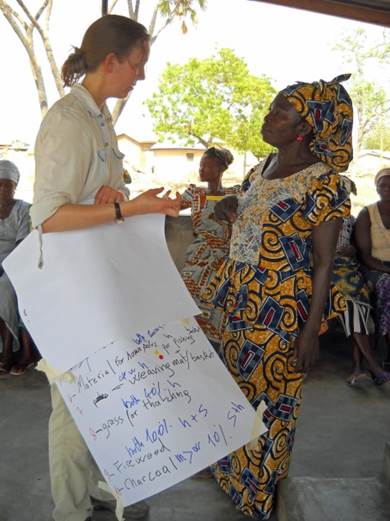
Laetitia Pettinotti (left), Researcher at BC3, during her second mission to Ghana
Last September the “WISE-UP to Climate” team visited the dry Northern region of Ghana, destination: the communities of Arigu, Bisigu, and Pwalugu which line the White Volta River. It was my second trip there, after a first scoping and data collection mission for the project back in May 2015.
My role as a BC3 research economist was to collect qualitative and quantitative data on the benefits local communities receive from nature, or from “ecosystem services”. My research focused on two key questions:
‘To what extent are riparian communities reliant on the White Volta river and
What kinds of households (rich, middle or poor) are most dependent on livelihood activities reliant on the river flow?’
As a new dam is planned for the region, the WISE-UP project is compiling information on the different services nature provides to local communities living in the area. Although much information is available on what engineered infrastructure, such as the planned dam, can provide in terms of services – such as flood protection, energy production, and irrigation – much less information is available on the services already being delivered by nature such as the Pwalugu floodplain (for example through seasonal flooding of the river).
To sustain their livelihoods, the Pwalugu communities engage in activities that depend on the floodplain such as flood recession farming, fishing in riparian ponds, irrigated farming and water collection as well as livestock grazing during dry season. Since the dam will alter the flow of the river, it will modify the extent and timing of the flood and hence the capacity of the floodplain to support these livelihood activities.
This brings me to my work, building an evidence base for these less-well-covered natural services. Poor information on ecosystem services stems not only from nature having no voice, but from the complexity in collecting and understanding the data. How do we best qualify and quantify the current benefits of ponds/wetlands/floodplains over a year vis-à-vis the specific operations of a dam and the mechanics that control water levels downstream?
The answer lies in interdisciplinarity – bringing hydrologists and economists together. To get the bigger picture on economic benefits provided by the floodplain, first an understanding of the biophysical landscape is needed to see what ecosystem services are available to communities. This enables a more comprehensive picture of how the river flow supports sustainable livelihoods of riparian communities.
So, how did we do this?
To better understand the hydrology of the area we mapped the surface of the flooded area in hectares associated to the river discharge for each month of the year. This is the work undertaken by Marloes Mul, senior researcher and hydrologist at the International Water Management Institute (IWMI).
To determine the economic benefits derived from river flow, we explored when during the year the communities carry out activities on the floodplain and what quantity of output produced they get from each activity as well as the market price of these outputs. This is the work I carried out.
Marloes and I worked together at each research stage. First, we set about collecting qualitative data using participatory exercises with several focus groups in the villages (picture left). These exercises, first described by the World Bank in the 1990s are now part of the standard tool box to facilitate information sharing when working with communities. Based on this qualitative information I gathered quantitative data via a number of household questionnaires, while Marloes mapped out the area and collected data on river discharge.
After analysis of the household questionnaire, we were able to place economic figures on the outputs derived by the communities from the floodplain. Then, we associated the economic values to the river discharge and flooded area for each month of the year. That way, we were able to develop a clear picture of when the river flow enables the production of the biophysical benefits. Based on discussion with the communities, we were then able to determine when these benefits are retrieved by the communities and how much they are worth – when are crops harvested for example. We are now in the process of designing graphics to help visualise this information to make it more accessible and communicable.
How can this information be used? What does it tell us? We now know quantitatively how much (in $ value) the communities are getting from the river flow and at what time of the year. So we are able to also evaluate how much would be lost if the dam is operated in such a way that would reduce downstream flow and impact livelihoods dependent on the natural seasonal flooding of the river.
We have shared these results in Action Learning meetings under the WISE-UP project and will continue to interact with basin stakeholders at the next meetings in April to fine-tune the research and analysis. This is WISE-UP’s work and strength – interdisciplinary research that opens up new avenues for dialogue on water resources management in the context of future uncertainty and climate change. It enables us to shed light on these unaccounted-for natural benefits that often do not feature in assessment plans for engineered infrastructure, but once lost, may cripple social economies and livelihoods.
Investors and insurers with more than $2.8 trillion in assets under management on Wednesday, 15 February 2017 called on the group of G20 economies to phase out fossil fuel subsidies by 2020 in order to accelerate green investment and reduce climate risk.
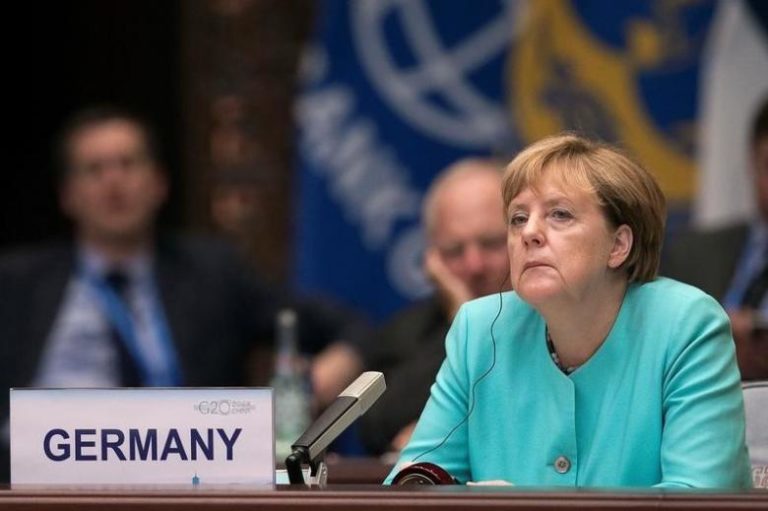
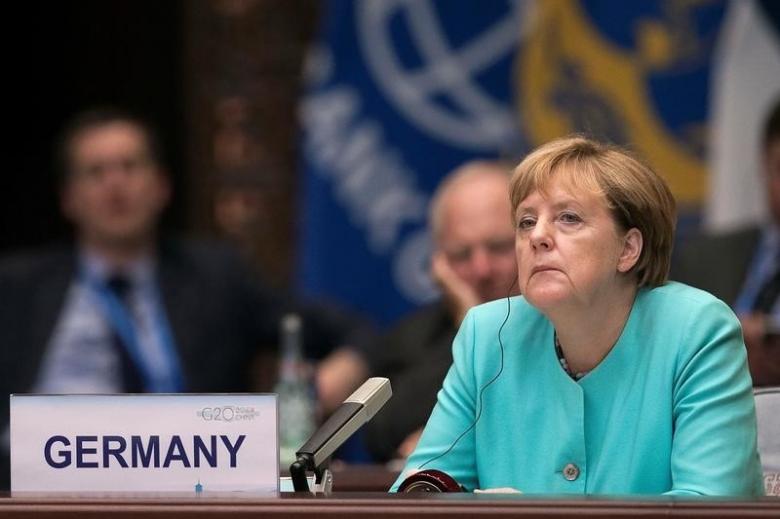
German Chancellor Angela Merkel at a G20 meeting in Hangzhou, China, in 2016. Germany has the Presidency of the group in 2017, and is making climate action a key focus of its Presidency. Photo credit: REUTERS/Nicolas Asfonri/Pool
The call came just before a G20 Foreign Ministers Meeting in Bonn, Germany to prepare for a Summit in Hamburg in July. Germany has the Presidency of the group in 2017, and is making climate action a key focus of its Presidency.
One of the investors, the Dutch fund and asset manager, ACTIAM, wrote: “(We) want to achieve an energy transition to clean, affordable and secure energy. Subsidies to coal, oil and gas production hinder the historical Paris agreement, in which 196 countries agreed to limit global temperature rise to 1.5 or maximum 2 degrees.”
Research launched earlier this week by the Global Subsidies Initiative and the Overseas Development Institute found that ending subsidies to global fossil fuel production would be equivalent to eliminating all of the emissions from the global aviation sector.
G20 governments must lead in phasing out subsidies and public finance for fossil fuels – to accelerate green investment and reduce climate risk
We – representing investors and insurers with more than $2.8 trillion in assets under management – urge G20 governments to establish a deadline for the phase out of fossil fuel subsidies and public finance for fossil fuels at the 2017 G20 Summit in Hamburg, Germany.
As concerned investors, we were heartened by the G7 called for all governments to phase out fossil fuel subsidies by 2025. Last year also saw major milestones in the fight against climate change, notably the entry into force of the Paris Agreement, the focus on green finance by the G20, and the commitment by 48 of the most vulnerable countries to achieve 100% renewable energy by 2050.
We believe this momentum provides the G20 with a unique opportunity – and responsibility – to finally deliver on their repeated pledge to end fossil fuel subsidies.
Subsidies and public finance supporting the production and consumption of fossil fuels are a key concern to the finance sector. They increase the risk of stranded fossil fuel assets, decrease the competitiveness of key industries, including low‐carbon businesses, and negate the carbon price signals many of us have been calling for. They are also notoriously inefficient from an economics standpoint.
They create a significant burden on government budgets, perpetuate income inequality by benefiting the richest consumers while failing to meet the energy needs of those lacking energy access, and damage public health by increasing air pollution.
Taking action to end subsidies and public finance for fossil fuels will be key for the G20 in meeting a number of the objectives set out in the communique from their meeting in Hangzhou, China in 2016, including:
enhancing the ability of the financial system to mobilize private capital for green investment,
building well-functioning, open, competitive, efficient, stable and transparent energy markets, and shaping an affordable, reliable, sustainable and low greenhouse gas (GHG) emissions energy future, and
achieving sustainable development and strong and effective support and actions to address climate change, and the timely implementation of the Paris agreement.
These efforts can be further supported by the recommendations of G20 commissioned Task Force on Climate-related Financial Disclosures (TCFD). In their recommendations on factors to consider when evaluating the exposure to transition risk, the TCFD guidelines could suggest the consideration of the impact of fossil fuel subsidies, and what their likely removal would mean for the reporting organisation’s business and operations. In fact, the TCFD has already recommended that organisations most significantly affected by transition risk (e.g., fossil fuel-based industries) should consider in-depth scenario analysis, where subsidies or taxes may have a particularly direct effect.
To catalyse real progress on phasing out fossil fuel subsidies, the German G20 communique should include clear language that:
Sets a clear timeline for the full and equitable phase-out by all G20 members of all fossil fuel subsidies by 2020, starting with the elimination of all subsidies for fossil fuel exploration and coal production.
Sets a clear timeline for the phase out of domestic and international public finance for oil, gas and coal production by 2020.
Commits all G20 members to complete fossil fuel subsidy peer reviews by the end of 2018, building on the leadership of China and the United States in 2016.
Such clear timelines and guidance would set the foundation for G20 governments to disclose fossil fuel subsidies on an annual basis in a consistent publicly available format. Increased transparency can be further supported through the expansion of the OECD’s inventory of fossil fuel subsidies, based on their model for detailed tracking of agricultural subsidies.
The G20 could also work through the OECD to increase transparency of reporting on investment in and finance for fossil fuel production by G20 majority publicly-owned financial institutions and state-owned enterprises.
These firm commitments on the part of G20 governments are critical for investors as we seek to manage the transitions risks in moving to a low carbon economy, and will help unleash private investment towards the clean energy future we all want.
Signed:
Actiam, Aegon Asset Management, Australian Ethical Investment, Aviva Investors, Bayerische Versorgungskammer, Dana Investment Advisors, EdenTree Investment Management Ltd, Environment Agency Pension Fund, First Affirmative Financial Network, Friends Fiduciary Corporation, Inflection Point Capital Management, KBI Global Investors, La Francaise, Legal and General, Trillium Asset Management LLC, Trilogy Global Advisors LP
Water and Sanitation Dropping water levels in Kenya’s Lake Turkana following the development of dams and plantations in Ethiopia’s lower Omo Valley threaten the livelihoods of half a million indigenous people in Ethiopia and Kenya, according to the Human Rights Watch.
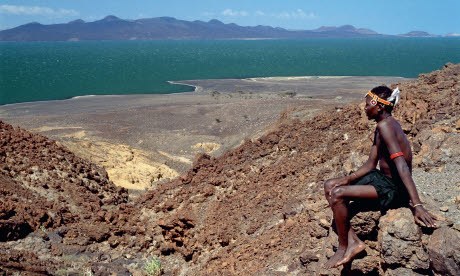
A young Turkana man looks out over Lake Turkana. Photo credit: Richard Trillo
Based on publicly available data from the United States Department of Agriculture, Lake Turkana’s water levels have dropped by approximately 1.5 meters since January 2015, and further reduction is likely without urgent efforts to mitigate the impact of Ethiopia’s actions.
Human Rights Watch research based on satellite imagery shows that the drop is already affecting the shoreline of the lake, which has receded as much as 1.7 kilometers in Ferguson Gulf since November 2014.
The Gulf is a critical fish breeding area, and a key fishing ground for the indigenous Turkana people.
“The predicted drop in the lake levels will seriously affect food supplies in the Omo Valley and Lake Turkana, which provide the livelihoods for half a million people in both Kenya and Ethiopia,” says Felix Horne, senior Africa researcher at Human Rights Watch.
“The Ethiopian government’s moves to develop its resources should not endanger the survival of indigenous people living downstream.”
In 2015, the reservoir behind the new Gibe III dam in Ethiopia began filling. Water that previously flowed unimpeded into Lake Turkana, replenishing seasonal drops in lake levels, has since been held behind the Gibe III dam. In 2015, the annual July-November flood from the Omo River into Lake Turkana did not occur, resulting in a drop of water levels of 1.3 metres from November 2014. The very limited artificial release of water from Gibe III in 2016 was not enough to replenish water levels in Lake Turkana.
As of January 30, 2017, lake levels were approximately 1.5 metres lower than they were two years earlier according to the data.
Lack of safe drinking water is one of the world’s leading problems affecting more than 1.1 billion people globally. Most of these live in Africa.
People living in fishing communities along Lake Turkana who spoke to Human Rights Watch in August 2016 were generally aware of the risks posed by Gibe III, but largely uninformed about the plantations and the devastating impact they could have on their livelihoods.
When Human Rights Watch visited communities around Ferguson Gulf on the western lake shores that month, local residents had noticed changes from previous years in the lake levels.
People who depend on fishing for their livelihood said that their daily catch has been reduced. One 50-year-old woman living near Lake Turkana told Human Rights Watch in August 2016: “It has been difficult these days…the main issue has been hunger. There is reduced water in the lake.”
While multiple factors contribute to the decline, including overfishing and unsustainable fishing practices, a further drop in lake levels will most likely reduce catches even further.
The Kenyan government has done little to address the impact from Ethiopia’s Omo Valley development, or to press Ethiopia to take steps to mitigate the damage and to consult with and inform affected communities about the impact of the project.
The governments of Kenya and Ethiopia should urgently work with these communities to ensure upstream industrial works does not devastate their livelihoods, Human Rights Watch said.
In addition to the industrial developments in lower Omo, climate change is exacerbating the already significant problems the Turkana people face in getting sufficient food and water, and maintaining their health and security.
“The Ethiopian government has shown scant regard for the lives and livelihoods of already marginalised communities who are reliant on the Omo River and Lake Turkana for their livelihoods,” Horne said. “In its rush to develop its resources it has not developed strategies to minimise the impact on those living downstream.”
Ethiopia’s Gibe III dam, which opened on December 17, 2016, is a key component of a massive industrial project in the lower Omo Valley that includes a cascade of water-intensive mega dams, and sugar and cotton plantations. The sugar plantations have been under development in the Omo Valley since 2011.
Based on Human Rights Watch estimates derived from satellite imagery, approximately 19,500 hectares of land has been cleared on the east bank of the river for sugar plantation development. An additional 10,500 hectares has been prepared for irrigation on the west bank.
The sugar plantations are planned to be 100,000 hectares. According to the Ethiopian Sugar Corporation, the first of the four sugar processing factories should be ready to begin production in early 2017.
In Ethiopia, livelihoods of those living in the Omo Valley depend on cattle grazing and planting crops in the rich alluvial soil along the banks of the Omo River. This alluvial soil is replenished by the annual flood, which deposits water and nutrient rich sediment along the banks. A lack of floods in 2015 and an inadequate artificial flood in 2016 are making it more difficult to grow food along the Omo River.
Some communities have also reported restricted access to the Omo River and food shortages in 2016. Furthermore, the plantations necessitate clearing of land used by agro-pastoral indigenous groups including the Bodi and the Mursi. The Bodi have been the most heavily affected, with a significant area of their land cleared.
“The projections of the water drawdown on Lake Turkana, routinely rubbished by Ethiopia’s government, are coming true and lake levels have started dropping,” Horne said. “This should serve as a warning about what could happen if the Ethiopian government continues to ignore the needs of downstream communities in its rush to develop its resources.”
Formerly known as Lake Rudolf, Lake Turkana is the world’s largest permanent desert lake and the world’s largest alkaline lake.
While some countries recently broke new ground in climate ambition, a report on nationally determined contributions (NDCs) shows that there is still a long way to go to realise the full implementation of countries’ pledges under the Paris Agreement on climate change.
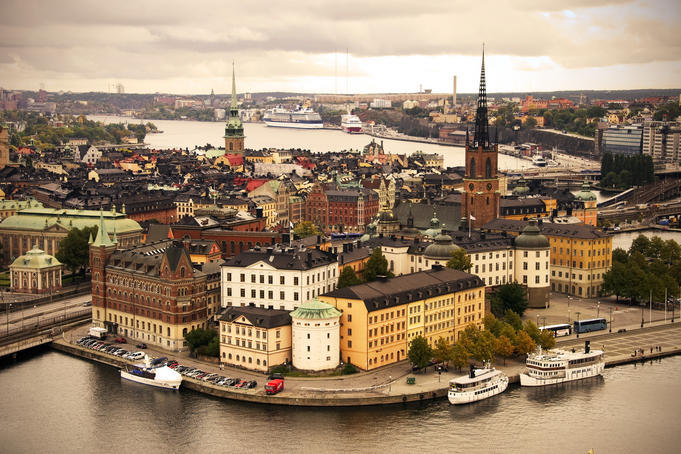
Stockholm, Sweden. A major feature of the nation’s climate action projects that, by 2045 and thereafter, Sweden will have no net emissions of greenhouse gases
The past few weeks brought news about the efforts of two countries to implement climate change action, illustrating ways in which they are assuming leadership roles. Providing an example of how it is working toward achieving SDG 7 (ensure access to affordable, reliable, sustainable and modern energy for all), China nearly doubled its solar power capacity in 2016, to 77.42 gigawatts (GW) by the end of 2016. With this rapid increase, China becomes the single largest producer of solar energy by capacity in the world. According to development plans set out by the National Energy Administration, China will continue this trend, investing in solar energy in order to increase capacity another 110 GW by 2020.
The other country that recently made the headlines for its climate action is Sweden, who signed what many consider to be the world’s most ambitious climate change framework to date. The framework consists of a climate act, new climate goals and a climate policy council, based on an agreement reached in the Cross-Party Committee on Environmental Objectives.
According to the goals, by 2045, emissions generated from activities in Sweden will be at least 85% lower than in 1990. Also by 2045 and thereafter, Sweden will have no net emissions of greenhouse gases (GHGs), which may rely on “supplementary measures” such as forest sinks or investment in other countries to achieve zero net emissions.
Before 2045, the climate change framework sets out interim goals for emissions in Sweden falling outside the purview of the EU Emissions Trading Scheme (EU ETS). By 2030, emissions should be at least 63% below 1990 levels and, by 2040, 75% lower than 1990 levels. Emissions from domestic aviation transport are to be reduced by 70% below 2010 levels by 2030. The Climate Act, which will review progress against these targets and sets out policies to achieve them, takes effect on 1 January 2018.
A report of the Nairobi Framework Partnership on NDC implementation finds that countries in West Africa, East Africa, Asia, Latin America and the Caribbean urgently need support to green their power sectors.
Amid this ground breaking action and planning, a more sobering report illustrates what is required for developing countries to realise their NDCs under the Paris Agreement. The Nairobi Framework Partnership’s report summarises findings from a survey of the Regional Collaboration Centres (RCCs) in West Africa, East Africa, Asia, Latin America and the Caribbean (LAC) on NDC implementation.
The primary finding is that all these regions urgently need support to green their power sectors. Countries in Asia and Africa also prioritised support to improve waste management and transport systems, while sustainable forestry was important in the Caribbean and East Africa. This finding in particular highlights the cross-cutting nature of the SDGs, that climate action (SDG 13) can support SDGs on waste management (SDGs 12.3 and 12.4), transportation (SDG 11.2), and forestry (SDGs 15.2 and 15.9). Support to develop carbon markets or economic instruments for mitigation was a low priority for most countries in the survey, although many did call for urgent support to help them access finance. For many surveyed, the timeline to complete intended nationally determined contribution (INDCs) in the lead up to the Paris Agreement was too short. They therefore also expressed a desire to update their NDCs in line with the goals of the Paris Agreement.
A tripartite agreement spare headed by the Dangote Rice Limited to create jobs for 16,000 outgrower rice farmers in Sokoto State in Northwest Nigeria was on Tuesday, February 14 2017 signed amid excitement and a pledge by all parties to ensure the success of the scheme to make the country self sufficient in rice cultivation.
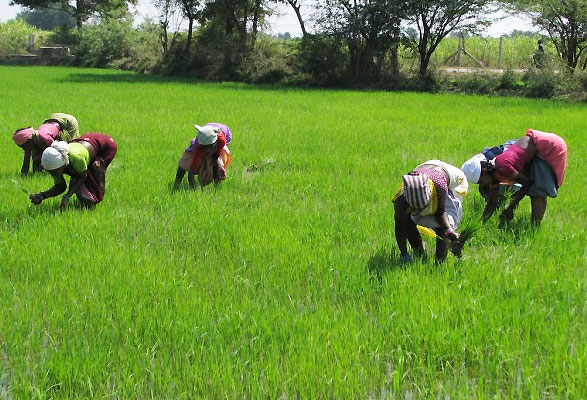
Rice farming
The agreement was signed during the launch of the Dangote rice outgrower scheme in Goronyo, Goronyo Local Government Area in Sokoto State, which was witnessed by the Sultan of Sokoto, Alhaji Sa’ad Abubakar. Farmers were presented with rice seeds, fertilisers, nets, and agro-chemicals.
Chairman of Dangote Rice Limited, Aliko Dangote, said he was moved to go into rice cultivation because of the interest of the Federal Government to revive agriculture as the mainstay of the economy, and reduce importation of foods that could be produced locally.
He lamented that Nigeria consumes 6.5 metric tonnes (mtn) of rice which costs the nation over $2 billion annually, pointing out that it is heartening that the government now has policy direction that encourages private sector’s active participation in agriculture.
“Buoyed by the policy direction of the Federal Government, we at Dangote decided to key into this by establishing Dangote Rice Limited to partner with states to redress the present situation where a huge sum of forex is spent on importation of rice.
“In the next three years, we want to produce one million tons of quality rice and make it available and affordable to the people. We hope to do 150,000 hectares (ha) and, when we are done, Nigeria will not have anything to do with importation of rice.
“Dangote Rice outgrowers scheme is committed to creating significant number of jobs, increasing the incomes of smallholders farmers and ensuring food security in the country by providing high quality seeds, fertilisers and agro-chemicals as well as technical assistance on best agricultural practice to farmers.
“This Scheme will help to diversify the economy, alleviate poverty and reduce the nation’s import bill. The scheme has been designed as a one stop solution for the rice value chain,” he stated.
The Dangote Rice Project Director, Robert Coleman, said the Sokoto operation was a demonstration phase to familiarise the farming community with the programme, train extension workers and lead farmers as well as test modern technologies.
He noted that they would have 25,000 ha cultivated by nearly 50,000 outgrowers in 2017 in addition to hundreds of jobs expected to be created by the end of that year.
In his remarks, Governor Aminu Waziri Tambuwal expressed delight at the event, saying the coming of Dangote to invest in the state was as a result of his sustained effort towards inviting prospective investors to the state.
He said the state under the scheme, just as it had done with the Federal Government, would distribute nets, water pumping machines and fertiliser at subsidised prices to help the farmers have good yield.
The state Commissioner for Agriculture, Alhaji Umar Tambuwal, disclosed that the scheme would cover 10 local governments in the state and that the state government is committing several millions of naira to support the famers in the scheme.
According to him, “the farmers participating in the 5,000 ha pilot scheme, the state government is giving out free nets which is costing the state N48 million. The state will release and sell 5,000 units of water pump worth N170 million at a subsidised rate of N10,000 each.
“We will also distribute 5,000 bags of rice seed (Faro 44) worth N32.5 million while fertiliser will be sold 50 per cent subsidised rate to complement the outgrower farmers.”
Sultan Muhammadu Sa’ad Abubakar, however, commended President Muhammadu Buhari for his diversifying efforts, urging Nigerians to pray for him.
He commended the Sokoto State Government for the encouragement and support being given to the outgrowers scheme, saying it is a thing of joy that the state is also involved by way of giving the famers some of the inputs needed so that the scheme could succeed.
National President of Rice Farmers Association, Alhaji Aminu Goronyo, described the scheme as one of the potential means of making rice available and at low cost to the people because the farmers are encouraged to put all their best into it.
He said he has no doubt that the scheme would succeed because,according to him, it is a private sector driven venture and that, given the pedigree of the Alhaji Dangote in business, he was sure that the scheme would be sustainable and sooner than later other states will key into it.