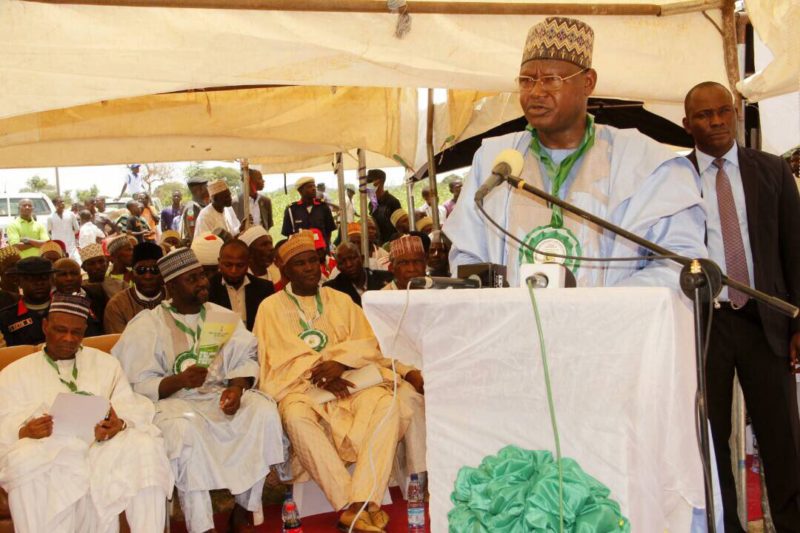
The Lagos State Government is seeking the partnership of relevant international organisations and other bodies to control the spread of cholera, diarrhoea and other diseases, through the provision of modern facilities for treating large volumes of waste water generated in the state.
Governor Akinwunmi Ambode, who made this known at a recent summit, blamed frequent disease epidemics in the state on indiscriminate disposal of sewage and other domestic and industrial liquid wastes, which he said must be controlled to safeguard the health of the citizenry.
Highlighting how subsidies can lead to degradation, Executive Director of the UN Environment Programme (UNEP), Erik Solheim, says that besides lowering the cost of consumption of certain products and leading to overconsumption, subsidies draw more investment to industries than the market would otherwise support
Erik Solheim, Executive Director of the United Nations Environment Programme (UNEP). The first COP to the Minamata Convention on Mercury will take place in September 2017 in Geneva, Switzerland. Photo credit: OECD/Michael Dean
Something is destroying our forests. In tropical regions alone, we lose an area of forest the size of Austria every year.
It is not demand from the forestry sector that is doing this. It is demand for commodities like beef, soy and palm oil. Most of our forests are being felled because of what’s in our refrigerators.
Outdated, perverse subsidies that are still on the books for these agricultural commodities are encouraging this devastation. They are singlehandedly undermining all of the good laws and incentives that aim to keep our forests intact.
A quick reminder: forests are not only the lungs of our planet. They also regulate the water systems that let us exploit hydroelectricity and prevent disasters like floods. They ensure soil quality is high for growing food hundreds of miles away. And with their massive carbon storage capacity, they are the best buffers we have against climate change.
When we lose them, we suffer financially. The catastrophic forest fires that burned across Indonesia in late 2015 were estimated by the World Bank to have cost $16 billion in lost property, ill health, and reduced economic activity. Those fires were the result of the clearing and draining of Indonesia’s peatland forests for plantations.
If we want to preserve these indispensable organs of life on Earth, we need to rid ourselves of the perverse subsidies that encourage their destruction.
Subsidies may accelerate degradation in various ways. They will draw more investment to industries than the market would otherwise support. They lower the cost of consumption of certain products, leading to overconsumption. And if commodities are sold below market price, governments lose tax income that they might normally funnel into environmental protection.
Between 1990 and 2010 in Ecuador, the government implemented a series of tax and financial incentives aiming to reduce the production cost for palm oil. Producers bulldozed forests to make room. The expanding agricultural frontier led to a 47% increase in greenhouse gas emissions from the agriculture and forest sector in those two decades.
Existing subsidies are difficult to remove even after they have outlived their original purpose. Interest groups that benefit from subsidies lobby to keep them in place, and governments often oblige them to garner political support.
Yet agricultural subsidies can benefit forests if they are designed to improve yields on less land area with fewer inputs.
For example, Indonesia’s palm oil industry achieves yields of 3.8 tons per hectare. Neighbouring Malaysia achieves 4.6 tons per hectare.
Subsidies for Indonesian smallholder palm producers helped add two million hectares of plantations between 2000 and 2009. With the right technology and financial support from the government, smallholder farms can increase output without expanding into the forest, and match Malaysia’s production density. These are the types of subsidies we need to see: the kind that remove the incentive to simply plough more land.
Brazil took bold and coordinated steps in the 2000s to rid themselves of perverse incentives. They made deforestation a crime and enforced the law strongly. They banned selling soy grown in the Amazon, and the Bank of Brazil refused to give credit to farmers who wanted to plant soy in newly cleared forest. All of the country’s rural credit is now lent only to those in compliance with legal and environmental rules in the Amazon. The Amazon then saw an incredible decline in deforestation – a success that Brazil must build upon.
Other countries will need to take bold action to achieve similar results.
Developed countries can meanwhile help close the gap to finance these efforts. At the Paris climate summit in 2015, Germany, Norway and the UK pledged $5 billion for the UN’s Programme for Reducing Emissions from Deforestation and Forest Degradation, which pays developing countries for reducing deforestation. Much more is needed.
The private sector is a large source of credit as well, but they too are pitching in. In February, HSBC announced it will require its palm oil industry borrowers to commit to protecting natural forests and peatlands. Other banks and lenders should follow suit.
Forests are immensely valuable, worth more intact and sustainably managed than any of the industries that are destroying them outright. Its past time we rid ourselves of the backward subsidies that are the invisible bulldozers of the forest.
The Solomon Islands, in the heart of the Pacific, relies on expensive imported fuel for nearly 100% of its electricity. It has some of the highest energy costs in the world, and one of the lowest rates of connection in the world; just 9% of Solomon Islanders are connected to the electricity grid. Succour has however emerged with the approval of funds towards a major renewable energy project
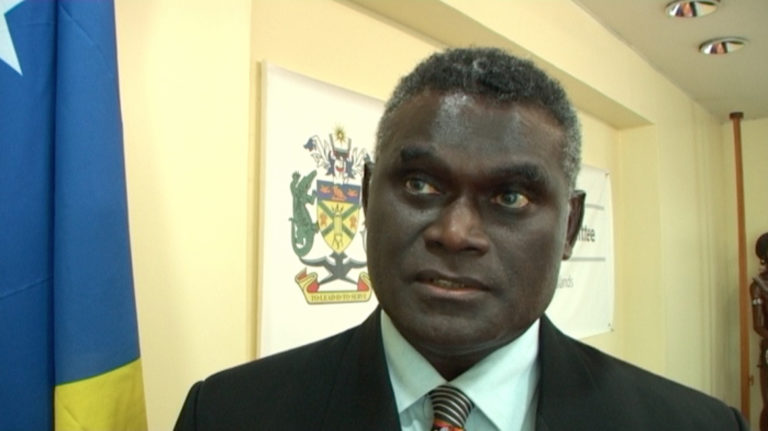
Manasseh Sogavare, Prime Minister of Solomon Islands
Reliable renewable energy is a step closer for Solomon Islands, a country facing some of the world’s highest per capita energy costs, following the World Bank Group’s commitment to the Tina River Hydro renewable energy project.
The Board of Executive Directors of the World Bank recently approved $33.6 million in funding for the Tina River Hydropower project in the Solomon Islands, which aims to reduce the cost of electricity and end the country’s near-total reliance on diesel fuel for power.
Electricity costs in the Solomon Islands are among the highest in the world, placing huge strains on all facets of life in Solomon Islands; health, education, business and livelihoods. The Tina River Hydropower Project aims to reduce spending on expensive diesel power while also paving the way for the country to exceed its 2025 greenhouse gas emissions reduction target.
“The World Bank support to Tina River Hydro is an important milestone for Solomon Islands as we move towards a green energy future,” said the Manasseh Sogavare, Prime Minister of Solomon Islands. “We are grateful to the World Bank for its strong commitment to reduce electricity costs for Solomon Islands, and for its dedication in supporting the preparation of this complex nation-building project.”
The renewable energy project, one of the largest projects ever planned for the Solomon Islands, will bring expertise in infrastructure development and operations to the country – and pave the way for further investment and new jobs.
“Energy costs for Solomon Islanders have been too high for too long, burdening lives daily: children cannot study at night, businesses are forced to close early, and basic services continue to suffer,” said Michel Kerf, the World Bank Country Director for Timor-Leste, Papua New Guinea & the Pacific Islands. “This project will contribute to reducing energy costs and help to improve the lives of Solomon Islands families and their communities.”
Under the financing arrangement, the World Bank Group is providing a $23.4 million credit and a $10.2 million grant through the International Development Association, the World Bank’s fund for the world’s most in-need countries.
The World Bank joins other partners in supporting the Tina River Hydro Project, including the International Renewable Energy Agency/Abu Dhabi Fund for Development (IRENA/ADFD) facility, the Green Climate Fund, and the Government of Australia. The International Finance Corporation (IFC), the World Bank Group’s private sector arm, has also provided support throughout the development and negotiation process.
Other development partners, including the Asian Development Bank and the Economic Development Cooperation Fund of Korea, have indicated their potential support. Total funding support for the project is expected to be concluded in September 2017.
As leaders from the 12 snow leopard range countries prepare to meet this month to further deliberate on the future of the endangered cat, conservationists have called on them to take the next step and pledge concrete action to ensure the animal’s survival.
The snow leopard. Photo credit: wikipedia
The snow leopard lives in the Himalayas, the mountains of Central Asia and the Mountains of Southwest China as well as the Tibetan plateau. Their range covers Afghanistan, Bhutan, China, India, Kazakhstan, the Kyrgyz Republic, Mongolia, Nepal, Pakistan, Russia, Tajikistan and Uzbekistan.
At the close of a meeting in 2013, the leaders pledged to secure at least 20 snow leopard landscapes of Asia by the year 2020. They are however coming together again from Thursday, August 24 to Friday, August 25, 2017 for the International Snow Leopard & Ecosystem Forum in Bishkek, Kyrgyzstan.
Besides the 12 leaders, the International Snow Leopard & Ecosystem Forum brings together other interested nations with leaders from international institutions, donor agencies, conservation organisations, and scientific institutions.
The high-level event aims to further strengthen the range countries’ ongoing effort to protect the snow leopard, and to galvanise international support for their ambitious plan of securing 20 snow leopard landscapes by the year 2020.
“The snow leopard is under threat. If we do not take drastic steps, we might permanently lose this priceless gift of nature – as we have already lost forever thousands of other rare and amazing species.
“Let’s work together and shape the world’s joint response to the threats that this cat – and our mountain ecosystems – are facing,” says Almazbek Atambayev, President of the Kyrgyz Republic (or Kyrgyzstan).
In line with Mr Atambayev’s submission, environmentalists fear that the snow leopards, which are iconic to the high mountains of Central Asia, face the threat of extinction. They posit that there may be as few as 4,000 remaining in the wild, and their numbers continue to drop at an alarming rate.
Sara Thomas, Director, Activism and Outreach at the World Wildlife Fund (WWF), suspects that the snow leopard population has declined by 20% over the last 16 years. She attributes this development to:
Poaching. Snow leopards are killed for their beautiful coats, but they are also hunted for their bones and other body parts – resulting in an increase in the illegal trade for snow leopard parts.
Conflict with communities and retaliatory killings. As their natural prey becomes harder to find, snow leopards resort to killing livestock for survival – increasing the risk of retaliatory killings.
Habitat loss. Expanding human and livestock populations are fragmenting the historic habitat range of the cats.
Climate change. The impact of climate change on the fragile mountain environment puts the future of snow leopards at even greater risk.
“Climate change poses the biggest long-term challenge snow leopards face – the impact of climate change could result in a loss of up to 30% of the snow leopard habitat in the Himalayas alone,” she adds.
Besides allowing leaders of the 12 snow leopard range countries as well as the international community to work together and achieve tangible progress in their effort to protect and conserve the snow leopard and its mountain ecosystems, the International Snow Leopard & Ecosystem Forum will also explore several approaches to improve financing mechanisms including regional and national trust funds, investment funds, and other emerging tools, it was gathered.
“Donor agencies, governments, corporations and international financial institutions will find an excellent forum to explore investment opportunities in sustainable forestry and agriculture, ecotourism, climate adaptation, and clean energy (micro hydro, solar). Successful green investment models can be showcased and best practices on integration public policy will be highlighted,” the organisers stressed.
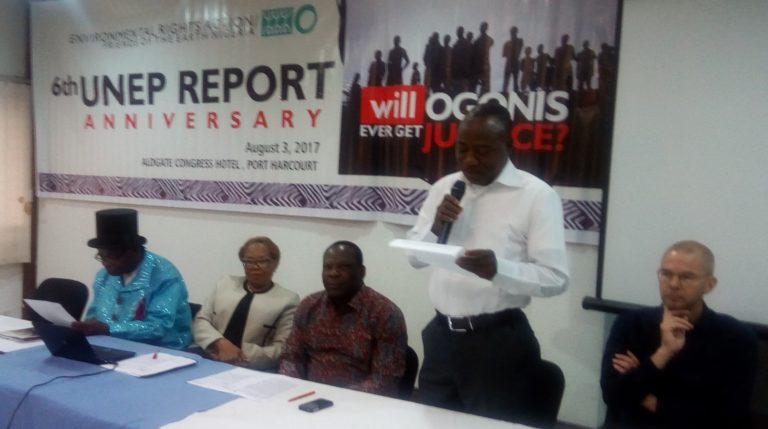
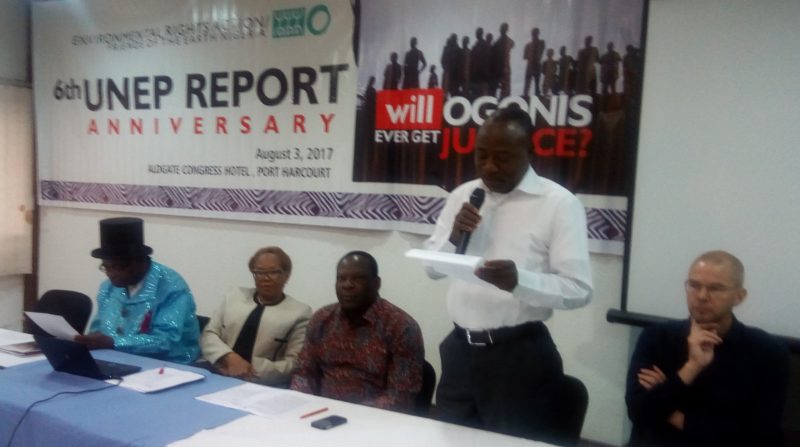
Dr. Godwin Uyi Ojo, Executive Director, Environmental Rights Action/Friends of the Earth Nigeria (ERA/FoEN), at an event to commemorate one year of flag-off of the Ogoniland clean-up exercise by the President Muhammadu Buhari administration, said in Port Harcourt, Rivers State on Thursday, August 3 2017, that the motion without movement is enough, and that the time to clean up Ogoniland is now
L-R: Chief St Emma Pii from Bodo community; Dr. Godwin Ojo, Executive Director, Environmental Rights Action/Friends of the Earth Nigeria (ERA/FoEN); Professor Margaret Okorodudu an ERA/FoEN board member; Festus Eguaoje, the Global Environment Facility (GEF) Desk Officer in the Ministry of Environment; and Wolfgang Richard – a training expert from the Netherlands
On August 4, 2011 (exactly six years ago), the Nigerian government received the United Nations Environment Programme (UNEP) Assessment report on Ogoniland. The report x-rayed the Ogoni environment – land, vegetation and water, and came out with damning findings on how Shell callously ruined the environment and livelihoods of the people. Notably, benzene a cancer causing chemical was found in drinking water 900 times above World Health Organisation (WHO) standards, and soil contamination was found over the depth of five meters in places claimed to have been cleaned up by Shell.
Most of you know the story, including the cosmetic complacency and lip service past administration paid to the cleanup process. It was only in 2015 that any semblance of action began with President Muhammadu Buhari’s approval of a $10 million grant for commencement of the clean-up of Shell’s mess in Ogoniland.
The flag-off of the clean-up proper was in June 2016 and the exercise was performed by Acting President, Yemi Osinbajo. Though the people greeted the event with joy, they are now disappointed that the road to justice is still bugged down with bottlenecks and meaningless bureaucracies.
The unease of the Ogoni people has been further heightened by statements credited to the minister of state for environment that government was not in a hurry to commence clean up and fail, and would rather take its time to get it right before commencing. The recourse to such lame excuse for the delayed commencement shows that government is yet to grasp the challenges the Ogoni communities face and the need for deliberate speed in the cleanup process to protect the environment and rural livelihoods of the people.
One year after the flag-off exercise, the relief measures and clean water supply to the impacted communities have not been carried out meaningfully. The communities are yet to get a breather as the polluted soils, blackened waters and foul-smelling mangroves remained. In Ogale – one among the many documented impacted communities, the locals are left with no other source of water than contaminated boreholes. Here, immediately the taps are turned on, noxious odour and smell of petroleum assail the nose and hang thickly in the air. The situation is so bad that a stroke of match could ignite a fire. Residents depend on the polluted water source or forced to expend a fortune on water from vendors. The situation is so bad that that many are asking: When will the pre-clean up measures be put in place? When will a drop of oil be cleaned in Ogoni?
Even with all these tales of woe, the polluter – Shell – has continued with business-as-usual. Shell has failed to properly decommission its corrosive oil facilities in Ogoni as recommended by UNEP. We have said it time and again that decommissioning of Shell’s facilities should be the first step as it would stop the continuous oil spills from ill-maintained pipelines in the Ogoni environment. Added to this, are reports that the oil company has not stopped engaging in divisive activities to split the agitating youths.
In light of the above it is worrisome that even with the governing structures already in place, there is still no phased workplan covering one to five-years in the short term. In the long term, a phased workplan covering the entire clean-up process that will take 25 years should be put in place. Transparency and accountability demand that Workplan should be put in place before public advertisement to hiring of contractors. There is little or no CSOs engagement on the process. Critical stakeholders and community members have been sidelined and have not been invited to make input. Clearly, when the clean-up proper will commence or when equipment will be deployed to site is still up in the air. Cumulatively, these foot-dragging activities have further lengthened the period for which the people have to wait for justice to come.
Notwithstanding President Muhammadu Buhari’s seemingly good intentions, there is gross inadequate funding and only $10 million has been released from the $200 million pledged by Shell and the federal government of Nigeria for the 2017 fiscal year. Furthermore, there is no statutory budgetary provision for the clean-up in the 2017 national budget. We condemn in strong terms the piecemeal approach to the clean-up planning and implementation process by the Hydrocarbon Pollution Restoration Project (HYPREP) and the “snail pace” approach of the federal government that is motion without movement.
In particular, the UNEP report indictment of Shell for the company’s deployment of a one size fits all clean up measures through the Remediation by Enhanced Natural Attenuation (RENA) technologies that are widely used by Shell in Nigeria. Rather the UNEP report had recommended site-specific remediation measures that require soil excavation, and overlaying by new sediments. The report said that RENA is inappropriate because of the proximity of communities to spill sites or degraded areas, shallow aquifer and heavy and lengthy periods of rainfall.
That Shell sits comfortably in the Governing Board with oversight functions wielding undue political and financial influence may have already compromised the cleanup process hence we call for their immediate removal from such governmental institutions.
As we mark two years of the flag off exercise, ERA-led coalition of civil society groups and Host Communities (HoCON) join voices with the Ogoni people to insist that, so far, the Ogonis have been short-changed and no justice in sight. They join their voices to ask: “When will the Ogonis get justice? When will the first drop of oil be cleaned up in Ogoni?” Justice delayed is justice denied.
The UNEP recommendations and clean-up is non-negotiable. Clean up should commence without further delay and to serve as prelude to a comprehensive environmental and social audit of the entire Niger Delta and other impacted regions. We urge the federal government and Shell and the other transnational oil companies to establish a $100 billion restoration fund for the clean-up and remediation of the entire region.
Our Demands
The federal government should declare the Ogoni clean up as environmental state of emergency and channel resources to it so that clean-up will commence immediately. No more delays, clean up now.
HYPREP should put in place a definite work plan and timeline for the clean-up process through an inclusive planning process that accommodates input from stakeholders.
Shell and the federal government should be compelled to commit fully to funding the clean-up costs, including but not limited to, the initial fund of $1 billion. They should declare their contributions for the year 2017 and pledges for 2018.
The National Oil Spills Detection and Remediation Agency (NOSDRA) and other government agencies being starved of funds and roles in the clean-up process should be empowered to monitor the process.
Shell should not force HYPREP to use RENA technologies that is inappropriate to the Ogoni environment.
Shell should not use the clean-up process as a guise to re-entering Ogoni oil fields for drilling. They should vacate the governing council, and decommission its old oil pipelines responsible for frequent oil spills.
Conduct an environmental and social audit of the Niger Delta and ensure the establishment of $100 billion remediation fund to be funded by Shell and all the oil companies operating in the region.
Even as the Donald Trump Administration in the US seeks to roll back and eliminate government programs to address climate change, a national survey conducted recently by the Centre for Climate Change Communication of the George Mason University in Fairfax, Virginia, finds that a majority of American voters support more climate action.
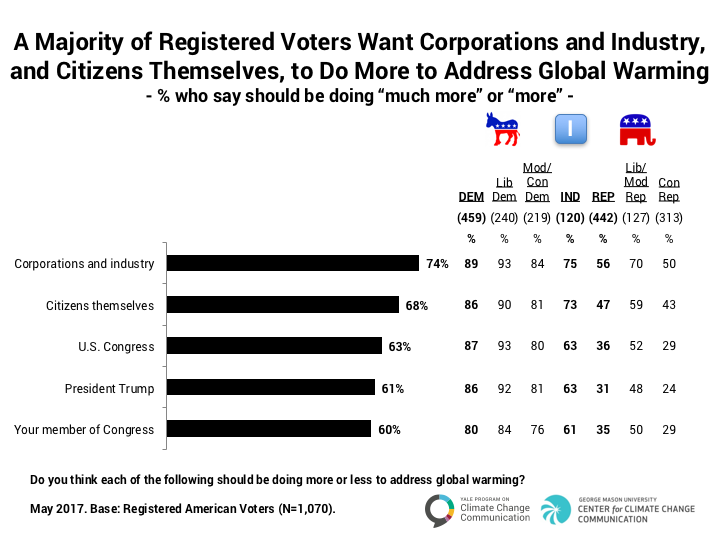
A majority of registered voters – including large majorities of liberal, moderate and conservative Democrats, Independents, and nearly half or more of liberal and moderate Republicans – want corporations and industry, citizens themselves, the U.S. Congress, President Trump, and their own members of Congress to do more to address global warming.
Half of conservative Republicans want corporations and industry to do more to address global warming, although fewer want Congress or President Trump to take action.
Likewise, most registered voters support policies to promote clean energy and reduce carbon pollution, including:
Funding more research into renewable energy sources such as solar and wind power (86% of all registered voters, 95% of Democrats, 82% of Independents, and 76% of Republicans).
Providing tax rebates to people who purchase energy-efficient vehicles or solar panels (84% of all registered voters, 95% of Democrats, 82% of Independents, and 74% of Republicans).
Regulating carbon dioxide as a pollutant (77% of all registered voters, 94% of Democrats, 75% of Independents, and 57% of Republicans).
Requiring fossil fuel companies to pay a carbon tax and using the money to reduce other taxes (such as income tax) by an equal amount – a plan often referred to as a “revenue neutral carbon tax” (70% of all registered voters, 88% of Democrats, 68% of Independents, and 48% of Republicans).
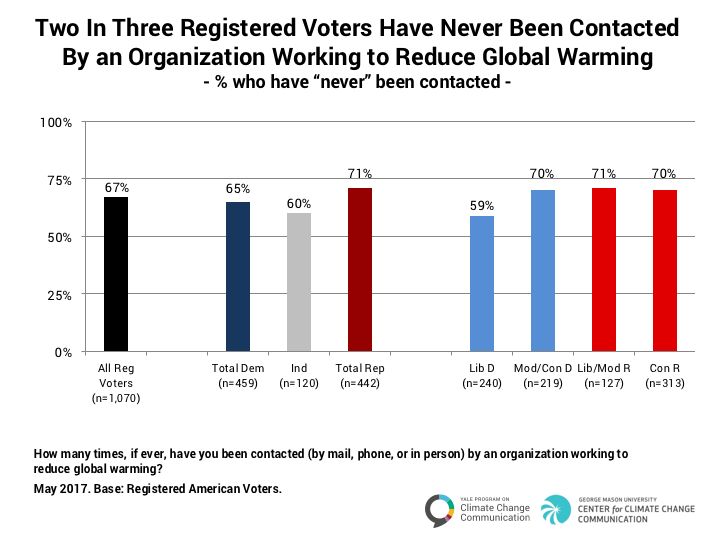
The study also found that nearly a third (31%) of registered voters are willing to participate in a campaign to convince elected officials to take action to reduce global warming, representing tens of millions of people. Yet nearly eight of 10 registered voters say no one has ever asked them to contact elected officials, and two out of three say they have never been contacted by an organisation working to reduce global warming.
The study finds that millions of Americans are willing to work together to demand climate action by the government and companies – but this potential mass climate movement remains largely unorganised, with many people sitting on the sidelines waiting to be engaged.
The report includes many more insights about how Republicans, Independents, and Democrats are responding to climate change in the first year of the Trump presidency
Humans have already used up their allowance for water, soil, clean air and other resources on Earth for the whole of 2017.
Individuals can cut back on eating meat, wasting food and burning fuel to reverse the trend. Photo credit: Getty Images/iStockphoto
Earth Overshoot Day is on August, 2 this year, according to environmental groups WWF and the Global Footprint Network.
The date, earlier this year than in 2016, means humanity will survive on “credit” until 31 December.
“By August 2 2017, we will have used more from Nature than our planet can renew in the whole year,” the groups said in a statement.
“This means that in seven months, we emitted more carbon than the oceans and forests can absorb in a year, we caught more fish, felled more trees, harvested more, and consumed more water than the Earth was able to produce in the same period.”
According to campaigners, the equivalent of 1.7 planets would be needed to produce enough natural resources to match our consumption rates and a growing population.
The Earth Overshoot Day measure has been calculated since 1986 and the day has never fallen so early as in 2017. It looks at the balance between global footprint – what humans take from the earth – and biocapacity, which allows us to produce resources and absorb our waste.
In the 1980s, the overshoot day fell in November, shifting back to October by 1993 and to September just after the millennium.
By 2016 it had reached August 8.
The grim mark may have reversed throughout the calendar, but campaigners said the move had slowed down.
Scientists also calculate the overshoot day for individual countries, providing a measure of where the day would fall if the whole world consumed the same as one country.
In the UK, the day is even earlier, on May 4.
Campaigners and charities advised individuals to help reverse the trend by eating less meat, burning less fuel and cutting back on food waste.
The Global Footprint Network reported that food makes up 26 per cent of our global footprint, and if we cut food waste in half, ate less protein-intensive foods and consumed more fruit and vegetables, it could be reduced to 16 per cent.
Our carbon footprint has the largest impact at 60 per cent.
Bothered by the prevalence of mercury due mainly to Artisanal and Small Scale Gold Mining (ASGM) activities, Nigeria is to develop a National Action Plan (NAP) for the sector.
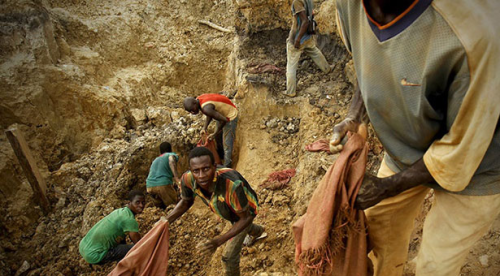
Artisanal and small scale gold mining. Photo credit: thewillnigeria.com
This appears to be a fall-out from the “Minamata Convention Initial Assessment (MIA) in Nigeria”, a project which, among other functions, conducted a preliminary inventory of mercury releases in the country.
Inventory results showed that ASGM processing is significant, thereby prompting the development of a NAP for the ASGM sector.
Proposed and approved by Global Environment Facility (GEF), the project’s objective is to improve national capacity and capability for the management of mercury. Implementation arrangement has been finalised, with the United Nations Industrial Development Organisation (UNIDO) as the implementing agency.
Making the disclosure recently in Abuja at the inception workshop on the NAP on mercury use in the Nigerian ASGM sector project, Environment Minister of State, Ibrahim Usman Jibril, disclosed that the components of the NAP are in accordance to Annex C of the Minamata Convention on Mercury, adding that project implementation commenced with the inauguration of a National Steering Group (NSG) recently. The NSG, he added, would be responsible for providing guidance and technical support to the executing agencies for effective implementation of the project activities.
The workshop participants, who deliberated on the best approaches to formalise the ASGM sector in Nigeria, as well as available mercury-free alternatives for ASGM activities, noted that, while holders of exploration licenses lease out to illegal miners, ASGM miners lack operational equipment and funds to facilitate operations.
They also underlined the fact that while enforcement of laws and policies in the ASGM sector is weak, informal miners in the ASGM sector engage in unhealthy practices including continued use of mercury.
To formalise ASGM sector in Nigeria, the participants want government to:
Take appropriate steps to control and eventually eliminate illegal mining,
Provide security for ASGM workers,
Have functional cooperative societies,
Provide access to capital and fund mining activities and facilitate provision of appropriate equipment,
Facilitate the establishment of gold buying centres across the country,
Engage in establishing a strategic gold reserve, and source products only from licensed mines,
Educate law enforcement agents and security agents on enforcement of mining laws,
Sensitise ASGM miners and host communities.
The workshop also mentioned the following mercury-free alternatives:
Borax – however it is not available yet for use in Nigeria,
Igoli machine – not yet in use also because the needed chemicals are not available and the miners are not trained yet for its use,
Traditional panning methods and the sluicing method,
Use of retort capture method for fugitive emissions from the mines during burning processing.
The Minamata Convention on Mercury is a new international environmental convention for global community to work collaboratively against mercury pollution. The Minamata Convention aims at achieving environmentally sound mercury management throughout its life cycle. The Convention was adopted at the diplomatic conferences held in Minamata City and Kumamoto City in October 2013.
Having achieved the required 50 ratifications, the Convention came into force on Thursday, May 18, 2017. Consequently, the Convention, which aims at protecting human health and the environment from anthropogenic emissions and releases of mercury and mercury compounds, will become legally binding for all its Parties on Wednesday, August 16, 2017.
The 1st Conference of the Parties to the Minamata Convention (COP1) will gather governments, intergovernmental and non-governmental organisations from around the world in Geneva from September 24 to 29, 2017.
Environment Minister of State, Ibrahim Usman Jibril, in Gombe on Wednesday, August 2, 2017 at the commemoration of the year’s World Day to Combat Desertification, Land Degradation and Drought, says that rising up to the Desertification, Land Degradation and Drought (DLDD) challenge is a prerequisite to achieving the nation’s commitments for climate change adaptation and mitigation, biodiversity conservation, forest cover and the Sustainable Development Goals (SDGs) targets
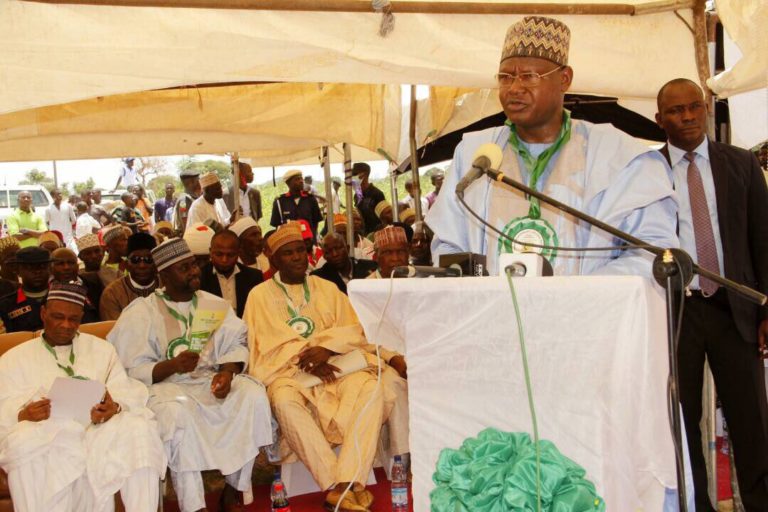
Environment Minister of State, Ibrahim Usman Jibril, speaking during the event
Desertification, Land Degradation and Drought (DLDD) negatively affects water resources, drives deforestation, food security; and contributes to environmentally induced migrations. DLDD is, therefore, amongst the most critical sustainable development challenges. It undermines government’s efforts in poverty eradication, fighting unemployment and enhancement of economic opportunities especially in rural communities.
This year’s theme: “Our Land. Our Home. Our Future” is a key for making Land Degradation Neutrality a fundamental solution for achieving the Sustainable Development Goals as adopted by the United Nations General Assembly in September 2015. Goal 15 of the Sustainable Development Goals calls on nations to protect, restore and promote sustainable use of terrestrial ecosystems, sustainably manage forests, combat desertification, and halt and reverse land degradation, as well as halt biodiversity loss.
This becomes our pillar for sustainable land management for agricultural productivity and shelter for our present teaming population and the future generations. Today, I urge cooperation among all actors to help achieve land degradation neutrality as part of a broader effort to achieve the Sustainable Development Goals and build a future of dignity and opportunity for all.
It is in this context that the World Day to Combat Desertification provides a unique occasion to remind all people that desertification and land degradation can be effectively tackled reminding us that solutions are possible, and that key tools to this aim lay in strengthened community participation and collaboration at all levels.
Land is a vital resource for producing food and other ecosystem goods and services including conserving biodiversity, regulating hydrological regimes, soil nutrients cycling, and storing carbon, among others. Indeed, the most significant natural capital asset is productive land and fertile soils. As people rely heavily on land as their main source for farming and housing, especially the rural poor, human well‐being and sustainable livelihoods are completely dependent upon and intricately linked to availability and productivity of the land. Land also is the major employer in most of human endeavours such as agriculture, geology, biology, architecture, town planning, transportation, just to mention a few.
If we do not rise to this challenge of DLDD, we will not achieve our commitments for climate change adaptation and mitigation, biodiversity conservation, forest cover and the Sustainable Development Goals targets; we will not effectively alleviate rural poverty and hunger nor ensure long‐term food security nor build resilience to drought and water stress.
This year’s WDD Commemoration advocates for the importance of inclusive cooperation on land management and contribute towards protective shelter for the present and future generations because land is a vital link to provide solutions to food security, housing, poverty eradication and employment generation.
The campaign: “Our Land. Our Home. Our Future” intends to promote public awareness in the implementation of the United Nations Convention to Combat Desertification in those countries experiencing serious drought and/or desertification, particularly in Africa. In compliance and effectiveness, the Federal Government has domesticated the United Nations Convention to Combat Desertification (UNCCD), United Nations Convention on Biological Diversity (UNCBD) and United Nations Framework Convention on Climate Change (UNFCCC). These are fallouts from the Rio Convention of 1992.
Since the catastrophic sahelian drought of 1972/1973, the government of Nigeria has regarded the challenge of DLDD as inimical to its national sustainable development that must be squarely addressed. Nigeria has developed numerous policy documents in the fight against DLDD and these include: National Policy on Environment, National Action Programme (NAP) to Combat Desertification and Mitigate the Effects of Drought. National Drought and Desertification Policy; National Drought Preparedness Plan; National Strategic Action Plan for the Implementation of the Great Green Wall for the Sahara and the Sahel Initiative, Nigeria Climate Change Policy and Response Strategy, National Adaptation Strategy and Plan of Action for Climate Change, National Forest Action Plan, National Conservation Strategy, National Biodiversity Strategy and Action Plan, National Resources Conservation Action Plan, National Policy on Agriculture, National Water Resources Master Plan, National Energy Policy, Nigeria National Environmental Action Plan (NEAP) and States Environmental Action Plan (SEAPs).
In its renewed commitment to fight desertification, land degradation and drought, this administration has recently signed agreement of permanent adhesion to the Sahara and the Sahel Observatory (OSS), an international organisation with the mandate of monitoring environmental changes and providing information necessary for formulating policies and programmes that can help in ameliorating the emerging environmental challenges. Information gathering for decision making is key in taking both proactive actions to ensure sustainable livelihood for the population.
The Ministry is currently piloting the Greening Programme as part of the move to protect and rehabilitate areas in hot spots. The planting of trees and other associated activities will provide measures to curb land degradation and to deal with impacts of climate change. The Ministry has invested on implementation of projects/programmes to curb the rampaging effects of these disasters in the country. These include but not limited to the establishment of shelterbelts, woodlots, orchards, acacia plantations to combat desertification and mitigate the effects of drought and climate change.
The Kingdom of Tonga in the Pacific Ocean may be small in population, but it is kicking big goals in public health. The World Health Organisation (WHO) has validated that the country has eliminated lymphatic filariasis – also known as elephantiasis – as a public health problem.
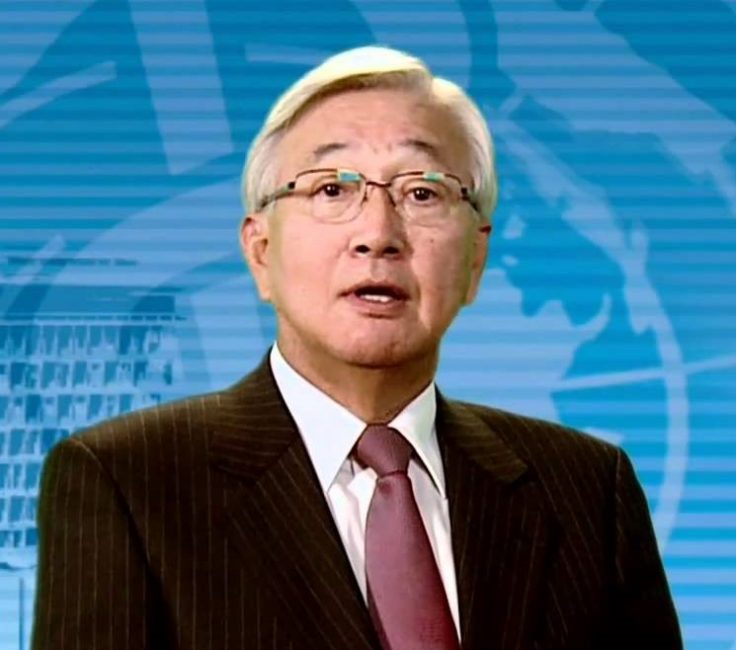
Dr Shin Young-soo, WHO Regional Director for the Western Pacific
Lymphatic filariasis is a mosquito-borne disease that damages the lymphatic system, leading to severe disfigurement, pain and disability. For people affected by this disease, the impacts of disfigurement and the associated stigma are profound: people often lose their livelihoods, and suffer from psychological impacts such as depression and anxiety.
“Lymphatic filariasis is a dreadful disease – it causes terrible pain and suffering for those who are affected,” said Dr Shin Young-soo, WHO Regional Director for the Western Pacific.
“The World Health Organisation sincerely congratulates the Kingdom of Tonga for eliminating this disease as a public health problem. From today, the children of Tonga can grow up knowing that they are safe from this very nasty disease – what a wonderful achievement for the health of your people,” Dr Shin said.
This achievement in Tonga comes after decades of dedicated efforts to stop transmission of this disease, known in the local language as “kulokula fua”.
Tonga joins seven other countries in WHO’s Western Pacific Region that have been validated as having achieved elimination of lymphatic filariasis as a public health problem since WHO launched the Global Programme to Eliminate Lymphatic Filariasis in 2000: Cambodia, China, Cook Islands, Niue, the Marshall Islands, the Republic of Korea and Vanuatu.
Lymphatic filariasis is classified by WHO as a neglected tropical disease (NTD). This means it is one of a diverse group of communicable diseases that thrive mainly among the poorest populations in tropical and subtropical areas. NTDs cause serious illness and in some cases death – but they are preventable. Through a series of public health strategies including preventive treatment of communities, intensive case management, vector control, control of animal diseases that can spread to humans, and provision of safe water, sanitation and hygiene, many NTDs can be controlled – and eventually eliminated.
The fight against lymphatic filariasis in the 17 countries and areas where it remains endemic in the Western Pacific Region is an important priority for WHO’s work in this Region.
The disease has a long history in Tonga: the common occurrence of swelling of the leg, arm and scrotum among people in Tonga was observed in the 1770s by Captain Cook. In the 1950s, the prevalence rate of this disfiguring and debilitating disease was close to 50%. Mass drug administration in the 1970s and 1980s reduced the prevalence significantly, but a series of further efforts were required over the last few decades to reach the elimination goal.
“Lymphatic filariasis’ long history in Tonga makes today’s victory over the disease all the sweeter. This could not have been achieved without the unwavering support and leadership of the Ministry of Health, as well as strong financial and other support from donors and partners – and most importantly, the commitment of the communities of Tonga affected by the disease,” Dr Shin said.
“Tonga has shown us that despite significant challenges, elimination of neglected tropical diseases such as lymphatic filariasis is possible. WHO is 100% committed to supporting our Member States to rid our Region of the scourge of this disease, so no one needs to suffer from this awful disease any longer,” concluded Dr Shin.