Home Blog Page 201

Climate change: Nigeria must adopt latest renewable energy technologies – LASU DVC

The Deputy Vice-Chancellor (DVC), Administration, Lagos State University (LASU), Prof. Adenike Boyo, on Tuesday, August 26, 2025, urged the Nigerian government to adopt the latest renewable energy technologies, to mitigate climate change.

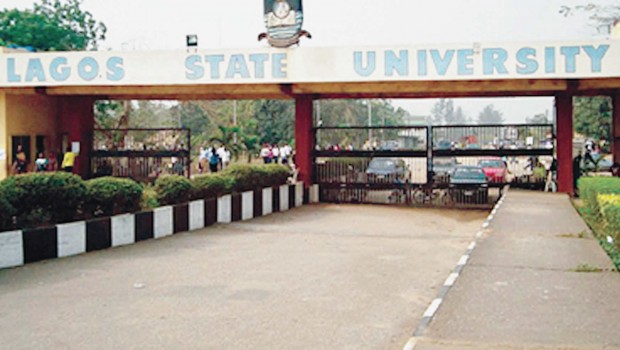
Boyo made the appeal at the 3rd LASU Sustainable Development Goals (SDGs) International Conference on Renewable Energy Research and Application 2025 at the university’s main campus in Ojo, Lagos.
LASU
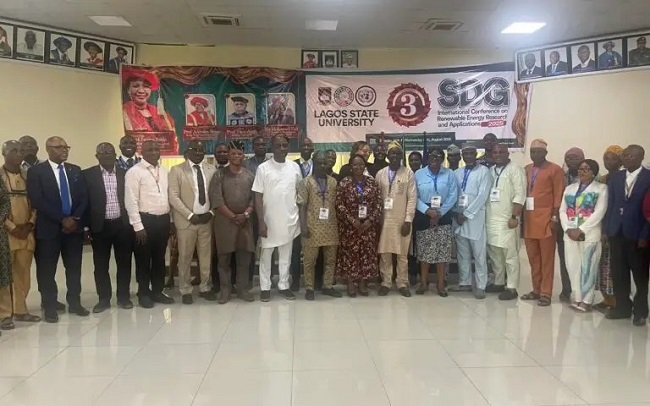
The LASU Deputy Vice Chancellor, Administration, Prof. Adenike Boyo, participants and other principal officials of the university at the 3rd LASU SDG International Conference on Renewable Energy Research and Application 2025

She said that Nigeria had the chance to benefit immensely from adopting cutting-edge renewable energy technologies.

“Nigeria, striving to meet growing energy demands and mitigate climate change, must actively adopt latest advancements in renewable energy technologies.

“These trends offer real solutions for improving electricity access, reliability, environmental health, and economic resilience.

“To lead this transformation, Nigeria must invest in research and development, update regulations, attract investment, and build human and physical capacity.

“Strategic integration of these innovations can transform Nigeria into a clean energy leader in Africa,” Boyo said.

While taking on the theme, she said that the lecture would explore emerging trends in the global renewable energy landscape and their applicability in Nigeria, such as Advanced Solar Photovoltaics.

“Others are Floating Solar Farms, Wind Energy (offshore wind, vertical axis turbines) and Sustainable Biofuels (algae-based, waste-to-energy),” she said.

The DVC noted that these emerging trends and technologies offered solutions to advanced energy storage which could address solar and wind intermittency.

She added that while innovative solar designs reduced land requirements, sustainable bio-fuels from waste could tackle both energy and waste management challenges.

“By adopting these innovations, Nigeria can enhance grid stability, expand energy access to underserved areas, and promote sustainability in a cost-effective manner,” she said.

Boyo noted that one of the challenges Nigeria was facing in adopting emerging trends was technological immaturity and adaptation.

She added that many technologies were still maturing and needed  local adaptation.

“There is need for specialised infrastructure and expertise: Nigeria lacks the grid, ports and logistics for large-scale offshore and storage deployment.

“There is a need for an evolvement of existing frameworks and laws to support new energy models,” she said.

The DVC, however, recommended that Nigeria should partner with global firms, offer tax incentives and support.

“Prioritise Research and Development by finding local innovations and adapting global technologies to local needs.

“Create flexible policies that support integration of new technologies,” she recommended.

Earlier in her welcome address, the Vice-Chancellor (VC), LASU, Prof. Ibiyemi Olatunji-Bello, said that the conference was significant for the people and governments of Nigeria.

The Vice-Chancellor, represented by the DVC, Administration, Prof. Boyo, said: “Renewable energy, also called green energy, is energy from renewable, natural resources that are replenished on human scale.

“The most widely used renewable energies are the solar, the energy of the wind, hydropower, the power energy and geothermal power.

“They are natural and self-replenishing and usually have a zero or no carbon footprint.” 

She added that as part of the global efforts to limit climate change, most countries had committed to next-level greenhouse gas emissions in practice.

“This means phasing out fossil fuels and raising the global emissions of energy resources.

“This much-needed process, coined as low-carbon substitution, in contrast to other transitional processes, including energy emissions, needs to be accelerated multiple times to successfully mitigate climate change.

“Despite the rich energy resources in Nigeria, many cities still lack access to affordable energy.

“This has contributed to the country’s poor economic and social development,” she said.

Olatunji-Bello added that the purpose of the conference was to bring together researchers, engineers, manufacturers, practitioners and coastal partners all over the world.

“This is to discuss advanced and developing renewable energy research and applications.

“We must support the development of our nation and we must embrace transformation,” she said.

The LASU SDG Director, Prof. Tayo Ajayi, in his address, said that renewable energy was vital to the society because it reduced climate change greenhouse gas emissions.

Ajayi, represented by the Deputy Director, SDG, Dr Teslim Ojutomi, said: “This improves public health by lowering air pollution, enhances energy security by reducing reliance on imported oil, stimulates local economies through job creation in new industries.

“It also provides a sustainable and inexhaustible power source, unlike fossil fuels, which contributes to long-term energy stability and how they are planned for future generations.

“The topic within the scope of this conference includes the following areas, but not limited to renewable energy.

“It includes new trends and technologies for renewable energy research and applications for industries, artificial intelligence and machine learning studies for renewable energy studies and its application, among others,” he said.

By Henry Oladele

Microplastics present in everyday beverages – Study

0

A groundbreaking new UK study has revealed that microplastics are present in virtually every type of beverage we consume daily – from coffee and tea to juice, fizzy drinks, and bottled water – underscoring the urgent need for solutions. Researchers from the University of Birmingham tested 155 popular beverages sold across the UK and found synthetic microplastic particles in every single one.

The findings show that hot tea contained the highest levels, averaging 60 particles per litre – more than double the levels in soft drinks. Coffee was also heavily affected, with hot coffee averaging 43 particles per litre and iced coffee 37. Even fruit juices and energy drinks contained measurable amounts of microplastics.

Microplastics
According to the study, hot tea contains the highest levels of microplastics, averaging 60 particles per litre

The researchers warn that, based on typical beverage consumption, women in the UK may ingest around 1.7 microplastic particles per kilo of body weight per day, while men are close behind at 1.6. Heat was identified as a key factor, with hotter drinks consistently leaching more plastics into beverages.

“This is the first time anyone has looked at total beverage intake rather than just water,” said co-author Professor Stuart Harrad. “It’s a step towards understanding the real scale of everyday exposure.”

“Microplastic and toxic chemical contamination of our drinking water and everyday beverages is one of the most alarming health challenges of our time,” said Bengt Rittri, Bluewater founder and CEO. “People should not have to worry that every sip of tea, coffee, or juice is delivering tiny plastic particles or PFAS ‘forever chemicals’ into their bodies.”

First-ever inclusive colloquium explores South Africa’s pesticide policy reform

In a landmark moment for agricultural reform and environmental justice, the National Department of Agriculture convened a historic Colloquium on Pesticide Policy Framework last week, bringing together government departments, farmer associations, scientists, civil society, industry, labour, farmworkers, and human rights organisations in an unprecedented, multi-sectoral dialogue on pesticide policy reform.

The colloquium marks a serious effort to modernise South Africa’s pesticide governance, especially the Farm Feeds, Fertiliser, and Agrochemical Remedies Act 36 of 1947, signalling a shift from a fragmented and outdated regulatory framework toward a unified, science-based, and socially accountable system.

Anna Shevel
Anna Shevel, network coordinator of UnPoison

The event sought to reignite national commitment through a One Health approach, integrating animal, human, plant, and environmental health to evaluate pesticide risks in a holistic and interconnected manner, and to finally modernise and implement the 2010 Pesticide Management Policy, which has remained unimplemented 15 years later.

“For the first time in history, civil society was not merely in the room, but at the table,” said Anna Shevel, network coordinator of UnPoison.

Among the civil society, farm worker and human rights organisations present were Women on Farms Project who were well represented in numbers and demanded a voice in the discussions, the South African Human Rights Commission, and other participants from the South African People’s Tribunal on Agrotoxins.

Academia was represented by University of Pretoria’s Plant Sciences Department, while the University of Cape Town’s Divisions of Public Health Medicine and Environmental Health; the Poison Information Centre from the Red Cross Children’s Hospital; and numerous experts, academics, and impacted citizens aligned through the UnPoison network.

Industry and farmers were represented by CropLife, South African Bioproduct Organisation (SABO), and bodies from various agricultural commodity sectors, such as GrainSA, Hortgro, the Citrus Growers Association, alongside critical government partners. Alongside the National and Provincial Departments of Agriculture from a number of provinces, the colloquium was attended by the Departments of Health; Forestry, Fisheries and the Environment; and Employment and Labour, which underscored the urgent need for interdepartmental coordination due to overlapping mandates and legislative gaps.

The colloquium’s closure was marked by a clear, unambiguous set of commitments from the Deputy Director-General of the National Department of Agriculture Dipepeneneng Serage, including:

  • Public access to the national pesticide registration database within two weeks.
  • Revival of an interdepartmental government committee to address legislative fragmentation and drive coherent pesticide governance.
  • Formal adoption of a One Health framework in risk assessment and policy design.
  • Increased capacity in the agrochemical registration office, including additional technical skills to evaluate biological products.
  • To ban problematic pesticides that have been banned elsewhere.
  • Development of a sustainable finance mechanism to resource the registration office.
  • Greater transparency and stakeholder inclusion, especially involving civil society and farm workers in all future consultations.

For decades, the Department of Agriculture has faced sustained criticism for its lack of responsiveness, bureaucratic inertia, and regulatory capture, but this colloquium signalled a turning tide.

“The transparency, willingness to acknowledge past mistakes and intent to reorganise the need to change how business is done are strongly welcomed and it gives us a sense of hope and optimism that there will be meaningful change,” said Professor Leslie London, Chair of Public Health Medicine in the School of Public Health and Family Medicine at UCT.

Held after long-standing calls for action, the event laid the groundwork for a bold and collaborative path forward, one that values transparency, centres public health and environmental stewardship, and opens regulatory space for safer, sustainable agricultural innovations.

That future, Shevel stressed, includes farmers and farmworkers at the heart of a successful outcome for the future: “The outcomes we are advocating for in this process are not about dismantling agriculture, they’re about future-proofing it. Every stakeholder involved, from farmworkers to regulators to civil society, shares a common goal: to protect the viability of farming while safeguarding health and ecosystems. There is no appetite for a ‘win-lose’ outcome. Our shared commitment is to a win-win-win path forward, where agriculture flourishes, communities are protected, and environmental ecosystems are restored.”

The historic replacement of a “prehistoric” Act written in the 1940s begins with this collective vision and commitment. The Pesticide Policy Framework Colloquium was a turning point, not just in pesticide policy, but in democratic participation and government accountability.

From pledges to progress: Climate Week, Summit in Addis to boost implementation

The Africa Climate Week and Africa Climate Summit are set to take place in Addis Ababa, Ethiopia, against the background of escalating climate impacts to which African nations remain the most vulnerable. Meanwhile, global interventions to address the climate crisis continue to fall short of the urgency and scale of the situation.

Observers believe it is a defining moment for African nations as they convene to map out Africa-led climate solutions to address the crisis. This calls for decisive action to tackle the root cause of the crisis – coal, oil and gas- and accelerate the people-centred transition to renewable energy to advance universal energy access and sustainable development.

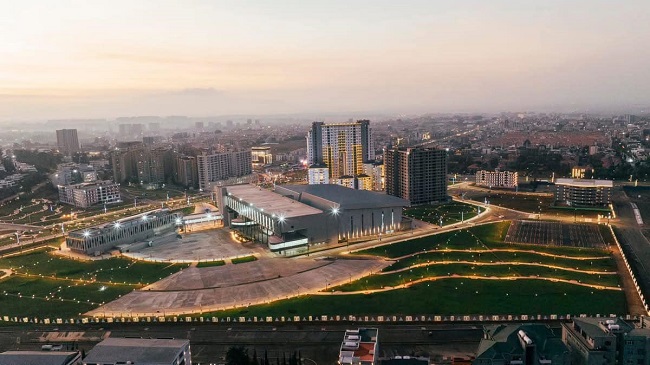
Addis International Convention Centre
Addis International Convention Centre, Addis Ababa, venue of the second Africa Climate Week of 2025

Ahead of COP30, African nations have the opportunity to set the tone for bold climate action at the global level, by championing a fossil fuel phase-out, rejecting “false solutions”, while advancing concrete, actionable plans for a fair and financed transition.

From September 1 to 6, 2025, Climate Week in Addis Ababa will bring together negotiators with implementers in government and the real economy, along with key financiers including development banks, businesses, civil society, and Indigenous Peoples to help speed up climate implementation.

Organised by UN Climate Change and hosted by the Federal Democratic Republic of Ethiopia, the second Climate Week (CW2) of 2025 will focus on turning pledges into solutions that deliver tangible benefits for people – stronger economic growth, more affordable energy, better health, and rising living standards.

It will highlight how communities and partners are already pioneering scalable solutions – from community recycling projects in Kenya, to green bonds in Morocco, to digital platforms tracking ambition – with sessions structured around implementation challenges identified by countries and regional actors, while also sharing proven solutions so they can be replicated and scaled up.

“Climate Weeks are about connecting the international climate process to people’s real lives and to real economies. They will showcase proven real-world solutions so they can be replicated and scaled up and will help lay a foundation for real progress on finance, adaptation, mitigation and a Just Transition, in Belém and beyond,” said UN Climate Change Deputy Executive Secretary Noura Hamladji.

CW2 builds on the renewed Climate Week model launched earlier this year, designed also to drive efficiencies by clustering mandated events in the formal UNFCCC process on key issues to be progressed in advance of COP30.

The Implementation Forum: A Crucial Platform

The Implementation Forum is at the core of CW2 – a new space to share and develop practical solutions across climate finance, technology, and other key sectors. With a strong focus on investment and collaboration, it will bring together diverse actors through Implementation Labs, dialogues, and roundtables to address real-world challenges.

Key thematic sessions include:

  • Adaptation Finance
  • Public–Private Finance Dialogue
  • Accelerating Agriculture Climate Action
  • Scaling Forest Climate Action
  • Strengthening Public–Private Sector Collaboration
  • Multilevel and Community-Driven Action 

The Climate Week has also been structured to reflect and help advance the incoming COP30 Presidency’s six focus areas in its Action Agenda.

A Steppingstone for the Africa Climate Summit and COP30

The Climate Week is global in focus, but its solutions are deeply relevant to Agenda 2063 – Africa’s vision for inclusive growth, sustainability, and resilience. CW2 has been deliberately timed to take place just ahead of the Africa Climate Summit 2 (ACS2), hosted in Addis Ababa from September 8 to 10, 2025.

The outcomes of CW2, particularly from the Implementation Forum, will help inform the Summit, where African leadership will advance work on finance, adaptation, and resilience – shaping Africa’s voice on the road to COP30 and marking a crucial moment for the continent’s climate leadership.

The power beneath our feet: Unlocking local finance for solar-powered MSMEs

No matter how big Dangote is, the company cannot employ more people than Mile 12, Bodija, or Wuse markets. These sprawling market hubs and thousands more across Nigeria are home to the true powerhouse of our economy: micro, small, and medium enterprises (MSMEs). They are the uncounted millions powering food systems, light manufacturing, and local commerce. These MSMEs account for over 90% of Nigerian businesses and provide about 80% of employment. They are the real absorbers of labour, the real builders of GDP.

Yet, Nigeria’s MSMEs are starved of the tools they need to thrive, especially energy and finance. Despite their contribution to national development, they remain underserved by public investment and financial systems that neither understand their structure nor respect their resilience. Instead of designing solutions for the informal realities that shape Nigeria’s economy, policymakers have spent decades trying to force the sector into rigid formal molds. This has proven ineffective, and costly.

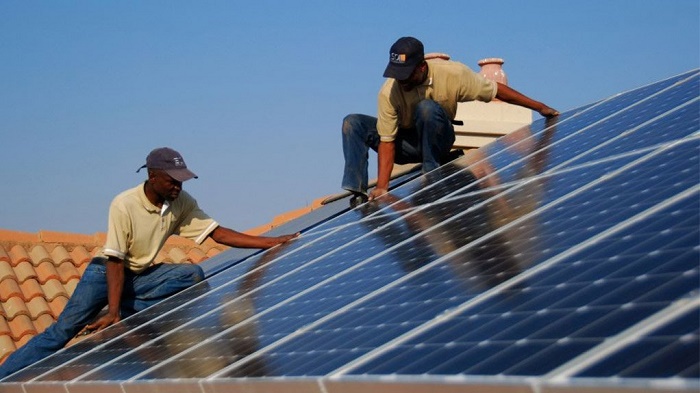
Solar panels installation

Two major obstacles hold MSMEs back: inadequate access to affordable, reliable energy and inaccessible financing. Together, these challenges lock millions of enterprises into low productivity, stifling innovation and competitiveness. Solar power offers a breakthrough offering decentralised, clean, and cost-effective energy. But solar adoption remains low among MSMEs, not because of lack of interest, but because of a lack of affordable and accessible local finance.

In Nigeria, a relatively small percentage of Micro, Small, and Medium Enterprises (MSMEs) access formal financing. While estimates vary, studies suggest that less than 20% of MSMEs in Nigeria have been able to secure credit from formal financial institutions, even though 40% had bank accounts. According to Moniepoint’s 2023 Informal Economy Report, 70% of informal businesses have accessed a loan, but only 12.2% from a bank. The rest turned to friends, family, cooperatives, and, increasingly, fintech apps.

These numbers show that financial capital exists, but it is locked away in systems that do not speak the language of MSMEs. Meanwhile, the informal and alternative financial networks cooperatives, fintechs, Islamic finance institutions are doing the heavy lifting, without policy support or integration into national solar financing strategies.

To close the solar access gap for MSMEs, Nigeria must invest in bold, scalable, and naira-based renewable energy financing models that work for informal and formal businesses alike. This will require coordinated implementation by government agencies, development partners, financial institutions, the private sector, and civil society.

1. Concessionary Naira-Based Credit – Institutions like the Central Bank of Nigeria (CBN), Development Bank of Nigeria (DBN), and the Bank of Industry (BoI) should lead the way by designing low-interest, long-tenure credit facilities targeted at MSMEs for productive-use solar systems. These should be disbursed through microfinance banks, fintechs, and cooperatives that can effectively reach informal businesses.

2. Green MSME Funds – The Federal Ministry of Finance, in collaboration with partners like GIZ, and SEforALL, should establish Green MSME Funds to co-finance solar adoption. These funds must prioritise women-led businesses and underserved areas, and should include partial risk guarantees, technical assistance, and incentive-based repayment structures.

3. Product Innovation & Aggregation Models – Solar developers, in partnership with market associations, cooperatives, and business clusters, should design modular and bundled solar solutions tailored to the unique needs of MSMEs. Programmes like the Nigerian Electrification Project (NEP) can support demand aggregation and lower the cost of solar appliances through economies of scale.

4. Leverage Informal and Alternative Finance Networks – Nigeria’s informal financial ecosystem – cooperatives, Islamic banks, microfinance institutions, and fintechs – offers reach, trust, and adaptability. With regulatory backing from the CBN and SEC, and technical support from donors, these institutions can become active channels for sustainable solar finance delivery.

5. Tap Non-Traditional Capital Pools – Beyond conventional banks, Nigeria has untapped billions in CSR budgets, insurance reserves, diaspora remittances, and faith-based endowments. Regulatory bodies like NAICOM and institutions like PENCOM should work with the private sector to design investment vehicles that redirect this capital into decentralized energy for MSMEs.

6. Incentivise Corporate Co-Financing – Corporates spend heavily on CSR and infrastructure projects. Yet, few support off-grid RE adoption for small businesses. With support from FIRS and frameworks from CAC, corporates should be incentivised through tax relief and ESG-linked benefits – to co-finance clean energy infrastructure for community-based enterprises.

In conclusion, to unlock the productivity potential of Nigeria’s MSMEs, we must change how we think about energy and finance. We must stop viewing informal businesses as “too risky to finance” and start treating them as the cornerstone of a just, green economic transition. By unlocking local finance, and working with the networks that MSMEs already trust, Nigeria can empower its small businesses to power the future.

By Clement Chisom John, Renewable Energy Association of Nigeria (REAN)

Oil survey violates climate law, jeopardises just transition – Eco-justice groups

0

The Green Connection and Natural Justice – two eco-justice organisations committed to protecting the climate and safeguarding coastal livelihoods – have said that, even with the recent legal victory halting TotalEnergies’ attempt to exploit Block 5/6/7, the fight to ensure South Africa pivots to a just energy and economic future remains uphill.

Earlier this month, the organisations submitted detailed objections to both Main Street 1549’s Draft Environmental and Social Impact Assessment Report (DESIAR), and Social and Labour Plan (SLP) for a proposed offshore oil and gas survey in Blocks 9 and 11B/12B.

Offshore drilling rig
An offshore drilling rig at sea

Originally initiated under TotalEnergies – a company facing growing opposition, including last week’s Kick Total Out of Africa campaign – the project continues to draw widespread criticism.

According to Shahil Singh, Legal Advisor to The Green Connection, another key issue is that Main Street – a little-known player in the oil and gas sector – only considers immediate survey impacts but excludes production impacts, which are the survey’s ultimate purpose. The report ignores greenhouse gas emissions, climate disruption, fisheries risks, and the possibility of oil spills.

He says, “It makes no sense to view the survey in isolation when, if oil or gas is found, South Africans could face all the associated negative impacts. The law requires assessing the full effect of the project, from start to finish.”

Climate change is already disproportionately affecting vulnerable communities in South Africa, with studies showing many are ill-equipped to cope. Emerging research projects a potential 30% decline in Africa’s crop revenue due to climate change.

“South Africa recently held hearings on its Nationally Determined Contributions, under the Paris Agreement, yet government advances fossil fuel projects that directly contradict those climate targets,” he adds.

Singh says, “The report fails the legal test of “need and desirability” under NEMA. By treating the survey as a narrow technical step, the report avoids the critical question of how petroleum exploration fits into South Africa’s long-term energy system – especially given falling renewable costs and the rising risk of stranded gas assets. This omission undermines South Africa’s commitment to a Just Energy Transition. Moreover, global oil and gas reserves already far exceed what can be burned without triggering catastrophic climate change.”

According to The Green Connection’s Community Outreach Coordinator, Neville van Rooy, “The report exaggerates economic benefits while downplaying risks to fisheries, tourism, and vulnerable communities. Additionally, the consultation process was exclusionary, undermining the constitutional and international rights of communities to participate meaningfully. The Social and Labour Plan contains vague promises, ignores small-scale fishers (including women in post-harvest roles), and offers negligible job creation. Rather than securing benefits, it shifts environmental and social burdens onto those least able to bear them.”

Van Rooy adds that the modelling of underwater noise is unreliable, omitting vessel traffic impacts harmful to whales, dolphins, and fish – making its impact ratings untrustworthy and threatening coastal livelihoods.

“Last month’s International Court of Justice opinion confirmed that countries have a legal obligation to phase out fossil fuels or face consequences, including liability and reparations. South Africa cannot claim climate leadership at COP30 while approving projects that threaten food security, ocean health, and constitutional rights.

“Every rand sunk into oil and gas today is a rand stolen from our clean energy future. Government must instead prioritise an inclusive, transparent Integrated Energy Plan (IEP) that charts a clear path for a just transition,” concludes Singh.

Flood: Yobe unveils response plan for 467,976 high risk persons

The Yobe State Emergency Management Agency (YOSEMA) has unveiled its response plan for 467,976 persons residing in flood prone areas in the state.

Dr Mohammad Goje, YOSEMA Executive Secretary, who made this known at a press conference in Damaturu on Monday, August 25, 2025, said that the figure represented 126,000 households.

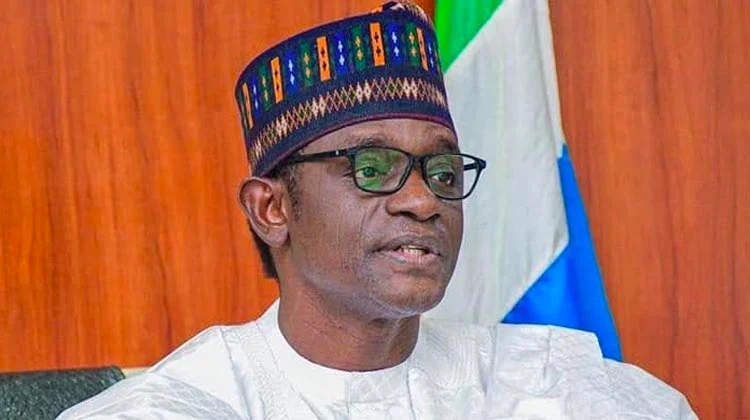
Gov. Mai Mala Buni
Gov. Mai Mala Buni of Yobe State

Goje said that no fewer than 15,967 persons residing in flood prone areas in the state were likely to be displaced.

According to him, the plan is comprehensive and multi-dimensional; designed to anticipate risks, mobilise resources, and strengthen community resilience.

”It involves real-time monitoring of the flows of Yobe, Komadugu, Katagum, and Hadejia rivers, and dissemination of Nigeria Metrological Agency (NiMet) and Nigeria Hydrological Services Agency (NIHSA) climate forecasts to high-risk areas.”

He highlights the plan to include sensitisation campaigns, activation of Local Emergency Management Committees (LEMCs), and mobilization of 178 community volunteers across 10 high-risk Local Government Areas (LGAs).

Others are: “Training of LGAs rapid response teams on flood-related health emergencies and search-and-rescue operations, with advanced rescue kits, cholera treatment commodities, and hygiene kits provided to strengthen frontline response.

“Prepositioning of 7,500 sandbags for embankment reinforcement, mapping of flood-prone areas, strengthening temporary shelters, and ensuring that critical storage facilities in Damaturu, Potiskum, and Gashua are fully functional for stockpiling.

“Strategic Prepositioning of contingency stocks, including food staples for 20,000 households, shelter materials for 10,000 households, and non-food items (dignity kits, hygiene supplies, mosquito nets, mats, blankets).”

He said the agency would deploy Flood Mitigation Standard Operating Procedures (SoPs) in collaboration with UNICEF and ensure sector-level and MDA-based readiness.

Goje said that it would also formulate multi-hazard contingency plans for 10 LGAs of Damaturu, Gujba, Geidam, Bursari, Potiskum, Fika, Jakusko, Bade, Karasuwa, and Yunusari based on NiMet’s Seasonal Climate Prediction with support from UNICEF.

On recent flash floods in Potiskum and Nangere, the Executive Secretary said relief materials were provided to 15,722 victims within hours of the incidents.

“Within hours, emergency measures were activated, including wet feeding for displaced families, temporary shelters, medical support, and rapid needs assessments.

“Despite the fact that 85% of houses were mud structures and heavily damaged, families quickly received relief supplies, healthcare, and reintegration assistance,” he said.

He commended Gov Mai Mala Buni for not only providing clear policy direction, but also his political will for timely provision of life-saving interventions when emergency strikes.

By Nabilu Balarabe

One in four people globally still lack access to safe drinking water – WHO, UNICEF

Despite progress over the last decade, billions of people around the world still lack access to essential water, sanitation, and hygiene services, putting them at risk of disease and deeper social exclusion.

A new report: Progress on Household Drinking Water and Sanitation 2000–2024: special focus on inequalities – launched by WHO and UNICEF during World Water Week 2025 – reveals that, while some progress has been made, major gaps persist. People living in low-income countries, fragile contexts, rural communities, children, and minority ethnic and indigenous groups face the greatest disparities.

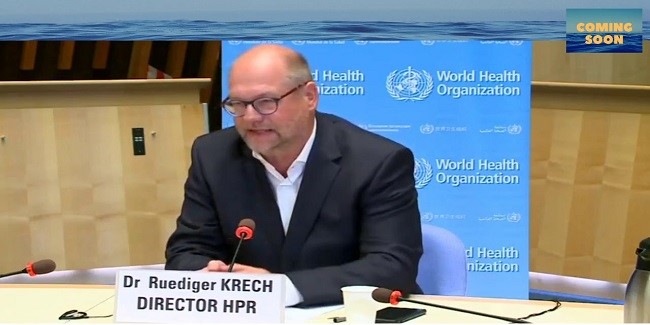
Ruediger Krech
Ruediger Krech, Director a.i, Environment, Climate Change and Health, World Health Organisation

Ten key facts from the report:

  • Despite gains since 2015, 1 in 4 – or 2.1 billion people globally – still lack access to safely managed drinking water, including 106 million who drink directly from untreated surface sources.
  • 3.4 billion people still lack safely managed sanitation, including 354 million who practice open defecation.
  • 1.7 billion people still lack basic hygiene services at home, including 611 million without access to any facilities.
  • People in least developed countries are more than twice as likely as people in other countries to lack basic drinking water and sanitation services, and more than three times as likely to lack basic hygiene.
  • In fragile contexts, safely managed drinking water coverage is 38 percentage points lower than in other countries, highlighting stark inequalities.
  • While there have been improvements for people living in rural areas, they still lag behind. Safely managed drinking water coverage rose from 50 per cent to 60 per cent between 2015 and 2024, and basic hygiene coverage from 52 per cent to 71 per cent. In contrast, drinking water and hygiene coverage in urban areas has stagnated.
  • Data from 70 countries show that while most women and adolescent girls have menstrual materials and a private place to change, many lack sufficient materials to change as often as needed.
  • Adolescent girls aged 15–19 are less likely than adult women to participate in activities during menstruation, such as school, work and social pastimes.
  • In most countries with available data, women and girls are primarily responsible for water collection, with many in sub-Saharan Africa and Central and Southern Asia spending more than 30 minutes per day collecting water.
  • As we approach the last five years of the Sustainable Development Goals period, achieving the 2030 targets for ending open defecation and universal access to basic water, sanitation and hygiene services will require acceleration, while universal coverage of safely managed services appears increasingly out of reach.

“Water, sanitation and hygiene are not privileges, they are basic human rights,” said Dr Ruediger Krech, Director a.i, Environment, Climate Change and Health, World Health Organisation. “We must accelerate action, especially for the most marginalised communities, if we are to keep our promise to reach the Sustainable Development Goals.”

“When children lack access to safe water, sanitation, and hygiene, their health, education, and futures are put at risk,” said Cecilia Scharp, UNICEF Director of WASH. “These inequalities are especially stark for girls, who often bear the burden of water collection and face additional barriers during menstruation. At the current pace, the promise of safe water and sanitation for every child is slipping further from reach – reminding us that we must act faster and more boldly to reach those who need it most.”

NDC 3.0: Nigeria’s climate future lies in state leadership

As a Party to the United Nations Framework Convention on Climate Change (UNFCCC), Nigeria has shown commitment to meeting its obligations by submitting its first and second Nationally Determined Contributions (NDCs). The NDC is not merely a bureaucratic exercise; it is the benchmark by which the world collates and tracks its commitment to tackling the climate crisis and in delivering sustainable development. Once again Nigeria is showing leadership by working hard to submit its third Nationally Determined Contribution (a.k.a. NDC 3.0).

While our commitment to developing our Nationally Determined Contribution is commendable, it is important that we also work hard to avoid the some of the mistakes of the past. In 2021, Nigeria submitted its NDCs 2.0 where she committed to an unconditional reduction of emissions by 20% and a conditional target (contingent on international support) of 47% below BAU by 2030. This target was hailed by both international and experts as ambitious.

Yakubu Kolo
Yakubu kolo, Commissioner for Environment and Climate Change, Niger State

However, there was no clear implementation and funding plan which compromise action on the ground. Furthermore, the voices of subnational governments, which comprise the states and local governments that bear the brunt of climate impacts, were largely excluded. This is a profound misstep, as climate action is lived and felt at the community level, not just in Abuja boardrooms.

In Niger State, we are not waiting for direction from the centre before acting. We have launched community-based afforestation programmes, expanded climate-smart agriculture initiatives to build resilience among farmers, and developed early warning systems for floods and landslides that are saving lives in vulnerable communities.

These efforts, including the development of our green economy plan, while they are modest, equally demonstrate that subnational governments are ready to lead if given the recognition and support within national frameworks.

The process of developing NDC 3.0 has shown committed efforts to course-correct and be inclusive and people-centered. State governments were given the opportunity to provide input which we gladly participated in. We therefore hold the process in high esteem to reflect clarity and transparency in its targets, policies and measures and on cross-cutting issues and actions and it must therefore go beyond the rituals of getting input without an ounce of them reflected in the final document.

This next NDC must set clear ambition that reflects leadership, embed stronger adaptation strategies, and ensure financing is both practical and accessible to states. As the September submission deadline approaches, it must also align ambition with implementation, setting clear targets that are not just impressive on paper but actionable on the ground.

Above all, it must be ambitious, inclusive, and credible, it must reflect the important contributions of the subnational as the burden bearer of climate change vulnerabilities. Anything less would betray our people’s yearnings and squander our chance to lead Africa toward a climate-resilient future.

By Yakubu kolo, Commissioner for Environment and Climate Change, Niger State, Nigeria

Crude oil theft is a ‘transnational crime’ – NNPC CEO, Ojulari

0

Group Chief Executive Officer, Nigerian National Petroleum Company Limited (NNPCL), Bashir Bayo Ojulari, has said that crude oil theft should be recognised as a transnational organised crime, rather than treating it solely as a local issue.

He warned that international and continental criminal syndicates are exploiting security gaps across Africa to steal crude oil, undermining the continent’s energy security.

Bayo Ojulari
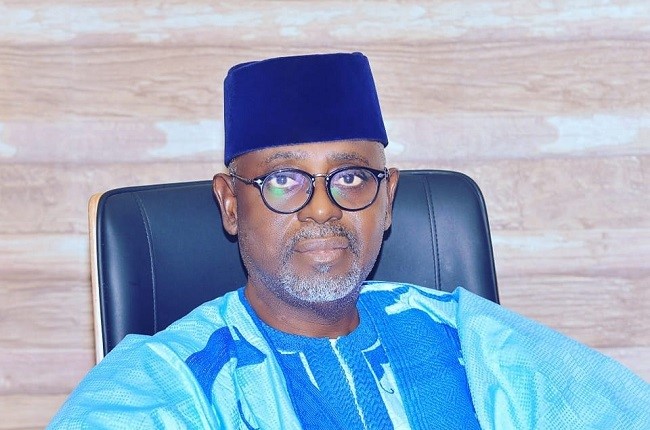
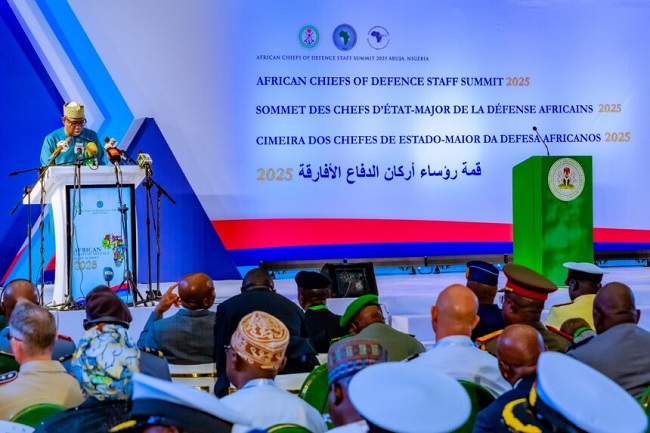
Group Chief Executive Officer, Nigerian National Petroleum Company Limited (NNPCL), Bashir Bayo Ojulari, speaking at the event

Ojulari made this known on Monday, August 25, while delivering a goodwill message at the 2025 African Chiefs of Defence Staff Summit in Abuja, themed “Combating Contemporary Threats to Regional Peace and Security in Africa: The Role of Strategic Defence Collaboration.”

According to him, “Crude theft and its attendant illegal activities are by no means a purely localised occurrence.”

He therefore urged stronger collaboration among African military and security agencies, as well as continental cooperation within the continent to protect resources and promote growth.

Ojulari also explained that crude oil theft and pipeline vandalism, in the Niger Delta, are declining due to intensified efforts by security agencies.

He said, Crude oil and gas pipelines, as well as terminal receipts, which had previously dropped to as low as 20 percent, are now reaching nearly 100 percent thanks to the support of security forces and intelligence agencies.”

Ojulari stated that strategic collaboration with government security agencies has enabled the company to achieve near 100% crude oil pipeline availability, marking a critical milestone for NNPC Ltd. in the fight against crude oil theft.

The NNPC GCEO therefore reaffirmed the company’s commitment to working with military and intelligence agencies in the country and looks forward to broader frameworks emerging from the summit to support Africa’s energy security and shared prosperity.