Home Blog Page 200

German students awarded 2025 Stockholm Junior Water Prize for flood warning innovation

Niklas Ruf and Jana Spiller from Germany received the prestigious Stockholm Junior Water Prize 2025 for their work on developing a scalable flood warning system for small streams. Crown Princess Victoria of Sweden presented the winners with their award during a ceremony at Stockholm City Hall part of World Water Week in Stockholm.

Flooding is an increasing concern worldwide, with more frequent and larger floods affecting communities. Yet on smaller streams, real-time data is often lacking, limiting the possibility of early warnings. Over four years of work, Ruf and Spiller created a network of sensors linked to an app that provides live alerts to both experts and the public. Their system is already being scaled up across their region in consultation with multiple partners.

Stockholm Junior Water Prize 2025
Crown Princess Victoria of Sweden presenting Niklas Ruf and Jana Spiller from Germany the prestigious Stockholm Junior Water Prize 2025

The Jury noted that the project “addresses a critical challenge we are seeing around the globe: more frequent and bigger floods. Yet on smaller streams, we often lack the data needed to provide real-time warnings. The students have not only built a functioning system and an app that notifies experts and the public, but they are also already working to scale this system across their region in consultation with numerous partners.”

When asked how it felt to win, Niklas Ruf admitted: “I didn’t expect it at all. There were so many really good projects. I thought we were just here to have a good time and then go back home.”

Jana Spiller added: “Every project here is just amazing. Some were in areas like chemistry and biology that I didn’t even fully understand, but they were so impressive. That’s why it was such a big surprise for us.”

On what they hope decision-makers and industry leaders will take away from their work, the team reflected: “Of course, what we are doing is building something to tackle the consequences of climate change. But the ideal solution would be if there were no climate change to begin with.”

Diploma of Excellence – Türkiye

The Diploma of Excellence was awarded to Kagan Mehmet Ozkok from Türkiye for pioneering work that combines AI and water efficiency. By training artificial intelligence on the sound of leaking water, Ozkok built and deployed two prototypes to detect leaks in public spaces. Tested under real conditions, the prototypes demonstrated significant water savings and are now being developed further in collaboration with local government for possible city-wide implementation.

The Jury stated: “This year’s diploma of excellence recognises how data, AI and action come together. Training AI based on the sound of leaking water, this student has demonstrated a powerful and practical approach to tackling urban water loss.”

People’s Choice Award – United Kingdom

The People’s Choice Award, voted on by the global public, went to Divyasri Kothapalli from the United Kingdom for her project Sun-based water distillation system.

This research project presents the development of a low-cost solar water distillation system designed to improve access to clean drinking water in off-grid and rural communities. Using a Fresnel lens to focus sunlight onto a metal boiling pot, the resulting steam passes through food-grade silicone tubing and condenses into clean water. The system operates without electricity, avoiding additional carbon emissions.

Kothapalli conducted three experiments where the independent variables included initial water volume, light intensity, and natural weather conditions. The system produced consistent yields even in moderate climates such as the UK, showing its promise for broader application.

“Innovation is paving the way to a more water-secure world, and the next generation is accelerating progress. The Stockholm Junior Water Prize competitors are an inspiring example of the ingenuity and passion young innovators bring to the table. On behalf of Xylem, I’d like to congratulate all those who took part in this year’s competition,” said Claudia Toussaint, Chief People and Sustainability Officer at Xylem.

“Xylem is proud to invest in the young innovators of the Stockholm Junior Water Prize. They are already shaping the future as the next generation of water problem-solvers. Together, we have the opportunity to empower communities everywhere to create a more water-secure world,” Toussaint added.

A year of flood-focused excellence

This year, both Water Prizes highlighted flooding: the Stockholm Junior Water Prize went to German students Niklas Ruf and Jana Spiller for their innovative flood warning system, while the Stockholm Water Prize will be awarded to Austrian professor Günter Blöschl, the world’s leading flood hydrologist. Together, their work underscores the urgency of addressing flood risks – from local innovations to global science.

RDI wants Nigerian delegation to support strong language on alcohol harm in UN NCDs declaration

0

The Renevlyn Development Initiative (RDI) has urged the Permanent Representative of Nigeria to the United Nations and the Nigeria delegation to recommend stronger language on alcohol harms in the UN Political Declaration on Noncommunicable Diseases and Mental Health so that it fulfills its promise to accelerate prevention and promote well-being worldwide.

The call is part of a global initiative by member groups of Movendi International, the largest independent global movement for development through alcohol prevention, to ensure that the UN Political Declaration on NCDs and Mental Health includes high-impact, evidence-based alcohol policy solutions.

Alcoholic beverages
Alcoholic beverages

According to RDI, alcohol harm is a major but under-addressed driver of NCDs and mental health conditions, even as it added that the current draft falls behind previously agreed language and ambitions for accelerating action on alcohol harm as a public health priority and misses critical opportunities for coherent, science-based action.

In the letter, RDI said that Nigeria, like other governments, now has the chance to restore clarity, ambition, and impact to alcohol policy within the declaration.

Addressing the Permanent Representative, RDI is asking for the Nigerian delegation to advance six concrete, constructive improvements which include:

  1. Replace ‘harmful use of alcohol’ with ‘alcohol harm’ or ‘per capita alcohol consumption’ for clarity and scientific accuracy;
  2. Retain the two alcohol policy best buys on availability limits and advertising bans, and include the missing SAFER interventions: screening and brief interventions as well as driving under the influence of alcohol counter-measures;
  3. Include alcohol screening and brief interventions among treatment and prevention commitments;
  4. Reinserting the 80% taxation target for alcohol and tobacco;  
  5. Introduce language acknowledging and protecting against alcohol industry interference and the commercial determinants of health; and
  6. Align the declaration with the ambition, momentum, and global consensus of the Global Alcohol Action Plan to accelerate alcohol policy action by addressing alcohol harm as public health priority: Include fast-track action for alcohol policy.

RDI Executive Director, Philip Jakpor, said that the voice of the Permanent Representative and the Nigerian delegation can ensure that the declaration reflects both scientific evidence and global commitments – delivering measurable progress in protecting health, preventing disease, and safeguarding the right to well-being for all.

World Lake Day: Why lakes around the world are in decline and what can be done about it

0

There are more than 100 million lakes dotting the planet, according to one prominent study

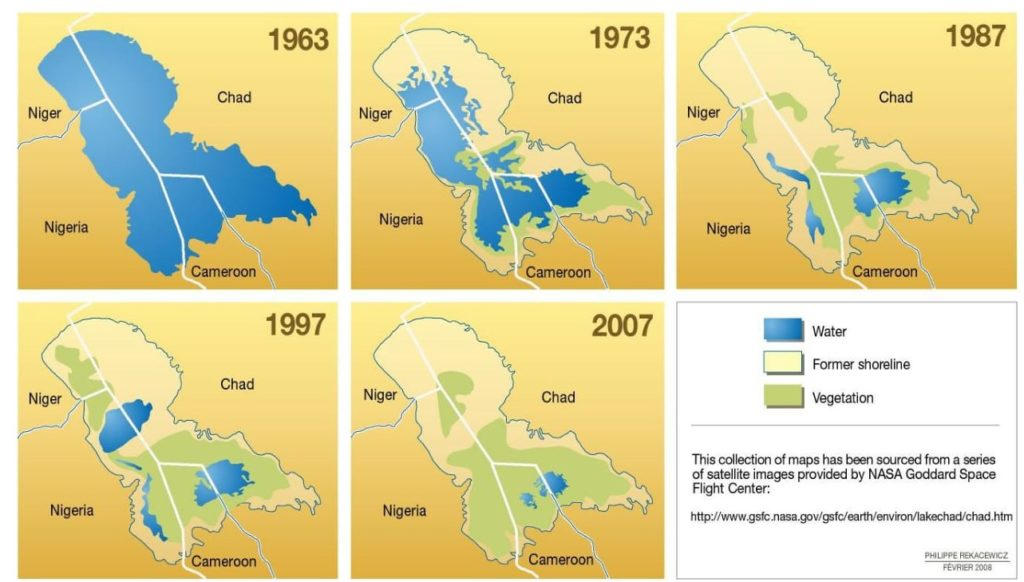
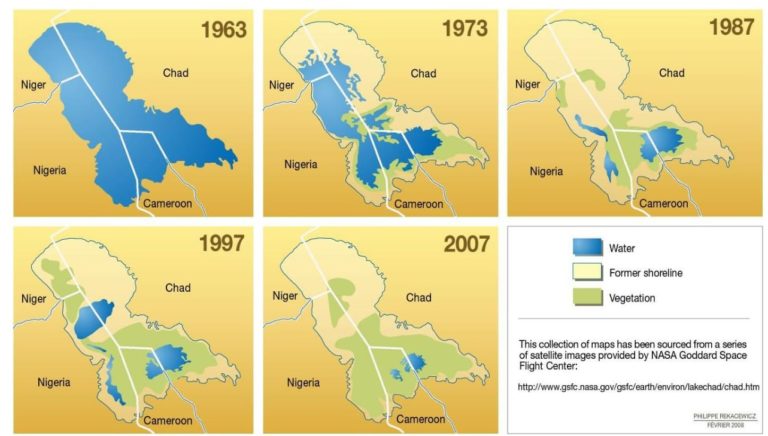
But many aren’t what they used to be. From Bolivia to South Africa and beyond, climate change, pollution and over-abstraction are drastically changing these bodies of water. Many have dwindled to nothing. Others are bursting their banks. Some have even turned green.

Lake Chad
The climate variability impact on Lake Chad has also worsened the abundance and conservation status of biodiversity. Photo credit: UNEP

“Today, some of the world’s best-known and most important lakes are a shadow of what they were just a few decades ago,” says Dianna Kopansky, the head of the Freshwater Ecosystems and Wetlands Unit of the United Nations Environment Programme (UNEP). “We need to reverse this decline. If we don’t, it could be calamitous for the hundreds of millions of people who rely on lakes for their survival.” 

Ahead of the first World Lake Day, observed on Wednesday, August 27, 2025, here’s a closer look at the biggest threats to the world’s lakes – and what can be done about them. 

Climate Change 

A global panel of climate experts has found that climate change is destabilising the hydrological cycle, the finely tuned system that distributes water around the world. Rising temperatures, they say, is intensifying evaporation and shifting rainfall patterns. In some places this is increasing the chances of lake-shrinking droughts, like one that nearly deprived Cape Town, South Africa – home to 4.7 million people – of water.

In other places, increased evaporation coupled with higher air temperatures is leading to more intense rainstorms, causing lakes to burst their banks. That’s a future that may even befall the world’s largest desert basin, Kenya’s Lake Turkana. A UNEP study found it will likely see an increase in flooding in the coming decades, threatening the 15 million people who live along its shore.

Meanwhile, in many mountainous areas, skyrocketing temperatures are raising the risks of what are known as glacial-lake outbursts. These potentially catastrophic floods can happen when the ice holding back a lake melts, sending water cascading downhill.

Over-abstraction

As damaging as climate change has been, Kopansky says it often pales in comparison to what humans have done to lakes by siphoning away their waters faster than they can be replenished – a process known as over-abstraction.  

This can take many forms. Sometimes, water is diverted from lakes – and equally damaging, their tributaries – to supply cities. Other times, it’s used to power hydroelectric dams. Often, it’s taken to irrigate farmland.

Central Asia’s Aral Sea is the poster child for irrigation-led decline; once the fourth-largest lake in the world, has withered dramatically since its tributaries were diverted in the 1960s. But this is happening all over the world, including in the high plains of Bolivia. Here, what was once the country’s second-largest lake, Lake Poopo, has been reduced to a barren salt flat by a devastating combination of water diversions and climate change.

A 2024 report by UNEP and UN-Water found that surface water bodies, including lakes, are shrinking or being lost entirely in 364 basins worldwide – nearly 3 per cent of all basins. An estimated 93.1 million people live in those areas.

Pollution

Pollution, experts say, is a mounting threat to the world’s lakes and the communities that surround them. Especially problematic for people and lake-dwelling animals are raw sewage and farm runoff. Along with injecting pathogens and pesticides into lakes, these sources of pollution also often contain phosphorus and nitrogen. At high enough levels, these nutrients can kill fish, feed toxic algal blooms and starve lakes of oxygen, creating so-called dead zones hostile to aquatic life.

That’s what some scientists believe may be happening in Lake Victoria, Africa’s biggest lake, where a surge in a certain type of bacteria has turned waters green.

At the same time, increased evaporation, over-abstraction, rising precipitation and hotter temperatures can also worsen water quality.

UNEP tracks the water quality of 4,000 large lakes around the world. More than one-quarter are becoming increasingly turbid, or cloudy, and almost 15 per cent are experiencing a rise in organic matter. Those are two telltale signs of pollution from sources like cities, farms and factories.

“These kinds of numbers should be a wakeup call,” says Kopansky. “We can’t continue to treat lakes like dumping grounds.”

The solutions

Lakes provide 90 per cent of the world’s surface fresh water and, together with the rivers that feed them, support the livelihoods of an estimated 60 million people. Kopansky says it’s not too late to reverse the fortunes of many of the world’s flagging lakes. To do that, she says countries can do three major things: 

  • Advance what’s known as integrated water resources management, a planning process that balances the use of water across various sectors, like industry and farming, in ways that improve lives without compromising the long-term health of ecosystems; 
  • Take a basin-level approach to water management and pollution control, involving local and Indigenous groups, the private sector, farmers and other stakeholders to address the challenges facing lakes; and 
  • Invest in data collection monitoring for lakes and invest in applying it, so that problems like pollution can be caught before they reach crisis levels. 

Protecting the world’s lakes is a key part of the Kunming-Montreal Global Biodiversity Framework, an international agreement to safeguard the natural world. The accord calls on countries to conserve and restore 30 per cent of inland waters, which includes lakes, by 2030.

“The good news is that we have the knowledge and the technology to turn this situation around,” says Kopansky. “What we really need is the will to start treating all our lakes like the precious resources they are.” 

Researchers push for region-tailored vaccines to tackle African swine fever

 An international team of scientists has found that a promising African swine fever (ASF) vaccine can protect pigs against some strains of the virus but offers little or no protection against others. The findings point to the need for region-specific vaccines to tackle one of the world’s most devastating animal diseases.

The research, led by the U.S. Department of Agriculture’s (USDA) Plum Island Animal Disease Centre and the International Livestock Research Institute (ILRI), tested a commercial live-attenuated vaccine candidate, ASFV-G-ΔI177L, against several African swine fever virus (ASFV) strains collected from across Africa. Results showed that while the vaccine was highly effective against certain strains, its performance varied widely depending on the virus type.

African swine fever (ASF)
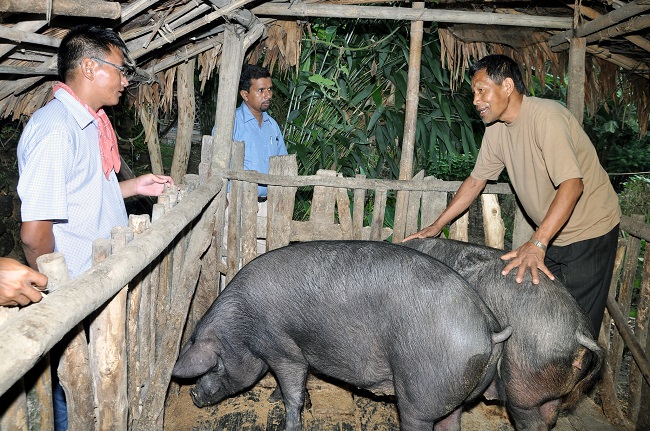
African swine fever (ASF) vaccine can protect pigs against some strains of the virus

A global threat to pigs and livelihoods

ASF is a highly contagious and often fatal disease affecting domestic and wild boars, with no global commercially licensed vaccine available. The disease is endemic in many parts of Africa and, over recent years, outbreaks have devastated pig populations in Africa, Asia and Europe, causing severe economic losses, threatening food security, and undermining the livelihoods of communities reliant on pig farming as pork is widely consumed animal protein.

Smallholder farmers in low- and middle-income countries (LMICs), who primarily raise pigs in backyard systems, are heavily affected by ASF with women and young people particularly vulnerable. Beyond LMICs, the spread of ASF poses a major threat to North America.  In the United States, the swine industry is a cornerstone of the economy, generating more than $27 billion in gross cash receipts in 2023. Similarly, Canada’s pig industry contributed CAD 6.3 billion in 2024, highlighting the region’s significant economic exposure 

What the study found 

Strong protection – Pigs vaccinated and exposed to the same strain used to make the vaccine stayed healthy, while unvaccinated pigs quickly succumbed to disease. 

Partial protection – About 80% of vaccinated pigs survived when challenged with a genetically different strain isolated in Ghana. 

No protection – The vaccine failed against several other genetically distinct strains from Malawi, Kenya, South Africa and Uganda, despite triggering strong immune responses. 

Rethinking vaccine strategies

The results highlight that the traditional method of classifying ASF viruses by a single gene (p72) is not enough to predict whether a vaccine will work. Two viruses with identical p72 sequences – Georgia2010 and Pret4 – produced very different results in vaccinated pigs.

USDA scientists have developed a new classification method that analyses the virus’s entire set of protein-coding genes, offering a more precise way to match vaccines to regional virus types.

Although much further corroborative experimental work is needed, the classification developed will likely be the only available rational approach for deciding vaccination procedures to control and manage ASFV outbreaks’ said Manuel Borca, USDA scientist.

“This research reinforces the need to rethink our ASF vaccine strategies,” said Anna Lacasta, ILRI Senior Scientist. “A one-size-fits-all solution is unlikely. We need targeted vaccines aligned with the regional virus biotypes to maximise protection and control outbreaks. There is need to support the development and licensing of vaccines based on circulating ASFV biotypes.”

The team recommends continued research into matching vaccines to virus types, as well as exploring new vaccine designs that could provide broader protection against ASF. 

ACReSAL kicks off final phase of Catchment Management Plan engagements in Gombe

The final phase of stakeholders’ engagement for the development of 20 Catchment Management Plans has begun in Gombe State, bringing together key institutional stakeholders from seven states: Adamawa, Bauchi, Borno, Taraba, Yobe, Plateau, and Gombe.

The engagement aims to explore potentials and discuss challenges in the Gaji-Lamurde, Hawal-Kilunga, and Gongola catchments.

ACReSAL
Participants at the final phase of stakeholders’ engagement for the development of 20 Catchment Management Plans, in Gombe State

This initiative marks the completion of the broader process to develop 20 Strategic Catchment Management Plans across Nigeria, with the ACReSAL Project supporting the Federal Government of Nigeria in this endeavor. So far, nine plans have been developed and validated, and stakeholder engagements have been completed for eight catchments.

The National Project Coordinator, Abdulhamid Umar, emphasised that the catchment plans are designed to capture a shared vision from stakeholders, ensuring their input reflects real needs within communities. He noted that the process would help attract investments and channel project interventions directly to the people, making implementation easier for investors and more beneficial for local communities.

The Commissioner for Water, Environment, and Forest Resources in Gombe State, Mohammed Said Fawu, described the engagement as timely and aligned with the state’s ongoing environmental efforts. He highlighted the state’s commitment to environmental renewal, citing the Gombe Goes Green initiative, which has led to the planting of over five million trees in the past five years with support from ACReSAL.

The Gombe State Project Coordinator, Amb. Sani Adamu Jauro, also emphasised the importance of the catchment management plans in improving livelihoods, boosting agricultural activities, and strengthening policy frameworks for natural resource management.

The engagement was attended by various stakeholders, including the Gombe State Commissioner, National Project Coordinator, Royal Fathers, ACReSAL Project Coordinators, and institutional stakeholders from Ministries, Departments, and Agencies, NGOs, Academia and others.

As part of the opening activities for the six-day strategic engagement, Gombe ACReSAL did a symbolic distribution of 6,220 bags of drought-resistant seeds to farmer associations, including rice, maize, millet, and guinea corn.

Scientists urge accurate communication to defend bio-innovations in Africa

As Africa battles converging crises of food insecurity, climate change, and disease outbreaks, scientists and policymakers are warning that misinformation and disinformation have become a major barrier to innovation, public health, and sustainable development.

At the Africa Biennial Bioscience Communication (ABBC2025) symposium in Lusaka, Zambia, experts called for accurate science communication as a cornerstone of the One Health approach, which integrates human, animal, and environmental health.

Africa Biennial Bioscience Communication (ABBC2025) symposium
Some delegates at the Africa Biennial Bioscience Communication (ABBC2025) symposium in Lusaka, Zambia

Dr. Ndashe Kapula, Director of the Zambia Agriculture Research Institute, representing the Minister of Agriculture, Reuben Mtolo Phiri, said misinformation has emerged as a significant concern in today’s fast-changing information landscape.

“In Africa, we face the convergence of food insecurity and disease, and collectively, these create a complex crisis that threatens health and development. Science must not only be advanced but also defended through accurate communication and trust building,” Kapula said.

The three-day ABBC2025 symposium, held under the theme “The War on Science: How Can We Overcome the Burden of Misinformation and Disinformation?” brought together stakeholders from public health, agriculture, academia, and the media. Its aim is to promote cross-sectoral collaboration, identify best practices in science communication, and advocate for evidence-based policies.

Kapula highlighted that Africa bears the highest per capita prevalence of foodborne and zoonotic diseases, worsened by a dysfunctional food system.

“The intensification of agriculture, deforestation, urban expansion and climate change further weaken ecological and epidemiological natural regulatory processes, thus worsening the spread of infectious diseases and degrading natural resources essential for food production.

The holistic One Health approach is therefore essential in addressing environmental challenges, transforming our food systems, reducing disease burdens and fostering sustainability,” he said.

He stressed that misinformation and disinformation have delayed processes, eroded trust, and in some cases, cost lives. He also acknowledged the critical role of the media in countering falsehoods.

“We recognise you, because without you, we cannot communicate effectively. If we fail to communicate, silence will be like that tree that falls in the forest that makes a loud noise that is never heard of. We need to communicate rightly and correctly so that science is accurately and effectively communicated to the public for the common good of humanity,” he said.

Dr. John Mukuka, Chief Executive Officer of the Common Market for Eastern and Southern Africa (COMESA), echoed these concerns, noting that misinformation undermines public confidence.

“It will serve as a vital counterweight to misinformation, helping policymakers, the media, and the public to engage with biotechnology from informed and evidence-based perspectives,” Mukuka said.

He added that ABBC2025 provides a platform to develop practical strategies for safeguarding truth in science and ensuring innovation delivers inclusive growth for COMESA Member States.

Dr. Margaret Karembu, Director of the International Service for the Acquisition of Agri-biotech Applications (ISAAA) AfriCenter, warned that misinformation continues to stall Africa’s progress in leveraging biosciences to strengthen food systems and the One Health approach.

“The urgency of this issue has been globally recognised, with the World Economic Forum naming disinformation as the second most severe global risk after extreme weather,” Karembu said.

She described it as so painful for a scientist to work for more than ten years, and then when you bring out a product, you find the environment is so toxic that you have to spend another 10 years trying to convince your end users about the value of what you have done in 10 years.

“In those 20 years, a baby born will already be an adult, and those are 20 years lost. This is a big, big pain in the scientific community,” she said.

Her colleague, Dr. Robert Karanja, Board Chairperson of ISAAA AfriCenter, stressed the importance of scientists communicating directly with society.

“Unless scientists communicate effectively the science that they want to make a difference, it will be very difficult to reach the societies,” Karanja said.

He described misinformation as a painful obstacle to progress: “The theme of this year’s symposium is the War on Science. The question we are asking ourselves is, how can we overcome the baggage of misinformation and disinformation?

Karanja added that the World Economic Forum has ranked misinformation and disinformation among the top global risks, surpassing even pathogens.

“It is eroding trust, and it is delaying access to innovations that can help us in dealing with some of the very challenging problems that we are having with our communities within the food systems, within the health of our health systems, and within the efforts in building a resilient community of practice in climate change,” he said.

By Hope Mafaranga, Lusaka, Zambia

UN Special Envoy on Water calls for collective action at World Water Week 2025

The United Nations Special Envoy on Water, Retno L.P. Marsudi, at the 35th edition of World Water Week in Stockholm on Monday, August 25, 2025, urged global leaders and stakeholders to embrace collective action and position water at the forefront of climate strategies.

This year’s conference, themed Water for Climate Action, reflects the growing recognition that water and climate are now inseparable challenges confronting our world today. Delivering the keynote address to thousands of participants gathered at the Waterfront Congress Centre in Stockholm for the annual water conference, Marsudi described water as both a contributor to and a solution for climate change.

Retno L.P. Marsudi
United Nations Special Envoy on Water, Retno L.P. Marsudi, delivering the Keynote remark at the World Water Week, Monday, 25 August 2025. Photo credit: Elias Ljungberg

“We need strong and robust action on water together. Water resilience prepares us to respond and enables us to adapt and address climate change. Only then can we transform water from being a potential contributor and the victim of climate change to being the solution to climate change,” she said.

Presenting recommendations to make water a solution to climate change, the UN’s Special Envoy urged water to be seen as a prominent watermark in the climate agenda. Building on the Baku Declaration on Water for Climate Action during COP29, which opened the way, she noted, “We must not lose that momentum. Water is transparent, but it must not be invisible in our climate action. It is time for us to raise strong collective claims that water must be at the heart of climate action.

“We can no longer do the same while expecting different results. Current world challenges demand agility, effectiveness, and tangible results. This is why we are in dire need of concrete action in water to multiply progress in all areas of sustainable development,” Marsudi emphasised.

Beyond being one of the largest water conferences in the world, World Water Week 2025, organised by the Stockholm International Water Institute, is poised to be a pivotal moment in global environmental governance in the lead-up to the 2026 United Nations Water Conference, co-hosted by the United Arab Emirates and Senegal.

Following the opening ceremony, the rest of the week will witness a series of high-level panels, centre-stage sessions, displays of water innovation and solutions – including presentation of the Stockholm Junior Water Prize, as well as cross-sectoral partnerships – all aimed at accelerating progress toward the 2030 Agenda.

By ‘Seyifunmi Adebote,| Stockholm, Sweden

NDC 3.0: The subnational hold the key to effective implementation

Year 2025 will mark the 10th anniversary of the adoption of the Paris Agreement on Climate Change and its mandatory requirement that Parties must develop and implement Nationally Determined Contributions (NDCs). The NDCs are nationally determined plans put together by each country outlining the actions needed to meet their long-term goals as a statutory commitment under the Paris Agreement.

Nigeria, despite facing unprecedented challenges of climate change has demonstrated great poise and good leadership in setting up the process to review its NDCs through stakeholder engagements, consultation, data collation and workshops since May 2025.

Umar Saleh Anka
Umar Saleh Anka, Ph.D, Director, Climate Change, Ministry of Environment and Climate Change, Kano State

Nigeria, among other parties to the United Nations Framework Convention on Climate Change (UNFCCC) may have missed the first deadline to submit its NDCs, but the internal process initiated by the government is in order to meet the new deadline of September 2025. It is important to know that the NDCs are not optional, but they are a statutory pledge to the global community, and more importantly, to our citizens, that we are serious about addressing climate change while driving sustainable development.

Across the world, as at August 2025, less than 30 parties have submitted the 3rd iteration of their NDCs, with less than 5 of those from Africa. Nigeria on the other hand is ensuring a broader and open participation of the process in order to build synergy among its domestic stakeholders: an act that is commendable, and should count Nigeria among the countries leading the frontiers of the NDC process.

If Nigeria’s NDC 2.0 which committed to an unconditional reduction of emissions by 20% and a conditional target (contingent on international support) of 47% below BAU by 2030 was celebrated as a bold step, her NDC 3.0 must set a new ambition to enhance resilience planning, synergy between adaptation, loss and damage, energy transition, with a clear link with our development plans putting the subnational at the heart of effective implementation, ensuring a purposive intention to train the states to develop our NDC that will align with the national target but a mere mention in the document. The national must ensure supporting the subnational to build a system for Monitoring Reporting and Verification (MRV) to accommodate states input rather than over reliance on the national platform.

In reaffirming our commitment to sustainable development, green infrastructure, and climate resilience in Kano State, we have recently launched a historic climate policy and action plan – strategic implementation framework, we went ahead to develop the state readiness and action plan for the climate finance to guide the state’s environmental governance and transition to a low-carbon economy. In the same strength, we unveiled two new legal instruments: the Kano State Environmental Pollution Control Law and the Kano State Environmental Pollution and Waste Control Regulations 2025.

These documents are to reemphasise Kano state’s position as a West African cosmopolitan hub for climate governance, considering the importance of these new laws to the priority sectors of Nigeria’s NDCs, as part of the mitigation measures, we distributed 5 million trees (geo tagged) for the 2025 planting season.

Yes, we praised the new NDC process, but we must not forget the things that set us back in the past. We must address them in a holistic manner whilst awaiting the final approval of the NDC 3.0. I recognise that all the states were given the opportunity to provide data for the development of the NDC 3.0. It is therefore imperative that these data be aggregated, synthesised and integrated into the NDC with recognition of the peculiar climate challenges facing the respective states in Nigeria and targeting them for implementation to align with one of the principles of the UNFCCC of equity.

This is important because, many of the projects promised in past NDCs are nowhere to be found on the ground; whilst validation exercises carried out in states have too often been tokenistic, with subnational inputs ignored in the final documents – this cannot continue. We are positive that NDC 3.0 will bridge the gap and empower the states to build a system that can support the national with valid and verifiable data.

Nevertheless, what is clear is that our next NDC must set economy-wide emission reduction targets that accelerate clean, sustainable, affordable, and just energy access. It must explicitly align climate and biodiversity action, halting and reversing deforestation and forest degradation, and transforming food systems through agroecology – all of which are critical priorities for the Nigerian states that are on the frontline of desertification, drought, and food insecurity, and actively bearing the direct brunt of climate change. The states must be elevated to translate NDCs commitments into practical action. Therefore, the validation must acknowledge this and not repeat the mistakes of the past.

The NDCs operation thrive in a broader context of plans and alignment with Long-Term Low Emission Development Strategies (LT-LEDS), Biennial Transparency Reports (BTRs) and Climate Change Act 2021. Nigeria’s NDCs 3.0 must be bold, grounded in ambition, people-centered with the subnational at the heart of effective implementation for inclusive accountability and ensuring lasting impacts.

By Umar Saleh Anka, Ph.D, Director, Climate Change, Ministry of Environment and Climate Change, Kano State, Nigeria

Nigeria’s NDC 3.0 and subnational inclusion: Notes from a Parliamentarian 

On Wednesday, August, 27, 2025, Nigeria’s National Council on Climate Change will bring together stakeholders from across the country to the “National Validation Workshop of Nigeria’s NDC 3.0.” The NDCs, as most of us know are series of national commitments under Article 4.2 of the Paris Agreement on Climate Change, which represent countries’ pathways to climate action.

This is to be reviewed every five years and in line with these important stipulations, Parties to the Paris Agreement, Nigeria inclusive, are expected to develop and summit the third iteration of their national climate commitments known as Nationally Determined Contributions (NDCs 3.0) before the end of this year.

Rep. Kama Nkemkanma
Rep. Kama Nkemkanma

The Paris Agreement is a legally binding international treaty on climate change, adopted in 2015, to limit global warming to well below 2°C, preferably 1.5°C, above pre-industrial levels.

A big commendation must of course go to all involved in the process of the development of Nigeria’s NDCs 3.0 because of the massive effort made to make the process inclusive. There were conscious efforts to engage everyone, even reaching out to subnational leaders to make their submissions.

The importance of this effort at integrating subnational considerations in the development process of the NDCs cannot be overemphasized. This is because the devastation wrought by climate change in the form of destruction of infrastructure, loss of arable land due to land degradation, health challenges, insecurity, etc are ultimately borne by people within communities, local governments and states.  In essence, the subnational. They should therefore be critical to this.

This was a point I re-iterated on the 3rd of June when the National Council on Climate Change came to brief my committee – House of Representatives Committee on Climate Change and Security – on our NDCs 3.0 process. I made it clear to them that there was a need to also engage subnational legislators. These legislators have key roles to play. For instance, the draft NDCs 3.0 makes the case for eradication of generator use, support for a switch to clean cook options, etc.

None of these can be implemented at a location called “the federal”. Implementation must be at the subnational, hence subnational legislators have a critical role to play either through lawmaking, or through oversight and appropriation. Not engaging them was therefore a big oversight.

Even though this engagement with the subnational legislators was not carried out, a cursory look at the draft NDCs 3.0 did show an attempt at subnational considerations with the inclusion of certain provisions such as recommendations for ranching, reduction in deforestation, gas flaring, etc. These are key provisions which would impact positively on the subnational, especially on the security, ecological health, and human wellbeing, of the people. This is of course as long as we are able to get to the implementation part and also ensure that the process is just.

So, we must commend them for first making an effort, while also highlighting where they could have done better. The first of where they could have done better was the oversight on inclusion of subnational parliaments which I have mentioned above.  

Secondly, it is ironic that the effort at reaching out to subnational leaders failed to pay attention to one thing which the NDCs development process had flagged – lack of capacity on the part of subnational actors. What that means is that based on this lack of capacity, the contributions from the subnational leaders might be flawed and not totally reflective of how best to capture their needs. A better way would have been to carry out a proper professionally-led assessment backed by capacity building sessions.

This becomes more poignant when one considers that while the NDCs 3.0 process detailed specific assessment efforts with focus on just transition; gender, youth and children; the NDC and the SDGs; labour within the context of the transition; migration; biodiversity; and circular economy; there was no specific effort for a detailed assessment of subnational needs and how these can be leveraged to ensure deeper attention on how NDCs 3.0 implementation can address subnational development challenges, climate impacts and the key issue of subnational access to climate finance.

Indeed, with Nigeria’s NDCs 3.0 consciously being aligned with the development plans of the country and its net zero target, there is need to explore ways of mobilising the subnational to drive up private sector investments that will at once address subnational needs, build resilience, and accelerate the country’s climate response and sustainable development.

Thankfully, there is still time to do this since our draft NDCs 3.0 projects the development of an investment strategy for NDCs 3.0. This investment strategy and its implementation strategy counterpart must be designed to pay extra attention to core subnational needs and how to leverage these to unlock vast investments. It might be that the earlier discussed issue of professionally-led assessment can now come in to determine how best to use these tools to position the subnational appropriately in our climate and sustainable development plans.

One thing is certain; climate action is development action and there is no way a multilayered country like Nigeria can attain either without taking into strong consideration subnational foundations. We must always proceed with this mindset.

By Rep. Kama Nkemkanma, Chairman of the House of Representatives Committee on Climate Change and Security

Nigeria’s incremental progress on climate sustainability gaining global reckoning, says Onuigbo

A member of the North East Development Commission (NEDC), Rep Sir Sam Onuigbo, has said that Nigeria’s sustained efforts at mainstreaming climate change actions into national development priorities have continued to gain international recognition.

He disclosed that at a time when the world is grappling with the realities of climate change, including desertification, environmental degradation, forced migration, insecurity, and depletion of rivers and rivulets, the country has shown strong determination to transition from fossil fuel to clean energy.

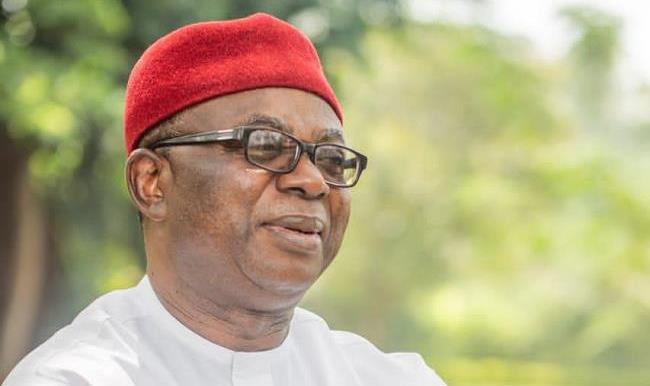
Sam Onuigbo
Rep. Sam Onuigbo

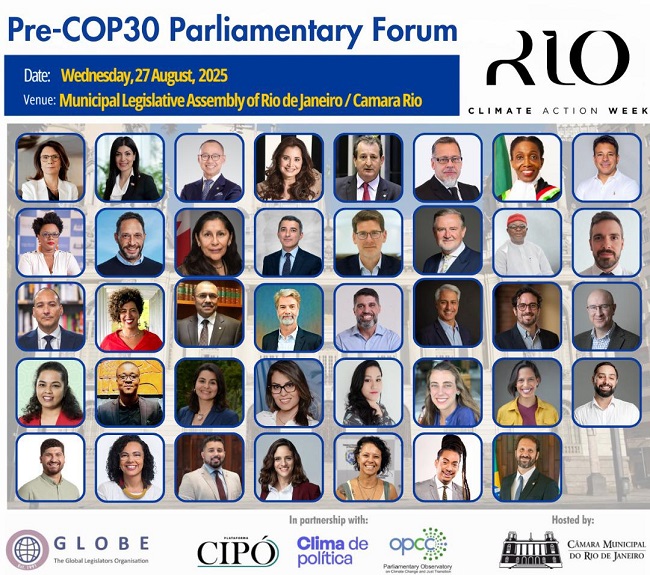
Speaking to journalists in Abuja on the imperatives of the Pre-COP30 Parliamentary Forum in Rio de Janeiro/Camara Rio, Brasil, Onuigbo, who is among the 39 resource persons expected to deliver papers at the conference, noted that the world faces an urgent need for just transitions to NET Zero reduction in carbon emission.

Onuigbo, who sponsored Nigeria’s signature legislation known as the Climate Change Act 2021, explained that the forum in Rio de Janeiro, which kicks off on Wednesday, August 27, 2025, should not be seen as a mere talk shop, stressing that Nigeria’s participation shows the level of interest the world has developed in the country’s strategic leadership.

While noting that Nigeria has continued to be on the frontline in advocating for climate justice, Onuigbo pointed out that the country is leveraging on the provisions of the Climate Change Act to drive its climate sustainability strategies, based on REDD+ and Article 6 of the Paris Agreement, which allows countries to trade emission reductions as “Internationally Transferred Mitigation Outcomes (ITMOs)”.

Sam Onuigbo
Sam Onuigbo is among the 39 resource persons expected to deliver papers at the conference

He stated: “REDD+ (Reducing Emissions from Deforestation and Forest Degradation, plus conservation, sustainable management of forests, and enhancement of forest carbon stocks) is anchored in Articles 5 and 6 of the Paris Agreement.

“While Article 5 directly recognises the role of forests in mitigation, Article 6 provides the framework for voluntary cooperation between Parties to achieve their Nationally Determined Contributions (NDCs), including through market and non-market mechanisms.”

Other important provisions of Article 6, he said, include, 6.2, which “Allows countries to trade emission reductions as “Internationally Transferred Mitigation Outcomes (ITMOs),” stressing that verified REDD+ results can be transferred between countries or entities to support NDCs.

“Article 6.4, Establishes a centralised crediting mechanism supervised by the UNFCCC, where REDD+ projects or jurisdictional programmes can generate units for compliance and voluntary carbon markets.

“Article 6.8: Provides for non-market approaches, including capacity building, technology transfer, and finance, which are important for REDD+ readiness and implementation,” he stated, adding that it could be seen that REDD+ serves as both a results-based finance instrument and a potential supply source of high-integrity carbon credits under Article 6.

The former federal lawmaker, who was recognised by the New York-based Business Insider as one of the 30 Top Global Climate Leaders in 2023, praised President Bola Ahmed Tinubu for keeping aloft the torch of Nigeria’s bold contributions to the issue of climate sustainability.