Home Blog Page 2

UK-Nigeria innovation pilots aim to cut generator costs for Nigerian businesses

Two UK-Nigeria projects are advancing new clean energy innovations designed to power homes, healthcare, schools, businesses and transport, while supporting wider access to affordable, reliable and sustainable energy across Nigeria.  

Supported through the Zero Emissions (ZE‑Gen)’s Accelerator programme, the projects combine UK and Nigerian expertise to develop and demonstrate distributed renewable energy systems in real‑world conditions, with strong potential to scale beyond pilot phases and reach international markets.

Jonny Baxter
Jonny Baxter, British Deputy High Commissioner in Lagos

They focus on practical, locally relevant innovations, including mobile solar generation, modular battery systems, energy storage, shared power infrastructure and e‑mobility solutions. These technologies are designed to support households, productive‑use businesses and essential services, while reducing dependence on fossil fuel generators.  

The two projects have been awarded £2.4 million through the UK Government’s Transforming Energy Access (TEA) research and innovation platform, matched by a further £2.4 million from private investors. In addition to funding, the projects will receive tailored commercialisation and investment‑readiness support from Innovate UK and the Carbon Trust.  

The projects address the widespread reliance on fossil fuel generators across emerging economies. It is estimated that 25 million highly polluting generators are currently in use, contributing to high carbon emissions, significant health risks and high operating costs that divert resources away from job creation, business growth, healthcare and education. 

Funded by Innovate UK, the two projects are the final successful Phase 3 cohort of the ZE-Gen Accelerator programme, which started with 21 Phase 1 projects. The programme is supporting the development of new international markets, strengthening local supply chains and creating economic opportunities for companies in both the UK and Nigeria.  

Mr. Jonny Baxter, British Deputy High Commissioner in Lagos, said: “These UK-Nigeria partnerships show how collaboration and innovation can deliver real solutions to challenges. By combining UK expertise with Nigerian ingenuity, these projects are helping to bring clean, reliable energy to communities and businesses, while opening new international markets for our companies. 

“Through programmes like ZE‑Gen, we are supporting practical, scalable technologies that reduce emissions, strengthen energy security and create lasting economic opportunities for both our countries.” 

Dr James Coombs OBrien, ZE-Gen lead at Innovate UK, said: “Commercialising innovation to make a positive impact on people’s lives is at the centre of everything that ZE-Gen does. We’re delighted to support UK and Nigerian innovators in developing these cutting-edge technologies and to work collaboratively to solve global challenges to benefit people and both the Nigerian and UK economies.” 

Lily Beadle, ZE-Gen lead at the Carbon Trust, said: “Bringing investible innovation projects to life in real-world settings, showing they have the commercial potential to scale and have impact in a range of settings is at the heart of ZE-Gen. These latest projects are part of creating a ZE-Gen eco-system of change to ensure positive impact on supply chains, communities and local markets.”  

Despite being home to two thirds of the world’s population, emerging economies only account for 15% of global clean energy investment – with homes and businesses facing frequent blackouts that can last for weeks at a time, negatively impacting daily lives and business income. 

To date, ZE-Gen has catalysed £50.5 million in support, including from the IKEA Foundation and the UK Government’s Ayrton Fund, and has supported more than 40 localised renewable energy projects across Nigeria, the Philippines, Cote d’Ivoire, Fiji, South Africa, Malawi and Uganda.  

The new ZE-Gen Accelerator projects are summarised below: 

  1. Mobile Solar Generators with MeshGrid Capability (MobACEγ) 

Lead: Sleekabyte Technologies (Newport, Wales, UK / Nigeria) 
Partner: Citibim (Nigeria)  

Led by Sleekabyte Technologies, working with Nigerian partners Citibim, this project is demonstrating mobile solar power systems in Nigeria designed for markets, small businesses, schools and clinics that operate without reliable grid electricity. The system combines solar generation with rentable, swappable battery units, providing flexible clean power that can move with economic activity in urban and peri‑urban locations. 

Phase 3 will pilot clustered deployments across Nigerian communities, allowing multiple units to connect and share power safely. By validating both the technology and the underlying business model, the project aims to offer a practical, affordable alternative to petrol and diesel generators for informal and semi‑formal enterprises. 

Dr Oladimeji Olawale, CEO at Sleekabyte Technologies UK Limited, said: “What makes ZE-Gen Phase 3 especially exciting is that it brings together four critical enablers of inclusive growth in Africa and other emerging economies: energy access, business growth, digital inclusion, and investment access. We see energy access as the essential precursor to a more intelligent, data-driven clean energy ecosystem that helps businesses grow through viable, easy-to-finance adoption models and technology-enabled investment tracking and optimisation.

“ZE-Gen’s support is making it possible for us to move this vision into advanced deployment by integrating 5G and 5G LAN, advanced metering, GPS, and SCADA systems to enable peer-to-peer, clustered energy deployment and energy sharing. This creates strong commercial potential in Nigeria through more scalable clean energy access for businesses, and in the UK through innovation leadership, digital energy expertise, and exportable solutions for emerging markets.” 

Dr Abdul-Quayyum Gbadamosi, CEO at Citibim Nigeria Limited, said: “ZE-Gen Phase 3 is especially exciting because it responds to a critical reality for many businesses in Nigeria: energy costs can consume over 60% of profitability, trapping enterprises in stagnation, informality, and energy poverty. What makes this innovation distinctive is that it does not focus on technology alone; it is designed around the operational constraints and financial realities of those businesses, combining clean energy innovation with embedded de-risked financing.

“ZE-Gen’s support is making it possible to advance this first-of-its-kind solution towards stronger technical validation, commercial readiness, and scalable deployment. Alongside grant funding, ZE-Gen is providing the projects with tailored commercialisation support to accelerate their route to market including coaching, one-to-one support and events along with strategic advice to enable investment readiness, market engagement, and product development. 

  1. Solar Battery Hub: Scaling LastMile Energy Access 

Lead: Centre for Energy Equality (CEE, Warrington, UK) 
Partners: PAM Africa (Nigeria), Moonlight Energy (London, UK), Tree Associates (Norfolk, UK), Standard Microfinance Bank (Nigeria) 

Led by the Centre for Energy Equality (CEE), in partnership with PAM Africa, Moonlight Energy, Tree Associates and Standard Microfinance Bank, this project will deploy Africa’s largest grid‑integrated battery‑swap hub in Kano, northern Nigeria. The hub combines large‑scale solar generation with shared battery storage and e‑mobility, delivering clean, reliable power for local businesses and transport services. 

Building on earlier ZE‑Gen‑supported R&D pilots, Phase 3 will demonstrate how this Kano‑based hub can operate at commercial scale – reducing reliance on fossil fuel generators, supporting productive‑use businesses and strengthening local energy systems. The project will also test new ownership and financing models, creating a blueprint that can be replicated across Nigeria and other emerging markets.  

Gemma Sutherland, Director of Global Impact, Centre for Energy Equality, said: “We’re thrilled to be taking the Solar Battery Hub into the final phase of the ZE-Gen Accelerator. Over the course of the programme, we’ve taken a nascent idea, piloted it, and are now demonstrating it at scale.

“With ZE-Gen’s support, we’re launching the first grid-integrated battery swap hub in sub-Saharan Africa, giving businesses and transport providers access to clean, reliable power without the need for diesel generators.

“This venture is about extending reliable, affordable energy to the last mile, reaching underserved communities that are currently locked out of consistent power. That sits at the heart of our mission at the Centre for Energy Equality.” 
IEA: How govts can best support consumers during this energy crisis

0

The conflict in the Middle East has triggered a major shock to global energy markets, with the effective closure of the Strait of Hormuz triggering the largest supply disruption in the history of oil markets and significantly impacting supplies of natural gas and a range of energy-related commodities.

As concerns over supply security have grown, prices have risen across several parts of the energy system, increasing pressure on household budgets, public finances and economic activity more broadly. In response, many governments have announced emergency measures to protect consumers from higher energy costs.

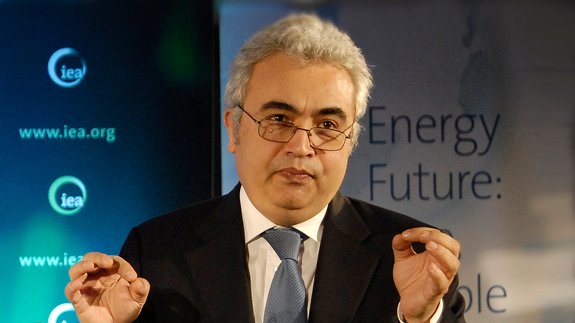
Fatih Birol
Fatih Birol, Executive Director of the International Energy Agency (IEA)

The IEA has supported these efforts by launching its largest-ever release of emergency oil stocks, publishing a menu of demand-side measures that governments, businesses and households can take to shelter consumers from price pressures, and tracking the actions being taken through its new Energy Crisis Policy Response Tracker.

So far, governments have supported consumers in two ways: through direct price relief, such as fuel price caps or tax cuts, and through demand-side measures aimed at reducing energy use. Designing these measures well is critical, and international experience offers useful lessons.

While easy to deploy, untargeted energy bill support primarily benefits higher-income households and puts pressure on public finances

When prices rise sharply, governments often first turn to broad-based price support measures that can provide immediate relief to consumers. This is already happening, with several countries in Asia and Europe temporarily capping fuel prices or reducing energy taxes.

However, while untargeted support measures can be implemented relatively quickly, they present two major challenges. First, universally lowering the price of fuel when supply is tight sends the wrong market signal, weakening incentives to reduce energy use and improve efficiency in the context of the current supply-demand gap. Second, much of the financial support does not reach those who need it most: low-income households struggling to pay their energy bills.

Because higher-income households tend to spend more on energy in absolute terms, broad-based price reductions often deliver greater financial gains to higher-income groups. For example, a recent study in the Netherlands estimates that around 70% of the total value of a broadly applied reduction in fuel excise duty ends up benefiting middle-high and higher-income groups.

This is particularly important because lower-income households are also the most exposed to energy price shocks. At the height of the 2022 energy crisis, low-income households in advanced economies spent around one-quarter of their income on energy – up 4 percentage points from 2021. By contrast, median-income households spent around 10% of their income on energy, with an increase of less than 2 percentage points.

Untargeted support also comes at a high fiscal cost. Governments spent around USD 940 billion in direct grants, vouchers and tax reductions in response to the 2022 energy crisis, yet only 25% of this support was targeted. With public finances still under strain following the Covid-19 pandemic and the 2022 energy crisis, many governments now have less fiscal space to sustain broad-based measures. This constraint has already been acknowledged in several European countries. In response to the current crisis, the OECD has recently warned against relying on broad-based support measures over the longer term.

Targeted support measures are a tried-and-tested policy solution

A more effective approach is to introduce support measures that directly target those most vulnerable to price shocks. This ensures that public money is used more efficiently and reaches the households most affected by the crisis. A key issue is that governments may find it difficult to quickly and efficiently identify those most in need of support.

Fortunately, governments do not always need to start from scratch, and there are ways to improve targeting quickly. Many countries already have policy instruments in place to support low-income households and other vulnerable groups, such as social assistance programmes, unemployment benefits, pension schemes and income-based grants. A quick way to deliver direct support is to ramp up programmes that already target these groups, or to use existing databases to identify households likely to be under financial strain.

Governments can also work with municipalities or community organisations that hold relevant information. Targeting can then be refined further by combining this with other household characteristics, such as home energy efficiency or energy consumption data. For countries that might not yet have public administration infrastructure in place to effectively target those in need, strengthening these programmes is an important first step.

Countries have successfully done this before. In 2022 and 2023, the Netherlands introduced an energy allowance for low-income households, providing direct cash transfer of around EUR 1 300 per year. Municipalities were tasked with identifying and paying eligible households, pulling from existing data and infrastructure to ensure support reached those most in need.

Since 2018, France has provided direct cash vouchers to low-income households to help cover energy bills, using its national tax registry to identify beneficiaries. In Indonesia in 2022, the government shifted from initial broad-based fuel subsidies to targeted transfers to lower-income groups as pressure on state budgets increased.

A key prerequisite is having the systems in place to target and deliver support to vulnerable households effectively. In Nigeria, for example, financial assistance was provided to 12 million low-income households in 2023 through direct digital transfers to beneficiaries’ bank accounts and mobile wallets. Similarly in Brazil, a national registry covering more than 40% of the population has been used to automatically enrol low-income households in several social programmes, including a social tariff scheme which now provides fully subsidised electricity for up to 80 kWh.

In response to the current crisis, several countries have announced targeted measures aimed at supporting those most in need while limiting fiscal. The United Kingdom, for example, has allocated GBP 53 million to support vulnerable heating oil customers, among the hardest hit by rising oil prices. Local councils can determine eligibility and how the support is distributed. In a similar fashion, Pakistan has introduced a relief package targeted at transport operators, such as motorcycle and rickshaw owners who rely on fuel for their daily income, using its existing Benazir Income Support Programme to identify potential recipients and disburse payments directly through digital wallets. Despite these positive examples, however, so far just 25% of government price support measures announced globally in response to the current crisis have been targeted.

There is no exact way of identifying precisely who needs support and who does not. Although some support may still go to households that need it less, leakage is significantly lower than under untargeted schemes. And while some eligible households may still be missed, this can be reduced by allowing households to apply and be reassessed.

On the demand side, well-designed campaigns can help consumers reduce their exposure to high energy prices

In response to the current crisis in the Middle East, many governments have also launched campaigns encouraging consumers to save fuel. For example, Australia announced its “Every Little Bit Helps” campaign, while Singapore’s campaign calls on households and businesses to “Save Energy Together“. But not all campaigns are created equal – effective campaigns need to be carefully designed to ensure they reach the right audiences with messages they can act on.

Evidence shows that tailoring to specific groups, rather than using a one‑size‑fits‑all approach, tends to deliver stronger and more durable results. During the 2022 energy crisis, information campaigns evolved from broad energy efficiency advice to more focused, action-oriented guidance linked to concrete behavioural changes and available supports. Drawing on international experience, several practical lessons emerge for policymakers seeking to protect vulnerable consumers and maximise impact.

  • Build on existing systems and programmes: Governments that responded most quickly and effectively during the 2022 crisis built their information campaigns on established programmes, partnerships and delivery frameworks. These existing structures provide trusted delivery channels that can be adapted rapidly in emergency situations, making them especially valuable during an energy crisis.
  • Work with trusted intermediaries. Community organisations, local authorities and energy retailers can significantly expand the reach and credibility of national campaigns. They can translate national messaging into locally relevant actions and help connect households to financial and technical support. In the Netherlands, for example, a programme supporting municipalities to deploy household energy coaches and fixers reduced both energy costs and medical expenses, with the greatest impact observed among households experiencing energy poverty.
  • Understand and segment the audience. Effective targeting requires a clear understanding of households’ needs and circumstances. Audience segmentation helps shape the narrative, identify the appropriate communication channels and tailor messages accordingly. During the 2022 crisis, Ireland adapted its campaign from “Reduce your use” to “Stay warm and well” in response to consumer feedback, with a stronger emphasis on vulnerable households. The campaign was associated with a 12% reduction in residential electricity use.
  • Define clear messaging that connects well with the audience. Campaign messages should be simple, relevant and closely aligned with the desired behaviour. Some of the most successful campaigns also encourage people to participate and share their experience. In 2022, for example, India introduced electric buses in Delhi, made them free for three days and launched a campaign encouraging people to take selfies on board and share them online. In the first few days, over 100 000 people used the new buses.  
  • Highlight both existing and new support measures. Information campaigns are most effective when they promote both immediate consumer support and longer-term measures such as grants, subsidies and retrofit programmes. Combining behavioural guidance with clear information on available support can help households take action and invest in lasting improvements. For example, Denmark paired its energy awareness campaign with information on grants and longer term support, helping to strengthen uptake.

To build long-term resilience, governments should focus on energy bills, not just prices

Targeted, short-term support can help shield consumers from acute price shocks. But to make consumers more resilient to future price swings and bring down energy bills permanently, governments need to invest in targeted energy efficiency policies.

First, governments can promote affordable access to more efficient vehicles and ensure adequate public transport. Increasing the uptake of second-hand EVs, hybrids and other efficient vehicles – including not only cars but also two-wheelers, buses and trucks – alongside charging infrastructure can help reduce households’ exposure to oil price volatility. Some policies already target lower-income households, such as Germany’s income-based EV scheme, Slovenia’s second-hand EV grant and India’s electric two- and three-wheeler subsidy.

Second, where possible, governments can accelerate the deployment of modern cooking solutions and expand electricity access to improve efficiency, affordability and fuel diversity. In Indonesia, for example, the government is advancing this shift by supporting the adoption of modern cooking equipment and the diversification of their cooking fuel mix – including greater use of electricity – through pilot projects and appliance distribution to households.

Third, governments can improve the efficiency of homes and accelerate the uptake of heat pumps, which are the most energy efficient form of home heating. In Canada, the Oil to Heat Pump Affordability Program provides upfront grants to low- and median-income households to help them make this switch. Governments can also strengthen or introduce minimum energy performance standards for household appliances such as air conditioners or refrigerators. These are among the longest-standing energy efficiency policy instruments and often the most cost-effective ways to improve product efficiency and lower household energy costs.

The IEA has long described energy efficiency as the world’s “first fuel”. The current crisis underlines that it is also often the most effective way to strengthen long-term consumer resilience, especially for vulnerable households.

By Lucas Boehlé (Energy Analyst), Emma Mooney (Energy Analyst) and Jérôme Bilodeau (Senior Programme Manager – Energy Efficiency)

YABATECH students unveil electric tricycle, AI delivery platform

Students of Yaba College of Technology (YABATECH), Lagos, have developed an electric tricycle and an AI-powered food delivery platform to tackle transport, energy and logistics challenges.

The projects were unveiled during an institutional innovation showcase, where students presented solutions addressing Nigeria’s mobility constraints, rising fuel costs and inefficiencies in urban delivery systems.

The Deputy Registrar, Centre for Communication Information and Public Relations, Mr. Adekunle Adams, disclosed this in a statement on Sunday, April 26, 2026.

YABATECH
Students of the Yaba College of Technology (YABATECH) who developed an electric tricycle

Adams said the initiatives reflected the institution’s commitment to practical learning, adding that students were encouraged to create solutions with real-world impact.

He said Higher National Diploma Mechanical Engineering students, led by Chukwuma Chisom, developed the electric tricycle, which emerged the overall best innovation.

According to him, the project demonstrated technical ingenuity and teamwork, earning commendation from evaluators for its relevance to Nigeria’s transport and energy needs.

He said the team converted a petrol-powered TVS tricycle into a fully electric vehicle to reduce fuel dependence, cut transport costs and promote eco-friendly mobility.

Adams noted that the innovation could support the transition to cleaner energy while offering a cheaper alternative for commercial transport operators.

He explained that the students replaced the combustion engine with a 72-volt, 4-kilowatt brushless direct current motor, smart controller and lithium battery system.

YABATECH
The electric tricycle’s engine

He added that the configuration improves energy efficiency, reduced noise pollution and lowered maintenance requirements compared with conventional petrol-powered tricycles.

Adams said the prototype delivered about 45 kilometres per charge, while a proposed commercial model was projected to cover nearly 200 kilometres daily.

He said the extended range model was designed for commercial viability, particularly for intra-city transport and last-mile connectivity services.

He noted that another highlight was an AI-powered food delivery ecosystem by student innovator Uba Mathew, aimed at improving meal recommendations and logistics.

According to him, the platform leverages artificial intelligence to personalise user experience, streamline vendor operations and optimise delivery routes.

He said the system could benefit small food vendors by increasing visibility, improving order management and enhancing customer satisfaction.

According to him, the platform integrates customer reviews, predictive demand systems and rider performance evaluation to enhance accountability and service quality.

Adams added that the innovation addressed inefficiencies in existing delivery services, particularly delays, poor coordination and lack of performance tracking.

Meanwhile, YABATECH Rector, Dr Ibraheem Abdul, urged youths to embrace creativity and technology, stressing that innovation is vital to economic growth.

Abdul emphasised the importance of skills development, urging students to align their ideas with national priorities and global technological trends.

He reiterated the institution’s support for innovation-driven education, noting that such initiatives position graduates for entrepreneurship and employment opportunities.

By Millicent Ifeanyichukwu

Africa must harness science, technology for growth – ECA

The United Nations Economic Commission for Africa (ECA) has urged African countries to harness science, technology and innovation to drive economic growth and sustainable development.

Claver Gatete, United Nations Under-Secretary-General and Executive Secretary of ECA, in a statement, made the call at the Eighth African Science, Technology and Innovation Forum in Addis Ababa.

Gatete said that rapid technological changes and global economic shifts required urgent and coordinated action from African countries.

Claver Gatete
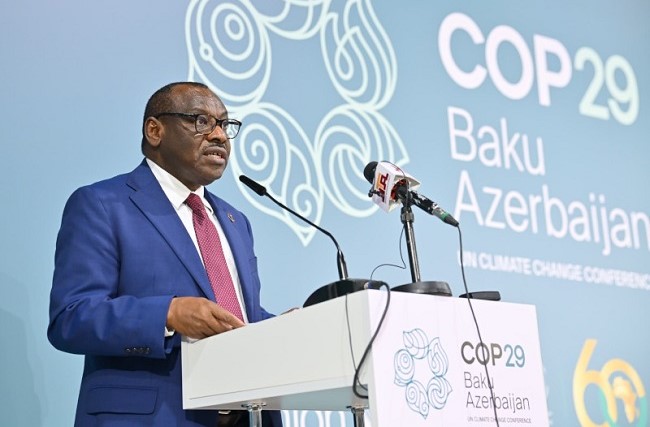
UN Secretary-General and Executive Secretary of the Economic Commission for Africa (ECA), Mr. Claver Gatete

He noted that slower global growth, rising debt vulnerabilities and climate shocks were reshaping development prospects across the continent.

According to him, advances in artificial intelligence, biotechnology and digital systems are redefining productivity and competitiveness globally.

Gatete said Africa risked missing out on emerging opportunities if it failed to act decisively.

“It means that the margin for delay has disappeared and the cost of inaction is rising,” he said.

He said that internet penetration in Africa stood at about 36 per cent in 2025, highlighting persistent digital divides.

The ECA boss also said that the continent accounted for only 0.6 per cent of global patent applications, in spite its large population.

He described the figures as indicators of untapped potential and gaps that required urgent attention.

Gatete stressed that science, technology and innovation must be aligned with Africa’s economic transformation agenda.

He said innovation should translate into value addition, job creation and improved productivity across sectors.

He also called for increased investment in digital public infrastructure, including digital identity systems and data platforms.

Gatete emphasised the need to build skills in science, engineering and emerging technologies, especially among youths and women.

He further emphasised the importance of regional integration in scaling innovation across African markets.

According to him, initiatives such as the African Continental Free Trade Area provides opportunities to expand digital solutions and value chains.

Gatete said reliable and sustainable energy remained critical to supporting Africa’s digital transformation.

He added that without adequate energy supply, digital infrastructure and emerging technologies would face significant constraints.

The ECA executive secretary called for stronger coordination across sectors, countries and institutions to maximise impact.

He said Africa must position itself not just as a consumer of technology, but as a contributor to global innovation.

Gatete reaffirmed ECA’s commitment to supporting member states through policy research, technical assistance and partnerships.

In a related development, the ECA has called for an integrated approach to address Africa’s interconnected climate, food, energy and water challenges.

The Deputy Executive Secretary for Programme Support at ECA, Mama Keita, in a statement, said this at a high-level dialogue in Addis Ababa.

Keita said climate shocks, rising debt pressures and tightening financial conditions were increasingly constraining growth across the continent.

She noted that Africa faced a financing gap of about $1.3 trillion annually to meet the Sustainable Development Goals (SDGs).

According to her, climate shocks are already reducing Gross Domestic Product (GDP) by up to five per cent annually in vulnerable African economies.

She also warned that disruptions in global supply chains were affecting energy and fertiliser flows, with implications for food prices and economic stability.

Keita stressed that Africa could no longer address development challenges in isolation, describing fragmented approaches as inefficient and counterproductive.

“We must move away from disjointed responses where sectors operate in silos and investments fail to reinforce each other,” she said.

She called for a Climate–Water–Energy–Food nexus approach to manage interconnections and build resilience across sectors.

The ECA official said integrated solutions would help maximise synergies, reduce trade-offs and accelerate progress toward development goals.

Keita said that while some progress had been made, integrated approaches remained limited across the continent.

She said the dialogue provided a platform to share experiences and identify scalable solutions for implementation.

Keita outlined three priorities, including policy coherence, innovative financing and investment in data and science.p

She said stronger coordination across sectors would reduce inefficiencies and improve development outcomes.

She also called for increased use of blended finance, green bonds and improved domestic resource mobilisation to fund development.

According to her, addressing illicit financial flows estimated at 88 billion dollars annually will be critical to boosting available resources.

Keita emphasised the need for robust data systems and capable institutions to support effective planning and delivery.

She said Africa’s future would depend on how well countries managed the links between sectors rather than individual sectors.

“The nexus is not an option; it is a necessity,” she said.

Keita reaffirmed ECA’s commitment to supporting African countries through policy research, technical assistance and stakeholder engagement.

By Lucy Ogalue

Flood alert: NEMA embarks on sensitisation in Anambra, Ebonyi, Enugu

The National Emergency Management Agency (NEMA) says it will embark on massive sensitisation in some council areas in Anambra, Ebonyi and Enugu states on the 2026 Flood Prediction.

The Information Officer of NEMA Enugu Operations Office, Mr. Ezeani Nnanyelugo, disclosed this on Saturday, April 25, in Enugu, the state capital.

Nnanyelugo said that the agency, its partners and stakeholders would carry out robust sensitisation in the states.

NEMA
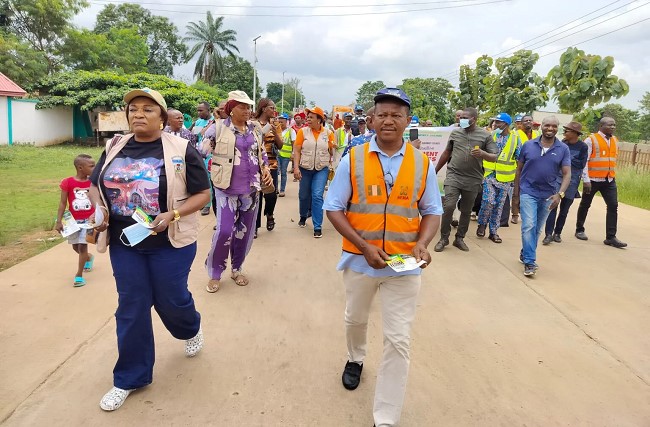
National Emergency Management Agency (NEMA) sensitisation exercise

The sensitisation followed the 2026 Nigerian Meteorological Agency (NiMet) Seasonal Climate Prediction and the Nigeria Hydrological Services Agency (NIHSA) Annual Flood Outlook released on Feb.10 and April 15, respectively.

Nnanyelugo said that the two agencies in their predictions noted that there would be high rainfall and high risk of flood in the three states under the NEMA Enugu Operations.

According to him, there are fliers on flood risk reduction activities and actions in both English and Igbo indigenous language to distribute to flood prone communities identified in the prediction.

He said, “We have started and would sustain public enlightenment on the prediction through television, radio and online news platforms.

“Recently, the NEMA South-East Zonal Director and Information Officer shared information on NTA on NEMA preparedness plan.

“NEMA is also partnering with NiMet and NIHSA officials to ensure that their predictions are discussed among stakeholders in various meetings, trainings and workshops for the purpose of reducing flood risk in the states.”

He also said that the agency would be conducting flood sensitisation programmes including drills/simulation exercises with other stakeholders in major flood prone council areas within the states.

He said that NEMA had started downscaling of flood early warnings to identified hotspot council areas and would soon commence direct writing to the authorities of councils and communities involved.

Nnanyelugo said, “We have started sharing weekly alerts forecast from NiMet/NIHSA to all relevant stakeholders via WhatsApp forum/meetings notwithstanding numerous stakeholders meetings. The public is advised to stay informed.

“The Director-General of NEMA, Mrs. Zubaida Umar, has reaffirmed the agency’s commitment to strengthening partnerships with international humanitarian organisations – KSRElief, UNOCHA, World Food Programme (WFP) and International Office for Migration (IOM).

“These partnerships are meant to enhance service delivery and support vulnerable populations across Nigeria.

“We will partner with various state SEMAs and community leaders soon to identify higher grounds and update on existing Internally Displaced People (IDP) camps condition as well as updating the equipment holdings of stakeholders.”

By Stanley Nwanosike

Waltersmith showcases expanded refinery to NCDMB, NMDPRA

0

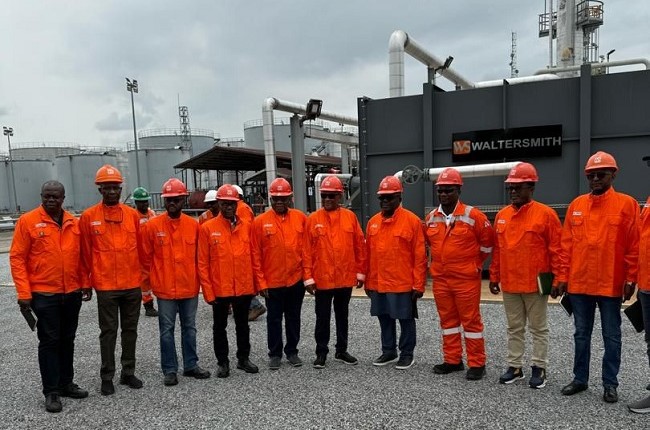
The Executive Secretary NCDMB, Felix Omatsola Ogbe, on Thursday, April 23, 2026, joined the Authority Chief Executive (ACE) of the Nigerian Midstream and Downstream Petroleum Regulatory Authority (NMDPRA), Mr. Saidu Mohammed, to visit the Waltersmith modular refinery at Ohaji-Egbema, Imo State.

The visit was to inspect the newly completed expansion of the firm’s refining capacity, from 5,000 barrels per day (bpd) to 10,000 bpd.

NCDMB invested equity in the Waltersmith Refining and Petrochemical Company Limited’s modular refinery in 2018 and helped catalyze the investment, leading to the commissioning of the first phase of the plant in November 2020.

Waltersmith modular refinery
Visit to the Waltersmith modular refinery at Ohaji-Egbema by NCDMB and NMDPRA officials

NCDMB also participated in the expansion, which is now completed and operational, producing AGO (diesel), Household kerosine (HHK), HFO (Heavy Fuel Oil) and Naphtha.

The refinery has to date supplied over 1.1 billion litres of refined products to local and regional markets, helping to strengthen Nigeria’s and West Africa’s energy security and contributing immensely to the national economy. The refinery supplies most of its products to the South-East and South-South parts of the country, while the HFO gets to West African sub-region.

The Director, Legal, NCDMB, Dr Naboth Onyesoh, represented the Executive Secretary and conveyed the Board’s delight at the success of Waltersmith modular refinery. He described the firm as a model in local content implementation, especially in direct and in-direct job creation, capital retention, industrialization, import substitution and value addition to crude oil and gas resources.

Mr. Abdulrazak Isa, Chairman of Waltersmith Petroman, said the visit was organised to showcase the completed facility to NMDPRA’s new leadership and its partner, NCDMB, and unveil its next developmental phase.

He said the company had grown from owning one oil field at inception three decades ago, to expanding to several fields, including owning stakes in Renaissance Africa Energy Ltd, which acquired the entire assets of Shell Petroleum Development Company of Nigeria (SPDC) in March 2025.

He further announced the firm’s plan to commence two further phases of expansion, which will include the construction of 30,000 barrels per day condensate refinery and an industry park, which will accommodate other gas based firms. He said the firm will develop a gas line that will deliver 100 million standard cubic feet of gas per day, and provide an embedded captive power, to attract industries to co-locate in the industrial park.

Plans are afoot to conclude the partnership agreement for the condensate refinery by the 4th quarter of 2026 he said, adding that feedstock for the integrated expansions will come from the Ibigwe and Assa fields, as well as from nearby fields.

The Chairman underlined the company’s determination to invest in the petrochemical sector, leveraging on its access to gas and Naphtha, noting that the petrochemical industry is a key enabler of the economy.

He sought approvals from the NMDRA for the various stages of the upcoming developments.

The Authority Chief Executive expressed his delight at the success of the facility and promised the agency’s support to the company’s expansion plans.

He said the midstream sector of the petroleum industry holds the key to the nation’s economic development, adding that the establishment of such projects is the dream  of every administration.

He described Waltersmith as an octopus in the midstream sector and challenged the company to hasten the development of the condensate refinery.  Mohammed also commended NCDMB for partnering with Waltersmith to develop the project, which had become a run-away success.

A third of animal habitats could experience multiple extreme events by 2085 – Study

By 2085, 36 percent of species’ current habitats on land could be exposed to multiple types of climate-driven extreme events such as heatwaves, fire or floods if warming continues to rise into the latter half of the century.

The findings are part of a new study published on Friday, April 24, 2026, in Nature Ecology & Evolution, authored by an international team of 18 scientists, and led by the Potsdam Institute for Climate Impact Research (PIK).

Heatwave
Heatwave

“I think climate change, and in particular extreme events, are still really being underestimated when it comes to conservation planning. It’s not just going to be a gradual shift of temperature over many years,” commented lead author, Stefanie Heinicke, a postdoctoral researcher at PIK.

Just one heatwave, flood or fire can devastate animal populations. When multiple types of extreme events succeed one another, impacts on species and habitats are compounded. Previous literature showed following the 2019-2020 fires in Australia, there were 27-40 percent greater declines in plant and animal species in areas that had experienced a drought immediately beforehand.

However, rapidly cutting emissions to net zero could still largely prevent these impacts. In a scenario in which warming starts to reverse in the latter part of the century, land animal’s habitat that would experience multiple types of events by 2085 would be limited to just 9 percent.

“There’s still a lot of difference we can make by cutting emissions as fast as we can from today,” Heinicke added.

Impact modelling for biodiversity

The paper takes a novel approach to look at climate change’s impacts on biodiversity. It uses outputs from climate impact models, which can provide different kinds of data on more complex impacts from climate change beyond rising heat, such as flooded area and wildfire projections.

For example, the authors were able to see that by 2050 in a scenario in which warming continues into the latter half of the century, 74 percent of current animal habitats on land will be exposed to heatwaves, 16 percent to wildfire, 8 percent to droughts and 3 percent to river floods. This includes key species-rich areas in the Amazon basin, Africa and Southeast Asia.

“The wildfire projections being so significant is really notable. I don’t know of another study that has projected wildfire exposure for animals yet, so seeing that there is a bigger threat from fires than drought for example; this was a significant blind spot,” said Katja Frieler, a co-author on the paper who leads the Inter-Sectoral Impact Model Intercomparison Project, and is a research department head at PIK.

Leaders call for Africa-led solutions following landmark court ruling on climate obligations

African leaders, policymakers, legal experts, scientists and practitioners have called for African-led solutions to climate change, as its impacts intensify across the continent and disproportionately affect frontline communities.

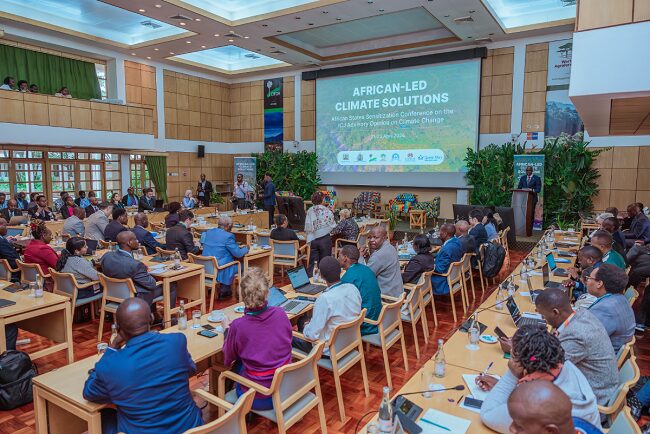
The call came at a high-level sensitisation conference on the obligations of States in respect of climate change, held in Nairobi from April 21 to 23, 2026. The conference was convened by the Centre for International Forestry Research and World Agroforestry (CIFOR-ICRAF), in partnership with the Government of Kenya, Queen Mary University of London, Kabarak University and the Technical University of Kenya.

Leaders
Delegates at the high-level sensitisation conference on the obligations of States in respect of climate change convened by the Centre for International Forestry Research and World Agroforestry (CIFOR-ICRAF), in partnership with the Government of Kenya, Queen Mary University of London, Kabarak University and the Technical University of Kenya. Photo credit: Kelvin Muchiri/CIFOR-ICRAF.

The meeting brought together senior government officials from East Africa and the Horn of Africa, alongside representatives from the East African Community, African Union Commission, the United Nations and its agencies, as well as international legal experts, judicial officers and civil society organisations.

The conference was informed by the Advisory Opinion issued on July 23, 2025, by the International Court of Justice (ICJ), which affirms that States have binding legal obligations to protect the climate system and may face consequences for climate-related harm.

“Climate change is not only an environmental issue or a legal issue. It is fundamentally a human and development issue. Addressing it requires science, law and policy to work together, so that we can move from principle to action and deliver real solutions for communities,” said Dr Éliane Ubalijoro, Chief Executive Officer (CEO) of the Centre for International Forestry Research and World Agroforestry (CIFOR-ICRAF).

Building on this landmark ruling, leaders called for urgent action to turn legal momentum into practical, African-led solutions for frontline communities. They emphasised that the ruling positions Africa not as a victim, but as a leader driving solutions and demanding accountability.

“The ICJ Advisory Opinion changes the rules of the game. Climate commitments are no longer political choices. They are legal obligations, and states will be held accountable. This means accelerating implementation, strengthening enforcement, and ensuring that climate action is fully integrated into our development and economic decisions,” said Dr Korir Sing’Oei, Principal Secretary of the State Department for Foreign Affairs and Ministry of Foreign and Diaspora Affairs in Kenya.

Africa contributes less than 4 per cent of global greenhouse gas emissions, according to analyses from institutions such as the African Development Bank and other international datasets. Yet, the continent faces some of the most severe climate impacts. The Intergovernmental Panel on Climate Change notes that Africa is among the lowest contributors to global emissions while already experiencing widespread losses and damage across key sectors.

“The ICJ advisory opinion is a game changer. It affirms that states are bound by international law and can be held accountable, even beyond specific agreements. The challenge now is no longer about commitments. It is about implementation, and ensuring countries have the financing needed to deliver on their climate goals,” said Dr George Wamukoya, the Team Leader of the African Group of Negotiators Experts Support (AGNES), a think tank providing technical support to African governments and the African Group of Negotiators (AGN) in climate change policy formulation and decision-making.

He further emphasised that the advisory opinion strengthens the basis for climate accountability. “Countries that fail to meet their obligations can now face real legal consequences under international law.”

Climate-related hazards, including rising temperatures and recurrent droughts, continue to drive food insecurity, while intense rainfall is triggering floods in parts Africa, displacing communities and damaging critical infrastructure. Without urgent action, these impacts will continue to reverse development gains, constrain economic growth and place increasing pressure on food systems, water resources and livelihoods.

Against this backdrop, participants highlighted that the ICJ Advisory Opinion can reinforce legal and policy frameworks for climate action, support accountability where obligations are not met, strengthen Africa’s voice in global climate negotiations, and help unlock fair and adequate climate finance aligned with justice principles.

They underscored that the real test now lies in implementation, noting that while the Advisory Opinion provides important legal leverage, its true value depends on how effectively it is translated into concrete policies, targeted investments and sustained action that deliver meaningful benefits for communities across the continent.

“The advisory opinion makes it clear that climate commitments are no longer optional. They are legal obligations. It gives developing countries stronger leverage to demand accountability and to push for the support and financing needed to meet their climate goals,” said Dr Philip Osano, the Chief Operating Officer (COO) for CIFOR-ICRAF.

This urgency is further underscored by the persistent gap between climate needs and available financing.  At recent global climate negotiations, including COP28, countries agreed to operationalise a Loss and Damage Fund as a step towards addressing climate harm. However, current pledges, estimated at under $1 billion, fall far short of actual needs, which are projected to reach hundreds of billions of dollars annually for developing countries. African leaders therefore continue to call for scaled-up, predictable and accessible financing, including fair compensation for irreversible losses linked to climate change.

Despite these challenges, Africa is not standing still. Across the continent, countries and communities are advancing practical and scalable solutions. These include large-scale restoration and regreening initiatives such as the African Forest Landscape Restoration Initiative (AFR100), to climate-smart agriculture and agroforestry that strengthen food security and resilience.

Investments in renewable energy continue to expand, alongside community-led adaptation strategies rooted in indigenous knowledge and local innovation. These efforts demonstrate that Africa is not waiting for solutions. It is already building them.

Two-thirds of global hunger concentrated in 10 countries – Report 

The 2026 Global Report on Food Crises on Friday, April 24, revealed that two-thirds of all people facing high levels of acute hunger are concentrated in just 10 countries.

The report from the Global Network Against Food Crises further revealed that acute food insecurity remains highly concentrated in the countries, including Nigeria.

“Ten countries namely, Afghanistan, Bangladesh, the Democratic Republic of the Congo, Myanmar, Nigeria, Pakistan, South Sudan, Sudan, Syrian Arab Republic, and Yemen. accounted for two-thirds of all people facing high levels of acute hunger.”

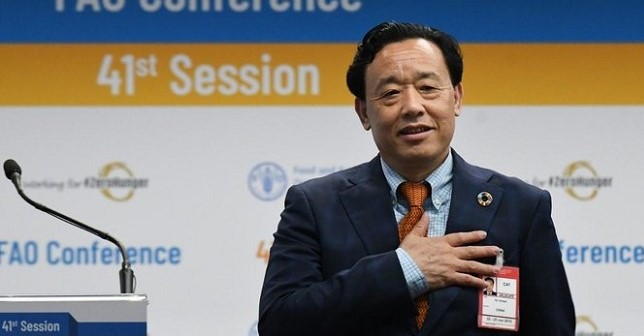
Qu Dongyu
Director-General of FAO, Qu Dongyu

The major international report also finds that 266 million people across 47 countries experienced high levels of acute food insecurity in 2025.

This figure, which was released by an alliance of UN agencies, the EU, and partners, found that nearly a quarter of the population was analysed and almost double the share recorded in 2016.

The report found that conflict remains the primary driver, accounting for more than half of all people facing severe hunger.

“Acute food insecurity today is not just widespread – it is also persistent and recurring,” UN Food and Agriculture Organisation (FAO) Director-General, Qu Dongyu, said.

Qu warned that the crisis has become structural rather than temporary.

UN Secretary-General António Guterres wrote the foreword of the report.

“This report is a call to action to summon the political will to rapidly scale up investment in lifesaving aid, and work to end the conflicts that inflict so much suffering on so many.”

The report also highlights more than 39 million people in 32 countries faced emergency levels of food insecurity, while the number of people experiencing catastrophic hunger has increased ninefold since 2016.

The report says children are among the most affected as 35.5 million children were acutely malnourished, including nearly 10 million suffered from severe acute malnutrition in 2025.

UN Children’s Fund (UNICEF) spokesperson, Ricardo Pires, warned: “Children with severe wasting are too thin for their height.

“Their immune systems weakened to the extent that ordinary childhood illnesses can become fatal.”

The report warns that forced displacement is compounding the crisis.

More than 85 million people were displaced across food-crisis contexts in 2025, with displaced populations consistently facing higher levels of hunger than host communities.

“Forced displacement and food insecurity are deeply interconnected, forming a vicious cycle,” UN High Commissioner for Refugees, Barham Salih, warned.

Salih warned that humanitarian aid alone is not enough to break the pattern.

In spite of the scale of the crisis, the report warns that funding is moving in the opposite direction.

Looking ahead, the report found that the outlook for 2026 remains bleak.

Ongoing conflicts, climate shocks and economic instability are expected to keep food insecurity at critical levels in many countries.

The report also flags new risks linked to global market disruptions, including those stemming from the ongoing crisis in the Middle East, which could further increase food prices and strain supply chains.

Aid agencies warn that without a shift in approach, the world risks becoming locked into a cycle of deepening crises, with hunger no longer a temporary emergency but an increasingly persistent feature of global instability.

“We must shift from reacting too late to acting early, and from relying solely on food assistance to protecting local food production – because that is how we reduce needs, save lives and build resilience over time,” FAO Director-General, Qu, said.

By Tiamiyu Prudence Arobani