President Muhammadu Buhari of Nigeria will commission the new office complex of the African Development Bank (AfDB) in Abuja on Thursday, January 18, 2018, consolidating the country’s position as the Bank’s largest shareholder.
AfDB building in Abuja
The state-of-the-art Nigeria Country Department (RDNG) office complex, situated in the Central Business District (CBD) of the federal capital city is the first permanent structure to be designed and constructed in any regional member country of the Bank.
Nigeria is the AfDB’s largest shareholder with a portfolio of approximately $6 billion and country operations accounting for 13% of the Bank’s total portfolio.
Following the Board of Directors’ approval of the “Rent or Acquire Premises for Field Offices” policy and the recommendation to construct a new office in Nigeria, construction work started in January 2016 and lasted 16 months. The 220-staff capacity four-storey building will now become a model for replication in other countries.
“The Bank has positioned itself as the preferred lending partner in Nigeria as it continues to support Nigeria’s long-term aspiration to be among the top 20 economies in the world by the year 2020,” said Ebrima Faal, Senior Director, Nigeria Country Department of the AfDB.
“The Bank remains grateful to the Federal Government of Nigeria for the land provided and the continuous show of solidarity to the Bank. The existence of this structure is a reaffirmation of the African Development Bank’s commitment to support Nigeria to achieve its development reforms,” said Akinwumi Adesina, President of the AfDB.
“The Bank is highly committed to working with the private and public sectors to implement the High 5s agenda and meet the Sustainable Development Goals’ targets in Nigeria and across the continent.”
The event will be attended by top Government officials, development partners, international organisations, captains of industry, the diplomatic corps and the media.
The AfDB Group was established on September 10, 1964 and commenced operations in Nigeria in 1971.
China and France have reaffirmed their commitment to deepen and broaden their cooperation on environmental protection and climate change.
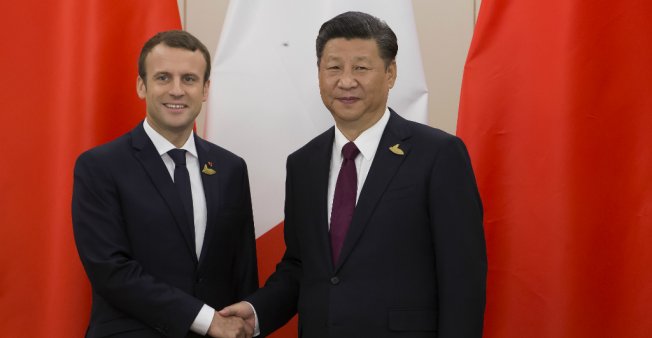
Chinese President Xi Jinping (right), with French President Emmanuel Macron
At the invitation of Chinese President Xi Jinping, French President Emmanuel Macron visited China last week and discussed a number of issues with the Chinese leader, including the increasingly important sustainability agendas of both countries.
In a joint statement issued at the end of the visit, China welcomed the convening of the One Planet Summit in Paris in December of last year. At the Paris Summit, leaders underscored how financial flows are shifting billions and trillions towards a low-carbon future that will benefit peoples and livelihoods, and made a number of significant climate action announcements.
Also in the statement issued at the end of the meeting between Presidents Xi Jinping and Emmanuel Macron, France welcomed the official announcement by China on December 19, 2017 of the launch of its national emissions trading scheme.
Both countries said they were satisfied with the progress made on green finance since the work was initiated under the Chinese presidency of the G20.
Following the successful conclusion of the UN Climate Change Conference COP23 in Bonn last year, the two countries committed to “strengthen their collaboration with a view to reaching operational implementation rules for the Paris Climate Change Agreement at the UN Climate Change Conference in Poland this year (COP24)” and will “take concrete steps to push for the full, effective and timely implementation of the Paris Agreement.”
“China and France will work together with other parties to raise state ambition before 2020. The Paris Agreement must be implemented in accordance with the principles of equity, common but differentiated responsibilities and respective capabilities, taking into account different national conditions,” the statement reads.
Furthermore, the two nations intend to continue their constructive dialogue on the elaboration of a Global Environment Pact, an initiative proposed by the French government in September 2017 on the sidelines of the UN General Assembly. And they committed to strengthen their exchanges on COP15 of the Convention on Biological Diversity and the IUCN World Conservation Congress 2020.
Finally, the China and France announced their decision to launch a “Franco-Chinese Year of the Environment” and said they would continue to identify and implement joint projects on sustainable cities, cooperate further to advance the development of Franco-Chinese oceanographic and astronomical satellites, along with strengthening their collaboration on the study of climate change using space technologies.
In line with resolutions reached at the 17th meeting of the Conference of the Parties (CoP17) to the Convention on International Trade in Endangered Species of Wild Fauna and Flora (CITES) held in 2016 in South Africa, Parties are to take an inventory of existing elephant ivory, rhino horn.
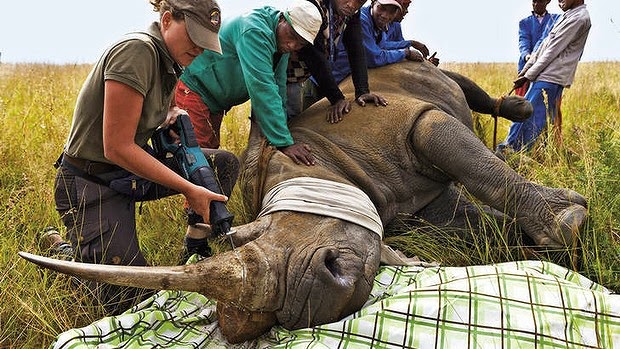
A rhino being de-horned
CITES in a recent directive requested countries to mark elephant ivory tusks and cut pieces, and submit an inventory of government and private stocks to its secretariat.
Similarly, countries with stocks of rhinoceros (or rhino) horn have been asked to identify, mark, register and secure such stocks, and declare to CITES.
Deadline for both declarations is Wednesday, February 28, 2018. The exercise is a yearly affair.
“The purpose of the present Notification is to remind Parties that Resolution Conf. 9.14 (Rev. CoP17) on Conservation of and trade in African and Asian rhinoceroses contains, among other provisions, a recommendation urging all Parties that have stocks of rhinoceros horn to identify, mark, register and secure such stocks, and declare these to the Secretariat each year before 28 February, in a format to be defined by the Secretariat.
“The Resolution also inter alia urges the Secretariat and other appropriate bodies, where possible, to assist Parties that have stocks of rhinoceros horn with the control of stocks, by providing them technical advice and relevant information,” CITES disclosed in a notification for “Declaration of stocks of rhinoceros horn”.
In the other notification titled: “Elephant ivory stocks: marking, inventories and security”, CITES reminded Parties that Resolution Conf. 10.10 (Rev. CoP17) on Trade in elephant specimens contains, amongst other provisions, a recommendation to mark elephant ivory tusks and cut pieces, and they should submit an inventory of government-held ivory stock and significant privately held ivory stocks, and the reasons for any significant changes in the stockpile compared to the preceding year.
The request to submit an inventory, says CITES, is directed to “Parties in whose jurisdiction there is an ivory carving industry, a legal domestic trade in ivory, an unregulated market for or illegal trade in ivory, or where ivory stockpiles exist, and Parties designated as ivory importing countries”.
Parties are also invited to include a summary of information on the ivory stocks disposed of during the year 2016, in particular the volume of raw and worked ivory and how it was disposed of.
In both scenarios, CITES provided a model table that can be used by Parties for reporting their inventory of ivory and horn to the Secretariat.
The gruesome murder of our brothers, sisters and children in Benue State by herdsmen has taken the level of insecurity in Nigeria to new heights. While some of us were quick to avoid the devastating photos of the carnage as posted in social media platforms, photos of rows of caskets in which the victims were buried etched indelible prints on our souls as a people. The uniformity of the caskets says to us: this could be you.
Benue State governor, Samuel Ortom
As each victim was lowered into the grave, their departure marked a strong rebuke to a system that allows these atrocities to be perpetuated. How low can we sink as a people? The need to urgently check the spread of this terror cannot overemphasised. The relocation order given to the Inspector General of Police days after the massacre does not convey a sense of the level of seriousness with which the Federal Government should approach the situation. It is not conceivable that the Nigerian police would adequately handle terror of this magnitude.
We hope that the mass burial in Benue State serves as a wakeup call for the Federal Government and its security agencies. And we do hope that mass burials do not turn into regular or repeated events, as happened in the case of previously inconceivable suicide bombings.
Some of the responses to the abominable killings in Benue have been contentious. Consider, for instance, the presidential spokesperson’s statement that over 756 persons were killed by herdsmen in two years during the tenure of former President Jonathan. Efforts at informing us that the present massacre was not as horrendous as what may have happened in the past simply increase the pains rather than raise any sense of hope that things would change for the better. The murder of a single person diminishes us all and the death of 756 Nigerian in two or more years do nothing to calm nerves when it is recalled that 2,500 citizens were said to have been killed by herders in Plateau, Nasarawa, Kaduna and Benue states in just 2016 alone.
Moreover, the notion that migration is due to a population explosion in Nigeria is debatable. The lack of credible population figures and reliance on projections based on dubious figures make such assertions grossly unrealistic. Reliance on such notions inflicts avoidable harm on our planning efforts. Our larger-than-life population figure gives us ready excuse for not taking right decisions.
With regard to action responses to violent herdsmen, let us consider one of the proposed actions that would be taken as a long-term solution to the conflict – the idea of creating grazing or cattle colonies across the nation as announced by the Minister of Agriculture. It sounds rather bizarre and raises a number of concerns. Top on the list of concerns is the undertone of the word colony. For most Nigerians, the idea of a colony would be one defined as “a country or area under full or partial political control of another, often distant country.” Could it be that the minister was using the term in the sense sometimes used to describe animals of the same breed staying together in a closed structure? Whatever the case, the imagery requires further interrogation.
Keeping in mind that colonialism was entrenched by the power of the barrel of the gun, could anyone believe that it is at a period of heated conflict and distrust that colonising any territory, for any purpose, can be the way to resolve the conflicts?
Unfortunately, the persistent conflicts between pastoralists and farmers are often reduced to incidents induced by struggle for religious or ethnic dominance. While there may be a basis for reaching such conclusions, it is clear that pursuing those lines would not lead to a resolution of the crisis.
Pastoralism is not a preserve of particular ethnic nationalities or religion. We can indeed develop pastoral activities across the nation with the mind-set that the business is not patented to only one ethnic nationality. With this understanding, a dedicated grazing area in a particular state would not translate to the ceding of such territories to be colonised by anyone. It should also be clear that grazing is not restricted to those breeding and rearing cattle. Goats, sheep and other livestock can equally benefit from such developments.
It was from the understanding that the conflicts can best be resolved by tackling the root instigators of the crises, that Health of Mother Earth Foundation (HOMEF) and the Confederation of Traditional Herder Organisations in Africa (CORET) began a series of engagements with pastoralists and farmers starting from Abuja in September and October 2017. In those engagements, we examined the confluence between pastoralists, farmers, land use, conflicts and climate change. These were examined also from a gender perspective to provide a rounded understanding of the dynamics that throw up different kinds of conflicts in our society.
One of the conclusions from the engagements was that farmers and pastoralists can operate in a mutually beneficial manner. If the right physical environment is guaranteed, the culture of nomadic herders trekking over huge distances could be moderated in such a way that the movements would be strategic and not necessarily translate to herders trekking all over the nation. It cannot be denied that Nigeria needs multiyear environmental management plans with clear targets and strategic action paths.
The fact that southern Niger Republic is greener than parts of northern Nigeria should suggest to us that our approach to environmental management is defective. Here we refer specifically to our management of our vegetative cover and water resources. We tend to see our environment as capable of rapid self-regeneration irrespective of how rabid our rate of consumption of Nature’s gifts to us may be. The result is the reality of desertification in northern Nigeria that we characterise as the downward march or spread of the Sahara Desert. Permit us to pose a simplistic question: if the desert were marching down so mercilessly, how come Niger Republic has not gone completely under the sand?
While the security agents fish out and bring the perpetrators of the Benue massacre to book, it would be useful for the Minister of Agriculture, other relevant ministries, as well as security agencies, to consider some of the resolutionsthat came out of the October 2017 Sustainability Academy:
There should be greater engagement of agricultural extension workers by all levels of governments to effectively engage in communicating climate change to farmers and pastoralists.
Pastoralists and farmers have lived in harmony in Nigeria and can do so now. The ongoing conflicts are needless and distort development efforts.
There should be re-orientation for pastoralists and farmers for harmonious co-existence as both are interdependent and their actions can be mutually beneficial.
The fact that climate change impacts differently on different gender and social groups should be considered in preparing climate action plans.
The Great Green Wall Programme aimed at combating desertification amplified by climate change through improved use of land and water resources should incorporate pastoralists in their fodder production scheme for sustainable development.
Government should implement a livestock development policy that aligns with regional and international practices.
The Federal Government should initiate actions to produce a detailed land use and environmental plan for the country.
There is need for public-private partnership and scientific re- orientation for the development of pastoralism in Nigeria.
Herders should adopt the practice of managed intensive systematic rotational grazing as well as ranching.
Fully integrate gender justice in the brokering of peace and the implementation of all forms of conflict management initiatives.
The Federal Government should create a Ministry of Livestock and Fisheries as is obtained in several other African countries like Ethiopia, Kenya, Cote D’Ivoire, Senegal, Mali, Niger and Tanzania.
Climate change dose not respect geopolitical boundaries and should be tackled with this understanding.
Take inventory of the all existing grazing reserves, traditional grazing areas, transhumance corridors, major stock routes, review and take appropriate development actions
By Nnimmo Bassey (Director, Health of Mother Earth Foundation – HOMEF)
The Federal Government says it is working assiduously to develop a National Action Plan (NAP) to reduce the use of Mercury in Nigeria.
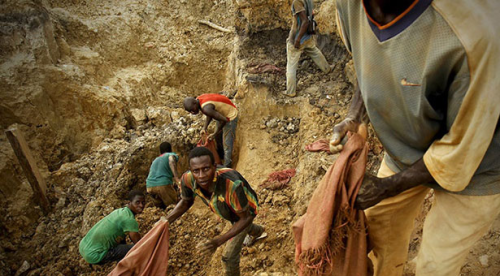
Artisanal and small scale gold mining. Photo credit: thewillnigeria.com
Dr Abdukadir Muazu, the Permanent Secretary, Ministry of Mines and Steel Development, said this in Abuja at a workshop for National Comprehensive Analysis of Artisanal and Small Scale Gold Mining Sector.
The capacity building was aimed at supporting the development of National Action Plan for Reduction of Mercury Use/Emission in Nigeria.
According to Muazu, the Ministry of Environment, Ministry of Mines and Steel Development and other stakeholders are working together to ensure possible elimination of use of mercury by artisanal miners across the country.
He said that mercury was substantially used by Artisanal and Small-scale Gold Mining (ASGM) to extract gold from gold ore, adding that this process exposes them to mercury poisoning and also pollute the environment.
Muazu said that Artisanal and small scale gold mining was practiced in over seven states, including Zamfara, Kebbi, Katsina, Kaduna, Niger, FCT, Kwara and Osun.
“It is, therefore, safe to say that Nigeria has more than insignificant use of mercury in (ASGM) operations,’’ he said.
He said the training and ASGM assessment project would improve national capacity and capability for the management of the mercury in the ASGM sector.
At the event, Mr Jean Bakole, Regional Director and Country Representative for Nigeria and ECOWAS, UNIDO Regional Hub Nigeria, said that artisanal and small scale gold mining was responsible for 37 per cent of the anthropogenic emission and releases of mercury into the environment.
Bakole, represented by Mr Yomi Banjo, environment expert, UNIDO, said that UNIDO had a history of working in the ASGM sector around the world and was implementing National Action Plan projects in several African countries.
“Our long standing cooperation with the Nigeria government to improve industrialisation and safeguard the environment is receiving another boost today.’’
He congratulated the ministry for the sustainable structure put on ground for the sector, adding that UNIDO would support the ministry to achieve its goals.
Mr Patrick Ojeka, Director, Artisanal and Small-scale Mining of the ministry, said that Nigeria became a signatory to the Minimata Convention on Oct. 10, 2013 through the Ministry of Environment.
Ojeka said the ministry had been coordinating the activities preparatory to develop the country’s national action plan for the reduction of mercury use in Nigeria.
He said the treaty required member countries to carry out activities toward reduction in the use of mercury.
He said the workshop was aimed at building capacity in the ministry’s technical enumeration team such as MDAs, NGOs, Miners Association of Nigeria and other related stakeholders in specific special enumeration skills.
Farmers in Nigeria under the Zero Hunger Commodity Associations have urged governments at all levels to support the the Zero Hunger Nigeria Programme to achieve its targets and objectives particularly through farmer-friendly programmes.
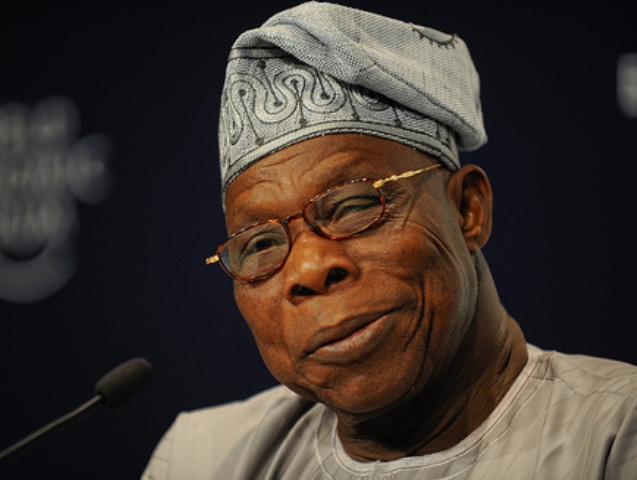
Chief Olusegun Obasanjo, Chairman of the Zero Hunger Nigeria Forum
The association, a subsidiary of the United Nations Committee – Zero Hunger Nigeria Forum – made the appeal in a communique issued to the News Agency of Nigeria (NAN) in Ilorin, Kwara State, on Sunday, January 14, 2018.
The communique came after its meeting held in Abuja.
It was signed by the National Coordinator of the association, Dr Tunde Arosanyin.
The farmers’ group sought a collaboration with the Commodity Exchange Market of Nigeria and the Nigeria Export and Import Bank (NEXIM) so as to guarantee good returns on farm produce locally and internationally.
It also urged that Research Institutions and Extension Services be adequately funded by the Federal Government and State Governments for effective performance of the Agricultural sector.
It said the meeting affirmed the association’s belief in the Agricultural Revolution Programmes of President Muhammadu Buhari through Green Alternative Roadmap as a veritable channel to improve agricultural production in Nigeria .
The association, however, resolved that government should encourage appropriate implementation strategy that would be all inclusive.
The body said that it appreciated the leadership qualities of Chief Olusegun Obasanjo, the Chairman of the Zero Hunger Nigeria Forum, toward the development of the agricultural sector of the country’s economy.
NAN reports that Zero Hunger programme is the brainchild of the United Nations toward actualising the Substainable Development Goals from 2016 to 2030.
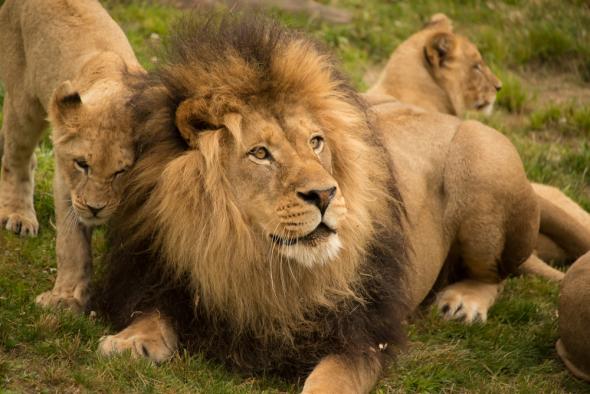
The number of lions in the wild is said to be steadily decreasing. In just two decades, Africa’s lion population has decreased by 43%, according to the African Wildlife Foundation (AWF).
Lions
The Nairobi, Kenya-based group says one of the main causes is the alarming rate at which the big cats are losing their habitats due to expanding human populations and the resulting growth of agriculture, settlements, and roads.
Due to habitat loss, lions are being forced into closer quarters with humans, observes the AWF, adding that this, coupled with a decrease in their natural prey, causes lions to attack livestock.
“In turn, farmers, oftentimes, retaliate and kill lions,” stresses the organisation, adding that lions have become prey to people.
“Lions are being killed in rituals of bravery, as hunting trophies, and for their perceived medicinal and magical powers,” adds the AWF, emphasising that retaliation is the primary reason for lion killings.
“We work with communities to help them realise the value of lions and to help them protect their families and livestock from large carnivores,” submits that group, adding that, in Tanzania’s Ruaha National Park, where 10 percent of the world’s remaining lion population can be found, AWF’s Ruaha Carnivore Project is fostering a much-needed shift in the local opinion of carnivores.
The organisations adds: “Since 2012, AWF has been working with Ruaha’s communities to build livestock enclosures to protect livestock from predation, and, in turn, protect lions and other carnivores from retaliatory killing. In addition, Ruaha Carnivore Project provides community benefits to villages that demonstrate success in living peacefully with carnivores.
“African Wildlife Foundation’s researchers are working to gain an understanding of carnivores’ populations, behaviors, movements, and interactions with people in order to develop appropriate conservation actions. Since 2002, our Large Carnivore Research Project has undertaken research aimed at ensuring the continued survival of large predators living around Botswana, Namibia, Zambia, and Zimbabwe.”
The Minister of Water Resources, Mr Suleiman Adamu, says the Federal Government has been budgeting N1 billion annually for the provision of water and sanitation facilities for the Internally Displaced Persons (IDPs).
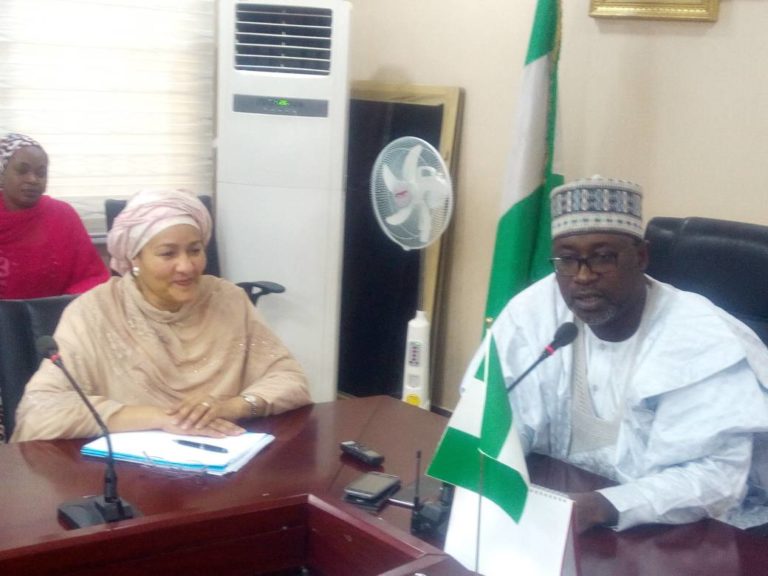
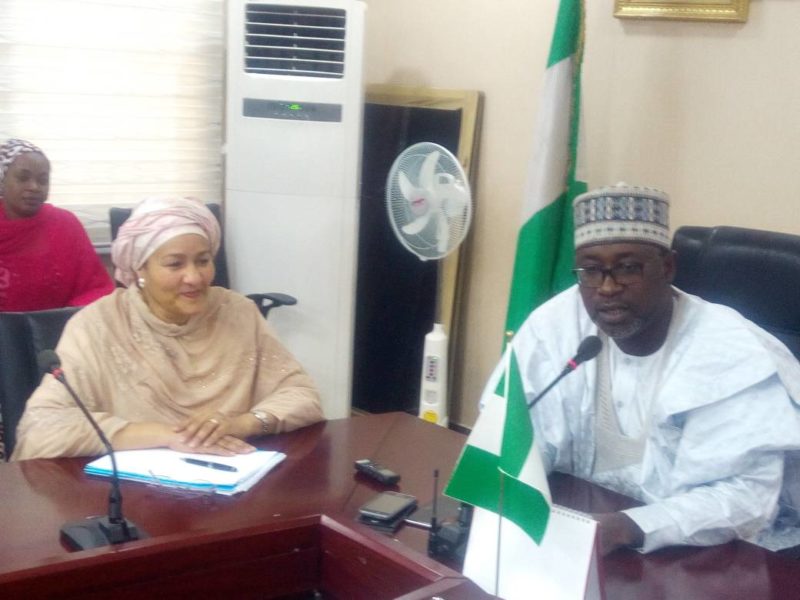
United Nations Deputy Secretary-General, Amina J. Mohammed, during a courtesy visit to the Minister of Water Resources, Suleiman H. Adamu, in Abuja
The minister said this on Friday, January 12, 2018 when the UN Deputy Secretary-General, Mrs Amina Mohammed, paid him a courtesy visit in Abuja.
He said that the intervention was part of the partnership between Nigeria and the UN, which was aimed at re-integrating the people of the north-eastern states, who were hitherto ravaged by the Boko Haram insurgency.
Adamu noted that the humanitarian crisis facing the IDPs was compounded by the shrinkage of the Lake Chad, which had been a major source of livelihood for many people in the area.
He said that the Federal Government, on behalf of the Heads of State and Government of the Lake Chad Basin Commission, was organising an international conference to proffer solutions to save the lake from further desiccation.
“In the next 50 to 100 years, from the hydrological perspective, if nothing is done now, the lives of the people of that region, who depend on the lake as their source of livelihood, would be in danger as the lake faces extinction,’’ he said.
Adamu said that a Memorandum of Understanding (MoU) was signed between the Lake Chad Basin Commission and PowerChina International Group Limited in April 2016 to save Lake Chad from drying up.
He said that the project would be executed via the transfer of water from the Congo Basin to the Lake Chad Basin.
Adamu said that studies carried out by the PowerChina group indicated that it was technically feasible to transfer water from River Congo to Lake Chad, thereby increasing the water level of the lake.
According to him, this will halt the receding of the lake and the drying up of the Lake Chad Basin due to the climate change.
The minister, however, solicited more workable solutions which could be cheaper than the proposed inter-basin water transfer project.
Earlier, Mohammed said that the high-level mission, which was an informal consultation on political and human rights as well as humanitarian and development issues, would help scale up the UN presence in Nigeria and the North East in particular.
The deputy secretary-general pledged the commitment of the UN to the success of the ongoing re-integration process in the North East and the planned Conference of Saving Lake Chad, which was scheduled to hold in February.
She urged the Heads of State and Governments of the Lake Chad Basin Commission to pass pragmatic resolutions at the conference and forward them to the African Union (AU) for further action.
“Saving the Lake Chad is a sustainable development issue and the UN is ever ready to address such an issue.
“All hands must be on deck in saving the lake from extinction. Tell us how it can work and not how it cannot work,’’ she added.
Over 50% of the world population lives in cities. By 2045, the world’s urban population will increase by 1.5 times to six billion. City leaders, says the World Bank, must move quickly to plan for growth and provide the basic services, infrastructure, and affordable housing their expanding populations need
Traffic congestion in Lagos
Globally, 54% of the population lives in urban areas today, and this trend is expected to continue – by 2045, the number of people living in cities will increase by 1.5 times to 6 billion, adding 2 billion more urban residents.
With more than 80% of global GDP generated in cities, urbanisation can contribute to sustainable growth if managed well by increasing productivity, allowing innovation and new ideas to emerge.
However, the speed and scale of urbanisation brings challenges, including meeting accelerated demand for affordable housing, well-connected transport systems, and other infrastructure, basic services, as well as jobs, particularly for the nearly 1 billion urban poor who live in informal settlements to be near opportunities.
Cities also play an important role in tackling climate change, as they consume close to 2/3 of the world’s energy and account for more than 70% of global greenhouse gas emissions. As cities develop, their exposure to climate and disaster risk also increases. Almost half a billion urban residents live in coastal areas, increasing their vulnerability to storm surges and sea level rise.
Building cities that “work” – inclusive, safe, resilient, and sustainable – requires intensive policy coordination and investment choices. Once a city is built, its physical form and land use patterns can be locked in for generations, leading to unsustainable sprawl.
National and local governments have an important role to play to take action now, to shape the future of their development, to create opportunities for all.
As more people and assets become rapidly concentrated in cities, and as infrastructure struggles to keep up with rapid growth, the risk from natural disasters and climate change is rising.
The United Kingdom has released an ambitious 25-year environment plan that will, according to Prime Minister Theresa May, ensure that the present generation leaves the environment in a better state than it found it, and pass on to the next generation a natural environment protected and enhanced for the future.
Michael Gove, Secretary of State for Environment, Food and Rural Affairs, says in a summary that the plan outlines ways to reduce the use of plastics that contribute to pollution, create a new a new Northern Forest, lead the fight against climate change, invest to prevent wildlife crime, and pursue a ban on sales of ivory
Theresa May, Prime Minister of the United Kingdom
It is this Government’s ambition to leave our environment in a better state than we found it. We have made significant progress but there is much more to be done. The 25 Year Environment Plan that we have published today outlines the steps we propose to take to achieve our ambition.
Environment is – at its roots – another word for nature, for the planet that sustains us, the life on earth that inspires wonder and reverence, the places dear to us we wish to protect and preserve. We value those landscapes and coastlines as goods in themselves, places of beauty which nurture and support all forms of wildlife.
Respecting nature’s intrinsic value, and the value of all life, is critical to our mission. For this reason we safeguard cherished landscapes from economic exploitation, protect the welfare of sentient animals and strive to preserve endangered woodland and plant life, not to mention the greening of our urban environments.
But we also draw from the planet all the raw materials we need to live – food, water, air and energy for growth. So protecting and enhancing the environment, as this Plan lays out, is about more than respecting nature. It is critical if the next generation is to flourish, with abundant natural resources to draw on, that we look after our and their inheritance wisely.
We need to replenish depleted soil, plant trees, support wetlands and peatlands, rid seas and rivers of rubbish, reduce greenhouse gas emissions, cleanse the air of pollutants, develop cleaner, sustainable energy and protect threatened species and habitats.
Previous Governments, here and in other nations, have made welcome strides and driven environmental improvement. Yet as this 25 Year Plan makes clear, there is much more still to do. We must tread more lightly on our planet, using resources more wisely and radically reducing the waste we generate. Waste is choking our oceans and despoiling our landscapes as well as contributing to greenhouse gas emissions and scarring habitats. The success of the 5p plastic bag charge in reducing the use of carrier bags by 85% shows the difference which government action can make, and demonstrates that protecting our environment is a job for each one of us.
The Plan outlines ways to reduce the use of plastics that contribute to pollution, and broader steps to encourage recycling and the more thoughtful use of resources. Over the lifetime of this Plan, we want to eliminate all avoidable plastic waste.
The Government’s Clean Growth Strategy – the sister document to this Environment Plan – sets out how we will deliver the clean, green growth needed to combat global warming.
We will do what is necessary to adapt to the effects of a changing climate, improving the resilience of our infrastructure, housing and natural environment.
Population growth and economic development will mean more demand for housing and this Government is committed to building many more homes. However, we will ensure that we support development and the environment by embedding the principle that new development should result in net environmental gain – with neglected or degraded land returned to health and habitats for wildlife restored or created.
Most of our land is used, however, for agriculture not housing. The new system of support that we will bring in for farmers – true friends of the earth, who recognise that a care for land is crucial to future rural prosperity – will have environmental enhancement at its heart.
We will support farmers to turn over fields to meadows rich in herbs and wildflowers, plant more trees, restore habitats for endangered species, recover soil fertility and attract wildlife back. We will ensure broader landscapes are transformed by connecting habitats into larger corridors for wildlife, as recommended by Sir John Lawton in his official review.
Our plan for a new Northern Forest, to which we are contributing more than £5 million, will be accompanied by a new review of National Parks and Areas of Outstanding Natural Beauty.
Planting more trees provides not just new habitats for wildlife – it also helps reduce carbon dioxide levels and can reduce flood risk.
We will work with nature to protect communities from flooding, slowing rivers and creating and sustaining more wetlands to reduce flood risk and offer valuable habitats.
Beyond our coastlines, we must do more to protect the seas around us and marine wildlife. Leaving the EU means taking back control of the waters around these islands. We will develop a fishing policy that ensures seas return to health and fish stocks are replenished. We will also extend the marine protected areas around our coasts so that these stretches of environmentally precious maritime heritage have the best possible protection.
Internationally, we will lead the fight against climate change, invest to prevent wildlife crime, pursue a ban on sales of ivory, and strengthen partnerships to tackle illegal wildlife trade beyond borders, including investigating the feasibility of an anti-poaching taskforce.
We will underpin all this action with a comprehensive set of environmental principles. To ensure strong governance, we will consult on plans to set up a worldleading environmental watchdog, an independent, statutory body, to hold Government to account for upholding environmental standards.We will regularly update this Plan to reflect the changing nature of the environment.
While this 25 Year Environment Plan relates only to areas for which HMG is responsible, we will continue to work with the devolved administrations on our shared goal of protecting our natural heritage.
These actions will, we hope, ensure that this country is recognised as the leading global champion of a greener, healthier, more sustainable future for the next generation.