Home Blog Page 1943

Donors pledge $15m to UN emergencies contingency fund

0

Donors have pledged an additional $15.3 million to support quick action by the World Health Organisation (WHO) to tackle disease outbreaks and humanitarian health crises through its emergency response fund in 2018, the Contingency Fund for Emergencies (CFE).
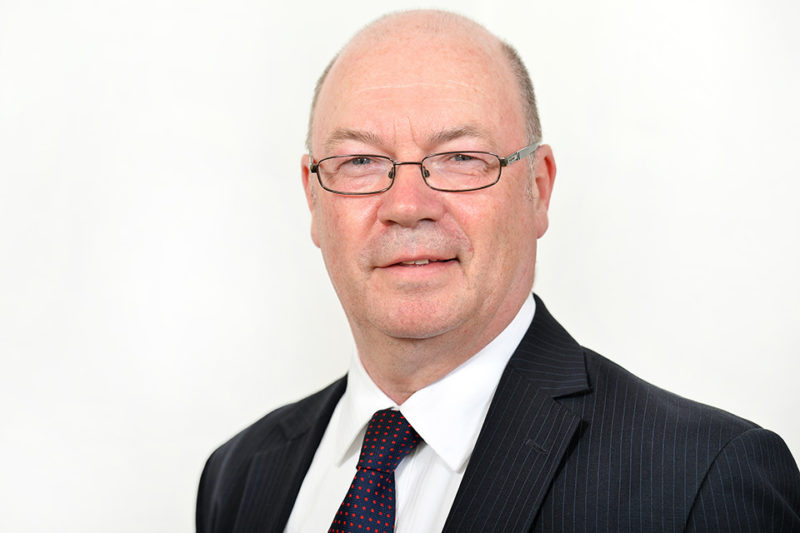
Alistair Burt
Alistair Burt, UK Minister of State for International Development

Canada, Denmark, Estonia, Germany, the Republic of Korea, Kuwait, Luxembourg, Malta, Netherlands, Norway, and the United Kingdom of Great Britain and Northern Ireland announced contributions ranging from $20,000 to $5.6 million at a conference hosted at WHO headquarters in Geneva, Switzerland on Monday, March 26, 2018 – increasing CFE funding levels to $23 million.

This will enable the rapid financing of health response operations in the coming months – filling that critical gap between the moment the need for an emergency response is identified and the point at which funds from other sources can be released. WHO will seek to secure further donor commitments to achieve its $100 million funding target for the 2018/2019 biennium.

First-time pledges were made by Denmark, Kuwait, Luxembourg, Malta and Norway. The UK has increased its overall commitment to the fund from $10.5 million to $16 million, making it the second largest donor after Germany.

“For the UK, the CFE is an extraordinarily good investment. We are convinced it has a vital and unique role to play in the global effort to prevent and mitigate health emergencies. Today we pledge an additional £4 million ($5.6 million) for the Contingency Fund and pledge to work with WHO to better profile to a wider audience the huge value it brings. The G7 and the G20 share the UK’s desire for an adequately funded CFE. We urge our fellow Member States and donors to heed WHO’s call and to step forward to provide financial support for the Contingency Fund for Emergencies,” said Alistair Burt, UK Minister of State for International Development.

The CFE’s ability to release funds within 24 hours sets it apart from complementary financing mechanisms that have different funding criteria and slower disbursement cycles. While other funding mechanisms allow for the scale up of response operations, none are designed to deliver an immediate and early response. The CFE has demonstrated that a small investment can save lives and dramatically reduce the direct costs of controlling outbreaks and responding to emergencies.

“Without the CFE, recent outbreaks of Ebola in DRC, Marburg virus Disease in Uganda and pneumonic plague in Madagascar could have gotten out of control. By acting decisively and quickly, we can stop disease outbreaks and save thousands of lives for a fraction of the cost of a late response. The CFE has proven its value as a global public good that should be underwritten by long term investment,” said Dr Peter Salama, WHO Deputy Director General for Emergency Preparedness and Response.

Since 2015, the CFE has enabled WHO, national authorities and health partners to get quick starts on more than 50 disease outbreaks, humanitarian crises and natural disasters, allocating more than $46 million. It has supported the rapid deployment of experts; better disease detection and reporting; the delivery of essential medicines, supplies and personal protective equipment; the strengthening of surveillance and vaccination; improved access to water, sanitation and health services; community engagement; and more.

Madagascar’s health minister, Dr Lalatiana Andriamanarivo, called for increased support for the CFE, saying it was instrumental to containing an unprecedented outbreak of pneumonic plague that rapidly spread across the island nation in 2017.

“We call on our international partners to support the Contingency Fund for Emergencies to enable WHO to respond to outbreaks everywhere across the world, and to reinforce national capacities to manage health emergencies in the future,” said Dr Andriamanarivo.

In 2017, the CFE provided nearly $21 million for operations in 23 countries, with most allocations released within 24 hours. Over half (56%) of allocations funded responses in the WHO Africa region, with 28% going to responses in countries in the WHO Eastern Mediterranean Region and 11% to the South East Asia Region.

The WHO Health Emergencies Programme has three funding categories: the core budget that covers essential functions; the appeals budget that covers the additional work done in response to acute and protracted health emergencies; and the WHO Contingency Fund for Emergencies.

The Contingency Fund for Emergencies is replenished through donor contributions outside of the WHO Health Emergencies Programme core budget. Contributions are said to be pooled and flexible, rather than earmarked for specific activities.
Images: Global challenges of plastic pollution

0

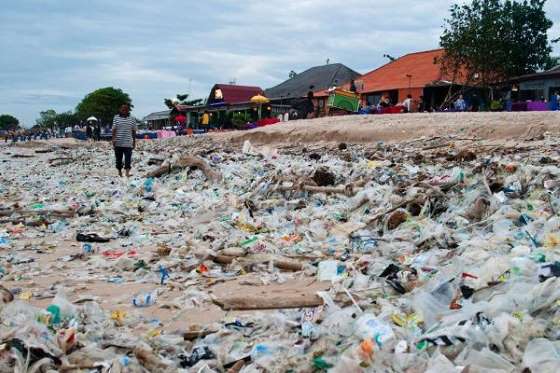
A simple walk on any beach, anywhere, and the plastic waste spectacle is present.

All over the world the statistics are ever growing; indeed, staggeringly. Tons of plastic debris is discarded every year, everywhere, polluting lands, rivers, coasts, beaches, and oceans. Plastic debris can vary in size from large containers, fishing nets to microscopic plastic pellets or even particles.

Environmentalists have long denounced plastic as a long-lasting pollutant that does not fully break down, in other terms, not biodegradable.

The UN Environment states that an estimated 8 million tons of plastic waste find their way into the planet’s oceans every year.

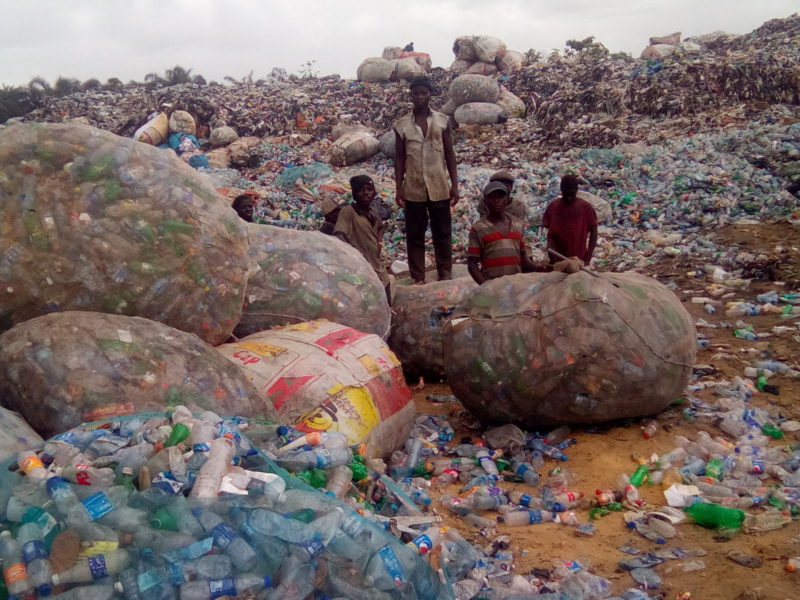
Plastic waste
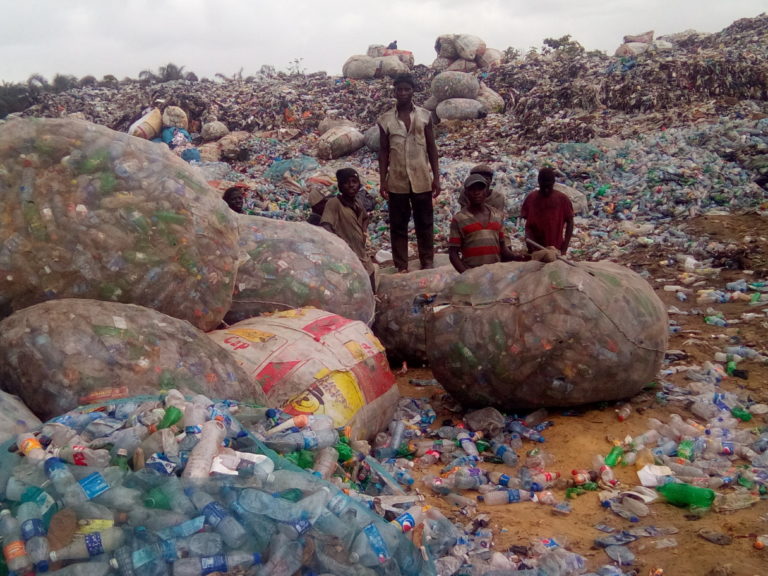
Plastic bottle scavengers and their wares at the Epe Landfill Site/EcoPark in Lagos, Nigeria
Plastic waste Indonesia
Plastic is strewn across a beach in Bali, Indonesia
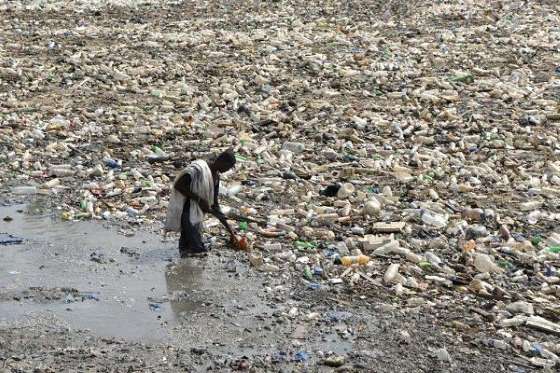
Ivory Coast plastic waste
A man gathers plastic at a waste water evacuation canal in the Ebrie Lagoon, Abidjan, Côte d’Ivoire
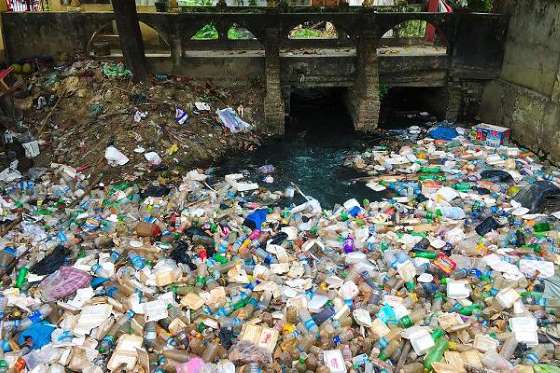
Myanmar Plastic waste
Plastic clogs up a waterway in Yangon, Myanmar
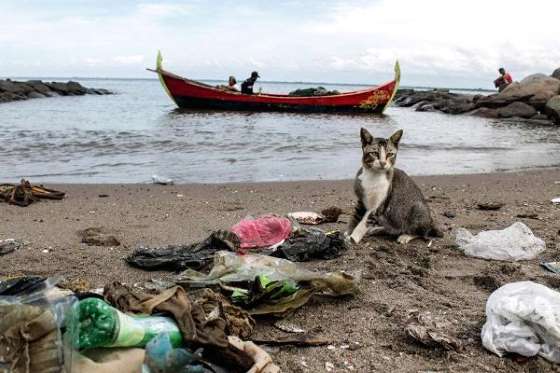
Indonesia plastic waste
A cat sits on a beach in Aceh Province, Indonesia, surrounded by plastic waste
USA plastic pollution
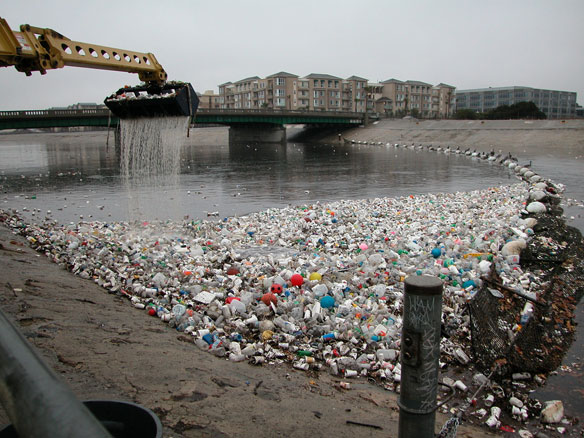
Plastic pollution at the mouth of the Los Angeles River, Long Beach, California, USA
Turtle-eats-plastic
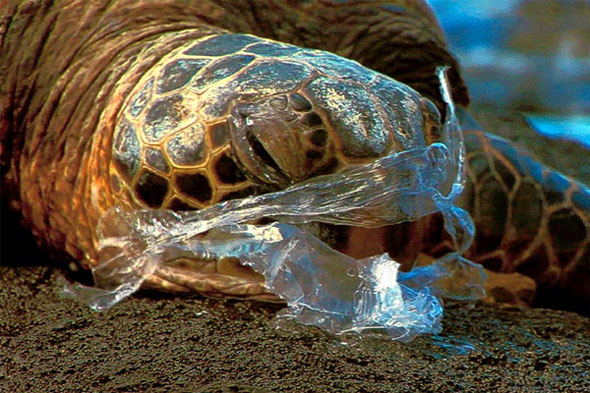
A turtle eating plastic


Refuse invasion: A looming epidemic outbreak in Lagos?

0

A visit to every nook and cranny of Lagos these days is something to forget in a hurry. What welcome passers-by are not the beautiful flower hedges or finely tarred roads expected of a mega city. Rather, it is the stench oozing from the heaps of refuse dotting major roads and feeder streets in the state. No thanks to the state government’s decision to abruptly terminate Private Sector Participation (PSP) operations without a proven model of the Cleaner Lagos Initiative (CLI).

Refuse
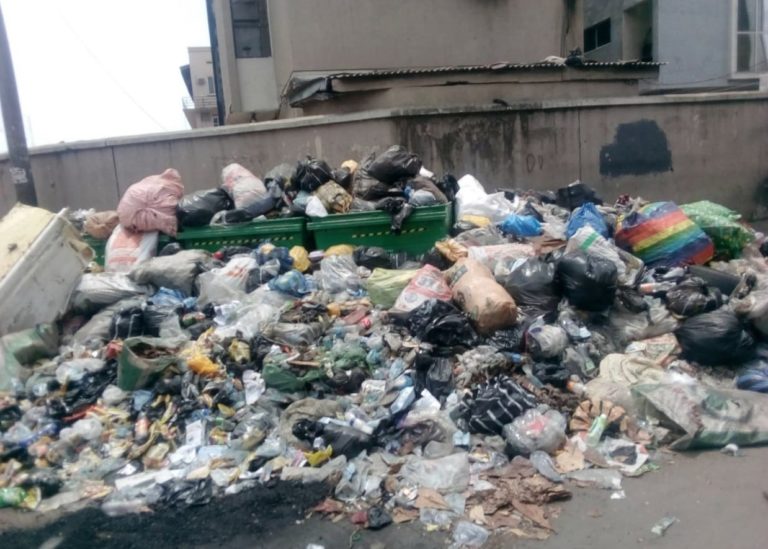
Heaps of refuse on a Lagos feeder road

From my findings, the current waste issue in Lagos is a result of poor planning and coordination, as the state government completely ditched an old model that can be optimised for a new one that has no visible track record or proof of concept to handle such task as Lagos solid waste management. It then beats one’s imagination that the current administration in the state eased out PSP without looking at its impact and knowing fully well that the widely touted “world-class” Visionscape does not have the capacity to hit the ground running in a state that generates about 16,000 tons of waste per day.

But how did we get to such a sorry state? I mean, how did we get to such an appalling situation where constant refuse evacuation has apparently turned rocket science.  From Agege to Iyana Ipaja, Oshodi, Mushin, Surulere, Lagos Island, Ajah and Sangotedo among other neighbourhoods in the state, the laments are the same as road medians and junctions are now adorn with refuse. The governor, while justifying his action at different state functions, stressed that the best way to sustain the environment is through the ongoing waste management reform, because it offers a unique opportunity to seek private investment to infuse more efficiency. But of what benefit is a policy or reform without human face?

Except we rise to the occasion and impose sanity on the environment, Lagos may be in for an epidemic outbreak and man-induced disasters. Apart from the stinks oozing from piled refuse heaps across the state, these sites serve as a breeding haven for agents of disease such as mosquitoes, houseflies and rats.  It won’t take much effort to realise that the backlash of messy Lagos environment is beginning to bear fruit. Mosquitoes cause malaria; rats transmit disease such as Lassa fever, and houseflies are known agents of bacteria that carry diseases including cholera, typhoid and diarrhoea.

Now the rainy season is approaching. When at its peak, it will be bad news for most residents in the economic nerve of West Africa. At every point in most parts of the city are heaps of debris to be dripped by floods. Thereby obstructing the normal flows and blocking the waterways. If recalled, the state witnessed serious flooding in previous years due to drainage blockage. Without rising to the challenge in a sustainable approach, recurrence should be expected with a bigger bang.

The new operator of waste management in Lagos seemingly lacks adequate manpower and has poor understanding of the local operational context in a clime like Nigeria. Until Visionscape realises efficient waste management is not done with showy pictures and videos flooded on Facebook, Twitter and Instagram, the company is just playing ping-pong. Trust me; the effort expended on image laundering alone is enough to constantly get refuse heaps off the streets of Lagos.

Lagos can be rid of refuse again, but only when the reforms and strategies are right.

By Babajide Oluwase, Lagos, jideoluwase@gmail.com

Group launches online tool to assess economics of solar investments

0

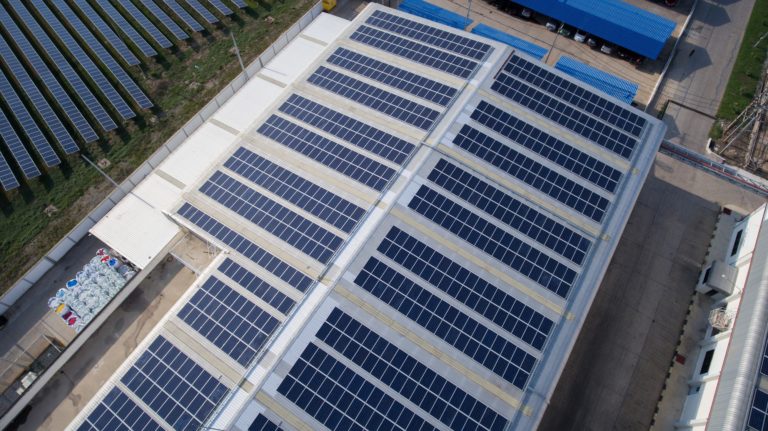
A tool that compares costs of solar power with the currently existing diesel generation costs for an individually planned PV project and generates an individual economic approximation for the considered solar investment has been launched.

Solar panels
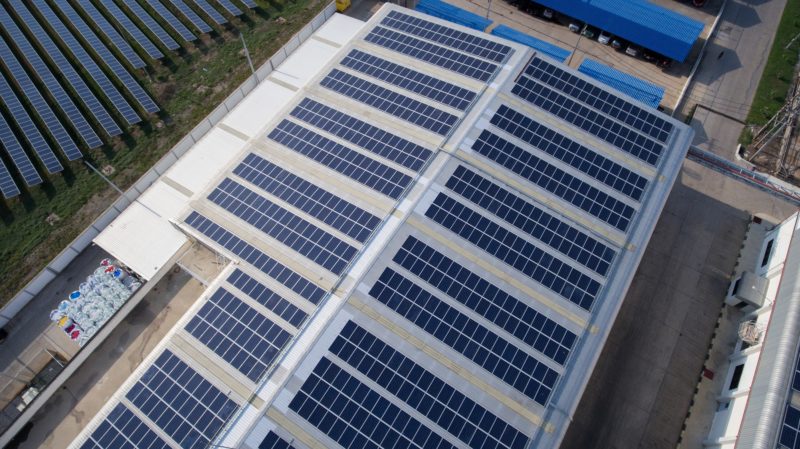
Aerial view of solar panels on rooftop

Tagged “PV-Calculator”, the online tool is the brainchild of Let’s Make Solar Work, an initiative of SOLAR23, OneShore Energy, Solarmate Engineering and eclareon. It is co-funded by the German Federal Ministry for Economic Cooperation and Development under the DeveloPPP programme.

Launched on the Let’s Make Solar Work website (www.letsmakesolarwork.com), the tool is meant to address the knowledge gap of solar power competitiveness. It is said to be handy, quickly generates numbered results and has demonstrated to be fully working after an initial one-month test period. Made by a team of German experts, the tool automatically calculates the LCOE, Payback, Equity IRR, Project IRR, NPV from just a few input data.

This, according to its promoters, allows potential buyers to gauge their planned solar system investment. Solar suppliers are able to prepare for customer/stakeholder meetings and to come into play with first concrete numbers. In this context, Let’s Make Solar Work has also published a Survey Report describing the energy situation specifically among mid-sized power consumers such as SMEs and social facilities: Demand-side requirements and planned power investments are analysed; recommendations on how to develop the solar market for SMEs and social facilities in Nigeria are presented and currently implemented.

“The obvious lack of reliable power is as hard-felt in this specific mid-sized power consumer category as in any other community, but here the power gap most immediately affects and hampers the economic success of Nigerians and Nigeria. Therefore, the question asked by Let’s make solar work partners is: Why not fill this power gap with solar PV systems, given that Solar Power can greatly contribute to make Nigerians and Nigeria more successful.

“Most mid-sized power consumers in Nigeria including small and medium sized companies (SMEs), public facilities, have one thing in common; they run their own diesel generators. Operation gets increasingly expensive as diesel prices rise. Also, surveys have shown that generators are often oversized and thus run inefficiently. This drives power costs further up,” says Dotun Tokun of Solarmate Engineering Ltd.

“In recent years, a silent revolution has been going on with solar power as it reached price parity with generator-based power production in a growing number of geographies. Using solar energy has become cheaper than running diesel generators, also in Nigeria. Many Nigerians are not yet fully aware of the specific new competitiveness of solar power, this is however very good news for many power consumers, especially mid-sized power consumers such as companies and social facilities,” notes Olivier Drücke, the project director of SOLAR23

Let’s Make Solar Work is a Nigerian-German solar initiative by solar companies teaming up to organise know-how and technology transfer from Germany to Nigeria. “Our partnership conveys this knowledge transfer through a series of seminars targeted at engineers and technicians who are already working in the solar business or have a professional energy background,” adds Drücke.

Reversing Africa’s cocoa paradox

0

Around the world, chocolate in all shapes and sizes symbolise Easter and bring joy to millions of kids and adults alike. And the demand for chocolate will most likely continue to increase, according to experts. There is huge opportunity for Africa, the largest producer of cocoa in the world, to rake in economic value that the global market offers.

Cocoa
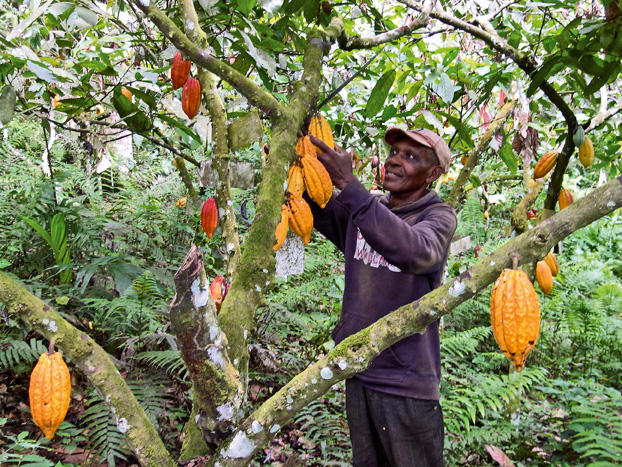
Harvesting cocoa

Africa produces about 75 percent of the world’s cocoa. But the region faces a daunting paradox: though it accounts for a majority of the world’s cocoa production, Africa gets just 5 percent of the $100 billion annual chocolate market value.

Africa has been unable to extract a larger share of the global chocolate market value because it exports just raw cocoa beans. “Africa is stuck at the bottom of the cocoa value chain, dominated, instead of dominating, despite being the leading producer!” exclaims Akinwumi Adesina, President of the African Development Bank (AfDB).

In 2014, looking into the economics of the chocolate industry, CNN anchor Richard Quest visited Côte d’Ivoire. He made a startling revelation into this paradox: most cocoa farmers he talked to had never even tasted chocolate.

Adesina says: “African farmers sweat, while other eat sweets. While the price of cocoa has hit an all-time low, profits of global manufacturers of chocolate have hit an all-time high. It’s time to process Africa’s cocoa in Africa, and end Africa being at the bottom of global value chains.”

The AfDB is leading a call to action on Africa’s agro-industrialisation, which is key to transforming the cocoa value chain.

“Africa must not be locked at the bottom…it must rapidly add value to what it leads the world in producing”, says Mr. Adesina, adding that “it is time for Africa to move to the top of the global food value chains, through agro-industrialisation and adding value to all of what it produces”.

The AfDB says it has prioritised industrialisation in its High 5 agenda. This could create an opportunity for African countries to add value to their raw materials. It is this regard that the bank’s Annual Meetings for this year has the theme “Accelerating Africa’s Industrialisation”.

This year’s Easter celebration signals a further call to action for African cocoa producers to start producing chocolate to compete with countries like Belgium, Switzerland, U.S. and France. This will not only bring in money, but also afford opportunities for the many cocoa farmers who are yet to taste chocolate in their entire life, adds AfDB.

Partnership promotes ‘science we need for the cities we want’

0

In a joint statement, partners working on cities and climate change have laid down the foundations for better-informed city climate action and decision-making, as a result of greater engagement between the policy, practice, and scientific communities working in urban areas.

Diana Ürge-Vorsatz
Diana Ürge-Vorsatz, Vice-Chair of IPCC Working Group III

The document, titled: “The Science We Need for the Cities We Want”, was signed at the recent CitiesIPCC conference hosted by the city of Edmonton, Canada, and brought together some of the world’s leading urban practitioners and researchers.

The Cities & Climate Change Science Conference was co-organised by UN-Habitat, UN Environment, Cities Alliance, C40, ICLEI, Future Earth, the Intergovernmental Panel on Climate Change, the World Climate Research Programme, the Sustainable Development Solutions Network, and United Cities and Local Governments.

In the closing press conference, Diana Ürge-Vorsatz, Vice-Chair of IPCC Working Group III and one of the co-chairs of the conference’s Scientific Steering Committee highlighted the momentum that substantial partnership engagement has awarded the CitiesIPCC initiative moving forward.

“The unprecedented engagement we have seen over the past three days at the highest levels of leadership from around the globe means that this meeting does not end with our departure from Edmonton. We now travel home with a new responsibility to create modalities of science that open the ivory towers of the academic establishment towards more engaged, accessible and actionable knowledge for cities,” said Ms Ürge-Vorsatz.


Better-informed climate decision-making

The partnership also outlines the importance of this research agenda in achieving our wider development goals.

“The milestone CitiesIPCC Cities and Climate Change Science Conference, held in Edmonton, Canada, March 5-7, created enhanced understanding of the impacts of climate change at the urban level, the range of possible responses, and the role of cities in the implementation of the Paris Agreement and other international global agendas,” reads the partnership agreement, endorsed by UN-Habitat and its partners.

“It has laid a foundation for better-informed climate decision-making at the local level as a result of greater engagement between the policy, practice, and scientific communities working on/in urban areas.”

“The main outcome of the Conference is the definition of a global research agenda on cities and climate change that advances climate change science and gives recognition and visibility to the knowledge generated by urban actors.”

In the next few decades the world will produce the same amount of urban space that we have built over the last 2000 years. According to UN-Habitat we will need a transformative approach to planning this space in order to ensure it has a positive impact on our ability to fight climate change.


A truly integrated approach

The fastest urbanisation is happening in the global south, not just in the big cities but mostly in secondary cities, in places with limited capacity and where access to livelihoods and basic services are the daily priority.

In one of the liveliest sessions of the conference, “Informal Settlements and Economies: Means for Transformative Climate Action”, Participants raised questions on incremental mainstreaming, rather than marginalising informal settlements; planning as an instrument of power, because of the implications of planning for various communities; and social mobilisation for confrontation and collaboration.

In addition, cities account for over 70 per cent of energy-related greenhouse gas emissions and are vulnerable hotspots for the impacts of climate change.

“There is no doubt, taking into account the scale, the complexity, the interconnectedness of the issues and the urgency that we collectively need to turn from inward looking actors to outworking looking actors, maximising the added value of what we offer to a truly integrated approach, connecting science, with policy and practice,” said Filiep Decorte, speaking at the conference.

UN-Habitat’s work in this field already explores the nexus between research and practice in this important field. At COP23, UN-Habitat launched Planners for Climate Action, an initiative that brings together associations of urban planning practitioners globally to coordinate and share best practice on climate change planning.

The Planning for Climate Change Guide, launched in 2014, already has over 40,000 downloads; testimony to the fact that planners are trying to absorb how they can plan better to reduce emissions and help guide people from building in harm’s way.

Climate chaos to continue in 2018, UN chief warns

0

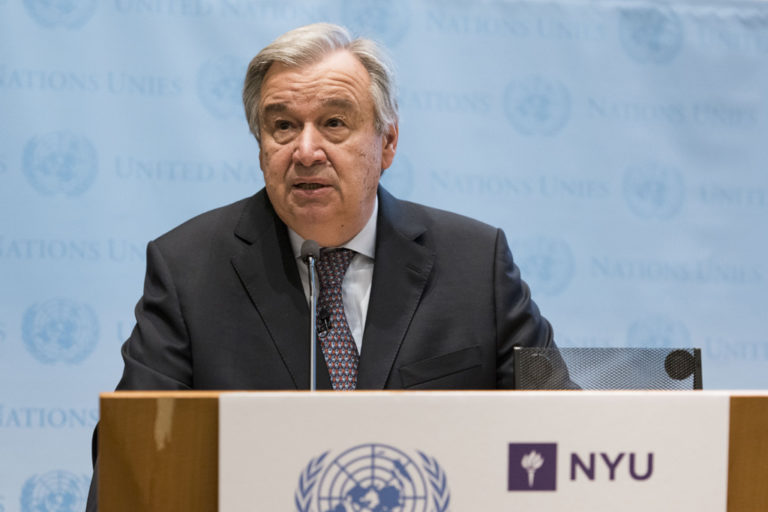
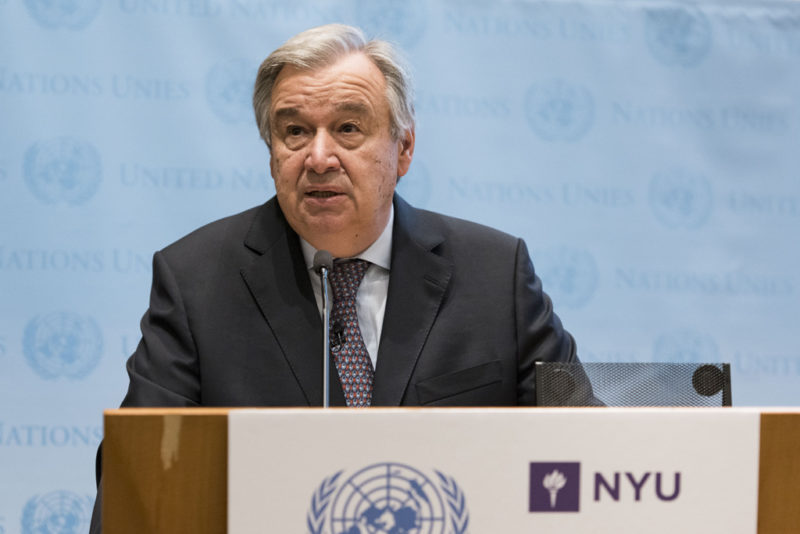
UN Secretary-General, António Guterres, has warned that climate chaos would continue in 2018, saying climate change is still moving much faster than human beings.

António Guterres
Secretary-General, António Guterres. Photo credit: UN /Mark Garten

The UN chief, therefore, called for the political will, innovation and financing to cut global emissions by at least 25 per cent over the next two years.

Guterres said: “Scientists are now worried that unless accelerated action is taken by 2020, the Paris goal may become unattainable.”

The Paris Agreement on climate change, adopted by world leaders in December 2015, aims to keep global temperature rise to well below 2 degrees Celsius and pursues efforts to limit the temperature increase even further, to 1.5 degrees.

“I am beginning to wonder how many more alarm bells must go off before the world rises to the challenge,” Guterres said.

The UN scribe noted that 2017 had been filled with climate chaos and 2018 had already brought more of the same.

“Climate change is still moving much faster than we are,” he warned, calling the phenomenon the greatest threat facing humankind.

Recent information from the World Meteorological Organisation (WMO), the World Bank and the International Energy Agency showed the relentless pace of climate change.

The UN chief said energy-related carbon dioxide emissions rose 1.4 per cent, to a historic high of 32.5 gigatonnes in 2017.

Moreover, weather-related disasters caused some $320 billion in economic damage, making 2017 the costliest year ever for such losses.

In social as well as economic terms, the 2017 Atlantic hurricane season was devastating, washing away decades of development in an instant.

In Africa, severe drought drove nearly 900,000 people from their homes while in South Asia, major monsoon floods affected 41 million people.

“Wildfires caused destruction across the world. Arctic sea ice cover in winter is at its lowest level, and the oceans are warmer and more acidic than at any time in recorded history.

“This tsunami of data should create a storm of concern,” Guterres said, announcing that he would convene a climate summit in New York in 2019 aimed at boosting global ambition to meet the level of the climate challenge.

“The Stone Age did not end because the world ran out of stones. It ended because there were better alternatives. The same applies today to fossil fuels,” he said.

The UN chief stressed the need for a further cut in greenhouse gas emissions of at least 25 per cent by 2020.

Guterres said his Special Envoy on climate change and former New York City Mayor, Michael Bloomberg, disclosed that the U.S. might meet the commitments made in Paris due to the positive reactions of the American business community and local authorities.

“All around the world, the role of governments is less and less relevant. The role of the economy, the role of the society is more and more relevant,” Guterres said.

By Prudence Arobani

NiMet prediction: Ogun may not experience severe flooding, says government

0

The Ogun State Government says the state may not experience severe flooding this year as revealed in the 2018 Seasonal Rainfall Prediction (SRP) of the Nigeria Meteorological Agency (NiMet).

Bolaji-Oyeleye
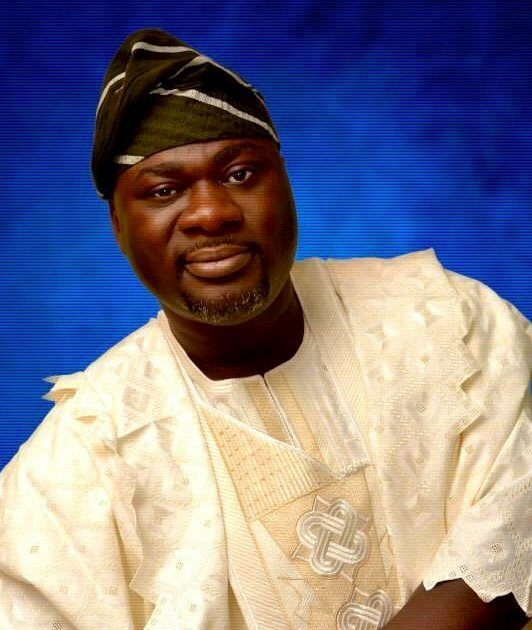
Ogun State Commissioner for Environment, Bolaji Oyeleye

Commissioner for Environment, Mr. Bolaji Oyeleye, in a statement in Abeokuta, the state capital, said that though most areas in the state might not witness serious flooding, as NiMet had forecasted a normal rainfall season for the state, however, flash floods could occur in flood-prone communities.

Oyeleye recalled that, irrespective of NiMet’s prediction of severe flooding, the state was generally flood-free all through the rainy season last year, saying this was as a result of the standard drainages that accompanied the road infrastructures constructed by the Senator Ibikunle Amosun-led administration.

He said the Flood and Erosion Control Department of his ministry had, at the beginning of this year, embarked on the dredging of river/stream courses, as well as desilting of drainages in major towns, in preparation for the rainy season, to prevent flood disasters.

“The river and stream courses that have been dredged in the state capital so far include: Sokori stream course from Isale-Igbein to Ijeja, the drainage path of swampy areas within Lafenwa Market, Akingbade stream in Obantoko and Fatola Estate steam course at Camp.

“A dilapidated and submerged culvert linking Oke-odo to Abule Oloni in Abeokuta was also reconstructed. In addition, a river course in Owode Ketu area and another along Ilaro-Owode Road of Ogun West Senatorial District had also been dredged,’’ he said.

The Commissioner enjoined residents to play their part by clearing their drainages and road medians, cautioning motorists to drive carefully during the rainy season as, according to him, the period is characterised by strong winds capable of pulling down trees, thereby causing obstructions on the roads.

He added that temperatures may be warmer than normal, as the dry season peaks, advising residents to increase their water intake, while ensuring that they drink from clean and hygienic water sources.

NiMet predicts dust haze, cloudy weather for Saturday

0

The Nigerian Meteorological Agency (NiMet) has predicted dust haze weather in the central states of the country on Saturday, 31 March 2018 with horizontal visibility of two to five kilometres and visibility of less than 1,000m in some places.

weather
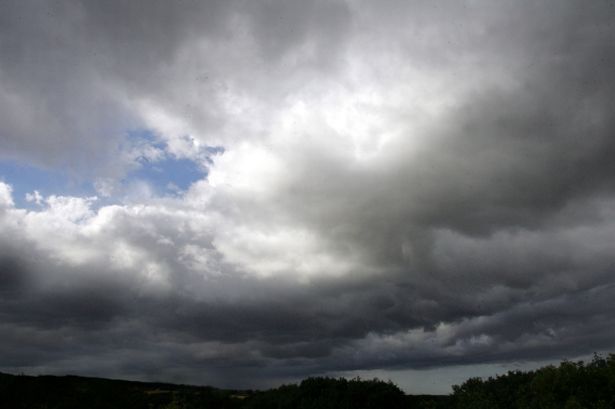
cloudy weather

NiMet’s Weather Outlook by its Central Forecast Office in Abuja on Friday also predicted day and night temperatures in the range of 30 to 35 and 19 to 25 degrees Celsius respectively.

Southern states will experience partly cloudy to cloudy morning hours with day and night temperatures in the range of 32 to 34 and 23 to 24 degrees Celsius respectively.

According to the agency, there is prospect of localised thunderstorms over Umuahia, Owerri, Awka, Akure, Lagos, Port Harcourt, Warri, Calabar and Eket in the afternoon and evening hours.

Day and night temperatures of 31 to 37 and 23 to 27 degrees Celsius respectively will be experienced over the southern cities.

In the Northern States, a thick dust haze condition is expected with day and night temperatures of 30 to 37 and 20 to 24 degrees Celsius respectively.

“Thick dust haze conditions are expected over the Northern cities, dust haze conditions are envisaged over most parts of the central cities while chances of cloudiness and thunderstorms over few places in the southern cities are also expected within the next 24 hours,” NiMet said.

By Sumaila Ogbaje

German environmental group sues 11 more cities over air pollution

0

An environmental group in Germany says it is taking legal action against 11 more German cities for violating EU air pollution limits, bringing the total to 28.

Pollution
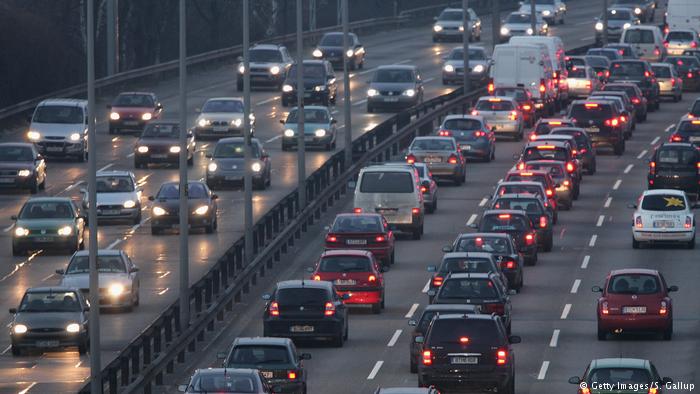
Vehicular traffic is a major source of air pollution in Germany

Compliance with the limits is only possible by rapidly implementing quickly effective measures, such as driving bans for dirty diesel vehicles, Deutsche Umwelthilfe (DUH) said in a statement on Thursday, March 29, 2018.

A German federal court ruled in February that diesel-fuelled vehicles could be legally banned from certain roads or areas in the cities of Dusseldorf and Stuttgart, in order to combat air pollution.

The 11 cities named by the DUH on Thursday are Dortmund, Bochum, Dueren and Paderborn in the western state of North Rhine-Westphalia, the central city of Offenbach, and Heilbronn, Ludwigsburg, Backnang, Esslingen, Marbach and Reutlingen in the southern state of Baden-Wuerttemberg.

Air pollution has become a growing problem in German cities, with much of the focus on nitrogen oxides, which could cause a variety of health problems affecting breathing and the circulatory system.

Vehicular traffic is responsible for 60 per cent of this pollution and diesel cars, which are popular in Germany, are a major portion of that.

Upper limits on the amount of such gases allowed in the atmosphere have been in place since 2010, but not universally enforced, despite lobbying efforts by environmental groups and actions by cities like Dusseldorf and Stuttgart.