Home Blog Page 193

Sports teams join campaign to rally fans behind ocean conservation

0

Ocean Conservancy on Thursday, September 4, 2025, announced the addition of the NFL’s Seattle Seahawks, AHL’s Cleveland Monsters, the United States SailGP Team and Team USA Artistic Swimming to its innovative “Protect Where We Play” initiative. These are the first individual teams to join Protect Where We Play alongside “Team Ocean Captains” from across the sports and entertainment industry. Together, they aim to mobilise millions of fans worldwide to take action for our ocean.

“Sports have a unique way of bringing people together,” said Jenna DiPaolo, Ocean Conservancy’s chief brand and communications officer and lead architect of the campaign. “That same sense of connection is what we need to protect the ocean and the places we love. When hometown teams take a stand for something bigger than the game, it reminds all of us of what’s really at stake.”

Jenna DiPaolo
Jenna DiPaolo, Ocean Conservancy’s chief brand and communications officer and lead architect of the campaign

These first team movers join “Protect Where We Play” alongside existing Team Ocean Captains, including WNBA’s Napheesa Collier, NFL’s Kelvin Beachum, MLB’s Brent Suter, Paralympian Ezra Frech, American ballerina Katherine Barkman, and two new captains that will be announced in advance of New York Climate Week.

“The health of our ocean matters, and has real impacts on our fields, courts and stages,” said Ocean Conservancy’s vice president of ocean plastics Nicholas Mallos. “It’s easier for people to appreciate the threat of plastic pollution because it’s such a visible issue, but extreme heat, flooding, smoke from wildfires – these aren’t abstract problems anymore. Teams stepping up to be part of the solution sends a powerful message: if we want to keep enjoying the things we love, we have to protect what makes them possible.”

The ocean is vital to life on Earth, producing 50% of the oxygen we breathe, capturing 90% of the heat from climate change, and helping to keep our planet cool and our weather patterns predictable. It is essential to supporting and shaping the places we live and play. But the ocean is under constant threat from rising temperatures, plastic pollution and the loss of critical habitats and wildlife.

What Teams Are Saying

“In the Pacific Northwest, water is at the heart of our natural habitats,” said Christy Briggs, sustainability manager of the Seattle Seahawks’ Lumen Field. “Both our stadium and practice facility are uniquely situated on the water, making our connection to protecting it deeply ingrained. Being part of the Protect Where We Play initiative reflects the core of our sustainability efforts, both within our organisation and in the communities we serve.”

“The Cleveland Monsters are proud to defend Lake Erie – our life-giving water system and a source of recreational and commercial opportunity,” said Cleveland Monsters Chief Marketing Officer, Ben Adams. “Without fresh water, there is no hockey, and no chance to represent this green city on a blue lake. While we’re salt-free and shark-free, we’re all connected by water — from the Great Lakes to the ocean.”

“In SailGP the ocean is our playing field and with that comes a great deal of responsibility to take care of it,” said Mike Buckley, co-owner, CEO and strategist of U.S. SailGP Team. “Protect Where We Play is about uniting athletes, teams and fans to do exactly that — inspire the next generation to protect the ocean.”

“This is the partnership that transcends sport. What our members value, what our national team is at its core is what Protect Where We Play is,” said Adam Andrasko, CEO, USA Artistic Swimming. “This is an incredible opportunity to elevate both our brands and we look forward to this partnership.”

On August 8, “Protect Where We Play” was shortlisted for both “Campaign of the Year” and “Purpose-Led Partnership With A Non-Profit” for the Sport Positive Awards, which celebrates organisations and individuals working to tackle issues related to the climate and biodiversity crises. Award winners will be announced on Oct. 7, 2025. Since its launch in February 2025, “Protect Where We Play” and its partners have led several initiatives to rally sports and entertainment fans behind ocean conservation:

  1. From March 10 to April 22, Protect Where We Play served as the title sponsor of the EcoAthlete Collegiate Cup.
  2. From June 10 to 12, Protect Where We Play served as the official ocean health sponsor of the Green Sports Alliance Summit in Miami.
  3. On June 5, Ocean Conservancy and its partner GOAL launched the Protect Where We Play Tour to reduce the plastic footprint of sports and entertainment venues, aiming to prevent 1 million single-use cups from entering the waste stream. Other tour stops include:
  • June 6-7: Coldplay at Allegiant Stadium, Las Vegas, Nevada
  • July 19: WNBA All-Star Weekend at Gainbridge Field House, Indianapolis, Indiana
  • September 27: Lumineers at Enmarket Arena, Savannah, Georgia
  • October 25-26: Billie Eilish at UBS Arena, Belmont Park, New York

The announcement comes in advance of Ocean Conservancy’s 40th International Coastal Cleanup (ICC) event, held every September since 1986. The ICC has mobilised more than 19 million volunteers to remove more than 400 million pounds of trash from beaches and waterways worldwide. Ocean Conservancy has also led advocacy efforts to prevent plastic pollution through policies at the state, federal and international levels.

Dangote Group denies trucks’ involvement in accidents, warns truckers over unauthorised use of company logo 

The Dangote Group has denied any connection to two fatal traffic accidents that occurred on Wednesday, September 3, 2025, in Enugu State, following reports misattributing the incidents to the company.

In a statement released Thursday, September 4, Dangote Group clarified that the trucks involved in the two separate crashes did not belong to the company and were not operated by any of its subsidiaries. The Enugu State Police Command corroborated this, confirming that the vehicles were owned by two logistics firms: Visco Investment Global and Global Investment.

Dangote
Dangote Industries headquarters in Ikoyi, Lagos, Nigeria

According to police reports, the first incident occurred at approximately 9 a.m. on the Enugu-bound Lane of a major highway. A Howo truck, bearing the name Visco Investment Global and transporting bags of white cement, was traveling from Aba, Abia State, to Abuja when it collided with a Toyota Corolla. The car had reportedly been overtaking another truck when the crash occurred. A Foton bus and a Daihatsu Hijet minibus, both allegedly driving against traffic were also involved in the collision. The impact led to a fire that engulfed the truck and the Corolla, killing all five occupants of the car. A passenger in the minibus also died.

The second crash occurred around 3 p.m. on the same day and route. A Sino truck owned by Global Investment, also laden with cement and reportedly driving one-way from Garriki Enugu to Nenwe in Aninri Local Government Area, collided with a tricycle. Four people in the tricycle were taken to a nearby hospital, where they were later pronounced dead.

“We extend our heartfelt sympathies to the victims of these tragic incidents and their families,” the Dangote Group said in its statement.

The company also expressed concern over the “increasing spread of misinformation falsely attributing such incidents to the Dangote Group without substantiated evidence.” It urged both the public and media outlets to verify claims before dissemination and emphasised its commitment to road safety.

Dangote Industries Limited (DIL) has reiterated its warning to truck operators against the unauthorised use of its logo on their trucks, noting that their actions have caused serious embarrassment to the brand.

The company stated that, despite previous warnings, certain truckers with no affiliation to Dangote continue to display its logo on their trucks, often for personal gain or other undisclosed motives. It noted with concern that some of these vehicles have been implicated in incidents that were wrongly attributed to the company. 

To that end, Dangote has pledged to intensify monitoring efforts in collaboration with relevant security agencies and law enforcement, and to pursue legal proceedings against offenders. 

“We have repeatedly cautioned truckers to refrain from using our logo on unauthorised vehicles. Moving forward, we will increase vigilance and take decisive legal action against misuse of our brand identity, particularly concerning vehicles unaffiliated with the Dangote Group,” the company emphasised. 

Dangote also expressed alarm over the proliferation of misinformation targeting the company, particularly the unfounded attribution of road accidents to its fleet. The company urged the public and media to verify facts before dissemination and warned against falling prey to individuals seeking to exploit tragedies for malicious or financial purposes. 

The Dangote Group operates one of the largest commercial fleets in Africa, with over 12,000 trucks in Nigeria alone, including over 3,000 owned by third-party contractors. On any given day, more than 6,000 vehicles are actively engaged in operations that support the company’s extensive logistics network, generating over 36,000 direct and indirect jobs. 

“We maintain close cooperation with the Federal Road Safety Corps (FRSC) and other regulatory bodies to standardise, monitor, train, and enhance our operational practices. Continuous internal audits enable us to identify gaps, adopt global best practices, and strengthen compliance across our fleet,” the company added.

U.S. donates $32.5m support to WFP for food, nutrition in Nigeria

0

The United States (U.S.) Government says it has provided the World Food Programme (WFP) with the sum of $32.5 million to support its food and nutrition programme in Nigeria.

This is contained in a statement issued by Aishah Gambari of the U.S. Embassy in Abuja, on Wednesday, September 3, 2025.

Richard Mills
Richard Mills, U.S. Ambassador to Nigeria

It explained that the donation was aimed at ensuring the provision of food and nutrition assistance to help save lives in the country.

“The World Food Programme Nigeria, with U.S. Government’s contribution of $32.5 million, will provide food assistance and nutrition support to internally displaced persons across conflict-affected areas.

“With the U.S. Government’s donation, the World Food Programme Nigeria will provide food and nutrition assistance to 764,205 beneficiaries across Northeast and Northwest Nigeria.

“This includes complementary nutrition top-ups for 41,569 pregnant and breastfeeding women and girls, and 43,235 children through electronic food vouchers,” the statement said.

The WFP, which is funded entirely by voluntary donations from governments, corporations, and private individuals, is the world’s largest humanitarian organisation.

The U.S. is, by far, the largest single donor to the WFP, as it consistently provides a significant portion of its funding each year, contributing more than $2.9 billion in 2023 alone.

As the United Nations’ food-assistance branch, WFP works in more than 120 countries, providing emergency food relief to people in need and building long-term food security and stability to save lives in emergencies.

It also helps communities to rebuild their lives and livelihoods after a crisis, including nutrition projects, especially for mothers and children, school feeding programmes, and building resilience to climate-related shocks.

In 2020, WFP won the Nobel Peace Prize for combating hunger, contribution to peace, and being a driving force to prevent the use of hunger as a weapon of war and conflict.

By Mark Longyen

NiMet forecasts three-day rain, thunderstorms across Nigeria

0

The Nigerian Meteorological Agency (NiMet) has predicted rain and thunderstorms from Thursday, September 4 to Saturday, September 6, 2025, across the country.

NiMet’s weather outlook released on Wednesday, September 3, in Abuja anticipated thunderstorms with moderate rains during the morning hours over parts of Yobe, Kano, Jigawa and Bauchi states.

Rainfall
Rainfall

According to the agency, the remaining parts of the region will be sunny with patches of clouds.

“Thunderstorms with moderate rains are expected during the afternoon or evening hours over parts of‎ Adamawa, Taraba, Zamfara, Kebbi, Bauchi, Borno, Jigawa and Yobe.

”For the central region, cloudy skies with sunny intervals will be experienced during the morning hours.

“In afternoon or evening hours, thunderstorms with moderate rains are anticipated over parts of Plateau, Nasarawa, Kogi, Benue‎ and Niger states.”

The agency predicted cloudy skies over the southern region with prospects of light rains over parts of Anambra, Abia, Ebonyi, Imo, Bayelsa, Delta, Cross River, Akwa Ibom and Rivers states during the morning hours.

It forecasts moderate rain to continue into the afternoon or evening hours.

“There are prospects of thunderstorms on Friday with moderate rains over parts of Adamawa, Gombe and Kaduna States during the morning hours in the northern region.”

NiMet anticipated thunderstorms with moderate rains during the afternoon or evening hours over parts of Sokoto, Kebbi, Katsina, Kano, Bauchi, Gombe, Adamawa, Taraba, Bauchi, Bauchi, Yobe, Jigawa, Borno and Zamfara states.

“For the central region, morning thunderstorms with light to moderate rains are anticipated over parts of Plateau and Nasarawa states.

“Afternoon or evening thunderstorms with moderate to heavy rains are envisaged  over most parts‎ of the region.

“For the southern region, there are chances of morning rains over parts of Abia, Ebonyi, Imo, Anambra, Enugu, Edo, Ondo, Akwa Ibom, Cross River, Rivers and Bayelsa states.”

The agency anticipated moderate to heavy rains over the entire region during the afternoon or evening periods.

NiMet predicted morning thunderstorms on Saturday with rain over parts of Taraba, Jigawa, Kebbi, Kano,Katsina and Kaduna states.

It forecasts thunderstorms with moderate rain over parts of Kebbi, Zamfara, Adamawa, Taraba, Kaduna, Borno and Yobe states later in the day.

“For the central region: there are chances of thunderstorms with moderate rains over parts of the Federal Capital Territory, Benue, Plateau, Kwara, Kogi, Nasarawa and Niger states.

“Thunderstorms with moderate rains are expected over parts of the Federal Capital Territory, Nasarawa, Plateau and Benue states during the afternoon to evening periods.

‎“For the southern region, there are prospects of morning coastal rains over parts of Cross River, Delta, Akwa Ibom and Bayelsa states during the morning hours.

According to it, the remaining parts are expected to be cloudy. Moderate to heavy rains are expected across the Southern region during the afternoon or evening periods.

‎NiMet urged the public to take adequate precaution as strong winds might precede the rains in areas where thunderstorms are likely to occur.

“Ensure that loose objects are fastened to avoid collision. Driving under heavy rain should be avoided. Disconnect electrical appliances from electrical sockets.

“Stay away from tall trees to avoid impact from falling branches and broken trees. Airline operators are advised to get airport-specific weather reports (flight documentation) from NiMet for effective planning in their operations.

“Residents are advised to stay informed through weather updates from NiMet. Visit our website‎ (www.nimet.gov.ng),” it said.

By Gabriel Agbeja

Indigenous knowledge crucial for climate solutions – Experts

0

Some experts have emphasised the critical role of indigenous knowledge systems in developing effective climate change adaptation strategies for African communities.

According to them, by focusing on indigenous knowledge, African nations can develop more sustainable, locally appropriate climate adaptation strategies that genuinely serve vulnerable populations.

Alvin Munyasia
Dr Alvin Munyaisa, a Climate Fellow with AGNES

Consequently, they say there is a need for policy frameworks that recognise traditional expertise.

Dr Alvin Munyaisa, a Climate Fellow with AGNES, emphasises the importance of embedding community-based knowledge into national climate resilience plans.

“Vulnerable populations must be at the decision-making table, contributing directly to solutions that respond to climate change impacts.’’

Munyaisa spoke at a media roundtable hosted on Wednesday, September 3, 2025, by Global Health Strategies (GHS) and AfriCatalyst.

He recommends a multi-pronged approach to integrating indigenous knowledge, focusing on key sectors including agriculture, water management, and food security.

The strategy, Munyaisa says, should involve investing in research that validates traditional adaptation techniques while avoiding potential maladaptation risks.

The Kampala Declaration provides a foundational framework, urging national governments to allocate at least 10 per cent of budgetary resources to support local community adaptation initiatives.

This approach ensures that indigenous communities are not merely passive recipients but active contributors to climate solutions.

Specific recommendations include developing policy environments that promote synergies between global conventions and local knowledge systems and investing in research documenting indigenous adaptation strategies.

Also, providing financial and technical support to rural communities and integrating traditional expertise into national climate adaptation plans.

It notes that indigenous knowledge systems differ across African countries, necessitating context-specific approaches that respect local cultural nuances.

The initiative aims to shift from a victimhood narrative to one of resilience, showcasing African communities’ innovative approaches to climate challenges.

Also speaking, Dr Hamady Diop, Senior Advisor to the AU Special Envoy on Food Systems, notes that the African Union was championing a transformative approach to international climate negotiations.

Diop emphasised the critical need for a unified continental strategy in global forums.

He highlights the evolution of Africa’s engagement in global climate discussions, tracing the continent’s journey from fragmented participation to a cohesive, strategic approach.

“During the Paris climate summit, agriculture was marginally included in climate discussions.

“However, by COP28 in Dubai, we witnessed a significant shift,” the official stated.

The African Union’s strategic pivot involves developing common positions that represent the collective interests of 55 member states, challenging historical power dynamics where larger global entities often dictate terms.

“We are 1.2 billion people with a right to shape our narrative,” the diplomat emphasises, underscoring the continent’s growing diplomatic confidence.

The approach has already yielded tangible results, with African candidates successfully securing leadership positions in international organisations like the World Health Organisation and World Trade Organisation through coordinated AU processes.

This new strategy signals Africa’s emerging role as a proactive, unified force in global climate and agricultural policy negotiations.

Earlier during the webinar, the experts noted that the AU was developing comprehensive strategies to enhance its influence within the G20, addressing critical challenges in global representation.

They identified four key obstacles facing African participation in the global platform to be potential symbolic engagement, coordination fragmentation, limited technical capacity, and complex geopolitical dynamics.

Diop harped on the need to build robust structures to support a global voice, stressing the importance of establishing a dedicated secretariat to coordinate African interests effectively.

The experts highlighted the urgent need for developing evidence-based policy proposals and strengthening coordination mechanisms across regional economic committees and UN systems.

Critical focus areas include addressing climate change, digital infrastructure development, and creating unified African positions on global economic issues.

The event unveiled two significant reports – The African Union, in the G20 report jointly produced by Global Health Strategies (GHS) and Africa Catalyst.

Also, the companion policy brief “Maximising Africa’s Influence in the G20”, which offers a forward-looking blueprint for Africa’s transition from a symbolic presence to a strategic influence in global forums.

By Vivian Ihechu

Govt reaffirms commitment to economic benefits of adaptation plan

0

The Federal Ministry of Environment on Wednesday, September 3, 2025, in Abuja expressed its determination to ensure that Nigeria maximises the economic benefits of its National Adaptation Plan.

Alhaji Mahmud Kambari, Permanent Secretary of the ministry, stated this at the Validation Workshop for the Economic Appraisal for the Development of an Adaptation Finance Strategy.

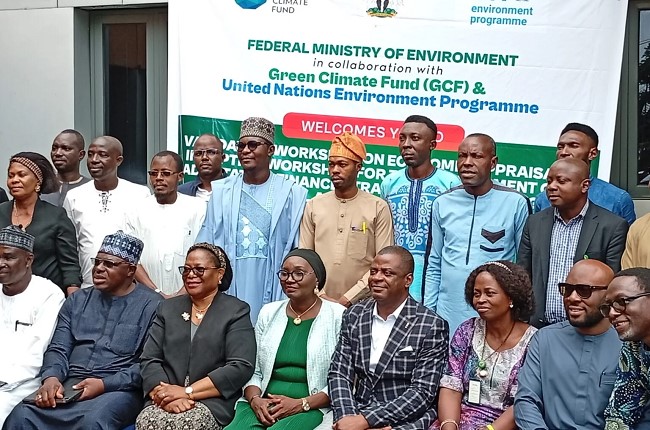
Validation Workshop
Participants at the Validation Workshop for the Economic Appraisal for the Development of an Adaptation Finance Strategy, in Abuja

The workshop was also an avenue for Drafting of the National Adaptation Plan Document for Nigeria.

Kambari, who was represented by Dr Iniobong Abiola-Awe, Director of the Department of Climate Change, said the process was designed to conduct an economic appraisal of the adaptation plan.

“This is to outline what investors stand to gain from adaptation planning and what the country risks losing in its absence. Inaction is what we cannot afford at this time.

“Nigeria will therefore continue with the process of formulating its National Adaptation Plan, requiring all hands on deck to ensure timely delivery of the document ahead of the Conference of Parties (COP) in Brazil in November 2025,” he said.

The permanent secretary said the process of developing an adaptation finance framework would provide a blueprint for mobilising, managing and directing resources towards the nation’s adaptation priorities.

“Another aim of this gathering is to begin drafting the document in readiness for submission to the UNFCCC. This workshop provides a vital platform to facilitate that,” he added.

Earlier, in her welcome address, Abiola-Awe said the workshop marked another milestone in building climate resilience in Nigeria.

“We are all familiar with the reality of climate change as its devastating impacts are no longer distant possibilities.

“While mitigation remains crucial, adaptation is equally important because it not only strengthens our systems but also protects lives and realigns our development trajectories towards sustainability.

“Nigeria, through the National Adaptation Plan process, is committed to identifying its medium and long-term adaptation needs. This is what we are putting forward,” she said.

Also speaking, Mr. Gift Gewona, Task Manager for the United Nations Environment Programme (UNEP) Nigeria, urged the country to prioritise investments wisely on climate change.

“We want to see measures that offer the greatest returns on adaptation costs. Adaptation costs must justify the funding,” Gewona said.

By Abigael Joshua

Lagos reiterates commitment to sustainable waste management

0

The Lagos State Government has restated its commitment to advancing sustainable waste management through technology, recycling and public education.

Dr. Muyiwa Gbadegesin, Managing Director/CEO of the Lagos Waste Management Authority (LAWMA), disclosed this at the Annual Lecture and Awards of the Property & Environment Writers Association of Nigeria (PEWAN) on Wednesday, September 3, 2025, in Lagos.

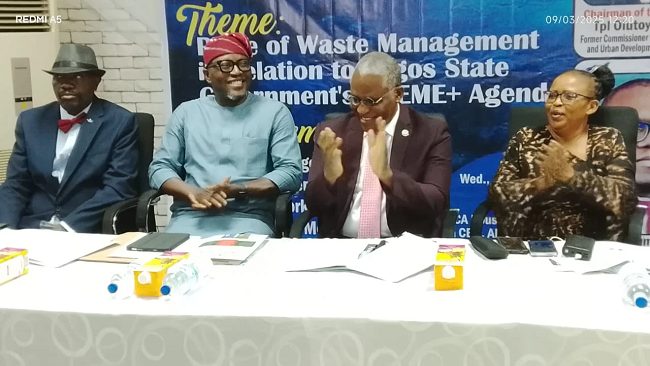
PEWAN
L-R: Bldr. Kunle Awobodu, Past President of the Nigerian Institute of Building (NIOB), Dr Olumuyiwa Gbadegesin, Managing Director/CEO of LAWMA; Tpl. Toyin Ayinde, Chairman of the Day and former Lagos State Commissioner for Physical Planning and Urban Development; and Mrs. Okwy Iroegbu-Chikezie, Chairman of PEWAN, at the PEWAN Annual Lecture and Awards, in Lagos on Wednesday, September 3, 2025

One of the themes of the event is “The Place of Waste Management in Relation to the Lagos State Government’s THEMES+ Agenda”.

The other theme is: “Air Quality Management in a Megacity like Lagos, Challenges and policy Framework”.

Gbadegesin said that waste management was central to the THEMES+ Agenda of Gov. Babajide Sanwo-Olu’s administration.

He highlighted the economic opportunities in Lagos’ waste sector, stressing that waste separation at source could unlock billions of naira in value, while creating jobs.

“Waste is not a burden, it is value. Lagos generates about 13,000 tons of waste daily, of which 50 per cent is organic.

“This can be converted into compost, bio-methane for cooking gas, or even animal feed,” Gbadegesin said.

He said that the government had made progress on the Olusosun and Solous Transfer Loading Stations and Material Recovery Facilities, which would replace legacy dumpsites with modern recycling and resource recovery infrastructure.

According to him, the Olusosun dumpsite is to be decommissioned within 18 months, with plans to convert the reclaimed land into recreational use.

To improve efficiency, Gbadegesin said LAWMA was rolling out smart bins equipped with RFID technology, enabling real-time monitoring of waste collection and ensuring accountability by operators.

He disclosed that advanced clean-energy compactor trucks and improved billing systems would also be introduced by 2026.

Also speaking at the event, Dr Tunji Ajayi, General Manager, Lagos State Environmental Protection Agency (LASEPA), reaffirmed its commitment to environmental protection, waste management and air quality monitoring.

Ajayi spoke on the need to safeguard the state’s environment through effective waste management, air and water quality monitoring and continuous public advocacy.

“One-third of Lagos is made up of water, which means effluent discharged into our waterways must be strictly monitored to protect aquatic ecosystems.

“LASEPA ensures that industrial discharges are curtailed and air emissions are properly managed, while also driving advocacy to educate residents on sustainable waste disposal practices,” he said.

He explained that LASEPA’s operations extended to every part of the state, including underserved and remote communities.

“There is no part of Lagos we do not cover. We maintain offices in every local government area, ensuring that residents, no matter where they live, can access LASEPA staff for guidance and solutions to environmental concerns,” he noted.

On air quality management, Ajayi explained that the agency adopted the World Health Organisation’s (WHO) standards for monitoring and reporting.

“Our live air quality monitoring data is available on our website. Residents can check the status of their areas in real time, whether it is safe (green), moderate (yellow), or harmful (orange/red).

“Later this year, LASEPA will publish the Lagos Clean Air Report, which will outline the state’s adopted standards and provide a comprehensive update on air quality across Lagos,” he added.

Earlier, the Chairman of the occasion, Mr. Toyin Ayinde, former Lagos Commissioner for Physical Planning and Urban Development, stressed that waste management began with information and mindset change.

“The three Rs – Reduce, Reuse, Recycle – are not just slogans but actions that must become part of our daily lives.

“Advocacy and education are essential to ensure residents see waste as a resource, not just garbage,” he said.

Chairman of PEWAN, Okwy Iroegbu-Chikezie, lamented that lack of adequate waste collection, transportation, and disposal infrastructure in Lagos has led to the proliferation of indiscriminate dumping, open burning and environmental pollution.

“We must note that the consequences of poor waste management are far-reaching, posing serious health risks to residents, including the spread of diseases, respiratory problems, and other health issues,” she stated.

The event brought together environmental professionals, government officials and PEWAN members.

They also discussed strategies to address the challenges of rapid urbanisation, informal settlements, and inadequate waste sorting culture.

By Fabian Ekeruche

World Decarbonisation Day: Stakeholders advocate carbon reduction

0

Some stakeholders gathered in Abuja on Wednesday, September 3, 2025, to push for reduced carbon emissions due to the dangers they pose to public health and the environment.

They emphasised collective action toward cutting carbon emissions at the World Decarbonisation Day, with the theme “Accelerating Decarbonisation for a Climate Secure Future”.

World Decarbonisation Day,
Participants at a forum in Abuja to observe the World Decarbonisation Day,

Dr Dolapo Fasawe, Mandate Secretary for Health and Environment Services in the FCTA, warned that excessive carbon in the atmosphere was hazardous to human health and life.

“We have chosen World Decarbonisation Day to remind people of the dangerous effects of carbon emissions on air quality,” she explained.

Fasawe noted that extreme temperatures, bronchiolitis, asthma, lung diseases, and even cancers among young people are linked to inhaling polluted air containing harmful carbon particles.

She explained that decarbonisation meant reducing emissions from sources such as vehicle exhausts, generators, fossil fuels, and decomposing dump sites that sometimes spontaneously ignite.

Fasawe stressed that fossil fuels should not be abandoned carelessly, as this might disrupt the ecosystem, though she envisaged a future led by renewable energy.

“One day, inverters, solar batteries, and panels will power entire hospitals, villages, and districts. That day is possible and it will come,” she stated.

Dr Oladunni Owo, National President of Women in Energy, Oil and Gas Nigeria, described the summit as bold, strategic, and filled with transformative ambitions.

“Decarbonisation is not just a technology shift, but a power shift. Climate justice is about geopolitics, not charity,” Owo stated.

She stressed that women need not wait for permission to lead, as history shows women are always at the forefront during crises, supporting families and communities.

Mr. Teseer Ugbor, Deputy Chairman of the House Committee on Environment, noted the importance of women in the clean energy transition and advocacy efforts.

He explained that the committee had visited gas flaring sites, engaged oil industry players, and was advancing a bill to penalise and stop gas flaring.

The bill, already at second reading, seeks tougher penalties for offenders and compensation for communities suffering health and environmental effects of gas flaring.

Ugbor assured that once passed, the bill would reduce gas flaring incentives and push companies to invest in capturing and productively using the flared gas.

Mrs. Toyin Yusuf, Vice Chairperson for World Decarbonisation Day, said the 2025 summit theme focused on awareness creation, technological innovation, and driving decarbonisation globally.

She urged Nigeria and Africa to take leadership in global decarbonisation, stressing that while reliant on fossil fuels, Nigeria must still meet its net-zero target.

Yusuf highlighted technologies such as carbon sequestration, CCUS, and tree planting as vital tools in achieving sustainable climate action.

By Abigael Joshua

Lagos makes environmental impact assessment mandatory for developers

0

The Lagos State Government (LASG) on Wednesday, September 3, 2025, mandated all developers to comply with the Environmental Impact Assessment (EIA) process to ensure safety, health, and sustainable development.

Special Adviser to the Governor on Environment, Mr. Olakunle Rotimi-Akodu, disclosed this at a stakeholder workshop held at Watercress Hotel, Lagos.

Olakunle Rotimi-Akodu
Special Adviser to the Governor on Environment, Mr. Olakunle Rotimi-Akodu

The workshop focused on mainstreaming EIA and other safeguard instruments into developmental initiatives in Lagos State.

Rotimi-Akodu said the workshop was designed to bridge knowledge gaps on EIA matters and bring professionals in real estate together to discuss its importance.

He stated that it is now compulsory for all project developers to subject their projects to the EIA process before implementation.

“LASG will not hesitate to enforce compliance in the overriding interest of public safety and sustainable development,” he said.

According to him, this approach aligns with the need to mainstream sustainability into both public and private initiatives across Lagos State.

He urged stakeholders to appreciate the critical role of EIA in project development, stressing that their cooperation would improve project implementation and protect the environment.

He said the collective responsibility of safeguarding the environment was key to building a resilient and liveable Lagos for all residents.

Rotimi-Akodu noted that Lagos remains Nigeria’s preferred investment destination due to its population of over 22 million, modern infrastructure, and sound policies supporting businesses.

He, however, cautioned that rapid industrialisation, new settlements, and coastal reclamation pose serious environmental and social challenges, including pollution and potential irreversible degradation if unmanaged.

He explained that the Ministry of the Environment and Water Resources had therefore adopted the EIA process to safeguard public health and ensure sustainable development.

“EIA identifies likely impacts of proposed projects on the environment, health, and socio-economic activities, while providing measures to mitigate adverse effects,” he said.

Earlier, the Permanent Secretary, Office of Environmental Services, Dr Omobolaji Gaji, said the workshop was timely given the state’s ongoing developmental projects.

Gaji stressed that EIA was a global safeguard tool ensuring early identification of impacts and the adoption of strategies to eliminate or mitigate environmental risks.

He said LASG was committed to enhancing compliance and improving stakeholder participation in the EIA process, in line with its T.H.E.M.E.S-PLUS Agenda.

He warned that ignoring environmental impacts could expose Lagos’ fragile ecosystem to further degradation, jeopardising public health and safety.

Dr Omowunmi Olatunji, Vice President of the Association of Accredited Environmental Consultants of Nigeria, highlighted the numerous benefits of EIA for communities and ecosystems.

She said the process ensures that host communities are carried along, and developers fully understand the environmental and social impacts of their projects.

She urged stakeholders to sensitise others on the importance of complying with EIA regulations, stressing it was not only about compliance but also long-term benefits.

Mr. Kolawole Mabawonku, a manager at Craneburg Construction Company, said the EIA programme would strengthen company operations and prevent regulatory challenges.

He added that EIA compliance ensures government support and timely approval of project proposals, enabling businesses to operate smoothly while protecting the environment.

By Olaitan Idris

Youth take centre stage as Africa Food Systems Forum kicks off with call to action

0

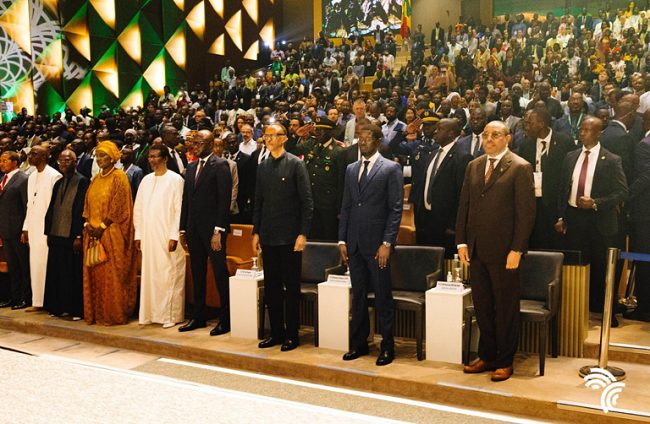
The Africa Food Systems Forum 2025 is underway in Dakar, Senegal, with a resounding call to place youth at the very heart of agricultural transformation.

Inside the packed Auditorium, heads of state, global leaders, innovators, and young entrepreneurs gathered for the start of a week-long summit designed to reshape the continent’s agri-food future.

Africa Food Systems Forum 2025
Leaders at the formal opening of the Africa Food Systems Forum 2025 in Dakar, Senegal

In his keynote, Senegal’s President, Bassirou Diomaye Faye, welcomed more than 6,000 delegates from 80 countries, including over 2,000 youth.

He reaffirmed his government’s commitment to youth-led innovation, citing Senegal’s Community Agricultural Cooperative as a model for empowering the next generation.

With determination, he declared, “We have the means to feed our children and the world. Let us unite our will, mobilise our resources, and make food systems the engine of an African renaissance founded on dignity, sovereignty, and shared development.”

Hailemariam Desalegn, Chair of AGRA and former Prime Minister of Ethiopia, reinforced this vision. He reminded delegates that Africa’s food future depends on aligning political will, financial capital, and the energy of its youth.

“Africa’s food systems will only transform when we align political will, financial capital, and the energy of our youth,” he said, urging governments to take decisive steps toward domestic financing and youth-driven innovation.

Alice Ruhweza, President of AGRA, added urgency to the call. She stressed that the Forum must go beyond dialogue. “This is a call to accelerate our collective commitment to strengthen Africa’s food systems,” she noted, pointing to encouraging progress by farmers, women leaders, and young agripreneurs. Yet her words carried a stark reminder: hunger still grips hundreds of millions worldwide, with Africa bearing the greatest burden.

“We cannot grow what we do not fund,” she cautioned.

The energy peaked during the Youth Town Hall, where five remarkable young leaders engaged directly with President Faye and President Paul Kagame of Rwanda.

Siny Samba, CEO of Le Lionceau, called for deeper investment in youth-led agribusiness. Moustapha Sy Ndiaye, founder of Maraz, urged for digital integration. Claudia Senghor of AGROBABE pressed for stronger market access for women farmers. Fahima Mohamed Ismael, founder of CarroMaal, highlighted the power of digital literacy to connect farmers and consumers. And Adja Boudy Kante, CEO of Cereal House, called for greater investment in food processing to elevate Africa as a global powerhouse.

Both presidents responded with commitment, acknowledging the demands of the youth and promising to expand policy and financial support.

President Kagame captured the spirit of the exchange: “Africa’s future belongs to those bold enough to innovate, and our role as leaders is to clear the path for them.”

As the Opening Ceremony drew to a close, the message was clear: AFSF 2025 is not about declarations, but about action. Leaders pledged to strengthen intra-African trade, mobilise investment, and ensure women and youth remain central to transformation.

President Faye’s closing words echoed across the hall: “This is not just a conference. It is a movement. Together, we can build the Africa we want – an Africa that feeds itself and the world.”