Home Blog Page 1925

Africa crafts message of sustainability for international climate negotiations

0

Action on climate change and sustainable development together is the way forward for Africa. That is the top-line message that regional, public and private sector delegates will carry to international climate negotiations after a week of deliberations in the Kenyan capital.
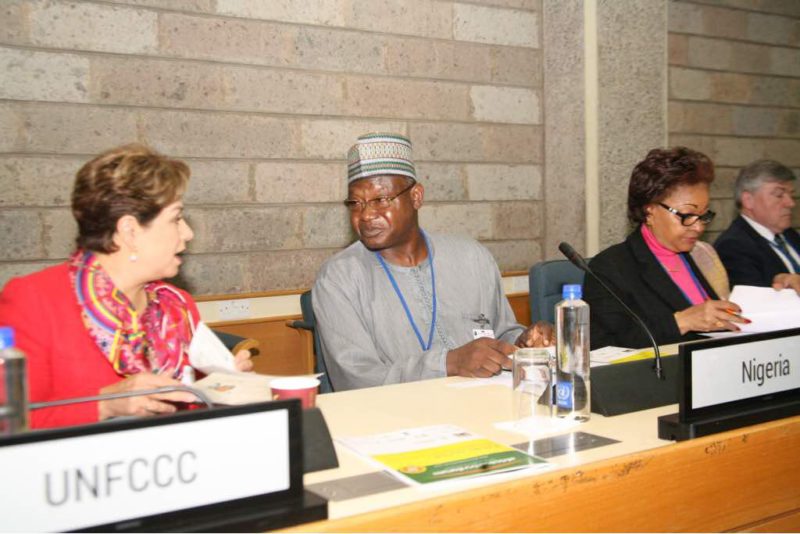
Africa Climate Week
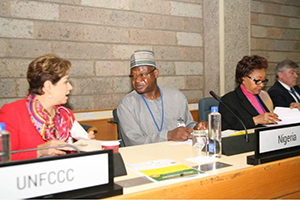
Executive Secretary of the UNFCCC, Patricia Espinosa, exchanging ideas with Nigeria’s Environment Minister of State, Usman Jibril, during a session at the Africa Climate Week

Some 800 delegates from 59 countries, including ministers and other high-level government and international officials, together with non-state delegates, offered their insights into the challenges and possible responses to climate change, and harvested those insights for consideration in the official international climate negotiation process.

The collecting of views – under the banner of the year-long Talanoa Dialogue launched at negotiations in Bonn, Germany, in November 2017 – was a key part of Africa Climate Week that was concluded on Friday, April 13, 2018 in Nairobi.

At the first regional Talanoa event since the launch in Bonn, delegates distilled their deliberations into key messages:

  • Finance – Public finance must be instrumental in unlocking private finance
  • Markets – Carbon markets are about doing more together, and doing more with less
  • Energy – Energy is a high priority, affecting everything. Financial instruments should be put in place to de-risk investment and enhance involvement in smaller and medium-sized enterprises
  • Sustainable Development Goals (SDGs) – Achieving the SDGs, including the climate one is the only way forward
  • Technology – Businesses are ready to pick up new technology solutions, provided there is a good business case. The voice of the private sector is needed now more than ever.

The top-line message of delegates, that action on climate change is essential for sustainable development, was echoed in remarks by Erik Solheim, Executive Director, UN Environment, at the closing of the first Africa Climate Week, and of the Week’s cornerstone event, the 10thAfrica Carbon Forum.

“We are engaged across most of the Sustainable Development Goals and clearly focusing on how to create synergy between the different goals and especially with the climate goal, which is essential for achievement of all the other goals,” said Mr. Solheim.

The UN’s 2030 Sustainable Development Agenda details 17 global goals covering poverty, hunger, health, education, climate change, gender equality, water, sanitation, energy, urbanisation, environment and social justice.

“Africa can, should and will be the leader of ambitious climate change action in the world,” said David On’are, a Director at Kenya’s National Environment Management Authority (NEMA), citing a key message coming out of regional ministerial discussions that took place this week in Nairobi. “There is the need to raise ambition, interest, innovation and mobilise the necessary means of implementation to address climate change.”

Countries agreed in Paris in December 2015 to limit global average temperature rise to 2 degrees Celsius and work toward a safer 1.5-degree goal. In coming to their agreement in Paris, countries also recognised that success will require broad-based climate action by all sectors of society, both public and private, and by individuals.

“To achieve our goals, we need more ambition and action. Not just by national governments—they cannot do it on their own—but by all levels of government, business, investors and everyday people working together,” said Patricia Espinosa, Executive Secretary, UN Climate Change, at a high-level session on Thursday. “The good news is that momentum is picking up and we’re beginning to see the transformational shifts we need.”

Africa Climate Week, which held from Monday April 9 to Friday, April 13, was hosted and supported by the Government of Kenya and organised by the Nairobi Framework Partnership, together with NEMA. The Nairobi Framework Partnership (NFP) is celebrating this year its 10th anniversary, as is the Africa Carbon Forum, which was launched by NFP to spur investment in climate action through carbon markets, mechanisms and finance.

The NFP members include: the African Development Bank, Asian Development Bank, International Emissions Trading Association, United Nations Environment Programme (UNEP), UNEP DTU Partnership, United Nations Conference on Trade and Development, United Nations Development Programme, UN Climate Change, and World Bank Group.

Cooperating organisations include: Africa Low Emission Development Partnership, Climate Markets and Investment Association, Development Bank of Latin America, Institute for Global Environmental Strategies, Inter-American Development Bank, Latin American Energy Organisation and West African Development Bank.

Al Hamdou Dorsouma, Manager for Climate and Green Growth Division, African Development Bank (AfDB), said: “The African Development Bank believes that Nationally Determined Contributions (NDCs) are an opportunity for African countries to put sustainability at the centre of their long-term development. The dialogue at this first Africa Climate Week demonstrated the ambition and determination by both state and non-state actors, as well as development partners, to push for expanding green and resilient investments, which enable Africa to leapfrog to high impact and clean technologies in productive sectors. The African Development Bank fully supports this ambition through its High 5 priorities, that, when fully implemented, will help Africa to achieve about 90% of its Sustainable Development Goals and 90% of its Agenda 2063.”

John Christensen, Director, UNEP DTU Partnership: “We have had very interesting three days in Nairobi. The 10th Africa Carbon Forum shows that countries in the region are moving forward on the implementation of the Paris Agreement in spite of the still limited international climate finance resources. No doubt this will be challenging and countries in the African region will while taking the lead need support from more developed countries and a private sector that takes part of the responsibility while ensuring it happens in effective and wealth generating ways.”

Venkata Ramana Putti, Programme Manager, Carbon Markets and Innovation, World Bank: “Carbon markets and pricing has huge potential to help tackling climate change, and contributing to sustainable development, hence the need to give it attention through a strong collaboration at domestic and regional levels.”

Dirk Forrister, CEO, IETA: “The strength of Africa’s response to the climate challenge is rooted in how well African business can become a partner in the effort. Many African businesses are interested in how the market incentives of regional cooperation can unleash important new climate business potential in the region.

“Once again, ACF explored this market growth potential and the innovative policy ideas for accelerating climate action.”

Jukka Uosukainen, Director, Climate Technology and Network Centre (CTCN): “Since the Paris climate Agreement in France in 2016, African governments have started asking for technological support in tackling climate that adversely affects the continent.  By serving as a bridge between developing countries’ technology needs and the proven expertise of finance, private sector and research experts from around the world, the Climate Technology Centre and Network (CTCN) builds partnerships that achieve countries’ climate and development objectives. This forum was a great opportunity to share best practices and lessons learned in Africa.”

Tony Simon, Director General of the World Agroforestry Centre (ICRAF): “As a Climate Technology Centre and Network founding consortium partner, ICRAF has contributed to knowledge resources of CTCN.  Through new challenges like climate change and CTCN demands and your own wishes and needs we have seen that knowledge services that we offer is what CTCN is all about. The food system is under pressure from climate change.

“Locally-relevant options that enhance agricultural productivity, climate change adaptation and mitigation need to be adopted. Explore innovative finance instruments. Private equity offers a huge amount of money. Use the money from CTCN and other sources to pull in other funds and use that as an opportunity to blend financing for climate change initiatives.”
Cancer fatality rate worries government

0

The Federal Government on Friday, April 13, 2018 said the level of fatality of cancer cases in the country had become worrisome.

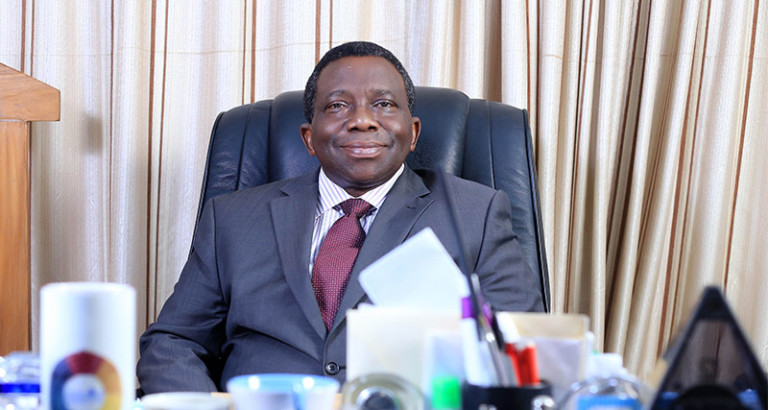
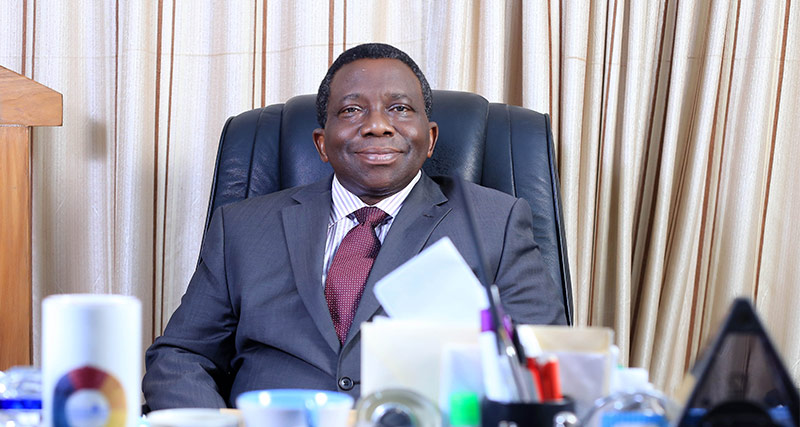
Isaac Adewole
Minister of Health, Professor Isaac Adewole

Minister of Health, Prof. Isaac Adewole, stated this at the launch of National Cancer Control Plan (NCCP) 2018-2022 in Abuja.

Adewole said that the plan would create awareness on the dangers and treatment of cancer, and help to address every aspect of cancer management to improve the quality of life of patients.

He said that the plan included prevention, early detection through regular screening, early treatment, intervention, palliative care and pain control.

He called on all stakeholders to join hands with the ministry to fight the scourge of the deadly disease, saying that it must be conquered.

On his part, Prof. Sunday Adewuyi, Clinical and Radiation Oncologist, Ahmadu Bello University, Zaria, who presented overview of NCCP and state of cancer in Nigeria, said cancer was real.

“Cancer is real and does not discriminate against tribe, religion, sex, educational level, political class or party.

“Being diagnosed of cancer in Nigeria is like a death sentence due to cost of drugs, surgeries and investigations,  deficient facilities for radiotherapy and specialised care and adequate manpower in every aspect of oncologic therapies.”

Adewuyi pointed out that a nation’s healthcare delivery system had significant inputs from all stakeholders and that a good synergy was required to achieve optimal care.

He enumerated some of the challenges faced by cancer patients in Nigeria as low insurance coverage to reduce financial burden on patients, deficient supply chain for drugs and consumables, lack of dedicated centres with optimal infrastructures and manpower.

He said that the other challenges were lack of legislation and policies to fund cancer centres and cancer care.

The minister added that the challenges faced by cancer health care-givers were apathy and loss of confidence in orthodox treatment and non-inclusion of comprehensive cancer care in National Health Insurance Scheme (NHIS).

The care-givers’ other constraints, he said, included were brain drain, obsolete, deficient and non-functioning radiotherapy equipment.

Adewuyi advocated declaration of a state-of-emergency in cancer care in Nigeria and 100 per cent implementation of the 2018-2022 plan.

In her remarks, Founder and Chairman, Medicaid Cancer Foundation, Dr Zainab Bagudu, thanked the team that put together the control plan.

Bagudu, who is Wife of Kebbi Governor, said that the plan was long overdue as the old one expired in 2013.

She expressed delight that the conversation about cancer had stepped up in Nigeria and hoped that the launch of the new plan would translate into reduced mortality rate.

“We are very good at making plans but the burden and the huge task ahead of us is to implement these plans.

“Cancer is a very complex disease that is not yet properly understood and is very expensive to treat, and all these made it more of a problem in our own society.

“In Africa where we have superstitious belief, it adds to the burden and stigmatisation of cancer patients,” she said.

By Ebere Agozie

World Health Day: Climate Wednesday engages Bariga council on health talk

0

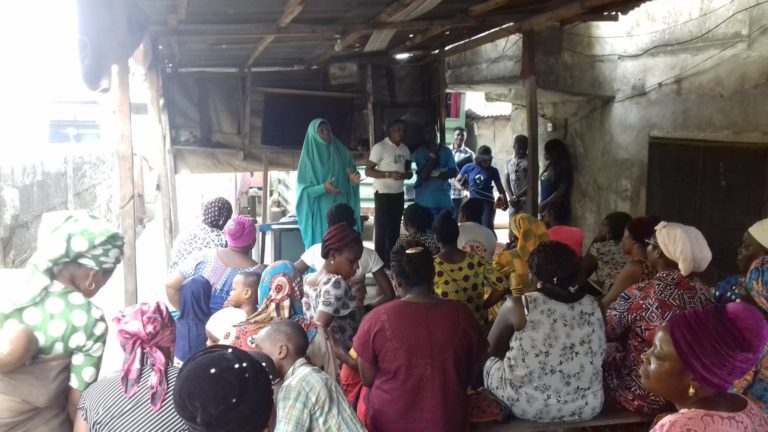
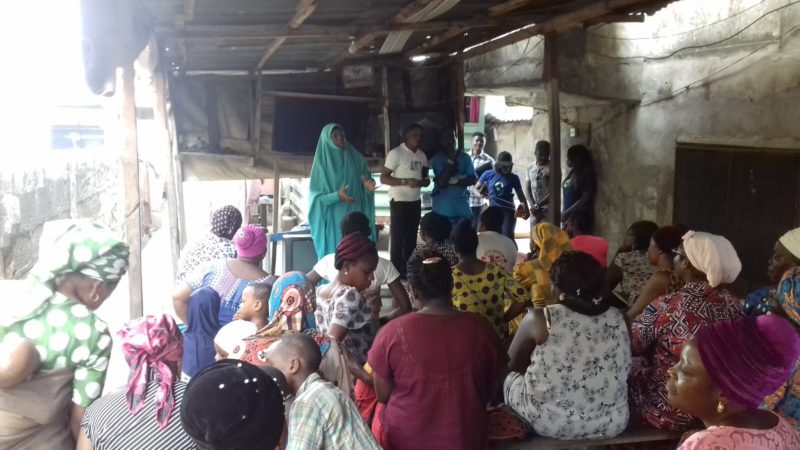
As part of activities to mark the 2018 World Health Day, Lagos-based international climate change development group, Climate Wednesday, took up the initiative called “Community Health Talk” to the grassroots by visiting a local community in Bariga Local Council Development Area (LCDA) in Lagos.

Community Health Talk
The Community Health Talk

According to the organisation, the event was aimed at engaging the members of the community on health issues affecting them. The event took place on Saturday, April 7, 2018.

The four-hour forum had in attendance about people 50 people, including seven members of the Climate Wednesday team and over 40 members of the community.

The interactive event saw members of the Climate Wednesday team delivering messages to members of community on the importance of good health, reminding them of their right to good health, financing for health for all and the benefits of teamwork.

Project Manager at Climate Wednesday, Adenike Adeniran, gave an introductory note on the purpose of the event, even as Youth Engagement Officer, Azeezat Yishawu, gave the health talk, emphasising on the importance of team work and having reliable representatives in the community who can help them negotiate and demand for their rights from the concerned principals.

Community Engagement Officer, Babatunde Enitan, while buttressing the points made in the native Yoruba language for in-depth understanding by the audience, advised them to spread the gospel and ensure that they make their individual efforts count on health matters.

Team Mobiliser, Mr Daniel, gave a closing note to thank the participants and reiterated on the learnings of the event.

Some observations during the community health talk are listed to include:

  • The members of the community acknowledged that the Health Centre in the neighbourhood is not big enough to cater for the number of people in the community, even though they do not have any challenges with the quality of service there. They requested for more primary health centres to be built to prevent overcrowding.
  • No free drugs services as resident have to purchase drugs.
  • Residents requested for a birth delivery facility as the nearest obstetrics hospital is far away from the community.
  • They also complained about the delay in services rendered by the waste collectors. Their waste is piled up and afterwards scattered around, making the environment dirty due to the fact that the waste collectors do not come to collect the waste in due time. Poor sanitation and pick up of waste within the community is thus a cause for concern

Residents were further enlightened on the importance of forming small groups within the communities to attend challenges that they face. They were also informed of various government parastatals within their community which they can approach and table their demands and request for accountability. Finally, they were educated on the importance of personal and environmental hygiene; such as how to reduce their waste as well as proper disposal of waste.

Climate Wednesday wants the Bariga LCDA authorities to invest more into financing health at all levels and ensure budgetary transparency and accountability.

Nigeria reduces malaria prevalence to 27%

0

The Minister for Health, Prof. Isaac Adewole, on Friday, April 13, 2018 said the prevalence rate of malaria has been reduced from 42 per cent in 2010 to 27 per cent in 2015.

Malaria-anopheles
The malaria-causing anopheles mosquito feeding on a victim

He disclosed this at the Malaria Public Sector Stakeholders meeting on dissemination of the Achievements of the MAPS-C project of Africare, an NGO, in collaboration with Exxonmobil, in Abuja.

Adewole, who was represented by Dr Evelyn Ngige, Director, Public Health in the ministry, said that efforts put in combating malaria scourge in the country was yielding positive results, as recent surveys show progression.

According to the minister, Nigeria contributes about 27 per cent of the 260 malaria cases and 23 per cent of the 435,000 deaths recorded in 2016, according to the 2017 World Malaria Report.

Adewole said that in order to sustain the gains and sustain the danger of a reversible, there was a need to deploy innovative approach to prevent, diagnose and treat malaria.

“With an effective surveillance system, we could track our progress.

“We have embarked on actualisation of the basic healthcare fund which is meant to increase the physical space and overall financing of the health sector and lead to the achievement of the Universal Health Coverage (UHC),” he said.
Adewole, while appreciating Africare, said that the Malaria Prevention in MPN Suppliers Communities (MAPS-C) initiative was quite an impressive one.

The initiative, he explained, was an attempt to improve the quality of testing and diagnose malaria while also collating data through the introduction of a new technology, the Deki reader.

The technology, the minister added, was a specialised and integrated platform that uses an innovative approach to improve the accuracy of Rapid Diagnostic Testing (RDT) for data capturing and decision making.

Adewole listed the pilot states for the use of the technology as Akwa Ibom and Rivers.

He however implored Exxonmobile to expand it to other neighbouring areas of the benefitting states.

The minister called on all stakeholders in the health sector, especially the private sector, to collaborate with government in healthcare delivery as well as support malaria control efforts across the country.

Earlier, the Country Director of Africare, Dr Doherty Orode, said that the initiative, which was without its challenges, was successful because of the Deki reader.

She explained that before the introduction of the technology in the communities where the project was implemented, malaria tests were not carried out before treatments and the use of chloroquine was still on.

Orode however said that progress was made later with the Deki reader, which allowed for getting results, accounting for commodities and also gave details which was stored in a portal for future reference.

She also said that a significant reduction in over treatment was achieved after the acceptability of the technology among members of the community.

The News Agency of Nigeria (NAN) reports that Africare is a US-based organisation which seeks to address African development and policy issues to build sustainable, healthy and productive communities.

NAN also reports that its MAPS-C project has served over 90,000 people in four local government areas in Akwa Ibom and Rivers states; namely Eket, Ibeno, Bonny and Ogu-bolo since 2011 to 2018.

By Veronica Dariya

Agency inaugurates 10-day environmental sanitation in Jigawa

0

The Jigawa State Environmental Protection Agency (JISEPA) has embarked on 10-day sanitation in the Northeast Senatorial District of the state.

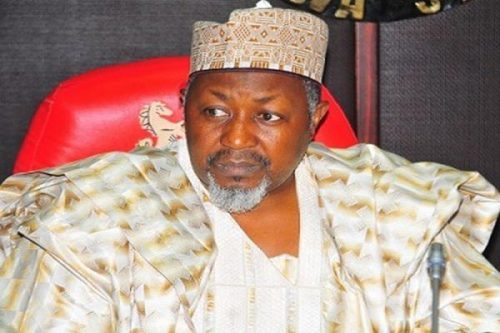
Gov. Muhammad Badaru
Gov. Muhammad Badaru of Jigawa State

Malam Muhammad Talaki, Information Officer, Hadejia Local Government Area, which is part of the affected councils, made this known to the News Agency of Nigeria (NAN) in Dutse, the state capital, on Friday, April 13, 2018.

JISEPA’s Acting Managing Director, Alhaji Umaru Adamu, reportedly said during the inauguration in Hadejia town that the exercise would involve clearing of drains and waste evacuation.

Talaki quoted Adamu as saying that the exercise, aimed at improving hygiene in rural communities, would also include vector control.

The information officer added that the acting managing director noted that the exercise was also geared towards reducing threat of flooding as the rainy season approaches.

He said that the state government had provided the agency with the needed support for the successful conduct of the exercise.

Talaki told NAN that Adamu also urged all the benefiting communities to cooperate with sanitation workers for the smooth conduct of the exercise.

He said that the area’s Zonal Officer of the agency, Malam Muazu Muhammad, disclosed that the exercise would be for five days in Hadejia council, two days in Auyo and KafinHausa councils and one day in Balangu village.

‘‘The zonal officer said the exercise is part of a comprehensive waste and drain clearance operation designed to enhance sanitation in rural communities in the area.

‘‘The agency is aimed at sensitising the people on the need to keep a clean environment and promote good sanitation habits.

‘‘Muhammad also reiterated the state government’s commitment to protecting the environment through effective waste management.

‘‘He further urged the people to cooperate with the agency’s workers and desist from indiscriminate dumping of waste in residential areas and waterways.’’

He said the zonal officer advised the Hadejia Local Government Area and other wealthy individuals to provide dustbins, refuse dumping sites and waste collection points for easy management of wastes in the area.

By Muhammad Nasir Bashir

Integrate green building technology into National Housing Policy, says environmentalist

0

An environmentalist, Mr Lot Kaduma, has called on the Federal Government to integrate the evolving green building technology into Nigeria’s National Housing Policy.

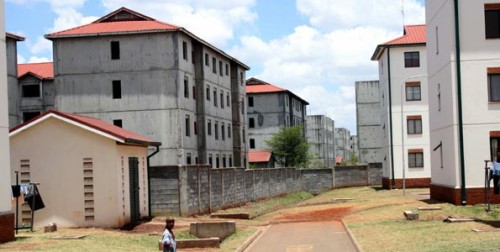
Estate
Housing estate. Photo credit: lagos.all.biz

Kaduma, an architect and sustainable cities campaigner, made the call in an interview with the News Agency of Nigeria (NAN) in Lagos on Friday, April 13, 2018.

He said that integration of the technology into the National Housing Policy would help to mitigate the effects of climate change in Nigeria.

According to him, green buildings evolved from the green technology concept, designed to mitigate or reverse the negative effects of human activity on the environment.

Kaduma said that embracing green buildings in Nigeria was the way to go, to make the environment friendly to people.

He pointed out that the construction industry constituted a major source of climate change, owing to toxic emissions from non-green buildings.

“The construction industry is a major contributor to climate change, where buildings alone account for over 30 per cent of the world’s greenhouse gas emissions.

“This requires increased awareness among stakeholders in the Nigerian construction industry and the need for a strong buy-in of green building by the stakeholders to ensure its quick adoption in Nigeria.

According to him, a key issue that affects the practicability of green buildings in Nigeria is the level of technical Knowledge available within the construction sector.

“Construction professionals, manufacturers and artisans will need to acquire new skills in the aspect of design, construction and management of green buildings in Nigeria.”

Kaduma also called for the incorporation of the technology into the curriculum of tertiary institutions and professional bodies in the country.

“The technology should be a requisite for professional certification and advancement in professional bodies like the Nigerian Institute of Architects (NIA), Nigerian Society of Engineers (NSE), Nigerian Institute of Builders (NIOB) and the Nigerian Institute of Quantity Surveyors (NIQS).”

The architect said that the long-term benefits of a green building outweighed its high cost implications.

“There is a general perception that the initial cost of green buildings is higher than regular buildings.

“But recent advancements in the green technology industry have led to a fall in the price of green buildings.

“The global community has set a goal to ensure that all buildings are Net-Zero Green Buildings by 2050,” he stated.

NAN learnt that the Heritage Place on Lugard Avenue in Ikoyi, Lagos, is Nigeria’s premier green building.

The building is reputed to be the first to achieve the leadership in Energy and Environmental Design (LEED) certification in both design and construction.

Nestoil Towers in Victoria Island in Lagos, completed in 2016, is also cited as another LEED certified green building in Nigeria.

Others are the Eco Village in Port Harcourt and the Abuja Technology Village, which will be inaugurated next year.

By Mercy Okhiade

Lawmaker calls for arrest of masterminds of air pollution in Rivers

0

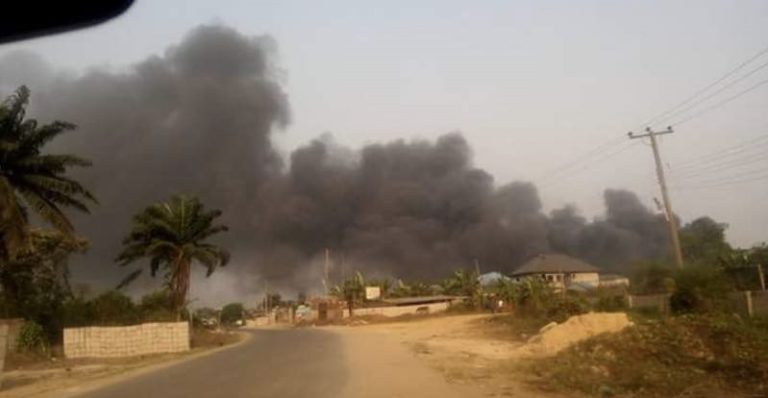
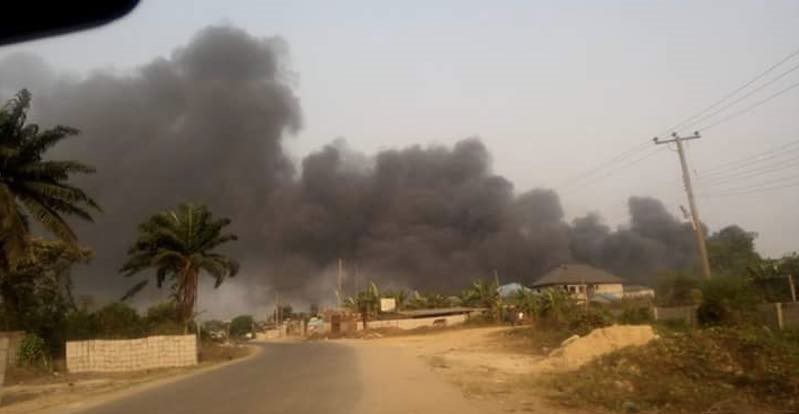
Lawmaker representing Obio/Akpor Constituency of Rivers State in the House of Representatives, Rep. Kingsley Chinda, has called on security agencies to apprehend those responsible for the current air pollution in Port Harcourt and its environs.

soot-port-harcourt
Soot spreading over a neighbourhood in Port Harcourt, Rivers State

He made the call at a meeting with “Stop the Soot’’ Campaigners and other lawmakers in Port Harcourt, the state capital, on Friday, April 13, 2018.

Chinda blamed the current air pollution, which was caused by black soot, in Port Harcourt and environs on the activities of illegal oil refiners and bunkers in the state.

“There is need for investigation to uncover the owners, sponsors and brains behind the illegal refineries which have gravely affected air quality in the state.

“Some of the information we have indicates that we need to look beyond the artisans because they don’t own these illegal refineries.

“There are some big men; perhaps some politicians and big businessmen who are sitting somewhere and using the artisans to make money,” he said.

Chinda said that some of the owners of the illegal refineries might not be indigenes of the state or natives of the Niger Delta region.

Also speaking, Assemblyman Christian Ahiakwo, lawmaker representing Ogba/Egbema/Ndoni Constituency 1 in Rivers House of Assembly, said the prevalence of black soot in the atmosphere could cause serious health challenges if efforts were made to address it.

He rejected the notion that illegal refineries and International Oil Companies (IOCs) were not those that triggered the lingering soot across the state.

“How come the IOCs have never raised an alarm, even when they see that pressures in their control rooms are rising – signifying that there is a theft case (at the oil pipelines)?

“From investigations, there are some people who are colluding with the producers of the kpo-fire (adulterated fuel and diesel),” he said.

Ahiakwo said that judging from the manner in which pipelines were opened and clamped; some unscrupulous experts were involved in the business of stealing oil from the pipelines.

He said that the security agencies should hunt down and prosecute such individuals, as part of efforts to address the growing menace of air pollution in the state.

By Desmond Ejibas

World’s first renewable mini-grid industry association emerges

0

The Africa Mini-grid Developers Association (AMDA) on Friday, April 13, 2018 announced its official establishment. The trade association – currently numbering 11 member companies including innovative start-ups and established utilities – aims to combine private sector innovation, efficiency, and customer service with public sector support to help end energy poverty across Africa.

Mini
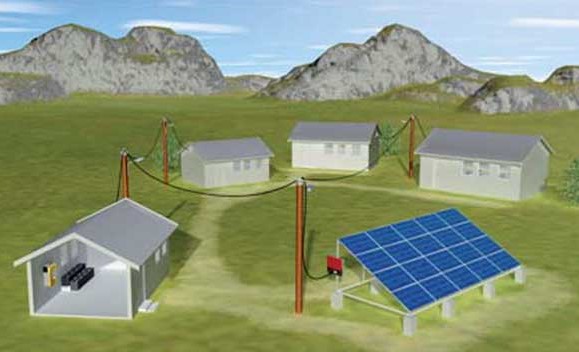
An impression of a mini-grid solar system

AMDA is said to be the first trade association dedicated exclusively to the mini-grid industry, and is composed of developers operating AC mini-grids that ensure power reliability of at least 20 hours per day. The association also works closely with a variety of solution providers, including EPCs, hardware and software vendors and integrators.

AMDA currently has chapters in Kenya and Tanzania, where member companies have built 430 kilometres of transmission lines, and renewable generation to serve over 11,000 connections, including households, schools, health clinics, micro-enterprise and agriculture. AMDA, which plans to grow into a pan-African platform for private utilities, is in the process of setting up its next chapter in Nigeria, which will include seven additional local developers, and has so far received interest from three other countries.

“AMDA’s vision is to see 100% of Africa electrified before 2030, and this will require utilities to incorporate new and innovative technologies, with mini-grids playing a central role,“ said Jessica Stephens, AMDA’s Global Coordinator. “Mini-grids can deliver more connections per dollar, can be deployed more rapidly than traditional grid infrastructure and play an important role in stimulating local economic opportunities and creating jobs.”

By providing a unified voice for the industry, AMDA aims to partner with governments and utilities to build next generation grids based on the needs of both industry and communities. AMDA will share knowledge and feedback with policy-makers, regulators and investors, while also representing the voice of the customer, which is currently under-represented on the issue of energy access.

Near-term objectives of AMDA include:

  • Mobilise finance for mini-grids:​ working with donors, national governments and other stakeholders to develop a smart Results Based Financing (RBF) fund to support scale-up of mini-grids, as well as finding ways to unlock lower-cost debt capital
  • Equalise public-private incentives: achieving a level playing field, both regulatory and financial, for mini-grids that is on par with other grid-based solutions;
  • Make Integrated planning the norm: establish national grid integration frameworks that are inclusive of mini-grids;
  • Better inform market support activities: highlighting useful areas for public interventions and providing market information to organisations funding R&D and innovation;
  • Unify and expand voice of the sector across Africa: grow the number of members to at least 25 developers across seven countries by the end of 2018, with a longer-term goal of representing all private sector developers across the continent. The next chapter is expected in Nigeria, with the goal of adding Ethiopia and Uganda by the end of 2018.

AMDA is supported by the Shell Foundation, the World Bank and the UK Department for International Development (DfID).

“Mini-grids offer the quickest, most cost-effective way to bring 24-hour power to large parts of Africa, while other areas will be better served by standalone home systems or national grid extension,” said Richard Gomes, Director, Market Development at Shell Foundation. “Unlocking public and private capital to accelerate the growth of this sector is therefore critical to meet the continent’s energy needs. We believe AMDA will help facilitate this by providing an aligned industry viewpoint, accurate market information and technical support for investors and policy-makers that is missing in today’s market.”

Amadou Hott, the African Development Bank’s Vice-President for Power, Energy, Climate and Green Growth, said: “Green mini-grids are an essential part of the bank’s New Deal for Energy, 2 which envisions 75 million new connections coming from distributed energy solutions. Through our various initiatives, including the Green Mini-Grid Market Development Programme, the AfDB looks forward to working closely with AMDA to create the necessary conditions for scaling the sector, and energy access, across Africa.”

“Rural electrification is successful when the needs of remote communities are fully integrated into energy access solutions,” said Prosper Magali, Director, Projects and Business Development at Ensol. “The members of AMDA are committed to partnering with these communities to not only provide the safest, most reliable and highest quality service, but to ensure a low-carbon future that builds economic opportunity, resilience, and gender equity.”

The International Energy Agency (IEA) projects that mini-grids are a $190 billion investment opportunity between now and 2030, also noting that mini-grids and other distributed renewable solutions are the least cost option for three-quarters of all new connections needed in sub-Saharan Africa, where more than 600 million people still lack basic electricity.

Africa strives to turn climate threat into sustainable development opportunities

0

Climate change is a grave threat to Africa and any development gains the continent has made, but ambitious action and investment in response could hold tremendous opportunities.

Africa Climate Week
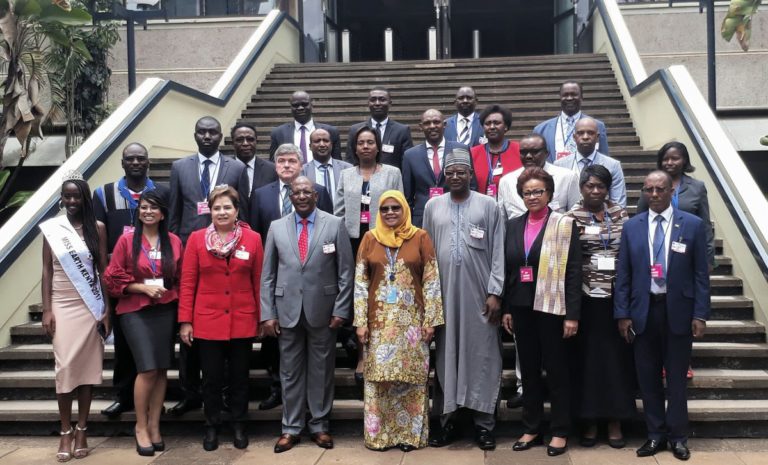
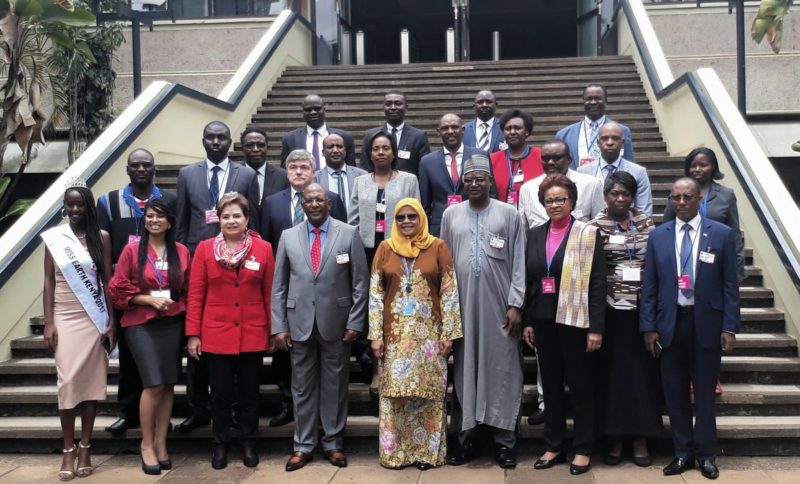
High-level ministerial delegation at the Africa Climate Week in Nairobi, Kenya

This is the message heard at the High-level session of Africa Climate Week in Nairobi, Kenya, where African policymakers, climate change officials and a broad swath of private and public sector representatives are gathered to address climate change.

“Nations are far away from the level of commitment needed to achieve the Paris Agreement‘s goal of limiting temperature rise to 2 degree Celsius, let alone 1.5 degrees, and countries in Africa are among the hardest hit,” said UN Climate Change Executive Secretary, Patricia Espinosa. “We need to invest in ambitious, integrated strategies and programmes in all sectors to turn Africa’s grave threat into a sustainable development opportunity.”

Nations agreed in Paris, France, in 2015 to limit global temperature rise to 2 degree Celsius and strive for a safer 1.5-degree limit. However, commitments made to date, described in countries’ nationally determined contributions, are far from the 2-degree target.

“Africa sees and is sadly witnessing the grave danger posed by climate change,” said Keriako Tobiko, Cabinet Secretary, Ministry of Environment and Forestry, Kenya. “We can’t be scared into inaction, but must rally with investment, ideas and ambition that can turn calamity into development opportunities.”

The meetings, workshops and networking of private and public sector actors and high-level policymakers at the at the first Africa Climate Week are intended to spur climate action on the ground in key sectors, for example energy, agriculture and human settlements.

How to mobilise the vast investment needed to tackle climate change, through market-based approaches and targeted finance, will receive special attention in Climate Week’s cornerstone event, the 10th Africa Carbon Forum.

Another important outcome of Africa Climate Week will be its harvesting of views for consideration in the official climate negotiation process, as part of the year-long Talanoa Dialogue launched at the UN Climate Change Conference in Bonn, Germany, last November.

“Countries made an historic agreement in Paris in 2015. The work now is on implementation, to limit warming, foster climate resilience, and align global finance flows with a pathway towards climate-neutral, sustainable development,” said Tomasz Chruszczow, a Champion of the Marrakech Partnership for Global Climate Action and Special Envoy for Climate Change, Ministry of Environment, Poland, in urging participants at Africa Climate Week to grasp the opportunity offered by the Talanoa Dialogue to inform and shape the international response to climate change.

Africa Climate Week is hosted and supported by the Government of Kenya and organised by the Nairobi Framework Partnership, together with Kenya’s National Environment Management Authority.

New study reveals threats, climate adaptation opportunities in Kenya’s arid lands

0

A team of scientists from the Kenya Markets Trust (KMT) on Wednesday, April 11, 2018 shared all the key research findings of four different thematic studies conducted in Kenya under the Pathways to Resilience in Semi-Arid Economies (PRISE) project.

Arid Kenya
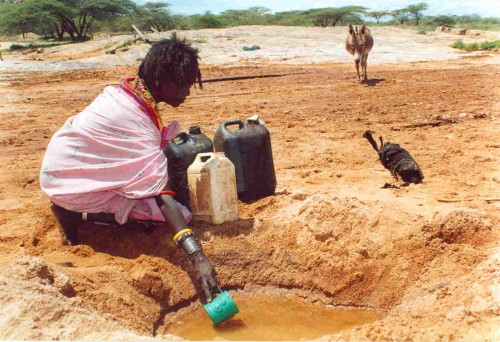
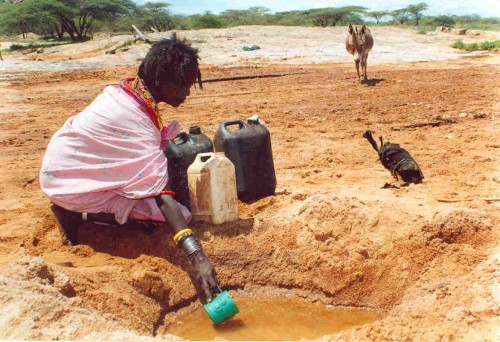
Arid land in Kenya

“The Kenya government is now focusing on the “Big Four” agenda aimed at improving livelihoods, creating jobs and growing the economy by focusing on critical areas of the economy in the next five years,” noted Kamau Kuria, the head of KMT.

“It is noteworthy that part of the PRISE study, which aimed at strengthening the understanding and knowledge of decision makers on the threats and opportunities that semi-arid economies face in relation to climate change, will go a long way in helping unlock the potential of semi-arid lands in Kenya and thus enhance  their contribution to the national agenda,” he told delegates drawn from Kenya, Senegal, International Development Research Centre (IDRC) and Overseas Development Institute (ODI) during the event to disseminate key research findings in a Nairobi Hotel.

The study, which was commissioned by the International Development Research Centre (IDRC) Canada and the UK based Department for International Development (DFID) aims at supporting climate resilient economic development in partner countries by identifying opportunities for adaptation that are also opportunities for investment by the public and private sectors.

“These findings from Kenya will help change the narrative in semi-arid areas,” said Dr Eva Ludifrom the Overseas Development Institute (ODI), which is coordinating the PRISE project at a global level.

According to Dr Evans Kitui of IDRC, direct involvement of government officials both at the county and the national level is a pointer towards implementation of policies that will emanate from the four studies. “In the past, research has not been well appreciated. But now, we can see a lot of government participation,” he said.

One of the studies found that, in the past 50 years, temperatures have risen in all the 21 semi-arid counties in Kenya, with five of them recording an increase of more than 1.5oC increase. They include Turkana (1.8oC), West Pokot, ElgeyoMarakwet (1.91oC), Baringo (1.8oC), Laikipia (1.59oC) and Narok (1.75oC).

This, according to Dr Mohammed Said, one of the lead researchers, has impacted greatly on livestock survival, on one hand presenting a disaster, and on the other hand providing an opportunity that can be exploited.

“There were winners and losers,” he told delegates at the forum. “Generally, cattle do  not survive the higher temperatures, while at the same time, sheep and goat population increased exponentially,” said Dr Said.

According to the study, whose theme was to harness opportunities for climate-resilient economic development in semi-arid lands and identifying the potential for economic transformation and diversification in semi-arid lands especially in the beef value chain, the overall population of cattle in all the semi-arid counties reduced by more than 26% between the year 1977 and 2016.

However, the study also reveals that goats and sheep population increased tremendously by 76% in the same period, with camels’ population increased by 14%. “This shows that goats, sheep and camels enjoyed the higher temperatures while cattle could not survive the stress,” said Dr Said.

“We’ve seen great potential for implementing some of the adaptation options and I call upon the stakeholders gathered here today, to pull together so we can build resilience and open up the ASALs for trade, investments and better livelihoods,” said Kuria of KMT.

In Nyeri County for example, Dr James Gakuo began with buying severely emaciated cattle for fattening at his farm in Kiganjo through intensive system of beef production that focuses on feeding cattle for 90 days on concentrate feeds till they reach the desired weight for the market, thereby creating a market for such animals that would otherwise have died.

In just two years, 14 other farmers have followed into his footsteps, and are in the business of fattening emaciated cattle thus providing more market to pastoralists who are hardly hit by tough climatic conditions.

Another study looked at the land tenure with special focus on Maasai pastoralist community in Kajiado County.

The study found out that 64 percent of the entire Kajiado County is now private land that is not open for grazing. “Though this has provided opportunity because privatisation can always lead to greater investment opportunities for those who can secure land, it marginalizes the poor and particularly women in the process,” said Dr Stephen Moiko, one of the lead researchers.

According to Dr Eva Ludi of ODI, these findings will be presented at the Talanoa Dialogue in Bonn, Germany come May 2018.

The purpose of the Talanoa Dialogue is for parties to share climate change related stories, build empathy and to make wise decisions for the collective good.

According to Dr Said, county governments should also take advantage of the research findings and scenario projections to develop their spatial plans.

“These findings will be important in formulation of new policies and strategies such as the National Climate Change Action Plan (NCCAP 2018-2022), the National Wildlife Conservation and Management Strategy, and the County Development Integrated Plans (CIDPs),” said Joseph Muhwanga, the PRISE project National Coordinator in Kenya.

Courtesy: PAMACC News Agency