Katrin Jakobsdottir, the 41-year-old chairwoman of the Left-Green Movement, emerged in November 2017 as the newest Prime Minister of Iceland. One of the most well-liked politicians in the country, Jakobsdottir, a former education minister and avowed environmentalist, has pledged to set Iceland on the path to carbon neutrality by 2040.
Katrin Jakobsdottir, Prime Minister of Iceland
Considered to be Iceland’s most trusted politician, Jakobsdottir took office on Wednesday, November 29 after formally signing a new government accord with the centre-right Independence and Progressive parties.
As Iceland’s fourth prime minister in only two years, Jakobsdottir took office at a time when national politics was tainted by public distrust and scandal. A democratic socialist, Jakobsdottir is viewed as a bridge-building leader that may lead the country towards positive, incremental change.
“She is the party leader who can best unite voters from the left and right,” said Eva H. Onnudottir, a political scientist at the University of Iceland, according to the New York Times. “Because this coalition includes parties from the left to the right, their work will be more about managing the system instead of making ‘revolutionary’ changes.”
Since forming its governing coalition, Jakobsdottir’s Left-Green party has already taken bold steps to assert its environmentalism. Rather than appointing a party member of parliament, the Left-Greens have picked Guðmundur Ingi Guðbrandsson, environmental activist and CEO of Landvernd, the largest nature conservation and environmental NGO in Iceland, to serve as Minister of the Environment. The government’s new coalition is expected to continue the work to address climate change began under previous administrations.
While climate change has proven to be somewhat of a boost for Iceland’s tourism industry, which welcomed approximately 2.2 million visitors in 2017, the nation of just over 300,000 recognises the importance of shifting to a clean energy economy and preparing for disruptive changes in the coming decades. Iceland’s climate change action plan involves shifting to clean energy in transportation by improving infrastructure for electric cars, planting more trees, and sourcing all energy for public institutions from renewable sources.
Scientists have warned micro-plastics in the ocean and the toxic chemicals in them are posing a significant risk to giant animals like whales, sharks and manta rays that are marine filter feeders.
Micro-plastics in the ocean and the toxic chemicals in them pose a risk to giant animals like sharks
The scientific analysis published in the journal Trends in Ecology & Evolution said on Monday, February 5, 2018 that such animals swallowed thousands of cubic metres of seawater daily in an effort to capture plankton.
“In which case they can ingest micro-plastics directly from polluted water or indirectly through contaminated prey,’’ the scientific analysis revealed.
It said plastic-associated chemicals and pollutants can accumulate over decades and alter biological processes in the animals, leading to altered growth, development and reproduction, including reduced fertility.
“While a definitive connection between microplastic ingestion and toxin exposure for filter feeders remains to be confirmed, studies into seabirds and small fish have found a link,’’ Elitza Germanov, the lead researcher of the study, said.
The marine species are also in danger due to their habitat areas overlapping micro-plastic pollution hotspots like the Gulf of Mexico, the Mediterranean Sea, the Bay of Bengal and the Coral Triangle – an area from Malaysia to the Solomon Islands in the Pacific.
Report says micro-plastics are small plastic pieces less than five millimetres long, which are harmful to the marine life.
“Many of the animals, like manta rays, are threatened species, so, it is difficult to assess plastic concentrations via conventional methods such as stomach analysis.
“So, we are using the non-lethal sampling of small amounts of tissue which we are testing for chemical tracers using sophisticated and sensitive analytical tools,’’ Germanov said.
Landmark University, Omu-Aran, Kwara State, on Monday, February 5, 2018 inaugurated a sensitisation campaign against bush burning to celebrate the 60th birthday of Pastor Faith Oyedepo, the wife of the institution’s Chancellor, Bishop David Oyedepo.
The Vice-Chancellor, Professor Adeniyi Olayanju handing over the bush burning campaign fliers to the Dean, College of Agricultural Sciences, Professor Charity Aremu
The News Agency of Nigeria (NAN) reports that Faith, born on Feb. 5, 1958, is the Vice-President, Education, Living Faith Church Worldwide, also known as Winners’ Chapel.
The campaign was jointly organised by Landmark University Community Development Impact Initiative (LMUCDII), College of Agricultural Sciences and Omu-Aran Fire Service Outstation.
The campaign, which involved distribution of hand bills to educate residents on the danger associated with bush burning, took the team to schools and markets in Omu-Aran and other designated areas in Eleyin and Ipetu-Igbomina communities in the state.
Speaking at the inauguration, Prof. Adeniyi Olayanju, the Vice-Chancellor of the university, said that the campaign was in line with the institution’s corporate social responsibility.
Olayanju, who decried the negative impact of bush burning on humans, soil and environment, said the menace had become a stumbling block to the socio-economic development of communities.
He noted that the regulatory responsibility against incessant bush burning, especially at the grassroots, had gone beyond what the government alone could shoulder and advocated a collective effort to achieve the desired results.
Olayanju also said there was the need to check the activities of some hunters whom he accused of deliberately setting bushes on fire.
He listed the negative consequences of bush burning to include depletion of soil nutrient, environmental pollution, reduction in farm yield and income, rendering farm harvest unsafe for consumption as well as destruction of the ecosystem.
“Consequences of bush burning also include serious eye and respiratory infections as well as breathing problems among others.
” It is on this basis that we are spearheading the anti-bush burning campaign in Nigeria to tackle the menace head on,” he said.
Prof. Charity Aremu, Dean of the College of Agricultural Sciences, said the campaign was informed by the need to save both humans and the environment from bush burning-induced attack.
Aremu extolled the virtues of the celebrator, commending her commitment to spiritual devotion and restoration of the dignity of the black race.
“These activities are geared toward honouring a woman of immense spiritual values who detests human oppression in all its ramifications,’’ she said.
An animal breeder, Prof. Olufunmilayo Adebambo, on Monday, February 5, 2018 said Genetically Modified Organisms (GMOs) should not be an issue in Nigeria as there were presently no infrastructure for it.
GMOs
Adebambo told the News Agency of Nigeria (NAN) in Lagos that embarking on GMOs could lead to loss of lives as facilities such as power to preserve and sustain such foods were unavailable in the country.
She decried the epileptic power supply in Nigeria, adding: “I had to spend over N4 million to establish solar power and make the Federal University of Agriculture Abeokuta’s (FUNAAB) Biotechnology Centre functional while I was the director there.’’
The animal scientist said GMOs were not necessarily harmful except if factors in the food were modified to the extent that they became unhealthy.
“Genetically Modified Organisms are a non-issue in Nigeria because of our obvious constraints. We will be killing ourselves if we decide to start modifying foods genetically.
“Also I do not support importation of GMOs. Nigeria should stop being an all or any comers market.
“China does not open its borders to foreign products even India; so, why can’t Nigeria emulate these countries?’’
Adebambo said what were undertaken by scientists in Nigeria were biotechnology not GMOs.
She described GMO as an introduction of foreign genes into livestock.
“For example, using banana to produce insulin for diabetic patients instead of extracting insulin from the Islet of Langerhan (part of a pig’s intestines),’’ she said.
On the availability of agric genetics experts in Nigeria, Adebambo said there should be over 400 geneticists in Nigeria under the Animal Breeding Genetics Group of Nigeria (ABGEN) group.
“I have personally produced over 50 postgraduates students in Nigeria.
“Low investment by the government in our educational system is its bane.
“We have everything in quality and quantity in Nigeria; the problem is however that we do not put our money where our mouth is,’’ she said.
The don said animal breeding was not an all-comers field and not a rapidly evolving enterprise rather it was generational, capital intensive and time-consuming.
“As an animal breeder, you forgo holidays, you cannot go on strike, forgo Christmas and Ramadan holidays.
“This is because somebody must feed your animals, clean their pens and water them every day.
“You must be ready to be committed to the work and you must have trustworthy people working with you,’’ she said.
Adebambo is a first female professor of animal breeding in Nigeria and was a former director of the FUNAAB biotechnology centre, who has been lecturing for 41 years.
Reactions have trailed Nigeria’s ratification of the Minamata Convention on Mercury, with the United Nations Industrial Development Organisation (UNIDO) promising assistance, and a civil society operative urging greater national consultation and awareness.
UNIDO Nigeria Country Representative, Mr Jean Bakole
The UNIDO Representative and Regional Director, Regional Office Nigeria, Jean Bakole, in a reaction, described the development as an achievement for all.
Speaking on his behalf, Environmental Expert, UNIDO Nigeria Regional Office, Abuja Industrial Development, Oluyomi Banjo, told EnviroNews on Sunday, February 4, 2018 that “work has just started, and we must all continue to make concerted effort to protect our health and the environment”.
His words: “Now that the country is fully bound by the obligations of the Convention but also eligible for the policy and financial benefits, actions should now be geared towards national and regional cooperation. “On behalf of the UNIDO Regional Director, UNIDO will actively support the country for the implementation of Nigeria’s Minimata Initial Assessment which has been completed and endorsed.”
Leslie Adogame of SRADev Nigeria
Executive Director of SRADev Nigeria, Leslie Adogame, on his part, underlined the need for greater national consultation and awareness on products to be phased out or phased down by 2020.
He said: “My first reaction is that of great elation about the ratification development. We must congratulate ourselves and the Nigerian government for keeping to their promise the journey that started about 10 years ago.
“The Nigerian government must from this time stay true to the spirit and intent of the Convention. In reality, the implementation process is just about to begin with domestication. It is time for National Action Plan (NAP), the enabling laws and regulations urgently need to be reviewed or promulgated.
“It is an era for deeper government transparency on who is exporting or importing from which countries for instance mercury products before phase out by 2020.”
Nigeria on Thursday, February 1, 2018 deposited its instrument of ratification, thereby becoming the 88th Party to the Minamata Convention.
The Minamata Convention on Mercury (“Minamata Convention”) is an international environmental convention for global community to sswork collaboratively against mercury pollution. It aims at achieving environmentally sound mercury management throughout its life cycle.
The Convention was adopted at the diplomatic conferences held in Minamata City and Kumamoto City in October 2013.
The newly renamed Alex Ekwueme Federal University, Ndufu Alike Ikwo (AE-FUNAI) in Ebonyi State is to hold a research exhibition where all concluded and preliminary findings of ongoing research works of staff and students would be showcased to the public.
Vice-Chancellor, Alex Ekwueme Federal University, Ndufu Alike Ikwo (AE-FUNAI), Professor Chinedum Nwajiuba
This was made known by the Vice-Chancellor, Professor Chinedum Nwajiuba during the 5th AE-FUNAI Lecture held recently in the university. The university is also to participate in the National Research Expo scheduled for Abuja in March 2018. Consequently, the Vice-Chancellor directed the Director of Research and Development in the University, Professor Onuegbu O. Ugwu, to inform and galvanise all academic staff to be part of these exhibitions.
According to the Vice-Chancellor, the essence of the exhibition is to make research innovative and production-driven in the institution, not just a mere academic exercise used to gain promotion. He further decried the poor research attitude of many Nigerian academics, who he noted were mainly interested in money and enjoined them to take research seriously in order make the country productive and self-reliant.
Meanwhile, Abakaliki rice and yam have been declared the official food of the university. This was also part of the decisions made by the Vice Chancellor at the 5th AE-FUNAI lecture.
Consequently, he has directed that all food to be cooked and sold in the university during such events like matriculations, convocations and the likes be strictly local products from Abakaliki, the host town of the university. This policy is to come into effect starting from the 6th matriculation ceremony of the university scheduled for 8th February, 2018. The Deans of various faculties, Acting Director of AE-FUNAI Outlook and campus food vendors were ordered to abide by the decision in all their entertainment and cafeteria activities.
Similarly, the Vice-Chancellor has also approved the production of “akwete” in the university. “Akwete” is a local fabric indigenous to the Igbo people of south eastern Nigeria. The establishment of the “akwete” fabric industry in the university would expose its students to entrepreneurial activities in that line of business; create opportunities for both job and additional income for members of the university community as well as drive the local economy to prosperity. On that note the vice-chancellor equally directed the Department of Fine and Applied Arts to ensure the venture takes-off immediately.
The institutions says: “These three executive orders from the vice-chancellor are in direct support of the federal government policies on economic diversification, ease of doing business and local content policy. Its positive spillover effect on the University staff and students, its host community and Ebonyi State in general are enormous and unquantifiable. It will definitely boost the local economy and more importantly promote the clamour for made-in Nigeria goods in this part of the country.
“Therefore, all hands must be on deck to ensure that these objectives are pursued and achieved, making AE-FUNAI a trail blazer among the comity of Nigerian universities in the promotion of economic diversification and local content policies of government.
In a related development, the management of the university has said that the retention of the word “federal” in the new name of the institution, is an honour worthy of celebration.
In a statement issued by the Vice Chancellor, Prof. Chinedum Nwajiuba, and made available to News Agency of Nigerian (NAN), the institution commended the Federal Government for the gesture.
NAN reports that Vice President, Prof. Yemi Osibanjo, pronounced the renaming of the institution on Friday, February 2, 2018 at Oko, Anambra State, during the burial ceremony of the late statesman.
Nwajiuba said that the gesture was a privilege because other Federal Government-owned institutions bearing names of great Nigerians never had the symbolic “federal” ascribed to their names.
“We love the acronym FUNAI and its sound. Our anthem and all our songs remain as we sing them with the infusion of AE-FUNAI.
“Unlike other federal universities named after persons, ours is the only one with the word ‘federal’ retained.
“Ahmadu Bello University (ABU), Obafemi Awolowo University (OAU), Nnamdi Azikiwe University (NAU), among others, are all federal universities, but do not have ‘federal’ in their names,” he said.
He therefore called for understanding among stakeholders over the controversy trailing the renaming of the institution, especially with Ekwueme hailing from Anambra.
“We all should be at peace with this development and be excited if we truly understand it.
“Those who argue that the Federal Polytechnic Oko, Anambra, where Ekwueme hailed from, should be renamed after him are not familiar with protocols and rankings in governance.
“For those who argue that the polytechnic be upgraded to a university and be renamed after Ekwueme, the Federal Government is reluctant to have two federal universities in a state.
“The 12 universities with such simple names as ‘Federal Universities’ are bound to be renamed at some time and if not Ekwueme in the southeast, who is more accomplished?,” he queried.
He noted that with Ekwueme’s iconic status in Igboland and Nigeria, the respect the name would attract to the university had made the renaming more befitting.
He described Ekwueme as an icon who trailed the blaze in academics, business and politics, laying the foundation for the dynamics of modern politics currently experienced in the country.
NAN recalls that Gov. David Umahi of Ebonyi, on Friday welcomed the renaming of the institution after Ekwueme.
The World Health Organisation (WHO) Regional Director for Africa, Dr Matshidiso Moeti, has said that an estimated 8.8 million people in the world die from cancer annually, representing almost one-sixth of total deaths.
Dr. Matshidiso Moeti, the World Health Organisation (WHO) Regional Director for Africa. Photo credit: pbs.twimg.com
She added however that cancer death rate is expected to double by 2030.
According to her, the WHO is ready to provide the support and guidance needed to offer quality access to cancer care for all, and ensure that no one is left behind.
“Together we can beat cancer,” she said.
Dr. Moeti made this known in her message to commemorate the World Cancer Day, held annually on February 4. This year’s World Cance Day, with the theme: “We can, I can”, as been described as an opportunity for the global community to unite in combating cancer, believed to be the second leading cause of death in the world.
According to her, 75 percent of cancer deaths in the world are recorded in low- and middle-income countries such as African Member States, partly due to late diagnosis.
She regretted that fewer than 30 percent of low-income countries have access to cancer diagnosis and treatment services.
“In 2015, approximately 35 percent of low-income countries reported the availability of public sector pathology services, relative to over 95 percent of high-income countries.”
She further stated that cancer referral systems are often unavailable, resulting in delayed access to care.
The cancer burden in Africa is projected to rise on account of the ageing population, chronic infections, unhealthy lifestyle choices and risk factors.
About a third of cancer deaths are due to preventable risk factors such as overweight, low fruit and vegetable intake, lack of physical activity, tobacco use and alcohol consumption.
Often, such choices are influenced by forces beyond the people’s control, such as the availability and more affordable cost of unhealthy foods, and the strategies employed to market tobacco and alcohol, she stressed.
According to her, when detected early, cancers are easier to treat with less expensive, invasive procedures and technologies.
In many African countries, controlling cancer requires the elimination of barriers to quality care, such as ignorance of the importance of early diagnosis and treatment.
It means introducing and implementing policy changes that guarantee the availability of cost-effective primary interventions such as the introduction of cervical cancer screening into the basic health care package and vaccination against cancer-causing viruses.
Recognising the growing threat of cancer as a public health problem, governments around the world adopted the 2017 World Health Assembly (WHA) resolution on cancer. They committed to 22 actions to help reduce the number of cancer deaths annually and improve the lives of those living with cancer.
This year marks the end of the three-year campaign “We can, I can” that urged individuals, societies and governments to take action and reduce the impact of cancer.
The drive sensitised millions, challenged governments and individuals around the world to take action, and provided a platform for cancer patients and their families to share their stories and be heard.
However, notwithstanding the gains made during the “We can, I can” campaign, the battle to curb the impact of cancer is far from over.
The key priorities identified were: promoting health; reducing risks; increasing the availability of anticancer vaccines; and ensuring that early detection, diagnosis, treatment, care and pain relief are more timely and accessible.
The resolution also lays special emphasis on cancer management for children, adolescents and young people, who have their own unique needs.
The message further readsL “The WHO is encouraging individuals to make healthy choices. Everyone can make a difference. We encourage schools, workplaces, community groups and broader society to play a role by promoting physical activity and actively opposing tobacco use, excessive alcohol consumption and unhealthy diets.
“We call on governments to implement policy changes in line with their commitments on non-communicable diseases (NCDs) and to reduce premature mortality from NCDs by 25 percent before 2025.
“Some effective strategies that could help to save lives include: high immunization coverage for hepatitis B and the human papillomavirus (HPV) within the target population; cervical cancer screening for eligible women; and early diagnosis.
“We also urge governments to improve access to people-centered cancer care; establish welfare programmes for patients and families, including psychosocial and rehabilitation services; invest in cancer surveillance; and support people undergoing treatment.
“Considering the commitments made by Member States under the Sustainable Development Goals (SDGs) to reduce premature deaths from cancers and other non-communicable diseases by one-third before 2030, the scaling up of various cancer control initiatives will contribute to the achievement of SDG-3, ensure healthy lives and promote well-being for all at all ages.”
Boko Haram militants, drought and pests have combined to wreak havoc on farmlands in Borno State, leading to low output and huge losses to the farmers.
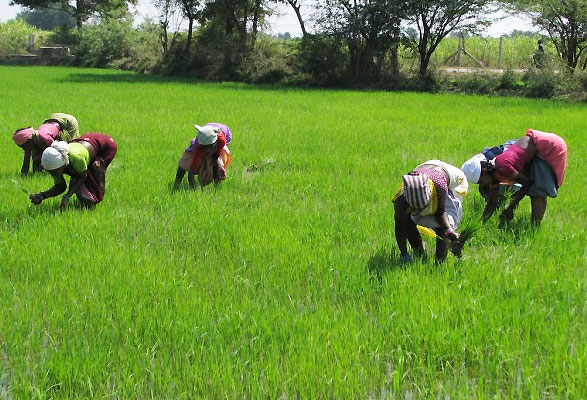
Rice farming
About 1,800 hectares of rice for instance wilted due to drought in some parts of the state, according to the farmers.
The News Agency of Nigeria (NAN) reports that some of the rice farms were also affected by pest infestation.
A cross section of the farmers who spoke to NAN at the Biriri and Koshebe rice plantations said that the destruction, by the combined forces, dashed their hope of bumper harvest.
Hajja Amina Isa, a rice grower, blamed the pests and drought for her woeful cropping season.
Isa said that she planted her crops several weeks into the rainy season, adding that the rain stopped before the plants matured.
“There were delays in the distribution of farm inputs to enable us cultivate our land on time.
“Few weeks after planting the fields; the rain stopped. We complained, water pumps and tube wells were provided to enable us save the plants through irrigation. Nonetheless the plants wilted.
“Ravaging quelea birds further destroyed what remained of the plantations”.
Another farmer, Malam Bashir Gwoni-Ali, alleged that about 400 hectares of rice was destroyed by Boko Haram insurgents at various plantations in Mafa local government area of the state.
Gwoni-Ali said that the insurgents burnt and destroyed the produce at their farms.
He listed the affected farmlands to include Koshebe, Kachemari, Juwano and Dinge.
“I and other farmers cultivated rice and recorded bumper harvest despite threats by the insurgents.
“Unfortunately the insurgents destroyed the produce and we are left with nothing,” Gwoni-Ali alleged.
Also commenting, Grema Musa, the Secretary of the Coordinating Team, Walwane Agricultural Supply Company, one of the Anchor Borrower clients, disclosed that the company registered about 13,000 rice farmers in the state.
Grema disclosed that fertilisers, seeds, chemicals, knapsack sprayers, tube wells and water pumps were distributed to the farmers.
He added that funds were also disbursed to the farmers to facilitate farm labour activities such as tractor services, ploughs, harrowing and processing.
The secretary revealed that the company had so far mopped up 35,000 tonnes of paddy rice from the benefiting farmers.
He said: “We took stock of 27,000 tonnes of the commodities in Maiduguri and another 8,000 tonnes in Biu.
“More than 1,800 hectares of farmlands were destroyed due to drought and pest infestation”.
Grema listed the affected plantations as Juwano, Koshebe, Moloi, Auno, Jimtolo, Azia, Gongolon, Biriri and Masiya.
According to him, the company had filed a formal complaint to the Nigeria Agricultural Insurance Corporation (NAIC), to enable it assess the damage.
He called on farmers to repay their loans to enhance participation and ensure sustainability of the programme
The News Agency of Nigeria (NAN) reports that about 18,000 registered farmers were supported under the Anchor Borrower scheme during the 2016/2017 raining season activity in the state.
Anchor Borrower is a critical component of the Federal Government’s agriculture transformation programme designed to achieve self sufficiency in rice production.
The programme is being run in collaboration between the Central Bank, Bank of Agriculture (BOA) and state governments
Recently some members of the Abuja Pick That Trash movement (Trash Haters, as they are called) met with the initiator, Oby Ezekwesili, in Abuja to discuss ways of furthering the cause of achieving a cleaner Nigeria and changing the mindset of people towards environmental sanitation and waste management. Seyifunmi Adebote, Abija-based environmentalist and media consultant, wrote this report from the meeting
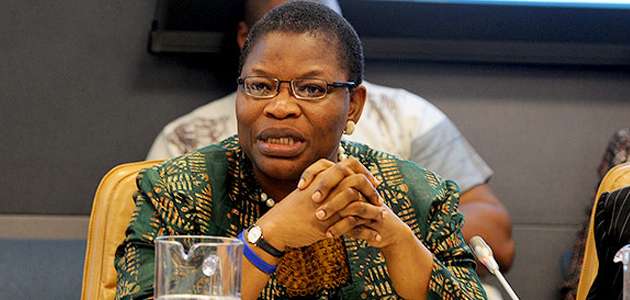
Former Minister of Education, Dr Oby Ezekwesili
According to the former Minister of Education and World Bank’s Vice President: “I had just returned from a visit to Morocco; unlike previous trips where I had to reside in the city, on this particular trip, I spent most of the time in suburbs and one thing struck me. The same cleanliness I saw in the cities was in the villages also. I became curious and started asking questions: ‘How are these people able to do this?’ The response I got was shocking. I was told that, some years ago, the King of Morocco was appalled by people’s indiscriminate waste disposal and how it was a menace to the environment; so, he gave an instruction that no one must litter the streets of Morocco. Over the years, the people of Morocco have grown with that mindset and they have been able to keep their communities spotless – both in the rural and urban areas.
“That was a challenge for me. I thought the same is possible in Nigeria too. When I came back in July 2017, I shared my thoughts on Twitter and asked passionately ‘Will you now join me to Pick That Trash?’ and the overwhelming response and energy of young folks led to the birth of Pick That Trash.”
From a single tweet with many retweets, Pick That Trash has become an initiative with active members across the length and breadth of Nigeria, all united to advocate for a clean Nigeria and change the mindset of people towards waste disposal and management. This they have been able to achieve through constant location clean up events, community sensitisation and innovative social media drive.
In the spirit of the World Cancer Day (WCD) observed on Sunday, February 4, 2018, the Women Hood Foundation has called on stakeholders to channel cancer awareness campaigns to the rural areas.
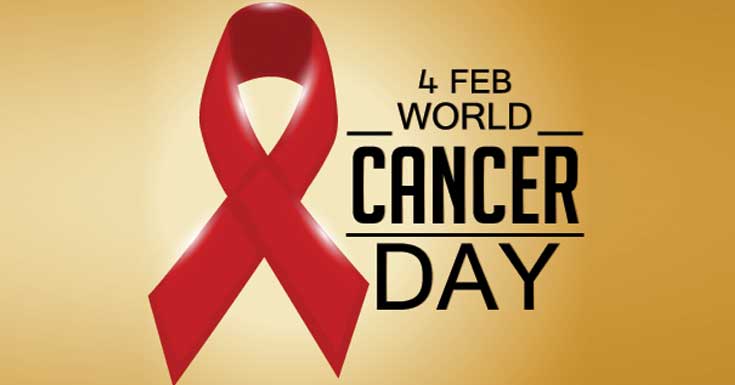
World Cancer Day: The red ribbon
Malam Nurudeen Bello, an official of the non-governmental organisation (NGO), said in Kaduna on Saturday at an awareness lecture that poor advocacy had left victims of cancer to die unattended to in rural areas.
“All individuals should be encouraged to play certain roles towards reducing the burden of cancer.
“This event gives us the opportunities to reflect on what we can do, making a pledge and taking action.”
Bello said that cancer is the second leading cause of death globally, with lung, prostate, stomach and liver cancer being the most common types in men.
“Breast, lung, cervix and stomach cancer are the most common among women.
“In Africa, most of the affected patients are the rural dwellers, who are mostly women. Hence, the need to take the campaigns to rural areas,” he said.
He expressed dismay over the poor advocacy on cancer in Nigeria, especially in the rural areas, where the perception is that, a victim of cancer is always on a death row.
According to Bello, reports indicate that, between 30 per cent and 50 per cent of cancer deaths could be prevented by modifying or avoiding key risk factors.
These factors include avoiding tobacco products, reducing alcohol consumption, maintaining a healthy body weight, exercising regularly and addressing infection-related risk factors.
The founder of Foundation for the Protection of Women and Children, Comrade Ramatu Tijjani called on all stakeholders to actively create awareness on cancer in rural communities to reduce the burden.