Home Blog Page 1921

Government bans production, importation of syrups containing codeine

0

The Federal Government has banned the production and importation of codeine as active pharmaceutical ingredient for cough syrup in an apparent move to check the substance abuse among Nigerians.

codeine
A cough syrup containing codeine

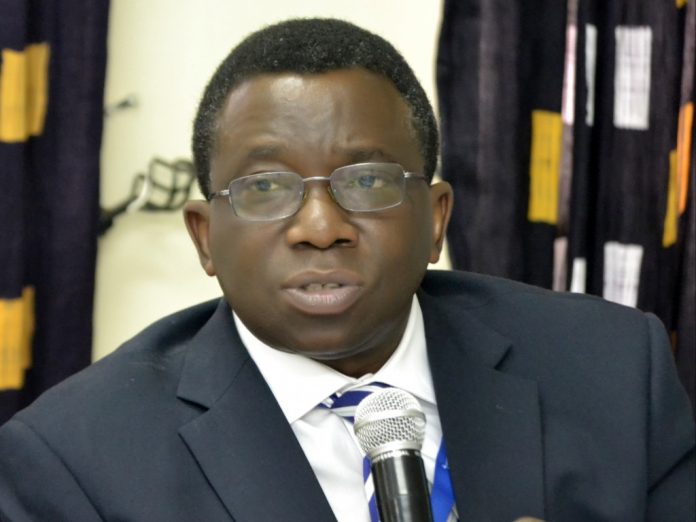
Minister of Health, Prof. Isaac Adewole, made the decision known in a statement issued by Mr Olajide Oshundun, Assistant Director of Information in the ministry, in Abuja on Tuesday, May 1, 2018.

The minister directed the National Agency for Food and Drug Administration and Control (NAFDAC) to ban the issuance of permits for the importation of codeine as active pharmaceutical ingredient for cough preparations.

He also directed the Pharmaceutical Council of Nigeria (PCN) and NAFDAC to supervise the recall for labelling and audit trailing of all codeine containing cough syrups nationwide.

Adewole said government had also banned the sale of codeine containing cough syrup without prescription.

He said the directive became necessary due to the gross abuse of codeine in the country.

In this regard, the minister said PCN had been directed to continue enforcement activities on pharmacies, patent and proprietary medicine vendors’ shops and outlets throughout the country.

He also directed NAFDAC to carry out its functions in compliance with the new directives.

The minister said cough syrups containing codeine should be replaced with dextromethorphan which is less addictive.

Dextromethorphan is a cough suppressant used to treat coughing; it is also a drug of the morphinan class with sedative, dissociative, and stimulant properties.

Adewole said the ministry would ensure collaboration among regulatory agencies for effective implementation of extant laws, regulations, policies and guidelines on codeine control and usage.

He said the regulatory agencies included NAFDAC, PCN, National Drug Law Enforcement Agency (NDLEA), Nursing and Midwifery Council of Nigeria (NMCN).

“These agencies shall work together to increase pharmacovigilance around codeine, tramadol and other related substances of abuse,’’ Adewole said.

Adewole said the ministry would partner National Orientation Agency (NOA), Nigeria Football Federation (NFF), football celebrities and other celebrities to drive the national campaign against drug abuse.

“The ministry shall ensure that drug treatment intervention for victims of substances abuse shall be undertaken across the spectrum of health care delivery system in the country,’’ he said.

The minister said civil society organisations (CSOs) would be strengthened to deliver effective sensitisation, prevention, treatment and rehabilitation services.

He renewed the commitment of government to ensure the full implementation of the National Drug Distribution Guideline (NDDG) by Jan. 1, 2019.

He added that the NDDG would also ensure the closure of all open drug markets penultimate the implementation date of the NDDG that is, Dec. 31, 2018.

By Mustapha Yauri
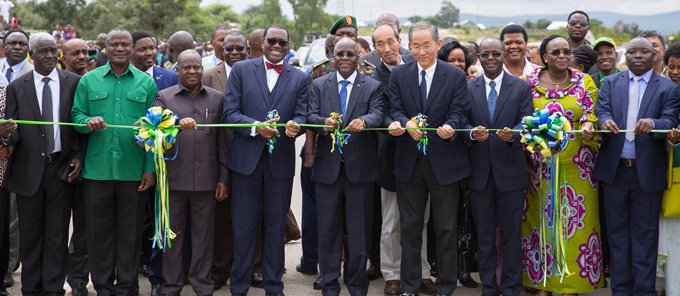
Tanzania road completes way linking Cairo to Cape Town

0

Rehema Tukai grew up in Kondoa and works in Dodoma, Tanzania’s capital city. Until now, visiting her family in Kondoa involved a five-hour journey along a bumpy and dusty road. Thanks to a new road co-funded by the African Development Bank (AfDB), it takes her a little over one hour to travel the same distance.

Dodoma-Babati Road
Official opening of the Dodoma-Babati Road in Tanzania

Tukai was one of several locals to celebrate when the President of Tanzania, John Pombe Magufuli, and the President of the AfDB, Akinwumi Adesina, commissioned the Dodoma-Babati Road project on Friday, April 27, 2018.

Until its completion, the Dodoma-Babati Road was a critical missing link in the 10,228-kilometre Trans-Africa Highway, linking Cairo to Cape Town, connecting nine African countries from South Africa to Egypt, through Zimbabwe, Mozambique, Zambia, Tanzania, Kenya, Ethiopia and Sudan.

With the completion of the road, traders and travellers now conduct immigration procedures on only one side of the border, reducing time and costs. Thanks to these efforts, the volume of trade between Tanzania and the rest of Eastern and Southern Africa has risen to $1.1 billion in 2016, a level both Adesina and Magufuli described as historic.

Magufuli said the Dodoma-Babati Road would improve the lives of people living in Tanzania and neighbouring countries. “Projects financed by the African Development Bank have a real impact on people,” Magufuli said, thanking the bank and the Japan International Cooperation Agency (JICA) for their strategic partnership in co-financing the project.

“Roads change everything. They bring hope alive. Such is the case of this road. While economic activity expands, so will family connections. It has brought much joy to families,” said Adesina, referring to beneficiaries such as Tukai.

The 251-kilometre road is expected to provide rural communities with renewed hope, through expanded economic activities, improved access and better prices for farmers, and to transform several communities.

Adesina congratulated Tanzania on the 54th anniversary of the union of the Republic of Tanganyika and the People’s Republic of Zanzibar and described the country’s unity as its strength and an example for the rest of Africa.

“Tanzania is headed in the right direction. With 7% economic growth this year, it has posted one of the highest growth rates in the world. That shows me the future of the Republic is very bright indeed! There will be need for massive physical and social infrastructure. There will be need for a Dodoma Airport. There will be need for a new road network to support increased transport, especially the Dodoma Ring Road. I wish to assure you that the African Development Bank will strongly support you on critical infrastructure for the new City of Dodoma,” Adesina said.

The AfDB says it has invested $3.6 billion in Tanzania, with an active portfolio of $2 billion, 53% of which is in road projects. The institution has reportedly invested more than $1.1 billion in five road projects in Tanzania, covering close to 1,400 kilometres.

At the commissioning ceremony, the Japanese Ambassador to Tanzania, Masaharu Yoshida, commended the African Development Bank for its contribution toward the completion of the project.

“Our cooperation with the Bank on this project will further strengthen the relationship between Japan and Tanzania and with Africa as a whole,” said Yoshida. “This road will contribute to the economic growth of Tanzania and all of Africa because it is, in fact, part of the ‘Trans-African Highway No. 4’ that connects Cape Town-Lusaka-Dodoma-Arusha-Nairobi up to Cairo.”

Bonn talks: Experts discuss implementation of circular economies

0

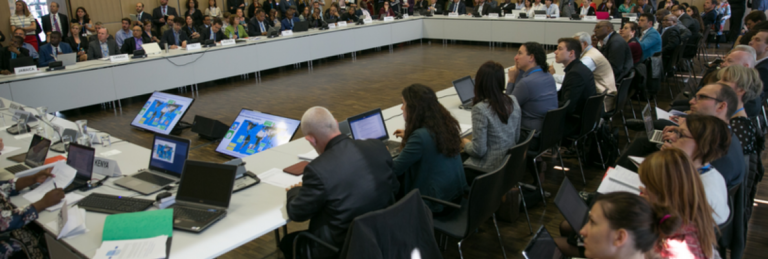
In an effort to step up immediate climate action, experts from around the world are meeting on May 1 and 2, 2018 in Bonn, Germany to discuss the policy options, technological innovations, and best practices on circular economies to achieve emission reductions and generate sustainable development benefits.

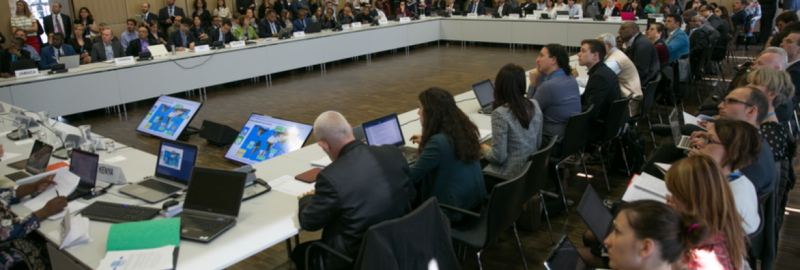
Bonn conference
The dialogue will check progress, reaffirm the goals of the Paris Agreement and aim to find solutions

The gathering is taking place as part of the so-called Technical Expert Meetings on Mitigation during the 2018 UN Climate Change Conference in Bonn, which aims to identify activities that have a high potential for emission reductions in order to boost climate action before 2020.

Importantly, the expert meeting is aligning its discussion with the format of the year-long Talanoa Dialogue, an important international conversation around ambition now and in the future.

Specifically, the dialogue will check progress, reaffirm the goals of the Paris Agreement and aim to find solutions as per how countries can increase their ambition now and in the next round of their national climate action plans, officially termed “Nationally Determined Contributions”.

As per tradition in the Pacific region, a “talanoa” invites participants to find solutions for the common good through story-telling. The Talanoa Dialogue will invite participants to share climate ambition-related stories around three questions:

  • Where are we?
  • Where do we want to go?
  • How do we get there?

The Technical Expert Meeting will also structure its discussions around these questions to ensure that expert voices can easily be fed into the Talanoa Dialogue. This will be important for the dialogue’s political phase at the UN Climate Change Conference (COP24) at the end of the year in Poland, where high-level officials from around the world will take forward all input received during the year.

Led and organised by the UNFCCC secretariat, the United Nations Industrial Development Organisation, and the World Business Council for Sustainable Development, participants will discuss currently available policies and technological solutions as well as innovative approaches on waste-to-energy and supply chain re-design solutions. These are regarded as integral elements to achieving a circular economy with key economic, environmental and employment benefits.

The circular economy is becoming an established way of creating value, and ultimately prosperity. It works by extending a product’s lifespan through improved design and servicing, and relocating waste from the end of the supply chain to the beginning – in effect, using resources more efficiently by using them over and over, not only once.

A number of experts representing the public and private sectors as well as the civil society from Africa, Asia, Europe, Latin America and the Pacific, will share their hands-on experiences. Their experiences will help to identify ways forward, as well as necessary actions to be taken by Parties, non-Party stakeholders such as cities or businesses and organizations to replicate and upscale innovative approaches. These discussions will also help identify best practices on waste to energy and supply chain re-design.

The expert meeting is part of the technical examination processon mitigation (TEP-M), which was initiated in 2014 with the aim of exploring high-potential mitigation policies, practices and technologies with significant sustainable development co-benefits that could increase the mitigation ambition of pre-2020 climate action.

World Asthma Day: Inappropriate drugs usage a major challenge in managing ailment

0

Inadequate use of medications, inhalers and taking overdose of drugs, are major challenges facing the management of asthma in Nigeria, according to a consultant family physician, Dr Oluwajimi Shodipo.

Isaac Adewole
Minister of Health, Isaac Adewole

Shodipo, who works at the Lagos State University Teaching Hospital (LASUTH), Ikeja, made the disclosure while speaking on the 2018 World Asthma Day with the News Agency of Nigeria (NAN) on Tuesday, May 1, 2018 in Lagos.

The World Asthma Day (WAD) is marked annually on the first Tuesday of the month of May. The 2018 WAD theme is: “Never Too Early, Never too Late. It’s Always the Right Time to Address Airways Disease’’.

Shodipo said: “Asthma is a chronic condition that is managed both by the use of medications and also some lifestyle modifications.

“However, the policy now is to discourage patients from using tablets and oral medications frequently because of the side effects that can occur from the systemic use of tablets.

“Some of the side effects that we see, especially in those who use steroids for long periods of time, include thinning of the hair and cataracts; some people become obese.

“Some, due to becoming obese, develop diabetes mellitus, hypertension, bleeding disorders; all these occur from the use of steroids.

“Unfortunately, what happens a lot of times is that people take an overdose of these medications, which is a major challenge in managing asthma in our environment,’’ he said.

The consultant told NAN that the general advocacy now was for people to move away from using oral drugs and start using devices such as the inhaler.

According to him, the advantage of those devices is to ensure that the medication is delivered at the exact point where it is needed, which are the lungs.

“It also ensures that the medications do not get absorbed systemically into other parts of the body and thereby reduce the side effects.

“Unfortunately, a lot of people are using the devices and complaining that they are not functioning; they say anytime they take the tablets, they feel better.

“What we have discovered is that the reason this is occurring is because a lot of people are not using the devices very well.

“So, there is a general push that doctors, when they are prescribing the devices, ensure that when the patients buy them they are actually taught how to use it and also be demonstrated.

“It should be emphasised at every clinic,” he said.

Shodipo also urged government at all levels to play their roles by ensuring that the devices became cheaper so that more people could use them.

According to Shodipo, it will also help to ensure that people have their asthma properly treated, without causing side effects that could occur from taking tablets.

Also, Dr Olufunke Adeyeye, a Consultant Respiratory Physician, at LASUTH, told NAN that managing asthma would also require support from schools, families and the community.

According to Adeyeye, there is need to train more doctors to manage asthma in the country.

“People should work together to support and help those suffering from the condition to manage their conditions.

“Teachers, parents, brothers, sisters and the community should be taught the risk factors so that they can help those with the condition.

“The treatment of asthma has changed over the years; doctors in Lagos State are being trained, but there is need to train more doctors across the country.

“Many doctors need to change in their pattern of managing asthma,” Adeyeye said.

By Esenvosa Izah

UN reports details ways cities can adapt to floods, storms

0

A newly-released UN report has detailed practical ways of adapting to climate change impacts such as increased flooding or intensifying storms in human settlements, from mega cities to villages.

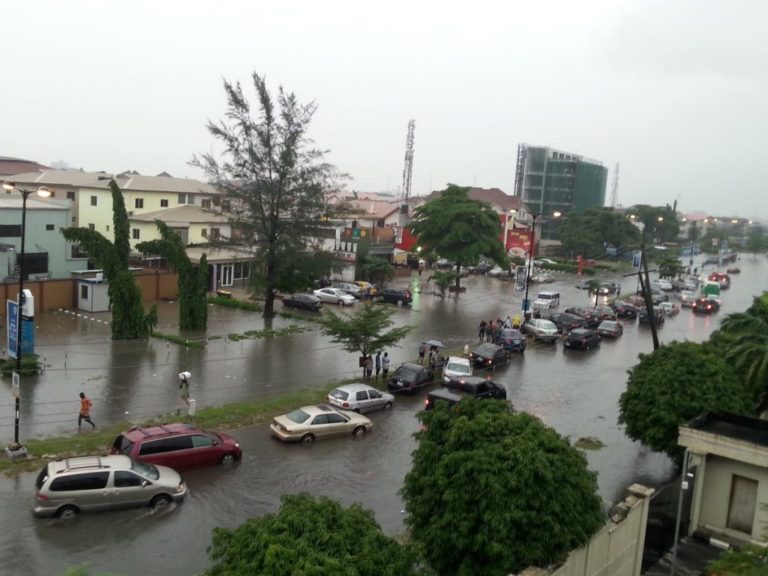
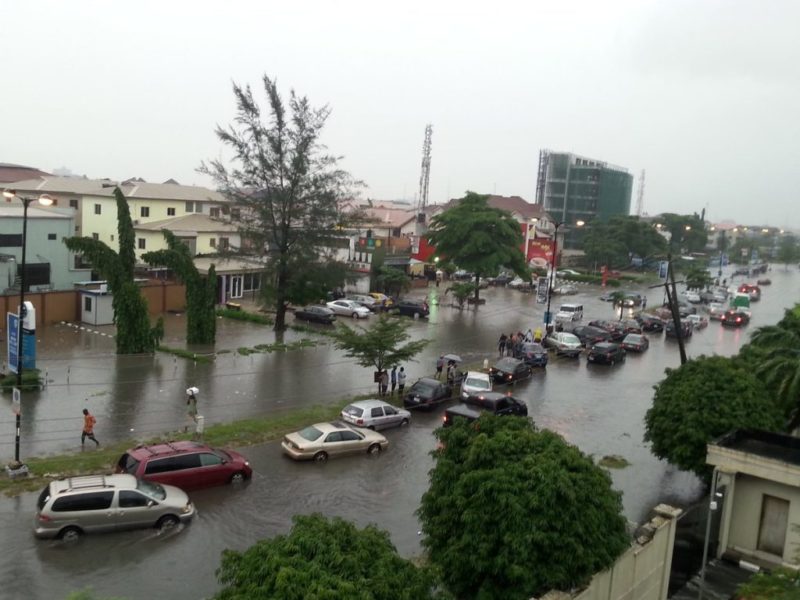
Lagos flood
A street overrun by flood on Victoria Island, Lagos

Importantly, the report provides hands-on tools that national and subnational governments can use to build climate resilience in collaboration with communities, civil society organisations, research centres and the private sector.

Released by UN Climate Change and prepared under the Nairobi work programme, the report, titled: “Adaptation in human settlements: key findings and way forward”, aims to share good practices and lessons learned to date and will be taken forward at an event at the May Climate Change Conference in Bonn, Germany.

The report is said to be timely as both the contribution to climate action by cities as well as urbanisation are increasing world-wide. Already, more than 50% of the world’s population lives in urban areas, a number which is expected to near 70% by 2050.

Climate change is reportedly exacerbating the vulnerability of human settlements to natural and human-made hazards globally to a disproportionate degree, especially in developing countries, coastal and delta regions and Small Island developing States (SIDS).

Increasing the climate resilience of human settlements is thus an important measure to protect lives and livelihoods, preserve development gains, and promote sustainable development, according to experts.

Cities around the world have begun realising this and more and more are taking action to increase resilience. Yet given the rate of urbanisation around the globe, more is needed to protect people and infrastructure going forward, says the UNFCCC.

This often includes the need to close knowledge gaps around the issue for decision-makers and planners at the national and local levels.

The report – available in all six UN languages – synthesises the latest experiences of resilience-building in human settlements by governments and organisations, as well as the latest research in this area.

Its key findings concentrate on the following areas:

  • Assessing vulnerability and integrating short and long-term climate considerations into adaptation planning;
  • The role of national governments in supporting local adaptation, including through national adaptation plans;
  • City to-city partnerships on adaptation to climate change;
  • A key event to build on the report as a launch-pad for boosting resilience in cities, towns and villages

During the May Climate Change Conference that commenced on Monday, April 30, 2018, a side event will take place to build on the report and its findings and to take it forward in concrete terms.

The side event, tagged: “Closing knowledge gaps on Human Settlements and Adaptation: The way forward“, will discuss opportunities to close knowledge gaps related to human settlements and adaptation for decision-makers and planners at the local and national levels.

The aim of the event, it was gathered, is to identify concrete proposals with partners to address knowledge needs in the short and medium term.

The report and the side event are the result of a seven-step approach that aims at advancing resilience in cities, towns and villages through knowledge.

Three-quarters of Lake Victoria life risks extinction – Study

0

Three-quarters of animals and plants, living in Lake Victoria in East Africa, are threatened with extinction, according to a study published on Monday, April 30, 2018.

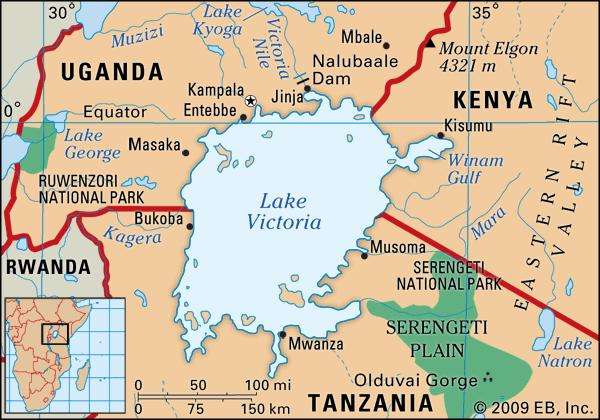
Lake Victoria
Some 40 million people in Kenya, Uganda and Tanzania depend directly or indirectly on the Lake Victoria

The International Union for Conservation of Nature (IUCN) said about 76 per cent of living organisms, including fish, crabs, dragonflies and aquatic plants, found in Lake Victoria and the surrounding area, are at risk.

Industries and agriculture have polluted the lake while overfishing and invasive species are also to blame, the study said.

The developments could be “disastrous” for people, who rely on the lake for food and income, said the IUCN’s Will Darwall, co-author of the study.

According to the World Bank, some 40 million people in Kenya, Uganda and Tanzania depend directly or indirectly on the lake.

The IUCN said it had investigated the risk of extinction of 651 freshwater species.

The study showed 204 of them could be found in the Lake Victoria Basin.

Lake Victoria is the largest lake in Africa and the second-largest freshwater lake in the world in terms of area.

Nigeria to launch two satellites soon

0

The Nigeria Communication Satellite Limited on Monday, April 30, 2018 said that it was collaborating with China Great Wall Industry Cooperation (CGWIC) to launch two additional satellites.

NigcomSat-1R
The NigcomSat-1R

Mr Samson Osagie, the Executive Director, Marketing and Business Development of the organisation said this in an interview with the News Agency of Nigeria (NAN) in Abuja on Monday that the satellites would be deployed in the next 36 months.

Osagie explained that the durability of a satellite was 15 years, and that the Nigeria’s current satellite was seven years old.

“NIGCOMSAT is collaborating with China Great Wall Industry Cooperation and we are negotiating to launch additional two satellites in 36 months.

“Presently Nigeria does not have the capital to build and finance its own satellite which is why the collaboration is needed.

“The first satellite by Nigeria was launched in 2007 but had issues and was de-orbited. It was later re-launched in 2011 which makes it seven years now.

“The life span of a satellite is 15 years, which means that the first one is still functional and it is important to note that negotiations for projects like this take time,” Osagie said.

According to him, the additional satellites will meet the needs of telecommunication, maritime, defence, broadcast media, Africa, parts of Asia and others.

He said that the two satellites would be launched separately, adding that negotiations on their operations were ongoing simultaneously.

NAN reports that NIGCOMSAT-1, the first satellite was originally launched in May 2007, but de-orbited due to malfunctioning of the Solar Array Deployment Assembly.

The satellite was later re-launched in 2011 as NIGCOMSAT-1R and had been in the orbit since then.

Ugandan issues flood risk alert as rain season reaches peak level

0

The Government of Uganda has issued a flood risk alert, warning the public to take caution as the rain season in the east African country enters peak levels.

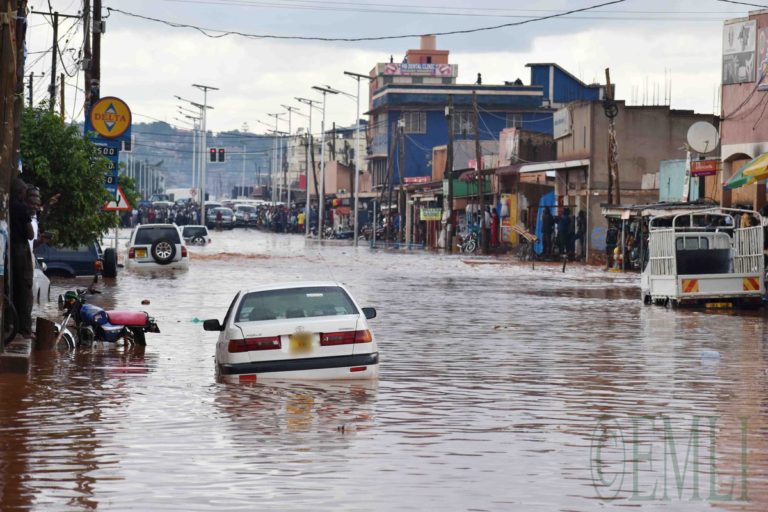
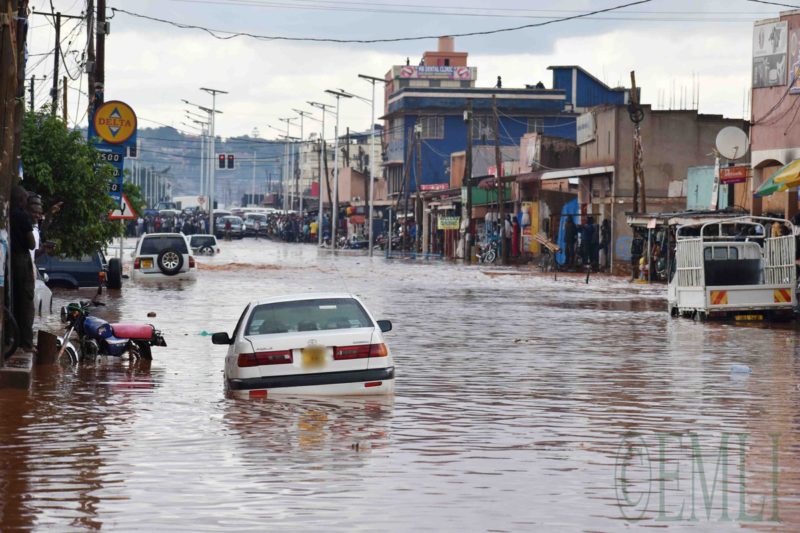
Uganda flood
A flooded street in Uganda

The Ministry of Disaster Preparedness in a statement said people are strongly advised not to walk or allow a driver to take them through a flooded road or bridge even when the floods appear below the knee or the rim of the car.

The statement comes days after heavy rains caused flooding, cutting off road access to some parts of the capital Kampala on Friday, April 27, 2018.

The weather department in its outlook for the months of March, April and May warned that parts of the country may face sporadic flash floods, leading to loss of lives and destruction of property.

The Uganda National Meteorological Authority warned that some mountainous parts of the country may experience landslides.

NAN reports that, in August 2017, severe flooding was reported in northern Uganda, leaving 2,000 people displaced and 15 people dead.

Heavy rain in Northern Region caused a river to overflow on Aug. 22, 2o17, flooding the town of Elegu in Amuru district, a trading post close to the border with South Sudan.

As many as 3,000 people have been affected and 2,000 have been displaced.

Uganda Red Cross says that crops in the area have suffered damage and transport has been severely disrupted in the area. Several bridges have been destroyed or damaged.

Martin Owor, Commissioner, Ministry of Disaster Preparedness, told local TV that the town of Elegu, its market, bank and customs post have all been damaged in the floods.

He added that relief supplies have been dispatched and those displaced are receiving assistance.

Owor said that northern Uganda normally sees heavy rain during August and September and more rainfall can be expected.

Heavy rains, landslides kill 100 in Kenya

0

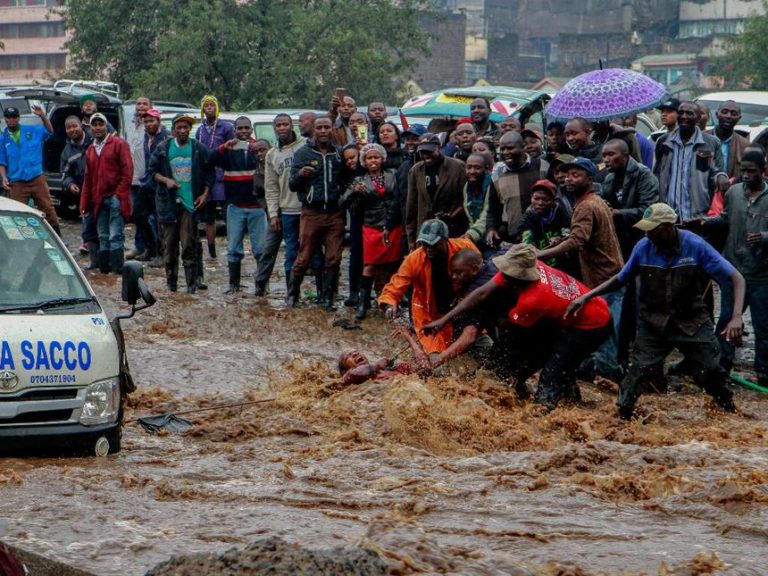
Hiribae Mame stood waist-deep in water outside her wrecked house in eastern Kenya, one of around 200,000 people forced to flee by weeks of floods, landslides and heavy rains.

Kenya flooding
A passenger is rescued from a submerging Matatu along Grogon area, near Kirinyaga Road following heavy downpour witnessed in Nairobi and its outskirts on March 15, 2018. Photo credit: Enos Teche

Kenya’s Red Cross estimates at least 100 have also died in the downpours since early April, a humanitarian disaster that it says needs emergency funding.

“I have lost 12 chicken and four goats. We were not able to save all of them and I can’t access the house because the door can’t open,” said the mother-of-four in the town of Tana River in lower Coast region.

Her youngest daughter clung to her neck, the girl’s feet just touching the water. Mattresses and wreckage floated by as handmade boats ferried people, animals and goods to safer ground.

Floods have blocked major roads across central and northern Kenya and coastal areas – the route from the capital Nairobi to the main port Mombasa was under water as at Friday, April 27, 2018.

Eight people were killed when mudslides destroyed their homes as they slept in the hilly central region of Murang’a on Friday night, said Kenya Red Cross Secretary-General, Abbas Gullet.

Gullet said the military and police had deployed helicopters for rescue missions but more efforts were needed.

He said outbreaks of water-borne diseases were another concern across Kenya.

“We would urge the national government to declare this a national disaster, so that deliberate effort can be made and resources mobilised to help the affected people,” Gullet told reporters in the capital on Sunday.

“We need a national disaster management fund set up.”

Bonn talks: Time running out for climate inaction, says ACT Alliance

0

As another round of interim climate change negotiations starts on Monday, April 30, 2018 in Bonn, Germany, ACT Alliance has reiterated its call for urgent action to address climate change and its impacts.

Rudelmar Bueno de Faria
Rudelmar Bueno de Faria, ACT Alliance’s General Secretary

“The international community must now take bold action to address climate change and to adequately respond to its impacts. We cannot afford any delays or to waste any time,” said Rudelmar Bueno de Faria, ACT Alliance’s General Secretary.

At the top of the agenda for the Bonn Session is the Talanoa Dialogue that will encourage sharing between parties and stakeholders on progress made towards their climate commitments, the Paris Rulebook that will outline the modalities, procedures and guidelines for the implementation of the Paris Agreement, and the Suva Expert Dialogue on support for climate induced loss and damage.

“There is now every indication that we have just a few years before surpassing the 1.5 degree global warming target, which means that our policies and actions towards a more volatile climate must be ambitious and unequivocal. The Talanoa Dialogue must quickly translate into building resilience, supporting the most vulnerable and ensuring a higher mitigation ambition,” said Bueno de Faria.

The Suva Expert Dialogue on loss and damage support is expected to advance the discussions on climate finance and other means necessary to respond to the adverse impacts of climate change that go beyond the ability of communities to adapt. Recently, ACT Alliance made a Submission to the UNFCCC in which it called for clarity and a greater allocation of financial, capacity, and technological support towards the protection of vulnerable people, communities, and countries from loss and damage.

“Because there are already serious and exponential climate induced losses and damages, particularly affecting vulnerable people in developing countries, we would like to see a constructive Suva Expert Dialogue. It must lead to concrete outcomes including the reaffirmation of solidarity. Loss and damage must not be sidelined,” said Bueno de Faria.

On the modalities of the implementation of the Paris Agreement, ACT Alliance expressed concern about the slow progress of the Paris Rulebook. “By the end of this year, we need a robust Paris Rulebook with a strong inclusion of transparency and accountability at all levels,” said Martin Vogel, Chair of the ACT Alliance Climate Change Group, and head of ACT’s delegation to the Bonn Session.

“Transparency and accountability in climate action and support are keys for building trust and confidence among countries and must be seen as the hallmark of the guidelines for the implementation of the Paris Agreement,” said Vogel.

It is imperative that climate action is transparent in all aspects related to the provision and use of financial support and in emissions reductions. Every country must make an effort. The Paris Rulebook must be a win-win for all, and the Bonn Session will play a significant role in setting the foundation for this.