Home Blog Page 1913

Agroecology labelled a better alternative in sub-Saharan Africa

0

Agroecology has been described as a better alternative than large-scale agriculture, both for the climate and for small farmers in sub-Saharan Africa. According to researcher Ellinor Isgren from Lund University in Sweden, the agricultural model preserves biodiversity and safeguards food supply while avoiding soil depletion.
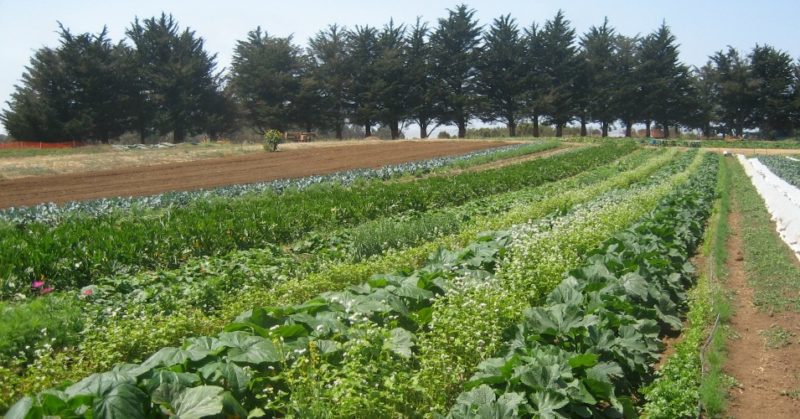
Agroecology
A farm that incorporates the agroecology principle

“We must consider other, alternative models for developing agriculture, particularly in countries that have not already transitioned to large-scale rationalisation. Large parts of the world’s soil have already been degraded by depletion and excessively resource-intensive agriculture,” says Ellinor Isgren, a researcher at the Lund University Centre for Sustainability Studies.

She maintains that today’s intensive, large-scale agriculture brings a major environmental impact in the form of soil depletion, high use of pesticides, high energy and water consumption and reduced biodiversity. Large areas are often cultivated with one or only a few different crops, making this type of agriculture vulnerable to pests, diseases and climate change.

Large-scale agriculture also requires major investments in the form of machinery, grains and seed, while utilising little labour. This means that poorer farmers in many African countries are excluded from the advantages of intensive agriculture: technological development, increased food production, access to the agricultural market and general economic growth.

“A development that excludes a large number of small-holders creates income differences and a divided society. From a social and fairness perspective, transition to large-scale agriculture is not a positive technological conversion for the whole of society,” she says.

In her doctoral thesis, focusing on Uganda, Ellinor Isgren proposes agroecology as a possible alternative for small farmers in sub-Saharan Africa. The model is based on each farm being an integrated ecosystem, in which crops, plants and animals interact to create favourable conditions for cultivation. This alternative is knowledge-intensive, requiring farmers to have a lot of knowledge about the functioning of various components in the ecological system, as well as an ability to create synergies between plants, insects, crops and soil fertility. The model also rests on traditional farming methods.

“If farmers use the model correctly, they can increase their yields and ensure their food supply while preserving biodiversity and reducing their impact on the climate and soil depletion. They also become less vulnerable to climate change as they grow many different crops and improve the soil structure,” she says.

Further benefits are that the system does not require major resources in the form of machinery, pesticides and fertiliser, as the cultivation model is mainly organic, so even poor small-holders can farm in this way.

There are also good conditions for scaling up the model for sale to domestic and international markets. This would require more research and better collaboration between various agricultural institutions to develop knowledge of how different ecosystems function together and how local conditions affect the fertility of plants and crops. Initiatives are also needed to train farmers in how to apply an agroecological model.

“There is currently no political will in Uganda to push development of the agricultural sector. This has left the market open to private investors and strong financial interests in the form of seed and pesticide companies,” she says.

At the same time, there is growing interest in alternative models of agriculture in the civil sector, and she believes that a change could occur through that channel.

“Agroecology is a real alternative to conventional agricultural production, and a model that safeguards both the climate and social development. However, it requires civil society to push for change from the bottom up in Uganda, and for markets worldwide to transition to supporting alternative ways of farming the land,” she concludes.
Hand Hygiene Day: Good hand hygiene halves incidences of infections

As countries marked the World Hand Hygiene Day on Saturday, May 5, 2018, some health experts have said that the habitual practice of good hand hygiene reduces incidences of diseases by a half.

Nkiruka
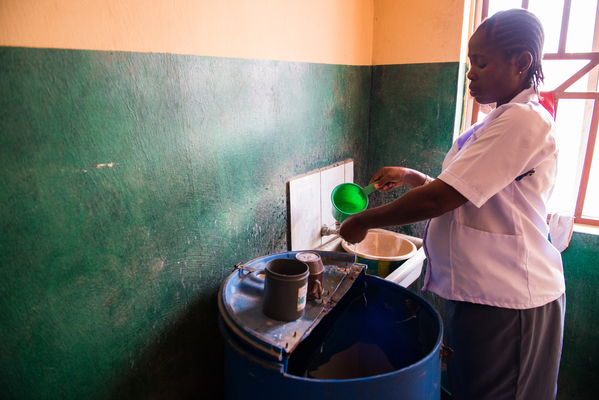
Hand hygiene: Nkiruka Okafor, 40, a volunteer nurse, washes her hands thoroughly with water before attending to patients at the Zuma Primary Health Centre, Abuja, Nigeria.

They spoke with the News Agency of Nigeria (NAN) on Saturday in Lagos.

The World Hand Hygiene Day is commemorated annually on May 5.

The theme for the 2018 campaign is: “It’s in Your Hands – Prevent Sepsis in Health Care”.

It is illustrating the important relationship between good infection prevention and control practices, such as washing your hands and preventing sepsis.

Dr Yeside Adesiyun, a Senior Research Officer at the Federal Institute of Industrial Research (FIIRO), Oshodi in Lagos, said: “One thing that is clear from research is that developing the habit of hand washing with soap can reduce incidences of infections almost by a half.

“Research has also shown us over time that good hygiene, especially hand hygiene, is very much linked to better health outcomes.

“The consequences of poor hygiene are detrimental to the health of the whole family, especially children and so people need to make a personal commitment to good hygiene, particularly hand hygiene by washing  the hands with clean water and soap.’’

Adesiyun, who is also a Nutritionist said: “Wash your hands when you walk into the house, when you want to eat and after eating, as well as after using the rest room.

“Also, before and after cleaning a child and touching contaminated or dirty items, the hands should be washed.

“People should wash their foods after purchasing them from the market place before consuming them; cooking items need to be washed with clean water and stored appropriately, to avoid allowing the growth of micro-organisms on them, ‘’ she said.

“Looking at malnutrition, one of the underlying causes is actually poor hygiene and an unsanitary environment.

“When there is poor hygiene and sanitation, at home, schools, offices and health facilities, risks of infections and diarrhoea diseases are a lot higher.

“Bad hygiene and sanitation can keep people in a cycle of poor health and malnutrition and for children, it can affect their growth and development and even cause death,’’ she said.

According to Adesiyun, creating good hand hygiene should not be isolated from maintaining a clean environment.

“Keeping our environment clean is very critical; it should be a community affair because we do not live in isolation.

“It is said that `cleanliness is next to godliness’ and since most people are religious, it makes sense to preach cleanliness even in our houses of worship and street associations.

“There should be efforts to ensure that gutters are cleaned, flooded street corners are drained to avoid breeding of vectors and reduce incidences of infections such as cholera, malaria and diarrhea,’’ she said.

Adesiyun said that it was important for clean water to be available to achieve the desired personal, environmental and public hygiene.

Also speaking, Olurotimi Awojide of the National Association of Nigerian Nurses and Midwives (NANNW), Lagos Chapter, said: “Good hygiene can be looked at from different perspectives starting from personal hygiene; individuals should take proper care of their body.

“This can be achieved through bathing, brushing of teeth, washing of clothing and so on.

“In health facilities, factories and companies, a high standard of hygiene is also required.

“However, the main purpose of this world hand hygiene day is to further remind us of the need to prevent the spread of infections,’’ he said.

“Unclean hands are reservoirs for majority of disease-causing organisms.

“Individuals, especially health workers, are expected to wash their hands before and after attending to each patient.

“This is critical to prevent infections such as sepsis.

“Hands should be washed with liquid soap under clean running water,’’ Awojide said.

By Oluwakemi Oladipo

AfDB approves $1.5m for Jigawa power project

0

The African Development Bank (AfDB) says it has approved a grant of $1.5 million (about N540 million) to support power project in Jigawa State of Nigeria.

amadou-hott
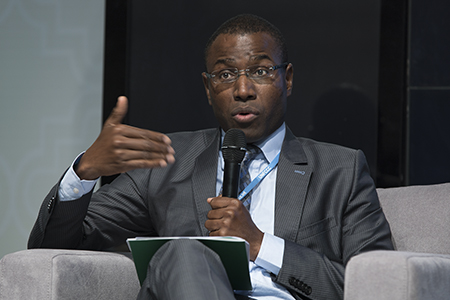
Amadou Hott, AfDB’s Vice President, Power, Energy, Climate and Green Growth. The AfDB and GEF have resolved to climate-finance the continent

Mr Amadou Hott, Vice President, Power, Energy, Climate and Growth complex of the bank disclosed this in an interview with the News Agency of Nigeria (NAN) in Abidjan, on Saturday, April 5, 2018.

“In Nigeria, there are some projects we are doing.

“Presently, we have approved in Jigawa State, a grant of more than $1.5 million to develop a project to build two times 100 megawatts.

“The grant has just been approved by the board two days ago.

“The idea there is to really use the money to establish everything required to develop the project, to make sure everything is available and then organise a bidding process to attract investors,’’ he said .

According to him, there are other projects the bank has invested in Nigeria, like the Gas to power project, targeting 500 megawatts.

“We are hoping to get on board on that by next year, and also the 14 solar power mix being prepared in Nigeria with sovereign investors,’’ he added

He noted that some investor had approached the bank to finance their work, adding that the bank would be involved in five or six of the 14 projects.

The Vice President further said that the bank had guarantee programme that was already put in place, to guarantee some of the projects.

“We call them the Partial Risk Guarantee (PRG). So when the budgets are ready, the guarantees will be utilised to minimise risk so that investors can be attracted to these kinds of projects,’’ he said.

On electricity generation, he said the bank had been doing a lot in the country in the past five years.

“The bank is doing a lot; if you look at our electricity generation over the past five years, our share of renewable energy has increased.

“Before 2016 we were at 74 per cent of our generation mix of renewable energy. Last year, 100 per cent of our power generation was on renewable energy,’’ he said

He said the AfDB financed 1,400 megawatts of power and 100 per cent of them were on renewable energy, such as solar and hydro.

He said that, going forward, the bank would increase a lot of its shares in renewable energy portfolio.

By Edith Ike-Eboh

Technology, nutrition, urbanisation can end malaria, say physicians

0

Some medical doctors have recommended the deployment of modern technology, proper nutrition and urbanisation as a strategy to reduce malaria burden and eventually eradicate it.

Doctors
The doctors have clamoured for the deployment of modern technology, proper nutrition and urbanisation as a strategy to reduce malaria burden

The doctors made the recommendation on Friday, April 4, 2018 at a seminar in Lagos which had over 200 of them in attendance.

The News Agency of Nigeria (NAN) reports that the seminar, organised by the Preventive Health Managers (PHM), had the theme: “Ready to Beat Malaria. Think Technology, Think Nutrition”.

Dr Yetunde Ayo-Oyalowo, the Chief Executive Officer of PHM, said that the event was aimed at bringing doctors together to discuss innovative ways of eradicating malaria.

“We really want them to think outside the box to know what can be done to eradicate malaria.

“We hope that they go back to their consulting rooms, talk to their patients, engage them and see how they can put what they have learned to good use,” she said.

A Professor of Paediatrics, Prof. Olugbenga Mokuolu, said that Nigeria had made steady progress in the key interventions of fighting malaria.

Mokuolu, who is of the University of Ilorin, urged governments to build on the achievement by taking up developmental issues as catalysts in the fight against malaria.

“If we sustain current efforts of beautification of cities, deal with urban slums and convert them to habitable places that are free from all of those slum conditions, if we address chaotic urbanisation and begin to do systematic and well-structured town planning, organise building of houses and all of that, those measures in themselves will contribute largely,” he said.

Also, Dr Folu Olatona, Consultant Public Health Nutritionist, College of Medicine, University of Lagos, said that nutrition was a key factor in the treatment of malaria.

“The role of healthy diet in the fight against malaria should be recognised because with increased immunity, individuals can fight malaria better.

“Poor nutritional status leads to increased risk of infection, symptomatic clinical malaria attacks and higher likelihood of mortality,” she said.

Dr Noimot Balogun, Founder, Linka.NG – a health relationship company which believes in creating an interface between health systems and communities – said that technology was the way to reaching people at the grassroots.

According to Balogun, Nigeria’s health sector is still relatively conservative to technology and will need to make necessary adjustments to be able to achieve the Sustainable Development Goals.

“We have to continuously create processes that are simple enough for the average man on the streets to understand and adopt.

“When people see that the benefits outweigh the challenges, they will adopt it and also serve as role models to others.

“Imagine a man using the basic handset in one remote area of the country having the same opportunity as others to access healthcare through his phone.

“That is what Universal Health Coverage (UHC) is,” she said.

Mr Valentine Akpoveta, Public Relations Officer, Medflit, said that the use of technology would not only help to combat malaria but help to fight other illnesses.

“Every individual can have a medical file stored on an app; if he is not able to reach the doctor he usually consults with, the file can be transferred to another doctor.

“Prescriptions can be made on the app as well. It can be made from the doctor straight to the pharmacy or the doctor through the person to the pharmacy.

“Users can pay as low as N1,000 for consultation,” he explained.

By Joan Odafe

Bonn talks: Talanoa Dialogue opening ushers in Pacific approach to raising ambition

0

The opening meeting of the Talanoa Dialogue took place in Bonn, Germany during the week, inviting all participants to share stories around climate ambition and to have solutions-oriented conversations on contributions to the Paris Agreement’s goals at the “May talanoas” on Sunday, May 6, 2018.

Talanoa Dialogue
The opening meeting of the Talanoa Dialogue in Bonn, Germany

The Talanoa Dialogue is an important international conversation around ambition now, before 2020 and in the future. It will take place throughout 2018 and was launched at the United Nations Climate Change Conference (COP23) held in Bonn at the end of last year under the presidency of Fiji.

The dialogue was introduced by Ambassador Daunivalu of the COP23 presidency, as well as by Mr. Chruszczow, Special Envoy for Climate Change of the incoming Polish presidency for COP24, to be held in Katowice, Poland in December this year.

The dialogue will aim to check progress, reaffirm the goals of the Paris Agreement and aim to find solutions for how countries can increase their ambition now and in the next round of their national climate action plans, officially termed “Nationally Determined Contributions”.

At the opening meeting, Ambassador Daunivalu invited all participants to register for the May 6 talanoas and to engage in the dialogue in good will, being bold yet respectful in their story-telling and to use this opportunity to increase ambition.

As per tradition in the Pacific region, the goal of a ‘talanoa’ is to share stories to find solutions for the common good. The Talanoa Dialogue in the context of the international climate change process will invite participants to share stories of three minutes each to find solutions for the global common good.

To illustrate this tradition to delegates gathered in Bonn, Fiji’s Climate Change Champion, Mr. Seruiratu told a three-minute story of how Fiji had been battered by three cyclones in a period of about two months. Tragically, the cyclones had claimed lives and in one region, it had rained more in four hours than usually falls in the period of a month. “Many Fijians now live in constant fear of the weather and worse to come,” he concluded.

Ms. Patricia Espinosa, Executive Secretary of UN Climate Change, reminded delegates of the urgency of raising ambition in her opening remarks. “A 3 degrees Celsius rise will lead to nothing less than global destabilization. It will cost lives. It will increase instability and conflict, especially in places already undergoing economic, political and social stress”, she warned.

“Put another way, climate change will take every challenge we currently face and multiply them. The Talanoa Dialogue can help boost ambition,” she added.

The dialogue is structured around three questions:

  1. Where are we?
  2. Where do we want to go?
  3. How do we get there?

This first phase of the Fiji-led dialogue will write history when countries and non-Party stakeholders including cities, businesses, investors and regions engage in interactive story-telling around these three questions for the first time on May 6. The event can be followed via webcast https://talanoadialogue.com/sunday-talanoas

Additionally, since the beginning of 2018, countries and non-Party stakeholders have had the opportunity to provide written submissions around these three questions. These submissions are an important resource that has been collated into an overview report, which can be viewed here.

The output from all submissions, as well as from the story-telling conversations on May 6 will feed into the Talanoa Dialogue’s second, more political phase at COP24.

A report-back session to share the highlights of the 6 May talanoas with all conference participants will take place on May 8.

The Fiji presidency has encouraged national and regional talanoas throughout the year and across the globe to feed into the Talanoa Dialogue. For example, story-telling at city and regional level will take place in 40 countries around the world. So-called “Cities and Regions Talanoa Dialogues’’ will be facilitated by ICLEI -Local Governments for Sustainability with Global Covenant of Mayors for Climate & Energy and UN-Habitat as special partners.

Why man should care about the environment

0

The environment around us is an essential part of human survival. I like to believe that people who do not care about the environment simply do not understand how important it is to all of us, and that it probably does not affect them directly. These are my reasons why we should be concerned about the environment.

Environment
Taking care of the environment makes the world a better place

A clean environment is essential for healthy living

The more you don’t care about the environment, the more it will become polluted with contaminants and toxins that have a harmful impact on our health. Air pollution can cause respiratory diseases and cancer, among other problems. Water pollution can lead to typhoid, diarrheal diseases, and other ailments. The local authorities have to promote caring for the environment.


Earth is warming

For the sake of our children and our future, we must do more to combat climate change, adapt to its impact and mitigate its effects.


Children yet unborn will appreciate it

There is the need to look ahead into the future, there must be a realisation of the fact that there are attendant consequences if we waste and destroy natural resources, and unsustainably exhaust the land – instead of using it in a way that will increase its usefulness. So it is our duty to leave the Earth in a better state that we met for the unborn generation.


Biodiversity is key

Biological diversity or biodiversity refers to the variety of plants, animals, and other living things in our world. It can be negatively influenced by habitat loss and degradation due to human activity, climate change, and pollution, among other things.


Planet earth is our home

Until when technology makes it possible for human being to permanently reside in space or any other planet, the Earth for now is our home – it is where we live, so we had better take good care of it. For sure, we would be doing our world and ourselves a lot of good if we do the simplest things in our home or wherever we find ourselves to make this a reality.


What can we do?

The problems we are facing now are tough. However, the good news is that, you don’t have to be an expert or a millionaire to save the Planet – everyone can help to do their bit for the environment. In other words, if each of us can be more conscious of environmental issues and willing to take some simple steps to save the Planet, we can make a huge difference.

Nowadays, with increasing environmental awareness among the public, people around the world are coming together to fight for a greener future, and the effort has been yielding great results. As a pioneering member of environmental advocacy community, Better World International, is always committed to improve and take care of our immediate environment, by providing practical tips to its members on the things they can do to live more sustainably and save the Earth.

By Olumide Idowu (Team Lead, Climate Wednesday; @OlumideIDOWU)

Bonn talks: Agriculture gets fresh breath of air

0

Farmers are among the first victims of climate change as they rely on the weather and the environment in its entirety for their production and livelihoods.

Mithika Mwenda
Mithika Mwenda, Secretary General of the Pan African Climate Justice Alliance (PACJA). Photo credit: cloudfront.net

But until the last climate meeting in Bonn in November 2017, agriculture had been missing from the decisions of the Conference of Parties (COP) of the United Nations Framework Convention on Climate Change (UNFCCC).

The COP23 decision on agriculture, also known as the Koronivia Decision on Agriculture, which took five years of discussions to reach, is a turning point for small-holder farmers.

It indeed provides hope for farmers and processors in developing economies as it will deliver meaningful action on adaptation to adverse effects of climate change on agriculture.

“Agriculture is now being looked at as a sustainable development issue,” said Mithika Mwenda of the Pan African Climate Justice Alliance (PACJA). “We look at climate change not just as a scientific issue but it is an agricultural issue; it affects livelihoods of the people, it’s a human rights issue”.

Climate vulnerabilities across value-chain commodities affect farmers. The financial and technological needs of farmers to adapt are therefore as critical as the mitigation technics to reduce greenhouse gas emissions of the agricultural sector.

However, Parties and observers to the climate talks now have two years to work on bold actions needed in agriculture before more specific ones are agreed upon in 2020.

African civil society and partners believe it is now time to evaluate how the UNFCCC can provide ways for farmers and agro-processors to adapt to climate change, increase their resilience with technology transfer, information dissemination, leverage finance and capacity building.

At the ongoing Bonn Climate Talks, CUTS International and PACJA jointly convened a group of agriculture and climate experts, working across Africa, to reflect on the challenging road towards advancing decisions on the Koronivia Joint Work on Agriculture.

During the event, the panelists brought greater focus on integrating African agriculture sector challenges into the joint work. The panel included Mithika, Martial Bernoux of the Food & Agriculture Organisation, Catherine Mungai from the CGIAR Research Programme on Climate Change, Agriculture and Food Security as well as George Wamukoya, Expert & Consultant on Climate Change and Agriculture.

They explored how developing countries can take the process forward to effectively deal with the impacts of climate change on their agriculture.

Mithika observed the need to inspire a bottom-up approach in the discus to get local communities and farmer groups engaged in the process.

“In the next couple of months, we’ll like to mobilise communities at the local level because we want to make this very practical,” he said.

As an observer, CUTS International has submitted proposals to the Koronivia Joint Work on Agriculture, which explore the socio-economic and food security dimensions of climate change in developing countries’ agricultural sector.

According to the non-profit NGO, the concerns and needed related to agriculture and food security “must be heeded by all Partners by agreeing to bold actions that support developing countries and LDCs in order to enhance their agriculture resilience in facing climate adverse effects and ensuring an agricultural development that is conscious of not only its environmental, but also social and economic impacts”.

Courtesy: PAMACC News Agency

Expert urges caution in adopting agricultural biotechnology

0

An agriculturist, Mr Ismail Olawale, has called for restraint in efforts to adopt and practice agricultural biotechnology in the nation.

agricultural biotechnology
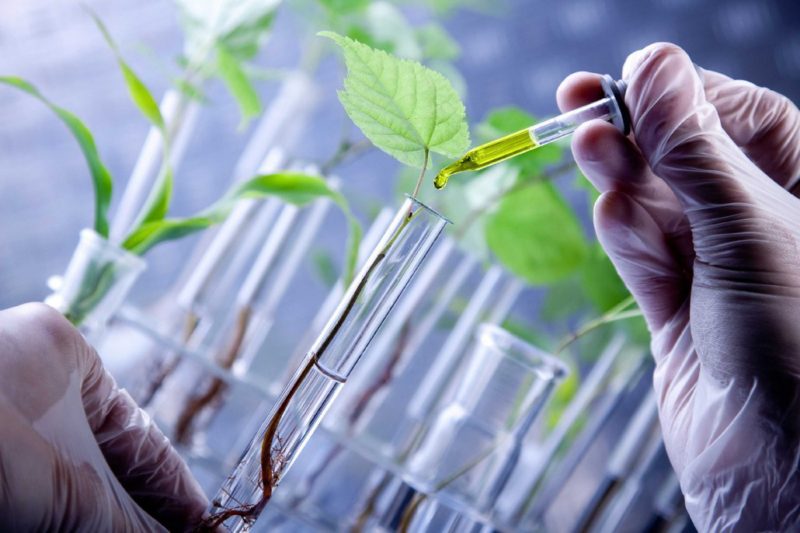
Agricultural biotechnology involves the use of genetic engineering, molecular markers, diagnostics, vaccines, and tissue culture, to modify living organisms

Agricultural biotechnology, also known as “agritech’’, involves the use of genetic engineering, molecular markers, diagnostics, vaccines, and tissue culture, to modify living organisms such as plants, animals and microorganisms.

Olawale, who spoke to News Agency of Nigeria (NAN) on Friday, May 4, 2018 in Lagos, lauded the contributions of “agritech’’ to the promotion of food security across the globe.

He, nonetheless, said that Nigeria was not ready for the adoption and practice of agricultural biotechnology due to ignorance and poor regulations.

“An average Nigerian farmer cannot tell you what biotechnology is all about. Obviously, it is difficult to implement agricultural biotechnology practice among most local farmers.

“In Nigeria, a lot of advocacy on `agritech’ is done in research papers and not yet in practical with the local farmer.

“In developed climes, the practice of agricultural biotechnology is well regulated but in Nigeria, we do not have the technology and administrative strength to regulate this trend.

“We may have policies or agenda promoting the idea of using biotechnologically driven agriculture to boost food security but we are not ready to delve into it,” he said.

Besides, Olawale said that some local poultry farmers had been misusing agricultural biotechnology in egg production, citing the negative effect of genetically modified eggs on human reproductive health as fallout of the abuse.

“Elements of agricultural biotechnology are gradually being adopted by local poultry farmers. They add a genetically modified additive to the feeds of layers which doubles their egg production.

“Some local farmers have abused this technology by mischievously doubling the dosage of this additive to poultry feeds in order to produce more eggs, with the reverse effect of infertility in humans following consumption.

“A group of five veterinary doctors in 2016 examined samples taken from 15 poultry farms in Kaduna and Zaria; their findings showed that only one farm complied with the specified dosage for biotechnologically developed eggs,’’ he said.

Olawale advised the government and stakeholders in agriculture to be cautious in adopting agricultural biotechnology and underscored the need for proper advocacy among local farmers.

“We should not just adopt agricultural biotechnology practice without preparing the groundwork.

“Nigerians have the tendency of abusing biotechnology-driven agriculture because there are no regulatory bodies to guide the practice,” he said.

By Mercy Okhiade

Climate change: Lesotho women advocate gender-based responses

0

A group of women in Thabaneng, Mafeteng, about 75 kilometres south-west of Maseru in Lesotho, seems unhappy with the side-lining of women’s development needs despite the fact that they often bear the brunt of climate change.

But the women are taking an uncharted path to change the situation.

Phumzile-Mlambo-Ngcuka-UNWomen
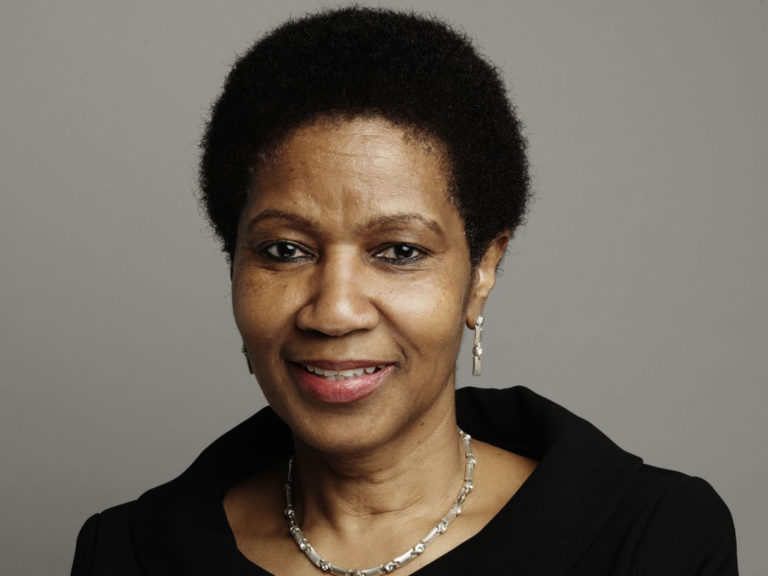
Phumzile Mlambo-Ngcuka, Executive Director, UN Women

The women – all members of a small-scale farmers group that seeks to highlight the debilitating effects of climate change on poor rural communities, say there is need for a complete change in efforts to halt the phenomenon.

The farmers’ group is unhappy that rural women’s plight is given little priority on the climate change agenda, arguing that emphasis should be directed at community-based approaches to address gender and climate change.

One of the women, Mapheko Phera, says her area was one of the worst affected by El Nino which caused the driest weather phenomenon that hit many parts of Southern Africa in 2015. This was when she decided to join hands with other women to form the Small-Scale Farmers Forum of Lesotho.

Phera, a mother of three, said life began to change for her when she joined the piggery project, a major component of the forum.

She now sells piglets, pork and livestock foods to supplement her meagre earnings from subsistence farming.

“It was in this rural women assembly where I acquired knowledge and skills on farming,” she said.

However, persistent drought meant that Phera’s livestock business was also in danger of collapsing as water had become scarce. This led to her abandoning the piggery project.

“There was no water and food for the pigs and I began losing some of them. I couldn’t stand watching them die without rescuing them. Selling them was the only option left for me,” Phera said while bemoaning the worst drought in living memory that has now crippled her livelihood.

The UN Women supports the essential idea of ensuring that women like Phera are empowered as critical actors in addressing the impact of climate change.

The agency says this is critical in ensuring that women and girls enjoy their rights and are able to make better decisions to better respond to disasters.

The UN Women clearly states that in many parts of the Southern Africa, women and girls from rural areas in particular, are disproportionally affected by the negative impact of climate change.

One of the founders of the Forum, ‘Mamalefetsane Phakoe, said some of the skills members of the assembly acquire include sewing, crop production, animal and poultry farming.

“Our assembly moulds women into small scale farmers with the ability of establishing income generating projects with the purpose of adapting to climate change,” Phakoe said.

“We promote the use of indigenous seeds in our cropping activities knowing fully that known climatic patterns have changed. We share amongst others, while on the other hand we also encourage women to practice agrology agriculture and other efforts of being adaptive to this global concern,” explained Phakoe.

The Paris Agreement calls for action to respect, promote and consider respective obligations on gender equality and the empowerment of women in addressing climate change. It also gives mandates for gender-responsive adaptation and capacity building activities.

On the other hand in the light of the 2030 Agenda for Sustainable Development Goals (SDGs) adopted by world leaders in 2015, there has to be an opportunity for renewed work on gender and climate.

The UN Women believes that to advance this agenda and contribution to the achievement of SDGs, it is critical to focus on gender sensitive climate change responses and approaches.

The SDGSs agenda adopted by the world leaders in 2015 acknowledges women as beneficiaries and enablers of climate action and as agents of climate change while African Union Agenda 2063 provides a strong impetus for advancing gender and climate change.

The rural assembly women believe that with the full support from the Lesotho government especially in providing markets for their products, the programme will not just benefit them and their families but also other women from their village who are keen on joining the assembly.

Assembly members produce handicrafts such as shoes, headbands, dried vegetables among others to sustain their families during drought seasons.

In May 2016, a declaration was taken up by rural women, women smallholder farmer organisations, supporting civil societies and media in Southern Africa, in Johannesburg, South Africa.

Concerns raised in it included an increasing impact of climate change on rural women smallholders, which they said needs urgent attention to prevent further hardships in their lives and that of their households as well as communities.

It also raised concern over declining access to natural resources such as marine, forestry, land, water and livelihood support systems by rural women smallholder farmers due to the negative impact of climate change.

This Declaration urged the Southern African Development Community (SADC) chairperson to champion the issue of climate change among fellow heads of states and governments.

The Declaration encourages decision makers to prevent a recurrence of the disaster of 2015/16 growing season, by listening to the voices of women in SADC, who demanded the implementation of existing commitments and policies of international and regional conventions that are pro-rural smallholders and gender equality.

Lesotho is said to have small carbon footprint, as it is committed to tackling both the causes and consequences of climate change.

The women, therefore, urge everyone to join hands in building a climate resilient nation.

Courtesy: PAMACC News Agency

Group wants organic agriculture system supported

0

The Ecological Organic Agriculture (EOA) has requested the Minister of Agriculture and Rural Development, Dr Audu Ogbeh, to champion organic agriculture system in West Africa to improve the health of the people.

Ogbeh
Minister of Agriculture and Rural Development, Chief Audu Ogbeh

Mr Ernest Aubee, the Chairman of EOA Initiative in West Africa and Head of Agriculture, Directorate of Agriculture and Rural Development of ECOWAS Commission, made the request in Abuja on Friday, May 4, 2018 during EOA’s advocacy visit to the minister.

Aubee, who led the advocacy visit by the Regional Steering Committee of EOA Initiative in West Africa, said the visit was to raise awareness about organic agriculture in Nigeria and West Africa.

He added that the visit was also to lay emphasis on the benefits of food security and healthy food production for healthy living.

He said “organic farming is a farming method that involves growing and nurturing of crops without the use of synthetic based fertilisers and pesticides. Also, no genetically modified organisms are permitted.

“Rather, it gives farms and animals life conditions that correspond to their ecological roles and allow the crops to display natural behaviour.”

The chairman used the opportunity to announce the forthcoming National Organic Agriculture Business Summit (NAOBS) in Lagos on July 10 to July 13.

Dr Olugbenga AdeOluwa, the Country Coordinator of EOA, had in an interview with News Agency of Nigeria (NAN) urged Nigerian farmers to embrace organic farming to enable them to reap all benefits of the farming system.

He said: “Some of the benefits include improved health and nutrition; organic farming causes little damage to environment and less cost for society, while reducing nutrient losses as well as erosion.

“Organic farming facilitates better water management, low use of non-renewable resources, safer working conditions and less risk of contamination.

“It makes efficient use of solar energy; it promotes production of biological systems, maintains and improves soil fertility, while maximising re-circulation of plant nutrients and organic matter.”

AdeOluwa said the products and produce of organic farming were all guided by organic standards, stressing that “pure organic farming practice maintains its standard by the use of microbial preparations for pest management, as well as use of high-yielding but disease-resistant breeds of crops and animals.

“It also promotes the application of improved compost methods and bio-fertilisers, as well as efficient green manures, cover crops and nitrogen-fixing plants.”

The EOA delegates had earlier visited Mathew Owolabi, Director with Ministry of Agriculture and Rural Development, on behalf of the minister.

Owolabi said one of the major challenges of organic farming in the country was the lack of research about the farming method.

He urged the delegates to use the forthcoming National Organic Agriculture Business Summit to address the challenge and others.

Other delegates on the advocacy visit were from Benin Republic, Mali, Nigeria and Senegal, among whom was Prof. Victor Olowe, the President of Association of Organic Agriculture Practitioners of Nigeria.

By Ebere Agozie