Home Blog Page 1903

Bonn talks: Civil society sets out expectations for climate discussions

0

The current climate talks in Bonn, Germany must pave the way for key outcomes at the COP24 at the end of the year, civil society operatives have said.
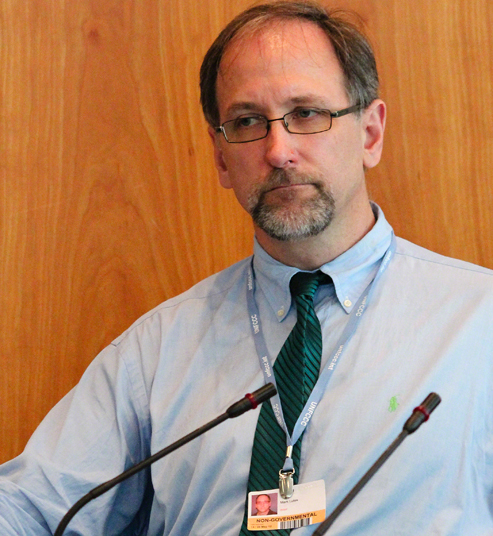
Mark Lutes
Mark Lutes, Senior Global Climate Policy Advisor, Climate and Energy, WWF

This, according to them, includes significant progress on the implementation guidelines for the Paris Agreement, the Talanoa Dialogue, and on finance for climate action. They underlined the need for countries to step up in 2018 with commitments to enhance ambition and to limit the huge gap in emissions between current pledges and what the science indicates is necessary to limit warming to 1.5 degrees C.

Mark Lutes, Senior Global Climate Policy Advisor, Climate and Energy, WWF, stressed the importance of these talks to bring the Paris Agreement to life in 2018.

“By the end of COP24 in December, we need decisions in a number of areas, including agreed elements of the nationally determined contributions to ensure consistency and comparability across national commitments. Among other issues, we need to know how the ongoing ambition cycle – the global stocktakes – will work. We need to know how implementation will be transparent and accountable through the transparency framework. We need to know how scaled up finance and technology support will be mobilised,” he stressed.

At the intersessional meeting in Bonn, Li Shuo, Senior Global Policy Advisor, Greenpeace, said countries would need to accelerate progress on a range of technical issues, from the national climate targets to adaptation to compliance. By the end of the session, he expected no less than a “clear legal text with options and strong ownership from parties.”

“Countries need to sort out certain tasks under the transparency framework, namely whether – and how – flexibility should be granted to developing countries that need that. The other dimension (of the politics) is ambition. A lot of the Paris rules are about gradually enhancing ambition. I want to highlight that the ambition part of the politics is also very important and has been rather neglected at the expense of differentiation and flexibility.

Finance is a cornerstone to achieving the goals of the Paris Agreement, said Lucile Dufour, International Policy and Development Adviser, Climate Action Network-France. “If in 2018 countries really want to make a change and are committed to making the Paris Agreement robust, sustainable and fair finance cannot be left behind,” stated Dafour.

The growing impacts of climate change around the world were clearly seen throughout 2017, but there has been insufficient progress on finance to come to terms with these growing needs.

“The first reason why finance needs to be central in these discussions is that it can help enhance trust and confidence between developed and developing countries. Finance can help create the conditions for success at COP24 and secure smooth progress on the Talanoa dialogue, the Paris rulebook and discussion on pre-2020 ambition.”

Conversely, a lack of progress on finance could become a bone of contention, she added.
Global youth gather to spur action on climate change

0

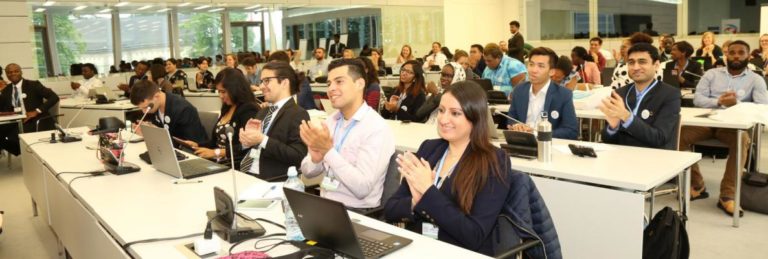
Youth climate change delegates from around the world have been gathering in Bonn to share ideas, coordinate their efforts and urge negotiators meeting in Bonn, Germany over the next two weeks to take strong climate action in order to safeguard their future.

ACE Youth Forum
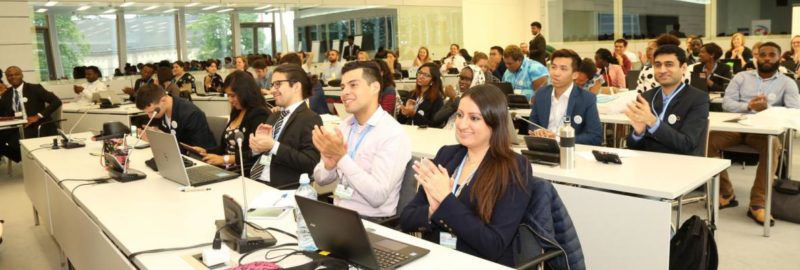
A session during the ACE Youth Forum

At a the first ever ACE (Action for Climate Empowerment) Youth Forum at the week-end, just before the start of the 2018 UN Climate Change Conference in Bonn, youth delegates from 70 countries came up with a wide range of suggestions“Youth are an essential part of the climate change solution, so the youth must be active and heard in the international negotiations,” said United Nations Climate Change Executive Secretary, Patricia Espinosa, at the forum. “The role of the youth constituency is growing, and this is good for the international negotiating process and for the planet.”

Break-out groups at the forum brainstormed on ways to increase the effectiveness of ACE activities. Suggestions included linking youth ACE activities internationally, supporting ACE national focal points, pushing for more funding for ACE activities and holding ACE festivals to create interest and awareness about the need for climate action.

These and other points will be combined, refined and put before government negotiators at a workshop from where they could find their way into negotiating text and a possible draft decision on ACE destined for consideration when nations meet in Katowice, Poland, in December of this year.

The ACE Youth Forum was an idea of Fiji, which holds the presidency Conference of the Parties (COP), since the 23rd COP, held in Bonn in November 2017. Mr. Inia Seruiratu, High-level Climate Champion and Fiji’s Minister for Agriculture, Rural and Maritime Development and National Disaster Management and Meteorological Services, told delegates: “Our young people the world over are powerful agents for change. The stakes couldn’t be higher.”

“Fiji is urging the global community to commit itself to achieving the most ambitious goal of the Paris Agreement, which is to limit the average global temperature increase to 1.5 degrees Celsius above that of the pre-industrial age.

“To achieve this, young people the world over must demand action. To raise their voices and force their politicians to take the tough decisions that are necessary. And also point out the wonderful opportunities that are out there if we make the shift from fossil fuels to renewable energy, and fast-track the development of the emerging technologies,” he added.

Under the UN Framework Convention on Climate Change, countries recognised the critical importance of education, training, public awareness, public participation, public access to information and international cooperation to the success in tackling climate change. The youth constituency is central to the work.

“This forum is unprecedented in the way it brought together non-State actors, youths – more than half from the global South – UN Climate Change and the presidency of the Conference of the Parties to help shape matters under negotiation,” said Yugratna Srivastava, a youth co-organiser of the ACE Youth Forum. “The process is moving in the right direction.”

In Paris in 2015, countries committed to limiting global temperature rise to 2 degrees Celsius and to work towards the safer target of 1.5 degrees Celsius. Countries are now negotiating the Paris Agreement Work Programme, which they plan to adopt in Katowice.

The YOUNGO (youth NGO) constituency took the lead in organising the ACE Youth Forum, which was co-organised by UN Climate Change and United Nations Development Programme and supported financially by the Government of Canada.

Don develops cattle feed that boosts milk yield

0

A Professor of Animal Production at the University of Ilorin, Moshood Belewu, has developed new cattle feed pellets that are capable of increasing the quantity and quality of milk produced by lactating cows.

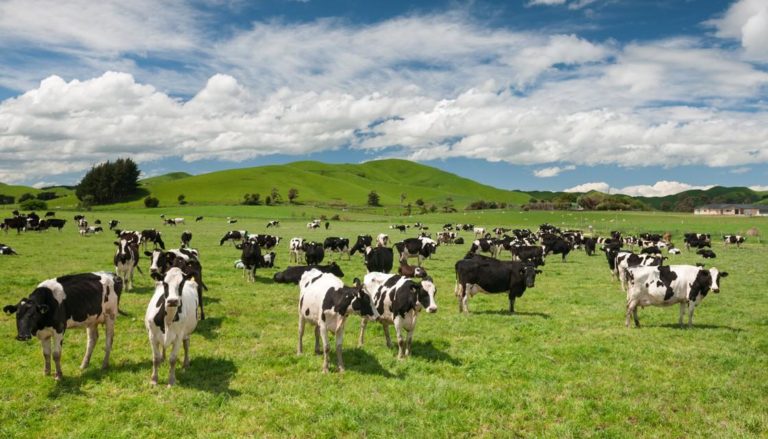
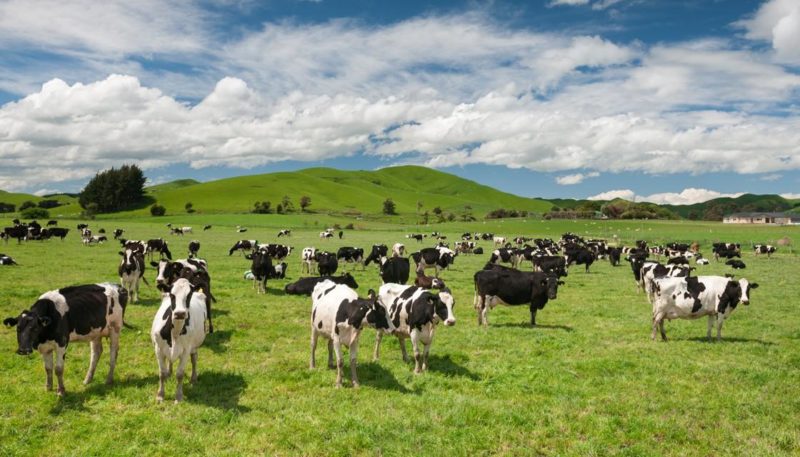
New Zealand cattle
Cattle

The University of Ilorin Bulletin, which was issued on Monday, April 30, 2018, stated that Prof Belewu of the Department of Animal Production, Faculty of Agriculture, disclosed the innovation in a report he sent to the Vice-Chancellor of the university, Prof. Sulyman Abdulkareem.

The publication said that the new feed was the outcome of Belewu’s research visit to Uka Tarsadia University, India, on the platform of the N. G. Patel Fellowship grant which was recently won by the Professor of Animal Production.

It stated that, on arrival at the Uka Tarsadia University, Prof Belewu obtained the needed materials for the research work and the animal feed was consequently formulated.

“A dairy farm with enough dairy animals was identified (Sumul Vanskul Animal Breeding) at Bardoli, Maliba area of Gujurat,” he said.

Belewu noted that the dairy farm, which was nearly 10km from Uka Tarsadia University, housed more than 40 cows and buffaloes, adding that lactating Gir cows were used for the study.

The professor said that the tested novel feed was modelled into pellets and used to nourish the lactating cows, adding that three feed pellet samples were developed, when compared with the popular conventional cow pellet.

He said that the three designed cow feed pellet samples would boost the income of livestock farmers, as their price per kilogramme was found to be quite cheaper, if compared with the conventional feed pellet samples.

He said that the research feat was well-received by the management of Uka Tarsadia University, adding that the university authorities were even proposing to patent the product.

Belewu urged the management of the University of Ilorin to consider the patenting and commercialisation of the developed feed pellet samples.

He said that the fellowship grant had helped him in forming new relationship and partnership with academics in Uka Tarsadia University and other persons.

He also said that the grant had also stimulated the formation of a bilateral research group, involving academics from University of Ilorin and Uka Tarsadia University, so as to boost cross-fertilisation of ideas and innovation.

He said that the breakthrough in animal production had the potential of increasing the income of livestock farmers in Nigeria, if well-utilised.

By Fatima Mohammed-Lawal

Thirty-three states jostle for three REDD+ project slots

0

Thirty-three out of Nigeria’s 36 states are contesting for slots earmarked for only three states under the Reducing emissions from Deforestation and Forest Degradation (REDD+) Programme of the Forest Carbon Partnership Facility (FCPF).

Lafia REDD+
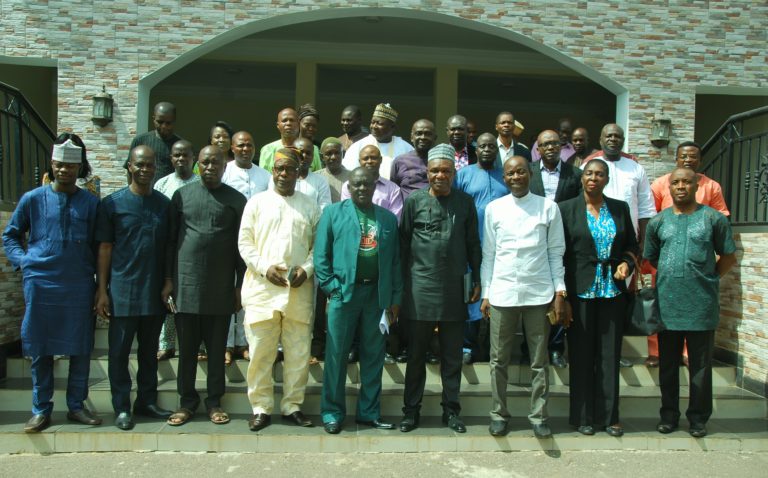
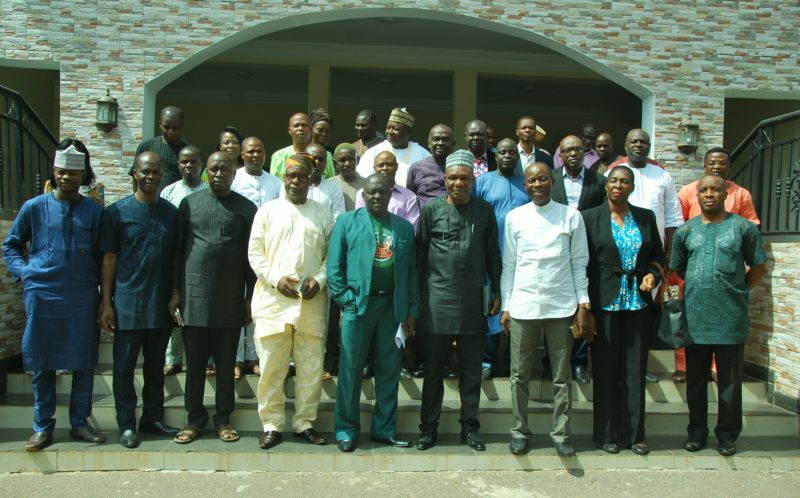
A group of participants at the High Level Stakeholders Sensitisation Workshop on National Forest Inventory in lafia, Nasarawa State

Cross River, Ondo and Nasarawa states, being beneficiaries of a FCPF $3.8 million facility, are already implementing a REDD+ Readiness Programme, and it has been the desire of the Nigeria REDD+ Programme to expand the project to more states.

The Programme’s dream became a reality following the approval recently of an additional $4.9 million grant by the FCPF, an initiative of the World Bank, to extend the REDD+ Programme to more states.

Consequently, Environment Minister of State, Ibrahim Usman Jibril, wrote to the 33 states, requesting them to formally express their interest to participate in the programme. Deadline for expression of interest for participation by states to the Ministry of Environment and the Nigeria REDD+ Programme has been fixed for this week.

States that appear to have the best prospects will be selected from the lot, who will them be subjected to a scoping process to enable the project promoters select the target three.

National Coordinator, Nigeria REDD+ Programme, Dr Moses Ama, disclosed on Thursday, April 26, 2018 in Lafia, Nasarawa State, during the High Level Stakeholders Sensitisation Workshop on National Forest Inventory: “In a month or two, we will be signing the agreement for the receipt of the $4.9 million from the FCPF.

“However, as soon as the identity of the states that expressed interest in the project is established we will, around the first week of June, embark on a scoping mission to the states to enable us decide on the three states for the project.”

According to Ama, some of the criteria to be used to select the three REDD+ participatory states include:

  • Expressing of interest in the project
  • Having the political will
  • Operating community forest management approaches
  • Operating functional forest reserves/estates
  • Having in place stakeholder engagement strategies

He pointed out that, apart from expanding the project to three more states, the $4.9 million World Bank grant would likewise be utilised to:

  • Develop a National Forestry Monitoring System
  • Put in place a Safeguard Information Systems (SIS)
  • Support policy reforms that will address REDD+
  • Update the nation’s Carbon Inventory
  • Build capacity

The entire project is billed to be executed by 2020, when the FCPF is expected to officially come to a close.

The Lafia sensitisation workshop was supported by the Food and Agriculture Organisation of the United Nations (FAO) and the FCPF.

The FCPF, which became operational in June 2008, is a global partnership focused on reducing emissions from deforestation and forest degradation, forest carbon stock conservation, sustainable management of forests, and enhancement of forest carbon stocks (REDD+).

Zik’s wife plants tree to ‘green’ Ekwueme federal varsity campus

0

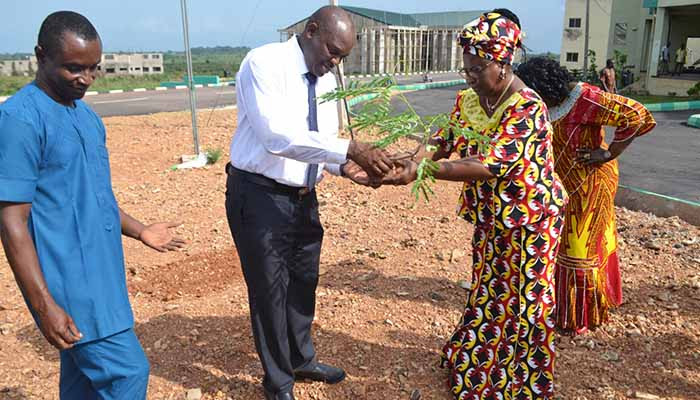
In line with the campus-green initiative of the Vice-Chancellor, Professor Chinedum Nwajiuba, to make the Alex Ekwueme Federal University Ndufu-Alike (AE-FUNAI) in Ebonyi State the most beautiful and eco-friendly institution in Nigeria, the wife of the first President of Nigeria, Professor Uche Azikiwe, on Wednesday, April 25, 2018 joined other well-meaning Nigerians to plant a tree in the university, in support of the initiative.

AE-FUNAI tree planting
The VC, Professor Chinedum Nwajiuba (second left), handing a Pride of Barbados tree to the wife of the first president of Nigeria, Professor Uche Azikiwe, during the event

Azikiwe, a Professor of Sociology of Education, was at the university recently for the first Annual International Conference, hosted by the Faculty of Education of the university, where she also spared some time to support the campus-green initiative of the Vice-Chancellor.

Meanwhile, the Vice-Chancellor of Imo State University, Owerri, Professor Victoria Obasi, was also part of the tree planting campaign.  The professor of Curriculum Studies chaired the First Annual International Conference held recently at the university. She prayed that the tree, just like the university, would grow to provide shades, fruits and serene environment for generations to come.

With a policy termed “Campus-Green Initiative”, the Vice-Chancellor, Professor Nwajiuba, had on assumption of office about two years ago embarked on aggressive tree planting campaign in the university to ensure eco-friendliness, aesthetics and serene environment within the campus. This led to the inauguration of the University Pioneer Garden and a yearly tree planting campaign where staff and students donate and plant trees around the university campus.

Privatisation won’t reverse water sector’s woes, ERA tells government

0

The Environmental Rights Action/Friends of the Earth Nigeria (ERA/FoEN) has commended the Federal Government for declaring a state of emergency in the water sector, but disagreed with the government position that private sector participation will reverse the sector’s woes.

Suleiman Adamu
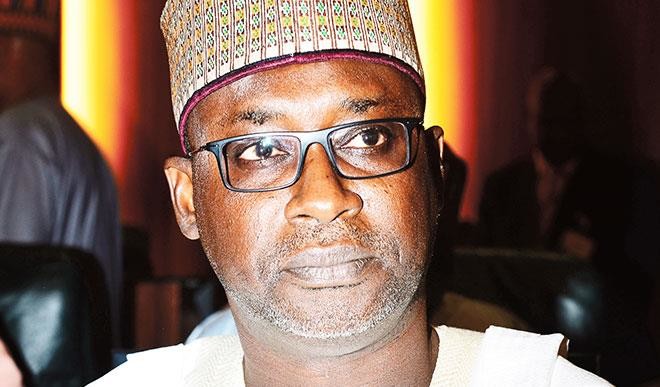
Suleiman Adamu, Nigeria’s Minister of Water Resources

Minister for Water Resources, Suleiman Adamu, announced recently that the declaration of emergency in the water sector was an effort to address the current crisis and re-prioritise the water, sanitation and hygiene (WASH) sector for investment and revitalisation.

Unveiling  a 13-year revitalisation strategy for the WASH sector, Adamu said there would be an 18 months emergency phase and five years recovery plan that would compel concrete actions to be taken by both Federal and State Governments under five components comprising governance, sustainability, funding, financing and monitoring and evaluation.

Global Water Intelligence, the private water industry trade journal, noted that Adamu declared he “wants to see much greater private sector participation to improve performance going forward.”

But ERA/FoEN, in a statement issued by its Head, Media & Campaigns, Philip Jakpor, said that proposals that put the private sector in the driver’s seat in fashioning solutions to water shortages across the country are built on “debunked theories” promoted by the World Bank and international organisations that see water only as a commodity and not as a human right.

ERA/FoEN Deputy Executive Director, Akinbode Oluwafemi, said: “We are in total agreement that the water sector in Nigeria is in dire need of critical intervention. We however differ on the way forward because the crisis in the sector is as a result of faulty policies promoted by the World Bank Group and international agencies that were adopted by the government.

“Countries that experimented water privatisation in the Public Private Partnership (PPP) or other forms have started taking back their water from the privatisers. It is a story documented in Buenos Aires and Paris, and it is happening across Africa from Tanzania to Cameroon, Ghana and more recently, Gabon. It is Tsunami of remunicipalisation. It is therefore worrisome that Nigeria is not learning from these lessons of corporate water failures.”

He insisted that the pressure on the Nigerian government to finacilaise the water sector is coming from international finance institutions that continually create false narratives about so-called solutions that will only rake in more profits for multinationals at the expense of the larger population who will be presented with options of paying huge costs or getting cut off for not being able to.

On the way forward, the ERA/FoEN boss urged the government to shun all contracts designed by, involving, or influenced by corporate interests – including by the World Banks private arm, International Finance Corporation (IFC) which operates to maximise private profit – while integrating broad public participation in developing plans to achieve universal access to clean water.

“Parliament should also pass a resolution declaring water as a human right with the obligation on the state to ensure access to all citizens irrespective of their ability to pay or not,” Oluwafemi insisted.

Concern as youths clash over Cross River oil palm estate

0

The inhabitants of Boki Local Government Area in Cross River State are presently living under serious tension as angry youth battle for the control of Boki Oil Palm Estate, Borum.

Oil Palm Estate crisis
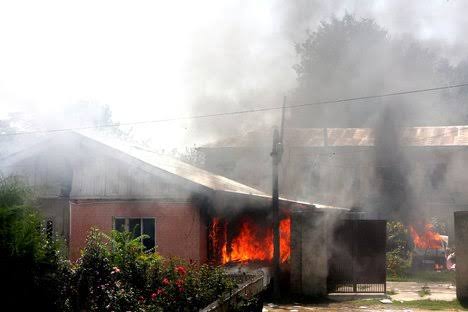
One of the houses burnt in Bafin during the clash

This crisis, which began last year, has claimed the lives of many innocent people, destroyed properties and left many others traumatised.

Reacting to the ugly incident, the chairman of Ochibe Boki, Major General Moses Obi (rtd), has appealed to all the parties involved to exercise restraint and explore peaceful as well as acceptable mechanisms in resolving their grievances.

The former army officer, in a press statement titled: “Message of Peace and Love”, expressed displeasure over the anxiety that the unwarranted situation has created particularly the compromise of the peaceful co-existence and security of the people.

“I feel pained,” he said, adding: “I remain committed to contributing, in whatever way I can, in helping our government and our institutions, to help us.”

He submitted that, together with resolve and prayers, the good people of Boki would overcome and the evil times will get behind them for good.

Also, other concerned Boki sons and daughters both within and outside Nigeria have joined their voices to express sadness and condemn the upheaval that has engulfed the people.

Social agent activist and human rights lawyer, Dr. Joseph Odok, accused the Cross River State Government of conspiracy and keeping silent over the ongoing brouhaha.

He recalled that Ochibe Boki has been at the vanguard of proffering solution since the crisis erupted over a year ago, but noted that the government has done nothing to complement existing peace efforts.

“Some appointees of Ayade have groomed boys that have snowballed into two groups to protect their interest in the estate. Proceeds of the Palm Estate have been used to buy guns and the boys have become so powerful that they now respect no chief or elder,” Dr. Odok posted on his Facebook page.

The university don decried the seeming helplessness of Ochibe Boki under these circumstances to curb the matter.

According to him, chairman of the umbrella body in an open outcry had earlier called on Governor Benedict Ayade to rapidly intervene by deploying security personnel to help salvage lives and property.

“I join my voice with that of Ochibe Boki to call the security apparatus in the state to step in to save lives,” he said.

The rights campaigner hinted that too many lives have been lost and properties destroyed because of the government’s failure to respond timely and address issues of security breaches.

“I make this call before the break down of law and order between Osokom people and Oku community,” he concluded.

By Etta Michael Bisong, Abuja

Governments meet to step-up climate action for Paris Agreement application

0

Governments are meeting for the next round of UN climate change negotiations from Monday, April 30 to Thursday, May 10, 2018 to further develop the guidelines for implementing the landmark 2015 Paris Climate Change Agreement.

WCCB
A view of the atrium in the World Conference Centre Bonn (WCCB) in Germany, venue of 2018 Climate Change Talks

This will allow the Agreement to become operational. The guidelines, or operating manual, are needed to unlock practical actions to realise the full potential of the Agreement.

The final decisions are to be taken at the UN Climate Change Conference (COP24) in Poland in December, 2018.

Finalising the Paris Agreement guidelines is also necessary to assess whether the world is on track to achieve the Agreement’s goals: to limit the global temperature increase to well below 2°C, while pursuing efforts to limit it to 1.5°C.

“To reach success at COP24, it is essential that nations begin working towards draft negotiating texts at the May meeting. This will provide a solid foundation for work in the second half of 2018 and help them to deliver a strong result,” said Ms. Patricia Espinosa, Executive Secretary of UN Climate Change.

At the UN Climate Change Conference (COP23) held last November under the leadership of Fiji, nations agreed to accelerate and complete their work to put in place the guidelines – officially termed the Paris Agreement Work Programme (PAWP) – at COP24 in Katowice, Poland in December.


The Talanoa Dialogue

Another important objective of the May session is holding the “Talanoa Dialogue”, which will facilitate the engagement of countries and a range of stakeholders in a vital international conversation around ambition now and in the future.

The Fiji-led Talanoa Dialogue is facilitated by the UN Climate Change secretariat and will benefit from the presence of high-level officials from Fiji, including the Prime Minister, who is the President of COP23.

The consultative dialogue will check progress, reaffirm the goals of the Paris Agreement and aim to find solutions to how countries can increase their ambition now and in the next round of their national climate action plans, officially termed ‘Nationally Determined Contributions’.

As per tradition in the Pacific region, the goal of a “talanoa” is to share stories and to find solutions for the common good. Similarly, in the context of the international climate change process, the Talanoa Dialogue will invite participants to share stories to find solutions for the global common good.

“Year 2017 witnessed many extreme weather events and disasters that caused suffering for millions of people around the world. The consequences of climate change impacts are already being felt, particularly by the most vulnerable communities,” said Espinosa.

“The Talanoa Dialogue is a key opportunity for all stakeholders to come together and share stories on how we can significantly step up climate action to prevent even greater human suffering in the future. I encourage widespread participation in the Dialogue,” she stated.

This first phase of the Fiji-led Dialogue will write history when countries and non-Party stakeholders including cities, businesses, investors and regions engage in interactive story-telling around current and future ambition for the first time on 6 May.

The output from these story-telling conversations will feed into the Talanoa Dialogue’s political phase at COP24. The political phase will bring together Ministers and high-level government officials for conversations with a view to generating political momentum.


Ambition before 2020

Throughout 2018, countries will also focus on how they can scale up their climate ambition and implementation in the pre-2020 period. All countries share the view that climate action prior to 2020 is essential. COP24 will hold an event to take stock of the pre-2020 efforts.

Earlier this year, Prime Minister Frank Bainimarama of Fiji, President of COP23, and Ms. Espinosa urged countries that are yet to do so to ratify the amendment containing the second commitment period of the Kyoto Protocol. The Doha amendment sets out emission reduction commitments for the period 2012-2020 for many developed countries. The amendment has been ratified by 111 countries and will enter into force after it is ratified by just over 30 more.

Concerned about the need to accelerate action, Ms. Espinosa said, “I strongly urge developed countries to make progress towards mobilising the $100 billion that they have pledged to provide per year by 2020. Many developing countries desperately need this support in order to make their contribution to climate action.”

Bicycle projects can now earn saleable credits under Clean Development Mechanism

0

Projects that increase bicycle use over fossil fuel-burning vehicles can now earn carbon credits, thanks to a decision taken by the Board that oversees the UN’s Clean Development Mechanism (CDM).

Bicycles
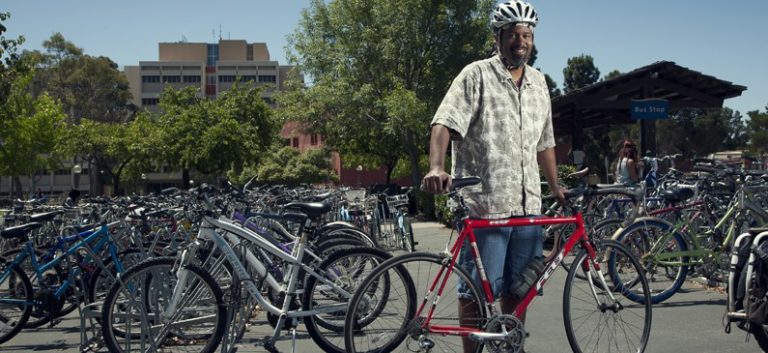
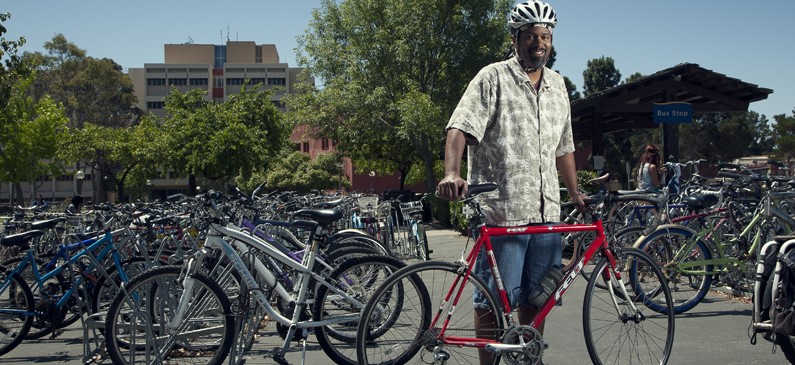
Bicycles are a great way to get around and can reduce the emissions that cause climate change

The CDM is one of the Flexible Mechanisms defined in the Kyoto Protocol that provides for emissions reduction projects which generate Certified Emission Reduction units (CERs) which may be traded in emissions trading schemes.

It has the potential to assist developing countries in achieving sustainable development by promoting environmentally friendly investment from industrialised country governments and businesses.

“Bicycles are a great way to get around, and they’re great for reducing the emissions that cause climate change,” said CDM Executive Board Chair, Arthur Rolle. “It is practicable to consider rewarding and encouraging bicycle use with saleable, certified emission reduction credits.”

The CDM Board at its 99th meeting here in Bonn, Germany approved a new methodology for calculating the volume of emission reductions achieved through projects that establish bicycle lanes, bicycle parking, and bicycle-sharing programmes, encouraging a shift in passenger transport modes from their usual fossil-fuel-burning traffic in favour of clean and green pedal power such as bicycles, three-wheelers or e-bikes.

Transportation of urban passengers accounted for 7 percent of global emissions in 2015. So, efforts to increase bicycle use could result in a significant benefit to the climate, not to mention improve health and well-being.

“Promoting cycling is a practical, healthy way to step up climate action,” said UN Climate Change Executive Secretary, Patricia Espinosa. “I applaud the CDM Board for coming up with this methodology and encourage cities, organisations and others to consider setting up cycling projects under the CDM.”

In 2015 in Paris, countries committed to limiting global temperature rise to 2 degrees Celsius and to work towards the safer target of 1.5 degrees Celsius.

Between 2015 and 2050, urban passenger traffic is expected to increase 50 percent, to 5.0 trillion passenger-kilometres, with most of this rise occurring in Asia. Recent studies have shown that increasing cycling’s share of urban travel could negate the climate effects of this increase.

The CDM was established to incentivise projects that reduce emissions and contribute to sustainable development. The ability to earn saleable credits under the mechanism inspired the registration of more than 8,000 projects and programme in 111 developing countries, everything from clean cookstove projects, to wind power projects, to large industrial gases projects.

‘Up Against Trafficking’ campaign launched in Maiduguri

0

“Up Against Trafficking”, a campaign that is aimed at protecting Boko Haram victims from sex trafficking, has been officially launched in Maiduguri, the capital of Borno State, in northeast Nigeria.

Up Against Trafficking
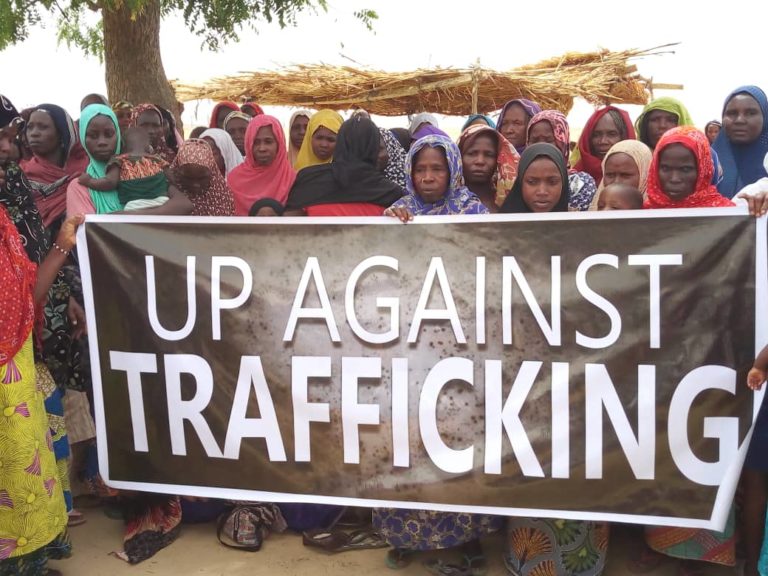
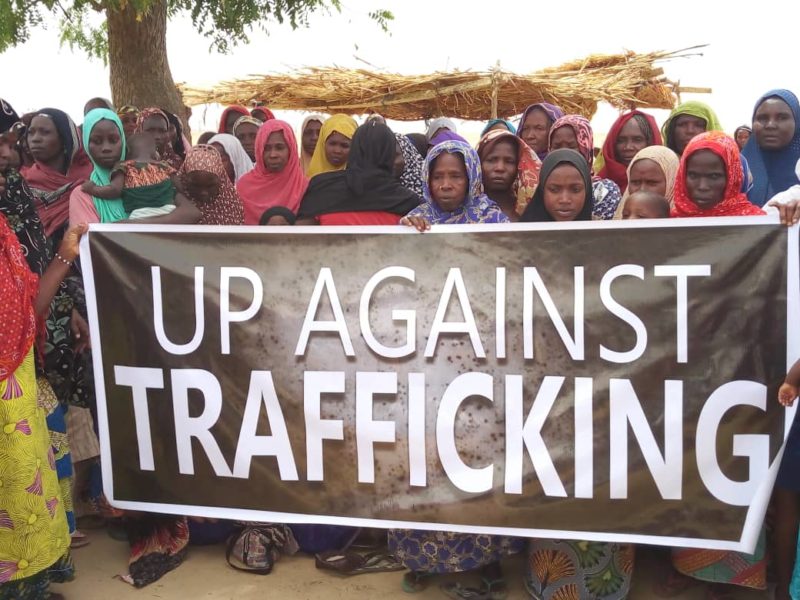
Launch of the Up Against Trafficking campaign

At least 200 women and children in Internally Displaced Persons (IDP) camps in Madinatu and Bulumkutu, where girls have reported how they were approached by human traffickers who took them out of Nigeria, joined in the unveiling of the campaign at the weekend.

“As a victim of human trafficking, I know what women pass through when they are taken out of Nigeria,” said Ya Batu Bukar, who was taken to neighbouring Niger and abandoned without food and money by her trafficker until she found help back to Maiduguri. “I don’t want another woman here to pass through the same pain, and that is why I am part of this campaign.”

Up Against Trafficking brings together female victims of human trafficking out of IDP camps who move round northeast Nigeria educating their peers on the dangers of human trafficking and how to protect themselves from traffickers and their agents.

“When anybody comes to you and talks to you about giving you a job in a far place, just report to the police or any security official you see around,” said Maryam Haruna Muhammad, who was taken to Saudi Arabia and enslaved by her trafficker before she was deported back home. “You can call any of us [at Up Against Trafficking] and we will let the police know.”

Up Against Trafficking was conceived by human rights activist and journalist, Philip Obaji Jr., after he toured IDP camps in northeast Nigeria last year and discovered that victims of the Boko Haram insurgency, especially girls, are often approached by human traffickers, and taken on a long and dangerous journey toward Europe, with some having to visit traditional ritual shrines for oath-taking rituals that bind them to their benefactors.

The victims are often promised jobs outside Africa, but many remain in the continent where they are enslaved by criminal gangs in places like Libya and Niger.

“When I initially heard a number of young girls tell me about their painful ordeals in the hands of human traffickers, I said to myself ‘This has to stop’,” said Obaji, who has written a number of investigative stories on human trafficking for The Daily Beast and Ventures Africa. “After consulting with security officials, local community leaders, and the victims themselves, I decided to set up Up Against Trafficking.”

The campaign to prevent displaced persons in northeast Nigeria from being exploited by human traffickers may be making the news in Maiduguri, but it is also expected to be active in Adamawa and Yobe states, where there is a high population of people living in IDP camps.