The Benue Civil Society Organisations (CSO) Coalition on Monday, May 14, 2018 decried the absence of basic amenities in the eight Internally Displaced Persons (IDPs) camps across the state.
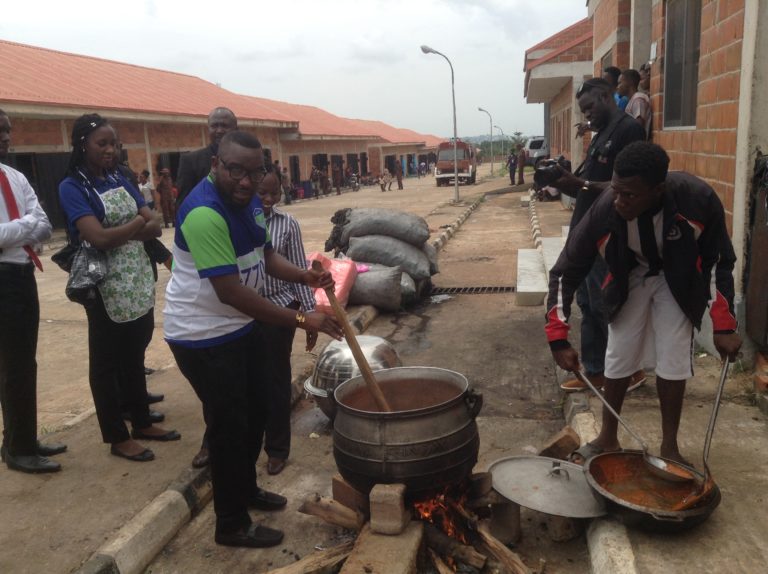
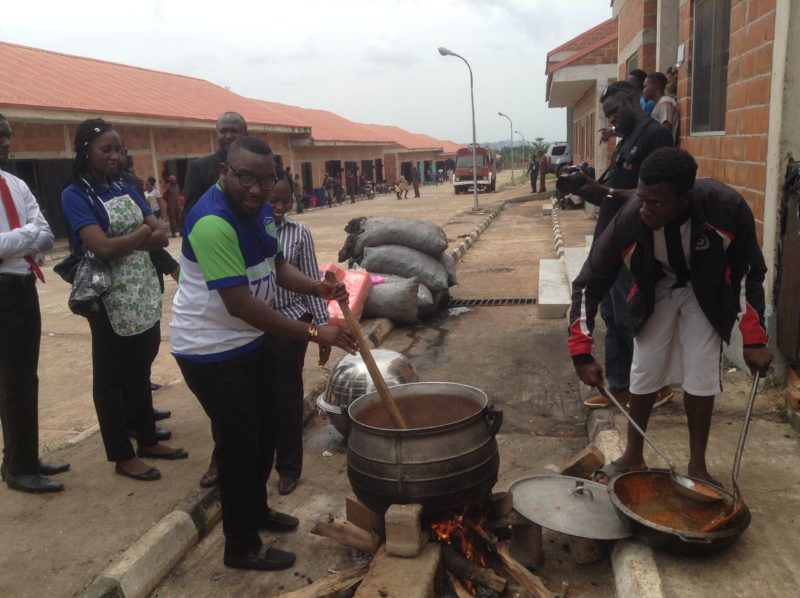
Head, CRS and Sustainability, Fidelity Bank Plc., Mr Chris Nnakwe, lending a hand to cook a meal for IDPs in a camp in Benue State
The coalition conveyed its dissatisfaction in a statement which was given to News Agency of Nigeria (NAN) in Makurdi, the state capital.
NAN reports that Benue CSO is a network of 54 non-governmental organisations (NGOs), faith-based organisations (FBOs) and community-based organisations (CBOs), which has the “pursuit of peace in Benue State’’ as its common goal.
The coalition said in the statement that there was increasing humanitarian crisis in the eight IDPs camps which accommodated more than 500,000 persons.
It specifically noted that the camps lacked basic amenities and called for the intervention of the Federal Government and international agencies to rectify the situation.
“The coalition observes with dismay, the rising humanitarian crisis in the eight IDP camps, which are scattered across the state with an average population of 500,000 persons.
“The absence of basic health facilities, shelter, hygiene, food and education for children has become a grave concern,’’ it said.
The coalition said that communities in Benue, Taraba and Nasarawa states faced serious threat of annihilation by Fulani herdsmen whose activities included killing, maiming, looting, raping and the occupation of the people’s ancestral homes.
It stressed that the government’s inconsistent position on the killings in Benue had been frustrating efforts to get humanitarian assistance from local and international organisations.
The coalition noted that in spite of the presence of the military and other security agencies in Benue, the killings and occupation of communities had continued unabated with casualties mounting up daily.
“The recent murder of two priests and 17 worshipers in Mbalom, Gwer-East, as well as the gruesome killing of 26 persons in Omusu Okpokwu are fresh violent incidents.
“We, hereby, condemn in totality this spate of unavoidable killings. The incidents are abominable, barbaric and unbecoming of a modern society,’’ it said.
The coalition expressed support for the anti-open grazing law in Benue and urged all cattle breeders to ranch their cattle.
The UN specialised agency on trade on Monday, May 14, 2018 urged African governments to establish gender inclusive policies in order to promote the achievement of Sustainable Development (SDGs).
SSAP-SDGs, Princess Adejoke Orelope-Adefulire
Nicholas Schlaepfer, Senior Adviser on Empowering Women to Trade at the International Trade Centre (ITC), told a news conference in Nairobi, Kenya that countries typically implement policies that are gender blind but their impact is not gender neutral.
“We are therefore encouraging African governments to put in place gender inclusive policies that will help to empower women and hence countries to achieve women related SDGs,” Schlaepfer said when ITC launched the Kenya chapter of SheTrades in the Commonwealth in a drive to connect more Kenyan women entrepreneurs to markets.
The SheTrades project aims to drive increased trade, productivity and competitiveness for women entrepreneurs and women-owned companies to ensure that they play an active role in international trade.
ITC also recently encouraged many governments to sign World Trade Organisation Buenos Aires Declaration on Women and Trade which seeks to increase the participation of women in trade.
Schlaepfer said that there is need to understand the impact of policies before they are implemented because if a trade policy favours one sector over another and the sector disfavoured is where more women are present then it will have a worse impact on women than on men.
He also praised Kenya’s policy of allocating at least 30 percent of government procurement to women entrepreneurs and other disadvantaged groups.
“We need to encourage more countries to emulate Kenya’s policy so as to empower women,” he said.
ITC said that in order for affirmative action policies on public procurement to be successful they have to be advertised and structured in a way that will make it easy for women to benefit from them.
Whether or not investment in research will result in competitiveness, growth, job creation and quality of life is increasingly being determined by the relationship between science and industry. Indeed, meeting the complex needs of modern human populations requires industry and businesses to rely more on scientific researchers to develop new solutions.
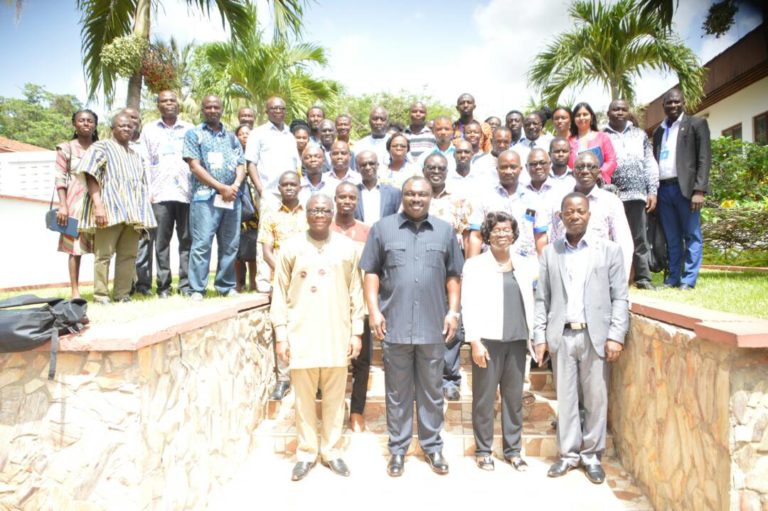
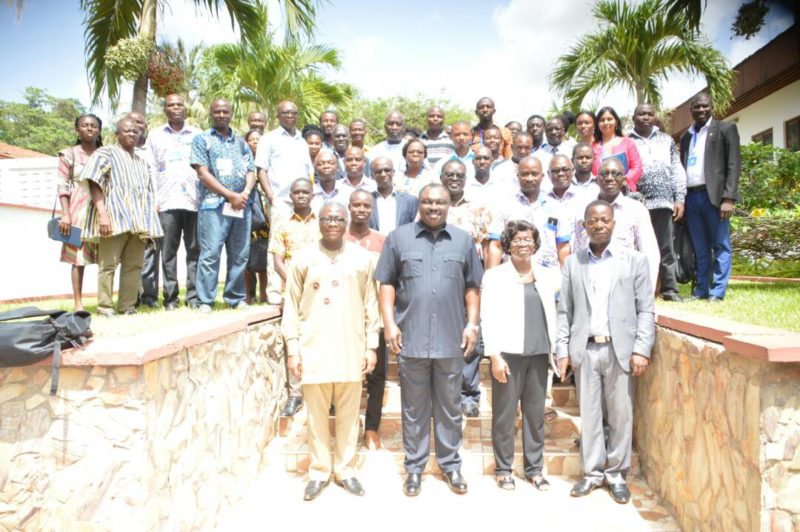
Deputy Minister of Trade and Industry, Robert Ahomka-Lindsay (second from left), with Provost of CBAS, Prof. Daniel Asiedu (to his right); and to his left are: Prof. Yaa Ntiamoa-Baidu, Chair of the CBAS Research Board; and Prof. George Oduro Nkansah, Director of the Institute of Applied Science and Technology; with some participants at the opening session of the 2018 Annual Science and Development Platform
In nations where science and industry collaborate effectively, the results are innovative developments that have benefited the society at large. And the academic community has been playing a key role in forging such mutually beneficial relations between scientists and businesses.
In most developing nations, academia is yet to seize the opportunity of playing the required catalytic role in facilitating a practical science industry partnership, which can maximise the full potential of such a relationship for sustainable national development.
Therefore, Ghana’s academia has been urged to deepen its relations with industry to make the country’s industrial sector more competitive in the global environment. The Deputy Minister of Trade and Industry, Robert Ahomka-Lindsay, made the call from the perspective, saying that a mutual relation between academia and industry would enable science play its lead role in the country’s quest for industrial transformation.
He was launching the 2018 Annual Science and Development Platform organised by the College for Basic Applied Sciences (CBAS), of the University of Ghana, Legon. The three-day event, which took place from April 25 to 27, 2018 at the Centre for African Wetlands, Legon, had “Science for Development: Ghana asks, Legon answers” as its theme. It also provided a forum for the College to interact with and initiate collaborative ventures with industry and also serve as an occasion for Industry to dialogue with members of the CBAS Faculty for solutions.
Mr. Ahomka-Lindsay spoke about Ghana’s agenda for industrial development and expectations from the scientific community. He indicated that this year’s Annual Platform fitted into government’s Industrial Transformational Agenda, with initiatives designed for high-level scientific and industrial deliberations on how to successfully implement the identified initiatives.
The initiatives include building the competitiveness of existing local industries by facilitating their access to medium and long term financing dubbed “Stimulus Package;” implementing the “One District One Factory,” initiative aimed at bringing industrialisation to the doorsteps of the people; introducing Strategic Anchor Industries to serve as new growth poles for the Ghanaian economy; and establishing regional industrial parks and special economic zones.
The Trade and Industry Deputy Minister said progress has been made in implementing some of the initiatives like the Stimulus Package and One District One Factory. He however admitted that “progress has mainly been in the inception phases” and opinioned that it will require the support of academia and industry to accelerate the process of industrial transformation for the country. “Your Platform could serve as one of the avenues … to support the Industrial Transformational Agenda,” he stated.
Mr. Ahomka-Lindsay added that as part of the Agenda’s implementation process, “invitation will be extended to relevant research and tertiary institutions that have specific roles to play… to provide tailor-made solutions to specific research requirements.”
But even before this agenda, Ghana’s universities had been positioning themselves to develop world class scientists who would meet national and global development needs. And this stance is reflected in their Strategic Plans.
For instance, in its 2014-2024 Strategic Plan, the University of Ghana’s first strategic priority is “to create a vibrant intellectual climate that stimulates relevant cutting edge research and community engagement.” And in the words of the Provost of the CBAS, Prof. Daniel Asiedu, “the University intends to make research central in its transformation process and ultimately strengthen its impact and visibility internationally.”
He explained that, to realise this agenda, the CBAS had to create an enabling environment to encourage the publication of research papers in journals of international importance, increase the number of multidisciplinary teams and also increase research fundraising by the collage. Prof. Asiedu said: “It is to meet some of these needs that the CBAS Science and Development Platform was established.”
He added that, through the Platform, “the College is fulfilling one of its fundamental objectives of being relevant to the socio-economic needs of the nation and also becoming a Centre for cutting edge research globally.” Additionally, the College will also be fulfilling its role as an academic institution helping Ghana fulfil her development agenda.
The Director of the Institute of Applied Science and Technology (IASTs), Prof. George Oduro Nkansah delivered a presentation on IASTs Industry-Academia Interactions: The tool for addressing Ghana’s industrial challenges. He noted that while the university has expanded its engagement with industry, government and local communities, “there is a noticeable gap in moving the ideas and concepts generated through these interactions to the next level of testing and development.”
In order to address this gap, Prof. Nkansah said: “IAST has developed mechanisms of engagement that supports the translation of theoretical concepts into practical solutions for industry.” To this end, one of the institute’s strategies, aimed specifically at reducing the burden of graduate unemployment, is to build the capacity of students with the relevant skills for nation building.
Later in an interview, the Chairperson of the CBAS Research Board, Prof. Yaa Ntiamoa-Baidu, said: “The essence of the Platform is to encourage all researchers in Ghana to open up to industry, so that their findings can be used for national development.”
Touching on the membership of the Platform, she said “all of industry and other scientific organisations are free to join.”
The opening and initial plenary session, was followed by a series of nine thematic sessions on food and nutrition; computing and digital systems applications; mathematics and statistical application; agricultural sciences; and earth science. The others were physical and biomedical science; environmental science; biological science and material research and industrial applications.
Under each of these thematic areas, presentations were made on various topics that highlighted the essential building blocks, required to foster the desired industrial transformation for accelerated national development in line with the Sustainable Development Goals (SDGs).
This year’s Annual Science and Development Platform underscored the fact that the academic community has become more aware of the potential of their science for industrial transformation.
It further brought to the fore the need for business people and scientists to work together to appreciate each other’s priorities, and to attain the benefits of closer collaboration such as improving innovation in research to respond appropriately to national needs.
In advance of the Global Climate Action Summit holding from September 12 to 14, 2018 in San Francisco, USA, and the 24th Session of the Conference of the Parties (COP24) to the United Nations Framework Convention on Climate Change (UNFCCC) scheduled to hold from December 3-14, 2018 in Katowice, Poland, the Oslo Tropical Forest Forum (from June 27 to 28) will shine the global climate spotlight on the role forests play in achieving Paris Agreement Goals to keep global temperatures below 1.5 degrees Celsius.
The conference hopes to advance strategies for mobilising forests to help in achieving the ambitions of the Paris Agreement and the Sustainable Development Goals. Photo credit: UNDP Cambodia/Chansok Lay/Oddar Meanchey
Hosted by the Norwegian Ministry of Climate and Environment and the Norwegian Agency for Development Cooperation, the goal of the gathering is to celebrate results and identify remaining challenges 10 years after reducing emissions from deforestation and forest degradation (REDD+) was included in the climate change negotiations. It also hopes to advance strategies for mobilising forests to help in achieving the ambitions of the Paris Agreement and the Sustainable Development Goals.
A strong global alliance for tropical forests is said to have emerged in these last 10 years, and many of its representatives will attend the Oslo Tropical Forest Forum, where 10 new reports capture the latest technologies, policies and business practices in play to save the world’s forests will be released by leading forest experts.
.
Essentially, the summit was informed by:
Negotiations toward reducing emissions from deforestation and forest degradation (REDD+) were launched at the UN global climate talks in Bali, Indonesia in 2007. The Paris Agreement made REDD+ central to commitments aimed at preventing global temperatures from rising by 1.5 degrees Celsius.
Emissions from gross tropical deforestation account for an estimated 11 percentof annual carbon dioxide emissions; forests that remain intact currently absorb up to 30 percent of all carbon dioxide emissions.
Stopping deforestation, restoring forests and improving forestry practices could remove 7 billion metric tons of carbon annually – equal to eliminating 1.5 billion cars, more than all the cars in the world today.
Stopping deforestation and introducing better forest governance and tenure rights would also protect improved livelihoods optionsfor hundreds of millions of Indigenous Peoples, local communities and other groups that are dependent on tropical forests for their survival.
The conference is focused on five themes, which are listed to include:
the role of forests in meeting Paris Agreement goals;
reducing illegal logging, corruption and other forest-related crimes;
recognising Indigenous Peoples’ rights and reducing violence against environmental defenders; and
financial disclosure and radical transparency for forest-risk commodities.
“Protecting, restoring and managing trees could get the world one-third closer to preventing the worst impacts of climate change. Yet, the world’s forests – especially tropical forests in Latin America, Southeast Asia and Central Africa – are increasingly under threat from the ever-expanding production of soy, cattle, palm oil and wood products,” said officials of Norway’s International Climate and Forest Initiative (NICFI) in a statement.
“Recent research is revealing that climate change itself is emerging as an increased threat to forests – and that forests provide climate benefits beyond carbon that we’re only just starting to understand. In addition, forests contribute to a wide range of Sustainable Development Goals, including access to clean water and clean energy.”
Tolani Funsho, 28, recalls how she survived preeclampsia after an emergency C-Section was conducted on her eight months into her pregnancy.
Preeclampsia is a pregnancy-related hypertensive disorder occurring usually after 20 weeks of gestation
“My ordeal started when I started noticing that my legs and other parts of my body were swollen every day I woke up,” said the mother of one, which prompted her to complain to her doctor.
The doctor advised that she was suffering from Edema, without explaining much, only advising her to always place her legs on a pillow when sleeping.
But, according to Funsho, she did not see much improvement in the condition.
“Í started to notice a change in my body at seven months pregnant. Getting to the eighth month of pregnancy, I started seeing mucus without blood stains. I was not convinced about what the doctor had told me, so I started to read up about what causes a woman to swell all over her body during pregnancy,” she narrated.
That is when she bumped into the name preeclampsia and began to read up all the symptoms. She got to learn that only a c- section could save her life and that of her baby before it leads to esclampsia.
Funsho prepared herself to have surgery instead of normal delivery, and lived to tell the story. Her baby will soon be five years old.
Preeclampsia is a pregnancy-related hypertensive disorder occurring usually after 20 weeks of gestation. These symptoms are easily identified for women who monitor their weight. Other common symptoms include pain, constant headache and blurred vision.
Aminat Jaji was not lucky to tell her story. She died at delivery, but while her baby survived, it also died three days later. Her relative, Kuburat Olaiwola shared the sad story.
“It was not a good one for us as her family, because we did not know what preeclampsia is or what could have made her all blotted,” she said.
“All we noticed was that she was swollen all over her body, her face and legs especially She did not complain of any pain, whenever she walked around ,she felt a bit better.” Kuburat explained.
“Though it’s quite unfortunate that we lost her even after we agreed to the emergency C-section,” she continued. “Eight months into her pregnancy we started to run all sorts of tests. At the end of the day, we were told she had too much protein in her urine.”
People with proteinuria have urine containing an abnormal amount of protein. The condition is often a sign of kidney disease. It can be detected through a urine test conducted during a routine physical examination. Blood tests are then carried out to see how well the kidneys are functioning.
Proteinuria can also be a result of overproduction of proteins by the body, one of its first signs may be proteinuria that’s discovered by a urine test done during a routine physical exam. Blood tests are then done to see how well the kidneys are working.
“We did all we could do but at the end of the day we lost her and the baby due to carelessness on the part of health care givers,” explained Kuburat.
“Her test results were not properly explained to her,” said Kuburat, noting that had this been the case, they would have taken action to manage the condition at the earliest opportunity, to prevent her death and that of the baby.
For Koya Ogunwale, the memory he shared with the love of his life is all he has left. Mariam Ogunwale died because of late detection of preeclampsia.
Maternal health and newborn health are closely linked as more than three million newborn babies die every year, and an additional 2.6 million babies are stillborn, according to statistics from the Pre-Eclampsia Foundation.
But one major point of concern is the lack of knowledge about the condition.
To establish how much knowledge the general public has on this condition, I visited a number of hospitals in Lagos state to speak with sources.
My first stop was at a private hospital, Longing Medicals, where I attended the ante natal classes three times in a row. I had a long chat with the senior nurses who take the classes, one of who told me she only knows about edema as they always check protein in the urine as a matter of routine.
It is instructive to note that many health centres in Lagos only talk about how the expectant women can take care for her during pregnancy. Major topics discussed are nutrition, care for the baby once it arrives and regular exercises to promote smooth delivery.
Toyin Ayeni is one of the women I spoke with at the Lagos State Teaching Hospital, Idi Araba.
“This is my first time to hear about preeclampsia. I only know edema, the condition in which ones legs are swollen,” she said.
The case is not different for women in Ifako-Ijaiye General hospital, where Ajike Akinwande said it is high time women knew other imminent threats during pregnancy.
“Sincerely preeclampsia sounds new to me, I always hear of maternal mortality but I didn’t know this contributes largely to it,” she explained.
Preeclampsia is one of the major causes of deaths of the mother and child at birth, but also accounts for pre-term births in developing countries like Nigeria.
It is a multisystem disorder, meaning it occasions organ failure.
The World Health Organisation (WHO) estimates that the incidences of preeclampsia are seven times higher in developing countries than in developed countries. According to the organization, developing countries record 2.8% of live births compared to 0.4% accounted for in developed countries. The 2.8% represents only four hundred live births out of about one thousand.
A gynecologist, Dr. Demiji Ojo, explained that any woman with preeclampsia should be constantly monitored and managed till the pregnancy is about 37 weeks, recommending emergency Caesarian Section delivery for affected women, to save both lives.
He says deaths in pre-eclampsia occur mainly due to late detection or in cases where the woman is not willing to undergo an emergency C-Section.
“It is quite unfortunate that Nigeria health care system is poor, and most women are not knowledgeable especially in the North where they cannot get easy access to good health services,” said Dr. Ojo.
One of the causes of Preeclampsia, says Dr. Ojo, results from a poorly functioning placenta. “This is an uncommon but serious complication of pregnancy. It occurs when the placenta does not develop properly, or is damaged,” he explains.
Researchers have linked this to poor nutrition or high body fat.
In all 10% to 15% of maternal deaths globally are directly associated with pre-clampsia and if, left untreated, it progresses to eclampsia which is an advanced case of preeclampsia.
Preeclampsia is not specific to women who have had high blood pressure in the past. In the mother, pre-eclampsia may cause premature cardiovascular disease, such as chronic hypertension, ischemic heart disease, and stroke, later in life, while children born after pre-eclamptic pregnancies and who are relatively small at birth, have an increased risk of stroke, coronary heart disease, and metabolic syndrome in adult life.
To some women, the condition manifests in a mild way, especially for those who are able to detect it early. In severe cases, preeclampsia may cause an expectant woman to develop seizures or even slip into a coma.
Prevention of any disease requires the availability of methods for prediction of those at high risk for the disorder, Although numerous clinical and biochemical tests have been proposed for prediction or early detection of preeclampsia, most remain unrealistic for general use in most developing countries as most women in northern Nigeria do not have access to good health services.
Some of the biochemical tests used to detect pre-eclampsiain Nigeria are routine urine test and liver function tests. This helps to detect the amount of protein the urine and if the liver is malfunctioning.
Why is this so? Medical expert, Dr. Korede Akanni, says preeclampsia affects the central nervous system of such women as the most affected do not pay much attention to their health and changes in their body.
Approximately 800 women die from pregnancy or childbirth-related complications globally, according to the Preeclampsia Foundation. Ninety-nine percent occur in developing countries. Though according to the National Institute of Child Health and Human Development, the exact number of women who develop preeclampsia is not known, some estimates suggest that preeclampsia affects 2% to 8% of all pregnancies globally.
Medical practitioner and Reproductive Health expert, Dr. Abimbola Adekanbi, said more needs to be done to prevent the medical conditions of women from early stage of pregnancy, while calling on women to also know monitor blood pressure, salt and protein level.
“As an expert, I usually advice women with such condition or those who have tendency of having such to always go for urine test to monitor their protein level and also check their intake of salty food,” she added.
Health experts are calling on the Nigerian government to look inward and allocate more funds to the health sector budget as this will go a long way in reducing maternal and child mortality, especially through early detection of conditions such as preeclampsia in Nigeria.
As they make their global journeys, migratory birds not only set birdwatchers’ binoculars agog, they also help the planet maintain its essential ecological balance.
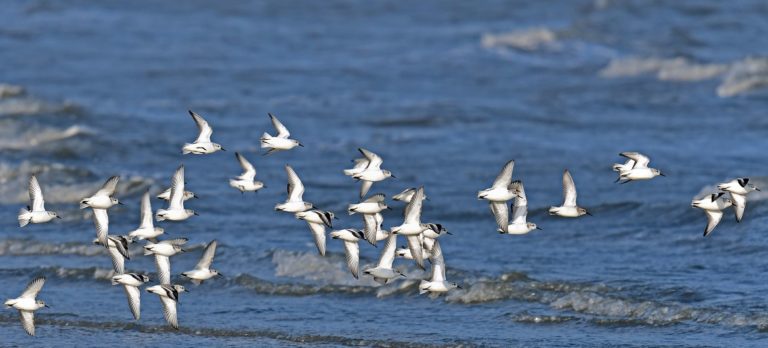
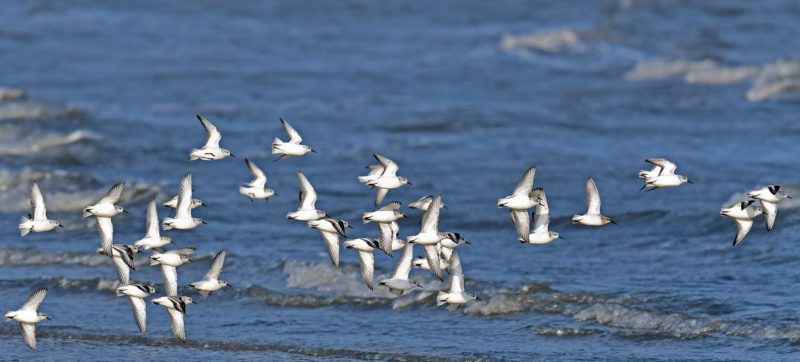
Sanderlings, which are small wading birds, are long-distance migrants, wintering south to South America, South Europe, Africa, and Australia
That’s one of the key messages from United Nations chief, Antonio Guterres, for the 2018 World Migratory Bird Day, celebrated on Saturday, May 12, with the soaring message: “Unifying Our Voices for Bird Conservation.”
“Their epic journeys inspire people of all ages, across the globe,” he continued, adding: “World Migratory Bird Day is an opportunity to celebrate the great natural wonder of bird migration – but also a reminder that those patterns, and ecosystems worldwide, are threatened by climate change.”
The Day highlights the need to conserve migratory birds and their habitats by raising awareness of the threats they face, their ecological importance and the need for international cooperation to conserve them.
Migratory birds fly hundreds and thousands of kilometres, along historic routes, to find the best habitats available for feeding, breeding and raising their young. The perilous journeys involve a wide and diverse array of threats.
Of the 11,000-bird species on the planet, one-in-five is considered migratory. Forty per cent of them are in decline, with one-in-eight under threat of global extinction. Major threats include habitat-loss and degradation, caused by agricultural and coastal development; collision with badly placed wind turbines and powerlines; unsustainable harvesting, and illegal killing and taking.
Migratory birds are also greatly affected by poisoning, such as through ingesting lead released into the environment, through spent ammunition, or toxic weights used for fishing.
“Migratory birds are under threat from every corner: they are losing their habitats, subjected to illegal killing and suffering from the impacts of climate change,” said Erik Solheim, Executive Director of the UN Environment Programme, UNEP, adding that we all have a responsibility to “save such a precious component of the natural world.”
Key supporters and partners globally, are adamant that successful migratory bird conservation can only be achieved through a united effort.
Beginning this year, World Migratory Bird Day will be observed annually each May and October, to coincide with the cycle of migration, making it possible to organise events in countries around the world at peak migration times.
“I urge Governments and people everywhere to take concerted conservation action that will help to ensure the birds’ survival – and our own,” the Secretary-General concluded.
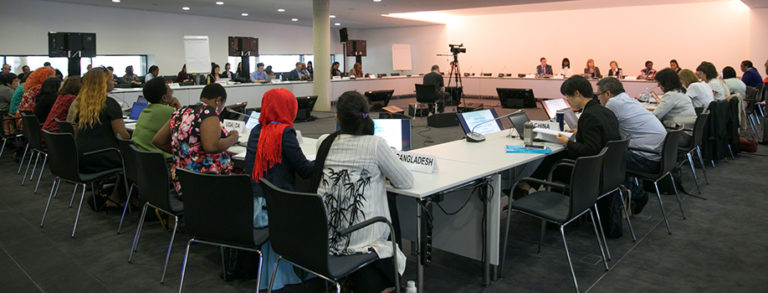
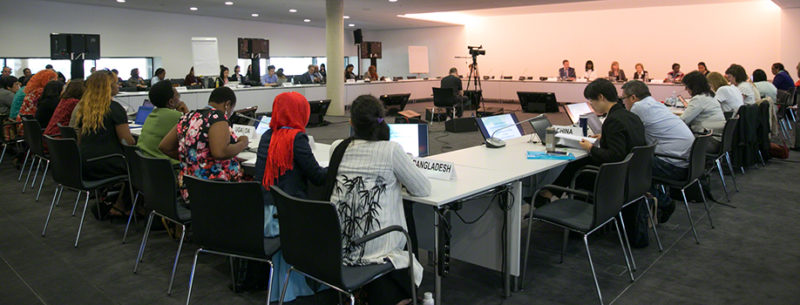
Experts from all around the world gathered at the UN intersessional climate talks in Bonn, Germany to step up action on gender and climate change with a series of workshops and dialogues. The two-week summit held from April 30 to May 10, 2018.
Participants during the in-session workshop on gender and climate change in Bonn
The Gender Action Plan (GAP) of UN Climate Change recognises the differentiated impacts of climate change upon women and men and supports the gender-related actions under the UN Framework Convention on Climate Change with respect to the Paris Agreement.
The plan urges immediate advancement of women’s participation, promotes gender-responsive climate policy and mainstreaming of the gender perspectives in the Paris Agreement’s implementation.
Organised by the UN Climate Change secretariat, the meetings highlighted solutions on how to intensify the implementation of the GAP, including how to address the impacts of climate change on women and girls in climate action.
“We know that the role of women as agents of change and their participation in the political process contributes to the transformation of our society towards a low-carbon and resilient development,” said Jeniffer Hanna Collado of the Dominican Republic’s National Council for Climate Change and the Clean Development Mechanism.
Specifically, experts and researchers from civil society and the public sector explored some of the currently available resources to create gender-responsive climate policies and good practices for addressing gender and climate change. The importance of having gender-analysis and sex-disaggregated data was high on the agenda.
“Sex-disaggregated data and gender data is vital for framing decision-making processes as well as for monitoring the impacts of implementation,” said Lorena Aguilar from the International Union for Conservation of Nature (IUCN).
Women and girls are among the most impacted parts of populations when it comes to climate change, as in many regions of the world, women and girls rely on natural resources for their work and livelihood. However, their access to resources and rights to land ownership are often limited.
It is important to understand that the gender dialogue in climate talks is not only about women, but about both women and men. Also important is to ensure continuous research, with the participation of women, as they are most affected by climate change.
Efficiency in creating gender-responsive climate policies lies in ensuring gender analysis of climate policy and action and in mobilising existing and new resources.
Markus Ihalainen from the Centre for International Forestry Research, mentioned in Bonn that “we need to move beyond female and male binaries and also understand that gender relations can change over time and are affected by climate change as well as responses to it”.
The discussions about the progress on the Gender Action Plan will continue in Katowice at the UN Climate Change Change Conference COP 24 in December.
Towards promoting the phase-down measures under the Minamata Convention on Mercury signed and ratified by Nigeria in February 1, 2018, three Nigerians have been selected from the government, academia and civil society to attend the Global Workshop on Ending Dental Amalgam Use in Children holding in Bangkok, Thailand from May 14 to 15, 2018.
Bangkok, Thailand is hosting the Global Workshop on Ending Dental Amalgam Use in Children
The bigwig Nigerian team comprises Mr Charles Ikeah, Director of Pollution Control and Environmental Health of the Federal Ministry of Environment; Prof. Godwin Arotiba, immediate past Dean, Faculty of Dentistry, Lagos University Teaching Hospital (LUTH); and Dr Leslie Adogame, Executive Director, SRADev Nigeria (focal point NGO).
The global workshop is organised by the World Alliance for Mercury-Free Dentistry in association with UN Environment, and its goal is to assist countries in ending amalgam use in children as well as to promote the phase down measures as an integrated approach to the implementation of the Minamata Convention’s requirement to phase down amalgam use before the 2nd session of the Conference of the Parties (COP2) in November, 2018. According to the organisers, the report of the global meeting is envisaged as information for participants at COP2.
“In Bangkok this month, Nigerian delegates will historically join other five African countries (Zambia, Tunisia, Tanzania, Mauritius and Côte d’Ivoire) to take the giant step to commit to end amalgam for children across Africa and throughout the world,” said Dr Adogame.
Jacob Duer, Chief of Chemicals and Health Branch of UN Environment, states that delegates to the meeting have been “carefully selected to ensure a diversity of experiences and perspectives”. Sharing experiences and strategies to phase out amalgam for children and phase down amalgam use generally will provide an important basis for decision-making for each country at COP2 and beyond, he adds.
Expected workshop participants are experts drawn from countries, including government representatives, civil society, dentists/dental academicians, dental manufacturers, and intergovernmental organisations like UN Environment and World Health Organisation (WHO), all of whom will contribute to presentations and discussions on topics such as:
amalgam’s environmental impact; mercury-free dental materials available for children;
case studies from countries and other entities that have ended amalgam use in children; and
strategies that can be tailored to each country’s needs (such as laws and regulations, dental school curricula updates, modifying insurance and government programmes, and encouraging health promotion programmes that can increase longevity of teeth by preventing dental caries and utilising minimally-invasive mercury-free fillings).
Dominique Bally of the African Centre for Environmental Health based in Côte d’Ivoire, said, “To donate, sell, or otherwise bring amalgam to Africa is not helping the people of our region – it is dumping a neurotoxin into our environment and our bodies. Africans are tired to see their continent being seen as the world dumping site.”
Charlie Brown, Attorney and President of the World Alliance for Mercury-Free Dentistry, an organisation which is spearheading the campaign, made a clarion call on African, Asian and other global delegates attending the meeting, saying: “Please do as the European Union has done: phase out amalgam for children now, for one simple reason: The children of your nation are equally important as the children of Europe.”
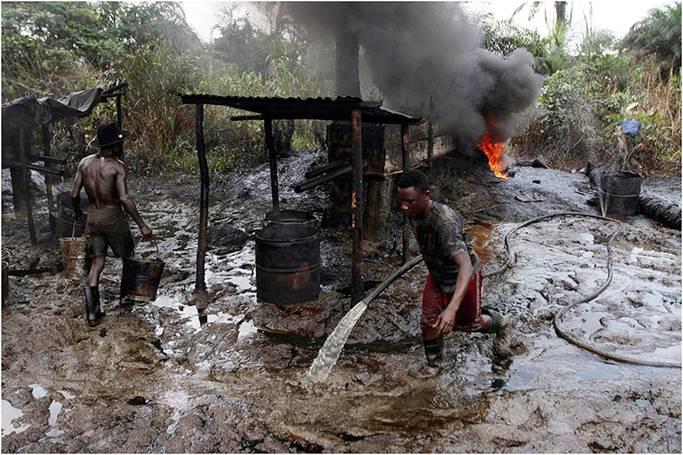
The Joint Military Force (JTF) in the Niger Delta says it has adopted environment-friendly methods in combating oil theft and illegal refining in the region
Illegal refining activities in the Niger Delta
Brig.-Gen Kevin Aligbe, Land Component Commander of the joint force code-named “Operation Delta Safe,” disclosed this to the News Agency of Nigeria (NAN) on Sunday, May 13, 2018 in Yenagoa, the Bayelsa State capital.
Alighe said that troops of the command had introduced the use of swamp buggies in destroying illegal refineries as opposed to setting the camps ablaze.
He said the force used special equipment to crush the accessories and materials used at illegal refining sites.
He further said that the method had made it economically unviable for such sites to spring up again after raids by the joint force.
The commandant noted that the adverse impact of pollution caused by illegal refineries was enormous.
He commander said that some people’s perception that the destruction of illegal refineries was doing damage to the environment was erroneous.
Aligbe said it was the processes in the illegal refining that actually degraded the Niger Delta environment.
According to him, the crude distillation process used by illegal refineries is inefficient and causes a pollution of the environment.
He said that only 30 per cent of the volume of crude stolen by illegal refiners is converted to products.
The commandant said the remaining 70 per cent was wasted and dispersed in the surrounding environment near the camps.
“Our operations are always carried out with the environment in mind; we deploy methods that are environmentally friendly and safe and we do not burn stolen crude as believed in some quarters.
“In fact, burning of products either refined or crude is out of question because it is the evidence that is required to prosecute the suspects that are arrested during raids of illegal refineries.
“We seize the products and after using them as evidence they are disposed in accordance with the oil industry safety regulations.
“We are conscious of the fact that the environment sustains the people’s livelihood.
“The damage that illegal refineries do to the environment is colossal and that is part of the reasons we are fighting to stamp it out.
“The operators are fighting back and we remain resolute,” he said.
Aligbe noted that the joint military force was committed to its mandate of safeguarding oil facilities and preventing sundry criminalities in the region.
The commandant said that the aim was to pave way for economic progress and solicited the support of Niger Delta people.
Shell Nigeria Exploration and Production Company (SNEPCo) delivered a total of 763 million barrels of oil from the Bonga field between first production in 2005 and 2017, while at the same expanding the field with further drilling of wells in Bonga Phases 2 and 3 and through a subsea tie-back that unlocked the nearby Bonga North West field in August 2014.
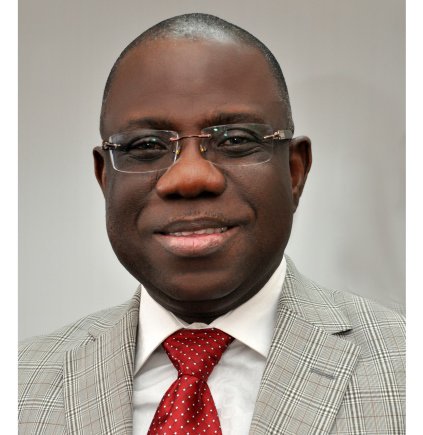
SNEPCo Managing Director, Bayo Ojulari
“The success story at Bonga is not only that it is Nigeria’s first oil and gas production project in more than 1,000 metres of water, or that it increased Nigeria’s oil production capacity by 10% in 2005,” said SNEPCo Managing Director, Bayo Ojulari, while reviewing the operations of the company to journalists in Lagos. “The main point is that Bonga is a Nigerian venture delivered by Nigerians using global expertise and processes offered by Shell that have launched Nigeria into the league of notable deep -water players.”
He identified the Bonga turnaround maintenance in March and April 2017 as a significant milestone in SNEPCo’s operations. This was the most complex and largest of the three previous turnaround maintenances in the 12-year history of Bonga, and has helped to ensure safe and sustained production and reduced unscheduled production deferments. More than 1,000 people and more than 50 Nigerian contractor and sub-contractor companies participated in the exercise.
Another milestone was the refurbishment of five subsea trees in 2015 at a fabrication yard at Onne in Rivers State, the first in sub-Saharan Africa with Nigerian engineers and technicians playing key roles. The feat is consistent with the growth of support industries from Bonga operations which have boosted demand for a range of goods and services including offshore vessels and platforms, materials, floating hotels, helicopters and manpower, creating jobs and providing a range of training and maintenance services to the industry locally.
Working in close collaboration with the Nigerian National Petroleum Corporation (NNPC), the concessionaire and co-venture partners, SNEPCo has implemented a robust social investment portfolio that has made visible impact in the six geopolitical zones of Nigeria.
Mr. Ojulari paid tribute to the staff and contractor personnel who have worked hard to ensure sustained production at Bonga, thereby creating a stable source of revenue for all stakeholders particularly the Nigerian government.
He added: “We are working hard to strengthen the Nigerian connection. It is not a coincidence that, since 2005, the Managing Director of SNEPCo has been Nigerian and today, 96% of SNEPCo’s staff is Nigerian. SNEPCo is also committed to further unlocking Nigeria’s deep-water resources and along with its co-venture and government partners is evaluating opportunities to further increase production of the Bonga field in an efficient and cost-effective way.”