Katsina State Government has launched the 2026 Climate Change Competition for students to showcase their understanding of the phenomenon.
The Chief Press Secretary to Gov. Dikko Radda, Mr. Ibrahim Kaula-Mohammed, made this known in a statement in Katsina, the state capital, on Monday, March 16.
He stated that the competition was organised through the Katsina State Climate Change under the Gov. Dikko Radda Green Prize Initiative.
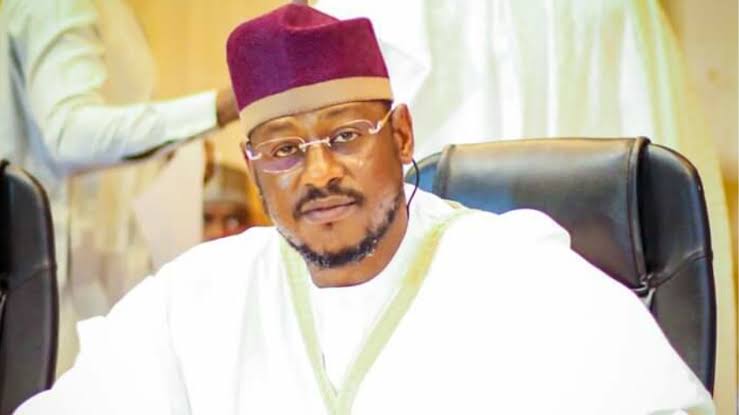
Governor Dikko Radda of Katsina State
According to him, the competition is to inspire youth engagement in environmental sustainability.
Kaula-Mohammed quoted the Senior Special Assistant to the governor on Climate Change, Mr. Suleiman Ribadu, as saying: “Students from primary, junior and senior secondary schools across Katsina State can participate.
“This competition promotes climate awareness and environmental responsibility among our youth.”
He added that participants were expected to produce short video presentations based on climate quotations from Gov. Radda’s speeches, demonstrating knowledge of climate change adaptation, mitigation and environmental stewardship.
The competition, he said, aligned with Radda’s vision to build a climate-resilient and environmentally sustainable Katsina State.
“Winners will receive the prestigious Gov. Dikko Radda Green Prize, which include cash rewards, certificates and special recognition.
“Entries will be evaluated by a panel of experts who will assess students’ understanding of climate issues and their commitment to environmental action,” he said.
He stated that students can apply online on www.govdikkogreencompetition.com., to be submitted not later than April 10.
He encouraged eligible students to participate and contribute their ideas to Nigeria’s climate agenda.
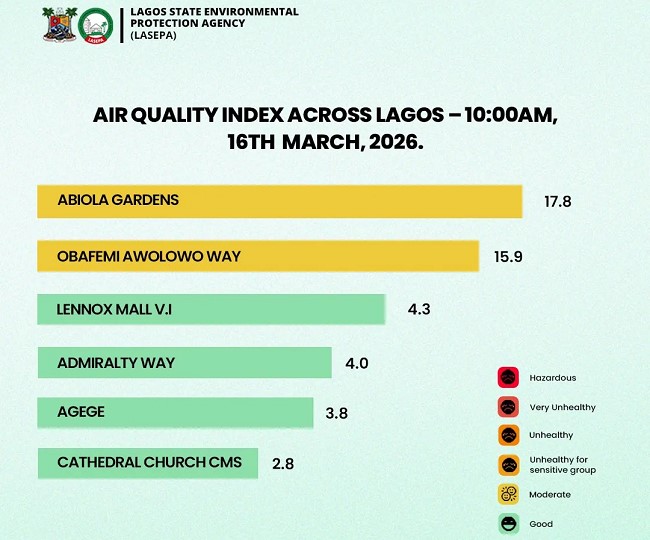
Cathedral Church CMS, Agege, Admiralty Way and Lennox Mall have recorded good air quality index, data from the Lagos State Environmental Protect Agency (LASEPA) has shown.
LASEPA released the Air Quality Index (AQI) report for locations across Lagos on Monday, March 16, 2026.
The report showed moderate air quality levels at Abiola Gardens and Obafemi Awolowo Way, with index readings of 17.8 and 15.9 respectively.
Lagos Air Quality Index
Other monitored locations recorded good air quality levels.
They include Lennox Mall, Victoria Island (4.3), Admiralty Way (4.0), Agege (3.8) and Cathedral Church CMS (2.8).
However, a clean energy campaigner has commended LASEPA for monitoring and releasing air quality data across the state.
Mr. Weyinmi Okotie, the Africa Clean Energy Campaigner at the Global Alliance for Incinerator Alternatives, gave the commendation on Monday while reacting to LASEPA’s latest Air Quality Index report.
Okotie said it was important for governments to invest in air monitoring systems and provide regular updates to the public on environmental conditions.
According to him, many Nigerian states do not yet have air quality monitoring facilities capable of providing real-time data to residents.
“We need to commend Lagos for even having air monitors and providing updates on air quality,” he said.
He, however, noted that interpreting air quality results requires understanding the context, methodology and environmental factors involved in the monitoring process.
Okotie explained that air quality readings were usually calculated over a 24-hour period, which could include hours when human activities such as traffic are minimal.
“For example, a location like CMS may experience heavy vehicular movement during the day, but at night activities reduce significantly,” he said.
He added that the placement of monitoring equipment and wind direction could also affect the accuracy of readings recorded by monitoring stations.
According to him, an air monitor located upwind or downwind of pollution sources may capture different levels of pollutants depending on wind movement.
He said the availability of air monitoring systems remained an important first step in improving environmental management and public awareness.
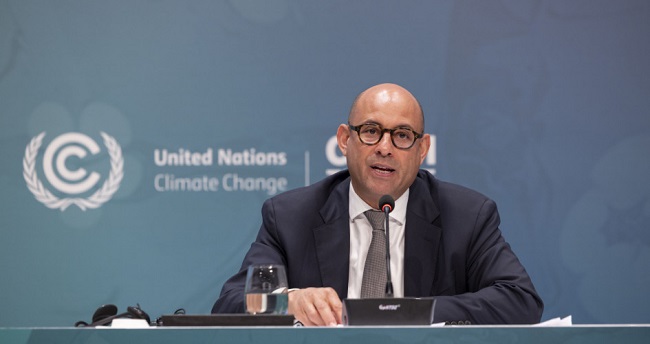
Remarks delivered by UN Climate Change Executive Secretary, Simon Stiell, at the Green Growth Summit in Brussels, Belgium, on Monday, March 16, 2026
Recent weeks have developed yet another abject lesson.
Fossil fuel dependency is ripping away national security and sovereignty, and replacing it with subservience and rising costs.
UN Climate Change Executive Secretary, Simon Stiell, during a press conference hosted by the COP31 President Designate, Minister Murat Kurum in Istanbul, Türkiye, on Thursday, February 12, 2026
And Europe is more reliant on fossil fuel imports than almost any other major economy.
That cost you over €420 billion in 2024 alone.
Fossil fuel dependency means economies, household budgets, and business bottom lines at the mercy of geopolitical shocks and price volatility in a chaotic world.
A world of trade turmoil, strong-arm politics, and war.
The European Central Bank had recently said that the EU economy is in a good place.
But electricity prices are spiraling. And inflation will likely return.
Because war in the Middle East has sent the oil and gas prices soaring. Just as war in Ukraine did before.
The impact of faltering energy supplies is being felt around the world.
From universities closing early in Bangladesh. To plans to cut public working hours in the Philippines. Countries are reeling.
Some responses to the fossil fuel crisis – incredibly – argue for doubling-down on the cause of the problem and slowing the shift to renewable energy. Even though it is clearly cheaper, safer, and faster to market.
This is completely delusional.
Because history tells us, this fossil fuel crisis will happen again and again.
In this new world disorder where some major powers do as they please, unconstrained by economic logic or current alliances.
My message to ministers meeting today in Brussels is simple: meek dependence on fossil fuel imports will leave Europe forever lurching from crisis to crisis, with households and industries literally paying the price.
All as climate disasters wreak havoc the world over – pushing costs up and economic growth down, and taking a massive human toll.
In Europe, climate extremes cost €43 billion in economic losses, last summer alone. And that is a conservative estimate.
While the fossil fuels that supercharge disasters rake-in trillions in taxpayer-funded subsidies globally. Money that could be better spent.
But renewables turn the tables.
Sunlight doesn’t depend on narrow and vulnerable shipping straits.
Wind blows without massive taxpayer-funded naval escorts.
Renewable energy allows countries to insulate themselves from global turmoil, and to side-step might-is-right politics.
Renewable energy also delivers on people’s top priorities across the continent: security, well-paid jobs, better health, and relief from rising living costs.
There’s a lot of commentary about populism at the moment.
But the reality is, what most voters are demanding, climate action delivers at scale.
Renewables and resilience keep bills down and create far more jobs.
Cutting-out fossil fuel pollution cleans our air, improving health and quality of life.
And meeting the EU’s 2040 emissions reduction target would boost your economy by 2%. This will add hundreds of billions of Euros every year, and deliver vast human and societal benefits, including more stability.
Today, Europe has a once-in-a-generation opportunity to harness these benefits.
Building on its longstanding climate leadership.
And cement competitiveness, stability, and rising living standards for years to come.
In an era of chaos, capital is searching for safe, strategic growth, sending record sums into Europe.
The EU can turn that trend into a permanent pillar of jobs and prosperity with strong climate action:
In climate resilience – essential to human safety and economic stability as disasters intensify.
And by setting out how you will thrive in a decarbonising world – as electrification accelerates, supercharging clean energy services, and innovation.
The opportunities are immense.
Last year, renewables overtook coal as the world’s top electricity source.
Over $2 trillion was invested in clean energy. Double that of fossil fuels.
Already, Europe is a leader in climate action and ambition.
Your Emissions Trading Scheme is driving investment and innovation.
And European companies are at the forefront of clean industries and growth:
Like SSAB, Maersk, and Holcim – leaders in green steel, shipping, and cement.
Or Siemens, Schneider, and IPS – pioneers in wind power, energy storage, and electro-tech services.
Europe can permanently seize the multi-trillion-euro goldmine of investments that are just getting started.
By embracing green growth, drawing on your many strengths – education, strong institutions, smart regulations, social justice, and innovation and intellectual property.
And by backing it up with plans and policies.
That deliver on your NDC – in full and on time.
That show how you will transition away from fossil fuels, swiftly and fairly.
That upgrade grids – improving connections across borders.
That stand firm behind the ETS – as more than 100 companies requested just last week, while also recognising complex trade issues, and the need for an inclusive global transition.
And that position you at the fore of the electro-tech revolution, including through your Electrification Action Plan.
Europe’s companies are essential to supporting these efforts.
To continuing your leadership.
And pushing governments for more – showing you’re behind them.
Because stronger policies mean more secure economies, and more opportunities for business, as decarbonisation reaches positive tipping points.
And a faster transition around the world means greater gains for Europe and its businesses of all sizes.
A prosperous EU depends on strong partnerships that empower others, especially developing nations.
And on global supply chains that can withstand climate extremes – crucial to keeping inflation down.
Climate cooperation is a cure for the chaos of this moment, and beyond:
Through trade deals and partnerships, countries can create the conditions for more stable and sustainable economies the world over.
COPs are at the heart of those efforts.
And they are delivering – even if not fast enough.
UN convened cooperation and European leadership have been critical to global climate action – the Paris Agreement has roughly halved projected global temperature rise.
It has unleashed the global clean energy revolution.
And last year, amid gale-force political headwinds, every country at COP30 said Paris is working, and resolving to make it go further, to go faster.
Year after year, EU leadership has driven ambition at COPs.
I urge you to keep it up. Stand up for the process. And step up to the moment.
As we move into a new era of climate action – an era of implementation – there are vast opportunities.
Increasingly, COPs will match-make between governments, businesses, and investors to turn commitments into huge benefits for people.
That’s what’s known as the Action Agenda. It’s as much a part of the Paris Agreement as the negotiations.
And it’s making significant progress – at COP30, a trillion dollars were committed to grids and storage, major funding breakthroughs were delivered on health and climate, and huge steps forward were made in resilience and protecting forests.
COP31 in Türkiye will drive this same approach forward.
So, I urge you to seize this moment. With companies coming to COPs to secure agreements that help tackle the climate crisis while boosting their bottom lines.
And the EU building new partnerships that benefit all, through your global gateway.
Investing in value chains in partner countries, accelerating their transitions, and building their resilience. Strengthening alliances in the process.
This goes to the heart of what Europe stands for.
Last century, when a continent reeling from war came together to build the foundation of integration, energy was top of that list.
Because countries understood that secure and affordable energy, achieved through cooperation, were the basis of peace and prosperity.
President Bola Ahmed Tinubu has said his government will support the evidence-led campaign of the Nigerian media against Big Tech dominance, anti-competitive activities, and the harsh economic headwinds affecting local media.
He described the press as an “indispensable partner” in the nation’s journey towards economic stability, press freedom, and social cohesion.
At a meeting at the State House on Friday, March 13, 2026, the President said his government would help dismantle the fiscal hurdles and “digital cannibalisation” currently threatening the survival of the press.
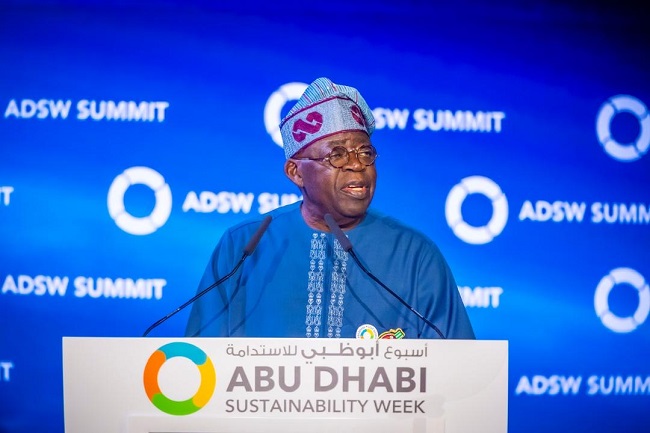
President Bola Tinubu
He gave this assurance during an interfaith dinner with a high-level delegation from the Nigerian Press Organisation (NPO), led by the NPO President and Publisher of The Guardian, Lady Maiden Alex-Ibru.
The delegation also included industry leaders and patrons, among them Aremo Olusegun Osoba; publisher of Vanguard, Mr. Sam Amuka; Chairman of THISDAY/ARISE News Channel, Prince Nduka Obaigbena; Chairman of Channels Television, Dr John Momoh; Director-General of the Nigerian Television Authority (NTA), Alhaji Saliu Abdulhamid Dembos; former NPAN President and veteran journalist, Mr. Ray Ekpu; President of the Nigerian Guild of Editors (NGE), Mr. Eze Anaba; President of the Guild of Corporate Online Publishers of Nigeria (GOCOP), Mr. Danlami Nmodu,; and President of the Nigeria Union of Journalists (NUJ), Comrade Alhassan Yahya Abdullahi, among others.
Also present were executive members of NPAN, managing directors of media houses, top media practitioners across all platforms, and representatives of civil society.
President Tinubu said his government was already reviewing the tariff exemption list and would consider the inclusion of the items used by the media, such as newsprint, plates, chemicals, and radio and television broadcast equipment, which currently attract tariffs of 5 to 10 per cent. If this happens, these items would enjoy a status similar to that of educational and research materials.
With the media industry reeling from skyrocketing newsprint and equipment costs, President Tinubu signalled his administration’s readiness to intervene by reviewing tariffs.
“You have the government’s full support, because we know how important your work is to the sustenance of democracy,” the President said.
Earlier, the Deputy President of the Newspaper Proprietors’ Association of Nigeria (NPAN) and Publisher of BusinessDay, Mr. Frank Aigbogun, in a speech delivered on behalf of the NPO, accused some tech companies of increasingly “scraping” proprietary creative content to train AI models, often by breaching digital paywalls.
Aigbogun requested the president to direct the Federal Competition and Consumer Protection Commission (FCCPC) to work with the media to investigate complaints that Big Tech dominance and anti-competitive practices were costing local media at least 70 per cent of its legitimate income, estimated by some sources at hundreds of millions of dollars, in addition to the loss of jobs and opportunities.
Before the President’s response, the Minister of Information and National Orientation, Alhaji Mohammed Idris, said the government had already begun “engaging Big Tech,” companies including Meta and Google.
“The government will not allow anybody to come here, reap from our economy, and go away without giving back,” he said.
Among other dignitaries present at the meeting were Vice President Kashim Shettima, as well as senior aides and special advisers to President Tinubu.
It will be recalled that the NPO had, in January, written to the government and also published a statement complaining about the existential threat Big Tech operations pose to local media.
One fact is now unmistakable. The Lagos State Government appears determined to empty Makoko of its inhabitants. But for the mass protest organised by the Coalition Against Demolition, Forced Evictions, Land Grabbing and Displacement on January 28, 2026, the historic riverine community might well have been erased with little public scrutiny and even fewer qualms.
That demonstration laid bare the depth of grievance simmering across Lagos. Nearly five thousand residents gathered in collective resistance, many of them survivors of forced evictions and illegal demolitions in Owode Onirin, Oworoshoki, Bariga, Ajegunle, Sogunro, and other communities.
A displaced Makoko resident
Makoko itself had become the immediate flashpoint, suffering yet another cycle of destruction. In December 2025, armed demolition teams backed by state authorities entered the settlement under the pretext of enforcing a 30–100 metre safety corridor beneath a high-tension power line. That explanation quickly collapsed under the weight of the events that followed. The demolition squad pushed far beyond the stated boundary, uprooting thousands of residents and destroying homes and vital amenities such as schools.
The extraordinary brutality saw houses set ablaze with families still inside, while tear gas and live ammunition were discharged freely in the densely populated area. The assault left many injured and claimed several lives, including week-old infants exposed to tear gas and a pregnant woman who bled to death after being prevented from leaving the area during the exercise.
Confronted by mounting public outrage, the state eventually suspended the demolitions. But not before security forces under the command of the Lagos State Commissioner of Police, Jimoh Moshood, violently dispersed peaceful protesters gathered outside the Lagos State House of Assembly on January 28, firing teargas and leaving scores badly wounded.
Only after the backlash did the Lagos State House of Assembly, which had earlier ignored repeated pleas from residents and civil society groups to intervene, suddenly discover the urgency of action and constitute an ad hoc committee to examine the clearances and consider redress for affected communities.
Yet the manner in which the hearings proceeded raised concerns about whether the process was meant to deliver justice or legitimise a predetermined outcome.
From the outset, the inquiry kept civil society organisations and independent legal counsel at a distance. Impoverished residents, unaware of their right to broader representation, were left to face lawmakers largely alone. At one session, individuals who were not Makoko residents were asked to leave the room. Traumatised residents hesitated to insist on wider participation for fear of antagonising the very committee examining their plight.
This subtle pressure forced residents, already at their lowest, to engage the panel without advocates or proper legal representation. Responsibility, however, lies squarely with the lawmakers who organised the hearings. Fully aware of the imbalance, they embraced it. One can only conclude that the arrangement spared them the discomfort of public scrutiny and ensured the proceedings unfolded largely on their own terms.
The result is the recent resolution adopted by the Lagos State House of Assembly urging the state government to relocate residents of Makoko, Oko-Agbon and Sogunro communities to Agbowa in Epe.
A Dishonest Resolution
The first problem with the Assembly’s recommendation is its sheer dishonesty. Residents of Makoko never reached any agreement with the panel of inquiry to relocate outside their community. Presenting relocation to Epe as the logical solution merely disguises the Assembly’s endorsement of a state-driven displacement agenda.
Even where relocation is considered, international human rights standards provide clear guidelines. The United Nations frameworks on resettlement and internal displacement, which the Lagos State Government itself invokes through its claimed collaboration with the UN on a proposed Makoko redevelopment project, state that displacement must rest on compelling reasons, credible evidence, and a clear legal basis. Above all, it must involve genuine consultation and the informed consent of affected communities.
The African Commission on Human and Peoples’ Rights reinforces this position, holding that evictions carried out without consultation, compensation, and adequate resettlement violate the rights to housing, property, and human dignity.
Yet the Lagos State Government under Governor Babajide Sanwo-Olu has met none of these standards. Instead, its actions have drawn opprobrium and judicial rebuke, leading to court orders restraining the state, its agencies, and the Nigeria Police Force from further unlawful demolitions of waterfront communities.
Curiously, although the Assembly’s resolution acknowledges that living conditions in Makoko worsened after the demolitions, it says nothing about accountability for the deaths, injuries, displacement, and trauma inflicted on residents.
Clearing Land for Whom?
Viewed against Lagos’s own history, the relocation proposal raises a question. Forced clearances of working-class neighbourhoods have repeatedly preceded the capture of valuable urban land by elite and capitalist interests. Communities long neglected by government are routinely branded unsafe or environmentally problematic, then cleared in the name of urban renewal. In time, the same land resurfaces as the site of luxury estates for affluent buyers. In other cases, it lingers in speculative limbo as phantom projects that exist more in glossy brochures and investment prospectuses than in reality.
Events unfolding along the Makoko waterfront affirm this trend. Landfilling began along parts of the lagoon even as the state-backed demolitions were underway. Local accounts and media reports suggest that these activities are linked to a private real estate company known as FBT Coral, which has been associated with discussions about redeveloping the area. The implications are difficult to ignore.
Only weeks ago, the Lagos State Government, responding to outrage over its actions in Makoko, announced plans to transform the community into a modern “Water City” backed by partners from the United Nations. According to the state, the project is meant to improve housing and sanitation conditions and help more than two hundred thousand residents adapt to climate change.
Yet if relocation remains the state’s preferred solution, another question arises. Who exactly is the proposed Water City meant to serve?
There is also a deeper climate hypocrisy embedded in the relocation argument. Lagos is a coastal city already confronting sea-level rise and intensifying flood risks. Around the world, planners increasingly study climate-resilient waterfront settlements and nature-based adaptation strategies. Makoko, particularly its stilt communities that extend into the lagoon, represents a remarkable example of such informal adaptation. Homes stand on stilts that have endured for years in the water. Mobility is water-based, and residents possess generations of practical knowledge about lagoon conditions.
Instead of studying how such communities live with water, Lagos continues to promote elite waterfront developments that reclaim land from fragile coastlines and reshape the lagoon environment. Ironically, these capital-intensive projects, which serve narrow class interests, pose far greater ecological risks than a fishing settlement ever could.
The Right to City for All
The House of Assembly may have passed a resolution calling for Makoko’s relocation, but the century-old community is not a settlement that can simply be uprooted and replanted elsewhere. It is a living lagoon community sustained for generations by fishing, canoe transport, petty trade, and market exchange closely tied to its location in Lagos.
Fisherfolk rely on deep knowledge of fishing grounds, tidal rhythms, and seasonal patterns. Canoe operators navigate routes that link the settlement to the city’s commercial arteries, while market women depend on nearby urban consumers who buy their daily catch. Uprooting the community would fracture this intricate ecological and economic system and sever connections that cannot easily be rebuilt elsewhere.
History shows that when communities are displaced from the places where their social systems are rooted, the consequences are rarely benign. The loss of economic ties, social networks, and cultural familiarity compounds over time, leaving communities poorer and more vulnerable.
The Makoko crisis also forces a more fundamental question about what citizenship means in a city like Lagos. Cities are not just arrangements of land, buildings, and infrastructure. They are spaces produced through the labour, culture, and survival of the people who inhabit them. This is the essence of the Right to the City, a principle that holds that urban space belongs to those who build it through their daily lives.
The Right to the City envisions cities and human settlements as common goods meant to benefit everyone. It rejects the notion that urban development should function as a transfer of the city from the many who build it to the few who can afford to hijack it. Yet this is precisely the road Lagos has consistently travelled.
Makoko offers Lagos a chance to rethink its urban future. Instead of riding roughshod over poor communities, the state should recognise them as part of the city’s social and ecological fabric. Any redevelopment must begin with the rights and participation of residents and with full accountability for years of neglect and the harms already inflicted.
Ibeh, a researcher and development advocate, is the Assistant Executive Director at Corporate Accountability and Public Participation Africa (CAPPA)
Barrister Princess Nwamaka Mediatrix Chigbo was a woman of substance – the founder of Trixtresse Associates Chambers, her law firm, a notary public, the former treasurer of the Nigerian Bar Association (NBA), Abuja Branch, and also the former Vice President of the Catholic Lawyers Association of Nigeria.
Nwamaka, the second child and the first daughter of late Pa Adolphus Nnaemeka Ikegbuna Chigbo, Okaa Onyeogadilimma of Abidi village, and Late Mrs. Victoria Chinelo Chigbo (nee Moughalu), and the granddaughter of Chief Mark Moughalu of Anaogu village and Ma Christiana Idemili (Mama Lagos) of Umuoli village, all in Umuoji in Idemili North of Anambra State, has been in legal practice since 2003 when she was called to the Bar. She was the external legal adviser to Bolton White Hotel, Abuja, until her untimely, gruesome death at the hands of kidnappers, who snuffed life out of her on January 5, 2026.
The late Princess Nwamaka Mediatrix Chigbo
Princess of the Bar, as she was fondly called by her colleagues and friends, Barrister Chigbo, was, according to the Global Association of Female Attorneys (GAFA), a distinguished Nigerian Legal practitioner, scholar, and advocate whose life was marked by service, intellectual excellence, and an unwavering commitment to justice. Her unassailable footprints in the sands of legal practice were amply chronicled by GAFA, thus: “She was known for her quiet strength, disciplined professionalism, and a heart deeply invested in the dignity and protection of the vulnerable.
Princess Mediatrix was trained in law with a passion that extended beyond practice into scholarship. At the time of her passing, she was an LL.M candidate at the Faculty of Law, University of Abuja, where she pursued advanced legal studies with uncommon diligence. Her academic journey reflected a mind committed to critical inquiry and a spirit eager to deploy the law as an instrument for social transformation. She was respected by her peers and lecturers alike for her intellectual clarity, humility, and consistency.
As a legal practitioner, Chigbo distinguished herself by her ethical posture and commitment to excellence. She approached legal practice not merely as a profession, but as a calling – one that demanded integrity, courage, and compassion. She was particularly passionate about issues affecting women, children, and marginalised persons, and she consistently lent her voice, time, and expertise to causes that promoted access to justice and human rights protection.
She used her legal practice to represent the less privileged in society and had, on occasion, travelled to her hometown to offer legal services on a pro bono basis and also performed other community services to uplift the lives of the downtrodden.
This is why GAFA, where she was the International Secretary, described her as an active member of professional legal associations where she contributed meaningfully to advocacy, mentorship, and institutional development. Her colleagues remember her as calm yet resolute, gentle yet firm – someone whose presence inspired confidence and whose counsel was always thoughtful and principled – a woman who listened more than she spoke, but whose words carried weight when she did. Her life, though tragically cut short, was rich in meaning and impact. She was committed to justice, a scholar devoted to learning, and a woman whose legacy will continue to speak through the lives she touched and the values she embodied. Her memory remains a call to courage, integrity, and the relentless pursuit of justice.
Education and Career
Chigbo attended Pioneer Primary School, Odakpu, Onitsha, from where she entered Ujom Grammar School, Asaba, in elementary class five. Having cleared all her papers in one sitting of the West African Examination Council (WAEC), she gained admission to study Food Technology at the Institute of Management and Technology (IMT), Enugu, where she bagged a Higher National Diploma (HND) in Food Technology. She travelled to Kaduna State for the National Youth Service Corps and performed her mandatory one-year national service with the Kaduna Polytechnic, Tudun Wada, Kaduna South.
Thereafter, she variously worked as a teacher at Saint Ann’s College, Kakuri, Kaduna, and ran her own private catering business before she gained admission to study Law at the Faculty of Law, Ahmadu Bello University, Zaria. On completion, she moved to Abuja for her Nigerian Law School mandatory vocational training.
She attended the Institute of Chartered Mediators and Conciliators (ICMC) and was sworn in as a Chartered Mediator in 2016. Ever since that time, she had amicably resolved matters satisfactorily for parties in dispute. A hardworking lawyer with a scholarly disposition, she was an LLM candidate at the Faculty of Law, University of Abuja, before her untimely death.
Professional and Religious Affiliations
Princess belonged to many professional bodies, including the Global Association of Female Attorneys (GAFA), Nigerian Bar Association (NBA), Abuja Branch, International Federation of Women Lawyers (FIDA), Otu Okaiwu (Igbo Lawyers), 2003 Law Class, ABU, Zaria, African Women Lawyers (AWLA), and National Association of Catholic Lawyers.
Nwamaka exemplified fortitude, moral rectitude, and a deep faith in God amidst an avalanche of life’s vicissitudes that assailed her. She remained dogged, cheerful, and hardworking, believing that God would see her through despite odds. She believed so much in family and lived the Igbo saying of Onuluakwa nwanne gbata.
Her beliefs are rooted in her being an ardent Catholic who actively belonged to many pious societies, including Holy Infant Jesus Society, Legion of Mary, Confrantanity of Our Mother of Perpetual Help, St. Joseph Association, Holy Face of Jesus (all in Our Lady Queen of Nigeria Procathedral, Area 3, Abuja), Sacred Heart of Jesus and Enugu, Anambra, Ebonyi Community at St Mary John Vianney Catholic Church, Lugbe, Abuja.
She authored a book on Infant Jesus and was so happy when the book was acknowledged at one of their Association’s prayer retreats a few years ago, and many members bought the book. In sum, she was a prayer warrior religiously.
With a strong sense of kinship, Nwamaka is an embodiment of humility, self-effacing, unassuming, forthright, disciplined, and very communal. She believes so much in communal life and will often times when she returns to the village will visit all members of her kinsmen when she returns to the village to felicitate with them and render help and advice where it is needed.
A fearless and generous heart, she will not prevaricate in speaking the truth at all times, no matter whose ox is gored, and she gave her all to humanity in her search for justice for all and will rather go hungry than see a family or someone without food. Very gregarious, she epitomises a beautiful heart who adjusts as the situation demands to laugh with those celebrating their achievements and mourn with those mourning, and gives them words of comfort and encouragement, and will journey a thousand miles at great risk and personal discomfort to achieve these on numerous occasions.
Unbelievably gifted, she could sew her clothes and easily whip up delicious, nutritious food to entertain visiting friends and family members, and she will not stop offering advice on how to eat well and maintain a healthy life-work balance. Her culinary gifts made her the Master baker of wedding cakes for family members who got married. In fact, some family members, both nuclear and extended, sought her out on festive occasions, especially Christmas, to have a taste of her deliciously baked cake.
A very sensitive soul, she could easily be hurt and forgiving at the same time, offering everything to God, and some people took advantage of her kind nature. Her primary aim is to ensure everyone around her is happy at her own expense. She supported the work of all family members and was the greatest cheerleader of Realnews and the Guild of Corporate Online Publishers, whom she fought a professional battle to get them registered by the Corporate Affairs Commission.
That is why the founders of GOCOP held her in high esteem. She will be missed by all who knew her, especially her immediate nuclear family. May her soul rest peacefully in the bosom of the Lord God Almighty, the creator of Heaven and earth, who will not allow the murderers to escape justice that she stood for all through her legal practice. Amen. Adieu.
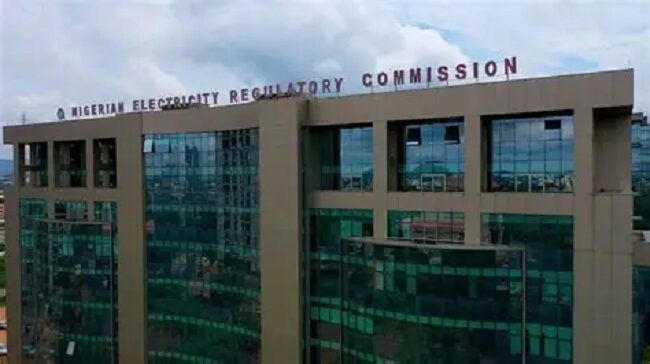
The Nigerian Electricity Regulatory Commission (NERC) on Friday, March 13, 2026, said that grid-connected power plants recorded an average hourly generation of 4,102 megawatt-hours (MWh) in February.
NERC disclosed this in its latest Operational Performance Fact Sheet, released in Abuja on Friday and published on its website.
According to the fact sheet, although the country has a total installed generation capacity of 13,625 megawatts (MW), only 4,384MW was available for dispatch on average during the period.
Nigerian Electricity Regulatory Commission (NERC)
It said that this represented a Plant Availability Factor (PAF) of 32 per cent for the month.
The commission also noted that the available capacity was largely utilised, as the plants recorded an average load factor of 93 per cent.
It stated that the position indicated that most of the available generation capacity was dispatched to the national grid.
“The grid-connected plants recorded a PAF of 32 per cent.
“At any point during the month, an average of 4,384MW was available for dispatch onto the grid,” it said.
More UK energy projects are getting stuck before final investment decisions because developers cannot secure bankable offtake deals and long-term contracted revenues, while policy uncertainty, permitting delays and grid access problems add to delivery risk, according to a new report from the Energy Industries Council, the UK’s largest energy trade association.
Based on interviews conducted in late 2025 with 50 CEOs and senior executives across 44 organisations, the Bankable Energies Report reveals that 44% of respondents said bankability had not improved since the start of 2025, while 18% said it was unchanged and 38% said it had improved.
Stuart Broadley, EIC’s Chief Executive
While viable offtake agreements were identified by up to 34% of interviewees as a key condition for projects to reach financeable terms and move towards FID, political, policy and regulatory uncertainty was flagged by 32% of respondents as a major blocker to bankability.
Report participants also pointed to direct government support, state-backed revenue mechanisms and policy clarity as key enablers, while warning that unclear risk allocation can make projects unfinanceable even where demand exists.
Interviewees included organisations from the supply chain, financial institutions and investors, insurers and policymakers. The report also points to a sharp gap between sectors lenders view as proven and those still treated as first-of-a-kind, as 24% of interviewees cited first-of-a-kind technology or unproven scaling risk as a key reason projects fail the bankability test.
Stuart Broadley, the EIC’s chief executive, said the UK needs to treat the energy system as one integrated chain, not a set of separate policy programmes.
“In a more volatile geopolitical landscape, you cannot run energy policy in silos,” Broadley said. “The supply chain is one system. If the UK keeps sending mixed signals, capital and capability move elsewhere. The way forward is to treat energy as a matter of national security – an integral part of the nation’s sovereignty – and that starts with prioritising energy production at home, while putting credible, bankable support in place to scale lower-carbon projects.”
The report frames “bankability” as a debt finance and funding question, not a judgement on whether a project makes sense in principle. That distinction is key because many projects are moving through early development work but are never built.
The report describes a pattern where studies and front-end engineering design progress, then projects “stall at FID”.
EICDataStream, the EIC database of energy projects under development worldwide, confirms the trend. Offshore wind reached FID in seven of 33 UK projects, while hydrogen reached FID in three of 120 projects. Floating offshore wind recorded zero projects at FID out of 51. Carbon capture reached FID in five of 70 projects.
Those pressures are most visible in hydrogen and CCUS. Interviewees say hydrogen buyers may exist, but they hesitate to sign long-term offtake on terms lenders can underwrite, so projects keep circulating through studies and FEED rather than reaching FID. CCUS adds “missing-link” risk across the chain because capture, transport and storage all have to move together.
The report says debt finance starts to move only when government-backed business models and cross-chain backstops, including clear termination protection, are in place.
The report also draws a line between established “electrons” projects and “molecules” projects that rely on newer markets, complex infrastructure and multi-party risk. The report says banks and pension funds can finance technologies they see as repeatable, while newer technologies still lack the long-term contracts lenders expect.
Mahmoud Habboush, the report’s author, said projects are failing at the point where lenders need hard commitments.
“A lot of what we are seeing is a paper pipeline,” Habboush said. “Projects move through studies and FEED, then stall at FID because the revenue is not locked in through a bankable offtake contract, the risk is not allocated in a way lenders can accept, and the timetable starts to sound like a hypothesis once you factor in permitting and grid uncertainty.”
In the report’s tally of bankability enablers, interviewees most often cited direct government support and state-backed revenue mechanisms, policy clarity and political support, and contracted revenue certainty such as offtake agreements.
Respondents also flagged the flip side as key blockers: policy and regulatory uncertainty, and the absence of bankable offtake.The report describes offtake as the first gate for many projects. Even where buyers exist, the report says price and contract length often fall short of what lenders require. Delivery risk then amplifies the financing challenge.
The report argues that planning and consenting delays do not just slow projects, but add costs and push supply chain capacity to other markets. It also says grid access uncertainty is becoming a hard constraint, with future projects facing weaker confidence in connection dates.
Projects can fall over on who carries the risk. The report says clients and lenders often try to bundle everything into one big deal to make it look simple. Contractors then price in risks they cannot control, costs jump, and the project no longer makes financial sense.
Rebecca Groundwater, the EIC’s global head of external affairs, said the report points to delivery credibility and a clear pipeline as key tests of bankability.
“This is fixable, but it needs delivery discipline,” Groundwater said. “Publish a five-year pipeline people can bank on, unblock consenting and grid access, and stop pushing risk into contracts in ways that make projects unfinanceable. One thing we learned from the report is that government can be both an enabler and a barrier.”
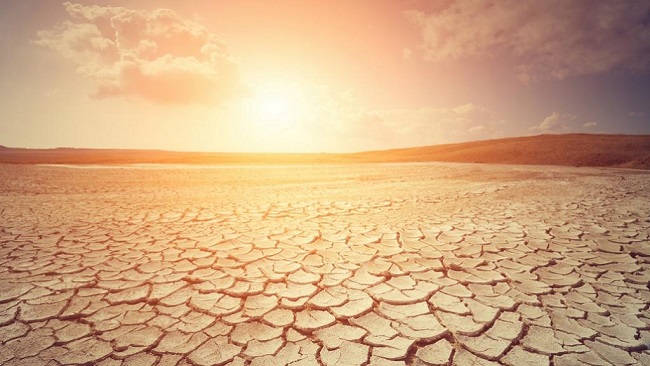
Residents across several communities in Lagos have decried the intense heatwave, erratic electricity supply and fuel price increase, describing the situation as unbearable and harmful to their health and daily living.
Many residents who spoke in separate interviews in Lagos said the rising temperatures had made daily activities difficult, especially with limited access to electricity needed to power cooling devices.
They lamented that they were spending a lot on fuel to power their generators.
Heatwave
Miss Tomiwa Ajayi, a resident of Ijaye, Agege, said coping with the heat had become extremely difficult due to irregular electricity supply in her area.
“The heatwave has been very difficult to cope with in my area because the temperature is extremely high during the day.
“Unfortunately, electricity is not stable here. We usually have power for only about eight hours a day, and most of the time it goes off during the daytime when the heat is at its peak.
“Sometimes the electricity only comes back late at night or around midnight,” she said.
Ajayi added that residents were forced to rely on simple measures such as opening windows and drinking water to manage the heat.
“Because of this, it is hard to use fans or other cooling devices during the hottest periods, so many people rely on opening windows, staying in shaded areas and drinking plenty of water to manage the heat,” she said.
Similarly, Idara Obong, a resident of Ogba, said the heat had become overwhelming and electricity supply remained unstable.
“The heat waves are very high. How I cope is that I lie on tiles when sleeping, especially in the afternoon.
“I open the windows for fresh air and take enough water to avoid dehydration.
“Light is not really stable, sometimes it goes off for about one to two hours at intervals,” Obong said.
Miss Bisola Adeyemo, a content creator living in Oke-Ira,Ogba, said the heat was also affecting her skin and daily comfort.
“The heat in my area is what I can’t even describe. It has negative effects on my skin and I noticed my skin gets darker.
“But I make sure I use sunshade glasses before going out and apply sunburn cream on my face to reduce the effects of the hot sun,” she said.
Adeyemo said she relied heavily on hydration to stay healthy during the hot weather.
“I drink enough water daily, at least eight sachets of water every day and shower regularly to manage the heat,” she said.
Miss Joel Ogwu, a trader and resident of Bucknor, described the heat as extremely harsh and uncomfortable.
“Recently, it has been really, really hot. When I say really hot, it is biting the skin. One cannot stay outside because it is really unbearable.
“But in my area there is light sometimes, and that helps to make the heat less troublesome for us,” she said.
Mrs Ese Brume, a civil servant living in Lekki, also lamented the situation, noting that lack of stable electricity worsened the experience.
“It has been very hot, no doubt. We are all feeling the heat and there is no constant electricity supply as well.
“For the heat, most of us know we need to hydrate. I take lots of water and we also use rechargeable fans to cool ourselves down,” she said.
Brume urged the government to address the persistent power challenges affecting citizens.
“Electricity supply has always been the challenge in this nation. Government should give us constant supply. They know what to do but are not doing it,” she said.
Mr Samuel Igbokwe, a businessman and resident of Okota, said many communities had experienced severe electricity shortages in recent days.
“Within the last five days, it has been extremely terrible. There has been very deficient power and some areas have not had power at all, not even a blink, within five days,” he said.
He said that residents had previously protested the situation.
“Some weeks ago, the Community Development Association went to NEPA office carrying placards to complain. It has been terrible.
“Some areas are supposed to be on Band A but they do not get the benefits of it. Even when there is no light, there are hardly explanations,” he said.
Igbokwe noted that the lack of electricity made the heat more unbearable, especially at night.
“At night it becomes worse because you are in one place and many people cannot run generators all night. Only those who have solar systems with enough capacity may get some relief. For most people, it is a terrible situation,” he said.
Also, Mrs Gladys Okpara, a civil servant living in FESTAC, said the poor public power supply had worsened the situation.
“It is out of hand. Poor public power supply is worsening the situation as many can’t use fan and air-conditioner to cool their houses.
“Increase in pump price of petrol added salt to injury as some owners of generators can’t afford petrol to run them to enjoy fans and air-conditioners.
“Some citizens are being frustrated by the whole situation and are taking loans to install panels for solar energy. It costs up to N1.7 million to get the one which can power a two-bedroom flat in Lagos State.
“Heat rashes are appearing on the bodies of both adults and children,” she said.
Mrs Yemisi Dada, an On-Air Personality and resident of Ikorodu, said the extreme heat had caused skin rashes in her household.
“The heat is something else. We cannot really explain it. If you see my body now, there are rashes everywhere because of the heat,” she said.
Dada said she and her children had to bathe several times daily to cope.
“Most nights I bathe more than three times before going to bed because of the itching. Sometimes we even sleep on tiles because of the heat,” she said.
According to her, electricity supply is inconsistent and often unavailable when residents need it most.
“We have about 10 to 12 hours of light sometimes, but it usually comes when you are not at home.
“When you return at night, it may come for just three hours and go off again,” she said.
She added that security concerns prevented residents from opening their windows at night.
“Because of security issues, we cannot open the windows at night. So, when there is no light, most times we cannot sleep because of the heat,” she said.
Meanwhile, environmental experts say the heatwave being experienced across Nigeria is linked to climate change, urbanisation and environmental degradation.
The Executive Director of Renevlyn Development Initiative, Mr Philip Jakpor, said the situation was the result of years of neglect of environmental advice.
“The current heat wave in Nigeria is not a mystery. It is simply the culmination of years of neglect of the advice of environmentalists that government should address factors that exacerbate the climate crisis,” he said.
Jakpor noted that Nigeria’s heavy dependence on fossil fuels was contributing to rising global temperatures.
“Our nation is largely reliant on fossil fuels – oil extraction and gas flaring – and both contribute to global warming,” he said.
He also blamed the reduction of green spaces in urban areas.
“What we see today are government-sanctioned constructions that have turned our cities into concrete jungles. Trees are removed faster than they are replaced, and in many cases they are not replaced at all,” he said.
Jakpor warned that the rising heat could trigger serious health problems.
“The heat has grave implications because we may start hearing of cases of heat stroke, dehydration and even meningitis among young children,” he said.
He advised residents to take precautionary measures during the extreme weather.
“People must drink more water and stay hydrated. If you have no business outside in the scorching sun, remain indoors until the season passes,” he advised.
Also speaking, the Executive Director of HEDA Resource Centre, Mr Suleiman Arigbabu, said the perceived intensity of the heat in Lagos was largely due to high humidity levels.
“The average temperature in Lagos ranges between 27°C and 30°C. Technically this is not unusual for Lagos.
“However, the reason people feel the heat more intensely is because of the high humidity, which ranges between 70 and 80 per cent,” he said.
Arigbabu also highlighted the role of urban development in worsening heat conditions.
“Lagos has built almost every available space. Trees have been cut down and replaced with asphalt and concrete surfaces that radiate heat,” he said.
Arigbabu advised communities and governments to adopt long-term solutions to mitigate the impact.
“We must plant more trees, design buildings that allow proper aeration and use materials that deflect heat.
“Government must also promote renewable energy, better public transportation and policies that reduce greenhouse gas emissions,” he said.
A general physician, Dr Jonathan Esegine, said preventing dehydration was essential during heatwaves.
Esegine advised people to drink water regularly, even before feeling thirsty.
He recommended a daily water intake of two to three litres and urged residents to avoid alcohol and caffeine during extreme heat.
According to him, these substances reduce the body’s ability to regulate temperature.He advised residents to stay in ventilated areas and take cool showers.
Esegine also recommended wearing of lightweight, loose-fitting and light-coloured clothing.
He advised people to remain indoors between 11 a.m. and 3 p.m.
According to him, temperatures and ultraviolet radiation are highest during those hours.
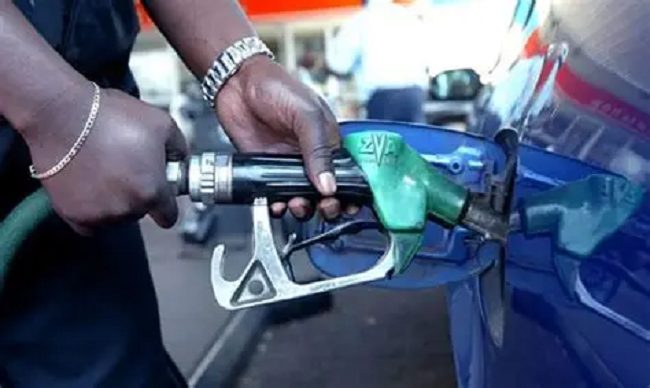
Motorists and commuters across Lagos are facing rising transportation costs following another increase in the pump price of petrol, which now sells for between N1,250 and N1,350 per litre at filling stations.
A survey on Sunday, March 15, 2026, showed growing concern among road users as the increase, driven largely by global supply pressures and domestic price adjustments, continues to influence transportation expenses.
The latest increase follows another upward review of petrol prices by the Dangote Petroleum Refinery, which raised the gantry price of Premium Motor Spirit (PMS), commonly known as petrol, to N1,175 per litre from N995 earlier in the week.
Petrol
The adjustment represents an increase of N180, about 18.1 per cent within three days, marking the refinery’s third price review within the week and prompting swift adjustments across the downstream market.
Industry sources attribute the rise partly to heightened geopolitical tensions in the Middle East, particularly the escalating standoff between Israel and Iran, as well as attacks linked to Yemen’s Houthi movement in the Red Sea corridor.
The instability has forced many oil tankers to reroute from traditional shipping lanes, pushing global freight costs up by roughly 40 per cent, according to market data from the Baltic Exchange.
At the same time, international oil prices have risen, with Brent crude approaching 99 dollars per barrel, while the Nigerian currency trades at about N1,650 to the dollar, factors analysts say are contributing to higher domestic fuel prices.
However, with the emergence of the Dangote refinery, Nigeria continues to rely significantly on imported refined petroleum products.
The spokesperson for the refinery, Mr Anthony Echiejina, said the price adjustment reflects rising feedstock and logistics costs associated with developments in the global energy market.
Checks have revealed that retail prices have increased across several outlets in Lagos, with petrol selling between N1,200 and N1,350 per litre depending on location.
Major marketers have also adjusted their pump prices. MRS Oil Nigeria Plc and Matrix Energy Group sell petrol at about N1,250 per litre, while outlets of Ardova Plc (formerly AP) retail the product at around N1,300 per litre.
Some independent stations charge slightly higher prices.
A NorthWest outlet in the Gbagada area dispensed petrol at about N1,250 per litre, while several other stations across the metropolis sold the product close to the N1,200 mark.
At a Mobil Station along the LASU–Isheri Road corridor, petrol was sold at N1,250 per litre, while Petrocam Station nearby dispensed fuel at the same price.
Similarly, MRS stations in parts of Alimosho sold petrol at about N1,250 per litre, while Mobil outlets in Alaguntan and Iyana Ipaja recorded prices of N1,250 and N1,350 per litre respectively.
Other stations, including Heyden outlets in Iyana Ipaja and along the Oshodi-Abeokuta Expressway, also sold petrol at about N1,250 per litre, reflecting a broad market trend.
Meanwhile, market insiders have said pricing differences were increasingly influenced by variations in product sourcing, particularly between coastal marine lifting arrangements and gantry loading operations.
The increase in fuel prices has already led to higher transportation fares across Lagos, with commuters reporting increases of more than 30 per cent on several routes.
Commercial driver, Mr Sodiq Olarenwaju, said the rising cost of petrol had made daily operations more demanding.
“We are the ones passengers blame for increasing fares, but they don’t realise how much we now spend on petrol.
“If we buy fuel at over N1,000 per litre, we have no option but to adjust fares,” he said.
Another motorist, Mrs Funke Oladipo, described the experience of searching for fuel as stressful.
“I have been driving around since morning with my jerry can looking for petrol. Some stations that opened earlier have already shut their gates,” she said.
A private car owner, Dr Adewale Suleiman, said fuel price increases often had wider economic implications.
“When fuel goes up, transport fares rise and the prices of goods follow immediately,” he said.
Chief Executive Officer of the Centre for the Promotion of Private Enterprise (CPPE), Dr Muda Yusuf, said geopolitical tensions in the Middle East often lead to volatility in global oil markets.
According to him, disruptions in the Strait of Hormuz, through which roughly 20 per cent of global crude oil shipments pass daily, can quickly push up oil prices, shipping costs and insurance premiums worldwide.
He noted that higher fuel prices could affect multiple sectors of the economy, particularly industries that rely heavily on energy and transportation.
“For manufacturers, the consequences can be significant, as many factories rely on diesel-powered generators due to electricity supply challenges,” Yusuf said.
The CPPE boss explained that rising fuel prices might increase costs of logistics; transporting raw materials and finished goods, potentially adding to inflationary pressures.
“As manufacturers absorb higher energy and logistics costs, firms may adjust pricing structures or production levels,” Yusuf said.
He also noted that Nigeria might not fully benefit from higher oil prices because crude production remains below capacity, fluctuating between about 1.4 million and 1.6 million barrels per day.
The organisation recommended measures such as strengthening crude production, building fiscal buffers from higher oil revenues and expanding domestic refining capacity.
It also emphasised the importance of sustained foreign exchange reforms, targeted support for vulnerable households and continued economic diversification.
“The evolving situation in the global energy market presents both opportunities and challenges for Nigeria,” Yusuf said.