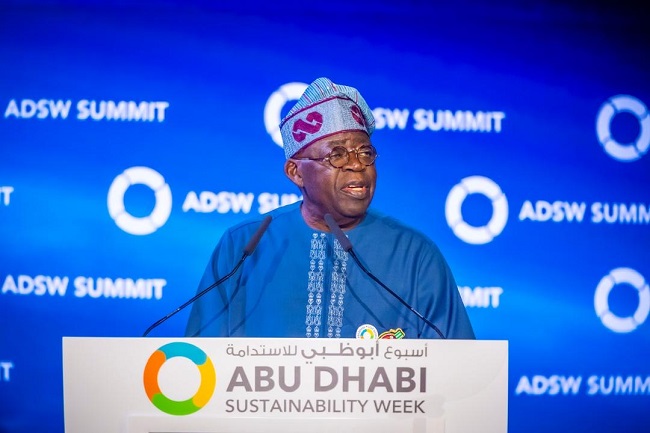
President Bola Tinubu has reassured Nigerians of his administration’s commitment to tackling insecurity and stabilising the economy in his Friday Easter message.
Tinubu rejoiced with Nigerians at home and abroad, noting that Easter ssymbolises sacrifice, resilience, and the triumph of light over darkness.
“I rejoice with Nigerians as we celebrate Easter, which reminds us of the crucifixion and resurrection of Jesus Christ and the redemptive power of salvation.,”
President Bola Tinubu
He said the season rresonated with Nigeria’s current realities, as the nation nnavigated economic strain and persistent security challenges.
“This season speaks to our present situation as we confront economic strain and security challenges with determination and resolve.”
Tinubu commended the armed forces for their sacrifices, noting their efforts in confronting threats to national security across the country.
“Our gallant men and women continue to make sacrifices, leaving their families to defend the nation against evil actors.”
He acknowledged that in spite of ongoing efforts, security challenges persisted, but assured Nigerians of intensified actions to address them.
“Challenges remain, but we are making resources available and forging partnerships to deal decisive blows to terrorists and bandits.”
The president said that his administration was strengthening international cooperation to enhance Nigeria’s capacity to combat insecurity.
“We have sought and are receiving assistance from outside our shores to improve our security operations.”
Tinubu recalled his visit to Plateau on Thursday, April 2, 2026, where he commiserated with victims and reassured them of the government’s commitment to restoring peace.
He said security chiefs had given strong assurances of progress, expressing optimism that ongoing efforts were already yielding results.
“Our security leaders have given strong assurances, and we are beginning to see breakthroughs in our efforts.”
Tinubu urged citizens to support lawful efforts and promote unity, stressing that peace and collective responsibility were vital for national progress.
“No nation can thrive where fear prevails, and no progress can be sustained without peace.”
He called on Nigerians to reject forces that threatened national stability and to act as one another’s keeper.
The president said ongoing economic reforms, though challenging, were necessary to achieve long-term prosperity for the country.
“These reforms are demanding but carefully designed to deliver shared prosperity for all Nigerians.”
Tinubu stressed that meaningful transformation required sacrifice, noting that enduring progress was often achieved in difficult times.
He also urged political actors to adhere to the Electoral Act as the country gradually approaches another electoral cycle.
“The Electoral Act must guide our conduct as political actors, ensuring peace, stability, and credible democratic processes.”
Tinubu emphasised the importance of responsible participation in democracy, noting that progress depended on informed and disciplined civic engagement.
“Democracy flourishes where responsibility, restraint, and informed participation prevail.”
He expressed optimism about the economy, saying that available indicators suggested that the country was on the right path in spite of the prevailing challenges.
The president thanked Nigerians for their support and trust, pledging to continue working toward a safer, stronger, and more prosperous nation.
Tinubu urged Nigerians to remain steadfast and contribute to national development in their various capacities.
“I enjoin you to keep the faith and contribute to the progress of our nation,” Tinubu said.
He wished Christians a joyful Easter celebration and prayed for peace, unity, and prosperity across the country.
The Federal Government and key stakeholders on Thursday, April 2, 2026, in Abuja validated the Nigerian Oil Palm Development Strategy to boost productivity, achieve self-sufficiency and reduce poverty.
The Minister of State for Agriculture and Food Security, Sen. Aliyu Abdullahi, described the policy as a comprehensive roadmap for the growth and development of the oil palm industry.
The validation meeting, themed “Unlocking Nigeria’s Oil Palm Potential: Pathways to Sustainability and Growth,” focused on the implementation of the oil palm value chain strategy.
Sen. Aliyu Abdullahi, Minister of State for Agriculture and Food Security
Abdullahi said the initiative came at a critical time in efforts to reposition Nigeria’s oil palm industry, noting that the crop remains vital to food security, rural development, industrial growth and export diversification.
According to him, the implementation of the strategy is expected to lift about two million Nigerians out of poverty within six years through increased production.
He added that Nigeria aims to capture at least 10 per cent of the global oil palm market.
“This is not merely an agricultural ambition; it is a national economic development agenda,” he said.
The minister stressed that revitalising the sector would reduce import dependence, improve domestic edible oil supply, create jobs, boost smallholder incomes and strengthen agro-industrial development.
“If we get it right, oil palm can support livelihoods, expand industries and increase export earnings,” he said.
Abdullahi noted that the oil palm industry once played a major role in Nigeria’s economy before the rise of petroleum, contributing greatly to livelihoods and national revenue.
“Oil palm is not just a crop; it is an industrial raw material that connects agriculture to manufacturing and supports multiple value chains,” he said.
He, however, observed that Nigeria had not made expected progress in the sector due to low productivity, weak processing systems, limited financing and poor coordination.
“Countries that came after us have moved ahead with speed, structure and strategic investment,” he said.
The minister expressed optimism that Nigeria could reclaim its position in the global market, citing its vast land, favourable climate and strong domestic demand.
Also speaking, the Permanent Secretary in the ministry, Dr Marcus Ogunbiyi, described the strategy as timely and necessary.
Ogunbiyi said the initiative would enhance productivity, promote value addition, create jobs and improve global competitiveness.
He added that the validation process would ensure the strategy is practical, inclusive and responsive to the realities of the sector.
The United Nations Office on Drugs and Crime (UNODC) has warned that wildlife crime poses a significant threat to sustainable development, security and economic stability, calling for urgent and coordinated action to address the growing menace.
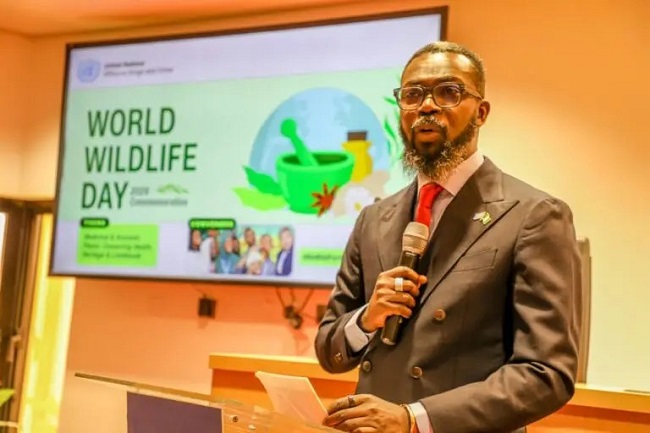
The UNODC Country Representative in Nigeria, Cheikh Toure, gave the warning at the #BeWildForNature Youth Network Event in commemoration of the World Wildlife Day 2026, on Wednesday, April 1, 20266, in Abuja.
The theme of the event is “Medicinal and Aromatic Plants: Conserving Health, Heritage and Livelihoods.”
Country Representative, United Nations Office on Drugs and Crime (UNODC), Mr. Cheikh Toure
Toure highlighted the far-reaching implications of environmental crimes, adding that wildlife protection must be prioritised not only as an environmental issue but also as a critical factor for human health, cultural preservation and national security.
He commended the #BeWildForNature Youth Network and its partners for convening the event, noting that the initiative had successfully positioned young people as key actors in conservation efforts.
The network which originated as a digital campaign in 2024, he said, is aimed at mobilising youth to leverage innovation in combating wildlife crime and promoting conservation awareness.
He explained that the initiative produced 10 finalists through a competitive process, with top performers receiving awards, alongside special recognition for female participants in celebration of Women’s Month.
Toure said the finalists were subsequently integrated into the network as UNODC Young Wildlife Influencers and engaged in a structured mentorship programme between August and October 2024.
He added that the programme featured expert-led virtual sessions on conservation, advocacy and digital engagement, while participants continue to benefit from sustained mentorship and institutional support.
The UNODC representative noted that the young influencers were now driving community-based initiatives and outreach activities, contributing to increased awareness and action on wildlife conservation.
Speaking on the 2026 theme of World Wildlife Day, Toure said it underscored the importance of medicinal and aromatic plants, which serve as vital resources for traditional medicine, cultural identity and livelihoods across Nigeria and Africa.
He warned that these resources were under increasing threat from overexploitation, habitat loss, climate change and illegal trade.
Toure described wildlife crime as a form of transnational organised crime that fuels illicit financial flows, weakens governance systems and deprives nations of valuable natural assets.
“Addressing the challenge requires robust institutions, effective enforcement mechanisms and strengthened partnerships, in line with the UNODC Country Programme for Nigeria 2026–2030,” he said.
The UNODC official also described the passage of the Endangered Species Conservation and Protection Bill as a major milestone in Nigeria’s efforts to safeguard biodiversity.
He, however, stressed that the success of the law would depend on effective implementation, improved institutional capacity, public awareness and multi-sectoral collaboration.
He emphasised that youth are not only beneficiaries but also critical partners in advancing conservation, crime prevention and sustainable development.
“UNODC recognises the importance of youth inclusion in decision-making processes, from policy design to monitoring and evaluation.
“Youth-led innovation and advocacy are essential in translating policies into tangible impact and strengthening environmental stewardship,” he said.
The UNODC country rep reaffirmed UNODC’s commitment to supporting Nigeria through capacity building for law enforcement and judicial institutions, promoting inter-agency cooperation and empowering communities.
He added that the organisation’s country programme prioritises collaboration with youth networks on issues such as environmental crime, cyber-enabled crime and community resilience.
Toure stressed that protecting medicinal and aromatic plants was key to preserving health systems, cultural heritage and future livelihoods.
He called on stakeholders to move beyond dialogue to concrete action and sustained partnerships in tackling wildlife crime while commending Nigerian youth for their leadership and continued commitment to protecting the environment.
In his remarks, UN Resident and Humanitarian Coordinator, Mohammed Fall, represented by UNICEF rep., Ms. Wafaa Saeed, reaffirmed commitment saying the UN in Nigeria would continue to support national priorities.
This, he said, would be through policy dialogue, technical cooperation and partnerships that integrate environment, health and sustainable development.
The coordinator said the UN would also work with government and partners to advance initiatives that protect biodiversity while promoting human development outcomes.
The official urged participants to engage actively, share knowledge and focus on practical actions beyond the symposium.
The coordinator expressed hope that the gathering would strengthen partnerships and inspire collective responsibility toward safeguarding natural heritage for present and future generations.
Similarly, the United Nations and the Federal Government have called for stronger partnerships to protect biodiversity and promote sustainable livelihoods, highlighting the link between environmental conservation and human wellbeing.
UN Resident and Humanitarian Coordinator, Mohammed Fall, represented by UNICEF representative Wafaa Saeed, made the call at the #BeWildForNature Youth Network event commemorating 2026 World Wildlife Day in Abuja.
The event, organised by the United Nations Office on Drugs and Crime (UNODC), is themed “Medicinal and Aromatic Plants: Conserving Health, Heritage and Livelihoods”.
Fall said the observance underscored the inseparable relationship between human wellbeing and the environment.
“Healthy ecosystems are critical to societal stability, economic growth, and future sustainability,” he said.
Highlighting the theme, the UN official said medicinal plants serve as a primary healthcare source for millions in Nigeria and globally, while representing indigenous knowledge systems and supporting local economies.
He warned that these vital resources face threats from biodiversity loss, unsustainable harvesting, climate change, and environmental degradation.
“Protecting medicinal and aromatic plants is not only a conservation priority but also a development imperative,” he said.
Fall noted that biodiversity conservation directly contributes to key Sustainable Development Goals, including good health and wellbeing, climate action, life below water, life on land, and peace, justice, and strong institutions.
He emphasised that environmental protection and development are mutually reinforcing, calling for collaboration across government, UN agencies, civil society, researchers, traditional practitioners, and youth groups.
“No single institution can tackle biodiversity loss alone. Progress depends on collaboration that integrates policy, science, community knowledge and innovation,” he said.
He commended the leadership of young Nigerians under the #BeWildForNature initiative.
“Youth engagement demonstrates that environmental stewardship can be sustained and reimagined to meet the challenges of a rapidly changing world.
“Empowering youth leadership is essential to building inclusive, locally driven, and future-oriented solutions”.
Earlier, Rep. Terseer Ugbor urged increased public awareness for effective wildlife protection, stressing that the new Endangered Species Conservation and Protection Bill must be understood by all to succeed.
Ugbor noted that since the law is still awaiting presidential assent, many Nigerians remain unaware of which wildlife species are endangered.
He said massive public education campaigns would follow to inform citizens about their responsibilities in protecting forests, animals, and other resources.
He emphasised that community engagement is critical for conservation to translate into tangible protection of Nigeria’s biodiversity and cultural heritage.
“Awareness is the first step toward meaningful action,” he said.
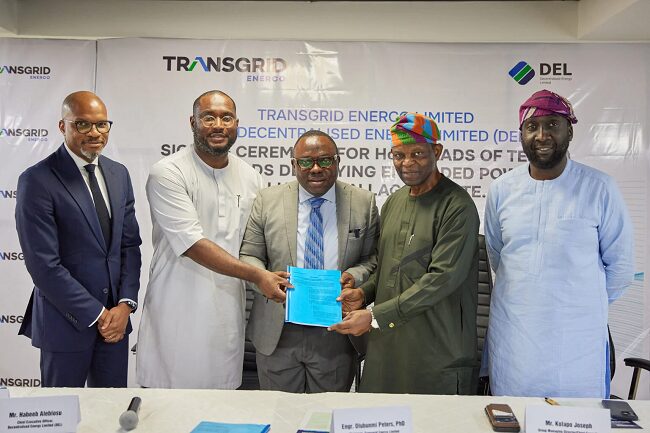
Transgrid Enerco Ltd. and Decentralised Energy Ltd. have formed a strategic partnership, backed by InfraCredit, to deploy integrated energy solutions across Lagos State.
The initiative aims to expand generation capacity and reduce outages across key commercial districts in Lagos.
The project will initially cover Marina and Lekki Phase 1, before extending to Ikoyi and Victoria Island.
Transgrid Enerco Ltd. and Decentralised Energy Ltd. have formed a strategic partnership, backed by InfraCredit
In a joint statement on Thursday, April 2, 2026, the firms confirmed jointly developing and deploying integrated energy solutions in the state.
The model targets improved reliability through a hybrid grid and embedded generation approach.
The partners will leverage technical, operational and financial strengths to accelerate deployment in underserved areas.
They expect the model to significantly improve service uptime in high-density economic zones affected by frequent outages.
To drive implementation, the partners will establish a Special Purpose Vehicle (SPV) for project delivery and operations.
The SPV will ensure efficient coordination and scalable rollout across all identified locations.
InfraCredit provides credit enhancement to unlock long-term naira financing and attract domestic institutional investment.
The agreement has reached Heads of Terms, laying groundwork for full implementation.
Transgrid Enerco Ltd., a core investor in Eko Electricity Distribution Plc, leads the embedded generation initiative.
Decentralised Energy Ltd. contributes expertise in power generation, gas systems and distribution networks.
Both firms said the partnership reflected a shared commitment to improving electricity supply and system stability.
They added the project would boost business continuity and investor confidence in Nigeria’s commercial hub.
The Orile-Agege Local Council Development Area (LCDA) has disbursed N96 million soft loans to eight Private Sector Participation (PSP) operators to strengthen waste collection and environmental sanitation within the council.
The initiative, described as a landmark intervention in grassroots waste management, provides each PSP operator with N12 million as working capital to enhance operational efficiency.
The Executive Chairman of Orile-Agege LCDA, Mr. Idowu Akinola, said the soft loan scheme was designed to improve service delivery and ensure a cleaner environment.
PSP operator beneficiaries receiving their cheques
Akinola said the eight PSP operators would repay the loans over a 12-month period after an initial grace phase.
“We are supporting eight PSP operators with N12 million each for six months as a soft loan. After a short grace period, they will commence repayment in instalments of N1 million monthly.
“This initiative is part of our commitment to environmental sanitation and improving waste management in our LCDA,” he said.
He said the council adopted a multi-stakeholder engagement approach, involving Community Development Associations (CDAs), Community Development Committees (CDCs), the Lagos Waste Management Authority (LAWMA) and residents, to ensure the success of the programme.
He added that enforcement measures had also been introduced to curb indiscriminate waste disposal and ensure compliance by residents.
“We have engaged all stakeholders and introduced checks and balances. Residents must pay for services rendered, while PSP operators must deliver efficiently.
“In recent weeks, enforcement actions have led to a significant reduction in waste on our streets,” he said.
He assured that the council was fully prepared to align with state sanitation policies, including the monthly environmental sanitation exercise.
Speaking at the event, the representative of the Managing Director of LAWMA, Mr. Babatunde Suleiman, said the programme marked the beginning of greater achievements in sustainable sanitation.
Suleiman, Head PSP Services, LAWMA, commended the council chairman for the initiative, noting that it had already attracted interest from other local governments seeking to replicate the model.
“It is the beginning of greater things to come. I can confidently say that after what the chairman has started, about four local governments have reached out to understand how this was achieved.
“The chairman adopted a strategic approach by engaging all critical stakeholders, including PSP operators, CDAs, CDCs, and other stakeholders.
“I witnessed the process, and it was thorough and inclusive. We pray that God continues to bless all those involved,” he said.
He also appealed for timely payment to PSP operators, stressing that their work, though critical, is often underappreciated.
“Our work is tough, but people hardly appreciate us. Ensuring prompt payment will eliminate operational delays and improve service delivery,” he added.
Also speaking, the National President of the Association of Waste Managers of Nigeria (AWAMN), Dr Olubenga Adebola, described the initiative as innovative and impactful.
Adebola said effective waste management globally depends on strong collaboration among stakeholders, including government, operators and residents.
“For us, what you have witnessed today is a product of deliberate planning and collaboration with the executive chairman, who has done exceptionally well.
“This is a loan without collateral and interest, designed to support operators in maintaining their trucks and improving efficiency. It is a model that should be replicated across Nigeria,” he said.
He added that the association would continue to support the council and advocate similar interventions nationwide.
“We want other local governments to imbibe this model. Waste management is a grassroots responsibility, and this initiative demonstrates that with the right support, operators can deliver optimally,” Adebola said.
The AWAMN president emphasised the need to change public perception of waste, describing it as a valuable resource rather than mere refuse.
“Waste is not waste unless you waste it. We must begin to see waste as a resource that can generate value and support the economy,” he said.
In her remarks, the Head of Department, Environment, Orile-Agege LCDA, Mrs. Abimbola Adebimpe, described the initiative as a long-awaited intervention that would transform waste management in the area.
Adebimpe warned residents to comply with sanitation regulations, noting that enforcement would commence shortly.
“We have recorded a reduction in refuse accumulation due to proactive measures.
” However, enforcement will begin fully in the coming days.
“It will no longer be business as usual. Residents must take responsibility for proper waste disposal,” she said.
Also, the Chairman, Committee on Environment, Orile -Agege LCDA, Mr. Oladumeji Adigun, said that the initiative was rooted in the understanding that a well-supported PSP system was critical to achieving effective waste management.
“Proper collaboration between the PSP operators and residents of Orile-Agege, the council is confident that the community will experience a cleaner and healthier environment.
“As a committee, we are fully committed to this vision, in line with the mandate given to us by the chairman.
“We are particularly encouraged by his passion and dedication to environmental sustainability.
His leadership reflects a deep commitment to public health and community well-being, guided by the principle that “cleanliness is next to godliness,” he said.
The initiative is expected to enhance operational capacity of PSP operators, improve waste collection efficiency and promote a cleaner environment in Orile-Agege LCDA.
Beneficiaries of the empowerment expressed gratitude to the chairman of the LCDA.
They expressed commitment to collaborate with the LCDA to rid it of waste.
Present at the event included market leaders, leaders of faith-based organisations, management and staff of the LCDA,
The Lagos Waste Management Authority (LAWMA) has intensified operational activities across the state ahead of the Easter celebrations.
The agency, however, called on residents to adopt proper waste disposal practices to sustain environmental cleanliness, and prevent flooding.
The Managing Director of LAWMA, Dr Muyiwa Gbadegesin, said this in a statement on Friday, April 3, 2026, in Lagos.
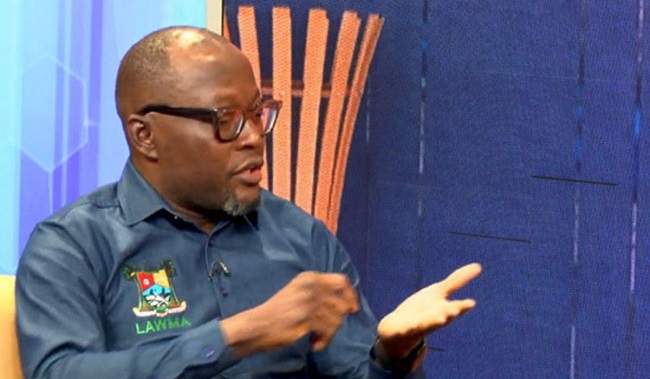
Managing Director/Chief Executive Officer of the Lagos Waste Management Authority (LAWMA), Dr. Muyiwa Gbadegesin
Gbadegesin said the authority had strengthened waste evacuation arrangements across the metropolis, with additional monitoring and operational support to ensure prompt service delivery during the festive period.
He noted that festive seasons typically witness increased waste generation, making it necessary for both service providers and residents to play their respective roles in maintaining a clean environment.
He urged residents to embrace simple waste reduction habits such as avoiding unnecessary purchases, reusing materials where possible, and separating recyclable items from general waste.
He added that LAWMA had positioned personnel and equipment at critical locations such as markets, motor parks, and high-traffic commercial areas to ensure effective waste collection throughout the period.
He said the authority was working closely with licensed Private Sector Participant operators to sustain regular domestic waste evacuation and respond promptly to service gaps where necessary.
He also advised residents to desist from indiscriminate dumping of refuse in drainage channels, road medians, and open spaces.
Gbadegesin warned that such practices could obstruct free flow of storm water as the rainy season approaches.
According to him, maintaining a clean environment is a shared responsibility requiring cooperation between government, service providers, and residents.
Gbadegesin reassured Lagosians of LAWMA’s continued commitment to improving service delivery through operational efficiency, infrastructure upgrades, and sustained public enlightenment.
He encouraged residents to report waste management issues through LAWMA’s customer care line 07080601020 and social media handles for prompt attention.
Gov. Uba Sani of Kaduna State has called for stronger collaboration with professional town planners to enhance sustainable urban development and effective land administration.
Sani made the call when members of the Nigerian Institute of Town Planners (NITP) paid a courtesy visit to Sir Kashim Ibrahim House, Kaduna.
Sani, represented by the Deputy Governor, Dr Hadiza Balarabe, said his administration had taken deliberate steps to improve transparency in land allocation, enforce development control regulations, and promote orderly urban expansion across the state.
Gov. Uba Sani of Kaduna State
According to him, the state government is also investing in infrastructure and urban renewal initiatives aimed at improving the quality of life of its citizens.
“We have been making conscious efforts to strengthen urban planning and land administration systems through ongoing reforms.
“However, we recognise that government cannot do this alone. We need the expertise, guidance and partnership of professional bodies such as yours.
“Your role in ensuring adherence to standards, building capacity, and promoting innovation in planning practice is vital to achieving sustainable development outcomes,” he added.
The governor said that his administration was committed to both rural and urban development, adding that an ambitious development plan, driven by massive infrastructural projects, had taken centre stage.
He urged members of the institute to continue offering expert advisory and technical services, particularly on the impact of land use on social and economic development.
The governor recalled the long history of collaboration between Kaduna State and the institute, noting that the state had maintained development plans dating back to 1913, including master plans, spatial development frameworks and infrastructure blueprints.
Sani said: “This historical context indicates the institute’s deep-rooted commitment to ensuring our state’s growth in an orderly manner.”
He disclosed that Kaduna State had been selected by the World Bank Group as one of the pioneering states for the Nigerian Land Titling, Registration and Documentation Programme.
“In this vein, penultimate week, a team from the World Bank and the Federal Ministry of Housing and Urban Development visited to review the state’s land administration and governance,” he said.
The governor told the delegation, led by Prof. Kingsley Ogboli, that the visit provided an opportunity to align priorities and explore practical pathways for collaboration.
“Kaduna State remains open and committed to working with your institution to build cities and communities that are not only well-planned, but also inclusive, safe and economically vibrant,” he added.
The emissions trading system launched by the European Union in 2005 could one day also be used to capture CO₂ on a large scale. A new model study quantifies the potential, and outlines that phased integration of removals into the trading system can avoid misguided incentives, while providing industry with planning security for residual emissions that are hard-to-abate.
The study, led by the Potsdam Institute for Climate Impact Research (PIK) and published in Joule, ties in with current discussions in Brussels on future regulation.
According to the study, the existing EU emissions trading system for the energy sector and energy-intensive industries alone could provide incentives for companies to remove between 68 and 86 million tonnes of CO₂ from the atmosphere annually by 2050, depending on cost developments. The research team uses the LIMES-EU calculation model developed at PIK, which optimises investment decisions.
Emissions trading
The analysis is based on the EU, as well as the United Kingdom and Norway. And it focuses on two novel, promising removal methods: using air filter systems (“direct air capture”) and burning biomass with CO₂ sequestration (“bioenergy with carbon capture”).
Supports acceptance of climate policy
“The removal potential we have calculated would make a significant contribution to the implementation of the EU climate targets,” says Darius Sultani, PIK researcher and lead author of the study. “Of course, dedicated support programmes for removals are also needed to achieve climate neutrality by 2050, and net carbon removals thereafter. But fiscal space is limited, and it makes sense to make good use of the market-based instrument of emissions trading. We show how this could work – and that it even strengthens the acceptance of climate policy.”
At present, firms are looking ahead to 2039 with concern: the annual reduction in emission allowances for the energy sector and energy-intensive industries will then reach zero, and CO₂ emissions will in principle be taboo. There are considerations to soften the timeline, but a more elegant solution emerges if removal companies are added to the system.
These would be rewarded for their “negative emissions” with certificates from the trading system, which they would then be able to resell to companies that have not (yet) completely eliminated their CO₂ emissions.
The study calculates what the market equilibrium would be in such an environment and finds that investments in the two new removal technologies will become more attractive – although the technology mix will heavily depend on the extent to which costs can be reduced through technical advances in air filtration. It also shows that the carbon price formed in emissions trading will rise steadily to a good 400 euros per tonne by 2050 but will then stabilise at a slightly lower level in the second half of the century due to the inclusion of removals.
A step-by-step model for implementation
Based on the model analysis, the research team then delivers a concept for integrating carbon removals into emissions trading. It recommends a step-by-step approach to ensure that rapid emission reductions towards zero remain the priority, and that carbon removal via bioenergy does not jeopardise biodiversity or the water cycle. First, precise standards for monitoring, reporting and verification should be established.
Subsequently, removal projects would be gradually transferred to the trading system, in increasing quantities and in a manner that avoids misguided incentives for investors. Only in the third step, around 2040, would all removals and residual emissions be controlled via a uniform carbon price.
“With this scientifically sound proposal, we are targeting the current political discussion in Brussels on the future regulation of carbon removals,” explains Michael Pahle, PIK researcher and a co-author of the study. “The decision on whether to transfer removals to EU emissions trading is now pending, and the European Commission must submit a proposal on this by 2026. Our study shows that the objections to this can be refuted.”
The President/CEO, WorldStage Limited (WorldStage), Mr. Segun Adeleye, has proposed that the Federal Government of Nigeria should issue an executive order to compel corporate organisations in the country to devote 80 percent of their ad budget to local media.
Adeleye sated this in his address during the recent WorldStage Nigeria’s Macro-economic Outlook 2026 presentation in Lagos.
In the speech, the WorldStage boss explored how nurturing the synergy between local media and corporate organisations can ensure steady flows of business and investment information.
President/CEO, WorldStage Limited (WorldStage), Mr. Segun Adeleye
President Bola Tinubu said recently that his government would cut tariffs on media equipment coming to the country, hoping to provide some relief for the media industry.
“But with media houses now transforming to offer online products and services, the extent to which they will benefit from such tariffs cut may be very minimal,” Adeleye said.
According to him, the only reasonable revenue source in the industry is advertising, whose window has been closing over the years.
He offered another look into the Federal Government’s “Nigeria First” policy through the lens of the media sector and the local advertisers he said make profits in Nigeria but spend the bulk of their ad dollars on foreign media to look good.
“The policy can be explored to compel local businesses to prioritize the local media. This is important because many Nigeria’s blue chips spend millions of dollars to promote their businesses in foreign media with little regards for the local players,” he said.
“The way forward, I think, should be for President Bola Tinubu to issue an Executive Order mandating local firms to commit nothing less than 80 percent of their advertising budget to local media.”
He commended sponsors of the outlook, which include the Nigeria Liquefied Natural Gas (NLNG), Zenith Bank, NLNG, CBN, NNPC Limited, Linkage Assurance, and Fidelity Bank.
“I believe if most Nigerian firms can emulate NLNG in terms of social responsibility and commitment to local media, there will be no need of seeking for an Executive Order for them to do the needful,” he said.
The outlook reflected hopes, projections, optimism for Nigeria’s economy, with caution, according to its reviewer, Lagos Commissioner for Information, Gbenga Omotoso.
Adeleye said a sequel to the outlook, Q1 2026 Report, will provide actionable insights for policymakers, businesses, and investors, informing strategies for growth and development.
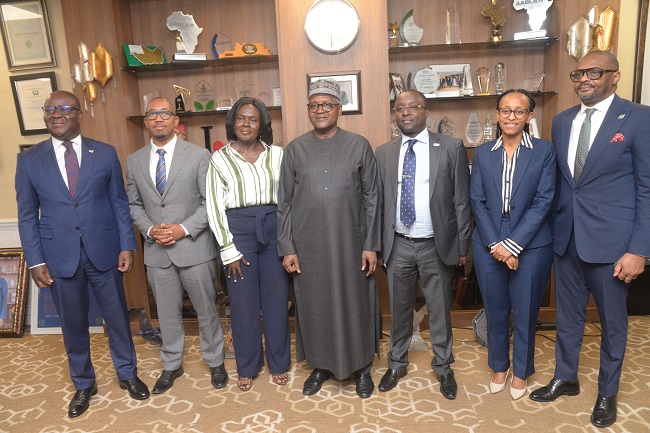
L-R: CEO, Bourse Régionale des Valeurs Mobilières (BRVM) Cote d’Ivoire, Dr. Edoh Kossi Amenounve; Head of Origination and Deals: Capital Markets Unit, Johannesburg Stock Exchange (JSE), Samuel Mokorosi; Head of Listings, Ghana Stock Exchange (GSE), Joyce Boakye; President/CE Dangote Industries Limited, Aliko Dangote; Chief Executive Officer, Nairobi Stock Exchange (NSE), Frank Mwiti; Chief Operating Officer, Ethiopia Securities Exchange, Yodit Kassa; Chief Executive Officer, Nigerian Exchange Limited, Jude Chiemeka during the visit of Chief Executive Officers of African Exchanges to the Dangote Petroleum Refinery & Petrochemicals and Dangote Fertiliser Limited in Lekki, Lagos on Wednesday, April 1, 2026
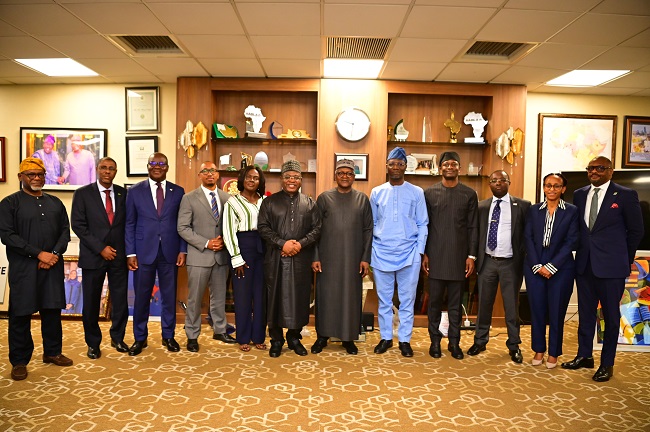
L-R: Executive Commissioner, Operations, SEC, Bola Ajomale; Chief Executive Officer, CSCS Plc;Shehu Shantali; CEO, Bourse Régionale des Valeurs Mobilières (BRVM), Dr. Edoh Kossi Amenounve; Head of Origination and Deals: Capital Markets Unit, Johannesburg Stock Exchange (JSE), Samuel Mokorosi; Head of Listings, Ghana Stock Exchange (GSE), Joyce Boakye; Chairman, Nigerian Exchange Group, Umaru Kwairanga; President/CE Dangote Industries Limited, Aliko Dangote; Director General, SEC, Dr. Emomotimi Agama; Group Managing Director and CEO, NGX Group, Temi Popoola; Chief Executive Officer, Nairobi Stock Exchange (NSE), Frank Mwiti; Chief Operating Officer, Ethiopia Securities Exchange, Yodit Kassa; Chief Executive Officer, Nigerian Exchange Limited, Jude Chiemeka, during the visit of Chief Executive Officers of African Exchanges to the Dangote Petroleum Refinery & Petrochemicals and Dangote Fertiliser Limited in Lekki, Lagos on Wednesday April 1, 2026
Sitting L-R: Chief Executive Officer, Bourse Régionale des Valeurs Mobilières (BRVM), Dr. Edoh Kossi Amenounve; Chief Operating Officer, Ethiopia Securities Exchange, Yodit Kassa; Group CFO, Dangote Industries Ltd, Murat Erden; Chairman, Nigerian Exchange Group; Umaru Kwairanga; President/CE Dangote Industries Limited, Aliko Dangote, Director General, Securities and Exchange Commission (SEC), Dr. Emomotimi Agama; Group Managing Director and CEO, NGX Group, Temi Popoola; Chief Executive Officer, Nigerian Exchange Limited, Jude Chiemeka; Standing L-R: Mrs. Ummahani Amin, Director, NGX; Mr. Sehinde Adenagbe, Director, NGX Group; Mr. Samuel Mokorosi, Head of Origination and Deals: Capital Markets Unit, Johannesburg Stock Exchange, (JSE); Shehu Shantali, Chief Operating Officer, Central Securities Clearing System PLC (CSCS); Ms. Joyce Boakye, Head of Listings, Ghana Stock Exchange (GSE); Femi Shobanjo, Chief Executive Officer, NGX Regulation; Frank Mwiti, Chief Executive Officer, Nairobi Stock Exchange; Mrs. Fatima Wali-Abdulrahman, Director, NGX Group; Bola Ajomale, Executive Commissioner, Operations, Securities and Exchange Commission (SEC); Chuka Eseka, Chief Executive Officer, Vetiva Capital ltd, during the visit of Chief Executive Officers of African Exchanges to the Dangote Petroleum Refinery & Petrochemicals and Dangote Fertiliser Limited in Lekki, Lagos on Wednesday April 1, 2026