The Our Water Our Right Coalition has expressed misgivings on the visit of World Bank Executive Directors to Nigeria supposedly to study the challenges and expectations of partners in West Africa, saying the visit was just a whitewash to consolidate on its plans for wholesale privatisation of Nigeria.
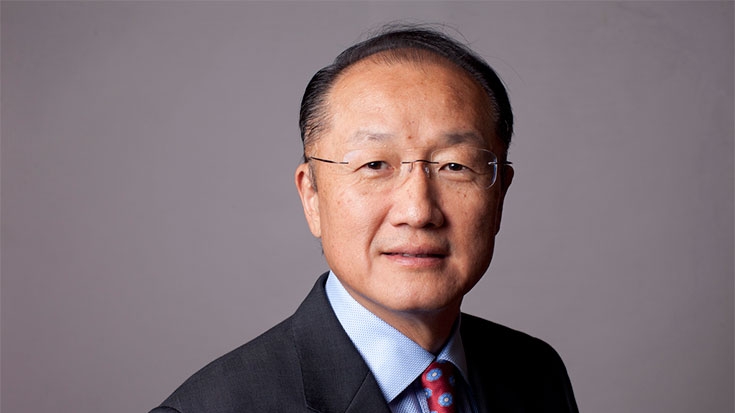
World Bank Group President, Jim Yong Kim
World Bank Executive Directors that were part of the visiting team were from Switzerland, France, Italy, Nordic, Peru, Germany and South Africa (representing Angola, Nigeria and South Africa). Others are from Burkina Faso (representing Francophone sub-Saharan Africa), Zimbabwe (representing Anglophone sub-Saharan Africa), United Kingdom and Indonesia.
The Our Water Our Right Coalition which comprises the Environmental Rights Action/Friends of the Earth Nigeria (ERA/FoEN), Amalgamated Union of Public Corporations Civil Service Technical and Recreational Services Employees (AUPCTRE), Corporate Accountability, Child Health Organisation, among others, frowned at the timing of the visit and the secrecy surrounding it.
In a statement issued in Lagos, the coalition raised red flags on the bank officials’ visit to Lagos on Wednesday, May 9, 2018 and statements credited to Governor Akinwunmi Ambode on how various budget support initiatives of the bank in the water sector had supposedly resulted in “stronger ties with the institution” and the need for more funding for key projects in the sector.
ERA/FoEN Deputy Executive Director, Akinbode Oluwafemi, said: “Not only was the World Bank visit concealed until the team arrived, the caliber of directors on the entourage showed that they were only in Nigeria to consolidate on schemes contrived behind closed doors to financialise critical sectors of the economy, including water.”
Oluwafemi pointed out that the timing of the visit would seem to explain why the World Bank and its private arm – International Finance Corporation (IFC) – were in heavy attendance at the recent Global Water Summit held in France where discussions with the Lagos Water Corporation (LWC) helmsman, Mumuni Badmus, supposedly tilted towards financialising Lagos water.
Vicky Urenma, Executive Director of Child Health Organisation, explained that civil society and grassroots groups are particularly unconvinced about the sincerity of the visit by the World Bank team going by past examples of how its private arm, the IFC, had undertaken a secret advisory contract to take control of Lagos water.
Urenma explained that pressure from the Our Water Our Right Coalition forced the IFC in 2016 to distance itself from the contract, but went on to add that, “We are now circumspect about a not-too-open romance between the Lagos government and the IFC on possible investment opportunities in the Lagos water sector.”
The coalition reiterated calls urging the federal and state governments to reject contracts designed by, involving, or influenced by the IFC, which operates to maximise private profit, among others.
“We have said it time and again that Lagos and other states of the federation can fund water sustainably if they build the political will to prioritise water for the people and come up with a comprehensive plan that invests in the water infrastructure necessary to provide universal water access, create jobs, and improve public health,” the coalition insisted.
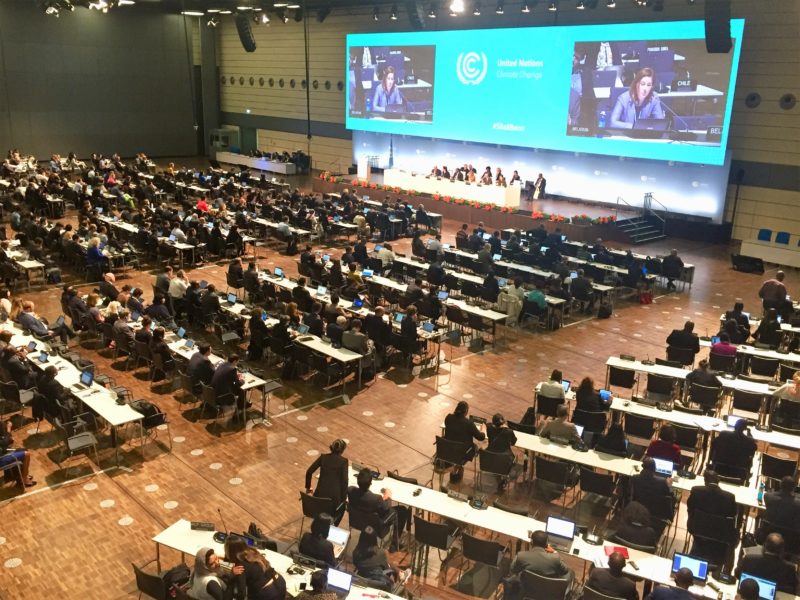
Against the backdrop of a record hot April 2018 in the host country of Germany, governments on Thursday, April 10 concluded two weeks of talks aimed at preparing the Paris Agreement’s operational guidelines for adoption at the annual climate conference to be held in Katowice, Poland in December.
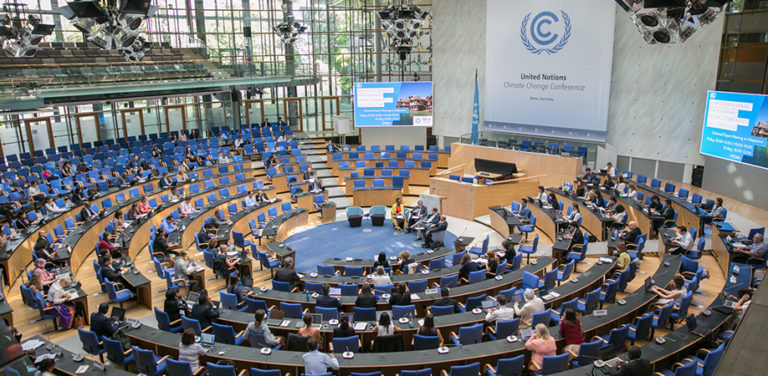
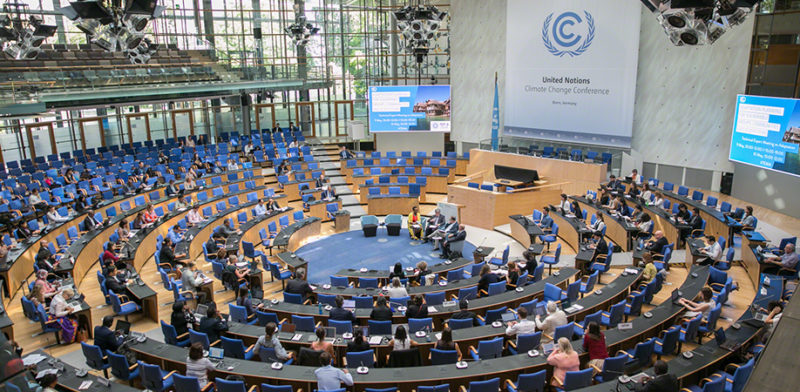
A session during the Bonn conference
The guidelines are essential for determining whether total world emissions are declining fast enough to achieve the goals of the Paris Agreement. These include boosting adaptation and limiting the global temperature increase to well below 2°C, while pursuing efforts to limit the increase to 1.5°C.
“I am satisfied that some progress was made here in Bonn. But many voices are underlining the urgency of advancing more rapidly on finalising the operational guidelines. The package being negotiated is highly technical and complex. We need to put it in place so that the world can monitor progress on climate action,” said Patricia Espinosa, Executive Secretary of UN Climate Change.
The presiding officers of the three working bodies have been coordinating discussions on a wide range of items under the Paris Agreement Work Programme. Delegations in Bonn are tasking these officers to publish a “reflection note” to help governments prepare for the next round of talks.
The preparatory talks will continue at a supplementary meeting in Bangkok, Thailand from September 3 to 8. This meeting will consider the reflection note and the views and inputs by governments captured in various texts in Bonn.
The Bangkok meeting will then forward texts and draft decisions for adoption to the annual session of the Conference of the Parties (COP24) taking place in Katowice, Poland, in December.
“We have made progress here in Bonn, but we need now to accelerate the negotiations. Continuing intersessional streamlining of the text-based output from Bonn will greatly assist all governments, who will meet in Bangkok to work towards clear options for the final set of implementation guidelines,” Ms. Espinosa said.
“The UN Climate Change Secretariat stands ready to support governments in this critically important work,” she added.
Talanoa Dialogue
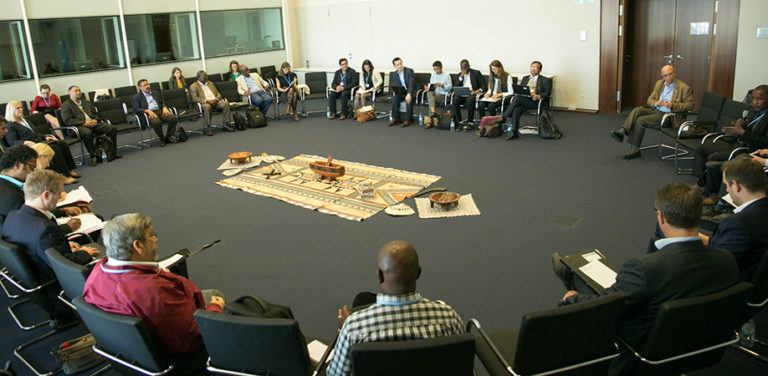
In parallel to the formal negotiations, the Bonn meeting hosted the long-awaited, Fiji-led Talanoa Dialogue.
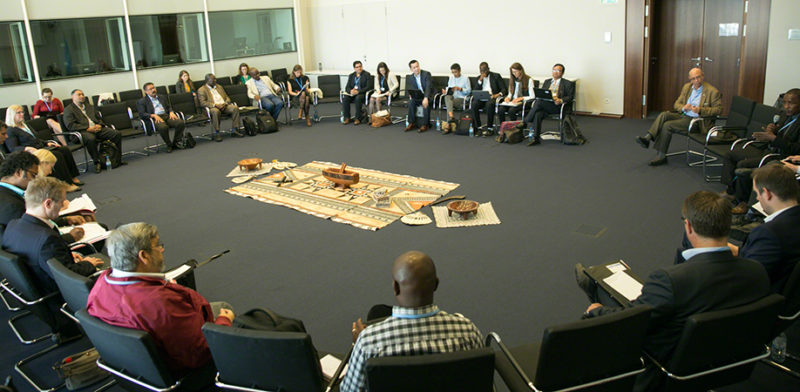
Following the tradition in the Pacific region, the goal of a “talanoa” is to share stories to find solutions for the common good. In this spirit, the dialogue witnessed some 250 participants share their stories, providing fresh ideas and renewed determination to raise ambition.
“Now is the time for action. Now is the time to commit to making the decisions the world must make. We must complete the implementation guidelines of the Paris Agreement on time. And we must ensure that the Talanoa Dialogue leads to more ambition in our climate action plans,” said Frank Bainimarama, Prime Minister of Fiji and President of COP23.
The dialogue wrote history when countries and non-Party stakeholders including cities, businesses, investors and regions engaged in interactive story-telling for the first time.
“The Talanoa Dialogue has provided a broad and real picture of where we are and has set a new standard of conversation,” said the President-designate of COP24, Michał Kurtyka of Poland. “Now it is time to move from this preparatory phase of the dialogue to prepare for its political phase, which will take place at COP24,” he added.
All input received to date and up to October 29, 2018 will feed into the Talanoa Dialogue’s second, more political phase at COP24.
Additional Bonn outcomes
Farmers are particularly vulnerable to climate change impacts such as prolonged droughts and shifting rainfall patterns, and agriculture is an important source of emissions.
Recognising the urgency of addressing this sector, the Bonn conference made a significant advance on the “Koronivia Joint Work on Agriculture” by adopting a roadmap for the next two-and-a-half years.
The roadmap responds to the world’s farming community of more than one billion people and to the 800 million people who live in food-insecure circumstances, mainly in developing countries. It addresses a range of issues including the socio-economic and food-security dimensions of climate change, assessments of adaptation in agriculture, co-benefits and resilience, and livestock management.
The Bonn conference also saw an early boost to education and public awareness (called Action for Climate Empowerment – ACE) to support the Paris Agreement. A draft outcome, to be adopted at COP24, calls on Parties to appoint national focal points and develop national strategies for promoting ACE. It also calls for the integration of ACE into all emission-reduction and resilience-building activities.
The Bonn conference saw expert meetings on strengthening both adaptation and emission reduction actions before 2020, and the functions and aims of the newly created Local Communities and Indigenous Peoples’ Platform.
Up-coming events
The UN Climate Change talks are an integral part of a broader, worldwide debate on climate change. Other key international conferences taking place over the next year include:
The Global Climate Action Summit taking place in San Francisco, California in September will bring a range of stakeholders together from around the world to showcase climate action and inspire deeper commitments from national governments, and each other, in support of the Paris Agreement. The UN Climate Change Executive Secretary will co-host the event. An announcement was made in Bonn of 11 new commitments from one of India’s largest business houses, Mahindra. This pushes the number of major global companies with science-based targets to over 400.
Climate Week takes place in September alongside the UN General Assembly in New York. It will bring together international leaders from business, government and civil society to showcase the unstoppable momentum of global climate action.
The Intergovernmental Panel on Climate Change (IPCC) will adopt its Special Report Global Warming of 1.5°C on 8 October at its meeting in the Republic of Korea.
UN Secretary-General António Guterres has announced that he will hold a Climate Summit in New York in September 2019 to review the Paris Agreement commitments.
The climate change negotiations in Bonn wrapped up on Thursday, May 19, 2018 with little progress made on developing the guidelines for the implementation of the Paris Agreement. The window for the negotiation of an ambitious outcome at COP24 appears to be narrowing, with little time left between now and December to finalise the process.
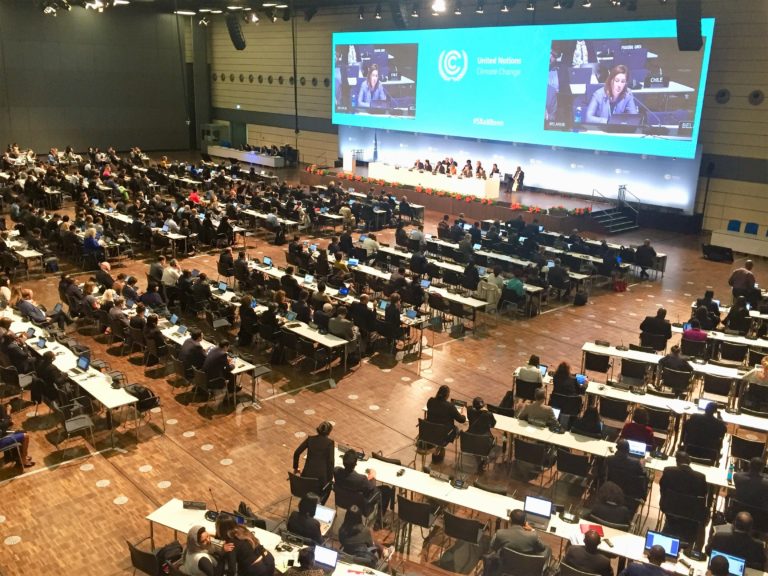
Closing sessions in Plenary at the UN Climate Change Conference in Bonn. Photo credit: Joanna Patouris/ACT
“We can no longer afford to lose more time on climate inaction. It is unfortunate that the international community is missing the opportunity to step-up and to take real and bold action to address climate change and its impacts on the most vulnerable,” says Rudelmar Bueno de Faria, ACT Alliance’s General Secretary.
The lack of leadership amongst countries to commit to supporting ambitious climate action in the negotiations has proven to be a stumbling-block in making meaningful progress. The issue of financial support is closely tied to the issue of trust between parties and trust in the process. This is extremely important because trust will ultimately affect the outcomes of the negotiations on the Paris Rulebook, and on the implementation of the Paris Agreement.
“In order for people and communities who are living in vulnerable conditions to transition to clean and reliable energy, while also adapting to the effects of climate change, financial support is imperative. Yet developed countries continue to not take the issue of financial support for climate action seriously,” says Martin Vogel, head of the ACT Alliance delegation at the UN climate conference.
The Suva Expert Dialogue which was held last week to advance work on Loss and Damage is a clear example of how the process is lacking adequate ambition to develop solutions with the most vulnerable.
“Those that are hit the hardest by climate change impacts continue to be ignored in the climate talks. It is not a question of whether the issue of Loss and Damage fits within the agenda of the negotiations, the real issue is the willingness of the international community to support those who are and will continue to face the enormous financial burdens imposed by climate impacts,” Vogel continues.
Looking ahead, the next round of climate talks will be taking place in Bangkok in September, where Parties will convene for one week and will hopefully move from an exercise of note-taking to actual negotiations and commitments to improving the future of our planet.
“Advancement on the Talanoa Dialogue will now be essential to turn the negotiation process into political goodwill to strengthen the climate commitments of Parties at the next COP and to shift away from the focus on national interests, mistrust and shrewd tactics, as witnessed here in Bonn,” says Vogel.
“ACT Alliance is committed to continue to work to ensure that the outcomes moving forward will be embedded in principles of justice, human rights and solidarity,” says Bueno de Faria.
As the Bonn climate talks came to a close on Thursday, May 10, 2018, civil society and non-party stakeholder groups have reiterated their call for urgent climate action.
Participants at the Rakiraki Room, one of the sessions of the Talanoa Dialogue
The groups demand that governments follow-up the Paris Agreement with increased urgent action to prevent average global warming from rising 1.5°C above pre-industrial levels.
At an action event at the Bonn climate change talks in advance of the closing session of the Talanoa Dialogue, groups highlighted that Parties must reinforce the Paris Agreement goal and commit to enhanced action as a matter of survival for vulnerable countries.
“Perception on climate change has changed over the years,” said Olivia Adhiambo, Policy and Advocacy Manager at the Pan African Climate Justice Alliance. “Though we may differ on what action to take, the consensus across the world is that the climate has changed, and that someone somewhere has caused the problem. Climate change is no longer an isolated scientific and environmental issue, it has dimensions in all human development indicators.”
Adhiambo says PACJA believes that climate change is a poverty issue because it has exacerbated poverty in the world; an equity issue because it disproportionately affects the poor and vulnerable countries and sectors of the society, and a justice issue because it was caused by rich people and the poor are mostly affected. For the last nine days, delegates have been negotiating the various technical issues under the UNFCCC technical and implementation bodies, the Subsidiary Body for Implementation (SBI), and the Subsidiary Body for Scientific and Technological Advice (SBSTA).
Key among the issues discussed include climate finance, a key enabler to the implementation of the Paris Agreement, importance of Agriculture to developing country parties in terms of adaptation, the finalisation of the Paris Rule book for implementation, and increasing climate ambition through the Talanoa Dialogue regarding emission cuts.
This is in view of the fact that the current collective pledges made under the Paris Agreement, are not enough to meet the target of limiting global temperature rise to below 1.5oC.
In fact, according to the analysis, even a full implementation of current unconditional and conditional Nationally Determined Contributions (NDCs) makes a temperature increase of at least 3oC by 2100 very likely.
“In a world that is already warmer by about 1ºC, people and communities around the world are already facing serious threats to their human rights,” said Sebastien Duyck, Senior Attorney, Centre for International Environmental Law, during a climate action event organsied by both the north and south civil society groups. In line with a human rights approach, Duyck said the survival of the most exposed to the impacts of climate-related natural disasters is already at risk while the growing temperature undermines the rights to food, water and livelihood of millions.
“These human rights impacts will only grow in magnitude with the increase of temperatures – undermining the ability of the most vulnerable States to protect their own people. Keeping the increase of temperatures below 1.5ºC is a necessity to protect human rights,” he added. The gender face of climate change impacts is not a debatable issue anymore.
There is consensus that women are at the frontline of climate change impacts, and Luu Thi Thu Giang, Climate Change Specialist, CARE International, was categorical about this matter.
“Today climate change impacts already hit many poor people in developing countries, like in my own country Vietnam,” she said. “Climate change impacts women and men differently. Often, it is poor and marginalised women and girls who are most affected.”
However, they are essential agents of change to build resilience against climate change impacts and to achieve the rapid shift to renewable energies necessary for limiting climate disruption to 1.5 degrees Celsius of warming. Gender equality and climate action must go hand in hand.”
According to available climate science data, the impacts of climate change are already being felt, especially in developing countries. One way in which this is happening is through destruction to sensitive ecosystems that support millions of people’s livelihoods.
And Sandeep Chamling Rai, Senior Advisor for Global Climate Adaptation Policy, at the World Wide Fund for Nature (WWF,) believes the best way to protect against the already suffering millions of people, is to keep global temperature rise as low as possible.
“As the earth’s temperature rises, so does the threat of permanent loss of ecologically sensitive places and species,” he said. “Biodiversity loss at the scale we could be seeing over the coming decades will cause profound changes to the sensitive ecosystems that sustain the lives and livelihoods of hundreds of millions of people, mainly in vulnerable countries. The best way to protect against this is to keep global temperature rise as low as possible.”
Meanwhile, it is worth noting that the sustainability of urban cities has emerged as an important aspect of the climate discussions considering the role cities play in environmental management and protection. Therefore, the International Council for Local Environmental Initiatives (ICLEI)’s Local Governments for Sustainability is leading the agenda for sustainable cities.
The aim is to help the ICLEI Network of up 1,500 councils to become sustainable, low-carbon, resilient, eco-mobile, bio-diverse, resource-efficient and productive, through green economic and smart infrastructure, impacting over 25% of the global urban population.
And Yunus Arikan, Head of Global Policy and Advocacy, ICLEI said: “Failure to meet the 1.5-degree goal will hurt inhabitants in all human settlements, from poles to islands and from coastal zones to dry lands, in particular the urban poor. Climate neutrality is the backbone of the success of Paris Agreement, and it cannot be achieved without climate neutral cities and regions.”
In its efforts to promote sustainable cities, through the Talanoa Dialogues in more than 50 cities and regions, ICLEI is working with local, regional and national governments to seize the opportunity of the Urban World to turn the 1.5 degrees Celsius goal into a reality.
It is without question that the vulnerable people are at the centre of climate talks, mainly because they are suffering for something that they have not caused. And Mohamed Adow, International Climate Lead, Christian Aid, believes that keeping global warming to 1.5 degrees for the world’s most vulnerable people is not just a “nice to have”, but rather essential to ensure they maintain and improve their way of life.
“The world warms at different rates and in Africa where I am from, a global average rise of 2 degrees equates to much more extreme temperatures,” he said. “For low-lying island states, a 2-degree rise will mean being wiped from the map as sea level rise threatens to wash them away. If rich countries are to be believed when it talks about solidarity with the poor then they need make sure we’re on track for a world that these people can live in.”
The message from civil society groups is loud and clear – urgent and ambitious climate action to keep the planet safe. However, while the clear picture of what has been achieve at the Bonn talks is yet to be established, UNFCCC Executive Secretary indicated a positive outlook during a media round table on Monday.
“The reports I am getting so far, are positive, including on the Talanoa Dialogue,” Espinosa said. “As you know the discussions about how to capture and derive from the Talanoa dialogue, general conclusions, is only starting now, it’s only a new process, it’s the first phase which happened yesterday, and delegations are starting now to think about what they would like to see as the outcome of the dialogue.”
A popular slogan with climate activists in global climate negotiations is “kick polluters out”. But fossil fuel companies are still welcome at the UN climate talks.
Greenhouse gas increases are leading to a faster rate of global warming. Photo credit: earthtimes.org
The influence of the fossil fuel industry and other polluting industries has become a central topic of concern for governments.
The issue of conflicts of interest and how to best ensure the integrity of the UNFCCC process once again dominated the climate talks in Bonn, Germany as governments launched what is meant to be a formative year for climate policy.
Talks on developing a conflict of interest policy ended with a mandate to talk more next time.
The African Group, Ecuador and Cuba and the Africa group had advocated such a policy which is opposed by the US, EU, Canada, Norway and Australia.
Both sides have agreed to identify opportunities “to further enhance the openness, transparency, inclusiveness of the effective engagement of non-party stakeholders”.
“Once again, the United States and its pro-fossil fuel allies are on the wrong side of history, putting Big Polluters before people and the planet. But today’s results prove that no amount of obstruction from the U.S. and its Big Polluter allies will ultimately prevent this movement from advancing.
And while Global North obstructionism mired these talks in delays, obstruction and censorship, Global South leaders prevailed in securing a clear path forward for the conflict of interest movement, ensuring the issue will be front and centre next year,” said Jesse Bragg of Corporate Accountability.
Delivering the Goals of the Paris Agreement
This year 2018 can make it or break it for climate change as the Paris Agreement passes through its first test.
Front-runner countries and civil society representatives have presented a concrete road-map of how they are enhancing climate plans by 2020 in an attempt to push other states to commit to doing the same at the upcoming UN Climate negotiations (COP24) that will be held in Katowice, Poland.
Countries need to send a clear signal in COP24 that they will enhance their Nationally Determined Contributions (NDCs) by 2020 if the goal to keep warming below 1.5C is to be reached.
“I would say that COP24 in Katowice is probably the most critical meeting since Paris,” said Alden Meyer, Director, Strategy and Policy, Union of Concerned Scientists. “The world will be watching to see if countries are serious about implementing and strengthening the Paris Agreement. We have a mandate to adopt a package of rules to implement the Paris agreement across a range of issues”.
Civil Society Action
A day to the end of the Bonn talks, major civil society and non-party stakeholder groups demanded that government’s follow-up the Paris Agreement with increased urgent action to prevent average global warming from rising 1.5°C above pre-industrial levels.
Groups highlighted that Parties must reinforce this Paris Agreement goal and commit to enhanced action as a matter of survival for vulnerable countries.
“For the world’s most vulnerable people keeping global warming to 1.5 degrees is not just a ‘nice to have’, it is essential to ensure they can maintain and improve their way of life,” said Mohamed Adow, International Climate Lead at Christian Aid.
The Pan African Climate Justice Alliance (PACJA) also noted that climate change should no longer be isolated to environmental and scientific issue.
It stated that the issues of poverty, justice, equity, economic, humanitarian, food security and political dimensions of climate change must not be overlooked.
“It has stunted the growth of some economies while big economies fear cutting emissions will affect them,” said Olivia Adhiambo, Policy and Advocacy Manager at PACJA.
As the 2020 implementation date of the Paris Agreement draws close, it is expected that big oil and coal interest groups and climate deniers do not succeed in their struggle to undo the progress made in the fight against the climate crisis.
The Government of the Democratic Republic of the Congo declared a new outbreak of Ebola virus disease (EVD) in Bikoro in Equateur Province on Tuesday, May 8, 2018. The outbreak declaration occurred after laboratory results confirmed two cases of EVD.
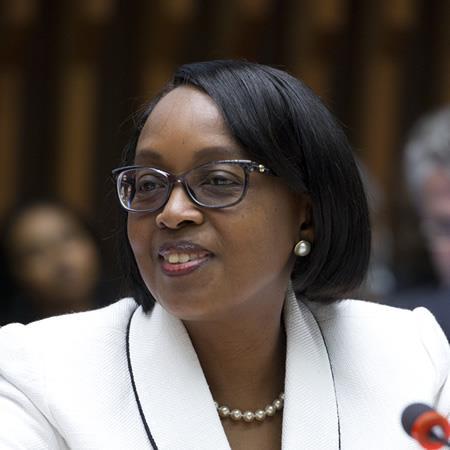
Dr. Matshidiso Moeti, the World Health Organisation (WHO) Regional Director for Africa. Photo credit: pbs.twimg.com
The Ministry of Health of Democratic of the Congo (DRC) informed WHO that two out of five samples collected from five patients tested positive for EVD at the Institut National de Recherche Biomédicale (INRB) in Kinshasa. More specimens are being collected for testing.
WHO is working closely with the Government of the DRC to rapidly scale up its operations and mobilise health partners using the model of a successful response to a similar EVD outbreak in 2017.
“Our top priority is to get to Bikoro to work alongside the Government of the Democratic Republic of the Congo and partners to reduce the loss of life and suffering related to this new Ebola virus disease outbreak,” said Dr Peter Salama, WHO Deputy Director-General, Emergency Preparedness and Response. “Working with partners and responding early and in a coordinated way will be vital to containing this deadly disease.”
The first multidisciplinary team comprised of experts from WHO, Médecins Sans Frontières and Provincial Division of Health travelled on Tuesday to Bikoro to strengthen coordination and investigations.
Bikoro is situated in Equateur Province on the shores of Lake Tumba in the north-western part of the country near the Republic of the Congo. All cases were reported from iIkoko Iponge health facility located about 30 kilometres from Bikoro. Health facilities in Bikoro have very limited functionality, and rely on international organisations to provide supplies that frequently stock out.
“We know that addressing this outbreak will require a comprehensive and coordinated response. WHO will work closely with health authorities and partners to support the national response. We will gather more samples, conduct contact tracing, engage the communities with messages on prevention and control, and put in place methods for improving data collection and sharing,” said Dr Matshidiso Moeti, the WHO Regional Director for Africa.
This is DRC’s ninth outbreak of EVD since the discovery of the virus in the country in 1976. In the past five weeks, there have been 21 suspected viral haemorrhagic fever in and around the iIkoko Iponge, including 17 deaths.
“WHO is closely working with other partners, including Médecins Sans Frontières, to ensure a strong, response to support the Government of the Democratic Republic of the Congo to prevent and control the spreading of the disease from the epicentre of iIkoko Iponge Health Zone to save lives,” said Dr Allarangar Yokouide, WHO Representative in the DRC.
Upon learning about the laboratory results today, WHO set up its Incident Management System to fully dedicate staff and resources across the organisation to the response. WHO plans to deploy epidemiologists, logisticians, clinicians, infection prevention and control experts, risk communications experts and vaccination support teams in the coming days. WHO will also be determining supply needs and help fill gaps, such as for Personal Protective Equipment (PPE). The WHO has also alerted neighbouring countries.
WHO released $ 1 million from its Contingency Fund for Emergencies to support response activities for the next three months with the goal of stopping the spread of Ebola to surrounding provinces and countries.
Building on the 2017 response
Ebola is endemic to the Democratic Republic of the Congo. The last Ebola outbreak in the Democratic Republic of the Congo occurred in 2017 in Likati Health Zone, Bas Uele Province, in the northern part of the country and was quickly contained thanks to joint efforts by the Government of DRC, WHO and many different partners.
An effective response to the 2017 EVD outbreak was achieved through the timely alert by local authorities of suspect cases, immediate testing of blood samples due to strengthened national laboratory capacity, the early announcement of the outbreak by the government, rapid response activities by local and national health authorities with the robust support of international partners, and speedy access to flexible funding.
Coordination support on the ground by WHO was critical and an Incident Management System was set up within 24 hours of the outbreak being announced. WHO deployed more than 50 experts to work closely with government and partners.
The Ebola virus causes an acute, serious illness which is often fatal if untreated. The average EVD case fatality rate is around 50%. The virus is transmitted to people from wild animals and spreads in the human population through human-to-human transmission.
Some 290 Nigerian contractors have received loans worth more than N472 billion under the Shell Contractor Support Fund, which was set up by Shell companies in Nigeria to help vendors and suppliers in the oil and gas industry secure funds at reduced interest rates, relaxed collateral requirements and quicker processing time. Also, Shell Companies in Nigeria awarded contracts worth over N230 billion to Nigerian contractors in 2017, representing 94% of the total contracts in that year.
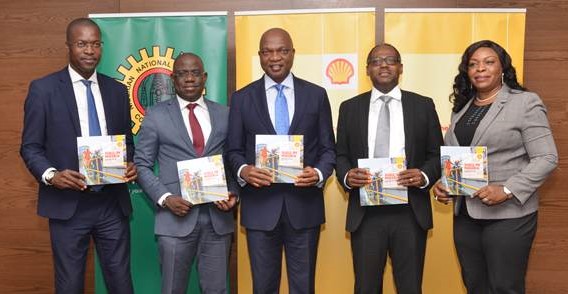
L-R: General Manager External Relations of Shell Petroleum Development Company (SPDC), Mr. Igo WelI; Managing Director, Shell Nigeria Exploration and Production Company (SNEPCo), Engineer Bayo Ojulari; Managing Director, The Shell Petroleum Development Companies of Nigeria Limited and Country Chair, Shell Companies in Nigeria, Osagie Okunbor; Managing Director, Shell Nigeria Gas, Mr. Ed Ubong and SPDC Stakeholder Relations Manager, Dr Alice Ajeh at the Launching of the 2018 Shell Nigeria Briefing Notes
“We’re pleased to support Nigerian contractors to play greater roles in the oil and gas industry,” said Osagie Okunbor, Country Chair Shell Companies in Nigeria and Managing Director of The Shell Petroleum Development Company of Nigeria (SPDC) Ltd, while launching the 2018 Shell Nigeria Briefing Notes in Lagos on Thursday, May 10, 2018. “As pioneers in the industry we have taken deliberate steps to award contracts to Nigerian vendors and worked with them to grow their capacity, cost efficiency and delivery timelines. We discovered however, that access to finance has been a challenge, and the search for a solution led to the Shell Contractor Support Fund.”
Shell companies started their intervention in 2011 with the Shell Kobo Fund which gave way to the Shell Contractor Support Fund the following year with seven participating financial institutions which have since set aside more than N690 billion for contract execution by Nigerian companies. The banks are Access Bank Plc, Skye Bank Plc, Zenith Bank Plc, Stanbic IBTC Bank, First Bank of Nigeria Limited, Standard Chartered Bank, and Guaranty Trust Bank.
Nigerian ownership of key assets such as rigs, helicopters and marine vessels is also a focus, with Shell Companies providing technical and financial support to companies across a range of sectors including transportation, manufacturing and research and development.
On social investment, Mr. Okunbor said Shell companies had continued to work with government, communities and civil society to fund and implement projects and programmes that have a lasting impact on people’s lives in the Niger Delta and Nigeria as whole. For example, since 2006, the SPDC JV has disbursed more than N 41 billion to 37 active Global Memorandum of Understanding (GMoU) clusters in Rivers, Delta, Bayelsa and Abia states. A GMoU is an agreement that brings a group (or cluster) of communities together with representatives of state and local governments, SPDC and NGOs, with the SPDC JV providing five-year funding for communities to implement development projects of their choice.
Social investment activities of Shell companies focus on community and enterprise development, education, health, access-to-energy and, since 2016, road safety. In 2017, SPDC JV, Shell Nigeria Exploration and Production Company and Shell Nigeria Gas spent more than N 18 billion on direct social investment projects. Nigeria is the largest concentration of social investment spending in the Shell Group.
At the closing of the international conference on charcoal in Mogadishu on Tuesday, May 8, 2018, the Government of Somalia and the United Nations (UN) have jointly called for stronger national and regional policies, and further investment in developing alternative sources of energy and alternative livelihoods in Somalia, to stop the illegal export of charcoal from the country.
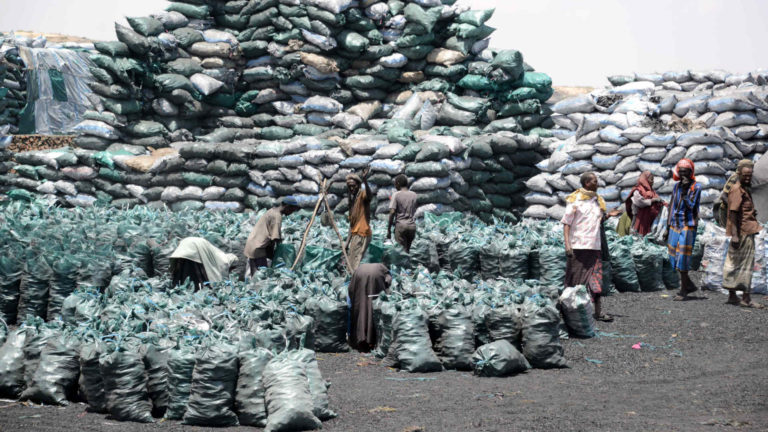
Charcoal trade in Somalia
The two-day conference was led by the Somali Government with the support of the United Nations Development Programme (UNDP), UN Environment and Food and Agriculture Organisation of the UN (FAO), with funding from Sweden, the European Union and Italy.
Charcoal export from Somalia has been banned both by a 2012 United Nations Security Council resolution and by the Somali Government for its destructive effect on the environment, its exacerbation of conflict and its contribution to humanitarian crisis, with one tree cut down every thirty seconds to produce charcoal in the country.
UN and Somali delegates called for enforceable policies and legal frameworks at national and regional level, reducing demand for charcoal in importing countries, and provision of livelihood and energy alternatives, as key recommendations to halt the charcoal trade.
Energy alternatives to charcoal include Liquid Petroleum Gas, biomass briquettes, and more fuel-efficient stoves. Presenters at the event highlighted that work in this area is already being carried out under a Joint Somali Government and UN Programme for Sustainable Charcoal Reduction and Alternative Livelihoods (PROSCAL) that is currently underfunded by $30 million and called for further investment in the area.
At the closing ceremony, the Minister of Labour and Social Affairs, Salah Ahmed Jama, highlighted the benefits of creating alternative livelihoods in stopping exports of charcoal. “Developing and investing in other options for energy would provide green jobs for the young people and women who currently depend on charcoal for a living. It is also important to have policies on charcoal that are in line with those on economic development and employment, to create a greener economy for Somalia,” he said.
Peter de Clercq, Deputy Special Representative of the UN Secretary-General for Somalia, said raising awareness to stop charcoal production within Somalia, and policy and legislation at regional, international and national levels, is needed to ensure the ban on charcoal is upheld. “It is encouraging that the Federal Government of Somalia is taking the lead to address this issue. We must not lose the momentum of this conference and ensure that these ideas and measures result in policies that are enforceable,” he said.
Close to 500 organisations and 140 leading economists on Wednesday, May 9, 2018 in Bonn, Germany called on parties gathered for the latest round of climate negotiations to address fossil fuel production and financing in order to ensure success in meeting goals enshrined in the Paris Agreement.
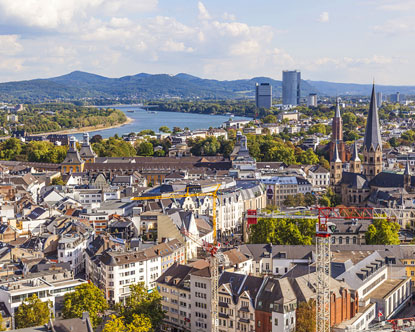
Bonn, Germany. Photo credit: destination360.com
In a submission to the UN’s “Talanoa Dialogue,” civil society organisations from around the world have highlighted their demands in the Lofoten Declaration, adopted in 2017 and since endorsed by some 600 organisations worldwide. The Declaration states “that it is the urgent responsibility and moral obligation of wealthy fossil fuel producers to lead in putting an end to fossil fuel development and to manage the decline of existing production.”
While the Paris Climate Agreement was largely hailed as marking the “end of the fossil fuel era” by journalists after the 2015 Paris climate summit, fossil fuel production has thus far been left out of the official discussions of its implementation. Meanwhile, research has shown that existing production of fossil fuels, if left unchecked, is not compatible with achieving the Paris Agreement’s goals.
“The Pacific Islands Development Forum is proud to be a signatory of the Lofoten Declaration that seeks an end to fossil fuel development and to manage the decline of existing production. Technologically, we are now in a position to wean off fossil fuels well before 2050. The only reason why fossil fuel exploration continues is because of powerful people with vested interests and the political influence that they wield.
“The Lofoten Declaration is sending the message that there is no future for fossil fuels in a planet experiencing the current level of climate change. It stands to reason that fossil fuel exploration, and eventually production, must come to an end if we are to fulfil the commitments of the Paris Agreement which almost all countries in the world have now ratified,” said Pacific Islands Development Forum Secretary General François Martel.
In a parallel move, the “Not a Penny More” declaration focused on finance sectors has also been submitted to the Talanoa Dialogue, recommending an end to new fossil fuel investments and a dramatic increase in investments in renewable energy. The declaration is signed by over 140 economists from around the globe.
While world leaders have spoken out about the need for increased financing for climate solutions, they have remained largely silent about the other, dirtier side of the equation: the ongoing finance of new coal, oil and gas production and infrastructure. We inherit the world we invest in, and the world’s public and private funds continue to pour capital into new extraction and carbon emitting fossil fuel projects.
“The Talanoa dialogue asks us where do we want to be and how we get there. Our answer is that we want to be in a world free of fossil fuels and to get there we need to put an end to financing of coal, oil and gas and also nuclear power plants,” said Anu Muhammad, Professor of Economics, Jahangirnagar University, Dhaka, Bangladesh.
The global economy will lose a whopping $23 trillion by 2050 through land degradation, a review by the United Nations Convention to Combat Desertification (UNCCD) warns. To take urgent action now and halt these alarming trends would cost $4.6 trillion – only a fraction of the predicted losses.
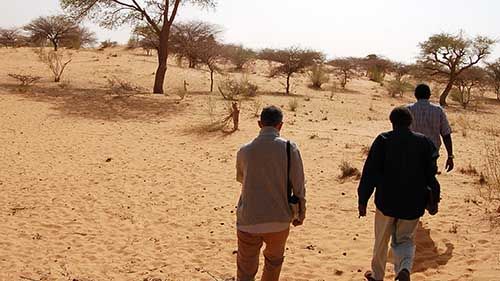
Desertification in Nigeria
The outcomes of the review have been assembled into comprehensive and easy-to-use Land Degradation Neutrality (LDN) Country Profiles, of which 21 are already available online. The LDN Country Profiles reveal that average losses for these 21 countries are equivalent to 9% of GDP. This figure is even higher for some of the planet’s worst affected countries, such as the Central African Republic, where the total losses are estimated at a staggering 40 percent. Asia and Africa bear the highest costs, estimated at $84 billion and $65 billion per year respectively.
“Healthy land is the primary asset that supports livelihoods around the globe – from food to jobs and decent incomes. Today, we face a crisis of unseen proportions: 1.5 billion people – mainly in the world’s most impoverished countries – are trapped on degrading agricultural land. This reality is fuelling extreme poverty, particularly in areas such as the Sahel and South Asia, where extreme and erratic weather events are on the rise due to the impacts of climate change,” says Juan Carlos Mendoza, Managing Director of the UNCCD Global Mechanism.
The LDN Country Profiles aim to help guide policy decisions on land use management. The profiles are based largely on the analytical work undertaken by the Centre for Development Research of the University of Bonn, the Economics of Land Degradation Initiative and the International Food Policy Research Institute.
Target 15.3, on Land Degradation Neutrality (LDN), encourages countries to halt land degradation in order to ensure the quantity of productive land remains stable. The target is now also recognized as vital for accelerating other SDGs, such as: Goal 1 (No poverty), Goal 2 (Zero hunger), Goal 5 (Promote gender equality), Goal 6 (Clean water and sanitation), Goal 8 (Decent work and economic growth), and Goal 13 (Climate action).
The 21 countries whose profiles were released on Wednesday, May 9, 2018 are also engaged in the LDN target setting process, formulating targets and associated measures to avoid, reduce and reverse land degradation. For example, the Central African Republic has committed to restoring more than one million hectares of degraded land – equal to 15 percent of its territory – which will limit its potential losses and economic burden nationwide.
“The LDN Country Profiles provide policy-makers with easily accessible and scientifically sound information that can help estimate the value of their investments in land restoration and make informed choices on the economic returns they can expect from taking assertive action now. Moreover, the profiles illustrate the equivalent monetary value of land degradation and its impact on the international community, while providing strong incentives for cooperation among countries,” Mendoza adds.
A broader picture of the economic costs of failing to act decisively and restore available land resources will emerge as additional country profiles are released.