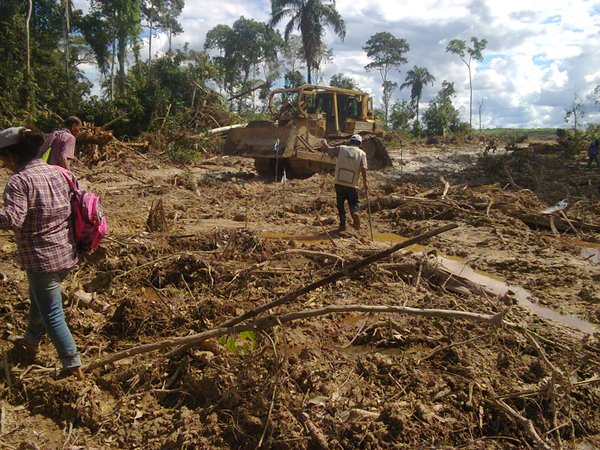
The Regional Centre of Expertise on Education on Sustainable Development (RCE) says Nigeria loses its forests at the rate of 11.1 per cent annually, making it the highest on earth.
Deforestation
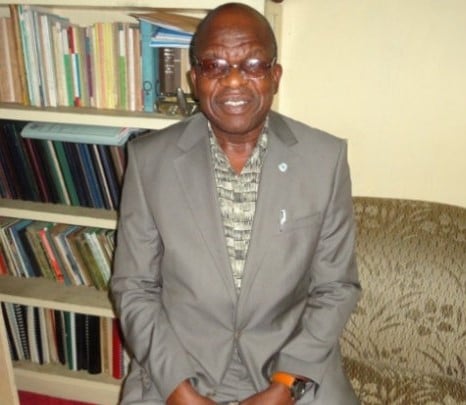
Prof. Albert Olayemi, the Focal Person of the RCE, made the disclosure on Thursday, June 7, 2018 at the University of Ilorin, Ilorin, Kwara State.
He spoke while signing a document backing the Kwara House of Assembly on its proposed amendments to improve the law governing the operations of chainsaw men and the law that governs the charcoal economy in the state.
According to him, an estimated 13 million hectares of land is deforested each year in the tropical region of the world.
“There is enormous evidence on the devastating effect of deforestation and charcoal production on the environment.
“Forests are being cleared for logging, timber sale, subsistence agriculture and collection of wood for fuel which remains a problem in Nigeria,’’ he said.
The RCE focal person explained that, in Kwara, fuel wood and charcoal were the main sources of energy for many households.
“They are important sources of income and employment for the rural households.
“Also, this sector is informal, as it employs a large number of people in production and trade and contributes substantially to rural household economy,’’ he said.
On some of the effects of deforestation, the don said: “The loss of biodiversity, depletion of water resources, atmospheric pollution and environmental calamities such as acid rain, desertification and flood are some of the effects of deforestation.
“Soil erosion, soil destabilisation, migration of animal species and increase in reflected solar radiation are also effects of deforestation.
“In the light of these negative effects, the centre expresses its wholehearted support for the new initiative of the Kwara State House of Assembly’’.
He, however, disapproved of the existing effort to stop deforestation in the state, describing it as “half hearted” and “half spirited”.
“The current law enjoins fellers to plant trees as replacements for the ones felled, while there is shortage of tree seedlings in the state.
“The law is also silent on the number of trees to be planted for each tree removed,’’ Olayemi said.
According to him, RCE proposes the creation of forest reserves, conservation processes, improved rainforest management and forestation programmes as ways to combat the challenge of deforestation in Nigeria.
“The centre wants at least 10 tree seedlings planted for each tree felled.
“We also propose the establishment of plantations dedicated to charcoal production because charcoal is now an export commodity in Nigeria, with a large market in the EU, USA and Asia,’’ Olayemi said.
The News Agency of Nigeria reports that RCE centre is located inside the University of Ilorin and members include all universities operating in Kwara.
A don, Prof. Dele Olowokudejo, says that plastic pollution leads to loss of 24 billion tons of top soil annually worldwide.
Prof. Dele Olowokudejo
Olowokudejo, who is of the Department of Botany at the University of Lagos, Akoka, made the remark during the Lagos State Environmental Protection Agency (LASEPA) World Environment Day event on Thursday, June 7, 2018 in Ikeja, Lagos.
“Plastics are taking over our oceans, they are ruining our lands. Plastics pollution leads to loss of 24 billion tons of top soil every year.
“Plastic accounts for about 10 per cent of the total waste generated. Production of plastic uses about 8 per cent of the world’s oil production.
“About 500 billion plastic bags are used annually worldwide,” Olowokudejo said.
The academician, however, proposed a solution on how to surmount the problem of plastic pollution in the country, as he called for a concerted effort of all stakeholders on the environment.
“There should be a formulation of a National Policy on Plastic Waste Management, an implementation of a National Plastic Waste Recycling Programme in partnership with manufacturers and critical stakeholders.
“Individuals, families, communities, companies must agree to implement practices that reduce waste at every level.
“We must get rid of bottled water recommended for single use and buy reusable water bottles,” he said.
He further called for the enforcement of existing environmental laws and policies to curtail the impact of plastic pollution in the state.
“The enacted laws to address environmental challenges in Nigeria must be fully applied.
“The National Environmental Regulations, 2009 Prohibits persons from dropping litter (polyethene bags inclusive) on roads, public space, drainages or other undesignated places through National Environmental Standards and Regulations Enforcement Agency (NESREA).
“The issue is that implementation/ enforcement is weak,” he said.
The professor however, urged the government, regulatory bodies and other critical stakeholders to brace up in tackling plastic pollution in the country.
“We are indeed privileged to be a part of the current movements of Homo sapiens who have recognised their ecological limits and are willing to respect boundaries in order to save our planet.
“We have seen the danger signs of our destructive activities and are willing to take corrective actions. Therefore, while we should always think globally and cooperate regionally, we must continue to act locally.
“Let’s rise above plastics and the time is now,” Olowokudejo said.
The Bayelsa State Government has announced plans to set up a task force to protect its environment by checking activities of illegal crude oil refineries in the state.
Seriake Henry Dickson, Governor of Bayelsa State
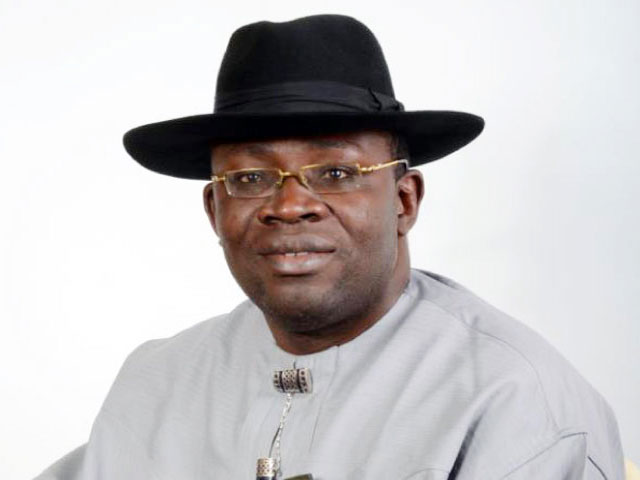
Gov. Seriake Dickson announced this at the commemoration of this year’s World Environment Day, a statement by Mr Francis Agbo, the Chief Press Secretary to the governor, said on Thursday, June 7, 2018.
Dickson said that his administration had engaged the services of internationally acclaimed forensic experts to compile the effects of prolonged oil pollution on the environment and health of the people in the state.
The News Agency of Nigeria (NAN) reports that thousands of illicit artisanal refineries located in oil communities in Bayelsa operated and discharged their waste in ways that pollute the environment.
Dickson observed that decades of oil pollution and gas flaring in the state and the Niger Delta had resulted in rising cases of health hazards, thereby shortening the people’s lifespan.
“The reports I have received from the experts describe the scenario as saddening and frightening. In due course, this report will be made public soon.
“I am hereby calling for collective efforts to reclaim and remediate the environment,’’ the governor said.
He called on residents to hearken to the call for protection of the environment, especially in the Niger Delta.
“The environment has been under severe, sustained and brutal attack by forces that we do not control.
“These forces have not only invaded the land and expropriated their property but are now threatening to exterminate the people.
“A lot of actions will be taken and we will mobilise local and international opinions on this.
“There are legislative measures that I will also call on the state assembly to undertake,’’ Dickson said.
The governor lamented the exclusion of the people from the oil and gas industry, and decried the proliferation of illegal refineries which degraded the environment and destroyed lives in the state.
He said there was no justification for illegal refineries, stressing that doing so would amount to further degrading and polluting the already compromised environment.
Dickson assured that the state government would invest in ways to reduce the use of plastic products.
He disclosed that the theme for the 2018 World Environment Day had been amended to read: “Bayelsa, Our Lives, Our Future’’ to underscore the importance of the day to the Bayelsa people.
“I fully support the indigenisation of the oil and gas industry. This is the only country in the world where, the Niger Delta, that is the source of crude is not playing host to all the refineries.
“So, there is a case to be made for economic inclusion and I am an advocate for that and I owe no apology to anyone. Whether this will take the form of oil mining leases awarded to our people, why not?
“Whether this will mean involving them in terms of citing refineries and letting them run businesses in that sector, why not?
“Whether this will mean employing our youths, who are qualified in the oil and gas industry that is ours, why not?
“The point that I am making is that this time that your environment is a ticking time bomb is not the time to resort to self-help by breaking into pipelines and making sure that more pollution takes place.
“All of us should be soldiers for the protection of the environment,’’ Dickson urged.
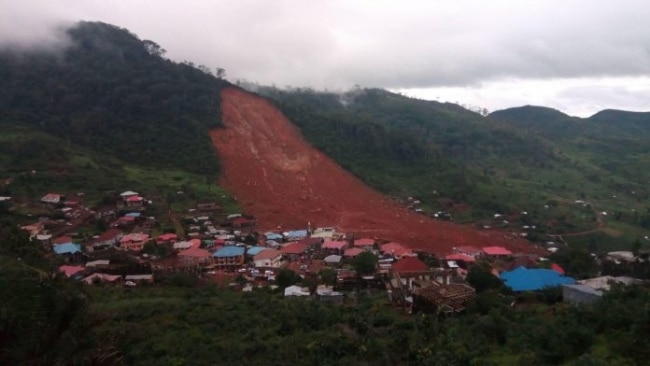
Hundreds of Freetown residents on Tuesday, June 5, 2018, the World Environment Day, came together to plant trees in the honour of the more than 1,000 people killed or missing following the devastating landslide and flooding disaster at the Mortomeh community, Regent, in the capital Freetown on August 14, 2017.
Scene of the landslide accident at Regent, Freetown, Sierra Leone
The landslide – comprising a mix of clay soil and boulders – ripped through the city of Freetown with tremendous energy, destroying everything in its path. The incident had a massive human impact, with over 6,000 people affected and caused significant destruction and damage to critical infrastructure.
The ceremony marked the launch of the National Tree Planting Day by the Government of Sierra Leone, which will see the planting of some 20,000 trees by hundreds of volunteers across the strip of land covering the disaster area to build resilience.
The event was organised to mark an important phase of the World Bank-supported Freetown Emergency Recovery Project, which is designed to support the government’s resilient recovery programme. The project aims to rehabilitate and rebuild damaged infrastructure, including remediating the landslide area and strengthening the disaster risk management and early warning capacities. This was informed by a Damage and Loss Assessment that was undertaken immediately after the disaster, supported by the World Bank and United Nations, which indicated recovery needs of more than $80 million.
“We consider the disaster and death of the over one thousand Sierra Leoneans as a painful loss of human capital and lives, which was the result of the mismanagement of our environment. The government, in collaboration with our development partners, is determined to work on the prevention of such degradation and the loss of human capital now and in the future,” said Samking Koihinah Braima, Deputy Minister of Agriculture and Forestry representing the President.
“Government takes the issues of the environment, forestry, conservation and agriculture very seriously. We therefore commit ourselves to make Sierra Leone and its environment sustainably green while equally working towards the country’s individual and collective environmental sensitive prosperity,” he added.
The first phase of the slope remediation measures was to reprofile the main slope of the landslide and recreate the existing drainage channels. Now that this phase is complete, the second phase is to re-plant the area to help hold the soils in place and reduce the surface run-off. Although the work carried out so far is reducing the instability of the slope, it remains a high-risk area.
President Julius Maada Bio recently setup a Mudslide Prevention Inter-Agency Committee to coordinate between key ministries, agencies and development partners, including the World Bank, to address the urgency of the situation with the rainy season just starting. It is with this is mind that the government is considering demarking the area as a protected memorial park, in memory for those who lost their lives and were impacted by the landslide.
“The fatal mudslides and severe floods of 2017 are stark reminders of how devastating the impacts of climate-induced hazards can be, particularly when combined with poorly planned human activities such as deforestation, encroachment within risky areas, unregulated construction of settlements on steep slopes, as well as weak monitoring and poor enforcement of environmental and land use regulations,” said Dr. Gayle Martin, World Bank Country Manager for Sierra Leone. “The World Bank is greatly encouraged by the establishment of the Mudslide Inter-Agency Committee and the development of a realistic workplan by the government to coordinate the response. The Bank stands ready to support this process in a manner that is consistent with our environmental and social safeguard policies.”
Dr. Martin urged the youths and surrounding communities to play an important stewardship role by looking after the trees and maintaining the site as a protected area for many years to come.
A Multi-City Hazard and Risk Assessments for Freetown, Makeni and Bo are close to completion. The reports will help to identify key hotspots that are highly exposed to flooding, landslides, sea level rise and coastal erosion, and provide a menu of options to manage these risks.
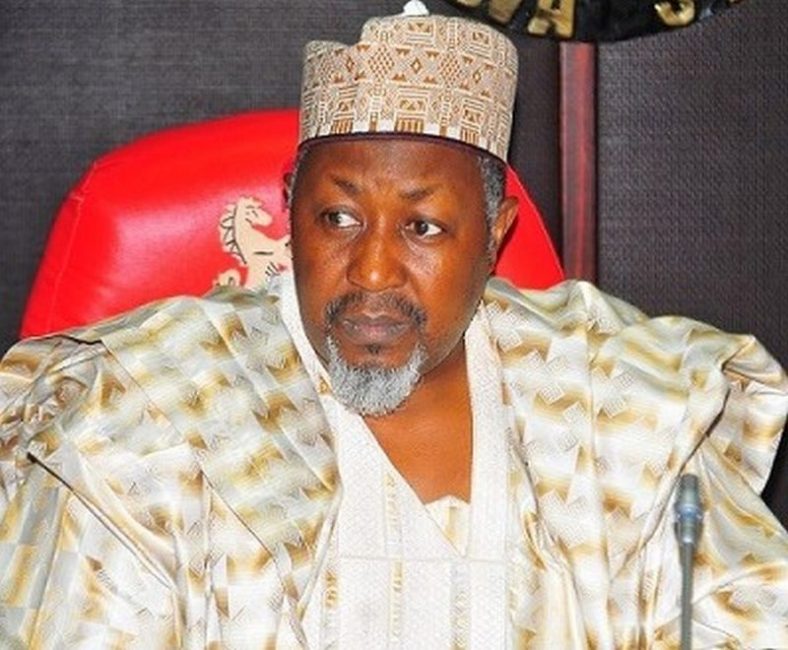
A windstorm has destroyed 1,536 rooms and property worth millions of naira in some communities in four local government areas of Jigawa State.
Mohammed Badaru Abubakar, Governor of Jigawa State
Alhaji Sani Yusuf, the Executive Secretary, Jigawa State Emergency Management Agency (SEMA), made this known to the News Agency of Nigeria (NAN) in Dutse, the state capital, on Wednesday, June 6, 2018.
Yusuf said the disaster, which occurred between May 3 and June 6, affected 833 people in 12 villages in Babura, Dutse, Guri, Gumel and Kiyawa local government areas of the state.
According to him, in Babura, the windstorm affected 58 persons and destroyed 84 rooms in Ajja and Dorawa villages.
In Dutse, the executive secretary said the disaster affected 273 persons and destroyed 1,247 rooms in Warwade, Saya-Saya, Sabon Gari, Jidawa, Tumballe, Sabuwar Takur and Jigawar Habu villages.
Similarly in Guri, the windstorm destroyed 543 rooms and affected 305 persons in Dayin village while in Gumel town 208 rooms were destroyed and 101 persons affected.
He further said that in Kiyawa, the disaster affected 108 persons and destroyed 228 rooms in Shuwarin village.
He added that the windstorm had rendered about 30 families homeless and destroyed several local silos containing assorted foodstuffs.
The executive secretary added that the agency was conducting an assessment of the damage caused by the windstorm in the affected communities with a view to assisting the victims.
Most districts in Northern Uganda will continue to receive much rain for the period of June, July and August, experts have said.
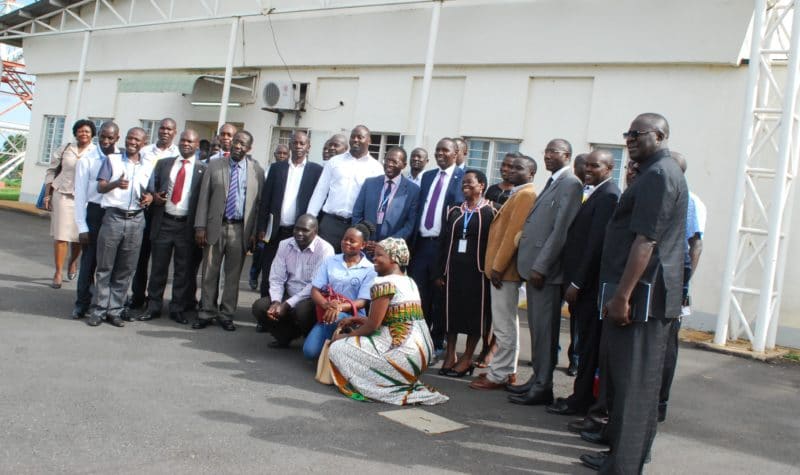
A group photo of the MPs who toured the National Meteorological Training School and other facilities
Dr. Festus Luboyera, the Executive Director of Uganda National Meteorological Authority (UNMA), said the major physical conditions that are likely to influence the weather patterns over Uganda and the rest of the east African region for the next three months would largely depend on the Indian Ocean.
He said the Neutral phase of the Indian Ocean Dipole, the El Nino-southern Oscillation which is currently neutral in an El Nino nor La Nina phase and the topographical features and large inland water bodies, would have a big influence in our rain patterns.
Dr. Luboyera was addressing the parliamentary committee on natural resources at Imperial Golf View Hotel in Entebbe.
The committee was on a familiarisation tour to understand how the authority is able to forecast and monitor weather in the country.
The MPs also toured the National Meteorological Training School to assess the school and the kind of training students receive in managing weather forecast and other climate change related issues.
The MPS were also taken to the Civil Aviation Authority control room and other towers to see how the authority manages aviation since no flight can land or take off without the authority’s clearance.
“The above considerations as well as detailed of the climatology of Uganda and scientific tools for climate change analysis have downscaled the forecast and there is an increased likelihood of near normal tending to above normal rainfall over the northern and some parts of eastern Uganda while the rest of the country is expected to experience normal to below normal rainfall punctuated with occasional light rainfalls conditions,” he said.
He said the districts of Bundibugyo, Ntoroko, Kabarole, Kyenjojo, Kyegegwa, Kamwenge, Masindi, Buliisa, Hoima and Kibaale would experience seasonal rainfall characterised by dry spells.
“The condition is expected to persist up to around mid-June when the dry conditions are expected to begin and continue until mid-July,” he said.
He added that Kisoro, Kabale, Rukungiri, Kanungu, Ntungamo, Mbarara, Kiruhura, Isingiro, Ibanda, Buhweju, Bushenyi, Mitooma, Sheema, Rubirizi and Kasese, which have been receiving seasonal rains since February, would start to experience dry spells by July.
He said they are able to promote, monitor weather and climate as well as provide weather predictions and advisories to government and other stakeholders.
He said the agency handles all climatological, hydro and agro-meteorological data which are crucial for research, study purposes, generate climate forecasts and advisories including climate change trends, projections and scenarios for different users.
MPs tours
The chairperson of the Parliamentary on Natural Resources Committee, Alex Byarugaba, said it is very important for the government to equip the authority since they also determine the weather in aviation management.
Byarugaba, who is also the MP for Isingiro South, said there is also need to harmonise with Uganda People’s Defence Force since they also have a forecast department.
Paul Isabirye, the Director, Station Networks and Observations at UNMA, said they designed , installed and maintained weather stations of all categories, making and availing weather and other relevant observations at standardised temporal scales
“A robust and functional observational network, an efficient communication system for both real time and climatological data, skilled human resource and an adequate well facilitated have been put in place to cope with advancing technologies and operational standards,” he said.
Isabirye said they have they the capacity and infrastructure to monitor both surface and space facilities, that include terrestrial and marine, manual synoptic (a branch of meteorology analysing data collected simultaneously over a wide region, for the purpose of weather forecasting), agrometeorological, hydrometeorological, rainfall stations, automatic weather stations, mobile vessels or buoys, upper air sounding, radar , satellites , aircrafts and drones.
He said that the 12 synoptic stations were equipped with smart phones which improved timely transmission of weather data to the Centre and the Global Telecommunication System for international exchange and increased the level of automated weather observations across the Country by 20 AWSs.
“We have acquired the Automatic Meteorological Message Switching System (AMSS) which is very critical in having access to global weather data,” he said.
Challenges
He however said the most Agrometeorological and Hydrometeorological stations were not functional, making their work hard to determine whether accuracy.
In addition to inadequate maintenance infrastructure; calibration equipment, spare parts warehouse, Isabirye also said the authority was faced with a huge challenge of few staff to monitor major stations.
“Out of 156 approved structures, we only have 74 field technical staff to manage all the 45 major stations in the country. This gap has affected us so much and some of our equipment and accessories have been vandalized due to lack of supervision,” he told the MPS.
Demand for accuracy
Kabale Municipality MP, Andrew Aja Baryayanga, asked the authority to be more accurate in weather predictions, saying inaccuracies affect people especially the farmers.
“I have come to know that your prediction is at 75 percent. This has a negative effect on farmers who depend on your information for planting. Make it more accurate so that farmers are not misled and make loses as a result of unpredicted dry spell,” he said.
Patrick Nsamba, the Kasenda North MP, said the authority risks not getting money as they failed in attaining the certificate of gender and equality.
“You are doing so bad on gender issues as a result we will not provide you with more funds since you have failed in this crucial part of attaining and achieving gender equality aspect as it is required by law,” he said.
Godfrey Mujuni, the UNMA Data Centre Manager, said some of the equipment they are using was outdated and asked the committee to lobby for them more funds in order to get the latest technology.
“The current equipment we are using is of that of 1896 yet weather keeps on changing. This requires us to get the latest machines and equipment to do a better job,” he said.
As leaders from the world’s largest advanced economies prepare to meet in Charlevoix, Canada from June 8 to 9, 2018 for the annual G7 Summit, the Least Developed Countries (LDC) Group is calling on the G7 to demonstrate that they are moving forward with ambitious climate action and stand in solidarity with the developing world.
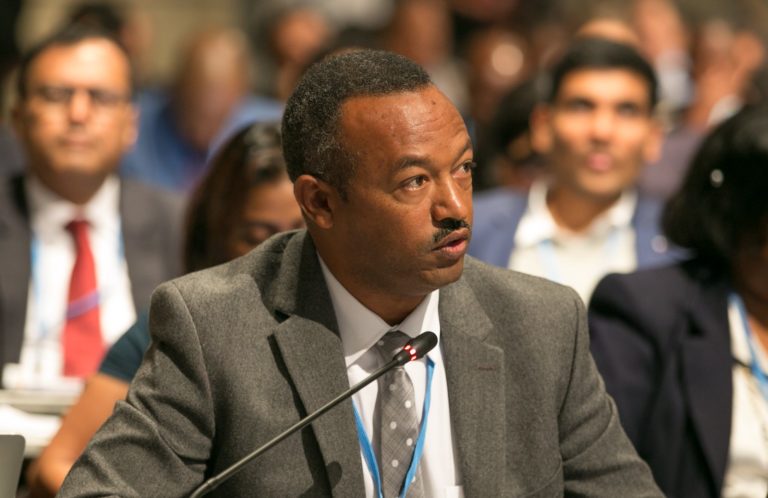
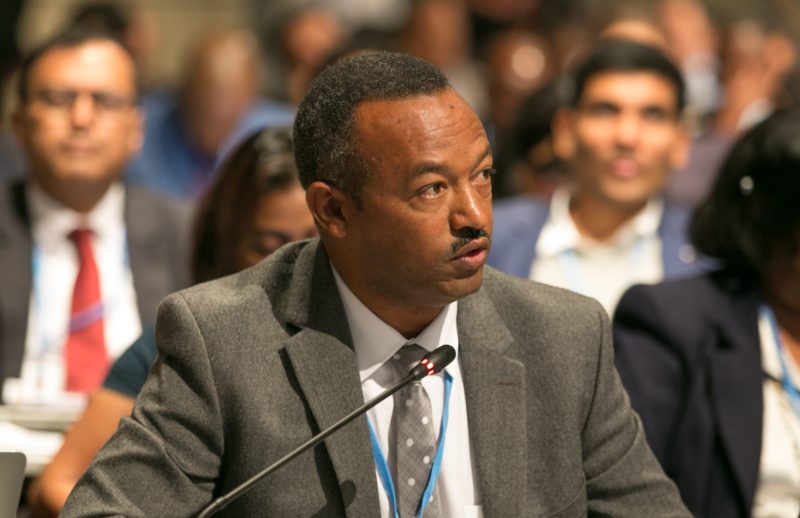
Chair of the Least Developed Countries (LDC) group, Gebru Jember Endalew
A key focus area of Canada’s G7 Presidency is working together on climate change, oceans and clean energy. Addressing climate change is also essential to effective outcomes across the other themes of investing in growth that works for everyone; preparing for jobs of the future; advancing gender equality and women’s empowerment; and building a more peaceful and secure world.
Mr. Gebru Jember Endalew, Chair of the LDC Group, said: “G7 countries need to take the lead in driving ambitious action against climate change. The Earth’s carbon budget is rapidly dwindling, and the existing pledges made by the international community do not add up to the emission reductions necessary to limit global temperature increase to 1.5 degrees and protect present and future generations. This is despite many LDCs and other developing countries committing to actions exceeding their fair share of the effort.
“While the G7 continue to benefit from economies and infrastructure built on fossil fuels, climate change is having devastating impacts across the world. The G7 needs to begin taking action consistent with their responsibility for the climate crisis and with their capability to respond. This includes fulfilling pre-2020 commitments on climate action and support, and moving forward with more ambitious nationally determined contributions that are in line with the long-term goals under the Paris Agreement and will enable the Sustainable Development Goals to be met.”
Endalew noted that climate finance remains well below the $100 billion that developed countries committed to providing annually by 2020.
He explained: “Finance is key to enabling an effective global response to climate change so that all countries have the tools to limit greenhouse gas emissions and protect their citizens from its impacts. The G7 must honour their promises to scale up the financial, technology and capacity support they provide, and must also seriously consider how they can enhance transparency, reliability and predictability of that support.
“The G7 should prioritise investing in a low carbon, climate resilient future, both domestically and abroad. This should include a commitment from the G7 to present a roadmap to phase out fossil fuel subsidies that are hindering efforts to combat climate change. The G7 should build and promote economies that support the needs of all and that do not impinge on the ability of others to live a safe and dignified life.”
The LDC Group chair reflected on the significant impact of severe weather events on economic development, food security, health and migration, saying: “The LDCs are particularly vulnerable to climate change and increasingly suffer loss and damage from climate impacts. The G7 needs to step up and work constructively to establish a concrete plan to protect people and the planet.”
Endalew also welcomed the G7’s focus on advancing gender equality and women’s empowerment, and said: “The empowerment of women, youth, indigenous peoples and local communities is a catalyst for climate action, and should be at the forefront of the international community’s response.”
Looking forward in 2018, Endalew said: “The LDC Group looks forward to constructive conversations in June at the Petersberg Climate Dialogue and the Ministerial on Climate Action. A great deal of work needs to be done in 2018 ahead of COP24, which will be the key moment to finalise the guidelines for implementing the Paris Agreement. We need to see ambitious outcomes this year, with scaled up commitments by the G7 and other countries that are not shouldering their fair share of the international climate effort, informed by the outcomes of the IPCC special report on 1.5 degrees and the Talanoa Dialogue.”
The N493 million erosion control project being undertaken by the Federal Government in Tambuwal Local Government in Sokoto State has been completed.
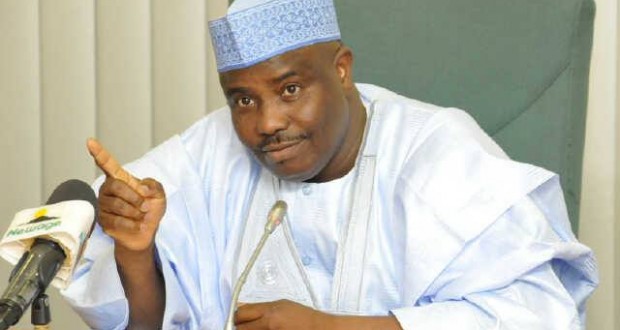
Governor Aminu Tambuwal of Sokoto State
The News Agency of Nigeria (NAN) reports that the project was flagged-off on June 4, 2017 by Minister of State for Labour and Productivity, Prof. Stephen Ocheni, who represented President Muhammadu Buhari.
The project involved road improvement at Dogon Daji, erosion control works at Bashire and works on man-made gully erosion at Jabo community.
Residents said the speed with which the work was completed was commendable, adding that it would help ease threats of erosion and flooding in the affected communities.
Some of the residents, Malam Chika Malami, Abubakar Muhammad and Aishatu Jabo, said they had suffered the problem of erosion which has devastated their farmlands, roads and residents.
They expressed the hope that, with the completion of the project, the threat has been permanently contained.
The residents said they would remain grateful to President Buhari for coming to their aid after years of complaints to previous administrations without positive response.
Managing Director of the contracting firm, Alhaji Muhammad Bello, assured that the project was executed within specifications and would pass all integrity tests.
He urged the affected communities to take ownership of the project to ensure that it served them for long.
The Senior Special Assistant to the President on Sustainable Development Goals (SDGs), Princess Adejoke Orelope-Adefulire, has called on stakeholders to support the drive to beat the unending pollution caused by inappropriate disposal of plastic materials.
Senior Special Assistant to the President on Sustainable Development Goals (SDGs), Princess Adejoke Orelope-Adefulire
Princess Orelope-Adefulire gave this charge in a statement issued in commemoration of the 2018 World Environment Day celebration with the theme: “Beat Plastic Pollution”. She added that plastic pollution has become an epidemic in the Nigerian society and indeed across the world.
The Presidential Aide aligned with reports by UN Environment, which shows that “we throw away enough plastic to circle the Earth four times every year. Much of that waste doesn’t make it into a landfill, but instead ends up in our oceans, where it’s responsible for killing one million seabirds and 100,000 marine mammals every year, and it can persist for up to 1,000 years before it fully disintegrates. For the good of the planet, it’s time to rethink how we use plastic.”
“Every year, 500 billion plastic bags are used around the world; 13 million tonnes of plastic leak into the ocean, 17 million barrels of oil are used on plastic production; 100,000 marine animals are killed by plastics; and 83% of tap water are found to contain plastic particles. This is alarming and dangerous to the environment. In particular, it’s impacting the ocean, which is the lungs of our planet, providing most of the oxygen we breathe, major source of food and medicines and a critical part of the biosphere,” adds the UN body.
Orelope-Adefulire maintained that there is need for the public to help beat plastic pollution by switching to materials that are easily reusable as alternative to plastic, adding that as the planet continues to grow relentlessly in population, a corresponding growth in waste products also occurs. She noted that though the society has an etiquette that separates waste products from the immediate living areas, the waste however creates huge environmental problems and impacts the entire planet. She therefore advocated for continuous recycling as a method to deal responsibly with the plastic problem.
The goal of recycling is to separate waste products into two major categories, Biodegradable and Non-biodegradable, with plastic constituting a larger part of the non-biodegradable waste component.
“Beat Plastic Pollution” is a call to action for everyone to come together to combat one of the great environmental challenges of our time. It also invites all to consider how they can make changes in their everyday lives to reduce the heavy burden of plastic pollution on the environment, wildlife and the health of the people.
While plastic has many valuable uses, people have become over reliant on single-use or disposable plastic – with severe environmental consequences. Around the world, one million plastic drinking bottles are purchased every minute. Every year, up to five trillion disposable plastic bags are used, with 50 per cent of the total plastic in single use.
The Ogun State Commissioner for Environment, Mr. Bolaji Oyeleye, has cautioned the residents of the state against dumping used plastic sachet and bottles into the waterways across the state, as it posed a threat to the drainage and society at large.
Ogun State Commissioner for Environment, Bolaji Oyeleye
Oyeleye, in a state made available by his media Aide, Mr. Goke Gbadamosi, stated this while joining the world to celebrate the 2018 World Environment Day with the theme “Beat Plastic Pollution.”
While stressing the need for concerted efforts towards eliminating plastic pollution in the country, Oyeleye described plastic pollution as one the great environmental challenges being faced today across the country. He however suggested of recycling of the plastic waste into another product.
He added that man’s over reliance on plastic products has resulted into severe pollution of the oceans and seas, thereby endangering marine life and posing a threat to human health.
He noted that the condition of the environment is declining due to rapid industrialisation, deforestation, global warming, pollution and changing of lifestyle, saying that there was urgent need to for sustained awareness towards addressing these challenges.
Oyeleye said the plastic pollution could be minimised by recycling used plastic products, adding that to effectively clean up and discontinue plastic production, the public must embrace alternatives, such as paper bags and recyclable bags.
In a speech, titled “Beating Plastic Pollution”, an environmental expert and don at the Federal University of Agriculture, Abeokuta, Prof. Toyin Arowolo, identified government intervention through taxes and levies on the use of plastic as a vital solution to the challenge. He added that Rwanda, China, Kenya, and several other countries had implemented policies towards reducing plastic pollution.
He then advocated segregation of waste from homes in order to reduce the volume of plastic that end up in water bodies, saying that Nigerians should also consciously find other alternatives to plastic products that they use on daily basis.
Meanwhile, the consultant to Ginger Burgeap and French Agency for Development (AFD), Karine Escande, during her presentation on the feasibility study of the Solid Waste Management Project in Abeokuta, the state capital, noted that Ogun State must improve its capacity for solid waste collection and reduce waste-to-landfill in order to have an integrated and sustainable waste management in the state.
She commended the state government’s desire to develop sustainable waste management in all its municipalities, expressing optimism that its partnership with development partners would yield positive results.