Home Blog Page 187

Tinubu has been fair to all sections of Nigeria – Idris

0

In the light of recent insinuations, half-truths and fake information being circulated, we find it expedient to make it abundantly clear that President Bola Ahmed Tinubu’s administration has been guided, at all times, by the principles of fairness, justice, and equity in the distribution of federal government projects, appointments, and opportunities across all six geopolitical zones of our country.

Contrary to the perception being pushed in some quarters, this administration has demonstrated uncommon commitment to balanced development and inclusivity since assuming office. The distribution of capital projects under President Bola Ahmed Tinubu is equitable. No region is playing a second fiddle or ignored. In addition to projects by various Ministries, Departments and Agencies, all six regions now have Regional Development Commissions to re-kickstart development efforts.
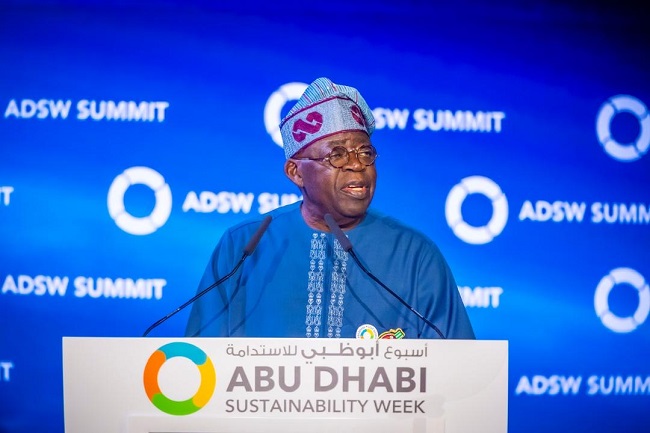
President Bola Tinubu

While the Coastal Highway courses through the South, the Badagry–Sokoto Highway, under construction, traverses majorly the North. This sense of balance runs through all the major infrastructure projects being implemented today.

Major infrastructural interventions are simultaneously ongoing across the federation—from highways and bridges to rail and power projects. The administration has secured funding for light rail projects in Kano and Kaduna states to the tune of ₦150 billion and ₦100 billion, respectively. The metroline projects in Lagos and Ogun states form part of the government’s effort to develop Nigeria’s light rail infrastructure. Collectively, these projects are expected to create over 250,000 jobs nationwide.

There is also a renewed push for the rehabilitation of the Eastern Corridor of the rail line from Port Harcourt to Maiduguri. In addition, over 1,000 primary health care centres have been rehabilitated across the country, underscoring the administration’s commitment to human capital and social infrastructure.

From verifiable data, the actual distribution of projects shows the Northwest as the biggest beneficiary:

        •       Northwest: ₦5.97 trillion (over 40% of approvals)
        •       South South: ₦2.41 trillion
        •       North Central: ₦1.13 trillion
        •       South East: ₦407 billion
        •       North East: ₦400 billion
        •       South West (excluding Lagos): ₦604 billion

Legacy Road Projects under President Tinubu:

1.    Lagos–Calabar Coastal Highway (750 km): 175 km ongoing in Lagos, Cross River, and Akwa Ibom states.
2.    Sokoto–Badagry Superhighway (1,068 km): 378 km ongoing in Kebbi and Sokoto sections.
3.    Trans-Sahara Highway (465 km): 118 km ongoing in Ebonyi State.
4.    Akwanga–Jos–Bauchi–Gombe Road (439 km): Being redesigned from flexible to rigid pavement for durability.

Out of the total length of these projects, the North accounts for 52% and the South for 48%.

Other Major Projects in the North:

        •       Sokoto–Gusau–Funtua–Zaria Road (275 km dualised, ₦824bn).
        •       Abuja–Kaduna–Kano Road (350 km dualised, ₦764bn).
        •       BUA Tax Credit Road in Jigawa, Katsina, Kano (256 km dualised).
        •       Zaria–Hunkuyi Road (156 km).
        •       Kano Northern Bypass (49 km).
        •       Kano–Maiduguri Road (100.9 km).
        •       Bama and Dikwa Roads in Borno (100 km).
        •       Damaturu–Maiduguri Road (110 km).
        •       Malando Road in Kebbi (76 km).
        •       Benue–9th Mile Road (250 km dualised, $958m).
        •       Lokoja–Okene Dualisation (86 km).
        •       Kaduna–Katsina Roads (Sections 1 and 2, ₦150bn).

Major Projects in the South:

        •       Lagos–Ibadan (8.5 km, ₦33bn).
        •       Lagos–Sagamu (12 km dualised).
        •       Oyo–Ogbomoso–Ilorin (₦146bn).
        •       Rehabilitation of Carter, Third Mainland, and Eko Bridges (₦120bn).

South East:

        •       Enugu–Onitsha Road (107 km, ₦202bn via MTN Tax Credit).
        •       Enugu–Onitsha Road (72 km, ₦150bn via CBC).
        •       Enugu–Abakaliki Road (36 km).
        •       2nd Niger Bridge Access Road (17.5 km dualised, ₦175bn).
        •       Lokpanta–Enugu Road (61 km dualised, ₦100bn).

South South:

        •       Eleme–Onne Road (30 km, ₦156bn).
        •       Eket Bypass (9.7 km dualised, ₦76bn).
        •       East–West Road Section 2 (₦186bn).
        •       Nembe–Brass Road (₦150bn).
        •       Lokoja–Benin Dualisation (₦167bn).
        •       2nd Niger Bridge Access Road in Delta (17 km dualised, ₦146bn).
        •       Bodo–Bonny Road in Rivers (35 km with 12 bridges, ₦200bn).

Beyond roads and rail, this administration has also revived the 255MW Kaduna Power Plant, advanced the AKK Gas Project, and expanded oil and gas exploration in the North with the drilling of three oil wells in the Kolmani region of Bauchi and Gombe States. Kano-Maradi rail line, inherited at 5% has received huge funding support from the government making it attain 67% within a short time.

President Tinubu is building national infrastructure, not local trophies. Lagos is rightly upgraded as Nigeria’s commercial hub, but the Northwest holds the lion’s share of approvals. This proves that all regions are receiving fair consideration.

Equity is also evident in federal appointments. President Tinubu has consistently appointed capable Nigerians from every part of the country, guided by competence and inclusivity rather than sectional considerations.

Inclusivity lies at the heart of the Renewed Hope Agenda. The establishment of five new Regional Development Commissions and the creation of the Federal Ministry of Livestock Development further illustrate the President’s determination to address Nigeria’s unique developmental needs in a manner that benefits all sections of the country.

On the whole, President Bola Ahmed Tinubu has not only kept faith with Nigerians but has proven himself to be a fair, pragmatic, and consequential reformer. His leadership is inclusive, his vision is unifying, and his commitment to equity and justice is unwavering. Nigerians can rest assured that under his watch, no part of this country will be left behind.

By Mohammed Idris, fnipr, Minister of Information and National Orientation
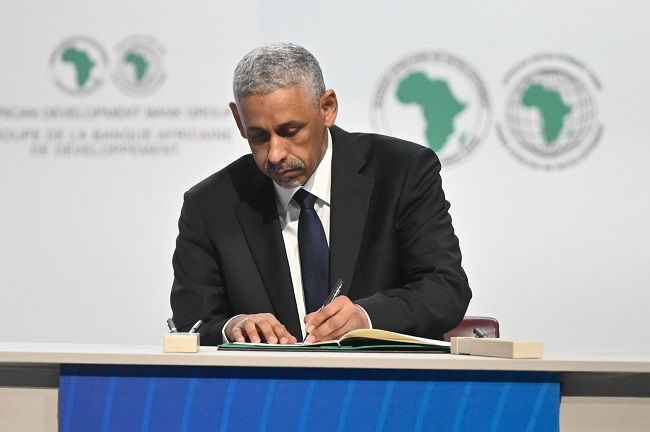
New AfDB president to prioritise reforms, partnerships, youths in 100 days

0

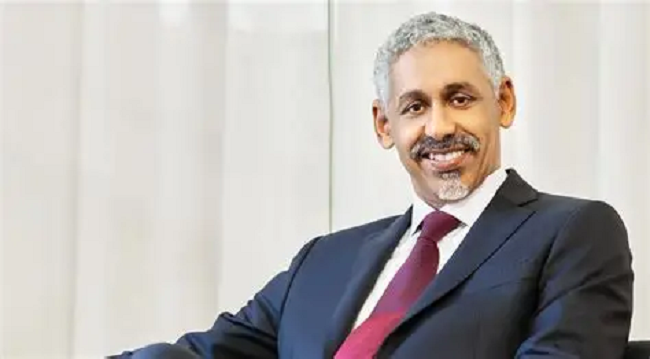
The new President of African Development Bank (AfDB), Dr Sidi Ould Tah, says he will focus on reforms, strengthening partnerships and empowering youths and women across Africa in his first 100 days in office.

He made this known in his inaugural speech on Monday, September 1, 2025, in Abidjan, pledging that the bank would move with urgency to reposition itself as a responsive institution capable of addressing Africa’s pressing development challenges.

Dr Sidi Ould Tah
President of African Development Bank (AfDB), Dr Sidi Ould Tah

He listed his four urgent priorities as: listening with intent to stakeholders, launching fast-track reform agenda, deepening partnerships and accelerating real solutions for inclusive growth.

According to him, listening to shareholders, partners, clients and staff will ensure that the bank’s agenda reflects real-world needs and ambitions.

He said that reforms would aim at boosting operational speed, sharpening execution and dismantling bureaucratic bottlenecks that often slow down delivery.

The new AfDB boss added that partnerships with African and global institutions, as well as private sector actors, would be deepened to mobilise resources at scale.

He said “empowering youths and women is central. It requires finance, mentorship and technology. By supporting our talents, we will build a bright future.”

The AfDB president further pledged to accelerate practical solutions to expand access to finance, create jobs and unlock Africa’s industrial and financial potential.

He assured that the Bank under his leadership would bridge divides between regions, public and private actors, and between ambition and execution.

He said “we will be the bank that bridges divides between regions, between ambitions and execution, between public and private, between urgency and bureaucracy.

“The time for delivery has begun. Together, let us transform Africa’s promise into prosperity.”

According to Tah, Africa is young, ambitious and restless with potential.

He noted that “this is the energy that should be harnessed as the engine of our transformation. It is with this conviction that I approach my new responsibilities.

“I intend to begin this journey anchored in humility, with a spirit of consultation and a commitment to pragmatism.

“The path ahead requires not only vision but also credibility that is built through early signals that the Bank is attentive, responsive and capable of setting priorities that matter.”

Born on Dec. 31, 1964, in Mederdra, Mauritania, the new AfDP president holds a Ph.D. in Economics from University of Nice-Sophia-Antipolis and a Diplôme d’Études Approfondies (DEA) in Economics from the University of Paris VII.

He also has a post-graduate degree in Economics and a Bachelor’s degree in Economics from the University of Nouakchott.

Sidi Ould Tah was elected as the ninth President of the African Development Bank Group
in May 2025 after securing 76.18 per cent of the total votes and 72.37 per cent of regional votes in the third round of voting, defeating four other candidates.

He succeeds Akinwumi Adesina.

Lucy Ogalue

Reject food colonialism in any guise – Nnimmo Bassey

0

Keynote Address by Nnimmo Bassey, Executive Director of HOMEF, at the National Symposium on GMOs held on Monday, September 1, 2025

According to a popular adage, “when solving a problem, dig at the roots instead of just hacking at the leaves”. The challenge of food insecurity in Nigeria/Africa requires a deliberate pause and critical thinking about the factors that have created it and a concerted effort at addressing them. Overlooking the root causes of food insecurity (including farmer-herder clashes, banditry), poor support for local farmers, poverty, inequality, inflation, climate change and others shows the lack of readiness to solve the problem.

Nnimmo Bassey
Nnimmo Bassey

The gates for the entry of GMOs into Nigeria were flung open in 2015 with the enactment of the National Biosafety Management Agency (NBMA) Act. This act was further expanded in 2019 to allow for gene editing and synthetic biology. Sadly, the Biosafety Act was preceded by the creation of the National Biotechnology Development Agency (NABDA), an agency created to promote modern biotechnology. It was later christened National Biotechnology Research and Development Agency (NBRDA).

To be clear, this agency was established at a time there was no biosafety law in the country. The cart was clearly put before the horse, and this seriously injured any effort to regulate the sector and ensure biosafety in the country. This is particularly so because the promotion agency has a deep embryonic connection with the agency that ought to regulate it. This warped governmental approach has made it impossible for policy makers to see biosafety as an existential issue.

These two agencies of government cannot be excused for seeing themselves as infallible and even as being the government itself. They may be a part of government, but they are not the government. They falsely see GMOs as a one size fits all solution, virtually forget other areas of modern biotechnology and set their eyes only on gutting our agricultural and food  systems.

Solutions such as the genetic engineering of plants/animals do not address these root causes, and we should be worried that there is such an adamant push to entrench them in our food systems by the producers and their allies in government. There is obviously an open conspiracy to counter our best interests while locking in colonial controls over our agricultural and food systems.

GMOs are promoted in Nigeria on the premise of addressing food insecurity. However, after almost three decades since their introduction in the world, they have not eradicated or reduced hunger. Rather, they lock in the system that promotes hunger by degrading soils and poor harvests (case of Nigerian cotton farmers in 2024), reducing biodiversity, disregarding the knowledge of local food producers, and concentrating power in the hands of a few market players. 

GMOs ride on the wave of global fetishisation of technology, by which technology is considered a silver bullet. Besides the generally poor regulatory frameworks, GMOs directly impact on human as well as socio-economic rights of our peoples. The complex threats, including environmental degradation and loss of our food heritage, make it expedient that we examine the push for GMOs on the continent more critically. We must debunk the notion that resisting GMOs is akin to opposing science or technology. Rejecting GMOs is also not a matter of fear, except the fear of being colonized with its attendant exploitation and humiliation.

It is important to stress that GMOs represent a paradigm shift in agriculture; they are not just an option or solution. We must think beyond the mythical temporary relief that is imagined or promised and consider what long term impacts they portend. GMOs are plants, animals, or microorganisms that have undergone fundamental changes at the cellular level and can no longer be considered natural.

Most of them are engineered to withstand dangerous herbicides which kill other organisms except the engineered ones. Other crops are genetically engineered to act as pesticides aimed ostensibly to kill identified pests that would otherwise attack the crop or seeds. Examples include Bt Cotton and Bt Cowpea or beans approved for commercial planting and consumption in Nigeria.

GMOs represent the subversion of Africa’s food systems, which was intentionally constructed through the colonisation of thought – a phenomenon concretised through persistent coloniality of knowledge and power. You may wonder why anyone would subvert another’s food system. The reasons for this are many. The colonizers think and act in their own interests. This subversion covers every area of production and ensures that labour is not invested for meeting local needs while expanding and consolidating labour to meet the needs of the colonizers.

By emphasising a cash economy, for instance, farmers are forced to neglect their own nutritional needs, and are derided as subsistence farmers, and are made to offer their labour in exchange for meager wages. When the exploiting colonisers are kind, they turn the farmers into mere out growers who own nothing, are given seeds to cultivate and are thereafter given a fraction of the harvests. The colonial powers scored double on this count by introducing slavish plantation agriculture which grabs lands, displaces communities and offers locals menial jobs as farm hands or guards. 

Colonial agriculture thrived not only by producing crops for export, but it also benefited from altering the appetites of the colonised. These changes did not happen only through advertisements; the indigenous foods were denigrated as uncivilised and sometimes simply forgotten due to a chronic absence of the crops or ingredients for preparing the foods. Today, the erosion of varieties is exacerbated by many related factors, including genetic manipulations, hybridisation of crop varieties, prevalence of junk foods and hostile seed laws.

Our farmers saved seeds are falsely deemed inefficient, whereas these seeds are indigenous and have the natural ability to adapt and thrive in prevailing circumstances in which they are grown. It must never be forgotten that our farmers have selected and preserved seeds, crops, and animal varieties over the centuries. They have kept a stock of varieties that both provide food and meet our medicinal, cultural and other needs. They kept the norms that preserved biodiversity. They practiced rotational farming, mixed cropping, strategic pastoralism, and seasonal fishing. They understood the rhythms of nature and maintained the natural equilibrium by being respectful of the Earth.

These practices are being threatened by the genetic modification of seeds, particularly those that make up our staple foods. Core concerns about the control of seeds are being ignored by many, but these should be confronted head-on, and now is the time to do so. Our farmers will be forced to depend on corporate seed entities for seeds, as the productivity of GM seeds typically degrades after the first planting. Over time, we risk losing our genetic diversity and control of our seeds to these foreign entities who are merely after profits, no matter the cost to human life or the environment.

Responsible use of technology in agriculture requires that we keep careful watch on their effect on human and environmental health. We also need to consider the fact that technologies that promote monoculture and erode our biodiversity are not sustain-able and must be avoided in a world that is almost at the brink of ecological collapse. We do not need GMOs to be able to produce enough food for our population.

GMOs have not led to an increase of food production since their introduction. In 2025, it was reported that Tanzania achieved food sufficiency by 128% without GMOs and by increasing support for their local farmers and by promoting organic food production. Recent studies have revealed that more than 40% of food produced in Nigeria goes to waste due to lack of proper processing and storage facilities. This needs to be addressed.

We must decolonise our agricultural system. The ways to achieve this include the preservation of crop and animal varieties, rebuilding our food systems, thereby, recovering our culture. A decolonized agriculture invests in support systems for farmers, including by providing extension services and providing/upgrading rural infrastructure. It also means preserving local varieties, ensuring that farmers have access to land and, funding research institutions to build a knowledge base on healthy soils and resilient indigenous crops.

It would also mean putting farmers on the driving seat of agricultural policy, elevating and prioritizing the precautionary principle in biosafety issues, and outlawing harmful herbicides and pesticides. It would again mean placing a swift moratorium on all types of agricultural modern biotechnology as this is a key means of eroding species varieties besides threatening outright extinctions.

Nigeria is at a critical point where we must decide on the way forward for food sovereignty. This is not just another symposium. It is a space where we must exert our rights, and demand for the liberation of our food system.

From Sahel to South: How climate change, culture, commerce shape new paths for migrant herders in Nigeria

0

In 2020, Ahmed Jibril left his home in Niger Republic and crossed into Nigeria with a herd of over 60 cattle. Like many other pastoralists from the Sahel, he was driven by a familiar challenge: the worsening impact of desertification, insufficient rainfall, and dwindling pasturelands. But, unlike many stories marred by farmer-herder violence, Jibril’s journey took a turn toward peaceful coexistence and mutual benefit.

Jibril’s first stop was Bokkos Local Government Area of Plateau State in Nigeria’s North Central region. However, rising tensions and violent clashes between herders and farmers forced him to continue his migration further south. Eventually, he found a welcoming host community at Nkaleke Echara, a rural community in Ebonyi State, South-East, Nigeria.

At Nkaleke Echara, Jibril has built a symbiotic relationship with his hosts. While his cattle provide the community with a steady supply of affordable beef and fresh milk, the farmers gain organic manure from cattle dung, which enriches their soil and improves harvests.

“We used to come to Nigeria only after the harvest and return before planting season,” Jibril recalled, describing a rhythm of migration now broken by climate change and conflict. “But things have changed. We move farther and stay longer.”

What Numbers Say about Herders Movement

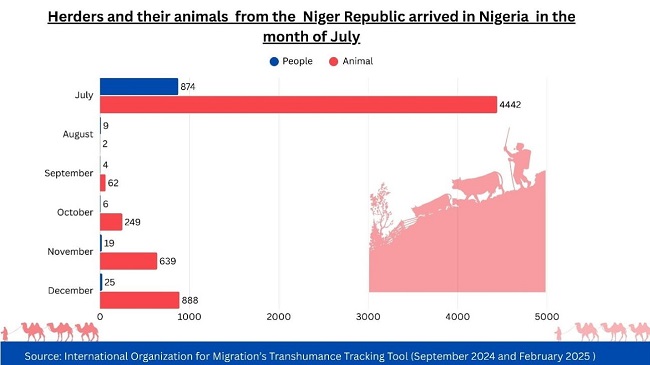
Jibril’s journey mirrors a larger migration movement monitored by the International Organisation for Migration’s Transhumance Tracking Tool (September 2024 and February 2025 reports). The reports paint a broader picture of this movement across borders. Between July and December 2024 alone, 937 herders and 6,282 animals migrated from Niger Republic to Nigeria. The highest volume was recorded in July, accounting for 93% of the human and 71% of the animal movements during that period.

While most herders and their livestock are headed to northern Nigerian states, with Jigawa State topping the list, a small but growing number, like Jibril, continue their journey southward in search of more sustainable grazing land and safer environments.

Herders
Herders and their animals from the Niger Republic arrived in Nigeria in month of July

Stories of Symbiosis

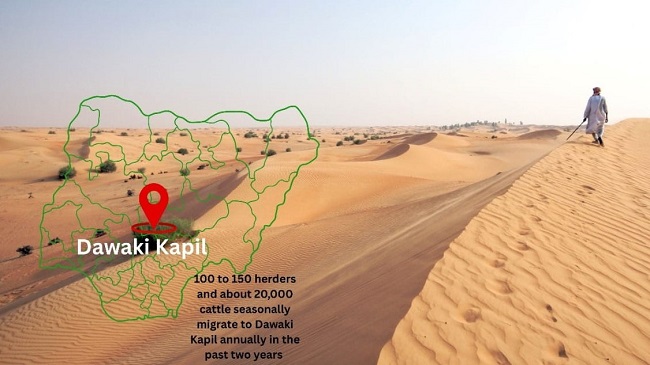
Despite the common narrative of farmer-herder conflict, there are several communities where cooperation flourishes. One such example is Dawaki Kapil in Kanke Local Government Area, Plateau State, where a mutually beneficial relationship has been existing between the natives and the migrant herders for decades.

Each year, especially after the harvest season, the community welcomes migrant herders who are allowed to graze their herds in fallow land in exchange for manure. The number of herders and their cattle that go to Kapil on seasonal migration varies depending on the grazing condition. However, in the past two years, the community has been hosting 100 to 150 herders and about 20,000 cattle annually.

“Their animals feed on our dry stalks and crop leftovers, while their dung replenishes soil nutrients, helping us prepare for a more productive next season,” said Mr. Lucky Shekara Kapil, a youth leader of Kapil village.

The arrangement goes beyond soil fertility. Some farmers partner with herders on cross-breeding programmes, improving the quality of local livestock.

At Kapil, some farmers lobby migrant herders to graze on their fallow lands, marking a significant shift from the hostility seen elsewhere.

Dawaki
100 to 150 herders and about 20,000 cattle seasonally migrate to Dawaki Kapil in the past two years

Economic, Environmental and Health Incentives

In the South-East, where Jibril currently grazes his herds, herders have become a permanent presence.  Alhaji Bello Maigari, Leader of Nomadic Fulani in Anambra State, estimates there are over one million herders and their animals in the region. While exact data on international migrants is unclear, he notes that many herders have settled in Southern Nigeria for decades, drawn by not just greener pastures but also health and market advantages.

According to Maigari, one major reason for the southward migration is the reduced incidence of Contagious Bovine Pleuropneumonia (CBPP), a deadly livestock disease common in the Sahel.

“The South is safer for our cattle. They are healthier here,” he said.

But health is just one factor. Economics plays a bigger role. In the South-East, especially, cattle have become a cultural symbol of status. During burials, weddings, child-naming ceremonies, and birthdays, showcasing live cattle is seen as a marker of wealth and prestige. This consistent demand creates a strong market for herders, who can earn significantly more in the South than in the North, and perhaps in other Sahel regions.

A New Model for Coexistence?

While the risks of violent farmer-herder clashes remain real and urgent, the experiences of Jibril in Nkaleke Echara and herders in Dawaki Kapil offer a glimpse of what’s possible when migration is managed peacefully and relationships are built on mutual benefit.

As climate change accelerates and pastoral migration becomes increasingly inevitable, these models of coexistence may offer valuable lessons, not just for Nigeria, but for the broader Sahel region grappling with similar challenges.

“If there is understanding, both herders and the farmers can live peacefully and share our mutual benefits,” Jubril said in reflection.

By Inya Agha Egwu and Michael Simire

New ERA leadership to drive Africa’s environmental justice agenda

Environmental Rights Africa (ERA), a Pan-African coalition of over 55 civil society organisations across the continent, has endorsed its newly elected Steering Committee (SC) leadership, cementing a governance structure to advance a continent-wide environmental rights agreement and protect defenders at the front lines of environmental crisis.

The endorsement took place at ERA’s General Membership Meeting on August 26, 2025, following the inaugural SC meeting on August 21, where Ahmad Abdallah of the Egyptian Commission for Rights and Freedoms was elected Chairperson. Saran Touré of Guinea’s Plaidoyer Recherche et Renforcement de Capacités des ONG was chosen as Co-Chairperson, ensuring gender, youth and linguistic balance in the coalition’s leadership.

Environmental Rights Africa
Members of Environmental Rights Africa at a recent meeting in Monrovia, Liberia

The Steering Committee reflects ERA’s regional and thematic diversity. Regional focal points include Saran Touré (Guinea – West Africa), Walda Keza Shaka (Uganda – East Africa), Olivier Ndoole (DRC – Central Africa), Thuli Makama (Eswatini – Southern Africa), and Abdallah (Egypt – North Africa).

Working Group leaders are Paul Mulindwa (Outreach & Advocacy – CIVICUS), Emily Kinama (Case Studies – Katiba Institute, Kenya), Lucien Limacher (Defenders Emergency – Natural Justice, South Africa), Fiona Iliff (Technical Drafting – ABA, Zimbabwe), Wanjira Mathai (MD, Africa & Global Partnerships, WRI) and Philip Jakpor (Communications – Renevlyn Development Initiative, Nigeria). Francis Colee (Green Advocates, Liberia) serves as SC Secretary, while Alfred Brownell (USA/Liberia) is the Lead Campaigner of the ERA movement.

In his acceptance remarks, Chairman Ahmad Abdallah pledged to place communities and defenders at the heart of ERA’s mission:

“I am deeply honoured and humbled to serve as Chair of ERA, not just with gratitude, but with a profound sense of duty to our continent and our communities. Our struggle is not abstract — it is the struggle of farmers losing their lives to droughts, of coastal communities watching the sea rise, of indigenous people defending their sacred lands.

It is the struggle of courageous defenders who face violence, intimidation, and death for speaking truth to power. Our mission is to ensure these voices are not silenced but amplified – placed at the very centre of Africa’s climate agenda and environmental rights. Together, we will work for a binding African agreement to empower defenders, and to write a new chapter where environmental rights are not just aspirations, but realities.”

His words captured the essence of ERA’s vision – a movement rooted not in abstract ideals, but in people, communities, and lives at stake.

With support from two international observers – Joseph Burke and Elizabeth Moses from ALLIED, the Steering Committee will provide strategic direction, oversee ERA’s five-year plan, mobilise resources, and ensure good governance. It will also spearhead ERA’s push for a legally binding African agreement recognising the right to a healthy environment.

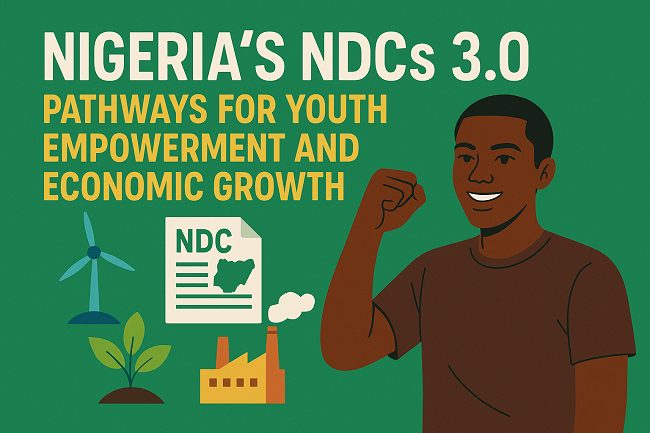
Nigeria’s NDC 3.0: Pathways for youth empowerment, economic growth

0

Nigeria’s Nationally Determined Contributions (NDCs) under the Paris Agreement represent the country’s blueprint for climate action, economic resilience, and social transformation. The latest draft of NDC 3.0 signals an ambitious shift – linking emission reduction targets with inclusive development priorities, including youth empowerment, job creation, and economic diversification. With over 70% of Nigeria’s population under 35, youth inclusion in climate policy is not just desirable but essential for success.

Nigeria’s NDC Commitments and Economic Implications

The NDC 3.0 outlines a dual strategy of mitigation and adaptation across key sectors such as energy, agriculture, transport, industry, and waste management. On the mitigation side, the government commits to reducing greenhouse gas emissions by scaling renewable energy, promoting clean cooking solutions, and curbing methane leaks from oil and gas. Adaptation priorities include climate-smart agriculture, sustainable water management, and resilient infrastructure development.

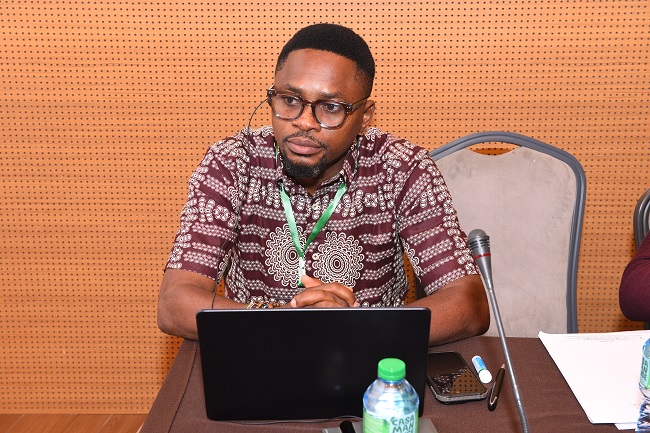
Olumide Idowu
Olumide Idowu, Executive Director, ICCDI Africa

Economically, these commitments serve as enablers of growth. The energy transition agenda, for instance, supports the development of Nigeria’s renewable energy industry – solar, wind, and hydro – unlocking opportunities for private sector investment, local manufacturing, and green jobs. Similarly, methane reduction and industrial energy efficiency can lower operational costs while opening avenues for carbon credit trading.

Moreover, Nigeria’s NDCs recognise the need for climate finance mobilisation through international partnerships, carbon markets, and domestic resource allocation. This financial inflow has the potential to bridge the infrastructure gap, stimulate innovation, and reduce vulnerability to climate shocks that often derail economic growth.

Youth as Key Drivers of NDC Implementation

Youth inclusion is central to NDC 3.0, which emphasizes capacity building, innovation, and entrepreneurship. Climate action requires dynamic human capital, and Nigeria’s youth are well-positioned to lead in several areas:

  1. Green Jobs and Skills Development

The NDC framework projects significant job creation in renewable energy deployment, waste recycling, sustainable agriculture, and environmental services. By equipping young Nigerians with technical skills in solar installation, biogas production, climate data analysis, and carbon market mechanisms, the government ensures they become frontline actors in the green economy.

  1. Youth-led Innovation and Entrepreneurship

Nigeria’s start-up ecosystem, already vibrant in fintech and digital solutions, can pivot towards climate technology. Youth innovators are encouraged to design low-cost clean energy solutions, develop apps for precision agriculture, and provide community-based adaptation services. Through targeted incentives, incubation hubs, and concessional financing, the NDCs enable young people to transform ideas into viable enterprises.

  1. Civic Participation and Policy Advocacy

The NDC 3.0 framework integrates youth voices in decision-making, particularly through university programs, grassroots consultations, and youth-led civil society platforms. This ensures that young Nigerians are not passive beneficiaries but active co-architects of national climate and development policy.

Synergies Between Climate Action and Economic Growth

The intersection of youth empowerment and NDC implementation creates a virtuous cycle for Nigeria’s economy:

  • Agriculture Transformation: By promoting climate-smart agriculture, the NDCs support food security while enabling young farmers to access modern tools, improved seeds, and digital advisory services. This not only addresses unemployment but also drives rural economic development.
  • Sustainable Infrastructure: Youth participation in green building, resilient transport, and circular economy initiatives ensures that infrastructure development is future-proof, generating long-term savings and investment opportunities.
  • Export Competitiveness: By aligning with global decarbonisation pathways, Nigeria strengthens its eligibility for international markets and climate finance, attracting investment and opening new trade opportunities that directly benefit the economy.

Conclusion

Nigeria’s NDC 3.0 is more than a climate document – it is a socio-economic transformation agenda. Embedding youth empowerment at the heart of its strategies, it positions Nigeria to simultaneously tackle the climate crisis, address unemployment, and unlock sustainable growth. The success of these commitments, however, depends on consistent political will, transparent implementation, and robust financing mechanisms. If these are secured, Nigerian youth will not only be beneficiaries but also leaders in steering the country toward a resilient, low-carbon, and prosperous future.

By Olumide Idowu, Executive Director, ICCDI Africa

Unreliable power: 40% of Nigerian industries have exited national grid – ECN, UNIDO

0

Industrial Energy Consumption Survey developed by Energy Commission of Nigeria (ECN), in partnership with United Nations Industrial Development Organisation (UNIDO), has revealed that over 40 percent of industries operating in some selected states in Nigeria have exited from national grid due to unreliable power supply.

Okon Ekpenyong, Industrial Energy Efficiency Consultant to the ECN, stated this in Abuja while presenting UNIDO–GEE IEE Policy and Regulations Project: Key Achievements and Lessons Learnt at a One-Day National Sensitisation Workshop on Industrial Energy Efficiency and Best Practices in Nigeria, organised by the ECN through the support of UNIDO.

ECN - UNIDO
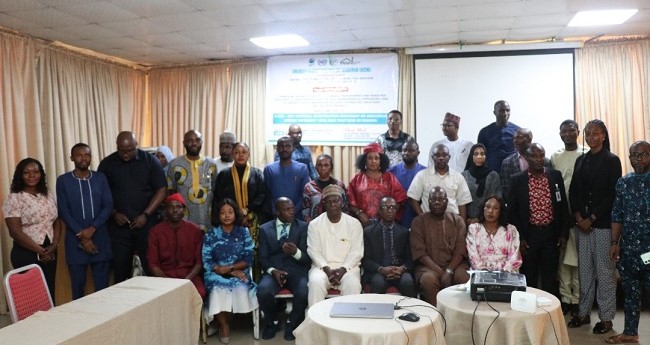
A cross section of stakeholders during the meeting in Abuja

He explained that the Working Group conducted survey using questionnaire in Lagos, Ogun, Abuja, Kaduna, Kano, Port Harcourt, Warri and Onitsha.

Unveiling the findings of the survey, Ekpenyong said there was 300 per cent increase in electricity tariffs, as unit price moved from 69.75 in 2023 to 209.5 in 2024.

He noted that there was over-dependence on diesel and Compressed Natural Gas (CNG) by these industries, adding that about 76 percent of these industries were on estimated electricity billing.

Commenting further on the findings of the survey, he said about 76 percent of the industries surveyed were not aware of ISO 50001 Energy Management Standards, as 90 percent of them had no energy policy, aimed at minimising energy wastages

According to him, “Over 45 percent were ignorant of simple House-Keeping Energy Saving measures.”

He identified too many policymakers without synergy leading to policy inconsistency; difficulties in getting industries to embrace Industrial Energy Efficiency and ISO 50001 due to their limited knowledge of its benefits as well as limited database of existing and operational industries for mapping as some of the challenges militating against IEE.

In his welcome address, Dr Mustapha Abdullahi, Director General/Chief Executive Officer of Energy Commission of Nigeria, said the Workshop was part of the implementation of a Global Environment Facility (GEF)’s project entitled, “Improving Nigeria’s Industrial Energy Performance and Resource Efficient Cleaner Production through Programmatic Approaches and the Promotion of Innovation in Clean Technology Solutions (NIG IEE/RECP Project)” anchored by UNIDO.

Abdullahi explained that the project was aimed at accelerating the adoption of IEE and improving enterprise environmental performance through Resource Efficiency and Cleaner Production (RECP) best practices in Nigeria.

According to him, “Under this project, the Energy Commission of Nigeria is implementing the Industrial Energy Efficiency (IEE) component focused on “strengthening National Industrial Energy Efficiency (IEE) Policies and Regulatory Frameworks towards the adoption of UNIDO’s Energy Management Systems Standards (EnMS/ESO/ISO 50001) in Nigeria”.

He pointed out that in an era of high energy pricing and subsidy removal, there was need for Nigerians to avoid energy wastage as much as possible.

The Director General of ECN further underscored the need for energy efficiency and conservation best practices, explaining that: “Energy efficiency is a way of managing energy consumption through efficient end-use technologies and practices that minimise wastes; resulting in using less energy to provide the same products or services.

This, he said, would ultimately reduce energy intensity of the nation’s economic sectors.

He called on the policy makers, both in public and private sectors of the economy, who are concerned with the effects of poor energy access in the country, to develop knowledge-based policy and legislative framework to reduce these negative impacts.

“The most obvious area for action is to improve the reliability of the energy supply through minimising energy wastages through the adoption of energy efficiency and conservation best practices,” he said.

In his remarks, Dr. Reuben Bamidele, National Programme Officer, UNIDO, commended ECN for organising the event.

As the project winds down, Bamidele stated that the ECN has been irrevocably committed to completing its own portion of the project.

He restated that many industries in Nigeria have identified inadequate power supply as one of the greatest challenges confronting them, adding that the cost of energy accounts for 40 per cent of production in Nigeria.

Experts urge Nigerians to track climate spending to curb vulnerability

Experts have urged Nigerians to actively track government spending on climate projects, warning that poor awareness worsens the nation’s vulnerability to climate change.

They made the call during a virtual discussion on “Climate Change Financing and Nigeria’s Increasing Debt Profile” held on Saturday, August 30, 2025, in Abuja.

Climate finance
Climate finance

The session was organised by Connected Development (CODE), a civil society organisation.

Mr. Akintunde Babatunde, Executive Director of the Centre for Journalism Innovation and Development (CJID), noted that most Nigerians remained detached from governance and rarely demanded accountability until crises directly affected them.

He emphasised the importance of making climate change issues relatable to people’s daily lives, stressing that only then would citizens be motivated to hold government accountable for climate financing.

“People need to know that when floods wash away farms, when herders migrate due to desertification, or when unusual rainfall causes food shortages, these are direct consequences of climate change,” he said.

Babatunde urged civil society organisations and the media to simplify climate conversations, linking them to issues like food security, fuel scarcity, and community conflict.

According to him, this approach will motivate citizens to ask questions and demand accountability in climate finance.

He concluded that building a culture of citizen engagement and awareness was key to ensuring transparency “in how government mobilises and spends funds for climate action.”

The Regional Programme Manager, GreenFaith Africa, Dr Pius Oko, said faith-based organisations must play a stronger role in mobilising climate action and ensuring fair access to climate finance.

According to him, faith communities are often the first responders when disasters such as floods occur, as victims usually turn to churches and mosques for shelter.

He noted that “this unique position gives faith leaders a moral responsibility to influence policy and hold governments accountable.

“Faith traditions remind us that the earth is sacred and entrusted to humanity as a divine gift, not a resource to be endlessly exploited.

“No extraction without justice. If projects displace communities, cause hunger or poverty, then faith leaders must speak truth to power.”

He also expressed concern that most climate finance reaching Africa came in the form of loans, further straining economies already burdened with rising debt servicing.

He urged international partners to prioritise grants—particularly for climate adaptation—arguing that funding must be transparent, people-centered and locally owned.

He therefore recommended that no extraction of fossil should be carried out without consent of the communities.

Oko cited Lagos State’s Climate Adaptation and Resilience Plan, which piloted climate spending tracking.

He called for more states to adopt similar accountability measures to ensure funds directly benefited vulnerable communities.

On her part, Mrs. Alice Adebayo, Research Analyst, Natural Resource and Climate Governance, BudgiT Foundation, noted that public involvement was crucial in ensuring accountability and effective use of funds.

She said citizens must understand how debt could be utilised to support climate initiatives, especially in developing countries facing rising environmental challenges.

Adebayo quoting  the Managing Director of the Rural Electrification Agency (REA), said efforts were ongoing to bridge the gap between climate finance and debt servicing.

“He explained that while most international funding is directed towards mitigation and adaptation projects, a significant share goes into mitigation, where the REA is playing a key role.

“He disclosed that the agency is setting up an asset management company to help de-risk climate-related projects, thereby making them more attractive to investors and sustainable in the long term.”

Adebayo therefore urged  both citizens and civil society organisations (CSOs) to actively engage in budget discussions and climate finance debates.

“Everyone should get involved,  broader participation will strengthen transparency and ensure that funds truly address climate challenges,” she said.

According to CODE Chief Executive, Hamzat Lawal, citizens should scrutinise how government spends  loans and grants meant for climate change mitigation.

Studies by CODE show Nigeria has received over $1.4 billion in climate-related loans and grants, further adding to its debt burden.

By Perpetua Onuegbu

Morocco tests floating solar panels to curb dam water loss amid severe drought

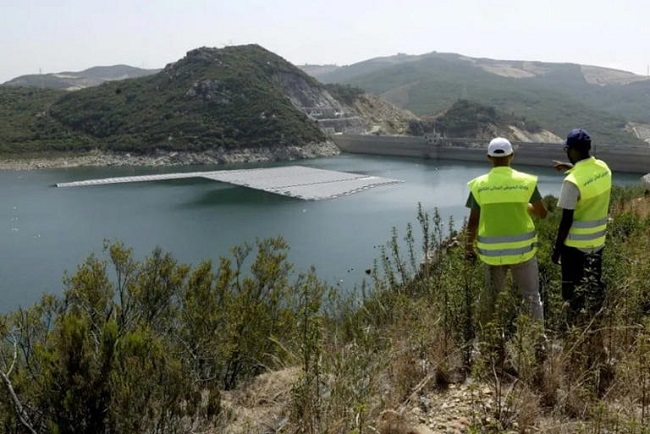
Morocco is testing floating solar panels on the Tangier Med dam in an effort to curb evaporation and generate electricity, as the country grapples with its worst drought in four decades.

The pilot project, launched in late 2024, aims to reduce water loss from evaporation, which intensifies between April and September with rising temperatures, while supplying clean energy to the nearby Tangier Med port.

Morocco
Morocco is testing floating solar panels

For seven consecutive years, Morocco has faced record-low rainfall. Reservoir levels have dropped to about 35% this summer, according to the Ministry of Equipment and Water. Between fall 2022 and summer 2023, average temperatures rose 1.8 degrees Celsius above normal, leading to the evaporation of nearly 1.5 million cubic meters of dam water daily, the equivalent of more than 600 Olympic swimming pools.

At Tangier Med, evaporation ranges between 3,000 and 7,000 cubic meters per day in the summer, said Yassine Wahbi, head of water resources planning in the Loukkos basin. The project is expected to lower that by about 30%, saving some 1.2 million cubic meters of water annually, enough to meet 1% of Tangier’s yearly demand.

When completed, more than 22,000 panels will float across 10 hectares of the reservoir, anchored to withstand shifting water levels and winds. The system will produce up to 13 megawatts of electricity for the port. Trees will also be planted along the dam’s banks to reduce wind-driven evaporation.

Climate expert Mohamed Said Karrouk called the initiative “pioneering,” but cautioned that floating panels cannot cover Morocco’s vast dams and may be affected by falling water levels. He urged greater investment in transferring surplus water from northern basins less exposed to drought to central and southern regions.

Morocco currently operates a 67-kilometer waterway from the Sebou basin to Rabat and plans to expand such projects. The country is also conducting feasibility studies for two additional floating solar sites near Marrakech and in the north.

Globally, France, Indonesia and Thailand are experimenting with floating solar, while China operates the world’s largest installations. Still, Morocco sees desalination as its main long-term solution, with plans to scale up annual output from 320 million cubic meters today to 1.7 billion cubic meters by 2030.

Sidi Ould Tah takes office as AfDB President

0

On Monday, September 1, 2025, Sidi Ould Tah will officially take office as President of the African Development Bank (AfDB), succeeding Akinwumi Adesina. Elected on May 29, 2025, with 76.18% of the vote, Sidi Ould Tah thus becomes the first Mauritanian to hold this strategic position for the continent’s economic development.

Observers believe that Sidi Ould Tah’s victory reflects the success of Mauritanian diplomacy and the strong mobilisation of African states in his favour.

Sidi Ould Tah
Sidi Ould Tah

Several diplomatic levers contributed to the strength of his candidacy: the rotating presidency of the African Union held in 2024 by Mohamed Ould Ghazouani, the mobilisation of regional and international support, and the influence of Arab League countries – thanks to the networks built by Sidi Ould Tah during his tenure at BADEA (Arab Bank for Economic Development in Africa), which he led from 2015 to 2025. Under his leadership, BADEA improved its credit ratings and strengthened its impact on Africa’s economic development

One of Sidi Ould Tah’s first challenges will be mobilising new sources of financing for the AfDB, particularly following the withdrawal of $555 million in U.S. aid from the African Development Fund, dedicated to the continent’s most vulnerable countries.

His extensive experience and international network are seen as key assets to strengthen the Bank’s role in development financing, structural transformation, and the promotion of Africa’s economic sovereignty.

The new AfDB President has pledged to serve the continent with humility and a deep sense of duty.

Tah said this in his acceptance speech delivered before African finance ministers, governors of the Bank, and dignitaries at the AfDB Annual Meetings in Abidjan, Côte d’Ivoire.

He expressed profound gratitude to African nations for the confidence reposed in him.

“It is with great humility and a sense of responsibility that I speak to you at this special moment.

“I would like to thank Africa for the trust it has placed in me. I fully appreciate the responsibility and duty that come with it,” he said.

Tah paid special tribute to his home country, Mauritania, and President Mohamed El-Ghazaouani, whose strong support and diplomatic outreach were instrumental in securing his election.

“I thank my country and President El-Ghazaouani, who supported my candidacy and made tireless efforts to ensure the success we have just witnessed,” he said.

The new AfDB president also acknowledged the unwavering solidarity shown by Africans across the continent and extended heartfelt appreciation to his campaign team for their commitment throughout the election process.

“I would like to make a special mention of my team, who did a remarkable job from beginning to end. I express my deepest gratitude to them,” he said.

While he recognised the many individuals and groups who supported his candidacy, Tah emphasised that the time for celebration was over and called for immediate action.

“Now, let us go to work! I am ready,” he said.

Tah succeeds Dr Akinwumi Adesina of Nigeria.

Adesina had served two successful terms and was widely praised for expanding the Bank’s capital base and amplifying its development impact across the continent.

Experts say Tah’s tenure begins at a time when the continent was grappling with multiple economic challenges, including climate shocks, debt distress, and the urgent need for sustainable infrastructure financing.

As he steps into this pivotal role, expectations are high that Tah will continue to strengthen the AfDB’s role as a cornerstone institution for Africa’s development and integration.

The African Development Bank’s past heads since its inception in 1964 are: 

  1. Mamoun Beheiry (Sudan), 1964-1970 
  2. Abdelwahab Labidi (Tunisia), 1970-1976
  3. Kwame Donkor Fordwor (Ghana), 1976-1980 
  4. Willa Mung’Omba (Zambia), 1980-1985 
  5. Babacar N’diaye (Senegal), 1985-1995 
  6. Omar Kabbaj (Morocco), 1995-2005 
  7. Donald Kaberuka (Rwanda), 2005-2015. 
  8. Dr. Akinwumi Adesina (Nigeria), 2015-2025.