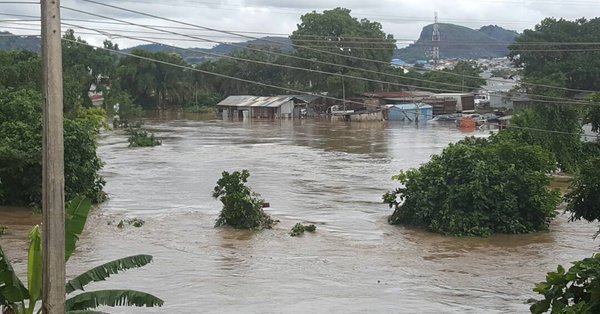
Suleja Local Government Area of Niger State says it spends N13.5 million monthly on waste disposal to prevent flooding in the area.
Flooding in Suleja
Alhaji Abdullahi Maje, Chairman of the council, disclosed this in an interview with the News Agency of Nigeria (NAN) in Minna, the state capital, on Thursday, July 5, 2018.
He warned residents to desist from indiscriminate dumping of refuse in drains and waterways so as to overcome the perennial menace of flooding.
“It has become necessary for all residents to desist from the old habit of dumping refuse on waterways and drains to avoid flooding, especially during this rainy season,” he said.
“We have reached out to traditional and religious leaders to properly mobilise and enlighten their residents to stop the habit of dumping of waste on waterways.
“This is the right time to accord water and streams the necessary leeway to flow unhindered,” he said.
He said that the situation might get worse if not curbed, particularly now that the rainy season is at its peak.
He said that the local administration have provided ten articulated vehicles for the removal of debris from streams and rivers that were prone to flooding and erosion to prevent any calamity.
Maje recalled that 100 houses were affected as a result of flooding, while eight houses were washed away in the flood, after 10 hours heavy rainfall last year.
He stressed the need for residents to desist from dumping of refuses on waterways and drains as part of measures to prevent flooding in the area.
Australia’s unique reptiles – including lizards and snakes – face severe threats from invasive species and climate change, with 7% of them threatened with extinction, reveals the latest update of The IUCN Red List of Threatened Species, published on Thursday, July 5, 2018.
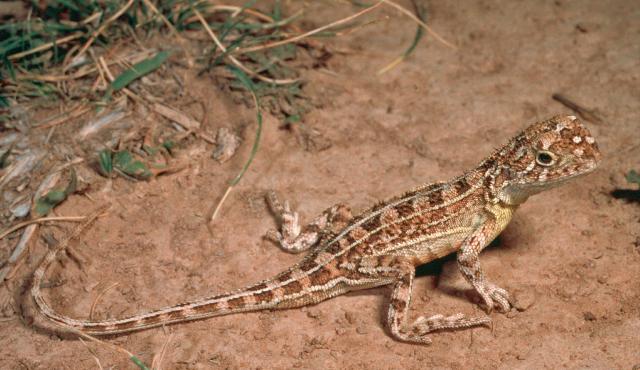
The Grassland Earless Dragon has moved from the Vulnerable to the Endangered category
The Mauritian Flying Fox, an important pollinator, is now listed as Endangered due to a culling campaign, Thursday’s update also reveals. There is some good news after the rediscovery of four South American amphibian species previously thought to be extinct.
The IUCN Red List now includes 93,577 species, of which 26,197 are threatened with extinction.
“Today’s IUCN Red List update reveals the onslaught of threats that our planet’s biodiversity is facing,” says IUCN Director General, Inger Andersen. “Invasive species, changes to fire patterns, cyclones and human-wildlife conflict are just some of the many threats wreaking havoc on our planet’s ecosystems. As species from Mauritius to Australia slip towards extinction we risk losing a part of our culture and our identity, as well as the life-supporting benefits these species provide by pollinating our crops or preserving healthy soils.”
Australia’s reptiles threatened by invasive species and climate change
Australia’s reptiles face rising threats from invasive species and climate change, with 7% now threatened with extinction, The IUCN Red List update reveals after a comprehensive survey of the continent’s reptiles. The Red List now includes 975 Australian reptile species – almost all of Australia’s reptiles, the majority of them endemic to the continent.
Invasive species are the main threat to the survival of over half of these threatened reptiles. A recent study found that invasive feral cats alone are estimated to kill about 600 million reptiles each year. One of the many species of reptile predated by feral cats is the Grassland Earless Dragon (Tympanocryptis pinguicolla), which moved from the Vulnerable to the Endangered category. Changes to the intensity and frequency of fires – caused by a combination of agricultural management, the loss of traditional indigenous burning practices and invasive weeds – are an additional threat to this species. Like many Australian species, the Grassland Earless Dragon is naturally adapted to the semi-natural wildfire patterns that were in place prior to European settlement.
Another invasive species threatening Australia’s reptiles is the toxic Cane Toad, which was introduced to Australia in 1935. For the Mitchell’s Water Monitor (Varanus mitchelli), which enters the Red List as Critically Endangered, dining on the toxic Cane Toad has resulted in population declines of up to 97% in some areas, following the arrival of toads. Australia’s reptiles are particularly vulnerable to poisoning by the Cane Toad as Australia has no native toads or other species that produce the same toxins.
Climate change is also increasingly threatening Australia’s reptiles, including the Vulnerable Bartle Frere Cool-skink (Techmarscincus jigurru), a cold-adapted species found only on the summit of Queensland’s tallest mountain, Mount Bartle Frere. A 1°C increase in temperature is likely to result in a loss of 50% of the Cool-skink’s population within 30 years, as there are no cooler areas for the animal to move to.
“This Red List update highlights the vulnerability of Australia’s lizards and snakes to invasive alien species, including the toxic Cane Toad and feral cats, often in combination with threats from habitat loss due to invasive weeds, development, and fire,” says Philip Bowles, IUCN SSC Snake and Lizard Red List Authority Coordinator. “Understanding the threats to each of Australia’s native reptile species will help us effectively work with the Australian Government, local conservation groups and Aboriginal people to address them.”
Australia’s unusually diverse reptiles evolved in isolation from those elsewhere and represent almost 10% of the world’s reptile fauna. Some of these animals are important components of the environment and wider food chain. For indigenous people, Australian reptiles, particularly the carnivorous and frugivorous lizards and pythons, are an important part of their culture and are used as emblems and in storytelling, as well as food.
Invasive plants threaten Azores island beetles
Over a hundred insect species from the Portuguese islands of the Azores have been assessed for the IUCN Red List, and 74% of these are threatened with extinction. Habitat degradation exacerbated by invasive plant species, land use change and a drying climate are the main threats. All 12 assessed species of Ironclad Beetles (Tarphius spp.) are considered threatened with extinction. These beetles rely on decomposing wood, mosses and fern cover for survival, but the Kahili Ginger (Hedychium gardnerianum), a plant introduced from the Himalayas, is slowly replacing native plant species. The Terceira Island Ironclad Beetle (Tarphius relictus) has been particularly affected by this change and is now limited to a range of less than one hectare. The recent establishment of a protected area by the Azorean Government, based on the draft assessment of the Ironclad Beetle, provides some hope for the future of this species.
“Beetles are key components of ecosystems, fulfilling critical functions such as predation and pollination,” says Axel Hochkirch, Chair of the IUCN SSC Invertebrate Conservation Sub-Committee. “Small changes in habitats have great impacts on invertebrates and species endemic to islands are particularly threatened.”
Mauritian Flying Fox now Endangered following culling campaign
The Mauritian Flying Fox (Pteropus niger), a large bat species found only on the Indian Ocean islands of Mauritius and Réunion, has moved from Vulnerable to Endangered on The IUCN Red List. The bat population fell by an estimated 50% between 2015 and 2016 largely due to government-implemented culling of the bats, motivated by alleged damage to lychee and mango fruit crops.
The species also faces threats from deforestation, cyclones, illegal hunting and accidental mortality from power lines. Cyclones have caused population declines of over 95% in flying fox species on other islands, and remain an important threat to the Mauritian Flying Fox as cyclones are predicted to increase in frequency and intensity in the region.
The species fulfils a crucial role in Mauritius ecosystems by pollinating native plants and dispersing seeds. The IUCN SSC Human-Wildlife Conflict Task Force is working with the Mauritian Government, fruit growers, scientists and other stakeholders to address the underlying issues and to seek out alternative ways of protecting fruit crops, such as the use of netting and modernisation of orchard management.
In 2015, IUCN warned in a statement that culling would very likely result in the species moving closer to extinction on The IUCN Red List. Meanwhile, through conflict resolution dialogue, the Task Force together with the IUCN SSC Bat Specialist Group and the Mauritian Government have made promising progress towards developing acceptable solutions for all affected parties, and no further culls have taken place since 2016.
Amphibian species rediscovered
Despite extremely high levels of threat to amphibians globally, there is some good news for amphibians after four species previously considered as Critically Endangered (Possibly Extinct) or Extinct were rediscovered in Colombia and Ecuador. The Rio Pescado Stubfoot Toad (Atelopus balios), Quito Stubfoot Toad (Atelopus ignescens) and Atelopus nanay were all suspected to have disappeared due to the effects of the deadly chytridiomycosis disease. The Carchi Andes Toad (Rhaebo colomai) was so heavily impacted by habitat loss that it was also feared to be gone forever.
“While these rediscoveries are encouraging news, the species are still negatively impacted by human-induced threats,” says Jennifer Luedtke, IUCN SSC Amphibian Red List Authority Coordinator. “These species still have to contend with severe habitat destruction and degradation, predation by non-native trout species, chytridiomycosis, and the effects of a changing climate, highlighting the urgent need to improve the conservation of these species to prevent their extinction.”
Japanese earthworms assessed for the first time
Of the 43 native species of Japanese earthworms assessed for the Red List through funding from the IUCN – Toyota Motor Corporation Partnership, three species are considered threatened with extinction (Eisenia anzac, Drawida moriokaensis and Drawida ofunatoensis). Agricultural intensification, urban expansion and radioactive fallout from World War II and the 2011 Fukushima Daiichi reactor explosion are the main threats to these species.
Earthworms help maintain healthy soils, increase soil aeration and infiltration of rain. They are also the foundation of many food chains. In Japan, earthworms are traditionally used as fishing bait and medicine. They are also culturally significant, with mythical stories told of giant, singing earthworms ascending to heaven and becoming dragons.
Demand for perfume threatens one of the world’s most valued woods
The Aquilaria malaccensis tree, which produces one of the world’s most valued woods, moved from Vulnerable to Critically Endangered as logging and deforestation caused populations to decline by more than 80% over the past 150 years. Agarwood develops in the core of some Aquilaria trees after they are infected by a mould and the tree produces a fragrant, dark resin as a defence mechanism against the infection. It is difficult to tell which wild trees contain agarwood, leading poachers to cut down large numbers of trees in search of the precious wood. Aquilaria malaccensis is one of the world’s preferred agarwood-producing species used for perfumery.
Other Species
Precious Stream-toad (Ansonia smeagol) – Named after The Lord of the Rings character ‘Smeagol’, this amphibian enters the IUCN Red List as Vulnerable. The species is endemic to the Genting Highlands in Peninsular Malaysia and is threatened by large and expanding tourist resorts and entertainment complexes. Unless something is done to stop these developments from encroaching on the range of this species and affecting the water quality of the streams the toad relies on for its survival, it might vanish forever.
Bankoualé Palm (Livistona carinensis) – The Bankoualé Palm has moved from Vulnerable to Endangered on the Red List after its population and range declined because of over-exploitation and habitat loss. This culturally significant palm has been used for thousands of years for house building, firewood and crafts in oasis areas of Djibouti, Yemen and Somalia. Agricultural encroachment from date palm plantations and diversion of surface water for use in gardening pose particular threats in Yemen, exacerbated by increased levels of drought.
Jamaican Hutia (Geocapromys brownii) – Endemic to Jamaica, this large rodent has moved from Vulnerable to Endangered on The IUCN Red List. Hunting pressure and ongoing habitat loss and degradation are likely to be responsible for its decline, including its apparent disappearance from Cockpit Country in recent decades. Predation by introduced cats, dogs and mongoose are further threats. There is some evidence of population expansion in areas where hunting has been reduced, indicating conservation actions may improve the status of this species.
Queen Alexandra’s Birdwing (Ornithoptera alexandrae) – the world’s largest butterfly; a reassessment of this species confirms that it is still Endangered. This striking turquoise and yellow butterfly has a wingspan of 250 mm and is endemic to New Guinea. Until trade became illegal in 1987, this butterfly was a trafficked species for the curio market; one imperfect male was sold for $2,850 in 1985. This species thrives in stable habitats, so habitat destruction from cocoa, rubber and oil palm plantations are now the prime threats to this species.
In 2015, the Union ministry of environment, forests & climate change (MoEF&CC) had announced new emission norms for thermal power plants across India. For power stations located within 300 km of the Delhi-NCR region, the deadline for meeting the norms is December 2019. A new survey by Centre for Science and Environment (CSE) indicates that most plants will not meet the deadline. This means that thermal power plants in Delhi-NCR will continue to contribute to the overload of toxic pollution in the capital’s air.
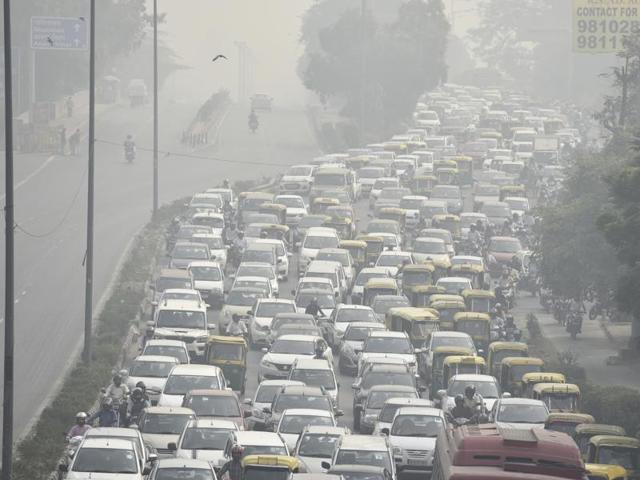
As Delhi’s pollution levels rise to severe, the EPCA has directed governments to impose all conditions under the Graded Response Action Plan under severe category
That’s not all. The Delhi-NCR region has over 3,000 legal brick kilns, which had been largely practicing the extremely polluting FCBTK process of manufacturing bricks. In a major step forward, and following action and directives from the Environment Pollution (Prevention and Control) Authority (EPCA), these kilns have agreed to convert to a cleaner technology – what is known as the zigzag process. However, a new CSE assessment reveals that more than half of the kilns have not converted to the zigzag technology efficiently, thereby negating any gains that might have accrued from them in Delhi’s fight against bad air.
Says Chandra Bhushan, deputy director general, CSE: “Delhi-NCR’s comprehensive clean air action plan is floundering because of the apathy of the regulatory agencies. Our survey of brick kilns and thermal power plants shows that despite regulations and intervention of the Supreme Court and the EPCA, the implementation on the ground is highly compromised. Thermal power plants will not be able to meet stringent emission norms by 2019, and brick kilns’ conversion to a cleaner zigzag technology will not lead to real reductions in emissions.”
Brick kilns: What the CSE survey says
The CSE survey was conducted to analyse the quality of conversion in 63 kilns across 13 districts in Delhi-NCR. To ascertain the combustion efficiency of the kilns, CSE also monitored the emissions of seven kilns – six of which have adopted the zigzag technology, while one continues to operate the old FCBTK process. The assessment’s findings were as follows:
About 1,000 kilns have already ‘converted’ to the zigzag technology, and the remaining 1,500 have given an affidavit to the EPCA to convert by October 2018.
The conversion to zigzag is leading to real reductions in emissions. If the conversion quality is good, the emissions reduction can be as much as 50-70 per cent. However, only about 20 per cent of the surveyed kilns had done good conversion.
About 30 per cent of the kilns had average conversion quality and will be able to reduce emissions by 20-30 per cent, compared to the FCBTK technology.
Thirty-five per cent of the kilns had poor conversion quality and will not see any measurable reductions in emissions.
About 15 per cent of the brick kilns were found to be bypassing the law. They have done cosmetic changes and have not converted to the zigzag technology.
The survey result was confirmed by pollution monitoring of 10 per cent of the surveyed kilns.
Better converted zigzag kilns (three out of six) were found to be having a CO/CO2 ratio below 0.015 — a 70 per cent combustion efficiency improvement compared to FCBTKs. Average performing kilns (one out of six) had a ratio between 0.015 and 0.03, an almost 30-50 per cent improvement. Poor performing zigzag kilns (two out of six) had a CO/CO2 ratio between 0.045 and 0.05 and point to no improvement over FCBTK.
CSE researchers point out that the inspection done by the state pollution control boards, before certifying that the kilns had converted, has been highly unsatisfactory.
Other key findings of the survey include the use of hazardous waste such as plastic, rubber and carbon as fuel in the kilns and the near absence of any facility at the kilns to monitor air pollution; 90 per cent of the kilns did not have the ladder and porthole to monitor PM emissions.
“Proper conversion of FCBTK to zigzag can reduce the pollution from brick kilns significantly. But our survey clearly shows that only about 20 per cent have done good conversion. The conversion quality of more than 50 per cent of the kilns is highly unsatisfactory and such conversions will not lead to any real gains in pollution control,” says Nivit Kumar Yadav, senior programme manager, CSE.
Thermal power plants: What the CSE survey says
CSE’s survey of thermal power stations in Delhi-NCR was aimed at assessing the preparedness of the plants to meet the impending deadline 0f 2019.
The survey findings show little progress to meet the 2019 deadline:
In the case of sulphur di oxide (SO2) emissions, 83 per cent of the plants will not be able to comply with the 2019 deadline, unless they are able to fast-track the entire process from feasibility studies to construction and installation work.
Half of the region’s installed capacity may be able to meet the 2019 deadline for nitrogen oxide (NOx) control. The remaining have not reported any plans to achieve compliance.
In the case of particulate matter (PM), about 35 per cent of the overall installed capacity will not meet the deadline. In fact, another 50 per cent has been asked to meet the norms immediately but no credible data is available to confirm they are in compliance. Accordingly, 88 per cent of the plants may not be able to comply with PM norms.
“As things stand, 80 per cent of the plants will not meet the 2019 deadline. The concerned regulatory authorities must take immediate steps to prevent further slippage on achieving the target. State pollution authorities must ask power plants to furnish, immediately, the current emissions data and milestones with deadlines. Also, a suitable penalty mechanism should be introduced as a deterrent to ensure that plants stay on track to meet the norms,” says Priyavrat Bhati, programme director, energy unit, CSE.
“The bottom-line is that Delhi-NCR cannot afford poor implementation of the comprehensive clean air action plan. Winters, the season of severely polluted air quality, are approaching fast. It is time the government agencies on the ground, especially the central and state pollution control boards, ensure that the conversion of brick kilns to zigzag is done appropriately and thermal power plants expedite the setting-up of pollution control systems to meet the 2019 deadline,” says Bhushan.
The Federal Ministry of Agriculture and Rural Development (FMARD) has warned members of the public to desist from indiscriminate felling of trees.
Minister of Agriculture and Rural Development, Chief Audu Ogbeh
Mrs Heather Akanni, the Technical Adviser, Quality Control and Standardisation, Office of the Minister of Agriculture, gave the warning on Thursday, July 5, 2018 in Makurdi, Benue State, while speaking with newsmen.
Akanni said that indiscriminate felling of trees (deforestation) was causing more harm than good to the society because it destroyed valuable plants such as medicinal and stimulant plants.
She said that planting of more trees should rather be encouraged rather than indiscriminate cutting of trees.
Akanni said that even when it became necessary for some trees to be cut, arrangements should be made immediately to replace them.
The Executive Director, Forestry Research Institute of Nigeria, Mr Adesola Adepoju, said that the institute would assist the Federal Government to achieve its quest for diversification from oil to other areas.
He mentioned exploitation of medicinal and stimulant plants.
Represented by the Deputy Head of Station, Mr David Bayo, Adepoju said that the essence was to reduce overdependence on oil.
The executive director said that Nigeria was blessed with a lot of medicinal and stimulant plants, saying that people should rise and make adequate use of the opportunity.
He said that medicinal and stimulant plants helped a lot in reducing the cost of health care and created employment because value was usually added to it.
Adepoju said that about 60 per cent of the Chinese population depended on medicinal and stimulant plants for health care in order to reduce cost.
Mr James Anbua, the Commissioner for Agriculture and Natural Resources in Benue, said that investing in the plants would create value chain and attract foreign investments.
Anbua stated that investing in the plants would drive exports and boost the economy through agriculture as well as trade promotion.
“It is our desire that the medicinal plants sector is given due attention so as to attract international markets,’’ he said.
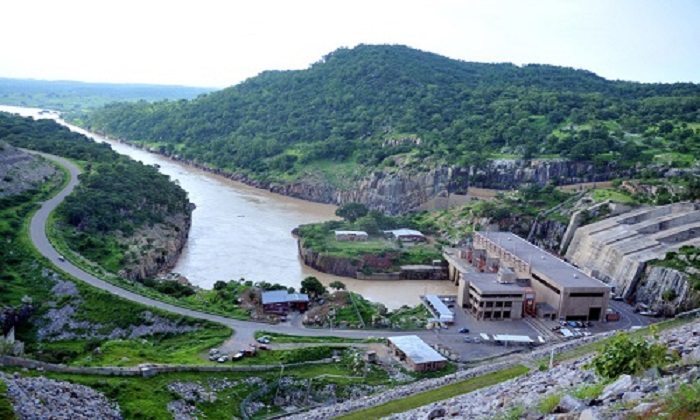
The North South Power Station (NSP) in Niger State has warned host communities of an impending risk of flood in communities living in the upstream and downstream of the hydro-electric power station plant.
Shiroro Hydro Power Station
Mr Ugochukwu Chioke, Chief Operating Officer, North South Power Station, gave the warning during the Annual Stakeholder Flood Awareness and Sensitation Forum on Thursday, July 5, 2018 in Shiroro Local Government Area of the state.
Chioke was represented by Malama Sule Abubakar, General Manager, Plant Services, North South Power Station.
He said that the sensitation became necessary based on the forecast by the National Hydrological Services Agency (NHISA) and Nigeria Neurological Agency ( NiMET).
“Communities within the upstream and downstream of the hydro power station are prone to flooding when the state begins to experience increased rainfall between July and August, which would mandate the station to spill water.
“Once there is an over flow of water from the River Kaduna as a result of increased rainfall, the dam will overflow.
“It will spill, of which in the process, may affect communities within the upstream and downstream of the station.
“That is the reason why we called stakeholders to discuss and deliberate on possible ways to mitigate against the impending flood,’’ he said.
Chioke appealed to members of host communities to be law abiding and ensure peaceful co-existence.
Also, Mr Joseph Alozie, General Manager, Climate of NiMET, disclosed that the state would experience normal rainfall which would eventually increase in July and August.
“Rainfall will cease late September into December; there will be normal amount of rainfall in Niger and there will be normal cessation.
“There will be dry spell in the state but Minna will be excluded.
“More rainfall from river Kaduna will flow into Shiroro,’’ he said.
He advised the communities to keep their environment clear from water and avoid building structures and farming on waterways.
The Imo State Branch of the Nigerian Society of Engineers has criticised the state government’s Urban Renewal Programme over what it described as “unrestrained” destruction of property.
Governor Rochas Okorocha of Imo State
The society’s Chairman, Mr Emeka Ugoanyanwu, said in a statement issued in Owerri, the state capital, on Thursday, July 5, 2018 that public and private property valued at N58 billion had been destroyed under the programme.
Ugoanyanwu stated that telecommunications and pipe borne water facilities destroyed were worth N25 billion.
According to him, Urban Renewal Programme does not entail the demolition of public and private property but a well-planned process that is strategically implemented with designs and modern inputs to attract investors.
“The indiscriminate destruction of trees meant to protect the environment and ecosystem and planting concrete as a replacement, will have adverse effect on the environment.
“The execution of the programme with non-professionals is an embarrassment to registered and practicing engineers in the state.
“The society has communicated its position on the issue to the state government through the Ministry of Works.”
Ugoanyanwu wondered why the state government would not engage the professionals in its employ to execute the programme, to spare residents the untold hardship associated with the destruction of their businesses and residences.
He suggested that the programme should be carried out in phases following a 50-year master plan, in order to engender sustainability.
He, therefore, urged the state government to halt the contractor handling the programme and re-evaluate the project with a view to redressing the anomalies.
The Director, Water Supply, Federal Ministry of Water Resources, Mr Benson Ajisegiri, has called for political will from all tiers of Government to reverse the trend of poor water supply across the country.
Suleiman Adamu Kazaure, Water Resources Minister
Ajisegiri made this call at the ongoing International Conference of the Nigerian Water Supply Association (NWSA) in Abuja on Wednesday, July 4, 2018.
According to him, political will and commitment should be from top to bottom approach to ensure that leadership supports policy implementation for the overall goal of improving access to water.
He said since early 90s, Nigeria has benefited over $1 billion from development partners such as the World Bank among others, saying this ought to translate to efficient service delivery in all state water agencies.
He said it was saddening to note that policy reversals, lack of political reform processes made such investments lost without workable evidences for better system.
He, however, commended Kaduna State Water Corporation for improving water supply and ensuring that cost recovery was attained, saying all state water agencies should follow suit.
“There is the need to promote the commercial viability of all state water agencies; we must begin to think about holistic institutional reform and capacity building, rejigging the governance structure will also make the sector work.”
Ajisegiri also added that political leaders should begin to understand that access to water is a right not a privilege, saying it ought not to be part of campaign promises during electioneering.
He added that the Federal Ministry of Water Resources had realised that with the current situation of water supply and sanitation services, the country would not meet its target in the Sustainable Development Goals by 2030, hence the declaration of a state of emergency.
The director also added that National Action Plan to improve the Water governance structure, and the development of Water Sanitation and Hygiene fund to strengthen the three-tier collaboration was underway.
Mr Benson Attah, National Coordinator, Society for Water and Sanitation (NEWSAN), noted that poor water supply and Sanitation services in the country were the leading cause of hospitalisation and poor health indices.
He noted that the effects of poor sanitation was costing Nigeria economically, saying the Nigerian Water and Sanitation Programme estimates that poor sanitation costs the country at least $3 billion annually is loss in productivity and health care expenditures.
“Even if investments were to sufficiently rise, the lack of a single government entity with complete responsibility for sanitation within the government, as well as widespread corruption and a lack of community support would likely hamper efforts.
According to him, improving the disposal of human excreta and stopping open defecation can drastically reduce the disease burden caused by sanitation related diseases and contribute to economic transformation of the country.
“Poor sanitation contributes to diarrheal diseases and malnutrition through fecal contamination of food and water.
“Diarrheal diseases kill approximately 121,800 Nigerians, including 87,100 children under the age of five each year. Eighty-eight per cent of those deaths are attributed to poor sanitation,” he said,
The News Agency of Nigeria (NAN) reports that the Association is an umbrella body of all operators in the potable water supply sector.
The group concerns itself with contributions to policy negotiations at the National, regional and international levels for institutional reforms in the sector.
The Conference theme is “Transforming Urban Water Supply and Sanitation Utilities into Financially Viable Entities”.
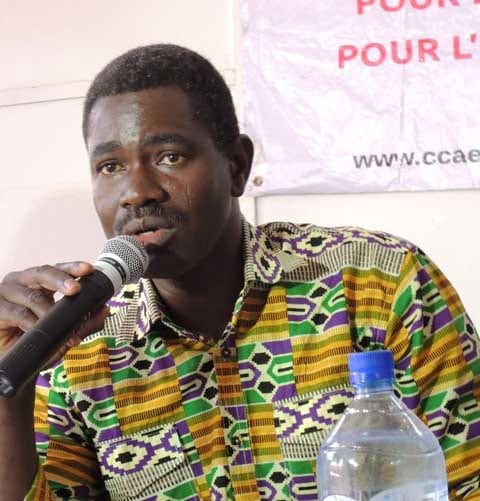
United Nations biodiversity negotiations are underway in Montreal, but a key African expert is missing from the fray. Ali Tapsoba, President of the organisation Terre à Vie in Burkina Faso, was planning to speak at two events on behalf of Burkinabé civil society, who oppose the release of gene drive mosquitoes, a controversial new biotechnology, in their communities.
Ali Tapsoba
His visa application was denied without explanation by the Canadian embassy in Dakar on Friday, June 29, 2018.
“Tapsoba is probably the preeminent voice in Burkina Faso against the Target Malaria Consortium, which is leading the project towards release of Gene Drive mosquitoes in the wild,” said Mariann Bassey of Friends of the Earth Nigeria and Chair of the Alliance for Food Sovereignty in Africa (AFSA).
“I am very disappointed that I have been prevented from attending these important negotiations addressing issues of biotechnology at a time when Africa is plagued by multinationals that want to impose GMOs and destroy the beautiful biodiversity of the continent,” said Tapsoba in a written statement. “Don’t Africans have the right to meet other nationalities from around the world in Canada to discuss the future of humanity?”
Canada’s denial of Tapsoba’s visa comes at a moment when biotech industry backers are spending millions of dollars to promote gene drives, a powerful technology that could be used to render species extinct, or create new kinds of corporate control of agriculture and the environment.
Freedom of Information requests recently showed that the US military poured up to $100 million into Gene Drive research and promotion. The Gene Drive promotional push has been linked to high-level Canadian officials as well. At the UN Convention on Biodiversity negotiations, Canada has threatened to derail these important international negotiations on gene drives using a procedural question as a blocking tactic.
“It is alarming that the same Canadian negotiators that have been named as coordinating with the biotech lobby are now threatening other delegates to waste their negotiating time and prevent real rules on gene drives,” said ETC Group Co-executive Director Jim Thomas.
Gene drive developers at the CBD are touting “participation” and “transparency” as they lobby governments for lax regulations on gene drives; this rings hollow when those directly affected by a proposed gene drive release are blocked from attending decision-making processes.
“We strongly hope the Canadian government will respect its obligations and support moves to ensure the free prior and informed consent of indigenous people and local communities on the issue of gene drives,” said Geneviève Lalumière of Union Paysanne, member of La Via Campesina, the international peasant movement with a membership of 200 million.
Gene drives are a controversial and powerful new technology that uses CRISPR-Cas9 gene editing techniques to spread a specific genetic trait through an entire species or population – in some cases with the purpose of driving species to extinction. Current gene drives experiments have been conducted on insects, rodents and plants. If the inserted genetic trait results in only male offspring, as is being attempted for rodents and mosquitoes, a full wild population or even a species could go extinct. As far as is known, gene drives have never been released into the environment anywhere in the world.
“Gene drives organisms pose unique threats to nature and livelihoods”, says Silvia Ribeiro, Latin America Director for ETC Group. “It is the first time that the biotech industry has intentionally designed GMOs to spread aggressively in the natural environment and contaminate wild species.”
A non-governmental organisation (NGO), the Lagos State Accountability for Maternal and Newborn Health (LASAM), appears to have gone beyond its call of duty to rescuing and bringing hope to a physically-challenged woman, abandoned by her husband on the last week of pregnancy.
Standing are Chief Mrs. Oroja and another MNH activist. Sitting is Kudirat with her baby and flanked by her parents
LASAM, which is visibly known for aggressively championing adequate budgetary allocation to the health sector with particularly interest in tackling high maternal mortality rate in Lagos State, put it upon itself to not only ensure that Kudirat Salami had a safe delivery, but also empowered her to earn regular income to care for her two children and old parents, among other acts of goodwill.
Kudirat Salami who was not registered for anti-natal service in hospital , nor had access to any form of healthcare due to lack fund, had luck shining on her when a Maternal and Newborn activist (MNH ) of LASAM in her area, Chief Mrs Oroja-Giwa, feeling pity for her delicate condition, brought her to the NGO’s forum in Ikeja area of Lagos.
Although, her presence was not noticed by many participants because of the high momentum of activities that marked the event which saw the launch of the hash tag, “#fundNaijaHealth”, Kudirat’s case and a call for her assistance were later brought to the official Whatsapp platform of LASAM by the NGO’s Programme Director, Adenike Badiora, and the rest became history.
“Dear all, a heavily pregnant, physically challenged woman was brought to the venue of the Lagos Health Financing Dialogue on Thursday by Chief Mrs Oroja-Giwa, a MNH activist and MamaYe champion. Please, she is due soon, but she is in need of financial help for the registration and delivery. If you are willing to help, kindly send your contributions to these accounts details. Please, let’s do this between now and Friday, 25th. Thank You,” posted Adenike on May 19, 2018.
About three hours later, Adenike posted again, breaking the good news of Kudirat being delivered of a bouncing baby girl weighing 4.8kg at birth, while calling for immediate donations by LASAM members to assist the helpless mother.
“The lady brought to Ikeja on Thursday delivered a baby girl now. Dear all, I just received this message from Mes Oroja. The woman needs money to pay hospital bills,” posted Adenike.
That call for help by Adenike was like the biblical seed that fell on fertile ground, as members who were strongly determined in their mandate of saving lives of pregnant women and their newborns became very much concerned and ready to contribute from their pockets.
Members did not only express interest to donate, they also made suggestions on best strategies to realise the objective in good time.
The acceptable suggestion came from Esther, the Consultant on Health Budget for MamaYe Evidence for Action, which is the parent organisation and sponsor of LASAM.
“To make fund raising easy, if we have a target say One Hundred Thousand Naira, we can ask each member to give at least, N1,000, then our target is met in no time,” suggested Esther.
In a matter of hours, members had made substantial contributions, with a particular person donating fifty thousand naira to the course.
With the support of LASAM, Kudirat was able to regain her confidence and hope, up to the level of hosting the naming ceremony for her new baby on the eight day of delivery, which is a grade one traditional rite of the Yoruba tribe, in southwestern region of Nigeria.
The occasion attended by close family members, friends and neighbours, also had in attendance a LASAM delegation comprising Adenike, Chief Oroja and another MNH activist, who had made a handsome monetary donation to Kudirat on behalf of the NGO.
Interestingly, that visit by the LASAM team was an eye opener to even the greater problem that Kudirat was in, which necessitated even greater help to save her, the new baby, her first child aged 14 and jobless old parents.
Adenike narrated their findings: “Kudirat got married to her husband 10 years ago. She had a girl of 10 years old who is currently in primary 4. But the girl did not go to school for some time now because of school fees.
“She lost the second pregnancy before this new baby. According to her, her husband usually assaulted her, but few weeks ago, the man sent her packing, that he would not marry her again. She was sent out without letting her pick any of her things.
“We were told that her husband chased her out from Owode in Otta area and she came back to her parents in Egbeda area of Alimosho. So we decided to follow Kudirat Salami home to meet her parents.
“A borrowed shawl was used to carry the baby and she has no clothes.
“She said she has learnt hairdressing which is what she has been using to sustain herself and the girl she had before. She said she is ready to work as soon as she recovers from this delivery.
“So in the long term, she needs help to establish her hair business to take care of herself and her two girls and her parents.”
The narration by Adenike about the difficult situation that Kudirat was into elicited streams of reactions from LASAM members, who did not only made more donations but also showed more commitments towards protecting the future of the young physically challenged mother and her dependent family members.
In that spirit, members resolved to empower her with hair dressing equipment including hair drier, mirrors and cash to procure other essential materials.
Going forward, the Co-Chair of the NGO, Ayo Adebusoye, who is a lawyer, said that Kudirat’s run-away husband must be made to face the consequences of his actions, using legal provisions in Lagos State to compel him to fulfill the necessary obligations to the woman and her children.
His words: “The next is to trace the abusive husband. Lagos has zero tolerance for such domestic abuse and abandonment. There is even a recent enacted law provision in the criminal law of Lagos State section 279 against desertion of pregnant woman of girl. Any person who impregnates a woman and fails , refuses or neglects to contribute to maternity related costs , commits an offence and liable on conviction to a fine of N45,000 without prejudice to the recovery of any cost that any other person may have reasonably incurred in relation to the upkeep of the woman or girl.
“In addition section 128 desertion of children, any person who being the parent of a child under the age of 12 years, wilfully and without law or reasonable cause deserts the child, commits a misdemeanour and is liable on conviction to a fine of N100,000 without prejudice to the recovery of any cost that any other person may have reasonably incurred with respect to the upkeep of the child.
“So Kudirat and the countless other abandoned mothers in our communities should be sensitised that they have options open to them to ensure upkeep from their spouses/partners. Unfortunately we have to clear our cultural baggage of not reporting such cases to the appropriate authorities,” he concluded.
China has turned back on deal to curb emissions from international flights, with the country no longer listed as a participant in the agreement’s first phase, according to United Nations Aviation Agency’s website.
China has turned back on deal to curb emissions from international flights
China does not appear on a June 29 list of participants in the voluntary phase of the deal brokered by the International Civil Aviation Organisation in 2016, according to ICAO’s website.
Aviation powerhouse China was included in previous lists seen by the Media. It is not clear why China now objects to the deal. The first or pilot phase begins in 2021.
Environmentalists say China’s participation is vital for the 2016 Carbon Offsetting and Reduction Scheme for International Aviation (CORSIA) deal.
This deal requires airlines to limit their emissions or offset them by buying carbon credits from designated environmental projects around the world.
Europe will press China to remain, after the country recently argued it never agreed to join the first phase, according to sources who spoke on condition of anonymity about the private talks.
“In the months to come, Europe together with its ICAO partners, will work with China to find ways to address China’s concerns without undermining (the deal’s) environmental integrity.
They will investigate this in order to keep this important aviation country on board,” a European Union source said on Tuesday.
The Civil Aviation Administration of China and ICAO did not respond to requests for comment.
In 2016, China and the United States pledged support for the deal, with both countries saying they expect “to be early participants.”
A second source said China is likely distancing itself as a negotiating tactic.
Talks are expected this fall over which environmental projects will be available to airlines for purchase as offset credits.
China wants its domestic projects to be eligible, the source said.
The United States, which last year announced plans to withdraw from the Paris climate pact, is still in the aviation deal.
The Federal Aviation Administration said it would continue to work “on the implementation of CORSIA.”
Airlines support the agreement as a cheaper alternative to a patchwork of regional deals.
Citing ICAO figures, the Air Transport Action Group estimates CORSIA will cost airlines between $1.5 billion and $6.2 billion in 2025, depending on future carbon prices.
“We are disappointed that the Chinese government has decided not to participate in the pilot phase of CORSIA,” said ATAG executive director Michael Gill in a statement.