34 C
Lagos
Wednesday, December 31, 2025
Home Blog Page 1856

Cleaner Lagos Initiative: Plastic bottles to be phased out by 2023

0

The Lagos State Government said on Friday, March 2, 2018 that it would phase out the use of plastic bottles in the state by 2023.
Plastic bottles
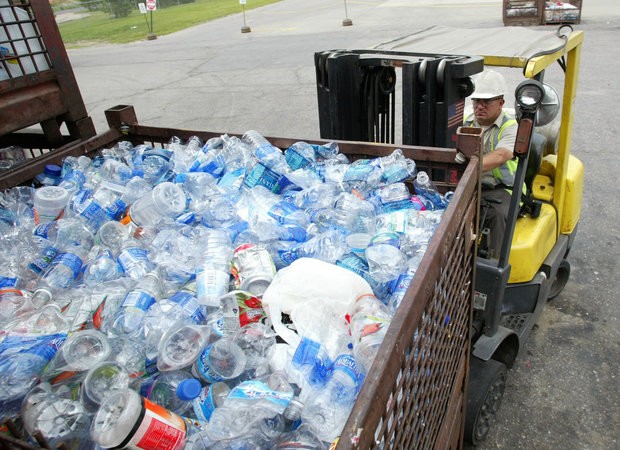
Disposal of waste plastic bottles. Photo credit: Al Goldis / Associated Press

Mr Adebola Shabi, the Special Adviser to Gov. Akinwunmi Ambode on Cleaner Lagos Initiative (CLI), made the disclosure in an interview with the News Agency of Nigeria (NAN) in Lagos.

Shabi said that plastic bottles, also known as pet bottles, needed to be phased out because they could hardly degrade in the environment.

He said that it could  take over 500 years for the bottles to degrade, thereby causing environmental (plastic) pollution.

”In the world now, it is called plastic pollution because they end up in the ocean and affect aquatic lives; they also affect water transportation,” he said.

“The official said that one of  the aspects of the Cleaner Lagos Initiative was recycling.

“In the past, 97 per cent of our waste were buried in the landfill; only three per cent were recycled; but we want a different ball game.

“We want to encourage our youth, investors, to go into recycling because some of what we called waste are not really waste, there are things/products we still get from them.

“We want to encourage less waste to the landfills; that is why we are calling for recycling of pet bottles, papers, used phones and a lot of things.

“We are working seriously on a project to see if we can come up with core starch and polymers to see how those ones can degrade in the environment easily,” he said.

Shabi called on local investors to come up with proposals, adding that the government would encourage them on the technology to use.

”We mean technology that will work with the  environment,” he said.

He said that there were plans to ensure that by  2020, only 30 per cent of waste in the state would end up in the landfills, while 70 per cent would be recycled.

According to him, by year 2025, Lagos wants three per cent of its waste to go to the landfills and 97 per cent be recycled and reused.

“That is why we have been working to educate people on how they can make money through waste-to-wealth.

“In the past, we were exporting the recyclable materials to China; it got to a stage by mid last year, China stopped the import of the recyclable materials, but we can also recycle them here.

“Pet bottles, when recycled, can be added to asphalt to solidify road construction; it can also be used in making textiles.”

“The official told NAN that pet bottles could  also be recycled to make diesel, while cardboard papers could be used and recycled to make tissue paper.

“Look at the issue of electrical/electronic waste that have lived out their lifespans; when we are not using them any longer, they end up in the garbage.

“When you recycle some of these telephone sets, you will get precious metals like gold, palladium, copper and silver; so, why do we call them waste, when they can be recycled?” he asked.

The governor’s aide said that the wood waste, also known as sawdust, could turn to energy after going through synthesation and gasification.

He said that the benefit of biogas was to reduce dependence on the fossil fuel.

Shabi said that the government also desired to recycle waste from animals and poultry, noting that more  than 6,000 animals and 100,000 poultry were slaughtered in the state daily.

According to him, the government has thrown it open to intetested members of the public to come up with ideas on recycling.

“We have been encouraging the youth to come out. We have a lot of used tyres around the streets.

“When you have these tyres, the metals from them are taken out and can be used for fencing, and the rubber will be shredded and be added to asphalt or bitumen for road construction.

“It solidifies road construction. We have been bringing all these things to Lagosians; so, they should be looking at a way of partnering with the government, and government is providing the enabling environment for everyone who wants to come into the business,” he said.

By Florence Onuegbu
CDC unveils Disability Awareness Ribbon amid campaign against discriminatory practices

0

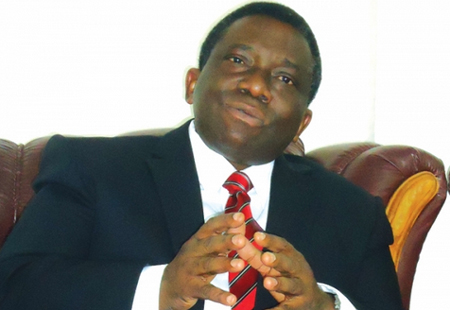
The Children’s Developmental Centre (CDC) has unveiled the Disability Awareness Ribbon with the support of the Lagos State Government in commemoration in aid of the campaign for the Developmental Disability Awareness month.

Isaac-Adewole
Minister of Health, Professor Isaac Adewole

At the launch in Lagos, key stakeholders in the non-governmental organisations (NGOs) space called for action by government at all levels to provide the necessary support towards the upbringing of children with various forms of disabilities.

They also expressed deep concern about the future of children with disabilities in the country where there is no clear cut policy their growth support plan and engagement that will better their lives.

In her opening remarks, Dr. Yinka Akindayomi, service director at CDC, said CDC over the last 20 years has been both a service provider and in forefront of advocating for children and adults with development disabilities and their families.

Akindayomi said in the course of the centre’s intervention it has realised that the inclusion of children and adults with any disabilities can only come through a joint effort.

She noted that there must be a harmonious and strong partnerships among stakeholders for any society to grow, adding that one of the great benefits of working together is the inspiration and ideas that can result from unity, because people from different backgrounds and levels of experience can help in creating solutions to problems in the society especially where stigma is concerned.

“Personal boundaries are limits we set for our selves as individuals but when we work together, there is the motivation to push beyond those boundaries which yields results. Nigeria will be better if we work together, because unity maximises strengths and brings out the best in its citizens. This value of unity is regularly seen in sports, culture, entertainment etc and we should endeavor to include in our everyday life, workplaces, homes and community at large,” she counseled.

In her remarks, Mrs. Emmanuella Otiono, educational consultant at Centre Escolar Educational, emotionally spoke about discrimination against people with disabilities, and advised that rather discourage them by attitude efforts should be made to identify those special talents in them to help them maximise their potentials.

Otiono said her centre like similar others offers a continuum of services that meet the specialised needs of young people with intellectual and developmental disabilities including those with autism or other autism spectrum disorders.

“We help youth in all aspects of their lives so they can be successful at home and in school, with friends and family. We understand that no two young people are alike and consider a number of factors including their home environment, upbringing and clinical history when creating Individualised Service Plans,” she said, adding that whether serving youth in foster care or providing supports in home and community settings, stakeholders should also help youth with intellectual and developmental disabilities reach new heights.

Otiono, expressly noted that youths with physical, cognitive, and emotional disabilities represent special populations at risk for juvenile delinquency, victimisation, educational failure, and poor employment outcomes and that they often have multiple, overlapping risk factors.
She noted that youth with disabilities typically receive mentoring, if at all, within disability-specific programmes rather than in inclusive, community-based programmes.

Speaking further, Otiono stated that early childhood is the period from prenatal development and a crucial phase of growth and development because experiences during early childhood can influence outcomes across the entire course of an individual’s life.

“For all children, early childhood provides an important window of opportunity to prepare the foundation for life-long learning and participation, while preventing potential delays in development and disabilities. For children who experience disability, it is a vital time to ensure access to interventions which can help them reach their full potential.

Despite being more vulnerable to developmental risks, young children with disabilities are often overlooked in mainstream programmes and services designed to ensure child development,” she added.

Other stakeholders at the forum expressed disappointment that these children, however, do not receive the specific supports required to meet their rights and needs as children with disabilities and their families are confronted by barriers including inadequate legislation and policies, negative attitudes, inadequate services, and lack of accessible environments.

They argued that if children with developmental delays or disabilities and their families are not provided with timely and appropriate early intervention, support and protection, their difficulties can become more severe and often leading to lifetime consequences, increased poverty and profound exclusion.

By Yemisi Izuora 

Adediji emerges OAU’s EDM Faculty alumni president

0

Lagos-based estate surveyor and valuer, Mr Oyebode David Adediji, has emerged president of the Alumni Association of the Faculty of Environmental Design and Management (EDM) of the Obafemi Awolowo University, Ile-Ife, Osun State.

Bode Adediji
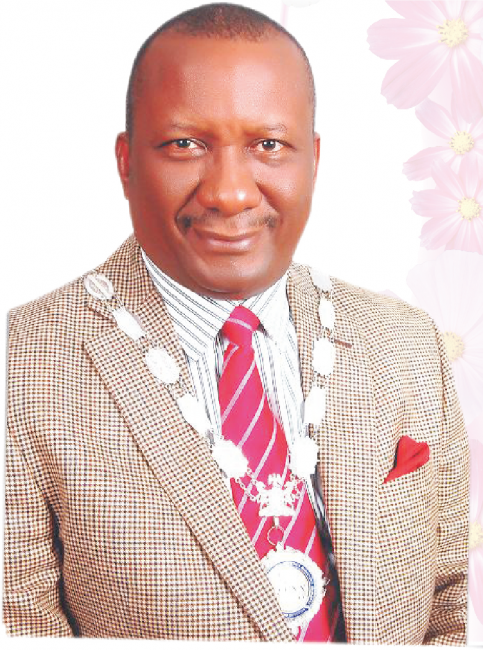
Mr Bode Adediji

The association was formally inaugurated last week at the sidelines of Alumni Reunion of the faculty under the chairmanship of the Vice-Chancellor, Professor Eyitope Ogunbodede, represented by the Deputy Vice-Chancellor (Administration), Professor Chris Ajila.

Adediji, fellow and past president of the Nigerian Institution of Estate Surveyors and Valuers (NIESV), holds a Bachelor of Science (B.SC) degree in Estate Management, emerging as the best graduating student of the Department in the University of Ife (now Obafemi Awolowo University) in 1979. He also holds a Master’s degree in Estate Management (Urban Land Appraisal), Reading University, United Kingdom in 1984.

In a statement made available to EnviroNews on Friday, March 2, 2018, Adediji’s publicist, Mr Boye Ajayi, described him as “a man destined to be a leader has grown from being a distinguished scholar into a role model in the real estate profession. He is well positioned to chart a new course for the EDM Faculty through resourcefulness and qualitative leadership.”

According to Ajayi, Adediji is a member of several professional bodies such as: NIESV, Estate Surveyors and Valuers Registration Board of Nigeria (ESVARBON), International Real Estate Federation (FIABCI), African Real Estate Society (AFRES), Nigerian-South African Chamber of Commerce (NSACC), and Institute of Directors (IoD) Nigeria.

In her welcome address during the Alumni Reunion, Professor Olubola Babalola, Dean, Faculty of EDM, pointed out that, as the leading Faculty in the built environment discipline in Nigeria, most of the Alumni hold top positions in consultancy firms, contracting companies, banks, public service, armed forces and other notable offices in and outside Nigeria.

“It is not by accident that the longest building on OAU campus is the Faculty building of professionals in the built environment,” she said, listing the departments in the faculty to include: Architecture, Estate Management, Urban and Regional Planning, Quantity Surveying, Building, Fine Arts, Land Surveying and Geomatics.

The Vice-Chancellor, in his opening remark, said that in the vision to develop the university into the incubator for national policy research and development, there are many areas where the Alumni can assist.

His words: “Your contribution to the university endowment fund initiating developmental project, maintenance of existing infrastructure, student internship, industrial experience and job placement, scholarship and research grants are some of the numerous ways you can add value to the university.”

He asserted that, “with our collective efforts, we can take the faculty and the university at large to an enviable position in the comity of schools of built environment and environmental design and management, both locally and internationally”.

The newly inaugurated cabinet members of the association includes Bldr Lasabi Tunde; Esv Biyi Adesanya; Esv Akin Olawore; Tpl (Prof) Leke Oduwaye; Tpl Toyin Akpan; Tpl Wale Olaoye. Others are Qs Wasiu Akewusola; Qs Sesan Obe; Qs Lekan Adeosun and Olanrewaju Akintilo.

The aims and objectives of the newly inaugurated association include serving as the official link between the OAU and its Alumni; to foster up-to-date and vital information regarding the Institution; to encourage all Alumni to retain their interest in and loyalty to the university at all times; to initiate and execute programmes and activities aimed at accelerating the overall growth and development of the University; and to provide necessary encouragement including financial assistance to an effective leadership for the students of the university.

The association is also aimed at forging useful links between students, parents, teachers and other friends of the university and its community; and to inaugurate and/or revive branches of the association in all parts of Nigeria and beyond.

Belgium ratifies Minamata Convention

0

The Government of the Kingdom of Belgium on Monday, February 26, 2018 deposited its instrument of ratification, thereby becoming the 89th Party to the Minamata Convention.

Charles Michel
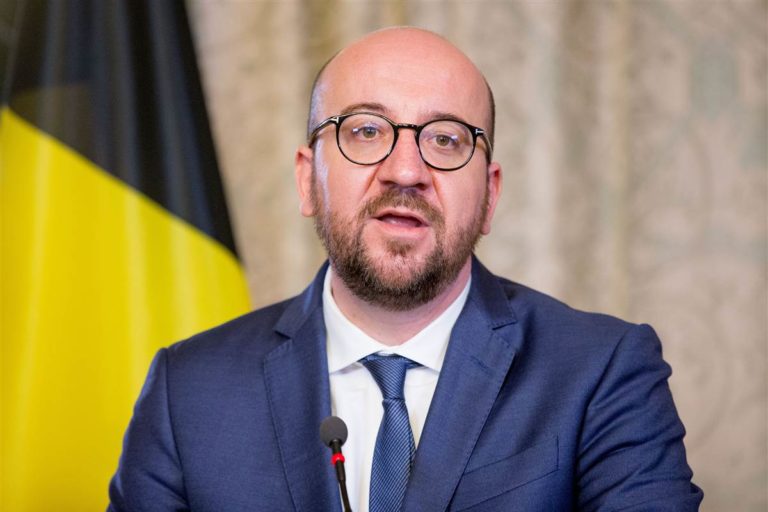
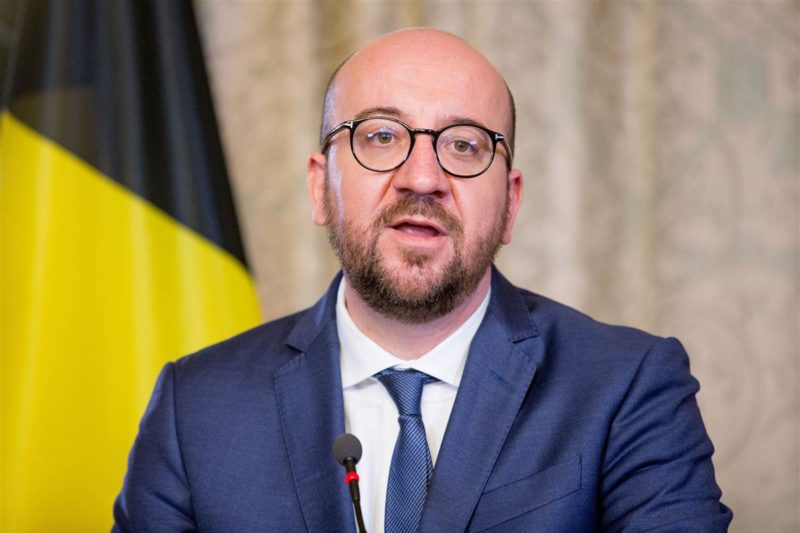
Charles Michel, Prime Minister of Belgium

Nigeria had several weeks before that on Thursday, February 1 deposited its instrument of ratification, thereby becoming the 88th Party to the mercury treaty.

Cuba had days days before on Tuesday, January 30 deposited its instrument of accession to become the 87th Party to the global pact that aims to control the negative impact of mercury.

Similarly, Lithuania deposited its instrument of ratification on Monday, January 15, 2018 to become the 86th Party to the Convention.

The Minamata Convention on Mercury (“Minamata Convention”) is an international environmental convention for global community to sswork collaboratively against mercury pollution. It aims at achieving environmentally sound mercury management throughout its life cycle. The Convention was adopted at the diplomatic conferences held in Minamata City and Kumamoto City in October 2013.

The 1st Conference of the Parties to the Minamata Convention (COP1), which gathered governments, intergovernmental and non-governmental organisations from around the world, held in Geneva, Switzerland from September 24 to 29, 2017.

The mercury accord entered into force on Thursday, May 18, 2017 after having garnered the required 50 ratifications.

GCF approves funding for 23 projects, elects new co-chairs

0

The first Green Climate Fund (GCF) Board meeting of 2018 concluded on Thursday, February 1, after approving 23 projects, valued together at $1,093.5 million of GCF funding.

GCF
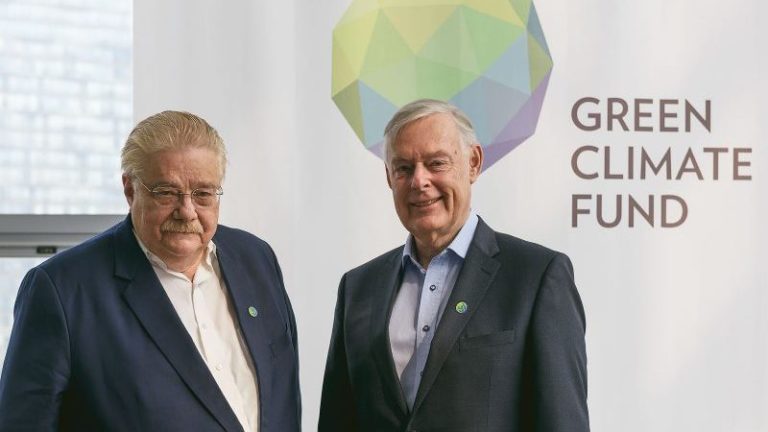
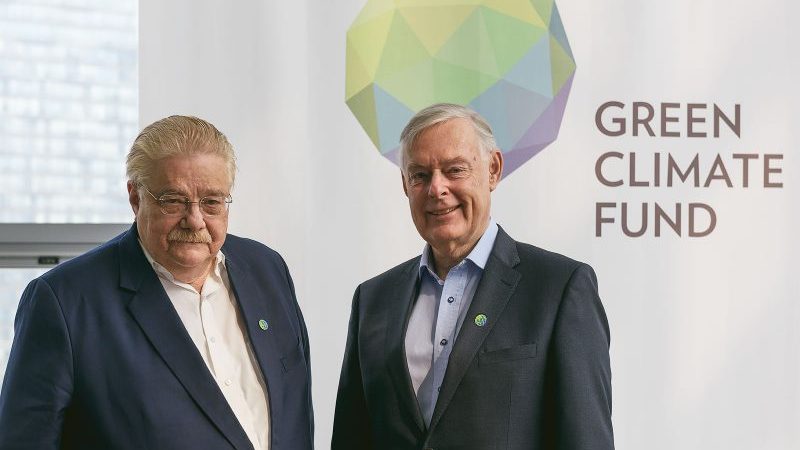
Paul Oquist and Lennart Båge have taken over as co-chairs of the Green Climate Fund board

The new approvals bring the GCF portfolio to a total of 76 projects and programmes, amounting to $3,730.2 million in GCF funding to assist developing countries in their low emission and climate resilient development.

The Board elected Ambassador Lennart Båge and Dr. Paul Oquist as its Co-Chairs for 2018, representing developed and developing countries respectively. A number of significant policy decisions were also made to strengthen GCF’s operations, including adopting an Indigenous Peoples Policy, and an Environmental and Social Policy.

In addition to the funding approvals, the Board approved an additional $60 million for the implementation of the Readiness Programme to assist developing countries in accessing GCF funds.

“We have had a highly positive week, approving over $1 billion in projects, which is a record amount in a single GCF Board meeting,” stated Paul Oquist, GCF Co-Chair.

“This large volume of projects for both mitigation and adaptation – and the additional $60 million for readiness support – shows that GCF is ready to shift gear in supporting developing countries to achieve their climate goals. The projects adopted here will make a real impact in the face of climate challenges,” he continued.

Fellow Co-Chair, Lennart Båge, stated: ‘The Board has successfully managed an ambitious agenda this week, demonstrating its commitment to deliver a serious contribution to the response to climate change. In particular, the adoption of an Indigenous Peoples Policy and an Environmental and Social Policy is an important step towards completing GCF’s policy framework.”

Båge concluded, “Paul and I would also like to thank our fellow Board members for their positive support, and to acknowledge that our work builds on the achievements of our predecessors as Co-Chairs, Ayman Shasly and Ewen McDonald.”

The 19th GCF Board meeting approved the following projects and programmes, including the first project submitted under the new Simplified Approval Process:

  • $42.16 million for the Climate-Resilient Water Sector in Grenada (G-CREWS) with Deutsche Gesellschaft für Internationale Zusammenarbeit (GIZ) GmbH
  • $27.61 million for the Water Sector Resilience Nexus for Sustainability in Barbados (WSRN S-Barbados) with Caribbean Community Climate Change Center (CCCCC)
  • $20 million for the Integrated physical adaptation and community resilience through an enhanced direct access pilot in the public, private, and civil society sectors of three Eastern Caribbean small island developing states in Antigua and Barbuda, Dominica, and Grenada, with the Department of Environment, Ministry of Health and Environment, Government of Antigua and Barbuda (DOE ATG)
  • $25.06 million for the Poverty, Reforestation, Energy and Climate Change Project (PROEZA) in Paraguay with the Food and Agriculture Organisation of the United Nations (FAO)
  • $23 million for Promoting private sector investments in energy efficiency in the industrial sector in Paraguay with the Inter-American Development Bank (IDB)
  • $103 million for Promoting risk mitigation instruments and finance for renewable energy and energy efficiency investments in Argentina with the Inter-American Development Bank (IDB)
  • $195 million for Financial Instruments for Brazil Energy Efficient Cities (FinBRAZEEC) in Brazil with the World Bank
  • $25 million for the Pacific Resilience Project Phase II for RMI in the Marshall Islands with the World Bank
  • $9.27 million for Building climate resilience of vulnerable and food insecure communities through capacity strengthening and livelihood diversification in mountainous regions of Tajikistan with the World Food Programme
  • $27.05 million for Scaling-up Multi-Hazard Early Warning System and the Use of Climate Information in Georgia with UNDP
  • $24.98 million for Enhancing adaptive capacities of coastal communities, especially women, to cope with climate change induced salinity in Bangladesh with UNDP
  • $20 million for the Global Clean Cooking Programme – Bangladesh with the World Bank
  • $86.30 million for Scaling Up Energy Efficiency for Industrial Enterprises in Vietnam with the World Bank
  • $32 million for Strengthening climate resilience of agricultural livelihoods in Agro-Ecological Regions I and II in Zambia with UNDP
  • $32.79 million for Strengthening climate resilience of rural communities in Northern Rwanda with the Ministry of Environment of Rwanda (MOE)
  • $22.50 million for the Africa Hydromet Program – Strengthening Climate Resilience in Sub-Saharan Africa: Burkina Faso Country Project with the World Bank
  • $5 million for the Institutional Development of the State Agency for Hydrometeorology of Tajikistan with the Asian Development Bank (ADB)
  • $40 million for Climate-Friendly Agribusiness Value Chains Sector Project in Cambodia with the Asian Development Bank (ADB)
  • $145 million for the Ulaanbaatar Green Affordable Housing and Resilient Urban Renewal Project (AHURP) in Mongolia with the Asian Development Bank (ADB)
  • $26 million for the Acumen Resilient Agriculture Fund (ARAF) in Ghana, Nigeria, Uganda, with the Acumen Fund Inc
  • $52.50 million for the Zambia Renewable Energy Financing Framework with the African Development Bank (AfDB)
  • $100 million for the Line of Credit for Solar rooftop segment for Commercial, Industrial and Residential Housing sectors in India with the National Bank for Agriculture and Rural Development (NABARD)
  • $9.30 million for Improving rangeland and ecosystem management practices of smallholder farmers under conditions of climate change in Sesfontein, Fransfontein, and Warmquelle areas of the Republic of Namibia with the Environmental Investment Fund (EIF).

More than 350 participants took part in the 19th Board meeting, including observers from civil society and private sector organisations, National Designated Authorities (NDAs), Accredited Entities, and GCF Delivery Partners.

Insurer, Generali, divests €2b from coal

0

Generali, a major player in the global insurance industry, has announced it will divest €2 billion from coal, adding further momentum to the global movement of companies and pension funds to shift assets towards low carbon.

coal-plant
A power plant fired by coal

Leaving the bulk of global fossil fuel reserves in the ground is crucial in order to achieve the central goal of the Paris Climate Change Agreement, which is to limit the global temperature rise this century to well below 2 degrees Celsius compared to pre-industrial levels and to pursue efforts to limit the temperature increase even further to 1.5 degrees Celsius.

The Generali Group has been a staunch supporter of climate action for a number of years. At the UN Climate Change Conference in Paris (COP 21), where the Paris Climate Change Agreement was clinched, Generali joined the Paris Pledge for Action.

The company aims to increase its exposure to green businesses and gradually divest from coal-related companies, committing to the following actions:

  • Invest in €3.5 billion into “green sectors”, mainly through green bonds and green infrastructures.
  • No new investments in businesses associated with the coal sector.
  • Current exposure to the coal sector (approximately €2 billion), will be gradually eliminated through disposing of equity investments, and steadily eliminate bond investments by bringing them to maturity or considering the possibility of divesting before maturity.
  • For underwriting, the range of products with environmental value will increase, maintaining a minimum level of exposure in the coal sector.


Generali Joins the International Movement for Divestment

The move is part of a growing international trend to divest from fossil fuel companies which has been picking up pace over the past months.

In January of this year, New York’s Mayor Bill de Blasio announced plans to divest the City’s $189 billion pension funds of fossil fuel assets.

During last December’s One Planet Summit in Paris, the World Bank pledged to stop investing in oil and gas exploration after 2019.

The issue was also addressed by more than 450 investor, company and capital market leaders at the Investor Summit on Climate Risk at UN Headquarters in New York City this month to map out the next steps for increased action on climate change.

“While we see divestment from fossil fuel assets at more than $5 trillion, last year, the global community invested another $825 billion in fossil fuel use. Once again, your voice and the actions you take will speed the pace with which countries improve the consistency and alignment of their approach,” said United Nations Deputy Secretary General, Amina Mohammed, at the New York summit.

Nigeria’s first Marine Engineering Centre of Excellence takes off at Rivers State University

0

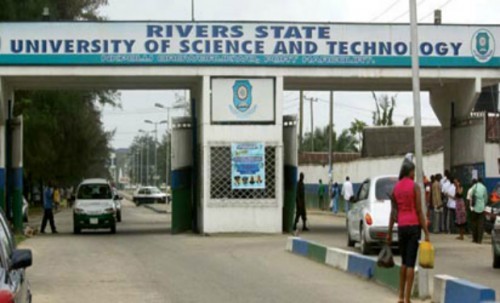
The Centre of Excellence (CoE) in Marine Engineering and Offshore Technology established by the Shell Petroleum Development Company of Nigeria Ltd (SPDC)-operated joint venture at the Rivers State University (RSU) is set to open its doors to the pioneer students who are currently being screened in an elaborate admission process. More than 100 candidates had applied in response to newspaper advertisements, and the shortlisted ones are being screened and interviewed preparatory to commencement of studies in April.

rivers-state-university
Rivers State University

“We continue to thank NNPC and SPDC for being part of our success story at the university,” RSU Vice Chancellor, Professor Blessing Didia, said at the start of the admission interviews. “We are very happy that the centre has taken off, and we congratulate NNPC, SPDC and the other joint venture partners for what they have done for the university.”

Also speaking, the Head of University Relations, SPDC, Professor Edmond Allison-Oguru, expressed the hope that the Centre of Excellence would bring the much-needed improvement in marine engineering and offshore technology in the Niger Delta.

The CoE in Marine Engineering and Offshore Technology, the first in Nigeria, will run 18-month Master’s and Diploma programmes, covering classroom lectures, practical sessions, term project modules and a six-month internship in the oil and gas industry. The multi-million-naira facility was inaugurated in June 2017, during which SPDC Managing Director and Country Chair, Shell Companies in Nigeria, Osagie Okunbor, pledged that it would produce industry-ready Master’s degree graduates to further advancements in Nigeria’s offshore technology sector.

The SPDC JV had earlier established a CoE in Petroleum Engineering and Geosciences at the University of Benin, and endowed six professorial chairs in Nigerian universities as part of the support for the academia.

In 2016, a Chair in Light Weight Automobile Engine Development was established at the Federal University of Petroleum Resources in Effurun, Delta State, which is expected to contribute to the growth of local content in Nigeria’s automobile industry. Also, research at the Shell Professional Chair in Petroleum Engineering at the University of Port Harcourt in 2012 produced the Optiwell well-bore stability software. Use of the software has significantly reduced drilling time as well as costs associated with mud loss and other drilling challenges.

The support for universities is implemented along with other social investment schemes of the SPDC JV, which include the Shell Eco Marathon, the Sabbatical and Research Interns Scheme, Research and Development Grant for competitive proposals and Data support for academic activities from undergraduate to doctoral levels.

Climate change: Farmers advised against early planting

0

Farmers have been advised farmers not to rush into planting crops as it may spell doom for them.

women-engaged-in-dry-season-rice-farming-through-irrigation
Women engaged in dry season rice farming through irrigation

Prof. Charles Igwe of the Faculty of Agriculture, University of Nigeria Nsukka (UNN), gave the advice in an interview with the News Agency of Nigeria (NAN) in Nsukka, Enugu State, on Thursday, March 1, 2018.

Igwe, a professor of Soil Science and the present Deputy Vice-Chancellor, Administration in UNN, said that, based on Nigeria Meteorological Agency (NIMET) prediction, there might be a dry period after the first and second initial rains.

He noted that lack of water in the soil could make crops planted in the southeast to roast as a result of heat occasioned by climate change.

“Based on NIMET prediction this year that there may be dry period after first and second rain in the southeast, it is not advisable for farmers to start planting crops now to avoid heat roasting the crops.

“The happiness of every farmer is to see his planted crops germinate and grow very well so that he will have bumper harvest.

“They should wait till the month of May to plant their crops when NIMET says steady rain will start,” he said.

The DVC said that farmers could start clearing the bush and wait for tillage and planting when there is steady rainfall.

“Farmers can start clearing of bush and other activities but tillage and planting should only start when there is steady rainfall,” he said.

He said that farmers with supplementary forms of irrigation could go ahead to plant vegetables as this is best time to plant vegetables.

“Farmers that have pump water, stream or other form of supplementary irrigations can go ahead and plant vegetables and crops in their farms provided they have enough water for the farm.

“With supplementary irrigation, the farmer will be able to supply the crops with water requirement and the crops will have normal growth and good yield.

“For farmers who have supplementary irrigation, this is the best time to plant vegetables and  make profit from it, as vegetables cost more now because of its scarcity in markets,” he said.

Igwe urged Nigerians to always pay special attention to agriculture to achieve food security and increase the country’s foreign exchange.

By Hilary Akalugwu

LCBC member states asked to end insecurity at Lake Chad region

0

Prof. Peter Nwilo, former Surveyor-General of the Federation, on Thursday, March 1, 2018 urged the member states of Lake Chad Basin Commission (LCBC) to ensure security at the Lake Chad region.

unep-1
The climate variability impact on Lake Chad has also worsened the abundance and conservation status of biodiversity. Photo credit: UNEP

Nwilo gave this advice in an interview with the News Agency of Nigeria (NAN) in Lagos.

According to him, the current situation of insecurity and regional instability at the Lake Chad region are threats to any meaningful resolution to the environmental degradation of the area.

“The current situation of insecurity and regional instability at the Lake Chad region must be addressed and resolved fast for this initiated collaboration among member states to thrive.

“Many people have to be on ground to ensure that Lake Chad is restored to its former glory and they cannot be working in a hostile environment,’’ he said.

Nwilo, who is also a lecturer at the Department of Surveying and Geo-Informatics, Faculty of Engineering, University of Lagos, said many studies had been done on the Lake Chad Region.

He said one of the studies was on “Spatio-Temporal Assessment of Water Depletion and Environmental Changes in Lake Chad”.

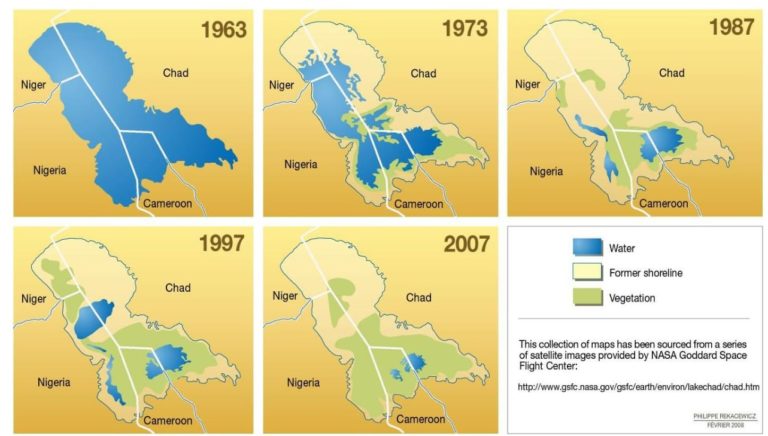
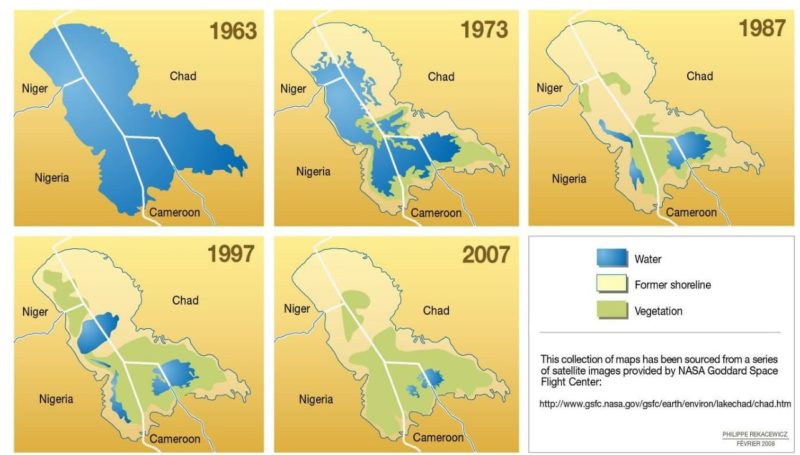
Nwilo said the study showed that Lake Chad water resources had shrunk to75 per cent in surface area with reference to the situation in 1973.

He said that he carried out the study with two lecturers in the department and a researcher at the National Space Research and Development Agency, Abuja.

According to him, the study investigates certain changes in the lake’s environment over a period of four epochs, 1973, 1987, 2003 and 2007.

Nwilo said using inter-basin transfer to recharge the lake as agreed at the just concluded LCBC conference in Abuja was a good option as a long term goal.

He said the member states should also explore the possibilities of controlled flood management channelled toward the rivers that empty into the lake in the meantime.

Nwilo said that Research Centres of Excellence should also be established for the promotion of education, training, research collaboration and skills transfer among the member states of the commission.

Lake Chad Basin Commission held a four-day conference on that ended on Thursday in Abuja had the theme: “Saving the Lake Chad to Revitalise the Basin’s Ecosystem’’.

President Muhammadu Buhari had on Wednesday described the shrinkage of Lake Chad as one of the main factors responsible for insurgency and socio-economic unrest in the Lake Chad member countries.

Buhari, who spoke at the International Conference on Saving the Lake Chad said the negative effects of the shrinkage of Lake Chad “are indeed enormous’’.

The lake, which is one of the oldest lakes in Africa, is shared by Nigeria, Cameroon, the Central African Republic, Chad and Niger.

By Chidinma Agu

Concern over the vulnerable as cold grips Europe

0

A wave of cold weather hitting Europe this week poses health risks, particularly to people in vulnerable situations, the World Health Organisation (WHO) experts on the continent have warned.

Snow - UK
Snow falls in North London, leaving frost covering the front of a bus. Photo credit: The Daily mail

Temperatures are expected to plunge below average in western European Russia, central Europe, the Balkans and the Baltic States.

“Cold, even in places where the temperatures are not at their lowest, can be harmful to people’s health in many ways. It can aggravate existing conditions and raise the risk of increased blood pressure, heart attacks and strokes. Taking preventive action can help reduce the health impacts and risks,” says Dr Zsuzsanna Jakab, WHO Regional Director for Europe. “WHO is carefully following the situation in countries of the European Region. Affected countries should stay alert. Measures must be taken to protect people at risk.”


Poor and vulnerable at highest risk of cold-related illnesses

Cold weather increases the risk of cardiovascular and respiratory disease. Anyone can be affected by cold temperatures at home, at work, while commuting or during leisure activities. Those most at risk of cold-related illness include elderly people, children, and people who have chronic diseases or physical or mental limitations. People taking certain medications or those who are malnourished are also at greater risk of cold-related illnesses.

Frequently, poor households are the hardest hit as the poor can least afford to adequately heat their homes. Homeless people, and refugees and migrants can be especially vulnerable. Their risk increases if they lack adequate shelter, proper clothing, food and medical care.

Health and social services often face the challenge of caring for an increased number of patients suffering from various cold-related illnesses. Disruptions in services and infrastructure can further indirectly aggravate the health effects.


Facts and figures

  • Extreme weather, including cold waves, are common in countries of the WHO European Region and are expected to occur more frequently and severely as a result of global climate change.
  • Severe cold weather spells are especially common in eastern European countries, where 28 people per million died as a result of extreme cold events in 1991–2015.
  • Adverse health effects of cold weather are also costly to health-care systems: in 2009 the United Kingdom’s Department of Health estimated that annual costs to the National Health Service of treating winter-related diseases amounted to around £859 million.
  • A global study conducted by the London School of Hygiene and Tropical Medicine has shown that moderate cold caused more deaths than moderate heat.
  • Many cold-related deaths actually occur on moderately cold days.
  • Deaths associated with cold weather are caused by coronary heart disease, cerebrovascular incidents, respiratory diseases, hypothermia and trauma.
  • Illnesses associated with cold temperatures include: injuries from falls and accidents, hypothermia, cardiovascular problems, respiratory problems, mental health issues including depression, etc.


WHO in Bonn provides guidance to prevent health consequences of cold

The adverse health effects of cold weather are largely preventable. “Governments need timely warnings and solid evidence to better protect people from adverse environmental conditions – and our experts in the Bonn Centre are key partners in ensuring this,” says Dr Elizabet Paunovic, Head of the WHO European Centre for Environment and Health, Bonn, Germany. “Our team provides evidence-based solutions to global challenges affecting the environment, such as on climate change, air pollution, safe water and sanitation, industrial contamination and many others.”

The Bonn Centre is becoming a more important stakeholder in health as we see more adverse environmental conditions which impact on health, such as these cold spells, which are one of the results of climate change. “In cases of extreme adverse environmental conditions, the Bonn Centre has a mandate not only to assist governments to protect their nationals but also to reach out directly to the public through the media, to better inform and hence ensure that the public are well prepared and protected,” adds Dr Paunovic.

The Bonn Centre has developed a set of health recommendations related to cold weather in the following areas:

  • Adverse health effects of exposure to cold
  • What the public can do in preparation for, and during cold weather
  • What health and social services can do
  • What general practitioners can do
×