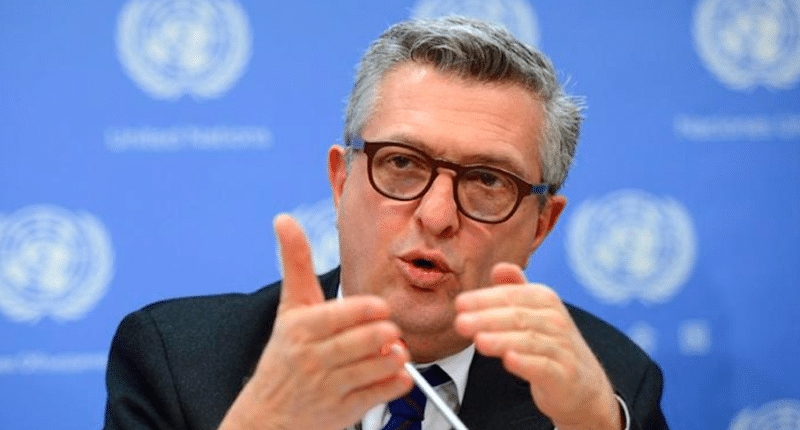
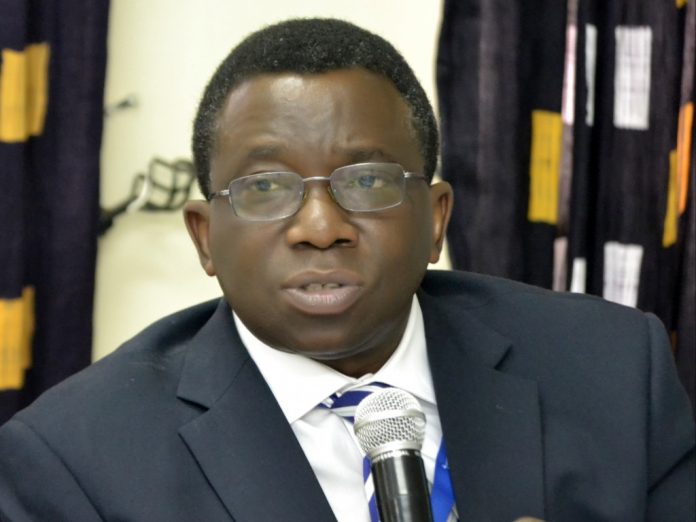
The High Commissioner, United Nations High Commission for Refugees (UNHCR), Mr Philipo Grandi, has expressed worry that about 68.5 million people were currently living around the world as refugees.
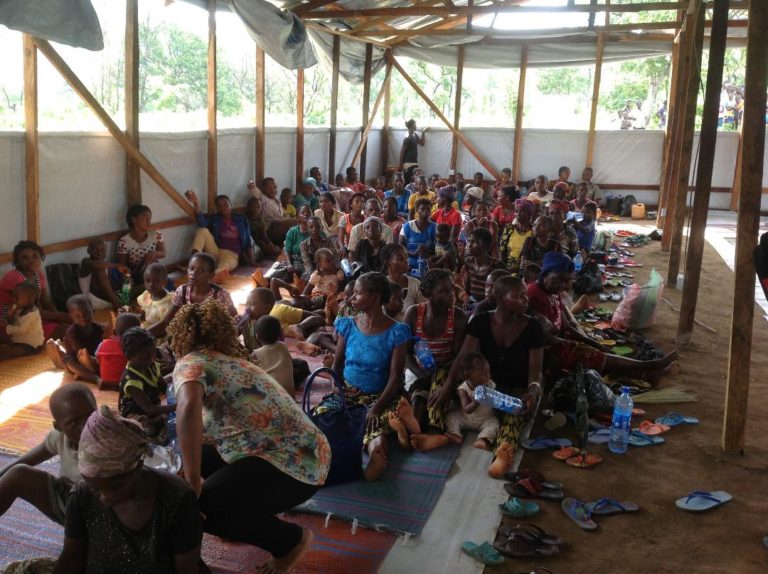
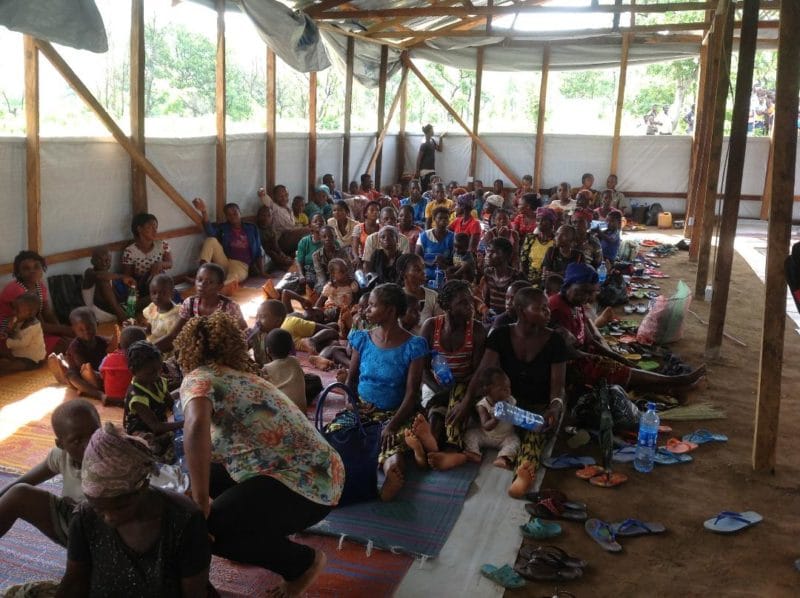
Cameroonian refugees in Nigeria
Grandi stated this in his address on Wednesday, June 20, 2018 to mark the World Refugee Day at Anyake, Ikyurav-ya in Menev District, Kwande Local Government Area of Benue State, the settlement where Cameroonian refugees are camped.
He said the growing number of refugees across the world has called for a need to increase support to assist them return home when the time was right, or build new lives elsewhere.
He noted that they needed to be included in new communities and given the chance to realise their potentials.
Stressing further, the High Commissioner urged countries and communities hosting refugees to evolve more systematic, long term support as they take on the job of helping the uprooted families.
Grandi also said that helping refugees to rebuild their lives needed the cooperation of everybody, so that they could achieve what most people take for granted such as education, a place to live, a job, and being part of a community.
“I challenge organisations and others to join us in receiving and supporting refugees in our schools, neighbourhoods, and workplaces,” he said.
In a welcome address, the UNHCR Head of Office Adikpo, Mr Thomas Faustini, encouraged people to strive to be resolving issues amicably, devoid of conflict in order not to displace people.
Faustini further appreciated the Federal and Benue governments, as well as the non-governmental organisations that were taking care of the Cameroonian refugees.
The Senior Desk Officer, UNHCR Geneva, Mr Zulqarnain Anjum, said that the Cameroonian refugees who were of school age would be enrolled in schools in order to build their capacity to be of immense benefit to themselves and the society.
Chairman, Kwande Local Government Area of the State, Mr Terdoo Kente, appreciated the host community for donating their farmlands to be used as camp for the refugees.
Represented by the Vice Chairman, Mr Andrew Orvande, Kente commended the various organisations taking care of the refugees, stressing that it was a Herculean task to cater for displaced people.
Also, the Divisional Police Officer (DPO), Kwande LGA, Mr Rasheed Alli, called for the fencing of the camp so as to check criminality, stating that the Police would continue to ensure the protection of lives and property in the area.
Meanwhile, leader of the host community, Mr Levi Ikyum, charged the refugees not to tamper with the mineral deposits in the area to avoid conflict with the community.
With more than 68 million people worldwide displaced due to conflict or persecution, UN Secretary-General António Guterres has called for unity and solidarity as a first step to support them.
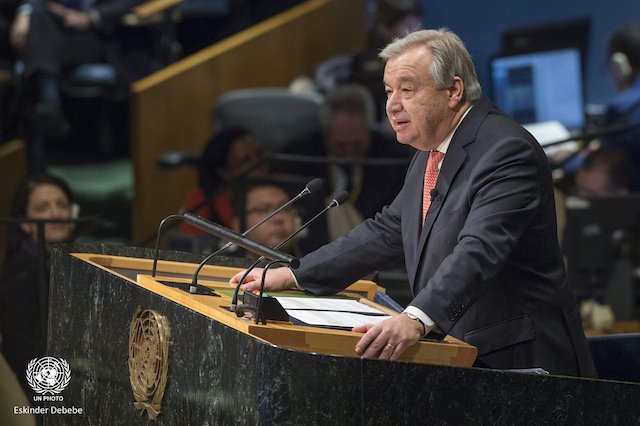
Antonio Guterres, UN Secretary General
Guterres, who made the appeal in a message for the World Refugee Day, observed on June 20, said the number of refugees was roughly equivalent to the population of Thailand.
The UN chief, himself a former High Commissioner for Refugees, reported that a person was displaced every two seconds during 2017.
“On World Refugee Day, we must all think about what more we can we do to help. The answer begins with unity and solidarity,” he added.
Guterres also expressed deep concern over the rise in the number of refugees who are not receiving the protection they are entitled to.
He added that communities, or countries, that provide a safe haven for those fleeing war or persecution should be supported.
Later in 2018, a Global Compact on Refugees would be presented to the international community meeting at UN Headquarters in New York.
Guterres said the global gathering offers “a way forward” while also recognising the contributions that refugees make to the societies hosting them.
“As long as there are wars and persecution, there will be refugees. On World Refugee Day, I ask you to remember them.
“Their story is one of resilience, perseverance and courage. Ours must be of solidarity, compassion and action,” Guterres said.
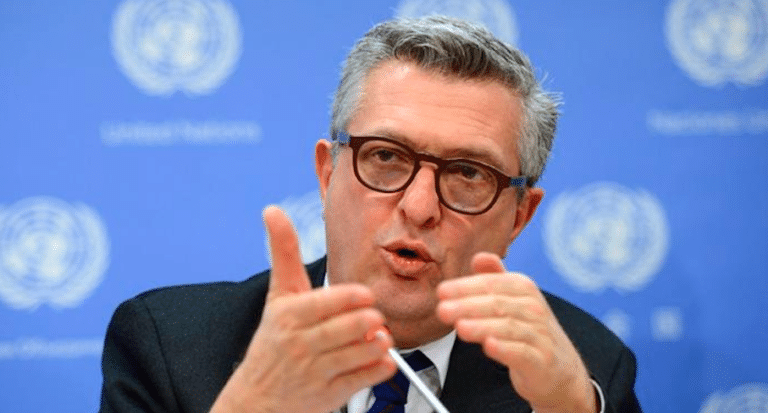
The UN High Commissioner for Refugees (UNHCR), Filippo Grandi, said the number of people forced to flee their homes in 2017 rose to 68.5 million, warning that the world’s displacement hotspots “are becoming hotter”.
UN High Commissioner for Refugees (UNHCR), Filippo Grandi
Grandi also said nearly three million more people were displaced year-on-year, citing ongoing, protracted violence around the globe and a lack of solutions to conflicts as reasons for the increase.
According to him, more than two thirds of all refugees worldwide originated from only a handful of countries.
He said that “continuous pressure on civilians” caught up in fighting, had pushed them to leave their homes.
Top of the list is Syria, where seven years of brutal fighting had forced more than six million people to seek shelter abroad, followed by Afghanistan (2.6 million) and South Sudan (2.4 million).
The High Commissioner noted ongoing concerns over 1.5 million Syrian refugees in neighbouring host countries, including Lebanon, stressing that “it’s not a question of ‘if’, but ‘when’” they will return to Syria – once conditions allow.
New disputes in 2017 were also significant contributors to global displacement, he said.
These include the exodus of more than 700,000 Rohingya refugees from Myanmar to Bangladesh in 2017, he said, adding that it is still not safe for them to return, as well as 1.5 million Venezuelans who had sought shelter in neighbouring countries in Latin America.
Grandi also expressed concern for the Democratic Republic of the Congo, where violence has spread to formerly peaceful areas of the vast country and caused displacement figures to double in 2017, to 4.4 million.
The report also found that 85 per cent of the 68.5 million displaced in 2017 came from poor or middle-income countries.
This, Grandi added, “should be an element dispelling the notion” that the so-called crisis is only in the rich world, “which it is not”.
“It continues to be a crisis mostly of the poor world – so, people from poor countries moving to poor countries, or staying within their country, as displaced.”
In addition, 70 per cent of the world’s displaced are nationals of just 10 countries, according to the UNHCR report.
“This is also significant because it means, frankly, that if there were solutions to conflicts to these countries – or some of them at least – this number could start to come down.
“But we haven’t seen any significant progress in peace-making or peace-building in any of these 10 countries,” the high commissioner said.
In spite of the rise in displacement driven by persecution and violence and the lack of conflict resolution, Grandi struck a positive note, saying solutions were within reach and UNHCR is helping to find solutions to the pressures caused by mass displacement.
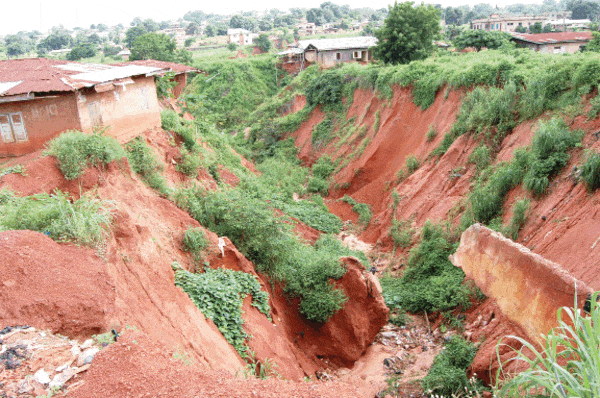
The Nigerian Erosion and Watershed Management Project (NEWMAP) has promised to resettle households of three communities in Anambra State that will be displaced in the course of rehabilitation on erosion sites.
A erosion site in Idemili, Anambra State
Dr Odili Ojukwu, a consultant to NEWMAP in Anambra State, gave the assurance on Wednesday, June 20, 2018 at a stakeholders’ meeting held with representatives of the communities in Agulu, Anaocha council area.
Ojukwu listed the communities to include Agulu in Anaocha Local Government Area as well as Oko and Nanka in Orumba North Local Government.
The meeting was titled “Preparation of Environmental and Social Impact Assessment (ESIA) and Resettlement Action (RAP)”.
According to him, the process of registering people with genuine claims is ongoing, and enjoined the affected people to register.
He said that people expected to register were those whose property, economic trees, farmland and other valuables would be damaged when the civil works begin.
The consultant urged the people to get involved in the entire gamut of the project as it was their own and not a “government thing”.
“This consultation is meant to ensure that no one is left out in our resettlement plan, those whose valuables will be affected during control works should endeavour to register with us.
“People with genuine claims will be commensurably resettled, this is your project, you must take full ownership, it is not the usual government thing because you will still be with the people that will live there,” he said.
In his remarks, Dr Emmanuel Okafor, Permanent Secretary in the Anambra State Ministry of Environment, said the state government was determined to bring lasting solution to the erosion menace in the state.
Okafor, who is also the chairman of NEWMAP Technical Committee, said the engineering design of the project had been approved by the World Bank and the counterpart funds fully paid by the state government.
He said all was set for the commencement of the rehabilitation and urged the people to ensure maximum cooperation with World Bank, the state government and the rest of the team when work began.
Mr Ikeobi Ejiofor, Chairman of Anaocha Council Area, expressed delight that reprieve had finally come their way and called for quality of job that would address the menace sustainably.
Ejiofor said the three communities were united in their common challenge and would render maximum support to ensure that the project succeeded.
“What we need is value for money because we have never come this close to solving the problem.
“Agulu, Oko and Nanka, are good neighbours and are willing to work; we want the work completed in record time,” he said.
Chief Damian Okeke, Chairman of Nanka Erosion Committee, said he was hopeful that this new move to control erosion would be a departure from the previous ones.
Okeke, who is also chairman of Ohanaeze, Anambra chapter, said over 1,000 families in Nanka had lost their ancestral land to the erosion while no fewer than 500 lives had been lost to the menace.
He recalled that previous attempt had been made around 1940 by the colonial masters, 1983 by former Presidents Shehu Shagari in 1983 and Goodluck Jonathan in 2014 but without success.
“It is a welcome development, Nanka community welcomes it, we see hope because we have lived with it for a long time.
“We have been hosting government and international visitors with respective to this erosion since 1940s but this the first time we are seeing high level of commitment, we thank World Bank and Anambra State Government.
“What we want is to save what is left for us, so we are fully ready to cooperate with them,” he said.
In his remark, Mr Mike Ivenso, Project Coordinator of NEWMAP in Anambra State said the project would be executed according to best international standards.
Ivenso represented by Mr Emeka Achebe, Head of Communications in NEWMAP said there would be constant engagements with the affected communities to ensure that their livelihood were normal during and after the control works.
“You can be assured of best of everything, contactors, supervision, social and environmental practices while the project lasts,” he said.
Prof. Laz Ekwueme, Igwe Innocent Obodoakor, traditional rulers of Oko and Agulu respectively, Presidents General of the communities, civil society and other representatives were part of the meeting.
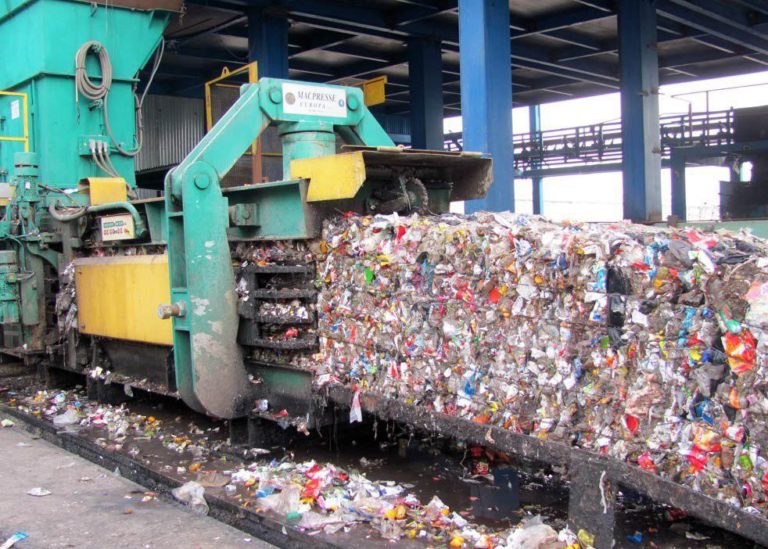
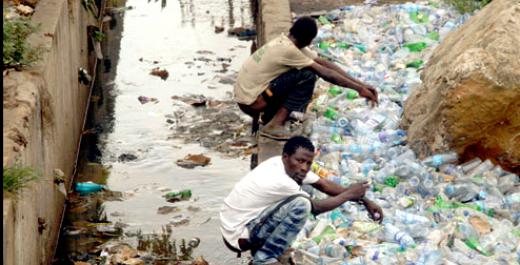
An environmentalist, Lolade Oresanwo, on Wednesday, June 20, 2018 urged the Federal Government to play a pivotal role to driving waste recycling activities in the country.
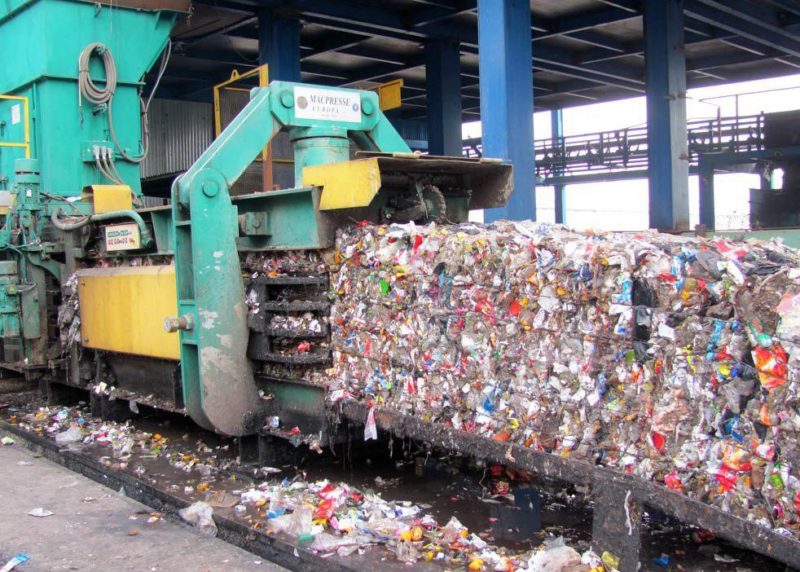
Industrial waste recycling process
Oresanwo, the co-founder of West Africa Energy, told News Agency of Nigeria (NAN) in Lagos that improved waste recycling would facilitate efforts to combat plastic pollution and other environmental hazards in the country.
“The only way to drive recycling is through the government’s involvement. The government has to take a stand to fund and assist businesses that are ready to drive recycling; we will then see a big change.
“The government can also organise public sensitisation and continuous education programmes, while bringing together product recycling stakeholders and assisting them with recycling friendly policies, finance and grants to boost recycling initiatives,” she said.
Oresanwo said that the adoption and practice of recycling innovations around the world was subject to government’s backing and private-sector involvement.
“The adoption of recycling innovations like green roads, for example, falls back to the government.
“If the government decides to use old tyres with asphalt for our road construction, discarded tyres will have more value in recycling and fumes from burnt tyres will no longer pollute our environment.
`If the government aligns with international best practices on single-use plastics and aids product recycling, we will see things change. Once the private sector sees the government backing recycling efforts, changes will come,” she said.
According to her, if recycling projects are supported by the government, they will, in turn, drive employment in the country and ultimately boost the national economy.
“The recycling industry can serve as a way out of the current unemployment in the country. My company currently employs quite a number of people who are involved in recycling.
“If there are about 20 to 50 recycling companies in Lagos state, for instance, unemployment rate in the country will drop drastically,’’ she said.
Oresanwo, however, called for a gradual prohibition of the use of plastic containers in the country because of its negative impact on the environment.
“We can beat plastic pollution in Nigeria by improving industry. There is so much we can do with plastics in terms of recycling and downcycling (a recycling practice that involves breaking an item down into its component elements or materials).
“We can reduce the single-use of plastics rather than banning plastics completely. Let us work towards a gradual ban; let us create industries that will capture these plastics and create employment,” she added.
The Nigerian Meteorological Agency (NiMet) says farmers in Dutse, the Jigawa State capital, may record bumper harvest due to the projected rainfall patterns in its Seasonal Rainfall Prediction (SRP) for 2018.
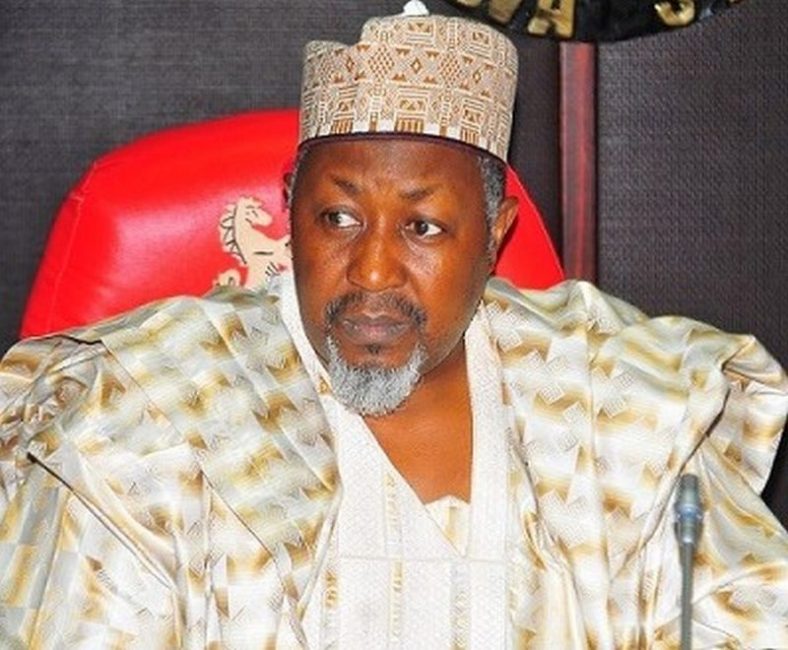
Mohammed Badaru Abubakar, Governor of Jigawa State
Malam Muhammad Abdullahi, State Manager of NiMet, said this in an interview with News Agency of Nigeria (NAN) in Dutse on Wednesday, June 20, 2018.
He said that the predictions of NiMet showed that Dutse would get rain on May 29 but “rains started falling from May 2, May 19 and May 11; which means the rains started before our prediction date.’’
Abdullahi said that with the positive development, farmers would have bumper produce harvests, not only in Dutse but also in other places across the state.
The meteorologist, however, urged farmers not to panic unnecessarily because of the inconsistent rainfall, saying that the rains would stabilise in due course.
“By our predictions, the rainy season will end in Dutse by Oct. 22; there would be 149 days of rainfall while 758 millilitres of rainfall are expected to be recorded,’’ he said.
Abdullahi, nonetheless, urged farmers in the state to plant only improved seeds which were climate-friendly to enable them to get good harvests.
Are you among the cross section of Ghanaians who believe that “GMOs are evil,” “GMOs are very bad,” “GMOs are manufactured by the whites and targeted at Africans to kill us in order to reduce our population,” “the production of GMOs is part of the satanic agenda to keep humans under bondage,” and therefore should not be allowed in the country’s agricultural sector?
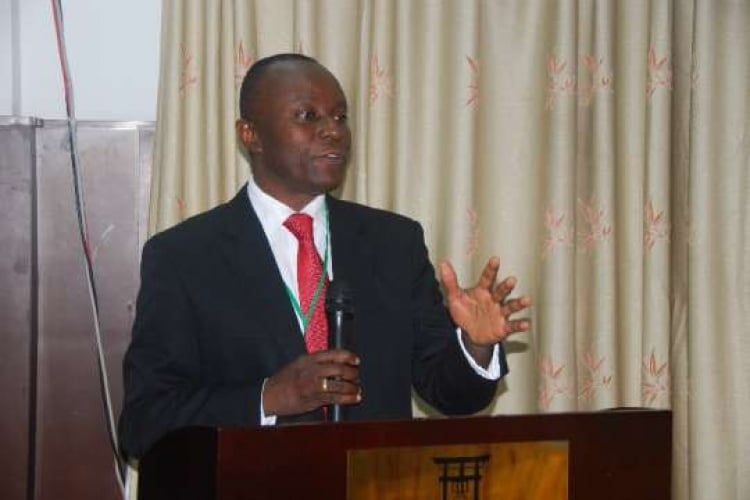
Prof. Victor Agyeman, Director-General of Ghana’s Council for Scientific and Industrial Research (CSIR)
Then you are not alone, but belong to the group of people who are highly suspicious of foods and products from genetically modified organisms (GMOs). This has come about, mainly due to the fear of the unknown, because of which, concerned individuals and groups are cautioning people against eating food or using products from genetically modified crops. This is because according to them, such crops or products will have irreversible adverse impacts on human health, the environment and animals.
People are also being told that the process of getting GMOs is unethical and equal to playing God. GMOs are acquired through the scientific process of introducing into plants and animals desirable genes from other related species. This process is known as genetic modification and associated with biotechnology, which are scientific methods used to address certain agricultural and health challenges.
“And this should not be a cause for alarm,” says the Director-General of the Council for Scientific and Industrial Research (CSIR), Prof. Victor Agyeman. “The process is essentially science, and science is the way to go and modern biotechnology including genetic modification is one of the vital new sciences we need as a country,” he added.
In an interview, Prof. Agyeman reminded Ghanaians that science plays a crucial role in fostering socio-economic development for human survival. “There are instances, when for the survival of man, we need to take drastic measures including modern biotechnology,” he said.
Prof. Agyeman noted that the country is currently experiencing fluctuations in the food sector due to decreasing agricultural production as a result of reducing arable lands for agriculture, because of competitive land uses, unsustainable farming practices, rapid population growth, urbanisation and climate change impacts among others factors.
He stated: “If we don’t do anything about the current situation in this country, and allow people’s fears and uncertainties about GMOs and modern biotechnology to stop us from adopting it; we will lose our foods and soils, and ground water will be reduced and our water resources will be depleted.”
And probably, it is high time Ghanaians pay closer attention to the subjects of modern biotechnology and genetic modification by learning more about what they are, how they work and the benefits they have to offer.
The new report released on the impact of genetically modified (GM) corn, provides information that is contrary to people’s fears and can help them learn more about the subject. Published in the February 15th, 2018 edition of Nature’s “Scientific Reports,” by a team of researchers, the report, presents among other things, findings of the study conducted over a 21-year period.
And its conclusion is that there are huge benefits and little risks from genetically modified crops. The results focus on some key areas. One is that genetic modification increases the yields of corn by addressing two sources of loss – pests and weeds that individually accounts for the loss of one third of yields. The Report indicates that genetically modified corn resistance to both experience a 25 % increase in yields. This means producing more food on less land, hence, efficient use of land, less deforestation and less greenhouse gas emissions.
Another key finding is that corn fields experience an average of 60% reduction in damaged crops and none of the nutritious composition of corn is reduced. Rather, genetically modified corn was found to have one third less of the poisonous chemicals “mycotoxins” introduced into crops by insect attacks. This finding should be of interest to developing countries, because as the Report indicates – contamination of grain is huge in developing countries, where illnesses caused by such contaminations have significant economic costs.
The study additionally examined another dominant concern that genetically modified crops use chemicals that cause unintended environmental harms. The report establishes that overall, there is no substantial effect on insect biodiversity and that only one family of the parasitic wasps is negatively affected.
The significance of this report is that it highlights genetic modification and modern biotechnology as important scientific tools for enhancing the yields and nutritional value of crops among other benefits. Additionally, the report concurs what other Ghanaian scientists have stated about GMOs and modern biotechnology.
For instance, a Senior Research Scientist of the Biotechnology Nuclear Agricultural Research Institute (BNARI), Ghana Atomic Energy Commission (GAEC), Dr. Vivian Oduro says in Ghana, modern biotechnology can be used to address stable crops diseases like the cassava mosaic, cassava brown streak virus and the black sigatoka disease in plantains that affect crop nutrition and reduce yields. She explained that “these diseases can be addressed through modern biotechnology to increase productivity, enhance food and nutritional security, ensure higher economic benefits and safeguard the environment.”
An Associate Professor of the College of Science and Technology of the Council for Scientific and Industrial Research (CSIR), Dr. Marian Quain says the issue of concern over the safety of genetically modified foods is adequately taken care of. “Scientists call for a cautious case-by-case assessment of each product or process prior to its release in order to address legitimate safety concerns,” she noted.
Moreover, the scientists have also dispelled rumours that “once Ghana starts producing genetically modified seeds, farmers will be forced to adopt that option.” A Senior Advisor to the Ghana Program for Biosafety Systems (PBS), Prof. Walter Alhassan says, “farmers will soon have available the three main sources of seeds – the open pollinated variety, hybrid and the genetically modified seeds.”
He explained that farmers will not be compelled to use only genetically modified seeds. “Farmers will not be obliged to stick to one, but will exercise their freedom to go for the option that they deem best for increased productivity…”
The expectation is that the findings of the report and the work of Ghanaian scientists working on biotechnology related areas will allay the concerns of people about GMOs.
Meanwhile, in Ghana genetically modified crops have not yet being released. But rather, the National Biosafety Authority (NBA) has given permits for field trials that are still on-going in Bt. Cowpea and NEWEST (Nitrogen use efficient, Water use efficient, and Salt tolerant) Rice.
It was an interesting week seeing new places, meeting new people, using different tools and having a first-hand practical experience in the field. EarthCorps is a place to be if you’re hungry of having a lasting impact in the community and the people around you. The work we do create an enabling environment for both the fauna and flora to thrive.
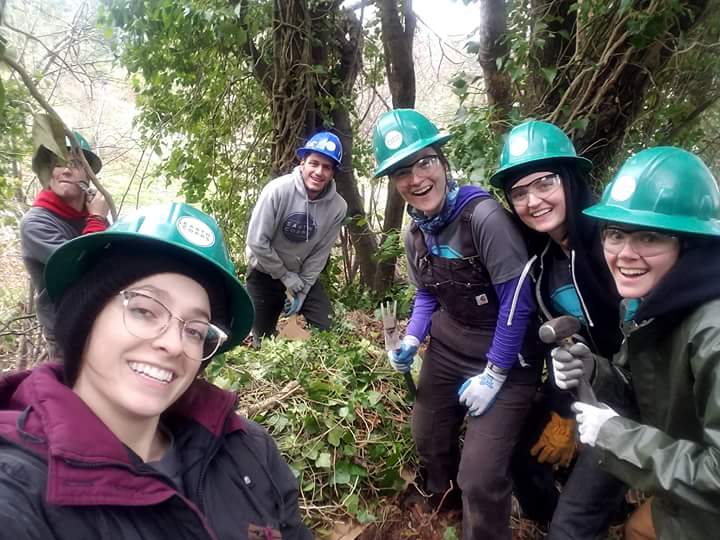
Adnane crew members, EarthCorps
I would like to digress a bit before giving a detailed account of what transpired last week at Camp Lyle McLeod, a camp sitting 10 miles northwest of Belfair.
I can convincingly say that traveling is not just part of education, but a complete school of learning with a well-designed syllabus that any university of the world will struggle to beat. If you’re willing to see things differently, relate rationally with the people and communities around the world, then, traveling should be second to none on your wish list.
It’s amazing how people of Seattle cherish pets and biking. Here, biking is not just a sport; it’s a way of life people can’t do without. Pets, especially dog and cat, are so dear to an average Seattleite. It’s very hard to enter a home without being welcome by these lovely creatures. Pets are not just animals here; they are like children in the homes of their owners because they enjoy all the love and goodies freeborn are entitled to.
It’s necessary I found myself, before getting lost in the wilderness of thoughts painting the colourful world of Seattleites. The week started with me feeling energetic and getting ready for the task ahead.
We all had our first fieldwork experience in the beautiful park of Bellevue, removing blackberry, using tools like hand pruner, shovel, pick mattock, pulaski and brush cutter. Later in the day, Rachael and Madeline did well explaining the English measurements and pacing at the project site. The next day, I and the rest of the corps members had the opportunity to text run the cut and dab herbicide application method on weeds.
In the early hours of Wednesday, we all set out for the astonishing camping trip. The weather was cold and calm, due to the early morning atmospheric shower of rain that greeted us. On getting to the camp, we offload our vehicles and walk to our various cabins to drop our bags. I was quick to secure a bed space at Yurt Village, a cabin close to the Forest Glade amphitheatre.
Camp Lyle McLeod was named after the first Girl Scout leader in Kitsap County. It’s a secluded area, far from the ever busy city sounds, and a place to see nature at its best. It’s a good place for hiking, swimming, nature study and boating. Indeed, the organization has made the best choice in selecting this wonderful site!
We all gathered at Ulali hall around eleven in the morning to start a presentation. This is just a kind of introduction about who we are, what we do and why we choose to join EarthCorps. The presentation started with the organization’s staff, existing volunteers, and finally, the new corps members.
In short, we enjoyed ourselves and at the same time learned through the process by engaging in meaningful conversation with each other. On Friday, seven crews were formed; each crew consisted of one team leader, three old AmeriCorps, one International Corps and a new AmeriCorps. This means that we now have six volunteers forming a crew.
I was fortunate to be in Adnane (crew leader) crew, he is also an international volunteer, from Morocco. Just like me, he started his volunteer journey last year June with EarthCorps and was lucky to secure a second-year placement as a crew leader. Abby, Gabi, Emma, and Robyn will definitely not be happy with me if I fail to mention them. They’re amazing crew members to work with!
I must say, we are not worthless for choosing to volunteer, but priceless for what we offer is precious than gold. Don’t forget to check this space next week to know what happens at Discovery Park, the largest park in Seattle.
By Alabede Surajdeen (Environmental International Exchange Fellow at EarthCorps, Seattle, Washington, USA; alabedekayode@gmail.com; @BabsSuraj)
The Society for Water and Sanitation (NEWSAN) has raised an alarm over continuous practice of open defecation in Internally Displaced Persons (IDPs) camps at Dagban and Wassa in the Federal Capital Territory (FCT).
Open defecation. Photo credit: spynewsafrica.com
Mr Benson Attah, the National Coordinator of NEWSAN, expressed the fear on Tuesday, June 19, 2018 in Abuja when he led other members of the group on a visit to the headquarters of Abuja Environmental Protection Agency (AEPB).
He said that more than 6,000 persons living in the two camps did not have any toilet to use whenever they wanted to defecate, adding that the unwholesome development ought to be addressed.
He stressed that if urgent efforts were not made to stop the continuous practice of open defecation at the camps, there could an outbreak of water-borne diseases such as cholera and diarrhoea.
Attah said that the group found it expedient to draw the attention of the authorities to the plight of the IDPs regarding the poor hygienic conditions and the lack of water supply in the camps.
He stressed that people’s access to Water, Sanitation And Hygiene (WASH) facilities would facilitate inclusive development.
He particularly noted that the site of the IDPs camp in Wassa community, which belonged to private individuals, was littered with faeces, calling for urgent action from relevant agencies to deal with the situation.
“We recently heard of cholera outbreaks in Niger and Kogi states. Imagine the proximity of these IDPs camps to the Abuja city centre; we can’t just keep quiet like that.
“Most of the persons living in these camps interact with people in town; they are the wheelbarrow pushers, the fruit sellers; they enter the same vehicles with us and we interact with them daily.
“If any outbreak of cholera occurs in that part of the FCT, that means danger to everyone. We need to do something as soon as possible, it is a ticking time bomb,’’ he said.
Attah said that his group would not relent in its efforts to ensure an improvement in the people’s access to water and sanitation, adding that efforts in that regard were important if Nigeria wanted to attain the Sustainable Development Goals (SDGs) by 2030.
Responding, Mr Jacob Areo, the Deputy Director, Administration, AEPB, commended the group for the visit and for highlighting the plight of the IDPs in the camps.
He said that a report was already being collated to address perceptible areas of interventions, adding that the overall goal of the board was to scale up hygiene promotion practices in the FCT.
Areo said that the board also had a list of WASH needs in the satellite towns of Abuja, adding, however, that there was a need for improved collaboration between relevant stakeholders to promote hygiene practices in the FCT.
He said that the board would liaise with the National Emergency Management Agency (NEMA) to identify the intervention projects that should be executed in the IDPs camps.
He added that such interventions could be in the form of the provision of temporary toilets to tackle the deplorable conditions of the camps.
Consultant Hematologist with the Ahmadu Bello University Teaching Hospital (ABUTH), Zaria, Prof. Aliyu Babadoko, said on Tuesday, June 19, 2018 that 150,000 Nigeria children were born with sickle cells disease annually.
Minister of Health, Isaac Adewole
Babadoko made the disclosure while presenting a paper during the World Sickle Day celebration at Kaduna State University (KADSSU) main campus in Kaduna.
The don, at the programme jointly organised by Safiyya Sickle Cells Foundation, Sickle Cells Cohost Research (SCORE) and KADSSU, titled his paper: “Journey through the Most Common Genetic Blood Disorder”.
The consultant described sickle cells disease as the most common genetic disease in the world.
He said: “Worldwide 20 to 25 million people have sickle cells disease, while 12 to 15 million are in sub-Saharan Africa and 300,000 are born with the disease worldwide annually.
“Of the total number, Nigeria accounts for 150,000 and about 2-3 per cent of Nigerians have sickle cells disease.
“Nearly 90 per cent of the world’s sickle cells disease population live in Nigeria, India and Democratic Republic of Congo,” he said.
He said that Africa had the highest rate of sickle cells disease in the world and equally had the highest rate of malaria.
In his speech, the Vice-Chancellor, KADSSU, Prof. Mohammed Tanko, said the knowledge and challenges about sickle cells disease was neglected over the years.
Tanko lamented that people, especially in Nigeria, blindly fell in love without knowing their blood genotypes, which to some extent resulted in giving birth to children with sickle cells anaemia.
He lauded the efforts of the organisers of the event and urged them to sustain the tempo, describing it as educative, informative and encouraging.
The programme drew hundreds of sickle cells patients from within and outside Kaduna as well as many experts in the field.