The Nigerian Meteorological Agency (NiMet) is set to commence bilateral cooperation with the India Meteorological Department (IMD) on meteorological information and data sharing for improved service delivery.
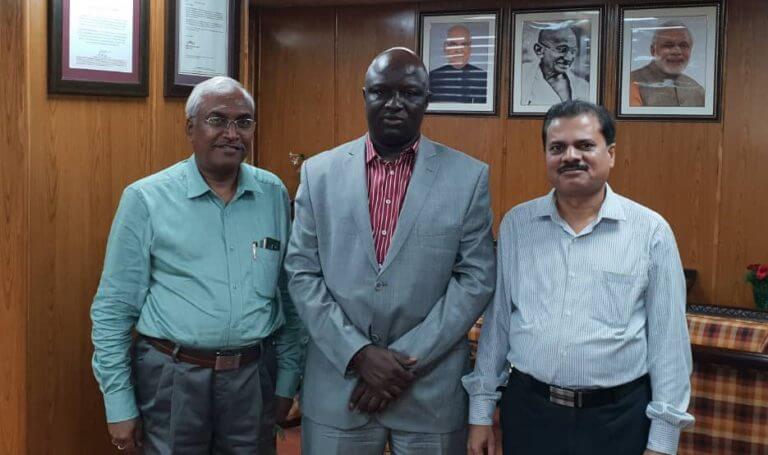
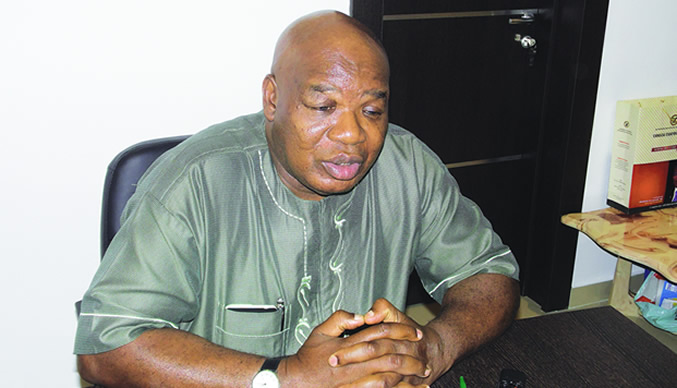
Prof. Sani Abubakar Mashi, Director-General/CEO NiMet flanked on the left by Dr KJ Ramesh, Director – General, India Meteorological Department (IMD), and on the right by Dr Mrutyunjay Mohapatra, Deputy Director-General and Head of Tropical Cyclones Research Centre of the IMD, during a visit by the DG NiMet to IMD in India
Prof. Sani Mashi, Director-General/CEO of NiMet, disclosed this in a statement issued by Mr Muntari Ibrahim, General Manager, Public Relations Unit, in Abuja on Sunday, July 29, 2018.
Mashi said that the collaboration was a fallout of the meeting with the management of the India Meteorological Department on South-South Inter-agency Cooperation during his visit to India.
He said that NiMet had so much to benefit from the Indians, especially in the areas of Numerical Weather Prediction (NWP), Sensor Design, Satellite Meteorology and Research.
According to him, NiMet is to submit a formal request and a draft Memorandum of Understanding (MoU) to IMD on the cooperation.
“It is my firm conviction that collaboration of NiMet with other such agencies and organisations will improve the service delivery of the agency.
“The India Meteorological Department, established 143 years ago, is the national meteorological service of the country and the principal government agency in all matters relating to meteorology, seismology and other allied subjects.
“Once established, this bilateral cooperation will be of mutual benefit to both countries.
Mashi said that he had discussed the modalities for the implementation of the proposed MoU with Nigerian High Commission in India.
In roughly 12 years’ time, Nigeria hopes to be producing a consideration portion of its power from renewable energy sources. Besides increasing the quantity of electricity on the national grid, it will curb emission and address the impact of climate change.
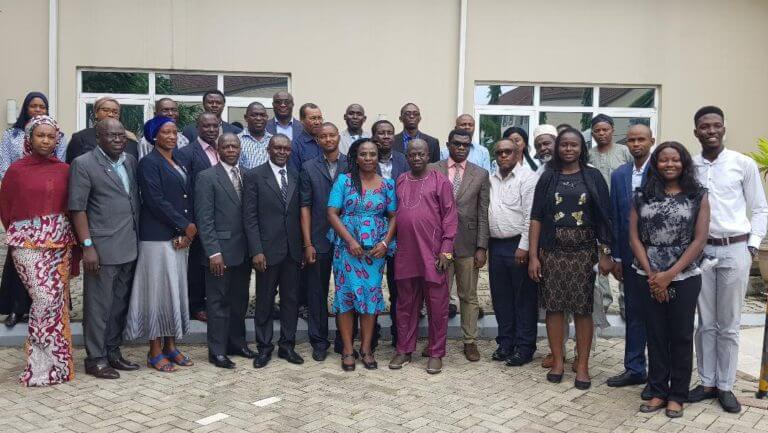
Participants at the two-day Grid-connected Renewable Energy Investors’ Forum in Lagos
This is the overall objective of a somewhat ambitious initiative being embarked upon by a team of stakeholders, who have commenced the implementation of a five-year demonstration project to that effect.
Titled: “De-Risking Renewable Energy NAMA (Nationally Appropriate Mitigation Action) for the Nigerian Power Sector”, the project aims at assisting the Nigerian government in achieving a transformation in the electricity mix such that at least 20GW of the nation’s electricity is generated from solar PV by 2030.
The United Nations Development Programme (UNDP) and Global Environment Facility (GEF), in collaboration with the Energy Commission of Nigeria (ECN), Federal Ministry of Environment (FMEnv), Federal Ministry of Power, Works and Housing (FMPW&H), and other stakeholders are implementing the project, which is utilising the internationally recognised De-risking Renewable Energy Investment (DREI) methodology in addressing barriers and risks hindering private sector-driven and grid-connected RE business in Nigeria.
The project was launched in June 2017.
The DREI methodology was the focus of discussion as project promoters along with the Nigeria Electricity Regulatory Commission (NERC), Federal Ministry of Finance (FMF), Nigeria Bulk Electricity Trading (NBET), Transmission Company of Nigeria (TCN) and Independent Power Producers (IPPs) met in Lagos from July 24 to 25, 2018 the “Grid-connected Renewable Energy Investors’ Forum” to deliberate on issues and challenges hindering their progression to financial close, equipment procurement and construction, as well as recommend ways the de-risking project can be structured to minimise the barriers.
Prof Eli Jidere Bala, Director-General/CEO of the ECN, in a welcome address, disclosed that Nigeria got the promoters’ support for the project because the nation lies within a high sunshine belt and thus has enormous solar energy potentials.
According to him, the mean annual average of total solar radiation varies from about 3.5 kWhm-2 day-1 in the coastal latitudes to about 7 kWh-1 2day-1 along the semi-arid areas in the far North. On the average, the country receives solar radiation at the level of about 19.8 MJm-2 day-1, he added.
Prof Bala added: “Unfortunately, the inherent risks in large-scale renewable energy development in Nigeria has made it difficult for policy makers in the sector to reach some agreements with prospective private investors willing to exploit this huge renewable energy resources in the country. With regards to financing opportunities, domestic financial sector is not financially buoyant to provide low cost local capital for renewable energy investments.
“Therefore, IPPs now depend on international Development Finance Institutions (DFI), who require partial risk guarantee (PRG) from Federal Governments. As we speak, none of the utility-scale pipeline projects have secured DFI financing.”
The ECN boss noted that the UNDP-GEF project is geared towards the implementation of policy and financial de-risking instruments aimed at identifying and addressing barriers hindering large-scale renewable energy development in Nigeria.
“Tackling these barriers will result in building a successful first ever IPP solar PV project in Nigeria connected to the national grid to serve as a demonstration project that will enable us evaluate the technical, institutional and economic viability of on-grid renewable energy projects in Nigeria. It will also help in building local capacity to foster rapid adoption and replication of grid~connected solar projects,” Prof Bala emphasised.
Senator Oluremi Tinubu, Chairman, Senate Committee on Environment, in a goodwill message, underscored the opportunities and benefits that renewable energy sources provide toward economic development and environmental quality of nations.
She said: “It has been shown to be cheaper and more sustainable with a much lower environmental impact than conventional energy technologies. These environmental effects, in turn, negatively impact health and wellbeing of the people. Therefore, as law makers, we remain committed to enacting, amending subsisting Acts and adopting appropriate policies that would help to reduce environmental pollution and achieve a cleaner and greener economy.
“I must commend the United Nations Development Programme and Global Environment Facility as well as other collaborating stakeholders for organising this forum and putting together such a wonderful platform for deliberation.”
Apart from creating awareness among stakeholders on de-risking renewable energy for the Nigerian power sector and establishing the current status and challenges of on-grid renewable electricity generation in the country, Okon Ekpenyong of the ECN stated that the two-day forum also sought to analyse the financial framework for renewable electricity generation plants in Nigeria.
At the close of the event, he said: “The Investors’ Forum has been able to bring together the investors themselves, the policy makers and various organisations, and were able to speak to one another frankly on the things that are bothering them, and they have been able to frankly make recommendations on what they think going outside the box of government that they and the officers handling these issues with the UNDP can sit down together and discuss on the ways to remove those barriers. I believe this programme has been able to bring out the issues and the way forward. Going forward, we are now going to be meeting at sub-groups level with these same people, together with the investors. With this programme, the stakeholders now know themselves, which wasn’t the case before.”
The Togolese government has been called upon to end the use of dental amalgam for children under 16, pregnant women and women who breastfeed by July 18, 2020.
Participants at the meeting to define a roadmap for elimination of mercury in dentistry in Togo on July 18, 2018, in Lome
The call was made by a gathering of stakeholders comprising civil society groups, trade unions, and dentists in a resolution they arrived at following the close of a meeting held at the headquarters of Les Amis de la Terre-Togo on Wednesday, July 18, 2018. The event was organised in collaboration with partners to define a roadmap for elimination of mercury in dentistry in Togo.
Participants further recommended, among others, that, in accordance with the provisions of the Minamata Convention, the government should launch a coordinated multi-sectoral approach for the elimination of dental amalgam in Togo, update the dental school training programme to focus on mercury-free dentistry, and implement a work plan for the phase-out of dental mercury amalgam in the country.
This, they added, should also include reviewing legislation and developing guidelines, collecting baseline data and developing a national inventory. Other recommendations include: initiate demonstration projects and application of the best available, practical and environmentally friendly technology in the management of dental amalgam; promote alternative/transition to alternatives with imported alternative restoration materials; and engage the public and the media and other stakeholders in raising awareness of the health impacts of mercury and the need to prevent cavities.
Prior to the July 18 meeting, the Les Amis de la Terre-Togo (ADT-Togo) had on February 27 and 28 with the support of the World Alliance for Mercury Free Dentistry, organised, at CASEF in Lomé, a two-day awareness and ownership workshop for the elimination of mercury in dentistry in Togo.
The workshop brought together 50 participants from groups of dentists, including the College of Dentists, the National Association of Dentists, dental assistants at Sylvanus Olympio University Hospital in Lomé, and from three other economic regions of Togo.
Consumers’ associations, environmental NGOs, research professors from the University of Lome, lawyers, environmentalists, journalists, representatives of the Ministry of Health, representatives of the Ministry of Environment (focal points or representatives of the Minamata, Basel, Stockholm and SAICM conventions) were also present.
The two meetings, however, revealed that:
Mercury is a chemical of worldwide concern because of its long-range transport in the atmosphere, its persistence in the environment once introduced by humans and its ability to bio-accumulate in ecosystems;
Exposure to mercury can cause damage to vital human organs such as the brain, heart, kidneys, lungs, cardiovascular system and immune system, especially to women, fetuses, children and adults. infants;
The low level of awareness of the dangers of mercury in dental amalgam, in Togo and that dental amalgam is still widely used and is the filling material of the cavities resulting from the removal of dental tissues generally affected by caries and the most affordable, meeting the needs of health care of the people of Togo.
The limited availability of dental health staff, appropriate service infrastructures and materials for dental restoration, and the high cost of dental restoration treatment;
The limited number of dental clinics and centers to provide services to the people of Togo;
Alternative direct restoration materials such as composites, compomers and ceramics can be used for the restoration of carious and non-carious cavities of the anterior and posterior teeth according to selection criteria and specific indications
The Ministry of Environment and Forest Resources, the Ministry of Health and Welfare, UNIDO and other stakeholders have committed to the adoption of Togo Minamata Convention Initial Assessment report (adoption in progress).
At a working session of civil society organisations (CSOs) for the definition of a roadmap for the elimination of mercury in dentistry in Togo on Wednesday, July 18, which brought together 26 participants, including the President of the World Alliance for Mercury-Free Dentistry, Charlie Brown, Mrs. Adetonah Sounkoura, Head of GAPROFA, provided information on a study conducted in Benin by her organisation on mercury contamination.
Dominique Bally Kpokro, Vice President for Africa of the World Alliance for Mercury Free Dentistry, spoke about mercury, types and the negative impacts of mercury on human health and the environment. This was followed by debates and discussions on the two presentations that awakened the consciousness of participants to make commitment to raise awareness on the issue of mercury poisoning.
Mr. Kokou Elorm Amegadze, acting Executive Director of Les Amis de la Terre-Togo, presented the Togolese CSO Action Plan for the elimination of mercury in dentistry in Togo which focuses on raising citizens’ awareness on:
the risks associated with the use of mercury in dental amalgam,
the training of dentists and their assistants,
the promotion of alternatives to mercury in dentistry, advocacy for regulatory measures for the elimination of mercury in dentistry,
advocacy for the definition of a new dental policy,
advocacy for the change of training curricula in dentistry at the University of Lomé among others.
World Alliance for Mercury-Free Dentistry, Mr. Charlie Brown, in his speech, praised Togo’s actions in favour of the end of mercury in dental amalgam and its leadership on the issue. According to him, it is unacceptable to treat teeth diseases with products containing mercury, which he described as a highly toxic substance.
He expressed the hope that the government’s efforts in the implementation of the Minamata Convention and the proposals of civil society would ultimately lead to new, healthy and safe solutions for dental patients, the medical professionals, the public and the environment.
Nigeria is said to have one of the highest deforestation rates in the world, with less than 10 percent of the country forested. Since 2010, the UN-REDD Programme has provided support for the country’s ambitious efforts at forest conservation, climate change mitigation and community development.
Community forest: It became pertinent for Nigeria REDD+ Programme to take steps to create synergies between REDD+ and CBR+. Photo credit: UNDP Cambodia/Chansok Lay/Oddar Meanchey
Cross River State, which has more than 50 percent of Nigeria’s remaining tropical high forests, is host to a Community Based REDD+ Programme (CBR+) that promotes forest management and biodiversity conservation, rural livelihoods improvement with focus on climate smart approaches, capacity building for partici-pation in climate change programmes including REDD+, and sustainable energy alternatives. To date, more than 300 households across 21 communities have benefited from the Programme, which targets women, men and youth. The outcomes and experiences from the CBR+ Programme feed into Nigeria’s national REDD+ process.
Working with civil society groups, the Cross River State CBR+ Programme is aimed at redefining participatory and local-level forest management and conservation, while simultaneously improving rural livelihoods. Through this programme, villagers have improved sustainable management of their community forest and lands by developing management plans and doing reforestation and enrichment planting, including of indigenous timber species and non-timber forest products. One example is bush mango which can yield, by some estimations, up to $10,000/hectare annually from sales of mature fruits. Improved processing of cassava and sustainable cultivation of cocoa are also enhancing productivity and increasing household income by at least 10 percent in some of the target communities.
“The CBR+ Programme provides a platform to en¬courage dialogue among different groups and to ensure community experiences are fed into the CRS REDD+ Strategy,” says Tony Atah, the stakeholder engagement specialist with the UN-REDD Programme in Nigeria. “Local communities have designed and implemented community-based initiatives to improve livelihoods, skills and land and forest management, providing insight on how REDD+ can appropriately respond to local circumstances to reduce carbon emission.”
“The Programme is helping us rehabilitate our mangrove forest and think carefully about sustaining its productivity,” says Chief Bassey Ekeng from Esierebum. “Our dependency on fishing and fuelwood from the mangroves means we need this forest standing if we are to survive, and through REDD+ activities we have developed a land and forest management plan, including practical steps to regenerate over five hectares of mangrove forest.”
“With CBR+, we now have semi-mechanised equipment for the very first time in our community. This allows the women to produce cassava flour at home, doing in 2 days what used to take a week. We are now able to sell our produce and make money for our families,” says Mrs. Martina Afor from Bokalum. “The women are also includ¬ed with men in training for improved cocoa production and sustainable harvesting of non-timber forest products like bush mango, and we have taken an active part in reviewing our community forest management plan. We feel involved and empowered, and our community is now giving us more recognition and support.”
In the Cross River village of Edondon, the CBR+ project has brought together a divided community for the first time. “We have learned that successful forest management will be better enforced when there is social cohesion, political will and productive livelihoods,” says Chief Barry Inyang. “With support from CBR+ and DEVCON, a local NGO that worked with us, we have developed a community forest management plan with bylaws, and we have started to regenerate degraded forest sites, improve livelihoods for women and also improve the value chain for cocoa, the major driver of forest loss.”
Atah added: “REDD+, especially through CBR+ in Cross River State provides useful lessons for good governance in natural resource management. The impacts are being felt, albeit slowly; and more communities are organising to be more involved in natural resource governance, particularly forest.”
Dr Moses Ama, National Coordinator, Nigeria REDD Plus Programme, said: “This tempo must be maintained through more synergies with other REDD+ interventions in Nigeria. The REDD+ programme truly provides the best platform to address climate change challenges considering that in it, we can speak to communities livelihood needs while addressing sustainable Forest management for which is the whole essence of the the REDD+ programme and adjudge the best option to address contemporary climate challenges.
“If we all agree that ‘Forest is the Lungs of the World’ then support must be given to the success of the REDD+ programme, particularly in CRS hosting 50% of the remaining Tropical Forest in the Nigeria – the most populated nation in Africa.”
The Nigeria Global Environment Facility (GEF) Small Grants Programme contributed 50% of the grant and operational fund to the CBR+, according to the National Coordinator, Ibironke Olubamise.
The Lagos State Government has urged members of the public to be wary of the activities of unauthorised law enforcement officers.
The Lagos State Commissioner for Environment, Mr Babatunde Durosimi-Etti
Commissioner for Environment, Mr Babatunde Durosinmi-Etti, said in a statement on Friday, July 27, 2018 that the officers go about defrauding people, in the guise of environmental law enforcement.
Durosinmi-Etti said that the government was perturbed by activities of some bad eggs among public servants, who sometimes abuse the enforcement process to defraud Lagosians.
He said that nemesis had caught up with six officers, who were out on the mission to defraud some hotels in the state, namely JCB Hotel in Omole and Roneks Hotel in Akowonjo.
“Yesterday, managers of the JCB Hotel, Omole and Roneks Hotel, Akowonjo reported the nefarious activities of six officers, who abused the enforcement procedure with the intent to personally enrich themselves.
“These officers are Alaba Alegbe – a Principal Scientific Officer, Famuyiwa Olawale – a Grade Level 10 Officer, Olodun Lateef – Grade Level 10, Agbotoba David – Grade Level 09, Waliu Olajide – Grade Level 10 and Bukky Ajibabi – a Grade Level 09 Officer,” the commissioner said.
He said that the Enforcement Department of the ministry, which was promptly directed to swing into action and investigate the matter, found overwhelming evidence against the officers.
According to him, the evidence includes video recordings and telephone conversation recordings to suggest that the concerned officers have compromised their positions.
Durosinmi-Etti said that government would apply appropriate disciplinary measures, which would include prosecution in the law court to serve as deterrent.
He warned members of the public to stop giving monetary inducement or any form of enticement to officers, who are carrying out enforcement duties.
The commissioner urged Lagosians to always request for the identity of officers and crosscheck abatement notices with the Ministry of Environment or the relevant agencies of the Ministry, in case they found the need to do so.
He said that the government would continue to sanction all dubious enforcement activities by unauthorised persons.
Durosinmi-Etti urged Lagosians to report such unauthorised activities to the ministry through the following numbers: 08023156132, 08027887359; 08037147279; 08186983656.
The World Health Organisation (WHO) and partners have called on countries to urgently increase hepatitis testing and treatment services in order to eliminate viral hepatitis as a public health threat by 2030. The calls come in the lead-up to World Hepatitis Day 2018 to be observed on Saturday, July 28, The Day focuses on the theme: “Test.Treat.Hepatitis.”
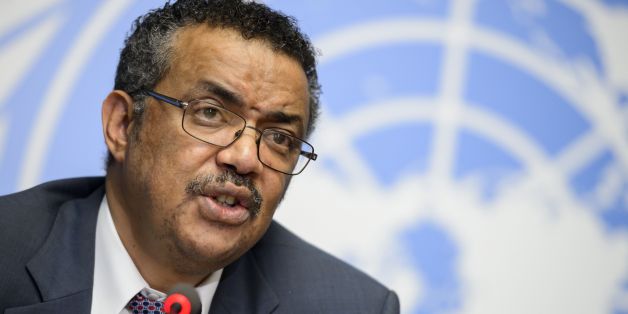
Dr Tedros Adhanom Ghebreyesus, Director-General of the World Health Organisation (WHO). Photo credit: AFP / FABRICE COFFRINI / Getty Images
WHO Director-General, Dr Tedros Adhanom Ghebreyesus, said in a video statement, “We have a clear vision for elimination, and we have the tools to do it. But we must accelerate progress to achieve our goal of eliminating hepatitis by 2030.”
Viral hepatitis B and C affect 325 million people around the world. Left untreated, these infections lead to liver cancer and cirrhosis, which together caused more than 1.3 million deaths in 2015 alone.
Worldwide, less than 20% of people had access to testing and treatment services for hepatitis B and C infections at the end of 2016.
To mark World Hepatitis Day 2018, WHO is holding several events with the Government of Mongolia, a country that is heavily burdened by hepatitis but also a champion in the global fight.
Over 10% of Mongolia’s three million people are living with chronic hepatitis infection. The country started its national Healthy Liver Programme in 2017, with ambitious targets for 2020.
“Within the first year of the national programme, which targeted the 40–65 year age group, we were able to reach more than 350 000 people with hepatitis testing,” said Ms Davaajantsan Sarangerel, Minister of Health, Mongolia. “Over 70% of people diagnosed with hepatitis were provided with life-saving treatment.” The country aims to provide hepatitis B and C screening to 1.8 million people aged over 15 years.
Mongolia’s progress in the fight against hepatitis is led by political commitment and an ambitious universal health coverage agenda. The country is the first lower-middle-income country in Asia and the Pacific to commit to hepatitis elimination, by ensuring universal access and health insurance coverage for hepatitis testing and treatment for its entire population.
The Western Pacific Region has the largest number of people living with chronic hepatitis infections among the six WHO regions. At the end of 2015, an estimated 14 million people were living with chronic hepatitis C infection and 115 million with chronic hepatitis B infection. Everyday, 1200 people in the Region die because they are unable to access effective hepatitis care.
“It is encouraging to see one of the most affected countries in our Region demonstrate such leadership,” said Dr Shin Young-soo, WHO Regional Director for the Western Pacific. “As we work towards the goal of eliminating hepatitis, Mongolia sets a great example for other countries in the Region to follow.”
Aiming to speed up global progress, WHO is also releasing new global guidelines on hepatitis C treatment. The guidelines enable major simplifications in the delivery of curative therapy to the 70 million people living with chronic hepatitis C in the world.
“Eliminating hepatitis will require ongoing innovation, better medicines, and improved health services,” said Dr Gottfried Hirnschall, WHO Director for HIV and Hepatitis. “Our new recommendations should pave the way for everybody with hepatitis C to access testing and curative treatment now.”
WHO and global partners are sharing the experiences of countries such as Mongolia to promote sustained political commitment and broad-based partnerships in many other countries. Reinvigorated action and investments in viral hepatitis are necessary to achieve a world where transmission is halted and everyone living with viral hepatitis has access to safe, affordable and effective care and treatment.
Cotton farmers in Nigeria may have been given a lifeline following the official registration of two Bt Cotton varieties known as MRC 7377 BG 11 and MRC7361 BG11 by the National Committee on Naming, Registration and Release of Crop Materials.
The GM Bt Cotton is said to have failed in Burkina Faso, with farmers making claims from Monsanto
The Director/CEO National Biotechnology Development Agency (NABDA), Prof. Alex Akpa, disclosed in Abuja on Thursday, July 26, 2018 that the approval and registration were granted at the 26th meeting of the committee which held recently in Ibadan, Oyo State.
Prof. Akpa said the official registration marked the entry into the nation’s agricultural system, the first home grown genetically modified crop.
“Bt Cotton varieties that have just been registered are highly viable when compared to the local conventional alternative, the yield is 4.1 to 4.4 tonne per hectare while the local variety is 600 to 900kg per hectare,” he said.
According to him, there are other crops undergoing confined field trials at various stages in different research institutes across the country.
“With this development, Nigeria has demonstrated that it has the institutional capacity and human resources to safely deploy genetic engineering in the agricultural sector.
“This feat achieved by this registration goes to show also that the federal government investment in our research institute is not in vain.
“With encouragement and support from the government, Nigeria has registered its home-grown GM Cotton saving our farmers the trouble of contending with the local conventional variety which is no longer accepted at the international market,” he added.
The DG noted that the development has a wider implication for the socio-economic development of Nigeria as comatose textile industries that have been under lock and key over the years now have hope of resuming production as farmers will have access to high yielding cotton variety.
“This new variety that has just be officially registered has the potential of being adopted in all the Cotton growing zones of Nigeria with maturity of 150 -160 days.
“It is resistant to Bollworm complex, high seed cotton yield, early maturity tolerant to suckling insect pest with fibre length of 30.0 to 30.5mm and a fibre strength of 26.5 to 27.0 g/tex (tenacity) and micronaire (strength) 3.9 to 4.1,” Prof. Akpa said.
Both varieties were developed by Mahyco Nigeria Pvt. Limited in collaboration with the Institute for Agricultural Research, Ahmadu Bello University, Zaria.
The Governor of Edo State, Mr Godwin Obaseki, has constituted a taskforce to halt the destruction of forest reserves in the state.
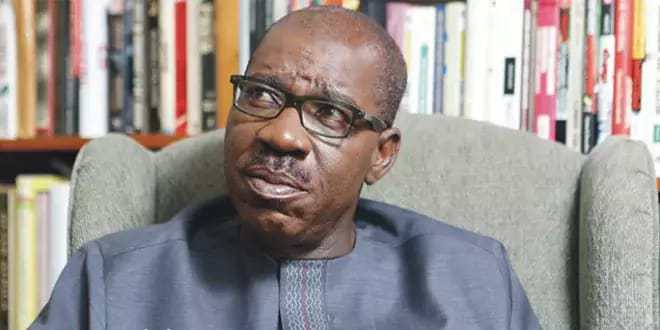
Governor Godwin Obaseki of Edo State
Obaseki announced in Benin, the state capital, on Thursday, July 26, 2018 that the constitution of the taskforce was to find an immediate end to the alarming rate of depletion of the state’s forest resources.
According to him, the integrity of forests in Edo has been compromised with unscrupulous people tying down the state’s public wealth.
“Illegal logging is rife and much of it takes place at night with the bio-diversity being destroyed. These practices have exposed us to harsh effects of climate change and global warming.”
The governor explained that the constitution of the team demonstrated the commitment of his administration toward enthroning best practices in forestry management.
He said that a forestry commission would also be set up to ensure sustainable protection of the forests.
“The threat posed by climate change is real. We cannot leave our future to chance.
“We are already grappling with desertification in the north with the associated crisis and flooding, resulting from indiscriminate felling of trees.
“The taskforce will also guide the State Government on partnerships to ensure the protection and preservation of the reserves’ diverse plants and animals,’’ he said.
The taskforce is headed by the Secretary to the State Government, Mr Osarodion Ogie, and other members of the state’s executive council.
Tunisia and the African Development Bank (AFDB) have signed an agreement for the launch of a pilot project to use drones for data collection to enhance management of agricultural projects in the country.
A drone
The project, to be implemented over the next 10 months, would receive technical management and assistance from South Korea, Minister Zied Laadhari announced during the signing ceremony on Thursday, July 26, 2018.
Laadhari, Tunisia’s Minister of Development, Investment and International Cooperation, was joined by Park Jae-Min, Vice-Mayor of Busan City and Mohamed El Azizi, Director General of the Bank’s North Africa office. The ceremony was also attended by Agriculture Minister Samir Taïeb, and Korea’s ambassador to Tunisia, Cho Koo-Rae.
The pilot project will focus on agricultural operations in Sidi Bouzid in central Tunisia, under the management of Busan Techno Park, a Korean government agency based in Busan, South Korea. Laadhari said the agency would provide equipment – drones and associated computer systems – training, as well as technology transfer.
The agency has already tested the drones for efficacy in managing similar urban projects. Korea is a leading country in the development and use of Unmanned Aerial Vehicle (UAV) for real-time data collection and processing. Drones have been used in agriculture to provide fast and accurate data, helping to improve decision-making at all stages of a project, from preparation to implementation and evaluation.
Laadhari said the pilot was expected to benefit piloting and monitoring of irrigated areas, management of water resources, water tables as well as the effects of climate change in the pilot area.
A founding member of the Bank Group, Tunisia was one of its first beneficiaries in 1967. Currently, the Bank’s portfolio in Tunisia is worth over $2.3 billion covering more than 40 projects and programmes.
A water irrigation and supply system funded by the African Development Bank (AfDB) has transformed the lives of rural farming communities in Cape Verde’s Santiago Island, sparing farmers grueling treks of up to 20 kilometres to fetch water for farming and daily use.
The Picos and Engenhos Watershed Management project has benefited women
Santiago Island, Cape Verde’s largest and most important agricultural centre, depends on water for its survival, but for years had been beset by endemic water shortages. Traditionally women, who make up a significant percentage of farmers, were hardest hit by the shortfall in supply.
The Lopes family are typical farmers hailing from the rugged terrain on Santiago Island. For generations, families like theirs struggled to eke out a living on land that was both hard to work and had low yields. In the dry season, many people headed for the towns in search of work.
That is now mostly a thing of the past, thanks to the Picos and Engenhos Watershed Management project, funded with a $7.55 million loan from the AfDB. A steady flow of water has led to increased agricultural output for 17 new farming associations that have brought together almost 1,000 women smallholder farmers.
Fifty-year-old Amalia Lopes is a member of one of the women’s cooperatives which are showcasing the dramatic change to Cape Verde’s agricultural landscape. Now Lopes looks forward to higher sales of beans and bananas from her newly irrigated fields. She can even afford to send her son to university in Praia, the capital of Cape Verde.
“The right conditions are now in place,” she says, as she calls on youths to make the most of the improved conditions.
As livelihoods improve, women are beneficiaries
Under the Picos and Engenhos Watershed Management project, irrigation systems, wells and reservoirs were constructed over a seven-year period. The bank also helped organise and support vocational training. Courses in long-term agricultural produce, constructional and agricultural engineering, and livestock management or pasture improvement were organised. Most of the beneficiaries have been women.
“Things are better today,” says Lopes.
Statistics back her optimism. Official figures show average salaries have risen to about $1,900 a year. Lopes has even become a spokesperson for her women’s cooperative. She has appeared on TV and radio news and current affairs shows and achieved minor celebrity status in her district when she became one of the first local women to visit Brazil, a country which shares a common linguistic background with Cape Verde.
Herminia Minha is another example of the success of the project. She is one of many women who can sell their produce in local markets in Picos at competitive prices. Now Minha makes enough profit to afford higher education for her children – something that was unthinkable just a few years ago.
“Better irrigation means a greater variety of fruit and vegetables and water for homes,” Joana Lopes says, “I now grow potatoes, tomatoes, cabbages, beetroots, and Chinese cabbage. I sell a lot of lemons at the markets.”
Currently Cape Verde imports 70-75% of its food needs, but authorities are optimistic that the evolution in agricultural techniques and irrigation will rapidly narrow that figure.
The AfDB’s active portfolio in Cape Verde stands at $101,000,000, covering energy, transport, water and sanitation, social, agriculture, and governance.