Home Blog Page 1840

Agricultural Research Council accused of denying Nigerians right to information

0

Media Rights Agenda (MRA) on Monday, July 30, 2018 named the Agricultural Research Council of Nigeria (ARCN) the week’s inductee into the “Freedom of Information (FOI) Hall of Shame” for alegedly violating the provisions of the FOI Act over the past seven years. MRA says ARCN is thus denying Nigerians the right to information in the agricultural development sector.

Prof. Ambrose A.Voh
Prof. Ambrose A. Voh, Acting Executive Secretary of the Agricultural Research Council of Nigeria (ARCN)

The ARCN was established by the Agricultural Research Council of Nigeria Act of 1999 with its functions including preparing annual budgets for agricultural research, training and extension programmes of the institutes under its aegis and receiving grants for allocation to agricultural institutes for the implementation of their annual programmes as well as to universities and other bodies for special research or training projects.

Announcing the induction of the ARCN into the FOI Hall of Shame in a statement in Lagos, MRA’s Programme Officer, Mr. Idowu Adewale, highlighted several failings of the public institution regarding the implementation of the FOI Act which led to its censure by MRA.

He noted that although the ARCN has an active website, it has not taken advantage of this to fulfill its proactive disclosure obligations by publishing on the website the categories of information listed for proactive disclosure under Section 2(3) of the FOI Act.

According to Mr. Adewale, there is no information on ARCN’s website regarding the fund allocations for agricultural research purposes; the receipt or expenditure of public or other funds of the institution; the names, salaries, titles, and dates of employment of employees and officers of the institution; the list of files containing applications for contracts, permits, grants, licenses or agreements, among several other categories of  information, records and documents listed in Section 2 (3) of the FOI Act that must be proactively published by every public institution.

He criticised the ARCN for its lack of responsiveness to requests for information from members of the public citing, in particular, its refusal to respond to an application for information dated August 2, 2016, submitted to it by Public and Private Development Centre (PPDC), a non-governmental organisation based in Abuja, for a list of the contracts awarded by the ARCN in 2015 and its procurement plan for 2016.

Castigating the ARCN for refusing to respond to the application and failing to provide PPDC with the information it requested, Mr. Adewale said: “At a minimum, this information should ordinarily have been published on the institution’s website as part of its proactive disclosure obligations under the Public Procurement Act, 2007 as well as Section 2 of the FOI Act. It was its failure to comply with its proactive disclosure obligations that necessitated the request for information from PPDC, which the ARCN also chose to ignore”.

Mr. Adewale said the Federal Attorney-General’s 2017 Annual Report on the Implementation of the FOI Act submitted to the National Assembly on March 27, 2018 shows that ARCN has failed to submit its annual FOI implementation report for 2017, making it the seventh consecutive year that the institution has failed to comply with its reporting obligation since the Law was enacted.

He described the consistent flouting of Section 29 of the FOI Act by ARCN as an “unjustifiable and unacceptable act of impunity, which should not be allowed to go unsanctioned.”

Citing the “Database of FOI Desk Officers in Public Institutions in Nigeria,” recently released by the Attorney-General of the Federation, Mr. Adewale said “the document is further proof of the ARCN’s determined commitment not to implement or comply with the provisions of the FOI Act” as it shows that the institution has also disregarded the provisions of Section 2(3)(f) of the Act, which requires every public institution to designate an appropriate officer as well as to publish the title and address of such an officer to whom applications for information by members of the public should be sent.

He said: “ARCN’s refusal to designate an FOI Desk Officer as required by Law is also despite repeated reminders and requests from the office of the Attorney-General of the Federation to all public institutions to comply with this provision of the Act and to send details of the person so designated to the Office of the Attorney-General of the Federation for inclusion in the Database.”

According to him, the ARCN is also in breach of Section 13 of the Act, which mandates every public institution to ensure the provision of appropriate training for its officials on the public’s right of access to information and for the effective implementation of the Act.

Mr. Adewale stressed that “the breaches of various provisions of the FOI Act by the ARCN and the persistent disregard by the institution of its duties and obligations under the Law go to show that it is hell-bent on undermining the effectiveness of the Act while its actions are constituting a setback for agricultural development of Nigeria.”

He called on the National Assembly, in exercise of its powers as the ultimate oversight body in the implementation of the Law, to institute measures to ensure that the ARCN and other public institutions which are failing to comply with their obligations under the FOI Act are compelled to fully implement the Law.

Mr. Adewale also urged the Executive Secretary of the ACRN to acquaint the institution’s staff with their duties and obligations under the FOI Act and take urgent steps to implement them, including by using its website to make information available to citizens, especially farmers so that they can harvest vital information that is geared towards agricultural growth and development in Nigeria.

Launched by MRA in July 2017, the “FOI Hall of Shame” highlights public officials and institutions that are undermining the effectiveness of the FOI Act through their actions, inactions, utterances, and decisions.
NASENI targets 7.5MW solar power annually

0

The National Agency for Science and Engineering infrastructure (NASENI) on Monday, July 30, 2018 said it was targeting to generate 7.5 MW solar power annually to serve as alternative energy in the country.

Mohammed Haruna
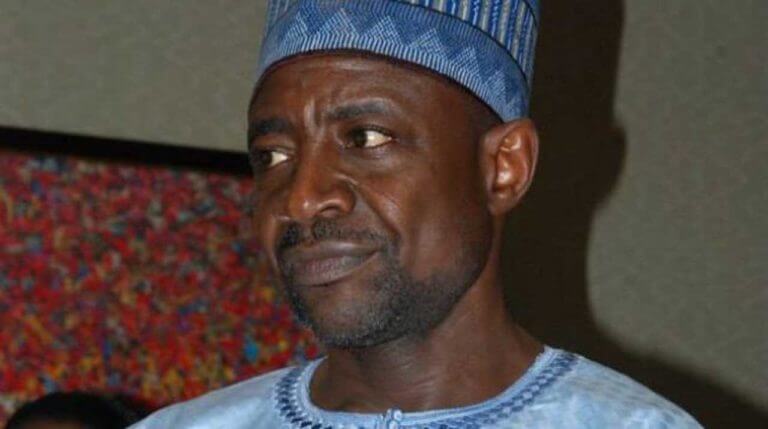
Executive Vice Chairman of NASENI, Prof. Mohammed Haruna

Executive Vice Chairman of NASENI, Prof. Mohammed Haruna, said this while declaring open the agency’s 2018 Solar Installation and Maintenance Training programme for two batches of 20 trainees each in Abuja.

Haruna, who was represented by the Director of Policy, Planning and Analysis, NASENI, Mrs Nonye Onyechi, said that the training was conceived for unemployed Nigerians and would provide alternative power solution in Nigeria.

“It is timely and pertinent that we are trying to address one of the major challenges needed to be resolved for Nigeria to continue in its part of national development.

“Many power projects are ongoing but we all know that the country needs rapid, sustained and easily deployable technologies that would produce maximum and responsive results.

“This is the reason why solar energy is one of the best options of power system infrastructure that we must pursue.

“NASENI has been on this part for a very long time and our efforts have resulted in the establishment of NASENI Solar Energy Limited, Karshi, FCT.

“The company has capacity to manufacture and deploy 7.5 megawatts solar panel per annum,’’ he said.

Haruna urged the trainees to explore the opportunity that the training provided, describing it as a suitable platform to build their capacity in installation and maintenance of solar system in homes and offices as well as improving power supply in the country.

He said that out of 833 applicants from across the country, 40 people were shortlisted and 20 selected based on merit.

Some of the trainees said that they were privileged to participate in the training.

Mr Ige Olusola, a graduate of Food Science and Engineering, Ladoke Akintola University, Ogbomosho, said that the training would have a lot of impacts in his life.

“It is an opportunity for me to be empowered and in turn render community services,’’ Olusola said.

Miss Lois David, an Electrical and Electronic Engineering student of University of Port Harcourt, said that her participation in the training should encourage other women.

“This will provide me a lot of opportunities and can easily get me a job or enable me start up a business,’’ David said.

The participants are to undergo training in components of the solar system as well as installation of solar modules strings and arrays.

Others are solar installation safety and how the trainees can access capital investment for solar business.

By Ikenna Uwadileke

World Friendship Day: Clergy solicits more inter-ethnic marriages

0

Minister in Charge, First Baptist Church, Akwanga, Nasarawa State, Rev. Armstrong Ajayi, has called for more inter-ethnic marriages among Nigerians to promote peace and unity.

Friendship Day
The International Day of Friendship hopes friendship among peoples, countries and cultures can inspire peace efforts and build bridges between communities by promoting friendship

He made the appeal in an interview with the News Agency of Nigeria (NAN) on Monday, July 30, 2018 in Abuja to commemorate the International Day of Friendship.

Ajayi observed that the country could overcome its security challenges if there were tangible number of marriages among various ethnic groups across the country.

He described the present security situation in the country as worrisome; borne out of complex issues involving ethnic groups not accommodating others as friends.

“The situation is so bad now that you hardly find people of different ethnic groups getting married in the country.

“For instance, I can’t remember hearing a Fulani man getting married to a Yoruba lady, likewise an Igbo man getting married to a Mada lady.

“Even if there are, you will find out that they are few, which is not encouraging.

“Once we learn to marry from different ethnic groups within the country, we will notice that the issue of rivalry and competition which has resulted in several mayhems would reduce.

“We will have no choice but to see ourselves as brothers and sisters, thereby enhancing respect and unity among us,” he said.

The clergy further stated that inter-ethnic marriages would increase the level of civilisation and socialisation among citizens, thereby reducing ignorance about people’s culture.

Ajayi, however, called on parents to inculcate the habit of advising their kids to have friends from different ethnic groups from their young age.

He noted that the most important agent of socialisation was from the family and it was the responsibility of parents to teach their kids that we are one.

In 2011, the United Nations (UN) proclaimed the International Day of Friendship with the idea that friendship among peoples, countries and cultures can inspire peace efforts and build bridges between communities by promoting friendship.

By Ruth Oketunde

Resource recovery scheme oils waste evacuation in Lagos market

0

The Jakande Fruit Market Maize Sellers Associationin Ketu, Lagos, has made the disposal of maize husks and other vegetable wastes from the market easy with immediate evacuation.

Market
A fruit and vegetable market in Lagos

The association’s Vice Chairman, Mr Lawal Nurudeen, made this assertion in an interview with the News Agency of Nigeria (NAN) on Monday, July 30, 2018 in Lagos.

According to Nurudeen, the collection and disposal of the maize husks from the market is now organised in a way that it is evacuated immediately the corn is sifted.

“The waste trucks that takes the maize husks and other perishable vegetable wastes are stationed daily nearby the market.

“The trucks are different from the ones arranged by the market association that collect mixed waste from the market.

“More than 20 wheelbarrow pushers who carry the vegetable waste, mainly maize husks from the market to offload them into the truck, are at hand,” he told NAN.

“The boys are paid by the maize sellers and they, in turn, have their own payment agreements with the truck drivers.

“The husks are taken to the factory which turns them into fertiliser that is sold back to farmers to use on their farms.’’

Nurudeen said that the trucks collecting the maize husks and other valuable vegetable wastes would not accept any other type of wastes.

He said that with this way, the sellers on their own started sorting out the waste to make it easy for the companies that needed them.

The vice-chairman said that some other groups in the market could also sort their waste for easy collection and disposal, if companies indicated interest in using them as raw materials.

He said that farmers sent the maize sold in the market straight from their farms with each bag of maize properly identified as belonging to a farmer.

Nurudeen said the maize were sold to customers by the sellers on behalf of the farmers.

He said that the association only collected ground rent from the sellers and the buyers, while the money from the sales were taken to the farmers.

Nurudeen added that the association also supervised the sale of the maize brought by farmers to ensure that their money is taken to them.

He said the market had been functioning like that and that there had never been problems or complaints by farmers.

By Chidinma Agu

World Tiger Day: Global warming, deforestation threaten big cat’s survival

0

International Tiger Day, also known as World Tiger Day or Global Tiger Day, is celebrated on July 29 of every year to raise awareness of tiger conservation.

Bengal tigers
The Chitwan National Park in Nepal is famous for its extraordinary wildlife – including its Bengal tigers

The International Tiger Day was started in 2010 at the Saint Petersburg Tiger Summit in Russia with a foresight to shed some light to the major problem of decrease in the number of tigers across the world.

World Tiger Day 2018 is the eighth annual edition of the special day as the primary goal behind this day remains to promote a global environment to protect the natural domain of tigers and support them.

The participating nations at the Saint Petersburg Tiger Summit took a step forward and vowed to double its population by 2020.

Meanwhile, India has a major role to play to the resolution as it shelters about 70 per cent of tiger population of the world.

India is said to be home to 2,226 out of 3,890 big cats in the world and, by the end of 2018, the All India Tiger Assessment is due to confirm the final tally of the tigers.

Spike in global warming and exhaustion of forest territories, incidents of tigers moving hundreds of miles have come to the forefront over the last couple of years.

“Save the Tiger” project, under the supervision of National Tiger Conservation Authority of India (NTCA), is said to have contributed immensely towards conserving the tiger population in India and in the world.

In India, the population of the black cats have increased over the years, and one of the main reason behind it is believed to be the love, passion and affection the people working behind the scenes have shown towards “one of the most beautiful creatures in the animal kingdom”.

World Day Against Human Trafficking: Groups call for good governance to stem tide

0

Women Arise for Change Initiatives (WA) and Campaign for Constitutionalism and Human Rights (CCHR) have called on governments to provide social benefits and free education for indigent Nigerians to stop them surrendering to traffickers.

Dr Joe Okei Odumakin

The groups through their leaders, told the News Agency of Nigeria (NAN), in Lagos on Sunday, July 29, 2018 that trafficking, like all other crimes, could only be curtailed with good governance, which gives priority to pro people projects.

Dr Joe Okei Odumakin, President of WA, said human trafficking was a crime against humanity and should, henceforth, be treated as such by governments, both locally and internationally.

“We cannot continue to subject our children and women to the nefarious practice of human trafficking, while hoping that we can consolidate our future.

““The future of any society is in its capacity to guarantee the future of its women and children and these are the most vulnerable class of people who are victims of trafficking,’’ she said.

The rights activist urged Nigerians, particularly women and children, to disregard all forms of enticement and promises from syndicates who directly or indirectly engage them in the modern-day slavery.

According to her, the culture of silence must also be broken.

Okei-Odumakin advised the younger ones, particularly the girl child, to always speak out when approached by the perpetrators of this heinous practice.

Prince Toyin Raheem, Executive Secretary of CCHR, blamed the increase in human trafficking on governments.

He said: “If successive governments in Nigeria had lived up to expectations and make life bearable for the common man, trafficking in persons may not be as high as we have it now.

“Parents, who release their children in exchange for money, mature girls and women and young men that surrendered themselves to traffickers in exchange for money, did so because of poverty primarily and ignorance which is secondary.

“Some of them though, under illusion and deceit by traffickers of juicy employment offer in foreign lands,’’ he said.

Raheem called on governments to go beyond the National Agency for the Prevention of Trafficking in Persons and collaborate with non-governmental organisations and human rights groups to sensitise the people, especially those in rural areas.

He said proper sensitisation was necessary to educate the people of the danger in releasing their children for overseas travel without knowing the purpose.

The rights activists also urged governments to see that the law on trafficking was amended to stipulate death penalty for traffickers.

He added that all wealth of traffickers found guilty should also be confiscated and given to victims of their devilish acts.

The World Day against Trafficking in Persons was proclaimed by the United Nations General Assembly, in its resolution A/RES/68/192.

The resolution was adopted in 2013.

The day is celebrated yearly on July 30 to create awareness about human trafficking and worldwide efforts to defeat the scourge.

By Lydia Ngwakwe

NEMA to engage states for effective disaster management

0

The Director-General, National Emergency Management Agency (NEMA), Mr Mustapha Maihaja, has said that the Agency would engage state governments through intensive advocacy and sensitisation for efficient disaster management.

Mustapha Maihaja
Director-General, National Emergency Management Agency (NEMA), Mr Mustapha Maihaja

Maihaja made this known in a statement signed by Mr Sani Datti, NEMA’s Head of Media and Communication, on Sunday, July 29, 2018 in Abuja.

He said that the resolution was made at the close of the three-day special retreat of management staff and heads of its Zonal and operational offices.

Maihaja stated that one of the key parameters in disaster management was prompt response, therefore, the agency’s response must improve to forestall late intervention.

On the upgrade of disaster management in Nigeria, he said, “emerging issues that are international in nature will be implemented or embraced.

“Such as the aspect of disaster risk reduction vis-a-vis, the Sendai Framework, Satellite Surveillance System for disaster preparedness and mitigation.

“Policy documents established by the Agency are important operationally.

“In view of the dynamic nature of emergency management, these documents must be periodically reviewed, and new ones considered necessary developed,” Maihaja said.

According to him, efforts are being made for proper distribution of equipment across the country for disaster management and where not available, such shall be provided.

The director-general said that there was need for improved welfare scheme to commensurate with what is obtainable in other countries.

Maihaja noted that modern administrative and managerial skills as well as technologies will be strengthened to boost efficiency in the agency.

He said that the Governing Council of NEMA was particularly concerned about the present welfare condition of the staff, which was noted to be inadequate despite the risks involved discharging their duties.

He assured of a close working relationship to bridge any gaps between the management staff and union to stave off tendency of suspicion and acrimony for better industrial harmony.

By Lizzy Okoji

NiMet, India to collaborate on data sharing

0

The Nigerian Meteorological Agency (NiMet) is set to commence bilateral cooperation with the India Meteorological Department (IMD) on meteorological information and data sharing for improved service delivery.

Nimet
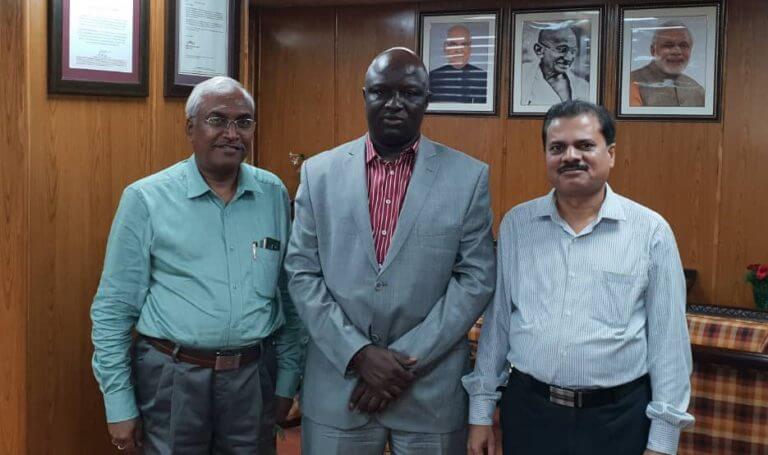
Prof. Sani Abubakar Mashi, Director-General/CEO NiMet flanked on the left by Dr KJ Ramesh, Director – General, India Meteorological Department (IMD), and on the right by Dr Mrutyunjay Mohapatra, Deputy Director-General and Head of Tropical Cyclones Research Centre of the IMD, during a visit by the DG NiMet to IMD in India

Prof. Sani Mashi, Director-General/CEO of NiMet, disclosed this in a statement issued by Mr Muntari Ibrahim, General Manager, Public Relations Unit, in Abuja on Sunday, July 29, 2018.

Mashi said that the collaboration was a fallout of the meeting with the management of the India Meteorological Department on South-South Inter-agency Cooperation during his visit to India.

He said that NiMet had so much to benefit from the Indians, especially in the areas of Numerical Weather Prediction (NWP), Sensor Design, Satellite Meteorology and Research.

According to him, NiMet is to submit a formal request and a draft Memorandum of Understanding (MoU) to IMD on the cooperation.

“It is my firm conviction that collaboration of NiMet with other such agencies and organisations will improve the service delivery of the agency.

“The India Meteorological Department, established 143 years ago, is the national meteorological service of the country and the principal government agency in all matters relating to meteorology, seismology and other allied subjects.

“Once established, this bilateral cooperation will be of mutual benefit to both countries.

Mashi said that he had discussed the modalities for the implementation of the proposed MoU with Nigerian High Commission in India.

By Sumaila Ogbaje

Investors seek to scale barriers as Nigeria eyes 20GW of electricity from solar

0

In roughly 12 years’ time, Nigeria hopes to be producing a consideration portion of its power from renewable energy sources. Besides increasing the quantity of electricity on the national grid, it will curb emission and address the impact of climate change.

De-Risking Renewable Energy NAMA
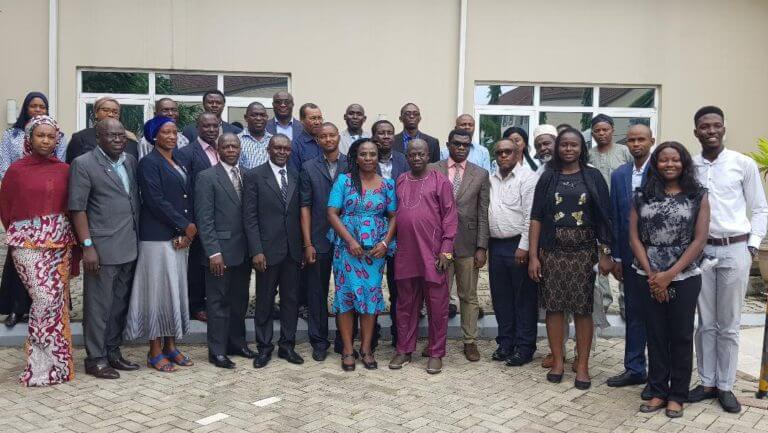
Participants at the two-day Grid-connected Renewable Energy Investors’ Forum in Lagos

This is the overall objective of a somewhat ambitious initiative being embarked upon by a team of stakeholders, who have commenced the implementation of a five-year demonstration project to that effect.

Titled: “De-Risking Renewable Energy NAMA (Nationally Appropriate Mitigation Action) for the Nigerian Power Sector”, the project aims at assisting the Nigerian government in achieving a transformation in the electricity mix such that at least 20GW of the nation’s electricity is generated from solar PV by 2030.

The United Nations Development Programme (UNDP) and Global Environment Facility (GEF), in collaboration with the Energy Commission of Nigeria (ECN), Federal Ministry of Environment (FMEnv), Federal Ministry of Power, Works and Housing (FMPW&H), and other stakeholders are implementing the project, which is utilising the internationally recognised De-risking Renewable Energy Investment (DREI) methodology in addressing barriers and risks hindering private sector-driven and grid-connected RE business in Nigeria.

The project was launched in June 2017.

The DREI methodology was the focus of discussion as project promoters along with the Nigeria Electricity Regulatory Commission (NERC), Federal Ministry of Finance (FMF), Nigeria Bulk Electricity Trading (NBET), Transmission Company of Nigeria (TCN) and Independent Power Producers (IPPs) met in Lagos from July 24 to 25, 2018 the “Grid-connected Renewable Energy Investors’ Forum” to deliberate on issues and challenges hindering their progression to financial close, equipment procurement and construction, as well as recommend ways the de-risking project can be structured to minimise the barriers.

Prof Eli Jidere Bala, Director-General/CEO of the ECN, in a welcome address, disclosed that Nigeria got the promoters’ support for the project because the nation lies within a high sunshine belt and thus has enormous solar energy potentials.

According to him, the mean annual average of total solar radiation varies from about 3.5 kWhm-2 day-1 in the coastal latitudes to about 7 kWh-1 2day-1 along the semi-arid areas in the far North. On the average, the country receives solar radiation at the level of about 19.8 MJm-2 day-1, he added.

Prof Bala added: “Unfortunately, the inherent risks in large-scale renewable energy development in Nigeria has made it difficult for policy makers in the sector to reach some agreements with prospective private investors willing to exploit this huge renewable energy resources in the country. With regards to financing opportunities, domestic financial sector is not financially buoyant to provide low cost local capital for renewable energy investments.

“Therefore, IPPs now depend on international Development Finance Institutions (DFI), who require partial risk guarantee (PRG) from Federal Governments. As we speak, none of the utility-scale pipeline projects have secured DFI financing.”

The ECN boss noted that the UNDP-GEF project is geared towards the implementation of policy and financial de-risking instruments aimed at identifying and addressing barriers hindering large-scale renewable energy development in Nigeria.

“Tackling these barriers will result in building a successful first ever IPP solar PV project in Nigeria connected to the national grid to serve as a demonstration project that will enable us evaluate the technical, institutional and economic viability of on-grid renewable energy projects in Nigeria. It will also help in building local capacity to foster rapid adoption and replication of grid~connected solar projects,” Prof Bala emphasised.

Senator Oluremi Tinubu, Chairman, Senate Committee on Environment, in a goodwill message, underscored the opportunities and benefits that renewable energy sources provide toward economic development and environmental quality of nations.

She said: “It has been shown to be cheaper and more sustainable with a much lower environmental impact than conventional energy technologies. These environmental effects, in turn, negatively impact health and wellbeing of the people. Therefore, as law makers, we remain committed to enacting, amending subsisting Acts and adopting appropriate policies that would help to reduce environmental pollution and achieve a cleaner and greener economy.

“I must commend the United Nations Development Programme and Global Environment Facility as well as other collaborating stakeholders for organising this forum and putting together such a wonderful platform for deliberation.”

Apart from creating awareness among stakeholders on de-risking renewable energy for the Nigerian power sector and establishing the current status and challenges of on-grid renewable electricity generation in the country, Okon Ekpenyong of the ECN stated that the two-day forum also sought to analyse the financial framework for renewable electricity generation plants in Nigeria.

At the close of the event, he said: “The Investors’ Forum has been able to bring together the investors themselves, the policy makers and various organisations, and were able to speak to one another frankly on the things that are bothering them, and they have been able to frankly make recommendations on what they think going outside the box of government that they and the officers handling these issues with the UNDP can sit down together and discuss on the ways to remove those barriers. I believe this programme has been able to bring out the issues and the way forward. Going forward, we are now going to be meeting at sub-groups level with these same people, together with the investors. With this programme, the stakeholders now know themselves, which wasn’t the case before.”

Togo urged to end use of dental amalgam by 2020

0

The Togolese government has been called upon to end the use of dental amalgam for children under 16, pregnant women and women who breastfeed by July 18, 2020.

Togo
Participants at the meeting to define a roadmap for elimination of mercury in dentistry in Togo on July 18, 2018, in Lome

The call was made by a gathering of stakeholders comprising civil society groups, trade unions, and dentists in a resolution they arrived at following the close of a meeting held at the headquarters of Les Amis de la Terre-Togo on Wednesday, July 18, 2018. The event was organised in collaboration with partners to define a roadmap for elimination of mercury in dentistry in Togo.

Participants further recommended, among others, that, in accordance with the provisions of the Minamata Convention, the government should launch a coordinated multi-sectoral approach for the elimination of dental amalgam in Togo, update the dental school training programme to focus on mercury-free dentistry, and implement a work plan for the phase-out of dental mercury amalgam in the country.

This, they added, should also include reviewing legislation and developing guidelines, collecting baseline data and developing a national inventory. Other recommendations include: initiate demonstration projects and application of the best available, practical and environmentally friendly technology in the management of dental amalgam; promote alternative/transition to alternatives with imported alternative restoration materials; and engage the public and the media and other stakeholders in raising awareness of the health impacts of mercury and the need to prevent cavities.

Prior to the July 18 meeting, the Les Amis de la Terre-Togo (ADT-Togo) had on February 27 and 28 with the support of the World Alliance for Mercury Free Dentistry, organised, at CASEF in Lomé, a two-day awareness and ownership workshop for the elimination of mercury in dentistry in Togo.

The workshop brought together 50 participants from groups of dentists, including the College of Dentists, the National Association of Dentists, dental assistants at Sylvanus Olympio University Hospital in Lomé, and from three other economic regions of Togo.

Consumers’ associations, environmental NGOs, research professors from the University of Lome, lawyers, environmentalists, journalists, representatives of the Ministry of Health, representatives of the Ministry of Environment (focal points or representatives of the Minamata, Basel, Stockholm and SAICM conventions) were also present.

The two meetings, however, revealed that:

  • Mercury is a chemical of worldwide concern because of its long-range transport in the atmosphere, its persistence in the environment once introduced by humans and its ability to bio-accumulate in ecosystems;
  • Exposure to mercury can cause damage to vital human organs such as the brain, heart, kidneys, lungs, cardiovascular system and immune system, especially to women, fetuses, children and adults. infants;
  • The low level of awareness of the dangers of mercury in dental amalgam, in Togo and that dental amalgam is still widely used and is the filling material of the cavities resulting from the removal of dental tissues generally affected by caries and the most affordable, meeting the needs of health care of the people of Togo.
  • The limited availability of dental health staff, appropriate service infrastructures and materials for dental restoration, and the high cost of dental restoration treatment;
  • The limited number of dental clinics and centers to provide services to the people of Togo;
  • Alternative direct restoration materials such as composites, compomers and ceramics can be used for the restoration of carious and non-carious cavities of the anterior and posterior teeth according to selection criteria and specific indications
  • The Ministry of Environment and Forest Resources, the Ministry of Health and Welfare, UNIDO and other stakeholders have committed to the adoption of Togo Minamata Convention Initial Assessment report (adoption in progress).

At a working session of civil society organisations (CSOs) for the definition of a roadmap for the elimination of mercury in dentistry in Togo on Wednesday, July 18, which brought together 26 participants, including the President of the World Alliance for Mercury-Free Dentistry, Charlie Brown, Mrs. Adetonah Sounkoura, Head of GAPROFA, provided information on a study conducted in Benin by her organisation on mercury contamination.

Dominique Bally Kpokro, Vice President for Africa of the World Alliance for Mercury Free Dentistry, spoke about mercury, types and the negative impacts of mercury on human health and the environment. This was followed by debates and discussions on the two presentations that awakened the consciousness of participants to make commitment to raise awareness on the issue of mercury poisoning.

Mr. Kokou Elorm Amegadze, acting Executive Director of Les Amis de la Terre-Togo, presented the Togolese CSO Action Plan for the elimination of mercury in dentistry in Togo which focuses on raising citizens’ awareness on:

  • the risks associated with the use of mercury in dental amalgam,
  • the training of dentists and their assistants,
  • the promotion of alternatives to mercury in dentistry, advocacy for regulatory measures for the elimination of mercury in dentistry,
  • advocacy for the definition of a new dental policy,
  • advocacy for the change of training curricula in dentistry at the University of Lomé among others.

World Alliance for Mercury-Free Dentistry, Mr. Charlie Brown, in his speech, praised Togo’s actions in favour of the end of mercury in dental amalgam and its leadership on the issue. According to him, it is unacceptable to treat teeth diseases with products containing mercury, which he described as a highly toxic substance.

He expressed the hope that the government’s efforts in the implementation of the Minamata Convention and the proposals of civil society would ultimately lead to new, healthy and safe solutions for dental patients, the medical professionals, the public and the environment.