The Republic of Moldova has ratified the Nagoya-Kuala Lumpur Supplementary Protocol on Liability and Redress to the Cartagena Protocol on Biosafety, making it the 42nd nation to do so.
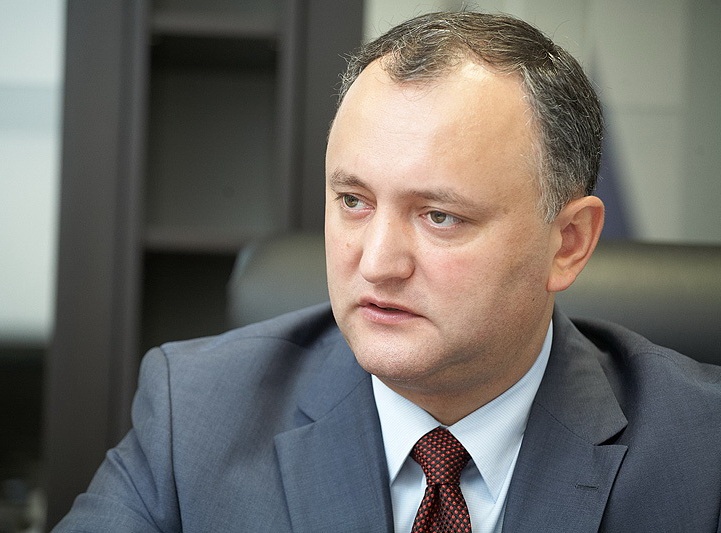
Igor Dodon, President of Moldova
The eastern European country and former Soviet republic deposited its instruments of ratification on Monday, July 30, 2018. It will enter into force on Oct 28, 2018.
The Nagoya-Kuala Lumpur Supplementary Protocol to the Cartagena Protocol on Biosafety was adopted by the Conference of the Parties serving as the meeting of the Parties to the Cartagena Protocol on Biosafety on October 15, 2010.
In accordance with its Article 17, the Supplementary Protocol was opened for signature on March 7, 2011 at the United Nations Headquarters in New York by Parties to the Cartagena Protocol on Biosafety. It remained open for signature until March 6, 2012.
The Supplementary Protocol entered into force on March 5, 2018, the 90th day after the date of deposit of the 40th instrument of ratification, acceptance, approval or accession.
The Cartagena Protocol on Biosafety to the Convention on Biological Diversity is an international agreement which aims to ensure the safe handling, transport and use of living modified organisms (LMOs) resulting from modern biotechnology that may have adverse effects on biological diversity, taking also into account risks to human health. It was adopted on January 29, 2000 and entered into force on September 11, 2003. Some 171 countries have so far ratified it.
Nigeria signed the Supplementary Protocol on February 1, 2012 but is yet to ratify it.
The African Development Bank (AfDB) through its Technologies for African Agricultural Transformation (TAAT) programme is targeting to increase aquaculture production in Africa by five million tonnes by 2025.
Dr. Akinwumi Adesina, President of the African Development Bank (AfDB)
Dr Chrysantus Akem, the TAAT Programme Coordinator, said this at a workshop organised for focal countries under the TAAT programme in Abuja on Monday, August 6, 2018.
Akem said that TAAT programme, an initiative of the AfDB under the “Feed Africa”, was targeting to increase inland water fish to enable Africa to become self-sufficient in fish production.
He noted that the priority of the programme was also to enlarge the production of cassava, rice, wheat, orange fleshed potatoes, maize, beans, sorghum and millet, livestock and small ruminants.
According to him, AfDB initiated the programme with $120 million hoping to use it as start up money to tap into $700 million that the World Bank has made available in its African Agricultural Transformation Programme.
“TAAT was conceived to make sure that the Feed Africa is carried forward, to bring together a number of value chains to see how to transform agriculture across Africa.
“AfDB realised that there are a lot of technologies, but they are either in shelves or in publications and Africa continues to import, spending more than $35 billion just on food crops, most of which it can produce.
“AfDB took the lead in reviewing all available technologies to see how to transform agriculture in Africa.
“Bill and Melinda Gates have made available more than $230 million through AGRA to also support the programme.
“This is a 10-year-programme which started in 2015 and will end in 2025,’’ he said.
Alhaji Muazu Mohammed, the Director of Fisheries, Federal Ministry of Agriculture and Rural Development, said that the country’s annual national demand for fish stood at 3.5 million tonnes.
Mohammed, represented by Mr Pwaspo Istifanus, the Deputy Director, Aquaculture in the ministry, said the country’s total production was 1.1 million tonnes with a deficit of 2.4 million tonnes.
He said that fisheries contributed about 4.5 per cent to the Gross Domestic Product and employed an estimated 10 million citizens in both primary and secondary operations.
The director listed some challenges affecting aquaculture development in the country to include high cost of good quality fish feed and inadequate genetic improvement and diversification of over 200 indigenous culturable fish species.
Dr James Apochi, the National Project Coordinator, West Africa Agricultural Productivity Programme (WAAPP), said the programme had developed no fewer than 11 technologies that had increased fish production in the country.
“We want to upscale our technologies, introduce regional markets that will go beyond Nigeria,’’ he said.
Prof. Bernadette Fregene, the Compact Leader of the programme, listed the implementers of TAAT to include WorldFish, IITA, universities, seed companies and fish feed millers.
Some participants and fish stakeholders who came from Ghana, Cameroon and Benin Republic, appealed to the programme to find lasting solution to the high cost of fish feeds.
Over 1,150 firefighters struggled to put out a fire in Portugal’s southern Algarve tourist region on Monday, August 6, 2018 which injured 25 people overnight and led to the evacuation of homes and hotels.
Portugal wildfire
The fire, which started on Friday, grew over the weekend during a heat wave sweeping large parts of Europe.
Temperatures have started to fall from the peak of nearly 47 degrees Celsius, but it remains very hot in most parts of the country.
Emergency services added a further 350 firefighters to combat the flames overnight.
Twenty-four people were treated for light burns and smoke inhalation while one person suffered more serious burns.
People were evacuated from the area but Joao Furtado, 60, was forced to hide in a water tank to escape the flames as his house burned down, according to his sister-in-law.
“He was panicking because he was trapped in the house.
“There was fire everywhere and he couldn’t get out,’’ said Maria Helena Furtado.
Civil protection authorities said smoke was making it difficult for firefighting planes to access the area, but nine helicopters were flying.
There were 350 fire engines involved in the effort.
The fire is burning in the hills above the Algarve coast, an area popular with tourists for its hot springs, while the smoke could be seen from the coast.
Antonio Monteiro, Head of the Caldas de Monchique Spa Resort, one of the region’s best-known hotels, said: “We had to evacuate all hotel guests and we don’t have any information about when we will reopen.’’
Another hotel in the region, the Macdonald, was also shut.
Portugal’s biggest wildfire killed 114 people last year and it has since reinforced emergency services in the centre of the country where the worst fires usually break out.
Until last week Portugal’s summer had been unusually cold and wet.
In the light of her limited adaptive capabilities to deal with the consequences of climate change, Nigeria has been called upon to adopt collective actions to address the climate threats to human, business and ecosystems.
Prince Lekan Fadina
Executive Director, Centre for Investment, Sustainable Development, Management and Environment (CISME), Prince Lekan Fadina, who made the submission in Lagos on Monday, July 9, 2018 at the beginning of a two-day workshop for the review of the Draft Third National Communication (TNC) to the United Nations Framework Convention on Climate Change (UNFCCC), stated that such action should entail a collaboration involving the public and private sectors.
In a presentation titled: “Public Private Partnership for Climate Action in Nigeria”, Prince Fadina, while making a case for the role of the private sector, pointed out that the private sector accounts for 70% of all investments worldwide, even as 90% of people in developing countries depend on private sector, informal sector and small business.
“Adapting to the impacts of climate change is enormous challenge, and there is increasing number of private sector companies worldwide that are beginning to address climate change in their investments and business planning. They are turning the challenges to opportunities – green jobs, alternative energy, sustainable investments and low carbon industries,” said Fadina.
According to him, the global debate on climate finance has increasingly focused on the potential of the private sector to contribute to and/or leverage climate finance.
“At the outset discussion on the role of the private sector in finance was focused on mitigation to reduce the level of green house gases emission. Today, the private sector is increasingly relevant about the global adaptation debate,” he stated.
Fadina stressed that public and private sector organisations must see each other as partners in development, saying that there is need for trust, mutual confidence, understanding and appreciating each other’s strengths and weaknesses.
“We must strive for common vision and common objectives because the end-result is the prosperity of the Nigeria People,” he stressed, adding however that, to thrive and make sustainable investments, the private sector requires the existence of appropriate policy framework and an enabling environment.
While strengthening the partnership between government and business, and encouraging international co-operation on monitoring climate risks, Fadina recommended that national programmmes that entail investing in social preparedness measures, tackling inequality, bolstering IT infrastructure, education and innovation should be put in place.
His words: “The Continental Trade Treaty Agreement is in our doorsteps which makes Africa one market; our government and private sector should start to address the implications of this in our climate challenge and opportunities programmes.
“We believe that climate problem is real and all of us must act to respond, and we equally believe that the private sector can make a substantial contribution. It can help to solve but cannot solve all the problems, but it can make enough of a contribution that its worth pursuing.
“There is a need to set up a platform like the Talanoa Dialogue where government and private sector can have opportunities to share experience on climate issues and development. We should encourage participation and investment through public-private partnership in education, building capacity, creating awareness, invest in knowledge and research.”
The Intergovernmental Panel on Climate Change (IPCC) will meet in Incheon, Republic of Korea, from October 1 to 5, 2018 to consider the Special Report “Global Warming of 1.5ºC”. Subject to approval, the Summary for Policymakers will be released on Monday, October 8 with a live-streamed press conference that will be addressed by the IPCC Chair and Co-Chairs from the three IPCC Working Groups.
The opening session of the meeting will include statements by the Chair of the IPCC, senior officials the IPCC’s two parent bodies World Meteorological Organisation (WMO) and United Nations Environment Programme (UN Environment) and of the United Nations Framework Convention on Climate Change (UNFCCC), and senior officials of the Republic of Korea.
The report, whose full name is “Global Warming of 1.5°C, an IPCC special report on the impacts of global warming of 1.5°C above pre-industrial levels and related global greenhouse gas emission pathways, in the context of strengthening the global response to the threat of climate change, sustainable development, and efforts to eradicate poverty”, is being prepared under the scientific leadership of all three IPCC Working Groups.
Formally, the meeting will start with the 48th Session of the IPCC. Next, a joint session of the three Working Groups chaired by their Co-Chairs will consider the Summary for Policymakers line by line for approval. Then the 48th Session of the IPCC will resume to accept the Summary for Policymakers and overall report.
The IPCC decided to prepare the report, in response to an invitation from the UNFCCC Conference of the Parties at its 21st meeting in December 2015 when the Paris Agreement was signed.
The IPCC is the UN body for assessing the science related to climate change. It was established by the UN Environment and WMO in 1988 to provide policymakers with regular scientific assessments concerning climate change, its implications and potential future risks, as well as to put forward adaptation and mitigation strategies. It has 195-member states.
IPCC assessments provide governments, at all levels, with scientific information that they can use to develop climate policies. IPCC assessments are a key input into the international negotiations to tackle climate change. IPCC reports are drafted and reviewed in several stages, thus guaranteeing objectivity and transparency.
The IPCC assesses the thousands of scientific papers published each year to tell policymakers what we know and don’t know about the risks related to climate change. The IPCC identifies where there is agreement in the scientific community, where there are differences of opinion, and where further research is needed. It does not conduct its own research.
At its 41st Session in February 2015, the IPCC decided to produce a Sixth Assessment Report (AR6). At its 42nd Session in October 2015 it elected a new Bureau that would oversee the work on this report and Special Reports to be produced in the assessment cycle. At its 43rd Session in April 2016, it decided to produce three Special Reports, a Methodology Report and AR6.
Uganda has sent samples to the United States for further laboratory tests after a strange disease in the central region district of Mubende left eight people dead and 16 others hospitalised.
President of Uganda, Yoweri Museveni
The Ministry of Health in a weekend statement said previous laboratory tests turned out negative for all known viral hemorrhagic fevers like Ebola, Rift Valley Fever, Crimean Congo, Marburg and yellow fever.
The ministry turday said once the results from the U.S. are out, the public will be informed.
The ministry said with support from partners, it is taking measures to control the spread of the disease.
The ministry also said an isolation center has been established at Mubende Regional Hospital for containment and close monitoring of suspected cases. A surveillance team is also already in the field to do case search in communities and health facilities.
The ministry urged the public to report any suspected cases to the nearby health facility.
The symptoms of the disease include high fever, blood in vomit, acute headache and bloody diarrhea.
The strange disease was first reported on July 1 when the index case was registered. Since then, eight deaths have been recorded and 16 other people hospitalised.
Ten days of trail construction and maintenance doesn’t make you trail expert, but helps to shape your mind, body and soul to what trail construction entails. It gives you what is known by trail professionals as the “Trail Eyes”, a lens for picturing whether you are doing it the right way. Keeping water off the trail is one of the most important trail design elements and the use of water diversions is an effective way of achieving this.
Sahale Arm Mounts (North Cascades)
It has been proven over time that water on trails shortens the life of the trail and increases maintenance. Every trail expert will do anything possible to avert these gory incidents by maintaining the standard. These are thoughtful lessons we picked from Ben as he journeyed with us to the beautiful North Cascades region. Ben is that same environmental guru at EarthCorps that oversees environmental projects in its various forms.
The North Cascades are a section of the Cascade Range of western North America. They span the border between the Canadian province of British Columbia and the U.S. state of Washington and are officially named in the U.S. and Canada as the Cascade Mountains. The U.S. section of the North Cascades and the adjoining Skagit Range in British Columbia are most notable for their dramatic scenery and challenging mountaineering, both resulting from their steep, rugged topography.
We camped at the North Cascades National Park and drove 30 minutes to our place of primary assignment every day. Our task is to install Check Dams, do some brushing and clear drains on the pyramid lake trail. The last three days of the trip was lovely as we did some maintenance work (brushing and drainage) on Sahale Arm and Jack Mountain trail.
Check Dams or steps are usually put in place to stabilise trail segments that are being gutted by erosion. It’s a cross-tread barrier, made of a log (or laid rock) 6 to 8 inches in diameter buried at least 2/3 its diameter in the tread at a right angle to the trail. The Check Dam’s function is to slow water velocity enough to cause the water to deposit its load of soil and gravel behind the dam, thus maintaining the tread level.
Clearing and brushing, on the other hand, refers to the cutting and removal of all living and dead vegetation using 10 feet height and 4 feet on each side of the tread centerline standard. After keen observation and rigorous study, we started building the steps and ensured that we use our trail eyes to meet the standard. We were able to install 58 to 60 Check Dams, clear all drains and did half a mile brushing on pyramid lake trail.
The most gratifying aspect of this project was seeing hikers appreciating our work and giving feedback. Luk, the ranger in charge of the project really liked our work and remarked, “You are the best and most coordinated set of volunteers have ever worked with”. Luk is a man to see and work with if you are chanced to visit the North Cascades National Park. He is humane, simple and down-to-earth.
Adnane’s crew is one crew to beat when it comes to cooperation, commitment and paying attention to details. We always work hard and give in our very best to every project. We act like sisters and brothers without borders and put aside our differences to always achieve the desired goal. We really enjoyed the company of Jordan on the crew as we missed Abby and Gabi. Robyn, Emma, Gabi, and Abby are not just beautiful, but they all matched brain with beauty. The crew leader (Adnane) is a man of high intellect and fun to be with.
Our journey to the North Cascades created a window of opportunity to meeting amazing people and seeing beautiful sites. We will not forget so soon the other Youth Corps group that we shared space with at the park. It is true they are deaf and dumb, but their smartness and creativity are one to marvel at. They taught us different sign languages and showed us how life can be more meaningful if we put aside our differences. Truly, there is much ability in disability.
By Alabede Surajdeen (Environmental Restoration International Exchange Fellow at EarthCorps, Seattle, Washington, USA; @BabsSuraj; alabedekayode@gmail.com)
The development, deployment and transfer of locally relevant climate technologies remain the best solution to climate change challenges, the Acting President, Prof. Yemi Osinbajo, has said.
Vice President of Nigeria, Prof Yemi Osinbajo
The Office of the Vice-President said Osinbajo made the statement on Friday, August 3, 2018 at the inauguration of the Nigeria Climate Innovation Centre (NCIC) situated at the Enterprise Development Centre of the Lagos Business School.
Mr Laolu Akande, the Senior Special Assistant to the President on Media and Publicity, Office of the Vice-President, made Osinbajo’s view known in a statement on Saturday.
The Nigeria Climate Innovation Centre is a public-private partnership involving the Federal Government, the World Bank Group and the Pan-Atlantic University.
The Centre provides holistic, country-driven support to accelerate the development, deployment and transfer of locally relevant climate and clean energy technologies.
Osinbajo said the task of advancing climate action was crucial, especially for Nigeria, in the view of the challenge of climate change and the need for the adoption of an innovative approach.
“The pressure for livelihoods and food for a huge population will put tremendous pressure on natural resources and the implications for climate change will be dire indeed.
“The creation of an enabling environment for climate-smart businesses to thrive is simply the only way to go,’’ he said.
Osinbajo said he had visited several start-ups, technology hubs and innovation spaces around the country and seen innovativeness, creativity and drive of Nigerians.
He said Nigerians were “constantly developing and deploying solutions in many sectors’’, including “agriculture, health, transport, security, climate action and many more locally relevant climate technologies’’.
According to him, one of the key sectors where there is potential for high impact interventions by green technologies is the off-grid solar sector.
Osinbajo said the Solar Home Project and Energising Economies Initiative were some of the private-sector-driven efforts targeted at providing off-grid power to homes, markets and economic clusters across the country.
He said that so far, 13,000 shops at Sabon-Gari Market in Kano were currently being powered through high-capacity stand-alone solar systems.
He said more were expected to come on stream soon at the Ariaria Market in Aba, Sura Market in Lagos, and other markets in Oyo, Edo and Ondo states.
The acting president challenged the new climate Centre to develop and deploy technology and expertise required to deliver clean energy in areas prone to oil pollution and other related hazards.
According to him, the innovation Centre must seek to develop the technology and expertise required to deal with the oil spill challenge in the Niger Delta region.
He said the Federal Government was investing considerably in Liquified Petroleum Gas (LPG) to help overcome challenges and risks brought about by using kerosene and firewood in homes.
Osinbajo tasked the NCIC team to come up with innovation in smart cooking equipment that could utilise LPG in the most efficient manner.
The acting president urged stakeholders in the off-grid power sector to take advantage of the Green Bond issued by the Federal Government and the opportunities provided at the newly inaugurated climate Centre to fund their projects.
“It provides a platform to attracting or unlocking venture financing and private equity funds for climate-smart businesses and Nigerians providing climate-smart solutions,’’ Osinbajo said.
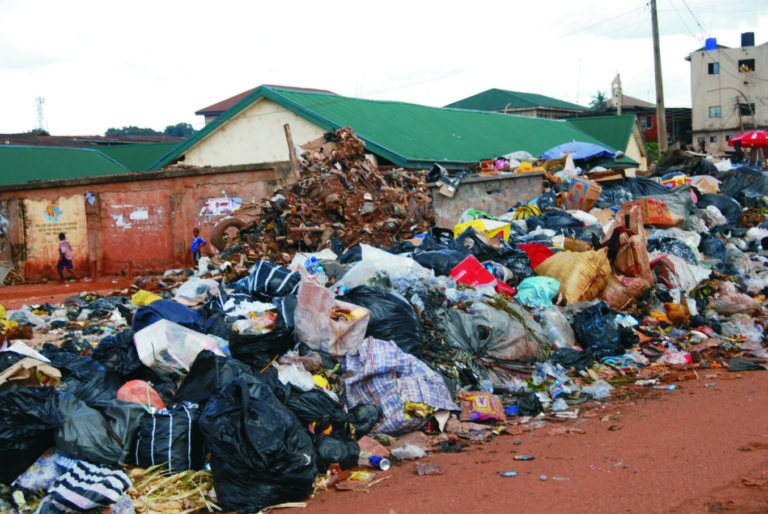
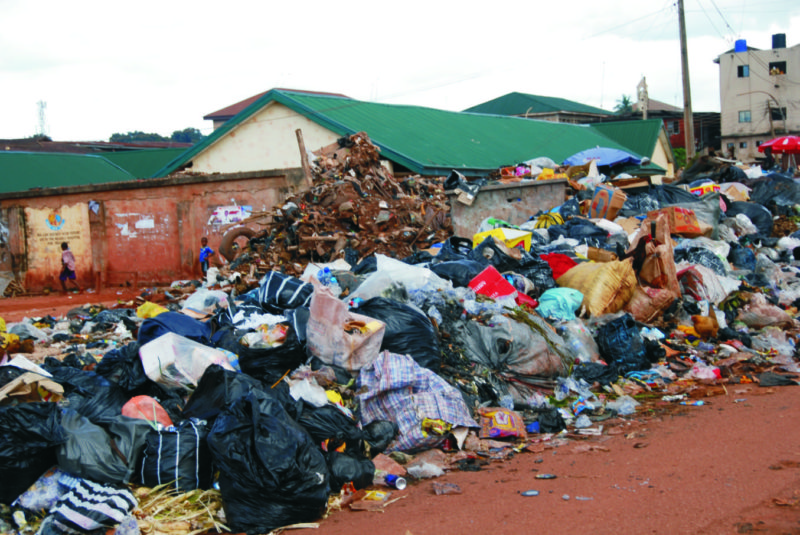
The Irepodun Local Government Authority in Kwara State on Sunday, August 5, 2018 expressed concern on the dangers associated with indiscriminate dumping of waste in public places on human and the environment.
Waste disposal and management have posed a major challenge to authorities in major cities in Nigeria
Mrs Mary Abejide, Head, Environmental Unit at the council, told the News Agency of Nigeria (NAN) in Omu-Aran that the sad development was posing great risk to the remote villages and communities in the area.
She said that the menace which had assumed an alarming proportion was putting extra pressure on the local authority’s efforts toward ensuring a clean and healthy environment.
Abejide said that some nursing mothers and women had formed the habit of indiscriminate dumping of baby nappies and menstrual pads in gutters, sewage and other public outlets.
She also blamed operators of hospitals and clinics for lacking proper waste disposal measures, thereby putting the lives of the residents in danger.
According to her, such ugly trend negates the government’s policy on Safe and Clean Environment.
Abejide said that the development accounted for some of the streets within the metropolis being overtaken and littered with used water plastics, dirt and other waste materials.
She listed some of the effects of indiscriminate dumping of waste to include outbreak of communicable diseases, air and environmental pollution as well as blockage of drainage and flooding.
Abejide, however expressed satisfaction with the recently-concluded environmental sensitisation, organised by the council, saying the cooperation of the stakeholders had helped the department in meeting its target populace.
She said the act of keeping the environment clean was no more limited to the government, calling for a Public Private Partnership in ensuring a safe and clean environment.
“We cannot continue to wait for government before contributing our quota as responsible citizens to make our environment safe and conducive for living.
“It is the duty of every individual and organisation to ensure maintenance of a safe and clean environment at all times to prevent unwarranted health hazards,’’ Abejide said.
The greatest global challenge today, especially in Africa is how to make our food more sustainable by 2050. In Nigeria, as in many other African countries, food security and nutrition remain a critical challenge. Production constraints like inversion of insects/pests and diseases, inadequate rainfall and poor quality of agricultural input are some of the major contributors to low agricultural output. Despite the clear link between agricultural productivity and malnourishment, there were uncertainty and confusion in many of government responses to a wide range of agricultural, health, social, economic and environmental issues associated with the application and regulation of modern biotechnology in agricultural practice. Thus, many African countries were reluctant to approve the use of genetically engineered (GE) crops as their governments are juxtaposed between the opponents and proponents of the technology.
Varieties of the Bacillus thuringiensis cotton (Bt. Cotton) on display
In the third decade of the launch of modern biotechnology came a new era for genetically modified organisms (GMOs) in Nigeria as she commercialises some of its GMO products in line with global standards. On Thursday, July 26, 2018, the National Committee on Naming, Registration and Release of Crops, Livestock/Fisheries varieties at the National Centre for Genetic Resources and Biotechnology (NACGRAB) released and registered some biotechnological improved varieties at its 26th meeting at Moorplantion, Ibadan, Nigeria.
The newly released and registered products include; two transgenic hybrid cotton; MRC 7377 BG11 and MRC 7361 BG11 with outstanding qualities of high yield of 4.4 and 4.1 respectively per hectare and resistance ability to diseases. They were developed by Mahyco Nigeria Pvt. Limited in collaboration with the Institute for Agricultural Research, Ahmadu Bello University, Zaria. The chairman of the committee, Chief Awoyemi said that the Bacillus thuringiensis cottons (Bt. Cotton) were released and registered as an approved improved variety for the use of farmers as it has been tested not injurious to both human and animals. Chief Awoyemi remarked that the release and registration of GM cotton is revolutionary to the agricultural development of the country as it would lead to the future adoption of the GM technology in Nigeria food crops.
This is the first ever officially approved GMO product in Nigeria for use by farmers and Nigerians are delighted as the world celebrates Nigeria’s entrant as the 14th cotton grower nation of the globe like India, Mexico, Pakistan, Australia, China, Columbia, Costa Rica, Myanmar, South Africa, USA, Brazil, Paraguay and Argentina. Nigeria is now the 7th African country to commercialise GMO products after South Africa, Kenya, Sudan, Zimbabwe, Burkina Faso and Malawi.
Also released and registered in the livestock sub-sector is the FUNAAB Alpha chicken with principal breeders including Prof. (Mrs) O. A. Adebanbo of the Federal University of Agriculture, Abeokuta. It was approved based on its ability to adaptability to the production environment of local rural farmers with performance characteristics of body weight, live weight at the end of lay, high egg lay and weight which surpass those of the existing Nigerian local chicken. Others that are released and registered are listed as follows – one Soybean variety (SC-SL01), five maize hybrids (P4226, P3966, P4063, WE3205 and DKB350), three groundnut varieties (SAMNUT 27, SAMNUT 28 and SAMNUT 29), two maize varieties (AMANA-1 and AMANA-2), one sweet potato variety (Solo gold), three Sorghum varieties (SAMSORG 47, 48, 49), and two Cowpea varieties (SAMPEA 18, 19).
In her remarks, Dr Rose Gidado, the country representative of Open Forum on Agricultural Biotechnology (OFAB) Nigeria, expressed confidence in the adaptation of biotechnology. She said that the development signals better things to come in agricultural sector and stressed that it would fast track development of commercial farming in Nigeria especially in the textile industry. The acting Director General/CEO of the National Biotechnology Development Agency (NABDA), Prof. Alex Akpa, at a press conference on Friday, July 27, 2018, in Abuja, said that this official registration of these biotechnological products marked their entry into the nation’s agricultural system.
Recall that the government of Nigeria recognised biotechnology as a reliable technology for sustainability in agricultural practices and capable of delivering economic, social and environmental benefits. About two decades ago, the Federal Executive Council (FEC) approved the National Biotechnology Policy on April 2001 and later in November 2001 established the National Biotechnology Development Agency (NABDA), for its implementation. FEC also approved the Biosafety guidelines same 2001, to enhance research and development of Genetically Modified Organisms (GMOs) and the regulation of the modern biotechnology in the country. The National Biosafety Management Agency (NBMA) was eventually established in April 2014 and saddled with the responsibility of implementing biosafety regulations.
Despite government disposition to explore the gains of biotechnology in national development, various social and political considerations led to unjustified delays in the approval process of these crops, resulting in the bizarre situation where technologies that increase consumer and producer surplus fail to reach the market. The anti-GMO activists turned scientific issues into moral, cultural and ideological debates; systematically manipulating science and creating alternative facts to distort science to create fears and despondency on the perceived health and environmental risks of modern biotechnology. They held tenaciously to the belief that our agricultural and food systems are compromised and corrupted and were ardently committed to forging erroneous notion and pedalled unscrupulous concerns and perceptions to imperil acceptability.
Contrary to their anticipation, advances in science have accelerated development for decades, including the application of biotechnology in agriculture, to improve overall livelihood, productivity and food security. For about three decades, biotechnology have been globally offered as alternative to address the onslaught of pests and diseases, the vagaries of weather and other challenges to growing crops and breeding livestock, because of its higher economic and yield benefits and dramatic reduction in pesticide use. Several new crops have been developed to address important traits of relevance to smallholder farmers in through genetic modifications by our Nigeria Scientists like their global counterparts.
The truth is that our primitive agricultural practices are facing various challenges and from global experiences, Science, Technology and Innovation (STI) hold the key to overcoming these challenges. Government appreciates the fact that STI are contributing effectively to improve the value chain in the global food system especially in emerging economies like Nigeria.
In his remarks during the OFAB Nigeria Media Award on August 1, 2018, Mr Bitrus Bako Nabasu, who represented the Minister of the Federal Ministry of Science and Technology, Dr. Ogbonnaya Onu, stated: ‘’The Federal Government has recognised that, globally, STI are shaping development and the way people think and act, hence the recent decision to increase funding for research and development in the country. As a country, we must encourage our Scientist to continue to work for the good of the country and the people.
‘’Government has demonstrated its determination to make STI the hub on which the wheel of development revolves. The establishment of the NABDA over two decades ago to prepare the ground for the deployment of modern biotechnology in all sectors of the economy; health, environment, industry, agriculture is a testimony of government’s deliberate efforts to use STI to boost food production, ensure affordable healthcare delivery system, make available industrial raw materials and establish a sustainable environment in the country. These institutes must be encouraged to carry out their mandates to ensure that the country attains food sufficiency in food production,” he added.
As the support for modern biotechnology continues to grow, it is being mainstreamed gradually to add value into the country’s agricultural sub-sector. Dr. Ebegba of NBMA has severally said that the country is ripe for commercialisation of safe Genetically Modified (GM) products. “Global Status of Commercialized Biotech/GM Crops: 2016” demonstrated the long-standing benefits of biotech crops for farmers in developing and industrialised countries, as well as consumer benefits of approved and commercialised varieties. We should therefore realise that the eras of distractions are gone, and Nigeria has been liberated from isolation from Science. Our joy is that at last, Science Prevailed and we shall ensure that it excels beyond the 25-year-old biotechnological modifications.
By Edel-Quinn Agbaegbu (Executive Director of Every Woman Hope Centre (EWHC), an Abuja-based non-governmental organisation, and Secretary of National Biosafety and Biotechnology Consortium (NBBC))