Home Blog Page 1835

NEMA, stakeholders seek to curb climate-induced disasters

0

At a daylong a forum held in Abuja on Thursday, August 16, 2018, the National Emergency Management Agency (NEMA) and a group of stakeholders sought to devise strategise on best ways to prevent and mitigate climate-induced disasters in the country.
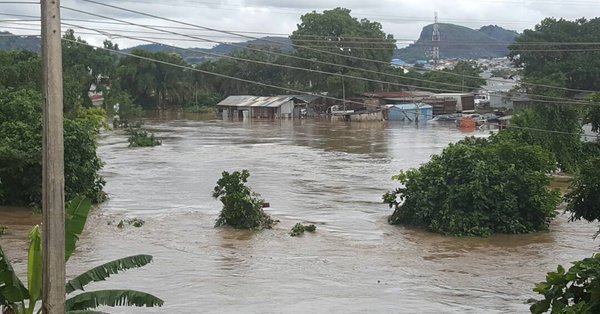
Suleja-flood
Flooding has been the major form of natural disaster in the world including Nigeria

Mr Mustapha Maihaja, Director-General, NEMA, said that the National Stakeholders Workshop aimed at improving the mitigation and response mechanism in the country.

He described the event as relevant, considering past experiences of unprecedented natural and human disasters that have been affecting collective resilience of Nigerians.

“This national workshop is among the steps necessary to collectively prepare and strategise to reduce climate induced disasters in our country.

“As part of our collective responsibilities as servants of the people, Ministries, Departments and Agencies (MDAs) need to always come together with a view to restrategising plan of actions.

“Towards safeguarding and protecting our citizens, infrastructure and other elements that are vulnerable in the environment.

“The impact of disasters on lives, properties and environment depends on the Country’s level of preparedness.

“Which to a large extent relies on effective early warning systems that in turn drives all processes constituting our early action mechanisms,’’ Maihaja said.

Maihaja said that, in line with the paradigm shift to Disaster Risk Reduction, NEMA was preparing to also map out vulnerable communities based on the prediction as indicated by climate risk monitoring agencies.

He explained that it was a way to enhance and direct enlightenment campaigns in critical states.

The director-general said that the new approach will pay off positively if the submissions of the Technical Committee are adhered to and the resolutions taken to the target population.

Maihaja said that NEMA as a coordinating agency collaborated with relevant stakeholders to put together in a simplified manner the disaster implications of the Annual Flood Outlook (AFO) and the Seasonal Rainfall Prediction (SRP).

He said that the documents were put together to remind stakeholders of their roles when it comes to risk mitigation, preparedness and response.

Maihaja said that the media also played a key role is creating awareness to those in the grassroots to increase their preparedness.

Also speaking, Mr Idris Abbas, Director-General, FCT Emergency Management Agency (FEMA), said that the workshop was apt and the most desired to boost emergency response and most especially, Disaster Risk Reduction

Abbas said that preparedness was one of the key ingredients of disaster management and effective response.

Abbas said that the National Emergency Centre established by the National Communications Commission is fully functional now and the 112-emergency number was also fully functional in the FCT.

He said that the innovation would really enhance response in addition to what the army and Road Safety were doing.

“When all the agencies on preparedness have done their own, like the NHISA and the NiMet, it would now be for the response agencies to sit down and articulate their response plans in other to respond properly.

“The workshop is very apt, and I commended NEMA for the gigantic step and I want to assure that we would give our best joining their course’’, Abbas said.

In his remarks, Mr Clement Eze, a representative of the Nigeria Hydrological Services Agency (NHISA), lauded NEMA for always creating the platform for stakeholders to brainstorm on enhancing the safety of the country.

He said that when it comes to emergency issues, NHISA, was at the upstream sector of predicting flood and informing the relevant agencies and the public on the next step to take.

Eze said that flood has been the major form of natural disaster in the world including Nigeria.

He said that before the onset rainy season, NHISA had warned various states and communities that were likely to be affected by flood.

By Lizzy Okoji
Lawmaker, others raise alarm over erosion threat in Anambra

0

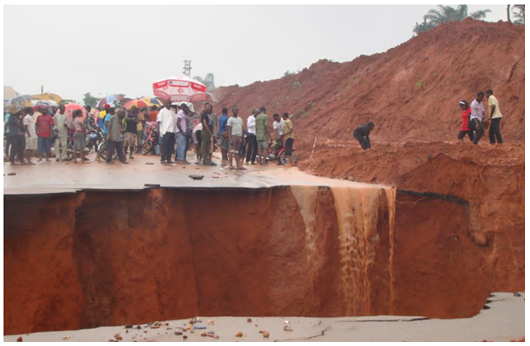
A lawmaker representing Idemili South State Constituency in Anambra, Mr Chukwuka Ezenwune, has raised alarm over an erosion site which he said had claimed a section of a road at Uke in the state.

Gully erosion
Gully erosion in southeast Nigeria

Ezenwune, in an interview with the News Agency of Nigeria (NAN) on Thursday, August 16, 2018 at the erosion site, called for urgent government intervention to avoid disaster.

He said the call became imperative to avert loss of lives and property along the road linking Nkpor and Nnobi, Nnewi, Ekwulobia, Awka-Etiti towns and other communities in Anambra and Imo states.

“This road is one of the busiest roads in the state. In fact, it is a by-pass to other communities in Anambra and Imo.

“At this point, I don’t advise any articulated vehicle to use this road because it has already caved into the second lane for incoming vehicles.

“If an urgent action is not taken, the erosion will bring untold hardship not only to the people of Idemili North and South Constituency, but to the entire people of the state.

“I am using this medium to send a Save Our Soul (SOS) to the state and Federal Government to save the road and avoid unnecessary deaths,” he said.

He recalled that former Premier of Eastern region, Dr Michael Okpara, and the governor of old Anambra State, Chief Jim Nwobodo, planted cashew and malaina trees during their era to control erosion in the area.

However, the lawmaker expressed concern that felling of the trees for construction without proper flood and erosion channel control were causing more damages to the area.

“Government should come up with a policy that nobody should erect structures or even start farming on places where it planted trees or constructed drains without its permission.

“For them to have uprooted the trees, caused erosion to be endemic in my constituency,” he said.

He also appealed to the Federal Road Safety Corps (FRSC) to urgently put up sign posts to warn motorists of the danger ahead on the road, especially at night.

Also, Mr Gabriel Emenike, a motorist, who plies the road daily, described the erosion site as a “death trap.”

“This is terrible. I saw this development two days ago and I was not impressed.

“If something is not done urgently before another big rainfall, I do not think people will be able to use the road again,” he said.

For Mr Chidiebere Mkpuma, a horticulturalist near the site, said the continued use of the road without fixing the damages might result to accident and loss of lives.

“An articulated vehicle that tried to dodge the erosion site some days ago almost caused an accident but nobody died.

“The erosion site has been there for long but became worse due to the ongoing road and building constructions around here.

“A particular church used graders to push down some trees during demarcation which had been a wage controlling the erosion all the while,” he said.

By Peter Okolie

Nigeria needs 3m toilets annually to meet SDG sanitation target – UNICEF

0

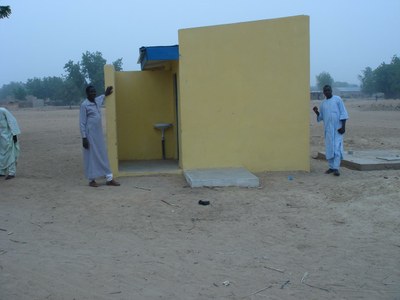
No fewer than three million toilets are needed to be constructed annually if Nigeria would meet the Sustainable Development Goals to scale up sanitation and hygiene before 2030, the United Nations Children’s Fund (UNICEF) has said.

public toilet
A public toilet

This was the thrust at a National Meeting for Operationalising the Open Defecation-Free (ODF) Campaign Plan in Abuja on Thursday, August 16, 2018.

Mr Farooq Khan, a UNICEF Water, Sanitation and Hygiene (WASH) Specialist, noted that the present deficit in toilets ought to be reversed, saying that if Nigeria would meet the SDG-six, it must increase budgets for sanitation.

He said that the goal of the ODF Nigeria National Campaign was for Nigeria to achieve its SDG targets on sanitation by eradicating open defecation first by 2025 and achieving Universal Access to Safely Managed Sanitation by 2030.

According to him, the strategic objectives of the Campaign is for the tiers of Government in all states to prioritise sanitation in its development agenda, through budgetary allocations and institutional framework.

He added that this could be further strengthened through advocacy and media dissemination of key messages such as “Poor sanitation results in economic loss”.

“Sanitation is dignity and eradication of open defecation is feasible within limited resources.”

Khan stressed that Nigeria ought to mandate relevant institutions to assign full time trained manpower to work on implementation of the National and State ODF campaigns.

He commended the Kano and Ogun state governments for signing agreements to improve access to water and sanitation.

Mr Emmanuel Awe, representative from the Federal Ministry of Water Resources, said although some states have shown interest in scaling up progress on sanitation and hygiene, many of them have not begun implementation of the ODF protocol to meet national targets.

Awe said that without an appropriate support from the Federal Government, the state governments in Nigeria may delay in implementing their State ODF Plans in time, using only their own resources.

“It is ideal for the state to develop their State Sanitation Scale Up plan and implement such plan using their own resources but, in reality, state leadership often are not likely to comply, primarily because sanitation is not their priority, or they have other pressing issues to address.

“It should also be noted that the Federal Government is committed to achieving the SDG which Nigeria ratified on behalf her people. However, the states are under obligation to implement the ODF plan in line with FGN commitment.’’

According to him, the political economy analysis of sanitation in Nigeria clearly indicates that poor sanitation and Open defecation is primarily the issue faced by the poorest poor.

Dr Garba Abari, Director General, National Orientation Agency (NOA), stressed the need to create mass scale demand for improved sanitation by changing the social norms on sanitation and hygiene.

He decried the dwindling culture of sanitation, saying this trend needed to be reversed.

Abari called for all tiers of government to begin to pass the sanitation and hygiene messages in order to make for ownership by the populace.

The News Agency of Nigeria reports that the Multidimensional Poverty Analysis from the 2017 Multiple Indicator Cluster Survey (MICS) reports data reveals that 44.9 per cent of those defecating in the open are the less privilaged in the society.

These poor also happen to have very little appreciation of this as an issue affecting their lives negatively and hence do not raise their voice in demand for improved sanitation.

The data reveals that the poor often are voiceless and hence are unable to influence the state development agenda on their own.

By Tosin Kolade

Activists confront palm oil company, Golden Agri Resources

0

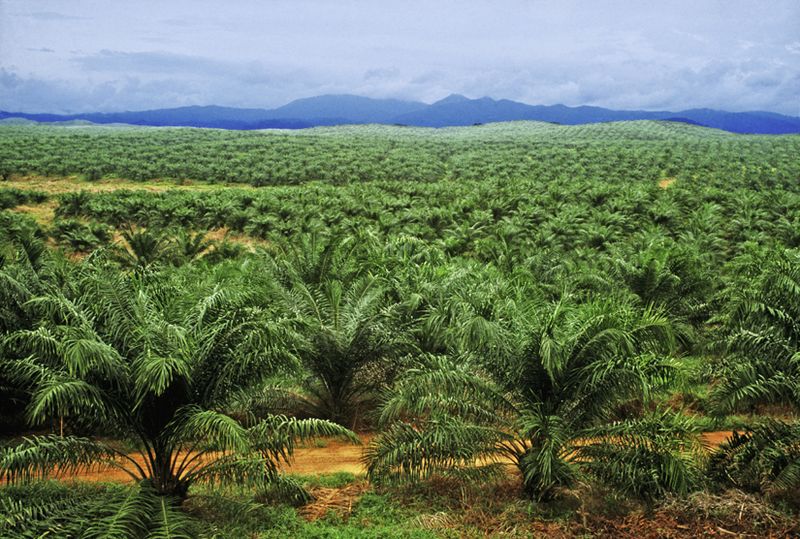
Indonesian, Liberian and International NGOs have filed five new complaints against Indonesia’s largest palm oil company, Golden Agri Resources (GAR).

A palm oil plantation

GAR, which is part of the huge Sinar Mas (Golden Rays) conglomerate run by the Widjaja family with interests ranging from palm oil and pulpwood to real estate and banking, is failing to comply with the Roundtable on Sustainable Palm Oil’s (RSPO) standards, claim the NGOs.

Both GAR and its subsidiary in Liberia – Golden Veroleum Liberia (GVL) – angered NGOs when they recently withdrew GVL’s membership of the Roundtable on Sustainable Palm Oil (RSPO), thus dodging a demand from RSPO that it should halt development of its palm oil mill on contested lands.

Mina Beyan of the Liberian NGO Social Entrepreneurs for Sustainable Development (SESDev) said: “We have been helping the local communities impacted by GVL to complain about the unfair way that GVL has been acquiring their lands, since 2012. Finally, earlier this year the RSPO Complaints Panel agreed – after a detailed independent investigation – that the complaints were valid. GVL was told to stop the land grab, but they refused. And now they have walked out of the RSPO. This delinquent behaviour challenges the very fabric of RSPO. Are RSPO standards only to be observed in the breach?”

According to Liberian NGOs, GVL was pushing ahead with its development despite the refusal of the Blogbo community to cede their lands to the company, despite their complaints to the RSPO, despite their complaints being upheld by the RSPO Complaints Panel and despite the Panel upholding the stop work order it had issued, after overruling an appeal by GVL against the Panel’s decision.

“This is a blatant attempt by GVL and GAR to evade their obligations to the RSPO. They use their RSPO membership to attract investment and to market their palm oil but when their bluff is called they just walk away from their responsibilities,” said James Otto of the Monrovia-based NGO Sustainable Development Institute (SDI).

Another complaint alleges that GAR is in violation of Indonesian laws which prohibit companies and corporate groups from holding more than 100,000 hectares of land. GAR publicly admits to holding more than four times that amount. Compliance with the law is a core principle of the RSPO standard but the RSPO Complaints Panel has avoided making a ruling on this matter for more than three years.

GAR has also delayed providing promised smallholdings to local Dayak and Malay communities from whom it acquired lands in 2007-2009 in the centre of Borneo, despite being required to do so by the RSPO Complaints Panel more than three years ago after a complaint from Forest Peoples Programme (FPP).

“Indonesia says it welcomes investment in palm oil plantations to help alleviate poverty and bring development,” says Rahmawati Winarni, Executive Director of the Indonesian NGO Transformation to Justice (TUK), “but GAR is just taking peoples’ lands and then wilfully delaying compensating them for it. Why should poor landowners be forced cede their lands and then wait decades for promised smallholdings, while these huge companies reap their profits? Actually, it is the Indonesian government that should be stopping this kind of abuse not just the RSPO,” she added.

In 2013, investigations by TUK and Forest Peoples Programme had revealed that GAR was cheating people out of their lands in violation of the RSPO standards – which require members to respect customary rights and only take their lands with their free, prior and informed consent. This led to a detailed complaint to the RSPO, which the complaints panel (CP) upheld in 2015, requiring GAR to make remedy for the lands it had taken without consent. RSPO CP froze all expansion and land acquisition by GAR in all 18 of GAR’s operations that were the subject of the complaint.

“Since then GAR has refused to renegotiate these unfair land deals, despite an RSPO ruling that it must make remedy for taking lands without communities’ free, prior and informed consent,” notes Marcus Colchester, Senior Policy Advisor for Forest Peoples Programme. “‘Justice delayed is justice denied’ is an apt saying.”

WFP distributes 7,340 fuel-efficient stoves to displaced women in Borno

0

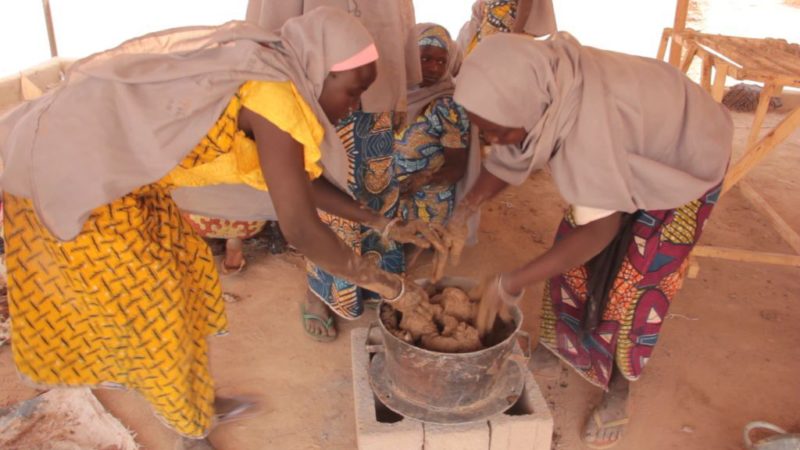
The World Food Programme (WFP), in conjunction with its partner INTERSOS, has distributed fuel-efficient stoves to 7,340 displaced families in Banki town, Borno State.

Women moulding stoves3
IDP women molding a fuel efficient stove

According to a statement signed by Kelechi Onyemaobi, WFP’s National Communications Officer, on Wednesday, August 15, 2018 in Abuja, the stoves were distributed under WFP’s Safe Access to Fuel and Energy (SAFE) Initiative.

Onyemaobi said that the distribution was aimed at improving the beneficiaries’ quality of life and reduced the protection risks faced by women and girls using fire woods for cooking.

“An assessment carried out by WFP in January 2018 in four local government areas in Borno state, revealed that 85 per cent of women felt at risk when collecting firewood from various threats including violence, sexual assault and even abduction.

“76 per cent of those surveyed were not able to cover their daily cooking needs due to inadequate supplies of firewood.

“While 70 per cent have no access to wood fuel resources in their immediate living environment as a result of the insecurity arising from the ongoing conflict between the security forces and Non-State Armed Actors which has limited people’s movements,’’ he said.

Sarah Longford, WFP Country Director in Nigeria, said that the distribution was made to the vulnerable population, to ensure that people are able to prepare food under a secured situation.

She said step are being taking to protect women and young girls whose lives are exposed to great danger, while crossing unsafe territories to fetch firewood.

She explained that the stoves burn 50 per cent less fuel when compared to conventional open cooking fires.

Longford added that the stoves reduce the burden of care on women and girls who can spend less time spent on gathering firewood.

She noted that firewood is also becoming an increasingly scarce and expensive commodity in towns where population movements are restricted.

“Quite often, families have been forced into poor dietary habits because they cannot afford fuel which means they risk eating undercooked food, rely on less nutritious foods that do not require cooking or eat fewer meals,” Longford said.

According to her, the stove also has additional health and environmental benefits, as it prevents further deforestation and produces far less smoke than traditional fires, reducing the incidence of respiratory diseases.

By Hawal Lawal

Rotary earmarks $96.5m to end polio

0

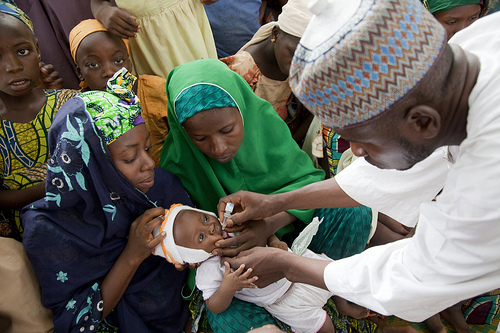
Rotary on Wednesday, August 15, 2018 announced nearly $100 million in grants to support the global effort to end polio, a vaccine-preventable disease that once paralysed hundreds of thousands of children each year.

Polio
Polio immunisation in Nigeria. Photo credit: comminit.com

The announcement comes as Nigeria marks two years without any reported cases of wild poliovirus, following four reported cases in 2016.

“Nigeria has prevented further cases of wild poliovirus thanks to the improved surveillance and rapid response protocols Rotary and its Global Polio Eradication Initiative partners have supported, particularly in Borno,” said Dr. Tunji Funsho, chair of Rotary’s Nigeria PolioPlus Committee. “We must remain vigilant about maintaining political and financial support to ensure strengthened immunization practices as we redouble our efforts toward ending polio in Nigeria and around the globe.”

Concurrently, Pakistan has made strides in reducing reported cases of wild poliovirus, having lowered its case count from 306 in 2014 to only eight reported cases in 2017.

“Nigeria’s progress proves that halting the spread of wild poliovirus is possible,” said Aziz Memon, chair of Rotary’s Pakistan PolioPlus Committee. “Although we currently have a record low number of reported cases of polio in Pakistan, we must remain vigilant about implementing the rapid response and surveillance protocols Rotary and its Global Polio Eradication Initiative partners have established and focus on accelerating our efforts toward eradicating polio.”

While significant strides have been made against the paralyzing disease, wild poliovirus is still a threat in parts of the world, with 10 cases in Afghanistan and three cases in Pakistan this year so far. As long as a single child has polio, all children are at risk, which underscores the need for ongoing funding and political commitment to eradication.

To support polio eradication efforts in countries where polio remains endemic, Rotary is allocating the majority of the funds it announced today to: Afghanistan ($22.9 million), Pakistan ($21.7 million), and Nigeria ($16.1 million).

Further funding will support efforts to keep 12 vulnerable African countries polio-free: Cameroon ($98,600), Central African Republic ($394,400), Chad ($1.71 million), Democratic Republic of the Congo ($10.4 million), Guinea ($527,300), Madagascar ($690,000), Mali ($923,200), Niger ($85,300), Sierra Leone ($245,300), Somalia ($776,200), South Sudan ($3.5 million), and Sudan ($2.6 million).

Africa will also see $5.8 million in funding for surveillance activities and $467,800 for technical assistance. Additional funding will go to Bangladesh ($504,200), Indonesia ($157,800), Myanmar ($197,200), and Nepal ($160,500), with an additional $96,300 funding surveillance in Southeast Asia. The remainder of the funding ($6.6 million) will go to the World Health Organization (WHO) for research activities.

Rotary has committed to raising $50 million a year to be matched 2-to-1 by the Bill and Melinda Gates Foundation, amounting to $450 for polio eradication activities over a three-year period. To date, Rotary has contributed more than $1.8 billion to fight the disease, including matching funds from the Gates Foundation, and countless volunteer hours since launching its polio immunization program, PolioPlus, in 1985.

In 1988, Rotary became a core partner in the Global Polio Eradication Initiative with the WHO, UNICEF, and the U.S. Centres for Disease Control and Prevention. The Gates Foundation later joined. Since the initiative launched, the incidence of polio has reportedly plummeted by more than 99.9 percent, from about 350,000 cases in 1988 to 22 confirmed in 2017.

Court strikes out anti-GMO case, activists pledge to fight on

0

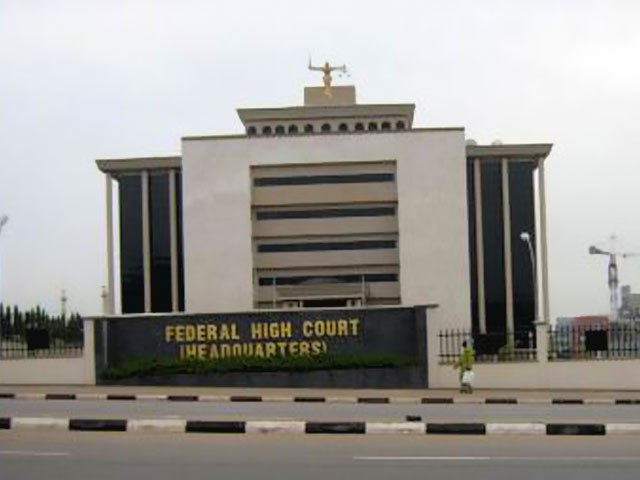
The Federal High Court of Justice, sitting in Abuja on the Wednesday, August 15, 2018, struck out a suit instituted by the Health of Mother Earth Foundation (HOMEF) and 16 other civil society organisations (CSOs) against some government establishments relating to genetically modified organisms (GMOs) due to technicalities.

Federal High Court Abuja
Federal High Court, Abuja

The Judge, in delivering his judgment, opined that although the plaintiffs have a Cause of Action in the matter, the court’s hands are however tied due to one of the objections raised by the defendants – the suit is statute barred.

According to the Judge, it is a contravention of the provisions of the Public Officers Act, which states that any action instituted against a public officer as regards his/her discharge of duties must be instituted within three months, after the said breach occurred.

The suit, with No: FHC/ABJ/C5/846/2017, was said to have been brought a year after the permits had been issued.

HOMEF, in a statement made available to EnviroNews, expressed displeasure at the judgement, describing it as “a fall back on efforts to preserve the nation’s food system from being overturned by the agricultural biotech industry”.

The registered Trustees of HOMEF and 16 other CSOs in September 2017 filed the lawsuit against the Nigerian Biosafety Management Agency (NABMA), the Minister of Environment, Monsanto Agricultural Nigeria Limited, National Biotechnology Development Agency (NABDA), Minister of Agriculture, Attorney General of the Federation and National Agency for Food and Drugs Administration and Control (NAFDAC) over permits granted for GMO products.

In the summons which was taken out by Ifeanyi Nwankwere of Basilea Juris Associates, the plaintiffs insisted that the 1st defendant did not comply with the provisions of the National Biosafety Management Agency Act in granting the permits to the 3rd and 4th defendants. The CSOs asserted that the procedure and issuance of the permits flouts and threatens the fundamental human rights of the people as enshrined in section 33, 34, 36 and 39 of the 1999 constitution of Nigeria as amended in 2011.

Other issues which the plaintiffs brought forward were that NABDA, said to be a part of the governing Board of NBMA, in its application did not state adequate measures put in place to prevent cross pollination with natural varieties during field trials, and that NBMA granted the permits without any public hearing regardless of the consequential issues raised in objections sent in by the Plaintiffs.

HOMEF maintained that agricultural biotechnology along with its current advances come with specific risks both immediate and long-term and require thorough safety assessments.

Nnimmo Bassey, environmental activist and Director at HOMEF, said: “Nigeria’s present regulatory architecture cannot ensure food and environmental safety as shown by the manner in which the National Biosafety Management Agency handles GMO applications. One troubling example is the case of genetically modified maize varieties which were illegally shipped into country by WACOT Nig. Ltd. in September 2017. The agency after announcing that together with the Nigerian customs service they would ensure that the illegal seeds were repatriated approved an application by this company to import these products over a period of three years, barely a month after its announcement that illegal maize should be repatriated. This action contradicts the biosafety law which requires 270 days notice before imports to allow for adequate safety assessments.”

Bassey emphasised that “the only essence of genetically modified crops is for the economic benefit of the biotechnology corporations and their counterparts and not the interest of Nigeria.  With the release of these products into the environment, the damage will be irreversible, and the current economic strength of Nigeria cannot afford that damage.”

The activist added further in the statement that the court ruling encourages “administrative rascality and constant disregard for public interest and due process”.

According to HOMEF, while the case awaited judgment, the defendants, NBMA, Monsanto and NABDA on July 26 registered and released the Bt cotton varieties (MRC 7377 BG11 and MRC 7361 BG11) along with other GM products into the Nigerian environment. These cotton varieties, the group adds, refer to the same cotton MON 15985 in the suit as evident on the website of the International Service for the Acquisition of Agri-Biotech Applications (ISAAA).

“The health and economic welfare of all Nigerians, which constitutes our fundamental rights, are at risk if GMOs are allowed in the country. Nigerians must be aware that we are neither respected nor protected,” he warned.

But Dr Rufus Ebegba, head of the NBMA, described the judgement as a victory for Nigerians, and a manifestation of the judiciary as a beacon of hope and justice.

His words: “The NBMA is much more encouraged to continue due dilligence in ensuring that Nigerians are protected from any potential adverse effect in the regulation of modern biotechnology and its products. However, this shows that our biosafety system is working. I urge Nigerians to trust the NBMA and not be distracted by fear mongering.”

According to him, NBMA remains an umpire in the regulation of GMOs, even as he assured that, with the Agency on ground, the safety of their health and environment would continually be its number one responsibility.

Also reacting to the court ruling, Mariann Bassey-Orovwuje, lawyer and chair of the Alliance for Food Sovereignty in Africa (AFSA), said in the statement that it would have been in the interest of justice to grant the reliefs set out on the face of the summons as, according to her, the case represented not just consumers safety but the survival of  millions of small scale farmers whose livelihoods are threatened by the corporate takeover of food systems in the guise of agricultural biotechnology.

“We hope that when the impacts of GMOs set in, the government of Nigeria will not say ‘we were not informed or warned about the impacts of GMOs’,” she declared, adding:

“The civil society coalition is of strong conviction that this is a cause worth fighting and would continue to seek redress. The organisations pledge not to relent in pushing the case for food safety and food sovereignty in Nigeria. They have pledged to continue to resist attempts by Monsanto, its international and local partners to control our food, land, life and democracy.”

Shell boss calls for diversification roadmap

0

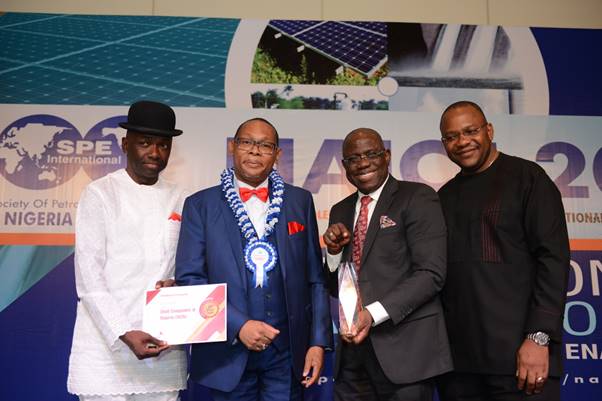
The Managing Director of Shell Nigeria Exploration and Production Company (SNEPCo), Bayo Ojulari, has harped on economic diversification as a panacea for job creation and rapid economic growth of Nigeria. He spoke at the just-concluded annual conference and exhibition of the Nigeria Council of the Society of Petroleum Engineers (SPE) where Shell Companies in Nigeria bagged the award for best exhibitor, beating to the second and third positions Chevron and Exxon Mobil respectively.

SNEPCo
L-R: Lead, Subsurface Shallow Water, Shell Nigeria Exploration and Production Company (SNEPCo), Kefe Amrasa; Outgoing Chairman, Nigeria Council of the Society of Petroleum Engineers, Chikezie Nwozu; Managing Director, Shell Nigeria Exploration and Production Company, Bayo Ojulari and Shell’s Vice President, Health, Safety and Environment, Osa Igiehon, at the presentation of The Best Exhibitor Award to Shell at the just-concluded SPE Nigeria annual conference and exhibition in Lagos

Speaking on the conference theme, “Diversification of the Nigerian Economy – The Oil & Gas Industry as an Enabler”, Ojulari called for a diversification roadmap bearing the commitment signature of major stakeholders in the Nigerian project.

“With such a roadmap, we are able to track performance year-in year-out while remaining focused,” he said.

Ojulari added, “For Nigeria to diversify its economy, it must leverage the low hanging fruits such as agriculture, petrochemicals, which use gas as its feedstock and most importantly, education and technology.”

At the awards ceremony, two Shell staff, Oghogho Effiom and Stella Egwim, received the SPE Nigeria Chairman Medallion awards while 10 other Shell staff got Service awards. The awards reportedly demonstrated a strong Shell participation at the 2018 SPE conference at which 20 technical papers were delivered by Shell staff out of 150 papers constituting about 13% from Shell.

“Over the years, Shell Companies in Nigeria have continued to demonstrate thought leadership at flagship industry events such as the SPE and we continue to promote self-development and professional affiliation by our staff as part of our wider human capacity development in Nigeria,” said Ojulari who received the best exhibitor award from the outgoing SPE Nigeria Council Chairman, Mr. Chikezie Nwosu.

According to Shell, it’s exhibition stand combined aesthetics, architecture, informative posters, panel discussion sessions, career talks, video presentations and the Shell Health stand, to be a central attraction at the conference.

Visitors who thronged the Shell booth were received by the lead exhibitor, Kefe and team. The guests were drawn from oil servicing firms, equipment manufacturers, student, professional and academic bodies as well as international and indigenous oil contractors and companies.

Nigeria: From fossil fuel to a sustainable future economic model

1

While the industrial revolution raised the standard of living for Western states as early as the 1920s, Nigeria’s discovery of crude oil was not until 1956. Over half a century into the production of crude which has delivered socio-economic advancements for well organised societies like Norway, Nigeria is yet to realise its long-awaited resource-led prosperity.

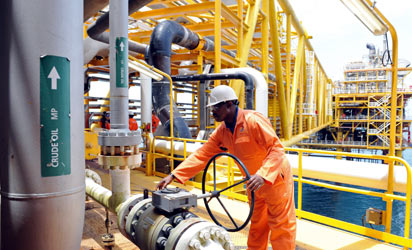
oil installation
Fossil fuel infrastructure: oil installation

One would think being one of the 10 biggest oil exporting countries in the world should guarantee progression. But Nigeria’s poor resource management and lax policy implementation coupled with corruption have stifled underdevelopment, fuelled inter-ethnic rivalries and stoke regional marginalisation. All of which comes at a price.

For instance, the ever-constant unrest in the Niger Delta region is strongly correlated to environmental despoliation in the wake of oil drilling. Lack of proper compensation to oil-bearing communities whose lands are being degraded with polluted streams and damaged agriculture are some of the externalities created by poor governance of oil resources.

Worse still, policies crafted to protect land and people are often not properly implemented for selfish reasons and citizens’ wellbeing and livelihood are compromised by state brutality or the effects of environmental damage. Added to that is the dilemma that is climate change, the most defining challenge of our time.

As climate change poses a direct threat to countries globally, there has been a sharp turn in many places towards clean and renewable energy to curb emission and reduce the pressure that humans exert on the planet. Among the countries now pioneering green energy and leading the fight against climate change is China. Though still with the US the joint highest polluter in terms of overall carbon emission, China is now the world’s leading nation in terms of investment in clean energy technologies, most prominently hydro/wind power.

China despite being the world’s largest consumer of coal and the second-largest consumer of oil is gradually transitioning to low-carbon energy and power industries. In 2017, renewable energy encompassed 36.6% of China’s total installed electric power capacity and 26.4% of total power generation.

So, it is both hypocritical and deplorable to witness China furthermore investing a wholesome $3 billion atop its $12 billion prior investment in Nigeria’s oil sector. This investment benefits China more than it does Nigeria, especially when one considers China’s ambition to surpass every other nation in clean and renewable energy production and consumption. China’s need to secure fossil fuels is mainly energy related geopolitical concern. For China to reduce its dependency on fossil fuels, it will need to rebalance the economy away from energy-intensive industries, a smart strategic play Nigeria should learn from.

Investments in Nigeria’s economy aimed at helping to turn around the failing oil-based economic model will be welcome. By contrast, investments that merely reinforce failed models without taking account of externalities such as the massive number of deaths arising directly or indirectly from air pollution should be discouraged.

Other challenges such as the acid rain destroying crops or affecting the human body are also worth mentioning. Unless addressed consistently, they risk spiralling out of control, exacerbating the plight of entire regions such as the innumerable cases of water pollution, land degradation, environmental warming, and the clear threats that these and other externalities of fossil fuel use pose to our civilisation, including sustainable agriculture.

Nigeria has earned large oil revenues over decades without much developmental achievements to show for it. The periodic celebration of spikes in global oil prices does little more than trap the common people in poverty, health risks, and compromised quality of life. The countries that benefit more from our oil production have achieved exponential growth and whilst they are moving forward to the next phase of innovation, Nigeria continues to count very little in the way of sustainable development.

For Nigeria to realise its clean energy potential, it must be steadfast in its push for divestment from the oil sector following the Norwegian example that has prohibited its oil-backed sovereign wealth fund from investing in hydrocarbon assets as a way of hedging its decarbonisation risk. We must use current ventures to stimulate a clean energy industry. Even government-led investment using public grants to incentivise renewables could launch us on the path to a greener future. Nigeria must enact functional environmental conservation policies and ensure their implementation to protect people, regions and our collective future.

Nigeria can boost her green performance using a combination of subsidies, policy targets and manufacturing incentives to drive energy production and expand access to affordable electricity. With the right approach to supporting innovation we can to join the rest of the world in going clean and green. The world is currently on the fast lane to sustainability and we do not want to play catch-up.

By Nasreen Al-amin (Executive Director, Eco-Africa, Nigeria)

Global tree cover increasing, study finds

0

A team of researchers from the University of Maryland, the State University of New York and NASA’s Goddard Space Flight Centre has found that new global tree growth over the past 35 years has more than offset global tree cover losses.

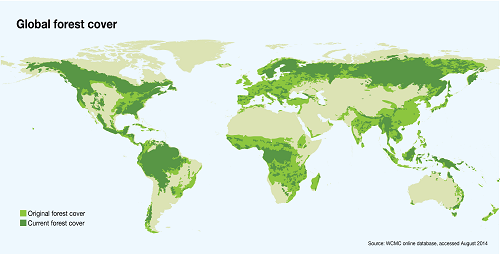
Global Forest Cover
Global forest cover

In their paper published in the journal Nature, the group describes using satellite data to track forest growth and loss over the past 35 years and what they found by doing so.

There has been a growing consensus in recent years that, because humans cut down so many trees (most particularly in the rainforests), the global tree cover is shrinking.

In this new effort, the researchers have found that not to be the case. They contend that global tree cover is actually increasing.

To track global tree cover changes, the researchers studied data from advanced and very high-resolution radiometers aboard a series of 16 weather satellites covering the years 1982 to 2016.

By comparing daily readings, the researchers were able to see small changes occurring regularly over a relatively long period of time – which added up to large changes. Over the entire span, the researchers found that new tree cover had offset tree cover loss by approximately 2.24 million square kilometres – which they note is approximately the size of Texas and Alaska combined.

The researchers report that most of the new tree cover occurred in places that had previously been barren, such as in deserts, tundra areas, on mountains, in cities and in other non-vegetated land. They further report that much of the new growth came about due to efforts by humans (such as reforestation efforts in China and parts of Africa) and because of global warming – warmer temperatures have raised timberlines in some mountainous regions and allowed forests to creep into tundra areas. Other areas of new tree growth resulted from large farm abandonments in places like Russia and the U.S.

The researchers report that their calculations showed that human activities have directly caused approximately 60 percent of new global tree growth. They suggest their technique for monitoring tree cover could be used to predict tree cover changes in the future due to global warming.