Home Blog Page 1833

Bloomberg launches $20m global tobacco industry watchdog

0

Global health organisation, Vital Strategies, on Monday, August 13, 2018 congratulated Bloomberg Philanthropies on the launch of its new $20 million global tobacco industry watchdog, STOP (Stopping Tobacco Organisations and Products).
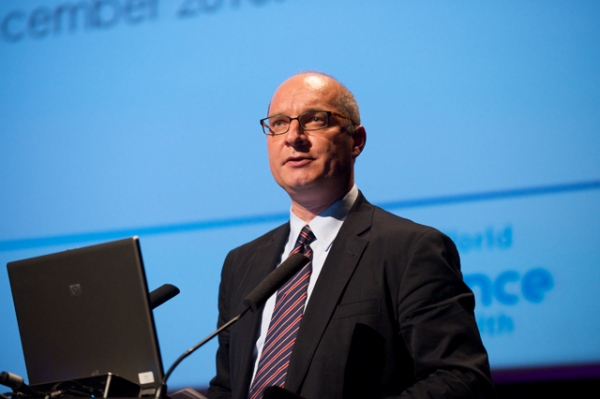
José Luis Castro
José Luis Castro, CEO and President of Vital Strategies and Executive Director of The International Union Against Tuberculosis and Lung Disease

STOP will be powered by a consortium of three leading anti-tobacco groups, with Vital Strategies joining with its sister organisation, the International Union Against Tuberculosis and Lung Disease (The Union) as a sub-grantee. STOP will use innovative research methods to expose industry attempts to derail tobacco control policies. It will also counter the industry’s efforts to, according to Vital Strategies, hook a new generation of smokers, with a special focus on 16 emerging markets where the consortium has strong relationships with governments and civil society.

“Bloomberg Philanthropies’ investment is a game-changer,” said José Luis Castro, CEO and President of Vital Strategies and Executive Director of The International Union Against Tuberculosis and Lung Disease.

He added: “The tobacco industry spends billions of dollars every year to drive its – often hidden – agenda to mislead consumers, journalists and policymakers. This investment will allow health advocates to bring innovation and proven strategies to expose industry wrongdoings on a global scale. Vital Strategies and The Union are honoured to be a part of an effort that will bring rapid progress against the world’s leading preventable killer – tobacco use – and expose the unethical business practices that drive seven million tobacco-related deaths every year.”

In addition to The Union and Vital Strategies’ participation as one of the partners, the other organisations who won the global competition to form this watchdog group are the Tobacco Control Research Group (TCRG) at the University of Bath and the Centre for Good Governance in Tobacco Control (GGTC). Each organisation has deep global and in-country experience in research, analysis, monitoring and advocacy, as well as media strategies that increase support for tobacco control policies.

STOP partners will draw from cutting-edge research, technology and media experience to cut off the tobacco industry’s influence around the world. Over the three-year term of STOP’s engagement, the group will encourage whistleblowers to report on misdeeds, publish exposé reports, employ “big data,” crowdsourcing methods, and mobile apps, to amplify and maximise STOP’s impact. Existing tools such as the University of Bath’s Tobacco tactics website, and the Tobacco Atlas published by Vital Strategies and the American Cancer Society will jump-start the efforts, it was gathered.

STOP will support World Health Organisation’s work to reduce tobacco use, including the implementation of the Framework Convention on Tobacco Control (WHO FCTC). It will specifically challenge the industry’s efforts to influence government policy in contravention of Article 5.3 of the WHO FCTC.
Scientists predict unusually warm climate from 2018 to 2022

0

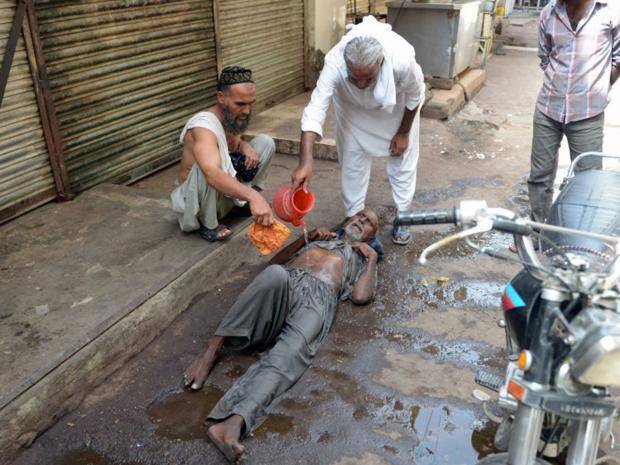
Scientists on Tuesday, August 14, 2018 predicted that the years 2018 to 2022 are going to be an “anomalously warm’’ period, with greater chance of extreme temperatures.

Pakistan-heatwave
Heatwave in the southern Pakistani city of Karachi

“The current climate has a large likelihood to reach a warmer-than-normal period over the next five years on top of the forced global warming trend,’’ said the study by British and Dutch researchers based on a probabilistic forecast system.

The study, published in science journal Nature Communications, said the trend will reinforce current long-term global warming trends.

The prediction comes as a severe and prolonged heatwave sweeps the northern hemisphere.

The researchers say they have developed a statistical model that provides reliable predictions of global mean air and sea surface temperatures in a few hundredths of a second, on a laptop.

It considers external forces affecting global mean surface temperature, such as greenhouse gases and aerosols, which follow certain socio-economic scenarios, as well as natural variability, which is harder to predict, they said in a statement.

Classical forecast systems give comprehensive climate data in a single prediction but are costly due to the need for supercomputers.

The system can be adjusted to predict other climate measures, such as precipitation, and to focus on various regions, the researchers said.

Farmers say cultivation of GM cotton seeds will be optional

0

The National Cotton Association of Nigeria (NACOTAN) says the cultivation of biotechnology cotton seeds by farmers in the country will be made optional.

GM-Cotton
The GM Bt Cotton

President of the association, Mr Anibe Achimugu, told the News Agency of Nigeria (NAN) in Abuja on Tuesday, August 14, 2018 that two varieties of biotechnology cotton which had been released for commercialisation were currently undergoing farm demonstration trials.

He expressed optimism that the biotech cotton varieties would be distributed to farmers in the next planting season, adding that farmer would be presented with the option of planting the conventional seeds (organic) or the biotech cotton seeds.

“With the introduction of biotechnology cotton seeds, two varieties that have been approved for commercialisation right now.

“They have told us that we should expect up to four tonnes per hectare and that was conducted by the Institute of Agricultural Research (IAR), the only institute mandated to work on cotton in Nigeria for release.

“Those two varieties are being tested under normal farming conditions.

“It is not in a laboratory but demonstration fields by farmers, so we believe that with what will happen this year by next year, I am not saying that there will be 67,000 farmers that will be farming biotech cotton.

“It is not for us to insist that farmers should farm biotech cotton, but we want to be able to say to a farmer for instance, if you want to do organic cotton which has a premium price in the international market, please go ahead.

“IAR will provide the conventional seed, the non-biotech seeds so we want to encourage IAR, we want government to fund IAR for them to have the capacity to improve the quality of their seeds, to produce more.”

chimugu said that cotton farmers were currently producing 450 to 500 kilogrammes of cotton per hectare as against some West African countries and neighbours that were doing an average of 1.2 tonnes per hectare.

He listed some of the challenges currently faced by cotton farmers to include lack of quality seeds, climate change and lack of irrigation facilities.

“The immediate challenge is poor quality seeds available for farmers.

“What we have are tired conventional seeds that ideally should not be planted more than three times, but they are in the hands of farmers for 4 to 10 times, so you can’t expect to get good yields from that and that is why we have poor yields,’’ he said.

He appealed to the government to adopt cotton as a national asset adding that the sector could employ youths, generate wealth and earn foreign exchange for the country.

By Ginika Okoye

Agency may utilise space technology to promote smart, precision farming

0

The National Space Research and Development Agency (NASRDA) says “smart and precision agriculture’’ could be promoted through the application of space technology.

Prof. Seidu Mohammed
Prof. Seidu Mohammed, Director-General of the National Space Research and Development Agency (NASRDA)

Prof. Seidu Mohammed, Director-General of the agency, said this measure would go a long way to spur economic recovery and growth in Nigeria.

He made this assertion on Tuesday, August 14, 2018 in Abuja at the “Annual Space Conference and Exhibition,’’ organised by the Centre for Satellite Technology Development (CSTD).

Smart agriculture is an approach to understand the basic requirement as well as the changes in current environment due to external factors.

The theme of the conference is “Revolutionising Agriculture through Space Science and Technology Applications.”

Mohammed said it was important that Nigeria’s Space Policy be tailored to the country’s reality and socio-economic situations to enable citizens’ benefit from space technology.

According to him, the population of the country is increasing, which requires regular geo-mapping of its environment for proper planning and it will reduce farmers/herders clash.

He emphasised that revenue from oil was insufficient to sustain the population growth of the country and there was the need for diversification in enhancing economic growth.

“Most of the Nigeria laws were gazetted in the 1950’s and that was when the population of Nigeria was below 45 million.

“Today, we are talking about 200 million; the land has remained the same.

“Satellite is the tool we can use to acquire data and enable us to see the earth.

“We have to reach a compromise in terms of resources to use to create stability for the movement of herdsmen to avoid encroachment of farms.

“Although oil revenues contribute two third of state revenues, it only contributes about nine per cent to the Gross Domestic Product.

“The huge labour force requirement of the sector makes it a viable employer of labour, which is an important ingredient for Nigeria to grow fast being an emerging economy to an economic power.

“Research in modern farm practices will be greatly aided by space technology.”

In his remark, Dr Spencer Onuh, Director CSTD, said a nation that could not feed itself would become a threat to its own sovereign existence.

Onuh said there was the need for African countries to employ effective economic agricultural practices, modern tools and innovative technologies in agriculture for high yield, reduction of hunger.

“We believe that the merging of the space and agricultural sectors will deliver what Nigeria needs.

“With the application of space, science and technology, you can feed a nation and not a family.”

The director said people would value space technology when they realised that it affected their lives directly, adding that space application worked in online banking and mobile communication.

He, however, said that when food was lacking, the security of the nation would be at risk.

According to him, the old fashion of using cutlasses and hoes for farming should be phased out and replaced with irrigation, mechanised farming using space technology.

He called on stakeholders to collaborate with the agency for the country to benefit from space technology.

Also, Prof. Placid Njoku, in his keynote address, said Nigeria needed to come along with scientists, technologists across the world.

Njoku said unmanned aerial vehicles, artificial intelligence, climate change and agricultural insurance were part of emerging issues in revolutionalised agriculture.

“The issue of precision farming is gaining grounds around the world because it helps determine the soil, the plants and it will help for a better output.

“We need to develop its applications and the packages that will enable the farmers to understand what is happening on his farm.

“When we had the e-wallet, it enabled farmers to know where to get fertilisers and the cost.

“With agriculture space technology, we can educate the farmers on crops to plant, what to produce on their land, fertiliser to use and also measure productivity of the farm.”

He recommended that the Federal Government should upscale its understanding of space, science and technology.

According to him, the government should provide three per cent of the country’s consolidated revenue fund to CSTD and NASRDA annually.

He said that if they were adequately funded, they would provide proper and timely information to the government as well as averting climate change.

By Ijeoma Olorunfemi

Five German states to reduce private car use, curb air pollution

0

Five sites in Germany are due to present plans to make public transport more enticing in the bid to reduce private car use and tackle air pollution.

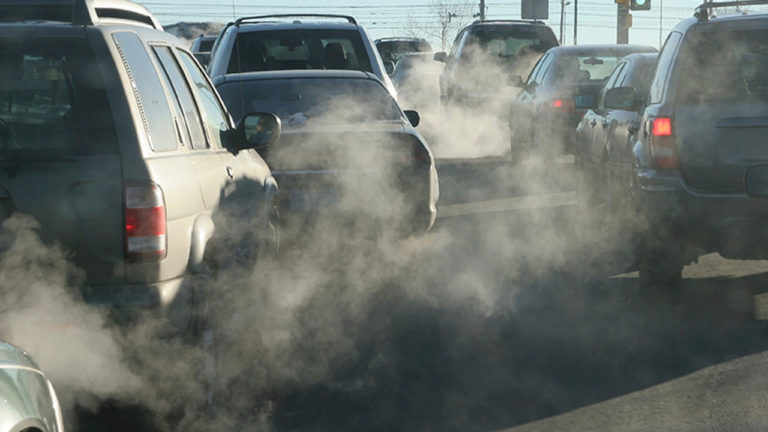
vehicular pollution
Vehicular pollution

The cities of Bonn and Essen in the west of the country and Mannheim, Reutlingen and the town of Herrenberg in the south-west are expected to share €130 million ($148 million) through 2020 from the central government for the projects.

The plans are due to be presented soon in Berlin with Transport Minister, Andreas Scheuer, and Environment Minister, Svenja Schulze, and are expected to include more cycle paths and better traffic controls.

The test or “model” places will try out a package of measures to reduce air pollution, which has exceeded EU limits in many German towns and cities.

If successful, the measures will be expanded nationwide.

Bonn, for example, plans to introduce an annual public transport ticket for new customers of €365, or 1€ per day.

“The pilot project aims to discover which measures really take hold and not just reduce (traffic) at certain places in the five places,” Bonn-Mayor Ashok-Sridharan said.

Brussels has threatened to take Berlin to the European Court of Justice for repeated violations of nitrogen oxide pollution limits.

Berlin has set aside one billion euros to combat air pollution, with 250 million coming from German carmakers.

Car manufacturers have pledged to upgrade the software of 2.8 million older diesel cars to improve emissions; the coalition government cannot agree on whether to insist on hardware fixes.

Government, Kano sign N12.7b agreement to expand water, sanitation facilities

0

The Federal Government on Tuesday, August 14, 2018 signed a N12.7 billion agreement with the Kano State Government on the expansion of water and sanitation services to the populace.

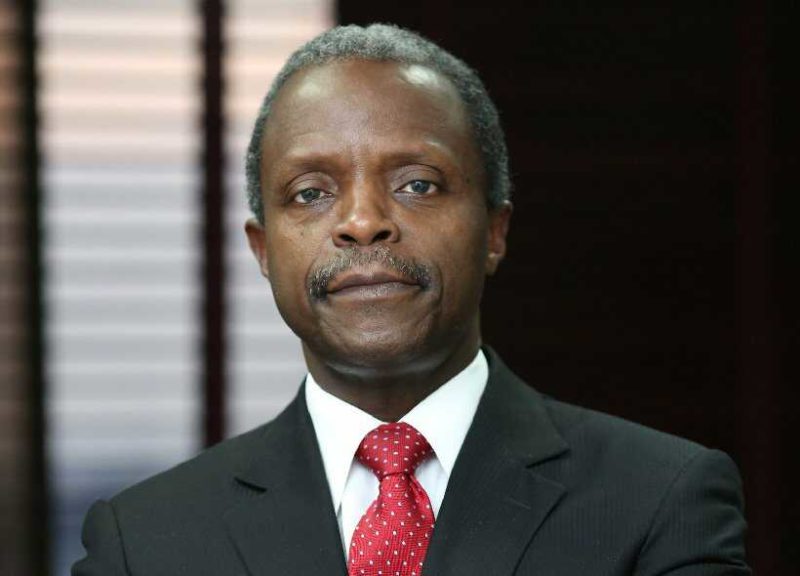
Osinbajo
The programme was inaugurated by the Vice President, Yemi Osinbajo, in 2016

Minister of Water Resources, Suleiman Adamu, at the event in Abuja, said the Partnership for Expanded Water Supply, Sanitation and Hygiene (PEWASH) agreement was a 15-year programme targeting mobilisation of all stakeholders to channel efforts to increase access to potable water and sanitation.

He said that the programme, inaugurated by the Vice President, Yemi Osinbajo in 2016, was a three-tier collaborative effort, which spans from 2016 to 2030 in line with the Sustainable Development Goal six for overall target of providing adequate and qualitative access to water at an affordable price.

He noted that the PEWASH was fallout from the efforts by Nigerian Government to meet its SDG commitment, saying these efforts was obvious with the development of a National Action Plan on Water, Sanitation and Hygiene (WASH).

“On water supply, the planned scope of the PEWSAH Programme is the rehabilitation of 77,693 facilities and provision of 17,264 new facilities to increase access to rural water supply from 57 per cent to 62 per cent.

“On Sanitation, we are targeting a total of 20,600,000 household toilets from 2019 to 2025 to end open defecation,” he said.

He said today’s agreement signing with Kano state, which came after Ogun had shown that the states were taking the lead from the remaining 22 states which had shown interest by signing the PEWASH Protocols.

Adamu urged the Kano Government to attend to water supply through setting aside more funds for the implementation of the programme, saying this would go a long way to improve the lives and reduce diseases especially among under-fives.

The minister added that the responsibility of providing water supply rests with the states, hence the need for continued efforts to complement the gains recorded.

Responding, Gov. Umar Ganduje said N12.7 billion earmarked for the programme clearly showed the concern and commitment of the present administration to improve the lives of Nigerians.

He said most rural populace depended on hand pump and motorised boreholes, saying with the implementation of the agreement, more lives would be improved.

Ganduje said that the state had budgeted N32 billion for provision of water supply in its 2018 budget, saying this would augment current efforts, and further maintain an average water production capacity of 150 to 200 million litres daily.

He said the state government had established a water law for the establishment of a WASH department in all 44 local councils to further strengthen water delivery services to the grassroots.

Ganduje, while commending the efforts of all stakeholders, pledged to speedily commence the implementation of the agreement for the betterment of Kano populace.

He also appreciated President Muhammadu Buhari for approving the $200 million Islamic Development bank credit facility to promote water and agricultural development in the state.

By Tosin Kolade

Ebola may be spreading undetected in Congo’s conflict zones – WHO

0

The Ebola virus may be spreading undetected in no-go zones in Congo’s conflicted North Kivu province, World Health Organisation (WHO) chief, Tedros Ghebreyesus, said on Tuesday, August 14, 2018 in Geneva.

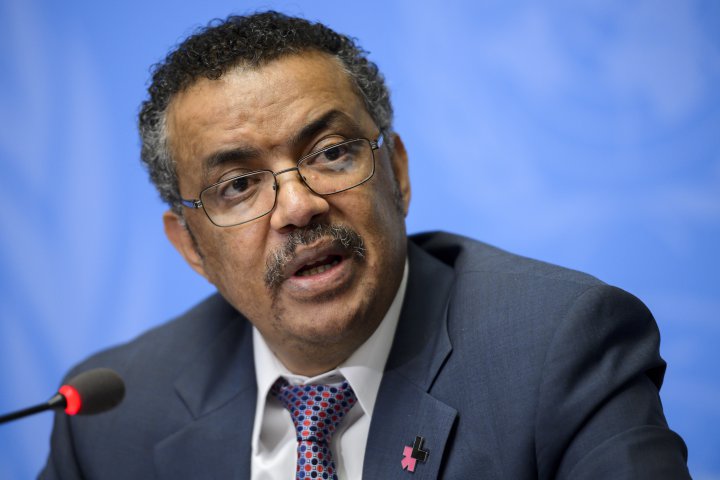
Dr Tedros Adhanom Ghebreyesus
Dr Tedros Adhanom Ghebreyesus, Director General of the World Health Organisation (WHO). Photo credit: FABRICE COFFRINI/AFP/Getty Images

So far, 57 confirmed and suspected cases, including 41 deaths, have became known since late July in this north-eastern region.

Ghebreyesus, who visited North Kivu last week, said WHO workers will find it difficult to fight the virus in the so-called “red zones.”

These areas are inaccessible because of the more than 100 armed groups that are mainly fighting over access to mineral resources.

“That environment is really conducive for Ebola to transmit freely,” the WHO director general told a press conference.

“These red zones could be hiding places for Ebola,” he added.

Ghebreyesus warned that the difficult outside access, patients in these zones would find it hard to reach medical help.

The movement of internally displaced people in North Kivu, and the cross-border travel into neighbouring countries such as Uganda further complicate the situation.

Ebola is a highly infectious disease that causes a fever and often leads to massive internal bleeding and death.

Congo’s Health Ministry has started a vaccination campaign that has reached more than 200 health workers and 20 people who have had contact with infected patients since last week, according to the WHO.

The new outbreak became public only days after July 24, when Congo declared its previous Ebola outbreak to be over.

That outbreak killed 33 people starting in May in the western Equator Province.

Governments urged to train youths in waste management

0

A waste manager, Prof. Dele Osibanjo, on Tuesday, August 14, 2018 advised the three tiers of government to be involved in the training of youths in waste management.

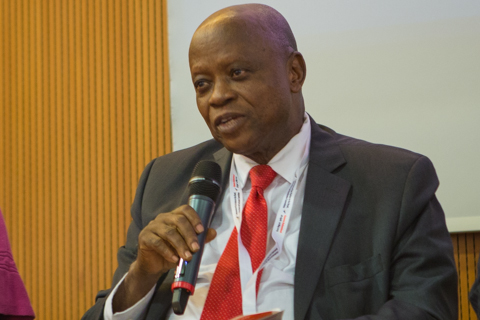
Prof. Oladele Osibanjo

Osibanjo, the President, Waste Management Society of Nigeria (WAMASON), gave the advice in an interview with the News Agency of Nigeria (NAN) in Lagos.

“Let the various levels of government get involved in the training of youths in waste management.

“The time is now for all to join hands to see waste as a resource and wealth provider to reduce unemployment in the country,” he said.

According to him, a lot of non-governmental organisations (NGOs) owned by youths are involved in the ‘Garbage Green’ aimed at teaching people on effective ways to handle waste.

“There are people going around dustbins, picking materials and reselling them to make a living.

“Waste is a goldmine of the future, as people buy into it.

“There is a great unemployment, especially among the youth, and this should not be,’’ Osibanjo said.

He said that WAMASON was providing training for the NGOs to ensure that those saddled with waste collection were equipped with sound waste management.

Osibanjo said that more people needed to be trained as waste managers on a continuous basis.

He said that with the slogan ‘Gab Green’, the youth’s outlook on waste could be changed for better with the establishment of recycling companies in different parts of the country.

Osibanjo said that such step would also serve as an avenue for advocacy on proper waste management.

“Now, people build houses on waste dump sites. Many housing estates are being developed on waste dump sites.

“Many government housing programmes are being planned on waste dump sites.

“All these are chemical time bombs waiting to explode,” he said.

By Chidinma Agu

Enugu pledges to support sanitation projects

0

The Enugu State Government has pledged to support and promote the implementation of sanitation projects in the state.

Ifeanyi Ugwuanyi
Governor Ifeanyi Ugwuanyi of Enugu State

Senior Special Adviser to the state governor on Water Resources, Mrs Felicia Ikpeama, made this promise at a workshop organised by WaterAid Nigeria for sanitation stakeholders in Enugu.

Ikpeana noted that WaterAid has been working in the state for about 13 years in the areas of water and sanitation.

“They implemented European Union projects in the state which had water and sanitation components and was followed by the implementation of another project known as Sustainable Total Sanitation (STS).

“The project also followed with Sanitation Marketing (SanMark) in six local government areas of the state, namely: Igbo-Etiti, Igbo-Eze North, Igbo-Eze South, Nkanu East, Udi and Udenu.

“It may also interest you to know that WaterAid Nigeria has touched the lives of so many people in the state positively with safe and potable water, and improved sanitation to those in small towns and rural areas,’’ she said.

The WaterAid Director of Programmes, Mr Anddy Omoluabi, said that Enugu state has been selected as one of the states to benefit from the new phase of the WaterAid project owing to its contribution to the previous project.

He said that the ongoing workshop was to brainstorm ways to ensure durability, affordability and sustainability of the project and ways to improve on the project.

“WaterAid project will be extended to those areas we have not touched, and before now when you talk of WaterAid all mind goes to toilet and water but this time we want to go beyond,’’ said the director.

The WaterAid project Sanitation Co-coordinator in the state, Mrs Nneka Akwunwa, explained that the organisation has decided to come up with SanMark.

She explained that sanitation marketing would provide durable, affordable and accessible sanitation options and create sustainable livelihood in commercial and social space.

“To support attainment and sustainability of Open Defecation Free (ODF) status by communities, through supply of durable, inspirational and affordable sanitation toilets,’’ Akwuna said.

By Nicholas Obisike

Congo starts using experimental Ebola treatment

0

The Democratic Republic of Congo has started using the experimental mAb114 Ebola treatment on patients in the east of the country, the health ministry said on Tuesday, August 14, 2018. This is the first time it has been deployed against an active outbreak.

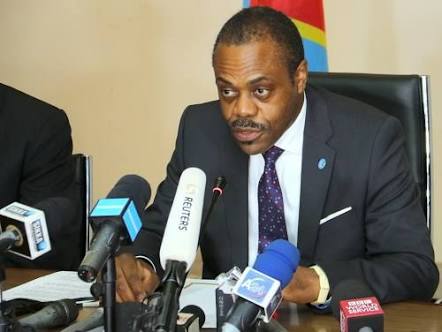
Oly Ilunga
Oly Ilunga, the Congolese Minister of Health

The outbreak in eastern Congo’s North Kivu province has now spread to neighbouring Ituri province, where a person who was a confirmed case died after returning home from the flare-up’s epicentre in the North Kivu town of Mangina, the ministry said in a statement.

Five new cases have been confirmed, the ministry said, bringing the total number of cases between 57.

The ministry said that 41 people are believed to have died in all from the haemorrhagic fever.

The mAb114 treatment was developed in the U. S. by the National Institutes of Health using the antibodies of the survivor of an Ebola outbreak in the western Congolese city of Kikwit in 1995.

It was 100 per cent effective when tested on monkeys.

The ministry said that several other experimental treatments have arrived in the regional hub of Beni and are awaiting approval from an ethics committee, including Remdesivir, Favipiravir and REGN3450, REGN3471 and REGN3479.