
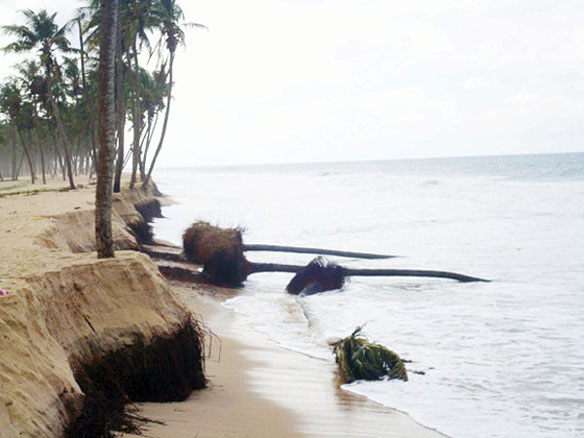
According to the Nigerian Conservation Foundation (NCF), the Federal Government intervention is needed as surges from the raging Atlantic Ocean continue to eat away large chunks of coastal land in Lagos, and posing a threat to adjoining settlements as well as the ecosystem.
Deep reefs ‘twilight zone’ reject fish, corals, study reveals
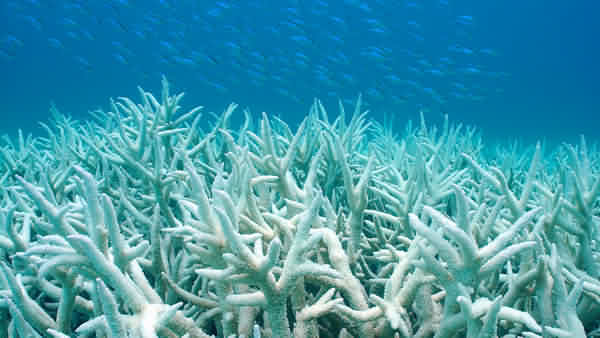
Deep coral reefs in a “twilight zone” in the oceans differ sharply from those near the surface.
The finding dims hopes that they can be a refuge for marine life fleeing threats such as climate change and pollution, scientists said on Thursday, July 19, 2018.
Worldwide, coral reefs in shallow waters are among ecosystems most threatened by climate change.
The Great Barrier Reef off Australia suffered severe bleaching, a whitening driven by warm waters that can kill corals, in 2016 and 2017.
A U.S.-led team of divers studied little-known reefs in the West Atlantic and Pacific Oceans between 30 and 150 metres (100-500 ft) deep where sunlight fades.
They found that most species of corals and fish were unlike those closer to the surface.
“We were surprised to find little overlap,” lead author Luiz Rocha of the California Academy of Sciences told the Media of the findings published in the journal science.
Less than five per cent of fish and corals were found in both shallow and deep waters against the scientists’ previous estimate of 60 to 75 per cent, based on historical records, he said.
“The potential for deep reefs to act in a refuge capacity is far less than we have previously hoped,” they wrote.
“And, like shallow reefs, the deep reefs also faced threats including climate change, storms and pollution.
Divers found, for instance, plastic fishing nets entangled on deep corals off the Philippines and deep corals harmed by warm waters off the Bahamas.
Rocha said the scientists were trying to place temperature sensors in the twilight zone to see how far deep reefs were exposed to rising ocean temperatures, which are most extreme at the surface.
Deep reefs covered at least the same ocean area worldwide as shallow reefs, he estimated.
Some reefs, such as those off the mouth of the Amazon River, exist only in the depths.
The authors urged better safeguards for deep reefs, for instance by expanding protected areas and banning bottom trawlers that can scrape the seabed.
Among previous research, a 2016 study by the U.N. Environment Programme found evidence that some deep reefs could act as what it called “lifeboats” for nearby, connected shallower reefs.
But it said that in other cases, deep reefs “may be just as vulnerable as shallower reefs” to human pressures.
Adaptation Fund board approves $35m in new projects
In an intersessional decision, the Adaptation Fund Board has approved four new climate change adaptation projects across Latin America, West Africa and Asia while endorsing another three project concepts with approved project formulation grants to develop them further.
The approvals amount to a little over $35 million.
In a separate decision, the Board approved a pilot south-to-south cooperation readiness support package which will enable its national implementing partner in Senegal (Centre de Suivi Ecologique, CSE) to provide tailored peer guidance to the governments of Burundi and Mali throughout the process of having national implementing entities in each of those countries apply for accreditation with the Fund. The $100,000 grant is aimed at enhancing access to climate finance for both countries.
The decisions were made by the Board, which meets in person twice a year in Bonn, Germany in March and October, through an online voting process.
“These decisions are great news for the most vulnerable countries to climate change that the Adaptation Fund serves,” said Adaptation Fund Board Chair, Victor Viñas. “The projects are innovative and will help people on the ground with concrete actions, while creating valuable lessons that can be potentially scaled up in other areas that are similarly affected.”
Viñas said he was further happy to see another great example of the Fund’s implementing partners providing guidance and tips to neighbouring countries to help them through the accreditation process. The pilot readiness support package builds upon the Fund’s South-South Grant Programme, which led to the successful accreditation of Banque Agricole du Niger last year following peer support provided to Niger by CSE. Both programmes are part of the Fund’s pioneering Direct Access modality, which strengthens developing country capacities to identify and develop adaptation projects and access climate finance directly through accredited national implementing entities (NIEs) based in the countries themselves.
“We have a growing community of 28 accredited NIEs throughout the world, which share their experiences, best practices and lessons with both the accreditation and project development processes,” said Mikko Ollikainen, Manager of the Adaptation Fund Board Secretariat. “This ultimately enhances access to climate finance and improves adaptation practices on the ground for the most vulnerable communities to climate change.”
Project grants approved during the intersessional period include:
- A $2.4 million project in Ecuador to be implemented by the Development Bank of Latin America to strengthen adaptive capacity of local populations in the Toachi-Pilatón watershed with ecosystem- and community-based integrated adaptation approaches.
- A $4.5 million project in Mongolia by UN-Habitat to enhance climate resilience to flooding in seven vulnerable Ger (nomadic tent) settlements of Ulaanbaatar City, as well as reduce vulnerability to wind and dust storms, and air pollution.
- A $14 million regional project implemented by the West African Development Bank in Benin, Burkina Faso, Ghana, Niger and Togo to promote climate-smart agriculture, disseminate innovative and regional agricultural best practices, and knowledge.
- A $13.9 million regional project in Chile and Ecuador by the Development Bank of Latin America to reduce climate vulnerability in urban and semi-urban areas in three coastal cities, as well as lessen vulnerability to floods, mudflows and landslides related to climate change by mainstreaming risk-based approaches to adaptation, collaboration and a culture of adaptation.
- $257,200 in project formulation grants for implementing partners to further develop regional project concepts in the Ivory Coast and Ghana to build climate resilience in vulnerable coastal settlement communities; in Kazakhstan, Tajikistan and Uzbekistan to address glacier lake outburst floods; and in Djibouti, Kenya, Uganda and Sudan to increase resilience of small farmers and pastoralists in the face of drought.
23 US lawmakers question water privatisation in Lagos
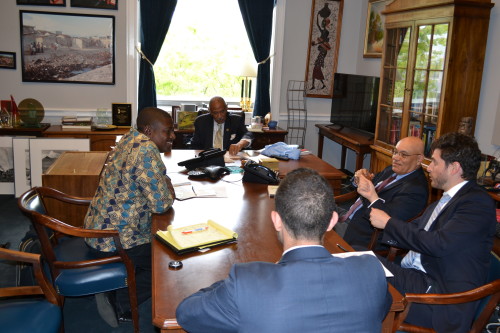
The “Our Water, Our Right Coalition” has commended the 23 members of the Congressional Black Caucus (CBC) and Congressional Progressive Caucus (CPC) who wrote a solidarity letter siding with Lagos citizens in their struggle against water privatisation.
Reacting to a solidarity letter from some members of the CBC and CPC which made direct connections between the struggle of the people of Lagos and people in U.S cities like Flint, Detroit, Michigan, Pittsburg and Pennsylvania, the “Our Water, Our Right Coalition” said the caucuses have again shown their commitment to pro-people causes through the letter.
A similar letter of support from half of the CBC members in 2015 underscored the disproportionately harmful effect water privatisation schemes, including public-private partnerships, have on people of colour around the world.
The renewed support from the CBC and CPC members comes just one week after a delegation of Nigerian legislators led by Senate President, Dr. Bukola Saraki, met with members of the CBC.
The Our Water Our Right Coalition have alerted that the new privatisation plans could involve Veolia which has reportedly been implicated in the Flint and Pittsburgh water crisis. Other corporations that have been tipped are Metito and Abengoa – all said to have track records of human rights abuses.
In May 11, World Bank Executive Directors visited Lagos and met with Lagos governor, Akinwunmi Ambode, who called for the bank’s support on water projects. Later same month, evidence emerged that, despite years of opposition from people, unions and environmental groups, the Lagos government was moving ahead with at least five water privatisation projects that could privatise nearly 60 percent of Lagos’ water system. Some of the projects are slated to advance as early as this month.
The CBC and CPC letter of solidarity draws from three U.S. examples, Detroit, Flint and Pittsburgh where the prioritisation of system finances over access has led to major issues such as raised rates, shut off water access for tens of thousands, dangerous lead crises and even drew the concern of the United Nations Special Rapporteur on the human right to water.
The letter reads in part: “While we cannot all be experts on the distinct water access challenges facing each of the world’s cities, we share your concerns that a move towards privatisation of the water system in Lagos, including through public-private partnerships, could leave the city vulnerable to the negative impacts historically associated with various forms of water privatisation, including rate hikes, unaffordable service, inequitable access, worker layoffs, service interruptions, and failures to adequately invest in infrastructure. Privatisation also introduces significant governance challenges that can erode democratic control and oversight, including the government’s ability to regulate in the public interest.”
In a statement issued in Lagos, ERA/FoEN Deputy Executive Director, Akinbode Oluwafemi, said: “Privatisation is not the answer for Lagos just like it is not the answer for Pittsburgh and cities across the U.S. We call on the Lagos government to end its anti-democratic pursuit of privatisation and invest in public solutions.”
Oluwafemi thanked leaders in the U.S. for their continued support, adding: “We must band together to oppose this corporate grab of our water, from Lagos State to Pennsylvania.”
Expressing support for the Lagos campaign, Shayda Naficy, Senior Programme Director at Corporate Accountability, said: “Around the globe, the human right to water is under threat and people of colour, low income communities, and people in the Global South bear the brunt and are having to defend their rights in the face of disproportionate impacts. Whether it’s at the World Bank or Michigan Legislature, this fundamental right must be upheld. The best way to do that is to keep water systems democratically accountable and in public hands.”
The letter is led by Representative Karen Bass (Democrat-California), ranking member of the Africa subcommittee, and Representative Keith Ellison (Democrat-Minnesota). It is signed by CBC members and CPC members, including Reps. Ro Khanna (Democrat-California), Eleanor Holmes Norton (Democrat-D.C.), Frederica Wilson (Democrat-Florida), William Lacy Clay (Democrat-MO), Mark Pocan (Democrat-Wisconsin), Hakeem Jeffries (Democrat-New York), Pramila Jayapal (Democrat-Washington), Brenda Lawrence (Democrat-Michigan), Sheila Jackson Lee (Democrat-Texas), Bennie Thompson (Democrat-Mississippi), Donald Payne (Democrat-New Jersey), Stacey Plaskett (Democrat-Virgin Islands), Hank Johnson (Democrat-Georgia), Gwen Moore (Democrat-Wisconsin), José Serrano (Democrat-New York), Barbara Lee (Democrat-California), Michael Capuano (Democrat-Massachusetts), Emanuel Cleaver (Democrat-Missouri), Luis Gutierrez (Democrat-Illinois), and Raul Grijalva (Democrat-Arizona).
Petroleum engineers advocate Free Trade Zone for renewable energy
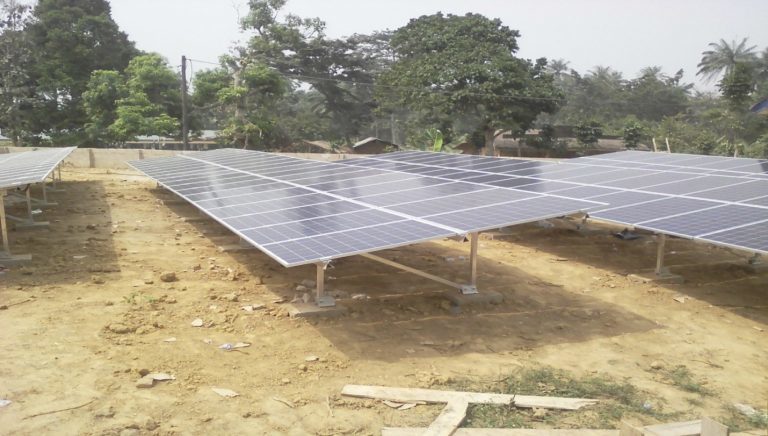
The Society of Petroleum Engineers (SPE) on Thursday, July 19, 2018 urged the Federal Government to create Free Trade Zone (FTZ) that would develop renewable energy and increase investment opportunities.
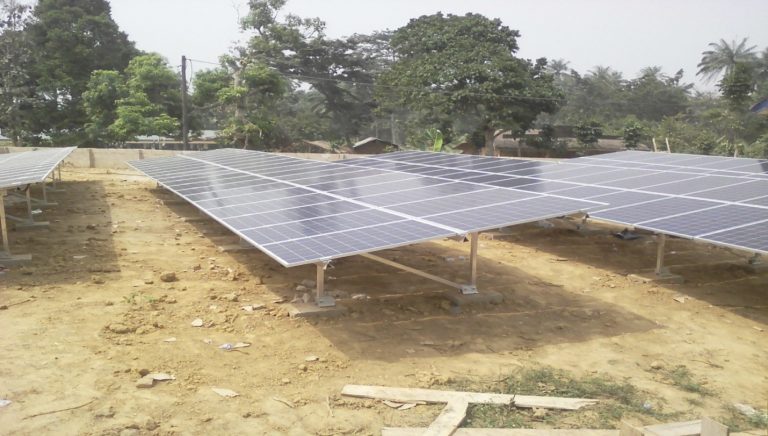
The Chairman, SPE Nigeria Council, Mr Chikezie Nwosu, made the plea at a press briefing ahead of the SPE’s Nigeria Annual International Conference and Exhibition 2018 slated to hold in Lagos from Aug. 6 to 8.
The News Agency of Nigeria (NAN) reports that theme of the conference is entitled: “Diversification of the Nigerian Economy- the Oil and Gas Industry as an Enabler’’.
Nwosu said that diversification of the Nigerian economy from conventional crude oil to renewable energy would go a long way in addressing the threat on dwindling global demand for oil.
He said: “The National Gas Policy must open the vast opportunities to deliver energy and earn significant revenue from our abundant gas resources.
“We are the regional giants in gas and the entire West African, possibly sub-Saharan Africa; the region’s economy will boom, if Nigeria gets it right.’’
He said it has become clear that, with anticipated growth in energy demand, the world was rapidly moving toward an age of cleaner sources of energy.
According to him, with the demand for fossil fuels, this will mean a greater reliance on gas and less reliance on oil and coal.
He said that hydroelectric and gas-powered cars would replace diesel engines and with time, gasoline engines.
“With our population, a booming West African region will create huge opportunities in just about any industry.
“Nigerian companies in the renewable energy space, solar, wind, biomass, among others, will also benefit from the human capital we have developed,’’ Nwosu said.
He said that creating the right business environment for the industry to thrive would give room for the much-needed diversification.
According to him, the need for Nigeria to get a FTZ that will concentrate on developing the renewable energy, the better for the country to grow the sector.
“The growing investments in renewable sources of energy such as solar and wind, becomes evident that Nigeria must rethink its energy policy to solidify on the gains in the oil and gas industry.
“We must leverage on these leanings to prepare for an energy mix that will become less reliant on the more polluting fossil fuels,’’ he added.
Nwosu said that there was need to urgently implement the National Gas Policy and maximise the huge gas reserve in a bid to facilitate the diversification of the nation’s economy.
“We have a potential to produce over 20 billion standard cubic feet per day, that is only leveraging on the known contingent 180 trillion cubic feet of gas reserves.
“There is 600Tcf of prospective gas resources, he said.
The chairman said the nation’s current gas production stood around 8.5 billion standard cubic feet, adding that government needs to urgently implement the national gas policy.
“If we can leverage on that, energy will be abundant, and there will a lot of impact on gas-based industries. We have to stop treating gas the way we treated oil as a commodity,” he said.
By Yunus Yusuf
IPCC authors meet in China to develop ocean, cryosphere report

Experts from around the world will come together in Lanzhou, China, from Monday, July 23 to Thursday, July 26, 2018 to advance preparations of the Intergovernmental Panel on Climate Change (IPCC) Special Report on the Ocean and Cryosphere in a Changing Climate (SROCC). The Third Lead Author Meeting of the report will bring together more than 100 scientists from more than 35 countries.
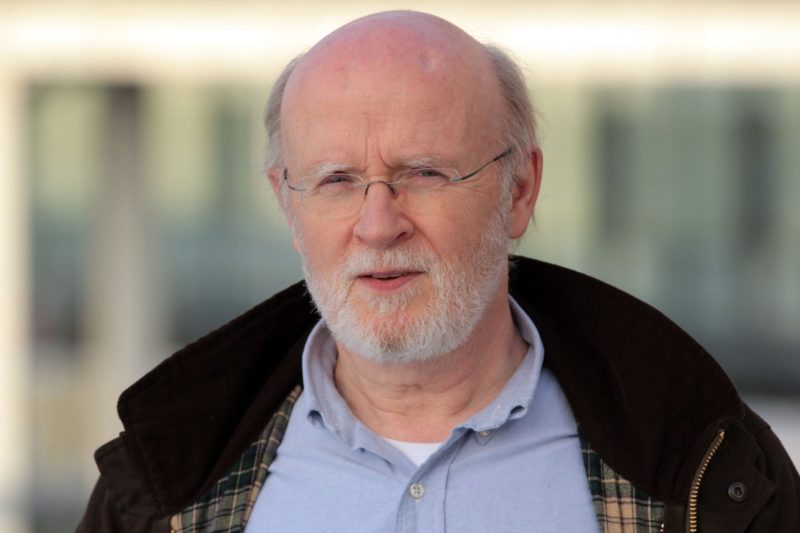
At the meeting, SROCC Lead Authors will discuss next steps and update their chapters, addressing more than 12,000 comments from the Expert Review of the First Order Draft. The Second Order Draft will be available for Expert and Government Review in November 2018. The report will be finalised in September 2019.
“We are grateful for the comprehensive feedback we received in the first Expert Review of this report,” said Hans-Otto Pörtner, Co-Chair of IPCC Working Group II. “By ensuring that the latest scientific knowledge is included in our assessments, the reviews help us to provide the best available basis for global climate policy. The outcomes of our Lead Author Meeting in Lanzhou will take us a huge step closer to this goal.”
“We are looking forward to the meeting in Lanzhou as we continue developing and refining the IPCC Special Report on the Ocean and Cryosphere in a Changing Climate. We believe this report will help policymakers better understand the changes we are seeing and the risks to lives and livelihoods that may occur with future climate change,” said IPCC Vice-Chair Ko Barrett. “The gracious hospitality of our hosts is much appreciated.”
Following proposals from several governments, the Special Report on the Ocean and Cryosphere in a Changing Climate assesses the latest scientific knowledge about the physical science basis and impacts of climate change on ocean, coastal, polar and mountain ecosystems and human communities that depend on them.
The word cryosphere – from the Greek kryos, meaning cold or ice – describes the areas of the Earth where water is found in its solid state. This includes ice sheets, frozen lakes and rivers, regions covered by snow, glaciers, and frozen soil. Vulnerabilities of different ecosystems as well as adaptation capacities are evaluated, and options for achieving climate resilient development pathways will be presented. The report is being prepared by IPCC Working Group I, which assesses the physical science basis of climate change, and Working Group II, which deals with impacts, adaptation and vulnerability.
Scavengers seek conducive environment to do business
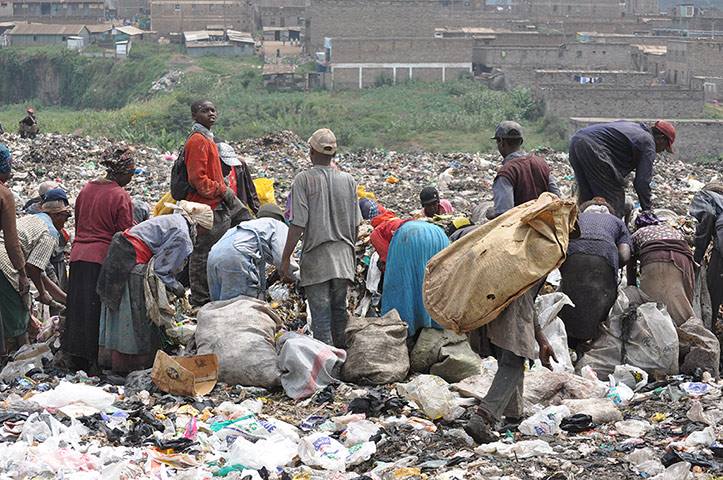
Some waste pickers popularly known as scavengers on Thursday, July 19, 2018 said they needed an environment conducive and open spaces to do their businesses.
They said this in separate interviews with the News Agency of Nigeria (NAN) in Lagos.
According to them, an environment conducive is necessary as they provide essential services to keep the environment clean by picking useful waste materials for recycling.
NAN reports that the waste pickers call their business “Bola Business”.
One of them, Alhaji Ibrahim, said that the business had helped to provide sources of livelihoods for some youths and children that have no one to cater for their needs.
‘‘I deal on iron scraps and l have about 20 workers who l give between N10,000 and N20,000 daily to go round Lagos, buying iron scraps from residential areas, business areas and offices.
‘‘They also pick useful iron scraps from the dustbins and off the roads.
‘‘When they stumble on big irons that cost more than the money on them they call my attention to it,’’ he said.
Ibrahim said that when the heap of iron scraps was enough to fill a trailer he had 10 workers on ground, sorting out the iron and loading them into the trailer.
He said the sorting out normally takes between a week and 10 days to accomplish.
Ibrahim, who said each trailer could carry between 20 tonnes and 30 tonnes, stated that the vehicles would then take the material to a melting company where the scraps were weighed and paid for.
Ibrahim said that each trailer load cost between N2 million to N2.5 million and that the payments were made a day after delivery to the company.
Mr Ibrahim Iberi, a waste plastic collector and dealer, said that they needed open spaces to store the plastic waste collected before it could fill a lorry.
‘‘This business is called Bola business.
‘‘I buy all kinds of plastic waste either from individuals or waste pickers, who picked materials and come here to sell them to us.
‘‘We buy plastic waste from waste pickers at N60 per kilo and sell to our customers at N70 per kilo.
‘‘Those who buy from us are the people that supply waste to companies that melt and recycle them,’’ he said.
Iberi said that the waste would weigh up to one tonnes before they sold them to those who supply them to companies.
Ibrahim Tukur-Karabomsou, a scrap dealer on household used items, said they sell the items as they bought them.
‘‘For instance, some antiquity bed we bought for N2,000 can be sold for between N5,000 and N6,000.
‘‘We call it here blind market because the buyers pick things and pay for them without testing them.
‘‘We sell as we buy, we do not repair or refurbish them.
‘‘Those who buy takes the responsibility of putting in order what they bought,’’ he said.
Tukur-karabomsou said that most of what they have were bought by PSP Operators after they had sorted the waste collected from residential areas.
Mr Lawal Nurudeen, the Vice-Chairman, maize section, Jakande Fruit Market Ketu/Ikosi, said that the disposal of the maize husks had been properly organised by maize sellers.
‘‘Farmers load and bring maize from their farms to the market for sell.
‘‘We collect ground rents and coordinate the activities of the maize dealers so that there are no problems.
‘‘To dispose the maize husks, the dealers pay some wheel barrow boys who take them to the Earth Care waste collection van at the road side.
‘‘The boys are contracted by the maize dealers and they in turn pay a token for the trucks to carry them,” he said.
Nurudeen said that the trucks did not accept any other waste except maize husks, plantain sticks, rotten oranges, water melon and cucumber among other fruits.
He said the other non-degradable market waste were handled and paid for by the market association, adding that the association has its own trucks that carry waste.
The driver of the Earth Care truck, who spoke on condition of anonymity, said that the maize dealers gave him N15, 000 as fuel cost to evacuate the maize and other fruit husks.
‘‘Before, we carry the husks for free but because of the way things are now, they give me just money to fuel the truck.
‘‘The refuse is taken to a company that turns it into fertiliser used by farmers,’’ he said.
Mr Henshaw George-Agbugba, said was trading in electronics and house hold items.
‘‘If l go to the scrap dealers and see useful item in good condition l buy, refurbish and sell.
‘‘The good thing is that you buy the products cheap and depending on how lucky you are, you can sell at five times higher than the price you bought them,’’ he said.
George-Agbugba said that because electronic products normally take time to be sold, he buys household moving items to sell as a survival strategy.
By Chidinma Agu
Nasarawa given thumbs up for clean environment
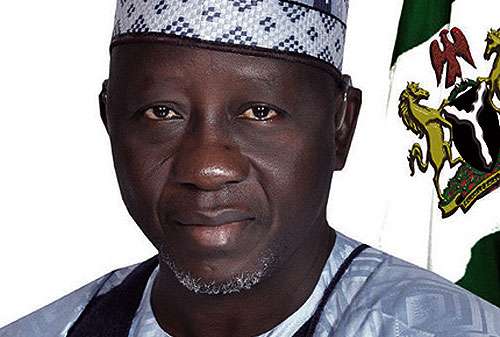
Some residents of Mararaba and its environs on Wednesday, July 18, 2018 commended the Nasarawa State Government for its prompt response to their calls for intervention in tackling the environmental challenges facing the area.
The residents, who spoke in an interview with News Agency of Nigeria (NAN), expressed happiness over what they described as “the new look of Mararaba’’.
Mrs Alice Utan, a petty trader, said that the environment of the area had become an eyesore to many residents and visitors, as heaps of refuse dotted the entire surroundings.
“All of a sudden, the area is now beginning to have a cleaner look because of the new approach adopted by Gov. Umaru Tanko Al-Makura’s administration.
“Few months ago, we started observing street cleaners sweeping the road early in the morning before the commencement of our businesses; this is very commendable.
“You will agree with me that living in a clean environment is important to our physical health as well as our overall well-being.
“This is what the government is trying to do for us, we must commend it,’’ she added.
Also speaking, Mr Francis Attah, a teacher, said that the rate of environmental degradation in the country was alarming; adding that one of the contributory factors was the failure of many people to exhibit good sanitation habits.
He cited a recent World Health Organisation (WHO) report that claimed some diseases were caused by environmental factors such as filthy surroundings, among others.
He particularly condemned some residents’ habit of dumping garbage on the streets and urged them to always keep the environment clean to stay healthy.
Besides, Attah called on the government to provide more refuse receptacles for the residents of Mararaba, saying that this would encourage the people to properly discard their refuse without spreading it by the roadside.
“I have noticed that the population of Mararaba has strikingly overwhelmed the available facilities in the community.
“Besides employing street sweepers to keep the roads clean, government should station more refuse bins by the roadside, as this would encourage the residents to dump their rubbish in the bins.
“However, this shouldn’t be an excuse for the reckless habit of those who dump refuse indiscriminately and thereby, endanger human health,’’ he said.
Miss Ekamma Ita, a student, also commended the state government for taking steps to address the environmental challenges facing the residents of Mararaba.
According to her, people can now breathe easily in their newly sanitised neighbourhood when they wait to board vehicles at various bus stops along the road.
“I really appreciate the state government for its approach to solve the serious environmental challenges we have encountered on this road in recent times.
“I, therefore, give kudos to Gov. Al-Makura,’’ she said.
By Okon Okon
Erosion: NEWMAP appeals to Obosi community over slow pace of work
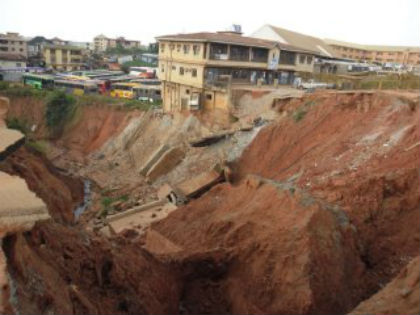
The Nigerian Erosion Watershed Management Project (NEWMAP) on Thursday, July 19, 2018 appealed to Obosi community in Anambra State to bear with it over the slow pace of work at its gully erosion sites.
Mr Emeka Achebe, Head of Communications of NEWMAP in the state, made the appeal while speaking with the News Agency of Nigeria (NAN) in Obosi, Idemili North Local Government Area (LGA).
Achebe was reacting to reports by the community that the project might have been abandoned.
He said that a large portion of the job would have been completed but for rainfall that had slowed it down.
He said that the contractor, Chez Aviv Ltd, had not abandoned the project, adding that work on the project was ongoing.
Achebe said the rains had prevented the contractor from executing the concrete works.
According to him, the concrete work in the World Bank assisted project, cannot be done under the prevailing weather but the preliminary jobs were currently ongoing.
“For instance, the baseline topography survey is ongoing at Ire Village, while a drainage job is going on at Ugamuma as well as the reinforcement of a compromised building at Nkpor.
Achebe said the survey would reveal additional erosion sites to those captured in the original plan, assuring that the work would be comprehensively executed.
The people of Obosi community had called on the contractors to hasten the completion of the project to save the residents from the menace of gully erosion.
Mr Ike Madubuosah, President-General of Obosi Town Union, said the community was thankful to the Anambra State Government and World Bank for the project but wondered about the delay in the execution of the job.
Madubuosah said the delay in effective takeoff of erosion control civil work on the sites was a major cause for worry as more land and households were being exposed to danger.
The president-general described Obosi as an ecological disaster area that demanded urgent and sustainable control and remediation work.
“The ecological situation in Obosi is worrisome now; we have challenges with seven major gully erosion sites, including two in Ugamuma, two in Ire, one in Umuota and two in Uruowulu,” he said.
The contractors have two years to complete the job.
By Chimezie Anaso
Delta warns residents against indiscriminate disposal of waste
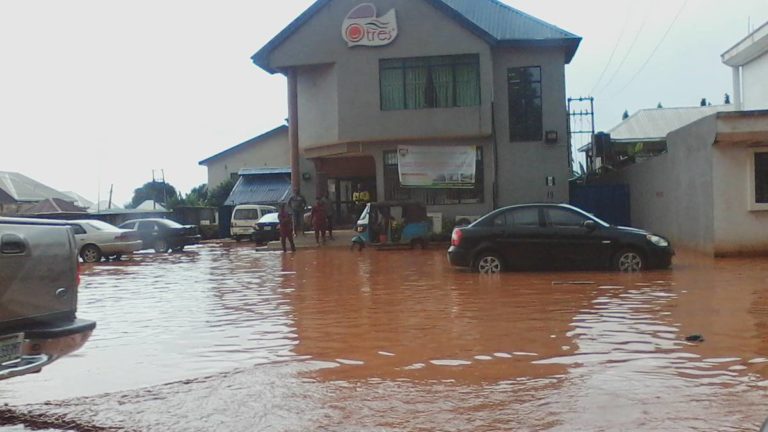
The Delta State Commissioner for Works, Chief James Augoye, has warned residents of Asaba and Okpanam communities to desist from indiscriminate dumping of waste on the waterways.
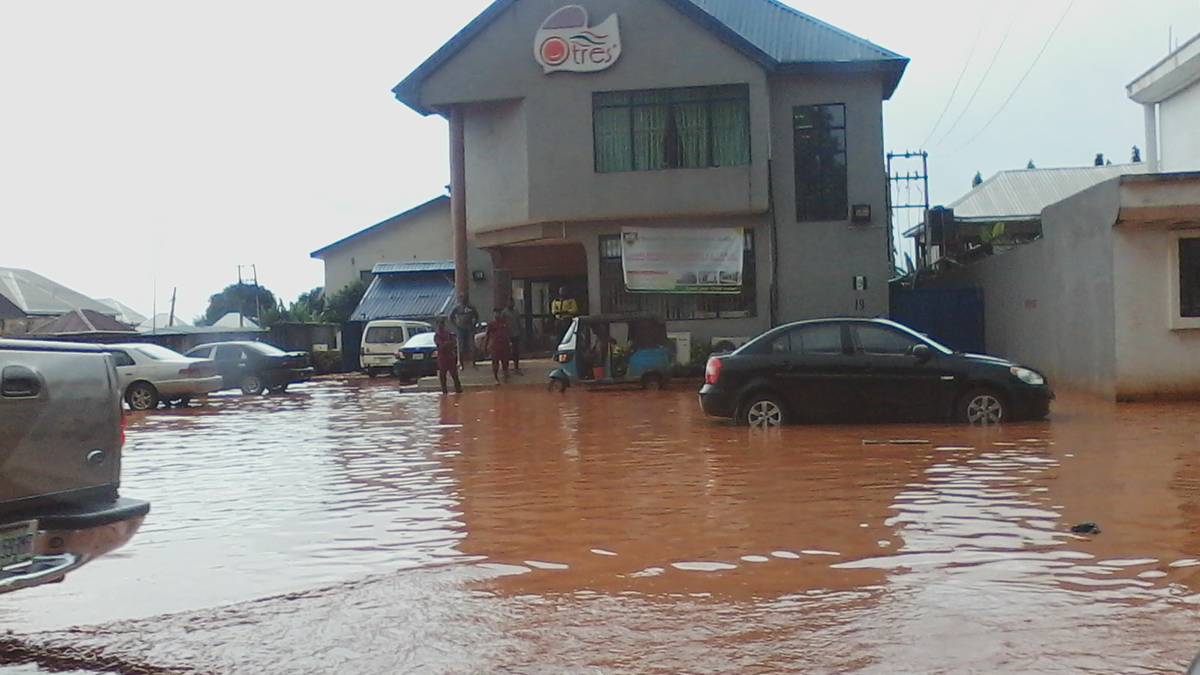
The commissioner gave the warning while responding to questions on the challenges of flooding in the state capital on Wednesday, July 18, 2018 in Asaba, the state capital.
He said that the state government was committed to addressing all flood-related challenges in Asaba, Warri and other flood-prone areas across the state.
Augoye said that government had embarked on three strategic storm water projects in Asaba.
The commissioner said that the challenge of flooding in the state capital would soon be addressed after completion of the project in February 2019.
Augoye said that the current flooding challenge was not only caused by the quantum of flood water from rainfall but the indiscriminate dumping of waste by the residents of Asaba and Okpanam communities.
He said that with the rainy season, the challenge would not be over yet until the storm water projects were completed.
Augoye said that road constructions and drainage works were ongoing at various corners of Asaba in addition to the dualisation of Okpanam road among others
He said that it was not strange that the rain on Monday and Tuesday this week had disrupted activities in the area.
According to him, the government is on course with the ongoing storm water projects in Asaba and is determined to make the drains effective to evacuate flood waters in the state capital.
“The governor in his quarterly briefing had said that the storm water projects will not have much effect this year until 2019 when they will be completed.
“Apart from the high volume of water particularly from the Okpanam axis to Asaba, the challenge we have is with the people who dumped waste indiscriminately into the water channels.
“The people have turned the drains to refuse dumps. This is creating a serious problem to us,’’ the commissioner said.
He, however, assured that state capital would be cleaned up within the week to make it presentable, as the contractors handling the roads and drainage channels were working into the nights.
“We are sure that before the contingents for the African Senior Athletics Championship will start arriving the state, Asaba shall be cleaned up and made presentable,” Augoye said.
He said that the state government had granted approval for the construction of two pedestrian bridges; one at the Summit Junction and the other at the Abraka Market in Asaba.
According to the commissioner, the modalities are being worked out and the contractor will soon commence work on the pedestrian bridges.
By Ifeanyi Olannye