Home Blog Page 1819

Global biodiversity assessment nears completion

0

The first comprehensive overview for more than a decade of the state of knowledge about global biodiversity and the contributions of nature to people is nearing completion with a final meeting of authors this week at the Senckenberg Biodiversity and Climate Research Centre (BiK-F), in Frankfurt Germany.
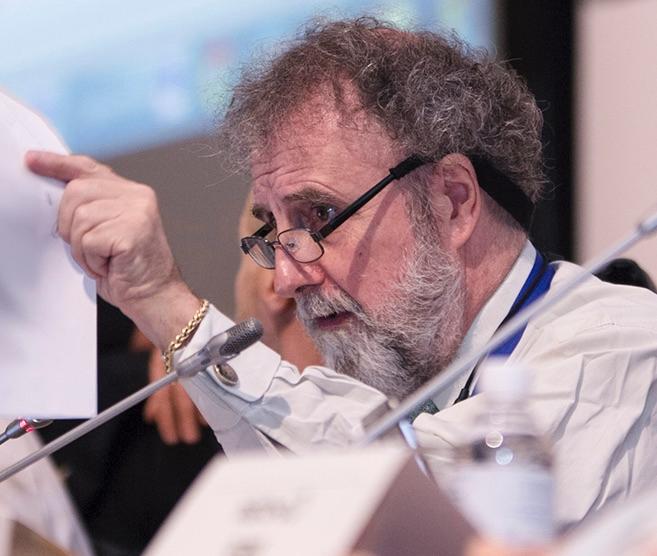
Sir Robert Watson
Sir Robert Watson, Chair of IPBES

Under the leadership of Professors Josef Settele (Germany), Sandra Díaz (Argentina), and Eduardo S. Brondízio (Brazil & USA), 150 expert authors from over 50 countries around the world have contributed for almost three years to a massive interdisciplinary collaboration under the Intergovernmental Platform on Biodiversity and Ecosystem Services (IPBES).

The resulting Global Assessment of Biodiversity and Ecosystem Services will be considered by representatives of 130 Governments in May 2019, in Paris, at the seventh session of the IPBES Plenary (#IPBES7). The research covers land-based ecosystems, inland waters and oceans, looking back 50 years to evaluate changes, and forward to consider scenarios, possible pathways and policy options. Once published, it is expected to inform policy and action on biodiversity to 2030 and beyond.

Speaking about the importance of the research, Prof. Dr. Katrin Böhning-Gaese, Director of the Senckenberg Centre, said: “Biodiversity loss is a major threat to human wellbeing, and there is a growing need for better scientific evidence in policy and decision making. This is the major goal of IPBES, and it is also why Senckenberg is pleased to host this third and final author meeting of the Global Assessment. Research on biodiversity loss and its causes is a major focus of the more than 300 Senckenberg scientists, some of whom also contribute to the IPBES assessments.”

“The IPBES Global Assessment is, in many ways, a successor to the landmark Millennium Ecosystem Assessment, published in 2005,” said Prof. Josef Settele, briefing journalists on Thursday, August 2, 2018. “Since then, the world has agreed to a range of key commitments – such as the Aichi Biodiversity Targets, the Sustainable Development Goals and the Paris Agreement on climate change. The Global Assessment will help decision-makers, at every level, to assess progress, identify major gaps and consider a range of policy options to meet these key undertakings. Of particular importance in our research has been the exploration of ways to achieve climate change reduction, the conservation of biodiversity, and the global environment more broadly.”

Sir Robert Watson, Chair of IPBES, also used the meeting to officially announce the selection of the eminent experts who will lead two new IPBES assessments starting this year.

The co-chairs of the IPBES assessment on the diverse conceptualisations of multiple values of nature will be: Prof. Patricia Balvanera (Institute for Ecosystem and Sustainability Research, National Autonomous University of Mexico); Brigitte Baptiste (General Director, Alexander von Humboldt Institute, Colombia); Prof. Unai Pascual (Ikerbasque Research Professor at the Basque Centre for Climate Change (BC3), Spain, and Associated Senior Research Scientist at the Centre for Development and Environment (CDE), University of Bern, Switzerland); and Prof. Mike Christie (Director of Research, Institute of Business and Law, Aberystwyth University, United Kingdom).

The technical support unit, which will coordinate the production of this assessment, will be based in Morelia, Mexico, and hosted by the Institute for Research on Ecosystems and Sustainability (IIES-UNAM), the Secretariat of Institutional Development (SDI-UNAM), and the University Seminar on Society, Environment and Institutions (SUSMAI-UNAM) all within the National Autonomous University of Mexico (UNAM), and the Mexican Commission for Knowledge and Use of Biodiversity (CONABIO).

The co-chairs of the IPBES assessment on the sustainable use of wild species will be: Dr. Marla R. Emery (Research Geographer with the United States Department of Agriculture, Forest Service Research and Development); Dr. Jean-Marc Fromentin (French Research Institute for the Exploitation of the Sea (lFREMER)); and Prof. John Donaldson (Chief Director – Biodiversity Research, Assessment and Monitoring, South African National Biodiversity Institute).

The technical support unit will be based in Montpellier, France, and co-hosted by two organisations the Foundation for Research on Biodiversity (FRB), and the Agence Française pour la Biodiversite (AFB).

Countries issue reports on use of genetic resources, ratify Nagoya Protocol

0

Germany has published the first report on the utilisation of genetic resources through the Access and Benefit-sharing (ABS) Clearing-House by issuing a checkpoint communiqué concerning research on ants from South Africa. This was rapidly followed by checkpoint communiqués from Malta and Qatar.

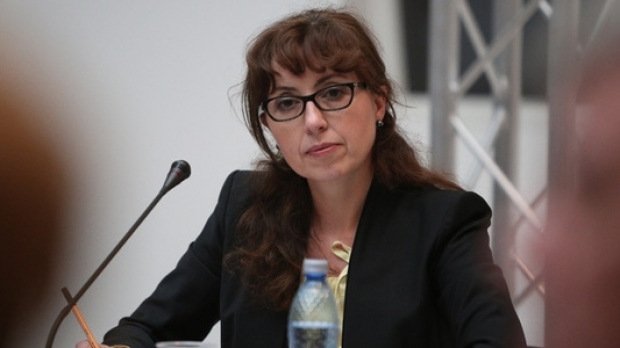
cristiana pasca palmer
Cristiana Paşca Palmer, Executive Secretary of the Convention on Biological Diversity (CBD). She has urged all Parties to the Biosafety Protocol that have yet to do so, to ratify the Supplementary Protocol as soon as possible

The ABS Clearing-House is a global repository of information that helps provide legal certainty and transparency in the context of the Nagoya Protocol on Access to Genetic Resources and the Fair and Equitable Sharing of Benefit Arising from their Utilisation. Part of the role of the ABS Clearing-House is to enable countries to monitor how genetic resources are used along the value chain for commercial or non-commercial research, which is particularly useful when genetic resources have left the country.

Dr. Cristiana Paşca Palmer, Executive Secretary of the Convention on Biological Diversity and United Nations Assistant Secretary-General, said: “The monitoring system is a key piece of the Nagoya Protocol, and I am very pleased to see it being put into action. Being able to track the use of genetic resources is critical to creating trust between users and providers of genetic resources. The ABS Clearing-House is a unique feature of this international agreement and provides an important tool for connecting users and providers of genetic resources.”

The system for monitoring the utilisation of genetic resources is further explained in a short video launched during the recent meeting of the Convention’s Subsidiary Body on Implementation: https://absch.cbd.int/database/VLR/ABSCH-VLR-SCBD-240572.

The checkpoint communiqués from Germany and Malta also mark the first time that interoperability functions have been used to automatically publish information on the ABS Clearing-House. In this case, information published on the European Union’s (EU) DECLARE tool, an EU-wide tool which enables users of genetic resources to submit the required due diligence declarations, was automatically transferred and published on the ABS Clearing-House. Using interoperability mechanisms like the application programming interface of the ABS Clearing-House is a practical and efficient way for Parties to the Nagoya Protocol to automate the publication of information on the Clearing-House.

Additional countries have also joined the Nagoya Protocol in recent weeks following ratifications by Afghanistan, Austria, Central African Republic and Palau. This brings the total number of ratifications to 109.

Dr. Paşca Palmer said: “These recent ratifications demonstrate that implementation of the Protocol is gaining momentum. The more countries participate, the better the Nagoya Protocol can meet its objective of contributing to conservation and sustainable use of biodiversity through access to genetic resources and benefit-sharing.”

Sanitation, good hygiene practices improve quality of lives in Kaduna community

0

Members of Abadawa community in Lere Local Government Area of Kaduna State said on Wednesday, August 1, 2018 that adequate sanitation and good hygiene practices have significantly improved the quality of their lives.

Nasir el Rufai
Nasir el Rufai, Governor of Kaduna

They also said that access to clean water 24 hours a day was another life changing experience that have added value to the lives of the about 2,500 inhabitants of the community.

They stated this while interacting with the News Agency of Nigeria (NAN), who was in the community to access the impact of the Phase II of Sanitation, Hygiene and Water in Nigeria (SHAWN) project.

Mrs Khadijat Adamu, a member of the community’s Water, Sanitation and Hygiene Committee, said that until the SHAWN project, the community sees sanitation and good hygiene practices as exclusive to urban life.

“As a rural community, we erroneously assumed that access to clean water, maintaining clean environment and good hygiene practices were the privilege of the rich in urban areas.

“This is a community where until now, our only source of water was a well dug in 1954 and dries-up every year between April and May, forcing us to share water with animals in nearby stream.

“With the absence of toilets, we defecate openly including our backyard, while our children do it in any available space in the house.

“We simply had no idea of how to keep our environment clean; why we should wash our hands always; and how our unhygienic practices predispose us and our children to all kinds of preventable diseases.

“For us, these unhygienic practices are normal lives of rural dwellers, and so we live a life of envy and wish that someday, we shall relocate to urban areas where quality of life is assured.

“There, we will get to drink clean water and live in clean environment away from the flies, reptiles and all kinds of insects that we shared our homes with,” she said.

She, however, said that the coming of SHAWN project in the community had changed their negative perception about life and proved that even rural dwellers could live a quality life.

According to her, the project provided a motorised borehole that supply the community with clean water for 24 hours, and equipped them with life changing knowledge about sanitation and good hygiene practices for healthy living.

Similarly, the Chairman of the community’s WASH Committee, Malam Samaila Matu, said that every household now have a toilet facility to check against open defecation.

Matu also said that the committee mobilise resources through levy and fines to maintain the water facility and goes round every two week to ensure that every household maintain a clean environment.

The District Head of Abadawa, Malam Dahiru Abubakar, equally described the SHAWN project as a “life changer’’ for his people, and thanked UNICEF, Kaduna State Government and other partners for making his community a beneficiary.

According to him, the project has ended the community’s circle of hardship in accessing clean water, while good hygiene practices have curbed the prevalence of preventable diseases, particularly among children under five years.

The story was no different in Unguwan Rimi, a community of about 3,600 people also in Lere local government area, where the community compete with animals for water in the river when available wells dried up between April and May.

A 10-year-old Yasir Ya’u said he spent about three hours daily to fill a 75 litre container with water from the river for his mother after returning from school.

Ya’u, a primary four pupil of Universal Basic Education Primary School, Unguwan Rimi, added that he has developed back pain due to the long distance and hours spent to get water.

“However, my story had changed when in 2017 a motorised borehole was provided for our community under the SHAWN II project.

“The development has ended my years of agony and pains and provided me with more playing hours,’’ he said.

Malam Ibrahim Shuaibu, another member of the community, thanked UNICEF and Kaduna State Government for improving the quality of life of rural dwellers, noting that “water is life”.

NAN reports that the SHAWN II project is aimed at improving access to sanitation, hygiene and water supply to all citizens through eradication of open defecation, hand washing promotion, sanitation and provision of water facility.

It is being funded by United Kingdom’s Department for International Development (DFID) and UNICEF with counterpart funding from the state governments of Kaduna, Katsina, Zamfara, Benue, Bauchi and Jigawa.

By Philip Yatai

UN certifies first ever climate neutral football club

0

Forest Green Rovers from England has become the world’s first UN certified Climate Neutral Now football club by pledging to measure, reduce and offset greenhouse gas emissions during their upcoming season.

forest green rovers
Forest Green Rovers’ pitch

Sports and leisure activities around the world have a major role to play to reduce climate impacts and limit the average global temperature rise to as close as possible to 1.5 degrees above pre-industrial levels, in line with the goals of the Paris Agreement.

“This commitment is part of a growing movement where all of civil society, including the world of sports, has begun to act on climate change,“ said Miguel Alejandro Naranjo Gonzalez of UN Climate Change, who works with on Climate Neutral Now initiatve.

Forest Green Rovers joins international sports organisations such as Fédération Internationale de Football Association (FIFA) and the Adidas Group to take climate action in partnership with the UN.

Sports and leisure activities often have high carbon footprints, for example from the travel of large numbers of peoples to key events. Such events need to involve offsetting, sustainable catering and energy from renewable sources to be climate-friendly.

For this sector, taking climate action makes simple economic sense. Threatened by supply chain disruption, extreme weather events and rising resource costs, forward-thinking organizations support bold climate action. By greening their operations, sports teams and management organisations are creating jobs and becoming more competitive.

“The fact that Forest Green Rovers as a relatively small club has joined the Climate Neutral Now initiative demonstrates that everyone can score goals for climate action. Such action requires first and foremost a commitment to sustainable life styles, and not necessarily a big budget,” said Mr. Naranjo.

Athletic organisations inspire and delight citizens all over the world, and as such can greatly increase awareness and promote additional climate action from everyday citizens.

“We’re finding that the combination of a football club and the environment is really something special,” said Forest Green Rovers Chairman Dale Vince in an interview with UN Climate Change.

“The work we do has resonated with a global audience, people who have an interest in the environment and have become fans of FGR because we stand up for these issues, or football fans that have just never seen a club take a stance like this before and get it. It’s a new combination that’s getting traction everywhere,” added Mr. Vince.

The club has proven with their diet, energy consumption, water usage, and transportation methods that their sustainability and climate ambition, in day-to-day operations, can be replicated at any level.

After switching to a plant based diet, for all players, fans, staff, to mitigate the environmental impacts of meat consumption, Forest Green Rovers is the world’s only vegan football club and has been described by FIFA as “The Greenest Football Club in the World”.

Forest Green Rovers takes major steps to be sustainable by being powered by 100% green energy with solar panels, using a solar powered robot to cut the team’s pitch, recycling rainwater from the team’s pitch and stands and including electric vehicle charging facilities at its stadium.

Currently the club is planning to build the “greenest football stadium in the world” which will be an all wooden stadium.

“It’s part of a 50-hectare development we call Eco Park, which is roughly half sports complex and half green-tech business park. The whole development will bring a 16% increase in biodiversity. It shows development done in the right way can be sustainable in every sense,” said Mr. Vince.

“We always felt that football fans are a passionate group of people. If we could invoke the same kind of passion for environment issues that they feel for their club, we could create some passionate environmentalists and drive change that way,” he added.

UN Climate Change encourages sports organisations around the world to follow the example of Forest Green Rovers to become Climate Neutral.

EarthEcho youth leaders convene in Washington

0

Some 32 EarthEcho Youth Leadership Council and Water Challenge Ambassador members, ages 13-22, from across the world will convene on Thursday, August 2, 2018 in Washington, DC, for the annual Leadership Summit.

EarthEcho Youth Leadership
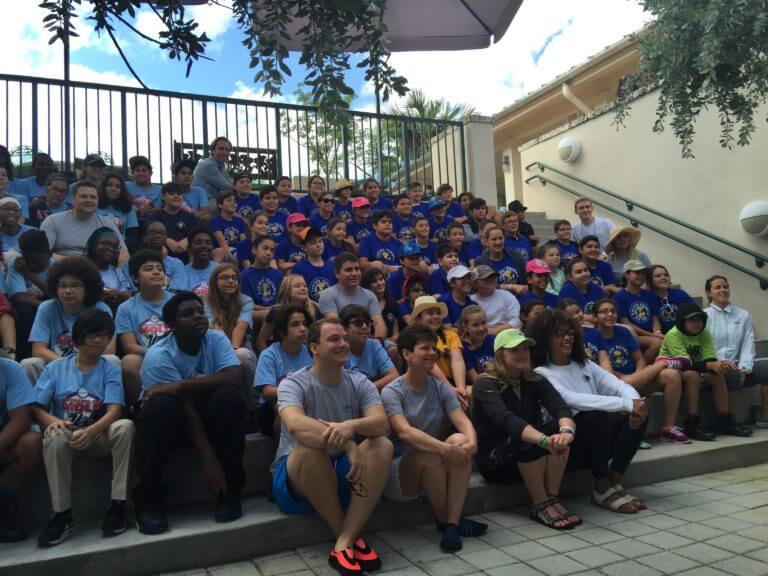
Participants at an event by the EarthEcho Youth Leadership Council and Water Challenge Ambassador

The EarthEcho Youth Leadership Council (YLC) is a group of environmental advocates and problem solvers who are committed to inspiring and empowering others to take action. Throughout the year, they work to develop new programming with EarthEcho’s staff to ensure that programmes authentically engage with young people as advocates and leaders. A core belief of EarthEcho International is that young people are the hearts and minds – not just the hands and feet – of the environmental movement.

The EarthEcho Water Challenge Ambassadors represent a new initiative developed by the YLC. These young people hail from communities across the U.S. and have committed to taking action around water quality in their home communities. The Water Challenge Ambassadors are participating in professional development to prepare them to lead water monitoring events in 20 communities across the U.S. on Water Monitoring Day on September 18.

While these young people are on their way from communities in Australia, Chile, Hawaii, Michigan, Florida, Puerto Rico, and many more, they are still fundraising to support their travel to Washington.

World Breastfeeding Week: Husbands urged to encourage exclusive breastfeeding

0

Some health stakeholders in Nasarawa State have urged husbands to help promote and support six months exclusive breastfeeding by encouraging their wives.

Breastfeeding
Breastfeeding

The stakeholders made their opinions known in separate interviews with the News Agency of Nigeria (NAN) on Wednesday, August 1, 2018 in Akwanga Local Government Area of the state where the 2018 World Breastfeeding Week was kicked off with a news conference.

The state is joining in the celebration of the annual World Breastfeeding Week held every year from Aug. 1 to Aug. 7, to promote exclusive breastfeeding for the first six months which yields tremendous health benefits, providing critical nutrients, protection from deadly diseases.

The theme of the 2018 celebration is “Breastfeeding: The foundation for Life’’.

Dr Absalom Madawa, Director, Primary Health Care, Nasarawa state Primary Health Care Development Agency (NSPHCDA), told NAN that husbands need to play their role in the entrenchment of six months exclusive breastfeeding in the society.

He added that the crucial position husbands occupy in the society and in the lives of a child made it imperative to urge them to support their wives in raising a child properly by encouraging six months exclusive breastfeeding for the benefit of a child’s health and nutrition.

“Husbands play a crucial role here. They need to support the women to give breast milk to the child and to give it exclusively for the first six months.

“Sometimes, you find husbands challenging their wives on why the child is not given water.

“But all the water the child needs is in the breast milk. The child does not need any additional water because inside the breast milk and part of its content is water and that is enough.

“So I use this opportunity to urge our men to always encourage their wives on breast milk so as to raise healthy children,” he said.

Another health stakeholder, Dr Ibrahim Alhassan, Director, Public Health, Nasarawa state Ministry of Health, said the consequences of malnutrition goes beyond the physical illnesses it causes.

“Husbands need to be supportive because the consequences of malnutrition go beyond the physical illness the patient may suffer.

“There is also mental retardation and mental challenge for the children affected. Once that happens, academic performance becomes a challenge,” he warned.

Hajiya Amina Ahmed, Director of Social Mobilisation, NSPHCDA, however said apart from the crucial support from husbands, employers need to promote breastfeeding by creating an enabling environment for nursing mothers to constantly attend to their infants.

“The role husbands play is too crucial to ignore. That is why we have to continue to enlighten them to encourage and not discourage their wives to embrace exclusive breastfeeding.

“Employers also have a role to play because we have women who are been employed in different places. So employers cannot but promote breastfeeding for them and to that they have to create the enabling environment for them to be able to have their children within earshot of that.

“This is because when the child needs breast milk, the child can be given because breast milk is given on demand so that if the child cries one million times, the mother has to provide breast milk one million times,” she said.

By Olukayode Babalola

Africa moves to sustainably green its judiciaries

0

African Chief Justices and Presidents of Supreme and Regional courts on Wednesday, August 1, 2018 commenced a three-day symposium in the Mozambican’s capital of Maputo to discuss how to strengthen adjudication of environmental disputes in Africa. The symposium aims at establishing Sustainable Green Judiciaries across the continent through empowering judicial training institutions.

Adelino Manuel Muchanga
Adelino Manuel Muchanga, Chief Justice of Mozambique

Participating in the second symposium on greening the judiciaries in Africa are also judicial educators, heads of judicial education institutions, representatives of judicial systems from France, Brazil, Bhutan, and Sri Lanka. The symposium is supported by Institut de la Francophonie pour le development durable, UN Office on Drugs and Crime, the Austrian Government, the Swiss Government, International Fund for Animal Welfare and the International Commission of Jurists.

“The judiciary is uniquely placed as a body that can transform and advance environmental matters. Enhancing the capacity of judges and magistrates is critical to the achievement of sustainable development goals,” said Adelino Manuel Muchanga, Chief Justice of Mozambique.

Participants will also discuss how to empower judicial training institutions in Africa on environmental matters. The objective is to equip judges, magistrates and judicial staff with knowledge and skills on adjudication and resolution of environment cases to ensure environmental sustainability.

“You have a critical role to play in ensuring environmental matters are adequately and fairly adjudicated to ensure the environmental injustice is mitigated or avoided,” said Elizabeth Mrema, Director of Law Division, UN Environment, at the opening of the symposium.

“This symposium provides a platform for you as heads of judiciaries, to discuss the emerging trends on adjudication of environment cases to strengthen the rule of law, promote and sustain judicial education, among others,” she added.

A regional curriculum and manual on environmental law for Judges and Magistrates will be launched at the symposium.

Participants will also seize the opportunity to launch the Africa Judicial Educators Network on Environmental Law.

“It is the expectation of the Africa Judicial Educators Network on Environmental Law that the use of the curriculum and manual will contribute to sustainable development in Africa and consequently in the whole world,” said Justice Sir Dennis Adjei, the chairperson of the Africa Judicial Educators Network on Environmental Law.

The African Judicial Network on Environmental Law will provide opportunities for exchanging information, create partnerships for collaboration, strengthen capacity, and provide research and analysis on environmental adjudication, court practices, and environmental rule of law.

A judiciary well informed of the rapidly expanding boundaries of environmental law issues would play a critical role in ensuring a healthy and secure environment through the interpretation, enhancement and enforcement of environmental law.

Trainings on environmental law in Africa have always been ad hoc and inconsistent. With this new approach to integrate environmental law through curriculum and manual development, a sustainable training programme for the judiciary is achievable.

Illegal trading of natural resources is estimated to cost Africa US$120 billion per annum, which is 5% of the Continent’s GDP. A strong judiciary system will help Africa to curb these illegal activities in environment and natural resources and use the savings to achieve its sustainable development goals.

Experts seek to advance landscape restoration in Africa

0

Finding solutions to meet the challenge of landscape restoration in Africa, where almost 50 million hectares of land is degraded each year, is a complex challenge requiring an innovative, coordinated, international response, says a top forestry expert who will speak at an upcoming conference in Nairobi.

Robert Nasi
Robert Nasi, Director General of the Centre for International Forestry Research (CIFOR)

Over 800 multi-sector stakeholders from across Africa and around the world will meet in Nairobi, along with at least 30,000 people online, at the “Prospects and Opportunities for Restoration in Africa” Global Landscapes Forum (GLF) at UN Environment headquarters in Nairobi from August 29 to 30.

“Africa’s landscape must be restored to ensure the natural resource needs of the continent’s rapidly expanding population will one day be met, but there is no silver bullet,” cautioned Robert Nasi, director general of the Centre for International Forestry Research (CIFOR), co-coordinator of GLF with UN Environment and the World Bank.

The event will highlight many current landscape restoration initiatives and help set the stage for many more, demonstrating how countries are building on political will through actions on the ground to tackle land degradation.

Although annually Africa loses about 2.8 million hectares of forest, an area roughly the size of Saudi Arabia, the continent shows immense potential for landscape restoration. In total, two thirds of the continent’s land mass is degraded, according to World Resources Institute.

“Africa’s population growth protections are one key aspect of the challenge,” said Erik Solheim, executive director of UN Environment, who will speak at the Nairobi event. “Another is that many parts of the world will be looking to Africa for food production. The key challenge is therefore how do you provide for job creation and increased food production, and protect the environment? The answer is of course proper land-use planning.”

Local communities have restored more than five million ha of degraded landscapes across the continent, while more than 20 nations have pledged to restore 100 million ha of forest by 2030 through the African Forest Landscape Restoration Initiative (AFR100).

At GLF Nairobi 2018, delegates representing governments, international and grassroots organisations, the financial and private sector, indigenous communities and youth will draw upon these initiatives to pave the way forward in making forest and landscape restoration a reality.

Dialogues will take the shape of discussion forums, plenaries, online webinars and Landscape Talks, similar to TED Talks, while exciting side events, exhibitions and scientific report launches will celebrate Africa’s work in restoration and inspire action across sectors.

The event offers invaluable opportunities for stories and interviews related to restoration and environmental concerns. In addition to Nasi and Solheim, other key speakers include: Wanjira Mathai, chair of the Green Belt Movement; Hindou Ibrahim, National Geographic explorer and advocate for indigenous knowledge and rights; officials from environmental and forestry ministries across Africa, the World Wide Fund for Nature (WWF), the Rainforest Alliance and many more.

Clean energy innovators light homes, power devices with water

0

A home lighting system, a climate-controlled device that cools the environment, and a zero-emissions electricity generator. All powered by water.

Those are some of the success stories that emerged from the recently-held Clean Energy Innovation Challenge.

Indeed, after a rigorous selection process, challenging boot camp and engaging pitch competition, the winners of the Clean Energy Innovation Challenge were selected at the Co Creation Hub headoffices in Yaba, Lagos on Friday, July 27, 2018.

Clean Energy Innovators Challenge
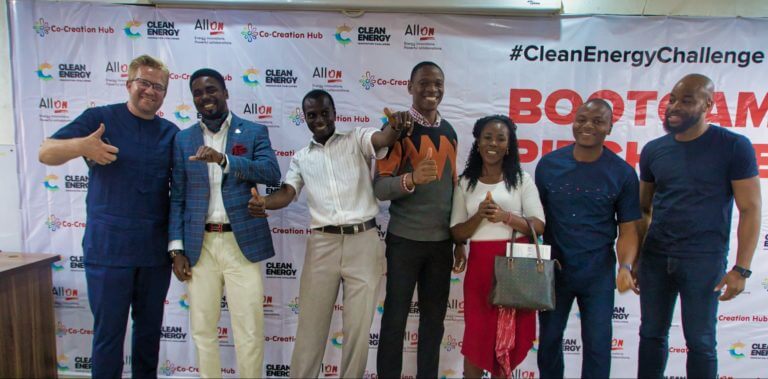
Clean Energy Innovators Challenge winners with All On CEO, Dr Wiebe Boer

The Clean Energy Innovation Challenge, with the aim of unearthing and supporting renewable energy innovators in Nigeria, awarded startup capital to four early stage energy companies, namely: Aspire, Hydrolite, Hydrotriciton and ZeroElectric.

One of the winners of the $10,000 startup capital is Jos-based Hydrotriciton, a company that has developed a zero-emissions electricity generator that runs completely on water. Commenting on firm’s selection, CEO Choji Bare stated: “To have won this competition will really spur our growth. Our next step is to produce massively and launch into the market.”

Another one of the winners, Aspire, uses solar energy, battery storage and smart inverters to monitor solutions and deliver clean energy solutions to customers.

ZeroELectric has developed a climate-controlled system that cools the environment with water in areas without electricity.

Hydrolite has developed a home lighting system powered purely by water and is designed for off-grid communities. Their torches can last up to two weeks after contact with water.

In addition to startup capital, these companies and the five other finalists will receive top class incubation support from Co Creation Hub to take their ideation phase businesses to the next level.

Speaking on its involvement in the Clean Energy Innovation Challenge, Co-Creation Hub’s Director for Innovation, Femi Longe, said: “With Nigeria’s increasing energy requirements to achieve its developmental goals, amidst the threat of climate change, there is a need to find and support our clean energy innovators to build successful and sustainable businesses around their solutions. We are pleased to be working with All On on such a lofty agenda and look forward to supporting all the innovators to test and scale their ventures.”

The Clean Energy Innovation Challenge will enable All On to further its mandate of supporting innovative models to improve energy access to unserved and underserved segments of the Nigerian population.

Speaking on the impact of the challenge, All On CEO, Dr. Wiebe Boer, remarked: “The quality of applications received, and the winners selected for the Clean Energy Innovation Challenge are a demonstration of the potential that exists in the renewable energy sector in Nigeria. With our startup capital and Co Creation Hub’s incubation expertise, we are hopeful that these companies will mature to become sustainable businesses, employers of labor and on track for exponential growth to address the access to energy challenges that exist in the country.”

All On is an off-grid energy impact investment company that works with partners to increase access to commercial energy products and services for under-served and un-served off-grid energy markets in Nigeria, with a special focus on the Niger Delta.

At Olomola Lecture, experts advocate inclusive urban planning

0

Chairman of the Nigerian Institute of Town Planners (NITP), Lagos Chapter, Mr Kunle Salami, has called for inclusive urban planning to achieve the sustainable Lagos smart city.

Olomola lecture
Dignitaries at the maiden edition of Dr Femi Olomola Annual Lecture in Lagos

Salami made the call while speaking with the News Agency of Nigeria (NAN) on Thursday, July 26, 2018 on the sideline of the maiden edition of Dr Femi Olomola Annual Lecture, organised by the institute in Lagos.

He said for an achievable and effective integrated urban development in Lagos, governments at all levels must ensure an intensive engagement with the stakeholders, professionals and other relevant bodies.

Lack of this was one of the reasons why Lagos seemed to lack coherent and integrated urban development.

He said citizens needed to be engaged right from the conceptualisation of the plan, to design, implementation and review, stressing the need for regular interface between the governance and the governed.

According to him, to achieve the desired sustainable and inclusive development, the Lagos State government must adopt a people-centered approach in undertaking urban planning.

“Moving toward people-centered urban planning requires a restructuring of policy-making process and a restructuring of jurisdictional responsibility in physical planning and development.

“A dynamic process must evolve where governments will have to transform from regulating and approving institutions to bodies that enable and collaborate with citizens to respond to their needs,” he said.

Salami lamented that several regeneration/redevelopment plans had been prepared, but that the government lacked the will to faithfully commit to them.

“Often times, while those laws remain unimplemented, untried and untested to discover the lacunae, we begin to clamour for an amendment, a review or a totally new formulation.

“Unfortunately, things don’t suddenly change for the better with a ‘do nothing’ approach; neither do they change through prayer and fasting only,” he added.

Lagos state Commissioner for Physical Planning and Urban Development, Rotimi Ogunleye, urged town planners to play a more active role in infrastructure and urban development of the state.

He admitted that planning a city is tough, as a result-oriented stakeholders meetings and involvement should be paramount.

According to him, many of the sub-Saharan African major cities are rapidly going through a process of urban restructuring and physical transformation in their struggles to be integrated into the global economic system.

“To key-in into this new order of things, the administration of Governor Akinwunmi Ambode of Lagos State places high premium on building a collective stake in urban development planning and regeneration to foster inclusive sustainable Lagos smart city.

“Lagos, just like many other sub-Saharan Africa’s large cities, is cut in the struggles of managing population growth, urban development challenges and quest for urban modernity,” he said.

The Commissioner noted that an inclusive urban development model particularly in Nigeria can only be systematic, as it is rooted in a couple of principles that cannot be achieved overnight.

He commended the organisers for making Inclusive Urban Development a key issue of discussion at the lecture.

“This is bound to provoke a deeper understanding of the model and its positive implications in tackling city challenges and improving citizen’s quality of life.

“The renewed role for Urban Planning must incorporate the diverse views in planning decisions, consider the dynamic character of the urban area and thereby create a new form of urbanism: an urbanism for all and sundry.

“Stakeholders must be engaged in the development of plans and securing financial outlays for the implementation of selected priority projects.

“We are all resistant to change, nobody wants a change. But that change is necessary for a better future. And the Town Planners are professionally trained to effect the change,” he added.

Guest speaker, Oye Ibidapo-Obe, former Vice Chancellor, University of Lagos, said that infrastructure and urban development was a collective responsibility of both the government’s and the citizens.

Ibidapo-Obe, a professor, said that rapid population growth and urban expansion exert heavy burden on urban facilities, saying that the rapid increase in slums calls the need for proper planning.

He said statistics suggests that about 70 percent of the population of Lagos live in slum, a reality that calls for concern, considering the investment status laws and regulations.

He said that the provisions of housing, serviced land, infrastructure and urban services and livelihood opportunities have not kept pace with the population growth.

“Slum, rather than sickness, is just a symptom showing fundamental inadequacies in planning.

“Upgrading is any intervention that improves the physical conditions of a settlement, which in turn enhances the lives of its inhabitants.

“If the rural areas will be upgraded to be as comfortable as the urban cities, many people will prefer to stay there,” he said.

He added that proper planning brings about urbanisation, economic growth, job opportunities, among others.

By Lilian Okoro