The resumed sessions of the UNFCCC’s subsidiary bodies and the Ad Hoc Working Group on the Paris Agreement opened in Bangkok, Thailand on Tuesday, September 4, 2018 amid strong calls for progress.
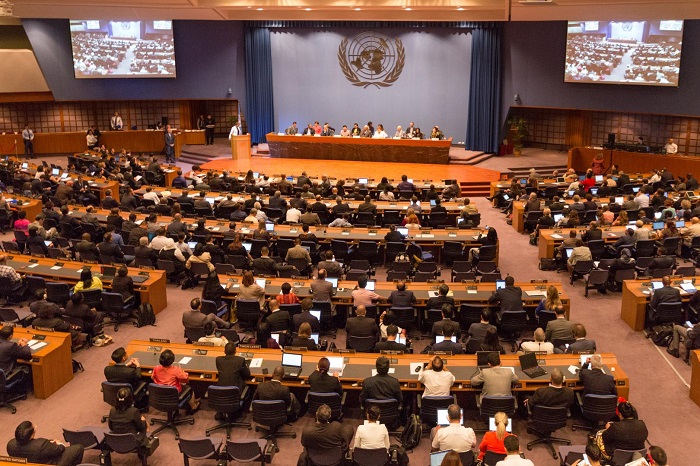
A view of delegates at the opening of the Bangkok climate change conference
At the resumed session, negotiators from some 190 countries will focus on developing the implementation guidelines of the Paris Climate Change Agreement. The guidelines are needed to provide guidance on how to implement the agreement and to see transparently how countries are progressing in their actions.
The opening of the session was graced with a brief addresses by the Prime Minister of Fiji, Mr. Josaia Voreqe Bainimarama, who is currently presiding over the climate change negotiations, as well as the Polish in-coming COP president, Mr. Kurtyka, who will preside over the negotiations at this year’s climate change conference – COP24 – to be held in Katowice, Poland in December.
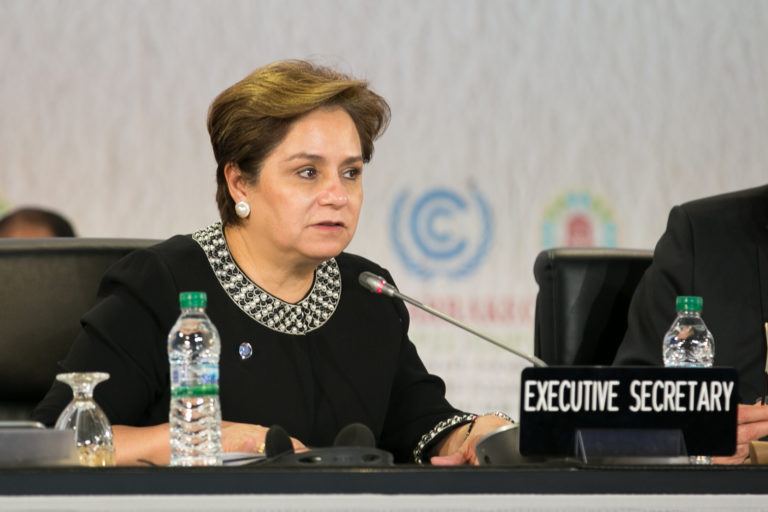
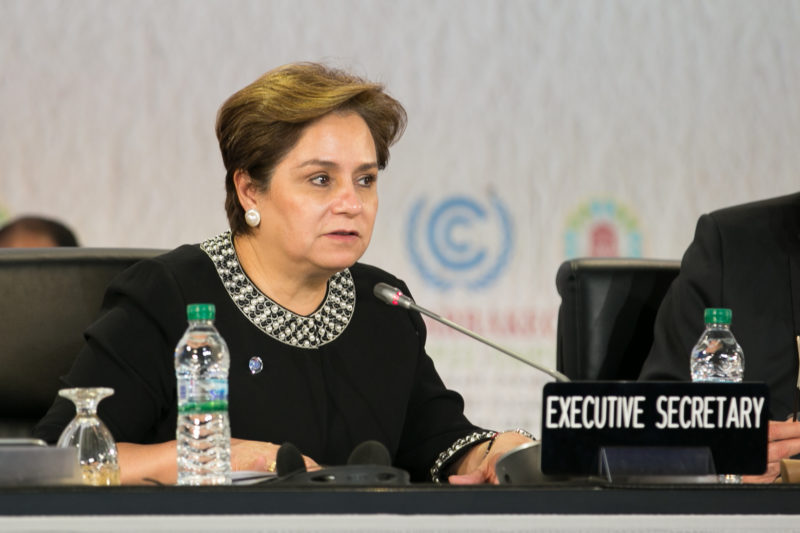
Deputy Secretary-General of the United Nations, Ms. Amina J. Mohammed; General Surasak Karnjanarat, Minister of Natural Resources and Environment of Thailand; Mr. Kaveh Zahedi; Officer in Charge of the UN in Thailand; Patricia Espinosa, Executive Secretary of UN Climate Change, also addressed the opening.
All speakers strongly urged negotiators to step up the pace of their work and to move towards negotiating texts that capture clear options on the implementation guidelines that can swiftly be finalised and adopted in Katowice. This is crucial given the deadline that countries set for themselves to complete this work at COP24 this year, said the organisers.
Espinosa stated that COP24 was now right around the corner. “We are working against the clock. We must now complete the heavy lifting and we must do it rapidly. UN Climate Change stands ready to assist countries,” she said.
Current COP president Bainimarama impressed upon delegates that the six-day Bangkok talks were urgent. “In these few days, we have the opportunity to put the Paris Agreement on a path from words to action,” he said.
The implementation guidelines will unlock practical actions and bring the agreement’s institutions to life. This is vital for all aspects of climate action, including:
enabling ambitious global and national adaptation action and emission reductions,
developing fair transparency and compliance arrangements, and
mobilising means of implementation, especially with respect to finance, to support developing country action.
In-coming COP president Kurtyka said that non-state actors were steaming ahead and that governments had to keep up with that pace by putting in place the implementation guidelines.
He urged delegates to craft clear texts in Bangkok that they could work with at COP24. “Clarity and a streamlined text is my request,” he said.
“These six days of additional negotiating time in Bangkok before COP24 are a golden opportunity for countries to prepare solid texts that can be finalised at COP24,” said Espinosa.
The Federal Government has reiterated its commitment to ensuring that high premium was continuously placed on the health of Nigerians, while ending Tuberculosis (TB) remains on its priority list.
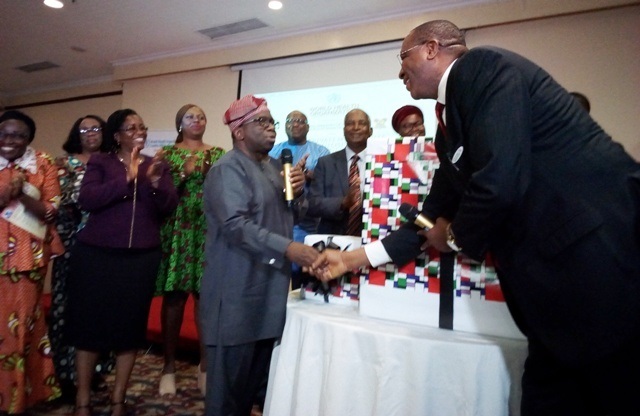
Minister of Health, Prof. Isaac Adewole (left), presenting a GeneXpert Machine to Prince Elochukwu Adibo of El-Lab Ltd., Lagos
Minister of Health, Prof. Isaac Adewole, who gave the assurance on Tuesday, September 4, 2018 in Lagos at the “National Public/Private Mix (PPM) Summit for Tuberculosis Control in Nigeria”, disclosed that budgetary allocation for TB control would be increased in the 2019 budget.
He wouldn’t give details of the allocation but added: “We will likewise put an incentive package for TB control in the 2019 budget. It doesn’t have to be in Naira; something to encourage you.”
The minister facilitated the donation of a GeneXpert Machine to El-Lab Limited, a health laboratory firm and private medical diagnostic and research centre.
Adewole said: “To achieve our goal of ending TB epidemic by 2030, additional support and effort are required.
“We must expand our current frontiers of control of TB as the disease impacts negatively on the health, welfare of individuals and economy of the nation.
“We require active involvement of private healthcare providers and corporate organisations to make Nigeria free of TB.
“This event is a demonstration of the commitment of this administration.
“As part of our commitment to this partnership, a GeneXpert machine procured by FMoH will be handed over to one of the private diagnostic centres to support active TB case finding in Lagos State.”
According to him, to scale up this gesture to other centres, FMoH requests corporate organisations to be enlisted to support in the provision of diagnostic facility to other health centres.
He said that TB has serious consequences on the affected individuals, families and the nation’s economy.
“It has orphaned children and taken many breadwinners away with severe consequences on the economic welfare of families and also on the economy of the nation.
“This trend must not be allowed to continue,’’ Adewole said.
On efforts made by the ministry in controlling the scourge, Adewole said that the ministry had established the National TB Control Programme, which developed the National TB Strategy 2015-2020 framework.
The framework is aimed at addressing the country’s TB burden.
“The framework is consistent with the ‘End TB Strategy’ and incorporates the most recent internationally recommended diagnostic and treatment strategies.
“With support from a coalition of partners, the country currently delivers TB treatment and care through a network of over 7,000 health facilities accredited by the National TB and Leprosy Control Programme (NTBLCP) up from 3,931 in 2,010.
“Similarly, the number of Drug resistant TB (DR-TB) treatment centres has been progressively increased from 10 in 2013 to 28 in 2017.
“There are ongoing efforts by the ministry to ensure Universal Coverage of TB care and prevention.
“To achieve this, a resolution was passed at the 60th National Council of Health meeting held last year, to include TB service delivery in the Primary Healthcare Minimum Health care package,’’ he said.
The minister added that the cutting-edged technology to enhance TB diagnosis in the country had also been developed.
Adewole said that, in spite of the progress recorded over the years, the TB control efforts was still challenging.
According to him, paramount are the issues of funding, creating awareness and stopping stigmatisation.
Others include locating an estimated 302,000 missing people with TB and 74 per cent of total estimated cases who were not detected annually.
Prince Elochukwu Adibo, the Laboratory Director of El-Lab, who’s firm received the GeneXpert machine, called for collaboration with other private health partners to wholly end tuberculosis.
The GeneXpert machine can detect tuberculosis in a sample of sputum.
Adibo said: “We are really happy to have this machine; it is a call for collaboration, rather than having any form of bitterness, rancor or misunderstanding; there is so much work to do.
“We have over 300,000 tuberculosis cases out there we should look for; people like you and I, our neighbours, colleagues, among others.
“These are cases that we should look out for and put our efforts together in diagnosis and treatment to make things different and eliminate this terrible disease that is really a scourge in Nigeria health sector.
“So, we are happy to be part of it and we are strongly representing ourselves as a key operator in the private sector to make a difference,’’ Adibo said.
Dr Tunji Akintade, the Chairman, Association of General and Private Medical Practitioners of Nigeria (AGPMPN), pledged commitment to collaborate with the government and other partners.
“My association is willing to partner with the government and the partners, even if it is to own the wellness on wheel machine and go into the country so that we can reduce tuberculosis burden in Lagos.
“Lagos is at a disadvantage because it is seen as an urban centre; minute by minute we see people trouping in to the state.
“We have created an opportunity to present a model.
“If honoured by the Minister and our Commissioner for Health, it is something that will reduce the burden in terms of detecting and reporting, as well as treating a tuberculosis case outright,’’ Akintade said.
Also, the Secretary of the Association of Community Pharmacist in Nigeria (ACPN), Mr Okotie Jonah, said that fighting tuberculosis was the responsibility of all.
“Tuberculosis fight is something we should all be involved in because there is responsibility for everybody.
“We are going to do a lot of referrals when persons with tuberculosis conditions come to us, we have partners we refer them to.
“Beyond the referrals, there are also drug centres whereby the persons will be referred to for diagnosis.
“So, it is a teamwork that should be brought together and change the narrative of health system globally,’’ Jonah said.
The event was jointly organised by the Federal Ministry of Health (FMoH), World Health Organisation (WHO), Lagos State Government, and Stop TB Nigeria, among others.
The World Bank has launched a Sustainable Development Bond series to raise awareness of the importance of ocean resources.
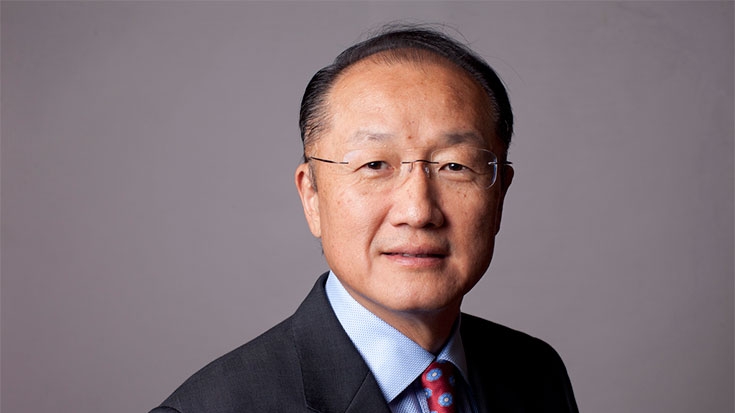
World Bank Group President, Jim Yong Kim
The international financial institution has plans to raise $3 billion to protect oceans and marine life.
The World Bank introduced the water bond, along with gender, health and nutrition bonds, to give investors opportunity to work towards the Sustainable Development Goals (SDG) set in 2015.
The focus for the new bond series is to support SDG 6, Clean Water and Sanitation, and SDG 15, Life below Water.
The bond series is framed by World Water Week, taking place just last week, and the “Our Ocean” conference in Bali set for October 2018.
Kristalina Georgieva, World Bank Chief Executive Officer, said: “Seventy per cent of the planet’s surface is water, yet degraded ocean resources and lack of access to safe water negatively affect the lives of hundreds of millions of people.”
The World Bank said it also “works with countries to promote strong governance of marine and coastal resources to support sustainable fisheries and aquaculture, make coastlines more resilient, establish coastal and marine protected areas, and reduce pollution.”
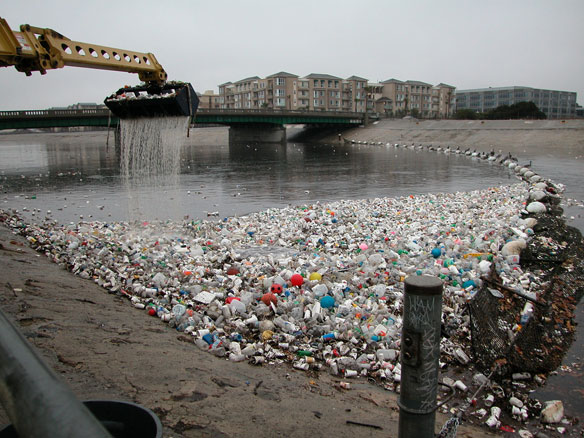
Currently, the oceans are being heavily polluted by land and sea-based activities. This has resulted in 100,000 marine mammals and turtles being killed by plastic litter each year globally.
Arunma Oteh, World Bank Vice President and Treasurer, said: “Following bonds issued earlier this year to raise awareness for gender and health and nutrition, we are pleased to launch this new initiative and engage with investors around another critical topic – clean water and healthy oceans, lifelines for people and economies the world over.”
The Fraunhofer Society, a German research organisation, says some 330,000 tonnes of microplastics are entering the environment each year.
Plastic pollution
According to a study released on Tuesday, September 4, 2018, researchers said the largest contributor of microplastics – tiny pieces of plastic that do not break down for many years and damage the bodies and tissues that absorb them – is the tyre industry.
Microplastics are released into the environment from the wear and tear of tyres from machines including vehicles, planes, diggers, shovels and bikes.
Other major culprits when it comes to microplastics pollution are sewage treatment plants, aeroplanes and construction sites, the study says.
“We can assume that microplastics already exist in all areas of the environment,” said Leandra Hamann, one of the study’s co-authors.
The Office of the Senior Special Assistant to the President on Sustainable Development Goals (OSSAP-SDGs) says it is partnering with the United Nations Development Programme (UNDP) to mainstream SDGs in states and local governments policies for effective implementation.
Senior Special Assistant to the President on Sustainable Development Goals (SDGs), Princess Adejoke Orelope-Adefulire
Mrs Adejoke Orelope-Adefulire, SSA to the President on SDGs, said on Tuesday, September 4, 2018 in Abuja that the mainstreaming was to fast-track the implementation of the SDGs at sub-national level.
She said that the SDGs were a universal call to action to end poverty, safeguard the planet and ensure that everyone enjoys prosperity and peace.
Orelope-Adefulire explained that the integration was essential because the states and LGAs were the closest tiers to the people and had adequate fiscal capacity to enable Nigeria achieve the 2030 target of “leaving no one behind.’’
“The 17 SDGs and 169 targets aim to tackle the root causes of poverty and unite us together to make positive change for both people and planet.
“Indeed, the SDGs work in the spirit of partnership and pragmatism to make the necessary choices to improve livelihood in a sustainable way.
“The SDGs cannot be achieved through stand-alone projects and programmes. They must be carefully mainstreamed into the Medium and Long-term plans of the State and Local governments, as implemented by the National Government’s Economic Recovery and Growth Plan (ERGP).
“It is our hope that any development plan at the sub-national level should be ‘SDGs-based’ Plan that consciously mainstreams the relevant SDG targets and indicators,’’ she said.
The SSA noted that most states had already put in place institutional structures to support the implementation of the SDGs within their jurisdictions and were currently implementing strategic programmes and initiatives.
She thanked UNDP for their support in facilitating the meeting, soliciting for more technical support at both national and sub-national levels to ensure meaningful progress in the implementation of the 2030 Agenda.
In his remarks the UNDP Country Director, Dr Samuel Bwalya, said that mainstreaming the SDGs would allow proper investment in priority areas as required by the states.
Bwalya explained that SDG was all about development and equity and most of the developmental projects were done at the state and local levels.
“We are now moving from federal to state and from state to local. The essence of today’s meeting is to dialogue with the state liaison office to see how SDGs can be achieved.
“SDG can be achieved only through strong political leadership, ownership and commitment on the parts of citizens and the government.
“UNDP is to assist in integrating all the states in the country including FCT in their SDG to deliver,’’ Bwalya said.
He urged the participants to reflect the objectives of SDGs in the administrative function and evaluate why the Millenium Development Goals (MDGs) failed, so that the gap could be bridged.
The News Agency of Nigeria (NAN) reports that the meeting was attended by the SDGs Liaison officers from the 36 states of the federation and the FCT.
The UN on Tuesday, September 4, 2018 called for better utilisation of Africa’s water-energy nexus to harness the continent’s resources towards sustainable development.
Linus Mofor, Senior Environmental Affairs Officer at the ECA
The UN Office for Sustainable Development (UNOSD), the UN Economic Commission for Africa (ECA), UN Environment, and the UN Department for Economic and Social Affairs (UN DESA) jointly made the call during a meeting in Ethiopia’s capital, Addis Ababa.
Experts and policymakers gathered at the meeting to discuss mainstreaming and implementing the water-energy for sustainable development in Africa.
Linus Mofor, Senior Environmental Affairs Officer at the ECA, said African countries are already experiencing catastrophic climate change and variability impacts in inter-related ways across many sectors – including water, energy and agriculture.
Mofor further stressed the need to set up integrated approaches in responding to the increasing energy and water demand to enhance livelihoods and sustain economic growth and address the additional pressures on natural resources due to urbanisation and population growth in a continent affected by the changing climate.
“That is why for us at the ECA the nexus work is of high importance, especially in view of how we support our member states with the implementation of their nationally determined contributions to climate change under the framework of the Paris Agreement,” said Mofor.
According to the UN, the 2030 Agenda for Sustainable Development recognises the centrality of energy and water resources to sustainable development, and the vital role that improved access to both water and energy play in advancing progress in other areas, including health, education and poverty eradication.
The UN further stressed that an integrated development of the energy and water policies is of paramount importance and not in isolation from each other.
According to figures from the UN, only 28 percent of the population in Sub Saharan Africa have access to electricity while many African countries are not on track to meet the global drinking water target.
Samba Thiam, Head of the UN Environment Liaison Office to the African Union (AU) Commission, also said that with the increasing demands for water and energy on the continent, it is important for experts to understand their interlinkages.
She als urged them to understand potential water-energy nexus options that can effectively contribute to meeting Africa’s water and energy demands.
“An integrated approach to the water-energy nexus can increase energy efficiency, decrease water pollution, reduce costs of energy and water delivery, increase access to services, and reduce greenhouse gas emissions,” said Thiam.
The three-day meeting, that attracted more than 100 participants from the African Region in Ethiopia’s capital Addis Ababa, discussed Africa’s water and energy targets and indicators, including cross-sectoral mainstreaming.
Participants also discussed the challenges related to the water-energy nexus and possible solutions, and other related issues as the continent seeks to achieve the Sustainable Development Goals (SDGs).
Organisers also expressed their hope to enhance knowledge management and best practices’ sharing on the water-energy nexus and inter-linkages with other SDGs; and strengthening advocacy and outreach in the areas of energy and water and their interlinkages during the next three days.
According to Jong Soo Yoon, Head of the United Nations Office for Sustainable Development (UNSOD), water was the key driver for sustainable development hence the need for such a workshop.
“At the end of the workshop we hope we would have contributed to developing the capacity of governmental institutions and relevant stakeholders in the African region to effectively manage the water-energy nexus and interlinkages with other SDGs for sustainable development to facilitate the implementation of the 2030 Agenda at national level,” he said.
“Integrated approach to water-energy can increase energy efficiency, decrease water pollution, reduce costs of energy and water delivery, increase access to services and reduce greenhouse gas emissions.”
Abraha Adugna, Ethiopia’s State Minister of Water, Irrigation and Electricity, also said during the gathering that water and energy were closely interlinked and interdependent hence water and energy problems should not be addressed in isolation or at the expense of each other.
“It is critical to better understand the water-energy nexus and the driving forces of the water and energy cycles for efficient and sustainable use of these resources,” he said.
He added that to manage both resources, planners and decision makers need to consider ways to maximise the supply of one while minimising the over use of the other.
Health authorities in Zambia on Tuesday, September 4, 2018 dismissed reports that the country has recorded its first Ebola case.
Zambian Minister of Health, Dr Chitalu Chilufya
Reports in some local media reported that the country recorded its first Ebola case on Monday following the admission of a 41-year-old patient at Levy Mwanawasa Hospital in Lusaka, the country’s capital.
But the Zambian Minister of Health, Dr Chitalu Chilufya, said the patient, who was quarantined at the hospital, has no Ebola but septicemia, a bacterium in the blood that often occurs with severe infections.
He said laboratory tests conducted on the patient have ruled out any Ebola virus, adding that there was no need for people to panic.
The Zambian minister told reporters during a press briefing that admission of the patient to the hospital was an indication of the country’s heightened surveillance system following the outbreak of the deadly disease in neighbouring Democratic Republic of Congo (DRC).
He said the government has increased surveillance measures in border areas with the DRC.
The minister said seven-member rapid surveillance teams have been set up in all districts bordering DRC.
“May I take this opportunity to inform the public that contrary to the news circulating in the social media there is no case of Ebola in Zambia,” he said.
“Everything is under control and there is no need to panic as government has taken all the necessary measures to ensure heightened prevention, preparedness and response activities against Ebola,” he added.
NAN reports that authorities in DRC said a new outbreak of the Ebola virus has killed 33 people in the east of the country.
Thirteen Ebola cases have been confirmed since the fresh outbreak was declared on August 1 in North Kivu province.
Containing an Ebola outbreak in a “war zone” in the Democratic Republic of Congo is among the most difficult challenges the World Health Organisation has faced, a top WHO official said.
In North Kivu, health workers will have to navigate their response among more than 100 armed groups, 20 of whom are “highly active,” WHO’s emergency response chief Peter Salama told reporters.
The outbreak in North Kivu in eastern DRC was declared a week after WHO and the Kinshasa government hailed the end of an earlier Ebola flareup in northwestern Equateur province, which killed 33 people.
As with the earlier outbreak, “vaccinations will be an integral part of the response,” the health ministry said Saturday.
The latest outbreak of the haemorrhagic virus is the 10th in the DRC since 1976, when it was discovered in the north of the country, then called Zaire, and named after a river nearby.
The World Health Organisation (WHO) has said that although Nigeria made considerable progress in the fight to end tuberculosis (TB), there are however some outstanding challenges that stakeholders need to address collectively to achieve the needed breakthrough.
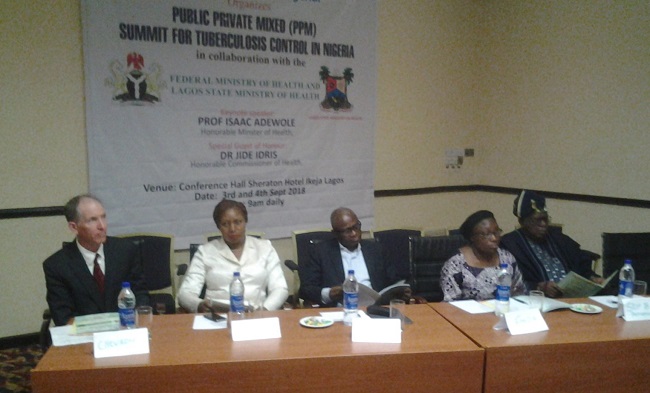
L-R: Mr. Richard Kennedy, Director, Star Deepwater Petroleum Limited, a Chevron company, representing the Agbamin Parties; Dr. Linda Ozor, Ag. Coordinator Non-communicable diseases cluster, representing the WHO Country Representative; Dr. Jide Idris, Commissioner of Health, Lagos State; Dr. Adebola Lawanson, National Coordinator NTBLCP; and Prof. Lovett Lawson, Board Chair, Stop TB Partnership Nigeria, at the Public Private Mix Summit for Tuberculosis Control in Nigeria, on Monday, September 3, 2018 in Lagos.
Dr Wondimagegnehu Alemu of the WHO made the submission on Monday, September 3, 2018 in Lagos at the Public Private Mix (PPM) Summit for Tuberculosis Control in Nigeria organised by the WHO Nigeria Country Office, Federal Ministry of Health, Lagos State Ministry of Health and Stop TB Partnership Nigeria.
Nigeria is said to have the second highest number of TB cases in Africa and ranks seventh amongst countries with the highest burden of TB globally. Some 600,000 people become infected with TB in Nigeria every year, and it is estimated that up to 60,000 of these new infections occur in children.
Dr Alemu emphasised that even though the federal and state governments with support of committed partners are working to bring TB under control, Nigeria should nonetheless address the following challenges:
Find the remaining 300,000 cases, which are still missed by the health sector. Of the total 400,000, only 100,000 were reported. In Lagos State, of the three reported cases, two are missed.
Expand quality TB diagnostic coverage nationwide. Both oprimisation of the existing gene Xpert diagnostic machine (390) and adding more.
Increase awareness of general public about TB so that they report to health facilities when they experience the cardinal sign of chronic cough.
Improve screening of chronically coughing cases at health facilities.
Increase involvement of private sector in TB control programme. Data shows that only 14% of private health institutions are collaborating with the national TB control programme, and only one in five (19%) TB cases are being managed at private health clinics.
He commended Health Minister, Prof Isaac Adewole, for increasing the case detection rate from 17% to 24%, representing a 41% increase.
“Hon Minister Sir, declaring 2017 as the year for accelerated TB case finding with clear strategy and actions at all levels has worked. We are very much encouraged with your commitment, and eager tp support your vision of reaching more Nigerians in 2018 and beyond.
Lagos State Commissioner for Health, Dr Jide Idris, said that the state has 926 TB treatment centres covering all 57 LGAs/LCDAs, 108 TB microscopy and 30 GeneXpert sites with at least one GeneXpert machine in each of the 20 LGAs.
His words: “With the support of our partners, we also havevarious case finding activities going on. These include house-to-house case search by community TB workers, tracing of contacts of diagnosed TB cases as well as mobile TB diagnosis using the Wellnes on Wheel truck. Our health workers regularly sensitise on TB during community outreaches, anti-natal and child immunisation clinics.”
According to him, most of the challenges of TB control have to do with funding. “There are huge resources in the private sector we wish to tap into to drive out TB from our country,” he said.
Board chair, Stop TB Partnership Nigeria, Prof Lovett Lawson, stated that even though daunting, the task of stopping TB is achievable.
“It is our collective responsibility; including the government, development partners, communities and the corporate sector in particular. It requires coordinated implementation of appropriate interventions,” said Prof Lawson.
With concern about climate change on the rise, many citizens are taking steps to reduce their carbon footprint and have a more positive impact on the environment. With over 180 million people, Nigeria’s carbon output exceeds that of other African countries such as Ghana and Kenya, in part due to emissions from homeowners. In fact, Nigeria has a huge housing deficit, making sustainable housing a low priority. Nonetheless, more builders are choosing to construct homes that use less energy and more solar power.
A green, self-sufficient home
Designing a self-sufficient home can help local families to cut back on carbon emissions while also reducing their monthly bills. Not to mention, wooden homes are more ecological and economic alternative to homes made of concrete and brick. Here are some tips on how to create a sustainable living situation and the far-reaching benefits that it can have.
Go Off the Grid
Many Nigerian homes are powered by coal or gas, which can have a significant impact on the environment. Sustainable homes are not only a part of nature but also beneficial for the environment. Thus, they are made from non-petroleum materials that are biodegradable, recyclable, and ecological. Going off the grid and switching to an alternative energy source such as wind or solar will slash your carbon footprint and give you more control over your energy consumption. Solar is particularly easy to install, regardless of where you live, and the panels can last for up to 25 years with minimal maintenance.
Manage Water and Waste with Wood
Wood does not act as a thermal bridge but as a natural insulator, keeping the home warm in the winter and cool in the summer. Building with wood requested the use of less energy, smaller carbon footprint, and lower environmental impact than conventional methods. In fact, the materials used for finishing self-sustaining homes are made of pressed wood, tiles, natural stones, shale, etc. – all of which minimises construction and upkeep maintenance.
While some self-sufficient homes have access to a well, many must rely on rainwater for chores such as dishes and laundry. Rainwater is collected, funneled, and gravity-fed into a cistern, then channeled into a pump system for easy use. After washing, greywater can be reused and recycled two to three more times. Once removed, this water can be used to irrigate plants so that it doesn’t go to waste. It can also be channeled into the septic system for waste.
How Sustainable Living Impacts Society
Sustainable homes are not only more comfortable and more cost-effective but also benefit the community as a whole. Managing a self-sufficient home means less waste, which helps to keep the area around you clean and safe. Green materials tend to contain fewer dangerous chemicals that can harm occupants and the environment.
Adding green modifications to your home can also increase its property value. Installing features such as solar panels and a waste management system means that you can sell your home at a higher price if you ever decide to move. Not only that but going green can also help to raise the value of your neighbors’ properties as well.
Creating a self-sufficient home not only helps to make your life easier but also benefits the environment and the community as a whole. Producing your own energy and managing your own waste means a cleaner and greener world for our children. With some relatively simple changes to your living situation, you can do your part to reduce your carbon footprint.
Against the backdrop of severe and record heatwaves, bushfires, droughts and floods across the world, governments are convening a supplementary meeting in Bangkok, Thailand from Tuesday, September 4 to Sunday, September 9, 2018 to prepare the implementation guidelines of the Paris Climate Change Agreement. The guidelines are needed to make the Paris Agreement work fairly and transparently for all.
Patricia Espinosa, executive secretary of the UNFCCC
Following a two-year negotiation process, the implementation guidelines are set to be adopted at the annual climate conference, COP24, to be held in Katowice, Poland in December.
While the talks have made modest progress, the Bangkok meeting is the last opportunity before COP24 to accelerate negotiations.
“Building on progress made, countries now need to take a decisive step forward in preparing the ambitious and balanced outcome that we need in Katowice,” Patricia Espinosa, Executive Secretary of UN Climate Change, said at a press conference on Monday September 3, 2018.
Reaching success at COP24 will be challenging without the preparation of an official negotiating text on the implementation guidelines.
“It will be critical for negotiators in Bangkok to produce solid text-based output that can function as the basis for the concluding negotiations in Katowice and be turned into the final implementation guidelines of the Paris Agreement at COP24. The texts capturing progress to date are not yet refined enough for this purpose,” Ms. Espinosa said.
“With only six additional days for negotiations in Bangkok, UN Climate Change is carefully coordinating demands to fully support countries in their important task,” she added.
Highly technical in nature, the implementation guidelines are needed to monitor progress on climate action. Such action includes measures to deal with climate impacts such as droughts or floods and urgent support to enable developing countries to contribute to climate action.
They are also essential for determining whether emissions are being reduced at an ambitious rate to achieve the Paris Agreement’s goal of limiting the global temperature increase to well below 2°C, and as close to 1.5 °C as possible this century. Importantly, the guidelines are also needed to make the agreement’s institutions fully operational beyond COP24.
“Every year, the impacts of climate change are getting worse. This means that every year, the poorest and most vulnerable, who have contributed almost nothing to the problem, suffer more,” Ms. Espinosa underlined.
“Completing the operational aspects of the Paris Agreement and unlocking practical climate actions by putting in place the implementation guidelines represents a key opportunity for the multilateral process and society at large to address a global problem, while leaving nobody behind,” she stressed.
A host of upcoming events in the period before COP24 are a clear indication that not only many economic actors, but also civil society, cities and regions are looking to accelerate climate action. More and more of these actors are aligning their strategic visions with the goals of the Paris Agreement.
“Governments clearly lead the climate change process. But they alone can’t rise to the challenge and need the support of all these actors. This is slowly leading to a new, more inclusive multilateralism to deal with climate change, which is increasingly becoming evident,” said Ms. Espinosa.
The 2018 Climate Weeks in Africa, Asia and Latin America, the Global Climate Action Summit in San Francisco in mid-September and Climate Week in New York towards the end of September, to name a few, are all events that rally both governments and non-Party stakeholders around climate change.
“These events clearly demonstrate global momentum. They show that the world is ready to implement the Paris Agreement in the way world leaders envisaged in Paris in 2015,” Ms. Espinosa stated.
However, non-governmental organisations are less optimistic about the developed countries’ willingness to contribute to the mission, saying that they are “under no illusion” at another press conference in Bangkok that the UN negotiations can bring about such changes.
“The U.S. and other rich countries are constantly attempting to escape full accountability for their huge role on causing and exacerbating climate change,” said Lidy Nacpil, co-ordinator of the Asian Peoples Movement on Debt and Development (APMDD).
“With the expressed intention by the US to withdraw from the Paris Agreement, we do not want to sink into the abyss alone,” said Mithika Mwenda of the Pan-African Climate Justice Alliance (PACJA), referring to President Donald Trump’s announcement in 2017.
“Our hope is that like-minded groups will not evolve into a coalition of climate-deniers mobilised by the U.S. to rock the UNFCCC negotiations boat,” Mwenda added.