Home Blog Page 1810

Halving emissions by 2030 is possible, says report

0

A report published on Thursday, September 13, 2018 shows the potential for all sectors of global economy – energy, food and agriculture, industry, buildings and transport – to halve greenhouse gas emissions by around 2030. Stronger policies, the digital revolution and greater climate leadership are necessary to accelerate the economic transformation, say the authors.

Coal-Fired-Power-Plant
GHG emission: A coal-fired power plant

The report, launched by Christiana Figueres and global sustainability researcher Johan Rockström, to open the Global Climate Action Summit in San Francisco, concludes that the energy transformation in the next decade could occur much faster than many forecasts as the price of renewables drops low enough to outcompete fossil fuels. But keeping up the pace will require sharper policies to push out fossil fuels. Other sectors, however, are off track.

The digital revolution remains a wildcard, says the report. Technology can directly influence 30% of the emissions cuts needed by about 2030, and indirectly affect the rest through influencing consumer habits, scaling up a sharing economy and supporting business transformation to a circular economy.

Greenhouse gas emissions must fall sharply to stabilise climate well below 2°C and aim for 1.5°C as agreed by nations in Paris in 2015. Emissions peaking in 2020 and approximately halving by about 2030 is consistent with the Paris Agreement’s aim.

“Right now, it is easier to imagine a global climate catastrophe than a rapid economic transformation, yet the next decade could see the fastest energy transition in history,” says co-lead author Owen Gaffney from Future Earth and the Stockholm Resilience Centre.

“People underestimate the power of exponential growth. In Norway, electric cars went from 6% of new sales to 47% in five years. If renewables keep doubling every five or six years, as they have for a decade or more, they will push out fossil fuels much faster than most forecasts. But not without stronger policies,” he added.

The authors argue that the digital revolution is already driving an economic transformation.

“How this revolution is directed could make or break international climate targets. The tech sector can influence whether we live on a 1.5-2°C planet or on a +3°C world,” says Johan Falk co-lead author from Future Earth and the Stockholm Resilience Centre.

“Technology will not solve the climate challenge alone. The key is to reach a critical mass of companies, cities, nations, industries and citizens that are contributing to the Paris Agreement and show how attractive this is – this will create the snowball effect we need to scale solutions”, says Falk.

The roadmap identifies the accelerators in terms of climate leadership, policy and technology required to scale 30 solutions and concludes that a set of game-changing strategies in the next 18 months are needed to keep up an appropriately fast pace.

These strategies include:

  • Accelerate climate leadership initiatives exponentially among companies, cities, industries and individuals to reach a critical mass with goals and actions to halve emissions fast.
  • Create task forces to build momentum to end fossil-fuel subsidies, build out carbon pricing and wide-scale adoption of circular-economy approaches, as part of a broader goal to have coherent policies to shift away from fossil fuels.
  • Launch global tech initiatives, or “accelerators” to align the Fourth Industrial Revolution (digitalisation, artificial intelligence, cloud computing, internet of things, etc) with the goal to halve global greenhouse gas emissions by 2030 – specifically to explore how tech giants can use their influence to support societal goals.

The report highlights that many companies can cut their own emissions faster than 50% every decade – and influence their suppliers to do the same. The next frontier is how companies can influence the consumers of their products and services to support low-carbon operations and lifestyles.

“To win the fight against climate change, we need to constantly push beyond what conventional wisdom tells us is possible. The digital revolution is one of the most powerful tools at our disposal. Now, to realise the full potential, we need leadership and action: by policy makers, business leaders and all of us,” says Mikko Kosonen, President of the Finnish Innovation Fund Sitra who produced the report together with Future Earth with WWF, Ericsson and Stockholm Resilience Centre and others.

“Disruption is here. Three unstoppable forces are pushing us towards a future of prosperity, growth and clean energy: climate leadership, market forces and the digital revolution,” says former UN climate head Christiana Figueres, convenor of Mission 2020, a partner in the report.

The report launch comes after months of unprecedented heat waves, droughts and flooding across the planet that have been linked to human-induced climate change that show even moderate warming can cause global-scale disruption. New research published in August 2018 shows the risks of crossing the 2°C threshold could be more severe than scientists previously realised.

The roadmap will be available as a ready-to-use digital dashboard. It is intended to be used in the future by companies, cities and countries to align their efforts with the Paris climate targets. The dashboard has been developed for the Swedish government to support its stated ambition to become carbon neutral by 2045.

“As a sustainability pioneer in the private-sector, we have been both an advocate of climate action and investing in research and development of climate solutions. We understand the urgency for action. We believe leveraging new technology, such as digitalisation and 5G, will be fundamental to reduce carbon emissions by half every decade, meeting the Carbon Law. As a company, we have cut our own emissions by 50% and are working to meet further reduction targets. We have demonstrated solutions that help make it possible and now other companies and policy-makers must join the quest for broader adoption of solutions to enable exponential reduction of carbon emissions globally,” says Börje Ekholm, CEO, Ericsson.

“Leaders from cities, investors and corporates are forming alliances for climate action to inspire governments and peers to step up their efforts to reduce emissions. These include setting ambitious targets based on science, implementing these through increased entrepreneurship, and accelerating high impact innovation. We must do this if we are to have a future where people can live in harmony with nature,” notes Manuel Pulgar-Vidal, leader of WWF’s global climate and energy programme.

“The world has crossed a Rubicon where incremental change is no longer adequate to address climate change. Fortunately, research and innovation have given us what we need – save time – to tackle the climate crisis. This roadmap shows how business, politicians and civic groups can leverage this knowledge to scale up progress exponentially. We’ve got the knowledge and the tools. And we increasingly, we have the economics behind us. Now we just need the drive to accelerate forward,” notes Amy Luers, Executive Director, Future Earth.

“The world is at a critical juncture and the stakes could not be higher. Greenhouse gas emissions need to peak by 2020 and then fall dramatically – approximately halving every decade to reach the Paris Agreement’s terms. The consequences of missing this goal are potentially catastrophic for humanity. Yet all solutions exist to begin halving emissions immediately. Now is the moment to move from incremental to exponential action,” stresses Johan Rockström, Stockholm Resilience Centre, co-chair Future Earth, incoming co-director Potsdam Institute for Climate Impact Research.

The report is a collaboration between Future Earth, the Finnish Innovation Fund Sitra, the Stockholm Resilience Centre, Mission 2020, WWF, Ericsson, Internet of Planet and supporting partners Telia Company, Project Drawdown, KTH Royal Institute of Technology, Fossil-free Sweden, MapLauncher, Swedish Energy Agency and Storythings. It supports the Step Up Declaration being launched at the summit and Entrepreneurs Declaration launched in advance of the summit.

The roadmap is based on the Carbon Law – a scientific paper published in 2017 that shows that halving carbon dioxide emissions every decade to 2050 is consistent with the Paris Agreement’s aim to keep global average temperatures well below +2°C and aim for +1.5°C. An international team of experts from research, technology, and NGOs synthesised over 60 reports and academic analyses assessing scenarios related to very low greenhouse gas emissions.
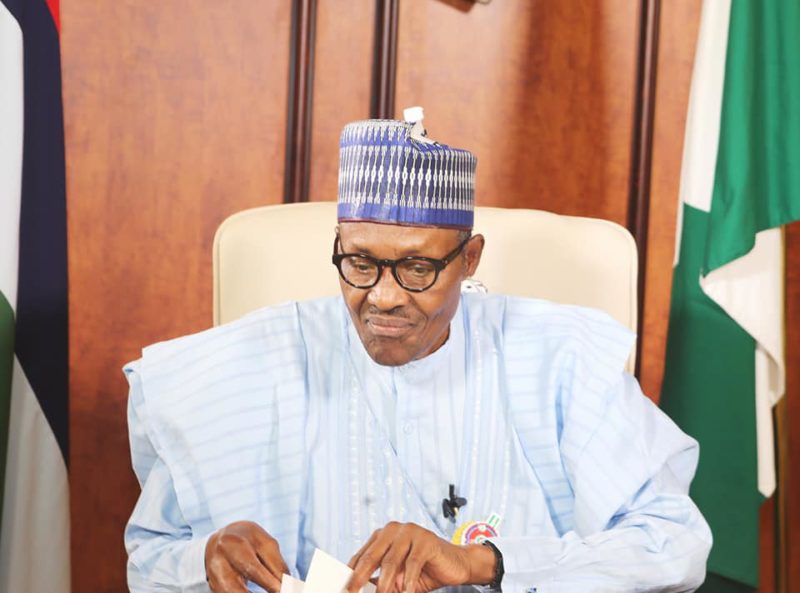
Buhari inaugurates gully erosion, flood control projects in Akwa Ibom

0

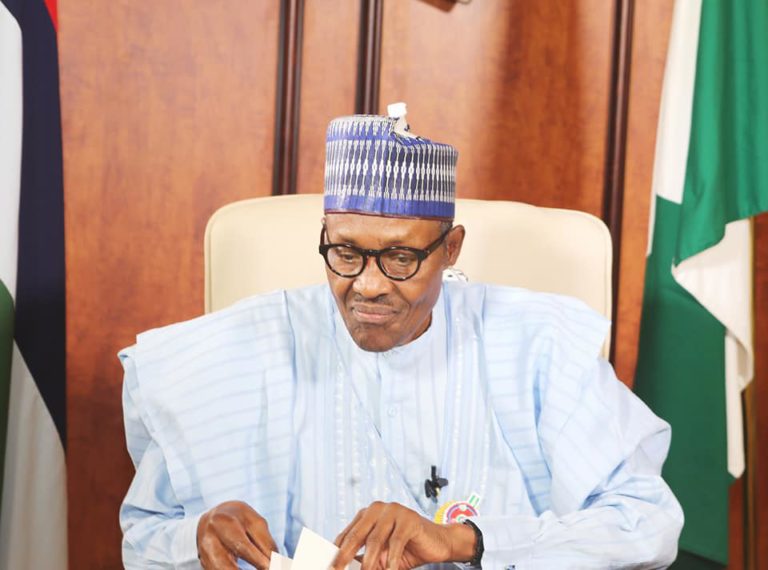
President Mohammadu Buhari on Thursday, September 13, 2018 inaugurated gully erosion and flood control projects at Akpene Eket community in Eket, Akwa Ibom State.

Muhammadu Buhari
President Muhammadu Buhari

The president, at the inauguration, said the projects were aimed at checking flooding and gully menace at Akpene Eket and its environs.

Mr Okechukwu Enelamah, Minister of Industry, Trade and Investment, represented the president at the occasion.

Buhari noted that the projects were parts of the 26 Federal Government ecological intervention projects for the second quarter as approved on April 10, 2017.

He expressed optimism that the projects would bring huge relief to the communities threatened by ecological challenges.

The four projects are located at Etim Inyang Etuk Street, Marina Street, Afiigh Iwaad Street and Parkins street in the community.

The News Agency of Nigeria (NAN), reports that the projects were executed by the Federal Government through the Ecological Fund Office (EFO) in the office of the Secretary to the Government of the Federation.

Buhari restated the commitment of his administration in ensuring that no part of the country would suffer any neglect owing to its geographical location or political consideration.

“The age-long problem of gully erosion in this part of the country cannot be overemphasised.

“I therefore implore the communities to cherish these laudable projects by preventing indiscriminate dumping of refuse in the drainage,” he said.

The State Commissioner for Environment, Dr Iniobong Essien, commended the Federal Government for the projects.

He said that the projects were in line with the dreams of Gov. Udom Emmanuel of Akwa Ibom to tackle menace of erosion in the state.

He added that the state had yearned for the presence of the Federal Government in terms of projects.

The commissioner disclosed that the state was going through erosion and ecological challenges in all its 31 local government areas, documenting over 1,000 erosion and ecological sites across the states.

“We have prioritised them in other of importance, impact and severity of the ecological sites,” he said.

He advised the communities not to use the completed projects as dumping sites, reminding them that “lots of infrastructure have gone bad because of lack of poor maintenance culture.

“My sincere hope is that in the execution of these projects, a special mention should be made about the maintenance and founds allocated for the purpose while somebody should follow the time line for such maintenance,” he said.

He appealed to the Federal Government to involve the state in the implementation, planning and execution of such projects.

Dr Habiba Lawal, Permanent Secretary Ecological Fund Office, said the projects were awarded by Ecological Fund Office Tender Board (EFOTB), 2017 and completed in seven months.

“These projects were initiated through a request for an urgent intervention from the community forwarded to (EFOTB) to arrest the continuous flooding and erosion menace in Akpene Eket town,” she said.

Lawal said the timely completion of the projects was made possible through the efforts of the project contractor and consultant, who worked tirelessly to meet completion deadline.

Chief Inin Ekanem, the Village Head of Akpene Eket, thanked the Federal Government for the projects.

He said that “anytime this kind of projects is being commissioned, we are always very happy, may God bless the Federal Government.”

By Sunday Bassey

Rainstorm destroys 4,000 houses in Katsina

0

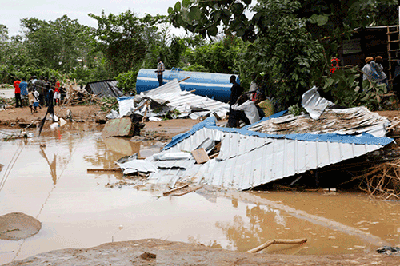
The Katsina State Emergency Management Agency (SEMA) says 4,000 houses have been destroyed by rainstorms in some parts of the state during this year’s rainy season.

Homes left in ruins after a rainstorm

The SEMA Executive Secretary, Alhaji Haruna Musa, who disclosed this to newsmen in Katsina, the state capital, on Thursday, September 13, 2018, said two persons have also died in building collapse during the season.

Musa said that several others sustained various degrees of injuries, while several houses were destroyed.

He said that Baure, Daura, Jibiya, Malumfashi, Kusada and Musawa Local Governments were among the worst affected areas.

“We receive reports of rainstorm on daily basis from different parts of the state,’’ he said.

He said the agency had assessed the incidents, with a view to assisting the victims, adding that after the assessment, the state government provided relief materials to alleviate the suffering of the victims.

In a related development, The National Emergency Management Agency (NEMA), North-West zone, has organised a stakeholders meeting in the state.

The meeting was aimed at ascertaining the level of the state’s preparedness and collaboration in disaster management.

The Zonal Coordinator, Mr Ishaya Isah, stressed the need for all stakeholders in disaster management to work together to evolve a culture of preparedness, prevention, resilience and response to disaster.

“This is with a view to proffering solutions towards efficient and effective disaster management.

“Let me at this juncture warn that unless disaster management and risk reduction are effectively driven at all levels, their impacts will be extremely difficult and costly to address,” he said.

By Zubairu Idris

Flooding: Bayelsa, Anambra move to avert danger

0

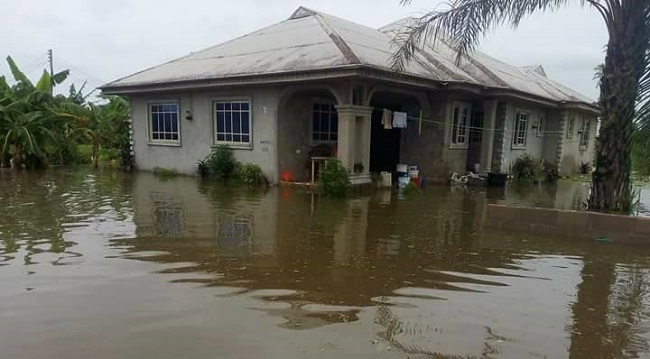
The Bayelsa and Anambra state governments are taking steps to ensure that the anticipated flooding expected in some states does not have adverse consequences on residents.

Yenagoa
Flooding in Yenagoa, Bayelsa State

Mr Daniel Iworiso-Markson, the Bayelsa State Commissioner for Information, gave the assurance on Thursday, September 13, 2018 in an interview with the News Agency of Nigeria (NAN) in Yenagoa.

Similarly, the National Emergency Management Agency (NEMA) has advised the Anambra State Government to as a matter of urgency begin immediate evacuation of people living in the flood prone areas to the emergency shelter centres in the state.

Iworiso-Markson said that the Bayelsa government had stepped up activities to mitigate the anticipated flooding of states located on the lower basin of the River Niger, including Bayelsa.

The commissioner said that the state government, against the experiences of the 2012 flood, had set up a flood response team.

According to him, the team comprising of relevant government agencies will go around the state to monitor flood-prone areas and respond swiftly to any emergency situation.

The development is coming on the heels of the alert by the Nigeria Hydrological Services Agency (NHSA) that nine states on the axis of River Niger and three others on the River Benue axis are set to experience floods.

Iworiso-Markson said the state government was partnering with stakeholders and experts, including the State Emergency Management Agency (SEMA), to ensure that flooding was put under control.

He gave an assurance that there was no cause for alarm given the proactive steps so far taken by the government.

The commissioner also said that the state government had provided a call centre with dedicated telephone lines to enable residents in the state report cases of high-water level in their areas.

He said that the mobile numbers to contact were 08025814636, 08110413567 and 09037582261.

The Bayelsa government had in 2012 set up a flood Management Committee headed by Chief Francis Doukpola to disburse the N500 million donated to the flood victims by Chief Mike Adenga.

According to Doukpola, the committee became moribund after the funds and N35 million take-off grant were allegedly depleted.

NAN investigations, however, indicate that many residents of coastal communities prefer flooding as their fishing vocation enjoy a boom during such incidents.

Mr James Agodi told NAN that despite the challenges associated with perennial floods, many pray for water levels to rise and overflow the banks with abundant fish.

“Those of us living near the riverside actually enjoy abundant fish catch during flood seasons as there is no need to go far to get fish.

“The flood waters carry a lot of fish and there would be a catch anywhere there is a net.

“Even those who are not engaged in fishing as their occupation return home at such times to fish.

“So, to us, the saying that there is an opportunity in adversity holds true,” Agodi said.

Mr Vincent Owen, Director of Planning, Research and Forecasting, NEMA, Abuja, gave the advice on Thursday when he visited Enugwu-Out in Anambra East Local Government Area in accompany of some staff of the agency and other stakeholders.

According to him, the weather forecast by the Nigeria Hydrological Services Agency (NIHSA), that 2018 flood may come in same magnitude of the flood of 2012, should not be treated with levity.

Owen said that the update regarding the flood was so alarming, adding that all the indices during the 2012 flood were visible while the speed at which the river was rising needed urgent action.

“There is nothing to wait for in the evacuation of the people living in the flood prone areas in Anambra, the indices seen in 2012 flood have manifested in all the areas visited.

“In Ogbarua communities, all the towns have been affected by the flood, in Enugwu-Otu and Nkpundo-Otu, the story is not different,’’ he said.

Owen, however, said NEMA was committed to providing relief materials to all states affected by flood or other emergency issues in the country.

The director advised all the 12 states located in the flood prone areas to take the forecast serious while assuring of the agency speedy assistance, whereever the need might arise.

Owen said that the Nigerian Government has received a message from the Cameroon Government of its intention to open Lagoon Damns and ask for proactive measures by the affected states.

He said that if the forecast were not timely adhered to, the imminent flood shall be worse than the 2012 flood experience.

Owen said that the visit to flood prone states was to have first-hand information on the preparedness of such states in moving the victims to higher grounds and providing decent camps for the people.

He explained that the volume of water noticed in Ogbura and Enuwgu Otu was alarming and portends danger if not handled as quickly as possible.

Mr Cyprian Agupugo, Anambra Executive Director of SEMA, in his response, said that the state government had embarked on sensitisation and enlightenment campaigns on actions to be taken by the victims.

Agupugo said that the state had also made ready 28 emergency shelter centres in its flood prone areas and assured that other necessary materials would be provided.

He said that now that it was evident, that the flood was rising, displaced persons would be evacuated and taken to centres closest to them.

Agupugo commended NEMA for reiterating the warning and reassuring SEMA on its willingness to play its part to ensure that nothing hinders the success of evacuation and safe guarding of the people living in the flood prone areas.

Some of the residents who spoke during the visit said the flood which started around July had increased beyond their expectation this September and had destroyed their farmland.

Mrs Grace Oneh, a health worker, said that the flood had covered the homes of many people and that most of the victims had gone upland to stay with friends and relatives.

She appealed to SEMA to commence the distribution of relief materials, on time to avoid being too rowdy and be ready to alter the method by involving community leaders.

The NEMA team comprised members of the Red Cross Society and the Fire Service.

By Nathan Nwakamma and Joy Mbachi

Flood destroys 175 houses, renders over 3,000 homeless in Cross River

0

Massive flooding has destroyed more than 175 houses, rendered at least 3,000 people homeless in Cross River State, according to Mr John Inaku, Director-General of State Emergency Management Agency (SEMA).

Ben-Ayade
Governor Ben Ayade of Cross River State

Inaku gave the update on flood situation in the state on Thursday, September 13, 2018 in an interview with the News Agency of Nigeria (NAN) in Calabar.

Inaku, who said that the flood had seriously affected the victims, also told NAN that most of them had since relocated to upper lands for safety.

He, however, said that no life had been lost in the menace, but disclosed that the flood started in the state in July.

According to him, most of the victims are living along the water channels while others in swampy areas.

He said that the agency had embarked on aggressive campaign, to sensitise residents in the state on the need to stop dumping refuse on drainage and building along water channels.

He explained that the flood had affected residents in Boki, Ogoja, Yala, Calabar Municipality, Calabar South and other local government areas in the state.

“Cross River has always been affected by flood during the raining season. Currently, we have over 175 houses destroyed and as a result, over 3,000 persons have been displaced.

“This menace has greatly affected farming activities, especially in Boki, Yala and a few other areas.

“We are looking at NEMA and other corporate organisations to come in and assist the victims,’’ he said.

He listed the flooded areas in Calabar to include, Muritala Mohammed Highway, Ebito, Murray, Target and Nelson Mandela, Atu, Yellow Duke, Parliamentary, Efiote roundabout and Mayne Avenue streets.

He appealed to the National Emergency Management Agency (NEMA) to assist the state with relief materials for the victims.

By George Odok

Climate action by non-state actors on the rise

0

A new accounting of global climate action to reduce greenhouse gas emissions finds a broad spectrum of commitments from non-state and subnational actors with potential to support and ultimately outpace governments in their emissions reductions.

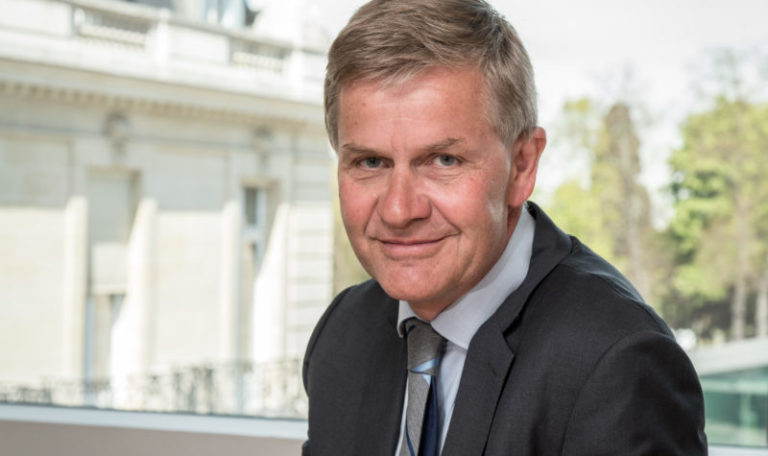
Erik Solheim
Erik Solheim, Executive Director of the United Nations Environment Programme (UNEP). The first COP to the Minamata Convention on Mercury will take place in September 2017 in Geneva, Switzerland. Photo credit: OECD/Michael Dean

The exhaustive review from UN Environment, released on Monday, September 10, 2018 ahead of the Global Climate Action Summit (GCAS), highlights the crucial role of non-state actors in reducing emissions and reaching climate targets.

Ranging from city, state and regional governments to companies, investors, higher education institutions and civil society organisations, non-state actors are increasingly committing to bold climate action. As most national governments continue to come up short on their promises for better climate policy as pledged in the Paris Agreement, these efforts are increasingly recognised as a key element to achieving global emissions goals.

In total, the report finds these pledges represent a projected reduction of between 1.5 -2.2 gigatonnes of carbon dioxide equivalent (GtCO2e) by 2030.

But where the assessment finds encouraging potential for scale, it also reveals challenges related to monitoring, reporting and coordination. A lack of participation and facilitation from government further limits the overall impact of these commitments on global CO2 reduction.

The aggregated review of global commitments shows the scope and pace of climate action from subnational entities has surged to historic proportions in the three years since the Paris agreement. In all, the study examines more than 183 international cooperative initiatives and thousands of non-state actors spread across 7,000 cities, 133 countries and carried out by over 6,000 private sector companies. Through an analysis of geographic, sectoral and functional distribution, the report reveals vast potential hindered by limited implementation.

“Cities, states, civil society and the private sector can be the resource that puts the world over the top in our fight to reduce CO2 emissions,” said head of UN Environment, Erik Solheim.

“For global governments and the policymakers who would support this momentum my message is this: The time for political rhetoric is over. The world urgently needs leaders with the political courage to act. Non-state actors are stepping up, but they need government engagement to bridge the emissions gap. The time is now to put it all together and finally address our new climate reality.”

In addition to directly reducing emissions, the study emphasises the growing role of non-state actors as incubators and accelerators for new low emissions strategies. The authors found that where the sector lacks coordinated structure, individual initiatives are increasingly seen as a proving ground for technology development and diffusion.

Non-state actors frequently implement climate action through a range of networks that collate individual climate pledges and inventories (For example, C40 Cities for Climate Leadership), or through broader coalitions at the national or international levels. Over the past two decades, the number of these coalitions has grown significantly, often in concurrence with key international climate events such as the UN Climate Action Summit convened in 2014, and the Paris climate conference in 2015.

The most common sectors addressed by such coalitions of non-state actors correspond with the sectors identified as having high mitigation potential, including the energy, industry, forestry, transport, agriculture and building sectors.

The report authors emphasised that for non-state actors to succeed and foster credibility, their pledges and the surrounding governance need to follow good practices in climate action: the participants need the capacity to deliver the goals, leadership needs to be effective, the funding sustainable, and the goals well-defined. Finally, transparency is crucial to allow for monitoring effectiveness, efficiency, and credibility.

How Americans respond to information about global warming’s health impacts

0

Many people in the United States tend to see global warming as a distant threat even though it poses significant risks to public health.

Trump-coal
With coal miners gathered around him, Trump signed an Executive Order rolling back a temporary ban on mining coal and a stream protection rule imposed by the Obama administration

In a study, the Centre for Climate Change Communication, George Mason University in Fairfax, Virginia, found that informing people about the health implications of global warming can increase public engagement with the issue and reduce differences in opinion across political lines.

The study also found that people view certain health impacts from global warming differently from others. Notably, participants viewed information about illnesses from contaminated food and water, and disease‐carrying organisms as more worrisome and novel compared to other types of health impacts from global warming.

The findings, according to the Centre, provide the most definitive evidence to date about the importance of raising awareness about the health impacts of global warming.

The researchers called for a more effective outreach about the entire range of health risks, against the backdrop of the seeming widespread lack of awareness about the public health implications of climate change among Americans.

Public health officials were urged to strengthen public engagement specifically about illnesses caused by contaminated food and water, and by disease-carrying pests.

“We hope the results of this study will help to mobilise the public health community and catalyse additional research to figure out how to optimally target and tailor this information for a wide variety of audiences in order to reduce our collective vulnerability to the wide-ranging health threats from climate change,” says the Centre.

In the light of the fact that a small body of previous research suggests that information about the health implications of global warming may enhance public engagement with the issue, the Centre sought to extend those findings with a longitudinal study that examined how Americans react to information about eight specific categories of health impacts from global warming.

In winter 2017, the Centre conducted a two‐wave survey experiment using a quota sample of American adults (n=2254). Participants were randomly assigned to a treatment group which read eight brief essays about different categories of health impacts from global warming, or to a control group that received no information.

Participants answered questions before reading the essays, immediately after reading each essay and at the conclusion of all essays (treatment participants only), and two to three weeks later.

“Reading the information had small‐ to medium‐sized effects on multiple indicators of participants’ cognitive and affective engagement with global warming, especially among people who are politically moderate and somewhat conservative; some of these changes persisted two to three weeks later.

“Some impacts were seen as more novel and worrisome, including illnesses from contaminated food, water, and disease‐carrying organisms. Our findings provide the most definitive evidence to date about the importance of raising awareness about the health impacts of global warming. While participants believed all of the essays as offered valuable information, educational efforts might most productively focus on impacts that are relatively less familiar, and more emotionally engaging, such as food‐, water‐, and vector‐borne illnesses,” adds the Centre.

AIF announces top 10 nominees for 2018 Innovation Prize for Africa awards

0

The African Innovation Foundation (AIF) on Thursday, September 13, 2018 announced its top 10 nominees for its prestigious Innovation Prize for Africa (IPA) 2018 awards. This year’s Call for Applications with its theme “African innovation: Investing in Inclusive Innovation Ecosystems” attracted more than 3,000 applications from 52 African countries. Building on the AIF mandate, submissions this year were said to have demonstrated significant breakthroughs in ICT, agri-business, public health and the environment/ energy sectors to improve the lives and economic prospects of Africans.

iThrone portable toilet
Dr. Diana Yousef’s iThrone portable toilet

Says Walter Fust, AIF Chairman: “Now in its seventh year running, we have witnessed multi-million-dollar businesses emerging from the IPA initiative, with health, environment/energy and agricultural innovations leaving imprints across the African continent and beyond. Our theme this year prompts the need for increased collaboration between government, business, industry, innovation enablers and the community to further realise African prosperity and economic freedom.”

The IPA initiative has reportedly grown from strengthen to strength mobilising, rewarding and honouring top African innovators whilst also building strategic partnerships with innovation enablers to strengthen innovation ecosystems in Africa. To date, AIF has supported 55 IPA winners/nominees with $1 million+ and mobilised 9,400+ innovators from all 55 African countries. AIF endorsement and exposure generated through IPA have seen past winners securing over $135 million worth of investments to grow and scale their businesses. IPA past winners and nominee company valuations amount to $200 million+.

Managing Director of AIF, Pauline Mujawamariya Koelbl, who has steered the IPA programme since its establishment in 2011, said: “We are proud of the impressive innovations that made it to the top 10 this year. They are evident examples of African ingenuity and each innovation is solving a real challenge in a key sector. Africa, and indeed the rest of the world, must keep an eye out – these innovations are ready to propel our continent’s global competitiveness in the market! Furthermore, these top 10 nominees are a great reminder that if given access to capital, Africans are capable of solving African challenges whilst also contributing to the rest of the world.”

The top 10 IPA nominees whose innovations are in the sectors of agri-business, public health and well-being, ICT, energy, environment and water are listed as follows:

  • Biodegradable seed tray for rice farming (Madagascar) – Juslain Nomenjanahary Raharinaivo
  • Buried Diffuser (Tunisia) – Mr. Wassim Chahbani
  • Efficient detection of TB and Hepatitis C (Morocco) – Professor Abdeladim Moumen and Dr. Hassan Ait Benhassou
  • eNose sensor for tea processing (Uganda) – Abraham Natukunda
  • Incas Vaginal Discharge Kit (Ghana) – Dr. Laud Anthony Basing
  • “iThrone” portable toilet (Egypt) – Dr. Diana Yousef
  • Mobile Shiriki Network (Rwanda) – Henri Nyakarundi
  • Natural solutions for skeletal regeneration and repair (South Africa) – Prof. Keolebogile Shirley Motaung
  • Reducing pollution in an eco-friendly way using GKSORB! (Benin) – Dr Fohla Mouftaou
  • Waxy II Technology (Tanzania) – Christian Mwijage

West, Central Africa rally against Fall Armyworm

0

A high-level meeting on controlling Fall Armyworm in west and central Africa has begun in Yaoundé, Cameroon.

Armyworm
Armyworm invasion

In attendance at the meeting, organised by the African Development Bank (AfDB) in collaboration with the International Institute for Tropical Agriculture (IITA) and Technologies for African Agricultural Transformation (TAAT), are ministers of agriculture from the sub-regions, focal points from the respective Agriculture ministries in the two sub-regions, scientists and experts from different organisations.

Eyebe Ayissi, Cameroonian minister for agriculture, in his remarks while declaring the meeting open, welcomed the sub-regional approach to tackling the fall armyworm menace whose invasion according to him, is a threat to the resilience of cereal cropping systems in Africa.

“Sustainable management of this pest needs a multi-stakeholder approach with the cereal growers in the middle of such an approach. While efforts to build the natural regulatory factors of the pest (biological control, building resistance among host plants etc.) are undertaken, farmers need advice, tools, resources, risk management options and a conducive environment to sustainably manage Fall armyworm,” Ayissi added.

In a similar vein, Gaston Cossi Dossouhoui, the Beninese minister for agriculture, livestock and fishery, commended the organisers for the initiative which he described as timely.

“In Benin, more than 33,000 hectares have been reportedly destroyed by Fall Armyworms which amounts to 44,500 tons of production lost, about 3.4% of the forecast national production for 2016-17,” Dossouhoi said.

The Deputy Director General, Partnerships for Development at IITA, Dr Kenton Dashiel, in his remarks, called for an integrated approach against the rampaging insect in Africa. He stressed the need for a coherent policy framework and a combination of chemical and biological control measures in the aggregated efforts against the caterpillar.

Also present at the meeting were representatives of the Food and Agriculture Organisation (FAO), International Institute for Tropical Agriculture (IITA), African Development Bank (AfDB), Syngenta, and DVA Agro.


The impact of Fall armywormin Africa

Fall Armyworm (FAW), or Spodoptera frugiperda, is an insect that is native to tropical and subtropical regions of the Americas. In its larva stage, it can cause significant damage to crop, if not well managed.

It prefers maize but can feed on more than 80 additional species of plants including rice, sorghum, millet, sugarcane, vegetable crops and cotton.

Fall Armyworm was first detected in Central and Western Africa in early 2016 and since then has been reported and confirmed in all of mainland Southern Africa (except Lesotho), Madagascar, and Seychelles (Island State).

To-date, Fall Armyworm has been detected and reported in almost all of Sub-Saharan Africa, except in Djibouti, Eritrea, and Lesotho.

In Southern Africa, the outbreak of the pest in the 2016-2017 crop season came at a time when households in the region were still reeling from the impact of the El Nino induced drought in 2015-2016, which affected an estimated 40 million people.

Fall Armyworm is a dangerous transboundary pest with a high potential to continually spread due to its natural migratory capacity and trade.

Fall Armyworm has a wide host range of over 80 plants, with high preference for cereal crops such as maize, sorghum and other crops such as sugarcane including wild grasses.

Apart from the danger to human food security, Fall Armyworm has been shown to causes losses in livestock.

Speculations as to the causes of death include high cyanide levels caused by armyworm damage in some types of grasses, and ingestion of caterpillars or fungal mycotoxins on armyworm faeces.

Courtesy: PAMACC News Agency

Nation’s economic diversification must be technology-driven, says Ebegba

0

The Director General/CEO, National Biosafety Management Agency (NBMA), Dr Rufus Ebegba, has said that Nigeria’s quest for economic diversification must be hinged on safe technologies.

NBMA National Biosafety Conference
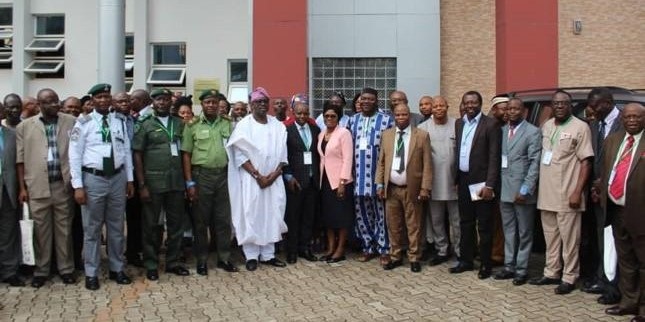
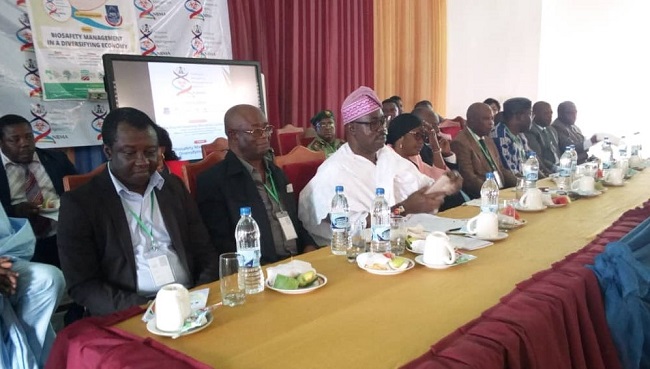
Director General/CEO, National Biosafety Management Agency (NBMA), Dr Rufus Ebegba (third from left, in white); Country Coordinator, Programme for Biosafety Systems (PBS), Dr Mathew Dore (second from left); with other delegates during the opening of the conference

Ebegba made the submission on Wednesday, September 12, 2018 at the opening of the 4th National Biosafety Conference, hosted by the Ambrose Alli University, Ekpoma, Edo State. According to him, the nation needs a combination of tools, processes and safe technologies, albeit in a complementary way, to provide a form of economic diversification, which would bring with it a new set of skills thereby expanding job opportunities.

He said that the opportunities in the adoption of safe technologies are endless and their borders seamless. This, he noted, is however determined by the strength of its regulation which in turn determines its safety.

“The presence of National Biosafety Management Act 2015 and the National Biosafety Management Agency are assuring enough. This is therefore not the time to get bogged down with fears, inconsistencies or lethargy. Nigeria cannot afford to stand aloof or left behind in this fast-growing world.

“This is where modern biotechnology comes in and hence Biosafety. This conference is expected to enable scientists, line-government institutions, NGOs and other stakeholders, within and outside the country, to cross- fertilize ideas which foster holistic biosafety management in Nigeria. The outcome would assist in the strengthening of our national biosafety system in its contribution to the diversification of the Nigerian economy.

The NBMA Director General said that this year’s conference is designed with sub-themes carved out to discuss specific areas of Biosafety Management in a diversifying economy and how they relate to pertinent socio-economic issues and economic sustainability.

NBMA National Biosafety Conference
Director General/CEO, National Biosafety Management Agency (NBMA), Dr Rufus Ebegba (in white), in the company of other delegates at the conference

He said that the NBMA Act 2015 remained the only safety valve for the adoption of modern biotechnology and the deployment and use of GMOs for socio-economic development in Nigeria.

According to him, the Act seeks, among other aims, to provide derived benefits from safe modern biotechnology under a legal framework for economic growth, improved agriculture, job and wealth creation, industrial growth and a sustainable environment.

Other aims include to minimise risks to human health, harness the potentials of modern biotechnology, guard against any socio-economic consequences, give confidence in the practice of modern biotechnology, use and handling of GMOs and GM products, and reaffirm Nigeria’s commitment to the principles of International Agreements and Treaties to the Convention on Biological Diversity (CBD) and Cartagena Protocol on Biosafety (CPB).

Dr Ebegba noted that the Act would not only allow proper regulation for imported GM products but ensure that Nigeria will not be a dumping ground for GMOs and products.

Dr Mathew Dore, Country Coordinator, Programme for Biosafety Systems (PBS), during his opening remarks said that issues of biosafety were gaining prime attention in the country following the victory of NBMA over anti-GMOs crusaders.

He charged scientists and stakeholders attending the conference to articulate their voices in strong support of the technology as its potentials to provide solution to the food crisis and challenges faced by farmers is no longer in doubt.

NBMA National Biosafety Conference
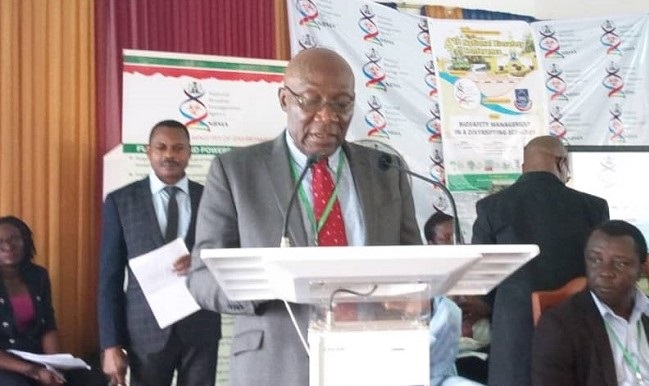
Chairperson, NGO Coalition working with the Federal Ministry of the Environment, Chike Chikwendu, delivering a goodwill message

In a keynote address, the Vice-Chancellor, Ambrose Ali University, Prof Ignatius A. Onimawo, said that as the nation continues to search for solutions to hunger, the ability of genetically modified crops to produce more than their conventional counterparts is not in doubt.

He said that the nation must rely on science for evidence inspite of the controversies surroundings the adoption of GMOs in the agricultural sector. “The technology has been tested over the years and we are still yet to find verifiable fact or evidence of its harm to environment or human health,” he said.

In a goodwill message, Prof. Benjamin Ubi, who is President, Biotechnology Society of Nigeria (BSN), opined that the Bt cotton recent approval for commercial release would ensure the revival of the hitherto moribund textile industry “in efforts towards diversifying the economy via the mass cultivation of this superior cotton type possessing inherent resistance in Nigeria”.

His words: “The success story of biosafety in Nigeria with particular reference to the upturned court case and approval of Bt cotton for commercial release stemmed from the courageous efforts of NBMA in galvanising all the stakeholders to provide a strong scientific voice to convincingly enlighten the general public of the accuable benefits of modern biotechnology and the safety of its products after their certification by the NBMA which is the competent authority on biosafety in Nigeria.”

Ubi, a Professor of Plant Breeding & Biotechnology at the Ebonyi State University in Abakaliki, went further: “The years ahead will need even more robust activities as we continue to enlighten the decision makers and members of the general public who may still be sceptical (or even apprehensive) about biosafety. And we hope that other products needed for food and nutrition security (such as Bt cowpea and biofortified sorghum) will come on board as soon as possible with their economic impact so glaring for all to see and believe.

“AS earlier indicated, GMOs should be seen beyond GM foods/crops alone but considered on a case-by-case basis including GM feed, GM feedstock / GM algae for biofuels, GM microorganisms for bioremediation and improved fermentation technology, GM mosquitoes for possible control of zika disease and malaria and GM animals, among others, in line with the national biosafety regulatory framework.”

Chairperson, NGO Coalition working with the Federal Ministry of the Environment, Chike Chikwendu, described the conference theme as apt because, according to him, science and technology have since been used by crop developers and industry practitioners in boosting globsl food supply and as such to diversify Nigeria’s economy requires investments in sustainable and safe agricultural practices.

“So, Nigeria’s agriculture cannot continue to rely on the current self-sustenance agriculture,” he stated, adding:

“One of the things that could propel agricultural productivity is biotechnology. Introducing vast modern agricultural methods with high productivity would effectively guarantee our food security while exporting surpluses could earn us foreign exchange. As a food insecure nation, the Nigerian CSO community, as critical stakeholders, is in support of policy measures that will ensure modern biotechnology applications in the diversification of Nigeria’s economy under a sound biosafety regulatory framework.”

Edo State Commissioner for Agriculture and Natural Resources, Mr. Monday Osaigbovo, disclosed that in the realisation of the fact that biotechnology has become a quintessential part of the nation’s development efforts that the state government established a School of Biotechnology and Forestry to be in Uromi as part of the restructures Edo State College of Agriculture and Natural Resources.

“Expectedly, the school will train middle manpower to harness our agricultural resources and implement our agricultural programmes,” he said, adding that the ministry upholds the protocol on strict adherence to rational pesticide and additives use by farmers, and ensuring that pesticide residues in crops and additives in livestock are kept at the prescribed levels.

On regulations and facilitation, Osaigbovo called on the NBMA to look into areas such as GMO labelling, environmental release and movement of genetically engineered crops, and establishment of state offices of the NBMA.

The two-day conference, which has “Biosafety management in diversified economy” as its theme, attracted over 300 participants from universities, research institutions, government agencies, private sector operators and civil society groups.