Home Blog Page 1808

Plastic pollution: Firms urged to switch to biodegradable polymers

0

A retired don, Prof. Oladele Osibanjo, has said that the ultimate solution to curbing plastic waste is for firms generating them to switch from non-biodegradable polymers to biodegradable polymers.

Plastic pollution
Plastic pollution

Osibanjo, a retired Professor of Chemistry, said this in an interview with the News Agency of Nigeria (NAN) on Wednesday, August 22, 2018 in Lagos.

He noted that food and beverages companies as well as packaging firms were the greatest culprits generating single-use non-biodegradable polymers.

The don said that because switching to biodegradable polymers would take time, the firms could, in the interim, put in place a “take-back or collection system” for the waste generated by their products.

“Water sachets are the cheapest and handiest non-biodegradable waste. Every minute daily about one million water sachets are thrown away to the environment.

“Companies should transit from use of non-biodegradable polymers to biodegradable polymers.

“However, because they need to source for these polymers, they should put in place a take-back or collection system for the waste of their products rather than people throwing them anywhere.

“The plastic waste collected can now be re-used in making new products; that way, you are turning it over for recycling and re-using.

“That is one effective way of reducing nuisance and environmental pollution caused by plastic wastes practiced all over the world.’’

Osibanjo said that if plastic wastes were taken away from the environment, they would not cause harm anymore.

He, however, stressed that the ultimate solution was for packaging companies and manufacturing firms to change to bio-degradable polymers.

According to him, this is because over a period, there will still be some that cannot be recycled anymore, and one will have to look for other uses for those.

By Chidinma Agu

Kaduna State warns residents of imminent flooding

0

The Kaduna State Government has urged communities along riversides to maintain vigilance over imminent flood on night of Tuesday, August 21, 2018 and the next couple of days as rainstorms are highly probable.

Nasir el Rufai
Nasir el Rufai, Governor of Kaduna State

Malam Abdullahi Rigasa, the General Manager, Kaduna Environmental Protection Authority (KEPA), made the fact known on Tuesday in Kaduna.

According to him, it is no longer safe for residents living along the river, as the river is already overflowing its banks. KEPA had earlier warned of imminent flood in five local government areas of the state.

Rigasa listed Igabi, Kaduna North, Kaduna South, Soba and Kaura local government areas as the places likely to be affected.

He urged residents of the five flood-prone areas to be on alert.

Rigasa said the mandate of KEPA was to prevent the occurrence of flood and ensure that residents were well prepared for any imminent floods.

“Last year, flooding was recorded in 14 local councils namely; in Kaduna South, Kaduna North, Kaura and Chikun local government areas with no casualties.”

He advised residents of the area to take proactive measures such as clearing water channels and avoid activities that could block the free flow of water.

He further advised relevant agencies to perfect their emergency evacuation plans and activate them as quickly as possible.

By Ezra Musa

African youth decry poor access to agri-business loans

0

African young agricultural entrepreneurs on Tuesday, August 21, 2018 decried poor access to soft agricultural loans which is hampering growth of their agri-businesses.

farming-can-be-fun
Youths involved in farming. Photo credit: smeonline.biz

They said this while speaking at a session panel on the sidelines of the Africa youth event in the Rwandan capital Kigali dubbed “Youth employment in agriculture as a solid solution to ending hunger and poverty in Africa.”

Rwanda hosts the conference on August 20-21 with much emphasis on engaging African youth to take part in agriculture transformation on the continent through Information and Communication Technologies and Entrepreneurship.

“Poor access to agricultural loans has become a big challenge to our agricultural businesses due to high interest bank rates and demands for collaterals from financial institutions,” said Dieudonne Twahirwa, founder of Rwanda-based Gashora Farm Ltd, a chilli pepper processing company.

He called on African governments to allocate funds to support young people in agri-business in order to address challenges associated with access to bank loans.

The two-day conference brought together participants from across Africa and beyond including representatives from governments, development partners, the private sector, youth and women organisations, civil society organisations, research and academia.

The high-level youth event also aimed to foster exchange among stakeholders on knowledge and best practices regarding the interfaces between agriculture, youth employment, entrepreneurship and ICT innovations, according to organisers.

According to Ruramiso Mashumba, chairperson of the youth wing of Zimbabwe farmers union, African youth are looking forward to starting agri-business ventures but are let down by financial institutions that are reluctant to release money to finance farming ventures.

“African governments should put in place a youth entrepreneurship policy to tackle challenges affecting young people who are creating jobs through agri-business enterprises,” he said.

According to him, young entrepreneurs have limited capacity and quite often run short of money to improve their small businesses either in agriculture sector or other sectors resulting into business closure.

According to the African Development Bank’s 2018 African Economic Outlook, in 2015, Africa was home to 226 million youth and the number is projected to increase by 42 per cent in 2030.

Olawale Rotimi Opeyemi, founder of JR Farms Limited, Nigeria, an agri-business coffee processing firm said that inability to access agricultural loans has made it impossible for youth in agriculture to access improved seeds, tractors and modern farm inputs.

“African young entrepreneurs in agriculture are advocating for an improved enabling environment, better access to training, finance and resources, and for their governments to believe in them,” he noted.

The conference discussed solutions that offer new opportunities for youth entrepreneurship, including on-farm and beyond, along the agricultural value chains.

Tanzania on high risk of Ebola outbreak

0

A Tanzanian government senior official said on Tuesday, August 21, 2018 that Tanzania was on high risk of Ebola outbreak.

Ummy Mwalimu
Ummy Mwalimu, Tanzania’s Health Minister

The Ebola Virus Disease killed 50 out of 91 patients in neighbouring Democratic Republic of Congo (DRC).

Ummy Mwalimu, the east African nation’s Minister for Health, said the high-risk categorization followed the World Health Organisation (WHO)’s new statistics showing that the new outbreaks in the DRC have occurred in regions closest to Tanzania than previous cases, including North Kivu and Ituri.

“Analysis by WHO has shown that countries neighboring the DRC including Tanzania are now at high risk of outbreak because North Kivu shares a common border with Uganda and there are many visitors and refugees fleeing from the region to Uganda and Rwanda,” she told a news conference in the commercial capital Dar es Salaam.

Mwalimu said both North Kivu and Ituri provinces are hotspots for the humanitarian crisis in the DRC due to civilian unrest which has complicated efforts by local DRC authorities and the international community to contain the spread of the viral disease.

The new cases, the 10th in the DRC’s Ebola outbreaks, have been reported in health zones in North Kivu and Ituri provinces, coming just one week after the neighbouring country declared victory against an earlier outbreak that occurred in May.

“As of Aug. 1, WHO figures showed that there were only 26 confirmed new cases and 10 deaths that accounted for a fatality rate of 38.5 per cent but the spread of the disease persisted and by Aug. 18, there were 91 cases and 50 deaths which are equal to 54.9 percent fatality rate,” said the minister.

Along with the WHO figures, the minister said a total of 10 health workers in the DRC have also contracted Ebola and one of them died.

She added: “And there is cause for alarm because the workers caught the virus in normal health centers and not the designated Ebola treatment centers.”

So far, the minister said there was no Ebola case in Tanzania but noted that there was need to put in place control measures to ensure that the virus does not wreak havoc in the country as it has in the DRC.

“I call upon all citizens and residents of Tanzanian including health workers to understand and adhere to Ebola infection prevention and control measures,” she said.

Authorities are on high alert in the regions with high interaction with DRC, including Mwanza, Kagera, Kigoma, Katavi, Rukwa and Songwe to ensure that all visitors from the neighbouring country were properly screened, said Mwalimu.

She added that that the country’s international airports, including Julius Nyerere, Kilimajaro and Songwe were on full alert.

Mwalimu added that her ministry will be working with WHO round the clock to put in place Ebola surveillance and control mechanism.

Operational readiness assessment has already been conducted in Rukwa, Katavi, Songwe, Mbeya, Kigoma, Kagera, Arusha and Kilimanjaro regions, said Mwalimu.

She said the ministry has employed 33 additional staff in the Ebola control team and WHO has provided the ministry with $2.5 million worth of equipment that has already been distributed to key centers, including personal protective equipment for health workers.

Quitting smoking may lead to weight gains, but will reduce risk of death – Study

0

Quitting smoking may cause you to gain weight and initially lead to a higher risk of diabetes, but it will reduce the chances of death from cardiovascular disease and other causes, according to a new study.

tobacco smoking
According to scientists, tobacco smoking is dangerous to health

Researchers from the Chinese Academy of Sciences and Harvard University found that those whose weight increased more than 15 kg after quitting smoking had a higher risk of type II diabetes than smokers.

The risk peaked five to seven years after quitting and then gradually decreased.

Those who did not gain weight after quitting did not experience an increase in the risk of diabetes.

However, regardless of weight change, cardiovascular mortality and all-cause mortality of former smokers declined rapidly after they gave up smoking and remained at about 70 per cent that of smokers’ mortality.

Previous studies have shown that tobacco products can cause cancer, lung diseases and cardiovascular diseases, and reduce life expectancy.

Although the risk of these diseases can be reduced by quitting, weight gain has been a common health problem.

Many former smokers can gain over 10kg and the weight gain can last around six years.

The main reason is that tobacco can effectively suppress people’s appetites.

Once their appetite returns to normal after quitting, people can eat more and put on weight more easily.

The new study, released by the New England Journal of Medicine, involved nearly 300,000 Americans who had quit smoking for more than two years.

They were followed up every two years, to collect data including their smoking status, weight changes and disease incidence.

Researchers also found that more physical activity and an improved diet could help former smokers lose weight.

It is better to quit smoking first, and then try to control weight gain and monitor the risk of diseases, said Zong Geng, lead researcher of the study.

Congo battles to contain Ebola outbreak in conflict zone

0

Authorities in troubled eastern Congo are battling against multiple militia groups and a deteriorating security situation in their efforts to respond to an Ebola outbreak that has killed 55 people in the region.

Oly Ilunga
Oly Ilunga, the Congolese Minister of Health

The outbreak of the deadly virus began shortly after the country’s government in June declared an end to another outbreak – in the west of the country – and lauded those involved for managing to swiftly contain the spread of the disease.

But access to Congo’s eastern “red zone” is more difficult due to the region’s ongoing conflict.

There is also the added problem of the movement of internally displaced people in North Kivu province, and their possible cross-border travel into Uganda or Rwanda.

The World Health Organisation has warned that some areas are inaccessible because of the more than 100 armed groups that are mainly fighting over access to mineral resources.

The government has rolled out a vaccination campaign that has so far managed to treat more than 1,200 people.

However, the number of cases has almost doubled in a week, with the Ministry of Health saying late Monday that 96 people were suspected or confirmed to have contracted the disease.

“In red zones that are more difficult to access … we are working with the local registered nurses who are tracking these people and sending reports by phone every day,” Jessica Ilunga, spokesperson at the Ministry of Health, told dpa on Tuesday, August 21, 2018.

Health Minister Oly Ilunga Kalenga said during a visit to the region Monday that medical teams were being provided with security and patients were being treated in safe spaces.

“The response to the Ebola outbreak is not easy because the disease has been declared in a red zone,” he said.

“Health personnel and materials are accompanied by an escort when travelling.”

To try and contain the virus authorities are manning the entrances to the town of Goma, border posts and the busy port, and are taking the temperatures of those arriving from elsewhere in North Kivu.

Basins and soap have been placed at all these points as well as at churches so that people can wash their hands.

The government has also relaxed rules about motorcycle commuters wearing helmets in order to avoid the spread of infection.

Motorcycle-taxis are a popular form of transport in Congo, and motorcycle-taxi driver Hakim Balole told dpa he thought it was a good idea for passengers not to share helmets.

“The disease can easily be transmitted by sweat,” he said.

Ebola, which can also spread through blood, vomit and other bodily fluids, is a highly infectious disease that causes a fever and often leads to massive internal bleeding and death.

Aba residents decry citizens’ poor attitude to environmental cleanliness

0

Some residents of Aba have called on the Abia State Government to provide more refuse buckets in the city to curtail indiscriminate refuse dumping to reduce flooding in the city after rainfall.

Abia State
Gov. Okezie Ikpeazu of Abia State inspecting a waste disposal equipment manufactured by the engineering department of Abia State Polytechnic, Aba

The residents, in interviews with News Agency of Nigeria (NAN) on Tuesday, August 21, 2018, decried the poor attitude of the people to the environment and call for proper management of waste to reduce flooding in the city.

Teddy Johnson, a driver, noted that the Okezie Ikpeazu Administration had worked harder than its predecessors to build roads with drain in Aba, yet the city still faced flooding problems.

He said the reason was that some residents and traders emptied their waste in the drains and blocked them thus flooding occurred after the rains.

He suggested that the government should check clogged drains through proper waste management.
Johnson said that Aba residents passed through great difficulties to reach Abia State Environmental Protection Agency (ASEPA) refuse buckets as they were few.

He said that the long distances discouraged children who were sent most times to throw away refuse from reaching the spots, hence they poured waste into gutters and blocked them.

He urged government to improve waste management by sending ASEPA to collect refuse from house to house to check indiscriminate refuse dumping and flooding.

Chief Richard Kalu said the government had been trying to put the city in order but needed to give its contract works to professionals in all areas.

He said poor quality construction work in some areas was responsible for clogged drains which induced flooding.

He further called on the government to use a special task force to check indiscriminate refuse dumping if it must contain street flooding in Aba.

Tony Onyebuchi also said that residents were contributing to clogged drains in Aba resulting in flooding of streets.

He called on the government to provide waste buckets for all residents and monitor and enforce their use through a special task force to ensure compliance.

“One single measure will not stop flooding in Aba because it is caused by many factors and it is by attending to these different factors that street flooding could be properly controlled in Aba.

“And government and the people can solve this problem if they join hands,” he said.

By Ijendu Iheaka

Kofi Annan’s legacy lives on at Latin American & Caribbean Climate Week

0

The Latin American & Caribbean Climate Week got underway on Tuesday, August 21, 2018 with an opening ceremony that attracted a notable cast of local leaders, including Eneida De Leon, Minister of Housing, Land Planning and Environment of Uruguay, who welcomed attending delegates in Montevideo.

Kofi_Annan
The late Kofi Annan

The event is being orchestrated by the members of the Nairobi Framework Partnership, which was founded by Kofi Annan in 2006, as a means of bolstering the interlinkages between governments, the private sector, and the developing world. Following news of the former Secretary-General’s passing last weekend, it’s clear that the world needs to enhance this kind of multilateral collaboration if it is to make the Paris Agreement a reality.

The Latin American & Caribbean Climate Week – and indeed all regional Climate Weeks hosted throughout the globe annually – are therefore a tangible and necessary way of honoring Kofi Annan’s instinct to bring everyone on board to solve the world’s great problems which, in this instance, is climate change.

Representing the Nairobi Framework Partnership, Patricia Espinosa, UNFCCC Executive Secretary, said: “Right now, we need ideas, best practices and lessons learned from every segment of society, whether businesses, investors, regional and local leadership, and everyday people. It’s what I call “inclusive multilateralism and it means having more voices at the table leading to more climate change solutions.”

On a continent that is flanked on each side by two great oceans – the Atlantic and the Pacific – the region is particularly vulnerable to extreme weather events, tropical storms and hurricanes, such as those that recently hit the Caribbean and Meso America, with devastating consequences.

Eneida De Leon, Minister of Housing, Land Planning and Environment of Uruguay, said: “For Uruguay, as well as for the entire region of Latin America and the Caribbean, the response to climate change is a priority for our public policies. In this regard, we welcome the celebration of this event, in which we hope to exchange and work to strengthen the implementation of the Paris Agreement in our region.”

Latin American and Caribbean nations are not newcomers to the stage of climate action; Costa Rica continues its race towards carbon neutrality; Chile’s landmark carbon tax penalises less efficient vehicles based on urban performance; meanwhile, Mexico’s General Law on Climate Change is a milestone in regulatory integration. All this represents just a slice of the ambition, which is now a hallmark of the region, and which is now being showcased at the three-day Climate Week, concluding on Thursday afternoon.

Latin America and Caribbean Climate Week 2018, runs to August 23 in Montevideo, Uruguay and was preceded by the Asia Pacific Climate Week from July 10 to 13 in Singapore.

Both events build momentum ahead of the Global Climate Action Summit in California and New York Climate Week next week, as a means of demonstrating that there is genuine international support for stepping-up local, national, regional and international climate action on the part of all stakeholders.

Clean Power Plan replacement a dismantling of smart climate policy – Climate Reality

0

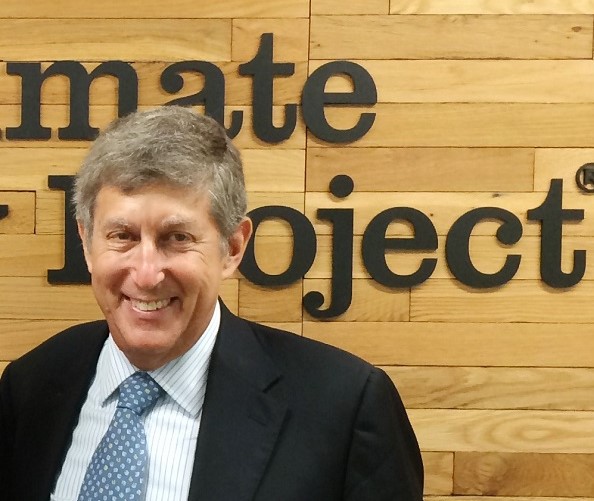
The US Environmental Protection Agency (EPA) on Tuesday, August 21, 2018 released a new proposal to replace the 2015 Clean Power Plan, a landmark climate policy aimed at reducing carbon emissions from coal-burning power plants by 32 percent (from 2005 levels) by 2030. The Clean Power Plan was a key component of US plans to meet commitments made under the Paris Agreement, an international pact that President Donald Trump announced his intention to withdraw from in June 2017. In a reaction, Ken Berlin, President and CEO of The Climate Reality Project, describes the new proposal as a complete dismantling of smart climate policy

Ken Berlin
Ken Berlin, President and CEO of The Climate Reality Project

Make no mistake: the EPA’s new proposal for coal-burning power plants is not a replacement for the Clean Power Plan. It’s a complete dismantling of smart climate policy. There will be nothing ‘clean’ about the soot and smog allowed to pollute the air and water of communities across the US. There will be nothing fair about how this pollution will hit marginalised communities already struggling with poverty the hardest.

At a time when relentless heatwaves and raging wildfires fill the headlines and make the stakes of the climate crisis crystal clear, the Trump Administration continues to defy logic and even basic common sense. Instead of actually confronting the crisis, the administration is attacking forward-thinking environmental protections like the Clean Power Plan that can help solve it – all to line the pockets of the failing fossil fuel industry. The American people clearly cannot count on this administration to protect their basic human rights to clean air, clean water, and an environment where they can safely live and raise their families.

The good news is that we are in the midst of an incredible clean energy revolution that cannot and will not be stopped, no matter how much this administration tries to put its finger on the scale. Solar, wind, and other forms of clean energy continue to get cheaper and put more Americans to work than many dirty fossil fuels. As more local, city, and state governments and private sector actors take substantive steps to reduce emissions, we will keep making progress. Now, it’s our job as citizens, activists, parents, friends, and neighbors to work even harder to accelerate the clean energy revolution – by organising, educating, and most importantly, voting up and down the ballot to support climate policies.

We’re committed to complying with RSPO principles – GAR

0

Indonesia’s largest palm oil company, Golden Agri-Resources (GAR), has said that, while focused on responsible palm oil production, it remains committed to complying with the Roundtable on Sustainable Palm Oil (RSPO) Principles and Criteria as well as the laws and regulations of the country.

Golden Agri-Resources
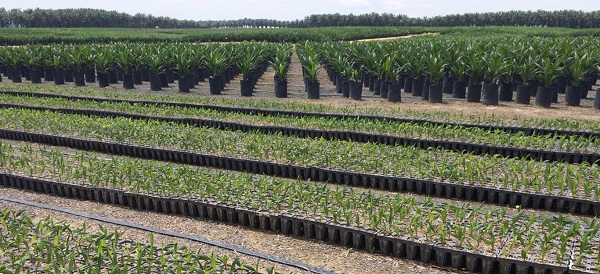
A Golden Agri-Resources oil palm plantation

The organisation made the submission in a statement on Monday, August 20, 2018, in an apparent reaction to claims by the the Forest Peoples Programme (FPP) stating, among others, that complaints were filed against GAR by a group of Indonesian, Liberian and International NGOs.

The GAR, which is said to be part of the huge Sinar Mas (Golden Rays) conglomerate run by the Widjaja family with interests ranging from palm oil and pulpwood to real estate and banking, was accused by the NGOs of failing to comply with RSPO’s standards.

Both GAR and its subsidiary in Liberia – Golden Veroleum Liberia (GVL) – reportedly angered NGOs when they withdrew GVL’s membership of the RSPO, and allegedly dodging a demand from RSPO that it should halt development of its palm oil mill on contested lands.

By the GAR has expressed “extreme” disappointment with the FPP claim that it had filed a new complaint against it. According to GAR, FPP chose not to share the details of its grievance with it (GAR) before releasing the “complaint.” GAR stated that, to date, it has received no official notification or communication from FPP regarding the new “complaint”.

GAR added: “This has given GAR no opportunity to understand or clarify any of the matters brought up by FPP and is hampering proper communications between the parties as well as a violation of the spirit of the RSPO process.

“From what we know of the FPP grievance, we note that it is referring and repeating various matters which have been previously resolved and addressed. Furthermore, it is still based on an erroneous understanding about our relationship with GVL, the nature of which we have recently clarified again with the RSPO Secretariat.

“We have updated these matters with FPP and RSPO through our regular reports to RSPO which are publicly accessible here: https://rspo.org/members/complaints/status-ofcomplaints/view/75. As for FPP’s claim concerning GAR and shadow companies, we absolutely refute this and affirm there is no basis for such allegations.

“In accordance with the GAR Social and Environmental Policy, we remain committed to complying with the RSPO Principles and Criteria and the laws and regulations of Indonesia.”

GAR is said to be one of the leading palm oil plantation companies with a total planted area of 500,481 hectares (including plasma smallholders) as at June 30, 2018, located in Indonesia. It has integrated operations focused on the production of palm-based edible oil and fat.

In Indonesia, its primary activities include cultivating and harvesting of oil palm trees; processing of fresh fruit bunch into crude palm oil (CPO) and palm kernel; refining CPO into value-added products such as cooking oil, margarine, shortening, biodiesel and oleo-chemicals; as well as merchandising palm products throughout the world.

Founded in 1996, GAR was listed on the Singapore Exchange in 1999 and has a market capitalisation of $2.8 billion as at June 30, 2018.