The enforcement of the ban on sachet alcohol by the National Agency for Food and Drug Administration and Control (NAFDAC) has continued to garner more views with pro-health groups from Ghana and Uganda commending the agency for the bold move.
Some of the groups that hailed the move are the Uganda Alcohol Policy Alliance (UAPA) and the Vision for Sustainable Accelerated Development (VAST-Ghana).
Alcoholic drinks in sachets and small volume bottles
In a letter signed by its Chairperson, Juliet Namukasa, and addressed to the director general of NAFDAC, the UAPA commended the Nigerian agency for the decisive enforcement of the ban on sachet and small-volume alcoholic beverages, describing the move as a policy grounded in safeguarding public health and curbing harmful alcohol use, especially among children and youth.
Namukasa said that the renewed ban demonstrates a commitment to evidence-based regulation, prioritising people before profits.
The group insisted that sachet alcohol formats are inexpensive, easily concealed, and widely accessible; factors that fuel underage drinking and alcohol-related harm, adding that sustained enforcement signals a powerful public health precedence, aligning Nigeria with global alcohol control best practices.
On its part, the VAST Ghana called on the Ghanaian government to emulate the Nigerian example to safeguard public health, especially that of Children.
In a press statement dated February 6, 2026, VAST-Ghana commended NAFDAC for enforcing the nationwide ban on sachet alcohol and small bottles under 200ml, despite strong opposition from the alcohol industry. The organisation revealed that alcohol in sachets contribute to early alcohol use, addiction and long-term health complications, calling on Ghana’s FDA, which it said already has the legal authority under the Public Health Act (Act 851), to impose a similar ban through administrative action.
It will be recalled that the enforcement of the sachet alcohol ban began on 22 January 2026 after more than two years of back and forth between NAFDAC and the alcohol industry over the implementation. The Association of Food, Beverage and Tobacco Employers, and Distillers and Blenders Association of Nigeria had signed an agreement with the Ministry of Health and NAFDAC in December 2018 to phase out production of alcohol in sachet and PET bottles less than 200 ml by January 31, 2024.
At the expiration of the deadline a further extension was given to enable members to adequately prepare for the ban.
The Food, Beverage and Tobacco Senior Staff Association (FOBTOB), which claimed that the ban has disrupted operations of many of its members in different parts of the country, has criticised the policy. There has also been pushback from the Nigeria Employers’ Consultative Association (NECA) and the Manufacturers Association of Nigeria (MAN), both of which also hinged their arguments on job losses.
NAFDAC has however insisted that there is no going back on the policy, insisting that its decision was informed by health risks for children whose physiological systems are exposed to alcohol early and the damage it causes.
The agency has also countered industry narratives of job losses by insisting that its actions are directed at halting the production and sale of alcoholic beverages packaged in sachets and small-volume PET bottles, rather than shutting down the entire manufacturing companies.
A host of Nigerian organisations have equally urged NAFDAC to remain undeterred. They include the Renevlyn Development Initiative (RDI) which dismissed the beverage and alcohol industry arguments, pointing out that it is a known and well documented fact that the industry and their front groups deliberately stand in the way of any form of regulation.
Every business depends on biodiversity, and every business impacts biodiversity. The growth of the global economy has been at the cost of immense biodiversity loss, which now poses a critical and pervasive systemic risk to the economy, financial stability and human wellbeing. This is a central finding of a landmark new report published on Monday, February 8, 2026, by the Intergovernmental Platform on Biodiversity and Ecosystem Services (IPBES).
Even companies that might seem far-removed from nature or that do not see themselves as nature-based rely, directly or indirectly, on material inputs, regulation of environmental conditions – such as flood mitigation and water supply – and non-material contributions such as tourism, recreation, education, and spiritual, aesthetic and cultural values. But businesses often bear little or no financial cost for their negative impacts and many cannot currently generate revenue from positive impacts on biodiversity.
Dr. Luthando Dziba, Executive Secretary of IPBES
Approved by representatives of the more than 150 member Governments of IPBES, during the 12th session of the IPBES Plenary, hosted in Manchester, United Kingdom, the IPBES Methodological Assessment Report on the Impact and Dependence of Business on Biodiversity and Nature’s Contributions to People (known as the Business and Biodiversity Report), finds that businesses are central to halting and reversing biodiversity loss, but that many often lack information to address their impacts and dependencies, as well as the risks and opportunities relating to biodiversity and nature’s contributions to people.
Enabling Environment Necessary for Business Action
Prepared over three years by 79 leading experts from 35 countries and all regions of the world, drawn from science and the private sector, in consultation with Indigenous Peoples and local communities, the Report finds that the current conditions in which businesses operate are not always compatible with achieving a just and sustainable future, and that these conditions also perpetuate systemic risks.
Businesses often face inadequate or perverse incentives, barriers that hinder efforts to reverse nature’s decline, an institutional environment with insufficient support, enforcement and compliance, as well as significant gaps in data and knowledge. These combine with business models that result in ever-increasing material consumption and an emphasis on reporting quarterly earnings, to contribute to the degradation of nature around the world. The Report makes the point that fundamental change is possible and necessary to create an enabling environment to align what is profitable for business with what is beneficial for biodiversity and people.
“This Report draws on thousands of sources, bringing together years of research and practice into a single integrated framework that shows both the risks of nature loss to business, and the opportunities for business to help reverse this,” said Matt Jones (UK), one of three Co-chairs of the Assessment.
“This is a pivotal moment for businesses and financial institutions, as well as Governments and civil society, to cut through the confusion of countless methods and metrics, and to use the clarity and coherence offered by the Report to take meaningful steps towards transformative change. Businesses and other key actors can either lead the way towards a more sustainable global economy or ultimately risk extinction…both of species in nature, but potentially also their own.”
Business-as-usual Incentives are Driving Nature’s Decline
Current conditions perpetuate business-as-usual and do not support the transformative change necessary to halt and reverse biodiversity loss. For example, large subsidies that drive losses of biodiversity are directed to business activities with the support of lobbying by businesses and trade associations. In 2023, global public and private finance flows with directly negative impacts on nature, were estimated at $7.3 trillion, of which private finance accounted for $4.9 trillion, with public spending on environmentally harmful subsidies of about $2.4 trillion.
In contrast, $220 billion in public and private finance flows were directed in 2023 to activities contributing to the conservation and restoration of biodiversity, representing just 3% of the public funds and incentives that encourage harmful business behaviour or prevent behaviour beneficial to biodiversity.
“The loss of biodiversity is among the most serious threats to business,” said Prof. Stephen Polasky (USA), Co-chair of the Assessment. “Yet the twisted reality is that it often seems more profitable to businesses to degrade biodiversity than to protect it. Business as usual may once have seemed profitable in the short term, but impacts across multiple businesses can have cumulative effects, aggregating to global impacts, which can cross ecological tipping points.
The Report shows that business as usual is not inevitable – with the right policies, as well as financial and cultural shifts, what is good for nature is also what is best for profitability. To get there, the Report offers tools for choosing more effective measurements and analysis.”
Measuring Impacts and Dependencies
The Report finds that a wide range of methods, knowledge and data exist for measuring business impacts and dependencies, which can already inform decisions and action, but that more is understood about applying methods for assessing impacts than for measuring dependencies. The application and uptake of methods is found to be low and uneven across and within business sectors and locales, with less than 1% of publicly reporting companies mentioning their impacts on biodiversity in their reports.
A recent survey among financial institutions representing 30% of global market capitalisation value found that the three most cited barriers to greater uptake of nature-related risk assessment and management are: a) access to reliable data, b) access to reliable models and c) access to scenarios. Prof. Polasky said: “Too often, businesses spend more time trying to decipher complex, competing frameworks for compliance and reporting than taking meaningful action.
One of the powerful features of this Report is that it helps to decipher which methods, metrics and policy tools are appropriate for the scope of business, helping bring clarity and coherence to how businesses measure and report on their interactions with nature. We are moving the conversation from voluntary sustainability pledges to a science-based roadmap for system change.”
The authors emphasise that no single method to measure and manage impacts and dependencies is suitable for all business decisions, and which aspects should be measured depends on context and the action to be taken or decision being informed – multiple methods or metrics will often be necessary.
The Report proposes three overarching characteristics that can be used to assess which methods are most appropriate for any business, of any size or sector: coverage (geographic as well as the extent of impacts and dependencies included); accuracy (the degree to which results correctly describe what they are designed to measure); and responsiveness (the ability of the method to detect changes that can be attributed to the actions and activities of the business).
Decisions at the operational level require site-specific information, generated through ‘bottom-up’ approaches including location-based observations, participatory monitoring and mapping, and spatial analysis built on these data sources. Approaches more appropriate at the portfolio, corporate and value chain levels include “top-down” methods such as life cycle approaches and macro-scale environmental economic models. Depending on the purpose of measurement, they can be conducted with lower spatial resolution data but wider geographic scale.
Another key finding is that business could improve the measurement and management of impacts and dependencies through appropriate engagement with science and Indigenous and local knowledge. “Data and knowledge are often siloed,” said Prof. Ximena Rueda (Colombia), Co-chair of the Assessment. “Scientific literature is not written for businesses and a lack of translation and attention to the needs of business has slowed uptake of scientific findings. Among business there is also often limited understanding and recognition of Indigenous Peoples and local communities as stewards of biodiversity and, therefore, holders of knowledge on its conservation, restoration and sustainable use.”
Industrial development threatens 60% of Indigenous lands around the world and a quarter of all Indigenous territories are under high pressure from resource exploitation, but Indigenous Peoples and local communities often find themselves inadequately represented in business research and decision-making. “Respectful collaboration resulting in the sharing and better use of data, information, scientific insights and Indigenous and local knowledge can translate into better management of business risks and the realisation of opportunities,” said Prof. Rueda.
Priorities and Options for Business Action
The Report makes it clear that all businesses, including financial institutions, have a responsibility to address their impacts and dependencies and could take further actions, given an enabling environment. Although trade-offs exist that prevent some transformative actions, the authors point to many actions that businesses can take now that benefit business and biodiversity – such as increasing efficiency and reducing waste and emissions. Specific options for business action that can be taken now to address their impacts and dependencies on nature are included as a table below.
“Better engagement with nature is not optional for business – it is a necessity,” said Prof. Rueda. “This is vital for their bottom line, long-term prosperity and the transformative change needed for a more just and sustainable future. To avoid greenwashing though, it is essential that businesses have transparent and credible strategies, which clearly demonstrate their actions and how they contribute to biodiversity outcomes and that they publicly disclose their impacts and dependencies as well as their lobbying activities.”
The Report explores both actions that can be taken by businesses themselves and ‘signalling’ actions that can publicly influence and inspire action by others. Actions of each type can be pursued by businesses across four decision-making levels: corporate, operations, value-chain and portfolio.
The authors acknowledge that while there is a large existing knowledge base to guide action by businesses, there are also important gaps in knowledge and its application that constrain the ability of all actors to fully understand and effectively manage business activities. The Report groups these gaps as follows: business-relevant data; data accessibility and transparency; completeness of evidence; adoption of methods and applicability of methods – suggesting five sets of actions to address these priorities.
100+ Concrete Actions for Governments, Financial Actors & Civil Society
Another central message of the Report is that businesses cannot, by themselves, deliver the scale of change needed to halt and reverse biodiversity loss. Collaboration, collective and individual actions are essential to create an enabling environment where businesses contribute to a just and sustainable future.
Five specific components are identified as central to such an enabling environment: policy, legal and regulatory frameworks; economic and financial systems; social values, norms and culture; technology and data; and capacity and knowledge. The Report provides more than 100 specific examples of concrete actions that can be taken, across each of these five components, by businesses, governments, financial actors and civil society. A table of these actions is also attached below.
“Better stewardship of biodiversity is central to managing risk across the whole of the economy and throughout societies – it’s not some distant environmental issue, but a core challenge now in every boardroom and cabinet-room,” said Prof. Polasky. “We need to move beyond the fallacy of a binary choice between governments and decision-makers being either pro-environment or pro-business. All business depends on nature, so actions that conserve and sustainably use nature can also be those that help businesses thrive in the long-term.
One of the innovations of this Report is that it provides a template for accelerating collaboration and collective actions at all levels among and by governments, financial actors, other actors including civil society, Indigenous Peoples and local communities, consumers, NGOs, international organisations, and academia in addition to the action needed by businesses and financial institutions themselves.”
Vital Guidance to Achieve Global Goals
Speaking about the significance of the Business and Biodiversity Report, Dr. David Obura, Chair of IPBES said: “This first-ever fast-track IPBES Assessment Report was delivered with urgency as we begin the second half of this decade, at the request of our Governments, as a vital contribution to efforts by businesses, governments, financial actors and the whole of society to meet the goals and targets of the Global Biodiversity Framework, the Sustainable Development Goals and the Paris Agreement on Climate Change. It relates very directly to Target 15 of the Global Biodiversity Framework, which focuses on businesses, but ultimately to all our shared global goals because businesses are at the centre of how our economies, and large parts of our society, depend on and impact nature.”
“We thank the Co-chairs and all the authors of this Assessment,” said Dr. Luthando Dziba, Executive Secretary of IPBES. “This Report builds very directly on the insights and evidence of many earlier IPBES Assessments – particularly the 2019 Global Assessment, the 2022 Values Assessment and the 2024 Nexus and Transformative Change Assessments – offering much-needed clarity and coherence to guide actions by business and all decision-makers. Nature is everybody’s business and the conservation, restoration and sustainable use of biodiversity is central to business sustainability and success.”
The Minister of Industry, Trade and Investment, Dr Jumoke Oduwole, says the ministry generated over $500 million in export revenue in 2025 from industrial development and diversification of the economy.
Oduwole made the disclosure, when she appeared before the Senate Committee on Trade and Investment on Monday, February 9, to defend the ministry’s 2026 budget.
According to her, the ministry’s programmes had also created more than 20,000 direct jobs.
Minister of Industry, Trade and Investment, Dr Jumoke Oduwole
Oduwole said activity on Nigeria Commodity Exchange expanded sharply with traded volumes up by over 500 per cent.
According to her, the ministry advanced a strategic partnership to establish a national trade and distribution company to strengthen structured commodity trade and market access.
The minister said the ministry also secured the approval of the Federal Executive Council for the National Industrial Policy in November 2025.
“Importantly, in 2025, the ministry launched Nigeria’s first-ever National Intellectual Property Policy as a national trade and distribution company.
“We also secured the approval of the National Intellectual Property Policy as a national trade and distribution company.
She said that in 2005, the ministry’s appropriation was N11.8 billion with personnel and overhead allocations fully utilised.
Oduwole said that apart from the N3.8 billion capital allocation, no amount had been released to date.
According to her, revenue performance exceeded target by approximately N100 million with full remittance to the consolidated revenue fund.
“Within available resources, the ministry maintained fiscal discipline effective planning, and accountable use of public funds.
“2026 priorities and capital requirements, distinguished senators, with your support, continuing for the ministry, we are committed to ensuring that the speedy attainment of the Renewed Hope Agenda of President Bola Tinubu’s administration.
“Accordingly, our 2026 priorities are firmly grounded in the national development plan and the existing policy frameworks, including the trade policy for Nigeria, the Nigerian investment policy, and the Nigerian industrial policy .
“In 2026, the ministry will focus on implementation, advancing industrial policy through targeted value chains and industrial cluster development and special economic zones. ”
She said the emphasis was firmly on giving priority to Nigeria’ s local production and non-oil exports.
The minister said that domestic investors would remain the anchor and the strongest signal of confidence in the economy, while global investors would continue to be engaged through trade missions and in-country investment visits.
“We will take delivery and impact to the sub-national level through the National AFCFT Tour, and structured zonal and state engagements that anchor value chains locally and strengthen state ownership of trade and industrial outcomes.
She said the efforts would be supported by the roll out of digital investor portals and trade intelligence tools aimed at improving transparency and coordination across trade and investment promotion.
The minister said the ministry’s proposed 2026 capital allocation stood at N2.72 billion
Oduwole said given the scope of responsibilities and the execution priorities outlined, the allocation would be a stretch in meeting the full demands of programs and capital projects of the ministry.
She sought the committee’s support for enhancement of its capital allocation to enable effective alignment of priority programs in line with objectives of national development plan and the medium-term expenditure framework
“It is in this context that I request your continued support as we work to collectively deliver on the ministry’s mandate to strengthen industrial development, expand trade, attract investment, and support economic growth across the Federation.”
The Lagos State Ministry of Environment and Water Resources (MOE&WR) has officially launched the Ikosi Market Anaerobic Digester powered by C40 Cities Urban Climate Action Programme to turn waste-to-energy.
The project is facilitated by C40 Cities Urban Climate Action Programme – Climate Action Implementation (UCAP CAI), financed by the UK government’s Foreign, Commonwealth and Development Office (FCDO).
Dignitaries at the launch of the Ikosi Market Anaerobic Digester
It is also supported by the British High Commission in Nigeria.
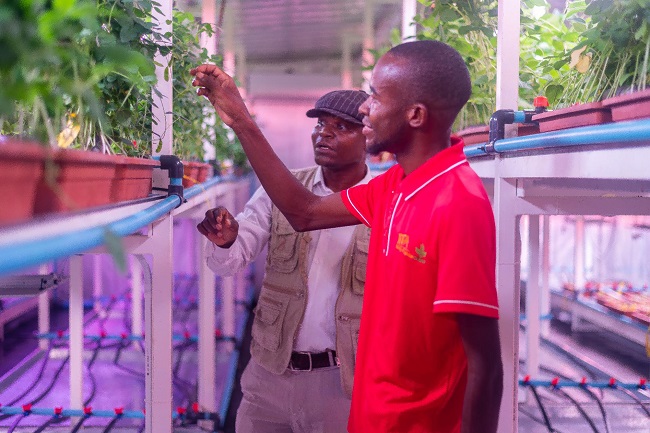
This facility will systematically collect the market’s organic waste and feed it into an anaerobic digester.
The natural bacteria will break down the waste without oxygen to produce biogas.
And in doing so carry out a remarkable process of biological transformation that yields two invaluable products, biogas and bio-fertiliser.
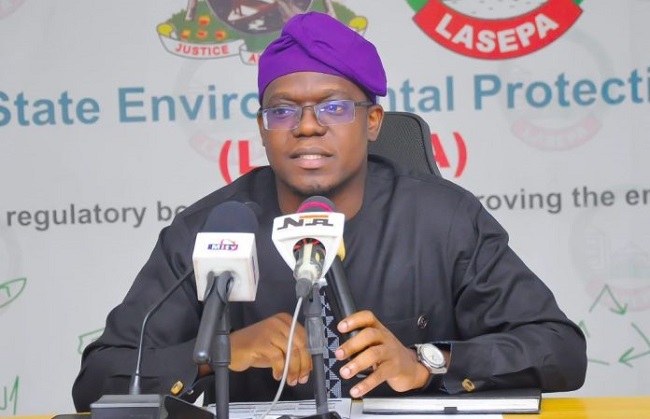
Speaking at the event, Mr. Tokunbo Wahab, Commissioner for the Environment and Water Resources, described the launch of the Biogas as a milestone achievement in addressing waste management issues in the state.
“Today is a proud moment for Ikosi, and indeed for Lagos State, as we mark another important milestone on our journey towards a cleaner, greener and more resilient city.
“We are not merely commissioning a facility; we are unveiling a vision on how Lagos can turn our everyday challenges into powerful opportunities.
“The Ikosi Fruit Market Biogas Plant represents a bold step in reimagining waste, not as a burden, but as a valuable resource that can drive sustainability, resilience and inclusive growth.
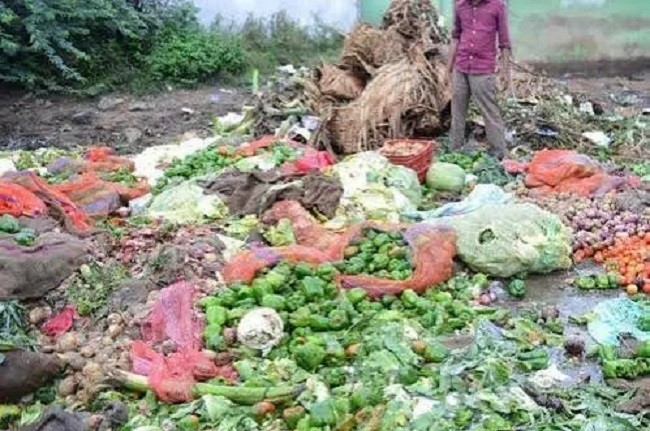
“This project transforms a long-standing problem into a practical solution. Instead of rotting in dumps, organic waste from this market will now be converted into clean, sustainable biogas for cooking and electricity.
“At the same time, it will produce nutrient-rich organic fertilizer that can be used on our farms. This is the circular economy in action—closing the loop, reducing emissions, creating value and improving livelihoods,” Wahab said.
He said the project reflects a much bigger ambition for Lagos State.
“The initiative is being implemented in partnership with C40 Cities and UK International Development under the Climate Action Implementation programme.
“Through this collaboration, Lagos continues to show leadership by translating international climate commitments into practical, community-level action.
“Today’s launch affirms a simple but powerful truth: the future of sustainable cities will be built not only in boardrooms and policy documents, but right here in our markets, our communities and our daily activities,” he said.
On his part, Dr Muyiwa Gbadegesin, the Managing Director of the Lagos State Waste Agency, said the project launch was a testament of the state’s drive to tackle waste.
“Lagos State Government takes very seriously the issue of environment, the issue of waste management, and in particular, the issue of circular economy, which you can only achieve by converting our waste to wealth.
“It’s beginning of many more projects, because we in Lagos State have recognised that waste is a resource.
“By managing our waste in this manner, we are strengthening public health and sanitation in our markets, and we are advancing our shift to climate smart and accountable Waste Management System.
“This project takes organic market waste that would otherwise end up in the drains or illegal dumps or on culverts.
“We want this place to work so that we can get more C40 cities to see what we’re doing and maybe the next market may be the Mile 12 market,” Gbadegesin said.
Also, Mr. Gaji Tajudeen, the Permanent Secretary MOE & WR, lauded the partners and all the stakeholders that made the launch a reality.
“I welcome you all to the launch of the Ikosi Fruit Market Biogas Plant. This achievement represents a major step forward in our collective pursuit of environmental sustainability, renewable energy and the conversion of waste into wealth.
“Today is a powerful testament to your commitment to innovation, sustainable development and the importance of collaborative efforts in addressing the environmental challenges facing our state.
“This project represents the power of innovation, collaboration and technology. For a long time, we have grappled with the challenge of waste management.
“The Ikosi Fruit Market Biogas Plant provides an ingenious solution, transforming what we once considered ‘waste’ into valuable resources.
“It will convert organic waste into clean cooking gas and electricity for our homes, and organic fertiliser for our farms.
“We owe our sincere appreciation to C40 Cities and UK International Development under the Climate Action Implementation programme for their continued support,” Tajudeen said.
The C40 Cities Regional Director for Africa, Mr. Anthony Okoth, said: “The C40 is a global entity that actually focuses on bringing together 100 mega cities across the globe.
“It basically controls a population of about 925 million people in terms of cities, and basically takes care of about 20% of the global economy.
“And basically our main mandate is actually to look to ensure that as we engage the cities, we actually are able to drive the Paris Declaration of ensuring that we don’t go beyond the 1.5 degrees centigrade in terms of heat increase.
“As we stand here today, I’m very proud, because it’s truly simple by saying that we can actually turn waste into wealth.
“And for us, that’s our mantra, working with African grown solutions to actually transform and address the African agenda.
“It is not us who have done it alone, but under the leadership of the state government.
“And so we truly appreciate the leadership and the direction that we have gotten and received for us, this project actually is a symbol of local, grown solutions, where we are actually excited,” Okoth said.
Also, Mrs. Temitope Okunnu, the Chief Executive Officer of FABE Foundation and implementer of the project, said the launch “is a reality come true.”
“We have had different engagements in this market since a year plus, it has been an amazing. It has been a beautiful work done here.
“Imagine food waste from the regular Ikosi Market that you and I come on a regular basis, now converting their own food waste that was meant to be at the dump site into electricity, gas, cooking gas.
“And the most important of all, is that we can secure our food in Lagos with the digester, which we call the Eco-fertiliser.
“So, let us appreciate the Lagos State Government through the Ministry of Environment for championing this beautiful cause and C40 Cities for supporting this project in Lagos, Nigeria.
“The replication has started already across the other 35 markets, we are ensuring that we would start something and make it work,” Okunnu said.
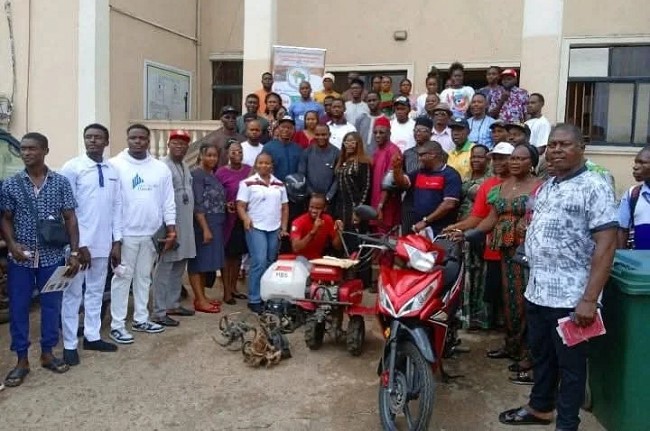
The Ministry of Agriculture and Food Systems as partners of the project will be distributing the biodigester to the farmers.
People want different things out of their cities… The last thing you want are people who are uncaring and disinterested in their cities. That is when you get true neighbourhood decline” (W. Paul Farmer, APA, CEO)
For those who grew up in Lagos between the fifties and the seventies, a vivid recollection of Lagos Island then brings back nostalgic feelings and the pride of a well-governed municipality where basic urban services were held in high esteem and provided regularly.
A Lagos Island street
Urban security, provision of potable water, and zero tolerance for a filthy environment were the hallmarks of the municipal government. Erected water taps, locally called “idi odo”, were common urban features of public water supply for residents whose buildings were not connected to the water mains from the Lagos municipal government of yore, Lagos Town Council.
Environmental pollution was a rarity. Most of the frontage of the residential houses along the popular streets was landscaped with beautiful flowers. Greenery was encouraged and voluntarily imbibed by the city residents. Property owners did routine maintenance on their properties, and door-to-door waste collection was a regular basic service.
The fear of city crime was remote because the city government prioritized security, while neighbours were their brother’s keepers. Generally, city living was peaceful and less stressful.
The current situation reports on a set of popular streets in Lagos
Fast-forward to the current city situation in comparison to the past situation described above, and let us do a comparative analysis of the following popular roads in Lagos, identified for this discussion, namely:
Lewis Street
Compared to the 50s, 60s, and 70s, the present Lewis Street has been turned into a linear market where traders display their goods on both sides of the road with impunity. The road width has been drastically reduced, thereby obstructing the smooth flow of traffic. Traders of all hues compete with motorists, while mobile water vendors, wheelbarrows in tow, dangerously meander among teeming pedestrians and motorists at great risk. The street is jocularly referred to as “Sandgrouse Market Phase II,” in reference to the nearby government-approved local market.
At the northern end of the street, close to Obalende, is a rowdy motor park for the ubiquitousDanfo bus operators. They contribute significantly to the ongoing degradation of the public open space that has been improvised as a roadside motor park. The waste generated daily by the Danfo operators poses a challenge for LAWMA to manage.
As constituted, Lewis Street has completely lost its past allure and serenity as a convenient motorway due to official neglect and citizens’ crass indiscipline.
Igbosere Street
This street runs parallel to the famous City Hall, a landmark building on Lagos Island. It is currently being used as an alternative road market. The generous open space along the road, preserved for landscaping, is an eyesore! The ungoverned open space is illegally occupied by keke maruwa mechanics, furniture sellers, livestock sellers, building material vendors, and sundry economic activities near the Lagos State court houses, where noise pollution is strictly prohibited.
Two motor parks are located on this road. One is at the side of the City Hall, and the other is at the junction of Igbosere/Moloney Streets. Both motor parks are spontaneous developments without official authorisation. Both incompatible land uses are unsightly and environmentally disruptive.
Moloney Street and Environs
Moloney Street is a significant feeder road on Lagos Island. The road is linked to other secondary roads, namely: King George V Street, Campbell Street, Igbosere Street, Hawley Street, Beckley Street, and nearby short alleys. It is a popular street leading to many historic government buildings, institutions, social clubs, playgrounds, schools, courts, and museums.
The street is within walking distance of the Tafawa Balewa Square( a national parade ground), the old Parliament building, the 25-storey Independence iconic building, and the former headquarters of the Federal Ministry of Works and Housing, former Nigeria Army Headquarters, Supreme Court, Lagos State Court houses, former Nigeria Police Headquarters, Lagos Island Club, Lagos Lawn Tennis Club, Yoruba Tennis Club, The City Mall, Muson Centre, Kings College, National Museum, the JK Randle Centre and Obalende Transport Hub.
Also on this street is a masterpiece residential house built by the first indigenous Federal Minister of Finance, the late Chief Festus Oko-tie Ebo, who was assassinated during Nigeria’s first military coup on January 15, 1966.
The state of Moloney Street currently is better described as tohu bohu(a state of extreme confusion and disorder-a bedlam). The road is usually inundated by an army of fruit vendors, roadside local eateries popularly known as buka, fresh fish sellers, redneck street urchins, and agberos (motor boys) who constitute a security risk to both pedestrians and motorists who use Moloney Street daily.
The environment around the FMWH within the same area under review cannot be overlooked. The area is disorganized and untidy, as a result of illegal occupants who engage in various trading and rogue activities, deleterious to the environment.
The least expected invasion is the open space directly in front of the Kam Salem Building, the former Nigeria Police Headquarters, where trading activities are active despite the security implications! Two motor parks are located on Moloney Street, with no plausible justification or official approval. They are mainly responsible for the constant public chaos and insecurity on this particular road.
Beckley and King George V Streets
The two streets are “sore thumps” in the vicinity of Moloney Street. Both are congested with itinerant traders who intentionally occupy the street space despite the inconvenience to road users. On Beckley Street are various wooden cubicles attached to the perimeter fence of the Kam Salem police building, mostly used as barbing salons, while small make-shift containers are also used as mobile shops. Itinerant fruit vendors find succor on this street to sell their edible products.
On King George V Street, the scenario is worse. Visible are strings of wooden and mini steel containers attached to the perimeter fence of the YWCA building, where trading goes on unregulated. The open space was deliberately occupied without government approval. A shop owner on that street permanently parked a truck that occupies half of the road without consideration for other road users. Why such inappropriate behavior missed the prying eyes of KAI officials beggars’ belief.
While I was about to conclude this piece, a video clip was sent to me through social media titled “Why Are Africa’s Cities the UGLIEST in the World?” Lagos was featured negatively. The reasons the narrator gave for weak urban management in African cities are tenable, cogent, and instructive. They apply to the Lagos situation. Interested readers can search for the video clip with the same title on YouTube.
A need for action
If Lagos is truly the Centre of Excellence, the State government must walk the talk and be committed to implementing strategies that promote/enhance city aesthetics. But the caveat is: as noted by Larry Bossidy (co-author of Execution: The Discipline of Getting Things Done), strategies are intellectually simple, but the implementation is not. Any good thoughts or ideas without action are meaningless.
Therefore, the Lagos State Government must demonstrate the political will to improve the quality of life in the megacity. The government must have zero tolerance for indiscipline, corruption, lethargy, and venality.
The duo of Engr. Tokunbo Wahab, the incumbent Commissioner for Environment and Water Resources, and Dr. Olayinka Olumide, Commissioner for Physical Planning and Urban Development, have a yeoman’s job to do in restoring sanity to Lagos streets and preventing further flagrant misuse.
The first step is to beam a searchlight on all the Lagos Island streets mentioned in this piece. Ban all motor parks and roadside markets with immediate effect, and restore order to the vicinity. They should facilitate and relentlessly promote friendly streets with clean, walkable, and eco-friendly facilities. LASPARK should plant trees in ungoverned public open spaces to prevent misuse and sudden takeover by itinerant traders.
Motor parks are permitted only in designated areas, not haphazardly on the streets as is currently being done.
KAI must intensify monitoring along the streets and prohibit any obstructive developments against traffic flow. Let KAI be upgraded toKHAI (Kick Harder Against Indiscipline) as a new public enlightenment mantra for citizens’ self-control, environmental cleanliness, and city aesthetics. Enforcement of environmental regulations should not be an option. It should be non-negotiable, as exemplified in Kigali, Rwanda, Africa’s cleanest city, or in Singapore, a biophilic city (a city in the garden).
Finally, on a cautionary note: If a city law is not obeyed, it gives room for anarchy. And a city that will not say “NO” to anything will get the worst of everything.
By Tpl. Yacoob Abiodun, Planning Advocate, Chicago, IL, USA
Climate experts led by Centre for Climate Action, Innovation and Engagement, has launched the Climate Action Index (CAI), a public dashboard designed to assess climate risk exposure and readiness across Nigeria’s 36 states and the Federal Capital Territory (FCT).
Mr. A’aron John, Founder and Programme Director of the Centre, disclosed this in a statement made available on Monday, February 9, 2026, in Lafia, Nasarawa State.
John, a Climate Policy Researcher, said that the index provides data-driven insights to support effective subnational climate action and accountability.
A’aron John, Founder and Programme Director, Centre for Climate Action, Innovation and Engagement
He explained that the CAI was developed in collaboration with climate and accountability experts, including Dr Abel Owotemu, Founder of the Greenage Development Fund, and Mr. Umar Yakubu, Executive Director of the Centre for Fiscal Transparency and Public Integrity.
According to him, the index is built on an initial research paper, a nationwide baseline assessment and a stakeholder validation workshop that engaged more than 80 participants drawn from government, civil society and the private sector.
John said that the CAI focuses on governance and execution risks, such as policy alignment, implementation signals and transparency, rather than on climate hazards alone.
“The first baseline assessment reveals wide variations in climate readiness at the subnational level and identifies transparency gaps as a major constraint to effective climate action and access to climate finance,” he said.
He added that, by making the data publicly accessible, the index would support federal coordination and help track state-level contributions to Nigeria’s Nationally Determined Contribution (NDC) commitments.
The convener expressed confidence that the CAI would serve as a practical tool for policymakers, development partners and citizens to monitor progress and strengthen climate governance across the country.
He said that the dashboard could be accessed through www.climateactionindex.org
Corporate Accountability and Public Participation Africa (CAPPA) has commended the Federal Government on the commissioning of Nigeria’s first dedicated Polychlorinated Biphenyls (PCBs) treatment facility in Abuja.
The facility, established under the supervision of the Federal Ministry of Environment, in collaboration with the Global Environment Facility (GEF) and the United Nations Development Programme (UNDP), was inaugurated on Thursday, December 18, 2025, in Abuja.
CAPPA, in a statement, noted that the facility represents a critical infrastructure milestone in Nigeria’s national chemicals and waste management framework.
Malam Balarabe Lawal, Minister of Environment (left) with Mrs Elsie Attafuah, Resident Representative United Nations Development Programme (UNDP), at the opening of the PCBs Treatment Facility, situated in Sheda Science and Technology Complex (SHESTCO), Abuja
Polychlorinated biphenyls are persistent organic pollutants (POPs) characterised by high toxicity, environmental persistence, bioaccumulation, and long-range environmental transport. PCBs are scientifically linked to carcinogenicity, endocrine disruption, immunotoxicity, neurodevelopmental impairment, and reproductive disorders, in addition to causing significant adverse impacts on terrestrial and aquatic ecosystems.
Their improper handling, storage, or disposal results in widespread contamination of soil, surface and groundwater, and the food chain, posing serious risks to public health and ecological integrity.
The statement observed that Nigeria, being a Party to the Stockholm Convention on Persistent Organic Pollutants, is legally obligated to eliminate the use of PCBs in equipment, ensure the identification and labelling of PCB-containing materials, and guarantee their environmentally sound management (ESM) and final disposal.
“The commissioning of this treatment facility, therefore, constitutes a practical demonstration of Nigeria’s compliance with both its international treaty obligations and its domestic regulatory framework under the PCBs Control and Disposal Regulations, 2020,” it added.
Commenting on the development, the Executive Director of Corporate Accountability and Public Participation Africa, Akinbode Oluwafemi, stated that the establishment of the PCB treatment facility “validates the spirit of the National Environmental (PCBs Control and Disposal) Regulations, 2020, and signals the Federal Government’s readiness to operationalise environmentally sound management systems for hazardous chemical wastes in Nigeria.”
He emphasised that the facility will not only strengthen national capacity for the treatment, decontamination, and final disposal of PCB-containing equipment and wastes, but will also greatly assist in reducing occupational exposure, preventing environmental releases, and mitigating long-term public health risks.
However, the CAPPA head stressed the need for the Federal Government to ensure full, systemic compliance with all provisions of the Regulations, including stringent controls on the manufacture, importation, distribution, use, storage, transportation, discharge, and disposal of PCBs and PCB-containing products. He further called for robust inventory development, monitoring, reporting, enforcement mechanisms, and sanctions to guarantee effective implementation.
Oluwafemi also urged the Federal Government to prioritise the scaling up, sustained investment, technical upgrades, and long-term operational sustainability, noting that adequate funding and skilled personnel are critical to meeting national PCB phase-out targets, and realising the environmental and socio-economic benefits associated with the facility.
Finally, CAPPA reaffirmed its commitment to advancing environmental governance, chemical safety, and public participation, and to engaging relevant stakeholders to ensure Nigeria’s transition towards the complete elimination of PCBs in an environmentally sound and socially responsible manner.
President, Pan African Vision for the Environment (PAVE), Mr. Anthony Akpan, has been invited to serve as an expert member of the Marine Genetic Resources (MGR) Scientific Advisory Committee.
The Committee is established under the Future Ocean Programme – Pillar 3 titled Ocean Observation Technologies of the Sasakawa Global Ocean Institute of the World Maritime University (WMU).
Mr. Akpan is the only African serving on the committee.
Mr. Anthony Akpan, President of PAVE
The Advisory Committee aims to:
Facilitate scholarly collaboration among leading experts working on MGRs.
Provide guidance on the ongoing work of the Working Group on Data for Ocean Biodiversity
Address the challenges that may arise between the global efforts for ocean data and the Clearing House Mechanism of the BBNJ Agreement.
The Future Ocean Programme is concerned with the future of ocean governance over a 50-year span (2024 – 2074). This future will be determined by how the world tackles the triple planetary crisis of catastrophic loss of biodiversity, human induced climate change, and pollution of the marine environment including plastic pollution.
The programme will deliver both scholarly outcomes and policy-relevant and accessible research outputs, making positive impacts on regional and international processes relating to the protection and sustainable use of areas beyond national jurisdiction, while building regional and national capacity.
In the early 1990s, millions of hardworking Nigerians struggled to find potable water while out on the street on their daily hustle. To solve this problem, some entrepreneurs started to hawk chilled water in thin transparent white nylon bags known as “ice pure water” and sold them commercially. No one cared if the water was really “pure”, we just called them “pure water” in nylons. Yodi was what we popularly called them in Lagos, I grew up drinking some of them.
Then in 1994, Sir Isaac Adeagbo Akinpade, regarded as Pioneer entrepreneur, introduced this better packaged water in low-density polyethylene nlyons. “DIL Pure Water” initiated by Deagbo Industries Limited in Ibadan, Oyo State, soon made its way to Sagamu and then Lagos, where it was quickly adopted and replaced the earlier pure water in yodi nylons.
Adejoke Lasisi
Owing to its affordability, in time, the industry grew exponentially. The annual turnover of the industry has been estimated in excess of N20 billion. In 2017, NAFDAC reported that Nigerians consumed 10 million sachets of pure water daily. 10 million used sachet! Needless to say, with this growth came the problem of waste.
For decades, the pure water sachet was both a needed solution to an everyday problem, and also a systemic menace to environmental sanity. 32 years after it still is a problem – and a solution. Cheap, accessible, and widely consumed, it remains the primary source of drinking water for millions of Nigerians. But once the water is gone, the sachet becomes invisible, discarded, ignored, and absorbed into the landscape of drains, dump sites, and waterways – many channelled by flood into the oceans.
This is where Adejoke Lasisi begins her work. She has chosen to confront one of Nigeria’s most persistent waste streams head-on. Rather than treating discarded sachets as an environmental afterthought, she treats them as raw material, objects with untapped value, waiting to be reimagined.
An upcycler, Lasisi is an Ibadan-based Nigerian fashion designer and environmentalist.
During a recent documentary photoshoot by Adebote Mayowa documenting Adejoke’s work, they moved deliberately between two worlds: the dump site, where sachet waste accumulates in staggering volumes, and the finished garment, elegant, intentional, and undeniably beautiful.
At the dump site, these sachets exist as symbols of neglect: low-density polyethylene nylons that will take 10 to 40 years to degrade, clogging drainage systems, worsening floods, and fragmenting into microplastics that threaten ecosystems and human health. It is from places like these that Adejoke sources some of her materials, recovering what society has already discarded.
Using over 4,000 discarded pure water sachets, Adejoke transformed waste that once polluted the environment into a striking dress, one that challenges how we define fashion, value, and sustainability. The contrast between origin and outcome is intentional.
As Nigeria advances conversations around the circular economy, Adejoke’s work offers a grounded, human-scale example of what circularity looks like in practice. At its core, circular economy is about eliminating waste by keeping materials in use for as long as possible, and this is exactly what her work achieves.
While many recycling efforts focus on high-value plastics or export-driven recovery systems, sachet nylons often remain overlooked. Adejoke’s intervention fills this gap, demonstrating that even the most undervalued materials can be reintegrated into the value chain through creativity, design, and intention.
Her work also intersects with another global challenge: the environmental cost of fast fashion, which contributes nearly 10 percent of global carbon emissions. Through her fashion practice and the Planet 3R initiative, Adejoke offers an alternative model, one rooted in reuse and environmentally responsible processes. Her work is not only creating fashion, she is advancing Nigeria’s circular economy, one discarded sachet at a time.
Bearing Witness Through Documentary Practice
As a documentary photographer, my role in this process is simple but important, to bear witness. To document the journey of materials from dump site to design, and to visually trace how innovation, creativity, and environmental responsibility intersect in real lives and real places.
Photography allows these stories to travel, to exhibitions, public conversations, and global platforms, expanding the reach of circular economy beyond technical language into something people can see, feel, and understand.
TotalEnergies has signed two new long-term Power Purchase Agreements (PPA) to deliver 1 GW of solar capacity – equivalent to 28 TWh of renewable electricity over 15 years – to supply Google’s data centres in Texas.
The power will be generated from TotalEnergies-owned sites currently under development in eTexas: Wichita (805 MWp) and Mustang Creek (195 MWp), with construction scheduled to begin in Q2 2026.
A TotalEnergies-owned solar power generation site
Bringing reliable new power capacity for AI – now
These PPAs totaling 1 GW complement separate gross PPAs of 1.2 GW recently secured by Clearway, a California-based renewables company 50% owned by TotalEnergies, to support Google’s data centres across the ERCOT (Texas), PJM (Northeast), and SPP (Central) markets.
The Wichita and Mustang Creek solar farms will generate significant benefits for local communities. Several hundred jobs will be created during construction, and substantial tax revenues will help fund public services throughout the lifetime of the projects.
“We are pleased to sign these agreements to supply renewable electricity to Google in Texas, representing the largest renewable PPA volume ever signed by TotalEnergies in the United States”, said Marc-Antoine Pignon, Vice President Renewables U.S. for TotalEnergies.
“This highlights TotalEnergies’ strategy to deliver tailored renewable energy solutions that support the decarbonization goals of digital players, particularly data centres. Through this PPA, TotalEnergies is also addressing the challenges of land availability and power supply for data centers by enabling large-scale colocation opportunities,” he added.
“Supporting a strong, stable, affordable grid is a top priority as we expand our infrastructure,” said Will Conkling, Director of Clean Energy and Power at Google. “Our agreement with TotalEnergies adds necessary new generation to the local system, boosting the amount of affordable and reliable power supply available to serve the entire region.”
TotalEnergies has a gross capacity portfolio of 10 GW of onshore solar, wind and battery storage assets in operation in the United States, including 400 MW in the PJM market in the Northeast of the country, and 5 GW in the ERCOT market in Texas.