As part of its efforts to commemorate the 2026 Easter celebration, the Msbon Foundation, a non-profit organisation, has distributed various gifts, including toys and food items, to the Abuja Children’s Home.
Earlier in March, the foundation conducted a capacity-building exercise at the home, aimed at training and empowering women and young girls to mark this year’s International Women’s Day.
During a visit to the home on Friday, April 3, 2026, in Karu, Abuja, the foundation’s founder, Miss Chikodi Nwanisobi, explained that the initiative is a part of the organisation’s mission to reach out to children, particularly those in vulnerable communities across Nigeria, showing love, care, and support during this year’s Easter festivity.
Founder of the Mbson Foundation, Miss Chikodi Nwanisobi, with children from the Abuja Children’s Home during the foundation’s visit to the home in Karu, Abuja, to commemorate the 2026 Easter festival.
She elaborated that, beyond donating foodstuffs and toys, their primary goal in organising the event was to create moments of joy, connection, and reassurance for the children. Easter embodies hope, sacrifice, and giving, and her foundation believed it was the ideal opportunity to remind the children at Abuja Children’s Home that they are seen, valued, and loved.
“Our message to the Abuja Children’s Home is one of love and encouragement: you are not alone, and there are people and organisations who genuinely care about your wellbeing and future,” she stated.
In response to a question regarding the challenges her organisation faces and the areas in which they seek assistance, she mentioned that one of the primary issues they encounter is a shortage of resources, especially given the seriousness of the need.
Miss Nwanisobi explains that while there are many people and communities in need of assistance, limited financing, materials, and logistics might hinder their reach. Another disadvantage she mentioned was the problem of guaranteeing sustainability, as empowerment requires ongoing engagement rather than one-time solutions.
As a result, the head of the foundation made an appeal, stating that they would welcome any help in areas like sponsorship and finance, partnerships and collaborations, and access to materials and resources for remodelling their environment, which includes the children’s playground.
“With the right support, we can expand our reach and create even more lasting impact,” she asserts.
She urged other organisations to see giving as something more than just seasonal festivities and to focus on maintaining consistent effort. Furthermore, it should be intentional, long-term, and focused on empowerment rather than charity, because “even the smallest act of kindness can make a lasting difference.”
“We would focus more on empowerment rather than dependency,” she responded when asked what she would do differently if given the chance to address poverty-related issues in the country and beyond.
To do these, she suggested investing in skill development programmes, providing healthcare and medical outreach, providing access to education and mentorship, and establishing employment and business opportunities.
“We believe that when people are equipped with the right skills and opportunities, they can transform their lives and uplift others,” she asserts.
In closing, the humanitarian advocated for community-based solutions in which people are active participants in their growth and development rather than passive beneficiaries.
In her reaction to the initiative, Abuja Children’s Home administrator, Quincy Patrick, expressed her gratitude to the foundation for its kind gesture.
She also prayed that God would continue to reward the foundation for consistently keeping the Children’s Home in mind and for providing gifts and support for the women and children.
“The children were happy; as they chanted, ‘We love you, Msbon Foundation’ to the Msbon Team, prayed with the team and also appreciated the foundation for always coming through,” the home administrator revealed.
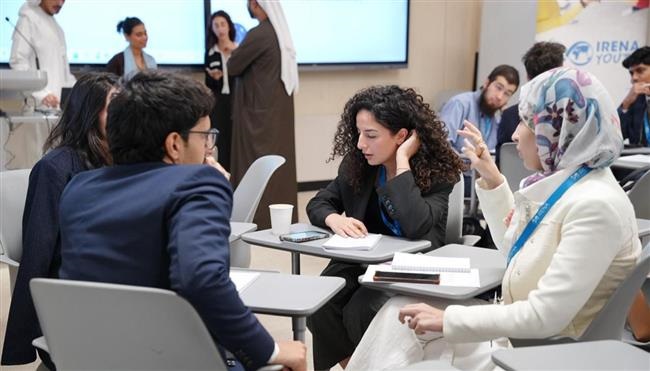
The International Renewable Energy Agency (IRENA) launched the fourth edition of the IRENA NewGen Renewable Energy Accelerator (NewGen), aimed at supporting young entrepreneurs and innovators in driving the renewable energy transition.
NewGen provides capacity building, mentorship, and tailored support to youth-led start-ups and growth businesses that develop innovative solutions to advance renewables deployment.
The initiative is delivered with the support of the Government of the United Arab Emirates, in partnership with Social Alpha (a non-profit organisation based in India that supports social start-ups) and Enel Foundation (a global non-profit think-tank focused on energy transition and climate change).
NewGen provides capacity building, mentorship, and tailored support to youth-led start-ups
Both partners serve as knowledge partners, contributing technical expertise and mentorship to help participants turn their ideas into scalable solutions.
Building on the success of three editions, the 4th NewGen aims to continue its impact. Last year saw 13 startups from emerging markets – including six women-led ventures – take part in the programme. The 2025 edition produced three IRENA Rising Stars Award winners whose solutions included battery-swapping networks (Bangladesh), solar-powered cooling technology and edible coatings (Uganda), and artificial intelligence (AI)-driven precision farming (Zambia).
Reflecting on her experience, last year’s participant, Stuti Kakkar, from Meine Energy (India), said: “The IRENA NewGen Accelerator helped us sharpen our understanding of renewable energy markets by giving us access to global founders, expert insights, and market perspectives that clarified where our technology can create the greatest impact in enabling the clean energy transition.”
Oliver Mbuzi from Netagrow (Zambia), last year’s third-place winner, added: “The IRENA NewGen Renewable Energy Accelerator has been a transformative journey for Netagrow, strengthening our clean-energy and AI-driven approach to climate-smart agriculture by connecting us with global renewable energy experts, mentors, and partners.
“The programme enabled us to scale solutions that empower over 10,000 farmers with energy-efficient, climate-resilient farming systems that contribute to the global energy transition and sustainable food production.”
Open to start-ups from around the world, NewGen seeks innovative solutions across three key areas: renewable energy technologies, climate adaptation technologies, and climate mitigation technologies. Applicants must be between 18 and 35 years old, with the call for applications running from April 6 to May 3, 2026. Selected participants will be announced on May 18, 2026.
In a period of four months, participants will take part in a hybrid acceleration programme featuring a tailored curriculum in renewable energy and clean technology, expert-led webinars and workshops, and dedicated mentorship from IRENA experts. They will also gain access to pitching events, investment matchmaking, and the chance to be recognised through the IRENA Rising Stars Award.
The Accelerator reflects IRENA’s broader commitment to accelerating a global energy transition through renewables, led by youth. For more information and to apply, please visit NewGen Renewable Energy Accelerator. Applications close on May 3, 2026.
Donor countries have pledged an initial $3.9 billion to the Global Environment Facility (GEF) for its ninth replenishment cycle, in a powerful demonstration of commitment to meeting international environmental goals through multilateral cooperation.
The significant funding will enable the GEF to bolster investment in nature-positive development, helping developing countries address their most urgent priorities and generate global environmental benefits that help people as well as ecosystems.
Further pledges in support of a robust and ambitious four-year financing round are expected by the GEF Council meeting at the end of May, when the final replenishment package will be approved.
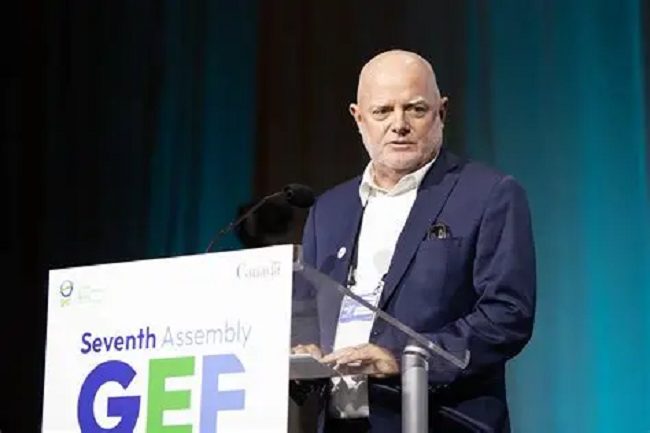
Claude Gascon, Interim CEO and Director of Strategy and Operations, GEF
“This replenishment sends a clear message: the world is not giving up on nature even in a time of competing priorities. Our donor countries have risen to the challenge and made bold commitments towards a more positive future for the planet. The coming four years of the GEF-9 cycle will reflect this high-ambition push to achieve the 2030 environmental goals,” said Claude Gascon, Interim CEO and Chairperson of the GEF.
“I especially want to thank our donors for their endorsement of the multilateral environmental agreements as important vehicles of international cooperation when it comes to planetary health, and for their ambitious investment in the GEF as an organisation that plays a unique role bringing countries together and supporting lasting results,” added Gascon.
The GEF-9 investment cycle will cover the period from July 2026 to June 2030. The GEF serves as a financial mechanism of six international environmental conventions: Convention on Biological Diversity (CBD), United Nations Framework Convention on Climate Change (UNFCCC), Stockholm Convention on Persistent Organic Pollutants, UN Convention to Combat Desertification (UNCCD), Minamata Convention on Mercury, and the Agreement on Marine Biological Diversity of Areas beyond National Jurisdiction (BBNJ Agreement).
“Germany is proud to continue its strong support for the GEF. We are convinced that we need multilateral cooperation more than ever to protect our planet for future generations. Environmental action and sustainable development have to go hand in hand. In GEF-9, we see Germany’s priorities very well reflected: innovative finance for nature and people, better cooperation with the private sector, and stable resources for the most vulnerable countries,” said Niels Annen, State Secretary, Federal Ministry for Economic Cooperation and Development of Germany.
“As Germany, we’re proud to do our part and ensure that the GEF has the necessary core funding to implement these priorities until 2030 – in a joint effort with other contributing countries from the Global North and the Global South. Together, we are investing in the global environment and a just and sustainable world for all,” added Annen.
The replenishment comes at a pivotal juncture. Global assessments show rapid and alarming declines in biodiversity and ecosystems, with the planet approaching critical tipping points. The new funds will support developing countries – those most vulnerable to environmental degradation – in integrating the value of nature into their national development plans, budgets, and economies, while catalyzing private finance to close the persistent environmental financing gap.
Four overarching priorities will define the ambition and approach for the GEF over the next four years:
Integration and Integrated Programs: GEF-9 integrated programmes will support countries in shifting five key systems – nature, food, urban, energy, and health – from regimes that drive degradation to alternative ones that safeguard the planet and support the wellbeing of humanity by integrating the value of nature in production and consumption systems.
Blended Finance: GEF-9 will have a larger blended finance global programme and an effort to mainstream blended finance across the GEF trust fund with an aspirational target of programming 25 percent of its resources to mobilise private capital.
Whole-of-Government and Whole-of-Society Approaches: GEF-9 will promote nature-positive governance to move from policies with an overall negative impact on nature towards a nature-positive world while engaging civil society organisations, the private sector, youth, and women as partners in the planning and execution of GEF-supported initiatives.
Robust Funding for LDCs and SIDS, and a Significant Increase in Support to IPLCs: GEF-9 has a goal of allocating 35 percent of its resources for the Least Developed Countries and Small Island Developing States, and 20 percent to support Indigenous Peoples and local communities.
“The environmental crises we face are accelerating. GEF-9 is a vote of confidence in an institution that has consistently delivered results at scale. This replenishment will sharpen the GEF’s focus on impact, drive greater efficiency, and mobilise private finance alongside public investment.
“It will also strengthen support to SIDS and LDCs and give recognition to the importance of supporting Indigenous Peoples and local communities. In a world where every dollar must count, the GEF continues to demonstrate it is worth the investment,” said Richard Bontjer, Co-Chair of the GEF Council.
“Spain expresses its support for the outcome of the negotiations on the ninth replenishment of the GEF. Our aim is to remain consistent with the role Spain has historically played in international environmental matters and to fulfil our country’s commitment to effective multilateralism,” said Inés Carpio San Román, General Director of International Finance, Ministry of Economy, Trade and Business of Spain.
“Mexico welcomes the ambitious vision of GEF-9 and reaffirms its commitment to supporting impactful, country-driven solutions that address global environmental challenges and safeguard nature and people,” said the Mexican Ministry of Finance.
“The GEF CSO Network welcomes the GEF-9 replenishment and its commitment to strengthening a whole-of-society approach. We particularly value the goal of allocating 20 percent of resources to support Indigenous Peoples and local communities, alongside expanded engagement with civil society, women, and youth,” said Faizal Parish, Chair, GEF CSO Network.
“The GEF is strengthening trust and meaningful partnerships with Indigenous Peoples and local communities through improving how funding is delivered and structured so Indigenous Peoples are placed at the center of decision-making,” said Aliou Mustafa, GEF Indigenous Peoples Advisory Group (IPAG).
The 71st GEF Council meeting will be held in Samarkand, Uzbekistan, from May 31 to June 3, 2026. The meeting will take place in advance of the Eighth GEF Assembly, when individual country pledges will be publicly announced.
The NNPC Exploration and Production Limited (NEPL)/Seplat Energy Joint Venture has commissioned two Science, Technology, Engineering, Arts and Mathematics (STEAM) laboratories built at the Ogbe and Uselu Secondary Schools in Oredo and Ikpoba Okha Local Government Areas of Edo State.
The laboratories, which were commissioned on Wednesday, April 8, 2026, in Benin, the Edo State Capital, aim to drive educational sustainability in the state and promote excellence amongst students.
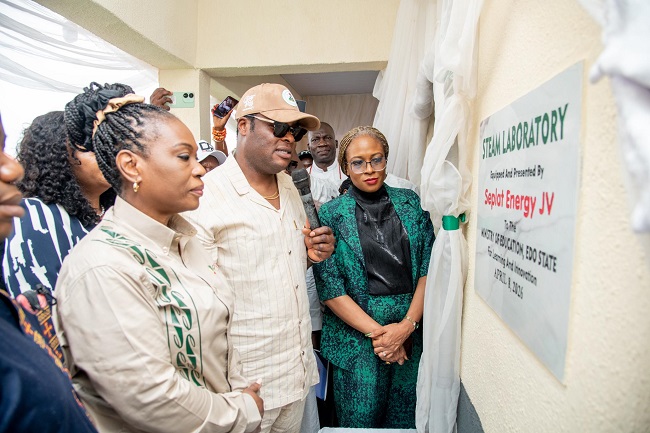
Director, External Affairs & Social Performance, Seplat Energy, Chioma Afe; former Commissioner for Education, Edo State, Dr. Paddy Iyamu; General Manager, Corporate Social Investment & Social Performance, Seplat Energy, Esther Icha; and other dignitaries at the commissioning of two Science, Technology, Engineering, Arts and Mathematics (STEAM) laboratories by the NEPL/Seplat Energy Joint Venture built at the Ogbe and Uselu Secondary Schools in Oredo and Ikpoba Okha Local Government Areas of Edo State … on Wednesday
Speaking at the commissioning, Mrs. Chioma Afe, Director, External Affairs and Social Performance, Seplat Energy Plc, said the Joint Venture has so far built and commissioned nine STEAM Laboratories in the state, thus increasing the numbers of STEAM laboratories so far established in Edo and Delta states to 14.
She said the STEAM Labs were part of the organisation’s commitment to sustaining education in Edo and Delta states, whilst assuring that the same development would soon be extended to other states where the company operates.
According to her, the Joint Venture had successfully executed various educational programmes in the states, which include the Seplat Teachers Empowerment Programme, the Pearls Quiz competition, inclusive of the STEAM Labs and Access to Energy Projects.
Afe said: “The STEAM Lab is one where we want to further inculcate STEAM within the curriculum of basic education and secondary schools.
“The NNPC Limited and Seplat Energy took a decision years ago to start to put in place STEAM Labs. This allows the children and the teachers to practically use all the learnings that they have taken from the various activities and programmes.”
Afe added that the laboratories are equipped with state-of-the-art equipment and solar power to ensure that the centres have 24- hour constant power.
She commended the Edo State Government for providing the enabling environment, and NEPL for their support in the establishment of the laboratories.
While assuring that the gesture would be extended to other parts of the state, she, however, urged the teachers and students of the benefiting schools to make judicious use of the facilities as well as protect them against misuse and vandalism.
In the same vein, the Managing Director of NEPL, Mr. Nicolas Foucart, said the laboratories are designed to promote practical learning, creativity, critical thinking, and innovation in Science, Technology, Engineering, Arts, and Mathematics.
Foucart, represented by Mr. Reginald Duke, Lead Community Relations Western Assets, NEPL, noted that the expectation of the management is that the laboratories would help equip students with relevant skills to succeed in a fast-changing world.
He also added that the facilities in the schools reflected the NEPL/Seplat JV shared commitment to quality education and sustainable community development.
“We believe that investing in education is one of the most meaningful ways to shape the future of our young people and our nation,” he stated.
Dr. Paddy Iyamu, a former Commissioner for Education, Edo State, described the STEAM Labs as one of the best investments any investor can make in the life of the Nigerian children.
He urged other corporate organisations in the state to emulate Seplat in fulfilling their Corporate Social Responsibilities.
He said: “Please, let’s celebrate and appreciate the leadership of Seplat Energy. Together, you have also helped us in training our teachers. The list is endless. We have other companies that drill oil in the state, but when it comes to corporate social responsibility they fail.
“The NEPL/Seplat JV has always responded positively and responsibly in the environment where you operate. We are grateful. On behalf of my Governor, we thank you.”
On her part, Mrs. Edith Ebomoyi, Permanent Secretary, Edo State Ministry of Education, described the Labs commissioning as a milestone in the collective and committed efforts to the future of education in the State.
In their separate remarks, the Principal of Ogbe Secondary School, Mrs. Itohanmwen Augustina and Mrs. Obaretin Osayanmo of Uselu Secondary School, commended the State Government, Seplat Energy and NEPL for the investment and promised to take ownership of the facilities against any act of vandalism.
They also promised to make judicious use of the facilities to achieve the purpose for which they are established.
No doubt, climate change is intensifying; urban expansion is steadily consuming green spaces while insecurity is creeping further into forest corridors.
Stakeholders say these concerns entail that biodiversity restoration can no longer be left to government agencies, foresters, and policy meetings alone.
Their argument is simple but urgent: if forests are to survive, the battle must move beyond forest reserves and official declarations into classrooms, neighbourhoods, churches, farms and homes.
Forest ecosystems
Recently, at this year’s International Day of Forests celebration in Ibadan, the Oyo State capital, academics, geospatial professionals, foresters and public officials acknowledged a troubling reality of Nigeria’s shrinking forests.
Available data indicates that Nigeria is estimated to have about 1,160 constituted forest reserves covering roughly 10 per cent of the country’s land area; however, studies suggest many of these reserves have been severely degraded over the decades.
Records also indicate that the country lost about 47.5 per cent of its forest cover between 1990 and 2010, placing it among nations that have experienced intense deforestation pressure.
Experts say the current forest estate remains far below the 25 per cent threshold often recommended for ecological balance and climate resilience.
In Oyo, the local picture is equally sobering.
Conservation records indicate that the state has nine gazetted forest reserves covering about 342,461 hectares, representing roughly 12.92 per cent of its land area.
Opara Forest Reserve alone accounts for about 248,640 hectares, making it by far the largest, while other notable reserves include Ijaiye, Gambari and Lanlate.
Yet, the scale of those reserves has not insulated them from pressure.
Studies reviewed by stakeholders show that forest cover in some of Oyo’s major reserves, including Opara and Igangan, declined by between 42.26 per cent and 91.21 per cent between 1990 and 2020.
The decline was driven largely by agricultural expansion, settlement growth, illegal logging and other extractive activities.
Some assessments also suggest that about half of the reserves have been affected by conversion to farmland or human habitation.
Against this backdrop, the Geo-Information Society of Nigeria (GEOSON) is pushing a new conservation model it calls “Geomentorship for Biodiversity Restoration and Monitoring”.
The model is built around an idea many speakers at the Ibadan event repeatedly emphasised: that tree planting alone is no longer enough.
For GEOSON, that thinking is already being translated into action.
Its chairman in Oyo, Mr. David Afolayan, said the society planned to plant 5 million trees within the next three years to four years, using Oyo as a pilot before scaling the initiative across the country.
“We are going to schools to plant trees, using our technology to map where the trees have been planted, using the same technology to monitor as the tree grows,” he said.
GEOSON’s response is to start where habits can still be shaped early, which is, in schools.
Stakeholders argue that if children are introduced early to environmental stewardship, spatial awareness and the practical value of trees, conservation can gradually become a culture rather than an annual ritual.
Dr Rotimi Obateru, a lecturer and researcher in the Department of Geography, University of Ibadan, said the first step must be knowledge.
According to him, Nigeria cannot effectively conserve its natural resources without first understanding what it has, where those resources are located and how they are changing under mounting environmental pressure.
“We need to first understand what we have, take inventory of our natural resources, and have deep knowledge of what we have.”
For him, inventory is only the foundation.
He said the next layer was environmental education; not just policy conversations among experts, but grassroots engagement that helped citizens understand how their daily actions affected land, water, vegetation and climate.
He identified deforestation, indiscriminate land-use transformation and poor waste management as examples of human activities steadily degrading the environment.
In a climate-stressed era, he said, the pressure on ecosystems was no longer abstract.
According to him, it is visible, cumulative and increasingly disruptive.
“We cannot control the natural, but we can control the anthropogenic, that is, our actions. We humans are the drivers of that,” he said.
Obateru also framed the issue in terms that resonated beyond environmental policy.
According to him, there is a “circular causal relationship” between humans and the environment: people shape ecological systems, and those same systems eventually shape human survival, health and livelihoods.
With reports of illegal activities around reserve corridors and the continuing pressure from sawmills and extractive livelihoods, the challenge in Oyo increasingly sits at the intersection of conservation, local economy and public safety.
This is one reason many of the stakeholders insisted that tree planting should not be reduced to symbolism.
Oyo State Commissioner for Environment, Dr Ademola Aderinto, said the scale of the challenge required not only stronger enforcement, but also wider citizen participation.
“You must realise this is not what government can do alone; there is a limit to how much government can do in terms of this,” Aderinto said.
The commissioner said the state government was engaging stakeholders and exploring stronger legislation to improve environmental compliance, forest protection and biodiversity restoration.
He also noted that Oyo was looking outward for lessons, citing countries such as Rwanda and Kenya, where environmental discipline and conservation culture were more visibly integrated into governance and daily life.
“Stronger legislation would go a long way in enforcing a lot of things,” he said.
Still, several experts at the event argued that legislation alone would not be enough unless communities began to see trees as assets rather than obstacles.
Dr Mary Ugobi-Onyemere, a philosopher and researcher in geospatial problems and prospects at Dominican University, Ibadan, urged schools, particularly at the secondary level, to become more environmentally conscious and more spatially responsive, so that conservation was not merely taught, but practised and measured.
“We must support continuous tree planting, build and sustain nurseries, map planted trees and prioritise indigenous species that stand a better chance of survival within local ecological conditions.
“We need more trees than what we deforest,” she said.
Her emphasis on indigenous species was echoed by other speakers, who cautioned against treating all tree planting as equal.
Also, Vice-Chancellor of Dominican University, Ibadan, Prof. Jacinta Opara, said restoration must be guided by science, not sentiment.
According to her, universities can support communities through research on biodiversity, ecosystem dynamics, soil conditions, threatened species and climate suitability for different trees.
She said institutions could also deploy tools such as Geographic Information Systems (GIS), remote sensing, environmental modelling and data analytics to monitor restoration efforts and determine which species should be planted in specific locations.
“Telling people to plant trees is not enough; they need to know which trees to plant, where to plant them, how far from buildings to place them, what soil they need and how to keep them alive,” Opara said.
On his part, Dr Osikabor Benson, Director of Research at the Forestry Research Institute of Nigeria (FRIN), said one of the major gaps in many conservation campaigns was the absence of aftercare.
Beyond supplying seedlings, he said the institute was willing to support schools, communities and private planters with technical guidance, including plantation management, species selection, spacing and responses to pest or insect infestation.
Benson said that fruit trees, orchards, timber species and carefully selected indigenous plants couild provide food, medicinal value, shade, carbon benefits and future income.
“A tree that cools a compound can reduce energy use. A tree that stabilises soil can protect farmland; a tree that bears fruit or yields timber can become a household asset.
“In that sense, the green economy may be one of conservation’s strongest arguments,” he said.
According to stakeholders, what is emerging from Oyo is a growing recognition that Nigeria’s forest crisis is not only about disappearing trees.
They say unless homes, schools, churches, farms and neighbourhoods begin to treat trees as part of everyday life, the restoration effort may remain smaller than the crisis it seeks to confront.
For conscious environmentalists in Oyo, the future of forests may depend not only on what happens in reserves and policy circles, but on teaching the next generation that trees are essential for survival, not just scenery.
The National President Association of Waste Managers of Nigeria (AWAMN), Dr Olugbenga Adebola, has described sustainable infrastructure as critical to achieving efficient and reliable waste management systems in Nigeria.
Adebola said this at Infra360 sessions at the West Africa Infrastructure Expo at the Landmark Event Centre on Wednesday, April 8, 2026, in Lagos.
He spoke on the topic: “Sustainable Infrastructural Development- The Impacts on Integrated Waste Management Systems.”
National President Association of Waste Managers of Nigeria (AWAMN), Dr Olugbenga Adebola (second left), with some dignitaries at the West Africa Infrastructure Expo in Lagos
He said waste management must function as an integrated system, where collection, transportation, recycling, and treatment processes operate seamlessly to deliver optimal results.
He noted that inefficiencies at disposal sites often disrupt operations, causing delays in waste collection and reducing overall service effectiveness.
The expert said with proper infrastructure, waste collection systems could achieve faster turnaround times and improved service delivery.
Adebola said waste should be viewed as a resource rather than mere refuse.
He described waste as a material in the wrong place or in the wrong hands, noting that it holds economic value when properly managed.
Adebola emphasised the importance of household waste bins, describing them as essential infrastructure for promoting source segregation at the point of generation.
He said source segregation enhanced recycling efficiency and reduces contamination in the waste management process.
He highlighted the role of recycling facilities, composting plants, and waste-to-energy systems in reducing landfill volumes and promoting a circular economy.
He added that improved waste traceability ensured accountability and increases recycling potential, thereby reducing environmental pollution.
According to him, effective waste management plays a critical role in protecting public health and preventing disease outbreaks.
He warned that poor waste handling could lead to blocked drainage, stagnant water, and the spread of vector-borne diseases.
He also cautioned against open burning of waste, saying that it releases toxic substances harmful to human health.
Adebola called for increased investment in infrastructure, including waste collection vehicles, transfer loading stations, and sanitary landfill facilities.
He stressed the need for strong regulatory frameworks, policy consistency, and enforcement to ensure sustainable waste management practices.
He also underscored the importance of political will in driving reforms and achieving long-term environmental sustainability.
He added that sustainable infrastructure was essential for building a resilient, efficient, and environmentally responsible waste management system.
The IMF, World Bank Group and the World Food Programme(WFP) have pledged coordinated support to countries impacted by the Middle East crisis, targeting economic stability and food security.
This s is contained in a joint statement issued on Thursday, April 9, 2026, in Abuja.
According to the statement, the heads of the institutions met to discuss the global economic and food security impacts of the war in the Middle East.
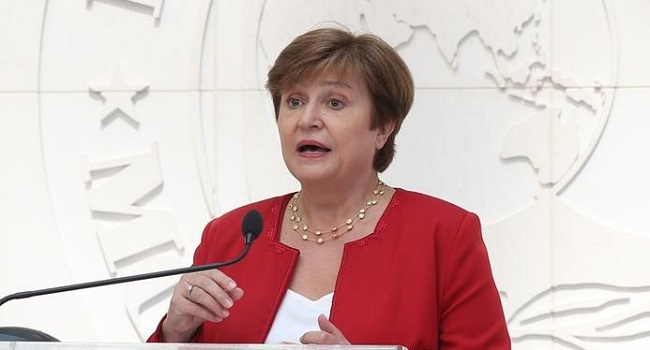
Kristalina Georgieva, Managing Director, International Monetary Fund (IMF)
The institutions said the Middle East war was upending lives and livelihoods in the region and beyond.
They said the war had already triggered one of the largest disruptions to global energy markets in modern history.
“Sharp increases in oil, gas, and fertiliser prices, together with transport bottlenecks, will inevitably lead to rising food prices and food insecurity.
“The burden will fall most heavily on the world’s most vulnerable populations, particularly in low‑income, import‑dependent economies.”
They said spikes in fuel prices and potential sharp increases in food prices were especially concerning where fiscal space was constrained and debt burdens were already high.
This, they said, had led to a reduction in governments’ ability to protect vulnerable households.
“Our institutions will continue to monitor developments closely and coordinate the use of all available tools to support those impacted by the crisis.
“In accordance with our respective mandates, and building on existing response mechanisms, we will provide support to safeguard lives and livelihoods.
“We will also lay the foundations for a resilient recovery that delivers stability, growth and jobs.”
The Ogun State Waste Management Authority (OGWAMA) has arrested and prosecuted 108 alleged violators of environmetal laws in Abeokuta.
The Special Adviser to the Governor on OGWAMA, Farook Akintunde, disclosed this in a statement on Wednesday, April 8, 2026, in Abeokuta, the state capital.
He said that the offenders were apprehended by the agency’s enforcement team in various parts of the state capital for dumping refuse on roadsides, public place and medians, in violation of the state’s waste management law.
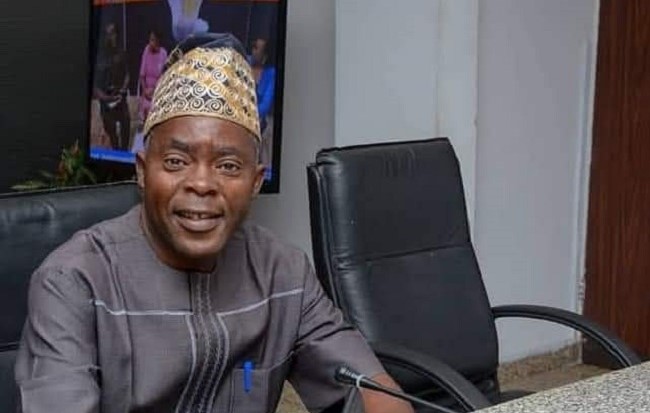
The Special Adviser to the Governor on OGWAMA, Farook Akintunde
Akintunde said the offenders had been prosecuted in customary courts across the capital and fined to serve as a deterrent to others.
He expressed concern that some residents continued to dispose of waste indiscriminately despite government efforts to ensure proper waste collection at residents’ doorsteps.
“It is unfortunate that we have to take this route to stop some individuals from dumping waste indiscriminately on roadsides and in public places.
“We have sensitised, appealed and encouraged them to hand over their waste to the Private Sector Participants (PSP) assigned to their areas for proper disposal, but to no avail,” he said.
Akintunde reiterated the state government’s resolve to sustain the enforcement exercise until compliance improves.
“We are determined to continue this exercise until residents desist from indiscriminate dumping of waste, especially as the state is improving its waste management system,” he said.
The governor’s aide warned that improper waste disposal could lead to flooding and groundwater contamination, particularly during the rainy season.
Akintunde advised residents to comply with waste management regulations or risk prosecution, adding that the government would not tolerate wastes on roadsides causing eyesore to the environment.
A chieftain of All Progressives Congress (APC), Chief Sam Onuigbo, says the Renewed Hope Agenda of President Bola Tinubu is yielding results that will make the party the one to beat in the 2027 general elections.
Onuigbo, a former member of the House of Representatives, stated this in an interview in Abuja on Thursday, April 9, 2026.
He said that several economic and social reforms, including the removal of the fuel subsidy and the unification of the foreign exchange rate, had set Nigeria on a path of long-term greatness.
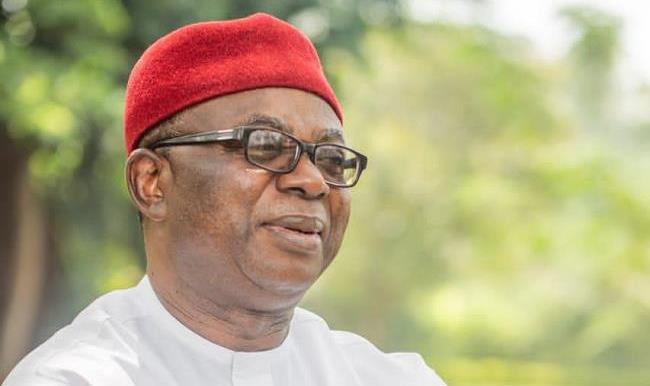
Rep. Sam Onuigbo
According to him, the removal of fuel subsidy has significantly increased the revenue available to state governments, enabling them to execute more projects.
“Today, the governors are having so much money, which is the fallout of the removal of fuel subsidy. That is helping those who truly want to work in their states to execute numerous projects.
“Before President Tinubu came, governors were going cap-in-hand looking for bailouts to pay salaries. Today, is anybody still going cap-in-hand to pay salaries? The answer is No.
“We give credit to the president for being courageous in taking that decision,” he said.
Onuigbo also highlighted the successful implementation of the student loan scheme and the unification of exchange rate as key milestones of the current administration.
He added that the foreign exchange reforms had provided a level of predictability for investors, which was absent during the period of “uncertainty and jumping rates”.
“You also talk about major infrastructural projects, and there is the Ministry of Interior, where it is now easy to get passports. These are things that seemed impossible before now,” Onuigbo said.
The Nigeria Customs Service (NCS), Federal Operations Unit (FOU) Zone ‘B’, has intensified its crackdown on endangered species trafficking with the interception of additional live pangolins along the Kano-Takai Jigawa axis.
This is contained in a statement by Mohammad Balarabe, the acting Public Relations Officer, Zone “B” Kaduna.
According to the statement, the latest seizure, which occurred on March 26, 2026, at about 1:00 p.m., marks the second major interception within a fortnight, following a similar operation carried out on March 12.
The Customs officers with the intercepted live pangolins
The seizures were effected in line with the Convention on International Trade in Endangered Species of Wild Fauna and Flora (CITES), an international agreement to which Nigeria is a signatory, prohibiting trade that threatens the survival of endangered species.
According to the unit, operatives acting on credible intelligence intercepted a suspicious vehicle during a routine patrol.
“A search of the vehicle led to the discovery of the live pangolins concealed within.
“All rescued animals from both operations have been transported to the FOU Zone ‘B’ headquarters in Kaduna for further processing and eventual handover to relevant wildlife authorities.
“The Comptroller of the Unit, Aminu Sule, ordered a comprehensive investigation aimed at dismantling the syndicate behind the illegal trade.
“The frequency of these interceptions, twice within a fortnight, demonstrates our heightened surveillance.
“This seizure sends a clear message: Zone ‘B’ will not be a transit point or a safe haven for wildlife traffickers,” the statement said.
The NCS reiterated its commitment to enforcing environmental laws and international treaties to safeguard Nigeria’s biodiversity and uphold its global conservation obligations.
Pangolins are widely regarded as the most trafficked mammals globally, driven by illegal demand for their scales and meat.