Home Blog Page 1799

Vote4WASH campaign: Why Nigeria should prioritise water, sanitation – WaterAid

0

As Nigeria counts down to the 2019 general elections, WaterAid and other development partners are highlighting the importance of clean water and decent toilet to the general wellbeing of Nigerians and make the case for clean water, basic sanitation and good hygiene to be given priority in the country’s development agenda
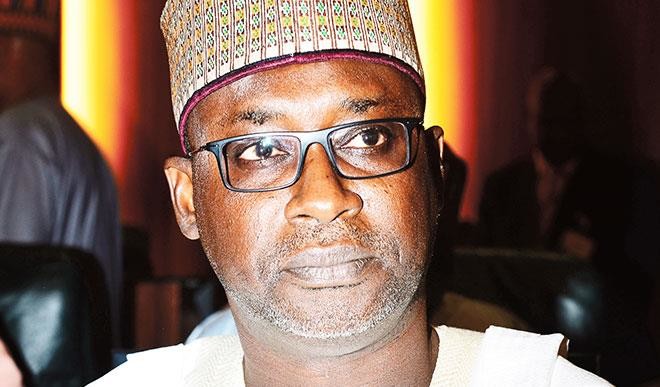
Suleiman Adamu
Suleiman Adamu, African Water Facility (AWF) Chair and Nigeria’s Minister of Water Resources

Water, sanitation and hygiene (WASH) remain one of the most neglected critical issues in the country; a fact driven home by the Federal Government’s declaration of a state of emergency in its WASH sector in April this year. With nearly 60 million people living without clean water, over 120 million without access to a decent toilet and about 46 million defecating in the open, we cannot afford to ignore the urgency of WASH action in Nigeria.

At the current rates of progress, the promise to bring safe water and toilets to everyone by 2030 will not be met. In fact, the percentage of the population with access to basic sanitation continues to drop steadily. It is sad that a country of our stature cannot provide these basic life-saving services to its citizens. Nearly 60,000 children under the age of five die of WASH related diseases in Nigeria every year. Sub-Saharan Africa ranks lowest in the world for access to improved drinking water and sanitation and that is linked, of course, to the region’s under-five mortality rate which is one of the highest in the world.

There is still a lot of inequality in our society and we are still leaving millions behind: children, women, persons living with disabilities and our most vulnerable and marginalised communities. These are the people who could benefit most from these services and we need to ensure we target resources to those who are most at risk from a lack of access to clean water and sanitation.

Many Nigerians will save on health bills and be able to be more productive and generate more income if they have clean water and sanitation. Without access to water and sanitation, many will not get a fair chance at escaping poverty and reaching their full potential. Our leaders cannot continue to be careless with the health and wellbeing of its citizens and we must hold them responsible for doing the things they are supposed to do.

Sadly, the impact of poor access to WASH is not limited to health alone. Women and children bear the burden of getting water for the household; this prevents children from attending school regularly and can discourage parents from enrolling their children in school. Furthermore, it reduces the amount of time women can spend on productive activities that will help in alleviating poverty.

However, despite these documented negative impacts of lack of access to WASH, provision of WASH still ranks low in the development priorities of most elected officials in Nigeria.

Thankfully, we have an opportunity now to change this. You can change this.

The Vote4WASH campaign calls on all electoral candidates to ensure that water, sanitation and hygiene promotion is given the priority it deserves with ambitious universal access targets on (WASH) for households as well as schools, health facilities and other public places.

We ask that electoral candidates (across all elective positions) seeking the vote of Nigerians to heed calls to improve the wellbeing of Nigerians by providing universal access to clean water and decent toilets and ensuring that no child dies a preventable death because of a lack of these basic but yet vital and fundamental services.

We call on the people of Nigeria to use their votes to demand for their right to clean water and decent toilets. It is time for politicians to be held to a higher standard of governance. It is the duty of all eligible voters to seize this opportunity to hold candidates to account during and after the election. A vote for clean water is a vote for good health, education and improved livelihood.

The success of the Vote4WASH campaign was clearly documented in the last election with Aljazeera reporting that after corruption and before religious and ethnic divisions, water was a key election issue. We need to make and keep access to water, sanitation and hygiene a priority again.
Restoring degraded land highlights opportunities for sustainable development in Africa

0

Almost 1,000 participants joined the Global Landscape Forum’s GLF Nairobi 2018 at United Nations Office in Nairobi to hear speakers from across Africa discuss their experiences and successes restoring forests, farms and coastlines. A global audience participated online and the event was a top-trending social media site in Kenya.

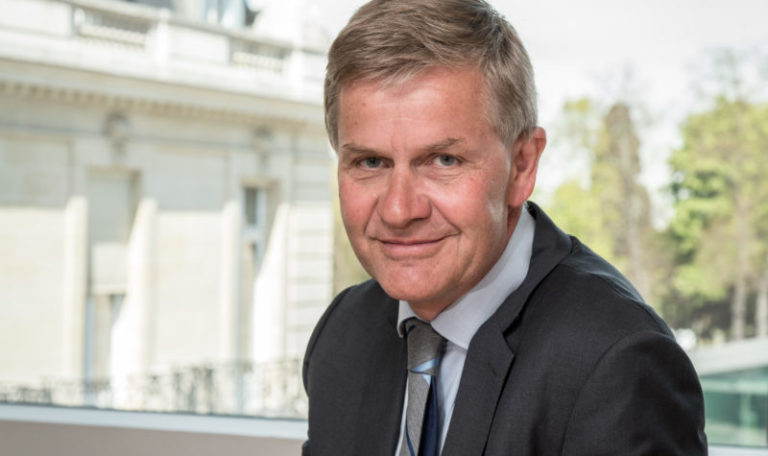
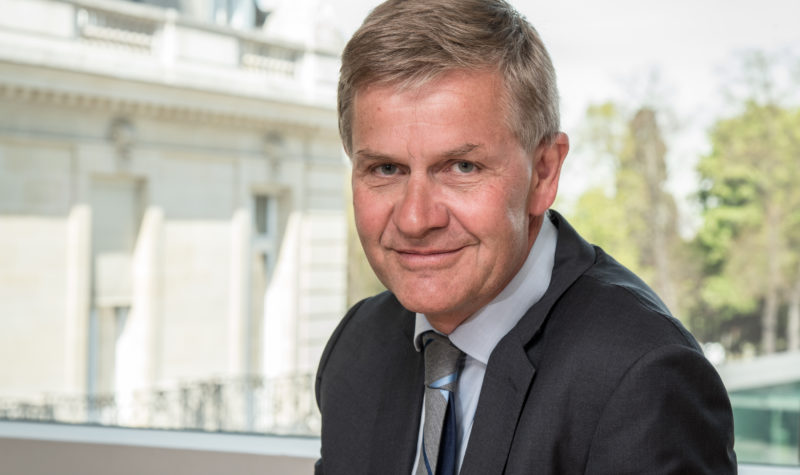
Erik Solheim
Erik Solheim, Executive Director of the United Nations Environment Programme (UNEP). Photo credit: OECD/Michael Dean

Community leaders, including Serge Zoubga and Concepta Mukasa discussed their efforts to restore local landscapes, while Rwanda Environment Minister Francine Tumushine, UN Environment Executive Director Erik Solheim, Stefan Schmitz of the German Federal Ministry for Economic Cooperation and Development and the Center for International Forestry Research (CIFOR) Director General Robert Nasi shared insights into the role of restoration in sustainable development and climate mitigation and adaptation.

“Unless urgent and concerted action is taken, land degradation will worsen in the face of population growth, unprecedented consumption, an increasingly globalised economy and climate change,” said CIFOR’s Nasi. “We must restore at least 12 million hectares annually simply to reach land degradation neutrality. And if we want to rectify errors from the past, then we need to run twice as fast.”

Degraded landscapes each year cost 10 percent of the global economy, affecting the livelihoods and wellbeing of some three billion people across the world, many in developing countries. The global landscapes community aims to restore more than two billion hectares of degraded land worldwide – a footprint larger than South America. For progress to take place, the private and public sectors must invest $350 billion annually.

“We have the necessary technical knowledge to restore landscapes; what is missing is stronger political commitment and better rural governance,” said Schmitz. “This includes decentralizing decision-making, administrative capacities and financial resources; putting in place adequate territorial and tenure policies.”

Initiatives big and small, from the AFR100 to local efforts such as mangrove restoration, are demonstrating the potential for greater agricultural yields, ecosystem services and climate protection. At the same time, now is the time to convert commitments to restore hundreds of millions of hectares of land into action by involving communities, women and youth, the speakers said.

“In a degraded landscape, if a woman doesn’t have the firewood, it will be difficult for her to get the water,” said Mukasa. “We managed to bring together six communities using an adaptive collaborative management approach. That vision is over restoration of degraded landscapes. These communities have been able to produce community trees.”

Solheim reiterated his support for a U.N. decade devoted to promoting the rehabilitation of degraded, damaged and destroyed ecosystems to help speed up the race against climate change and biodiversity loss. He urged participants to support the proposal for a U.N. Decade for Ecosystem Restoration 2021-2030, which was first floated by El Salvador.

“Ecosystem restoration can counter climate change, poverty and biodiversity loss,” said Solheim. “A U.N. Decade for Ecosystem Restoration would give us an opportunity to accelerate restoration action and UN Environment supports El Salvador and the many other countries who are champions of this idea.”

GLF Nairobi 2018 continues Thursday with discussions about ‘The Great Green Wall for the Sahara and Sahel Initiative’, the launch of a documentary and a concert by musician Rocky Dawuni.

Experts urge African govts to restore degraded landscape for green growth

0

African governments must prioritise restoration of degraded landscapes to hasten green and inclusive growth in the continent, experts said on Thursday, August 30, 2018 at the global landscapes forum taking place in Nairobi, Kenya.

Robert Nasi
Robert Nasi, Director General of the Centre for International Forestry Research (CIFOR)

The international experts, policymakers and campaigners stated that reclaiming Africa’s degraded landscapes dovetails with the continent’s quest to achieve sustainable development and enhance its resilience in the face of climate change.

“Urgent and concerted action must be taken to halt land degradation in Africa that has been worsened by population growth, urbanisation and climate change,” said Robert Nasi, the director-general of Centre for International Forestry Research (CIFOR).

More than 1,000 delegates including Africa’s environment ministers, scientists, industry leaders and grassroots campaigners attended the two-day Nairobi forum to explore new ways to restore degraded landscapes in a continent on the cusp of industrial take off.

The high-level forum which was organised by CIFOR and the UN Environment Programme (UNEP) resolved to galvanise attention to the alarming rate of landscapes degradation in Africa estimated at 50,000 hectares annually.

Nasi said policy and legislative reforms coupled with public awareness is key to stimulate investments in land reclamation across sub-Saharan Africa.

“We must incentivise key stakeholders like industry and farmers’ groups to be part of landscapes restoration drive in order to address poverty, hunger, lack of clean drinking water and energy deficit in this continent,” Nasi remarked.

Africa is currently the epicenter of landscapes degradation that could undermine the continent’s ability to sustain economic growth, stability and peace.

The World Resources Institute reckon that two thirds of Africa’s land mass are degraded while 2.8 million hectares of the continent’s forests have been cleared to pave way for farming or human settlement.

Erik Solheim, the executive director of UNEP, said multilateral institutions have rallied behind rehabilitation of Africa’s degraded ecosystems as means to counter climate change, poverty and biodiversity loss.

Flood hits eight LGAs in Kano

0

The Kano State Emergency Relief and Rehabilitation Agency (SERERA) says it has dispatched personnel to eight local government areas of the state recently affected by flood to assessing the damage caused by the disaster in the areas.

Ali Makoda
Dr. Ali Makoda, Kano State Commissioner of Environment

Executive Secretary of the agency, Alhaji Ali Bashir, disclosed this in an interview with the News Agency of Nigeria (NAN) in Kano, the state capital, on Thursday, August 30, 2018.

He said the team had visited seven out of the eight local government areas concerned to compile report on the situation.

Bashir listed the local government areas as: Rimin Gado, Tofa, Dawakin Tofa, Gwarzo, Danbatta, Kabo, Gezawa and Gabasawa.

“The team has so far visited and assessed the situation in Rimin Gado, Danbatta, Gezawa, Gwarzo, Tofa, Dawakin Tofa and Kabo local government areas.

“As I am talking to you now, we are in Gabasawa Local Government Area, assessing the damage caused by the flooding in the area,” he said.

Bashir, who declined to state the number of people affected by the disaster, said after the assessment, the agency would make a comprehensive report for onward submission to the state government.

“We cannot give you the exact number of persons or houses affected until after we finish the assignment.”

According to him, the agency is still receiving reports of the disaster from other areas prone to flood.

NAN reports that no fewer than three people were reported to have died and several houses destroyed in Kiru Local Government Area of the state, following a heavy rainfall on Monday.

By Tukur Muntari

UNDP restates commitment to addressing Nigeria’s environmental degradation

0

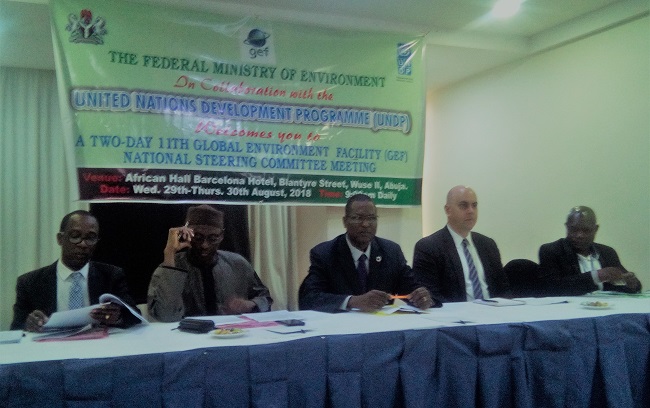
The UN Development Programme (UNDP) on Wednesday, August 29, 2018 in Abuja restated its continued support to address environmental degradation in Nigeria.

GEF-UNDP
L-R: Dr Reuben Bamidele of the United Nations Industrial Development Organisation (UNIDO); Ahmed Auwal Maidabino, Director, Planning, Research & Statistics, GEF-OFP, Federal Ministry of Environment; Dr Peter Tarfa, Director, Department of Climate Change in the Federal Ministry of Environment; Faris Khader, UNDP Regional Technical Advisor, Climate Change Mitigation and Energy; and Dr John Fonweban, Forest Officer, REDD+ Programme Forest Policy & Resources Division

Mr Faris Khader, UNDP Regional Technical Advisor, Climate Change Mitigation and Energy, said this at a two-day 11th Global Environment Facility (GEF) National Steering Committee Meeting in the federal capital city.

The GEF is a global fund provider to address the issues of environment such as biodiversity, climate change, ozone layer, international waters and pollution.

Khader, who said UNDP was part of the implementing agencies of GEF projects, commended the Federal Government for its active participation in the implementation of GEF projects in the country.

“I will like to congratulate the Honourable Minister for Environment for his dynamic leadership, as evidenced by his recent active participation in GEF Assembly in Vietnam.

“I wish to therefore, assure him of UNDP’s continuing support, especially with developing responsive interventions that are fully aligned with Government’s Change Agenda and national priorities,” he said.

According to him, people live in an incredibly complex and interconnected environment, which is a life supporting system for human survival.

“While a properly managed environment can be geared towards productive requirements, a poorly managed one can easily threaten human survival.

“This underpins the critical role that GEF investments play in the scaling up sustainable local solutions for global benefits,” Khader said.

His words: “As we all know, we live in an incredibly complex and interconnected environment, which is a life supporting system for human survival. While a properly managed environment can be geared towards productive requirements, a poorly managed one could easily threaten human survival. This underpins the critical role that GEF investments play in the scaling up sustainable local solutions for global benefits.

“Noteworthy, is the inclusion of State actors and local communities in this two-day consultation. A recognition of the significant roles they play in designing of sustainable programmatic interventions and harnessing grassroots solutions and innovations that will sustainably address the key drivers of environmental degradation in Nigeria, while maximizing the benefits of GEF at all levels.

“The longstanding UNDP-Federal Ministry of Environment is of significant value. Together, our current GEF programming covers biodiversity and climate change, with the overall vision of delivering value to the poor and marginalized (especially women and youths), empowering policy makers and unlocking private sector investments for nature-based solutions. We at UNDP look with excitement into the future filled with limitless possibilities of working with the Government of Nigeria in their quest to build a sustainable and prosperous future for its people.”

The Permanent Secretary, Ministry of Environment, Alhaji Sheu Ahmed, who declared the meeting open, thanked the UNDP for its efforts in assisting Nigeria in its task at ensuring a desirable environment.

Ahmed, who was represented by the Director, Department of Climate Change in the ministry, Dr Peter Tarfa, said that the federal government was working to upscale the Nigerian environment.

He said that the ministry was implementing programmes and projects to eradicate plastic pollution that posed threats to lives and aquatic lives and causing depletion to the ozone layer, an incidence very harmful to human existence.

The permanent secretary expressed the federal government’s determination to maximize benefits accruable from the opportunities available in terms of getting more funds into the nation’s system through GEF-funded projects.

By Deji Abdulwahab

UN modernises, relaunches climate change e-commerce web platform

0

The UN Climate Change (UNFCCC) on Wednesday, August 29, 2018 announced the relaunch of its Online Platform for Voluntary Cancellation of Certified Emission Reductions (CERs), where organisations, governments, businesses and citizens alike can purchase carbon offsets vetted by the United Nations to compensate for their greenhouse gas emissions.

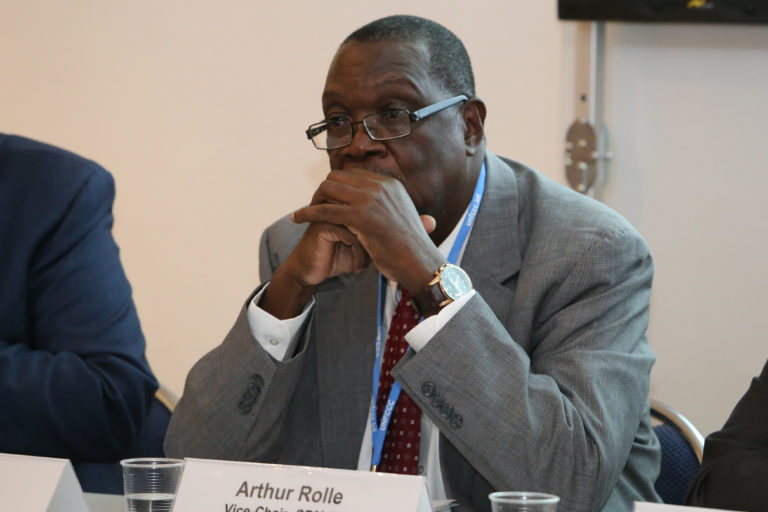
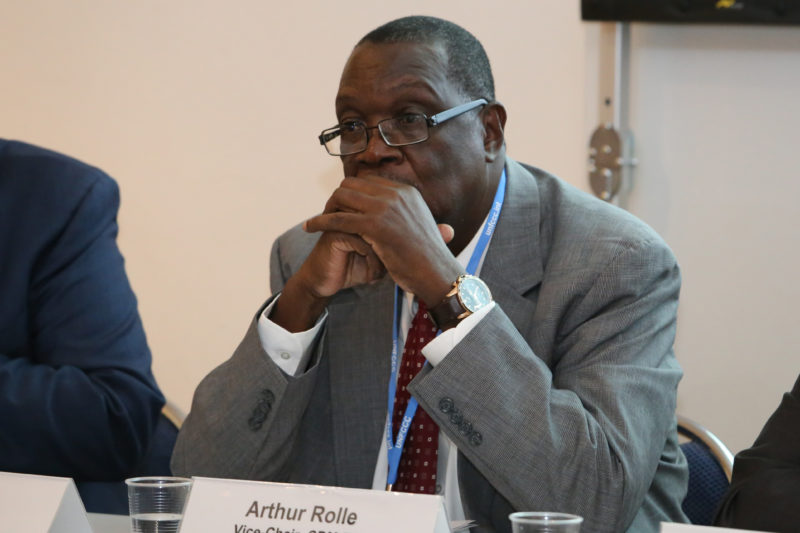
Arthur Rolle
Arthur Rolle, Chair of the CDM Executive Board

The e-commerce platform, according to the UN climate body, has gained in simplicity, user friendliness and usability, and is accessible in English and French with a Spanish version to follow later in the year.

“Along with clearer visual explanations and multimedia material on the meaning and benefits of offsetting, the central improvement consists of a new climate footprint calculator to estimate greenhouse gas emissions of households. This tool has evolved thanks to an efficient background data processing system and benefits from a brand-new smart design, making it easy for everyone to use,” the UNFCCC disclosed in a statement.

Arthur Rolle, Chair of the Clean Development Mechanism Executive Board, said: “The platform is enjoying increasing popularity at the global level. Since its initial launch in 2015, over 2,500 transactions resulted in over 300,000 tonnes of CO2 (i.e. 300,000 CERs) being cancelled. I hope that this upgrade will motivate even more users, individuals and businesses to take the climate action we urgently need. And we hope to become an even more attractive partner for peer organizations and initiatives who also promote urgent climate action and who wish to collaborate with us.”

The carbon credits come from projects registered under the United Nations’ Clean Development Mechanism (CDM). Under the CDM, projects in developing countries earn a saleable credit for each tonne of greenhouse gas they reduce or avoid. 8,100 projects and programmes in 111 countries range from clean cookstoves and water purification to wind power and large industrial gases projects.

In addition to being green and climate-friendly, these activities make a real difference as they bring sustainable development benefits to local communities, such as improved air and water quality, improved income, improved health, reduced energy consumption and much more. The purchase of CERs also contributes to the continuation of the projects and hence of these benefits, which underlines the importance of a well-functioning and user-friendly web platform.

The platform is said to function the same way it used to: the entire contributions users make while offsetting emissions go directly to the project owners, without any commission taken or fee added by the United Nations. This direct payment method is unique and is part of the identity of this platform: The United Nations facilitate the process without intervening in it.

Pakistan, India hold water talks as climate change bites South Asia

0

Pakistan and India are holding a fresh round of talks to sort out disputes over water resources from rivers that flow across their borders.

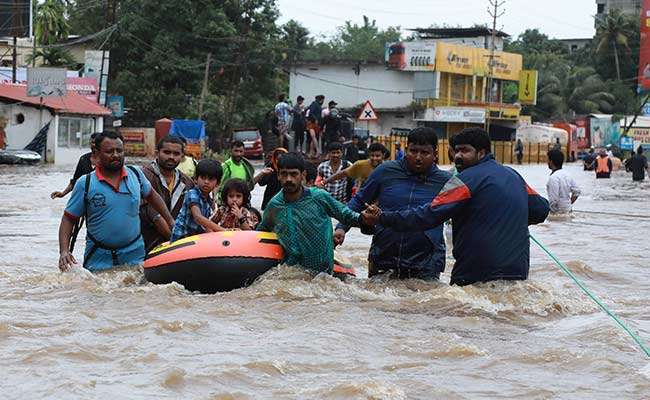
Kerala
Rescue operations in Kerala, India in a flooded neighbourhood

The two-day talks began on Wednesday, August 29, 2018 in the eastern Pakistani city of Lahore, days after a new government in Islamabad vowed to revive peace talk with India that have stalled since 2008.

The officials from the Pakistan-India Indus Commission, a body that deals with water issues between the two countries under a 1960 World Bank-backed treaty, are participating.

“We are hopeful of a positive outcome,’’ Pakistan lead negotiator Mehr Shah said, ahead of talks. “Water is a lifeline to our agrarian economies and we will look for solutions.’’

Six rivers flow from India into Pakistan, South Asian nuclear powers that have fought three wars since they gained independence from Britain in 1947.

The Indus Waters Treaty entitled India to waters of the eastern rivers Sutlej, Beas and Ravi and gave Pakistan control of the western rivers the Indus, Jhelum and Chenab.

However, the 1960 accord allowed India to use water from rivers allocated to Pakistan in a way that did not block or reduce their flow, like certain hydropower projects.

But Islamabad has accused India of building dams at western rivers that curtail the flow of water into Pakistan, in violation of the treaty.

“That’s the issue we are going to raise at talks,’’ said an official of the Pakistani Ministry for Water Resources, on condition of anonymity. “We cannot let India deprive us of our right.’’

The latest round takes place as the entire South Asian region faces severe droughts and floods because of climate change.

Two Singaporean students develop water purifying material, win prize

0

Two students from Singapore, Caleb Liow Jia Le and Johnny Xiao Hong Yu, have won the 2018 Stockholm Junior Water Prize for producing reduced graphene oxide, a material that can be used to purify water from agricultural waste products.

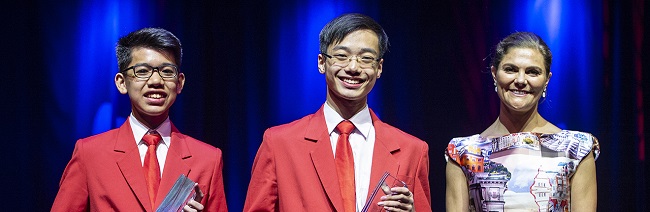
Caleb Liow Jia Le and Johnny Xiao Hong Yu

In a statement, Ms Jens Berggren, Communications Director, Stockholm International Water Institute (SIWI), said Crown Princess Victoria of Sweden, the patron of the prize, presented the prize at an award ceremony at the on-going World Water Week in Stockholm.

The World Water Week holds from Aug. 26 to Aug. 30 annually.

In their project, Caleb Liow Jia Le and Johnny Xiao Hong Yu developed a new method to produce reduced graphene oxide (rGO), a material that has huge potential to purify water.

The students, using durian rind and sugarcane bagasse , found a more environmentally friendly and cheaper method for producing rGO.

The statement quotes Caleb Liow Jia Le, while receiving the award as saying. “I am very, very happy, I am shocked that we won the prize because I really didn’t expect it!”

The Stockholm Junior Water Prize goes to the winners of an international annual competition with more than 10,000 entries from all over the world.

In its citation, the jury highlighted the wide local benefits of the students’ method.

“This year’s winning project inspires communities to find local solutions to improve water quality and resource recovery.

“The project developed a leading edge, inexpensive, and widely applicable method to clean water. Further development of this method will lead to public health and ecosystems protection.

“Therefore, the project embodies the themes of 2018 World Water Week – Water, Ecosystems and Human Development.

“The winning project has included concepts of circular economy, nanotechnology, and green chemistry. The project’s success will set new trends in the way we filter water.”

When asked how they would like to take the project further, Johnny Xiao Hong Yu said: “We will definitely try to think of ways to improve it and make it even more sustainable, even more environmentally friendly, so that it can be used to make an impact in the future.”

Mr Torgny Holmgren, Executive Director of SIWI, said he was impressed by the students’ innovative project, adding that the provision of clean water was one of humanity’s greatest challenges.

He said the 2018 outstanding winners had found a way to purify water that was low-cost using, locally available resources and could help in getting clean water to the 2.1 billion people who still lacked it.

SIWI is an international water institute working to solve global water challenges by improving how water is used and managed.

The group influences decision-makers, facilitates dialogue and builds knowledge in water issues, thereby contributing to a just, prosperous and sustainable future for all.

SIWI organises the world’s most important annual water and development meeting, World Water Week, and awards the Stockholm Water Prize and Stockholm Junior Water Prize.

The World Water Week has brought together more than 3,500 participants from more than 130 countries representing governments, private sector, multilateral organisations, civil society and academia to find joint solutions to global water challenges.

By Tosin Kolade

PACJA, CSDevNet boost coalition for climate change, sustainable development in Nigeria

0

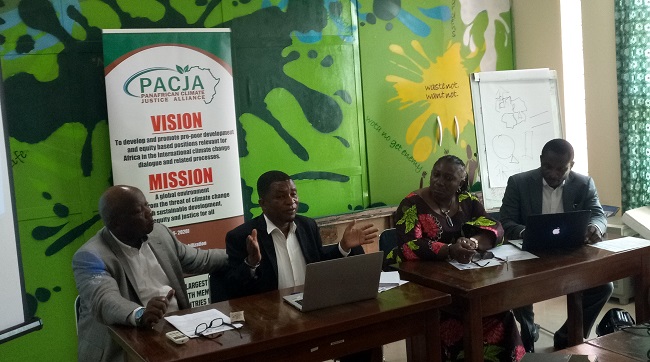
As Nigeria continues to explore actionable ways to address the menace of climate change, one of the greatest challenges experienced in the drive to achieve this is gross division among various stakeholders sitting on different ends of the negotiation table.

PACJA and CSDevNet
L-R: Director, Mshelia & Co., Huzi Mshelia; Secretary General, Pan-African Climate Justice Alliance (PACJA), Dr. Mithika Mwenda; Executive Director, Women Environmental Programme, Dr. Priscilla Achakpa; and National Coordinator, Climate and Sustainable Development Network of Nigeria (CSDevNet), Atayi Babs, during the National Consultative Workshop

In a bid to address this, Pan-African Climate Justice Alliance (PACJA) through the Climate and Sustainable Development Network of Nigeria (CSDevNet) recently developed a framework for a stronger coalition for key stakeholders and more efficient delivery by other active organisations.

Civil society organisations (CSOs) are said to play a vibrant role in addressing issues around climate change and sustainable development.

The PACJA/CSDevNet framework was determined during the National Consultative Workshop on Nationally Determined Contributions (NDCs) and Talanoa Dialogue held in Abuja on Tuesday, August 28, 2018.

Facilitated by PACJA’s Secretary General, Mr. Mithika Mwenda, the entire coalition was at the the end of the day redistributed across six sectors namely: Finance, Gender, Adaptation, Mitigation/Energy, Media/Information, and Intergenerational/Innovative Technology.

The heads of the newly created sectors, known as “Conveners”, will work closely with the CSDevNet board in implementing the numerous PACJA programmes in Nigeria

According to Mwenda, the newly designed civil society framework will accommodate many other stakeholders across the six geo-political regions of Nigeria to act in the national interest in implementing the Paris Agreement in the country.

Furthermore, he said, this will afford organisations an opportunity to work collectively as against working in silos and together strengthen engagements to timely actualise the implementation of the NDCs in the five priority areas: Energy, Oil & Gas, Agriculture & Land use, Power, and Transport.

The National Consultative Workshop had “Accelerating NDCs & Paris Agreement Implementation in Nigeria” as its theme.

By ‘Seyifunmi Adebote, Abuja

National Parks Service, Wukari varsity to collaborate in ecotourism, conservation education

0

The Nigeria National Parks Service has signed a Memorandum of Understanding (MoU) with the Federal University, Wukari in Taraba State to collaborate in ecotourism, research and conservation education.

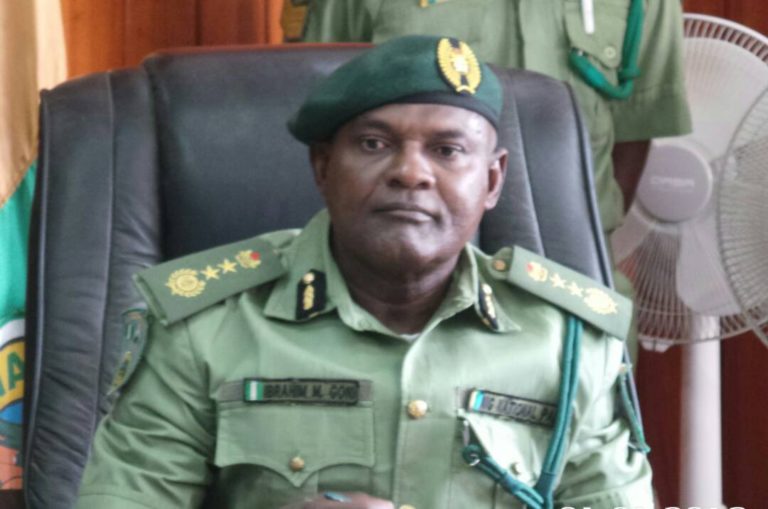
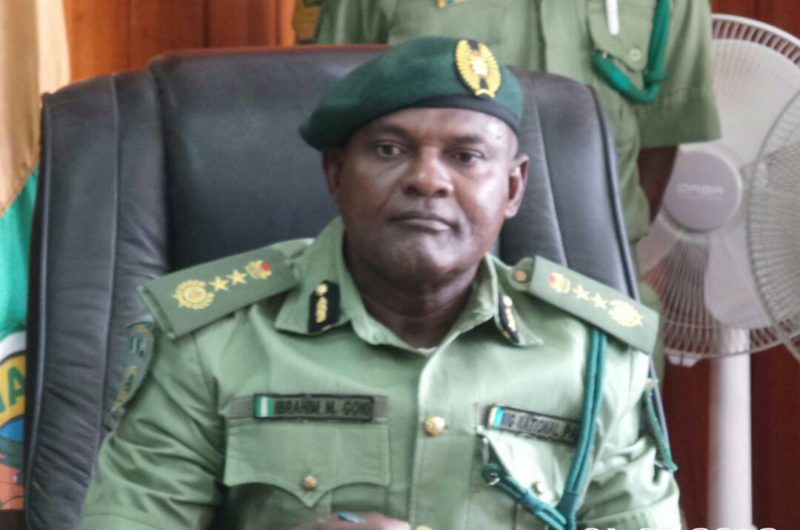
Ibrahim Goni
Alhaji Ibrahim Goni, Conservator-General of the National Parks Service

The MOU was signed by Alhaji Ibrahim Goni, the Conservator-General of the service, and Prof. Abubakar Kundiri, the Vice Chancellor of the university, at the service headquarters in Abuja on Wednesday, August 29, 2018.

This disclosure was contained in a statement signed by the Media Assistant to the Conservator-General, National Park Service, Yakubu Zull.

The C-G said that the MoU was the second of its kind since he assumed duty as the Chief Executive of the National Park Service.

He called on other institutions of learning to emulate the university to raise the bar in natural science education and conservation of biological biodiversity.

Goni stated that the National Parks, which served as a field laboratory to students studying natural sciences in tertiary institutions had so far trained more than 2,000 students.

The Vice Chancellor, in his response, said that the MOU marked a milestone in the advancement of quality education in the university.

He observed that government funding alone could not sustain the operations of the university, hence the need to explore other areas of funding.

“With the MOU, the university will now have access to the Parks’ facilities for research to boost tourism activities that will generate revenue and employment opportunities for the youth.

According to him, the development will also boost revenue and fulfill its mandate.

By Ebere Agozie