Home Blog Page 1797

Flooding submerges 64 communities in Kogi

0

No fewer than 64 communities have been submerged by flood in the Kogi/Kotonkarfe Local Government Area of Kogi State.

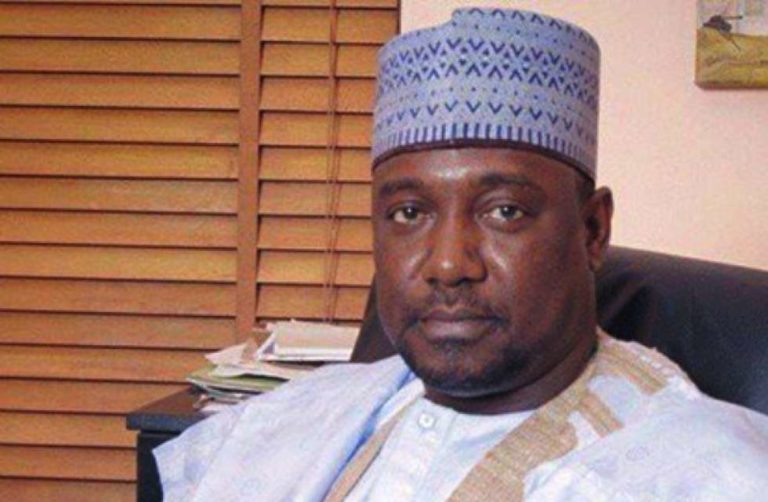
Yahaya-Bello
Governor Yahaya Bello of Kogi State

Mr James Ahmadu, Director of Relief and Rehabilitation of the Kogi State Emergency Management Agency, made the disclosure on Thursday, September 6, 2018 at Edeha community in Kotonkarfe.

He spoke to newsmen after visiting one of the IDPs’ Camps in Edeha community, saying that more than 150 households had been trapped by flooding in the past three days.

Ahmadu said that a man, popularly known as “Ibrahim Barrister”, lost his life to the flooding while trying to move upland.

“We are here for on-the-spot assessment of the flooding situation in Kotonkarfe. As you can see everywhere is flooded. Over 64 communities were submerged.

“Five temporary camps have been set up for the victims by the state in collaboration with the local government that is why NEMA is here for assessment of the situation.

“We thank God that NEMA is here and they are cooperating with the State Government in ensuring that necessary arrangement is made,” Ahmadu said.

Mr Bitrus Samuel, Head of Operations at NEMA Headquarters, represented by Mr Reubean Babatunde of the Abuja Operations Office of NEMA, said that NEMA was in Kogi to assess the extent of damage caused by the flooding.

“We were told there are five different IDPs Camps in Kotokarfe. We are in the first camp in Edeha community to see the displaced persons and get their data, take it back to Abuja, to see what NEMA can do to assist them.

“The local government official said that about 30 of the communities were submerged on Sept. 3 and another 34 on Sept. 4, making 64 villages submerged as at now.

“This is a natural disaster but NEMA would do its best to respond as fast as we can to ensure that those people that are trapped are rescued.

“We are doing on-the-spot assessments, but we are still appealing to people living in flood-prone areas in the state to relocate to the upland,” Samuel said.

Mr Yakubu Mohammed, the PRO/Desk Officer on Ecology of the Kotonkarfe Local Government Council, told reporters that residents started experiencing flooding a few days ago.

“We want NEMA to come to our aid. Many of our people are finding it difficult to move out of their communities because some are still trapped there.

“We lost one person three days ago. Our farm lands and property are submerged by the flood. We want the Federal Government to come to our rescue. We need facilities in the camps.”

He named some of the submerged communities as Akpaku, Akpo, Ajara, Banda, Kpakpasu, Ozale, Opkakere, Agbawu and Adabode, among others.

By Stephen Adeleye
Osun communities commend EU, UNICEF for provision of potable water

0

Some residents of Oke-Ila and Ora, Ifedayo Local Government Area in Osun State have commended the European Union (EU) and the United Nations Children Fund (UNICEF) for providing potable water in the communities.

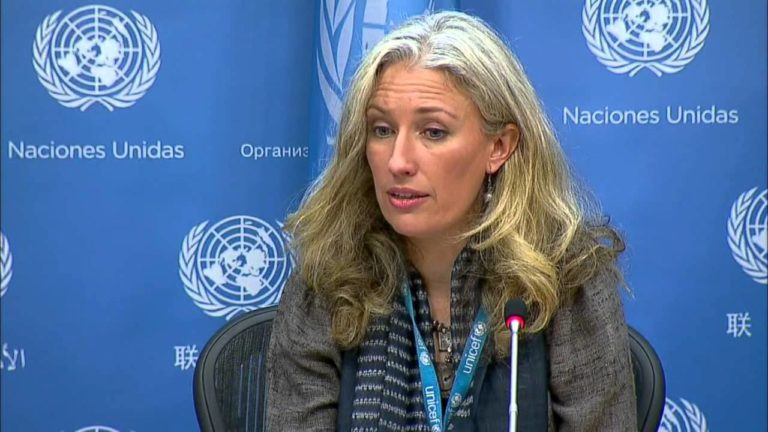
Pernille Ironside
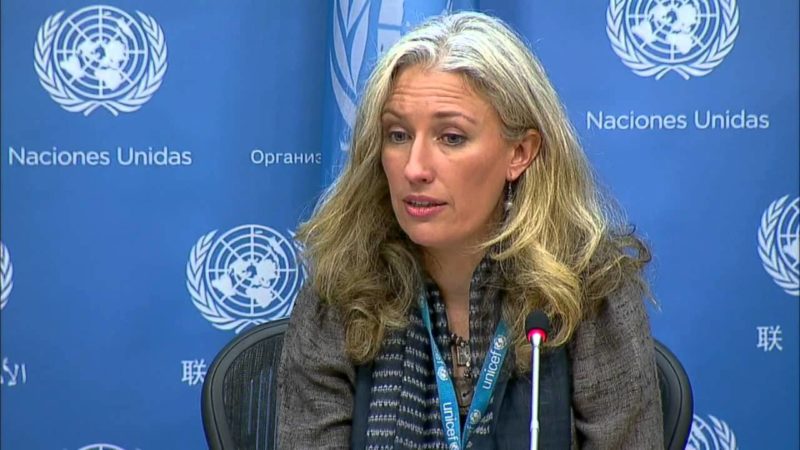
UNICEF Nigeria Acting Representative, Pernille Ironside

The residents, who spoke with the News Agency of Nigeria (NAN) on Thursday, September 6, 2018, said the hardship they experienced in getting drinkable water had vanished since the solar boreholes were provided.

They also said that they had been using it for their domestic chores like cooking, drinking and bathing.

Mr James Odedeji, Chairman, Water Consumer Association in the community, said the provision of the solar boreholes had decreased incidents of typhoid fever and cholera in the community.

Odedeji said the dearth of potable water, which was the major problem in the community, had become history since the solar boreholes were sunk by the EU and UNICEF.

Also, Mrs Moradeke Adeniyi, a housewife, said before the boreholes were provided, life was almost unbearable for the people.

Adeniyi said, “Water scarcity was our major problem in this community before the solar boreholes were provided.

“In the past, we had to trek a long distance to the stream to fetch water but now the story is different.

‘‘We now get clean water from the boreholes for cooking, drinking and bathing.’’

Mrs Deborah Adeshina, a health assistant in the community primary health centre, said that the provision of borehole in the centre had helped it to maintain a clean environment.

Also, Mr Adediran Adedayo, the Vice-Chairman of the council, said the boreholes had helped the rural communities to overcome the challenges of water shortage in the community.

Adedayo noted that lack of potable water was a major problem in the community but the people now no longer suffer the impact.

While commending EU and UNICEF for the construction of the boreholes, he gave assurance that the local government would ensure proper maintenance of the facilities.

Adiatu Olaposi, the General Manager, Osun Rural Water and Environmental Sanitation Agency (RUWESA), spoke in a similar manner.

The general manager explained that the EU/UNICEF Water Supply and Sanitation Sector Reform Programme II involved provision of water, sanitation and hygiene facilities in communities, schools, health centres and public places.

RUWESA’s boss said 480 hand pumps and solar boreholes had also been provided to Odo-Otin, Ifedayo and Ayedaade Local Government Areas in the state.

The official said that EU/UNICEF contributed 70 percent of the cost of the projects, while the state government contributed 15 per cent.

Adiatu added that the local government contributed 10 per cent while the host communities also contributed five percent of the funding.

By Victor Adeoti

Niger approves N60m relief package for flood victims

0

Gov. Abubakar Bello of Niger State on Thursday, September 6, 2018 approved the release of over N60 million for provision of relief materials for victims of flood in Mokwa Local Government Area of the state.

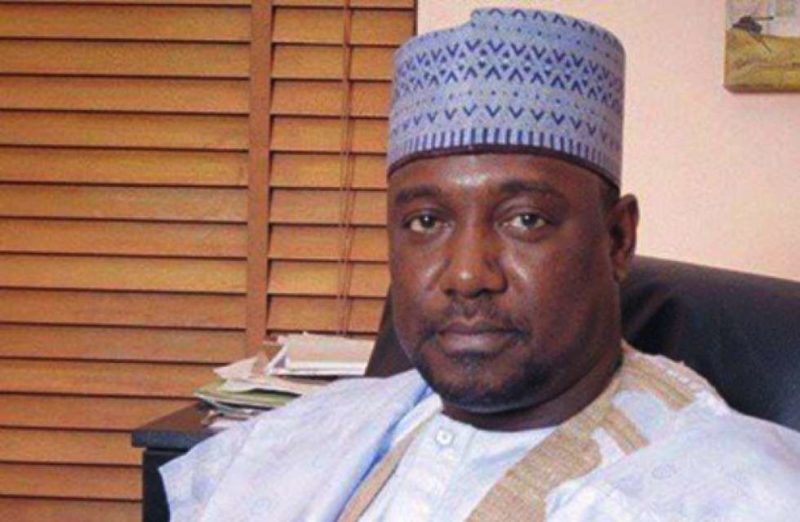
Alhaji-Abubakar-Sani-Bello
Alhaji Abubakar Sani Bello, Governor of Niger State

He gave the approval when delegates from the communities submerged by flood visited him to solicit government assistance.

The News Agency of Nigeria (NAN) reports that the delegation led by Alhaji Ibrahim Yawa had appealed to the governor to come to the aid of the victims who had been rendered homeless in the area.

Yawa disclosed that over 30 communities in Mokwa Local Government area were submerged by flood, and that the farmlands, livestock and houses were destroyed.

The governor directed the state commissioner of finance to release the money with immediate effect to the state Emergency Management Agency (NSEMA) for relief materials for the victims.

He said the relief materials such as rice, maize, clothing, oil and other essentials should be provided for victims to ease their suffering.

Bello directed that the affected communities should be moved to a new location for safety of their lives and property.

He directed members of the communities affected by communal dispute in Pata-Katcha Market and Mokwa to return to their communities, saying that security personnel would be mobilised to ensure peace in the area.

The governor directed Alhaji Ibrahim Isah, Secretary to the State Government, to ensure that the report submitted by the committee established to investigate the cause of the crisis was fully implemented.

By Rita Iliya

Images: Lagos cleans up Ibeshe waterfront

0

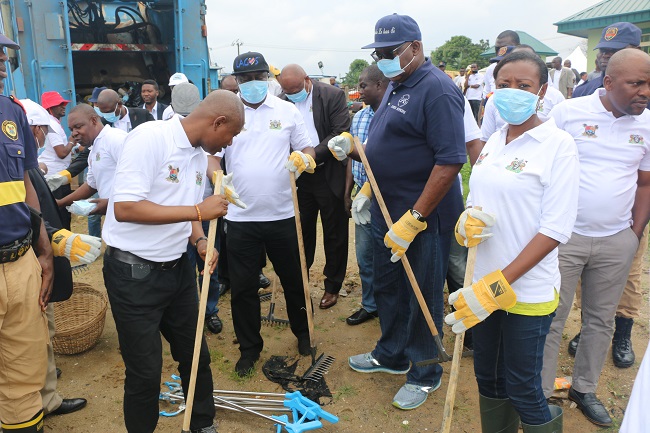
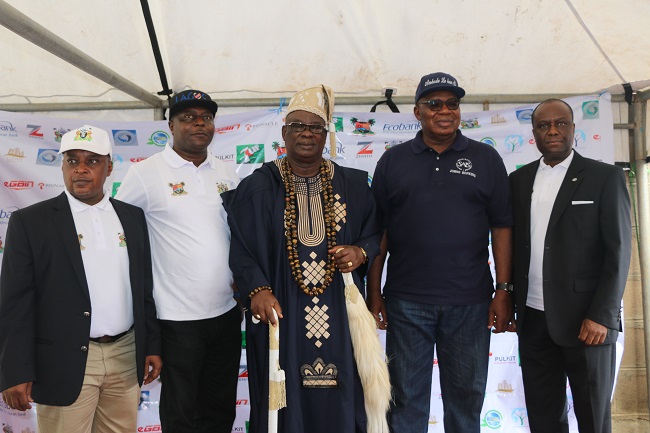
On Thursday, September 6, 2018, officials of the Lagos State Government, traditional rulers, private sector players and other stakeholders embarked on the clean-up of the waterfront at Ibeshe in Ikorodu.

Ibeshe Waterfront
Lagos State Commissioner, Ministry of the Environment, Mr. Babatunde Durosinmi-Etti, and other stakeholders cleaning the Ibeshe bBach at the maiden edition of the Clean up of Lagos Waterfront held at Ibeshe, Ikorodu
Ibeshe Waterfront
General Manager, Health Safety and Environment, Nigerian Ports Authority, Mr. Yusuf Ahmed; Permanent Secretary, Ministry of the Environment, Mr. Abiodun Bamgboye; Olubeshe of Ibeshe, Oba Richard Abayomi Ogunsanya; Commissioner for the Environment, Mr. Babatunde Durosinmi-Etti; and Executive Director, Corporate Banking, Mr Akin Dada, at the maiden edition of the Clean up of Lagos Waterfront held at the Ibeshe Beach


Climate smart growth could deliver $26tr to 2030

0

A major report released by the Global Commission on the Economy and Climate finds that the world may be significantly under-estimating the benefits of cleaner, climate-smart growth. Bold climate action could deliver at least $26 trillion in economic benefits through to 2030, compared with business-as-usual.

Ngozi
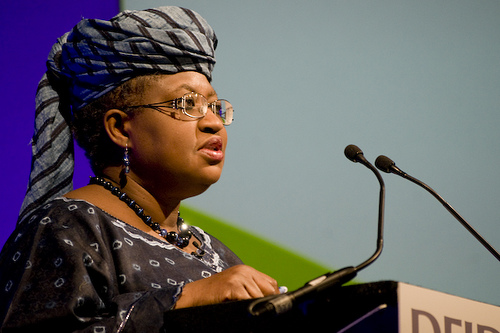
Mrs Ngozi Okonjo-Iweala, Co-Chair, Global Commission. Photo credit: flickr.com

The 2018 report was on Wednesday, September 5, 2018 presented to the United Nations Secretary-General António Guterres at a global launch at UN headquarters in New York City and arrives just one week before the Global Climate Action Summit in San Francisco, California.

The study finds that, over the last decade, there has been tremendous technological and market progress driving the shift to a new climate economy. There are real benefits to be seen in terms of new jobs, economic savings, competitiveness and market opportunities, and improved wellbeing for people worldwide, adds the research, stressing that momentum is building behind this shift by a wide range of cities, governments, businesses, investors and others around the world, but it is not yet fast enough.

“We are at a unique ‘use it or lose it’ moment,” said Ngozi Okonjo-Iweala, former Finance Minister of Nigeria and Co-Chair of the Global Commission. “Policy makers should take their feet off the brakes, send a clear signal that the new growth story is here and that it comes with exciting economic and market opportunities. $26 trillion and a more sustainable planet are on offer, if we act decisively now,” added Okonjo-Iweala.

“The momentum from businesses, states, cities, investors and citizens is now unstoppable, not least because those taking bold climate action are already seeing tangible benefits,” said Paul Polman, CEO, Unilever and Co-Chair of the Global Commission. “But if we are to unlock the full benefits of this new low carbon growth opportunity and avoid runaway climate change, economic and financial leaders in both government and the private sector need to do even more, and fast,” said Polman.

The Report highlights opportunities in five key economic systems – energy, cities, food and land use, water, and industry. It demonstrates that ambitious action across these systems could deliver net economic gains compared with business-as-usual and:

  • Generate over 65 million new low-carbon jobs in 2030, equivalent to today’s entire workforces of the UK and Egypt combined.
  • Avoid over 700,000 premature deaths from air pollution in 2030.
  • Generate, through just subsidy reform and carbon pricing, an estimated $2.8 trillion in government revenues per year in 2030 – equivalent to the total GDP of India today – funds that can be used to invest in other public priorities or reduce distorting taxes.

“We can now see that this new growth story embodies very powerful dynamics: innovation, learning-by-doing, and economies of scale. Further, it offers us the very attractive combination of cities where we can move, breathe, and be productive; sustainable infrastructure that is not only clean and efficient, but also withstands increasingly frequent and severe climate extremes; and ecosystems that are more productive, robust, and resilient,” said Lord Nicholas Stern, I G Patel Professor of Economics and Government at the LSE and Co-Chair of the Global Commission.

“Current economic models fail to capture both the powerful dynamics and the very attractive qualities of new technologies and structures. Thus, we know we are grossly underestimating the benefits of this new growth story. And further, it becomes ever clearer that the risks of the damage from climate change are immense and tipping points and irreversibilities getting ever closer,” he added.

The Global Commission calls on governments, business, and finance leaders to urgently prioritise actions on four fronts over the next 2-3 years:

  • Ramp up efforts on carbon pricing and move to mandatory disclosure of climate-related financial risks;
  • Accelerate investment in sustainable infrastructure;
  • Harness the power of the private sector and unleash innovation; and
  • Build a people-centered approach that shares the gains equitably and ensures that the transition is just.

“The purpose of this Report is to demonstrate how to accelerate the shift to this new growth path,” said Helen Mountford, Programme Director of the New Climate Economy and lead author of the Report. “It lays out the benefits of doing so, the challenges ahead, and the clear accelerators or actions, that can be taken to fully reap the rewards of stronger, cleaner, and more equitable growth,” said Mountford.

Former President of Mexico, Felipe Calderon, Honorary Chair of the Commission, said: “This is more than just a Report. It is a manifesto for how we can turn better growth and a better climate into reality. It is time we decisively legislate, innovate, govern, and invest our way to a fairer, safer, more sustainable world.”

World Bank swells Berlin Conference on ‘Boko Haram’ crisis with $600m

0

The World Bank has announced an additional $600 million (about N216 billion) for projects in the Lake Chad Basin region devastated by the Boko Haram terrorists.

Berlin Conference
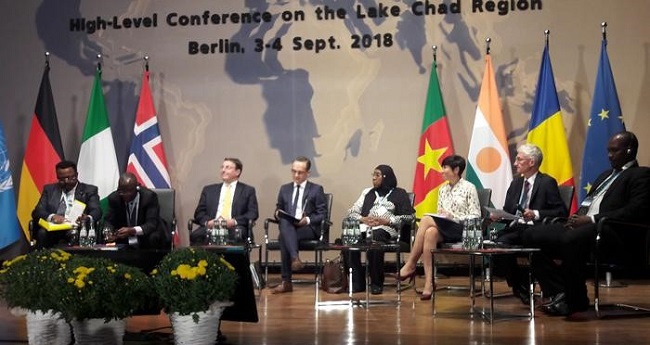
Delegates at the conference in Berlin, Germany

The bank made the announcement at the Berlin Conference on Boko Haram crisis, which held from Monday, September 3 to Tuesday, September 4, 2018 in Berlin, Germany.

The two-day high-level humanitarian conference was organised by the Governments of Nigeria, Germany and Norway, together with the United Nations.

The African Development Bank (AfDB) and the Islamic Development Bank also supported the Lake Chad Basin region with grants and concessional loans respectively.

The UN Emergency Relief Coordinator, Mr Mark Lowcock, thanked the banks and countries for their generous donations and supports in a series of tweets.

“Thank you WorldBank for your incredible support to Lake Chad Basin and for announcing an additional $600M for projects throughout the region!

“Many thanks AfDB for your grant of $35.65 million to the Lake Chad Basin as well as the announcement of $57.3 million in concessional loans,” Lowcook said.

According to him, the Islamic Development Bank is supporting the Lake Chad Basin with $80 million in concessional loans.

The UN humanitarian chief also thanked Ireland for pledging €7.3 million; Sweden, £32 million; the Netherlands, £12.1 million; Italy, £15 million; and Poland, £230,000.

“I was so pleased to see the contributions from donors to development activities in the Lake Chad Basin through the UN Peacebuilding Support Office,” Lowcock said.

The News Agency of Nigeria (NAN) recalls that the conference raked in about $2.52 billion in pledges and concessional loans, with Germany, the host country, pledging €265 million and Norway, $125 million.

The others were Switzerland, $20 million; France, €131 million; Belgium, €45 million; Finland, €2.3 million; and Denmark, $72.5 million.

NAN recalls that the United Kingdom pledged £146 million; Canada, Can$68 million; European Union, €231.5 million; Luxembourg, €40 million and Spain, €3.2 million.

By Prudence Arobani

Botswana calls elephant poaching report ‘unsubstantiated’

0

Botswana’s government on Wednesday, September 5, 2018 said reports about the poaching of almost 90 elephants were “unsubstantiated.”

elephant-poaching
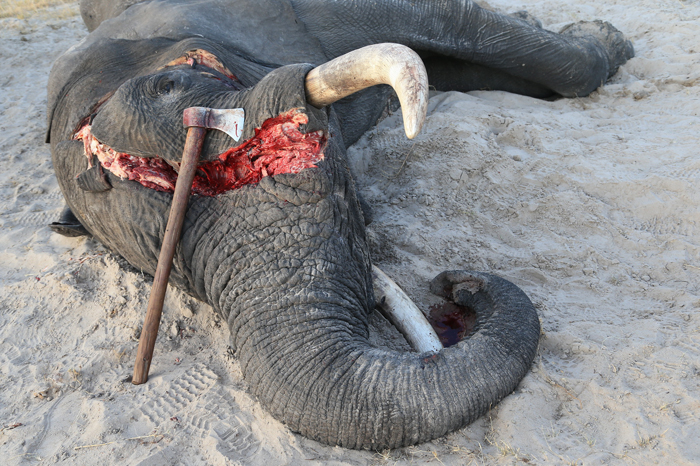
African elephant poaching in conflict zones suggests that corruption, rather than conflict, is the primary enabler of elephant poaching

“The government of Botswana has noted with concern unsubstantiated and sensational media reports on elephant poaching statistics,” it said in a statement.

The assertion comes a day after wildlife organisation Elephants Without Borders (EWB) said it discovered 87 elephant carcasses across the southern African nation while conducting a population survey.

“These statistics are false and misleading. At no point in August or recently were 87 or 90 elephants killed in one incident in any place in Botswana,” the statement read.

EWB had not claimed that the poaching occurred in a single incident: The organisation said it counted the carcasses over a period of three months.

The government acknowledged, however, that EWB reported to them the sighting of 53 elephant carcasses between July 5 and Aug.1.

“The scale of elephant poaching is by far the largest I have seen or read about in Africa to date,” according to Mike Chase of EWB.

The disarming of Botswana’s anti-poaching teams had directly coincided with the spike in poaching, Chase said.

Chase added that poachers were targeting older male elephants as they have the heaviest tusks, ideal for sale on the illegal ivory market.

In response, the government said the withdrawal of weapons “did not in any way affect the effectiveness and operations of the anti-poaching units.”

“The anti-poaching unit … continues to play a pivotal role in combating wildlife crime through other strategic interventions,” the statement read.

Past surveys have estimated Botswana’s elephant population to stand at around 130,000.

4.5tr cigarette butts thrown away yearly – Studies

0

The World Health Organisation Framework Convention on Tobacco Control (WHO FCTC) says cigarette butts have become the most discarded waste item worldwide, with some 4.5 trillion thrown away each year, representing £1.69 billion of toxic trash annually.

Cigarette butts
Cigarette butts

WHO-FCTC said various studies indicated that this was compounded and accelerated as bans on indoor smoking took effect in many of the world’s cities and countries over the past two decades.

WHO FCTC is a global health treaty that advocates for the control of tobacco production, sale and use, as a way of reducing tobacco-related illnesses, deaths, environmental degradation and poverty across the world.

The UN tobacco control treaty watchdog warned that apart from deforestation to soil degradation and pollution, tobacco production and its use by consumers is “tremendously destructive” for the environment.

Dr Vera e Silva, the Head of the WHO FCTC Secretariat, said, however, that control measures could help curb its negative environmental effects, including the damaging impact of climate change.

“People often immediately think of the health impact that tobacco has, but there is not enough awareness of how tremendously destructive it is for the environment too, on land, under water and in the air,” she said.

She stressed that high amount of deforestation occurs, not only to create space for tobacco farming, but also because a lot of timber is required for the drying process of tobacco leaves after they are harvested.

Estimates show that tobacco farming causes up to five per cent of global deforestation, with 200,000 hectares of natural wood biomass loss each year.

“Studies indicate that tobacco growing could be up to 10 times more aggressive than all other deforestation factors,” e Silva noted.

In addition, the report stated that tobacco crop production led to accelerated soil degradation, as it stripped the earth of nutrients such as nitrogen, phosphorus and potassium faster and more extensively, than other major food and cash crops.

She said environmental pollution from tobacco started well before cigarettes were discarded, during the production phase, as tobacco crops required large amounts of chemical fertilisers, pesticides and growth regulators that pollute the ground, nearby waterways and aquifers.

“Among the pesticides used to grow tobacco are some highly toxic products that affect animals and humans alike, many of which are banned, or being phased out in several countries,” she explained.

The UN tobacco control watchdog also recommended that parties to the treaty urgently adopt regulations that would make the industry responsible for the impact that it had on the planet.

“Tobacco giants have been lobbying worldwide for policies that exonerate them from any environmental responsibility but ultimately, tobacco producers should be responsible for liability, economic costs and provision of information on the environmental impacts of their activities.”

She explained that “governments need to understand that tobacco control is a major component of any effective and holistic environmental protection effort they want to undertake”.

By Prudence Arobani

11 dead, 600 injured as powerful Typhoon Jebi batters Japan

0

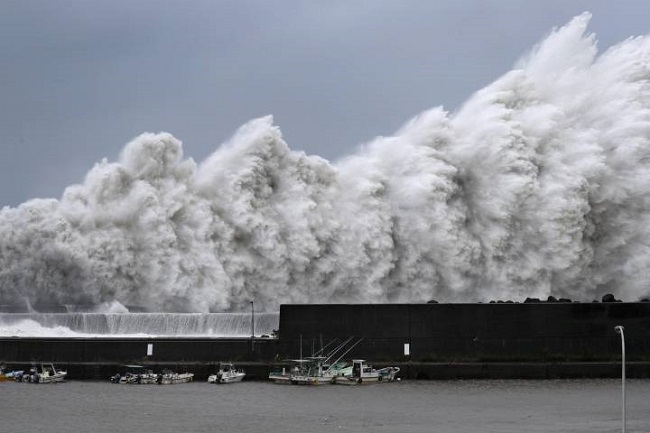
At least 11 people have been killed and about 600 injured after Typhoon Jebi ripped through Japan, the most powerful storm to hit the country in 25 years, local media reported on Wednesday, September 5, 2018.

Typhoon Jebi
Typhoon Jebi

Of the 11 deaths, eight people died in the western prefecture of Osaka, including four men, who fell from upstairs or the roofs of their houses after apparently being hit by strong winds, broadcaster NHK reported.

Three others died after they were hit by flying objects, the report said.

About 3,000 people spent the night at Kansai International Airport after a tanker hit the bridge connecting the offshore airport and the city of Izumisano, NHK said.

The ship was damaged, but its 11 crew members were not injured.

Authorities began taking some of those stranded to nearby Kobe Airport, which is also located on an artificial island, by ferry early Wednesday, while others were taken to the mainland by bus.

The ship, which had been anchored in Osaka Bay, was swept towards the bridge as the storm lashed Osaka.

The airport remained closed on Wednesday, leading to the cancellation of 162 flights, and it is still unknown when it will be back to normal operation, Kyodo News said.

One of its runways and the basement floor of a terminal building were flooded.

About half a million households in Osaka and five nearby prefectures remained without power, as of 11 am (0200 GMT), according to Kansai Electric Power.

The season’s 21st typhoon was downgraded to an extra-tropical cyclone over the Tatar Strait near Russia at around 9 am, the Meteorological Agency said, after dumping torrential rains on the northern island of Hokkaido overnight, toppling trees and utility poles.

Jebi made landfall around the southern part of Tokushima prefecture shortly after Tuesday noon, according to the agency.

Jebi was the latest in a series of weather-related disasters to hit the country in recent months.

In early July, torrential rains pummelled western Japan, triggering landslides and floods that left 226 people dead and 10 missing.

It was the country’s deadliest weather-related disaster in more than three decades.

An intense heatwave that enveloped the country immediately afterwards killed more than 130 people, as temperatures soared above 40 degrees Celsius in some places.

UN agencies to launch report on global food security, malnutrition

0

Five United Nations agencies are set to launch the new edition of “The State of Food Security and Nutrition in the World”.

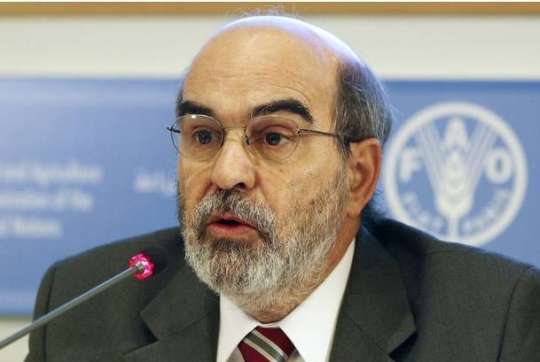
Jose Graziano da Silva
Jose Graziano da Silva, Director General of the FAO

The Food and Agriculture Organisation (FAO) said on Tuesday, September 4, 2018 that the launch would be on Sept. 11, in Rome, Italy, where it is based.

It said the five UN agencies are Food and Agriculture Organisation (FAO), International Fund for Agricultural Development (IFAD), World Food Programme (WFP), the United Nations Children’s Emergency Fund (UNICEF) and the World Health Organisation (WHO).

It disclosed that the head of the agencies, José da Silva, Director-General, FAO; Gilbert Houngbo, President IFAD; Tedros Ghebreyesus, Director-General, WHO; Henrietta Fore, Executive Director, UNICEF; and David Beasley, Executive Director, WFP, are expected to be the launchers.

The FAO said the report gave an updated estimate of the number of hungry people in the world, including regional and national breakdowns, and the latest data on child stunting and wasting as well as on adult and child obesity.

“It is indeed a snapshot on global hunger and malnutrition, and analysis of their main drivers.

“It is an important yardstick in measuring progress towards the Sustainable Development Goal of Zero Hunger,’’ it said in a statement.

It added that the report also offered analysis of the drivers of hunger and malnutrition, and this year included a special focus on the impact of climate variability and extremes.

By Hawa Lawal