Home Blog Page 1789

San Francisco proclaims October 8th as Indigenous Peoples Day

0

The City of San Francisco in California, USA, has joined several other cities in the country to proclaim October 8th as Indigenous Peoples Day.
San Francisco
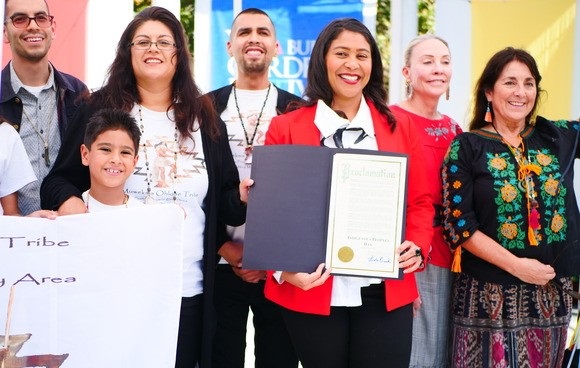
San Francisco Mayor London Breed presents the “Indigenous Peoples Day” Proclamation joined by representatives of the Muwekma Ohlone Tribe including Vice Chairwoman Monica Arellano and Council member Vince Medina, Board of Supervisors member Valle Brown and IITC Executive Director Andrea Carmen, Yerba Buena Gardens, San Francisco, October 8th, 2018. Photo credit: Anesti Vega

On Monday, October 8, 2018, during a celebration coordinated by the International Indian Treaty Council (IITC) in Yerba Buena Gardens, Mayor London Breed accompanied by Board of Supervisors Vallie Brown and Malia Cohen delivered a Proclamation stating that the City and County of San Francisco would no longer recognise “Columbus Day” and would instead celebrate Indigenous Peoples Day.

San Francisco joins 93 other US cities, as well as South Dakota, Alaska, Minnesota and Vermont in making this change as called for by Indigenous Peoples to uphold truth in history and recognise the atrocities they have survived because of colonisation.

The Proclamation affirms that “San Francisco is committed to being a city for all people and to standing against discrimination of all kinds. Celebrating Indigenous Peoples Day ensures we acknowledge and honor the original inhabitants of our country who are still here and working to support their communities.”

“As a major International city, the place where the United Nations was founded in 1945 and which also served as the staging ground for the California Gold Rush that decimated the Indigenous Peoples of Northern California, San Francisco’s Proclamation has special importance,” stated Andrea Carmen, IITC Executive Director, who introduced Mayor Breed at the event.

“Together with the removal of the ‘Early Days’ Statue located near San Francisco’s City Hall last month, this is a significant step in recognising the atrocities carried out against California’s First Peoples and moving forward on the basis of respectful relations,” stated Morning Star Gali, member of the Pit River Nation and Community Liaison for the IITC who MC’d the Yerba Buena Gardens event. Staff of the event’s cosponsor Yerba Buena Gardens Festival estimated attendance at more than 3000 participants.

In addition to the presentation of the Proclamation, the event featured statements by Indigenous leaders and San Francisco officials, Indigenous dancing, drumming and special recognitions. Representatives of the Muwekma Ohlone Tribe, one of several Ohlone Tribes that continue to inhabit the San Francisco Bay Area, also spoke on the significance of the Proclamation at the event.

The IITC also sponsored two other San Francisco events to commemorate Indigenous Peoples Day: the annual Sunrise Gathering on Alcatraz, with 1378 participants, and a California Indian Forum, “Taking Action to Heal our Communities” cosponsored by the Friendship House Assn. of American Indians.
‘Michael’ makes landfall as catastrophic Category-4 hurricane

0

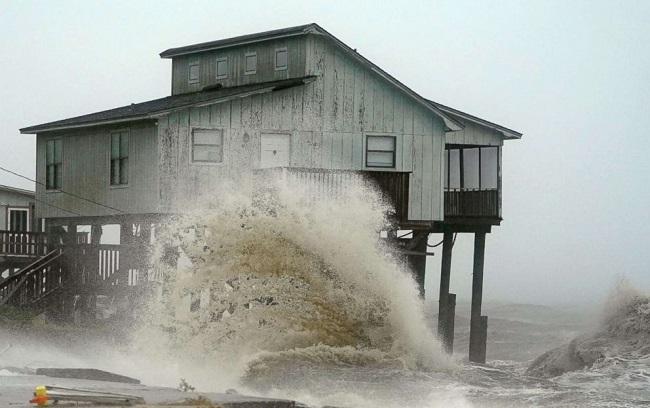
Hurricane Michael made landfall near Mexico Beach, Florida, USA in the afternoon of Wednesday, October 10, 2018 as a Category-4 storm, with “catastrophic” winds reaching 155 mph, according to the National Hurricane Centre.

Hurricane Michael
Waves take over a house as Hurricane Michael comes ashore in Alligator Point

The Associated Press reports that the storm made landfall between Panama City and St. Vincent Island, and some Panama City Beach buildings were torn apart by the devastating winds.

U.S. Federal Emergency Management Agency Administrator, Brock Long, called the powerful storm “a hurricane of the worst kind.”

Earlier Wednesday, meteorologist Dennis Feltgen wrote on Facebook that there is no record of a Category-4 hurricane ever hitting the area and urged people to find a safe place.

“We are in new territory with now Category-4 Hurricane Michael and its 130 mph sustained winds,” he wrote. “The historical record, going back to 1851, finds no Category 4 hurricane ever hitting the Florida Panhandle. Bay County (Panama City) likely to be ground zero for landfall later this afternoon.”

Weather indicators were reported to be clocking maximum sustained winds of 145 mph. Florida Gov. Rick Scott wrote Wednesday: “If you chose to stay in an evacuation zone, you must SEEK REFUGE IMMEDIATELY.”

CITES bans African Rosewood trade from Nigeria

0

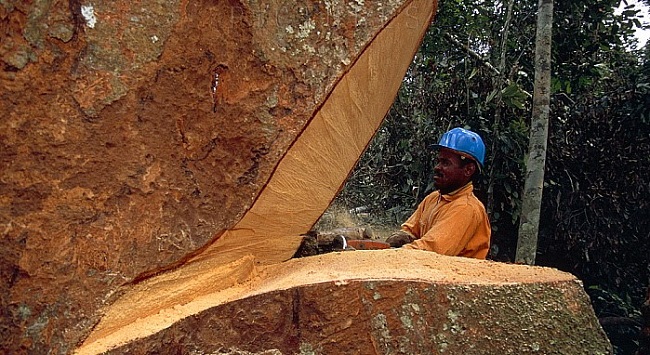
The Standing Committee of the Convention on International Trade in Endangered Species of Wild Fauna and Flora (CITES) has suspended commercial trade in the African Rosewood (Millettia laurentii) from Nigeria.

African Rosewood
The African Rosewood tree being cut with chainsaw. Photo credit: Michel Gunther / Biophoto / Minden Pictures

This formed part of measures agreed on by the international conservation organisation to achieve full compliance with international wildlife trade regulations at its 70th meeting that held in Sochi, Russian Federation, from October 1 to 5, 2018.

According to CITES, since the beginning of 2018, Nigeria has authorised over 180,000 m3 of the precious timber to China and Viet Nam, without first making sure that these exports will not threaten the survival of the species.

Apparently miffed by this development, the CITES Committee decided to recommend suspension of commercial trade in the timber species until Nigeria has made a non-detriment finding for the species in the country.

“The CITES Standing Committee dealt with a myriad of wild species and complex issues in the nexus between conservation, trade and development. The seriousness and determination of Parties to bring international wildlife trade rules to their full strength were demonstrated by the frank and constructive debate and decisions made on compliance issues, including the decisions on African rosewood, sei whales, pangolins, elephant ivory and to rectify the mismanagement of trade in CITES-listed species by certain countries,” said David Morgan, Officer-in-Charge of the CITES Secretariat. “This has again shown the real-world impact of CITES when governments around the world are fully committed to respect their obligations under the treaty. The Secretariat commends all Parties on their cooperation and their commitment to implement and enforce the Convention.”

The Standing Committee debated the “introduction from the sea” of sei whales, which is considered as international trade under CITES, from the western North Pacific population by Japan and determined that this activity was for commercial purposes and therefore not in compliance with the Convention. In response to this conclusion, Japan committed to take swift remedial action, and to delay the departure of the concerned research whaling vessels to the western North Pacific and to not authorise any harvest of the sei whales from the high seas in this region until the Standing Committee has assessed Japan’s progress in implementing the remedial actions at its next meeting in May 2019. If not satisfied with the action taken, the Committee may take compliance measures.

The compliance measures that the Committee can take include recommendations to suspend trade in some or all CITES-listed species and represent a unique strength of the Convention. The goal of such measures is to achieve long-term and sustained compliance with the Convention thereby ensuring the survival of the species in the wild. To better achieve the goal and to support countries in achieving full compliance, the Committee agreed that the development of a Compliance Assistance Programme should be considered by the Conference of the Parties in May 2019.

Compliance assistance is already being provided to Lao People’s Democratic Republic, another case of non-compliance considered by the Committee at the meeting. While significant efforts have been deployed by Lao PDR to effectively implement and enforce its CITES obligations, the country continues to be affected by illegal trade and faces challenges to ensure that authorised exports are legal and sustainable. The Committee therefore decided to recommend to all Parties that they suspend commercial trade in the high value Siamese rosewood, including finished products, from Lao PDR until it can be scientifically justified that such exports are sustainable. Lao PDR agreed with the recommendations and committed to report on implementation by February 1, 2019.

The Committee also reviewed compliance issues in the Democratic Republic of the Congo (DRC), where considerable progress had been made since the matter was last discussed late in 2017, to address high levels of illegal trade. However, the DRC is still having difficulties to put the proper mechanism in place to ensure that authorised exports are sustainable and was requested to strengthen its Scientific Authorities by building capacity and allocating sufficient modern resources for making the necessary scientific studies to determine how much can be traded without threatening the survival of the species in the wild. Finally, in view of these persistent challenges, the Committee recommended that Parties suspend trade in grey parrots and in pangolins from the DRC.

The meeting of the Standing Committee also agreed to present new or revised resolutions and decisions on a range of issues to the next gathering of the governing body of the Convention, the Conference of the Parties, which will meet for the 18thtime in Sri Lanka in May-June 2019 (CoP18). The host of CoP18 attended the meeting in Sochi and told participants that “20 million warm hearts are waiting to meet you in Colombo next year”.

The next meeting of the CITES Standing Committee will take place in Colombo, Sri Lanka, on May22, 2019, a day prior to the start of the CoP18.

Africa urged to speak with one voice on climate issues

0

The Seventh Conference on Climate Change and Development in Africa (CCDA-VII) opened on Wednesday, October 10, 2018 in Nairobi, Kenya with a strong call for Africa to prepare and speak with one voice when it goes to the next UN climate change talks (COP 24) holding in Katowice, Poland in December.

Keriako Tobiko
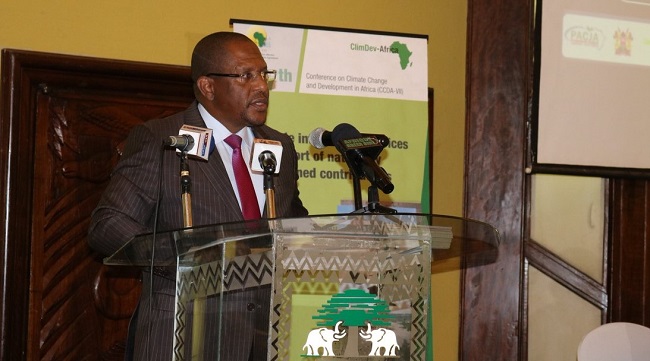
Kenya’s Environment and Forestry Minister, Keriako Tobiko

Kenya’s Environment and Forestry Minister, Keriako Tobiko, speaking on behalf of President Uhuru Kenyatta, said climate change was a matter of life and death for Africa, hence the need for its leaders to speak with a strong unified voice and be heard when participating in multilateral climate negotiations and other global issues.

“We have all experienced the devastating and unprecedented impacts of climate change on our peoples’ lives and livelihoods as well as our national economies. Africa is the most vulnerable continent despite contributing only about 4% to global greenhouse gas emissions but when we go to argue our case we speak in tongues and come back with no deal,” he said.

“We need to make sure that we have a unified voice as we proceed to COP24. We should showcase our own solutions to climate change; solutions that are developed and customised to fit our own situation.”

He said that, given Africa’s shared ecosystems and the fact that natural resources know no boundaries, it was essential that “we continue to speak in one voice to safeguard the basis of our development and seek transformative solutions”.

Commenting on the Intergovernmental Panel on Climate Change’s (IPCC) “Global Warming of 1.5oC special report and its impacts in the context of strengthening the global response to the threat of climate change, sustainable development, and efforts to eradicate poverty”, Mr. Tobiko said limiting global warming to 1.5oC would require rapid, far reaching and unprecedented changes in all aspects of society.

“Operationalisation implies that adequate and predictable resources be mobilised and made available to support adaptation and mitigation action in Africa and other developing world,” he said, adding that it was important that discussions and outcome of CCDA-VII contribute to building momentum towards the upcoming COP24 and implementation of Nationally Determined Contributions (NDCs).


All is not Doom and Gloom

As captured in the IPCC special report on the impacts of global warming of 1.50C, James Murombedzi of the African Climate Policy Centre (ACPC) emphasised that climate change poses undoubtedly the greatest risk to the realisation of the ideals of the AU’s Agenda 2063 and the UN’s Sustainable Development Goals (SDGs).

But the report concluded that “anthropogenic emissions up to the present are unlikely to cause further warming of more than 0.5°C over the next two to three decades (high confidence) or on a century time scale (medium confidence)”.

Murombedzi therefore believes that not all is doom and gloom as “there is a chance for a stable climate system which will allow for sustainable development but only if we do manage to halt emissions in the projected time frame”.

He said there are opportunities to be harnessed by halting emissions and to have an organised transition to a carbon neutral future in the shortest time possible; and restructuring local economies to ensure sustainable development without further emissions.

Tobiko also believes yhat climate change threats present opportunities for innovative and green investments for Africa.

“This is why implementation of the Paris Agreement remains a priority for the continent to adapt to the inevitability of climate variability and change. It is however important to emphasise that achieving the goals of the Agreement require committed leadership from state and non-state actors,” he said.

Local communities, women and the youth, he said, should be engaged in Africa’s efforts to combat the vagaries of climate change.


CCDA-IV Call for Climate Action

The theme for this year’s CCDA forum is “Policies and actions for effective implementation of the Paris Agreement for resilient economies in Africa”, chosen to reflect Africa’s collective engagement and commitment to strengthen climate change actions in the context of its development priorities.

The CCDA is an initiative of the ClimDev-Africa Initiative, a tripartite programme of the African Union Commission (AUC), the African Development Bank (AfDB) and the UN Economic Commission for Africa (ECA).

It was conceived as a physical dialogue place to promote interaction between science and policy on issue related to the climate change-development nexus.

This year’s meeting has attracted over 700 participants from member states, climate researchers, academia, civil society organisations, private sector, youth, women and local government leaders, among others.

“There are numerous practical and innovative solutions at community, sub-national, national and international level that we should never ignore in Africa. Climate change affects all of us but it affects doubly the most vulnerable members of our communities, so we should always engage them because they also have the knowledge and solutions,” said Tobiko.

Courtesy: PAMACC News Agency

Mercury treaty approves first five projects of Convention

0

The Minamata Convention on Mercury has approved five projects in the First Round of its Specific International Programme amounting to $1 million.

Minamata Convention on Mercury
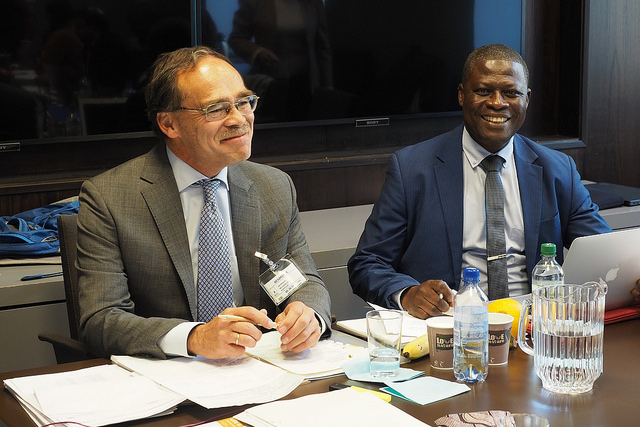
Sam Adu-Kumi (right) and Reggie Hernaus

Co-Chairs of the Governing Board of the Specific International Programme of the Convention, Sam Adu-Kumi (Ghana) and Reggie Hernaus (The Netherlands), who made the disclosure in a statement on the Convention’s website on Monday, October 8, 2018, said that the projects were approved on Wednesday, October 3.

The successful projects were submitted by Argentina, Armenia, Benin, Iran and Lesotho.

The Specific International Programme is aimed at improving the capacity of developing-country Parties and Parties with economies in transition to implement their obligations under the Convention.

“On behalf of the Board, we would like to congratulate these applicants,” stated Adu-Kumi and Hernaus, adding: “We noted the high interest in the Specific International Programme, and would like to commend all the applicants, whether successful or not in the First Round, for having prepared high-quality submissions despite the short time frames.”

In total, 19 applications, from 18 Parties, were received by the deadline. According to the Board, it was heartened that applications were received from all regions, including from least developed countries and from small island developing states.

The Co-Chairs added: “The Board would also like to sincerely thank Austria, Denmark, Germany, the Netherlands, Norway, Sweden, the United Kingdom, and the United States for their contributions to the First Round of the Specific International Programme.

“The Board was unfortunately not in a position to satisfy all requests for funding in this round. Given the high interest shown we hope to be able to launch the next round soon and in this regard would like to encourage those in a position to do so to contribute to a robust next round of the Programme.

“The Board will present its full report to the Conference of the Parties at its second meeting.

“On behalf of the Board we would also like to thank the Government of Norway for the gracious invitation to convene this meeting in Oslo.”

The Minamata Convention on Mercury, under Article 13, sets up a Specific International Programme to support capacity building and technical assistance.

The Governing Board of the Specific International Programme met in Oslo, Norway, from October 2 to 3 to review applications to its First Round.

The Members of the Governing Board of the Specific International Programme are:

  • For Africa:  Sam Adu-kumi (Ghana) and Younous Adoum Abdallah (Chad)
  • For Asia and the Pacific: Prasert Tapaneeynagkul (Thailand) and WTB Dissanayake (Sri Lanka)
  • For Central and Eastern Europe: Kaupo Heinma (Estonia) and Anahit Aleksandryn (Armenia)
  • For Latin America and the Caribbean: Florencia Grimalt (Argentina) and Nero Cunha Ferreira (Brazil)
  • For Western Europe and Others: Reggie Hernaus (The Netherlands) and Atle Fretheim (Norway)

Farmers urged not to plant close to water courses

0

The President, Nigerian Meteorological Society (NMetS), Prof. Clement Akoshile, on Wednesday, October 10, 2018 urged farmers to desist from planting close to water courses.

rice-farming
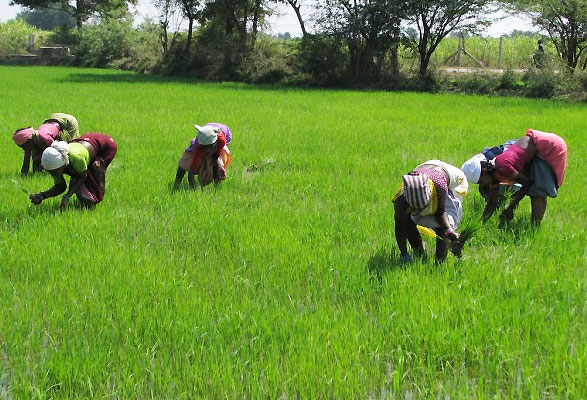
Rice farming

Akoshile gave the advice in an interview with the News Agency of Nigeria (NAN) in Lagos.

According to him, farms that produce crops such as rice and millet among others need a lot of water.

“Such crops should not be planted along water courses so that water will not wash them away.

“Farmers should make sure they give allowance for the water course, but they can create channels far from the massive water and those one’s can come as irrigation points.

“If they are able to create the channels, they will be useful for agriculture and for their personal use as well,” he said.

Akoshile said that government at all levels could also assist farmers in creating a place where the flood water could be stored.

He said that those ponds would be useful especially when excess water from the dams that contribute to flooding were released.

The president said that the diverted flood water could be amassed and used like dam for agricultural purposes.

He called for more efforts by government to ensure that areas prone to flood have a secondary dam to boost farming.

Akoshile explained that the secondary dams would become useful for farmers instead of posing as danger to the people.

He maintained that government already knows flood prone areas from geological and geographical surveys as well as meteorological records.

“As soon as government maps out the areas prone to flooding, it will be easy to plan where to divert or store the water so that the area may not become flooded.

“This could also be extended to mapping out areas where people should and should not build houses or do farming,’’ he said.

Akoshile said that those infrastructures that block water channels should also be mapped out and removed to stop flooding and prevent destruction of lives and property.

By Chidinma Agu

Floods submerge over 500 rice farms in Bayelsa community

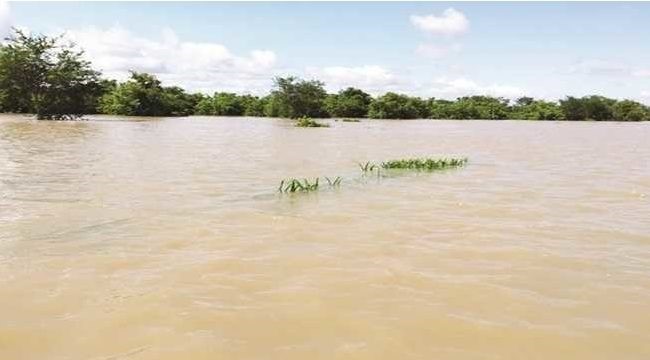
No fewer than 500 rice farms at Okpotuwari and Ondewari communities in Southern Ijaw Local Government Area of Bayelsa State have been submerged by floods, the News Agency of Nigeria (NAN) reports.

Flooded farm
A flooded farm

Mr Ezekiel Ogbianko, Chairman, Rice Farmers Association in the state, who inspected the submerged farms on Wednesday, October 10, 2018, called on the federal and state governments to come to the aid of the affected farmers.

At Ondewari, a community leader, Prof. Itimi Godwin, said that the rice farms were ready for harvest before the disaster.

“We need a lot of things, particularly we want the National Emergency Management Agency (NEMA) to come and see the level of damage done here.

“As you can see, this is a colossal loss; we are calling on the federal government to come to our aid, as the people here are suffering. We need relief materials such as rice, garri, cement and roofing sheets,” he said.

NAN recalls that NEMA had earlier said that over 150,000 people have been displaced by flood in Bayelsa this year.

The site manager of Ondewari Rice Farm, Mr Fredrick Adam, said the loss was colossal and the farmers would appreciate immediate support from government.

Also, the Paramount Ruler of Okpotuwari Community, Chief Tiger Moses, said that the community was expecting bountiful harvest before the flood.

“As you can see the flood is very disturbing, our crops have been destroyed, fish settlement and plantain farms are also damaged.

“We want the assistance of the federal government and other stakeholders; right now, our sources of water have been contaminated,” he added.

By Shedrack Frank

Most economic losses from disasters are climate-related – UN

Climate-linked disasters accounted for three-quarters of overall disaster losses in the past 20 years causing at least $2.25 trillion of damages, the UN reported on Wednesday, October 10, 2018.

Nigeria flood
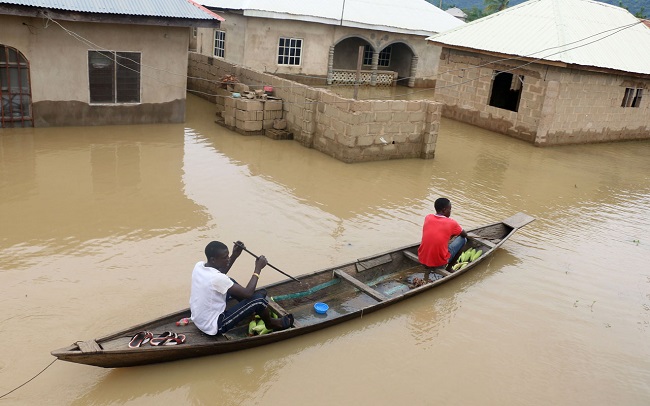
Residents steer a dugout canoe past flooded houses following heavy rain in the Nigerian town of Lokoja, in Kogi State, on September 14, 2018. Photo credit: AFP / Sodiq Adelakun

From 1998 to 2017, direct losses from all disasters totaled $2.9 trillion, of which 77 per cent was due to extreme weather that is intensifying as the world warms, the UN Office for Disaster Risk Reduction (UNISDR) said in a report.

That compares with overall losses of $1.3 trillion from 1978 to 1997, 68 per cent of that accounted for by climate and weather hazards, including storms, floods and droughts.

“We can see that climate change is playing an increasingly important role in driving up disaster losses around the world, and that probably will be the case in the future as well,” said Ricardo Mena, an official at the Geneva-based UNISDR.

On Monday, climate scientists warned that if global average temperatures rise more than 1.5 degrees Celsius (2.7 degrees Fahrenheit) above pre-industrial times, it would lead to more suffering – especially among the world’s poorest.

The planet has already heated up by about one degree Celsius.
Climate change is increasing the frequency and severity of extreme weather, and disasters will continue to set back sustainable development, the UNISDR report warned.

Climate-related disasters accounted for about 90 per cent of the 7,255 major disasters between 1998 and 2017, most of them floods and storms, it said.

Losses were greatest in the U.S. at $945 billion, followed by China at 492 billion dollars and Japan at $376 billion.

In the past two decades, 1.3 million people were killed and 4.4 billion were injured, left homeless, displaced or required emergency help.

More than half the deaths were caused by 563 earthquakes and related tsunamis, said the report drawing on data from the Centre for Research on the Epidemiology of Disasters in Belgium.

Although rich countries shoulder the highest absolute economic losses, the report noted the disproportionate impact of disasters on low and middle-income countries.

People in poorer nations are seven times more likely to be killed by a disaster than in wealthier ones, Mena said.

In developing countries, economic losses are not analysed for many disasters, meaning the new data was just the “tip of the iceberg”, he noted.

Puerto Rico was the only high-income territory ranked among the top 10 places for annual losses as a percentage of economic growth, alongside Haiti, Honduras, Cuba, El Salvador, Nicaragua, Georgia, Mongolia, Tajikistan and North Korea.

Mami Mizutori, UN Special Representative for Disaster Risk Reduction, called for greater efforts to tackle high fatalities in regions prone to earthquakes.

The 2,000 deaths and widespread destruction caused by last month’s earthquake and tsunami on Indonesia’s Sulawesi island exposed the need to raise public awareness and apply high standards for construction in seismic zones, she added.

The report ramped up the urgency for countries to put into practice a global plan for managing disaster risk hammered out in 2015 in Sendai, Japan, UNISDR’s Mena said.

SR15: Sounding the climate alarm

0

The climate alarm could not have been much louder than the special report (SR15) that was released on Monday, October 8, 2018 by the Intergovernmental Panel on Climate Change (IPCC). While the Paris Agreement presented the famous target of limiting global temperature rise to 1.5 degrees Celsius, or well below 2.0 degrees, the special report shows that such a range may actually be political wishful thinking. The Special Report clearly shows that a temperature rise of 1.5 degrees above pre-industrial levels will bring about severe changes compared to current extreme weather events.

IPCC Report
The Special Report shows that a temperature rise of 1.5 degrees above pre-industrial levels will bring about severe changes compared to current extreme weather events

Professing a diagnosis is easier than providing a solution, especially when you do not wish to ruffle feathers. Most scientists and laymen agree that although global warming has risen and abated in the past, what has happened since the industrial revolution is a vertical climb that shows no sign of reversion. It is also generally agreed that the catastrophic rise is largely systemic – caused by the exploitative economic system that the world is locked on. It is this rigged system that blocks the routes to the needed climate action.

Is it not known that the problem is about the continual burning of fossil fuels that stokes the atmosphere with greenhouse gases? Why is the world reluctant to stop the extraction and burning of fossil fuels even though these are known to be detrimental? The answer is simply that the powers-that-be prefer profit to people and the planet. So, business as usual continues and disaster brings even more profit through displacement of poor people and the grabbing of resources that the poor and the vulnerable are unable to access or return to.

The world will cringe at the dire prognosis of the report, and then go right ahead to dig up more coal, more crude oil and proceed with more fracking. Governments will still dig for coal and destroy forests in the process, despite loud alarms raised by forest protectors such as the ones at the Hambach Forest in Germany. And in Nigeria, the flaring of associated gas will continue and the dream of a superhighway through the last pristine forest will persist in Cross River State.

Happily, the appeal court at The Hague sided with Urgenda in the case against the Dutch government and declared that the government has a duty to take adequate climate action as a means of protecting the citizens from climate impacts and for securing the human rights. Interestingly the court also discounted the Dutch government’s argument that the carbon being pumped into the atmosphere today will be sucked out in future. We note that SR15 also acknowledges that the carbon-sucking technologies being bandied about are unproven.

The IPCC report diagnosed the problem and raised the alarm urging politicians and economic leaders to act. However, some of the suggested actions are equally alarming and will likely add more problems for the poor, the unprotected and the vulnerable, in the unfolding climate chaos.

We are told that the window for halting the chaotic climate march is a narrow 12 years. It is stated that by 2030, the global emissions of carbon dioxide must be cut by 45 percent from 2010 levels. It is also estimated that by 2050 renewables should provide 85 percent of global electricity.

So, what is to be done? When the IPCC says that action must be taken to ensure that the store of carbon in the atmosphere is brought to net zero, what is meant is that the amount of carbon released from excessive consumption and burning of fossil fuels and the like must be equal to the amount of carbon that is captured and stored somewhere, locked in sinks or deflected by some other means. These proposed actions, the hallmark of market environmentalism, are the real alarm bells that we should wake up to.

And, we cannot forget that about seven million square kilometres will be needed for so-called energy crops.  That sounds nice, no? The more understandable names for those crops are biofuel and agrofuel crops. These are crops grown to feed machines or to provide biomass for some synthetic processes. An uptake of that massive size of land away from food crops will bring profit to industrial farmers; promote genetically engineered crops and attendant agrotoxics while raising global hunger and diverse social malaise. Also, more forests will be designated as carbon sinks with corresponding exclusion of communities from enjoying and managing their common heritage.

It is estimated that up to $2.4 trillion would have to be invested in energy systems in the next two decades to limit global temperature increase to 1.5 degrees Celsius. This is at a time that the world cannot raise $10 billion for Climate Finance.

Polluting and capturing and locking up pollutants in some carbon prisons, is not a new idea. It is a brilliant marketing spin. It allows business as usual, permits climate irresponsibility and delivers heavy cash to the polluters. For example, oil companies that use associated gas to literally scrape the bottom of oil wells will claim they are engaged in carbon capture and sequestration – even though they release the carbon in the first instance by drilling for oil. Companies engaged in geoengineering will don their beautiful badges as climate engineers and work to deploy an array of climate-interfering planetary experiments – including cloud whitening, solar mirrors in the sky, other forms of solar radiation management as well as ocean fertilisation. Yes, with net zero carbon targets we can keep cranking up global temperatures but hope that “we have the technologies” to handle the problems.

Humankind’s techno optimism gives policy makers that assurance and also that the oceans and genetically engineered trees can suck carbon from the atmosphere. It assures them that we can ape volcanoes and release particles into the sky that would block the sun and cool the earth. Suddenly it is as though our planetary systems are not interconnected and one part can be tweaked without a corresponding result elsewhere. But, who would really care if the negative impacts can be deflected on those destined for the slaughter?

Catastrophe is not inevitable if we can wake up from slumber and face reality. Life style changes and alternative investment patterns can no longer be delayed. Investment in socialised forms of renewable energy cannot be postponed. Fossil fuels must be seen as stranded or bad assets and left in the ground. Agroecological food production cools the planet, so investment and support must be extended to that and to small scale producers.

The cost of inaction or bad action is extreme. Temperature increases will make it impossible for certain crops, including maize, rice and wheat to be cultivated. Millions more will be hit by flooding. Sea level will rise, and coastal erosion will be more dramatic. With the suite of negative changes, the tide of climate refugees will rise.

The voluntary, nationally determined contribution of the Paris Agreement is clearly not the solution. It is time for nations to step up and accept legally binding emissions reduction based on historical and current carbon emissions. The alarm has been sounded. It is no more time to sleep.

By Nnimmo Bassey (Director, Health of Mother Earth Foundation)

Building resilient African economies requires institutional reforms, says UNECA

0

Institutional reform is a key intervention towards ensuring the resilience of African economies and the livelihoods of communities, says the African Climate Policy Centre (ACPC) of the United Nations Economic Commission for Africa (ECA).

CCDA7
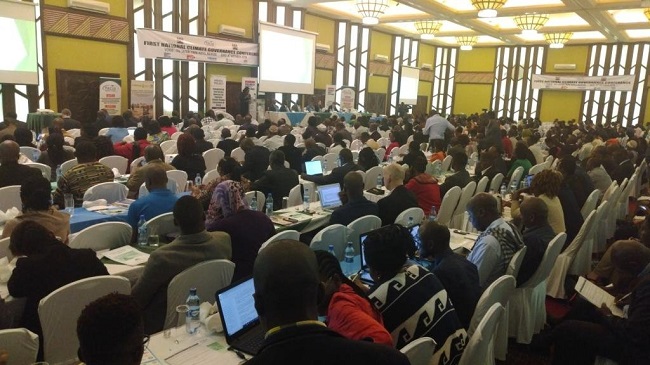
Participants at the First Kenya National Climate Governance Conference

According to James Murombedzi, Officer-in-Charge of ACPC, communities have long practiced many adaptation strategies and devised many viable responses to changing conditions.

“However, there are limits to how well communities can continue to practice adaptive livelihoods in the context of a changing climate. They need the support of an enabling environment created by government-planned adaptation,” he observed.

He was addressing participants at the First Kenya National Climate Governance Conference on Tuesday, October 9, 2018, which preceded the Seventh Conference on Climate Change and Development in Africa (CCDA-VII) commencing on Wednesday in Nairobi, Kenya.

The climate governance conference comes on the heels of the IPCC report on Global Warming of 1.5oC, which says the world is heading towards catastrophe if immediate action is not taken to halt greenhouse gas emissions.

“We have adequate knowledge of the causes of global warming, and the science is conclusive. There is no room for climate deniers in this discourse,” said James Murombedzi. “However, the inaction that we have seen is not because there is insufficient knowledge or technology or finance. We have enough of these to be able to change the way in which we produce, distribute and consume goods and services.”

The report by the Intergovernmental Panel on Climate Change confirms what the impacts of climate change that African is already experiencing.

Mithika Mwenda of the Pan-African Climate Justice Alliance (PACJA) said the implementation of climate policies remains crucial.

“The successful implementation of Nationally Determined Contributions (NDCs), a set of actions each country has committed under Paris Agreement to combat climate change, will be determined by the policy and legal frameworks which will be laid down by individual countries,” he noted.

African economies and communities are generally dependent on natural resources. The use and management of these natural resources also tends to be characterised by institutional structures which are poor, making them vulnerable to climate extremes.

CCDA-VII will focus on mobilising action towards the achievement of the objectives of the Paris Agreement.

The ACPC, through the ClimDev Africa initiative, is already exploring the climate governance prospects for Africa structural transformation towards achieving the aspirations of Agenda 2063 and the Sustainable Development Goals (SDGs).

“Climate change is cross-cutting. It affects every aspect of life, and our ability to achieve the SDGs or indeed any of the aspirations of agenda 2063 is constrained by climate change. Because of its cross-cutting nature, climate governance is complex. It requires the participation of multiple stakeholders, with sometimes conflicting interests,” said James.

With the support of DfID, the ACPC is also implementing the Weather and Climate Information Services (WISER) which seeks to promote the production and use of climate information and contributes to building the capacities of hydrological and meteorological authorities across the continent.

he ACPC has also developed a five-year programme which seeks to support African countries in building resilient infrastructure and economies.

Climate finance is however a major constraint to climate action.

The ACPC posits that “if local governments access decentralised climate finance, they should be empowered to disburse these climate funds for investment in priorities chosen with communities for adapting to climate change”.

Courtesy: PAMACC News Agency