Ahead of the launch on Monday, October 8, 2018 of a much-anticipated report by the Intergovernmental Panel on Climate Change (IPCC) laying out urgent actions needed to stop runaway climate change, leading scientists will highlight the role forests must play in staving off dangerous global warming.
The researchers at a forum scheduled to on Thursday, October 4, 2018, will detail why meeting the Paris Agreement climate targets requires both a drastic reduction in fossil fuel use and the protection and expansion of forests. They are cautioning that if forests don’t stay standing, the climate – and people living near and far from felled or burned forests – will suffer.
On the call, several of the world’s top scientists will emphasise the top five reasons why forests are the carbon-capture technology mankind needs to fight climate change. Based on the latest peer-reviewed research, the statement underlines why forests are one the most powerful tools in the global fight to limit warming to 1.5°C.
According to the researchers, the world’s forests – especially tropical forests in Latin America, Southeast Asia and Central Africa – are under threat from the rapidly expanding production of cattle, palm oil, soy and wood products.
They point out that forests contribute significantly to removing carbon from the atmosphere and provide climate benefits beyond carbon, including regulating global rainfall patterns, keeping water sources clean and bountiful, and providing food, incomes and medicine to millions of people.
The scientists further stress that stopping deforestation, restoring forests and improving forestry practices could remove seven billion metric tons of carbon annually – equal to eliminating 1.5 billion cars, more than all the cars in the world today.
But, they add, with 2017 being the second-worst year on record for tropical tree cover loss, the world may be squandering one of its best opportunities to both remove excess carbon from the atmosphere and meet the 1.5°C targets in the Paris Agreement.
The Intergovernmental Panel on Climate Change (IPCC), the leading international body for the assessment of climate change, will release its Special Report on the impacts of global warming of 1.5°C on Monday, October 8, 2018, after meeting to consider and approve the report in Incheon, Republic of Korea, starting from Monday, October 1.
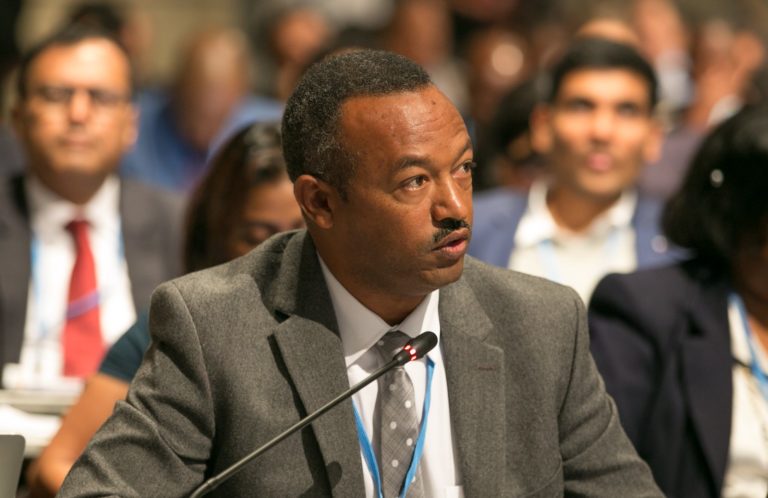
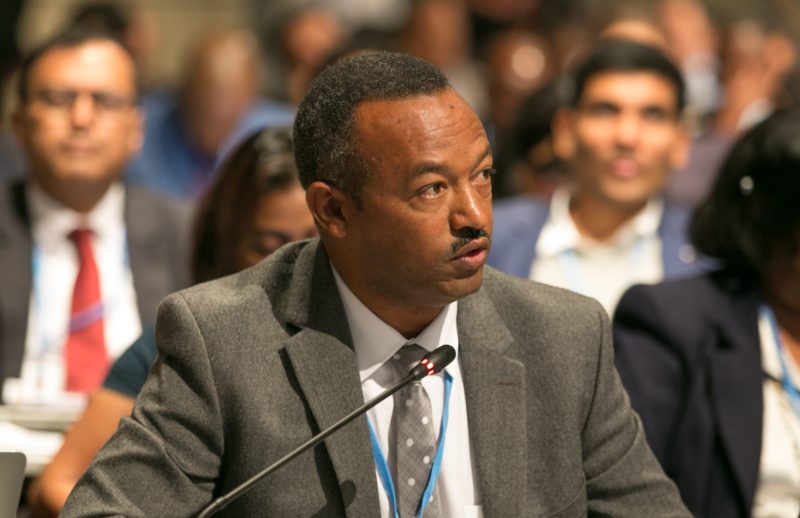
Chair of the Least Developed Countries (LDC) group, Gebru Jember Endalew
Commenting on his expectations for the report, Gebru Jember Endalew, Chair of the Least Developed Countries (LDC) Group said, “It will be important that the report and the Summary for Policy Makers clearly sets out the scientific necessity of limiting global warming to 1.5°C as opposed to 2°C to protect people and the planet, and highlights the vast discrepancy between this goal and our current global emissions pathway. In doing so, the report will shine a spotlight on the scale of the challenge the international community must rise to meet. A future where warming is limited to 1.5°C is a brighter future for all.
“Governments across the world must take the report seriously and respond with science-based policies to spur genuine emissions reductions. Our world’s natural systems place limits on us that we cannot negotiate, and all countries need to respond accordingly with fair and ambitious climate action. This means rapidly scaling up pre-2020 efforts, providing finance and technology so LDCs and other developing countries can respond, and submitting more ambitious climate pledges in line with countries’ respective responsibilities for climate change and capacities to respond. Current plans that countries have submitted will not be enough; full implementation of those contributions will still put the world on a pathway of more than 3°C warming. Every moment we delay, climate change impacts are intensifying, becoming increasingly expensive and creating more loss and damage.
“The IPCC’s outputs must demonstrate that limiting the global temperature increase to 1.5°C is not only necessary, it is achievable. The LDC Group hopes that the report will highlight the real climate solutions that are available right now and catalyse action at all levels to implement deep economy-wide changes towards climate resilient and decarbonised societies.
“While the challenge ahead in addressing the impacts of climate change is immense, so too are the opportunities. Responding to climate change opens doors for sustainable development and for lifting many people out of poverty.”
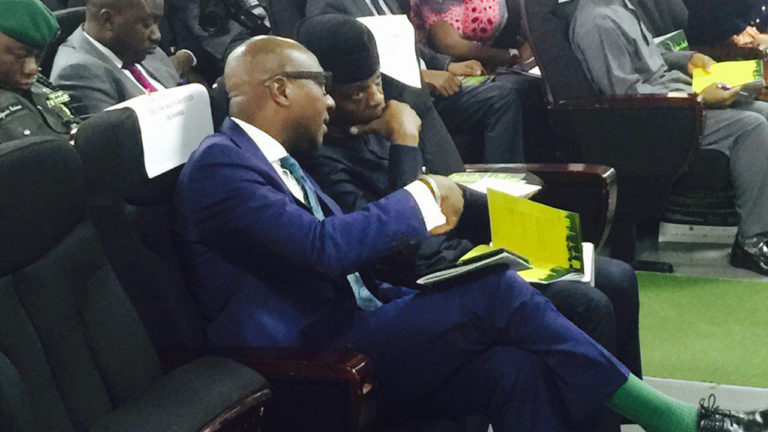
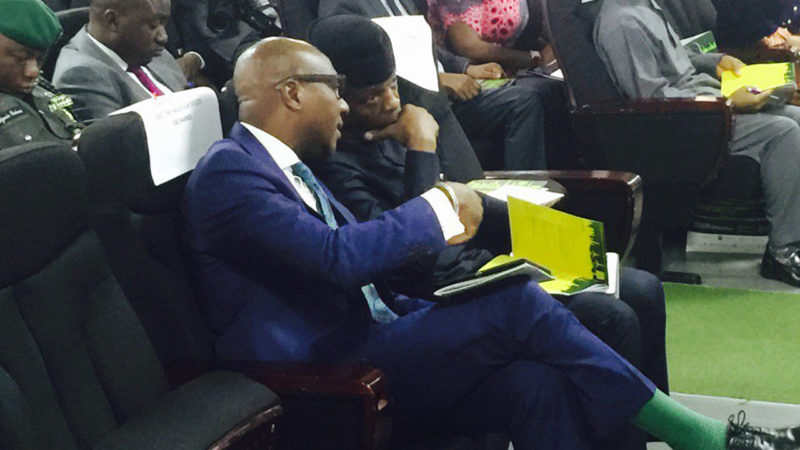
Nigeria’s Green Bond launch: Chief executive officer of the Nigerian Stock Exchange, Oscar Onyema (left), discussing with vice president, Yemi Osinbajo, at Green Bonds Capital Market and Investors Conference in Lagos on Thursday, February 23, 2016.
The report identifies a “universe” of $1.45 trillion climate-aligned bonds, made up of $389 billion in green bonds.
One key finding was that the USA, China and France are top three countries for labelled green bond issuance, followed by supranationals, Germany, Netherlands, Sweden, Spain, Canada and Mexico.
Another key finding was that, at $532 billion outstanding, transport is the largest theme in the climate-aligned “universe” at 44%, followed by energy at 23% and multi-sector at 15%
Energy has the highest number of climate-aligned issuers (292) while the buildings sector has the largest number of bonds outstanding (1,843).
This points to a large universe of unlabelled bonds financing green infrastructure, implying a huge potential for a larger and even more diverse green bond market.
However, there is still a long way to go. Global emissions remain on track to exceed 2 degrees of warming and $90 trillion of investment in climate projects is needed by 2030.
The report says that if the global community is to successfully combat climate change, global green finance needs to reach a trillion dollars by end 2020 and grow each year of the new decade.
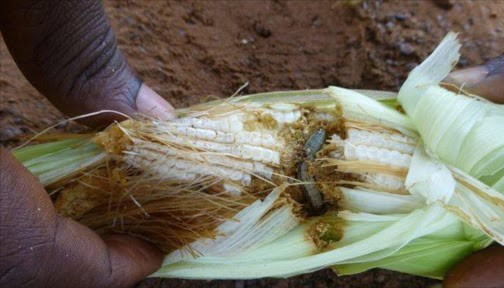
The fight against the spread of the Fall armyworm in Africa in general and the west and central Africa in particular has moved from the level of planning to concrete action, development and research organisations in the continent have said.
Armyworm invasion
Meeting at a high-level conference on controlling Fall armyworm in west and central Africa in Yaoundé, Cameroon, the different stakeholders agreed it was time to double step with multiple actions to stop the rapid spread and destruction of the invasive pest.
Reports presented during the conference noted that armyworm is expected to spread throughout suitable habitats in mainland sub-Saharan Africa within the next few cropping seasons if not properly controlled. Central, West, Northern Africa and Madagascar are all at risk, the report noted.
With the current rate of spread, armyworm has become a threat to the food security of over 300million people in sub-Saharan Africa, with rural people most affected.
Agriculture authorities in Cameroon say the larvae of the nondescript grey moths has been spreading rapidly hatching and eating their way through the fields of young maize and millet, threatening the food crops supply not only in Cameroon but the entire Central African Economic Commission (CEMAC) region.
“The damage has been rapid affecting both farmers and business operators in the sector. This is not good news,” Louisette Clemence Bamzok, head of agriculture development at the ministry of agriculture and rural development in Cameroon, said.
The authorities are worried the pesticides applied by farmers so far have not yielded the expected results. A new plan of action in collaboration with partners has been launched.
“The pest seems to be resistant to pesticides and other chemical products distributed to farmers. We are working with the Institute of Agricultural Research for Development (IRAD) to find a lasting solution,” says Louisette Clemence Bamzok.
A report by the Food and Agriculture Organisation (FAO) says farmers will need great support to sustainably manage the pest in their cropping systems through Integrated Pest Management.
According to Jean-Baptiste Bahama of the FAO, the operationalisation of National Task Force on fall armyworm is key to efficiently coordinating preparedness and response through contingency planning.
“FAO has responded to the fall armyworm situation in Africa by developing tools, resources, installing capacity for fall armyworm early warning system (FAMEWS), and developing and coordinating pesticide policies at national, regional and global levels,” Bahama said.
“The time is now to invest in a sustainable, effective response to FAW in Africa. The only thing missing are the resources to scale-up and scale-out this important work,” he added.
To AfDB’s country Manager for Cameroon, Solomane Kone and Chrys Akem, TAAT Programme Coordinator at the International Institute for Tropical Agriculture (IITA), this is where the AfDB comes in through the Technologies for African Agricultural Transformation (TAAT) programme.
The government of Cameroon on its part says they are leaving no stone unturned.
“We are multiplying efforts and hope a solution will be found timeously,” Clementine Ananga said at the launch of the new plan in March 2018.
The plan calls for the certification of two pesticides with appeal for financial support and participation of the private sector and international partners.
The FAO has disbursed CFA120 million, the Minister said during the launch. Government hopes the programme to be implemented for 18 months will help put an end to ravages of the fall armyworm.
But these promises, and plans seem to do little to quell the fears and anguish of farmers and business operators in the sector.
“We hope the announced government plan in not just another talking therapy. We want to see it implemented and get the results,” says Bernard Njonga.
President, Nigerian Gas Association (NGA), Mr Dada Thomas, on Wednesday, September 26, 2018 urged stakeholders in the oil and gas industry to collaborate to find a lasting solution to gas flaring in the country.
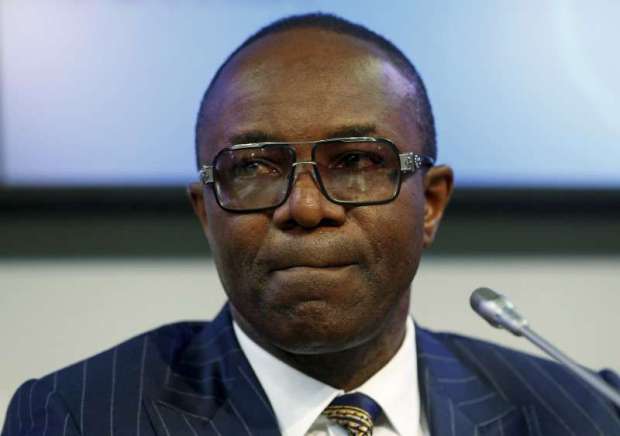
Minister of State for Petroleum Resources, Dr Ibe Kachikwu
Thomas said this in an interview with the News Agency of Nigeria (NAN) in Lagos, while reacting to the 2019 deadline set by the Federal Government to end gas flaring.
Minister of State for Petroleum Resources, Dr Ibe Kachikwu, on Sept. 24 said defaulting companies would have their licences revoked if they failed to stop gas flaring in their operations.
According to Thomas, it takes time to achieve total gas flare-out because it costs lots of capital to convert the gas flared to gas for domestic consumption.
He said revoking operators’ licences was a tough sanction as achieving zero gas flare was a gradual process.
Thomas, who is also the managing director, Frontier Energy, said Nigeria had made great strides in reducing gas flares in the country.
He said oil and gas operators had reduced gas flares from two billion Standard Cubic Feet (SCF) per day to 700 million SCf per day.
Kachikwu made the disclosure at the 2018 Buyers’ Forum/Stakeholders’ organised by the Gas Aggregation Company of Nigeria (GACN) in Abuja.
He said the Federal Government had been locked in a battle with upstream oil companies over the issue of gas flaring.
He noted that the Federal Government was keen on ending gas flaring, but oil companies still gave several reasons why gas flaring could not be ended.
“Government wants to end flare; oil companies still give lots of reasons why flare cannot be ended.
“The bottom line is cash call and money. But the reality is that whether or not we deal with cash call issues, it is not an optional agenda, it is a compulsive immediate agenda.
“It is destructive to the populace; it is intolerable in developed countries and it should not be tolerated here either,” he said.
Kachikwu added that any oil company that could not find a way to ending its flare ought not to be producing.
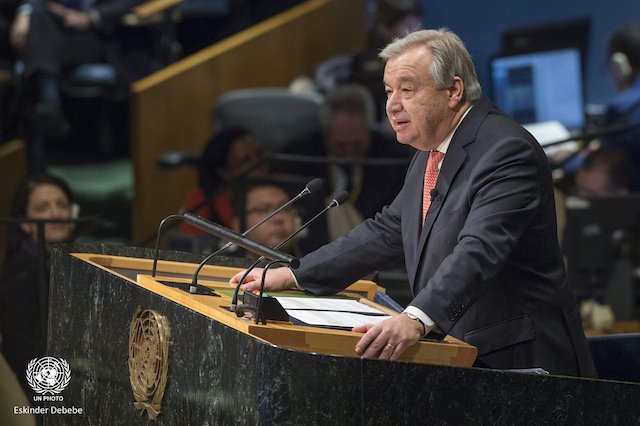
UN Secretary-General António Guterres in New York on Tuesday, September 25, 2018 urged countries to show “greater ambition and a greater sense of urgency” to confront the “direct existential threat” of climate change, and to adopt implementation guidelines of the Paris Agreement in in Poland in December of this year.
Antonio Guterres, UN Secretary General
“Making matters worse, we – as a community of world leaders – are not doing enough,” he told world leaders gathered for the opening of the annual debate of the United Nations General Assembly in New York.
“Climate change is moving faster than we are – and its speed has provoked a sonic boom SOS across our world,” he warned.
The UN Chief said that, according to the World Meteorological Organisation, the past two decades included 18 of the warmest years since record-keeping began in 1850.
This year, for the first time, thick permanent sea ice north of Greenland began to break up. The concentration of carbon dioxide in the atmosphere is the highest in three million years and rising.
“Governments need to be courageous and smart. That means ending trillions of dollars in subsidies for fossil fuels. It means establishing an adequate price for carbon. It means stopping investments in unsustainable infrastructure that lock in bad practices for decades to come,” Guterres explained.
The UN’s top official also set out his expectations for the upcoming UN Climate Change Conference in Poland, where he hopes the spirit of multilateralism will prevail.
“The next Conference of Parties, COP24 in Poland in December, will be a key moment. It must be a success. As I said recently, we cannot allow Katowice to remind us of the divisions among Member States that paralysed Copenhagen.”
Guterres was concerned about the pace of recent negotiations in Bangkok towards implementation guidelines of the Paris Agreement which ended “without sufficient progress”. The guidelines are to be adopted in Poland in December.
He warned that the world had reached a pivotal moment and that if the international community did not change course in the next two years, it would runaway climate change.
In order to achieve the temperature limit, set out by the international community in 2015, “we must guarantee the implementation of the Paris Agreement,” he said.
As part of the agreement signed in 2015 in the French capital, world leaders pledged to ensure that temperature increases would not exceed pre-industrial levels by more than 2°C and would be as close as possible to 1.5°C.
“Our future is at stake. That is why, next September (2019), I will convene a Climate Summit to mobilise action and finance. We will bring together countries and cities, the real economy and real politics, business, finance and civil society, to focus on the heart of the problem.
“The world needs you to be climate champions,” concluded the UN Secretary General.
President Muhammadu Buhari on Wednesday, September 26, 2018 in New York restated Nigeria’s commitment to eradicate tuberculosis (TB) as soon as possible.
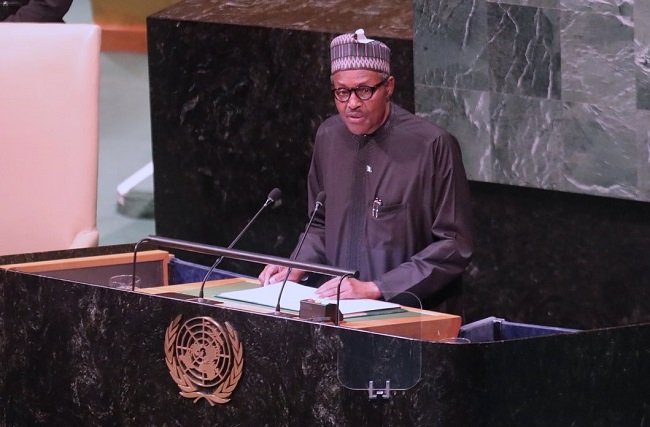
President Muhammadu Buhari making a a presentation of Nigeria’s National Statement at the General Debate of the United Nations General Assembly (UNGA73)
Buhari made the pledge while addressing a high-level meeting on the theme, “United Against Tuberculosis: Global Action Against Global Threat” on the sidelines of the 73rd Session of the United Nations General Assembly.
He said: “Let me pledge Nigeria’s continued commitment to the eradication of TB in Nigeria. We remain resolute in efforts to address institutional and societal challenges, through the enhancement of strong multi-sectoral mechanisms.
“Let me therefore seize this opportunity to call on the global community to demonstrate renewed commitment to today’s declaration”.
According to him, Nigeria welcomes the adoption of the Political Declaration, especially its relevant provisions which commit to providing diagnosis and treatment to 40 million people, including 3.5 million children between 2018 and 2022.
“The Declaration should also serve as a template for preventing TB for those most-at-risk, through rapid scale up of access to testing the infection, especially for the high-burdened countries,” he said.
The Nigerian leader expressed confidence “that other commitments made under this important document, including those on development of new vaccines, drugs and community-based health services, will further guarantee success in our collective fight against the disease”.
Buhari noted that Nigeria’s national TB eradication strategy had long been structured to provide tailored quality services in terms of diagnosis, treatment and prevention.
He added that “since assuming office in May 2015, we consistently increased budget appropriation for the health sector”.
He stressed that the budgetary increment was with “a view to ensuring that we promote the well-being of our people through access to qualitative health care services.
“We are investing in research and development in our various public and specialised institutions.”
The president said the National Action Plan on TB Eradication 2015-2020, which is being pursued with renewed vigour, is structured on five priorities.
These are: detection of TB in adults and children; improving treatment in specific geographic areas that are under-performing; integrating TB and HIV services; building capacity for diagnosing and treating drug resistant TB; and creating strong and sustainable systems to support these achievements.
Buhari stressed that private sector engagement for TB was also being stridently pursued as a robust Public-Private Mix.
According to him, the national “strategic plan is geared towards meeting the overall aims of providing Nigerians with universal access to high quality, patient-centred prevention, as well as diagnosis and treatment services for Tuberculosis, TB/HIV and drug-resistance TB by 2020″.
Buhari said his administration was “exploring the possibility of establishing a financial institution dedicated to providing financial lifelines for free, comprehensive and qualitative medical treatments”.
He said this was aimed at mitigating the “financial burden on victims and to also ensure that we continue to save lives and create favourable conditions for economic and social development.”
The Nigerian leader expressed delight that the landmark event was taking place “at a period when the pain of the disease, and its dire consequences on the health and socio-economic development of many developing countries, is on the rise.”
He welcomed the adoption of what he termed “the all-important Political Declaration” on: “United to End Tuberculosis: An Urgent Global Response to a Global Epidemic,” saying this is the first global forum with dedicated focus on worldwide tuberculosis pandemic.
Buhari acknowledged that “TB has become a global challenge that requires consistent and an all-inclusive global strategy based on research and discovery of new drugs”.
The president stressed that “such efforts must also include mobilisation of funds and global partnership of relevant stakeholders working together to frontally address the scourge”.
He noted that the task before world leaders “is to initiate a global response towards eradicating the disease especially in developing countries, where counter-measures are sometimes beyond the capacity of such nations.”
He also emphasised the “need to develop new strategies that connect national responses with international finance and technical partnership to stop the ravaging disease.”
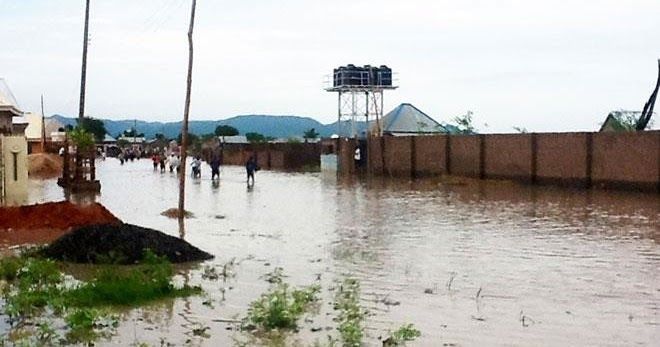
Flood wreaked havoc in Ilorin Township on Wednesday, September 26, 2018 as over 200 residential houses were submerged with hundreds of victims displaced and rendered homeless.
Flooding in Ilorin
The most affected areas are Aduralere and lsale Koko communities in the llorin East local Government area of the state.
News Agency of Nigeria (NAN) reports that hundreds of residents of the affected communities are now taking refuge in churches, mosques and residence of some neighbours, who were not affected by the flood.
Some of the affected residents told NAN that the downpour, which lasted for several hours, made water to overflow the drainage channels that cut across the two communities.
Narrating his ordeal to NAN, one of the affected residents, Alhaji Abdurasheed Jimoh, who is of Aduralere community, said the flood has destroyed most of his property as the rain caught him unaware.
He said, “This is not the first time we are experiencing flood in our community, but this one came with an ugly and bitter experience as the drainage channels got filled up and submerged houses suddenly.
“Most of the buildings here have been submerged as their occupants have lost all their household property to the flood and are displaced.”
Chairman of Aduralere Community, Alhaji Tunde Aremu, while speaking with NAN, said that residents of the affected houses were unable to salvage any of their property from the flood.
Aremu attributed the flood to the blocked channelisation that passes through the two communities.
He said that since the blockage of the channelisation and retraining walls of the project from Unity to Amilegbe, flooding had been frequent occurrence at Isale Koko area.
The chairman of the community called on the state government to revisit the water channels by clearing the blockage and possibly expand the drainage system to allow free flow of water.
He solicited immediate succour from the state government to alleviate the sufferings of the affected residents.
When NAN contacted the Special Adviser to Gov. AbdulFatah Ahmed on Emergency and Relief Services, Alhaji AbdulRasaq Jimoh, he said that he was not aware of the flooding.
He, however, pledged to pay an on-the-spot assessment visit to the affected areas with a view of assessing situation and providing succour for the homeless victims.
In recent times, flooding has been a recurrent problem in most parts of the world including Nigeria; there exist reports of flooding in some towns and cities during downpours.
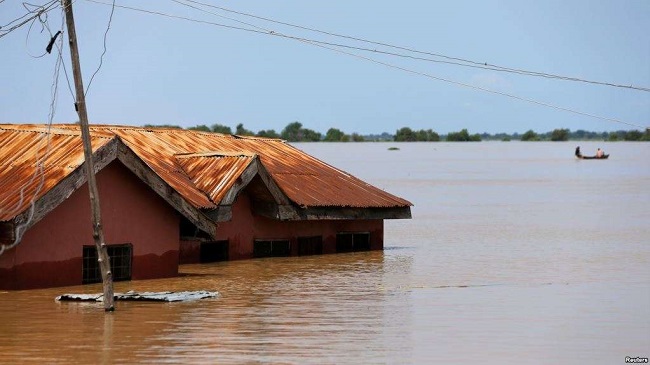
A flooded community
Flood hazard is measured by possibility of occurrence of their damaging consequences, conceived generally as flood risk, or by their impact on society, conceived usually as the loss of lives and material damage to society.
Lots of physical damage is recorded, including destruction of farmlands and houses, economic life has been halted, people displaced, and some lost their lives in the course of flooding.
The menace of flooding in Nigeria came to stay when the country experienced extensive flood in 2012, killing 363 people and displaced more than 2.1 million people.
Other challenges faced by the people included loss of houses, ponds, farmlands, traditional grounds and means of livelihood, destruction of herbs and vegetation, exposure to wild animals.
Wild animals were not spared as their natural habitats were destroyed.
Consequently, some died, most migrated while some took shelter in abandoned houses.
There was an imbalance in the ecosystem and general pollution of the affected communities.
According to the National Emergency Management Agency (NEMA) reports, 30 of Nigeria’s 36 states were affected by the floods in 2012.
Since then, the menace of flood in the country has become a persistent issue which draws concern of experts to proffer solutions.
Recently, the Nigerian Hydrological Services Agency (NIHSA) alerted Nigerians to be ready to prevent and manage flood incidents as the country is now in the peak of rainy season.
According to the Acting Director-General of the agency, Alhaji Ahmed Bashar, the flood level and the discharge of River Niger have continued to increase.
“The 2018 Seasonal Rainfall Prediction released earlier in the year by the Nigerian Meteorological Agency (NiMet) gave Sept. 28, 2018 as the earliest cessation date of rainfall in Sokoto and Katsina.
“A flood level (stage height) of 9.67m and a discharge of 20,578m3/5 have been recorded on Sept. 5.
“These figures are higher than the corresponding values of 9.34m and 19,456m3/5 recorded on Sept. 5, 2012.’’
In reacting to this persistent menace of flooding, an environmentalist, Mr Lawal Rasheed, has called for proactive measures from the government and the public to forestall perennial flooding in the country.
Rasheed, who is the climate change advocate and co-chairperson of the Advocate for Clean Climate and Environment, a non-governmental, said this had become imperative following the recurring incidents of floods in some states across the country.
The environmentalist said that the adoption of both preemptive and preventive measures would be necessary to mitigate the yearly flooding incidents in the country.
He said that the preventive actions should be geared toward forestalling incidents of extreme rainfall.
“Some of the preventive measures are the construction of drainage systems, canals, proper waste disposal, avoiding constructions on waste water channels and clearing the water ways,’’ he said.
He said the preemptive measures which are usually done during the rainy seasons should involve the government and private individuals.
Rasheed said that the preemptive measures should be embarked upon with seriousness as the rainy season commences.
“The preemptive measures should include the clearing of accumulated waste and sand from the drains and sewer systems, as well as the demolition of structures and shanties along the water ways.
“Ensuring that waste waters flow through the right channel and the mending of broken canal walls are also great preemptive measures.’’
He said that both the government and the individuals should regard the preventive and preemptive measures as their responsibilities.
In his view, Mr Johnson Eduno, a geologist, advocated installation of flood warning systems to give people more time to act during flooding and also save as an advance warning to reduce the impact from flooding.
According him, flood warning alert device would facilitate efforts to send flood signals to the government and those living in flood-prone areas, adding that this could save people’s lives and property on time.
“If this could be installed on major rivers across the country, flood incident would be reduced,’’ he said.
Eduno, therefore, called on the Federal Government to strengthen hydrological services agency with modern device such as Water Quality Network to enable the agency to detect flood on time for quick response.
He said the recurrence of flooding in the country was because of insufficient water reservoirs to mitigate the menace of flood.
The geologist also urged states and local governments to play their own roles by constructing earth dams, artificial lakes and reservoirs to check flood.
“Local and state governments should also assist in building earth dams, reservoirs and buffers within their region and their contribution would go a long way to combat flooding in the country,” he said.
He also advocated that protecting wetlands, plant trees strategically could act as sponges thereby soaking up moisture while wooded areas can slow down waters when rivers overflow.
Edono further suggested that temporary barriers could also be added to permanent flood defences such as raising or increasing the level of embankments in riversides.
Similarly, Mr Bassey Uwe, a retired Director of Service, Akwa Ibom Water Company, Oron office, described flood as one of the major environmental crises.
Environmentalists, however, note that flooding can be further prevented by proper planning, especially when there are adequate facilities such as drains and, in some cases, dredging of rivers.
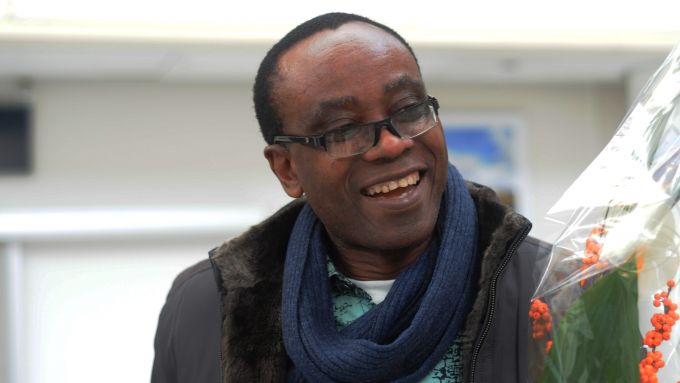
In his welcome words at a Media Training on Promoting Biosafety in Nigeria held on Tuesday, September 25, 2018 in Abuja, Director, Health of Mother Earth Foundation (HOMEF), Nnimmo Bassey, expresses concern over the state of biosafety in the country
Nnimmo Bassey
At a recent HOMEF dialogue with farmers, most of the participants declared that they have never heard of anything called genetically modified organisms (GMOs). When they got to know what GMOs are, they all declared that genetically modified crops are bad for our agriculture and overall environment.
Despite huge financial outlays in modern agricultural biotechnology roadshows, the people remain unaware of these commercially and politically driven organisms that are rapidly being released into our markets and environment. Without free and clear knowledge of these artificial organisms, it can be said plainly that the right of our people to safe food and safe environment is being officially breached with crass impunity.
As we speak, the promises of the first-generation GMOs that are being promoted in Nigeria are unraveling – with persistent failures being recorded around the world. Herbicide use has increased rather than reduce – of course the toxic chemicals are made by the makers of the GMO seeds. Pesticide use has not waned even though Bt crops (crops inserted with gene from the organism, Bacterium thuringiensis) are essentially engineered to act as pesticides themselves.
Farmers are trapped in debt in the cotton fields of India because of the seeds-chemicals trap traceable to GMO Shylocks. GMO infested South American countries are reeling from chemical poisons on farmworkers and in farm-fence communities. In the United States of America, Monsanto was ordered to pay $289m in damages to Dewayne Johnson after a jury found that the company’s Roundup weed-killer caused him cancer. There are over 4000 similar cases in the USA. The safety of GMOs and the claim that GMOs yield higher than normal crops have not been proven.
The old GMOs are now being joined by more extreme variants known as Gene Drives. That target whole populations, involve gene editing and do not involve cross-species gene transfers. They pose special and unique dangers to Nigeria and Africa. The first danger is that our regulators are gullible and tend to be remotely controlled by forces that promote untested technologies. The second danger is that even the dangers and risks are known, they are happy to allow experimentations and expose our people, communities and environment to be used as guinea pigs.
Two cases to buttress this assertion relate to biotechnology experimentations in Burkina Faso. Firstly, was the failure of Monsanto’s Bt cotton in that country that led to the phase out of the GMO from Burkina Faso. The same GMO cotton that failed is now to be released in Nigeria, the second testing ground for an unnecessary and failed product. Of course, the local experts serving as midwives or middle men of the technology in Nigeria are celebrating that they can release the varieties into our environment without check, without questions.
Secondly, modern biotechnology entrepreneurs like Bill & Melinda Gates Foundation are funding Target Malaria to release 10,000 gene drive mosquitoes, in a village in Burkina Faso without our relatives there being truly aware of the what would be bitting them. The gene drive mosquitoes are designed to crash the population of female anopheles mosquito species that transmit malaria parasite. Risks of this untested technology include the fact that they could have unexpected ecological problems, could be used as a weapon of war and is deployed without real prior informed consent of the poor villagers. This is another technofix to tackle a problem that has roots in poor sanitation and socio-economic inequities, among others.
A great risk is that the influencers of the technologies in Nigeria are already trumpeting that Nigeria must jump on the gene drive train just because we must, as a people, play the neocolonial catch-up game with targets set offshore.
We need to interrogate not just the technology but also the regulation of the technologies. We need to ask why an application from a company like WACOT Ltd was approved when the only backing document, as published on NBMA’s website was a sheet of paper showing varieties of genetically modified maize approved by some European countries. This application was approved although there has been no risks assessment in Nigeria and even though approval in the EU does not in any way confer automatic acceptance of those things in countries outside of the jurisdiction within which they were approved. The application did not state that about half of EU countries do not allow these varieties of maize into their countries. For Nigeria, anything goes because everything is safe for Nigerians no matter how toxic they may be to others.
A grave problem with this approval of genetically modified maize for production of feed by WACOT Ltd is that the company sought and obtained the approval after being adjudged to have imported the GM maize without due approval and had been asked to repatriate the maize to Argentina from where it was imported. A further issue that cannot be ignored is that the Federal Executive Council (FEC) had been notified of the impounding of the illegal and unauthorized transboundary movement of the genetically modified maize into Nigeria.
According to reports, the FEC was also informed that the offending company had been asked to send back the illegal shipment. Yet, the same illegally imported grains were approved for release and use by the company. The repatriation order proved to be a mere smokescreen. The company was further licensed to import the supposedly EU approved GM maize over a period of three years.
HOMEF along with 16 other civil society groups filed a suit challenging the granting of permits to Monsanto Agriculture Nigeria Ltd for the confined field trial of genetically modified maize (NK603 and MON 89034 x NK603)) as well as commercial release of Bt cotton earlier mentioned. We challenged the permit based on strong scientific, sociology-economic, environment and administrative concerns. We also drew attention of the court to the fact that the approvals were granted on Sunday 1 May 2016 a mere one working day after the National Biosafety Management Agency (NBMA) acknowledged that they had received our copious objections and promised to consider them. They obviously did not consider the views expressed in our objections.
The judge eventually struck out the case based on the technicality of the case being statute barred. In other words, the case was struck out because we filed the suit more than three months after the permits were granted. The GMO promoters of all shades, both local and international, have crowed that the decision of the court equals an open door for any sort of GMOs to be brought into the country. That is an absolutely specious understanding of the court’s decision. The judge clearly stated that case was not struck out for lack of cause but because the particular action was statute barred. No time for celebration, Monsanto chiefs!
We will go into more details concerning the reasons Nigerians have to worry about the state of biosafety in the country. There is certainly time for that. Although we may no longer waste our time and resources sending objections to a regulator that disdains public opinion, we will not shirk our responsibility to demand safe and suitable foods for our peoples.