An organisation, Future Climate for Africa, appears concerned about the seemingly low participation of African authors and expert reviewers in the preparation of assessment reports by the Intergovenmental Panel on Climate Change (IPCC) and wants the situation reversed.
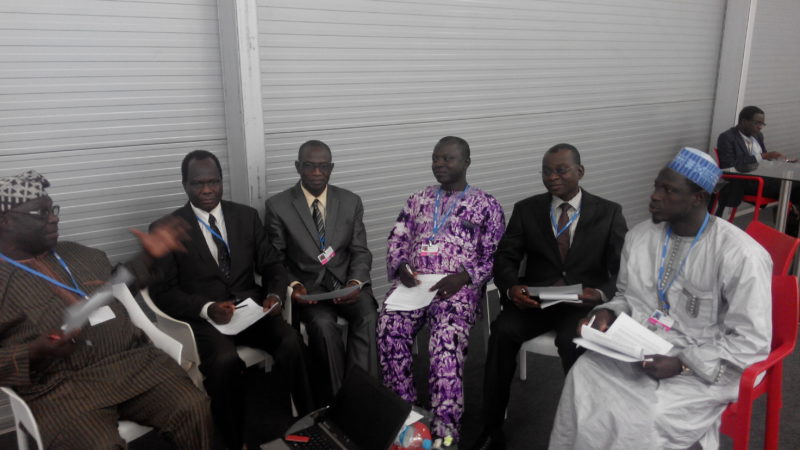
Prof. Olukayode Oladipo (left) stressing a point to (from left) Prof Daniel Gwary, Prof Mohammed Balarabe, Prof Ayuba Kuje, Prof Francis Adesina and Alhaji Aliyu Musa Yauri, during a meeting. Oladipo and Gwary were previously involved in IPCC assessment reports
The 195-member IPCC’s periodic assessment reports are internationally regarded as authoritative sources of climate change knowledge and are also highly influential. Besides playing a central role in the UN Framework Convention on Climate Change (UNFCCC), they also inform policy making on national and subnational levels, actions by local and international civil society, private sector investments, and news and popular press reporting.
A strict process for developing the assessments is said to have ensured extensive international collaboration, transparency, academic rigour and policy relevance. The fifth and latest assessment report involved 831 authors from over 70 countries, it was gathered.
However, participation from African authors and expert reviewers remains extremely low, says Future Climate for Africa, adding that, for the 5th Assessment Report, out of approximately 8,000 expert reviewers, only 92 (1.15%) were African.
Lamenting “a clear underrepresentation of involved African experts” in the IPCC process, the group stresses that “by far the most African reviewers are from South Africa, while many other African countries have not participated in review rounds at all”
In April 2018, the IPCC included seven Nigerians amongst the 721 experts from 90 countries invited to participate in the Sixth Assessment Report (AR6) as Coordinating Lead Authors, Lead Authors and Review Editors. The Nigerians are part of all the three Working Groups of the projects. Observers have describe the development as “a slight increase” in the number of Nigerian participation compared with previous years.
Future Climate for Africa adds: “Whilst there has been a long-standing awareness from the IPCC community over the lack in balance between developed and developing country authors (especially from Africa), effective actions to address this have been few. Increasingly scientific literature is making the argument that African expertise is not just essential for political legitimacy and policy relevancebut for fundamental advances in climate science as well.
“Reasons for the under-representation of African contributions to the IPCC Assessments are multiple, complex, and indicative of a wider system of northern domination of global science. These issues deserve urgent and sustained attention in the long run.”
Scientific evidence abounds to changes the food chain has been going through from time immemorial. History tells us that initially our forebearers were hunters and gatherers, totally dependent on nature. Somehow, they figured out the need for domesticating crops, through saving seeds and cultivation. Seeds were selected and saved based on features such as faster growth, higher yields, pest and disease resistance, and sweetness of fruit.
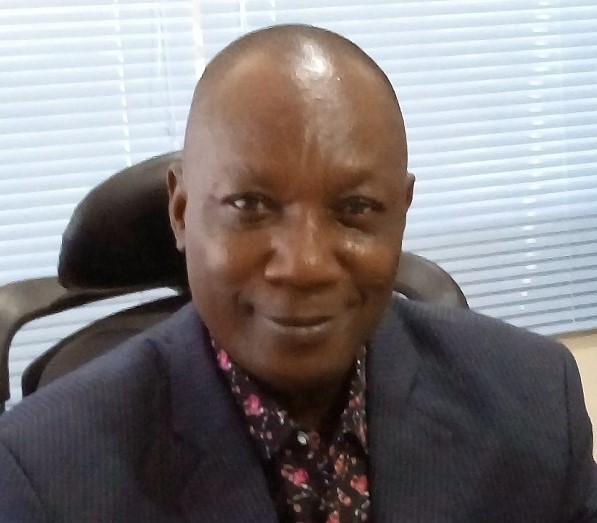
Prof. Charles Antwi-Boasiako, Chairman of the Board of National Biosafety Authority (NBA), Ghana
The alteration in the food chain in modern times, has been greatly aided by advancement in science and technology. These have upgraded the seed selection process by facilitating precision in identifying, isolating and transferring a desired trait or gene from one crop or animal variety to others.
Some experts have termed the move of genes across species as the “gene revolution.” Its tools include biotechnology also known genetic engineering or modification and its products are referred to as genetically modified organisms (GMOs). The application of biotechnology tools has not been left to chance but is highly regulated by international conventions and protocols as well as national laws and policies.
“Regulation is a significant measure in the biotechnology arena that ensures the safety of products for humans, the environment, plants and animals,” says Prof. Charles Antwi-Boasiako, Chairman of the Board of National Biosafety Authority (NBA), Ghana.
In an interview, he explained that “since every human activity comes with some degree of risks, it is in our own best interests to ensure that GMOs are produced under the highest quality and safety standards. And this is what validates the rather long period of between 10 to 14 years it takes to produce a GMO.”
Prof. Antwi-Boasiako emphasized that “regulations do not just provide a safeguard against risks but serve as a deterrent against possible fraud.” He was certain that the “NBA has a robust system in place in terms of capacity of institutional representations and qualified personnel to enforce biosafety regulatory measures regarding safe-handling, transfer, commercial release, and trans-boundary movement of these organisms or products.”
The NBA Board Chairman said, the Authority will continue to be the national focal point responsible for liaising with any local and international Agencies concerned with Biotechnology and Biosafety for Ghana’s sustainable development and well-being.”
Ghana’s biosafety regulatory regime consists of the Biosafety Regulation, 2007 (L.I 1887) for research on GMOs, and the Biosafety Act, 2011 (Act 831). The objectives of the Act are first of all, “to ensure an adequate level of protection in the field of safe development, transfer, handling and use of genetically modified organisms from biotechnology that may have adverse effect on health and environment.” Secondary, it seeks “to establish a transparent and predictable progress to review and make decision on genetically modified organisms and related matters.” These objectives form the core duties of the NBA established in 2015 per Act 831.
To ensure best practices are standardised in biotechnology and GMOs, several guidelines have been developed. They include: National Biosafety Guidelines on Biosafety; Laboratory and Field Work and Movement of Regulated Materials; and Commercial Releases. There are also guidelines on Risk Assessment of Genetically Modified Organisms in Ghana; and Public Participation, Information Sharing and Access to Justice with respect to Genetically Modified Organisms.
Additionally, there are several survey reports that support agricultural biotechnology and GMOs in Ghana. These include Survey Report on Programmes for Safe use of Biotechnology/Biosafety and Existing Status of Biotechnology and LMOs (Living Modified Organisms) in Ghana.
Furthermore, the national position on the adoption of biotechnology is established in the science and technology policies. The first Science and Technology Policy developed in 2000, highlighted biotechnology as one of the tools to increase agricultural productivity, agro-processing and industrial delivery. While the second policy developed in 2010, identifies biotechnology as one of the technologies to be used to promote agriculture, health and industry.
This development is not exclusive to Ghana. Nations worldwide have developed biosafety regulatory frameworks to regulate biotechnology and GMOs. In some countries especially in the European Union, the regulatory framework bans the cultivation of GMOs, but permits their importation and use.
The Chief Executive Officer of Ghana’s NBA traces the nation’s journey to regulate GMOs from 1992, when the UN adopted the Convention on Biological Diversity (CBD) at the Conference on Environment and Development also known as Rio Earth Summit in Brazil. Ghana ratified the Convention in 1994 and by 2004, the country had completed its biosafety framework.
Globally, the CBD remains the most important instrument on the handling of modern biotechnology and its products such as LMOs used in the fields of medicine and agriculture.
The Convention’s provisions include “to create a protocol setting out the safe transfer, handling and use of any LMOs resulting from biotechnology where required.” Therefore, the Cartagena Protocol on Biosafety to the Convention on Biological Diversity was established as a supplement to the CBD.
Its purpose is to “contribute to the conservation and sustainable use of biodiversity by providing international rules and procedures in the field of liability and redress relating to LMOs,” says Prof. Alfred Oteng-Yeboah, Vice-Chair of the Bureau of the Intergovernmental Science-Policy Platform on Biodiversity and Ecosystem Services (IPBES).
He explained that the CBD promotes biosafety by its rules and procedures for the safe transfer, handling, and use of LMOs, with specific focus on their trans-boundary movements. The CBD was adopted in 2000 and came into force in 2003, with applicability to the transit of LMOs by land, air and sea.
To rally funding to implement the prevention and cure of tuberculosis (TB), President Muhammadu Buhari has joined other Heads of State and Government attending the ongoing and first-ever UN High-level meeting on TB to mobilise $13 billion a year by 2022 to implement TB prevention and cure, and $2 billion for research.
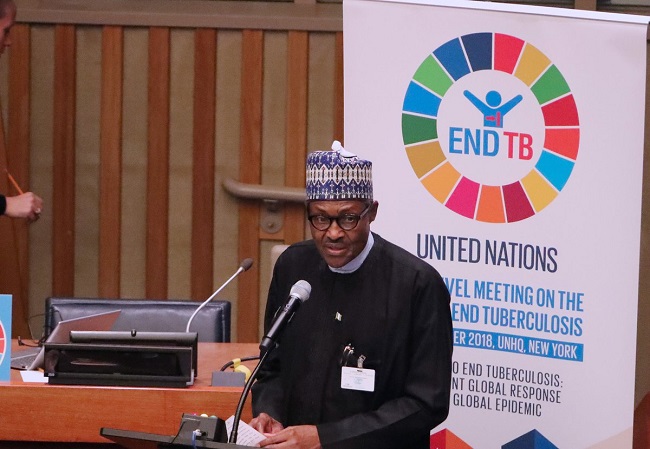
President Muhammadu Buhari addressing participants at a high-level meeting on the fight against Tuberculosis, on the sidelines of the 73rd Session of United Nations General Assembly in New York
The leaders also committed to take firm action against drug-resistant forms of the disease, build accountability, and to prioritise human rights issues such as the stigma that still prevails around TB in many parts of the world.
The world leaders agreed to implement urgent actions towards ensuring that 40 million people with TB receive the care they need by the end of 2022. They also agreed to provide 30 million people with preventive treatment to protect them from developing TB.
President Buhari asserted that Nigeria’s national TB eradication strategy had, over the years, been structured to provide tailored quality services in terms of diagnosis, treatment and prevention.
“Since assuming office in May 2015, we consistently increased budget appropriation for the health sector,” he said, adding that with “a view to ensuring that we promote the well-being of our people through access to qualitative health care services. We are investing in research and development in our various public and specialised institutions.”
An estimated three Nigerians die of tuberculosis every 10 minutes, accumulating to 18 every hour and 432 every day. Every hour, 47 Nigerians develop active TB, seven of whom are children. Despite progress made in the last two decades, the incidence of TB is not declining fast enough to end the disease as envisaged under the Sustainable Development Goals 2.
According to the Stop TB Partnership, “although TB is curable and preventable all people developing TB, including drug-resistant TB, needs to be diagnosed and treated, and those at highest risk of developing TB (contacts of patients, people living with HIV, etc.) need to receive preventive therapy. Currently, only about 60% of TB and about 25% of drug-resistant TB are notified as receiving treatment; the remaining are the millions of people who are ‘missing’ from care. Coverage levels are lower for children, and preventive therapy coverage is minimal.”
To address the burden in the country, President Buhari stated that the National Action Plan on TB Eradication 2015-2020, is being pursued with renewed vigour, and structured on five priorities: detection of TB in adults and children; improving treatment in specific geographic areas that are under-performing; integrating TB and HIV services; building capacity for diagnosing and treating drug resistant TB; and creating strong and sustainable systems to support these achievements.
The world leaders acknowledged that the current rate of progress on TB was endangering prospects of meeting global targets to end TB. The 2017 Global Report on TB shows that TB remains the world’s deadliest infectious disease as it killed 1.6 million people in 2017, including 300,000 people with HIV. In the same year, 10 million people fell ill with TB.
“Today is a landmark in the long war on TB,” said Dr Tedros Adhanom Ghebreyesus, Director-General of the World Health Organisation (WHO). “These are bold promises – to keep them partnership is vital. WHO is committed to working with every country, every partner and every community to get the job done.”
“The political declaration proposed for this meeting sets a roadmap for accelerated action to end TB in line with the vision and targets for 2030,” said Ms Maria Fernanda Espinosa Garcés, President of the 73rd Session of the UN General Assembly. “We have before us the opportunity for a clear win – a chance to save the lives of millions, to preserve billions in resources, to demonstrate the success of the Sustainable Development Goals, and to reaffirm the utility, efficacy and necessity of multilateralism and the UN System. Let us not miss this opportunity.”
The political declaration in the hallowed chambers of the United Nations in New York, was the emergence of a new resolve and commitment of leaders across the world to stop the deaths and infirmities from TB across the world.
An agriculture expert, Mr Ismail Olawale, has called on local farmers to adopt greenhouse farming to boost food security in the country.
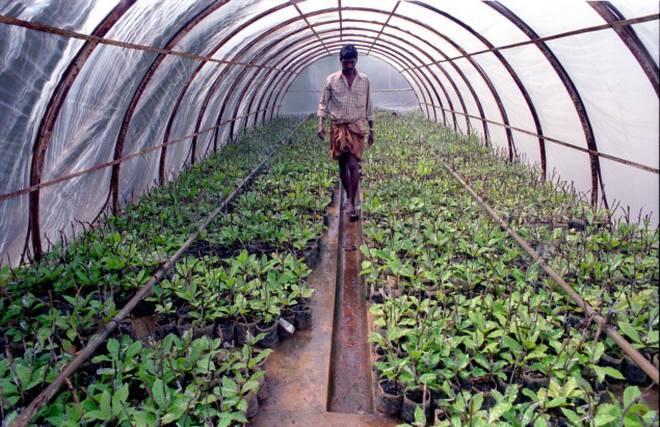
Greenhouse farming: A worker at a cashew nursery
Olawale told the News Agency of Nigeria (NAN) on Thursday, September 27, 2018 in Lagos that the benefits of farming were enormous.
Greenhouse farming is an alternative method of farming where plants are cultivated in environmentally controlled structures or building, which in turn result in more agricultural yields.
“There is advancement in agric-technology that reveals that the lesser some plants are exposed to sunlight the better and fresher they are for consumption.
“Greenhouse farming, apart from its affordability, is environmentally friendly and an alternative healthy way of farming.
“Food insecurity can be tackled when the nuclear family also adopt greenhouse farming in cultivating their basic vegetable needs,” he told NAN.
While calling on Nigerian farmers to embrace the various aspects of greenhouse farming, the expert said the knowledge would boost agricultural production in the country.
“I advise Nigerian farmers on a large scale to adopt the greenhouse farming technology; many are currently embarking on it.
“There is a lady-farmer in Abuja, currently into Aqua-farming, an offshoot of greenhouse farming technology where no soil is required to cultivate crops and makes a marginal profit from it.
“Most countries are moving from parallel farming which requires much land space to horizontal farming a product of greenhouse farming, where crops are cultivated in steps and layers,” he said.
Olawale also tasked local farmers to learn the skill sets necessary to adopt the greenhouse farming before embarking on it on a full-scale.
“There are abounding opportunities for local farmers to learn greenhouse farming technology in Nigeria.
“The National Agriculture Extension Research and Liaison Service (NAERLS) has partnered with international agriculture institutions to train farmers and extension officers.
“Nigerian farmers are being sensitised towards greenhouse farming, but the problem is that they are too rigid in trying to do away with the traditional methods of farming.
“Nigerian farmers are used to land farming because greenhouse farming is technologically driven and requires a lot time and patience; hence they opt for the former.
“Although time consuming, greenhouse farming will result in greater agricultural produce yield,” Olawale added.
Ahead of the launch on Monday, October 8, 2018 of a much-anticipated report by the Intergovernmental Panel on Climate Change (IPCC) laying out urgent actions needed to stop runaway climate change, leading scientists will highlight the role forests must play in staving off dangerous global warming.
The researchers at a forum scheduled to on Thursday, October 4, 2018, will detail why meeting the Paris Agreement climate targets requires both a drastic reduction in fossil fuel use and the protection and expansion of forests. They are cautioning that if forests don’t stay standing, the climate – and people living near and far from felled or burned forests – will suffer.
On the call, several of the world’s top scientists will emphasise the top five reasons why forests are the carbon-capture technology mankind needs to fight climate change. Based on the latest peer-reviewed research, the statement underlines why forests are one the most powerful tools in the global fight to limit warming to 1.5°C.
According to the researchers, the world’s forests – especially tropical forests in Latin America, Southeast Asia and Central Africa – are under threat from the rapidly expanding production of cattle, palm oil, soy and wood products.
They point out that forests contribute significantly to removing carbon from the atmosphere and provide climate benefits beyond carbon, including regulating global rainfall patterns, keeping water sources clean and bountiful, and providing food, incomes and medicine to millions of people.
The scientists further stress that stopping deforestation, restoring forests and improving forestry practices could remove seven billion metric tons of carbon annually – equal to eliminating 1.5 billion cars, more than all the cars in the world today.
But, they add, with 2017 being the second-worst year on record for tropical tree cover loss, the world may be squandering one of its best opportunities to both remove excess carbon from the atmosphere and meet the 1.5°C targets in the Paris Agreement.
The Intergovernmental Panel on Climate Change (IPCC), the leading international body for the assessment of climate change, will release its Special Report on the impacts of global warming of 1.5°C on Monday, October 8, 2018, after meeting to consider and approve the report in Incheon, Republic of Korea, starting from Monday, October 1.
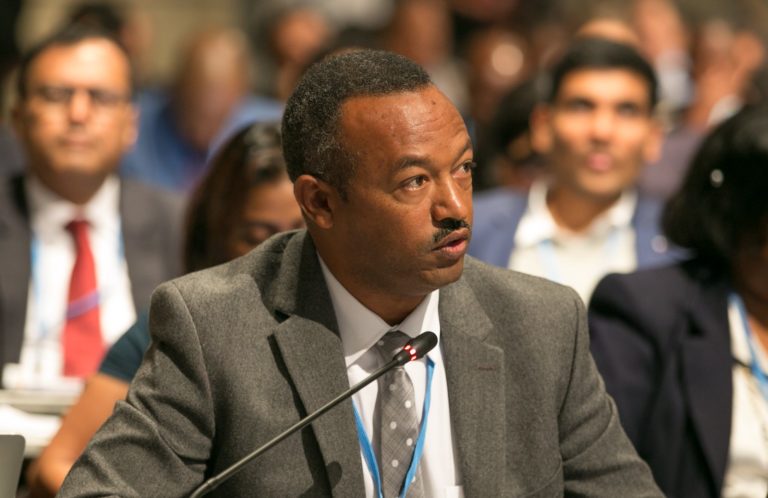
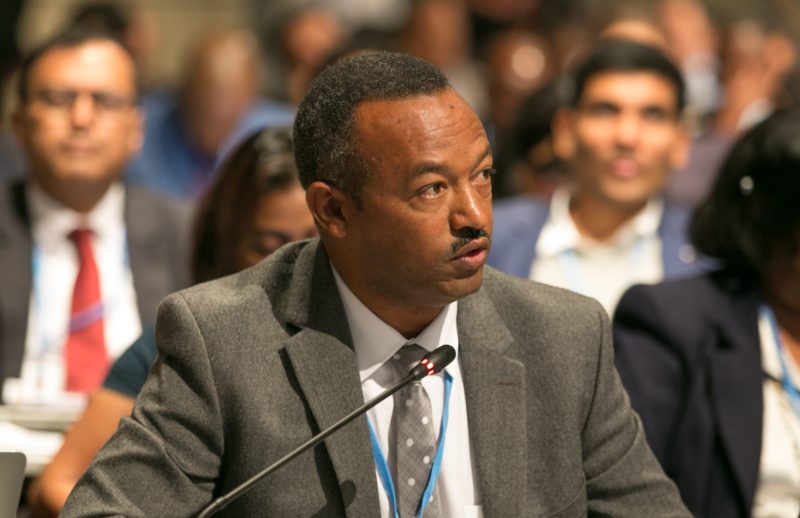
Chair of the Least Developed Countries (LDC) group, Gebru Jember Endalew
Commenting on his expectations for the report, Gebru Jember Endalew, Chair of the Least Developed Countries (LDC) Group said, “It will be important that the report and the Summary for Policy Makers clearly sets out the scientific necessity of limiting global warming to 1.5°C as opposed to 2°C to protect people and the planet, and highlights the vast discrepancy between this goal and our current global emissions pathway. In doing so, the report will shine a spotlight on the scale of the challenge the international community must rise to meet. A future where warming is limited to 1.5°C is a brighter future for all.
“Governments across the world must take the report seriously and respond with science-based policies to spur genuine emissions reductions. Our world’s natural systems place limits on us that we cannot negotiate, and all countries need to respond accordingly with fair and ambitious climate action. This means rapidly scaling up pre-2020 efforts, providing finance and technology so LDCs and other developing countries can respond, and submitting more ambitious climate pledges in line with countries’ respective responsibilities for climate change and capacities to respond. Current plans that countries have submitted will not be enough; full implementation of those contributions will still put the world on a pathway of more than 3°C warming. Every moment we delay, climate change impacts are intensifying, becoming increasingly expensive and creating more loss and damage.
“The IPCC’s outputs must demonstrate that limiting the global temperature increase to 1.5°C is not only necessary, it is achievable. The LDC Group hopes that the report will highlight the real climate solutions that are available right now and catalyse action at all levels to implement deep economy-wide changes towards climate resilient and decarbonised societies.
“While the challenge ahead in addressing the impacts of climate change is immense, so too are the opportunities. Responding to climate change opens doors for sustainable development and for lifting many people out of poverty.”
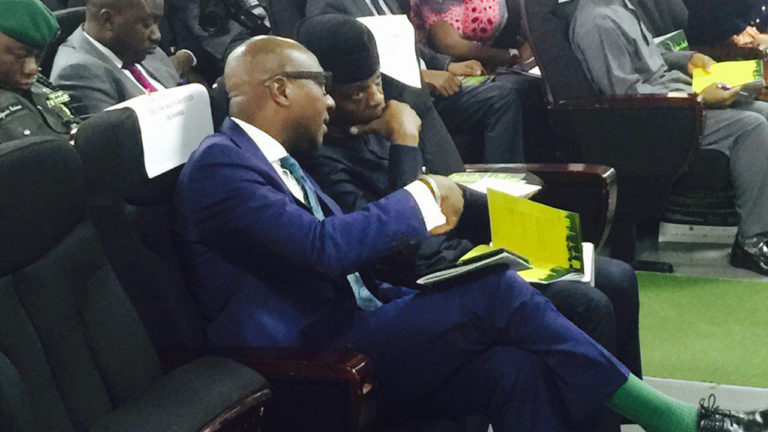
Nigeria’s Green Bond launch: Chief executive officer of the Nigerian Stock Exchange, Oscar Onyema (left), discussing with vice president, Yemi Osinbajo, at Green Bonds Capital Market and Investors Conference in Lagos on Thursday, February 23, 2016.
The report identifies a “universe” of $1.45 trillion climate-aligned bonds, made up of $389 billion in green bonds.
One key finding was that the USA, China and France are top three countries for labelled green bond issuance, followed by supranationals, Germany, Netherlands, Sweden, Spain, Canada and Mexico.
Another key finding was that, at $532 billion outstanding, transport is the largest theme in the climate-aligned “universe” at 44%, followed by energy at 23% and multi-sector at 15%
Energy has the highest number of climate-aligned issuers (292) while the buildings sector has the largest number of bonds outstanding (1,843).
This points to a large universe of unlabelled bonds financing green infrastructure, implying a huge potential for a larger and even more diverse green bond market.
However, there is still a long way to go. Global emissions remain on track to exceed 2 degrees of warming and $90 trillion of investment in climate projects is needed by 2030.
The report says that if the global community is to successfully combat climate change, global green finance needs to reach a trillion dollars by end 2020 and grow each year of the new decade.
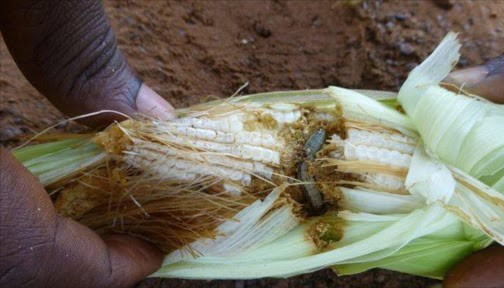
The fight against the spread of the Fall armyworm in Africa in general and the west and central Africa in particular has moved from the level of planning to concrete action, development and research organisations in the continent have said.
Armyworm invasion
Meeting at a high-level conference on controlling Fall armyworm in west and central Africa in Yaoundé, Cameroon, the different stakeholders agreed it was time to double step with multiple actions to stop the rapid spread and destruction of the invasive pest.
Reports presented during the conference noted that armyworm is expected to spread throughout suitable habitats in mainland sub-Saharan Africa within the next few cropping seasons if not properly controlled. Central, West, Northern Africa and Madagascar are all at risk, the report noted.
With the current rate of spread, armyworm has become a threat to the food security of over 300million people in sub-Saharan Africa, with rural people most affected.
Agriculture authorities in Cameroon say the larvae of the nondescript grey moths has been spreading rapidly hatching and eating their way through the fields of young maize and millet, threatening the food crops supply not only in Cameroon but the entire Central African Economic Commission (CEMAC) region.
“The damage has been rapid affecting both farmers and business operators in the sector. This is not good news,” Louisette Clemence Bamzok, head of agriculture development at the ministry of agriculture and rural development in Cameroon, said.
The authorities are worried the pesticides applied by farmers so far have not yielded the expected results. A new plan of action in collaboration with partners has been launched.
“The pest seems to be resistant to pesticides and other chemical products distributed to farmers. We are working with the Institute of Agricultural Research for Development (IRAD) to find a lasting solution,” says Louisette Clemence Bamzok.
A report by the Food and Agriculture Organisation (FAO) says farmers will need great support to sustainably manage the pest in their cropping systems through Integrated Pest Management.
According to Jean-Baptiste Bahama of the FAO, the operationalisation of National Task Force on fall armyworm is key to efficiently coordinating preparedness and response through contingency planning.
“FAO has responded to the fall armyworm situation in Africa by developing tools, resources, installing capacity for fall armyworm early warning system (FAMEWS), and developing and coordinating pesticide policies at national, regional and global levels,” Bahama said.
“The time is now to invest in a sustainable, effective response to FAW in Africa. The only thing missing are the resources to scale-up and scale-out this important work,” he added.
To AfDB’s country Manager for Cameroon, Solomane Kone and Chrys Akem, TAAT Programme Coordinator at the International Institute for Tropical Agriculture (IITA), this is where the AfDB comes in through the Technologies for African Agricultural Transformation (TAAT) programme.
The government of Cameroon on its part says they are leaving no stone unturned.
“We are multiplying efforts and hope a solution will be found timeously,” Clementine Ananga said at the launch of the new plan in March 2018.
The plan calls for the certification of two pesticides with appeal for financial support and participation of the private sector and international partners.
The FAO has disbursed CFA120 million, the Minister said during the launch. Government hopes the programme to be implemented for 18 months will help put an end to ravages of the fall armyworm.
But these promises, and plans seem to do little to quell the fears and anguish of farmers and business operators in the sector.
“We hope the announced government plan in not just another talking therapy. We want to see it implemented and get the results,” says Bernard Njonga.
President, Nigerian Gas Association (NGA), Mr Dada Thomas, on Wednesday, September 26, 2018 urged stakeholders in the oil and gas industry to collaborate to find a lasting solution to gas flaring in the country.
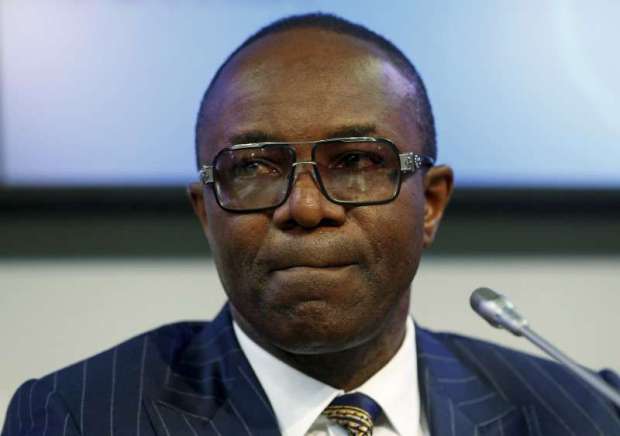
Minister of State for Petroleum Resources, Dr Ibe Kachikwu
Thomas said this in an interview with the News Agency of Nigeria (NAN) in Lagos, while reacting to the 2019 deadline set by the Federal Government to end gas flaring.
Minister of State for Petroleum Resources, Dr Ibe Kachikwu, on Sept. 24 said defaulting companies would have their licences revoked if they failed to stop gas flaring in their operations.
According to Thomas, it takes time to achieve total gas flare-out because it costs lots of capital to convert the gas flared to gas for domestic consumption.
He said revoking operators’ licences was a tough sanction as achieving zero gas flare was a gradual process.
Thomas, who is also the managing director, Frontier Energy, said Nigeria had made great strides in reducing gas flares in the country.
He said oil and gas operators had reduced gas flares from two billion Standard Cubic Feet (SCF) per day to 700 million SCf per day.
Kachikwu made the disclosure at the 2018 Buyers’ Forum/Stakeholders’ organised by the Gas Aggregation Company of Nigeria (GACN) in Abuja.
He said the Federal Government had been locked in a battle with upstream oil companies over the issue of gas flaring.
He noted that the Federal Government was keen on ending gas flaring, but oil companies still gave several reasons why gas flaring could not be ended.
“Government wants to end flare; oil companies still give lots of reasons why flare cannot be ended.
“The bottom line is cash call and money. But the reality is that whether or not we deal with cash call issues, it is not an optional agenda, it is a compulsive immediate agenda.
“It is destructive to the populace; it is intolerable in developed countries and it should not be tolerated here either,” he said.
Kachikwu added that any oil company that could not find a way to ending its flare ought not to be producing.
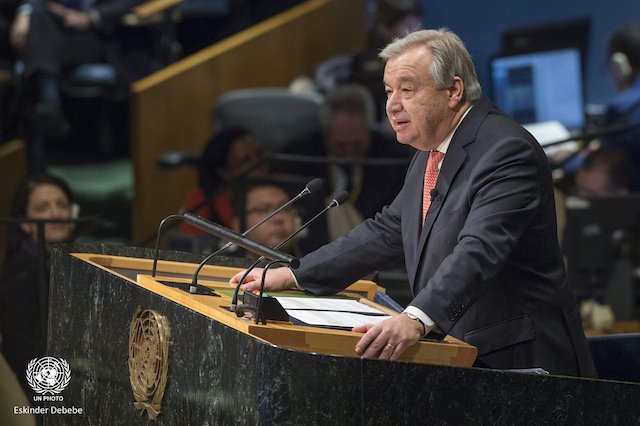
UN Secretary-General António Guterres in New York on Tuesday, September 25, 2018 urged countries to show “greater ambition and a greater sense of urgency” to confront the “direct existential threat” of climate change, and to adopt implementation guidelines of the Paris Agreement in in Poland in December of this year.
Antonio Guterres, UN Secretary General
“Making matters worse, we – as a community of world leaders – are not doing enough,” he told world leaders gathered for the opening of the annual debate of the United Nations General Assembly in New York.
“Climate change is moving faster than we are – and its speed has provoked a sonic boom SOS across our world,” he warned.
The UN Chief said that, according to the World Meteorological Organisation, the past two decades included 18 of the warmest years since record-keeping began in 1850.
This year, for the first time, thick permanent sea ice north of Greenland began to break up. The concentration of carbon dioxide in the atmosphere is the highest in three million years and rising.
“Governments need to be courageous and smart. That means ending trillions of dollars in subsidies for fossil fuels. It means establishing an adequate price for carbon. It means stopping investments in unsustainable infrastructure that lock in bad practices for decades to come,” Guterres explained.
The UN’s top official also set out his expectations for the upcoming UN Climate Change Conference in Poland, where he hopes the spirit of multilateralism will prevail.
“The next Conference of Parties, COP24 in Poland in December, will be a key moment. It must be a success. As I said recently, we cannot allow Katowice to remind us of the divisions among Member States that paralysed Copenhagen.”
Guterres was concerned about the pace of recent negotiations in Bangkok towards implementation guidelines of the Paris Agreement which ended “without sufficient progress”. The guidelines are to be adopted in Poland in December.
He warned that the world had reached a pivotal moment and that if the international community did not change course in the next two years, it would runaway climate change.
In order to achieve the temperature limit, set out by the international community in 2015, “we must guarantee the implementation of the Paris Agreement,” he said.
As part of the agreement signed in 2015 in the French capital, world leaders pledged to ensure that temperature increases would not exceed pre-industrial levels by more than 2°C and would be as close as possible to 1.5°C.
“Our future is at stake. That is why, next September (2019), I will convene a Climate Summit to mobilise action and finance. We will bring together countries and cities, the real economy and real politics, business, finance and civil society, to focus on the heart of the problem.
“The world needs you to be climate champions,” concluded the UN Secretary General.