Home Blog Page 177

Michael Owhoko: The trouble with Nigeria’s healthcare system

0

The quality of a country’s healthcare system is a mirror image of its leaders’ commitment to citizens’ health.  Countries like Singapore, Japan, South Korea and Switzerland are among the world’s top countries with best healthcare for citizens, driven majorly by robust funding and well-structured policy programme. Leaders in these countries do not go to foreign countries for medical tourism, as they have absolute confidence in the delivery capacity of the healthcare system.

But in Nigeria, the healthcare system is fraught with dysfunctionality, forcing elasticity of reliability southward.  Poor health facilities, unprofessionalism, unethical standards, weak regulatory agencies, bad personnel attitude, questionable health insurance schemes, unreliable health management organisations (HMOs), mismanagement, corruption, fake drugs and obsolete equipment are incidental to lack of commitment by Nigerian leaders to efficient and quality healthcare system.
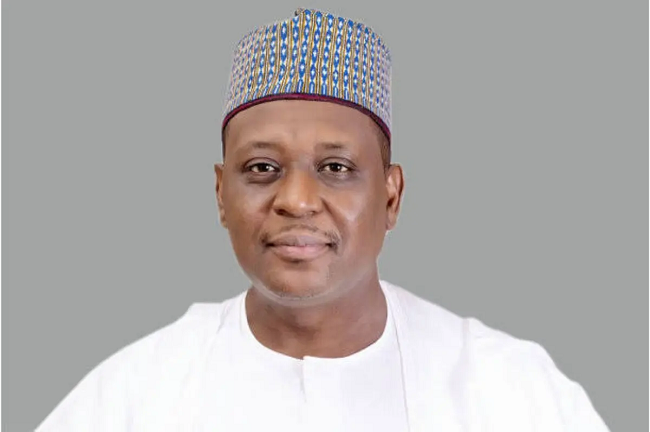
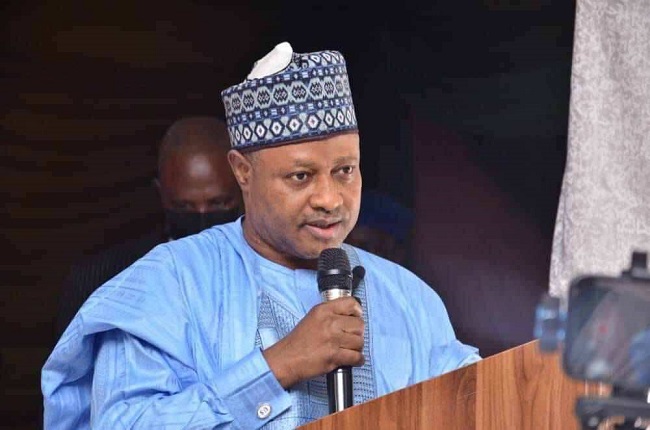
Muhammad Ali Pate
Muhammad Ali Pate, the Coordinating Minister of Health & Social Welfare

Though, this is a symptom of greater disorders in Nigeria, poor funding and non-utilisation of health facilities by the ruling elites undermine efficiency, quality and delivery capacity of the healthcare system. Why will leaders not trust and utilize the healthcare system they have built, equipped and made available to the people through funding? When food is served to public by a provider who has no intention of eating, there is high probability that quality and hygiene may be compromised.

In the 2025 federal government budget, only N2.56 trillion was budgeted for the health sector, representing 5.15 percent of the country’s total budget of N49.7 trillion, which is far below the 15 percent recommended by the Abuja Declaration, to which Nigeria is a signatory. Though, the N2.56 trillion is an increase of about 58.53 percent of the 2024 budget of N1.62 trillion, however, when viewed in dollar terms, the amount decreased by 15.45 percent, dropping to $1.7 billion from $2.02 billion.

Since the famous coup speech of Late General Sanni Abacha on December 31, 1983 that the country’s health services were in shambles, and hospitals had been reduced to mere consulting clinics without drugs, water and equipment, the health sector has not shown promises of improvement. Even 34 years after, the wife of Late President Muhammadu Buhari, Aisha, confirmed this in 2017 when she resorted to use of a private hospital wholly owned and run by foreigners due to dysfunctional x-ray machine and lack of syringes in the Villa Clinic.

Unfortunately, 42 years after these observations were made by the powers that were, the healthcare sector is still defined by lack of government’s commitment. This is particularly worrisome when viewed against the background of Nigeria’s growing population, currently characterized by low life expectancy, high maternal and child mortality rates. This means that dependable and quality healthcare provision is not a priority for government, and therefore, a mirage for Nigeria to achieve high quality healthcare in line with World Health Organisation (WHO)’s standard.

Globally, Nigeria is ranked 157th out of 191 countries by WHO in the areas of quality health delivery performance. As the largest oil producer in Africa and 16th largest in the world, it is untenable for Nigeria not to provide robust funding for the health sector, given the country’s huge earnings from crude oil sales.

Even among African countries, Nigeria is rated poorly in healthcare provision. In a report released by The Legatum Institute, a London-based global healthcare assessment organization, Nigeria was ranked 11th out of 12 African countries with poor healthcare system. The countries include Central African Republic, South Sudan, Chad, Lesotho, Somalia, Sierra Leone, Swaziland (Eswatini), Liberia, Guinea, Angola, Nigeria and Equatorial Guinea.

Despite this poor performance ranking, no concerted effort is being made by government to improve quality service delivery, as budget allocation to the health sector has been on the downward swing. Since Nigerian leaders who determine the condition of the sector, do not utilize the facilities due to poor services, it means the Nigerian healthcare system is designed to service the health needs of the poor and common Nigerians, and not Nigerian leaders.

Put differently, the healthcare system in Nigeria is determined and conditioned by the thought process and preferences of those who do not use the services. For example, the President of the Federal Republic of Nigeria and his cabinet members, including the Minister of Health, together with the Senate President and members of the Legislature, who approve the nation’s tertiary healthcare budget, do not patronize services of Nigerian hospitals.

State governors and their cabinet members, as well as members of the state houses of assembly responsible for approval of budget for secondary healthcare in the country, also, do not patronize health facilities at this level. Same applies to the various local government chairmen and council members whose jurisdiction cover primary healthcare. They all seek better healthcare outside their domains.

The poor premium placed on the health sector by Nigerian leaders have obviously prevented them from knowing that there is a correlation between robust funding of healthcare system and a healthy workforce, and by extension, robust economy. A vibrant economy is contingent upon a healthy population and a healthy workforce, as health is a critical contributory factor to economic development. This is the reason advanced economies invest so much in healthcare services, a contrast to Nigeria’s healthcare sector that is troubled by incapacity, unable to address mounting health challenges in the country.

The healthcare delivery system in Nigeria is executed through public and private facilities.  Unfortunately, the private healthcare providers are also enmeshed in unprofessional conduct driven by pecuniary motive. Most of them take advantage of the country’s weak systemic policies to deliver poor health services. Regulatory authorities like the National Agency for Food and Drug Administration and Control (NAFDAC), National Health Insurance Authority (NHIA), and The Medical and Dental Council of Nigeria (MDCN) are not doing enough to enforce professionalism and standards in the country’s healthcare system.

I recently lost a friend to prostrate operation in one of the private hospitals in Lagos. Prior to the operation, he walked into the hospital by himself, looking normal. But what he took to be a proactive step to avoid future complications, ended his life. He was admitted under a health insurance cover managed by an HMO on executive plan with full options. But rapid deterioration of his health in the hospital triggered skepticism on whether quality of treatment was commensurate with subscribed insurance plan.

There are numerous public complaints about HMOs conniving with private hospitals to render inadequate and poor services for financial gains. Most of these hospitals deliberately delay diagnosis and treatment until approval is obtained from HMOs, notwithstanding conditions of patients and category of insurance plans. The NHIA which carries out accreditation of HMOs before approval must look beyond this process to ensure they are continually monitored during operations.

My late friend’s case reminded me of a professional colleague, Mr. Yusuph Olaniyonu, who narrated how God spared his life and given another chance to live again at 58.  His story brought to fore, the ineptitude, inefficiencies, unprofessionalism and lack of commitment and management of patients in Nigerian hospitals. His experience also proved that without connection at the top, patients can die out of share negligence and abandonment without consequence.

After undergoing six major operations and three minor procedures for prostrate, his survival was still on a cliff edge, necessitating the intervention of the Minister of Health through the help of ThisDay Publisher, Nduka Obaigbena and former Senate President, Bukola Saraki. This intervention notwithstanding, hopes dimmed, leading Saraki to fly him to Egypt where he underwent successful corrective surgical operations.

Olaniyony’s case casts aspersion on the entire medical system in Nigeria, and exposed the agony voiceless Nigerians go through in Nigerian health facilities. Trust deficit induced by poor services in Nigerian hospitals, has given rise to patronage of unlicensed and quack herbal health practitioners whose activities are damaging vital organs of innocent Nigerians, with concomitant reduction in life expectancy.

It is depressing to know that out of about 34,000 general hospitals, 21,000 primary health centers and 60 teaching hospital and federal medical centers located across the country, only about 41,000 hospitals are functional.

Government must therefore reorder its priorities to make health facilities efficient, affordable and reliable to enable both leaders and poor Nigerians alike to receive treatment in-country, as against resort to medical tourism which cost Nigeria approximately $1.6 billion annually.

Dr. Mike Owhoko is a Lagos-based public policy analyst, author, and journalist; www.mikeowhoko.com, @michaelowhoko
HOMEF director, Nnimmo Bassey, joins Right Livelihood’s Board

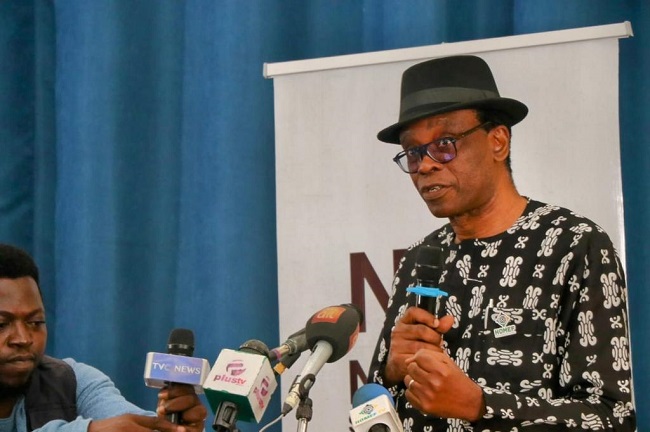
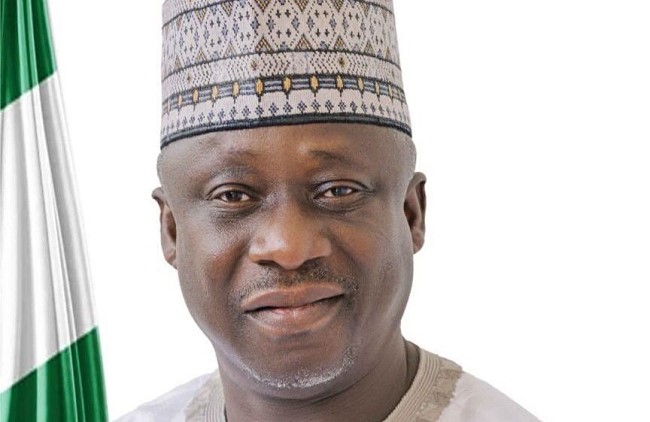
The Right Livelihood Foundation has just welcomed Nnimmo Bassey, a champion of environmental justice and recipient of the 2010 Right Livelihood Award, to its Board. Starting October 1, 2025, Bassey will serve a four-year term, bringing his passion and experience to the organisation’s mission of driving positive change.

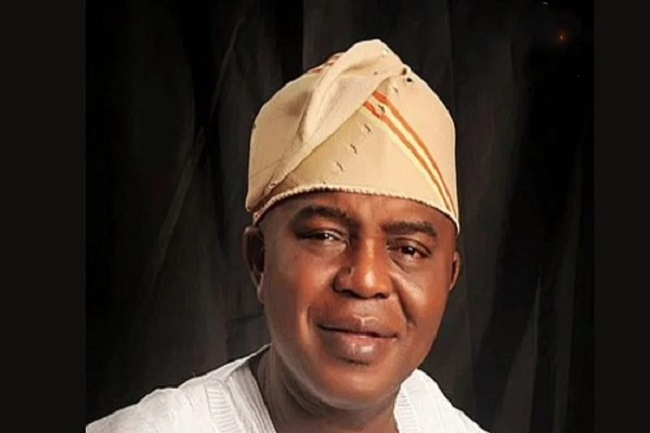
Officials of Health of Mother Earth Foundation (HOMEF) said they are honoured to have their director join the Right Livelihood Board. “His presence on the board is a mark of recognition for the important work he does. It will offer him a space to contribute to upholding the Foundation’s values and supporting Laureates in their vital work to create a more just and sustainable world,” said the group.

Nnimmo Bassey
Nnimmo Bassey

According to HOMEF, Bassey’s dedication to environmental protection is evident through his leadership of the organisation, a think tank that advocates for sustainable policies and climate justice.

Bassey serves on the board of several international organisations, including the Global Alliance for the Rights of Nature, Oil Change International and Oilwatch International. Previously, he served as Chair of Friends of the Earth International (2008-2012), the largest grassroots network, and he co-Chaired Global Greengrants – empowering environmental efforts at the grassroots level across the world.

He is also a member of the advisory board of Stop Ecocide International, a body that pushes for ecocide to be recognised as a crime on the world stage.

Commenting on the appointment, Joyce Brown, Director of Programmes at HOMEF, sends heartfelt congratulations on behalf of the organisation. 

“This prestigious recognition reflects your dedication to environmental justice and sustainability and your leadership at HOMEF. Your work has inspired many, and we believe your contributions to the Right Livelihood Board will greatly help global efforts toward a more equitable and sustainable future. This achievement celebrates grassroots advocacy and systemic change. We are proud of you and look forward to your positive impact in this new role,” submitted Brown.

Since receiving the Right Livelihood Award in 2010, Bassey has actively participated in the Laureate community and served on the Right Livelihood Jury. He reflects: “Being part of the Right Livelihood family has strengthened my belief in the power of people to stand up for what is right, even when things look bleak.”

HOMEF congratulates Bassey and believes that his presence on the Board will further the strategic work of the Foundation in providing support and visibility to visionary people of courage, addressing social and ecological crimes, and holding those causing the harm accountable.

ACReSAL, NUJ sensitise 100 journalists to climate change, environmental reporting skills

0

The Agro-Climatic Resilience in Semi-Arid Landscapes (ACReSAL) project on Monday, October 20, 2025, trained 100 journalists to enhance coverage of climate change and environmental issues in Gombe State.

The one-day capacity building exercise is being implemented in collaboration with the Nigeria Union of Journalists (NUJ), aimed at raising awareness on land restoration and sustainable landscape management.

ACReSAL is a World Bank financed project designed to tackle the pressing issues of land degradation and climate change in 19 states in northern Nigeria.

Abdulhamid Umar
Abdulhamid Umar, National Project Coordinator, Agro-Climatic Resilience in Semi-Arid Landscapes (ACReSAL)

Dr Sani Jauro, State Coordinator, ACReSAL, described journalists as critical stakeholders in efforts towards reclaiming degraded lands and ensuring sustainable landscape management.

He said the training aimed at improving journalists’ understanding of climate related issues to help them communicate the challenges and solutions effectively to the public.

Jauro expressed optimism that the training would enhance the skills and knowledge of media practitioners in reporting ACRESAL, environmental and climate change issues.

The coordinator commended Gov. Inuwa Yahaya for his support in addressing environmental related issues, to improve lives and protect livelihoods of communities threatened by land degradation.

He also lauded the media support in the implementation of ACReSAL project through accurate reportage, and urged them to sustain the feat to promote community ownership of ACReSAL project.

NUJ Chairman, Faruk Muazu, lauded ACReSAL and Jewel Environmental Initiatives (JEI), the implementing partner, for their efforts at upskilling journalists.

Muazu urged other government bodies to partner with the organisation to train journalists on issues that would enhance development in Gombe State.

“This training will help improve the quality of conversations around climate change, land restoration and environmental issues across the state.

“It will ensure that the media becomes adequately informed about climate change related issues across the state,” he said.

Mr. Ismail Bima, Project Coordinator, JEI, also urged journalists to prioritise environmental and climate change reportage to promote sustainable environment.

Represented by Danladi Aliyu, an official of JEI, Bima said awareness creation on ACReSAL project, government and stakeholders investment would build sustainability culture among residents.

One of the participants, Chika Udenkwo, commended the gesture, adding it would expose journalists to better skills to report environmental issues and climate change.

By Peter Uwumarogie 

Africa’s climate struggle described as a demand for justice, not a plea

0

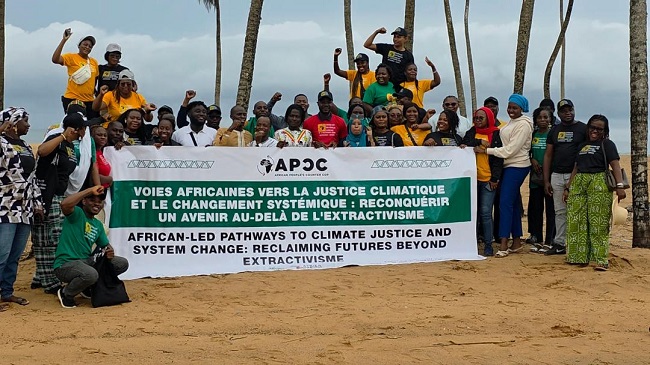
Over 100 representatives from 20 African countries, including grassroots communities, indigenous peoples, farmers, youth, women, and civil society, have called for an end to extractivism – a practice many believe has allowed the Global North to exploit Africa – at the second African People’s Counter-COP (APCC) under the theme “African-Led Pathways to Climate Justice and System Change: Reclaiming Futures Beyond Extractivism.”

The African Climate Justice Collective (ACJC), which organised the gathering, used the platform to challenge the United Nations Framework Convention on Climate Change (UNFCCC) Conference of Parties (COP), saying that the UNFCCC process has been co-opted by capitalism and the Global North, continuously sidelining African voices and exacerbating the climate crisis.

African People's Counter-COP (APCC)
Participants at the second African People’s Counter-COP (APCC) in Cotonou

“The climate crisis ravaging Africa is not our fault; it is a reflection of the debt owed by the Global North,” said Rumbidzai Mpahlo, Coordinator of the ACJC. “While we contribute minimal emissions, we endure maximum suffering. This Declaration represents our unified demand to dismantle exploitative power and reclaim our future ahead of COP30.”

From the drought-stricken farmlands of the Sahel to the eroding coastlines of Ouidah in Benin, the message from the APCC was clear: the era of extraction and exploitation must end.

Africa’s Demands

At the heart of the APCC’s Declaration are nine urgent, non-negotiable demands – a bold framework for systemic change that redefines what genuine climate justice means for Africa and the Global South.

  1. Pay the Climate Debt and Reparations: Nations in the Global North must provide climate reparations, remediation, and compensation – not as loans, but as grants. 
  2. All exploration and production must be halted immediately. Africa’s future must be powered by grassroots-led, socially owned renewable energy systems that serve local communities first
  3. An End to Dangerous Distractions: The APCC firmly rejects false solutions that commodify nature and deepen inequality. These include REDD+, carbon trading, Net Zero policies, waste-to-energy projects, and all forms of geoengineering
  4. The Right to Say No! (Free, Prior, and Informed Consent): Every community must have the legal and moral right to reject projects that threaten their land, lives, and culture. The ratification and enforcement of Free, Prior, and Informed Consent (FPIC) is non-negotiable.
  5. Reform Climate Finance: Global funds like the Green Climate Fund (GCF), Adaptation Fund, and Loss and Damage Fund must be adequately resourced, transparent, and directly accessible to communities most affected by climate impacts – not controlled by profit-driven multilateral banks.
  6. Promote Food Sovereignty: African governments must reform land laws to benefit local people, prioritise indigenous food systems, and invest at least $5 billion annually in peasant agroecology.
  7. Stop Waste Colonialism: Africa is not the world’s dumping ground. Governments should adopt zero-waste policies and reject the influx of obsolete technology, textiles, and plastic waste from the Global North.
  8. Prioritise Africa’s energy sovereignty: Support a people-led transition to renewable energy, benefiting local communities, women, youth, and indigenous peoples.
  9. Protect Climate Refugees: Governments and international bodies must provide urgent adaptation and resilience funding to ensure people can remain safely in their communities or relocate with dignity.

“As the world prepares for COP30 in Belém, Brazil, the APCC Declaration stands as a moral and political challenge to both African governments and the international community. The ACJC is urging leaders to endorse the Declaration, assert sovereignty, and demand global financial and environmental justice as the only legitimate foundation for climate action,” the group stated.

Ogun releases flood alert, urges residents to relocate

The Ogun State Government has urged residents living in riverbank and wetland areas to prepare for the overflow of Ogun River in the next two weeks, from Oct.  20 to Nov. 3, 2025.

This is contained in a flood alert released by the Commissioner for Environment, Mr. Ola Oresanya, in Abeokuta, the state capital, on Monday, Oct. 20.

Oresanya listed the areas as Akute, Alagbole, Isheri, Magboro, Makogi, Orimerunmu, Iro, Kajola and part of Abeokuta specifically Lafenwa, Enugada, Adedotun, Iberekodo, Akin-Olugbade, and Ago-Odo.

Ola Oresanya
Ogun State Commissioner for Environment, Ola Oresanya

He said the alert was part of the government’s continued efforts at mitigating flooding in the state through its periodic flood alert.

“The overflow from Ogun River would rise as a result of controlled release of water from Oyan Dam due to heavy rainfall from up-north.

“This will increase the volume of water reaching the dam from that part of the country which will be compounded by increase in tidal level,” he said.

He said the waterflow into the dam would inevitably force the release of water from the dam that would affect the areas.

He urged residents of the areas to exercise caution and avoid loss of lives and  property within the period.

Oresanya emphasised the need for residents of the areas to avoid the riverbank, while those in the wetlands should move to higher grounds or elevate their stay for now as the overflow becomes inevitable.

He added that the state government had continuously dredged and opened up more tributaries for Ogun River to ease the pressure of the overflow on residents in collaboration with the Ogun Osun River Basin Authority.

He, therefore, enjoined residents of the areas not to panic, assuring that the tide would go down in about 10 days as the mitigating measures from the state government cannot stop the activities of nature.

Oresanya also used the opportunity to call on fish farmers in the areas mentioned to harvest their fishes in order to avoid inevitable losses.

By Joy Akinsanya

Why fortifying ultra-processed foods won’t solve Nigeria’s nutrition crisis

0

Food fortification is a well-established public health intervention designed to address widespread micronutrient deficiencies in populations. Over time, this strategy has proven remarkably effective in tackling several serious health conditions. One of the most notable examples is the addition of iodine to salt, which successfully helped combat goitre, a painful swelling of the thyroid gland caused by iodine deficiency. Likewise, fortifying milk with vitamin D was pivotal in conquering rickets, a disease that weakens the bones of children.

Typically, the implementation of fortification programmes follows one of two models. These models are either mandatory or voluntary in nature. Under a mandatory framework, governments legally require certain food categories to be fortified with specific nutrients to remedy major public health concerns. The addition of iodine to salt, or the fortification of flour with folic acid or vitamin A to prevent neural tube defects are common examples of this model.

Bukola Olukemi-Odele

By contrast, the voluntary model of fortification presents a different approach. In this case, food manufacturers may choose to fortify their products as a way to enhance brand value. This practice is commonly seen in consumer goods such as breakfast cereals, beverages, and bouillon cubes, which are often fortified with iron and B vitamins.

In recent years, fortification has extended into the realm of ultra-processed foods (UPFs), a development that has generated considerable debate. Proponents argue that since people, particularly in developed countries, obtain a significant portion of their daily calories from UPFs, fortifying these products can help ensure that populations still receive some essential vitamins and minerals they might otherwise miss by not consuming enough healthy, natural foods.

However, this logic collapses when applied to developing contexts like Nigeria, where traditional and indigenous diets still dominate food tables. In such settings, fortifying UPFs can actually make things worse by accelerating a trend known as a nutrition transition, in which people gradually replace their healthy local meals with prepackaged and unhealthy options. This shift increases the population’s vulnerability to diet-related non-communicable diseases (NCDs) such as diabetes, hypertension, heart disease, and obesity.

Furthermore, the idea of adding a few micronutrients to an otherwise unhealthy ultra processed product to make it nutritious creates what scholars describe as a health halo effect. Consumers, misled by labels proclaiming “fortified with vitamins” may assume such foods are beneficial and consume them in excess, even though they often contain high amounts of sugar, salt, and harmful fats. This misconception contributes to the growing rates of hypertension, cardiovascular disease, and other chronic conditions, ultimately aggravating existing nutrition and public health issues rather than solving them.

More critically, fortifying UPFs is a band-aid solution that fails to address the underlying structural drivers of poor diets, especially those shaped by corporate food systems. It allows industry actors to profit from a public health crisis instead of confronting its root causes, which includes the limited access to affordable, wholesome foods. While fortified UPFs may contain added vitamins, they often lack other beneficial components found in whole foods, such as fibre, antioxidants, and a diverse range of naturally occurring micronutrients.

Additionally, widespread fortification of multiple food products can lead to the over-consumption of certain nutrients, especially if a person also takes dietary supplements. The excessive intake of vitamins and minerals such as vitamin A can have adverse health effects, including teratogenic risks during pregnancy.

In summary, while food fortification remains a valuable public health tool, its application to UPFs presents a paradox. It may offer limited benefits in contexts of severe deficiency but simultaneously deepens unhealthy consumption patterns and facilitates corporate capture of nutrition policy.

In Nigeria, where indigenous diets rich in natural micronutrients are not only culturally central but remain the most widely consumed sources of nourishment, promoting the fortification of UPFs could inadvertently legitimise junk food as public good. Instead of fortifying the problem, public health efforts should focus on protecting and expanding access to affordable, whole, and minimally processed foods that truly sustain life.

By Bukola Olukemi-Odele, food scientist and Project Officer (Cardiovascular Health, Food Policy Programme) at Corporate Accountability and Public Participation Africa (CAPPA)

COP30: Outcry as Brazil grants oil drilling license in Amazon basin

0

Less than one month before the UN Climate Conference in Belém, the Brazilian government – host of COP30, the “Amazon COP” – has approved the drilling license for block FZA-M-59 in the Amazon River basin. Observers believe that the decision has the potential to undermine Brazil’s climate leadership and may create challenges for the country to deliver concrete results for the Amazon and the global climate at COP30.

Others feel that the decision ignores scientific warnings, international commitments and, above all, the voices of the peoples and communities who have lived in and protected the Amazon for centuries.

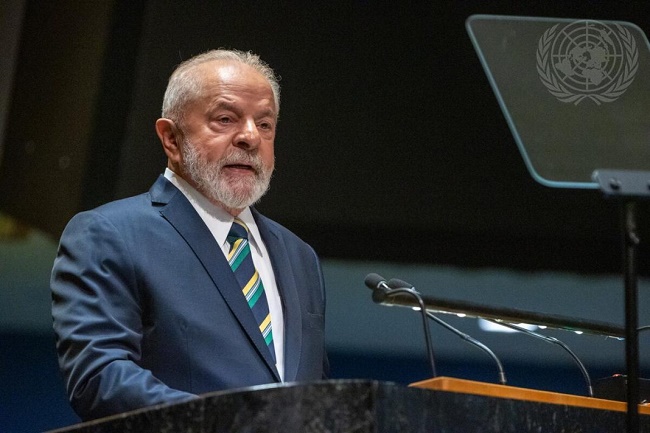
Lula da Silva
Lula da Silva, President of Brazil

“Authorising oil drilling in the Amazon not only threatens critical ecosystems but also repeats the same logic that has brought us to the brink of climate collapse,” submitted 350.org.

The group’s Latin America and Caribbean Director, Ilan Zugman, said: “Authorising new oil licences in the Amazon is not just a historic mistake – it’s doubling down on a model that has already failed. The history of oil in Brazil shows this clearly: huge profits for a few, and inequality, destruction, and violence for local populations.

“Brazil must take real climate leadership and break the cycle of extraction that has led us to the current climate crisis. We urgently need a just energy transition plan, based on renewables, that respects Indigenous, quilombola, and riverside peoples and guarantees them a leading role in decisions about climate and energy – including at COP30,”

350.org called on people, social movements, scientists, political leaders, and all sectors committed to climate justice to unite in reversing the decision and pressuring the Brazilian government – and governments worldwide.

“We must demand not only the cancellation of this and future oil exploration projects in the Amazon, but also the collective construction of an energy transition plan that: Respects Indigenous, quilombola, and riverside territories; Ensures these communities play a leading role in energy and climate decision-making; and, Prioritises clean, decentralised energy built for people’s well-being, not for the profit of a few.”

Indeed, civil society groups and social movements are taking the case to Brazilian courts, even as they called the license environmentally and socially disastrous. They denounced serious irregularities and technical flaws in the process, which could render it invalid.

They contended that the approval contradicts the global scientific consensus around climate change, and it also defies recent rulings from the Inter-American Court of Human Rights and the International Court of Justice, who both reaffirmed states’ legal duty to halt fossil fuel expansion and protect the climate.

Suely Araújo, Public Policy Coordinator at the Climate Observatory, said: “The issuance of the license for Block 59 is a double act of sabotage. On the one hand, the Brazilian government is acting against humanity by encouraging further fossil fuel expansion, defying science, and betting on further global warming. On the other, it is disrupting COP30 itself, whose most important deliverable must be the implementation of the determination to phase out fossil fuels. Lula has just buried his claim to be a climate leader at the bottom of the ocean at the mouth of the Amazon. The government will be duly prosecuted for this in the coming days.”

Dr. Carlos Nobre, Co-Chair, The Amazon Scientific Panel: “The Amazon is dangerously close to the point of no return, which will be irreversibly reached if global warming hits 2°C and deforestation surpasses 20%. Beyond eliminating all deforestation, degradation, and fires in the Amazon, it is urgent to reduce all fossil fuel emissions. There is no justification for any new oil exploration. On the contrary, rapidly phasing out existing fossil fuel operations is essential.”

Paulo Artaxo, Physicist and Professor, University of São Paulo; IPCC member, expert on climate crisis and the Amazon: “The worsening of the climate crisis, caused by the production and burning of fossil fuels, leaves no doubt that we must accelerate the energy transition to solar and wind power. Brazil has the opportunity to harness its vast potential for solar and wind generation and become a global powerhouse in sustainable energy. We must not waste this opportunity. Opening new oil fields will only deepen the climate crisis and clearly goes against the interests of the Brazilian people.”

Livia Duarte, Congresswoman from Pará State: “We need a global agreement to phase out fossil fuels. Until that happens, oil companies should not be opening new drilling sites for oil and gas. And this must begin with the Amazon, a critical area for biodiversity and the global climate. Corporate profit should never take precedence over life on the planet. Granting a license in Block FZA-M-59, in the Amazon River estuary basin, is a dangerous choice for Brazil.”

Ivan Valente, Congressman from São Paulo State: “It is imperative to establish priority exclusion zones to stop the expansion of fossil fuels, protecting ecosystems that are critical for life on Earth. Given its immense importance for the climate and biodiversity – both facing global crises – the Amazon must be one of these zones. Authorising drilling in Block FZA-M-59, in the estuarine basin of the Amazon, is a path that will prove irreversible and disastrous for both climate and biodiversity.”

Clara Junger, Campaign Coordinator for Brazil, Fossil Fuel Treaty Initiative: “It is unacceptable for the government to continue promoting oil and gas exploration in the Amazon basin, an area vital for climate and biodiversity protection. This decision undermines commitments to the energy transition and puts communities, ecosystems, and the planet at risk. Contrary to official claims, oil revenues contribute almost nothing to the transition – only 0.06%. We need a global agreement to end oil extraction in a fair, equitable, and sustainable way. Until then, the very least we must do is prevent further expansion.”

Group wants DR Congo to protect environmental defenders from harassment

0

The Democratic Republic of Congo is regarded as one of the most biodiverse countries in the world. Yet illegal logging remains a grave threat. Many Congolese people are standing up to protect nature and defend human rights. But, in doing so, they face harassment and legal persecution.

The Congo Basin is home to the world’s second-largest rainforest, with 60 percent of it located in the Democratic Republic of Congo (DRC). This makes the country a global biodiversity hotspot. President Felix Tshisekedi has reportedly positioned the nation as a “solution country” in addressing the climate crisis and biodiversity loss, and international donors like the European Union are supporting this vision with millions of euros.

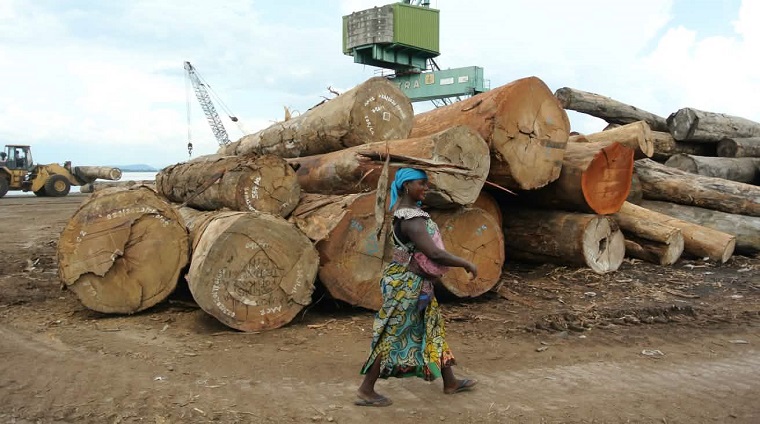
DR Congo
Logging – much of it illegal – is driving the destruction of the Congo Basin. Photo credit: Rettet den Regenwald / Mathias Rittgerott

Countless courageous women and men – particularly Indigenous peoples and local communities – are said to be working tirelessly to safeguard these forests for everyone.

However, the Congolese government appears to be falling short in its responsibilities, according to John Hayduska of Rainforest Rescue

According to him, forest and human rights activists face intimidation, harassment, persecution and imprisonment at the hands of companies, powerful individuals, and state authorities such as the military, police, prosecutors, and courts.

Hayduska said: “For example, in November, a court in Maniema Province sentenced environmental activist Yahya Mirambo Bin Lubangi to six months in prison and imposed a steep fine. Lubangi is part of SOCEARUCO, a local organisation fighting illegal logging, especially of rosewood.

“The government is failing to enforce forestry regulations meant to protect nature and Indigenous peoples’ rights. For instance, the moratorium on new logging concessions, which has been in place since 2002, has not curbed illegal activities or timber smuggling.

“The outcome: one of the highest rates of deforestation of any country in the world.”

Josué Aruna, Executive Director, Congo Basin Conservation Society, said: “We urge our government to stop the threats and arrests targeting environmental defenders by ensuring the protection of these unsung heroes.”

Rainforest Rescue is seeking endorsement to a petition urging the DRC Ministry of the Environment and Sustainable Development, and international donors of the Central African Forest Initiative to end the harassment and acknowledge environmental defenders as partners in protecting the climate and biodiversity.

Kaduna inaugurates smallholder farmers programme with AUDA-NEPAD support

The Kaduna State Government, in partnership with AUDA-NEPAD Nigeria, has inaugurated the distribution of agricultural inputs under the Smallholder Farmers Programme aimed at boosting food security and supporting rural livelihoods across the state.

The event, held in Kaduna, the state capital, marked a key milestone in the state’s agricultural transformation agenda, with over 345 farmers from the 23 local government areas set to benefit from improved seeds, fertilisers, agrochemicals, compost, and water tanks, among other inputs.

Uba Sani
Gov. Uba Sani of Kaduna State

In his remarks, Gov. Uba Sani said the initiative underscored the administration’s commitment to empowering smallholder farmers and strengthening the food supply chain.

Sani, who was represented at the event by his Chief of Staff, Sani Kila, said smallholder farmers were the backbone of the state’s agricultural system.

According to him, partnership with AUDA-NEPAD is not just a project but a people-centered investment into sustainable prosperity.

Sani added that Kaduna State remained the only state in Nigeria to meet the Malabo Declaration target and had earmarked over N10 billion for agriculture in the 2025 budget.

He urged the beneficiaries not to sell the inputs but to use them effectively to improve their productivity.

The Commissioner for Agriculture, Murtala Dabo, in his welcome address, described the programme as a transition from training to implementation.

He stated that all the beneficiaries had undergone intensive training in good agronomic practices and climate-smart farming.

“This programme promotes both food and income security through field crop production maize with cowpea, maize with soybean and backyard vegetable farming like tomatoes and sweet pepper,” Dabo said.

He commended the Governor for providing the counterpart funding needed to access AUDA-NEPAD’s grant and affirmed Kaduna State’s readiness to collaborate with development partners.

The National Coordinator of AUDA-NEPAD Nigeria, Jabiru Tsauri, described the programme as “a platform for transformation” and praised the Governor’s leadership for enabling the programme to reach all 23 LGAs of the state.

“These inputs are not just farming materials they are instruments of hope, productivity, and transformation.”

According to him, by investing in smallholder farmers, they are investing in people, prosperity, and Africa’s future.

He emphasised the alignment of the programme with both President Bola Tinubu’s national agricultural agenda and the African Union’s vision for a climate-resilient and inclusive agricultural future.

In his remarks, Suleman Yusuf, who spoke on behalf of all the beneficiaries from Soba LGA, expressed gratitude to the government and AUDA-NEPAD, pledging to make judicious use of the inputs received.

“This support gives us hope and a real chance to change our lives. We will not waste it,” Yusuf vowed.

The programme is expected to improve yields, reduce post-harvest losses, and promote sustainable agricultural growth across Kaduna State.

By Hussaina Yakubu

World Polio Day: Rotary celebrates 99.9% drop in global polio cases

0

The Rotary International District 9127 has announced global polio cases decrease by 99.9 per cent since 1988, marking a historic health milestone.

Dr Joy Nky Okoro, Governor of Rotary District 9127, made this known during a press briefing to commemorate World Polio Day 2025 on Monday, October 20, in Abuja.

This year’s World Polio Day theme is “Finishing the Job: Our Legacy for a Polio-Free World.’’

Joy Nky Okoro
Dr Joy Nky Okoro, Governor of Rotary District 9127

Okoro emphasised that Rotary International had led the global fight against polio for decades, remaining deeply committed to ending the disease permanently across all continents.

She noted that, as a founding partner of the Global Polio Eradication Initiative, Rotary had raised $2.6 billion, deployed volunteers and driven global awareness campaigns since the effort began.

She highlighted that Rotary’s 1.4 million members worldwide have dedicated countless volunteers’ hours to help deliver life-saving polio vaccines to children.

According to her, progress is clear; polio cases have dropped by 99.9 per cent since 1988, with wild poliovirus now remaining endemic in only two countries of Afghanistan and Pakistan.

“More than three billion children have been vaccinated, preventing an estimated 20 million cases of paralysis and significantly reducing the disease’s impact globally,” she said.

In Nigeria, she said that the country had successfully eliminated wild poliovirus, a major milestone achieved through years of coordinated national and international efforts.

“This progress shows what is possible when governments, organisations and communities unite toward a common goal,” Okoro noted.

She cautioned that, in spite eliminating wild poliovirus, vaccine-derived strains continued to pose threats in communities with low immunisation coverage and weak healthcare infrastructure.

Okoro said that Rotary District 9127 was hosting the 2025 national event, starting with a press conference and followed by various week-long impactful programmes.

“Activities will include outreach at Wuse Market, visits to the National Assembly, advocacy campaigns and mass immunisations across communities in the Federal Capital Territory,” she added.

She urged media organisations to amplify awareness, share progress stories and emphasise the urgent need for sustained financial support towards polio eradication efforts.

Appreciating all levels of government and partners, Okoro encouraged them to strengthen primary healthcare systems and prioritise routine immunisation for every child.

She further called on Nigerian families to ensure that all children were vaccinated, protecting their communities and helping secure a polio-free future for generations.

By Nefishetu Yakubu