Home Blog Page 1759

FAO warns of armyworm invasion affecting 1.5m farmers

0

The Food and Agriculture Organisation (FAO) on Wednesday, November 14, 2018 raised an alarm of impending armyworm invasion of maize and rice plantations in the country.
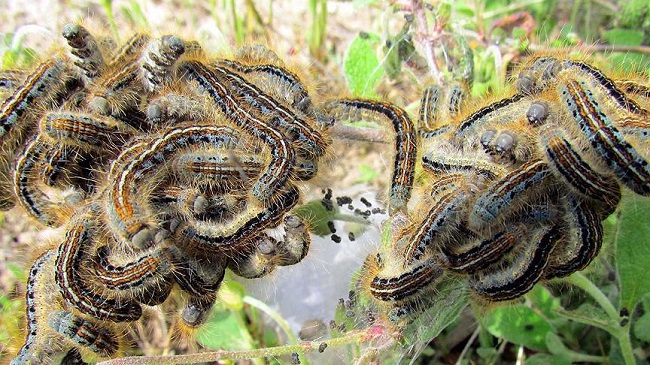
Armyworm
Armyworm invasion

FAO said in its November Situation Report that the invasion of the Fall Army Worm (FAW) would ravage farmlands affecting an estimated 1.5 million farming households.

The fact sheet indicated that the Spodoptera Frugiperda, otherwise called FAW, is a devastating pest commonly found in tropical climate and feeds on approximately 80 plant species including maize and rice.

It disclosed that the pest continued to ravage maize fields at an alarming rate since it was first discovered in 2016 in Nigeria, adding that the damage caused by the pest was estimated at over $268 million in Abia, Ekiti, Ondo and Oyo states.

FAO noted that FAW’s alarming rate of expansion and its manifestation in many parts of the country portends great danger to the availability for food and a major concern to stakeholders.

In Nigeria, maize is not only a major staple food crop relevant to the food security and nutrition of nearly 200 million people, but also a key input for industry in the country.

“The sector is a key source of income to millions of Nigerians, more than 80 per cent of households engage in an agriculture-based livelihood.

“Agriculture is also essential to national food security, nutrition, foreign exchange earnings, employment and revenue,” it said.

To control the pest, FAO adopted FAW project which focused at capacity building and integrated pest management, as well as conducted a livelihood impact mapping exercise in July 2018; in six states of the south while similar exercise was being conducted in six Northern states.

FAO listed the projects to include capacity building training for 1,200 farmers; 100 extension workers, and 50 stakeholders including researchers, quarantine officers and other personnel of the Ministry of Agriculture.

The document showed that the trainees were exposed to techniques on the application of surveillance tools, worm recognition, control and management, while the organisation also distributed fertilisers, seeds and inputs to the farmers.

It showed that each of the benefiting farmers received 25 kilograms of certified maize seeds, one kilogram of herbicide, 50 kilogrammes of NPK fertilisers, one knapsack sprayer and one pheromone trap.

According to the document, the organisation needs adequate funding to enhance response activities and effectively control the pest.

“FAO’s funding for FAW activities has been depleted; the organisation is currently the sole financial source for its response in Nigeria, though committed to saving the livelihoods of farmers and other agriculture sector stakeholders affected by FAW, FAO faces significant financial constraints to carry out monitoring, prevention and response activities.

“To undertake a comprehensive response in Nigeria, FAO is seeking 3 million dollars to upscale FAW mitigation and elimination through direct response and capacity development of local actors.

“To date, FAO’s FAW response has totaled 461, 000 dollars. It has utilised funding from its Technical Cooperation Fund to provide FAW-related support in Nigeria. The Organisation requires urgent support from willing resource partners to save livelihoods affected by FAW.”

By Rabiu Sani
UNICEF convenes global meeting on open defecation

0

The UN Children’s Fund (UNICEF) is meeting with key players in sanitation, among other stakeholders in West Africa, to strengthen local sanitation markets, its Supply Director, Etleva Kadilli, said on Wednesday, November 14, 2018 in a statement in Abuja.

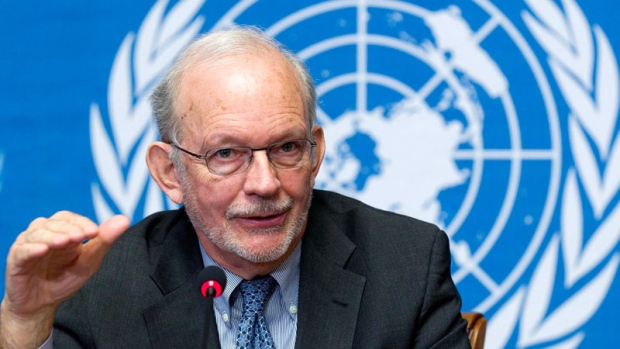
Anthony Lake
Anthony Lake, Executive Director, UNICEF. Photo credit: ctvnews.ca

Kadilli stated that the meeting was part of efforts to support 250 million people globally to abandon open defecation.

According to her, the meeting, which is ongoing in Abuja, is aimed at enabling 60 million people to gain access to at least basic sanitation service by 2021.

The meeting, which opened on Nov. 13, will end on Nov. 15.

The director stated that “the UNICEF meeting with industry, financial institutions, governments and development partners is to discuss how to shape healthy sanitation markets in the West and Central Africa Region.

“One of the key approaches in the UNICEF global strategy for water, sanitation and hygiene is to build sustainable markets for goods and services where supply meets demand.

“There is need for governments and development partners to work with global and local businesses to ensure that appropriate solutions are available and affordable to those who need them.”

Kadilli, who noted that 2.4 billion people worldwide do not use improved sanitation, stressed the need for consultation as important signals were urgently needed to achieve Sustainable Development Goals (SDGS) sets targets.

She assured that UNICEF had been key custodian of SDG 6.2 and would work to achieve equitable access to sanitation and hygiene for all and to end open defecation by 2030.

She added that “open defecation is a life-threatening practice as contact with human waste can lead to diseases such as cholera, typhoid, hepatitis, polio and diarrhea. Inadequate or non-existent sanitation causes tremendous harm.

“Everyday, 700 children under five years die from diarrhea related diseases.”

Ms Marie-Pierre Poirier, UNICEF’s Regional Director for West and Central Africa, also noted that the level of open defecation in West and Central Africa accounted for 14 per cent of global open defecation.

Poirier specifically noted that in Nigeria alone, 46.5 million people practice open defecation, making it the second highest ranked country worldwide.

She added that “between 2008 and 2017, the creation of sanitation demand through ‘Community Approaches for Total Sanitation in West and Central Africa’ led to an increase of almost 25 million people living in open defecation-free communities.

“Despite this recent success, the current rate of progress is insufficient to eliminate open defecation by 2030.

“While UNICEF will continue to rely on proven strategies, new accelerators are needed to support local markets to deliver sustainable sanitation solutions at scale.

“Following the rise in demand for toilets, we will work with countries to enhance the engagement of the private sector to provide adequate and affordable sanitation products and services, including in isolated, often underserved rural areas.”

She says UNICEF has a long history of influencing markets and driving product innovation that has increased children’s access to essential commodities.

By Felicia Imohimi

Akeredolu reiterates commitment to eradicate open defecation in Ondo

0

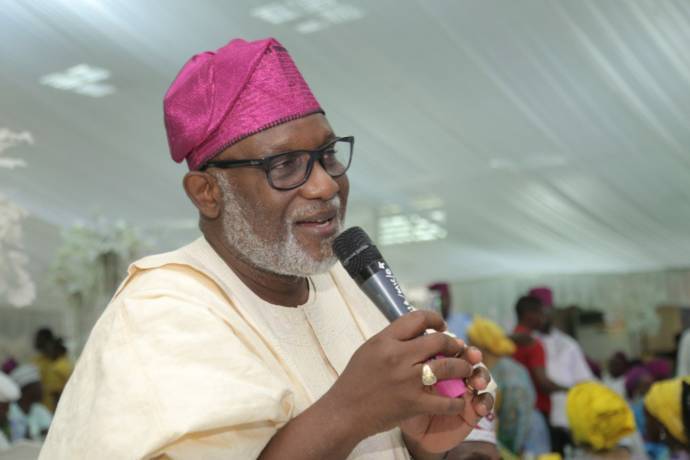
Gov. Oluwarotimi Akeredolu of Ondo State on Wednesday, November 14, 2018 reiterated the commitment of his administration to eradicate open defecation in the state.

Oluwarotimi Akeredolu
Gov. Oluwarotimi Akeredolu of Ondo State

He made this known in Akure when a team from Global Alliance, a non-governmental organisation (NGO) paid him a courtesy visit in Akure.

He explained that the commitment was part of ongoing efforts the state government was making in collaboration with the UN Children’s Education Fund (UNICEF).

The governor said “we know our shortcomings and we need to have consistent advocacy. A number of houses do not have toilets.

“Banks have assisted us to build boreholes in many areas of the state, while primary schools have modern toilets.

“We have also gone ahead to provide water to make sure that most of our villages have boreholes, and we have rehabilitated over 500 boreholes.”

Akeredolu, therefore, appealed to Federal Government to complete dams instead of leaving the reticulation of such dams to state governments.

He added that “if we continue to run our affairs disjointedly, we won’t get anywhere.”

Dr Brylyne Chitsunge, the Ambassador for Food Security in Africa, said that the visit was to see how the NGO could assist the state to combat food security.

Chitsunge explained that 440 hectares of land had been acquired to help Africa combat shortage of food.

According to her, global citizen concept will be hosting 100,000 people in South Africa to mark the centenary celebrations of late Nelson Mandela, where dignitaries will discuss global investment opportunities in different sectors.

She, therefore, invited Akeredolu to be part of the dignitaries.

By Ayodeji Alabi

Indian, Mexican win 2018 climate Youth Video Competition

0

Two talented and environmentally minded young people from India and Mexico, with their video reports on actions to fight climate change, have been selected as the winners of the 2018 Global Youth Video Competition on Climate Change.

Global Youth Video Competition
Vikas Yadav from India and Andrea Sofia Rosales Vega from Mexico are winners of the 2018 Global Youth Video Competition on Climate Change

The winners, chosen through an online public vote, are Vikas Yadav, 20 years old, from India for the category “Green and climate friendly jobs” and Andrea Sofia Rosales Vega, 20, from Mexico for the category “Responsible production and consumption”.

They will travel to the UN Climate Change Conference (COP 24) in Katowice, Poland, in December and will work with the UN Climate Change’s Global Climate Action Team covering highlights of the meeting, reporting for a global youth audience. The winners will be recognised in a ceremony at the COP24 Action Hub on Thursday, December 6.

The video by Sofia Vega shows how we can clean up urban areas while also making a difference to people’s lives. Her video describes the “Eco Urban” project, which collects and re-uses waste, including plastic and old clothes, helping to clean up the streets. Selling products made from the recycled material raises funds, some of which are reinvested in collection centres, and 60 per cent of the income used to fight childhood cancer. As she says at the close of the video, the participants are “ordinary people, making our world extraordinary.”

In his three-minute entry, Vikas Yadav visits rural areas of India, where he reports that more than 70 per cent of the population is engaged in agriculture. As food production is particularly sensitive to climate change, the farmers explain how innovative agriculture practices can play an important role in climate change mitigation and adaption. Vikas encourages people to “Go green” in moving towards more natural growing and management techniques.

“These two young people and their videos are encouraging examples of the global climate action needed to address climate change,” said UN Climate Change Executive Secretary Patricia Espinosa. “I congratulate Sofia and Vikas, and I applaud all the entrants showcasing international youth’s essential response to climate change.”

Entries were received from over 100 countries, from Azerbaijan to Yemen, with young people between the ages of 18 and 30 submitting over 300 videos.

The competition was launched by UN Climate Change as part of its work on Action for Climate Empowerment, in partnership with tve (Television for the environment), the Global Environment Facility’s Small Grants Programme, which is implemented by the United Nations Development Programme, and Connect4Climate, and supported by Fondation BNP Paribas and the German Federal Environmental Foundation (Deutsche Bundesstiftung Umwelt DBU).

Groups flay Poland’s plan to suppress CSOs at COP24

0

Women’s groups from Asia Pacific are deeply concerned about the bill passed by the Government of Poland that will prevent any “spontaneous” public gathering of climate groups during COP24 and subject human rights defenders to state-led surveillance including access and storing all personal information.

Katowice
The UNFCCC COP24 holds in Katowice, Poland

The bill, initiated by the government of Poland, is said to be setting a dangerous precedent that undermines human rights and fundamental freedoms, particularly including the right to freedom of peaceful assembly, association and of speech, and the right to privacy in the context of digital technologies, multilateral process, and the role and importance of peoples’ organisations in fighting climate change.

Civil society organisations from the Global South say they see the bill as a deterrent to attend COP24, participate in the negotiations and organise people’s action that are crucial to raise civil society concerns while finalising the Paris Agreement.

“This clamp down on civil society space and freedom of expressions is a sign of increasing influence of the profit earning actors who do not want to change the system of exploitation that is leading to climate change. By closing spaces for voices of the people to come into global platforms like the COP, the profit-making exploitative industries and the States continue business as usual at the cost of the planet,” said APWLD member Banamallika Choudhury, NEThing, India.

Civil Society present at a pre-COP 24 session in September in Bangkok reportedly asked the Polish government about the bill and the right to peaceful assembly.

“When asked at the Inter-sessions, the incoming Polish presidency responded that the bill was enacted to solicit funding support for the COP24.  This basically means that the global climate negotiations are resourced by the groups who want to suppress democratic and peaceful civil society organising. In addition, tying this bill to the visa application process is fundamentally discriminatory against women human rights and environmental defenders from the Global South who are most affected by climate change.  Global solidarity is required to resist this tactic of oppression,” said Misun Woo, Regional Coordinator, Asia Pacific Forum on Women, Law and Development, Thailand.

According to the activists, the UN’s decision of working with “oppressive governments” like Poland violates the Paris Convention, UN principles on human rights and European Union’s Aarhus Convention and enables the increasing threats to environment and human rights defenders and shrinking civil society spaces.

“In a letter sent by APWLD to UNFCCC this month, we raised security and personal safety concerns that will be faced by civil society. The Polish government has still not disclosed what data will be screened and what will be labelled ‘spontaneous demonstration or gathering’. With previous experience of facing immigration screening and policing of civil society in COP19 Warsaw and the current provisions of Bill that subject everyone to undisclosed State surveillance, it is a grave concern for women from the Global South on personal and organisation levels who will likely to be subjected to such scrutiny,” they stressed.

The civil society organisations therefore demand the Polish government to give assurances by repealing the bill and that human rights will be protected at COP 24 including the right to assemble.

“We remind the Government of Poland to uphold their legal and human rights obligations as set out in the European Convention of Human Rights and International Covenant on Civil and Political Rights.”

UN says 33m people are food insecure in the Sahel

0

No fewer than 33 million people in the Sahel are food insecure, the UN Economic and Social Council (ECOSOC) and the UN Peacebuilding Commission have said.

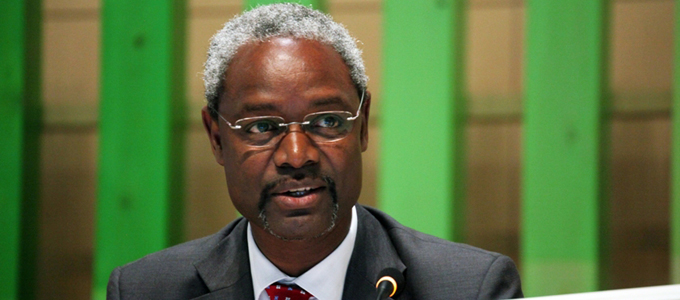
Ibrahim Thiaw
Ibrahim Thiaw

The UN bodies, at a joint forum in New York, also said building climate resilience and peace, must go hand in hand for the region.

The forum said to build a sustainable peace in the Sahel, urgent attention was needed to mitigate the effects of climate change, and ensure that communities have access to enough opportunities

The UN Special Adviser on the Sahel, Ibrahim Thiaw, said: “The region consists of 10 different countries, totalling 300 million people.

“Currently, 33 million women, children and men are food insecure, while 4.7 million children under the age of five suffer from acute malnutrition.

“The Sahel is arguably one of the most vulnerable regions to climate change. It is most likely the region with the largest number of people disproportionately affected by global warming”.

President of ECOSOC, Inga King, stressed that climate change was compounding the problem of the region.

“With rapid population growth estimated at 2.8 per cent per year in an environment of shrinking natural resources, including land and water resources, climate change in the Sahel can compound existing vulnerabilities.

“These risks generating new conflicts and forced migration, issues which already characterize the region. This situation requires our urgent attention,” King said.

Chair of the Peace building Commission, Ion Jinga, also regretted the impacts of climate change around the globe.

Jinga said: “Climate change impacts around the globe – including, desertification, droughts, floods and food insecurity – all pose grave threats to generations of human and development gains”.

He noted that, together, ECOSOC and the Peacebuilding Commission could support local initiatives through coordination of policies, building partnerships, resource mobilisation, and promotion of national ownership for projects implemented.

The joint meeting included local leaders invited to present their climate action initiatives to address their insecurity challenges.

Ahmed Diallo, Mayor of the city of Dori, in Burkina Faso, said “we are convinced that there are solutions, that with effort we can get out of this situation, and improve the current trends.

“This is because the youth that commit terrorist acts are often enrolled to do so, not so much by religious conviction, but due to a lack of opportunities.

“If a pastoralist can’t feed his animals because he doesn’t have food and he doesn’t have water, then he is going to look for other ways”.

Diallo gave examples of actions taken in his town to mitigate the effects of climate change including reforestation efforts, financial support to farmers, trainings for bee keepers, and cross-border cooperation with other countries’ municipalities to implement common projects.

By Prudence Arobani

Greenpeace Africa celebrates decade of environmental activism

0

Greenpeace celebrates in November 2018 10 years of environmental activism on the African continent.

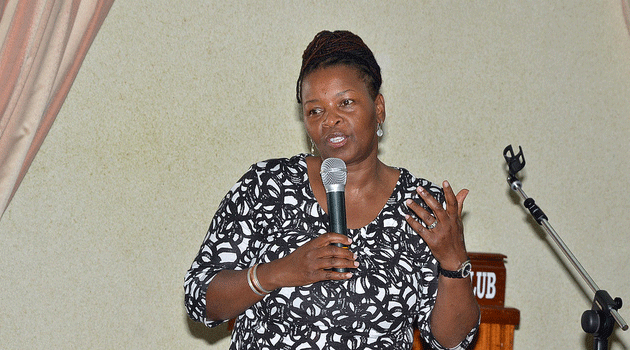
Njeri Kabeberi
Greenpeace Africa Executive Director, Njeri Kabeberi

Partnering with artists, volunteers and other civil society organisations, the environmental watchdog is organising an open day to spark an environmental revolution. As part of commemorative activities in South Africa and Senegal, artwork will be used to encourage partners and Africans to celebrate their individual acts of courage towards the environment.

“Greenpeace Africa is using this occasion to highlight environmental concerns and calling on partners to share their memories of being part of this environmental movement over the years. The challenges facing the environment are enormous in Africa and it is impossible for Greenpeace Africa to address them without the goodwill of other stakeholders,” says Njeri Kabeberi, Greenpeace Africa’s Executive Director.

Greenpeace Africa currently runs campaigns on four key issues on the continent: to protect the Congo Basin from large-scale deforestation, stop overfishing in West Africa, promote ecological farming in the horn of Africa as well as demand a shift from fossil fuels to renewable energy sources in South Africa in order to reverse the impacts of climate change.

Over the past 10 years, Greenpeace Africa has exposed illegal fishing by Chinese companies in West Africa which led to the cancellation of over 29 fishing licenses in 2012 and pushed relevant ministries to seek help from Greenpeace Africa in finding solutions to the problem of Illegal, Unreported and Unregulated fishing in West Africa.

In the Congo Basin, the group says it investigated and exposed breaches on the moratorium and succeeded to push the government to cancel more than three illegal logging titles. Africa is said to be the organisation’s largest and most active volunteer base.

Greenpeace says the anniversary is an opportunity to appreciate and amplify the contribution of local and indigenous communities, volunteers, staff and donors who gave substance in its struggle to protect the environment. It adds that it is likewise celebrating a decade of “fruitful militant contribution towards protecting the planet and the amazing work of partners that resonate across the continent”.

“After 10 years of countless affirmative actions down the lane, the people remain central to Greenpeace Africa’s identity. Communities are at the heart of who we are and what is needed to create the green and peaceful Africa we crave for. Without the activists, volunteers, partners and local communities, Greenpeace Africa will just be a farce and we won’t be able to face environmental injustices with courage,” stated Njeri.

New IPBES assessment begins

0

“We all value nature in very different and sometimes conflicting ways. Nature can be seen as a provider of food or water, as a regulator of climate, as part of our heritage or our identity, or as our home and that of life on earth. Assessing this diversity of values and how they are incorporated into decision making will contribute to addressing conflicts over nature and promoting more equitable decisions.”

These were the words on Tuesday, November 13, 2018 of Prof. Patricia Balvanera of the Institute for Ecosystem and Sustainability Research, National Autonomous University of Mexico while welcoming over 70 experts from 40 countries to Mexico City, for the first author meeting of a new expert assessment to improve decision-making at all levels.

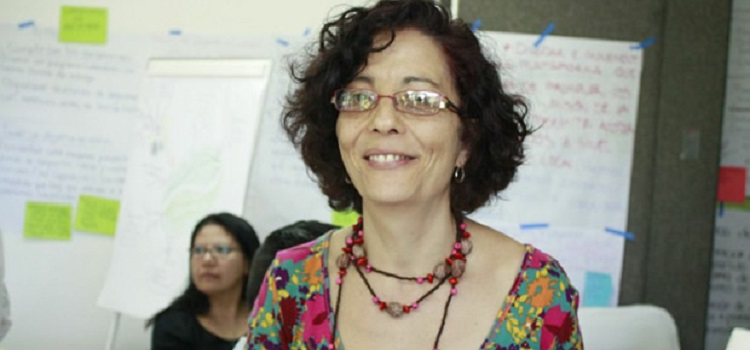
Patricia Balvanera
Prof. Patricia Balvanera

Leading the new assessment, under the Intergovernmental Platform on Biodiversity and Ecosystem Services (IPBES), Dr. Balvanera was joined at the event by her three co-chairs: Brigitte Baptiste (General Director, Alexander von Humboldt Institute, Colombia); Prof. Unai Pascual (Ikerbasque Research Professor at the Basque Centre for Climate Change (BC3), Spain, and Associated Senior Research Scientist at the Centre for Development and Environment (CDE), (University of Bern, Switzerland); and Prof. Mike Christie (Director of Research, Institute of Business and Law, Aberystwyth Business School).

“This assessment will be a game-changer,” said Prof. Pascual, “It will provide evidence to help decision-makers see different types of values of nature, choose and design appropriate valuation methods, recognise the data gaps that exist and identify areas in which more capacity is needed – all to integrate plural valuation approaches into diverse decision-making contexts.”

An IPBES technical support unit, also led by Prof. Balvanera, will coordinate the production of the assessment and is based in Morelia, Mexico. It is hosted by the Institute for Research on Ecosystems and Sustainability (IIES-UNAM), the Secretariat of Institutional Development (SDI-UNAM), and the University Seminar on Society, Environment and Institutions (SUSMAI-UNAM) all within the National Autonomous University of Mexico (UNAM), and the Mexican Commission for Knowledge and Use of Biodiversity (CONABIO).

“One of the key elements of the assessment will be to empower individuals and groups whose voices are typically not heard in discussing values,” said Brigitte Baptiste. “This is why it has been so important to assemble an expert author team from a wide range of disciplinary and interdisciplinary backgrounds, ranging from the natural sciences to diverse social sciences, such as sociology, philosophy, economics, geography and many others.” The expert group is also quite gender balanced, comprising 53% women and 47% men.

In addition to the first author meeting this week, the experts are expected to meet again twice over the next two years. Drafts of the assessment report will be opened for two rounds of external review, by experts and governments, before the final report is presented for consideration to the 130-member States of IPBES – expected to be in 2021.

Speaking about the timing of the meeting, and the importance of the work, Prof. Christie said: “This week also sees the opening of global negotiations on a new biodiversity action framework for the world, at the UN Biodiversity Conference 2018 in Egypt. It is expected that this process will culminate in 2020. We believe that effective achievement of the post-2020 biodiversity targets will be greatly strengthened by the evidence we will present – helping to ensure that the many values of nature are considered.”

Cadbury destroyed over 25,000ha of orangutan habitat, report alleges

0

A new report by Greenpeace has found that Mondelēz International has destroyed over 25,000 hectares of orangutan habitat in Indonesia.

Orangutans
Orangutans

The company, responsible for Cadbury, Cadbury Roses and Oreo, is one of the biggest buyers of palm oil.

A Greenpeace-led investigation has found that, between 2015 and 2017, 22 of Mondelez palm oil suppliers cleared 70,000 hectares of rain forest.

This deforestation is having devastating effects on the orangutan population, every year it is estimated that 1,000 to 5,000 orangutans are killed in palm oil concessions.

Palm oil suppliers to Mondelēz have also been accused of child labour, exploitation of workers, illegal deforestation, forest fires and land grabbing.

Kiki Taufik, head of Greenpeace Southeast Asia’s Indonesia forests campaign, said: “It’s outrageous that despite promising to clean up its palm oil almost ten years ago, Mondelez is still trading with forest destroyers. Palm oil can be made without destroying forests, yet our investigation discovered that Mondelez suppliers are still trashing forests and wrecking orangutan habitat, pushing these beautiful and intelligent creatures to the brink of extinction. They’re literally dying for a biscuit.”

Mondelēz announced on Monday, November 12, 2018 that it is committing to 100 per cent sustainability and transparency across the palm oil industry.

Jonathan Horrell, Global Director of Sustainability at Mondelēz International, said: “Mondelēz International remains fully committed to driving change in the palm oil sector and today’s actions against 12 upstream suppliers reflect that commitment.”

This news follows Iceland’s Christmas TV advert being banned by Clear Cast for being ‘too political’. The advert explicitly showed how palm oil deforestation affected orangutan habitats, watch the advert here.

Courtesy: Climate Action

Clean energy need to grow faster for Paris goals

0

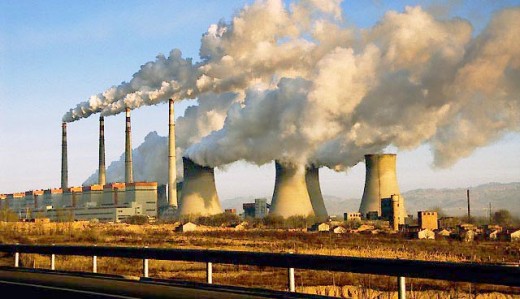
If electricity markets continue to depend on coal-fired power plants – which today account for a third of CO2 emissions – or gas-fired power plants, countries will not be able to meet the long-term climate objectives of the Paris Agreement, the International Energy Agency (IEA) was warned.

China plant
Coal-fired power plant in China

In a recent World Energy Outlook 2018 report, the IEA examines the impact of increased electrification in transport, buildings and industry. The analysis shows that increased electrification would lead to a peak in oil demand by 2030 and reduce harmful local air pollution. But electrification alone would have a negligible impact on carbon emissions without increased efforts to raise the share of renewable and low-carbon energy sources.

“We have reviewed all current and under-construction energy infrastructure around the world – such as power plants, refineries, cars and trucks, industrial boilers, and home heaters – and find they will account for some 95% of all emissions permitted under international climate targets in coming decades,” says Fatih Birol, Executive Director of the Paris-based institution. “This means that if the world is serious about meeting its climate targets then, as of today, there needs to be a systematic preference for investment in sustainable energy technologies.”

Countries around the world are rapidly increasing their share of solar photovoltaics and wind power, and the share of renewable energy in electricity production will rise to more than 40% in 2040, a positive trend for the environment, the Agency says. But the trend needs to be accelerated to achieve the central goal of the Paris Agreement, which is hold the global average temperature to as close as possible to 1.5 degrees Celsius.

Even the existing expansion of renewables brings major environmental benefits but also a new set of challenges that policy makers need to address quickly. With higher variability in supplies, power systems will need to make flexibility the cornerstone of future electricity markets.

The analysis, based on scenarios in the report, describes the different possible futures of the energy system for all fuels and technologies. It contrasts with different approaches, based on current and planned policies, and those that can achieve the long-term climate objectives of the Paris Agreement, reduce air pollution and ensure universal access to energy.

According to the IEA, natural gas is expected to overtake coal as the second largest energy source in the world after oil by 2030 due to a drive to cut air pollution and the rise of liquefied natural gas use.

In its “Sustainable Development Scenario”, the IEA projects global energy-related CO2 emissions to peak around 2020 and then decline sharply and sustainably, in line with the trajectory required to achieve the objectives of the Paris Agreement on Climate Change.

“It will be essential to develop the right policies and incentives to achieve our common objectives of security of energy supply, reducing carbon emissions, improving air quality in urban centres and expanding basic access to energy in Africa and elsewhere,” said Fatih Birol.

The problem: Most emissions linked to energy infrastructure are already essentially locked-in. In particular, coal-fired power plants, which account for one-third of energy-related CO2 emissions today, represent more than a third of cumulative locked-in emissions to 2040. The vast majority of these are related to projects in Asia, where average coal plants are just 11-years-old on average with decades left to operate, compared with 40 years on average age in the United States and Europe.

Energy demand is set to grow by more than 25% to 2040, requiring more than $2 trillion a year of investment in new energy supply.

“Our analysis shows that over 70% of global energy investments will be government-driven and as such the message is clear – the world’s energy destiny lies with government decisions,” adds Dr Birol.

The decisions will partly be shaped by the outcomes of the UN Climate Change Conference COP24 in December, where governments are set to on agree the implementation guidelines of the Paris Agreement and discuss next steps to increase climate ambition.