Home Blog Page 175

Actor, model Amber Valletta named UN Environment Programme Goodwill Ambassador

0

The UN Environment Programme (UNEP) on Tuesday, September 23, 2025, named the American supermodel and actor Amber Valletta as Goodwill Ambassador.

The designation was announced on the sidelines of the 80th Session of the UN General Assembly, as nations gather to address key issues affecting humanity, including the triple planetary crisis of climate change, nature, land and biodiversity loss, and pollution and waste.

Amber Valletta
Amber Valletta

Valletta, a proud member of the Cherokee Nation, is a fashion industry icon who has achieved extraordinary success in acting, entrepreneurship, and activism. Through her career, Valletta has been on the cover of more than 100 international Vogues and has starred in Hollywood blockbuster films and TV series.

“It is an incredible honour to be named a UNEP Goodwill Ambassador,” said Valletta. “This role represents both a personal milestone and a profound responsibility. My work as an environmentalist has always been rooted in the belief that we each have the power to protect and restore our planet. As part of the United Nations mission, I hope to use my platform to amplify urgent environmental issues, champion solutions that create real impact, and inspire collective action toward a more just, healthy, and sustainable world.”

For many years, Valletta has lent her voice to the world of ethical and sustainable fashion. Her work in the field includes founding the online platform Master & Muse, offering stylish and ecologically responsible fashion and partnering with major brands on sustainable capsule collections. Her co-founded film production company, A Squared Films LLC, has also produced numerous films supporting progressive social and environmental themes.

“UNEP is proud to welcome one of the world’s most iconic supermodels to our family – not only as a fashion figure, but as a passionate environmental advocate,” said UNEP Executive Director Inger Andersen. “Sustainable fashion is not just some trend, but a rapidly growing movement tackling the mounting footprint of the fashion and textile sector on our environment. Amber’s advocacy shows that style can be redefined to be in greater harmony with ecosystems. Her voice and experience, which bridges culture with climate issues, will help turn awareness into the action we need.”

Valletta was appointed in 2020 as British Vogue’s first-ever Contributing Sustainability Editor and the Fashion Institute of Technology’s Sustainability Ambassador. In 2022, she was invited to host the annual World Oceans Day conference at the United Nations, where she emphasized the need for many industries to invest in conservation efforts.

Momentum gathers towards COP30 as nearly 100 countries signal new climate targets

0

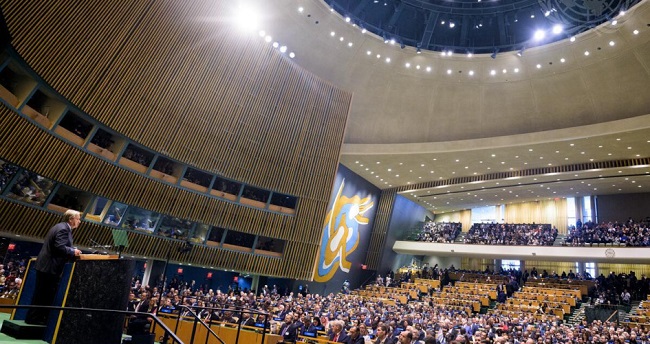
Close to 100 countries – including nearly 40 Heads of State and Government – on Wednesday, September 24, 2025, announced, committed to finalising, or set out their commitment to implementing their new climate targets ahead of COP30 in Belém, Brazil this November.

The announcements came at a Climate Summit convened by UN Secretary-General António Guterres and President Luiz Inácio Lula da Silva of Brazil on the margins of the 80th session of the UN General Assembly.

António Guterres
UN Secretary-General António Guterres addressing the Climate Summit

“The science demands action. The law commands it. The economics compel it. And people are calling for it,” declared the UN Secretary-General in his opening statement.

New Commitments Covering Majority of Global Emissions

Around 100 Parties to the Paris Agreement representing two-thirds of global greenhouse gas emissions have now either submitted or unveiled new Nationally Determined Contribution (NDC) targets – setting out their commitments to accelerate climate action.

For the first time, several major economies including China – the world’s largest emitter – as well as Nigeria announced economy-wide emissions reduction targets covering all greenhouse gases and all sectors. Other nations detailed ambitious renewable energy goals, plans to curb methane emissions, strategies to safeguard forests, and measures to phase out fossil fuels.

Leaders emphasised that accelerating the energy transition can unlock jobs, growth, and energy security. Developing countries, meanwhile, underscored the importance of incorporating adaptation, resilience, and loss and damage measures within their NDCs, stressing the urgent need for scaled-up financing to meet and surpass their ambitions.

A Decade of Acceleration Must Begin in Belém

While Wednesday’s pledges mark progress, leaders acknowledged that ambition gaps remain to keep 1.5C in reach and deliver on finance and adaptation. Solutions Dialogues held throughout the week by the United Nations and Brazil highlighted that the technologies and tools needed to decarbonize energy, transport, and industry, protect forests, and strengthen resilience are already available. The challenge now is to accelerate scale.

With COP30 just weeks away, the Secretary-General urged all countries yet to finalise their NDCs to do so without delay: “COP30 in Brazil must conclude with a credible global response plan to get us on track.”

Closing the Climate Summit, the Deputy Secretary-General, Amina Mohammed, said, “Leaders across the world have stood together to show that even at a moment of division and uncertainty, the resolve and determination to fight the climate crisis is alive and strong.”

Solutions Dialogues

A series of Climate Solutions Dialogues were convened by the UN, Brazil and other partners were held in the days before the Climate Summit, to identify the concrete solutions that can accelerate the implementation of the Paris Agreement, while strengthening multilateralism and connecting climate action to people and businesses.

The dialogues brought together governments, international institutions, civil society, business, and finance leaders on a range of issues related to climate action:

  1. Adaptation
  2. Digital Public Infrastructure
  3. Early Warning Systems and Extreme Heat
  4. Energy Transition
  5. Finance
  6. Industrial Decarbonisation
  7. Information Integrity
  8. Methane
  9. Non-State Actors
  10. Tropical Forests Forever Facility

IITA releases 200 improved crop varieties

0

The International Institute of Tropical Agriculture (IITA) says it has released more than 200 improved crop varieties in collaboration with Nigerian Research Institutions and other partners.

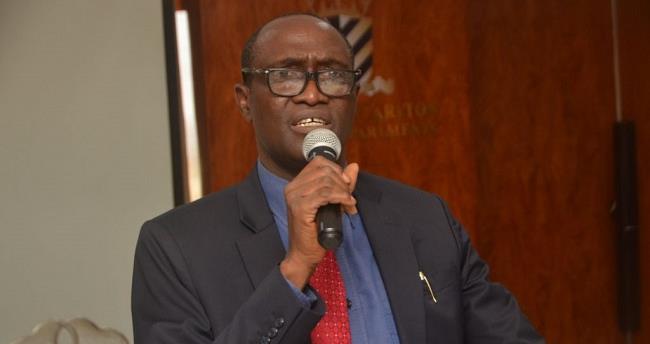
Dr Simeon Ehui, Director-General, IITA, and Regional Director, Continental Africa, CGIAR, said this at the 3rd International Conference of the Nigerian Plant Breeders Association (NPBA) in Abuja.

IITA
Dr Simeon Ehui, Director-General, IITA

The conference, hosted by IITA, has as its theme “Crop Improvement for Food Security, Sustainable Agricultural Systems and Environment.”

Ehui further said that the organisation has mentored and nurtured the next generation of scientists through the International Association of Research Scholars and Fellows (IARSAF) platform.

He said that IITA in collaboration with NPBA remain committed to sustaining career growth for young professionals in plant breeding and related crop improvement disciplines.

The D-G commended plant breeders, researchers, scientists and others for the groundbreaking work they have advanced in fields, laboratories and classrooms across the nation and continent.

Emphasising that they cannot rest on the past laurels, saying that the next chapter of plant breeding demands bold, coordinated action in the areas of resilience, nutrition and equity, collaboration and demand-led breeding.

According to him, the organisation must develop crops able to withstand heat, drought, salinity and emerging pests and this is not just science, it is survival.

He said, “We must not only produce more food, but we must also produce better food that nourishes, diversifies diets and empowers smallholder farmers, especially women and youths.

“Plant breeding is too important to be left to breeders alone. We must break down silos and draw insights from across disciplines, including plant health, nutrition, climate adaptation, markets and social science.

“On demand led breeding, he said that strong engagement with the private sector is essential to ensure that innovation reaches farmers and markets effectively.

“Plant breeding is about the farmer in a drought-prone village, the child who needs a more nutritious meal and the young breeder who will carry this work forward.

“Every seed we improve carries the promise of a better life for someone, somewhere.”

Ehui urged stakeholders to bear in mind that the future is not written but bred, nurtured and cultivated through collective efforts.

The D-G further urged them to envision a world where no farmer fears a failed harvest, no child goes hungry and no community is left behind in the pursuit of agricultural innovation.

“Together, we can turn these dreams into seeds and those seeds into solutions,” he said.

Ehui said that IITA was delighted to host colleagues from across Nigeria, Africa and beyond whose works are central to our shared ambition: a food-secure, climate-resilient future powered by innovation.

“In the next few days, we will tackle the pressing challenges that plague us, climate variability, pests and diseases, nutrition, sustainable intensification.

“The delivery of quality seed to farmers while showcasing the breakthroughs that modern breeding, genomics, biotechnology and data science make possible.”

He identified the theme as timely, adding that agriculture is faced with climate change, biodiversity loss and the urgent need for resilient, efficient systems.

“Within these challenges lies extraordinary opportunity. Plant breeding, with its rich history and rapidly evolving technologies, is not merely about better crops it is about safeguarding our food, our livelihoods and our planet.

“Over the past century, plant breeders have quietly been heroes of progress producing high-yielding, pest resistant and climate-smart varieties for food security. The Green Revolution dramatically increased yields and saved millions from famine.

“Advances in genomics, CRISPR editing and precision phenotyping have turned the unimaginable into everyday practice.

“Breeding for nutritional quality has delivered crops enriched with vitamins and minerals, combating hidden hunger.

“Improved seed systems ensure farmers receive safe, clean, high-quality seeds when needed. These achievements remind us that innovation in plant breeding is innovation for humanity.”

By Felicia Imohimi

Ogoni: Tinubu directs NSA to engage stakeholders on resuming oil operations

0

President Bola Tinubu has directed the National Security Adviser (NSA), Nuhu Ribadu, to begin engagement with Ogoni communities, NNPCL, and stakeholders to finalise restarting oil operations.

The President stated this on Wednesday, September 24, 2025, at the Presidential Villa while receiving the report of the Ogoni Consultations Committee.

Ogoni
L-R: NSA, Nuhu Ribadu, President Bola Tinubu, Gov. Siminalayi Fubara of Rivers and Chairman, Ogoni Dialogue Committee, Prof. Don Baridam at the State House, Abuja on Wednesday

“I am directing the NSA to immediately begin engagement with the Ogoni people and NNPCL, its joint venture partners and all relevant stakeholders with a view to finalising modalities to begin operation,” Tinubu said.

The President stressed that ongoing dialogue and reconciliation remained essential to achieving lasting peace, justice, and development in Ogoniland.

‎“I urge the Ogoni people across classes, communities and generations to close ranks, put this dark chapter behind us and move forward as a united community with a single voice,” Tinubu said.

‎He pledged his administration’s support for peace, environmental cleanup, and economic revival in the region.

“I am encouraged by the overwhelming consensus of Ogoni communities to welcome resumption of oil production under the equitable terms.

“The government will deploy every resource to support your people in this march toward shared prosperity,” Tinubu added.

Recalling that the immediate past administration handed operating of the Ogoni oil fields to NNPCL and its joint venture partners, the President pledged to build on that decision.

He also directed the Minister of Environment to incorporate pollution remediation into ongoing dialogues with the Ogoni people.

Tinubu also used the occasion to posthumously honour late Ogoni leaders Albert Badey, Edward Kobani, Theophilus Orage, and Samuel Orage, collectively known as the “Ogoni Four” with the Commander of the Order of the Niger (CON).

‎Earlier, Ribadu said the consultations engaged all four Ogoni zones and the diaspora, focusing on structured participation, accelerated cleanup, and sustainable development.

‎In an interview with State House Correspondents after the event, Ribadu reaffirmed Tinubu’s commitment to peace, stability, and inclusive growth across the Niger Delta.

He assured of strict implementation of directives aimed at consolidating peace and addressing past injustices.

‎“Peace is being restored already, and Nigerians will soon see the benefits, not just in Ogoniland but across the Niger Delta and beyond,” Ribadu promised.

Prof. Don Baridam, Chairman of the Dialogue Committee, described the report as reflecting the collective will of the Ogoni people.

He urged the formation of an inter-agency task force to implement the report’s recommendations as a blueprint for progres.

Also speaking, Gov. Siminalayi Fubara of Rivers State, stated that the confidence-building measures implemented by the President has led to an improvement in the work done on the East-West Road, among other projects.

He said that establishment of the Federal University of Environment and Technology in Rivers, was also a positive step in the right direction.

Oil exploration in Ogoniland was suspended in 1993, after protests over environmental damage, culminating in the 1995 execution of Ken Saro-Wiwa and eight other activists.

By Muhyideen Jimoh

PACJA denounces Trump’s ‘climate hoax’ remarks as dangerous, irresponsible

0

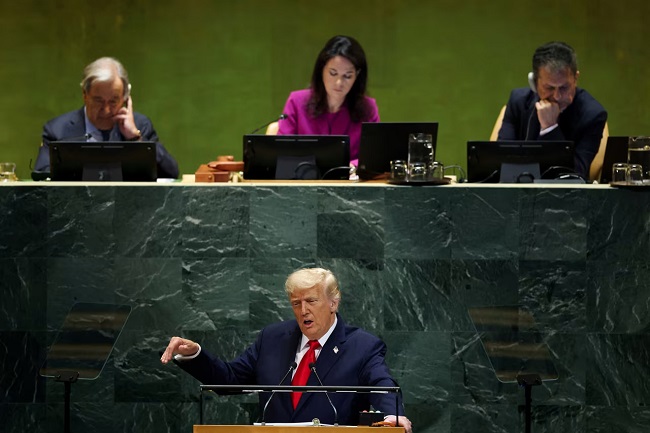
The Pan-African Climate Justice Alliance (PACJA) has condemned remarks made by the U.S. President Donald Trump on Tuesday, September 23, 2025, at the United Nations General Assembly, where he dismissed climate change as the “greatest con job ever perpetrated on the world” and called the carbon footprint “a hoax”.

PACJA described such statements as “scientifically false and morally indefensible”

 Donald Trump
US President Donald Trump addresses the 80th United Nations General Assembly

Dr. Mithika Mwenda Executive Director, PACJA, submitted in a statement that, for millions of Africans, climate change is not a debate, but a daily reality.

“From prolonged droughts in the Horn of Africa, to deadly cyclones in Mozambique, to unprecedented floods displacing communities in West Africa, the crisis is exacting a devastating toll. Africa contributes the least to global emissions yet bears the brunt of its impacts. When powerful leaders mock the climate emergency, they undermine the global solidarity urgently needed to save lives and livelihoods,” said Mwenda.

He pointed out that Trump’s rhetoric emboldens climate denial, delays global action, and distracts from the responsibility of industrialised nations to lead in reducing emissions.

“The science is clear: without decisive mitigation, Africa faces a future of deepening hunger, water stress, conflict over scarce resources, and forced migration. Denying this reality is an insult to the children who go to bed hungry after crops fail, to the women walking longer distances for water, and to the young Africans whose futures are shrinking under the weight of an unjust crisis.”

PACJA called on all responsible leaders to reject climate denialism in every form.

“The global community cannot afford to treat science as opinion or justice as optional. We remind world leaders that the Paris Agreement was not built on ideology, but on evidence and fairness. Its survival depends on recognising that addressing climate change is not charity, it is justice,” stated the group, adding:

“We urge the United Nations, governments, and civil society worldwide to reaffirm their commitment to climate action, to stand with vulnerable communities, and to expose rhetoric that risks the lives of billions. It is our collective duty to uphold and amplify the truth: that climate change is real, urgent, and inseparable from the struggle for justice and survival.

“On our part, we will continue to mobilise African voices to ensure that no amount of rhetoric, no matter how powerful the speaker, derails the urgent task of protecting lives, ecosystems, and the future of our planet.”

By Idowu Esuku

From data to dollars: Unlocking Nigeria’s trillion-dollar natural capital

0

Nigeria, a nation rich in a diverse tapestry of ecosystems, stands at a critical juncture in its economic and environmental development. For too long, financing nature has been framed as a cost – a burden on the national budget. However, this perspective is fundamentally flawed.

Protecting and restoring our natural heritage is not a cost; according to the African Development Bank (AfDB), it is our single greatest economic opportunity, capable of unlocking a staggering $1.4 trillion annually for the continent. The core question isn’t whether we should finance nature, but how we can use data and innovative frameworks to transform our natural wealth into a bankable asset class.

Dr Eugene Itua
Dr Eugene Itua

The Integrated Reality: Where Nature, Climate, and Economy Converge

The first step is to reject the false dichotomy between nature and climate. In Nigeria, they are not separate issues – they are deeply intertwined, affecting our economic survival and prosperity in profound ways. This is a truth businesses are increasingly learning.

  • Nature as Infrastructure: Protecting mangrove forests along our coasts isn’t just about biodiversity; it’s a core business strategy. These mangroves act as living seawalls, shielding billions of dollars’ worth of coastal infrastructure from rising seas and storm surges. They decide if a fishing village thrives or is washed away.
  • Nature as Economic Regulator: Our forests don’t just store carbon; they regulate the rainfall that our farms, and by extension our entire economy, depend on. A strong climate strategy, in turn, advances nature goals. A corporate push for carbon neutrality, for example, incentivises investment in nature-based carbon credits, directly funding the conservation and restoration projects that secure these vital ecosystem services.

Recognising this, institutions like the AfDB are now championing the bold idea of recalibrating our GDP to include our green wealth for the first time. Green wealth refers to the economic value derived from our natural resources and ecosystems. Imagine if the value of the Cross River National Park were counted with the same gravity as barrels of oil. This isn’t just an environmental metric – it’s a powerful financial asset that changes everything.

Building the Framework: From Raw Data to Actionable Intelligence

Powerful ideas alone don’t move mountains; they need a solid foundation built on data, strategy, and collaboration. Nigeria is already laying these crucial cornerstones.

Data-Driven Tools (The “Compass”)

To translate strategy into investment, we need concrete, data-driven tools. The mission of the recently launched African Green Economy and Sustainability Initiative (AGESI) is… As an African-led “think tank” with its first office established in Nigeria, AGESI is designed to accelerate the continent’s transition to a green economy.

Its flagship initiative is the Green Opportunity Index (GOI). The GOI acts as a strategic compass for both investors and policymakers. It provides a granular, sector-specific view of the green economy, assessing everything from the enabling policy environment to market readiness and human capital. For an investor, it helps identify where to deploy capital for maximum impact and return. For the government, it serves as a diagnostic tool to pinpoint and address policy bottlenecks, shifting the conversation from abstract potential to concrete performance.

Unlocking the Capital: Institutions and the “Finance Stack”

With a clear strategy and data-driven tools in place, the final piece is unlocking the necessary capital. This requires leadership from major financial institutions and a more sophisticated approach to funding. The AfDB’s clear message is that Africa is not poor, but its capital is underutilised. To move the needle, we must influence the systemic processes that govern capital flows.

The future lies in building a “finance stack” – a blended approach where no single instrument is expected to do all the work. The most successful and scalable projects will combine:

  • Grants to de-risk initial stages.
  • Concessional loans for development and expansion.
  • Market instruments, such as carbon and biodiversity credits, can generate long-term revenue streams.

This combination of public and private sector collaboration – where governments provide the enabling environment and businesses integrate natural capital into their core strategies – is the engine that will power Nigeria’s green economic transformation.

Ultimately, success will be measured when “nature finance” is no longer a niche conversation but a mainstream, bankable asset class, and Nigeria empower its businesses to become market leaders in the global green economy.

By Dr Eugene Itua, Executive Director of AGESI

China announces ‘underwhelming yet transformative’ updated climate pledge

0

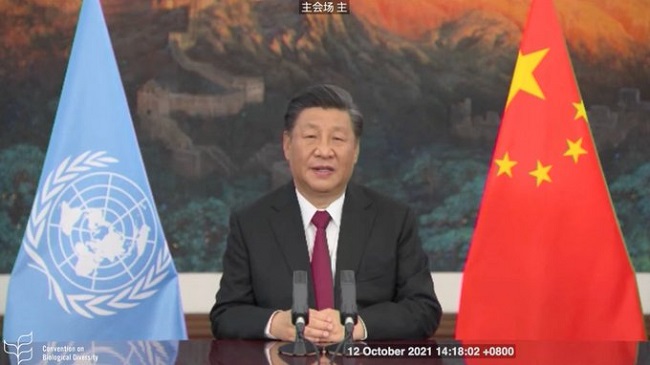
Speaking at the UN Climate Summit on Wednesday, September 24, 2025, Chinese President, Xi Jinping, announced China’s updated national climate pledge (NDC) under the Paris Agreement.

In his address, he outlined the key elements of the new target, confirming that China would reduce its economy’s greenhouse gas emissions by 7-10% by 2035 from peak levels, striving to do better.

Xi Jinping
President Xi Jinping addressing the leaders’ summit of the 15th meeting of the Conference of the Parties to the Convention on Biological Diversity via a video link

Key newly outlined Elements in China’s updated NDC:

  • A binding economy-wide emission reduction target of 7-10% by 2035 from peak levels, “striving to do better”.
  • Expand national emission trading market to heavily emitting sectors
  • Increase share of non-fossil fuels in total energy consumption to over 30%

Further Background:

  • Earlier in 2025, President Xi Jinping confirmed that China’s new NDC will cover the entire economy and encompass all greenhouse gases.
  • With estimated emissions of 15.8 Gt CO₂e in 2024, China stands as the world’s largest emitter, accounting for roughly 32% of global greenhouse gas emissions.
  • According to UNEP analysis, China could reduce emissions by at least 28-37% by 2035
  • 2025 marks a turning point: China’s emissions have now peaked, with clear signs of structural decline  – hence 2025 is likely to serve as the base year for the target.

In a reaction, Andreas Sieber, Associate Director of Policy and Campaigns, 350.org, said: “China’s new climate target is both underwhelming and transformative. Reducing emissions by 7-10% by 2035 from peak levels falls short of what the world needs, yet it anchors the world’s largest emitter on a path where clean-tech defines economic leadership.

“With its booming renewable sector, climate ambition is now squarely in the country’s self-interest. China has often under-promised and over-delivered. Now the real test lies in the next Five-Year Plan, which must go further: phasing out coal, accelerating renewables, and ensuring frontline communities benefit from the energy transition.”

Chuck Baclagon, 350.org Asia Finance Campaigner, said: “Typhoon Ragasa, now battering southern China after devastating the Philippines and Taiwan with winds peaking around 260 km/h, makes it painfully clear that climate change is no longer a prediction but a lived emergency. China’s new climate targets mark modest progress but still fall far short of true leadership. As the world’s largest emitter and a clean-tech superpower, Beijing must deliver rapid cuts at home – phasing out coal, scaling up renewables, and placing frontline communities at the heart of transition.

“What China does beyond its borders also matters: its overseas energy investments and infrastructure financing in Asia are the real tests. Ultimately, the strongest barometer of a country’s seriousness on climate action is its energy policy – how it chooses to invest, or divest, in fossil fuels now defines its legacy.”

World Lung Day: Protecting Nigerians from harm reduction scam

0

In May 2025, I received an unusual mail. It was an invitation from a public relations firm in South Africa, one I had never heard of, to attend a programme in Cape Town. They would provide logistical arrangements. All that was required, was that I write and publish at least two articles related to the event and help amplify it across my networks.

On examining the flyer attached, I discovered it was for a Big Tobacco event, designed to promote their so-called smokeless but nicotine-laden products. It is probable that similar invitations were sent to selected journalists across Africa.

Tobacco Harm Reduction
Alternatives to cigarette smoking can create a big impact on health in society

However, this is only one strand of a broader strategy. In recent times, the tobacco industry has been sponsoring media workshops presented as training on harm reduction, while pushing articles across digital platforms that cast emerging tobacco and nicotine products in a favourable light. These activities are carefully packaged as knowledge-sharing, but their underlying intent is to steer how tobacco commodities are framed in public conversations.

Big Tobacco continues to draw from its notorious playbook of tobacco advertising, promotion, and sponsorship (TAPS) to design programmes and shape narratives that hoodwink unsuspecting groups and downplay the deadly effects of its products. Where it cannot act openly, as in Nigeria and several other World Health Organisation (WHO) signatory countries which have banned TAPS, it deploys underhand tactics to undermine the restrictions.

The TAPS ban exists for a good reason. Every year, more than 29,000 Nigerians lose their lives to tobacco-related diseases. Globally, tobacco use claims over 7 million lives.

On this World Lung Day, themed “Healthy Lungs, Healthy Life”, we are reminded that tobacco remains one of the biggest threats to lung health, and Nigeria cannot afford complacency. Worldwide over 1 million people die due to lung cancer each year. It is estimated that cigarette smoking explains almost 90 percent of lung cancer risk in men and 70 to 80 percent in women. Furthermore, whether smoked, vaped or chewed, tobacco harms nearly every organ in the body, but its most devastating damage is to the lungs and the heart.

Currently, Big Tobacco is aggressively pushing what it calls Tobacco Harm Reduction (THR). Through this discredited concept, it lobbies to openly market nicotine-containing products, such as vapes, e-cigarettes, heated tobacco products (HTPs), smokeless nicotine pouches and other electronic nicotine delivery systems (ENDS). These are presented as solutions to the very epidemic that Big Tobacco created and continues to fuel.

The claim is that these addictive products will help tobacco users quit, delivering a so-called smoke-free future.

But this is simply not true.

Smokeless tobacco, often branded by the industry as “safer”, has been linked to multiple health problems. It is a known risk factor for cancers of the mouth, throat, and pancreas, and contributes to heart problems and gum disorders. It can increase risk of early delivery and stillbirth, cause nicotine poisoning in children and heighten the risk of death from heart disease and stroke.

For a country like Nigeria, where healthcare systems are already overstretched, the tobacco burden is both a health crisis and an economic one. Treatment costs are prohibitive. Families are driven into poverty paying for care, while the country loses productivity from premature deaths. Research shows that Nigeria spends far more on treating tobacco-related illnesses than it earns from the tobacco industry’s profits and taxes. In short, tobacco drains our economy, health, and future.

The situation is even more worrisome considering Nigeria’s growing challenges with other forms of drug abuse. Yet, tobacco companies continue to flood our markets with cigarettes and smokeless tobacco, targeting young people as replacements for those killed or disabled by addiction.

Nigeria is a signatory to the WHO’s Framework Convention on Tobacco Control (FCTC), yet enforcement remains weak. To make World Lung Day meaningful, the country must strengthen enforcement of existing tobacco laws, including restricting sales to minors and applying robust oversight to emerging tobacco and nicotine products, so that no loopholes allow the industry to escape accountability.

Governments at all levels ought to also raise taxes on tobacco products to 100 percent as advocated by civil society, to reduce use, especially among youth.

Furthermore, investment in cessation support is critical, so that smokers and chewers who want to quit have access to affordable treatment and counselling.

In addition, farmers need support to transition to alternative crops, so they are not trapped in the tobacco economy.

There is no safe form of tobacco. To protect our lungs, we must reject Big Tobacco’s deceptive strategies and shun its products in every form.

And yes, in case you’re wondering, I did not honour the invitation.

By Robert Egbe, tobacco control advocate at Corporate Accountability and Public Participation Africa (CAPPA)

UN report: Tackling climate, sustainable development crises together could cut costs by 40%

0

A report issued by a UN-convened expert group finds that tackling the climate and sustainable development crises together could unlock efficiencies at scale and reduce government spending needed to address these crises by nearly 40 per cent.

“Harnessing Climate and SDG Synergy: Quantifying the Benefits”, the third global report prepared by the independent Expert Group on Climate and SDG Synergy, was launched on Wednesday, September 24, 2025, ahead of the Climate Summit during the UN General Assembly High-Level Week, at a time when progress towards achieving climate targets under the Paris Agreement and the Sustainable Development Goals (SDGs) is far off track.

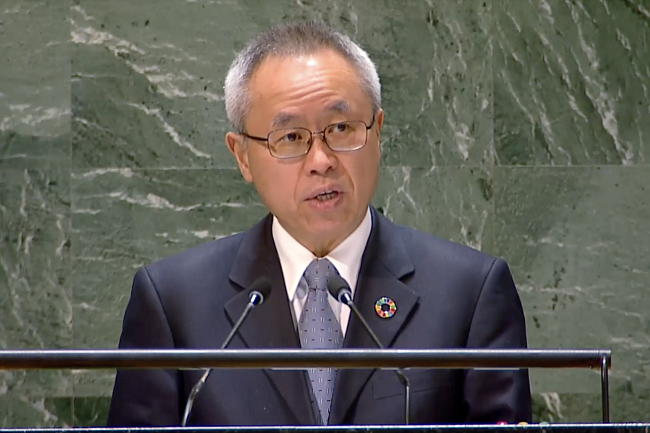
Li Junhua
Li Junhua, United Nations Under-Secretary-General for Economic and Social Affairs

The finance gap for SDG action exceeds $4 trillion annually and over $6 trillion annually for climate action.

“The climate and development crises are not separate – they are deeply interconnected, and so must be their solutions,” UN Under-Secretary-General for Economic and Social Affairs, Li Junhua, and Executive Secretary of UNFCCC, Simon Stiell, stated jointly in the preface of the report, representing the two agencies that co-convene the expert group.

Declaring that the report shows that “we have the solutions and roadmap” for a more integrated approach, they issued a call for cooperation across ministries and sectors – for a whole-of-society approach.

“Let us seize this moment of opportunity for transformative change, for people and planet,” they concluded.

The expert report comes at a crucial time: 2025 presents a critical window to maximise the potential of synergistic action, as countries prepare new national climate commitments under the Paris Agreement, some of which are being announced at the Climate Summit. These Nationally Determined Contributions (NDCs) can be a key mechanism, the report states, to align climate action with sustainable development and the SDGs.

Citing two examples of co-benefits, the report urges that NDCs should include action on biodiversity and recognize the positive health impacts in cities of reducing emissions and air pollution.

The report suggests that tailoring synergistic strategies to country-specific development and climate objectives ensures that investments are targeted where they are needed most, and that climate action delivers multiple social, economic and environmental benefits.

Currently, “fragmentation across governance, finance and policy continues to hinder progress,” the report states, “necessitating reforms for effective and inclusive action.”

Stating that private sector investment is vital, the report makes the argument that by aligning incentives, demonstrating economic value and reducing risk through synergistic action, governments can leverage private funding to magnify the impacts.

Growing Evidence

The report’s conclusions are based on statistical modelling, using the cost of meeting the greenhouse gas emission reduction objective of fulfilling all NDCs as well as achieving certain development targets measured by the Human Development Index. By contrast, synergistic allocation of funds could reduce total government spending by up to 37 per cent, according to the modelling. The expert group intends to broaden the analysis in future reports to add other benefits, including social values, such as lives saved.

The report expands the growing body of evidence on the clear benefits of synergistic policies and action, building on the expert group’s global reports the past two years, as well as detailed thematic reports examining specific synergies that can yield major impact. It cites examples showing that:

  • Nature-based climate solutions such as conserving biodiversity and restoring ecosystems could deliver up to 37 per cent of cost-effective CO2 mitigation by 2030;
  • City policies such as fossil-fuel phase-out, and encouraging cycling and walking as well as plant-based diets can deliver major co-benefits for climate and health;
  • Integrating disaster insurance into development plans can boost resilience, considering that in Africa only 0.5 per cent of disaster losses are insured, and each 1 per cent rise in coverage brings countries 5.8 per cent closer to achieving the SDGs.

Political momentum on climate and SDG synergies has been building, including through annual conferences, with increasing recognition of the need to break down the silos that are holding back progress urgently needed. The recommendations in the report will continue to be advanced in various forums, including at Climate COP30 coming up in Brazil in November.

The 17-member expert group, drawn from diverse backgrounds and research institutions, is co-led by Luis Gomez Echeverri (International Institute for Applied Systems Analysis) and Heidi Hackmann (CREST, Stellenbosch University).

Read the full report here.

CiA, Carbon Direct introduce comprehensive carbon credit management to Africa

0

CSR-in-Action, a sustainability and ESG consultancy with global multi-stakeholder convening expertise, has entered into a strategic collaboration with Carbon Direct Inc., a leading science-based carbon management firm, to accelerate Africa’s transition to a low-carbon pathway.

The new collaboration, under a Memorandum of Understanding (MoU), will provide African businesses, investors, and governments with access to advanced carbon accounting, reporting, and risk management support, as well as tools in line with and beyond international frameworks such as the GRI, TCFD, and ISSB.

CiA and Carbon Direct
Dr. Julio Friedmann, Chief Scientist, Carbon Direct, and Dr. ‘Bekeme Olowola, Group Chief Executive of CSR-in-Action

Importantly, it will extend beyond strategy to support practical implementation, helping organisations deploy emission-reducing technologies, secure climate finance, and build hands-on capacity in areas such as carbon capture, utilisation, and storage (CCUS).

CSR-in-Action’s proven track record in governance and sustainability advocacy, spanning initiatives like Nigeria’s Community Engagement Standards, the Earth Women documentary (winner of the 2023 Global Impact Documentary Award), and its widely referenced CSR-in-Action Report on Sustainability Reporting, provides a strong foundation for this new chapter.

Working closely with Carbon Direct strengthens its ability to deliver decarbonisation implementation support, carbon credit and offset advisory (such as flare gas recovery and mangrove restoration), and applied training programmes tailored to Africa’s energy and industrial sectors.

Carbon Direct, globally recognised for developing science-driven carbon solutions, brings deep expertise in carbon removal, accounting, and industrial decarbonisation.

“Our principles, tools, and practical experience put us in a unique position to help organisations make and manifest ambitious but actionable climate commitments,” said Dr. Julio Friedmann, Chief Scientist, Carbon Direct.

According to Dr. ‘Bekeme Olowola, Group Chief Executive of CSR-in-Action, the strategic relationship addresses a critical need.

“African businesses and governments don’t just need roadmaps, they need practical, financeable solutions, training and hands-on expertise, to implement them. Through this collaboration, we are equipping stakeholders with the tools, knowledge, and access to experts required to deliver measurable decarbonisation outcomes,” Olowola said.

The new collaborative effort will open up access to Carbon Direct’s global expertise, enabling African organisations to align with regulatory expectations, pursue climate finance for challenging projects, and embed decarbonisation knowledge across their teams.