Home Blog Page 1742

Talanoa Dialogue: Nigeria outlines trials, triumphs ahead of COP24

0

As an obligation by all Parties to the UNFCCC to organise the National Talanoa Dialogue towards taking stock of the progress on climate actions and report to the Convention, Nigeria obliged and is set to present the document at the upcoming climate talks in Poland. The report, following participation by numerous entities, represents their views and aspirations for a climate neutral society. Excerpts:
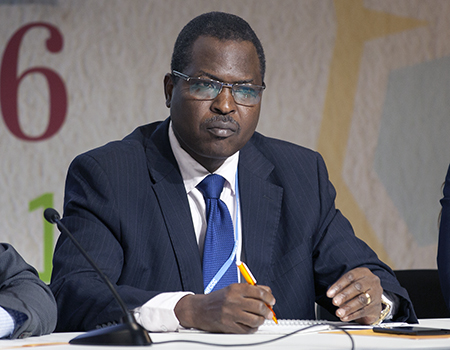
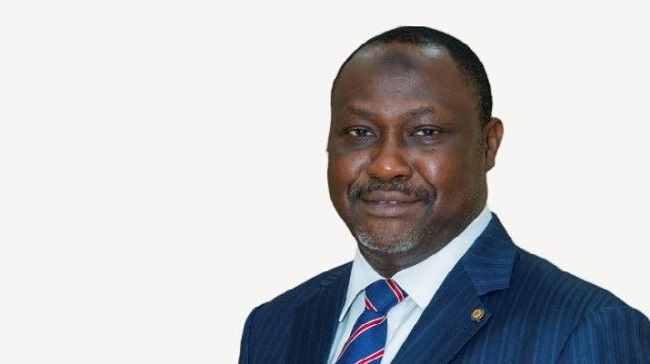
Dr Peter Tarfa
Dr Peter Tarfa, Director, Department of Climate Change (DCC) in the Federal Ministry of Environment

Where Are We?

Climate Change Awareness is increasing within government operational systems as well as among the public. The establishment of an Inter-ministerial committee on climate change provided an institutional pathway for mainstreaming climate change into the national government’s developmental agenda such as the Economic Recovery Growth Plan (ERGP).

Subnational governments like Cross River State has set up institutional framework to achieve the 1.5/2.0oC target. The State has achieved 60 percent of the annual city capping project. The UNREDD plus programme to reduce emission through deforestation and forest degradation with social and livelihood benefits being piloted in the state has successfully completed the Readiness Phase. This is paving the way for two additional sub-national governments (Nassarawa and Ondo states) to also participate in the programme while other states key into it.

Lagos State Government is in the process of developing a climate action plan that is in line with the Paris Agreement 1.5-degree emission reduction target which was committed to in May 2018. The state has also invested in carbon emission reduction projects across the transportation and energy sector.

In Nigeria, many non-state actors have committed to and invested in delivering climate change awareness in mitigation among grassroot who are mostly vulnerable to climate change impact. This has led to the empowerment of indigenous communities to conserve 5,600 ha of forest alongside delivering to them other ecosystem services such as NTFP, flood regulation etc.

Mainstreaming climate change into Environmental Health Curriculum at tertiary education across Economic Community of West Africa State (ECOWAS) sub region has also led to reducing air pollution advocacy among relevant government MDAs.

Nationally, there is a commitment to increase the use of organic fertiliser specially to drive climate smart agriculture among farmers to 50%.

A large portion of the national intervention has been on afforestation and maintenance of sustainable forest management practice at rural and sub-national levels bringing a substantial increase into the number of degraded lands restored. Nursery development and the setting up of community forest laws have been used to sustain the afforestation effort.

Other areas of focus: Waste Management for Carbon Emission Reduction, Disaster Risk Management and Flood Control, Capacity Building, National Afforestation Programme, Promotion of Renewable Energy.


Where Do We Want To Go?

The vision of national actors and non-actors for future is to achieve a reduction in carbon emission as summarised in the Nigeria’s Nationally Determined Contribution (NDC) of 20% reduction (conditional) and 45% reduction (unconditional) by 2030.

This vision when achieved will catalyse and accelerate the delivery of the NDC goals of ending gas flaring; building off-grid solar PV of 13GW (13,000MW); having efficient gas generators; achieving 2% per year energy efficiency (30% by 2030); switch from car to bus to rail; improved electricity grid; national scale adoption of climate smart agriculture and reforestation.

This will help drive a clean and safe environment for healthy living with a great reduction in air-borne diseases/infections, significant reduction in the destruction caused by flood; reduction in the rate of desert encroachment and desertification; improvement on the agricultural and food systems especially with effective land use management. Climate change impact such as drought fueling herdsmen-farmer crisis will be controlled and effectively managed thereby reducing climate-induced inter-city migration among pastoralist farmer and other climate refugees.


How Do We Get There?

Participants shared the following as strategies, models, and future opportunities that can be employed in successfully implementing the climate commitments/visions that will deliver climate action goals and transition to climate neutral society.

Partnership and Collaboration

All climate actors and non-actors must develop an effective platform of collaboration to share information and strategise jointly, advocate for environmental sustainability and implement development programmes, and coordinate engagement with Nigerian government at all levels and other development partners on climate change and sustainable development issues. Adopting community partnership models can also drive low emission pathway particularly as it ensures sustainability and ensures cost effectiveness.

Participants also demand for speedy Presidential assent to the already passed Climate Change Bill to further institutionalise climate change issues at national level having the required support from the government both financially and politically. Transitioning from a word era into an action era is of great demand especially at government level.

Technical and Capacity Development

Building capacity of local actors and other stakeholders in designing and implementing climate mitigation and adaptation projects while adopting proven technological innovations from developed countries that can help reduce carbon emission. Civil Society Organisations demands for training in climate advocacy, climate finance, and mainstreaming gender into the climate change issues.

Access to Climate Finance

Securing sustainable climate finance that is needed to drive climate action is a very difficult process. However, international donors and development partners should have a flexible and transparent funding structure for stakeholders to access finance that can also be monitored. Using various financial models that can help deliver scalable innovative climate projects are required for private sector and civil society organizations in delivering their climate commitment.

Institutionalising Climate Research and Development

The role of research and development in solving climate change issues is not negotiable. There is need for government investment in climate information and research such as waste to energy solutions that can further reduce dependency on fossil fuel-driven energy source. Establishment of such research institutions across the country and a commitment to implement their findings can further boost the delivery of climate commitments and actions.

Enforcement of Legal Framework on Climate Change

Having a policy or law is not enough to drive climate solutions but pushing for the enforcement of those policies can make a big difference. Government institutions responsible for law enforcement are to ensure public understanding and awareness of the laws while reinforcing on their enforcement across all sectors.

Disaster Risk and Resilience Management Advocacy and Awareness

The public and most vulnerable communities need a strong sensitization and awareness drive on disaster risk preparedness and management to further assist with coping with the impact of climate change. Demonstrating this with media campaigns and distribution of information education and communication materials can further assist with building resilience to climate change.

Subsidy or Tax Rebate on Renewable Energy and Energy Efficiency Equipment

To domesticate the popularism of renewable energy and to bring its cost to an average affordable price, stakeholders demand for a subsidy on renewable energy as it is currently done for Petroleum Motor Spirit and tax rebate or total withdrawal of tax on importation of renewable energy equipment such as Solar PV, Inverter and Wind Turbines, among others.
COP24: Buhari and other leaders to attend, IPCC presents findings

0

President Muhammadu Buhari will be joining over 80 Heads of State to attend the 24th Session of the Conference of the Parties (COP24) to the United Nations Framework Convention on Climate Change (UNFCCC).

Buhari-Paris-Agreement
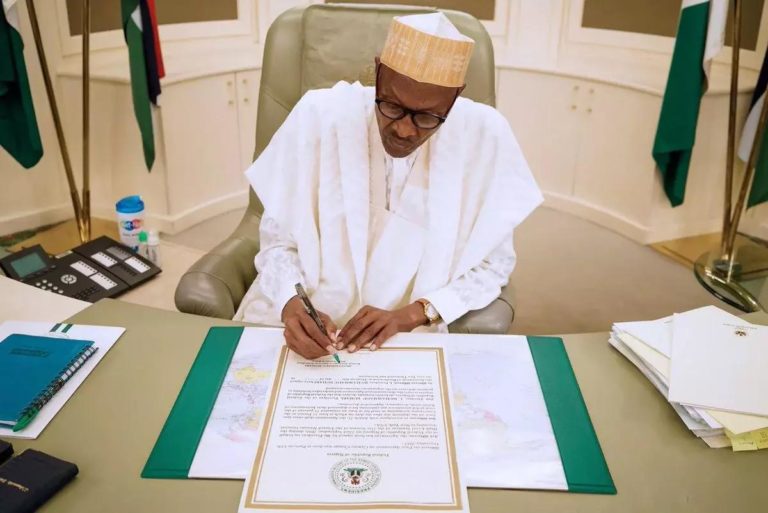
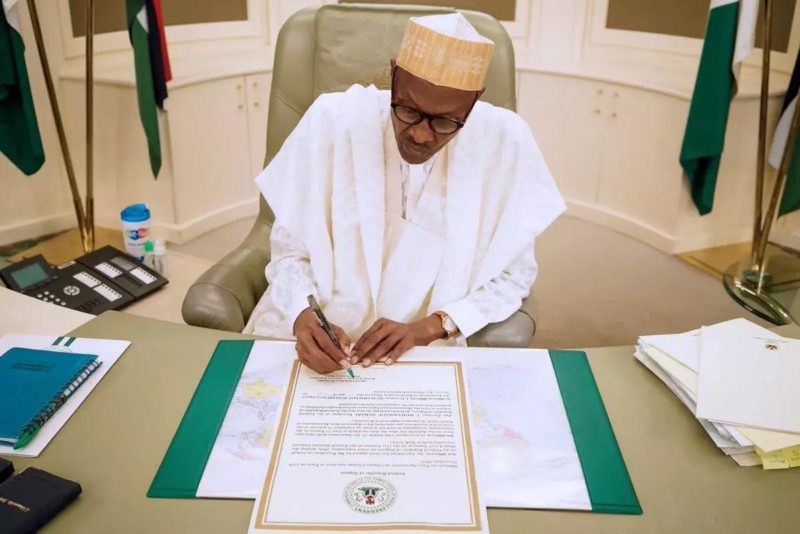
President Muhammadu Buhari on Tuesday, March 28, 2017 in Abuja signed the instrument of ratification of the Paris Agreement on Climate Change

The conference will be held in Katowice, Poland from December 2 to 14, 2018. The conference is organised by the Bonn-based UNFCCC/UN Climate Change) and is presided over by Poland.

The key objective of the meeting is to adopt the implementation guidelines of the Paris Climate Change Agreement.

Climate experts say the meeting is crucial because it ensures the true potential of the Paris Agreement can be unleashed, including ramping up climate action so that the central goal of the agreement can be achieved, namely to hold the global average temperature to as close as possible to 1.5 degrees Celsius.

In May 9, 1992, countries adopted the UNFCCC as a framework for international cooperation to combat climate change by limiting average global temperature increases and the resulting climate change, and coping with impacts that were, by then, inevitable.

By 1995, countries launched negotiations to strengthen the global response to climate change, and, two years later, adopted the Kyoto Protocol, which legally binds developed country Parties to emission reduction targets. The Protocol’s first commitment period started in 2008 and ended in 2012. The second commitment period began on 1 January 2013 and will end in 2020.

There are now 197 Parties to the Convention and 192 Parties to the Kyoto Protocol. The 2015 Paris Agreement, adopted in Paris on December 12, 2015, marks the latest step in the evolution of the UN climate change regime and builds on the work undertaken under the Convention. The Paris Agreement charts a new course in the global effort to combat climate change.

In a related development, the Intergovernmental Panel on Climate Change (IPCC) has said that it will be present at COP24, albeit with a broad programme of its own events as well as taking part in the official activities of the meeting.

Co-Chairs of the three IPCC Working Groups will present the findings of the new IPCC report at a special event held with the Subsidiary Body for Scientific and Technological Advice (SBSTA) entitled “Unpacking the new scientific knowledge and key findings in the IPCC Special Report on Global Warming of 1.5ºC”, on Tuesday, December 4.

The report, says the IPCC, is the key scientific input into COP24, when Parties to the UNFCCC will review the goals and progress of the Paris Agreement in a process called the Talanoa Dialogue. Parties invited the IPCC to prepare the report at COP21 in 2015 when they adopted the Paris Agreement.

The Co-Chairs of the Task Force on National Greenhouse Gas Inventories will hold a side event on the “2019 Refinement to the 2006 Guidelines for National Greenhouse Gas Inventories”, due to be released in May 2019, on Friday, December 7. The IPCC will also hold a side event on climate science and policy, together with the World Meteorological Organisation (WMO) and United Nations Environment Programme, on Wednesday, December 5.

For the first time, the IPCC will have a pavilion (H3) at the climate conference, where it will present around 30 events showcasing the report on 1.5ºC, the Sixth Assessment Report work programme, and other IPCC activities. The pavilion is shared with the WMO.

Parties to appraise migratory birds’ conservation efforts

0

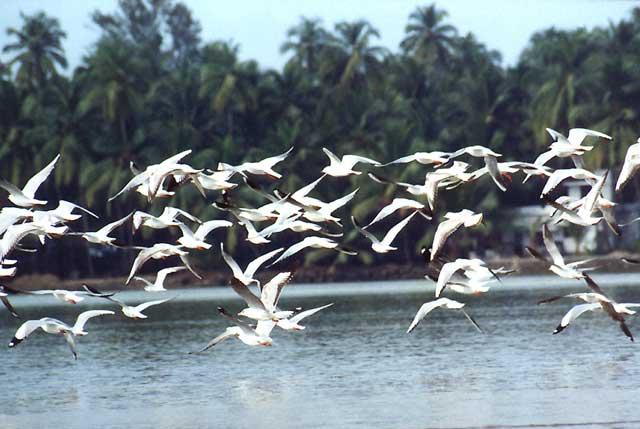
Contracting Parties to the Agreement on the Conservation of African-Eurasian Migratory Waterbirds (AEWA) are set to take stock of international conservation efforts over the last 10 years and decide on the future focus of agreed transboundary measures under the treaty.

Migratory birds
Migratory birds

The stock-taking session will hold at the 7th Meeting of the Parties (MOP7) to the AEWA, which is administered by UN Environment. The AEWA MOP7 holds in the South African city of Durban from December 4 to 8, 2018. The theme of the meeting is “Beyond 2020: Shaping flyway conservation for the future”.

Seventy-seven countries and the European Union have signed the environmental and intergovernmental treaty, which is dedicated to the conservation of migratory waterbirds and their habitats in Africa, Europe, the Middle East, Central Asia, Greenland and the Canadian Archipelago.

Waterbirds such as pelicans, cranes, storks, ducks and waders are said to face a wide range of threats, including habitat loss and degradation, illegal killing, pollution, climate change, bycatch, collision with powerlines and wind turbines, as well as disease. Actions to address these threats will be the focus of the conference, it was gathered.

Some MOP7 key topics include:

  • Strategic Plan & Plan of Action for Africa: Adoption of a new Strategic Plan (2019 – 2027) plan to guide future conservation efforts;
  • Presentation of the AEWA Waterbird Conservation Awards;
  • Seabirds: Priority actions to address plastic pollution, oil spills, mining, human disturbance, wind turbines, overfishing, bycatch, invasive predators, climate change;
  • Plastics and Waterbirds: Incidence and impacts (presentation of a new report);
  • Climate change and waterbirds: establishing climate resilient migration routes;
  • Conservation Status Report, 7th Edition: overview of 254 AEWA species; and,
  • Priority actions against the decline of waterbirds: International Species Action Plans for the Dalmatian Pelican, White-headed Duck and Velvet Scoter will be tabled for adoption by Parties.

The AEWA is considered one of the most focused environmental treaties, where activities implemented under the AEWA Action Plan directly contribute to achieving the United Nations Sustainable Development Goals and the UN Aichi Biodiversity Targets.

AFC invests in Cameroon’s 420MW hydro-electric power station

0

Infrastructure development finance institution, the Africa Finance Corporation (AFC), says it is investing in the Nachtigal Hydro Power Company (NHPC), located 65KM north of Yaounde in Cameroon.

Samaila Zubairu
Samaila Zubairu, President & CEO of AFC

The €1.2 billion power generation project will consist of a 420MW hydro-electric power station as well as a 50KM transmission line. The financing structure will take a 76:24 debt to equity ratio, with AFC providing €50 million in debt and an additional 18-year interest rate swaps of up to €75 million. Construction is expected to commence by the end of 2018.

Other high calibre lenders participating in the investment consortium include the International Finance Corporation, European Investment Bank, Proparco, Société Générale and Standard Chartered, with the following as project sponsors:

  • Electricité de France International, globally recognised for its expertise in hydro-electricity power (shareholding in NHPC: 40%);
  • InfraVentures, the World Bank’s infrastructure project development fund (shareholding in NHPC: 30%); and,
  • The Government of Cameroon (shareholding in NHPC: 30%).

This investment into Cameroon’s power sector comes following consistent growth in the demand for electricity across the country for both domestic and industrial use. For example, during the 2012 – 2016 period, demand grew at a Compound Annual Growth Rate of 7.6%, from 4.2TWh to 5.7TWh in the grid to which Nachtigal will connect. Currently, demand in the grid to which Nachtigal will be connected is expected to more than double from 5.7TWh in 2016 to above 13TWh by 2030.

At the same time, Eneo Cameroon S.A., the country’s main electricity company, and off-taker to the NHPC, has delivered significant operational improvements. This has consequently meant liquidity support for NHPC is stronger than it was for the Kribi Power Development Corporation IPP, which attracted a similar group of lenders.

As is the case with all projects Africa Finance Corporation participates in, the decision to go forward with the Nachtigal hydro project was based on its potential to drive economic development while also considering its wider impact. The NHPC will be the cornerstone of Cameroon’s low carbon development plan and was selected because it was ranked as the best future hydro project to be developed in the LCDP. AFC, the sponsors and lenders will develop the project in compliance with national and international best practices in terms of environmental and social management and infrastructure building.

Samaila Zubairu, President & CEO of AFC, commented on the announcement: “Cameroon is a textbook example of a nation that has, in recent years, demonstrated a deep-rooted commitment to surmount its power deficit challenges by successfully creating a highly investible sector. The financial close of projects such as these and the Kribi IPP are a testament to their earnest efforts.

“Moreover, with the International Monetary Fund having raised Cameroon’s economic growth outlook to 4.2% from 2017’s 3.2%, we are pleased to be investing in the country’s essential infrastructure that will help unlock further economic growth in the years to come, and for the people of Cameroon reach their developmental aspirations.”

Flood: NEMA to conduct post-disaster damage assessment

0

Director-General, National Emergency Management Agency (NEMA), Mr Mustapha Maihaja, on Tuesday, November 27, 2018 assured that the Federal Government would soon deploy post-disaster damage assessment teams to states impacted by flood.

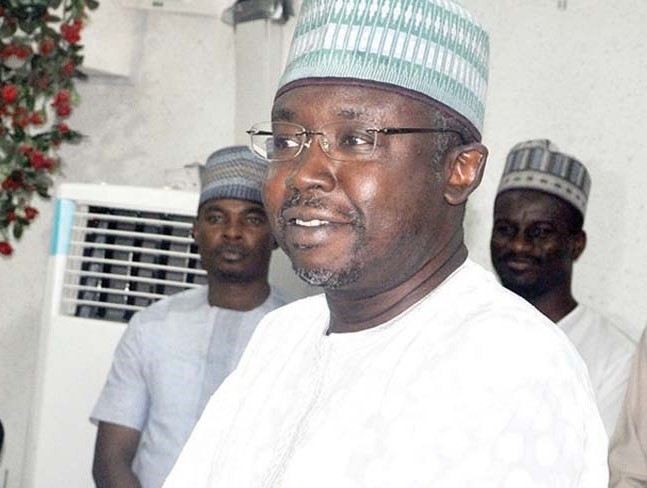
Mustapha Maihaja
Mustapha Maihaja, Director General, NEMA

Maihaja gave the assurance while monitoring the distribution of relief items sent by NEMA to flood victims at Alaka Grammar School, Ozoro, Isoko North Local Government Area of Delta State.

He said that the measure was to enable government to ascertain the level of destruction, including number of materials and lives lost and all that was required to prepare a post-disaster response.

“That is to say that the livelihood of the people will be looked into and what those farmers that lost their farms would require to boost their livelihood will be taken care of.

“In the next 10 days, the team to carry out the post-disaster damage assessment will be on ground.

They will be supported by the State Emergency Management Agency (SEMA) to look into all areas and come up with details,” Maihaja said.

He however said that the process of settling the flood victims would not be done in a hurry.

According to him, the federal government has this year, provided relief materials for no fewer than three million displaced persons, including more than 400,000 people with special needs.

Maihaja said that NEMA gave 61.92 kilogrammes of food items and condiments to a household as relief for the impact of the flood.

The News Agency of Nigeria (NAN) reports that about 128 households received the relief materials consisting of food items at the Ozoro Internally Displaced Persons (IDPs) camp.

Maihaja said that although the relief items were meant to cushion the suffering of the people, it turned out to be an occasion for lamentations.

He also extended the compliments of President Muhammadu Buhari to the affected people, adding that Delta was one of the states declared as flood emergency states.

He said that when Vice PresidentYemi Osinbajo was in Delta to see flood disaster victims, he gave the assurance that the federal government desired to get the IDPs back to life.

“In fact, when the VP was here, we delivered some non-food relief materials and today, we are distributing food items to the flood victims; this is part of that response.

He commended the Delta Government and members of NEMA team for effective distribution of all the items, adding that he had not received any complaint of diversion of items by the officials at the camp.

In a remark, the state Commissioner for Special Duties, Mr Ernest Ogwuezzy, thanked the federal government for the various interventions given to the flood victims in Delta.

Ogwuezzy gave the assurance that all the relief items would be effectively utilised for the purposes they were meant.

Some of the recipients, Mr Samson Ebunka, Mr Godwin Onyide and Mrs Rhoda Agbede, commended the federal and state governments and other stakeholders for their support.

The recipients, who spoke separately, said although they had returned to their homes, the items were of great relief to them because they had lost their means of livelihood to the flood.

They also called on government to empower them to start life again.

“I want to beg government to help us so that we can start life again because we lost everything including our farms; nothing is left for us to live on,” Agbede said.

By Ifeanyi Olannye

ERA urges governments, agencies to embrace energy transition

0

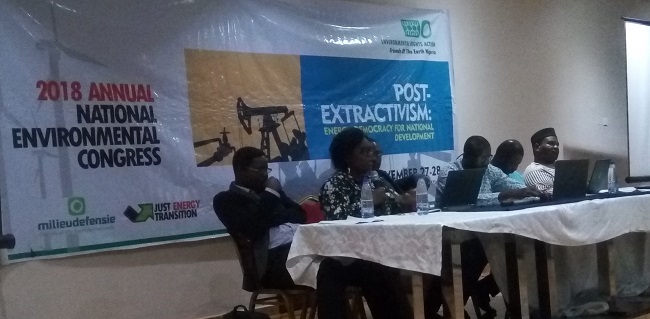
Considered as the way forward for Nigeria’s power sector, Environmental Rights Action / Friends of the Earth Nigeria (ERA/FoEN) gathered key stakeholders in Nigeria’s environment and power industries to discuss “Post-Extractivism: Energy Transition for National Development”. This was the theme of the organisation’s 11th Annual National Environment Congress holding in the Rivers State capital city of Port Harcourt from November 27 to 28, 2018.

National Environment Congress
Delegates at the opening of the Environmental Rights Action / Friends of the Earth Nigeria (ERA/FoEN) 11th Annual National Environment Congress in Port Harcourt, Rivers State

Provoked by the global responses to climate change and rising earth temperature, the congress aimed to work towards a national commitment for the adoption of energy transition from fossil fuels to renewable and to ensure development pathway and global average temperature stays within 1.5 degrees Celcius.

The ERA/FoEN Executive Director, Dr. Godwin Uyi Ojo, said: “Nations all over the world have declared that 2020 and 2025 will be fossil free but, in Nigeria, we are yet to start because there is no declaration on the part of the government. We think electricity should be decentralised in the energy sector to create greater energy access should be democratised.

“It is believed that the way forward is to be consistent and agree that there is the need for energy transition. There is a need to move away from extractives to renewable energy. There is a need to move from fossil fuels to renewable sources of energy.”

Presenting the “Just Energy Transition” manifesto for Nigeria at the opening of the congress, Dr. Ojo called on the Federal Government to, as a matter of urgency, embrace energy transition.

He said: “Fossil fuels are dirty, expensive and kills our people almost daily. There is the need for transition from dirty energy to renewable energies such as solar, wind and fuel-efficient cook stoves to promote energy access for all in line with the Sustainable Development Goal (SDG) 7.

“To avoid energy colonialism, the Nigerian and African government should adopt a deliberate policy for energy democracy and transition from fossil fuels to renewable sources.”

Dr. Ojo further called for a ban on generating sets in all MDAs at the Federal, State and Local Government levels.

He disclosed that, since 1993, the organisation is dedicated to the defence of human ecosystems in terms of human rights, and to the promotion of environmentally responsible governmental, commercial, community and individual practice in Nigeria through the empowerment of local people.

The congress helds few days before the 24th session of the Conference of the Parties (COP24) to the United Nations Framework Convention on Climate Change (UNFCCC) holding in Katowice, Poland from December 2 – 14, 2018.

By ‘Seyifunmi Adebote, Port Harcourt

Africities 8 tagged ‘most important democratic gathering in Africa’

0

Some 8,300 participants representing over 77 countries, including 53 African countries and nearly 3,000 local elected representatives, mayors and other leaders of local and subnational governments gathered from December 20 to 24, 2018 in Marrakech, Morocco at the occasion of the Africities Summit 2018, which organisers say has proven itself to be the most important democratic gathering on the continent.

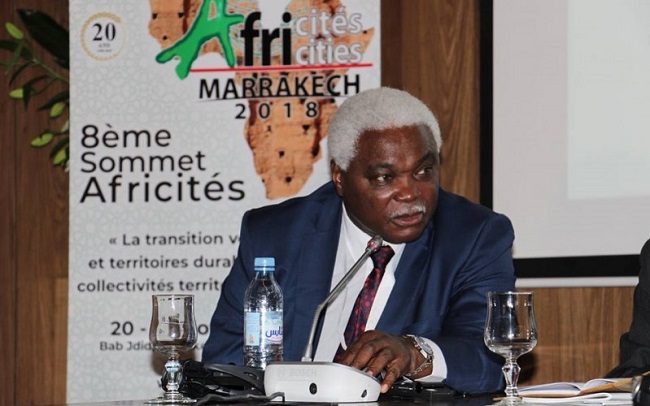
Jean-Pierre Elong Mbassi
Jean-Pierre Elong Mbassi, Secretary General of United Cities and Local Governments of Africa (UCLG Africa)

“The Africities Summit gave a voice to local authorities. Thanks to that recognition, the idea that local Africa will change Africa is making headway,” said Jean-Pierre Elong Mbassi, Secretary General of United Cities and Local Governments of Africa (UCLG Africa).

Indeed, 20 years of the Africities Summit was celebrated and highlighted with the presentation of the UCLG Africa anthem, composed by David André, Mayor of the City of Victoria, Seychelles, and Vice President of UCLG Africa.

The closing ceremony of the Africities 8 Summit was marked by the reading of the Royal Message by Princess Lalla Meryem, who, on the occasion, officially launched the pan-African campaign, “African cities without street children.”

The initiative from the Network of Locally Elected Women in Africa, (REFELA), UCLG Africa’s Gender Equality Commission, is supported by the National Observatory for the Rights of Children (ONDE) of Morocco. About 20 cities in Africa have already subscribed to this campaign, including the city of Rabat, which will serve as the pilot city for the campaign in Morocco. For the implementation of this campaign, three memoranda of understanding have been signed between ONDE and the United Nations Children’s Fund (UNICEF) in support of this international campaign between ONDE and UCLG Africa.

The campaign will be implemented across the continent by UCLG Africa; and between ONDE, the City of Rabat and four ministerial departments of the government for the national campaign in Morocco.

The political segment of the Summit started on November 23 with a round table on city diplomacy introduced by Denis Coderre, former Mayor of Montreal, Canada, with the participation of panelists including Catherine Samba-Pandza, former Head of State of the Central African Republic and former Mayor of the city of Bangui.

Several recommendations and proposals emerged from the 160 sessions held across the five days under the general theme “The transition to sustainable cities and territories: the role of local and sub-national governments of Africa”.

All the recommendations and proposals were submitted to ministers, mayors and leaders of local governments and development partners for consideration and adoption at the meeting of ministers, the general meeting of UCLG Africa, and the meeting of development partners, which were organised in parallel during the afternoon of November 23. The political segment ended on the morning of November 24, with a tripartite dialogue meeting between ministers, mayors and development partners.

UCLG Africa’s Executive Committee held its elections at which The City of Libreville, represented by its Mayor, Mrs. Rose Christiane Ossouka-Raponda, was elected as the new President of UCLG Africa for a term of three years, which will end at the next general assembly scheduled for 2021. In addition, the city of Bagangte in Cameroon, represented by its Mayor, Celestine Ketcha-Courtès, was re-elected as President of REFELA.

Amongst the special events of the Summit, meetings held between the mayors and locally elected officials of Africa and their counterparts in Asia-Pacific, mainly from China and Japan; and the meeting between the mayors and leaders of local and regional governments in Africa and their African American counterparts.

The African American network of mayors announced: “Some 400 years after crossing the Door of No Return, where the first boat left the shores of Africa bound for the Americas carrying children of Africa, it is now time to consider starting the opposite wave, by opening, at the initiative of the mayors and leaders of the local and regional governments of Africa, the ‘Door of Return’ to the African Americans of the United States, the Caribbean and Latin America and declaring that Africities is the right place to launch this mobilisation for the Road of Return.

Three special days were organised during the Summit: “Migration Day” on November 21, “Climate Day” on November 22 and “Urban Planning Day” on November 23.

The Migration Day recalled the crucial role of local and subnational governments in managing migration, and the urgent need to make them stakeholders in the negotiation of the Global Compact on Migration, which must be concluded at the United Nations Conference on Migration, due to take place from December 8 to 11, in Marrakech.

Climate Day emphasised the urgency of involving local and subnational governments in the implementation of the Nationally Determined Contributions (NDCs) under the Paris Agreement on Climate Change, and even considering Locally Determined Contributions (LDCs) if, as is desirable, local and subnational governments plan to participate in the Paris Agreement ambitions to limit global warming to 1.5 degrees by the end of the century with respect to the pre-industrial period.

In this context, the localisation of NDCs is essential and UCLG Africa was asked to develop and implement a capacity-building programme for its members, so that they have a climate plan and can prepare applications that are eligible for the Green Climate Fund (GCF). UCLG Africa was also asked to broaden the scope of its Climate Task Force to spearhead the climate action of African local governments. A Declaration was adopted at the end of the proceedings of the Climate Day.

The Urban Planning Day focused on urban planning as a basic tool for transitioning to sustainable cities and territories. It reiterated the importance of setting up urban agencies to monitor the dynamics of urbanisation and to put in place a framework for dialogue between all actors to define the allocation and policies around the use of urban space in respect of ecological constraints.

The day resulted in the signing of eight partnership agreements between 14 African cities in Morocco and their sisters in Cote d’Ivoire, Benin, Senegal, Uganda, Tunisia and Cameroon, with the technical support of the Association of Urban Agencies of Morocco, the Moroccan “Al Omrane” Holding, the United Cities and Local Governments of Africa (UCLG Africa), and the United Nations Human Settlements Programme (UN-Habitat).

Partnership agreements for urban planning and the establishment of urban agencies were entered between: the cities of Dakar (Senegal) and Rabat (Morocco); Abidjan (Côte d’Ivoire) and Casablanca (Morocco); Yaoundé (Cameroon) and Marrakech; Jinja (Uganda) and Essaouira (Morocco); Sousse (Tunisia) and El Jadida; Rufisque (Senegal) and Dakhla; and Abomey (Benin) and Al Hoceima.

The Summit highlighted two key players, without whom the transition to sustainable cities and territories cannot be envisioned in Africa:  they are women and youth. About 25 percent of Summit sessions were dedicated to gender issues, including the fight against violence against women; and the economic empowerment of women.

At the Youth Forum, 20 young people aged 16 to 35 were selected on the basis of a call for ideas to participate in a Creative Lab on the theme, “Imagine your city and imagine Africa in 2030 and 2063”. These young people were invited to submit their projects to the delegates of the Summit, using the Africities new innovative voting platform, of which three projects would be awarded.

The following three projects were the successful recipients of the Creative Lab awards: First prize winner was Yvette Ishinwe, from Rwanda, for her project on the use of new technologies for optimal use of drinking water at standpipes (Iriba tap and drink innovation); Second Prize winner was Zaheer Allam, from Mauritius, for his smart urban regeneration project; while Third Prize winner was Oulimata Sourang, from Senegal, for her E-Learning Assistant project.

A further competition, Climate Initiatives Trophies, was organised and also decided by the voting of delegates at the Summit. It celebrates cities and territories that have implemented the most remarkable actions in the fight against climate change. These were awarded to three categories of cities and territories.

For the small towns category (less than 20,000 inhabitants), the winner was the Municipality of Ndiob (Senegal) for the implementation of its “green and resilient commune” project. For the category of cities and territories of intermediate size (between 20,000 and 200,000 inhabitants), the laureate is the City of Chefchaouen in Morocco, for the realisation of its “Energy Info Centre”. For the category of cities and large territories, the laureate is the Tivaouane Departmental Council (Senegal) for the implementation of its project “Preserving a sustainable agricultural environment”.

The Africities Exhibition, which was organised simultaneously, saw the participation of 84 exhibitors, coming from Morocco (39 exhibitors), other regions of Africa (29 exhibitors from 11 countries), Europe (14 exhibitors from 6 countries), from Asia (one exhibitor from South Korea), and from America (one exhibitor from Canada).

Delegates paid tribute to King Mohammed VI of Morocco for agreeing to grant his High Patronage to the eighth edition of the Africities Summit and thanked the Government of Morocco, the Moroccan Association of Presidents of Communal Councils, and the City and administrative authorities of Marrakech who made every effort to ensure that the Africities Summit took place under impressive conditions.

Creation of protected areas to benefit African countries – UN official

0

The creation of wildlife protected areas is set to benefit most African countries, a UN official has said.

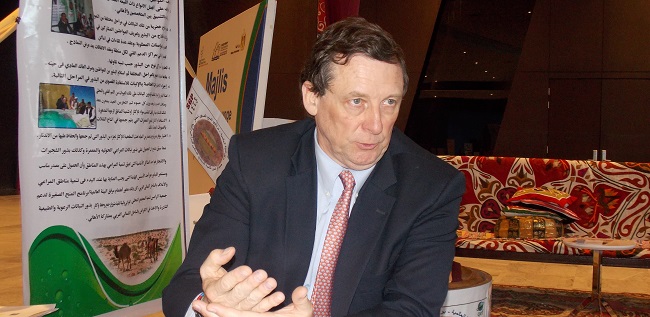
Jaime Cavelier
Jaime Cavelier, senior environmental specialist with the Global Environmental Facility (GEF), said during an interview that African countries can benefit handsomely from the creation of protected wildlife areas. Photo credit: Duncan Mboyah

Jaime Cavelier, senior environmental specialist with the Global Environmental Facility (GEF) said that the protected areas can develop sustainable tourism that can be a major source of revenue generation for the countries.

“The protected areas are capable of improving the country’s Gross Domestic Products (GDP) hence helped in improving the lives of populations,” Cavelier told EnviroNews in an interview on the sidelines of the UN convention on biodiversity that is ongoing in Sharm El Sheik, Egypt.

He said that the countries must begin to be strategic regarding their expenditures since donor funding is getting limited with time.

Cavelier said that the creation of conservancies has proven very useful as it helps offer communities socio – economic benefits and has reduced human – wildlife conflicts.

He said that with proper management, the revenue accrued from the protected areas can help support other sectors such as health, education and infrastructure.

Cavelier revealed that GEF has donated $131 million to help 19 countries in Africa and Asia to address problems associated with poaching that threatens the survival of wildlife globally.

He said that part of the amount will be used to train wildlife rangers to help preserve pangolin and rhinos that are threatened with extinction due to demand for their products by illegal traders in wildlife products.

“It is important that governments allocate additional funds to help save the wildlife from extinction,” he added.

He further said that UN agency has also allocated $1.2 billion in recent years towards the conservation of biodiversity and a further 500,000 million towards climate change and land degradation through small grants projects.

The official said that GEF is in the process of integrating the programs on conservation of biodiversity, climate change and land degradation that has been running independently for a long time.

He said that the approach will forge a joint effort to help arrest environmental degradation that has been continuing despite interventions put in place by UN programmes and other development agencies.

Cavelier stressed the need for countries to mainstream fisheries and tourism as part of the productive sectors in line with SDGs.

The UN Biodiversity Conference 2018 has been going on since Nov. 13 in Egypt’s Red Sea resort city of Sharm El-Sheikh, with the participation of representatives from about 196 states, under the slogan of “Investing in biodiversity for people and plan”. It will come to an end on Thursday, Nov. 29.

By Duncan Mboyah

Marginal global warming increase will profoundly impact communities – ACT

0

Climate change experts from the ACT Alliance network have published a report assessing the threats posed by climate change on the sustainable development goals (SDG) and disaster risk reduction.

Rudelmar Bueno de Faria
Rudelmar Bueno de Faria, ACT Alliance’s General Secretary

The report finds that warming of 1.5°C will severely impact climate-vulnerable developing countries and urges more ambitious climate action. The report also identifies policy recommendations to maintain the possibility of staying at 1.5°C global warming.

Titled “Enhanced Climate Action in Response to 1.5°C Global Warming: Scaling up Nationally Determined Contributions”, the research focuses on climate impacts in particularly climate-sensitive regions in which ACT members and partners are present. The report features case studies from the Marshall Islands, the Philippines, Bangladesh, Jordan, Ethiopia, Kenya, Central America (including El Salvador, Guatemala, Honduras, Nicaragua), and the European Union.

Bold climate commitments are needed by 2020 to respond to the risks of 1.5°C warming, as highlighted in the IPCC Special Report earlier this year. The authors state that climate change is affecting the most vulnerable populations and is hindering progress made towards the SDGs, particularly the goals related to poverty, health, water and sanitation.

“We are running out of time. As caretakers of creation, we need to hold governments to account and we must act to prevent any further risk to human life and dignity. Commitments and messages of solidarity must be transformed into concrete climate action so that support is provided to those most in need,” said Rudelmar Bueno de Faria, General Secretary of ACT Alliance.

Africa and Asia are projected to experience 75 per cent of the global risks associated with increased temperatures, putting a tremendous burden on governments to achieve the SDGs.

“Without effectively aligning 1.5°C-consistent national mitigation and adaptation action with SDGs and disaster risk reduction goals, sustainable development will remain an illusion, leaving behind hundreds of millions of people,” the report reads.

ACT’s call for action is further rooted in the experiences of ACT members who note that climate change is depriving poor and vulnerable people of their fundamental human right to be free from hunger and extreme poverty. The report notes that scaled-up climate action to reduce climate impacts around the world is a humanitarian, human rights, development and justice imperative.

The report provides a ten-step plan of action for all governments to respond to the risks of 1.5°C global warming including; undertaking a gap analysis; ratcheting up mitigation; fostering climate resilience and scaling up climate finance to name a few.

The next round of climate negotiations (COP24) is less than one week away and provides governments with another opportunity to increase their climate commitments towards the 1.5°C temperature target. ACT Alliance will present the report to government and civil society alike at a side event at COP24.

“Enhanced Climate Action in Response to 1.5°C Global Warming” was commissioned by the ACT Alliance Secretariat under its Global Climate Justice Project. To date, the report has been launched in Bangladesh for the Asia region and San Salvador for the Latin America and Caribbean region.

Nations must triple efforts to reach 2°C target, says UNEP report

0

Global emissions are on the rise as national commitments to combat climate change come up short. But surging momentum from the private sector and untapped potential from innovation and green-financing offer pathways to bridge the emissions gap. Those findings along with a sweeping review of climate action and the latest measurements of global emissions were presented by authors of the 2018 Emissions Gap Report during a launch event in Paris, France on Tuesday, November 27, 2018.

Joyce Msuya
UN Environment Acting Executive Director, Joyce Msuya

The flagship report from UN Environment annually presents a definitive assessment of the so-called “emissions gap” – the gap between anticipated emission levels in 2030, compared to levels consistent with a 2°C / 1.5°C target.

The findings presented offer the latest accounting of national mitigation efforts and the ambitions countries have presented in their Nationally Determined Contributions, which form the foundation of the Paris Agreement.

Evidence outlined in Paris, just days before the start of the 24th Conference of the Parties to the United Nations Framework Convention on Climate Change (COP24), show global emissions have reached historic levels at 53.5 GtCO2e, with no signs of peaking – the point when emissions switch from increasing to decreasing. Authors assessed that only 57 countries (representing 60 percent of global emissions) are on track to do so by 2030.

That analysis and a review of progress against national commitments under the Paris Agreement makes clear that the current pace of national action is insufficient to meet the Paris targets. Increased emissions and lagging action mean the gap number in this year’s report is larger than ever. Translated into climate action, the authors conclude nations must raise their ambition by 3x to meet the 2°C and 5x to meet 1.5°C.

“If the IPCC report represented a global fire alarm, this report is the arson investigation,” said UN Environment Acting Executive Director, Joyce Msuya. “The science is clear; for all the ambitious climate action we’ve seen – governments need to move faster and with greater urgency. We’re feeding this fire while the means to extinguish it are within reach,” she said.

A continuation of current trends will likely result in global warming of around 3°C by the end of the century, with continued temperature rises after that, according to the report findings.

While the authors highlight that there is still a possibility for bridging the emissions gap and keeping global warming below 2°C, the assessment issues a clear warning: The kind of drastic, large-scale action we urgently need has yet to been seen.

To fill this void, the 2018 Emissions Gap Report offers new insight into what meaningful climate action will look like. Through new analysis of global emissions in the context of fiscal policy, the current pace of innovation and an exhaustive review of climate action from the private sector and sub-national level, authors gathered here offered a roadmap for implementing the type of transformative action required to maximise potential in each of these sectors.

Ranging from city, state and regional governments to companies, investors, higher education institutions and civil society organisations, non-state actors are increasingly committing to bold climate action. These institutions are increasingly recognised as a key element in achieving the global emissions goals. Although estimates on the emission reduction potential vary widely, some mention 19 gigatonnes of carbon dioxide equivalent (GtCO2e) by 2030. This is enough to close the 2°C gap.


Complimented by carefully designed fiscal policy, the potential is even greater.

“When governments embrace fiscal policy measures to subsidize low-emission alternatives and tax fossil fuels, they can stimulate the right investments in the energy sector and significantly reduce carbon emissions.” said Jian Liu, UN Environment’s Chief Scientist. “Thankfully, the potential of using fiscal policy as an incentive is increasingly recognised, with 51 carbon pricing initiatives now in place or scheduled, covering roughly 15 percent of global emissions. If all fossil fuel subsidies were phased out, global carbon emissions could be reduced by up to 10 percent by 2030. Setting the right carbon price is also essential. At $70 per ton of CO2, emission reductions of up to 40 percent are possible in some countries.”

These established pathways are further enhanced when policy makers embrace innovative solutions. Authors here outlined five key principles that should be considered to accelerate low-carbon innovation. Including risk-acceptance commercial scalability, holistic economic alignment, mission-oriented approaches and a long term-horizon to increase financial uptake.

The ninth Emissions Gap Report has been prepared by an international team of leading scientists, assessing all available information, including that published in the context of the IPCC Special Report, as well as in other recent scientific studies.