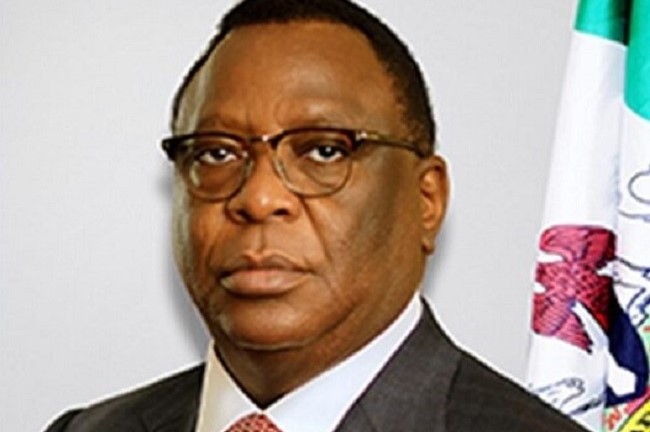
The Executive Secretary of the Nigerian Content Development and Monitoring Board (NCDMB), Felix Omatsola Ogbe, on Tuesday, September 16, 2025, acknowledged the advanced capabilities and proven track record of a leading indigenous service company, West African Ventures (WAV) Nigeria Limited, noting that the firm and others well established Nigerian companies need to pivot to the deepwater segment of oil and gas operations where vast opportunities exist.
Speaking during a facility tour of the WAV Fabrication Yard, Machine Shop, and jetties at the Federal Ocean Terminal (FOT), Onne, in Rivers State, the Executive Secretary revealed that he awarded the company their first offshore pipe-laying contract when he (Ogbe) served as the Construction Manager with Chevron Nigeria Limited, recalling that the execution of the project was very satisfactory.
NCDMB and West African Ventures (WAV) Nigeria Limited officials during the facility tour
“You have worked hard; you are a very good company,” he declared, adding that what he had seen during the tour were an eye-opener, indicative of the current capabilities of the company, which he described as impressive.
“You have a (50mm) rolling mill; you have ocean-going vessels; apart from that you have a good yard to do fabrication, good load-out equipment like the JASCON 8, and a crane with a tonnage of 160,” he noted.
He said West African Ventures Limited should start looking at how it could participate in offshore operations because “all the big players in the oil and gas industry] are going to deepwater.”
While emphasising that “projects are by competitive bidding” and that NCDMB stands for transparency and professionalism, he was confident that indigenous companies have what it takes to participate effectively in the deepwater space.
Earlier at the occasion, the Managing Director of West African Ventures, Mr. Michael Dumbi Amaeshike, expressed appreciation at the visit by the NCDMB boss and Management, stating that his company has been a service provider in the oil and gas industry for over 40 years, and has been “a showcase for what it takes to have a proud Nigerian company that portrays local content the way it should be.”
He said many personnel occupying critical positions in different subsectors in the oil and gas industry, notably, maritime, engineering, procurement and construction (EPC), are products of his company, and that WAV recently completed a major infrastructural project for a marginal field operator.
In an overview of the company’s operations, the Manager, Fabrication, Chimeziri Onwukwe, said WAV is actively involved in the fabrication of platforms, jackets, modules, tanks and many other structures used in the industry.” According to him, “We are not only fabricating but have an offshore base where we provide logistics assistance and load-out to all marine activities.”
In addition, the company has invested in integrated pipe profiling and plate-cutting machines and other equipment. He solicited the support of the NCDMB in making its capabilities known within the industry, pointing out that despite the huge investments and the firm’s excellent track record, patronage has been low.
The NCDMB team on the facility tour included Abayomi Bamidele, Director, Capacity Building; Mr. Ossaowa Andrew Uchendu, Acting Director, Finance and Personnel Management; Barr. Naboth Onyeso, Acting Director, Legal Services; Mr. Ene Ette, General Manager, Planning, Research and Statistics; and Mr. Suleiman Ozimede, General Manager, Facilities and Logistics.
The Director General of the National Environmental Standards and Regulations Enforcement Agency (NESREA), Prof. Innocent Barikor, appears to have made good his promise to residents of Ogijo, a community in Ogun State, as the agency sealed nine recycling facilities for environmental pollution.
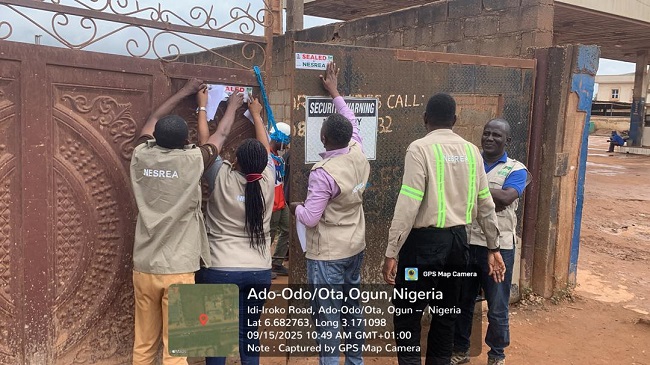
The ongoing enforcement exercise in the Southwest Zone of the country has also seen the sealing of 20 other facilities in Ekiti, Osun and Ogun states.
NESREA officials sealing a facility
Prof. Barikor said the enforcement exercise is in line with the mandate of the NESREA, which gives the agency the responsibility of prohibiting activities and processes which undermine environmental quality.
He noted that it had become expedient to take drastic action against non-compliant recyclers in Ogijo community in Ogun State as their operations have continued to endanger the environment and lives of the citizens.
“The situation in Ogijo has been of concern due to the harmful activities of battery and scrap metal recyclers. Improper disposal of hazardous slag from battery recycling threatens environmental degradation and public health risks from toxic lead content. Tests have revealed presence of lead in residents, resulting in illnesses and deaths.”
Prof. Barikor stated that the failure of the facilities to adopt best available technology in their operations was in contravention of the National Environmental (Battery Control) Regulations 2024.
“There have been several stakeholders intervention which involved Federal and State Ministries of Environment, NESREA, State Environmental Protection Agencies, non-governmental organisations (NGOs) and development partners in a bid to get the facilities to upgrade their operations to more environmental friendly technology and institute sustainable plan for management of slag and other waste from their processes but a recent tour of the community revealed total disregard for environmental laws of the land, a clear signal that some of these facilities do not have any intention of complying and their continued operation is a big threat to the health of residents and the environment in which they live.”
He stressed that the sealing of the facilities was therefore to protect the lives of vulnerable citizens and put a stop to the operations of the recycling facilities that undermine the law and expose Nigerians to danger.
“These facilities were closed for violating the provisions of the National Environmental (Battery Control) Regulations, 2024. Their offences include lack of Environmental Documents such as Environmental Audit Report (EAR), Environmental Impact Statement, Permits, Lack of Fume treatment plant; indiscriminate discharge of black oil, failure to carry out blood-lead test on staff, no proper slag management, manual battery breaking and washing and non-compliance with the Extended Producer Responsibility (EPR) Programme,” he added.
The facilities sealed in Ogijo, Ogun State, are listed to include:
Vedanta Metal Industries Limited, Ogijo, Ogun State
Metal Manufacturing Nigeria Limited, Ogijo, Ogun State
Enforcement was also carried out in the construction and quarry sectors where a total of 10 sites were sealed for lack of Environmental Documents contrary to the provisions of the National Environmental (Construction Sector) Regulations, 2011 and the National Environmental (Quarrying and Blasting Operations) 2013 respectively.
The sites include:
Laralek Ultimate Limited (Arc Legacy Project) Ota, Ogun State
Visible Construction Limited, Ota, Ogun State
Strabic Construction Limited, Ota, Ogun State
Areatech Construction Limited, Ota, Ogun State
Medaville Construction Limited, Ota, Ogun State
Adron Home & Properties operational base office (Gbongan Road, Oshogbo) for three project sites viz: (a) Paris Park Gaden.Ikirun Road, Iragbiji: EAR; (b) Bukingham Parks and Garden, Poponla, Ede: EAR; and (c) Miami City, Ilesha Road: EIS.
S & M Nigeria Ltd, Ekiti State EIS
Step Development Ltd, Ekiti State EIS
Hitech Construction Limited Papalanto, Ogun State EIA
Craneburg Construction Company Limited, Ota, Ogun State EIA
SLAVABOGU Nigeria Limited Awo-Iyowe Road, Egbedore LGA, Osun State
In the Domestic and Industrial Plastic sector, five facilities were shut down for operating in flagrant disregard for the National Environmental (Domestic and Industrial Plastic, Rubber and Foam Sector) Regulations 2011. They operated without Environmental documents, lack of fume abatement technology, non-submission of Quarterly Compliance Monitoring Report.
The facilities include:
Polo Good Intl Company Ltd, Lagos Ibadan Express Way, Ogun State
Meibalun International Limited, Lagos Ibadan Express Way, Ogun State
Jomoo International Industrial Limited, Lagos Ibadan Express Way, Ogun State
Zhong Ju Nigeria Limited, Lagos Ibadan Express Way, Ogun State
Vanke Machinery Limited, Lagos Ibadan Express Way, Ogun State
One facility, GS Agriculture Limited, Osogbo, Osun State, was sealed for violating the National Environmental (Food, Beverages and Tobacco. Sector) Regulations 2009. The facility was faulted for not having the necessary Environmental Documents.
In the Non-Metallic Mineral Manufacturing sector, one facility, West Stone and Marble Processing Company Limited, Ikirun, Osun State, was sealed for non-submission of Environmental Audit Report (EAR).
For refusal to comply with the National Environmental (Motor Vehicle and Miscellaneous Assembly) Regulations 2011, one facility, Icheetah Nigeria Limited, Abeokuta, was shutdown.
Enforcement of the National Environmental (Protection of Endangered Species in International Trade) Regulations, 2011 led to the sealing of one facility, Solomon Kensington Agro Allied, Iperu-Remo in Ogun State. The operators failed to provide relevant environmental documents, install an Effluent Treatment Plant (ETP), and refused to provide the agency with comprehensive list of animal species being kept.
Prof Barikor further stated: “Our duty to Nigerians is a solemn responsibility. We are no longer appealing to any facility to comply with the laws, when you refuse to obey, you face the consequences. We will not hesitate to enforce the law.”
In November this year, governments from across the world will gather in Geneva for COP11, the global meeting of the Framework Convention on Tobacco Control (FCTC). For Africa, the stakes could not be higher. Almost every country on the continent has signed onto the treaty, but the reality is that enforcement remains weak.
Laws on smoke-free spaces, taxes, and health warnings exist, but implementation is patchy. Limited resources, lack of political will, and deep-rooted cultural acceptance of tobacco mean millions remain exposed to preventable disease and death.
Tobacco smoking
Tobacco use has decreased significantly since 2000; however, poorer countries are still lagging. That’s why COP11 matters. Africa can’t keep fighting a 21st-century tobacco epidemic with only half-measures. Yes, traditional tactics like high taxes, ad bans, and smoke-free policies are important. But they aren’t enough. The continent needs to add harm reduction to the discussion.
Harm reduction is straightforward: give people who smoke access to safer alternatives so they can move away from the most dangerous form of tobacco use-burning cigarettes. Products like nicotine pouches, regulated e-cigarettes, or medicinal nicotine therapies are not risk-free, but they are far less harmful than smoking. In a region where quitting support is limited and enforcement is thin, these alternatives could be a game-changer.
The debate is often framed as either-or: either we enforce the FCTC perfectly, or we risk undermining it with new products. But that thinking is flawed. Africa doesn’t have the luxury of waiting until institutions are stronger and resources are endless. Harm reduction doesn’t replace traditional measures; it complements them. By regulating safer products carefully, setting standards, keeping them out of the hands of young people, and taxing them differently from cigarettes, governments can cut smoking rates faster, save money on health care, and save lives.
COP11 is the moment for Africa to demand a more realistic, risk-based approach. Instead of being left behind, the continent can lead by showing that tobacco control must be pragmatic, not just aspirational. For African policymakers, the choice is clear: hold on to rigid approaches that have failed to deliver, or embrace harm reduction as a tool to close the gap between good laws on paper and real health progress on the ground.
Without proper regulation, however, Africa is already experiencing a surge in illicit and unregulated products flooding the market, thereby putting consumers at even greater risk.
We cannot wait for perfect enforcement of every FCTC article before taking action. By combining traditional measures with regulated harm reduction, governments can speed up the decrease in smoking, protect young people, and prevent hundreds of thousands of unnecessary deaths.
The world will be watching in Geneva. Africa should speak with one voice: harm reduction is not a threat to tobacco control; it is the missing piece that can help us finally turn the tide.
By Joseph Magero, Chair: Campaign for Safer Alternatives
Australia on Thursday, September 18, 2025, set its 2035 emissions target at a reduction of 62%-70% from 2005 levels, a lower-than-expected figure that was criticised by green groups.
The United Nations has asked countries to submit their climate plans, called Nationally Determined Contributions, or NDCs, before the end of September so that their efforts can be assessed before the COP30 climate summit in November in Brazil.
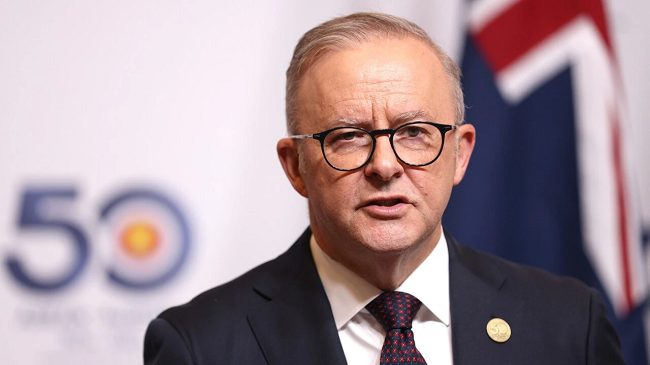
Anthony Albanese, Prime Minister of Australia
Australia is one of the world’s highest polluting countries per capita, largely due to its resources industry that extracts large amounts of coal and natural gas.
The country’s target falls below the range of 65%-75% that was modelled by the Treasury Department and initially suggested by the Climate Change Authority, an independent body that advises the government on climate policy.
Minister for Climate Change and Energy, Chris Bowen, told a news conference on Thursday the lower target was a more realistically reachable level.
“The target must be two things, ambitious and achievable. A target over 70% is not achievable. That advice is clear. We have gone for the maximum level of ambition that is achievable,” he said.
The pledge comes days after the national climate risk assessment warned of “cascading, compounding and concurrent” threats if heating exceeds 1.5°C, and days after the Albanese government approved an extension for the North West Shelf gas project until 2070.
The reduced target drew sharp criticism from environmentalists, who said it lacked ambition and prioritised industry over communities vulnerable to climate change in the region.
“The Albanese government’s new climate plan is an affront to communities across the Pacific and Australia facing the escalating impacts of dangerous climate change,” said Shiva Gounden, head of Pacific at Greenpeace Australia Pacific.
“Today the government has chosen coal and gas profits over the safety of Pacific and Australian communities.”
The target falls “dangerously short of what the science demands,” said Dermot O’Gorman, CEO of WWF-Australia.
Fenton Lutunatabua, 350.org Deputy Head of Regions, says: “Anything less than a 75% cut this decade backed by a plan to phase out coal, oil and gas is not a climate plan, it’s a denial of climate justice. Pacific peoples are already living the losses that come from every fraction of a degree of warming. The supposed ‘sweet spot’ decided by the Albanese government is nowhere near what is needed to secure our survival. Not only that, but it also doesn’t address the enormous burden of Australia’s fossil fuel exports, the consequences of which the children of the Pacific will have to bear.”
Jacynta Fa’amau, 350.org Pacific Campaigner, says: “Australia had the chance to begin its COP31 legacy as a true climate leader and did not deliver. This target is short of what is required to keep communities in Australia and the Pacific safe. We made it clear that drawing the line at 1.5°C would require at least a 75% decrease in emissions by 2035. As a Pacific Islander living in Australia, I’m concerned for both of my homes. The Pacific has long known and lived with the severity of the climate crisis, but Australia’s new risk assessment makes it clear that this country will not be spared the consequences of climate inaction either.”
Shani Tager, 350.org Australia Senior Campaigner, says: “This target is a betrayal of the science of climate change and the communities across our region. Albanese has failed to lead and instead capitulated to the big coal and gas polluters. Today’s announcement puts us all at risk of more extreme heat, worse bushfires and unlivable towns.”
Observers believe that the announcement adds momentum to this weekend’s global Draw the Line mobilisations, where people across the Pacific, Australia and Aotearoa will demand governments draw the line at 1.5°C and stop billionaires and fossil fuel corporations from fuelling inequality and disaster.
COP30 is the next critical checkpoint for the Paris Agreement where governments must arrive with NDCs aligned to a 1.5 °C pathway and ready to agree on a global deal to phase out fossil fuels while scaling up renewable energy and finance for communities already living the climate crisis. Success in Brazil will determine whether the world can still avoid the worst tipping points described in Australia’s own climate risk report, which emphasised that every fraction of a degree of global heating that can be prevented, counts.
As Australia campaigns to co-host COP31 with Pacific nations, its stance at COP30 will be under intense scrutiny. Anything less than bold leadership will undermine both global ambition and Australia’s legitimacy as a UNFCCC host.
Dangote Petroleum Refinery has disclosed that the Depot and Petroleum Products Marketers Association of Nigeria (DAPPMAN) demanded an annual subsidy of N1.505 trillion to enable members to match the refinery’s gantry prices at their own depots.
The refinery disclosed in a statement that although it offers petroleum products to marketers at its gantry price, DAPPMAN insists on taking delivery via coastal logistics, an option that would add N75 per litre in extra costs. Based on daily consumption volumes of 40 million litres of Premium Motor Spirit (PMS) and 15 million litres of Automotive Gas Oil (AGO), this amounts to an additional annual cost of N1.505 trillion (N1,505,625,000,000), which they effectively asked the refinery to absorb or pass on to Nigerians.
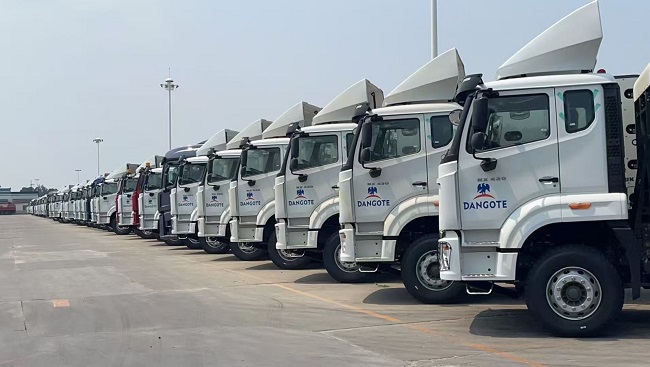
Dangote Refinery CNG trucks
“Specifically, the marketers are demanding that we discount N70/litre in coastal freight, NIMASA, NPA and other associated costs as well as N5/litre for the cost of pumping into vessels to enable them to transport products from our refinery to their depots in Apapa and sell at the same price as our gantry.
“We wish to make it clear that we have no intention of increasing our gantry price to accommodate such demands, nor are we willing to pay a subsidy of over N1.5 trillion, a practice that historically defrauded the Federal Government for many years. DAPPMAN and other marketers are welcome to lift products directly from our gantry and benefit from our logistics-free initiative.”
The refinery alleged that its refusal to comply with DAPPMAN’s subsidy request is the core reason behind recent public criticisms and attacks. It reiterated that the refinery has sufficient capacity to meet domestic demand and support export as it consistently maintains a closing stock of 500 million litres of refined products in its tanks each month.
“Between June and September, the refinery exported a combined total of 3,229,881 metric tonnes of PMS, AGO, and aviation fuel, while marketers imported 3,687,828 metric tonnes over the same period, an action that amounts to dumping which is detrimental to the Nigerian economy and the wellbeing of its citizens,” it said.
Reaffirming its commitment to supporting the reform agenda of President Bola Ahmed Tinubu, the refinery stated that through various strategic interventions, it has helped stabilise the Naira, cushion the effects of fuel subsidy removal, position Nigeria as a refining hub, boost foreign exchange earnings, and create employment opportunities across multiple sectors.
“We enjoy strong working relationships with government agencies and remain committed to supporting their efforts, while not hesitating to hold institutions accountable where necessary.
“Dangote Petroleum Refinery remains firmly committed to the progress and wellbeing of Nigeria, and is open to partnerships with patriotic and responsible stakeholders in pursuit of national development,” it noted.
The Refinery also reaffirmed its position regarding its recent statement on the DAPPMAN, which was published on Monday, September 15, in several national dailies and reputable online platforms.
The refinery stressed that any party aggrieved by the content of the publication is free to seek redress through appropriate legal channels. It noted that it would not be swayed by threats or so-called seven-day ultimatums and is fully prepared to defend its position through all legitimate means.
Reacting to Dangote Refinery’s allegations of product diversion by its members, DAPPMAN had issued a seven-day ultimatum to the refinery to either retract the allegation or provide documented proof.
“If neither occurs, we reserve the right to seek legal redress,” the group stated, challenging Dangote Refinery to present verifiable evidence that DAPPMAN members are diverting products to neighbouring countries.
“Smuggling is a national security matter. If any member is complicit, let the relevant agencies act,” DAPPMAN submitted, adding that it does not seek conflict, but seeks a petroleum market where all players follow the same rules; consumers benefit from efficiency and choice; and supply is diversified, safe, and competitive.
“We will resist any attempt to create a monopoly masked as patriotism,” said DAPPMAN, even as it rejects statements made by the Dangote Petroleum Refinery in its press release of September 15, 2025.
As an association representing legitimate depot owners and marketers in Nigeria’s deregulated downstream sector, we are compelled to correct the record and address claims that threaten the integrity of our industry, mislead the public, and undermine regulatory confidence.
“We categorically state that our members, including Matrix, AA Rano, AYM Shafa, and NIPCO are fully tax compliant as we are not aware of any pending cases or disputes against them for default in their tax obligations.”
While denying sponsoring or supporting NUPENG’s proposed industrial action as its role has been one of de-escalation, focused on averting disruption to fuel supply and national mobility, DAPPMAN accused Dangote Refinery of offering discounts of over $40/MT to foreign traders while denying Nigerian marketers access to coastal vessel loading and restricting them to gantry-only lifting.
“This restrictive access and pricing structure create the very arbitrage opportunity the refinery now criticises.”
On product quality allegations, the group declared: “Dangote’s claims that DAPPMAN members import fuels with sulphur levels above 50ppm contradict its own operational record. The refinery itself applied for waivers from NMDPRA to distribute high-sulphur products, in direct contravention of PIA Section 317(11). We challenge the refinery to publicly deny this.”
DAPPMAN went further: “DAPPMAN members operate hundreds of depots and thousands of filling stations across Nigeria. NARTO manages a fleet of over 30,000 trucks.
“This national infrastructure cannot depend on a single supply source or be replaced by a one-location refinery. Attempts to do so signal a deliberate push toward monopolization.
We reject statements that belittle the infrastructure and investment of marketers and distributors as ‘mere assets’. Such remarks are disrespectful to the hundreds of billions invested by Nigerian entrepreneurs over decades.
“Every player in the value chain, refiners, bulk traders, depot operators, transporters, and retailers, has a defined and vital role. Demanding that marketers build refineries betrays a lack of understanding of modern petroleum economies.
“While DAPPMAN supports the introduction of CNG trucks as a cleaner energy initiative, safety cannot be compromised. The Dangote Group has a well-documented history of fatal road crashes linked to poorly trained or unsupervised drivers. Only weeks ago, Nigerians mourned the lives lost in tragic accidents involving Dangote cement trucks across multiple states.
“Adding 4,000 new trucks to Nigeria’s already strained road network without mandatory training, retraining, and safety audits only heightens the risk of further tragedies, this time involving highly flammable petroleum products.
“We therefore call on the FRSC, insurance industry, and relevant regulators to conduct a comprehensive audit of Dangote’s transport operations and road safety record. Mandatory driver vetting and retraining must be a precondition before widespread deployment of these trucks.
“Residents along major corridors, such as the Lekki-Epe Expressway, are already experiencing worsening congestion and road wear due to increased truck traffic. Without immediate intervention, the risks to lives, property, and public infrastructure will escalate.”
Environment ministers set to meet on Thursday, September 18, 2025, in Brussels are wrangling over national emissions targets for 2035 which must be fixed at EU level before the COP30 climate summit in Brazil later this year, according to an internal briefing note seen by Euronews.
A controversial 2040 EU climate emissions target decision which the Danish EU presidency had originally intended to be taken on Thursday has already been dropped to a discussion point since countries claim they need more time to mull the issue, according to EU officials.
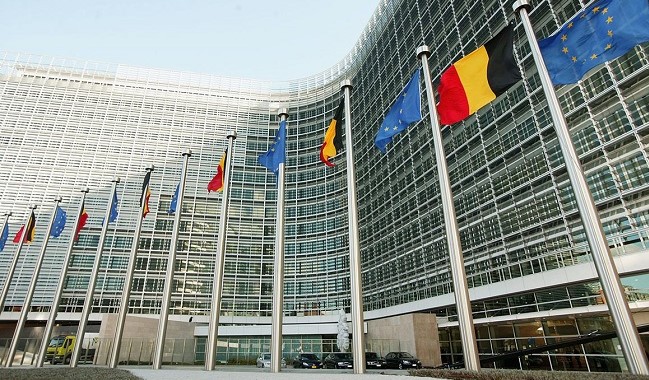
European Commission. Photo credit: Mark Renders/Getty Images
But the note said that countries are now dividing into more or less ambitious camps in relation to a decision on national targets for 2035, so-called Nationally Determined Contributions (NDCs), which will be discussed at the UN General Assembly (UNGA) next week, where world leaders will take stock of climate efforts ahead of COP30.
“Less climate ambitious” EU countries want to have reductions “closer to 66% of greenhouse gas emissions” and for this target to run on a linear trajectory between 2030 to 2050, according to the note.
For those EU countries regarded as “more ambitious”, the preference is to have an “indicative statement” before the UNGA, kicking off on September 23, with a clear ambitious 2035 target “between 66% and 72,5%”, running from the 2030 target and the proposed 90% target for 2040.
EU’s efforts under Paris Agreement
Under the Paris Agreement, countries submit or update their NDCs every five years. The EU’s NDC needs to be updated to include its 2035 target and reflect intermediate targets, such as for 2040, to be presented at COP30, in November.
While the EU NDC is formally adopted by EU countries, the EU climate target for 2040 will be adopted as an amendment to the European Climate Law, adopted in 2021. However, a number of countries is eager to adopt both targets at the same time, arguing it would strengthen the EU’s ability to push for greater ambition globally at COP30.
“It is unlikely a decision on a general approach [Council’s position] can be taken only at coreper [permanent country’s representatives] level after the European Council discussion in October, hence an extraordinary environment council may be called before COP30 to adopt one,” the note added.
While member states continue to wrangle over the bloc’s green efforts in the global stage, the Danish Presidency rejects an empty-handed situation upon arrival at the UNGA and is working on two different options to bridge the gap: the first where the NDCs would be in a lower range, and the second where the NDCs would be split from the 2040 climate target.
“We’re seeking guidance from the member states for a policy debate and not a general approach (Council’s position),” an EU diplomat told Euronews, adding the EU Presidency is trying to find a way that would still keep the European Climate Law and the NDC linked.
An advocate for linking the 2035 and 2040 targets, Denmark tried to push for a vote last week at ministerial level, but Germany and Italy backed France in pushing the decision to the European Council in October, when heads of State will meet. This move was backed by countries including Austria, Czechia, Hungary, Latvia, Malta, Poland, Romania and Slovakia.
But countries like Czechia, Hungary, Poland and Slovakia want to discuss the matter with Heads of State in October hoping to revisit the 90% target proposed by the EU executive, according to the letter, while France, Germany and Italy are seeking a discussion on the “framework conditions” enabling the proposal to move forward.
The Food and Agriculture Organisation (FAO), in collaboration with stakeholders, has unveiled the Hand-in-Hand (HIH) Subregional Investment Forum to promote agricultural transformation and tackle poverty, hunger and inequality.
Mrs. Bintia Stephen-Tchicaya, FAO Subregional Coordinator for West Africa, made this known on Wednesday, September 17, 2025, in Abuja.
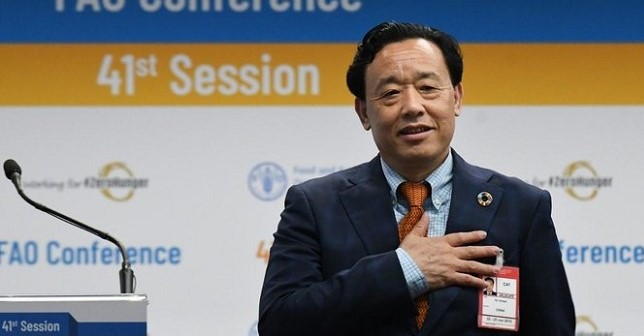
Director-General of FAO, Qu Dongyu
She said the initiative offered a pathway to unlock solutions to complex and interconnected challenges bedeviling agrifood systems in the region.
According to her, such challenges include climate change, water scarcity, land degradation, food insecurity and youth unemployment.
She explained that the HIH initiative, spearheaded by FAO Director-General, Qu Dongyu, is rooted in solidarity, science and strategic partnerships, and is designed to accelerate agricultural transformation across member states.
Stephen-Tchicaya stressed that the platform and its data lab serve as global public goods to support evidence-based planning, while helping countries identify investment areas with the greatest economic, social and environmental impact.
“With 80 active countries already engaged globally, including 37 in Africa, the initiative is country-owned and country-led, built on a territorial approach.
“It leverages cutting-edge geospatial tools and data analytics to identify high-impact investment opportunities,” she said.
She added that the Abuja forum provides a strategic platform to translate priorities into action.
“Over the next two days, we will review the regional investment plan, country-specific proposals and innovative financing mechanisms. It will serve as a space for matchmaking between countries and partners,” she said.
Stephen-Tchicaya emphasised that the initiative aims to mobilise the needed investments to fight poverty and malnutrition, noting that nearly one in five people in Africa; about 307 million, still experienced hunger in 2024.
She urged governments, development banks, private investors and civil society to explore ways of mobilising resources and reducing investment risks.
She added that sustainable partnerships were needed to deliver both commercial returns and inclusive development outcomes for the region.
On irrigation, she noted that it was not merely a technical solution but also a strategic enabler of resilience and food sovereignty.
“The investment cases we will discuss will demonstrate how irrigation can enhance productivity, build resilience against climate change and empower communities,” she said.
She noted FAO’s outstanding experience in supporting irrigation globally and in the sub-region.
She said by organising the forum, FAO reaffirmed its commitment to supporting irrigation in West Africa and the Sahel, while calling for collaboration to achieve results on a larger scale.
“Partnerships are the cornerstone of success. FAO and governments alone cannot do it. We need the private sector, financial institutions, research bodies and civil society to co-invest, co-design and co-implement solutions,” she added.
Stephen-Tchicaya also commended the Federal Government for hosting the landmark event and reaffirming its commitment to agricultural transformation and regional cooperation.
Participants at the HIH forum include 10 Sahel countries; Burkina Faso, Chad, Cameroon, Gambia, Guinea, Mali, Mauritania, Niger, Nigeria and Senegal, alongside sub-regional organisations such as CILSS and ECOWAS.
The Kaduna State Government and its partners say they will sustain dredging, clearing of debris on River Kaduna to ensure free flow of water to minimise flood risks.
Mr. Abubakar Buba, Commissioner for Environment and Natural Resources, made this known on Wednesday, September 17, 2025, during an assessment of the ongoing dredging and desilting activities on the river and its major waterways.
Gov. Uba Sani of Kaduna State
The assessment was conducted alongside officials of the Agro-Climatic Resilience in Semi-Arid Landscapes (ACReSAL) project and the Kaduna State Environmental Protection Authority (KEPA).
According to him, the visit was to reinforce and realign government’s efforts in managing the river, as well as to assess the situation of communities along the riverbanks affected by flooding despite ongoing interventions.
The commissioner commended the collaboration of key partners including ACReSAL, the Nigerian Meteorological Agency (NiMet), the Nigerian Hydrological Services Agency (NIHSA), the National Emergency Management Agency (NEMA), and the National Orientation Agency (NOA).
He said the agencies had been proactive in desilting drainage systems, clearing river channels and supporting the state’s preparedness ahead of the rainy season.
Buba stated that the initiative demonstrated the commitment of Gov. Uba Sani’s administration to protecting the lives and property of the citizens in flood-prone areas.
Some 545 households were displaced after two days of torrential rainfall, with 171 houses also damaged across communities in Kaduna North Local Government Area of the state.
The Federal Government has allocated N300 billion to provide stable electricity supply to teaching hospitals and universities across the country.
Abubakar Bichi, member representing Bichi Federal Constituency and the Chairman, House Committee on Appropriation, disclosed this on Wednesday, September 17, 2025, at the unveiling of a solar hybrid intervention project in the Aminu Kano Teaching Hospital, Kano.
Unveiling of a solar hybrid intervention project in the Aminu Kano Teaching Hospital, Kano
He said the initiative was part of President Bola Tinubu’s administration’s commitment to end recurring power outages in critical sectors, especially in healthcare and tertiary education.
According to him, the allocation will fund the installation of renewable energy systems, with priority given to institutions that provide essential services to Nigerians.
“This intervention is designed to guarantee uninterrupted power for hospitals and universities so that doctors can save lives and students can study without disruption,” Bichi said.
He explained that the projects would also reduce the burden of high electricity bills on government institutions, improve efficiency, and promote the use of clean energy.
Bichi commended the Minister of Innovation, Science and Technology, Chief Uche Nnaji, for providing leadership in translating government’s vision into concrete action.
He added that the Energy Commission of Nigeria would work with other relevant agencies to ensure the timely delivery of the projects.
He commended Tinubu for approving special budgetary allocations to address power challenges in tertiary hospitals and universities across the country.
On AKTH solar power project, Bichi said the intervention followed appeals made to him by Chief Medical Directors (CMDs) of teaching hospitals during the preparation of the 2025 appropriation bill.
He recalled that, in November 2024, CMD of University of Maiduguri Teaching Hospital, among others, raised concerns over the high cost of powering critical health facilities, sometimes spending up to N200 million monthly on electricity and diesel.
According to him, the issue was discussed with the leadership of the National Assembly and later taken to President Tinubu, who directed the inclusion of funds for solar hybrid projects in the 2025 budget.
Bichi disclosed that about N300 billion was provided in the budget to support power supply in all federal universities and tertiary hospitals.
He said Aminu Kano Teaching Hospital (AKTH) would benefit from between 6 and 7MW solar power.
Also, Bayero University Kano would benefit from 5 to 6MW, while state-owned facilities such as Murtala Muhammad Specialist Hospital and Nasarawa Hospital would also receive federal support due to Kano’s large population.
“Specifically, AKTH alone got N26 billion in the 2025 budget for projects including accident and emergency, stroke centre, heart surgery, radiology, and family medicine complexes.
“This is unprecedented in the history of the hospital,” Bichi said.
Earlier, the Chief Medical Director of the hospital, Prof. Abdulrahman Sheshe, commended Tinubu for the gesture.
He said that the project would go along way in improving services delivery in the hospital.
Sheshe also lauded the efforts of Bichi and the minister of science and technology in realisation of the project.
Jigawa State Government has established a committee to come up with a strategic framework for the deployment of clean cooking stoves and solar dryers in the state.
Mr. Sagir Musa, the state Commissioner for Information, made this known to newsmen on Wednesday, September 17, 2025, in Dutse, the state capital, while speaking on the outcome of the State Executive Council meeting.
Gov. Umar Namadi of Jigawa State
Musa said the committee has the mandate to harness carbon assets for climate resilience and economic prosperity in Jigawa State.
According to him, Gov. Namadi administration’s vision for agricultural transformation and climate-smart development, gave rise to the council’s decision to establish the committee.
“The establishment of the committee followed a presentation made by Dare Carbon Limited company to the council on the deployment of a clean cooking stove for climate action, food security, and economic growth.
“The project aligns with the state’s integrated approach to climate action, by reducing deforestation, indoor air pollution and food security by promoting sustainable rice parboiling solutions,” he said.
Musa said the action supports nutrition and household resilience, economic growth through the empowerment of local enterprises and the creation of green jobs.
He said the committee would be chaired by the state Commissioner of Environment, with the Commissioner of Agriculture and that of Power and Energy as members.
Other members include the Director General Economic Empowerment, and Executive Secretary, Alternative Energy Agency.
He stressed that the council decision underscored the Namadi administration’s commitment to innovative, people-centered policies to protect the environment and improve the quality of life and economic well-being of the people of Jigawa.