Nigeria needs not less than $337 billion to implement the
Sustainable Development Goals (SDGs) from 2019 to 2022, the UN Support Plan for
the Sahel has estimated.
Sustainable Development Goals (SDGs)
The cost of implementing the SDGs in Nigeria, according to
the plan is $80.65 billion in 2019, $82.83 billion in 2020, $85.07 billion in
2021 and $87.37 billion in 2022.
On the investment needs in the Sahel, the plan reported the
cost of implementing the SDGs in the Sahel is projected to be between $140.25
billion and $157.39 billion per year between 2019 and 2022 in the 10 Sahelian
countries.
The plan said the 10 countries under the UN Integrated
Strategy for the Sahel (UNISS) needed an average of $148.7 billion annually to
implement the SDGs or $594.8 billion from 2018 to 2022.
The overarching goal of the Plan, targeting 10 countries;
namely Nigeria, Burkina Faso, Cameroon, Chad, The Gambia, Guinea, Mali,
Mauritania, Niger and Senegal, is to scale up efforts to accelerate shared prosperity
and lasting peace in the region.
The Plan covering the period of 2098 to 2030, would help
implement identified priorities to achieve the 2030 Agenda for Sustainable
Development and the African Union Agenda 2063, the report said.
The plan, however, stated that public-sector funding gap, on
average, remained at 36.2 per cent of the required resources. UNISS was
approved by the Security Council in 2013 and is a part of a preventive and
integrated approach to strengthening governance, security and development in
the region.
The plan noted that the Sahel is as much a land of
opportunities as it is of challenges, and it is blessed with abundant human,
cultural and natural resources, offering tremendous potential for rapid growth.
The plan aims at mobilising public resources and triggering
private investments in the 10 countries in support of ongoing efforts and
initiatives by governments, international and regional organisations, among
other partners.
It said in terms of natural resources, the Sahel is one of
the richest regions in the world and is abundant with oil, natural gas, gold,
phosphates, diamonds, copper, iron ore, bauxite, biological diversity and
precious woods, among many other assets.
These natural endowments offer immense value for economic
diversification, value-chain development and livelihoods, the UN plan said.
The Sahel is also endowed with more potential for renewable
energy such as solar and wind than other regions of the world, the UN plan
showed.
Its solar energy potential translates to about 13.9 billion kilowatt
hours per year compared to the world’s electricity consumption of 20 million kilowatt
hours per year, according to 2016 data.
The Sahel is also the most youthful region of the world with
64.5 per cent of youth aged less than 25 years, meaning investments in
education and vocational training could yield a demographic dividend.
The International Centre for Insect
Physiology and Ecology (ICIPE) has secured a €7 million funding from the European
Union (EU) towards the fight against Fall Armyworms (FAW) in the Eastern Africa
region.
Armyworm invasion
Through the European Commission Directorate
for International Cooperation and Development (DEVCO), the EU said that the
money would be used in the management of FAW in Kenya, Ethiopia, Rwanda,
Tanzania and Uganda.
“Over the past 10 years, the EU and ICIPE have
formed a solid partnership towards strengthening agriculture as a core and
effective component in Africa’s development,” Myra Bernardi, Head of Section
Agriculture, Job Creation and Resilience Delegation of the EU to Kenya, said.
She said that the new initiative would
enhance livelihoods, resilience and food and nutritional security of
smallholder maize growers in eastern Africa through better preparedness and
eco-friendly management of the fall armyworm specifically, and invasive species
in general.
“We are delighted for this latest support,
which will enable us to build on our early results to create a comprehensive
package on fall armyworm management, and to work with a range of partners to
ensure that the solutions are delivered to communities, to avert the very real
threat posed by the pest,” Segenet Kelemu, Director General of ICIPE, said
during the ceremony.
Kelemu noted that ICIPE and the EU
have enjoyed a productive and strategic partnership on various critical issues
relevant to Africa such as bees, animal health and food and nutritional
security in general over the past 10 years.
She said that, globally, invasive species
are now considered the second most important threat to nature, due to their
severe and cross cutting impact on ecosystems, human and animal health,
infrastructure, economic and cultural resources.
Such species threaten food and nutritional
security by colonising valuable land, negatively impacting agricultural and
livestock systems thus reducing domestic supply and restricting international
trade as a result of quarantine issues.
They also place human, animal and
environmental health at risk through food-borne and vector-transmitted
diseases, as well as the effects of often harmful chemical pesticides used in
their control.
Further, invasive species destabilise
ecosystems, for instance by displacing beneficial local species, and by causing
irreparable damage to biodiversity, and contributing to habitat loss.
Economies also suffer due to the
significant financial investments required to respond to invasions, and to
conduct inspection, monitoring, prevention, control or eradication of invasive
pests.
In sub-Saharan Africa (SSA), one of the
most susceptible regions, the list of invasive species is long and diverse;
their destruction often horrendous.
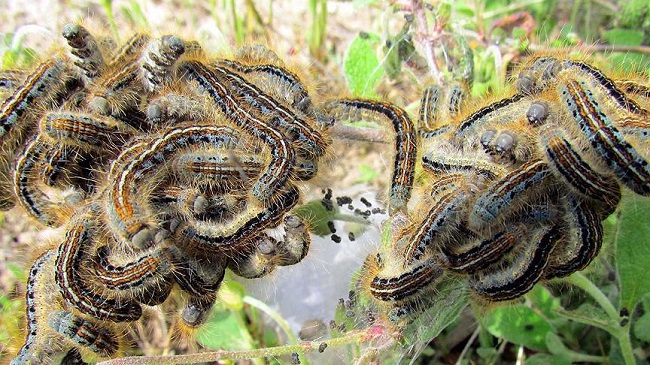
Since January 2016, the fall armyworm (Spodoptera frugiperda), a very
destructive pest that is endemic to the Americas, has been devastating maize
and other crops in at least 43 African countries, placing at risk the food and
nutrition security, and indeed the very livelihoods, of more than 300 million
people.
The larval stage of the fall armyworm feeds
on more than 80 plant species, including maize, sorghum, rice, wheat,
sugarcane, as well as a variety of horticultural crops thus threatening food
and nutritional security, trade, household incomes and overall economies.
ICIPE is promoting the use of push and pull
technology that they have been using over the years in controlling stem borers,
that is a key pest of cereal crops across most of Africa, and the
parasitic striga weeds.
Push-pull involves intercropping cereal
crops with insect repellent legumes such as Desmodium genus and planting
an attractive forage plant such as Napier or Brachiaria grasses as a
border around this intercrop.
The intercrop emits a blend of compounds
that repel (push) away stem borer moths, while the border plants emit
semi-chemicals that are attractive (pull) to the pests.
DEVCO’s support includes 20 percent contribution
from the Centre’s core funds by the Swiss Agency for Development and
Cooperation (SDC), Swedish International Development Cooperation Agency
(SIDA).
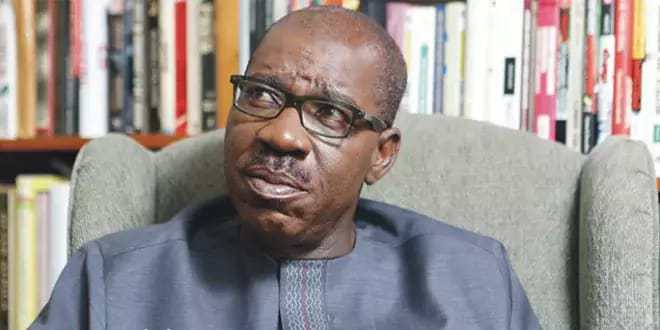
Edo State governor, Mr. Godwin Obaseki, has been tasked to bring the Okomu Oil Palm Company to the book over the allegation of land grabbing, environmental violation and livelihood destruction by the forest-bearing communities of Okpamakhin, located across Uhunmwode, Ovia North East and Owan West local government areas (LGAs) of the state.
Governor Godwin Obaseki of Edo State
The call was made at Sabongida-Ora, the headquarters of Owan
West LGA, by the Women Wing of the Coalition Against Landgrabbing and
Deforestation (CALD) during a recent street protest, which for hours hindered
vehicular movement in the town.
In a letter dated December 10, 2018 to Governor Obaseki and
jointly signed by Mrs. Joan Obazee and Mrs. Bose Eruaga, Coordinator and Deputy
Coordinator of the group respectively, with three others, the civil society
group said to be propelled by the Environmental Rights Action/Friends of the
Earth Nigeria (ERA/FoEN) stated: “We are also, once more, registering our
displeasure about the shoddy and lukewarm ways your government has been
handling the affront by Okomu PLC in its slipshod operation in Edo communities,
particularly the disrespect for the revocation order by the Edo State
Government on most of our forest land and the flouting of a mandatory directive
from the Federal Ministry of Environment to the company to carry out an
all-inclusive Environmental Impact Assessment (EIA) study before the land could
be given to it.
“And where the said revocation order of about 8,000 hectares
of the land render Okomu PLC’s grabbing illegal, the EIA directives by the
Federal Ministry of Environment also invalidate the already revoked land and
others outside of it, which the company has grabbed and more that it is bent of
acquiring illegally.”
The women protesters, who were mostly cladded in black
attires, also alleged that the Okomu multinational company, while wresting
their land, brought the bulldozers to clear the over 14,000 hectares of the
high forest, crops belonging to poor farmers, their environment, sources of water
and worship and their entire livelihood. The letter also accused the company of
bringing men in soldier and police uniforms to enforce the bulldozing, in a
threat to maim or kill them, should they oppose the forceful takeover of their
landed inheritance.
Whilst reminding Governor Obaseki that it was the Executive
Council of the immediate past government under ex-Governor Adams Oshiomhole
inheritance, in which Mr. Obaseki served as Economic Adviser, and an integral
part of it, the protesters said that they are at a loss that the Governor went on
to officially commission the same project premised on a land that has been
declared illegal by a subsisting revocation order. They also frowned at the
Governor’s hesitation to respond to series of protest and petition letters
brought to him on the issue by the 35 communities across the three local
governments, who are dependent on the rainforest land.
The group further alleged that the 8,000 hectares alleged
land was published in the Edo State Government of Nigeria Official Gazette of November
5, 2015 (page 48-50). Reasons for revocation were backed with an empowering
State Forestry Law, that the land meant for regeneration was commercialised
(sold) to second and third parties and not in the public’s interests. The
illegal transaction, it also alleged, was between the Iyayi Group of Companies,
who had gainfully logged the land for 50 years and it was thereafter given to
Iyayi freely for regeneration. Iyayi was the middleman that sold to A & Hatman
Ltd and to Okomu PLC, with billions of Naira exchanging hands.
“On May 14, 2016 after the revocation and refusal of Okomu
PLC to vacate the forestland, ex-Governor Adams Oshiomhole again made a
confirmation press statement that the land stood revoked and Okomu PLC should
vacate the it. Governor Oshiomhole also issued a follow-up letter dated April
18, 2016 (Ref: GH/COS.58/156) to the Okomu PLC, warning the firm to vacate the
land” It further alleged.
Okomu Oil Company was also alleged to have abandoned the
directives of the Environment Minister’s, via a letter dated September 22,
2015, (Ref: No. FMEnv/EA/ 123:271? Vol.1/28) stating that the “Interim EIA
Approval” for three months validity for preliminary development activities on
the project only; and that the EIA should be carried out to its logical
conclusion, and with continuous consultation with relevant stakeholders.
“Whereas the company had started bulldozing our forest land
in January 2014 barely three years after destroying the land upon which the EIA
was to be based. Incredibly, the same company had belated in December 2016
emerged with a concocted EIA draft report, which was conducted behind our
communities, the primary stakeholder,” said, the Women Wing of the group.
“But we have been pushed to a despairing living by an
overbearing multinational company, whose obnoxious operational policies has
seemingly arrogated to itself a sovereignty within a nationhood that is
supposedly independent. And we are determined to regain our possession, only along
the principles of constructive engagement and non-violence”.
Nevertheless, the group made what is called its renewed call
on the Edo State Government to “summarily quit the blundering Okomu PLC from
our land and get it to book for violating the Nigerian laws”.
The International Fund for Agricultural Development
(IFAD)-assisted Value Chain Development Programme (VCDP) says it will sustain
its campaign for Ebonyi State farmers to engage in dry season farming.
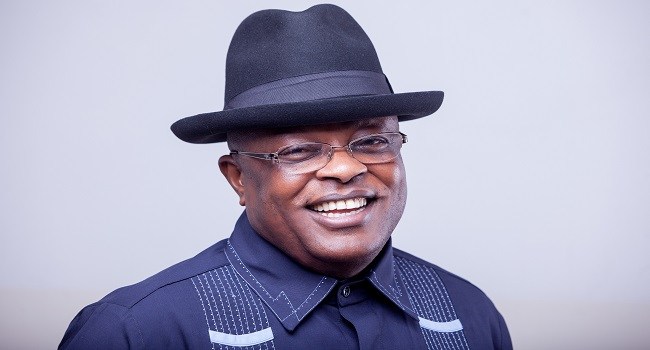
Governor David Umahi of Ebonyi State
Mr Sunday Ituma, the State Programme Coordinator (SPC) of IFAD-VCDP,
made this known on Friday, December 28, 2018 in Abakaliki, the state capital, during
a knowledge-sharing forum with benefitting farmers to evaluate the programme’s
activities in the state in 2018.
Ituma said that one-season farming practice was no longer in
vogue and profitable, stressing that dry season farming had commenced in some
areas in the state with encouraging results.
“Dry season farming is practiced in areas surrounded by
water bodies, especially those along the Cross River axis in Ikwo, Izzi among
others,” he said.
According to the SPC, the programme is working well to
provide irrigation facilities for farmers despite being capital-intensive.
“We are still with the design of the irrigation
infrastructure to be cited at Ezillo, Ishiellu Local Government Area though the
cost is not what the programme can handle.
“We, however, have other options which include sharing the
cost with the state government or funding it in the additional phase of the
project which we are hopeful will come,” he said.
He said that the programme was however still exploring other
areas to ensure that adequate water was provided for farmers to embark on dry
season farming.
“The water-level in Ebonyi is low in contrast to some areas
such as Niger where one can drill less-than 10 metres and source water to
sustain his agricultural productions.
“We intend to test-run this tube-well technology because the
usage of boreholes is hard for farming,” he said.
Ituma said that the various interventions of IFAD-VCDP in
the state such as the establishment of a seed laboratory for improved yield of
farmers’ crops.
“This seed laboratory will ensure that farmers stop
recycling their harvests as seeds because it continues to diminish their yields
instead of increasing it.
“We have also intervened in areas of infrastructures such as
roads and market stalls, processing centres, aggregation centres and provision
of inputs.
“We have also directly supported farmers with matching
grants and provision of solar powered boreholes in six locations,” he said.
Mrs Cynthia Edeze, the best IFAD-VCDP youth farmer in
Ebonyi, said that she greatly benefited from IFAD-VCDP’s interventions which
improved her farming practices.
“In 2017, I harvested 2, 000 bundles of cassava from an
average of two hectares and sold 1, 500 bundles of which I sold 1,200 bundles
to IFAD-VCDP.
“I cultivated three hectares in 2018 but sold each of the 1,
500 bundles for N1, 300 and realised a total of N1.9 million,” she said.
The other beneficiaries of IFAD-VCDP intervention also
shared their success stories as the participants highlighted areas the
programme should improve upon.
The participants also received tutorials from top IFAD-VDCP
officials, insurance and other financial institutions, among others.
One of the inspiring and promising remarks of Dr Ogbonnaya
Onu, the Minister of Science and Technology at the end of 2018 get-together in
Abuja recently, was that the Federal Government would intensify efforts at
strengthening home-grown technology for the purpose of making the country
self-reliant.
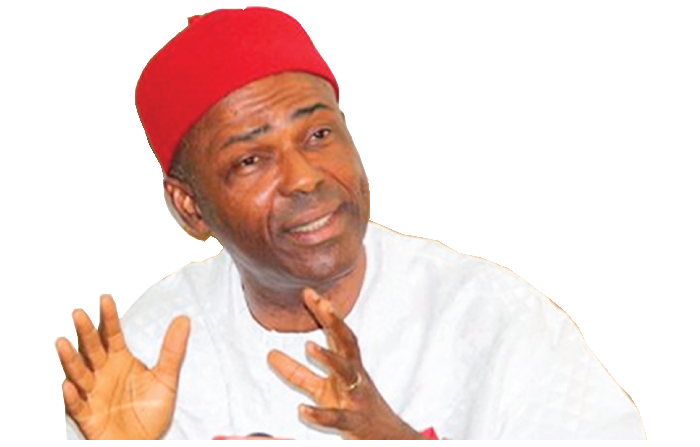
Dr. Ogbonnaya Onu, Minister of Science and Technology
Further to his remarks, he restated that the ministry had
inaugurated National Strategy for Competitiveness in Raw Materials, Products
and Services, to ensure sustainability.
He said that Nigeria would save N3.6 trillion from overall
import in five years and create more than four million jobs with the
implementation of the strategy.
“It is our intention to ensure national capacity to
locally-produced acceptable high-quality raw materials, products and services.
“We have successfully formulated Nigeria’s new National
Policy on Leather Production; the first of its kind in the history of our
nation since independence in 1960.
“This will fast track sustainable development of leather
technology that will help to boost industrialisation and enhance growth in our
domestic economy.
“By deploying resources to commercialise research findings,
new products and service will be created for new jobs, it will reduce poverty
and improve the quality of lives of Nigerians.
“It will also help in building strong and resilient domestic
economy that is competitive and sustainable’’, Onu said.
Onu also observed that the Presidential Order Number 5 had
opened new opportunities for Nigerian professionals to arrest capital flight,
strengthen local capacity and promote local manpower development for the good
the nation.
“The ministry successfully formulated high nutrient density
biscuit for the children to complement school feeding programme of the
President Muhammadu Buhari’s administration.
“This will further nurture our young ones with adequate
nutritional requirements that will enable them to become productive citizens
for sustainable development,’’ he said.
He said the ministry had created a strong platform for the
development of indigenous technology, noting that the number of patents secured
with the assistance of the National Office for Technology Acquisition and
Promotion (NOTAP), had risen to 54 as against six in 2015 when he became the
minister.
He also said that the ministry had progressed to an advanced
stage on the local production of solar power electronic-voting solution with
cloud-based collection of election results capability.
“Solar electronic voting solution will further enhance
e-voting and help Nigeria in the conduct of free, fair and credible elections.
“The ministry had also recorded a breakthrough by
successfully deploying genetic engineering technique in production of two
varieties of cotton that are high-yielding and resistant to devastating attack
of worms.
“The technique will increase cotton production in the
country, as well as reactivate textile industries that used to be the second
largest employer of labour in the 1960s and 1970s,’’ he said.
In the light of the government’s commitment to growing and
sustaining home-grown technology for self-reliance, the Nigerian Academy of
Science, called on the Federal Government to allocate one per cent of the
annual budget to Research and Development.
Prof. Oye Ibidapo-Obe, the former president of the academy,
observed that no nation could attain greatness without science, technology and
innovation.
“Increase in financial support towards research activities
will advance the nation in a sustainable manner.
“Investing in human resources is also essential to expand
the knowledge frontier to move the nation forward.
“Human resources development is the aggregate value of
comfort to life, through agriculture and food security, rural development,
water and environment, education, health, transportation and economy, among
others.
“Researchers in developing countries should therefore focus
primarily on aspects of knowledge expansion that relate to human welfare.
“The purpose of research, especially in science and
technology, is to expand the knowledge frontier through investment in human
capital and thereby innovating research for technology innovations is
essential,’’ he said.
Further to this advice, Mr Bitrus Nabasu, the Permanent
Secretary, Ministry of Science and Technology, urged relevant stakeholders to
continue their support to the government to ensure that various research
findings were converted into products and services.
He observed that there were strong signs that technology
could do for Nigeria what it had done for China, South Korea, India and the
U.S., among other countries.
“I will like to appreciate the minister for his effort at
repositioning the ministry to serve as the bedrock of economic growth in the
nation’’, Nabasu said.
Similarly, some scientists called on the Federal Government
to redouble its efforts in using science, technology and innovation for
accelerated industrialisation for national development.
Dr Adeneye Talabi, the former Director, Technology
Acquisition and Adaption, Federal Ministry of Science and Technology, said that
there should be constant improved financing of scientific research works for
advancement of indigenous technology.
He said that such efforts would make the nation to be
less-dependent on the developed countries in many sectors of the economy.
According to him, human resources and the abundant natural
resources of the country ought to be properly harnessed for development.
Dr Femi Aluko of Department of Community Health, Obafemi
Awolowo University, Ile-Ife, said that proper spending on research would
enhance home-grown technology to a reasonable level.
According to him, such effort will advance Nigeria to become
a crucial global competitor in science and technology among developing
countries.
Insisting that the nation needed technological inputs to
really excel, Aluko said that Nigeria ought to deepen efforts in research and
development to catch up with some Asian countries that were once in the same
level of technology.
“The Asian Tigers such as Indonesia, India, Singapore,
Thailand, Taiwan, Malaysia and China among, others were once on the same level
of technology development with Nigeria.
“But these countries have been making progress since 1960s
in an impressive manner while Nigeria has remained stagnant,’’ he said.
The National Biotechnology Development Agency (NABDA) has
signed a Memorandum of Understanding (MoU) with Biocrops Nigeria Ltd, to
produce bio-pesticides, nematocides and bio-fertilisers.
Prof. Alex Akpa
The Director-General of NABDA, Prof. Alex Akpa, who
disclosed this to newsmen in Abuja, said the partnership also focused on
propagation of different biotechnology crops to enhance the nation’s food
security.
“Under the MoU, our scientists and theirs will collaborate
to massively expand our horizon, to produce bio-pesticides, nematicides and
bio-fertilisers.
“With this partnership, we hope to propagate in commercial
level hundreds of thousands and if not millions of plantlets covering cassava,
yam, plantain and banana, among others.
“This is why the Ministry of Budget and National Planning is
interested in this project, which they are part of,’’ Akpa said.
He explained that bio-pesticides and bio-nematicides would
prevent a situation where farmers, out of desperation, use harmful chemicals
like sniper to preserve farm produce.
He also said bio-fertilisers would reduce the effects of chemical fertilisers on the soil, saying: “They are biodegradable and ecosystem-friendly without adverse effects on human health”.
The NABDA boss also commented on the formal presentation of
the BT cowpea by the National Biosafety Management Agency.
He noted that the improvement of the cowpea through
biotechnology was very cogent to food security, as it was a very important
source of protein and also a major staple food.
According to Akpa, the improved BT cowpea is resistant to
Maruka which is a pest that wrecks devastating havocs on cowpea plantation.
He added that it reduces the rate of chemical herbicide and
pesticides from nine times to once through out a farming season.
Reduction in the use of chemical herbicides and pesticides,
he explained further, would reduce environmental degradation, adverse effect of
the chemicals on human and the expenses of farmers during production.
The NABDA DG also disclosed that plans had been concluded to
bring in Cuban scientists to start local production of vaccines and
bio-pharmaceuticals like insulin, among others.
The Vice-President, Nigerian Institute of Quantity Surveyors
(NIQS), Mr Olayemi Shonubi, has appealed to the Federal Government to provide
an enabling environment for the private sector housing to thrive in 2019.
Obafemi Onashile, NIQS President
Shonubi made the appeal while speaking with the News Agency
of Nigeria (NAN) on Friday, December 28, 2018 in Lagos.
He noted that the performance of the sector had been poor
and below expectation in 2018, saying that government should allow the private
sector to drive the housing construction sector.
According to him, such move would ensure maximum provisions
to curb housing deficit in the country.
He said all government needed was to provide the enabling
environment and other necessities, that would aid the operations of the private
housing developers.
Shonubi attributed the country housing deficit to lack of
full participation of the private sector in housing delivery.
“Government alone cannot provide the needed houses for the
country. It needs full participation of the private sector, through a
well-programmed Public-Private Partnership (PPP) scheme.
“This implies leaving housing delivery in the hands of the
private sector while government provides the necessary conducive environment,”
the NIQS chief said.
Shonubi was optimistic that the active participation of the
private sector in housing delivery would have a positive impact on the
country’s housing situation.
He noted that for the PPP programme to yield positive result
in addressing the nation housing needs, the government needed to go beyond the
provision of land and policy frameworks.
According to him, the government needs to grant incentives
to private housing developers.
“Examples of such incentives are import duty waivers on
building materials, provision of infrastructure and credit facilities through
effective mortgage system, tax relief, among others.
“Introduction of realistic building regulations and the
removal of restrictive legislation, such as the Land Use Act of 1978, could
guarantee a conducive atmosphere for the private sector to operate.”
Shonubi noted that some construction works required lucrative
machines too expensive to afford by the local and private operators.
“What makes foreign operators and contractors seem to be
more competent is because they have the financial capacity to secure all kinds
of expensive machinery that facilitate construction works.
“The indigenous private operators need government empowerment to effectively operate.”
Gov. Kayode Fayemi of Ekiti State on Thursday, December 27,
2018 declared emergency in the water sector to ensure water supply to all nooks
and crannies of the state.
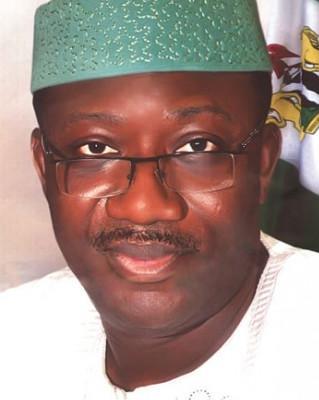
Governor of Ekiti State, Dr. Kayode Fayemi
He made the declaration in Ikun Ekiti, Moba Local Government
Area of the state, where he had gone to kick-start the turn around water
rehabilitation project at Ero Dam to supply water to many major towns in the
state.
The governor consequently promised to take legal and
institutional steps to also make the state open defecation free before 2030.
He said it was in a bid to reduce the level of water borne
diseases in Ekiti and make the commodity available to residents that he
declared the emergency in water sector.
According to him, the people must be saved from preventable
Illnesses through provision of potable water.
He clarified that the emergency was in line with the step
taken by President Muhammadu Buhari.
Buhari had initiated similar policy under a programme called Water Supply Sanitation and Hygiene (WASH) in partnership with the World Bank.
The project, which will gulp $55 million, was awarded to
Sagittarius Henan Engineering and is to be completed within 18 months.
The governor said the WASH programme of the Federal
Government and World Bank was initiated to reduce amount being paid by
Nigerians on hospital bills after contacting all forms of diseases from
unhygienic water sources.
Fayemi said statistics had shown that water supply to urban
cities and rural areas in the country had reduced by 15 and four per cent
respectively, despite geometric increase in the population.
The governor added that the state had already paid N700
million counterpart fund to complete the project that was approved by the world
bank in 2014.
“It was because of the safety of the citizens that the
Federal Government declared emergency in WASH. So, Ekiti has keyed into the
programme with this project.
“Ekiti was ranked second in Nigeria as a state that
practised open defecation. We shall put up institutional and legal frameworks
to ensure Ekiti is open defecation free before 2030
“Part of what accounted for this high practice was because
of low water supply to our homes
“We are making our traditional rulers as champions that
would canvass for open defecation-free and if we are going to stop our palaces
from digging boreholes here and there, we as government should provide water to
our people.
“We have done our feasibility studies, 85 per cent of our
water in Ekiti shall be provided by Ero and Egbe dams if they operate at
optimal capacity,” he said.
The governor assured that affordable tariff would be charged
by government and that such would be metred to prevent extortion.
The Permanent Secretary, Ministry of Public Utilities, Mr
Olumide Ajayi, said rehabilitation on Egbe Dam located in Gbonyin Local
Government was also being co-financed by European Union and Ekiti State.
Ajayi said the two projects would supply water to over 66
towns across nine local government areas in the state.
He urged the beneficiaries to be ready to pay affordable
tariffs and maintain the facilities when completed.
The General Manager, Ekiti State Water Corporation, Mr
Olabisi Agbeyo, revealed that this was the first time a major rehabilitation
would be carried out on Ero Dam in 33 years.
“As we speak, Ekiti is not owing a kobo as counterpart
payment; we have paid up and this shows how committed the state was in water
supply,” Agbeyo said.
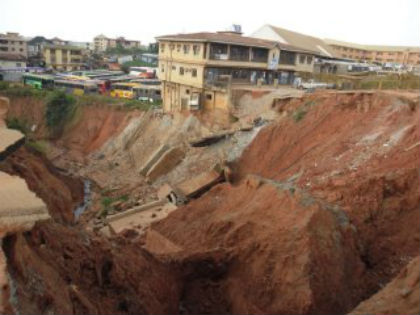
The Senator representing Enugu North Senatorial District, Chukwuka
Utazi, said on Thursday, December 27, 2018 that N40 million had been proposed
in the 2019 budget for the control of erosion at Onuiyi-Nsukka in Enugu State.
A gully erosion site
Utazi, who disclosed this in an interview with the News
Agency of Nigeria (NAN) at Nsukka, said the proposal was to ensure that the
erosion problem in the community was solved permanently.
The late Dr Nnamdi Azikiwe, first President of Nigeria,
lived in his Onuiyi Haven, few metres to a very deep erosion gully in the area,
until he died in 1994.
“As senator representing Enugu North, I made a case for it
because of the danger posed by the gully erosion in that area. Some buildings
within the area have collapsed, and farmlands washed away.
“The erosion at Onuiyi-Nsukka has caused havoc especially
during rainy season. I am happy money has been budgeted for it,” he said.
He said that N70 million was also proposed in the Federal
Government budget for the take-off of a police station and barracks at
Nkpologu, Uzowani Local Government Area of the state.
The senator noted that the measure was to checkmate series
of robberies and kidnapping that frequently occurred along the Nsukka-Adani
road.
“The N70 million is for the take-off since the amount cannot
be enough to build a station and barracks.
“The money is for clearing of the area, fencing it and doing
some other things the amount can accommodate.
“For some time now, robbers and kidnappers have been
terrorising drivers, passengers and other road users on Nsukka-Adani Road.
“The presence of a police station and barracks in that area will
stop the inhuman acts of these criminals and hoodlums.
“My greatest concern as senator representing the district is
to ensure that lives and property in the area are safe and protected,” he said.
Utazi also said that, at present, the Adani Rice Market and
farms were receiving serious attention as the roads leading to them were under
construction by the federal government.
According to the senator, other infrastructure in the market
and farms were being upgraded for better performance.
Utazi said he sponsored a motion in the senate over the
deplorable state of the 9th Mile Corner-Makurdi road and government
awarded contract for its dualisation at the cost of N5.4 billion.
“That 9th Mile-Makurdi road is very important since
it’s the only link road between the North and the South-East and South-South,”
he added.
He urged politicians to put the interest of the country
first in their campaigns for the 2019 general elections by avoiding actions and
utterances capable of overheating the polity.
“Politicians and political parties in their electioneering
campaigns should go straight and tell Nigerians what they can do if voted to
power rather than blackmailing and assassinating the images of their political
opponents
“We should avoid hate speech as well as tribal and religious
sentiments just to achieve cheap popularity.
“If politicians, INEC officials and security agencies play
according to rules of engagements, the 2019 general elections will be credible,
free and fair,” he said.
The Chairman, Senate Committee on Anti-corruption and other
Financial Crimes, expressed satisfaction with the performance of the Governor
of Enugu state, Ifeanyi Ugwuanyi.
He said the governor had massively developed infrastructure
and ensured regular payment of salaries in the state in spite of lean resources
at his disposal.
“The governor has done well in his first tenure and should
be voted for the second term in 2019,” he said
The National Biosafety Management Agency (NBMA) says it has a state-of-the-art genetic modification detection and analysis laboratory to checkmate any risks associated with the technology.
Dr Rufus Ebegba
Dr Rufus Ebegba, the Director-General of the agency, made
this known in an interview with the News Agency of Nigeria (NAN) in Abuja on
Thursday, December 27, 2018.
“Our agency is able to test, analyse and carry out proper
risk assessment on Genetically Modified Organisms (GMOs) before they are
approved for release into the market.
“Biotechnology is basically the use of living systems or
materials from living organisms to modify other organisms, in order to move a
gene of interest from one organism to another one, both related and unrelated,
for you to achieve a particular desire.
“It is not necessarily creating a new organism but altering
it in a way that you achieve a desired interest and there is no technology in
the world that can be said to be 100 per cent safe.
“The proponents of this technology saw the need for an
agreement to ensure that there is holistic bio safety before the product of
genetic engineering can be used for planting, processing, or for any purpose.
“So, it simply means that it needs measures and procedures
to ensure that its activities and the use of genetically modified organisms, do
not have any adverse effects on the environment and human health,” he said.
Ebegba added that the agency also considered the potential
adverse impacts that biosafety should prevent or minimise during risk analysis.
“When we talk about the issue of potential risk in biosafety
or GMO, we are looking at the impact of GMO on the environment.
“Will the super organisms with which these organisms have
been modified become invasive, more dominant, replace the ecosystem, or affect
the ecosystem adversely?
“We look at the issue of genetically modified third party
that is how to resist a particular pest so that it would not affect other
organisms.
“Then we also look at it from the human front. Will these
genetically modified organisms become toxic, affect humans negatively and cause
health problems and allergies?
“These are the things we look out for to ensure that no GMO that
will cause any adverse impacts will be allowed. We only allow those that after
rigorous risk assessment, we considered safe. These we will grant permit for.
“If they are not safe, we won’t grant permit for them,’’ the
NBMA director-general said.
He added that his agency also looked at issues of
socio-economic concern in GMOs.
“We look at the issue of socio-economic concern to know
whether these products are going to be socially compatible with our social
norms.’’
Ebegba urged Nigerians to trust government decisions as government had put measures in place to ensure that human health and the environment were safe.